The right preparation can turn an interview into an opportunity to showcase your expertise. This guide to Sculpture Restoration interview questions is your ultimate resource, providing key insights and tips to help you ace your responses and stand out as a top candidate.
Questions Asked in Sculpture Restoration Interview
Q 1. Describe your experience with different stone types used in sculpture.
My experience with stone types in sculpture restoration spans decades and encompasses a wide range of materials. Each stone presents unique challenges and requires specialized knowledge for successful restoration. For instance, marble, with its crystalline structure, is susceptible to weathering and acid rain, requiring careful cleaning and consolidation techniques. Limestone, often porous, is prone to salt efflorescence (salt deposits on the surface) and requires specific treatments to remove these salts without damaging the stone. Sandstone, depending on its binder, can be more or less resistant to erosion and may require different approaches to stabilize its surface. I’ve worked extensively with granite, known for its durability but still vulnerable to fracturing and surface staining. Each project requires a meticulous material analysis to determine its composition and vulnerabilities before any restoration work begins. Understanding the geological properties of the stone is paramount in deciding on the appropriate conservation strategy.
- Marble: Requires gentle cleaning methods and consolidation to address surface erosion and cracking.
- Limestone: Needs salt removal and potentially consolidation to prevent further deterioration due to porosity.
- Sandstone: Treatment depends on the binder; some may need surface protection, others may need consolidation.
- Granite: Requires careful handling to prevent further fracturing and possibly stain removal.
Q 2. What are the common causes of deterioration in bronze sculptures?
Bronze sculptures, while durable, are susceptible to a variety of deterioration processes. The most common causes include:
- Corrosion: This is a primary concern and can manifest as various patinas (surface coatings), from green verdigris (copper carbonate) to black or brown oxides. The rate of corrosion is influenced by environmental factors such as pollution and humidity.
- Environmental Pollution: Acid rain and airborne pollutants accelerate corrosion and can lead to surface discoloration and pitting.
- Mechanical Damage: Scratches, abrasions, and impacts can compromise the integrity of the surface and even lead to structural damage.
- Improper Handling/Storage: Incorrect storage and handling practices can lead to scratches, abrasion, and even breakage. This is especially true for lighter sculptures.
- Burial Damage: Sculptures unearthed after burial often exhibit severe corrosion due to soil chemistry and moisture.
Understanding these factors is crucial in developing a conservation strategy. For example, a bronze sculpture suffering from severe corrosion might require electrochemical treatment to remove corrosive products, followed by waxing to protect against future deterioration. A sculpture with surface scratches might only need careful cleaning and polishing.
Q 3. Explain your approach to cleaning a marble sculpture.
Cleaning a marble sculpture is a delicate process that requires careful consideration. My approach is always conservative, prioritizing the preservation of the original material over aggressive cleaning. It always begins with a thorough assessment of the sculpture’s condition, including a detailed photographic record. Then, I proceed with the following steps:
- Dry Cleaning: I begin with dry cleaning using soft brushes to remove loose dirt and debris. Compressed air might be used cautiously to remove dust from crevices.
- Wet Cleaning (if necessary): If dry cleaning is insufficient, I may use deionized water, sometimes with a mild, pH-neutral detergent specifically designed for stone. The application is gentle and localized, avoiding pooling of water. I might use swabs or soft cloths to remove dirt and grime. The cleaned areas are carefully monitored for any adverse reaction.
- Testing: Before applying any cleaning solution to the entire sculpture, a small, inconspicuous area is tested to evaluate the solution’s effectiveness and to check for any adverse reactions.
- Documentation: The entire cleaning process is meticulously documented, including photographs and notes.
Remember, aggressive cleaning methods can irreversibly damage a marble sculpture. The goal is to remove dirt and grime without altering the original surface or damaging the stone itself. Each case necessitates careful planning and execution.
Q 4. How do you assess the structural stability of a damaged sculpture?
Assessing the structural stability of a damaged sculpture involves a multi-faceted approach combining visual inspection, material analysis and sometimes advanced techniques.
- Visual Inspection: A detailed visual examination identifies cracks, fissures, loose fragments, and areas of weakness. This allows for an initial assessment of the extent of damage.
- Material Analysis: Understanding the material properties of the sculpture (its composition, porosity, etc.) informs the best approach to structural stabilization. This analysis could involve microscopic inspection and material testing.
- Non-Destructive Testing (NDT): Methods like X-ray or ultrasound imaging can reveal internal damage not visible to the naked eye. This is crucial in determining the extent of internal cracks or weaknesses.
- Structural Analysis: For complex cases, I may consult with engineers specialized in structural analysis of art to provide a precise calculation of stresses on the sculpture and determine its load-bearing capabilities.
- Mechanical Testing: In some instances, small samples of the material may be tested mechanically to evaluate its strength and integrity.
The goal is to create a complete picture of the sculpture’s structural health to create an effective and safe consolidation plan. A sculpture that is structurally unsound would require interventions beyond simple surface cleaning, potentially involving internal reinforcement or external bracing.
Q 5. What techniques are used to consolidate fragile stone?
Consolidating fragile stone involves strengthening the material to prevent further disintegration. The choice of method depends heavily on the nature of the stone and the type of damage. Common techniques include:
- Acrylic Resins: These are frequently used due to their good compatibility with stone, relatively low viscosity, and good penetration. They strengthen the stone by filling micro-cracks and pores.
- Paraloid B-72: A specific type of acrylic resin, frequently used in stone conservation due to its reversibility and good compatibility with many types of stone.
- Epoxy Resins: These are used for more severe damage, offering strong bonding and consolidation, but their use requires careful consideration due to potential yellowing and discoloration.
- Calcium Hydroxide: This natural compound is often used for consolidating limestone or marble. It reacts chemically with the stone, filling pores and strengthening the material.
The application of consolidants requires precision and patience. The consolidant is usually applied using various methods, such as brushing, injection, or immersion, ensuring thorough penetration without leaving a noticeable residue or affecting the original appearance. Before applying any consolidant, tests are always carried out on an inconspicuous area to ensure compatibility and effectiveness.
Q 6. Describe your experience with different types of adhesives used in sculpture restoration.
Adhesives play a critical role in sculpture restoration, used to reattach fragments, fill losses, and consolidate weakened areas. The selection of an appropriate adhesive is crucial and depends on several factors, including the type of material, the type of damage, and the desired aesthetic outcome. I’ve extensive experience with various adhesives:
- Animal Glue: A traditional adhesive offering good strength and reversibility, though sensitive to moisture and temperature changes. I use it cautiously, primarily on compatible materials.
- Acrylic Adhesives: These are versatile, offering good strength, excellent adhesion, and relatively low color, making them suitable for various materials and applications. They are a common choice in many of my projects.
- Epoxy Resins: Used for strong bonding, primarily on non-porous materials. Their use is more limited due to potential discoloration or lack of reversibility.
- Polyvinyl Acetate (PVA): A water-based adhesive, useful for less demanding applications, especially where reversibility is desired.
The application of adhesives must be precise to avoid creating unsightly seams or compromising the integrity of the restored areas. The choice of the right adhesive requires careful evaluation of both the material and the specific situation and is one of the most important decisions in any restoration.
Q 7. How do you handle surface discoloration on a painted sculpture?
Handling surface discoloration on a painted sculpture requires a delicate and nuanced approach. The goal is to stabilize and clean the paint layer while preserving the original artwork. The techniques used vary depending on the type of paint, the nature of the discoloration, and the sculpture’s material. My approach typically includes:
- Careful Assessment: Thorough examination of the discoloration to determine its cause and extent. Is it due to dirt, grime, varnish degradation, or underlying chemical changes in the paint layers?
- Non-invasive Cleaning: Gentle cleaning methods are employed, such as using soft brushes or swabs with deionized water or a specialized cleaning solution specifically formulated for the type of paint. Testing is crucial before applying any cleaning solution to the entire sculpture.
- Retouching (if necessary): In some cases, minimal retouching might be necessary to address paint loss or discoloration. This is done using materials compatible with the original paint and applied with skill to minimize any visual disturbance.
- Varnish Removal/Re-application (if necessary): If varnish is the cause of discoloration, its careful removal is required using appropriate solvents. This is followed by a potential re-varnishing with a conservation-grade varnish to protect the paint layers.
The key is to maintain a balance between cleaning the discoloration and avoiding any damage to the fragile paint layers. The expertise to handle this appropriately is paramount to avoiding more damage.
Q 8. Explain your understanding of the ethical considerations in sculpture conservation.
Ethical considerations in sculpture conservation are paramount. Our primary responsibility is to preserve the cultural heritage entrusted to us, prioritizing the long-term well-being of the artwork above all else. This involves transparency, reversibility, and minimal intervention. We must meticulously document every step, ensuring future conservators understand our choices.
For example, we might face a dilemma where a badly damaged section requires significant reconstruction. Ethical practice demands we document the extent of the loss, the materials used for repair, and the techniques employed. We must clearly differentiate original material from our interventions, avoiding any misrepresentation of authenticity. We must also avoid treatments that would compromise the object’s structural integrity or future treatments. Our actions must be guided by the principles of minimizing risk and maximizing long-term preservation.
Q 9. What are the different methods used for filling losses in stone sculptures?
Filling losses in stone sculptures requires careful consideration of material compatibility and aesthetic integration. Several methods exist, each with its own advantages and limitations:
- Stone Consolidants: These are applied to stabilize loose or crumbling stone, but they don’t fill voids. They’re often a preliminary step before filling.
- Stone Fillers: These are meticulously chosen to match the color and texture of the original stone as closely as possible. Materials like epoxy resins, finely ground stone dust mixed with a binder (like Paraloid B-72), or even pigmented plaster can be used. The filler needs to be stable, durable and allow for some movement as the stone expands and contracts with temperature and humidity changes.
- Mortar: Traditionally used, but its application can be tricky and it may not bond perfectly with the original stone, necessitating thorough preparation of the surrounding area.
The choice of filler depends heavily on the type of stone, the extent of the loss, and the overall condition of the sculpture. The most crucial aspect is a nearly invisible and stable repair.
Q 10. How do you choose appropriate pigments for in-painting?
Choosing pigments for in-painting is a delicate process that demands both artistic skill and scientific knowledge. We aim for invisibility while maintaining the integrity of the artwork. The primary goal is not to hide the repairs, but to subtly integrate them into the surrounding surface so that they’re visually less distracting.
We generally use water-soluble pigments, specifically those made from earth minerals. These offer superior lightfastness, meaning they don’t fade easily, and are generally compatible with the sculpture’s material. We meticulously match the color and texture to the original patinas, often preparing custom blends to achieve the perfect shade. The color is tested on a small, unobtrusive area before widespread application. We always document the pigment type and batch number for future reference.
For example, in a Renaissance bronze sculpture, we might use a combination of ochre, umber, and various blacks to create a realistic patina. The exact blend is often tailored to the existing surface and recorded for future maintenance.
Q 11. Describe your experience with the documentation process in sculpture conservation.
Documentation is the cornerstone of responsible sculpture conservation. Every aspect of the process, from initial assessment to final treatment, must be thoroughly documented. This involves a multi-faceted approach:
- Photography: High-resolution images are taken at each stage, focusing on both the overall state and minute details, using different lighting techniques (raking light for example) to reveal surface texture and damage.
- Written Reports: Detailed reports describe the object’s condition, proposed treatments, materials used, and outcomes. This includes any ethical considerations, decisions made and any deviations from initial treatment plans.
- Drawings and Diagrams: Detailed drawings or schematics are useful for capturing three-dimensional features and illustrating treatment areas accurately.
- Digital 3D Scanning: These are used more frequently now. They provide valuable records of the object’s form, before and after treatment. These models are invaluable, allowing for detailed analysis and planning and can be used to create precise models to aid in repair and reconstruction.
All documentation is stored securely, providing a comprehensive history of the object’s conservation.
Q 12. What are the potential risks associated with using laser cleaning on sculptures?
Laser cleaning, while a powerful tool, presents several potential risks to sculptures. The main concern is the potential for damage to the artwork itself. The intensity of the laser must be carefully controlled to avoid thermal shock or ablation (removal of material). The type of stone or metal being cleaned greatly influences which laser setting is suitable.
Improper use can cause pitting, discoloration, or even structural damage. Testing on an inconspicuous area is vital before widespread application. Moreover, lasers may react with certain patinas or coatings, causing unwanted alterations. Laser cleaning isn’t suitable for all materials or all types of soiling. It’s usually a last resort.
For instance, on a delicate marble sculpture, a high-intensity laser might etch the surface, permanently damaging the artwork. Careful consideration, and often consultation with materials scientists is crucial before employing laser cleaning.
Q 13. Explain your understanding of preventative conservation measures.
Preventative conservation aims to minimize deterioration by addressing environmental factors and proper handling. It’s far more cost-effective and preferable to reactive conservation (repairing damage after it’s occurred). Key measures include:
- Environmental Control: Maintaining stable temperature and humidity levels to prevent expansion and contraction cycles that can cause cracking and flaking in materials.
- Pest Control: Preventing infestations of insects or rodents that can damage artwork and lead to structural weakening.
- Proper Handling and Display: Correctly handling the objects minimizes wear and tear. This includes appropriate protective handling during movement, and suitable displays that minimise risk of damage.
- Regular Monitoring: Routinely inspecting the objects to detect and address any early signs of deterioration.
For example, storing a bronze sculpture in a climate-controlled environment and regularly dusting it will prevent corrosion and surface damage compared to leaving it exposed to the elements.
Q 14. How do you manage the environmental conditions in a sculpture conservation lab?
Managing environmental conditions in a sculpture conservation lab is critical for preserving the integrity of the artworks. We strive for a stable environment which minimizes the stress on the material. The ideal conditions vary depending on the material. Generally, low temperature (around 20°C) and humidity levels (around 50%) are common targets.
Our lab employs sophisticated climate control systems that maintain stable temperature and relative humidity. We often use dehumidifiers and air purifiers to prevent moisture damage and the introduction of airborne pollutants. UV filtration is crucial to prevent fading in pigmented surfaces. Regular monitoring and logging of the environment are crucial, and we employ sensors to track these conditions, providing valuable data for both the project and long-term monitoring and analysis of the effect of environmental control on the objects.
Q 15. Describe your experience with working with different types of wood used in sculpture.
My experience with wood in sculpture restoration spans a wide range of species, each presenting unique challenges and rewards. I’ve worked extensively with hardwoods like oak, mahogany, and walnut, appreciating their strength and density, but also their susceptibility to insect infestation and checking (cracking). These often require meticulous consolidation using specialized glues and consolidants. Softer woods, such as limewood or pine, are more prone to warping and decay, requiring different approaches, potentially involving micro-injections of consolidants or the careful replacement of severely damaged sections. For example, I once restored a limewood statue where extensive insect damage necessitated the careful replacement of small sections using a compatible limewood graft. This required precise matching of grain and color, and the application of a subtly toned retouching paint to seamlessly integrate the repair.
Understanding the wood’s inherent properties—its density, porosity, and grain—is crucial for choosing the right conservation methods. For instance, highly porous woods require different consolidants than denser ones. I always begin by carefully examining the wood under magnification to assess its condition and determine the best course of action.
Career Expert Tips:
- Ace those interviews! Prepare effectively by reviewing the Top 50 Most Common Interview Questions on ResumeGemini.
- Navigate your job search with confidence! Explore a wide range of Career Tips on ResumeGemini. Learn about common challenges and recommendations to overcome them.
- Craft the perfect resume! Master the Art of Resume Writing with ResumeGemini’s guide. Showcase your unique qualifications and achievements effectively.
- Don’t miss out on holiday savings! Build your dream resume with ResumeGemini’s ATS optimized templates.
Q 16. What are the challenges in restoring polychrome sculptures?
Restoring polychrome sculptures presents a unique set of hurdles due to the complex interaction of paint layers, the underlying substrate (often wood or gesso), and the aging process. One major challenge is the degradation of the paint itself: fading, flaking, and loss of binding medium are common problems. Another significant issue is the incompatibility of different paint layers, leading to potential delamination or the leaching of pigments. Also, the presence of previous, poorly executed restorations can complicate matters significantly. For instance, I encountered a sculpture where earlier attempts at restoration had used inappropriate materials, causing further damage.
Careful examination, using techniques like microscopy and scientific analysis, is essential for understanding the paint layers’ composition and degradation mechanisms. Effective restoration requires employing specialized solvents and consolidants to stabilize the paint layer, address craquelure (fine cracking), and gently fill any losses. The ethical considerations of reversibility and minimal intervention are paramount in such sensitive work. Often, filling losses is avoided, instead prioritizing the preservation of the existing material and careful documentation of losses.
Q 17. How do you determine the appropriate level of intervention for a damaged sculpture?
Determining the appropriate level of intervention is a critical decision in sculpture restoration, guided by the principles of minimal intervention and reversibility. The goal is to preserve as much original material as possible while stabilizing the object and ensuring its longevity. My approach involves a thorough assessment of the sculpture’s condition, encompassing its history, materials, and the extent of damage. I begin by meticulously documenting the existing damage through photography, detailed written reports and, where appropriate, 3D scanning. This detailed documentation is critical for forming a plan, and also helps justify decisions.
The philosophy of least intervention guides my choices. For minor damage, I might employ simple cleaning and consolidation techniques. More extensive damage may require more substantial interventions such as filling losses with compatible materials, but even here, the focus is on making repairs that are reversible and clearly distinguishable from the original. I consider factors like the sculpture’s historical significance, its material composition, and the expectations of the client. For example, a highly significant piece may warrant more extensive intervention than a less historically valuable object.
Q 18. Describe your experience with metal corrosion and its treatment.
Metal corrosion is a major concern in sculpture restoration, especially with bronze and iron sculptures. Corrosion occurs due to environmental factors like humidity, pollution, and soil acidity. I have extensive experience treating various types of corrosion, including: patina deterioration, pitting, and active corrosion. The treatment is highly material-specific. Bronze corrosion, for instance, often involves cleaning with specialized tools and solutions, followed by the application of protective coatings to prevent further corrosion.
For example, I once worked on a bronze sculpture heavily affected by ‘bronze disease’, a form of active corrosion. This involved carefully removing the affected areas using mechanical tools, then applying appropriate chemical treatments to stabilize the remaining metal before finally applying a protective wax coating to shield it from further deterioration. Iron sculptures require different treatments, often involving electrochemical methods like electrolysis to remove corrosion products and stabilize the metal. The entire process needs careful monitoring and control to avoid further damage.
Q 19. What safety precautions do you take when working with hazardous materials?
Safety is paramount in sculpture restoration, as we often work with hazardous materials such as solvents, consolidants, and acids. I adhere strictly to all relevant safety protocols, including the use of appropriate personal protective equipment (PPE). This includes respiratory protection (respirators) when dealing with airborne particles or volatile chemicals, gloves to protect my hands, and eye protection to shield my eyes from splashes or fumes.
I also ensure adequate ventilation in the workspace to minimize exposure to harmful fumes and ensure proper disposal of hazardous waste in accordance with local regulations. My workspace is designed with safety in mind, including designated areas for cleaning and the safe storage of materials. Regular safety training and refreshers are crucial for maintaining awareness and preventing accidents. A thorough risk assessment is carried out before commencing any project, ensuring all potential hazards are identified and appropriate safety measures are put in place.
Q 20. How do you create a conservation treatment plan?
Creating a conservation treatment plan is a systematic process that starts with a thorough assessment of the sculpture’s condition. This assessment includes visual inspection, material analysis (using techniques like X-ray fluorescence or microscopy), and historical research to understand the object’s history and previous treatments.
The plan itself is a detailed document that outlines every aspect of the restoration process. It specifies the techniques to be employed, the materials to be used, and the anticipated risks and challenges. It includes clear photographs and drawings of the object’s condition, before and after treatment. Crucially, the plan emphasizes ethical considerations: reversibility, minimum intervention, and the long-term preservation of the object. The plan also documents the rationale behind each proposed treatment, ensuring the process is well-justified and transparent. A realistic timeline and budget are also key components.
Q 21. Explain your experience with the use of digital imaging in sculpture conservation.
Digital imaging plays an increasingly important role in sculpture conservation. High-resolution photography and 3D scanning are indispensable for creating detailed records of the object’s condition before, during, and after treatment. This comprehensive documentation helps assess damage, plan interventions, and track progress. 3D scanning, in particular, allows for the creation of virtual models that can be used to analyze the sculpture’s form and identify subtle damage that might be missed during visual inspection.
Furthermore, digital imaging is employed for creating detailed reports and presentations to clients and stakeholders. For example, I’ve used 3D models to show clients precisely where losses are located and to illustrate the proposed treatment plan in a clear and easily understandable manner. In cases involving complex or delicate repairs, the precise documentation afforded by digital imaging is invaluable for ensuring the success of the restoration.
Q 22. How do you ensure the long-term stability of a restored sculpture?
Ensuring the long-term stability of a restored sculpture is paramount. It’s a multifaceted process that begins even before the first tool touches the artwork. It involves a thorough understanding of the material, the sculpture’s construction, and the environmental factors that could affect it.
- Material Analysis: We begin with a detailed scientific analysis to determine the sculpture’s composition (e.g., bronze, marble, wood). This informs our choice of conservation materials and methods. For example, a bronze sculpture might require different treatment than a marble one, considering factors like susceptibility to corrosion or weathering.
- Structural Consolidation: Addressing any existing structural weaknesses is crucial. This might involve consolidating cracked sections with appropriate adhesives, reinforcing internal supports, or even creating a new internal armature for severely damaged pieces. Think of it like reinforcing the bones of a fractured skeleton to support the ‘flesh’ (the sculpture’s surface).
- Environmental Control: Environmental factors like temperature fluctuations, humidity, and UV exposure can severely impact a sculpture’s longevity. We recommend specific climate-controlled environments for sensitive works and develop strategies to mitigate the effects of less-than-ideal conditions. For instance, we might apply protective coatings to help shield against UV damage.
- Preventive Conservation: This is arguably the most crucial aspect. It involves developing a long-term plan that includes regular monitoring for any new damage or deterioration, and implementing appropriate preventative measures to avoid future problems.
For instance, I once worked on a 19th-century marble statue that had suffered significant weathering. After a thorough analysis, we consolidated cracks using a specialized epoxy resin and then applied a microcrystalline wax coating to protect it from further weathering. This combination ensured both structural integrity and long-term protection.
Q 23. Describe your experience with working on sculptures in situ.
Working in situ presents unique challenges and rewards. It necessitates adaptability and meticulous planning. The environment itself becomes a significant factor, influencing both the restoration process and the sculpture’s preservation.
- Accessibility and Safety: Access to the sculpture can be challenging, requiring specialized scaffolding, lifts, or even rope access techniques. Safety precautions are paramount, particularly when working at heights or in confined spaces.
- Environmental Considerations: Weather, pollution, and even the presence of visitors can all affect the restoration process. We need to develop strategies to mitigate these external factors, including the use of temporary shelters or controlled micro-climates.
- On-site Analysis: Conducting a thorough on-site condition survey is critical to understand the sculpture’s condition in its specific context, including the interaction between the sculpture, its environment and its supporting structures.
- Collaboration: Working in situ frequently involves collaboration with other professionals such as architects, engineers, and conservators with other specializations. This collaborative approach is essential to the successful and safe restoration.
One memorable project involved restoring a large-scale outdoor bronze sculpture. We had to erect a temporary shelter to protect it from the elements while also managing site access for visitors to the location. The careful planning and collaboration were key to the successful completion of the project.
Q 24. What is your experience with conducting condition surveys?
Condition surveys are the foundation of any sculpture restoration project. They are a systematic and detailed documentation of a sculpture’s condition. This involves a meticulous visual examination combined with scientific analysis, enabling a comprehensive understanding of its current state and any underlying issues.
- Visual Inspection: This involves a thorough visual examination of the sculpture, documenting any cracks, chips, corrosion, discoloration, or other visible damage. Photography and detailed written notes are crucial at this stage.
- Material Analysis: Samples may be taken for laboratory analysis to determine the sculpture’s composition, the presence of any contaminants, and the extent of any degradation. Techniques like X-ray fluorescence (XRF) or scanning electron microscopy (SEM) might be employed.
- Structural Assessment: This evaluates the sculpture’s stability, looking for signs of weakening or structural instability. This often involves non-destructive testing methods, such as ultrasonic testing.
- Documentation: The findings are meticulously documented using photographic records, detailed written reports, and sometimes even 3D models. This comprehensive documentation guides the conservation treatment and provides a baseline for future monitoring.
I have conducted numerous condition surveys on sculptures ranging from small-scale figurines to monumental outdoor works. The level of detail and the specific techniques used vary depending on the sculpture’s size, material, and condition, but the aim always remains the same: to create a comprehensive understanding of the artwork’s condition to inform the restoration plan.
Q 25. How do you manage the complexities of working on large-scale sculptures?
Managing the complexities of large-scale sculptures requires careful planning, specialized equipment, and a collaborative approach. The sheer size and weight present unique logistical challenges, demanding a different set of strategies than smaller works.
- Lifting and Transportation: Specialized equipment, such as cranes and heavy-duty dollies, may be needed for lifting, moving, and positioning large sculptures. Rigorous safety protocols are essential throughout this process.
- Modular Approach: Large sculptures may need to be treated in sections, or even dismantled for certain aspects of the restoration. This modular approach allows for better accessibility and controlled treatment of individual parts.
- Specialized Scaffolding and Support Systems: Providing secure scaffolding and support systems is vital during restoration to ensure both the safety of the conservators and the protection of the artwork.
- Teamwork: Large projects often require a team of specialists, each with different skills and expertise. This team usually includes conservators, engineers, technicians, and support staff.
I was part of a team that restored a monumental equestrian statue. We used a combination of scaffolding and custom-built support structures to provide access to all areas of the sculpture. Careful planning and clear communication were essential for the safe and efficient completion of the restoration.
Q 26. Explain your understanding of different types of patinas and their treatment.
Patina, that lovely layer of surface discoloration on a sculpture, is a complex issue in conservation. It can be both aesthetically pleasing and a crucial indicator of the sculpture’s history and condition. Different types require specific approaches in their treatment.
- Natural Patina: This is a naturally occurring surface layer, often caused by atmospheric exposure. It can enhance the aesthetic value of the work. Treatment often focuses on cleaning and consolidating the existing patina to prevent further deterioration.
- Artificial Patina: This is applied intentionally by the artist to create a certain aesthetic effect. It needs sensitive treatment to avoid altering the artist’s intent.
- Corrosion Products: These are byproducts of chemical reactions, such as rust on bronze or efflorescence on stone. They are typically detrimental to the artwork and require careful removal or stabilization.
The approach to treatment depends heavily on the patina type and its stability. Sometimes cleaning is necessary to remove dirt and grime while preserving the original patina. Other times, the patina might be stabilized to prevent further deterioration or the corrosion products may need to be carefully removed without damaging the original surface. Each case requires careful assessment and a tailored treatment plan. For example, a bronze sculpture with a thick layer of stable natural patina might only need gentle cleaning, while one with extensive corrosion would require more intervention.
Q 27. What is your approach to dealing with unstable or structurally compromised sculptures?
Dealing with unstable or structurally compromised sculptures is one of the most challenging aspects of sculpture restoration. It requires a delicate balance between preserving the existing structure and ensuring its long-term stability.
- Structural Assessment: We begin with a thorough structural assessment, often employing non-destructive testing methods to identify weak points and areas of instability. This might involve visual inspections, X-rays, or ultrasonic testing.
- Consolidation: This involves strengthening weakened areas using appropriate adhesives or consolidants. The choice of material depends on the sculpture’s material and the nature of the damage. We might use epoxy resins for stone, or acrylic consolidants for wood.
- Support Systems: Internal or external support structures might be necessary to provide additional stability. This could involve creating an internal armature or employing external supports to help distribute weight and prevent further damage.
- Reconstruction: In some cases, reconstruction might be necessary to replace severely damaged or missing parts. This requires careful consideration to ensure the authenticity and integrity of the work. Any added material must be clearly documented and distinguishable from the original.
I recall a project involving a severely cracked wooden sculpture. We carefully consolidated the cracks using an acrylic consolidant and then created a discreet internal armature to provide additional support. This combination preserved the sculpture’s integrity while significantly improving its structural stability.
Key Topics to Learn for Sculpture Restoration Interview
- Material Science & Analysis: Understanding the properties of various materials used in sculpture (stone, bronze, wood, etc.), including their inherent weaknesses and vulnerabilities to environmental factors. This includes knowledge of common deterioration processes like corrosion, cracking, and biological attack.
- Conservation Ethics & Principles: Applying ethical guidelines to restoration projects, prioritizing minimal intervention and the preservation of original material whenever possible. Understanding the importance of proper documentation and record-keeping throughout the restoration process.
- Diagnostic Techniques: Mastering methods for assessing the condition of a sculpture, such as visual inspection, microscopy, and scientific analysis (e.g., X-ray, FTIR). This includes interpreting the results of these analyses to inform treatment decisions.
- Repair & Consolidation Techniques: Practical knowledge of various repair methods for filling cracks, consolidating weakened areas, and reattaching broken fragments. This includes understanding the properties of different adhesives and fillers and their compatibility with the sculpture’s material.
- Surface Cleaning & Treatment: Safe and effective methods for cleaning sculptures without causing further damage. This involves understanding the chemistry of cleaning agents and their impact on different materials. Knowledge of various surface treatments to protect against future deterioration.
- Reintegration & Reconstruction: Approaches to reintegrating missing sections or reconstructing damaged areas, balancing authenticity with stability and visual integrity. Understanding different techniques and the ethical considerations involved in such interventions.
- Preventive Conservation: Strategies for preventing future damage to sculptures, such as environmental monitoring and control, proper storage and display techniques.
Next Steps
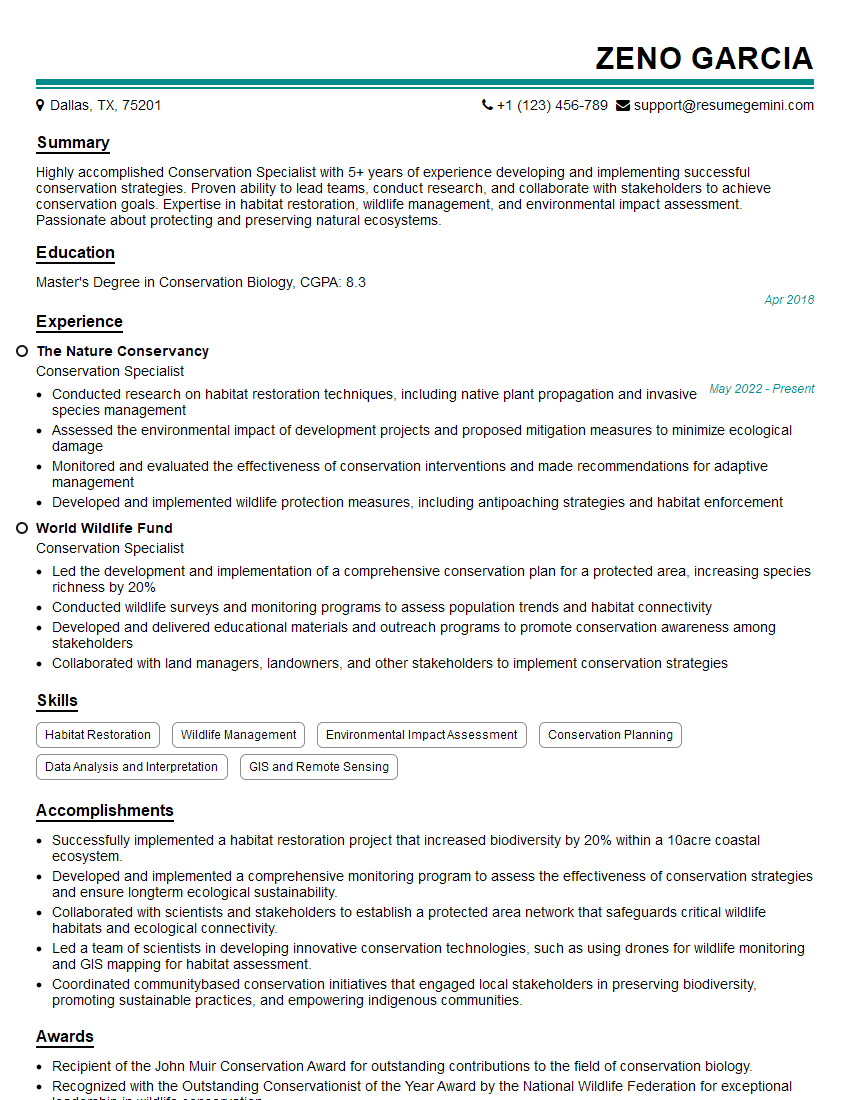
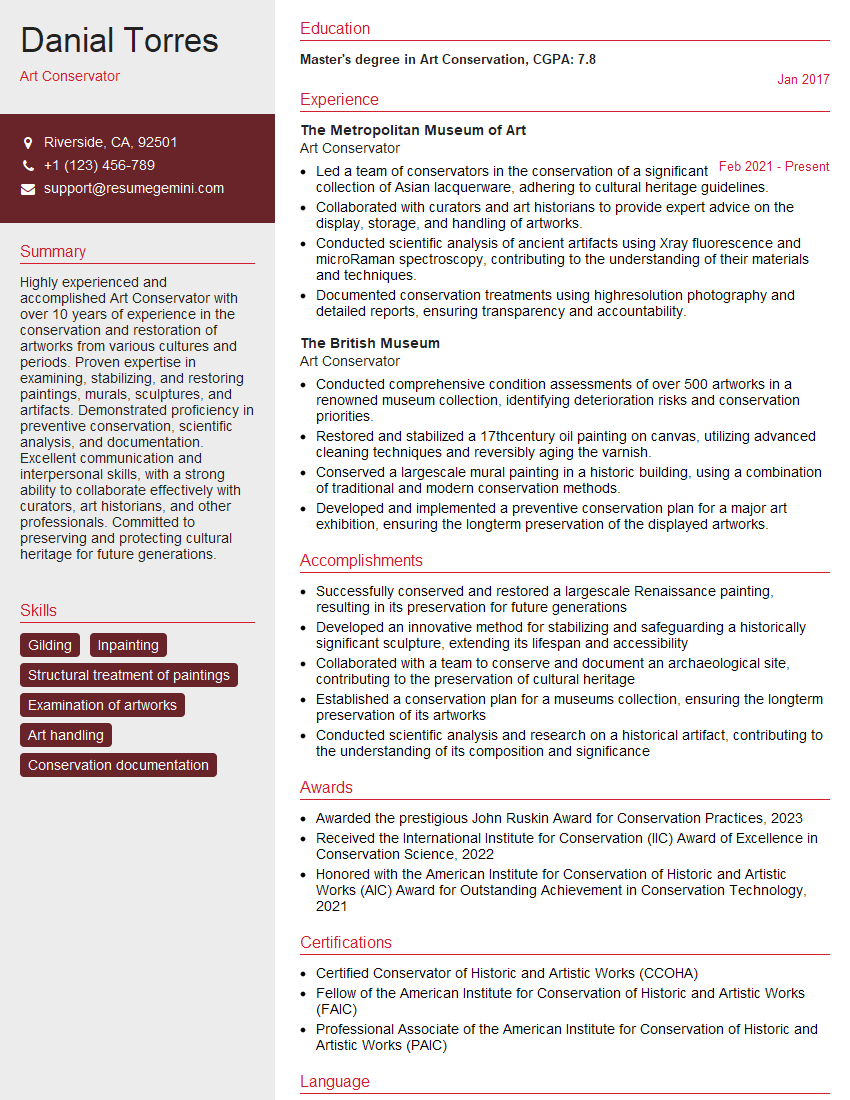
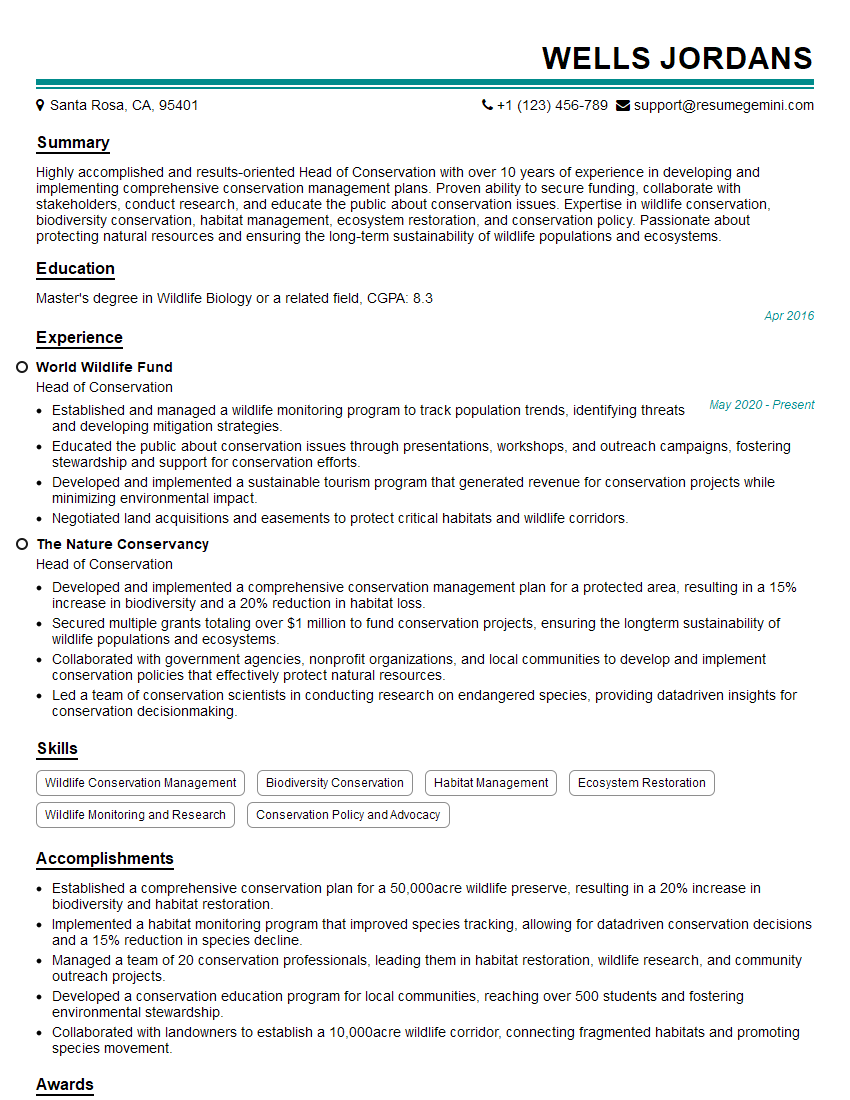
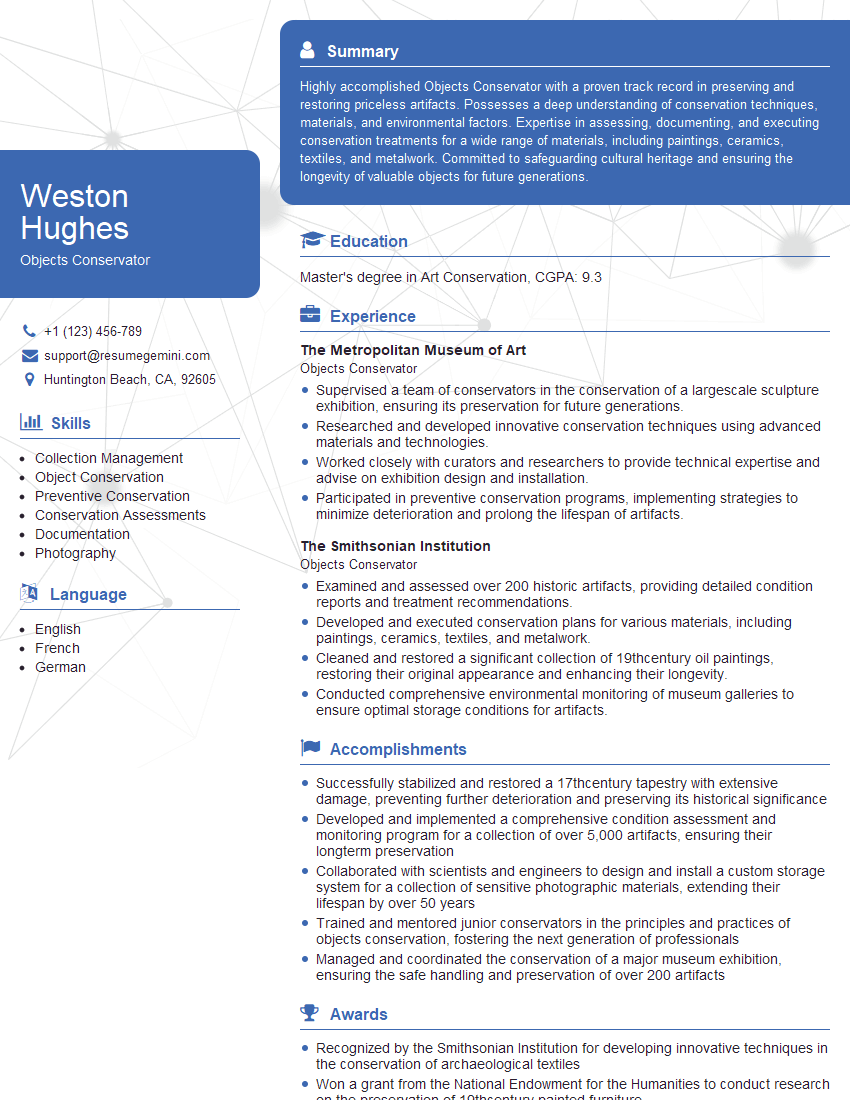
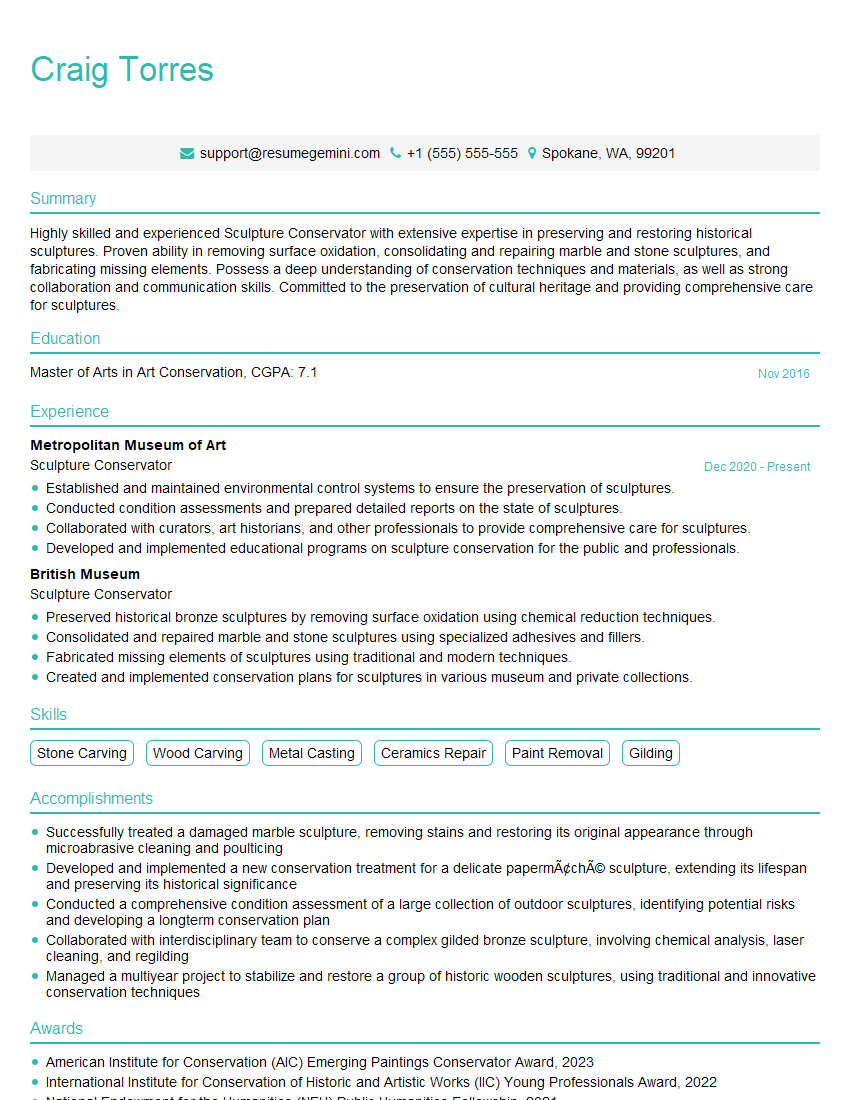
Mastering Sculpture Restoration opens doors to a rewarding career offering intellectual stimulation and the chance to preserve artistic heritage. A strong resume is crucial to showcasing your skills and experience to potential employers. Creating an ATS-friendly resume significantly increases your chances of getting your application noticed. ResumeGemini is a trusted resource to help you build a professional and effective resume that highlights your qualifications. Examples of resumes tailored specifically for Sculpture Restoration professionals are available through ResumeGemini to guide you in building your own compelling application.
Explore more articles
Users Rating of Our Blogs
Share Your Experience
We value your feedback! Please rate our content and share your thoughts (optional).
What Readers Say About Our Blog
Very informative content, great job.
good