Interviews are more than just a Q&A session—they’re a chance to prove your worth. This blog dives into essential CMOS Process Technology interview questions and expert tips to help you align your answers with what hiring managers are looking for. Start preparing to shine!
Questions Asked in CMOS Process Technology Interview
Q 1. Explain the different steps involved in a typical CMOS fabrication process.
CMOS fabrication is a complex, multi-step process that involves creating intricate patterns of transistors on a silicon wafer. Think of it like baking a very sophisticated cake, where each step is crucial for the final product’s quality. The process generally follows these steps:
- Wafer Preparation: This starts with a highly polished silicon wafer, the foundation of our chip. It undergoes cleaning and other surface treatments to ensure a pristine surface for subsequent processes.
- Oxidation: A layer of silicon dioxide (SiO2) is grown on the wafer’s surface. This acts as an insulator, preventing unwanted current flow between different parts of the circuit. Think of it as the frosting that separates layers of the cake.
- Photolithography: This is a crucial step where a pattern is transferred onto the wafer using light-sensitive materials called photoresists. We expose the photoresist to ultraviolet light through a mask that contains the circuit pattern. This is like using a stencil to create a design on the cake.
- Etching: The exposed (or unexposed, depending on the resist type) photoresist is removed, leaving behind the desired pattern on the silicon dioxide layer. This step selectively removes material, much like carving away parts of the cake to reveal a design.
- Ion Implantation: Dopant atoms (like boron or phosphorus) are implanted into the silicon to create the n-type and p-type regions of the transistors. This modifies the electrical conductivity of specific areas, like adding different flavors to sections of the cake.
- Metallization: Layers of metal (typically aluminum or copper) are deposited and patterned to create the interconnections between transistors. These metal layers are like the wiring connecting different components of our electronic circuit.
- Passivation and Testing: Finally, a protective layer is added to protect the chip from the environment. After this, rigorous testing ensures the chip functions correctly.
Each of these steps is repeated multiple times, creating the layered structure of a modern CMOS chip. Each iteration refines the design and adds complexity, making the process truly remarkable.
Q 2. Describe the challenges of scaling CMOS technology to smaller nodes.
Scaling CMOS technology down to smaller nodes (smaller transistors) presents numerous challenges. As we shrink transistor dimensions, several physical effects become more pronounced and limit performance and power efficiency:
- Short-Channel Effects (SCE): As transistors get smaller, the control over the channel current weakens, leading to leakage and reduced performance. It’s like trying to control a tiny stream of water—it becomes harder to direct precisely.
- Quantum Tunneling: At smaller scales, electrons can tunnel through barriers they shouldn’t, causing leakage currents and power dissipation. This is like having a tiny hole in a dam, causing water to leak.
- Dopant Fluctuation: Precise control over dopant atom placement becomes increasingly difficult at smaller scales, resulting in variations in transistor characteristics. It’s like trying to perfectly distribute sprinkles on a mini-cake—getting uniform coverage becomes challenging.
- Increased Leakage Current: Smaller transistors mean thinner insulating layers, leading to higher leakage currents and increased power consumption. It’s like a thin water pipe – the higher the pressure, the more likely water leaks.
- Lithography Challenges: Creating ever-smaller features using photolithography becomes increasingly difficult and expensive. The wavelength of light used limits the smallest feature size achievable.
These challenges necessitate innovative solutions like new transistor architectures (FinFETs, GAAFETs), new materials, and advanced lithographic techniques (EUV lithography) to continue Moore’s Law.
Q 3. What are the key differences between bulk CMOS and FinFET technologies?
Bulk CMOS and FinFET technologies are two major transistor architectures used in CMOS fabrication, differing primarily in their structure and resulting performance characteristics:
- Bulk CMOS: Transistors in bulk CMOS are built on a planar substrate. The channel region is formed in the bulk silicon, leading to increased short-channel effects as the transistor is scaled down. Think of it like a flat road; scaling down means the road becomes narrow quickly, resulting in traffic jams (increased leakage).
- FinFET (Fin Field-Effect Transistor): FinFETs have a three-dimensional structure, where the channel region is formed on a vertical fin of silicon. This significantly reduces short-channel effects, enabling better control over the channel current. It’s like a multi-lane highway; even if you scale it down, the number of lanes provides better traffic flow (reduced leakage).
Key differences summarized:
| Feature | Bulk CMOS | FinFET |
|---|---|---|
| Channel Structure | Planar | 3D Fin |
| Short-Channel Effects | Significant | Reduced |
| On-Current | Lower | Higher |
| Leakage Current | Higher | Lower |
| Scaling Capability | Limited | Improved |
FinFETs offer superior performance and power efficiency at smaller nodes compared to bulk CMOS, making them the preferred choice for advanced technology nodes.
Q 4. Explain the role of photolithography in CMOS fabrication.
Photolithography is the cornerstone of CMOS fabrication, allowing us to transfer intricate circuit patterns onto the silicon wafer. Imagine it as a high-precision printing process for microchips.
The process involves:
- Photoresist Application: A light-sensitive polymer (photoresist) is coated evenly onto the wafer.
- Mask Alignment: A mask, containing the circuit pattern, is precisely aligned over the wafer.
- Exposure: Ultraviolet (UV) light is shone through the mask, exposing the photoresist in the areas where the light passes through.
- Development: A developer solution removes either the exposed or unexposed photoresist, depending on the resist type (positive or negative), leaving behind the desired pattern.
The accuracy and resolution of photolithography are critical for creating small and densely packed transistors. Advanced lithographic techniques, like extreme ultraviolet (EUV) lithography, are necessary to achieve the nanoscale features required for modern chips. The resolution limit of photolithography directly impacts the minimum feature size achievable in CMOS fabrication.
Q 5. What are the different types of etching techniques used in CMOS processing?
Etching is a crucial step in CMOS fabrication, removing material selectively to create the desired patterns. Different etching techniques offer different trade-offs in terms of anisotropy (vertical etching), selectivity (etching one material without affecting another), and damage to the underlying layers. Common techniques include:
- Wet Etching: This uses chemical solutions to etch materials. It’s relatively simple and inexpensive but lacks high anisotropy, leading to undercut. Think of it like dissolving sugar with water – it’s not very precise.
- Dry Etching: This involves using plasma or reactive ions to etch materials. It provides better anisotropy and selectivity compared to wet etching, enabling the creation of highly precise patterns. It’s like using a laser to cut out a shape – much more precise than dissolving it.
- Plasma Etching: A subtype of dry etching, plasma etching uses reactive ions and neutral radicals generated in a plasma to remove material. It offers good selectivity and anisotropy, but can induce damage to the underlying layers.
- Reactive Ion Etching (RIE): Another subtype of dry etching, RIE uses a combination of physical bombardment and chemical reactions to etch materials. It provides better control over etching profiles than plasma etching but can also cause damage to the substrate.
The choice of etching technique depends on the specific material being etched, the desired pattern resolution, and the required etching profile. Often, a combination of wet and dry etching techniques is employed to achieve the desired results.
Q 6. Describe the various thin film deposition methods used in CMOS fabrication.
Thin film deposition is essential in CMOS fabrication to create various layers with specific electrical and mechanical properties. Several methods are employed:
- Physical Vapor Deposition (PVD): This involves physically vaporizing a source material and depositing it onto the wafer. Techniques include sputtering and evaporation. It’s like spraying a very thin coat of paint onto the surface.
- Chemical Vapor Deposition (CVD): This involves using chemical reactions to deposit thin films. Precursor gases are introduced into a reaction chamber, where they decompose and deposit a thin film on the wafer. It’s more like a chemical reaction creating a film.
- Atomic Layer Deposition (ALD): This is a highly precise technique that deposits one atomic layer at a time. It allows for very precise control over film thickness and uniformity. It’s analogous to stacking atomically thin layers one by one, ensuring precise control.
- Molecular Beam Epitaxy (MBE): This is a sophisticated technique used for growing high-quality crystalline films with precise control over composition and doping. It allows for the creation of heterostructures with different materials layered on top of each other.
The selection of the deposition technique depends on factors such as the desired material properties, the required film thickness and uniformity, and the cost-effectiveness of the method.
Q 7. Explain the concept of ion implantation and its importance in CMOS.
Ion implantation is a crucial process in CMOS fabrication where dopant ions are accelerated and implanted into the silicon wafer. It allows for precise control over the electrical conductivity of specific regions, enabling the creation of n-type and p-type regions required for transistors. Think of it as adding specific ingredients (dopants) to different parts of the cake batter to achieve different flavors (conductivity).
The process involves:
- Ion Generation: Dopant atoms are ionized and accelerated to high energies.
- Ion Acceleration: The ions are accelerated towards the wafer using an electric field.
- Implantation: The high-energy ions penetrate the silicon wafer and are implanted at specific depths.
- Annealing: A high-temperature annealing step is performed to activate the dopant atoms and repair any damage caused by the implantation process.
Ion implantation allows for precise control over the dopant concentration and distribution, enabling the fabrication of complex semiconductor devices. The precise control of the implantation parameters (energy, dose, and implant angle) is essential for controlling the electrical characteristics of the transistors. Improper ion implantation can lead to variations in transistor parameters, affecting overall chip performance.
Q 8. What are the common challenges in achieving high yield in CMOS manufacturing?
Achieving high yield in CMOS manufacturing is a constant challenge, akin to hitting a tiny bullseye blindfolded. Many factors contribute to low yield, ultimately resulting in non-functional chips. These can be broadly categorized into:
- Random Defects: These are unpredictable imperfections introduced during various processing steps. Examples include particulate contamination (dust), crystal defects in the silicon wafer, or random variations in the dopant concentration. These are often tackled through rigorous cleanroom protocols, advanced materials, and statistical process control.
- Systematic Defects: These are recurring flaws resulting from identifiable process issues. A misaligned mask, a faulty etching recipe, or an improperly calibrated ion implantation machine can all lead to systematic defects across a wafer or even a batch of wafers. Identifying and fixing these requires meticulous process monitoring, data analysis, and in-depth failure analysis.
- Process Variations: Even with perfect processes, inherent variations exist due to the nature of the materials and equipment. These variations can be within a single wafer (intra-wafer) or between wafers (inter-wafer). Advanced statistical process control techniques, design rules for robustness, and process optimization are used to mitigate these variations.
Imagine baking a cake – even with the perfect recipe, slight inconsistencies in ingredients or oven temperature can affect the final product. In CMOS manufacturing, these ‘inconsistencies’ are defects, and minimizing them is key to achieving high yield.
Q 9. How do you characterize the electrical properties of a CMOS device?
Characterizing the electrical properties of a CMOS device involves a suite of measurements that reveal its functionality and performance. This is typically done at several levels: individually, on a wafer level, and lot level. Key parameters include:
- Threshold Voltage (Vth): Determines the voltage required to turn the transistor on. Measured using a curve tracer, it affects the power consumption and speed of the device.
- Drain Current (ID): The current flowing through the transistor. Measured as a function of gate voltage (VGS) and drain voltage (VDS) to assess transistor behavior and gain.
- Subthreshold Slope (SS): Indicates the sharpness of the transistor’s turn-on characteristics. A steeper slope is desirable for lower leakage power.
- Leakage Current (Ioff): The current flowing when the transistor is ideally off. High leakage is undesirable and impacts power consumption.
- Capacitances (Cgg, Cgd etc.): Capacitances between various transistor terminals, critical for determining device speed and power.
These measurements are usually performed using specialized equipment like semiconductor parameter analyzers, capable of applying precise voltages and currents and measuring the response of the device. These data points are crucial for verifying process performance and fine-tuning device design.
Q 10. Describe different techniques for process control and monitoring.
Process control and monitoring in CMOS manufacturing are crucial for maintaining consistent product quality and high yield. Effective strategies include:
- In-situ Monitoring: Real-time monitoring of process parameters during fabrication steps, such as temperature, pressure, and gas flow, allows for immediate adjustments and reduces defects. For example, monitoring the plasma etch process using optical emission spectroscopy helps ensure the desired etch rate and uniformity.
- Statistical Process Control (SPC): This involves collecting and analyzing data from various process steps to identify trends and variations. Control charts are used to track key parameters and detect anomalies, allowing for timely intervention. For instance, monitoring the critical dimension (CD) of features using SPC charts helps maintain consistent device dimensions.
- Feedback Control: This involves using sensor data to automatically adjust process parameters to maintain desired specifications. For instance, adjusting the ion implantation dose based on real-time measurements of the dopant concentration.
- Design of Experiments (DOE): This methodology helps optimize process parameters by systematically varying them and observing their effects. This is used to understand process interactions and improve overall performance.
Think of it like a self-regulating system; sensors constantly monitor the process, and adjustments are made automatically to maintain the desired outcome. This ensures that the process remains within acceptable limits and high yield is maintained.
Q 11. Explain the importance of metrology in CMOS process control.
Metrology is the science of measurement, and its role in CMOS process control is paramount. Accurate and precise measurements are essential for ensuring that the fabrication process meets specifications. Metrology techniques provide feedback on the critical dimensions (CDs) of features, dopant concentrations, film thicknesses, and other key parameters. Without accurate metrology, it’s impossible to:
- Verify process performance: Confirm that each step in the fabrication process is achieving the desired results.
- Identify and correct process deviations: Quickly detect and address issues before they significantly impact yield.
- Optimize process parameters: Fine-tune the process to achieve higher performance, lower power, and improved yield.
- Ensure product quality: Guarantee that the final devices meet specifications and perform reliably.
Accurate metrology is like having a precise measuring tape for your entire fabrication process; without it, you are effectively building without a plan, increasing risk and lowering efficiency. Modern metrology techniques employ scanning electron microscopes (SEM), atomic force microscopes (AFM), optical scatterometry, and electrical measurements to ensure accuracy and precision.
Q 12. How do you troubleshoot yield excursions in a CMOS fab?
Troubleshooting yield excursions in a CMOS fab is a systematic process involving data analysis, root cause identification, and corrective actions. A structured approach is key:
- Data Analysis: Start by carefully examining the yield data to identify the specific process steps or parameters that are contributing to the excursion. This often involves charting parameters over time to identify trends.
- Root Cause Identification: This is a crucial step involving investigating the identified problem areas. Techniques include examining process logs, analyzing defect maps, and performing failure analysis to pinpoint the underlying issues. Consider the 5 Whys technique – repeatedly ask ‘Why’ to delve deeper into the root causes.
- Corrective Actions: Once the root cause(s) are identified, implementing corrective actions is necessary. This might include adjusting process parameters, replacing equipment, refining process recipes, or improving material handling procedures.
- Verification and Monitoring: After implementing corrective actions, it’s crucial to monitor the process closely to verify that the yield has indeed improved and that the corrective actions have resolved the underlying issues.
Imagine a detective investigating a crime – they collect evidence, analyze it, and deduce the cause before proposing solutions and verifying their effectiveness. Troubleshooting yield excursions demands a similar methodical approach.
Q 13. What are the various failure analysis techniques used to identify defects in CMOS devices?
Failure analysis techniques for CMOS devices are used to identify the physical defects causing device malfunction. These techniques can be destructive or non-destructive. Common methods include:
- Optical Microscopy: A basic technique using optical microscopes to visually inspect the device for surface defects. Useful for identifying gross defects.
- Scanning Electron Microscopy (SEM): Provides high-resolution images of the device surface and cross-sections, allowing for detailed analysis of defects. This can help identify particles, voids, and other features.
- Transmission Electron Microscopy (TEM): Offers even higher resolution, allowing for the identification of very small defects at the atomic level.
- Focused Ion Beam (FIB): A technique using a focused ion beam to mill sections of the device for cross-sectional SEM imaging or to isolate specific areas for further analysis.
- Electron Beam Induced Current (EBIC): Uses an electron beam to generate current in the device, revealing defects that affect the current flow.
- Scanning Capacitance Microscopy (SCM): Measures the capacitance variations across the device surface, revealing defects affecting the device’s electrical properties.
Each technique offers unique capabilities, and the choice of method depends on the suspected type of defect and the level of detail required for its identification.
Q 14. Explain the concept of process window and its significance.
The process window in CMOS manufacturing represents the range of process parameters that produce acceptable devices. It’s a crucial concept, like the sweet spot in a game, where all conditions are optimal for success. It’s defined by the combination of process parameters (e.g., gate oxide thickness, dopant concentration, critical dimensions) that yield devices meeting performance and reliability specifications. A larger process window means greater tolerance for variations in process parameters, leading to higher yield and potentially lower manufacturing costs. Conversely, a small process window indicates sensitivity to process variations, resulting in lower yields and increased manufacturing complexity.
For example, the process window for threshold voltage (Vth) might be specified as 0.4V ± 0.05V. Any device with Vth outside this range would be considered out of specification. Designing a process with a large process window is a major goal for CMOS process engineers, ensuring robustness and high yield.
Q 15. Describe the different types of defects that can occur during CMOS fabrication.
CMOS fabrication is a complex process, and defects can arise at various stages. These defects can broadly be categorized into:
- Particle Defects: These are unwanted particles (dust, etc.) that settle on the wafer during processing, leading to shorts or opens in the circuitry. Think of it like a speck of dust ruining a perfectly painted wall.
- Etch Defects: Problems during the etching process can result in under-etching (leaving behind unwanted material) or over-etching (removing too much material), affecting the dimensions and functionality of transistors.
- Photolithographic Defects: Imperfections in the photoresist or misalignment during lithography can lead to mis-shaped or misplaced features. Imagine a blurry photograph – the details are compromised.
- Oxidation Defects: Issues during the oxidation process, such as non-uniform oxide growth or pinholes in the oxide layer, can compromise the insulating properties of the gate oxide, leading to leakage currents.
- Implantation Defects: Inconsistent ion implantation can result in variations in doping concentrations, affecting transistor performance and characteristics. This is like unevenly applying fertilizer to a field – some plants thrive, others don’t.
- Metallization Defects: Defects during metal deposition and patterning, such as voids, opens, or shorts, can disrupt the interconnect network.
The type and severity of defects depend heavily on the specific process steps and the cleanliness of the fabrication environment. Advanced process control techniques and rigorous quality checks are essential to minimize their occurrence.
Career Expert Tips:
- Ace those interviews! Prepare effectively by reviewing the Top 50 Most Common Interview Questions on ResumeGemini.
- Navigate your job search with confidence! Explore a wide range of Career Tips on ResumeGemini. Learn about common challenges and recommendations to overcome them.
- Craft the perfect resume! Master the Art of Resume Writing with ResumeGemini’s guide. Showcase your unique qualifications and achievements effectively.
- Don’t miss out on holiday savings! Build your dream resume with ResumeGemini’s ATS optimized templates.
Q 16. How do you minimize process variations in CMOS manufacturing?
Minimizing process variations is crucial for achieving high yields and consistent performance in CMOS manufacturing. Strategies employed include:
- Advanced Process Control (APC): APC uses real-time monitoring and feedback to adjust process parameters dynamically, compensating for variations and ensuring consistency. This is like a self-correcting system constantly adjusting to maintain optimal conditions.
- Statistical Process Control (SPC): SPC techniques like control charts are employed to monitor process parameters and identify sources of variation. This allows for proactive identification and correction of issues before they become major problems. Think of it as preventative maintenance.
- Design for Manufacturing (DFM): DFM considers manufacturability early in the design process, selecting designs less sensitive to process variations. This is akin to choosing building materials that are less prone to damage during construction.
- Improved Equipment and Materials: Utilizing advanced equipment with higher precision and employing higher-purity materials reduces inherent process variation. This is analogous to using higher-quality tools for a more precise outcome.
- Process Optimization: Careful optimization of process parameters (temperature, pressure, time, etc.) through experimentation and simulation minimizes the impact of uncontrollable factors. This is like fine-tuning a recipe to get the desired outcome consistently.
A combination of these techniques is typically employed to achieve the best results, and it requires continuous effort to maintain control and improve process robustness.
Q 17. What are the key considerations for designing robust CMOS circuits?
Designing robust CMOS circuits involves considering various factors that can impact circuit performance and reliability in the face of process variations and environmental conditions. Key considerations include:
- Wide-Process-Corner Design: Designing circuits that function correctly across a range of process variations (slow, typical, fast). This ensures reliability regardless of the specific fabrication parameters.
- Mismatch Compensation Techniques: Addressing variations in transistor parameters (e.g., threshold voltage, gain) between transistors on a single chip through careful design and layout techniques. This is like ensuring multiple parts of a machine function correctly despite slight manufacturing differences.
- Layout Optimization: Careful placement and routing of transistors and interconnects to minimize parasitic effects and improve matching between devices. Proper layout minimizes interference and ensures efficient signal transmission.
- Robust Circuit Topologies: Utilizing circuit topologies inherently less sensitive to variations in device parameters. Selecting appropriate circuit styles significantly influences the robustness of the design.
- Redundancy and Fault Tolerance: Incorporating redundancy or fault tolerance mechanisms to improve the resilience of the circuit in case of component failures. This is like having backup systems in place to ensure continued operation.
- Supply Voltage and Temperature Considerations: Designing circuits that operate correctly over the expected range of supply voltage and operating temperatures. This ensures the functionality of the design across various operating conditions.
By addressing these considerations, designers ensure the reliability and consistent performance of their circuits even in the presence of process variations.
Q 18. Describe your experience with different types of CMOS process simulation tools.
Throughout my career, I’ve extensively used various CMOS process simulation tools. My experience encompasses tools like:
- Synopsys HSPICE: A widely used industry-standard simulator for circuit simulation, providing accurate predictions of circuit behavior across various conditions. I’ve used this for transient, AC, DC, and noise analyses.
- Cadence Spectre: Another leading simulator used for detailed circuit and system-level simulation, allowing for verification of designs under different operating conditions and process variations.
- Silvaco TCAD: This tool is invaluable for process and device simulations. I’ve used it extensively for modeling transistor behavior, including the effects of process variations on device characteristics. This helps in early design optimization.
- Mentor Graphics QuestaSim: For system-level verification and co-simulation, ensuring that the design integrates correctly with other system components. It has been particularly helpful in verifying complex system-on-chip (SoC) designs.
My experience extends beyond basic simulations. I am proficient in using these tools to perform Monte Carlo simulations to analyze the impact of process variations on circuit performance, and statistical corner analysis to identify worst-case scenarios.
Q 19. What is your experience with Statistical Process Control (SPC)?
Statistical Process Control (SPC) is an integral part of ensuring consistent and high-quality manufacturing in CMOS fabrication. My experience with SPC involves:
- Control Chart Analysis: I’m adept at creating and interpreting control charts (e.g., X-bar and R charts, C charts) to monitor key process parameters (e.g., critical dimension, sheet resistance) and detect shifts or trends indicative of process instability. This helps in pinpointing potential problems before they significantly affect the yield.
- Capability Analysis: I’ve used capability analysis to assess the process capability and determine whether it meets predefined specifications. This allows for proactive identification of areas for process improvement.
- Process Fault Detection and Root Cause Analysis: When process variations exceed acceptable limits, I am experienced in applying SPC principles to identify the root causes of the variation and implementing corrective actions.
- Data Analysis and Interpretation: My skills include analyzing large datasets of process data to identify patterns, trends, and correlations that may not be apparent through simple visual inspection. This enables data-driven decision-making for process improvement.
I’ve worked with software packages like Minitab and JMP for SPC analysis, but more importantly, my experience emphasizes the integration of SPC into a holistic quality management system.
Q 20. Explain the role of Design-for-Manufacturing (DFM) in CMOS technology.
Design-for-Manufacturing (DFM) is a crucial methodology in CMOS technology that considers manufacturing constraints and variations during the design phase to ensure manufacturability and high yields. This involves:
- Process Variation Awareness: Understanding and incorporating knowledge of process variations and their impact on circuit performance is paramount. This includes considering variations in critical dimensions, doping concentrations, and other parameters.
- Design Rule Checking (DRC): Ensuring the design adheres to the fabrication facility’s design rules to avoid manufacturing issues. This is a critical step to prevent layout-related errors.
- Layout Optimization: Optimizing the layout to minimize parasitic effects and enhance matching between transistors. This includes considerations for routing, placement, and symmetry to minimize process-induced variations.
- Robust Design Techniques: Employing design techniques that reduce sensitivity to process variations, such as wide-process-corner design and mismatch compensation. This makes the design more resilient to variations.
- Early Collaboration with Fabrication Engineers: Close collaboration with manufacturing engineers is essential throughout the design cycle to ensure the design is manufacturable and meets performance goals. This includes feedback loops for iterative design refinements.
Implementing DFM effectively translates to reduced design iterations, higher yields, and lower manufacturing costs, making it a critical aspect of successful CMOS chip development.
Q 21. What are the key parameters used to evaluate the performance of a CMOS device?
Several key parameters are used to evaluate the performance of a CMOS device. These parameters can be broadly classified into DC, AC, and noise characteristics:
- DC Characteristics: These include threshold voltage (VT), leakage current (Ioff), on-current (Ion), and drain-induced barrier lowering (DIBL). These parameters describe the device’s behavior under static conditions.
- AC Characteristics: These include cutoff frequency (fT), transit frequency (fmax), and gain. These parameters describe the device’s behavior at high frequencies.
- Noise Characteristics: These include flicker noise (1/f noise), thermal noise, and shot noise. These parameters quantify the random variations in the output signal due to noise sources within the device.
- Power Consumption: Static and dynamic power consumption are critical in modern low-power designs. This includes leakage current, short-circuit current, and capacitive loading.
- Reliability Metrics: These include Mean Time To Failure (MTTF), electromigration, and hot-carrier effects. These metrics gauge the long-term reliability and lifespan of the device.
The relative importance of these parameters depends on the specific application. For instance, high-speed applications prioritize fT and fmax, while low-power applications focus on leakage current and power consumption. A comprehensive assessment of these parameters provides a complete picture of the device’s performance.
Q 22. Describe your experience with different types of CMOS process equipment.
My experience encompasses a wide range of CMOS process equipment, from front-end-of-line (FEOL) to back-end-of-line (BEOL) processes. In FEOL, I’ve worked extensively with photolithography tools like steppers and scanners, using various resists and processes to define intricate circuit patterns with resolutions down to the sub-20nm node. I’m also proficient in ion implantation, using tools like high-current implanters to precisely dope silicon wafers with different impurities to control transistor characteristics. My experience with chemical mechanical planarization (CMP) is crucial for achieving planar surfaces after each processing step, ensuring consistent film thickness and minimizing defects. In BEOL, I’ve worked with various deposition techniques like CVD and ALD for dielectric and metal layers, as well as etching tools using plasma processes to precisely shape these layers. Finally, my expertise extends to metrology tools like ellipsometers and SEMs, essential for monitoring and controlling the critical dimensions and properties of the fabricated structures. For example, I successfully troubleshot a yield issue in a high-volume production line by identifying a subtle misalignment in the stepper tool using advanced metrology techniques.
Furthermore, I have hands-on experience with advanced equipment like EUV lithography systems, showcasing my ability to adapt to cutting-edge technologies. This involved not only operating the equipment but also participating in process optimization and developing innovative solutions to address challenges associated with EUV lithography, such as resist sensitivity and throughput.
Q 23. How familiar are you with different types of CMOS logic families?
My familiarity with CMOS logic families is comprehensive, covering various technologies used across different applications. I have a strong understanding of the trade-offs between speed, power consumption, and area for each family. For example, I’ve worked extensively with static CMOS (also known as complementary CMOS), which is the dominant logic family in modern integrated circuits due to its low static power consumption and relatively high speed. I’m also knowledgeable about dynamic CMOS, often used in memory circuits where the state is refreshed periodically to reduce the power consumption compared to static CMOS, but at the cost of speed. I’ve had experience with other families including Domino logic (used in high-speed circuits because of its reduced delay) and pass-transistor logic, which offers higher density but suffers from signal degradation and higher power consumption.
I can also discuss the advantages and disadvantages of each logic family with regards to specific applications, such as the use of low-power logic styles in mobile devices and high-speed logic styles in high-performance computing. For instance, I was involved in a project where we replaced a section of the design using Domino logic to reduce the clock cycle time of a high-performance microprocessor.
Q 24. What are the future trends in CMOS technology?
Future trends in CMOS technology are driven by the relentless demand for smaller, faster, and more energy-efficient devices. Several key areas are shaping the future:
- Continued miniaturization: We’ll see further scaling down of transistor dimensions, pushing the limits of lithography and materials science. This involves exploration of EUV and beyond-EUV lithography techniques, and the exploration of novel materials like Graphene and 2D materials to overcome limitations of silicon.
- 3D integration: Stacking multiple chips vertically will increase density and performance, enabling more complex systems on a smaller footprint. This necessitates advancements in through-silicon vias (TSVs) and advanced packaging techniques.
- New materials and architectures: Research into novel materials beyond silicon and exploring new transistor architectures like FinFETs, GAAFETs, and beyond will be crucial to overcome physical limitations of silicon transistors.
- Power efficiency: Significant emphasis will be placed on minimizing power consumption, employing techniques like low-power logic styles, adaptive voltage scaling, and advanced power management techniques.
- Specialized architectures: We’ll see a rise of specialized architectures optimized for specific tasks (AI accelerators, neuromorphic computing) rather than the traditional general-purpose architectures.
These trends present exciting challenges and opportunities, requiring innovative solutions across all aspects of CMOS technology, from materials science and device physics to circuit design and manufacturing processes.
Q 25. Explain your experience in dealing with safety and environmental regulations within a cleanroom environment.
Safety and environmental regulations are paramount in a cleanroom environment. My experience involves strict adherence to protocols for handling hazardous chemicals, including proper storage, use, and disposal procedures. I’m familiar with the safety data sheets (SDS) for all chemicals used and understand the necessary precautions, including personal protective equipment (PPE) requirements like cleanroom suits, gloves, and safety glasses. I’ve participated in regular safety training and emergency drills, including responses to chemical spills and other potential hazards.
Furthermore, I’m aware of the environmental impact of semiconductor manufacturing and the importance of waste reduction, recycling, and responsible disposal of hazardous materials. I have experience with cleanroom waste management practices, including the proper segregation and handling of different types of waste to minimize environmental impact. For example, I was instrumental in implementing a new waste management system at my previous company that resulted in a significant reduction in hazardous waste generation.
Q 26. How do you prioritize tasks and manage your time effectively in a fast-paced environment?
In a fast-paced environment, effective prioritization and time management are crucial. I employ a combination of techniques, including:
- Prioritization matrices: I use methods like the Eisenhower Matrix (urgent/important) to categorize tasks and focus on high-impact activities first.
- Task breakdown: Complex projects are broken down into smaller, manageable tasks with clear deadlines.
- Time blocking: I allocate specific time slots for focused work on critical tasks, minimizing distractions.
- Regular review and adjustment: I regularly review my progress and adjust my schedule as needed to adapt to changing priorities.
- Proactive communication: I communicate proactively with stakeholders to manage expectations and identify potential roadblocks early on.
For example, during a critical product launch, I used a combination of these techniques to successfully manage multiple competing deadlines, resulting in the timely release of the product without compromising quality.
Q 27. Describe your experience working with cross-functional teams.
I have extensive experience working in cross-functional teams, encompassing engineers from various disciplines such as process, design, and equipment engineering, as well as technicians and management. I believe in fostering strong communication and collaboration. I’m adept at clearly articulating technical concepts to non-technical audiences and actively listening to the perspectives of others.
My approach involves leveraging the strengths of each team member to achieve common goals. I actively participate in team discussions, offering constructive feedback and facilitating consensus-building. I’ve successfully resolved conflicts through open communication and collaboration. For instance, I facilitated a collaborative effort between the process and design teams to resolve a critical yield issue, resulting in a significant improvement in product quality.
Q 28. What is your understanding of CMOS technology’s role in sustainable technology development?
CMOS technology plays a vital role in sustainable technology development through several avenues:
- Energy efficiency: Advancements in CMOS technology lead to more energy-efficient devices, reducing the overall energy consumption of electronic systems. This contributes to reducing carbon emissions and promoting a greener IT infrastructure.
- Miniaturization: Smaller and more compact devices require less material, reducing waste during manufacturing and contributing to resource conservation.
- Enabling sustainable technologies: CMOS technology is essential for developing sustainable technologies like smart grids, renewable energy management systems, and environmental monitoring sensors.
- Improved manufacturing processes: Ongoing research focuses on reducing the environmental impact of CMOS manufacturing processes through improved chemical handling, reduced water usage, and recycling initiatives.
I believe that the ongoing development of energy-efficient CMOS devices and manufacturing processes is essential for creating a more sustainable future for electronics and technology as a whole.
Key Topics to Learn for CMOS Process Technology Interview
- Silicon Crystal Growth and Wafer Preparation: Understanding the intricacies of crystal growth techniques (CZ, FZ), wafer orientation, and surface preparation methods crucial for device fabrication.
- Photolithography and Patterning: Mastering the principles of photolithography, including exposure, development, and etching, and their impact on feature size and resolution. Practical application: Analyzing and troubleshooting lithography defects.
- Thin Film Deposition: Comprehending various deposition techniques (CVD, PVD, ALD) and their role in creating layers with specific electrical and physical properties. Practical application: Optimizing deposition parameters for desired film characteristics.
- Ion Implantation and Diffusion: Understanding how dopants are introduced into silicon to control conductivity. Practical application: Calculating doping concentrations and their impact on device performance.
- Etching Techniques: Grasping different etching methods (wet, dry) and their selectivity and anisotropy for creating complex three-dimensional structures. Practical application: Selecting appropriate etching techniques for specific applications.
- Metallization and Interconnects: Understanding the processes involved in creating metal interconnects for connecting different parts of the integrated circuit. Practical application: Analyzing the impact of interconnect resistance and capacitance on circuit performance.
- Device Physics and Characterization: A strong foundation in MOSFET operation, including threshold voltage, current-voltage characteristics, and capacitance-voltage characteristics. Practical application: Interpreting device characteristics and identifying potential problems.
- Process Integration and Yield Improvement: Understanding the entire CMOS process flow and how different process steps interact. Practical application: Identifying and resolving yield limitations through process optimization.
- Advanced CMOS Technologies: Familiarity with FinFETs, GAAFETs, and other advanced transistor architectures. Practical application: Comparing different transistor architectures and their advantages and disadvantages.
- Process Monitoring and Control: Understanding the use of metrology techniques (e.g., ellipsometry, SEM, TEM) for process monitoring and control. Practical application: Interpreting metrology data and implementing corrective actions.
Next Steps
Mastering CMOS Process Technology opens doors to exciting and rewarding careers in semiconductor manufacturing, research, and design. A strong understanding of these processes is highly sought after by leading companies. To significantly enhance your job prospects, creating an ATS-friendly resume is crucial. ResumeGemini is a trusted resource to help you build a compelling and effective resume that highlights your skills and experience. ResumeGemini provides examples of resumes tailored to CMOS Process Technology, guiding you towards a successful job search.
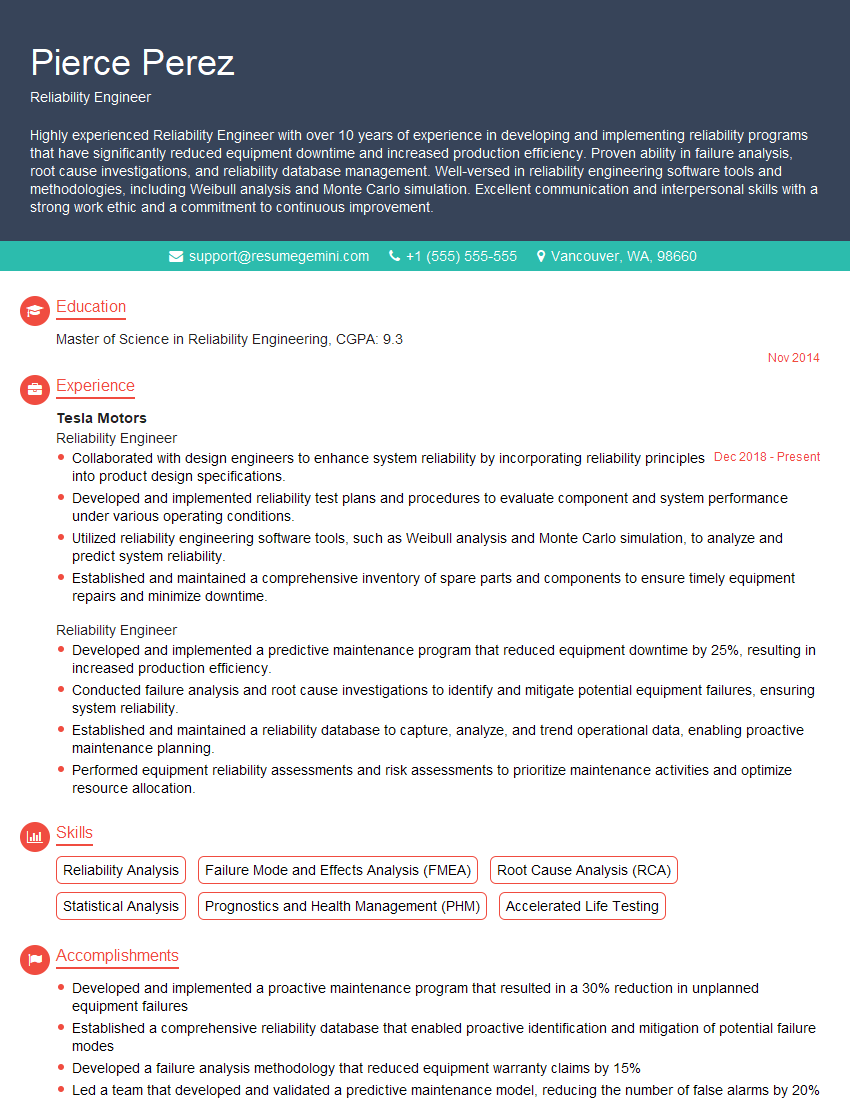
Reliability Engineer Resume Sample
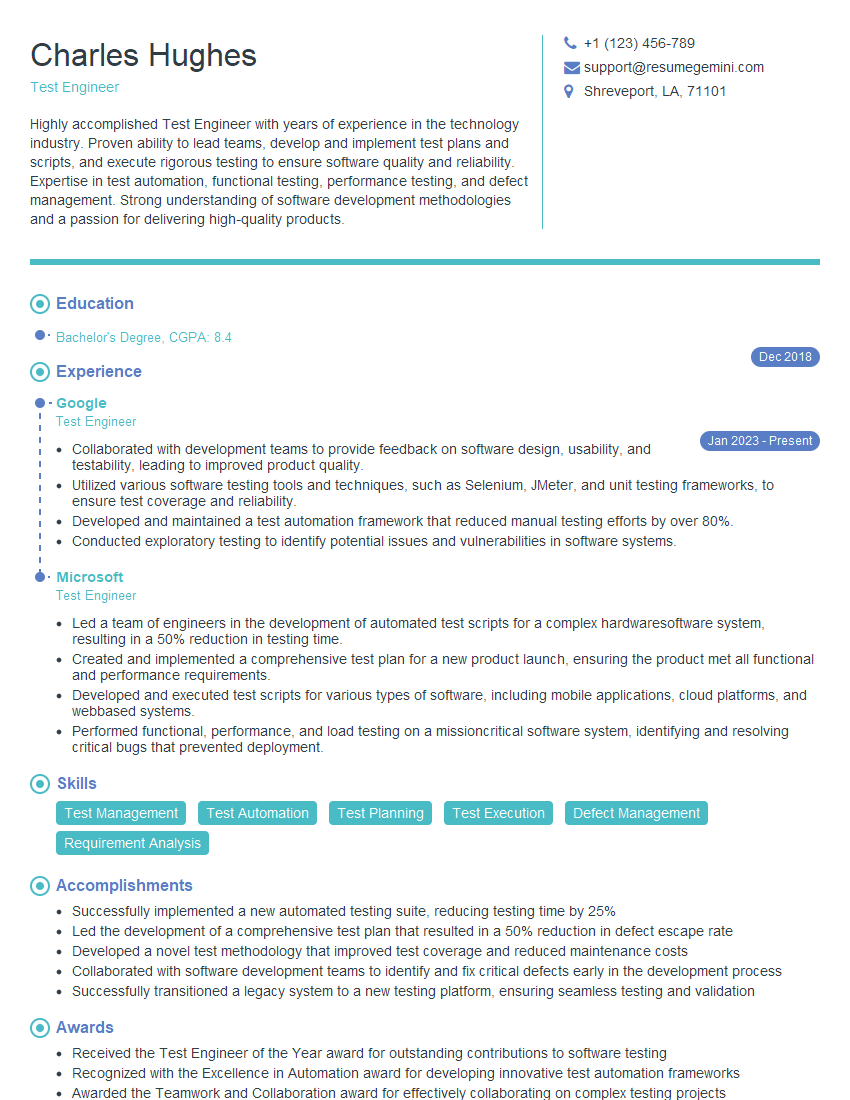
Test Engineer Resume Sample
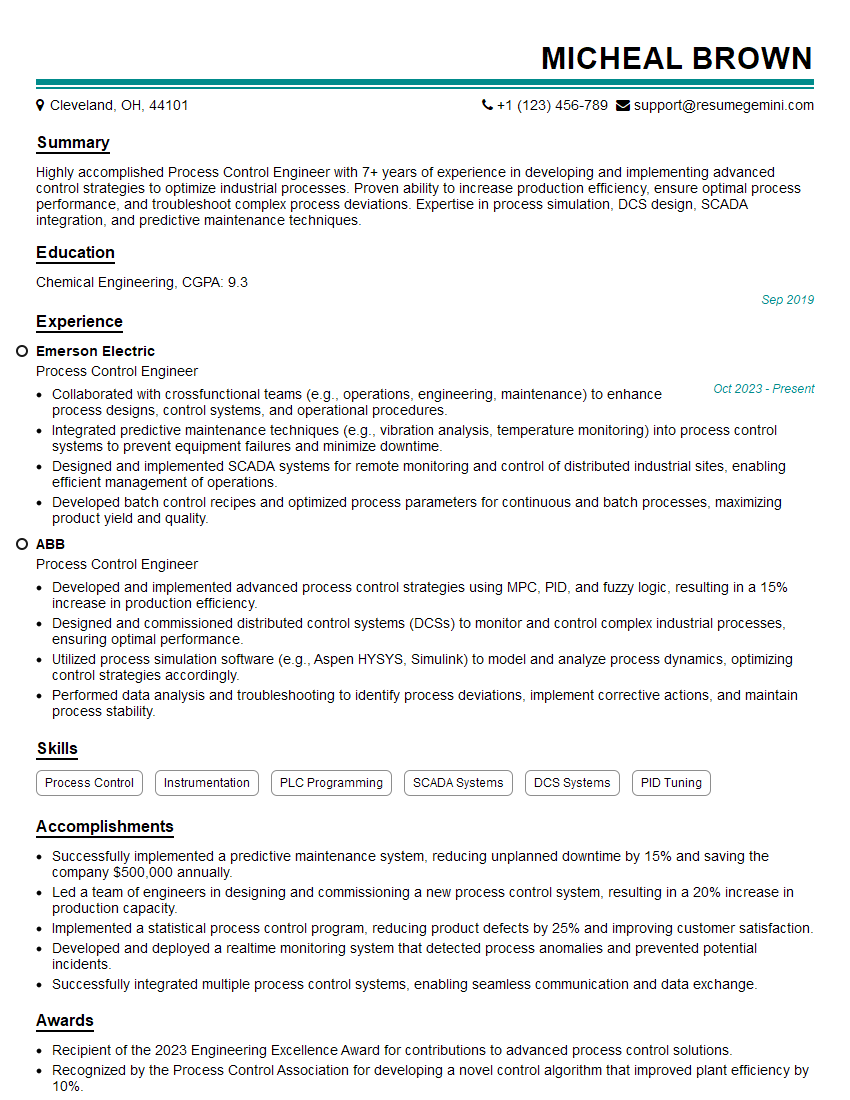
Process Control Engineer Resume Sample
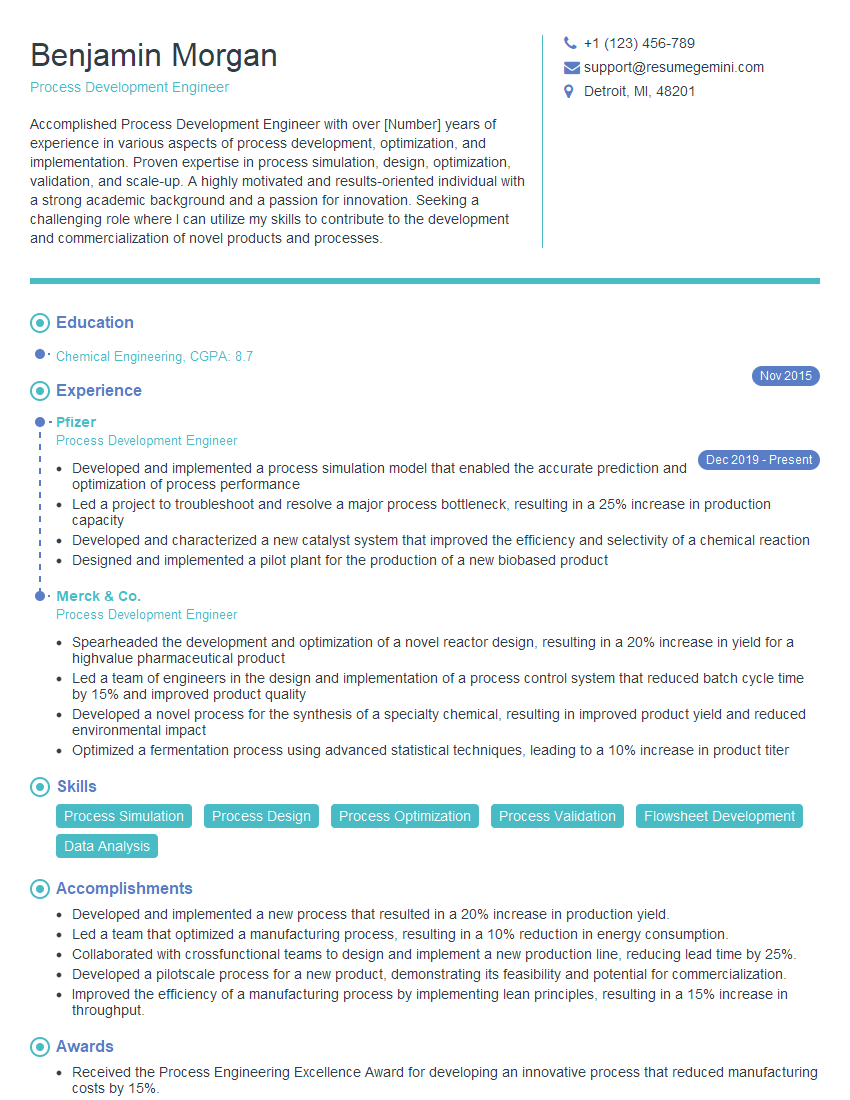
Process Development Engineer Resume Sample

Equipment Engineer Resume Sample
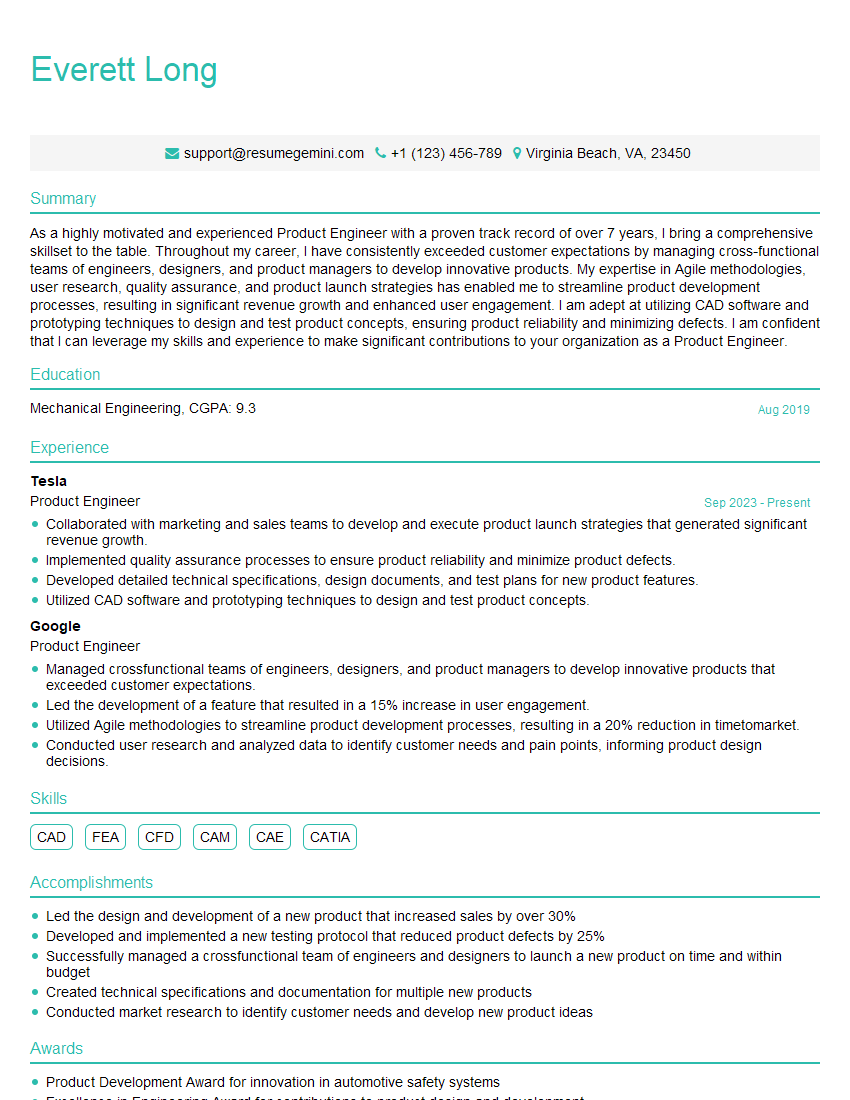
Product Engineer Resume Sample
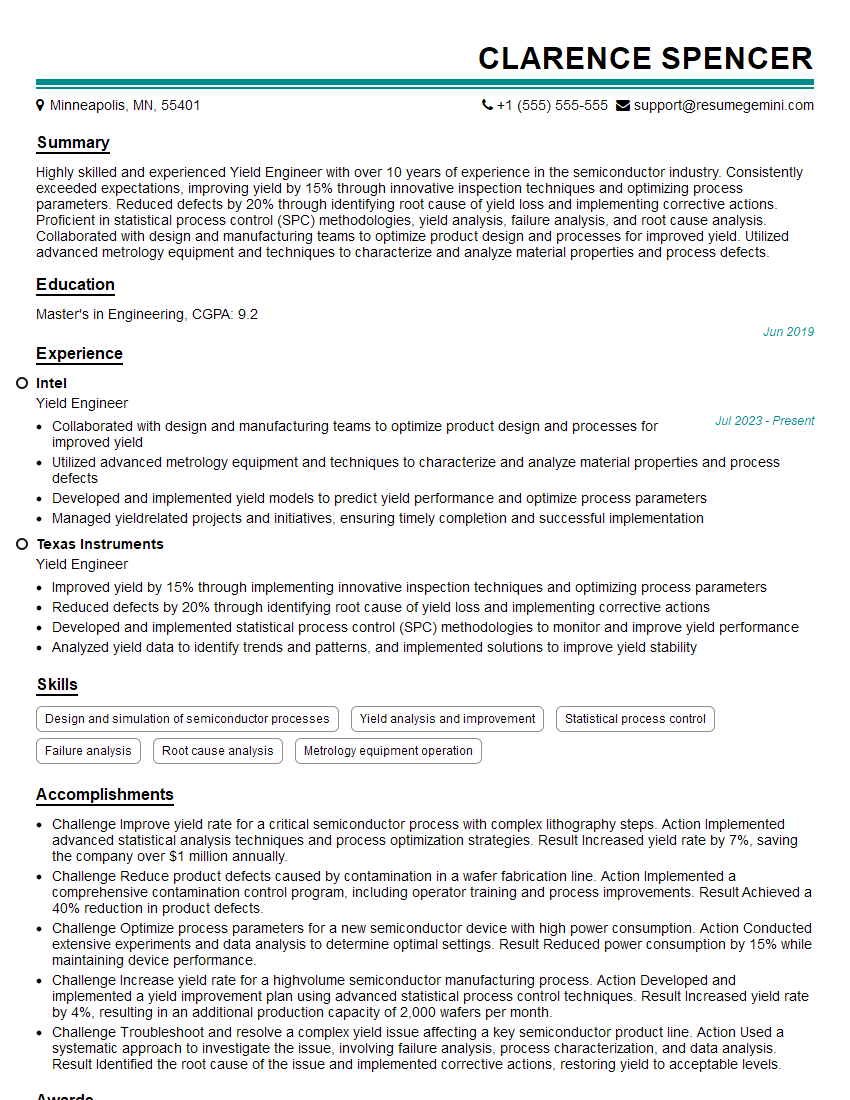
Yield Engineer Resume Sample

Manufacturing Process Engineer Resume Sample

Device Engineer Resume Sample
Explore more articles
Users Rating of Our Blogs
Share Your Experience
We value your feedback! Please rate our content and share your thoughts (optional).
What Readers Say About Our Blog
Very informative content, great job.
good