Interviews are opportunities to demonstrate your expertise, and this guide is here to help you shine. Explore the essential Coaching at Various Levels interview questions that employers frequently ask, paired with strategies for crafting responses that set you apart from the competition.
Questions Asked in Coaching at Various Levels Interview
Q 1. Describe your coaching philosophy and approach.
My coaching philosophy centers around empowering individuals to unlock their full potential and achieve sustainable growth. I believe in a collaborative, strengths-based approach, focusing on the client’s unique aspirations and resources. My approach is holistic, considering not only professional goals but also the impact on their personal well-being. I strive to create a safe and supportive environment where clients feel comfortable exploring their challenges and celebrating their successes. This involves active listening, insightful questioning, and providing tailored strategies, all while respecting the client’s autonomy and pace of progress. I act as a guide and facilitator, not a director, encouraging self-discovery and ownership of the change process.
Q 2. What coaching methodologies are you proficient in (e.g., GROW, solution-focused)?
I’m proficient in several coaching methodologies, adapting my approach based on the client’s needs and the specific challenge. The GROW model (Goal, Reality, Options, Will) provides a structured framework for goal setting and action planning. I frequently use Solution-Focused Brief Therapy, which emphasizes identifying strengths and focusing on desired outcomes rather than dwelling on problems. I also incorporate elements of Cognitive Behavioral Coaching (CBC), helping clients identify and modify unhelpful thought patterns and behaviors. Furthermore, I utilize Appreciative Inquiry (AI), focusing on what’s working well to build upon existing strengths and create positive change. My experience has shown that a flexible, integrated approach, drawing from various methodologies, is most effective.
Q 3. Explain your experience working with diverse client populations.
My experience spans a diverse range of client populations, including entrepreneurs, executives, educators, and individuals seeking personal growth. I’ve worked with clients from various cultural backgrounds and with diverse professional experiences. This diversity has broadened my understanding of individual needs and perspectives, enriching my coaching approach. For example, I’ve coached a high-powered executive struggling with work-life balance, and separately, I’ve mentored a young entrepreneur navigating the challenges of starting a business. Each experience has provided valuable insights and honed my ability to adapt my coaching style to effectively meet unique individual requirements.
Q 4. How do you establish rapport and trust with clients?
Building rapport and trust is paramount. I initiate this by creating a safe and non-judgmental space where clients feel heard and understood. This starts with active listening, demonstrating empathy, and reflecting their feelings accurately. I always clearly explain my coaching approach and ensure alignment on expectations and boundaries. I prioritize confidentiality and maintain a high level of professionalism. I also demonstrate genuine interest in my clients’ lives and goals, beyond their immediate coaching needs. A key element is fostering a collaborative partnership, ensuring the client feels respected and empowered throughout the process. Small gestures of consideration, remembering details about their life, can also greatly contribute to building a strong, trusting relationship.
Q 5. Describe a time you successfully helped a client overcome a significant challenge.
One client, a marketing manager, was facing significant burnout and struggling with feelings of inadequacy. Through our sessions using a combination of GROW and solution-focused techniques, we identified the root causes of her stress, which included unrealistic expectations set by her manager and a lack of boundaries. We collaboratively developed strategies to manage her workload, communicate her needs effectively, and prioritize self-care. We celebrated her small victories and progressively built her confidence. Within six months, she reported significantly improved well-being, greater job satisfaction, and an increased sense of self-efficacy. This success was a testament to her commitment and our collaborative, empowering approach.
Q 6. How do you handle challenging client behaviors or resistance?
Challenging behaviors or resistance are opportunities for deeper exploration. I address resistance with curiosity and empathy, seeking to understand the underlying reasons. This might involve gentle questioning, reflecting their concerns, and validating their feelings. If the resistance stems from fear of change, I work to reframe the process, highlighting the benefits and addressing potential anxieties. For example, if a client is resistant to setting specific goals, I might explore their reasons through open-ended questions, and together, we might develop smaller, more manageable steps towards their desired outcome. If the resistance persists, I may adjust the coaching approach, perhaps incorporating different methodologies or involving other support systems.
Q 7. What are your strategies for setting and managing client expectations?
Setting and managing client expectations are crucial for a successful coaching journey. At the outset, I clearly define the scope of coaching, the process, and my role as a coach. We collaboratively establish clear, measurable goals, timelines, and methods of assessment. Regular check-ins ensure we remain aligned and address any emerging concerns promptly. Transparency about the coaching process, potential challenges, and the client’s responsibilities is key. This proactive approach avoids misunderstandings and fosters a collaborative and productive relationship built on mutual understanding and realistic expectations.
Q 8. How do you measure the success of your coaching engagements?
Measuring the success of coaching engagements is multifaceted and goes beyond simply achieving a stated goal. It’s about assessing the overall impact on the client’s life, both professionally and personally. I use a combination of methods to ensure a comprehensive evaluation.
Pre- and Post-Coaching Assessments: We start with a clear baseline assessment of the client’s current situation, skills, and challenges. This could involve questionnaires, interviews, or 360-degree feedback. Post-coaching assessments use the same tools to measure progress and quantify the change. For example, I might use a self-assessment scale to measure confidence before and after a leadership coaching program.
Goal Attainment Scaling (GAS): This method allows us to rate the client’s progress toward their goals on a scale of 0 to 10, where 0 represents no progress and 10 represents complete achievement. It helps track progress even when a specific, measurable, achievable, relevant, and time-bound (SMART) goal isn’t entirely met. For instance, if a client aims to improve public speaking, we might use GAS to assess improvement in their comfort and effectiveness even if the ultimate goal of a major presentation isn’t perfectly achieved.
Qualitative Feedback: Regular check-ins and feedback sessions provide invaluable qualitative data. This includes discussions on the client’s experiences, challenges faced, and lessons learned. For example, anecdotal evidence of increased self-awareness or improved relationships can be as valuable as quantifiable results.
Follow-up Surveys: Post-coaching surveys help to capture long-term impact and identify areas for improvement in future engagements. These can assess the sustainability of changes made and the overall satisfaction with the coaching process.
By combining quantitative and qualitative data, I get a holistic view of the success of the coaching engagement, ensuring a truly impactful experience for my clients.
Q 9. How do you adapt your coaching style to different personalities and learning styles?
Adapting my coaching style is crucial for effective engagement. I believe in a flexible, individualized approach that considers the client’s unique personality and learning preferences. I use a variety of techniques and communication styles, tailoring them based on the individual’s needs.
Personality Assessments: Tools like Myers-Briggs Type Indicator (MBTI) or DISC profiles can provide insights into communication preferences and behavioral tendencies, helping me adapt my approach. For example, a client who is highly analytical might benefit from a more structured, data-driven approach, while a more intuitive client might respond better to a more creative, exploratory style.
Observing Communication Styles: I carefully observe how clients communicate – their pace, preferred methods (verbal, written, visual), and their comfort levels with different types of interaction. Adjusting my communication style accordingly helps build rapport and ensures better understanding.
Learning Style Preferences: Understanding if a client is a visual, auditory, or kinesthetic learner influences how I present information and activities. Visual learners might benefit from charts and diagrams, while kinesthetic learners might benefit from role-playing or practical exercises.
Building Rapport: A strong coach-client relationship is fundamental. I build trust and rapport by active listening, empathy, and demonstrating genuine interest in their goals and aspirations. This lays the groundwork for open communication and collaboration.
Essentially, I see my role as a chameleon, adapting my approach to resonate with each client and ensure a personalized and highly effective coaching experience.
Q 10. Explain your understanding of ethical considerations in coaching.
Ethical considerations are paramount in coaching. Maintaining the highest ethical standards ensures client trust and protects their well-being. My approach is guided by several key principles:
Confidentiality: I strictly adhere to client confidentiality, disclosing information only with their explicit consent or when legally required.
Competence: I only work within my area of expertise, referring clients to other professionals when necessary. I am committed to ongoing professional development to ensure I maintain the highest level of competence.
Objectivity and Impartiality: I maintain a non-judgmental and impartial stance, supporting clients in their decision-making without imposing my own beliefs or values.
Integrity: I am honest and transparent in my dealings with clients, clearly outlining the coaching process, expectations, and limitations.
Boundaries: I maintain clear professional boundaries, ensuring the coach-client relationship remains appropriate and ethical. This includes being mindful of dual relationships and avoiding any conflicts of interest.
Informed Consent: Before commencing any coaching engagement, I ensure clients have a clear understanding of the process, fees, and my role, enabling them to make an informed decision to participate.
Adherence to these ethical guidelines ensures a safe and productive coaching experience for all clients.
Q 11. How do you ensure client confidentiality and privacy?
Client confidentiality and privacy are absolute priorities. I employ several measures to ensure their protection:
Confidentiality Agreements: I use legally sound confidentiality agreements to establish clear expectations and responsibilities regarding the handling of client information.
Secure Data Storage: All client records, both digital and physical, are stored securely and in accordance with data protection regulations. This includes password-protected electronic files and locked physical files.
Data Encryption: For electronic data transmission, I use encryption protocols to protect sensitive information during transfer.
Limited Access: Access to client information is strictly limited to myself and, if necessary, with the client’s explicit consent, to other relevant professionals (e.g., therapists, medical professionals) involved in their care.
Regular Review of Security Procedures: I regularly review and update my security procedures to remain compliant with the latest best practices and regulations.
I am fully committed to upholding the highest standards of confidentiality and privacy in all my coaching engagements.
Q 12. Describe your experience with goal setting and action planning in coaching.
Goal setting and action planning are fundamental aspects of effective coaching. I guide my clients through a structured process to ensure their goals are SMART (Specific, Measurable, Achievable, Relevant, and Time-bound) and to develop realistic and actionable plans to achieve them.
Collaborative Goal Setting: We work together to define clear and meaningful goals, ensuring alignment with the client’s values and aspirations. I use open-ended questions to explore their vision, desires, and potential roadblocks.
SMART Goal Framework: We collaboratively refine goals to ensure they meet the SMART criteria. This avoids vagueness and ensures measurable progress.
Identifying Resources and Support: I help clients identify the resources and support systems they need to reach their goals. This could include mentoring, training, or networking opportunities.
Action Planning: Once goals are set, we create a detailed action plan outlining specific steps, timelines, and responsibilities. This plan serves as a roadmap for achieving the goals.
Regular Review and Adjustment: The action plan is not static; we regularly review progress, identify any challenges, and adapt the plan accordingly. This ensures the plan remains relevant and effective throughout the coaching process.
This structured approach provides clients with clarity, focus, and a sense of empowerment throughout their journey.
Q 13. How do you provide constructive feedback and challenge limiting beliefs?
Providing constructive feedback and challenging limiting beliefs are crucial for fostering growth. My approach is rooted in empathy, respect, and a focus on empowering clients to identify and overcome their own limitations.
The SBI Feedback Model: I frequently use the Situation-Behavior-Impact (SBI) model to provide constructive feedback. This model focuses on describing the situation, the client’s behavior in that situation, and the impact of their behavior on themselves and others. This approach avoids criticism and promotes understanding and self-reflection. For example, instead of saying “You were too aggressive in the meeting,” I might say, “In yesterday’s meeting (situation), your tone of voice seemed quite assertive (behavior), which might have prevented some team members from fully contributing (impact).”
Socratic Questioning: I use open-ended questions to guide clients to discover their own limiting beliefs and challenge their assumptions. This empowers them to take ownership of their self-discovery and transformation.
Identifying Cognitive Distortions: I help clients identify and challenge cognitive distortions, such as all-or-nothing thinking or catastrophizing, which often fuel limiting beliefs. This could involve exploring alternative perspectives and challenging negative self-talk.
Reframing and Positive Self-Talk: We work together to reframe negative thoughts into more positive and empowering ones. This involves replacing self-criticism with self-compassion and focusing on strengths and progress.
The ultimate goal is to foster self-awareness, build self-confidence, and equip clients with the tools to overcome their self-limiting beliefs.
Q 14. What is your approach to handling client setbacks or plateaus?
Setbacks and plateaus are inevitable parts of any growth journey. My approach focuses on understanding the root causes of these challenges and developing strategies to overcome them.
Exploring the Root Causes: When a client experiences a setback or plateau, we collaboratively explore the underlying reasons. This may involve examining external factors (e.g., unexpected changes in the work environment) or internal factors (e.g., lack of motivation, unrealistic expectations).
Adjusting the Action Plan: Based on our understanding of the root causes, we may need to adjust the action plan. This might involve modifying goals, timelines, or strategies to create a more achievable path forward.
Building Resilience: I help clients develop resilience by focusing on their strengths, past successes, and their ability to adapt to change. This involves encouraging self-compassion and reframing setbacks as learning opportunities.
Seeking Additional Support: If necessary, I might recommend seeking additional support from other professionals, such as therapists or mentors, to address underlying issues that might be hindering progress.
Celebrating Small Wins: Even during periods of challenge, it’s crucial to celebrate small victories and acknowledge progress made. This helps maintain motivation and reinforces a sense of accomplishment.
My role is to provide unwavering support and guidance throughout the journey, ensuring that setbacks are viewed not as failures, but as valuable stepping stones on the path to growth.
Q 15. How do you manage your time effectively when working with multiple clients?
Effective time management with multiple clients is crucial. I use a combination of strategies, including detailed scheduling, prioritizing tasks based on client needs and deadlines, and utilizing time-blocking techniques. My digital calendar is my lifeline, color-coded to differentiate client sessions, administrative tasks, and personal appointments. For example, I might dedicate Monday mornings exclusively to client A’s coaching sessions, Tuesday afternoons to client B’s, and Wednesday mornings to preparing for upcoming sessions. This minimizes context switching and maximizes focus. Beyond scheduling, I also proactively communicate expectations with clients, setting clear boundaries and managing their requests efficiently. This involves setting realistic session durations and clearly defining the scope of work within each session to avoid scope creep and wasted time.
Career Expert Tips:
- Ace those interviews! Prepare effectively by reviewing the Top 50 Most Common Interview Questions on ResumeGemini.
- Navigate your job search with confidence! Explore a wide range of Career Tips on ResumeGemini. Learn about common challenges and recommendations to overcome them.
- Craft the perfect resume! Master the Art of Resume Writing with ResumeGemini’s guide. Showcase your unique qualifications and achievements effectively.
- Don’t miss out on holiday savings! Build your dream resume with ResumeGemini’s ATS optimized templates.
Q 16. Describe your experience with different coaching contracts and fee structures.
My experience spans various coaching contracts and fee structures. I’ve worked with clients on hourly rates, project-based fees, retainer agreements, and package deals. Hourly rates are best for shorter engagements or when the scope of work is less predictable. Project-based fees are suitable for defined projects with clear deliverables, like developing a leadership training program. Retainer agreements provide ongoing support and a predictable income stream, often ideal for executive coaching or long-term mentorship. Package deals offer bundled services at a discounted rate, making them attractive for clients seeking comprehensive support. I always ensure complete transparency with my clients, clearly outlining the services included, payment terms, and any cancellation policies. This proactive approach builds trust and avoids misunderstandings later on.
Q 17. How do you stay updated on current trends and best practices in coaching?
Staying current in the dynamic field of coaching requires continuous learning. I actively participate in professional development opportunities, including attending conferences, workshops, and webinars focused on coaching methodologies and best practices. I subscribe to relevant journals and newsletters, such as those published by the International Coaching Federation (ICF). I also engage in peer supervision, regularly exchanging experiences and insights with fellow coaches. This collaborative approach allows for mutual learning and helps me stay abreast of emerging trends. Additionally, I regularly review research findings on coaching efficacy, ensuring my techniques remain relevant and evidence-based. For instance, recently I’ve been exploring the application of positive psychology principles and mindfulness techniques in coaching, finding them highly effective in promoting client well-being and performance.
Q 18. What are your strengths and weaknesses as a coach?
My strengths as a coach lie in my ability to build strong rapport with clients, creating a safe and trusting space for self-discovery and growth. I’m skilled at active listening and asking powerful questions that challenge limiting beliefs and uncover hidden potential. I also pride myself on my adaptability and flexibility, tailoring my coaching approach to meet the unique needs of each individual or team. A weakness I’m actively working on is sometimes being too invested in client outcomes, which I address through mindful self-reflection and setting healthy boundaries. I utilize regular self-assessment and seek feedback from clients and colleagues to continuously improve my coaching practice.
Q 19. How do you handle conflict resolution within a team coaching setting?
In team coaching, conflict resolution is a critical skill. My approach is based on fostering open communication and creating a collaborative environment where team members feel safe expressing their perspectives. I often use structured frameworks like the ‘interest-based negotiation’ approach, focusing on understanding the underlying needs and interests of each team member rather than just their stated positions. This involves active listening, empathetic questioning, and reframing negative statements into constructive dialogue. For example, if two team members are clashing over project responsibilities, I’d guide them towards identifying their underlying goals and exploring creative solutions that address everyone’s needs. The ultimate aim is to facilitate a collaborative solution that enhances team cohesion and productivity.
Q 20. Explain your experience with performance improvement plans.
My experience with performance improvement plans (PIPs) involves a collaborative approach, focusing on identifying areas for improvement, setting realistic goals, and providing ongoing support. I work closely with both the employee and their manager to ensure a shared understanding of expectations and a supportive environment for growth. A typical PIP would involve clearly defining specific, measurable, achievable, relevant, and time-bound (SMART) goals. We then collaboratively develop a plan that includes specific actions, resources, and timelines for achieving those goals. Regular check-ins and feedback sessions are crucial to monitor progress, address challenges, and provide ongoing support. It’s important to remember that PIPs are not punitive measures but tools for growth and development. The focus is always on helping the employee improve their performance and contribute successfully to the team.
Q 21. Describe your understanding of different leadership styles and their impact on coaching.
Understanding different leadership styles is vital for effective coaching. For instance, a transformational leader, who inspires and motivates others through vision and empowerment, may benefit from coaching focused on strategic planning and delegation. On the other hand, a transactional leader, who focuses on rewards and consequences, might need coaching on building stronger relationships and fostering a more positive work environment. Similarly, a laissez-faire leader might need help in setting clear expectations and providing constructive feedback. My coaching approach is adaptive, tailoring my strategies to match the individual leader’s style and development needs. I help leaders understand their own strengths and weaknesses, identify potential blind spots, and develop strategies for improving their leadership effectiveness. The goal is always to help them become more effective and impactful in their roles, benefiting both the individual and the organization.
Q 22. How do you facilitate accountability and progress tracking with your clients?
Accountability and progress tracking are crucial for successful coaching. I use a multifaceted approach that combines collaborative goal setting, regular check-ins, and outcome-oriented metrics.
- SMART Goals: We collaboratively define Specific, Measurable, Achievable, Relevant, and Time-bound goals. This ensures clarity and provides concrete targets to measure progress against.
- Regular Check-ins: I schedule regular sessions, typically weekly or bi-weekly, to review progress, address challenges, and adjust strategies as needed. These aren’t just updates; they’re opportunities for reflection and course correction.
- Progress Tracking Tools: We might utilize a shared document, project management software (like Asana or Trello), or even a simple spreadsheet to monitor progress visually. The choice depends on the client’s preference and the complexity of their goals.
- Accountability Partnerships: For some clients, I encourage them to find an accountability partner – a friend, colleague, or family member – to check in with between our sessions. This provides additional support and motivation.
- Celebrating Milestones: Recognizing achievements, no matter how small, is key to maintaining momentum. We celebrate milestones to reinforce positive behaviors and build confidence.
For example, a client aiming to improve their public speaking skills might track the number of presentations given, audience feedback scores, and their self-reported confidence levels. We’d review this data during our check-ins, adjusting the approach based on what’s working and what needs improvement.
Q 23. What is your experience with coaching assessments and tools?
I utilize various assessments and tools, tailoring my selection to the client’s specific needs and the coaching context. My experience encompasses personality assessments (like Myers-Briggs Type Indicator or Enneagram), skills assessments (strengths finders, for example), and goal-setting frameworks.
- Strengths-Based Assessments: I believe in leveraging strengths, so assessments like CliftonStrengths help identify innate talents, fostering self-awareness and confidence. We then work on strategically utilizing these strengths to achieve goals.
- Values Clarification Exercises: Understanding a client’s core values is foundational. Through exercises and discussions, we identify their guiding principles, ensuring alignment between their actions and what truly matters to them.
- Goal-Setting Frameworks: Beyond SMART goals, I employ other frameworks, adapting them based on the client’s situation. For instance, OKRs (Objectives and Key Results) can be useful for clients focused on achieving ambitious, measurable outcomes.
- 360-Degree Feedback: In leadership coaching, I often incorporate 360-degree feedback to get a holistic view of the client’s performance and identify areas for development from multiple perspectives.
The key is not just using these tools, but interpreting the results effectively and using them to foster meaningful conversations and action planning with my clients.
Q 24. How do you integrate technology effectively into your coaching practice?
Technology plays a significant role in enhancing my coaching practice, making it more efficient and accessible. I use a variety of tools strategically, balancing effectiveness with client preference.
- Video Conferencing: Platforms like Zoom or Google Meet enable convenient virtual sessions, fostering a sense of connection despite physical distance. I ensure a professional and distraction-free virtual environment.
- Project Management Software: Tools like Asana or Trello facilitate collaborative goal setting, progress tracking, and document sharing. This promotes transparency and ensures everyone is on the same page.
- Communication Platforms: Email and secure messaging apps maintain consistent communication between sessions, allowing for quick questions and clarifications. I prioritize prompt responses to build trust and maintain engagement.
- Online Assessment Platforms: Many assessments are administered online, simplifying the process and providing immediate results. I choose platforms that prioritize data security and confidentiality.
- Client Portals: Secure portals allow for the safe sharing of documents and resources, streamlining administrative tasks and improving the overall client experience.
For example, I might use a project management tool to track a client’s progress towards a specific work-related goal, while using video conferencing for our regular coaching sessions. The specific technology chosen depends on the individual client’s needs and preferences.
Q 25. How do you deal with ethical dilemmas that might arise in coaching?
Ethical dilemmas can arise in coaching, requiring careful consideration and adherence to professional ethical guidelines. My approach involves proactive prevention and a structured process for addressing any issues that may emerge.
- Confidentiality: Maintaining client confidentiality is paramount. I clearly communicate my confidentiality policy and adhere to it strictly, ensuring all information shared is treated with the utmost respect.
- Dual Relationships: I avoid dual relationships whenever possible. If a potential conflict arises, I disclose it to the client and seek supervision or consult with a mentor to navigate the situation ethically.
- Boundaries: I establish clear boundaries from the outset of the coaching relationship, outlining the scope of my services and what I am and am not able to provide. This includes time commitments, communication expectations, and the limits of my expertise.
- Informed Consent: I obtain informed consent from clients before commencing coaching, ensuring they understand the process, expectations, and potential risks involved.
- Supervision & Consultation: I regularly engage in supervision and consultation with experienced colleagues to discuss challenging cases and ensure I am upholding the highest ethical standards.
For instance, if a client discloses illegal activity, I have an ethical obligation to report it to the appropriate authorities, while maintaining their confidentiality to the extent legally permissible. This requires careful navigation and adherence to legal and ethical guidelines.
Q 26. Describe your experience with coaching in a virtual setting.
My experience with virtual coaching has been extensive and overwhelmingly positive. While it differs from in-person coaching, it offers unique advantages and allows me to work with clients across geographical limitations.
- Building Rapport: While initial rapport-building might feel slightly different virtually, I find that focusing on active listening, empathy, and genuine connection transcends the physical distance.
- Technological Proficiency: Comfort with various technologies is crucial. I ensure a smooth and reliable virtual experience for my clients, addressing any technical challenges promptly.
- Adapting Communication Styles: Virtual settings require a slightly adjusted communication style. I utilize visual aids, active questioning, and clear verbal communication to enhance engagement.
- Maintaining Confidentiality: I use secure platforms and practices to protect client confidentiality in virtual sessions.
- Flexibility and Accessibility: Virtual coaching offers flexibility for both the client and the coach, enabling sessions to be scheduled at times that are convenient for everyone, regardless of location.
For example, I successfully coached a client in a different time zone, utilizing asynchronous communication for sharing documents and feedback, making the coaching process seamless and effective.
Q 27. How do you maintain your own well-being and avoid burnout while coaching?
Self-care is not optional; it’s essential for effective coaching. Burnout is a real risk, and proactive measures are crucial to prevent it.
- Setting Boundaries: I maintain clear boundaries between my professional and personal life, avoiding overworking and protecting my personal time.
- Regular Self-Reflection: I engage in regular self-reflection, journaling, or meditation to process emotions and maintain a healthy perspective.
- Professional Development: Continuously upgrading my skills and knowledge through workshops, conferences, and peer supervision keeps me engaged and prevents stagnation.
- Mindfulness and Stress Management Techniques: I practice mindfulness and stress-reducing techniques to manage the emotional demands of coaching.
- Seeking Support: I don’t hesitate to seek support from mentors, colleagues, or therapists when needed.
This isn’t just about avoiding burnout; it’s about maintaining a high level of empathy and presence for my clients. When I’m well-rested and grounded, I can offer them the best possible support.
Q 28. What are your career aspirations within the coaching field?
My career aspirations are focused on continued growth and impact within the coaching field. I aim to develop my expertise in specialized areas, like executive coaching or leadership development, while also contributing to the wider coaching community.
- Specialization: I plan to deepen my expertise in executive coaching and leadership development, working with senior leaders to achieve organizational goals.
- Mentorship and Training: I’m passionate about mentoring aspiring coaches and sharing my knowledge through training and workshops.
- Research and Publication: Contributing to the body of coaching knowledge through research and publishing is a long-term goal.
- Community Involvement: I aim to actively participate in professional coaching organizations and contribute to the advancement of ethical and effective coaching practices.
Ultimately, I want to be recognized not only for my individual coaching success but also for my contribution to the growth and professionalism of the field.
Key Topics to Learn for Coaching at Various Levels Interview
- Understanding Coaching Frameworks: Explore different coaching models (e.g., GROW, Solution-Focused Brief Therapy) and their applications in various settings.
- Active Listening and Questioning Techniques: Master the art of truly hearing and understanding clients’ needs through effective questioning and reflective listening. Practice identifying underlying issues and unspoken concerns.
- Goal Setting and Action Planning: Learn how to collaboratively define SMART goals with clients and develop actionable plans to achieve them, adapting your approach based on the client’s level of experience and context.
- Building Rapport and Trust: Develop strategies for establishing a strong, positive, and trusting relationship with clients, considering diverse personalities and communication styles.
- Adapting Coaching Styles: Understand how to tailor your coaching approach to suit different levels of experience, from entry-level individuals to senior executives. Consider the impact of organizational culture and individual needs.
- Handling Difficult Conversations and Challenges: Practice addressing resistance, setbacks, and conflict constructively, focusing on solutions and maintaining a supportive environment.
- Ethical Considerations in Coaching: Familiarize yourself with the ethical guidelines and best practices within the coaching profession, ensuring confidentiality and maintaining professional boundaries.
- Measuring Coaching Effectiveness: Understand how to assess the impact of your coaching interventions and demonstrate value to clients and stakeholders. This includes defining metrics and tracking progress.
- Self-Reflection and Continuous Improvement: Develop a habit of regularly reviewing your coaching sessions, identifying areas for improvement, and seeking professional development opportunities.
- Understanding Different Coaching Contexts: Explore how coaching principles apply in various settings, such as corporate environments, educational institutions, or personal development.
Next Steps
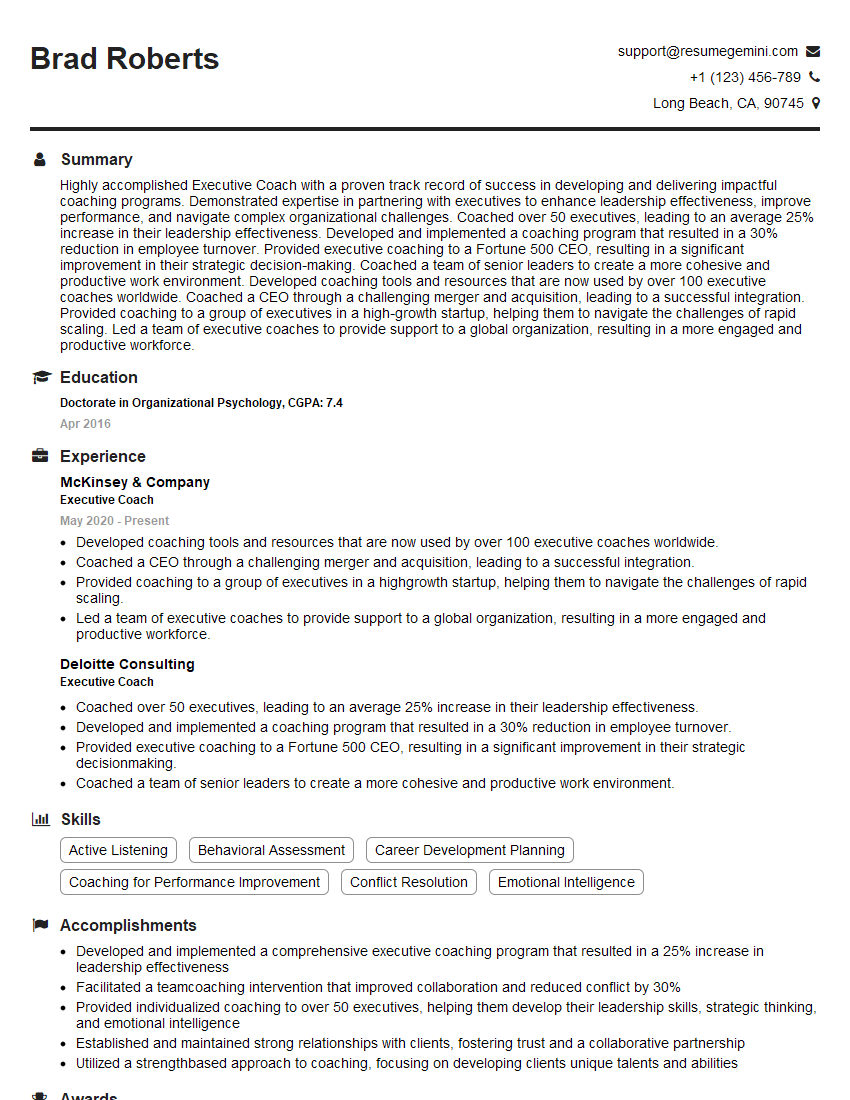
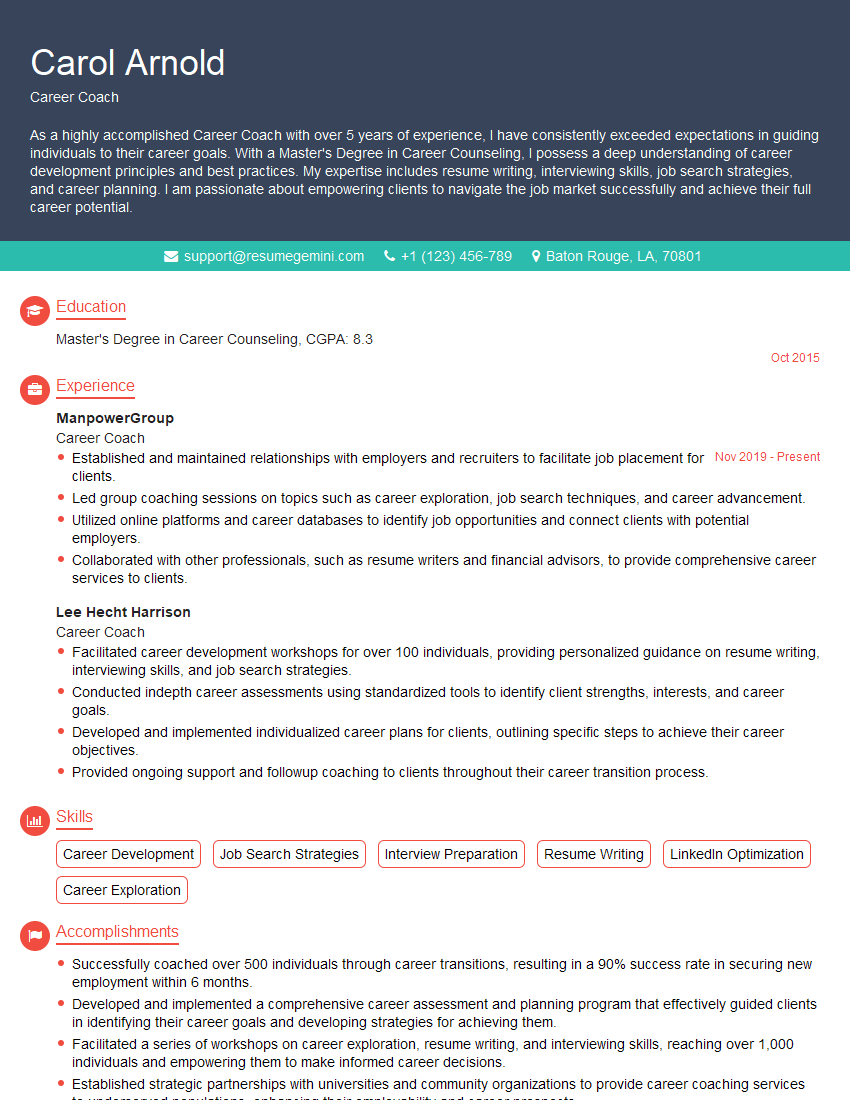
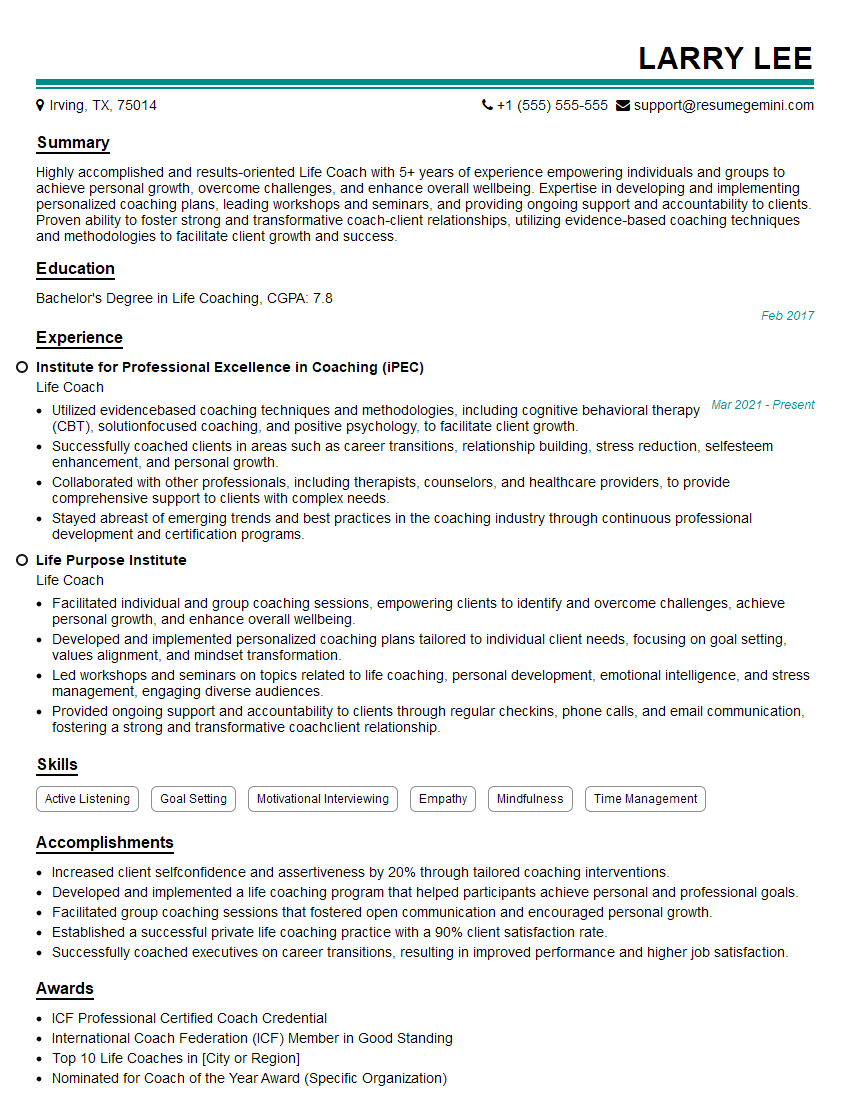
Mastering Coaching at Various Levels is crucial for career advancement and opening doors to diverse and rewarding opportunities. A well-crafted resume is your key to unlocking these opportunities. Focus on building an ATS-friendly resume that highlights your skills and experience effectively. ResumeGemini is a trusted resource that can help you create a professional and impactful resume. They offer examples of resumes tailored to Coaching at Various Levels, providing you with the templates and guidance you need to present yourself effectively to potential employers.

Explore more articles
Users Rating of Our Blogs
Share Your Experience
We value your feedback! Please rate our content and share your thoughts (optional).
What Readers Say About Our Blog
Very informative content, great job.
good