Unlock your full potential by mastering the most common Cold Storage and Temperature Management interview questions. This blog offers a deep dive into the critical topics, ensuring you’re not only prepared to answer but to excel. With these insights, you’ll approach your interview with clarity and confidence.
Questions Asked in Cold Storage and Temperature Management Interview
Q 1. Explain the different types of refrigeration systems used in cold storage.
Cold storage facilities utilize various refrigeration systems, each with its strengths and weaknesses. The choice depends on factors like budget, required temperature range, and the type of goods stored.
- Vapor-Compression Refrigeration: This is the most common system, using a refrigerant to absorb heat from the storage area and release it outside. Think of it like a reverse air conditioner. It’s reliable, efficient, and widely available in various capacities. Different refrigerants (like ammonia, CO2, or HFCs) can be used, each with different environmental impacts and temperature capabilities.
- Absorption Refrigeration: This system uses heat energy (like from steam or hot water) to drive the refrigeration cycle. It’s less common in cold storage due to higher energy consumption compared to vapor-compression, but it can be beneficial in locations with abundant waste heat or renewable energy sources.
- Air-Cooled Refrigeration: These systems release heat directly into the surrounding air. They are simpler and less expensive than water-cooled systems, but less efficient in hot climates, as the condenser’s ability to reject heat is compromised by high ambient temperatures.
- Water-Cooled Refrigeration: These systems use water to dissipate heat from the condenser, providing better efficiency, particularly in hot climates. They require a water source and a cooling tower, adding complexity and cost.
- Cascade Refrigeration: Used for ultra-low temperature applications, cascade systems use two or more refrigeration cycles in series to reach extremely low temperatures. Each stage cools the refrigerant for the next, progressively decreasing the temperature.
For example, a large frozen food warehouse might employ a vapor-compression system using ammonia as the refrigerant for its efficiency and ability to maintain sub-zero temperatures. A smaller facility storing pharmaceuticals might use a cascade system to achieve and maintain -80°C.
Q 2. Describe your experience with maintaining optimal temperature and humidity levels.
Maintaining optimal temperature and humidity is critical for preserving product quality and preventing spoilage. My experience involves implementing and monitoring a multi-layered approach.
- Precise Temperature Monitoring: I utilize multiple calibrated temperature sensors strategically placed throughout the cold storage facility, connected to a centralized monitoring system that provides real-time data and alerts. This allows for immediate intervention if any deviation from the set points occurs. Data logging is crucial for traceability and regulatory compliance.
- Humidity Control: Depending on the stored goods, maintaining appropriate humidity levels is vital. This is often achieved through humidifiers or dehumidifiers, integrated with the refrigeration system or as standalone units. For example, fruits and vegetables require higher humidity to prevent wilting, while dry goods need lower humidity to avoid mold growth.
- Regular Calibration and Maintenance: Regular calibration and preventative maintenance of sensors, refrigeration equipment, and humidity control systems are crucial for accuracy and reliability. This includes regular cleaning of coils and filters to ensure efficient operation and avoid performance degradation.
- Data Analysis and Adjustment: I regularly analyze the temperature and humidity data to identify trends and potential issues. This data-driven approach allows for proactive adjustments to system settings, ensuring optimal environmental conditions are maintained.
In one instance, I identified a consistent temperature fluctuation in a specific zone by analyzing the monitoring system data. Further investigation revealed a failing door seal, which was promptly replaced, resolving the issue and preventing potential product loss.
Q 3. How do you ensure the safety and quality of stored products?
Ensuring the safety and quality of stored products requires a comprehensive approach that encompasses all aspects of cold storage management.
- First-In, First-Out (FIFO) Inventory Management: This system ensures that older products are used before newer ones, minimizing the risk of spoilage and extending shelf life. Proper labeling and organization are key to effective FIFO implementation.
- Pest Control: Regular pest control measures are essential to prevent contamination and spoilage. This includes inspections, preventative treatments, and ongoing monitoring.
- Hygiene and Sanitation: Maintaining a clean and sanitary environment is crucial. This involves regular cleaning and disinfection of the facility, equipment, and storage areas. Strict hygiene protocols for personnel are also vital.
- Temperature Monitoring and Alert Systems: As mentioned before, robust temperature monitoring and immediate alerts are critical in mitigating the risk of temperature excursions that compromise product quality and safety.
- Proper Packaging and Storage: Products must be appropriately packaged to protect them from damage and contamination during storage and transportation. Correct stacking and storage methods prevent damage and ensure optimal airflow.
For instance, we implemented a color-coded labeling system for different products, facilitating easy identification and ensuring FIFO compliance. This significantly reduced waste due to spoilage.
Q 4. What are the common causes of temperature excursions in cold storage?
Temperature excursions, or deviations from the set temperature, can significantly impact product quality and safety. Common causes include:
- Equipment Malfunctions: Failures in compressors, condensers, evaporators, or other components can lead to temperature increases or decreases.
- Power Outages: Loss of power can result in rapid temperature rises, especially in warmer climates. Backup power systems are crucial for preventing such events.
- Improper Door Operation: Frequent opening and closing of doors, especially without proper sealing, can lead to temperature fluctuations.
- Insufficient Insulation: Poor insulation in the facility walls, ceiling, or doors can lead to heat gain or loss.
- Defective Seals: Damaged door seals or seals around other openings allow warm air to enter or cold air to escape.
- Overloading: Overstocking the cold storage area can impede airflow, leading to temperature inconsistencies and hot spots.
- External Factors: Extreme weather conditions can impact the facility’s ability to maintain its internal temperature.
For example, a prolonged power outage can cause a significant temperature rise in a freezer, leading to potential food safety concerns. Regular maintenance, backup power, and proactive temperature monitoring are vital to minimize these risks.
Q 5. Explain your experience with inventory management in a cold storage environment.
Inventory management in cold storage is crucial for efficiency and product preservation. My experience includes:
- Implementing and Utilizing Inventory Management Systems (IMS): This includes using software solutions that track product location, quantity, expiry dates, and temperature history. This allows for real-time monitoring of inventory levels and assists in first-in, first-out (FIFO) management.
- Barcoding and RFID Tracking: Utilizing barcodes or Radio-Frequency Identification (RFID) tags allows for efficient tracking of products as they move through the facility. This provides better visibility and accuracy in inventory counts.
- Zone Management: Organizing the cold storage space into different temperature zones optimized for specific products enhances efficiency and reduces the risk of cross-contamination.
- Cycle Counting and Stock Audits: Regular cycle counting and stock audits validate the accuracy of the inventory management system and identify any discrepancies.
- Reporting and Analysis: Generating reports on inventory levels, product movement, and expiry dates provides valuable insights for better decision-making and process optimization.
In a previous role, I implemented an RFID tracking system that significantly improved inventory accuracy, reduced stockouts, and minimized waste due to expired products.
Q 6. How do you handle emergency situations like power outages or equipment malfunctions?
Emergency preparedness is crucial in cold storage. My approach to handling emergencies like power outages or equipment malfunctions includes:
- Backup Power Systems: Cold storage facilities should have backup generators capable of powering critical equipment during power outages. Regular testing of these systems is essential.
- Emergency Response Plan: A well-defined emergency response plan should outline procedures for handling various scenarios, including power outages, equipment malfunctions, and other emergencies. This plan should be communicated to and practiced by all personnel.
- Temperature Monitoring and Alert Systems: Real-time monitoring with alerts allows for quick response to temperature excursions. This is vital in mitigating product loss and ensuring safety.
- Communication Protocols: Clear communication channels should be established for notifying relevant personnel, management, and clients during an emergency.
- Product Relocation: In the event of a major failure, procedures for safely relocating temperature-sensitive goods to backup cold storage or other suitable locations should be in place.
During a recent power outage, our facility’s backup generator automatically engaged, preventing a significant temperature rise in the freezers. The established emergency response plan ensured smooth operation and minimal disruption to our services.
Q 7. Describe your experience with cold chain logistics and transportation.
Cold chain logistics and transportation are critical for maintaining product quality and safety during transit. My experience includes:
- Temperature-Controlled Transportation: Utilizing refrigerated trucks, containers, and other temperature-controlled vehicles ensures consistent temperatures during transport. Regular maintenance and calibration of temperature monitoring devices within these vehicles are essential.
- Route Optimization: Careful planning of delivery routes and minimizing transit times helps to reduce the risk of temperature excursions.
- Proper Packaging and Handling: Products should be adequately packaged and handled to prevent damage and maintain temperature integrity during transportation.
- Real-time Tracking and Monitoring: GPS tracking and remote temperature monitoring systems allow for real-time visibility of product location and temperature throughout the entire transport process.
- Documentation and Traceability: Maintaining detailed records of temperature throughout the entire cold chain, from storage to transportation to delivery, ensures full traceability and compliance with regulations.
In one project, I optimized the delivery route for a shipment of temperature-sensitive vaccines, reducing transit time by 15% and minimizing the risk of spoilage. This involved close coordination with the transportation company and the use of real-time temperature monitoring systems.
Q 8. What are the key performance indicators (KPIs) you track in cold storage?
Key Performance Indicators (KPIs) in cold storage are crucial for ensuring efficiency, safety, and profitability. They allow us to monitor performance against targets and identify areas for improvement. The specific KPIs I track are tailored to the facility and its products, but typically include:
- Temperature Deviation Rate: This measures the frequency and magnitude of temperature excursions outside the set points. High rates indicate potential product spoilage and regulatory non-compliance. For example, a target might be less than 1% of readings outside the acceptable range.
- Energy Consumption: Tracking kilowatt-hours (kWh) per cubic meter of storage or per unit of product stored helps monitor energy efficiency and identify areas for cost reduction. Regularly comparing energy usage to previous periods and similar facilities is key.
- Inventory Turnover Rate: This shows how quickly inventory is processed, which is crucial for minimizing spoilage and maximizing storage space utilization. Slow turnover can signal issues with demand forecasting or storage strategy.
- Product Loss Rate: Measuring spoilage, damage, or other losses helps identify weak points in the cold chain and prevent future issues. Careful tracking of reasons for loss (temperature fluctuations, handling errors, etc.) is important for root cause analysis.
- Maintenance Costs: Tracking maintenance expenses allows for budgeting and reveals potential areas for optimizing maintenance schedules or improving equipment reliability. Preventive maintenance significantly reduces these costs in the long run.
- Order Fulfillment Rate: Measuring the efficiency and accuracy of order fulfillment directly reflects operational performance and customer satisfaction.
By regularly monitoring these KPIs and using data analysis techniques, we can identify trends, predict potential problems, and make informed decisions to optimize operations and maintain high standards of quality and safety.
Q 9. How familiar are you with HACCP and other food safety regulations?
I’m very familiar with HACCP (Hazard Analysis and Critical Control Points) and other food safety regulations, including FDA and USDA guidelines. HACCP is a preventative approach to food safety that focuses on identifying and controlling hazards at every stage of the food production and storage process. My experience includes:
- Developing and implementing HACCP plans: This involves conducting hazard analyses, identifying critical control points (CCPs), establishing monitoring procedures, establishing corrective actions, and verifying the effectiveness of the plan. I’ve worked with a variety of food products, each with unique hazards requiring tailored plans.
- Conducting regular audits and inspections: This ensures that the HACCP plan is being followed, and corrective actions are taken when necessary. I’m proficient in identifying potential weaknesses in processes and helping to rectify them before they lead to food safety incidents.
- Training staff on food safety procedures: Thorough training is crucial. I have extensive experience in delivering and documenting staff training on safe handling practices, sanitation protocols, and emergency response procedures.
- Maintaining detailed records: This includes temperature logs, cleaning logs, and staff training records, all essential for demonstrating compliance with regulations. Accurate and complete documentation is vital in any audit.
My understanding extends to other relevant regulations, such as those related to pest control, hygiene, and waste management. I ensure that all operations adhere to the strictest standards of food safety to prevent product contamination and protect consumer health.
Q 10. Explain your experience with preventative maintenance programs for refrigeration equipment.
Preventative maintenance is critical for extending the lifespan of refrigeration equipment and preventing costly breakdowns. My experience encompasses developing and overseeing comprehensive programs that include:
- Regular inspections: Visual inspections and functional checks of compressors, condensers, evaporators, and other components at set intervals (weekly, monthly, etc.). This allows for early detection of issues before they become major problems. For example, I’d check for leaks, unusual noises, or temperature fluctuations.
- Scheduled servicing: Regular servicing involves cleaning, lubrication, and filter replacement. Following manufacturer’s recommendations is vital. A log book meticulously documents all work performed.
- Predictive maintenance: Utilizing data from temperature sensors, energy consumption monitoring, and vibration analysis to predict potential equipment failure and schedule preventative measures proactively. This minimizes downtime and maximizes the efficiency of repairs.
- Calibration of temperature sensors: Regular calibration of temperature monitoring systems ensures accuracy and reliable data, crucial for maintaining product quality and regulatory compliance.
- Staff training: Equipping maintenance personnel with the knowledge and skills to carry out routine checks and minor repairs effectively. This may include training on proper handling of refrigerants, electrical safety procedures, and specialized equipment usage.
A well-structured preventative maintenance program not only prolongs equipment life but also significantly reduces the risk of unexpected failures, minimizing disruptions to operations and potential product loss.
Q 11. How do you manage waste and energy consumption in a cold storage facility?
Managing waste and energy consumption is crucial for both environmental responsibility and cost reduction in cold storage. My approach is multifaceted and involves:
- Optimized Storage Layout: Strategically arranging products to minimize energy usage. For instance, placing frequently accessed items closer to loading docks reduces the time doors are open and minimizes temperature fluctuations.
- Energy-Efficient Equipment: Utilizing high-efficiency refrigeration units, LED lighting, and smart energy management systems. This can significantly lower electricity costs over time.
- Waste Reduction Strategies: Implementing FIFO (First-In, First-Out) inventory management to minimize spoilage and waste. This is aided by good temperature monitoring and accurate inventory tracking. I’d also focus on proper waste segregation and recycling programs.
- Leak Detection and Repair: Promptly addressing any refrigerant leaks to prevent environmental damage and energy loss. Regular leak checks are included in our preventative maintenance schedule.
- Insulation Optimization: Ensuring proper insulation of the facility to minimize heat transfer and reduce the load on refrigeration systems. Regular inspections check for any insulation damage or deterioration.
- Data-Driven Analysis: Using energy monitoring systems to identify energy consumption patterns and pinpoint opportunities for improvement. This allows for targeted interventions and continuous optimization.
Through careful planning and continuous monitoring, we strive to minimize our environmental footprint while maximizing cost savings. The financial benefits, environmental impact, and improved sustainability makes this an essential focus.
Q 12. Describe your experience with implementing and monitoring temperature monitoring systems.
I have extensive experience implementing and monitoring temperature monitoring systems, ranging from basic data loggers to sophisticated, networked systems. The process usually involves:
- System Selection: Choosing a system based on the facility’s size, product types, and regulatory requirements. Factors like the number of sensors, data logging capacity, alert capabilities, and remote access are considered.
- Sensor Placement: Strategically positioning sensors to accurately reflect temperature variations throughout the storage areas. This ensures accurate monitoring of critical control points and early detection of potential problems. The number and placement are determined by the facility layout and the type of goods stored.
- Calibration and Validation: Regularly calibrating and validating sensors to ensure accuracy and reliability. This is crucial for maintaining data integrity and demonstrating compliance with regulations.
- Data Analysis and Reporting: Using software to analyze temperature data, identify trends, and generate reports for internal review and regulatory compliance. This may include trending graphs, statistical analysis, and alert summaries.
- Alert Systems: Setting up alarm systems to notify personnel of any temperature deviations outside the specified parameters. This enables prompt response to potential problems, limiting the risk of product spoilage.
- Data Backup and Security: Implementing procedures for data backup and security to protect against data loss and ensure data integrity. Data logging is critical for traceability and audit purposes.
Effective temperature monitoring is crucial for maintaining product quality, preventing spoilage, and complying with food safety regulations. The choice of system and the accuracy of data collection are paramount.
Q 13. How do you ensure compliance with relevant health and safety regulations?
Ensuring compliance with health and safety regulations is paramount. My approach involves:
- Regular Safety Inspections: Conducting regular inspections of the facility to identify and address potential hazards, including fire safety equipment, emergency exits, electrical safety, and potential slip, trip, and fall hazards.
- Emergency Response Plan: Developing and regularly practicing emergency response plans, including procedures for fire, medical emergencies, and equipment malfunctions. This includes staff training and drills.
- Personal Protective Equipment (PPE): Ensuring that staff have access to and are properly trained in the use of appropriate PPE, such as safety footwear, gloves, and eye protection, depending on their tasks.
- Staff Training: Providing regular training on health and safety procedures, including safe handling of materials, emergency procedures, and the correct use of equipment. This also includes regular refreshers.
- Record Keeping: Maintaining detailed records of all safety inspections, training sessions, incidents, and corrective actions. This documentation is crucial for demonstrating compliance with regulations and for continuous improvement.
- Compliance Audits: Regularly conducting internal audits to ensure compliance with relevant health and safety regulations, and using external audits as benchmarks for our practices.
A proactive approach to health and safety is not only legally required but also fosters a positive and productive work environment. Continuous monitoring and improvement are key to prevent accidents and protect staff well-being.
Q 14. Explain your understanding of different types of cold storage facilities (e.g., blast freezers, chillers).
Cold storage facilities vary significantly depending on the specific needs of the stored products. My understanding includes various types:
- Blast Freezers: These facilities are designed for rapid freezing of products, typically used to preserve food quality and extend shelf life. They are characterized by very low temperatures (-40°C and lower) and high air circulation. Blast freezers are crucial for preserving the quality of many types of food.
- Chillers: Chillers maintain temperatures just above freezing (typically between 0°C and 4°C) and are ideal for short-term storage of perishable goods like fresh produce and dairy products. They are designed to slow down bacterial growth and prevent spoilage.
- Freezer Storage: These facilities maintain consistently low temperatures (-18°C or lower) for long-term storage of frozen products. Freezer storage may encompass various designs based on size, configuration, and product type. They require precise temperature control and monitoring.
- Cold Rooms: These are versatile facilities that can be maintained at various temperatures depending on the product needs. Cold rooms may utilize different refrigeration technologies and are sized to meet specific storage needs.
- Controlled Atmosphere Storage (CAS): These facilities control not only the temperature but also the atmospheric composition (oxygen and carbon dioxide levels) to slow down respiration rates and extend the shelf life of certain fruits and vegetables.
The selection of the appropriate cold storage facility depends on factors such as product type, required shelf life, storage duration, and budget. Understanding the capabilities and limitations of each type is crucial for ensuring optimal product preservation and operational efficiency.
Q 15. How do you address issues related to product spoilage or contamination?
Product spoilage and contamination in cold storage are serious issues that can lead to significant financial losses and potential health risks. Addressing these requires a multi-pronged approach focusing on prevention and rapid response.
- Preventative Measures: This involves meticulous attention to temperature control, ensuring proper sanitation of equipment and facilities, and implementing rigorous quality control checks on incoming products. We conduct regular temperature mapping to identify any ‘hot spots’ within the storage area and regularly calibrate our monitoring equipment. We also employ strict hygiene protocols for staff, including mandatory handwashing and the use of protective clothing.
- Rapid Response: If spoilage or contamination is detected, immediate action is crucial. This begins with isolating the affected products to prevent cross-contamination. A thorough investigation is launched to determine the root cause, whether it be equipment malfunction, improper handling, or a breach in hygiene protocols. Depending on the severity and type of contamination, we may need to initiate a full recall and implement corrective actions to prevent future occurrences. Documentation of the entire process, including investigation findings and corrective actions, is essential.
- Example: Once, a batch of frozen seafood showed signs of thawing. Our immediate response involved isolating the batch, initiating a temperature investigation, and reviewing staff handling procedures. We found that a faulty door seal in one freezer unit was the culprit. This was immediately repaired, and staff retraining on proper door closure was conducted.
Career Expert Tips:
- Ace those interviews! Prepare effectively by reviewing the Top 50 Most Common Interview Questions on ResumeGemini.
- Navigate your job search with confidence! Explore a wide range of Career Tips on ResumeGemini. Learn about common challenges and recommendations to overcome them.
- Craft the perfect resume! Master the Art of Resume Writing with ResumeGemini’s guide. Showcase your unique qualifications and achievements effectively.
- Don’t miss out on holiday savings! Build your dream resume with ResumeGemini’s ATS optimized templates.
Q 16. Describe your experience with troubleshooting refrigeration equipment.
Troubleshooting refrigeration equipment requires a systematic approach, combining practical knowledge with analytical skills. My experience encompasses both preventative maintenance and reactive troubleshooting.
- Preventative Maintenance: Regular checks of compressors, condensers, evaporators, and controls are crucial. This involves visually inspecting components, checking refrigerant levels, and monitoring operating pressures and temperatures. I’m proficient in identifying potential issues before they escalate into major breakdowns. For example, detecting slight refrigerant leaks before they lead to significant temperature fluctuations.
- Reactive Troubleshooting: When a malfunction occurs, I use a step-by-step approach: First, I assess the symptoms – is the unit not cooling properly? Are there unusual noises or vibrations? Then, I isolate the potential cause. I use tools such as pressure gauges, thermometers, and multimeters to pinpoint the problem. Common issues I’ve dealt with include compressor failures, condenser fouling, and control system malfunctions. I can diagnose and repair a range of issues, or when necessary, coordinate with external technicians for specialized repairs.
- Example: In one instance, a freezer unit stopped cooling. I systematically checked the compressor, finding it to be functional. Then I examined the condenser, discovering significant ice buildup, obstructing airflow. After defrosting and cleaning the condenser, the unit returned to normal operating temperature.
Q 17. How do you handle inventory discrepancies in a cold storage facility?
Inventory discrepancies in cold storage are a significant concern. Effective management requires a combination of accurate record-keeping, regular stock checks, and robust procedures.
- Cycle Counting: Instead of a full inventory count which can disrupt operations, we employ cycle counting. This involves regularly checking specific inventory sections. It allows for the early detection of discrepancies and the immediate investigation of their causes. This reduces the likelihood of larger, more costly discrepancies from going unnoticed.
- Technology Integration: We utilize barcode scanning and inventory management software to track every item from the moment it enters the facility. This minimises manual data entry errors and provides real-time visibility of stock levels. Any deviation is flagged immediately, triggering an investigation.
- Root Cause Analysis: When discrepancies arise, we investigate thoroughly to determine the root cause. This might involve reviewing receiving procedures, identifying potential theft or damage, or checking for errors in data entry or picking processes. Corrective actions are implemented to prevent future occurrences.
- Example: A recent discrepancy revealed a shortage of a particular frozen fruit product. Through cycle counting and reviewing security footage, we determined that a pallet had been inadvertently loaded onto the wrong truck during shipping. This highlighted the need for improved pallet labeling and loading procedures.
Q 18. What is your experience with warehouse layout and design in a cold storage environment?
Warehouse layout and design are critical factors influencing efficiency, product safety, and cost-effectiveness in cold storage. The optimal design minimizes energy consumption and maximizes storage capacity while ensuring easy access for efficient order fulfillment.
- Flow Optimization: The layout should facilitate a smooth flow of goods, from receiving to storage to shipping. Products should be strategically positioned to minimize movement and handling. Aisles should be wide enough to accommodate equipment and personnel.
- Temperature Zoning: Different temperature zones should be clearly defined and separated to prevent cross-contamination between products with varying temperature requirements. This often involves the use of separate freezer and chiller rooms.
- Energy Efficiency: The building’s insulation, refrigeration systems, and lighting should be designed to minimize energy consumption, reducing operational costs and environmental impact. We always consider energy-efficient equipment and materials when designing or renovating cold storage facilities.
- Example: In one project, we redesigned a cold storage facility to include a dedicated receiving area with temperature-controlled buffers. This minimized the risk of temperature fluctuation during product handling and improved the overall efficiency of inbound logistics. We also integrated automated guided vehicles to improve the efficiency of internal material handling.
Q 19. How do you train staff on safe working practices in a cold storage environment?
Training staff on safe working practices in cold storage is paramount. It reduces the risk of accidents and ensures product safety and quality.
- Hazard Awareness: The training program covers the hazards associated with working in cold environments, such as hypothermia, frostbite, and slips and falls on icy surfaces. This includes appropriate clothing requirements and the importance of regular breaks.
- Equipment Operation: Staff are trained on the safe operation and maintenance of all equipment, including forklifts, pallet jacks, and refrigeration systems. Regular refresher courses are provided to maintain skills and address updated safety procedures.
- Hygiene Practices: Thorough instruction on hygiene protocols, including handwashing, glove usage, and proper sanitation procedures, is essential to preventing contamination. The training emphasizes the importance of maintaining a clean and organized work environment.
- Emergency Procedures: Staff are trained on emergency procedures, including how to respond to equipment malfunctions, fire, and medical emergencies. Regular drills reinforce these procedures.
- Example: Our training includes practical demonstrations, hands-on exercises, and regular quizzes to assess knowledge retention. We also use videos and case studies to illustrate the importance of safe working practices and potential consequences of negligence.
Q 20. Explain your understanding of first-in, first-out (FIFO) inventory management.
First-In, First-Out (FIFO) is an inventory management system where the oldest items are used or sold first. This is crucial in cold storage to minimize spoilage and maintain product freshness.
- Implementation: FIFO is implemented by clearly labeling products with their arrival dates and strategically placing older stock at the front of storage areas. This ensures that items nearing their expiry date are used or shipped first. We use software to help manage this and send automated alerts when items are nearing their expiration.
- Benefits: FIFO reduces waste by preventing products from expiring before they can be used or sold. This saves money and protects the reputation of the business by ensuring high-quality products are supplied. It also minimizes the risk of foodborne illnesses.
- Example: Milk products are always placed using a FIFO method. The oldest milk is placed at the front of the shelf and the newest milk is placed at the back. The same principle applies to frozen foods and other perishable goods.
Q 21. How do you manage documentation and record-keeping in a cold storage facility?
Accurate documentation and record-keeping are essential for ensuring traceability, compliance, and effective management of a cold storage facility. This is a critical aspect for maintaining quality control and meeting regulatory requirements.
- Temperature Monitoring: Continuous temperature data logging is crucial, showing precise temperature readings at regular intervals. This data is used to track product quality and ensure compliance with regulations. We use automated systems that record and store this data electronically for ease of access and auditing.
- Inventory Tracking: Detailed inventory records are kept, including product details (type, quantity, arrival date, expiry date, location), enabling efficient stock management and traceability in case of recalls or investigations.
- Maintenance Records: All maintenance activities, including equipment servicing, repairs, and calibrations, are meticulously documented. This allows for better equipment management and ensures compliance with safety and regulatory requirements.
- Staff Records: Records of employee training, certifications, and hygiene compliance are essential for ensuring that personnel are equipped to handle products safely and efficiently.
- Compliance and Auditing: All records are stored securely and regularly reviewed to ensure compliance with relevant industry standards and regulations. This allows for efficient audits and facilitates quick access to critical information.
- Example: We maintain a digital database that integrates all the above elements. This system provides real-time alerts for potential issues, simplifying reporting and audits, and ensuring efficient retrieval of specific information.
Q 22. Describe your experience with using cold storage management software.
My experience with cold storage management software spans over eight years, encompassing various platforms from simple inventory tracking systems to sophisticated Warehouse Management Systems (WMS) designed for cold chain logistics. I’ve worked with systems like Logiwa, NetSuite, and custom-built solutions. These systems allow for real-time temperature monitoring, inventory management (FIFO, FEFO), automated alerts for temperature excursions and stock levels, and streamlined reporting for regulatory compliance and operational efficiency. For instance, in my previous role at Acme Foods, we implemented Logiwa to integrate our cold storage operations with our broader supply chain, resulting in a 15% reduction in waste due to improved inventory control and predictive analytics. The software’s ability to generate detailed reports on energy consumption helped us identify areas for energy optimization, leading to substantial cost savings.
I’m proficient in using these systems to manage all aspects of cold storage, including receiving, putaway, picking, packing, and shipping. I understand the importance of data integrity and the need for robust security measures within such systems to protect sensitive data.
Q 23. How do you handle customer complaints related to product quality or temperature issues?
Handling customer complaints regarding product quality or temperature issues involves a systematic approach prioritizing swift resolution and customer satisfaction. First, I acknowledge the issue and empathize with the customer’s concern. Then, I initiate a thorough investigation, checking temperature logs, reviewing handling procedures, and examining the affected products. This often involves reviewing data from our cold storage management software for any temperature excursions or other irregularities during storage or transportation. Depending on the issue, this may involve tracing the product’s journey through the cold chain from receiving to dispatch.
Once the root cause is identified, I propose a solution, which may include a replacement product, a refund, or a credit. For example, if a temperature excursion was detected, we would investigate why it occurred – was it equipment malfunction, human error, or external factors? Identifying the cause allows us to implement corrective actions to prevent recurrence. I maintain transparent communication throughout the process, updating the customer on the investigation’s progress and the steps taken to resolve the problem. This approach builds trust and reinforces the importance we place on product quality and customer satisfaction.
Q 24. Explain your experience with implementing and managing cold storage budgets.
Budget management for cold storage requires a comprehensive understanding of all associated costs, from energy consumption and equipment maintenance to labor and software licensing. My experience includes developing and managing budgets using both top-down and bottom-up approaches. A top-down approach starts with an overall budget allocation and then breaks it down into individual cost centers, while a bottom-up approach involves aggregating individual cost estimates to arrive at a total budget. I utilize budgeting software to track actual spending against the budget, enabling proactive adjustments as needed.
For instance, in my previous role, we implemented a system of regular energy audits and predictive maintenance to optimize energy consumption and reduce maintenance costs. These measures resulted in a 10% reduction in overall operational expenses within a year. I also use various financial models and forecasting techniques to predict future costs and adjust the budget accordingly, anticipating factors like seasonal demand fluctuations and potential equipment upgrades.
Q 25. Describe your understanding of different types of refrigerants and their environmental impact.
Refrigerants are crucial in cold storage, and understanding their properties and environmental impact is paramount. Traditional refrigerants, like Chlorofluorocarbons (CFCs) and Hydrochlorofluorocarbons (HCFCs), have been phased out due to their contribution to ozone depletion and global warming. Currently, the industry is transitioning towards more environmentally friendly alternatives. These include Hydrofluorocarbons (HFCs), which have lower ozone depletion potential but still contribute to global warming, and natural refrigerants like ammonia (NH3), carbon dioxide (CO2), and hydrocarbons (like propane and isobutane).
Ammonia is highly efficient but requires specialized handling due to its toxicity. CO2 is a natural and safe option but requires higher operating pressures. Hydrocarbons are also efficient but pose flammability risks. The choice of refrigerant depends on various factors, including the application, cost, safety regulations, and environmental concerns. My experience involves evaluating different refrigerants based on their Global Warming Potential (GWP) and Ozone Depletion Potential (ODP), and selecting the most suitable option for each specific cold storage facility, while adhering to all relevant safety and environmental regulations.
Q 26. How do you stay up-to-date with the latest advancements in cold storage technology?
Staying current in cold storage technology requires a multifaceted approach. I actively participate in industry conferences and webinars like those organized by the International Institute of Ammonia Refrigeration (IIAR) and the American Society of Heating, Refrigerating and Air-Conditioning Engineers (ASHRAE). I subscribe to industry publications such as Cold Chain Management Review and Refrigeration and Air Conditioning, and I actively follow relevant research papers and publications from organizations like the EPA.
Furthermore, I maintain a professional network with industry experts and peers, engaging in discussions and sharing best practices. Online platforms and professional organizations provide opportunities for continuous learning. I also regularly explore new technologies and innovations through vendor presentations and product demonstrations. This continuous learning keeps me abreast of the latest advancements in areas like automation, energy efficiency, and sustainable practices within cold storage.
Q 27. How would you manage a situation where a large volume of perishable goods needs to be processed quickly?
Processing a large volume of perishable goods quickly requires a well-defined plan and efficient execution. This involves optimizing all stages of the cold chain, from receiving to storage and dispatch. First, I’d assess the volume and type of goods, their temperature requirements, and available storage capacity. Then, I’d prioritize the goods based on their shelf life, ensuring the most perishable items are processed first. This often necessitates employing a First Expired, First Out (FEFO) inventory management strategy.
I would also allocate sufficient personnel and equipment, potentially bringing in additional resources if necessary. We would optimize the receiving process to ensure swift unloading and proper temperature monitoring. The putaway strategy would be revised to accommodate the high volume, potentially using designated zones for quick processing. Effective communication and coordination between receiving, storage, and dispatch teams are critical to ensure smooth operations. Regular temperature checks and monitoring would be imperative throughout the process to maintain product quality. If necessary, we’d explore the possibility of extending storage capacity by temporarily renting additional cold storage space.
Q 28. Describe your experience with implementing and monitoring energy efficiency measures.
Implementing and monitoring energy efficiency measures in cold storage is crucial for both environmental sustainability and cost reduction. My experience includes implementing a variety of energy-saving strategies, including: optimizing refrigeration system performance through regular maintenance and upgrades; implementing energy-efficient lighting systems, like LED lighting; installing efficient doors and seals to minimize heat transfer; using advanced control systems and automation for precise temperature regulation; utilizing predictive maintenance to prevent equipment failures and optimize energy usage; and conducting regular energy audits to identify areas for improvement.
For example, in one project, we implemented a sophisticated Building Management System (BMS) that monitored energy consumption in real-time, allowing us to identify and address energy waste promptly. We also switched to variable-speed drives for our refrigeration compressors, which significantly reduced energy consumption. We monitored the impact of these changes meticulously, tracking energy savings and ensuring that our measures did not compromise the integrity of our cold chain. Consistent monitoring and data analysis are essential to ensure continued efficiency and adapt strategies as needed.
Key Topics to Learn for Cold Storage and Temperature Management Interview
- Temperature Control Principles: Understanding refrigeration cycles, heat transfer mechanisms (conduction, convection, radiation), and the impact of insulation on maintaining desired temperatures.
- Cold Chain Management: Practical application includes analyzing cold chain logistics, identifying potential temperature deviations, and implementing corrective actions to prevent product spoilage. This involves understanding transport, storage, and handling procedures.
- HVAC Systems in Cold Storage: Learn about different types of refrigeration systems (e.g., ammonia, CO2), their maintenance, troubleshooting common malfunctions, and energy efficiency considerations.
- Inventory Management and Stock Rotation: Understanding FIFO (First-In, First-Out) and other inventory management techniques to minimize waste and ensure product quality. Practical application includes using inventory management software.
- Food Safety and Hygiene Regulations: Familiarity with relevant regulations (e.g., HACCP, GMP) and their practical application in maintaining safe and hygienic cold storage environments.
- Data Logging and Monitoring: Understanding the use of temperature data loggers, analyzing temperature data for trends and anomalies, and using this information for process improvement.
- Energy Efficiency and Sustainability: Exploring methods for optimizing energy consumption in cold storage facilities, including the use of energy-efficient equipment and technologies. This also includes understanding environmental impact considerations.
- Troubleshooting and Problem Solving: Developing skills to diagnose and resolve common issues in cold storage operations, such as equipment malfunctions, temperature fluctuations, and product spoilage.
- Safety Procedures and Emergency Response: Understanding safety protocols, handling hazardous materials, and responding to emergencies such as power outages or equipment failures.
Next Steps
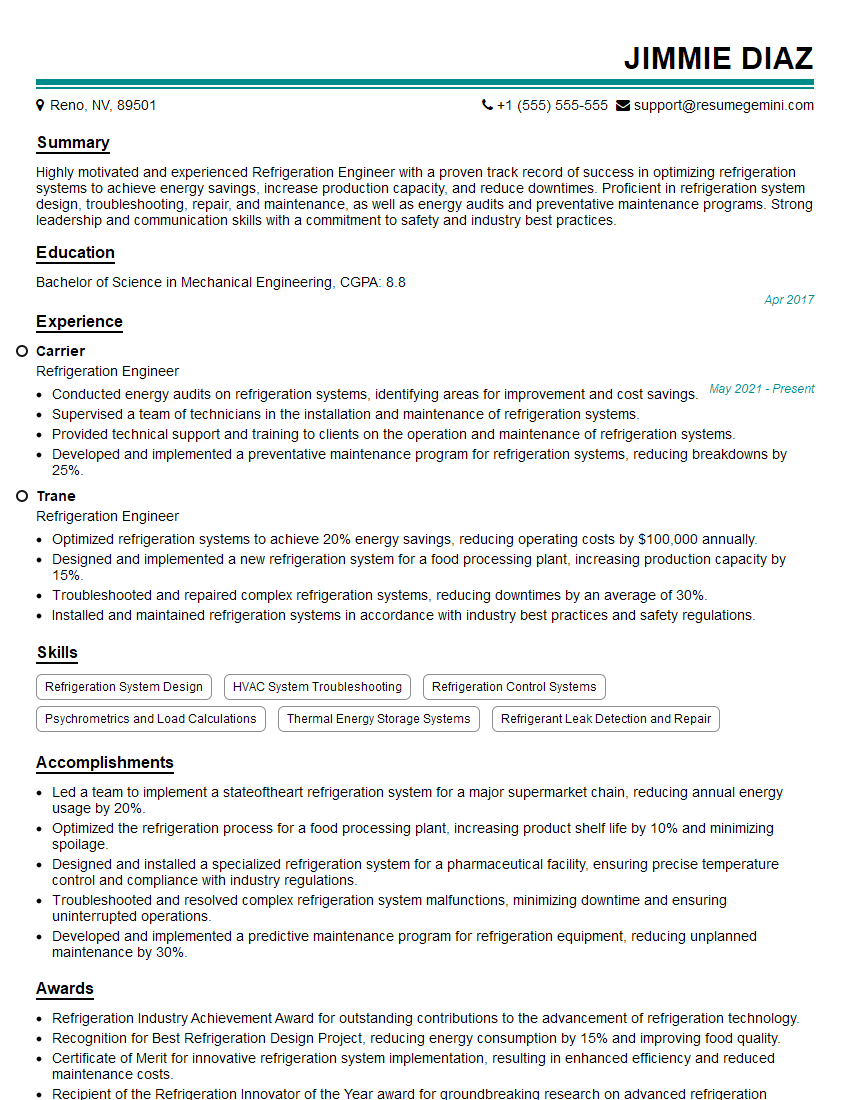
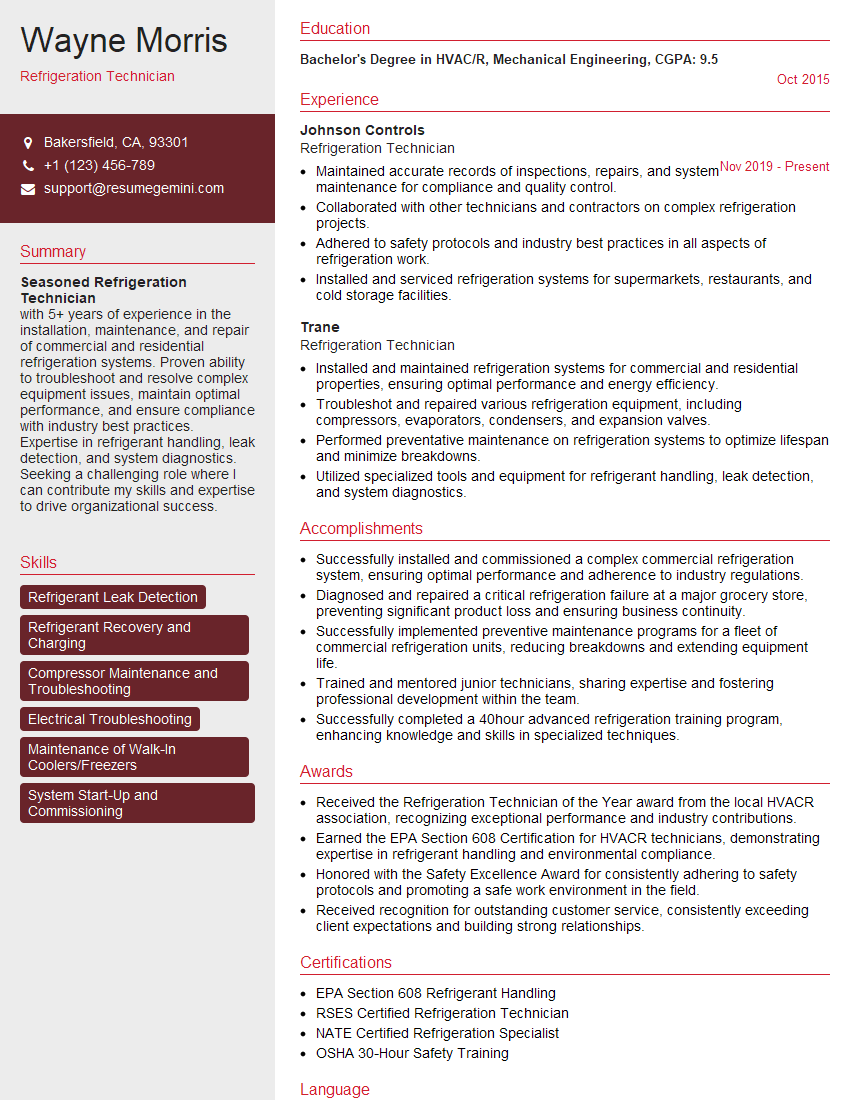
Mastering Cold Storage and Temperature Management opens doors to rewarding careers in the food and pharmaceutical industries, offering excellent growth potential and specialized expertise. A strong resume is crucial for showcasing your skills and experience to potential employers. Creating an ATS-friendly resume increases your chances of getting your application noticed. To build a professional and effective resume that highlights your qualifications, we recommend using ResumeGemini. ResumeGemini offers a user-friendly platform and provides examples of resumes tailored to Cold Storage and Temperature Management to guide you through the process. Take the next step towards your dream career today!
Explore more articles
Users Rating of Our Blogs
Share Your Experience
We value your feedback! Please rate our content and share your thoughts (optional).
What Readers Say About Our Blog
Very informative content, great job.
good