Unlock your full potential by mastering the most common Collaboration and Diplomacy interview questions. This blog offers a deep dive into the critical topics, ensuring you’re not only prepared to answer but to excel. With these insights, you’ll approach your interview with clarity and confidence.
Questions Asked in Collaboration and Diplomacy Interview
Q 1. Describe your experience building consensus among diverse stakeholders.
Building consensus among diverse stakeholders requires a multifaceted approach that prioritizes understanding, empathy, and strategic communication. It’s like orchestrating a symphony – each instrument (stakeholder) has a unique voice, and the conductor (me) needs to harmonize them to create a beautiful piece of music (a shared goal).
My approach begins with active listening – truly understanding each stakeholder’s perspective, concerns, and interests. I facilitate open dialogue, encouraging everyone to express their viewpoints without judgment. I then identify common ground and areas of potential agreement, highlighting shared goals and benefits. Where differences persist, I employ techniques like brainstorming alternative solutions and compromise. Visual aids like mind maps or charts can be incredibly helpful in clarifying options and reaching a shared understanding. Finally, I document the agreed-upon consensus clearly and transparently, ensuring everyone is on the same page.
For example, during a project involving the redevelopment of a city park, I worked with residents, businesses, environmental groups, and the city council. Each group had distinct priorities – some focused on aesthetics, others on accessibility, and still others on environmental sustainability. Through a series of facilitated workshops and individual meetings, I identified overlapping interests and negotiated compromises, resulting in a plan that satisfied most stakeholders.
Q 2. How do you handle disagreements within a team setting?
Disagreements within a team are inevitable, and I view them as opportunities for growth and innovation, rather than obstacles. My approach focuses on constructive conflict resolution – addressing the issue at hand directly, but respectfully.
First, I create a safe space for open and honest communication. I encourage team members to articulate their perspectives clearly and respectfully, without personal attacks. Then, I facilitate a structured discussion, focusing on the issue, not the individuals. I use active listening to understand the root of the disagreement and clarify any misunderstandings. I might employ techniques like reframing statements to ensure everyone feels heard and understood. The goal is to find common ground and work towards a mutually agreeable solution. If necessary, I’ll mediate, helping the team members find a compromise that respects everyone’s needs and interests.
For instance, during a software development project, team members clashed over the best approach to a specific feature. By facilitating a structured discussion, encouraging active listening, and helping them explore alternative solutions, we were able to find a compromise that blended the strengths of both approaches, resulting in a better final product.
Q 3. Explain your approach to conflict resolution in a professional context.
My approach to conflict resolution in a professional context is based on a collaborative, interest-based model. This means focusing on understanding the underlying needs and interests of all parties involved, rather than just their stated positions. It’s about finding solutions that satisfy everyone’s fundamental concerns, as opposed to simply finding a compromise that leaves some feeling dissatisfied.
I begin by clearly defining the conflict, separating facts from emotions. Then, I encourage each party to explain their perspective, needs, and concerns without interruption. I actively listen, asking clarifying questions to fully understand their viewpoints. Once all perspectives are understood, I work collaboratively to generate multiple possible solutions. We evaluate these options, considering their feasibility, impact, and the degree to which they meet everyone’s underlying interests. The final solution is chosen based on mutual agreement and a commitment from all parties to implement it. Finally, we establish a mechanism for monitoring progress and addressing any unforeseen issues.
A practical example would be mediating a disagreement between two departments over budget allocation. By understanding each department’s strategic goals and resource needs, we could identify creative solutions that met both department’s objectives, even with limited resources.
Q 4. Describe a situation where you successfully negotiated a compromise.
During a complex international negotiation involving a joint environmental conservation project, two nations had conflicting interests regarding resource allocation. One nation prioritized immediate economic benefits, while the other emphasized long-term environmental protection.
To navigate this conflict, I employed a principled negotiation approach, focusing on shared interests and separating the people from the problem. I facilitated open dialogue, actively listening to each nation’s concerns and emphasizing the mutual benefits of a successful conservation project. We brainstormed several options, exploring different resource allocation models that balanced both economic development and environmental sustainability. Ultimately, we reached a compromise involving a phased approach, with initial economic incentives coupled with increasingly stringent environmental regulations over time. This ensured immediate economic benefits while safeguarding the long-term environmental health of the region.
This compromise was successful because it addressed the underlying interests of both parties, fostering trust and collaboration for a future partnership.
Q 5. How do you foster collaboration in virtual teams?
Fostering collaboration in virtual teams requires a proactive and intentional approach, focusing on building relationships, establishing clear communication protocols, and leveraging technology effectively. Think of it as building a strong, virtual community.
I prioritize regular and structured communication, utilizing various tools like video conferencing, instant messaging, and project management software. I encourage the use of asynchronous communication channels to allow team members in different time zones to participate effectively. I also establish clear roles and responsibilities, ensuring each team member understands their contribution to the overall goal. Regular virtual team-building activities, even informal ones, can help build rapport and trust. Transparency and open communication channels are essential for building confidence and creating a sense of shared purpose. Utilizing collaborative tools for document creation and project tracking ensures everyone is informed and working with the latest information.
For example, I’ve used project management software like Asana or Trello to track progress, facilitate discussions, and share documents, creating a centralized hub for collaboration.
Q 6. How do you identify and address potential roadblocks to collaboration?
Identifying and addressing roadblocks to collaboration requires a proactive and systematic approach, focusing on both people and processes. I use a combination of direct observation, feedback mechanisms, and data analysis to pinpoint potential issues.
Common roadblocks include poor communication, lack of clarity regarding roles and responsibilities, conflicting priorities, personality clashes, and technological limitations. I address these by employing clear communication strategies, facilitating team meetings to address misunderstandings and clarify expectations, and using tools to facilitate communication and workflow. I also use conflict resolution techniques to address personality clashes and facilitate constructive dialogue. If technological limitations hinder collaboration, I advocate for improvements and provide training to enhance the team’s digital literacy.
For example, if I identify inconsistent communication as a roadblock, I might implement a standardized communication plan, including regular check-ins, status updates, and a clear escalation protocol for addressing issues promptly.
Q 7. What strategies do you use to build trust and rapport with individuals from different cultures?
Building trust and rapport with individuals from different cultures necessitates cultural intelligence – the ability to understand, appreciate, and adapt to cultural differences. It’s about recognizing that communication styles, values, and norms can vary significantly across cultures.
My approach starts with self-awareness – understanding my own cultural biases and assumptions. I then actively seek to learn about the cultures of the individuals I’m working with. This includes researching cultural norms, communication styles, and potential sensitivities. During interactions, I demonstrate respect for cultural differences, adapting my communication style accordingly. For example, I pay attention to nonverbal cues and adjust my tone and language to promote understanding. I avoid making generalizations or stereotypes and actively seek clarification when necessary. Active listening and empathy are paramount, ensuring that I understand their perspective and concerns, demonstrating genuine interest and respect. I also try to find common ground, highlighting shared values and interests to build rapport and foster collaboration.
An example would be building a rapport with colleagues from Japan by demonstrating respect for their hierarchical structure and indirect communication style, understanding their value for consensus-building and long-term relationships.
Q 8. Describe your experience mediating disputes between colleagues.
Mediating disputes requires a neutral stance and active listening. My approach involves creating a safe space for colleagues to express their concerns without interruption. I focus on understanding the root cause of the conflict, not just the symptoms. This often involves asking clarifying questions to uncover each party’s perspective and underlying needs. Once the issues are clearly defined, I facilitate a collaborative solution-finding process. This may involve brainstorming solutions together, exploring compromises, and ensuring both parties feel their input was valued. For instance, during a project disagreement about timelines, I helped two team members understand their differing priorities – one focused on speed, the other on thoroughness. By establishing clear milestones with built-in flexibility and creating a joint progress tracking system, we found a compromise that satisfied both.
Q 9. How do you adapt your communication style to effectively collaborate with different personalities?
Effective collaboration hinges on adapting communication styles. I believe in understanding different personality types and tailoring my approach accordingly. For instance, with direct communicators, I use clear, concise language and stick to the facts. With those who are more indirect, I employ active listening and ask open-ended questions to encourage them to express their needs subtly. I also adjust my communication channels. For quick decisions, emails or instant messaging work best; for complex issues, face-to-face discussions or video calls prove more effective. A recent project involved a team with a range of communication styles. By consciously adjusting my tone and methods, I ensured that every member felt heard, understood, and actively involved.
Q 10. How do you ensure everyone feels heard and valued during collaborative projects?
Ensuring everyone feels heard and valued requires active listening, respect, and inclusivity. I facilitate collaborative projects by establishing clear communication protocols, using round-robin discussions to ensure everyone has an equal chance to speak, and actively soliciting feedback at every stage. I also utilize techniques like visual aids (like mind maps or whiteboards) to ensure all perspectives are represented equally, making sure to acknowledge and validate each contribution. In one project, I noticed a quieter team member consistently held back their ideas. By individually checking in with them, fostering a safe space for sharing, and showcasing their contributions publicly, their engagement and the project’s success improved significantly. I believe in creating an environment where everyone feels empowered to contribute and their contributions are appreciated.
Q 11. Describe a time you had to persuade someone to adopt a different point of view.
Persuasion requires understanding the other person’s perspective and finding common ground. In a previous project, a stakeholder was resistant to adopting a new software system. Instead of directly challenging their viewpoint, I presented data illustrating the system’s benefits, focusing on how it directly addressed their department’s challenges. I demonstrated the software’s ease of use and its potential to streamline their workflow. I also listened to their concerns about the learning curve and addressed them proactively by offering comprehensive training sessions and ongoing support. By focusing on mutual benefit and addressing their specific concerns, I successfully persuaded them to adopt the new system, ultimately boosting team efficiency.
Q 12. How do you prioritize competing priorities when working on collaborative projects?
Prioritizing competing priorities in collaborative projects demands a clear and structured approach. I utilize tools like project management software (e.g., Trello, Asana) to track tasks, deadlines, and dependencies. I employ prioritization frameworks like MoSCoW (Must have, Should have, Could have, Won’t have) to classify tasks based on urgency and importance. Through regular team meetings, we review progress and re-prioritize tasks as needed. Transparency and clear communication are key to managing expectations when juggling multiple priorities. This approach helped navigate a particularly challenging project with conflicting deadlines where prioritizing based on impact and feasibility ensured we delivered the most critical elements successfully.
Q 13. Explain your approach to managing expectations during complex negotiations.
Managing expectations in complex negotiations involves clear, proactive communication and realistic goal setting. I begin by actively listening to all parties to understand their needs and interests. Then, I collaboratively establish realistic expectations, setting clear boundaries and timelines. I maintain open communication channels, providing regular updates and addressing concerns promptly. When necessary, I will adjust expectations based on emerging circumstances and ensure all parties understand the rationale for any changes. For example, during a contract negotiation, I made sure to manage expectations regarding potential delays, ensuring transparency throughout the process. This open approach prevented misunderstandings and helped maintain trust among all stakeholders.
Q 14. How do you measure the success of a collaborative effort?
Measuring the success of a collaborative effort goes beyond simply achieving the project goals. I employ a multi-faceted approach. Firstly, I assess whether the project met its objectives, using metrics relevant to each goal (e.g., timeliness, budget adherence, quality). Secondly, I measure the collaborative process itself, evaluating factors such as team cohesion, communication effectiveness, and conflict resolution. Finally, I gauge the impact of the project, considering its overall contribution to organizational goals and stakeholder satisfaction. Feedback surveys, team retrospectives, and analysis of project metrics provide valuable insights for evaluating overall success. A successful collaboration is one where the project achieves its aims and the team grows stronger in the process.
Q 15. How do you handle situations where team members are unwilling to cooperate?
Addressing reluctance to cooperate requires a multi-pronged approach focused on understanding the root cause. It’s rarely about simple unwillingness; often, there are underlying issues like unclear roles, conflicting priorities, lack of trust, or even personality clashes.
Identify the source: Begin by having individual conversations with the team members to understand their perspectives. Are they feeling overwhelmed? Do they disagree with the project’s goals? Are there communication breakdowns? Active listening is crucial here.
Clarify roles and responsibilities: A well-defined RACI matrix (Responsible, Accountable, Consulted, Informed) can eliminate confusion and ensure everyone understands their contribution and accountability.
Foster open communication: Create a safe space for expressing concerns and disagreements. Regular team meetings with clear agendas and opportunities for feedback are essential. Techniques like brainstorming and round-robin discussions can encourage participation.
Address conflict directly but constructively: If conflict exists, facilitate a respectful dialogue where everyone can express their views. Mediation may be necessary in more complex situations. Focus on the problem, not the person.
Recognize and reward contributions: Acknowledge and appreciate individual and team efforts. Celebrating successes reinforces positive collaboration and motivates future participation.
For example, in a previous project, a team member consistently missed deadlines. Through individual conversation, I discovered they were struggling with a new software and felt overwhelmed. Providing additional training and adjusting their workload significantly improved their performance and overall team cooperation.
Career Expert Tips:
- Ace those interviews! Prepare effectively by reviewing the Top 50 Most Common Interview Questions on ResumeGemini.
- Navigate your job search with confidence! Explore a wide range of Career Tips on ResumeGemini. Learn about common challenges and recommendations to overcome them.
- Craft the perfect resume! Master the Art of Resume Writing with ResumeGemini’s guide. Showcase your unique qualifications and achievements effectively.
- Don’t miss out on holiday savings! Build your dream resume with ResumeGemini’s ATS optimized templates.
Q 16. Describe a time you had to navigate a challenging intercultural communication situation.
During a cross-cultural project with a team based in Japan, I encountered a significant communication challenge related to decision-making styles. My team, accustomed to open and often direct communication, found the Japanese team’s more indirect and consensus-driven approach frustrating. They perceived the silence and lack of immediate feedback as a lack of engagement.
To navigate this, I researched Japanese business culture and communication norms. I learned about the importance of building strong relationships (guanxi) before discussing business matters and the value placed on harmony and avoiding confrontation. We incorporated more informal social interactions into our meetings, allowing for relationship building. We also structured our discussions to encourage more gradual consensus-building. Instead of directly challenging views, we focused on asking clarifying questions and offering multiple options for consideration. This improved communication and resulted in a more collaborative and productive working relationship.
Q 17. How do you leverage technology to enhance collaboration and communication?
Technology is a game-changer for collaboration and communication. Effective leveraging involves choosing the right tools for the job and ensuring team members are comfortable and proficient in using them.
Project Management Software: Tools like Asana, Trello, or Monday.com provide centralized project management, task assignment, progress tracking, and communication channels.
Example: Assigning tasks with deadlines and using comments for real-time feedback.Communication Platforms: Slack, Microsoft Teams, or Google Chat facilitate instant messaging, file sharing, video conferencing, and collaborative document editing. They enable asynchronous and synchronous communication.
Video Conferencing: Zoom, Google Meet, or Microsoft Teams provide real-time face-to-face interaction, crucial for building rapport and improving understanding, particularly in diverse teams.
Cloud Storage: Google Drive, Dropbox, or OneDrive allow for easy access and shared editing of documents, presentations, and other files, eliminating version control issues and enhancing collaboration.
It’s vital to choose tools that suit your team’s size, project complexity, and communication preferences, and provide adequate training to maximize their effectiveness. For instance, in a remote team, utilizing a project management platform with clear task assignments and deadlines ensures transparency and accountability, preventing misunderstandings and delays.
Q 18. How do you ensure all stakeholders are informed and engaged throughout a project?
Keeping stakeholders informed and engaged is critical for project success. This involves establishing a clear communication plan and utilizing various methods tailored to different stakeholder groups.
Identify Key Stakeholders: Determine who needs to be informed at each stage of the project (e.g., executives, clients, team members).
Develop a Communication Plan: Define the frequency, method, and content of communication (e.g., regular email updates, weekly progress meetings, project dashboards).
Utilize Multiple Channels: Employ a mix of communication channels to cater to different preferences and ensure broad reach (e.g., email, project management software, intranet, presentations).
Establish Feedback Mechanisms: Create opportunities for stakeholders to provide input and feedback (e.g., surveys, feedback forms, Q&A sessions).
Document Everything: Maintain detailed records of decisions, changes, and communication to build transparency and address potential disputes.
For instance, in a recent project, we used a dedicated project portal to share documents, progress reports, and meeting minutes with all stakeholders. We also held regular virtual town hall meetings to answer questions and gather feedback, ensuring everyone felt included and informed.
Q 19. How do you balance individual needs and team goals in a collaborative environment?
Balancing individual needs and team goals is a delicate but crucial aspect of effective collaboration. It requires empathy, understanding, and clear communication.
Understand Individual Needs: Through open communication, identify individual strengths, weaknesses, limitations, and aspirations. This helps tailor tasks and responsibilities to maximize individual contributions.
Establish Clear Team Goals: Ensure everyone understands the project’s objectives and how their individual work contributes to the overall success. This creates a sense of purpose and shared responsibility.
Negotiate and Compromise: When individual needs conflict with team goals, facilitate a constructive dialogue to find mutually agreeable solutions. This may involve adjusting workloads, deadlines, or even project scope.
Promote a Culture of Support: Encourage team members to support each other and share knowledge and resources. This fosters collaboration and helps individuals overcome challenges.
Recognize Individual Contributions: Regularly acknowledge and appreciate individual efforts and successes. This reinforces the importance of individual contributions while highlighting the collective achievement.
For example, if a team member needs extra time to complete a task due to a personal commitment, we might adjust the project timeline or redistribute the workload to ensure project deadlines are still met while respecting the individual’s needs.
Q 20. What techniques do you employ to prevent groupthink in decision-making processes?
Groupthink, the tendency for groups to prioritize consensus over critical evaluation, can lead to poor decision-making. Preventing it requires establishing a culture of open discussion and critical thinking.
Encourage Diverse Perspectives: Create a team with diverse backgrounds and experiences, as differing viewpoints can challenge assumptions and prevent groupthink.
Assign a Devil’s Advocate: Designate a person to challenge the dominant viewpoint and identify potential flaws in proposed solutions.
Break into Smaller Groups: Divide the team into smaller groups for initial brainstorming and discussion before coming together as a whole. This allows for more individual contributions.
Use Anonymous Feedback Mechanisms: Employ techniques like anonymous surveys or suggestion boxes to encourage honest feedback without fear of reprisal.
Seek External Input: Invite outside experts or stakeholders to review and provide feedback on decisions, offering a fresh perspective.
For example, before making a major strategic decision, I often split the team into smaller groups to brainstorm independently, then compare the different approaches generated. This allows for a more thorough evaluation of options and mitigates the risk of groupthink.
Q 21. Describe a situation where you had to make a difficult decision that impacted multiple parties.
I once had to make a difficult decision regarding resource allocation during a project experiencing significant delays. The project involved multiple teams and had a tight deadline. One team was significantly behind schedule, while another had surplus capacity.
To make the decision, I carefully weighed several factors. First, I assessed the impact of the delay on the overall project goals and the consequences of further delays. Then, I evaluated the feasibility of redistributing resources to the struggling team, considering the potential disruption to the team with surplus capacity. Finally, I considered the morale and workload of both teams, aiming for a solution that was fair and sustainable.
The decision was to reallocate a portion of the resources from the team with surplus capacity to the struggling team. This involved transparent communication with both teams to explain the reasoning behind the decision and address any concerns. Although this involved some temporary disruption to the team with surplus capacity, it prevented a more significant project delay and minimized the negative impact on all stakeholders. The decision, though difficult, prioritized overall project success while ensuring fair consideration of all involved teams.
Q 22. How do you ensure fairness and transparency in decision-making processes?
Ensuring fairness and transparency in decision-making is paramount for successful collaboration. It fosters trust, encourages participation, and prevents conflicts. I achieve this through a multi-pronged approach.
- Clearly Defined Processes: Establishing clear, documented procedures for decision-making from the outset. This includes outlining who is involved, how input will be gathered, and what criteria will be used for evaluation. For example, I might use a weighted scoring system for evaluating proposals, with criteria clearly defined and shared with all stakeholders.
- Open Communication: Maintaining open and consistent communication channels. Regular updates, accessible meeting minutes, and transparent sharing of information are crucial. Using a collaborative platform like SharePoint or Google Workspace to centralize all documents and updates is invaluable.
- Inclusive Participation: Actively soliciting input from all relevant stakeholders. This may involve surveys, brainstorming sessions, or individual consultations. It’s important to create a safe space where everyone feels comfortable sharing their perspectives, even dissenting opinions.
- Objective Criteria: Using objective and measurable criteria to evaluate options. This reduces bias and ensures that decisions are based on merit rather than personal preference. For instance, prioritizing projects based on ROI, rather than solely on individual preferences.
- Conflict Resolution Mechanisms: Establishing clear processes for resolving disagreements. This could involve mediation, voting systems (with pre-defined rules), or escalation pathways to higher authorities.
In a recent project involving resource allocation, we employed a weighted scoring system based on project urgency, strategic alignment, and potential impact. This ensured a transparent and fair allocation process, minimizing potential conflicts.
Q 23. Explain your experience managing multiple stakeholders with conflicting interests.
Managing stakeholders with conflicting interests requires a nuanced approach focused on understanding, negotiation, and compromise. My experience has shown that effective stakeholder management hinges on empathy, active listening, and a willingness to find mutually beneficial solutions.
- Needs Assessment: I begin by carefully identifying and understanding the interests and concerns of each stakeholder. This often involves individual meetings and discussions to ascertain their perspectives and priorities.
- Communication & Relationship Building: Building rapport and trust with each stakeholder is crucial. Regular communication, active listening, and demonstrating respect for their views are vital for building consensus.
- Collaboration & Negotiation: I facilitate collaborative discussions, using techniques such as interest-based negotiation to find common ground and address conflicting interests. This involves focusing on underlying needs rather than solely on stated positions.
- Compromise & Win-Win Solutions: I strive for win-win solutions whenever possible. Sometimes this means finding creative compromises that partially satisfy all parties involved.
- Documentation & Transparency: Thoroughly documenting agreements and decisions ensures clarity and accountability. Transparency builds trust and prevents misunderstandings.
In a project involving the redevelopment of a city park, I successfully navigated conflicting interests between residents who wanted a quiet space and community groups who wanted more active recreational facilities. Through careful stakeholder engagement and collaborative workshops, we devised a design that incorporated both elements, achieving a satisfactory outcome for all involved.
Q 24. How do you maintain momentum and motivation during prolonged collaborative projects?
Maintaining momentum and motivation in long-term collaborative projects requires proactive strategies focused on recognition, communication, and progress visualization.
- Regular Check-ins and Milestones: Setting clear milestones with deadlines and celebrating achievements along the way provides a sense of accomplishment and keeps the team engaged.
- Open and Transparent Communication: Maintaining open communication channels, sharing progress updates regularly, and addressing challenges proactively prevents frustration and maintains transparency.
- Team Building and Recognition: Investing time in team-building activities and recognizing individual and team accomplishments helps foster camaraderie and boosts morale. This might include informal gatherings, team lunches, or public acknowledgement of contributions.
- Regular Re-evaluation and Adjustment: Periodically re-evaluating project goals and strategies ensures the project remains relevant and aligns with evolving needs. Adapting to changing circumstances maintains momentum and prevents stagnation.
- Continuous Learning and Development: Providing opportunities for professional development and skill enhancement keeps team members engaged and motivated. This might involve workshops, conferences, or mentorship programs.
In a large-scale software development project spanning two years, we implemented a system of bi-weekly sprint reviews, regular team lunches, and a project-wide recognition program that significantly contributed to maintaining team morale and ensuring the project’s successful completion.
Q 25. How do you address power imbalances within a collaborative team?
Addressing power imbalances within a collaborative team requires conscious effort to create an inclusive and equitable environment. This involves recognizing the potential for bias and taking proactive steps to mitigate its influence.
- Inclusive Leadership: Leaders should actively foster an inclusive environment by valuing diverse perspectives and ensuring equitable participation from all members.
- Empowerment and Delegation: Delegating tasks and responsibilities based on skills and expertise, rather than hierarchical position, empowers team members and distributes authority.
- Open Dialogue and Feedback Mechanisms: Creating safe spaces for open dialogue and feedback encourages the identification and resolution of power imbalances. Anonymous feedback mechanisms can be particularly useful.
- Mentorship and Sponsorship: Mentoring and sponsorship programs can help individuals from underrepresented groups gain access to resources, networks, and opportunities for advancement.
- Clear Communication Protocols: Establishing clear communication protocols that value all voices prevents dominant individuals from silencing others.
In a team where a senior member was dominating discussions, we introduced a ’round-robin’ speaking system in meetings, ensuring every member had equal opportunity to voice their ideas. This helped to level the playing field and encourage participation from all.
Q 26. Describe your experience working on cross-functional teams.
My experience with cross-functional teams has been extensive and consistently rewarding. The diversity of perspectives and expertise within such teams often leads to innovative and comprehensive solutions. However, effective management is crucial due to the potential for communication breakdowns and conflicting priorities.
- Clear Goals and Objectives: Establishing clear, shared goals and objectives from the outset is crucial for aligning the efforts of diverse team members.
- Effective Communication Strategies: Developing and implementing effective communication strategies, including regular meetings, shared documents, and clear communication protocols, is critical for ensuring all members are informed and on the same page.
- Conflict Resolution Mechanisms: Establishing proactive conflict resolution mechanisms to address disagreements and conflicting priorities is essential for maintaining team cohesion and productivity.
- Respect for Diverse Perspectives: Encouraging respectful dialogue and valuing diverse perspectives ensures that all members feel heard and appreciated, fostering a collaborative environment.
- Shared Understanding of Roles and Responsibilities: Clearly defining roles and responsibilities for each member minimizes confusion and ensures efficient workflow.
In a recent product launch, a cross-functional team comprising engineers, marketers, and sales personnel successfully navigated the complexities of the process through clearly defined roles, weekly progress meetings, and a shared understanding of the ultimate goal. This collaborative approach resulted in a highly successful product launch.
Q 27. How do you facilitate productive meetings?
Facilitating productive meetings involves careful planning, clear communication, and active engagement of all participants. The goal is to use time efficiently and achieve tangible outcomes.
- Clear Agenda and Objectives: Distributing a clear agenda with specific objectives prior to the meeting ensures everyone is prepared and understands the purpose.
- Time Management: Adhering to a predetermined schedule and allocating specific time slots for each agenda item prevents meetings from running over and keeps participants focused.
- Active Participation: Encouraging active participation from all attendees through open discussion, brainstorming sessions, and Q&A periods ensures everyone feels heard and contributes valuable insights.
- Decision-Making Processes: Establishing clear decision-making processes, such as voting or consensus-building, prevents ambiguity and ensures that decisions are made effectively.
- Action Items and Follow-up: Assigning clear action items with assigned owners and deadlines, and following up on progress after the meeting, ensures accountability and maintains momentum.
In a recent strategic planning session, I used a structured agenda, time limits for each topic, and assigned note-takers to ensure all discussions were productive and decisions were documented clearly.
Q 28. How do you document and track progress in collaborative projects?
Documenting and tracking progress in collaborative projects is crucial for accountability, transparency, and successful completion. Various tools and techniques can be employed to achieve this.
- Project Management Software: Utilizing project management software such as Asana, Trello, or Jira allows for centralized tracking of tasks, deadlines, and progress. These platforms provide visual representations of project status, facilitating easy monitoring.
- Regular Progress Reports: Creating and distributing regular progress reports, including key milestones achieved, challenges encountered, and anticipated timelines, keeps stakeholders informed and promotes accountability.
- Version Control Systems: Employing version control systems like Git for code or document management ensures that all changes are tracked, allowing for easy rollback and collaboration among team members.
- Meeting Minutes: Detailed meeting minutes that document key decisions, action items, and assignments ensure everyone is aware of the outcomes and responsibilities.
- Centralized Communication Platform: Using a centralized communication platform, like Slack or Microsoft Teams, allows for the easy sharing of updates, documents, and relevant information, enhancing collaboration and transparency.
In a recent marketing campaign, we used Asana to track tasks, deadlines, and budget allocation. Regular progress reports were shared with stakeholders, keeping everyone informed and ensuring the project stayed on track.
Key Topics to Learn for Collaboration and Diplomacy Interview
- Understanding Diverse Perspectives: Explore active listening techniques, empathy building, and recognizing cultural nuances in communication. Practical application: Describe a situation where you successfully navigated differing viewpoints to achieve a common goal.
- Effective Communication Strategies: Master clear and concise communication, both written and verbal. Practice presenting complex information in an accessible manner. Practical application: Explain your approach to conflict resolution and negotiation in a team setting.
- Building Consensus and Negotiating: Learn various negotiation styles and strategies for reaching mutually beneficial agreements. Understand the importance of compromise and finding win-win solutions. Practical application: Detail a project where you had to negotiate competing priorities and resources.
- Team Dynamics and Leadership: Explore different team structures and leadership styles. Understand how to motivate and support team members, fostering collaboration and productivity. Practical application: Describe a time you led a team through a challenging project, highlighting your collaborative approach.
- Conflict Resolution and Mediation: Develop skills in identifying and addressing conflict constructively. Learn strategies for de-escalation and mediation. Practical application: Share an experience where you successfully mediated a disagreement within a team or group.
- Strategic Partnerships and Alliance Building: Understand the principles of building and maintaining strong professional relationships. Learn how to identify shared interests and leverage collaboration for mutual benefit. Practical application: Describe your experience building and maintaining professional relationships to achieve shared goals.
Next Steps
Mastering collaboration and diplomacy is crucial for career advancement. These skills are highly valued across all industries, opening doors to leadership roles and impactful contributions. To significantly boost your job prospects, create an ATS-friendly resume that highlights these skills effectively. ResumeGemini is a trusted resource to help you build a professional and impactful resume. We offer examples of resumes tailored to Collaboration and Diplomacy to guide you. Take the next step towards your dream career today!
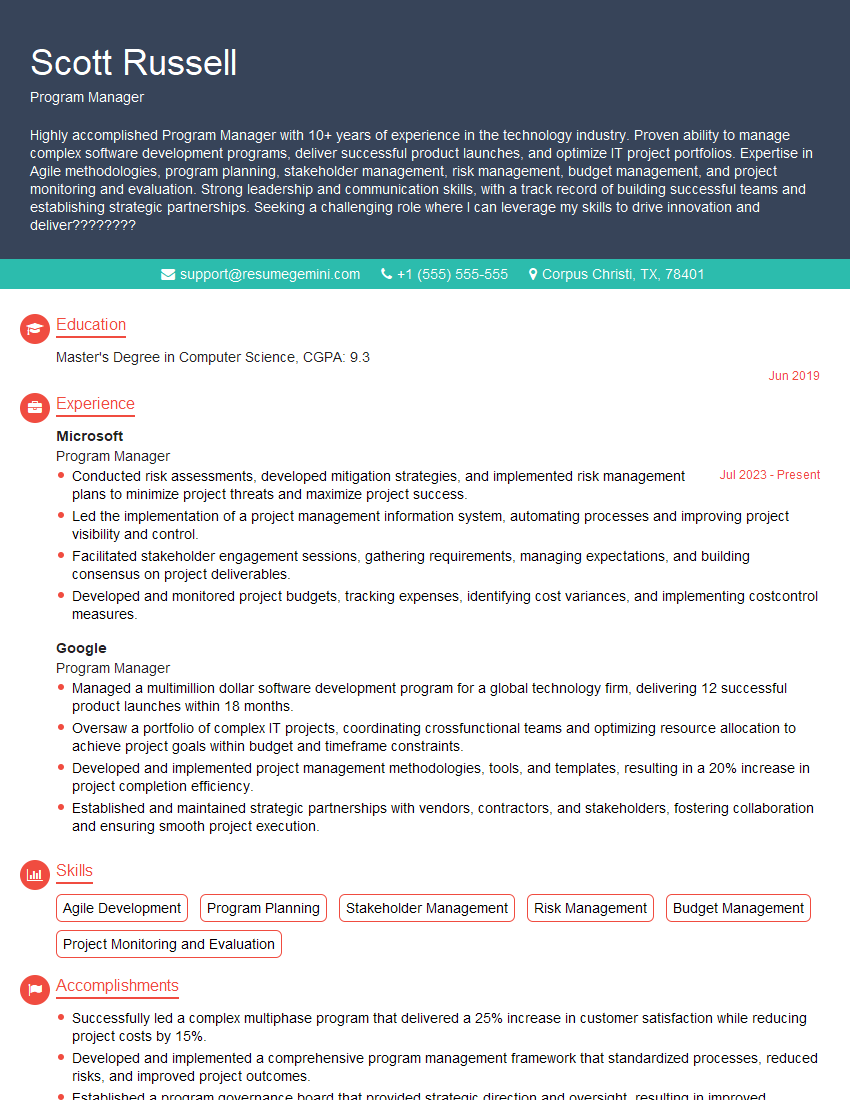
Program Manager Resume Sample
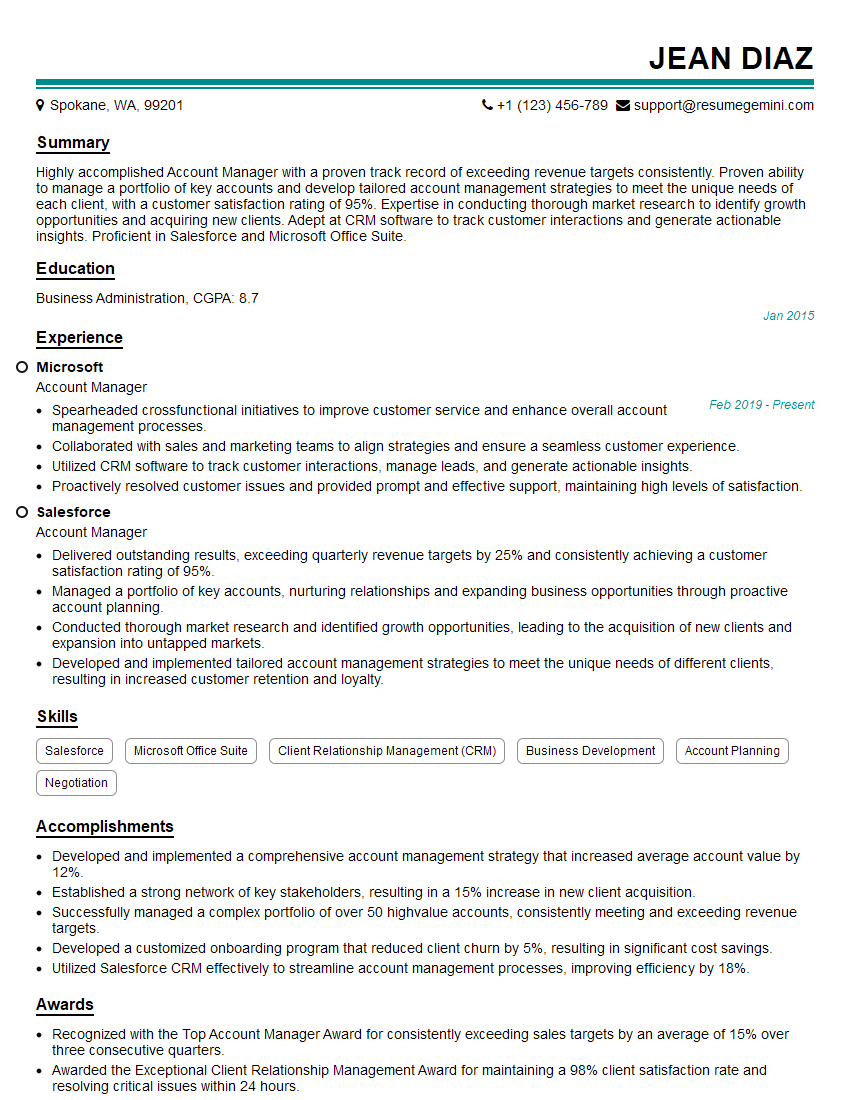
Account Manager Resume Sample
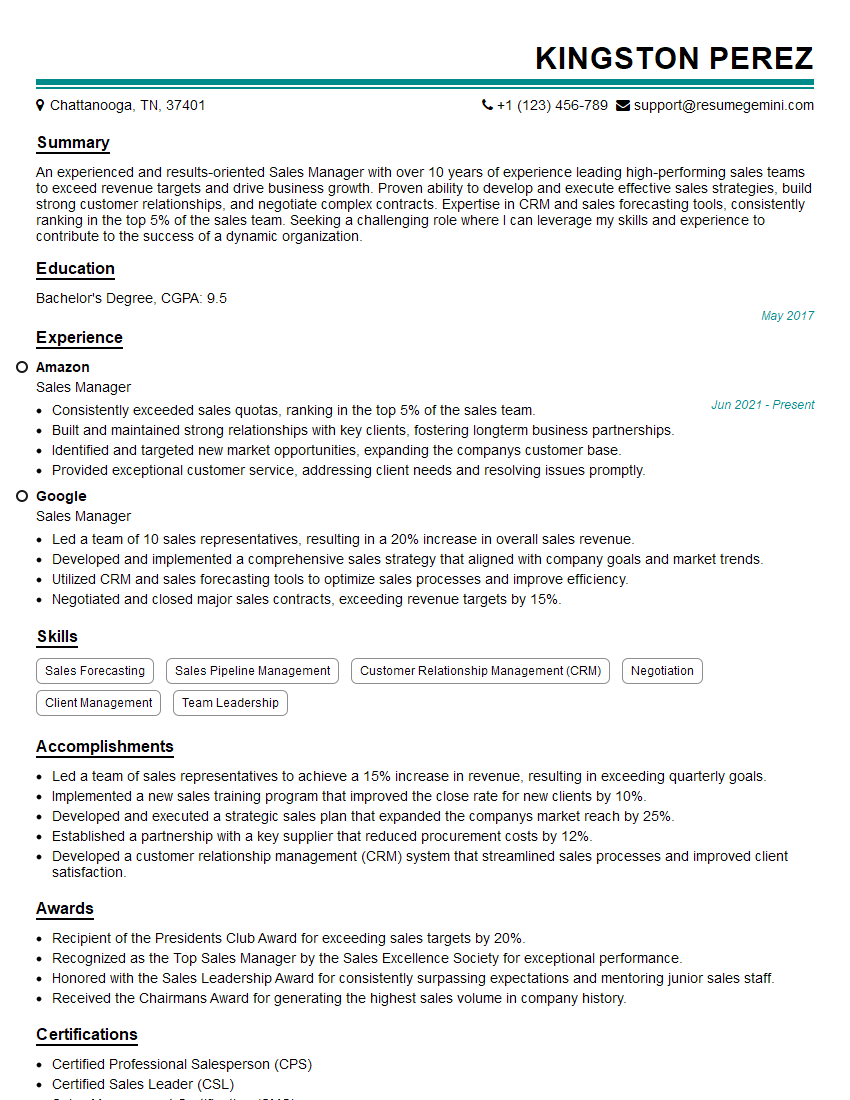
Sales Manager Resume Sample
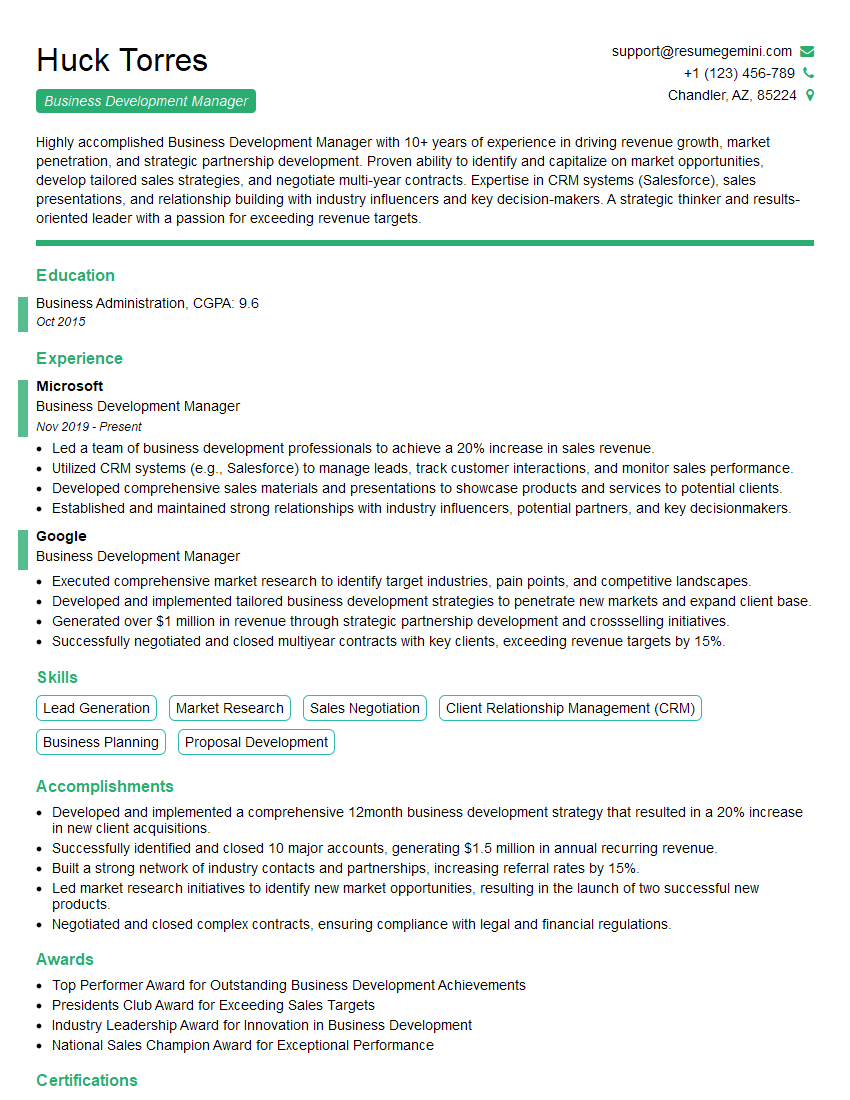
Business Development Manager Resume Sample
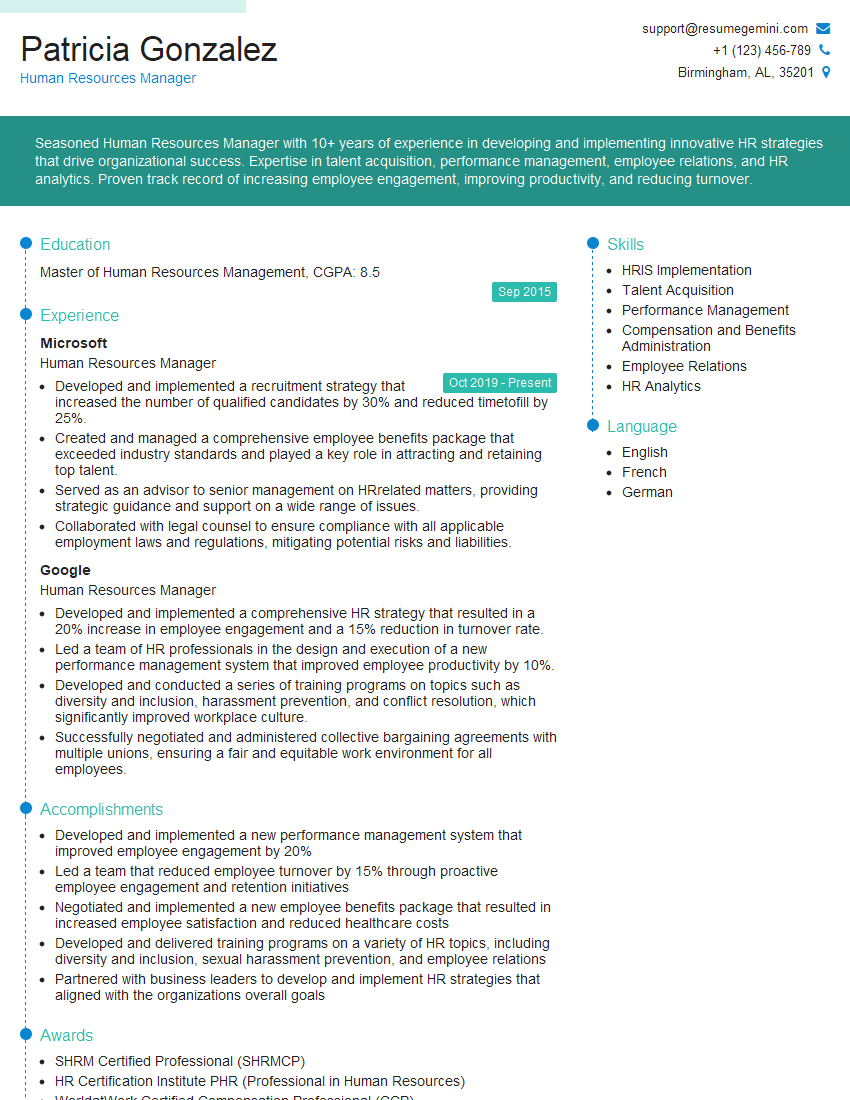
Human Resources Manager Resume Sample

Project Manager Resume Sample
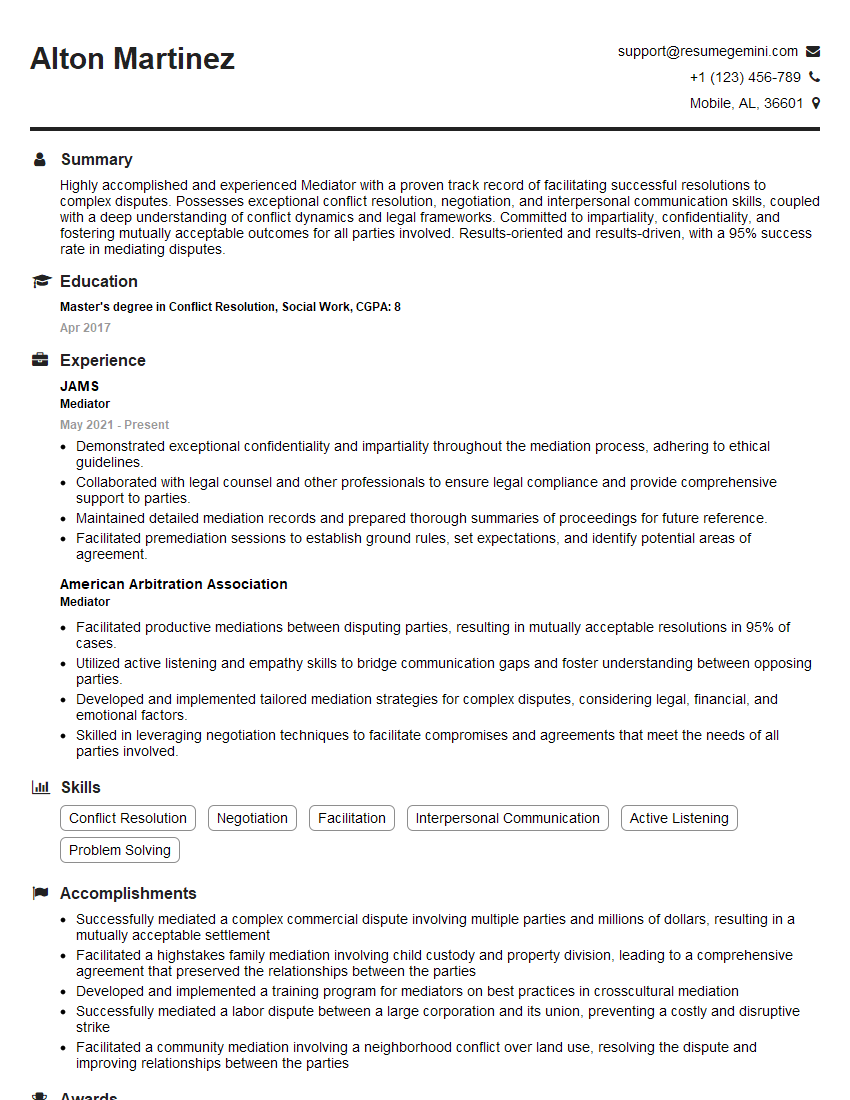
Mediator Resume Sample
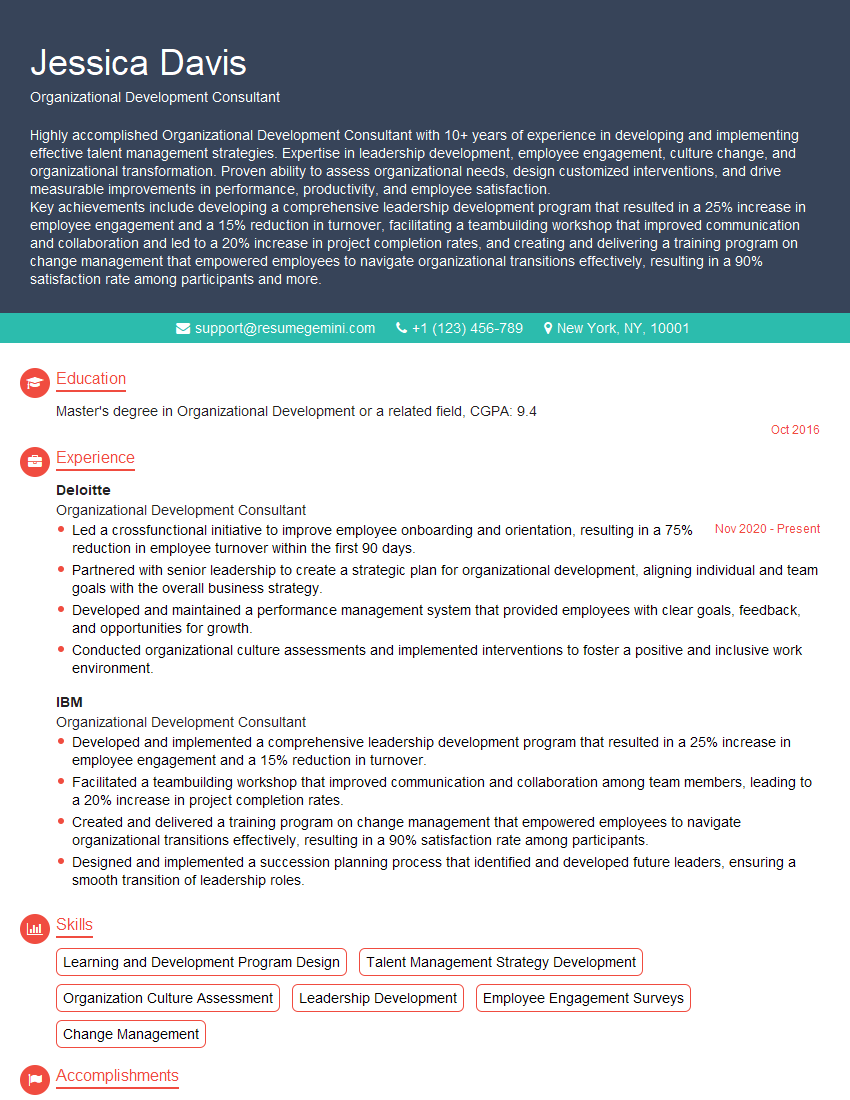
Organizational Development Consultant Resume Sample
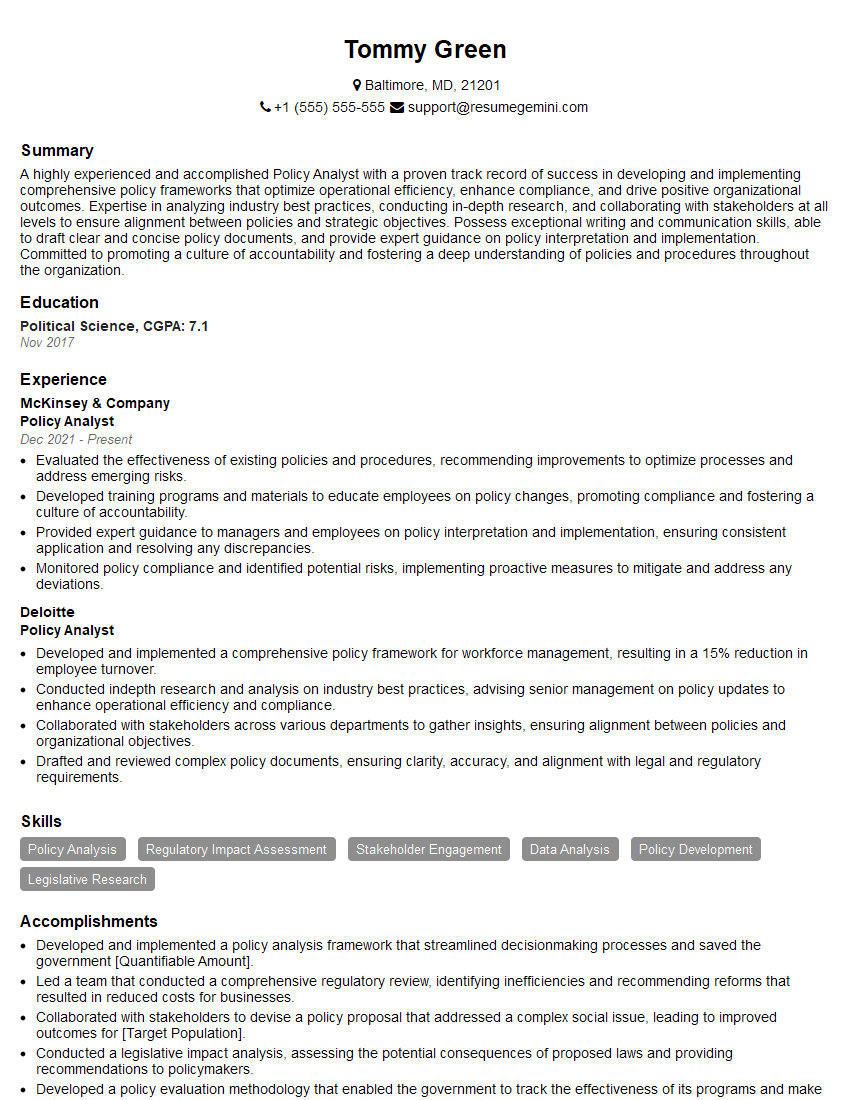
Policy Analyst Resume Sample
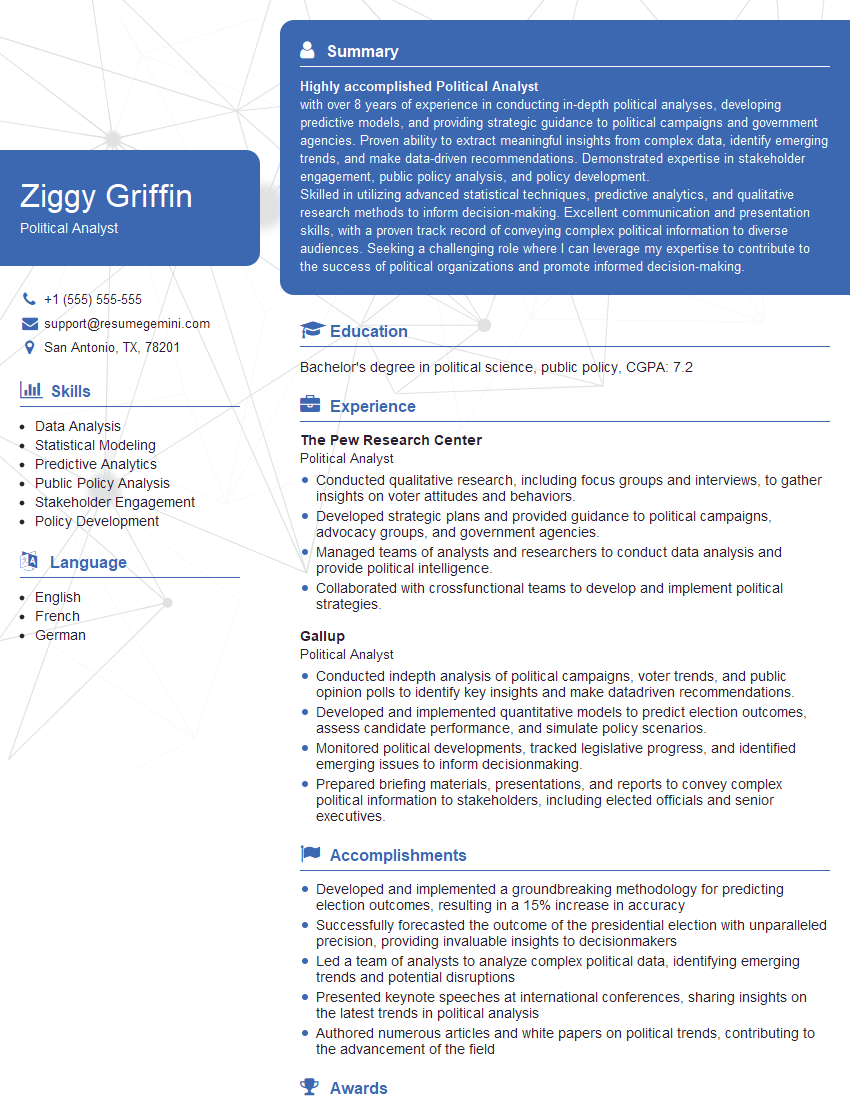
Political Analyst Resume Sample
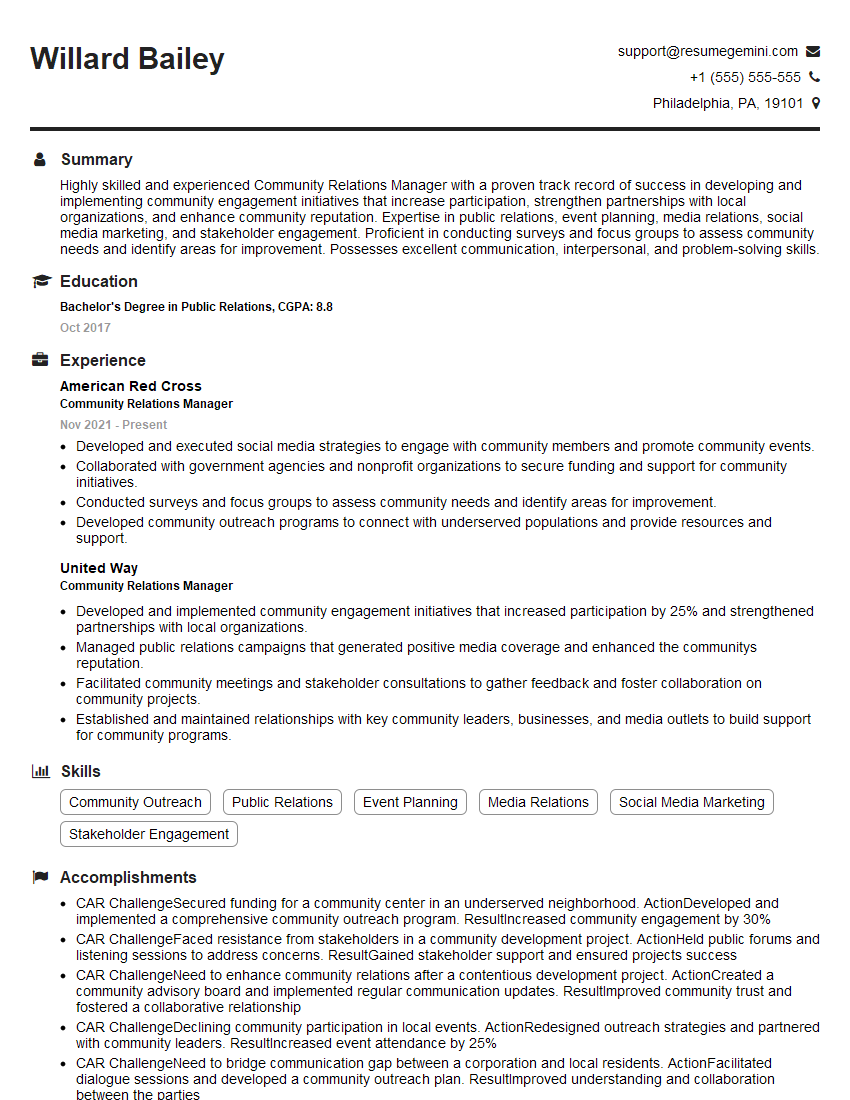
Community Relations Manager Resume Sample
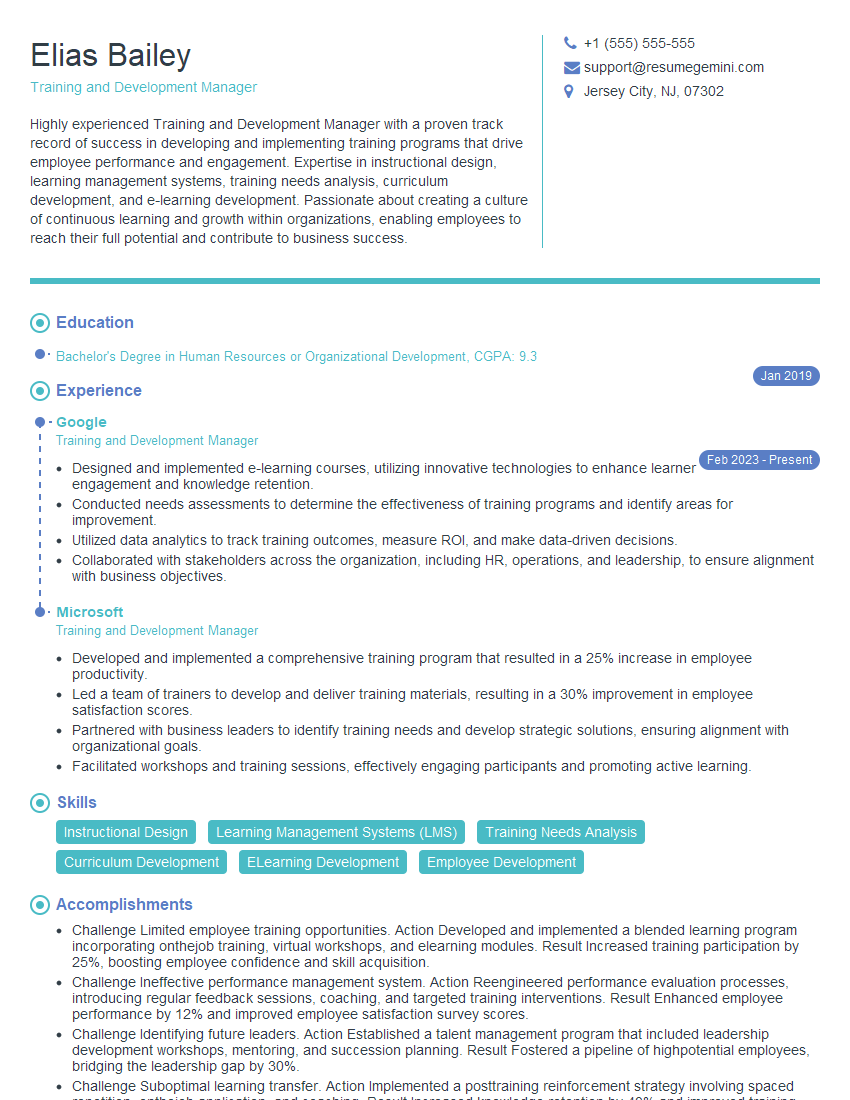
Training and Development Manager Resume Sample
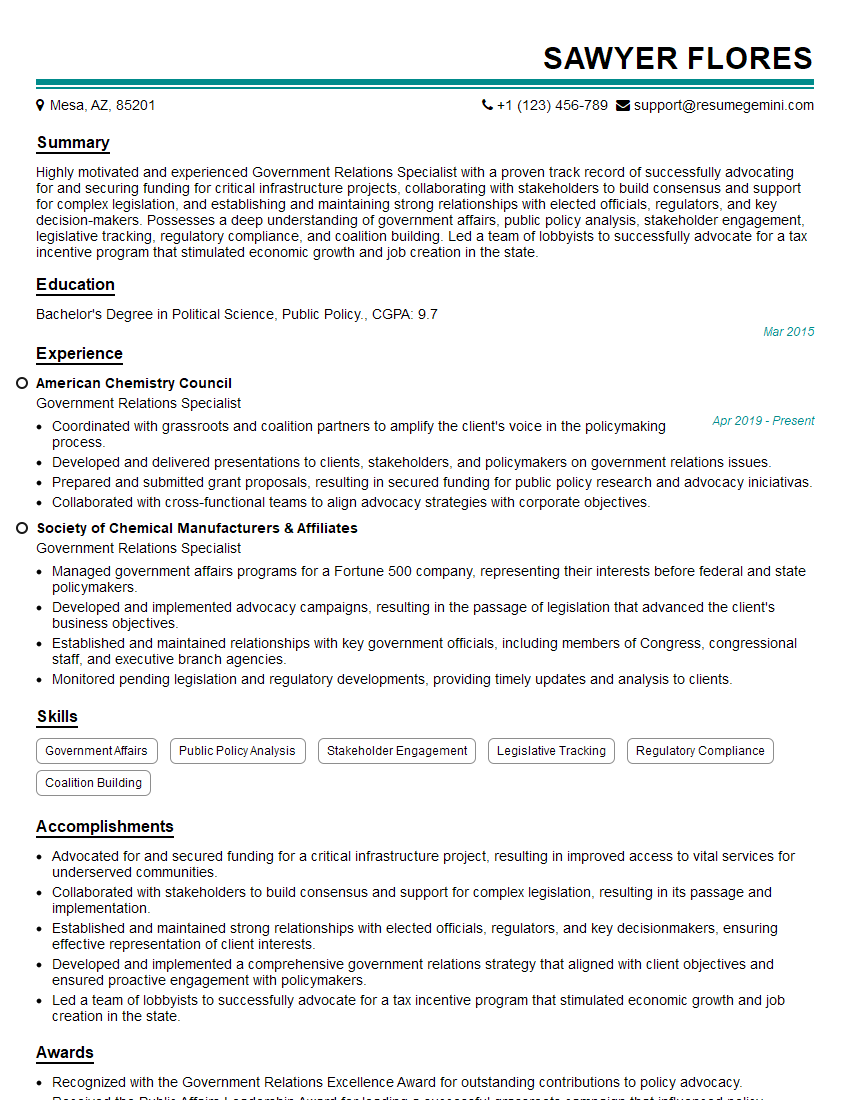
Government Relations Specialist Resume Sample
Explore more articles
Users Rating of Our Blogs
Share Your Experience
We value your feedback! Please rate our content and share your thoughts (optional).
What Readers Say About Our Blog
Very informative content, great job.
good