The thought of an interview can be nerve-wracking, but the right preparation can make all the difference. Explore this comprehensive guide to Shipyard Project Management interview questions and gain the confidence you need to showcase your abilities and secure the role.
Questions Asked in Shipyard Project Management Interview
Q 1. Describe your experience managing complex shipyard projects.
My experience managing complex shipyard projects spans over 15 years, encompassing diverse vessel types from container ships to offshore platforms. I’ve led teams of up to 100 professionals, overseeing budgets exceeding $100 million. A particularly challenging project involved the construction of a specialized research vessel requiring intricate integration of advanced scientific equipment. This necessitated meticulous planning, proactive risk mitigation, and continuous communication across multiple engineering disciplines and international subcontractors. We successfully delivered the vessel on time and within budget, exceeding client expectations on several key performance indicators. Another example involved the refit of a large LNG carrier, which presented unique challenges related to safety regulations and tight operational deadlines. We successfully completed the refit project, improving efficiency and extending the operational life of the vessel.
These experiences have instilled in me a deep understanding of the complexities inherent in shipyard projects, including the management of intricate supply chains, stringent safety regulations, and demanding client specifications. I am adept at navigating these challenges through proactive planning, effective team leadership, and a commitment to quality.
Q 2. Explain your approach to risk management in a shipbuilding environment.
My approach to risk management in shipbuilding prioritizes proactive identification, assessment, and mitigation. It’s not enough to simply react to problems; we must anticipate them. I employ a multi-layered approach. First, a comprehensive risk assessment is conducted early in the project lifecycle, identifying potential hazards across all phases (design, procurement, construction, commissioning). We use a structured methodology, often a combination of qualitative (expert judgment) and quantitative (probabilistic analysis) techniques. Each identified risk is then analyzed, considering its likelihood and potential impact.
Next, we develop mitigation strategies, assigning responsibilities and establishing clear timelines. These strategies could range from implementing stricter quality control measures to securing insurance coverage or developing contingency plans. Finally, we continuously monitor the effectiveness of these mitigation strategies, adapting our approach as needed. Regular risk reviews are held, involving key stakeholders, to discuss emerging risks and adjust our response plans accordingly. For example, on a recent project, we identified a potential risk of supply chain disruption. We mitigated this by diversifying our suppliers and establishing advance procurement strategies, ultimately avoiding project delays.
Q 3. How do you handle schedule delays and cost overruns in a shipyard project?
Schedule delays and cost overruns are unfortunately common in shipyard projects. My approach focuses on early detection and proactive intervention. We establish robust baseline schedules and budgets, using Earned Value Management (EVM) to track progress and identify deviations early. When delays occur, I initiate a thorough investigation to pinpoint the root cause, whether it’s a supplier issue, design flaw, or unforeseen technical challenge. This investigation involves analyzing the critical path and identifying the key activities contributing to the delay.
Next, we develop recovery plans, focusing on accelerating critical tasks, optimizing resource allocation, and potentially negotiating schedule extensions with clients. Cost overruns are addressed through a combination of cost optimization strategies, such as value engineering, and potentially renegotiating contracts with suppliers. Open and honest communication with stakeholders is essential to manage expectations and secure buy-in for any necessary changes. For instance, on a project facing a significant delay due to a supplier failing to deliver components on time, we successfully negotiated a revised schedule with the client while simultaneously exploring alternative suppliers and implementing expedited delivery processes.
Q 4. What project management methodologies are you proficient in (e.g., Agile, Waterfall, PRINCE2)?
I’m proficient in several project management methodologies, adapting my approach based on the specific project requirements. While Waterfall methodologies are suitable for projects with well-defined requirements and minimal anticipated changes, I frequently leverage aspects of Agile for greater flexibility in responding to changing conditions common in complex shipyard environments. This often involves iterative development, regular feedback loops with stakeholders, and adaptive planning. For large, complex projects with extensive regulatory compliance, I have utilized PRINCE2’s structured approach, emphasizing risk management and stakeholder engagement. The best approach is usually a hybrid, combining the strengths of different methodologies to optimize project outcomes.
Q 5. How do you ensure quality control throughout the shipbuilding process?
Quality control is paramount in shipbuilding, where defects can have severe safety and financial implications. My approach integrates quality control throughout the entire lifecycle, starting with rigorous design reviews and material selection. We implement a robust quality management system (QMS) aligned with ISO 9001 standards, incorporating regular inspections, testing, and audits at each stage of the construction process. This includes non-destructive testing (NDT) techniques to identify hidden defects. We also emphasize continuous improvement, regularly analyzing quality data to identify trends and implement corrective actions. Crucially, we foster a culture of quality throughout the organization, empowering workers to identify and report potential quality issues proactively. This proactive, multi-layered approach ensures that we deliver high-quality vessels that meet or exceed client expectations.
Q 6. Describe your experience with subcontractor management in a shipyard setting.
Subcontractor management is crucial in shipyard projects, given the complexity and specialization required. I establish clear contracts, outlining scope of work, deliverables, timelines, and payment terms. Prior to awarding contracts, a thorough assessment of the subcontractor’s capabilities, experience, and financial stability is undertaken. We maintain regular communication and collaboration, holding regular progress meetings and proactively addressing any potential issues. Performance monitoring is critical, utilizing key performance indicators (KPIs) to track progress and identify potential problems early. A transparent and collaborative relationship with subcontractors ensures that we work together to achieve our common goal of successfully completing the project on time and within budget. Furthermore, we actively manage risks associated with subcontractor performance, including potential delays or quality issues, by incorporating appropriate clauses and contingency plans within our contracts.
Q 7. How do you manage stakeholder expectations in a large-scale shipyard project?
Managing stakeholder expectations in large-scale shipyard projects requires clear, consistent, and proactive communication. I establish a comprehensive communication plan early in the project lifecycle, identifying key stakeholders (clients, regulatory bodies, subcontractors, internal teams) and defining communication channels and frequencies. Regular progress reports, including both written and verbal updates, are provided, highlighting achievements, challenges, and potential risks. These updates are tailored to each stakeholder’s specific interests and level of technical understanding. Open and honest communication is crucial; transparency builds trust and fosters collaboration. For instance, proactively communicating potential schedule delays allows stakeholders to adjust their plans accordingly, preventing misunderstandings and conflicts. This proactive approach to managing expectations not only ensures smooth project execution but also cultivates strong, lasting relationships with all stakeholders.
Q 8. What software and tools are you familiar with for project management in shipbuilding?
My experience encompasses a wide range of software and tools used in shipbuilding project management. This includes industry-standard platforms like Primavera P6 for scheduling and resource allocation, which allows for intricate modeling of complex tasks and dependencies. I’m also proficient in Microsoft Project for simpler projects and task management. For cost control and estimation, I utilize software such as CostOS and other dedicated cost engineering applications. Furthermore, I’m familiar with various CAD/CAM software packages, including AutoCAD and specialized shipbuilding design software, which are crucial for integrating design data into the project management process. Finally, collaborative platforms like SharePoint and Microsoft Teams are invaluable for communication and document management across dispersed teams.
For example, in a recent project involving the construction of a large container vessel, Primavera P6 was essential in tracking the progress of hundreds of simultaneous tasks, identifying potential bottlenecks, and optimizing resource allocation. The integration of design data from the CAD software into the schedule provided real-time visibility of progress against the planned design milestones.
Q 9. Explain your approach to conflict resolution among project team members.
My approach to conflict resolution emphasizes proactive communication and collaboration. I believe in addressing conflicts early and directly, fostering a culture of open dialogue where team members feel comfortable expressing concerns. My process typically involves the following steps:
- Active Listening: I begin by actively listening to each party involved, ensuring I understand their perspectives and concerns completely.
- Identifying the Root Cause: I then work to identify the underlying cause of the conflict, rather than focusing solely on the surface-level symptoms. This often involves asking clarifying questions and seeking further information.
- Facilitating Collaboration: I facilitate a collaborative discussion, encouraging the parties to work together to find mutually acceptable solutions. This might involve brainstorming potential solutions and identifying compromises.
- Mediation: If necessary, I will act as a neutral mediator, helping the parties to reach an agreement that is fair and equitable.
- Documentation and Follow-up: Finally, I document the agreed-upon solution and follow up to ensure it is being implemented effectively and that any lingering issues are addressed.
For instance, in a situation involving disagreements between the welding and electrical teams concerning access to specific areas of the vessel during construction, I facilitated a joint meeting where both teams were able to articulate their needs and concerns. Through collaboration, we created a revised work schedule that allowed both teams to complete their tasks efficiently and safely, without compromising the overall project timeline.
Q 10. How do you ensure safety compliance in a shipyard environment?
Ensuring safety compliance in a shipyard is paramount. My approach involves a multi-faceted strategy incorporating robust safety protocols, regular inspections, and continuous training. This includes:
- Strict Adherence to Regulations: I ensure all work adheres strictly to relevant safety regulations and industry best practices, including OSHA guidelines and any specific regulations applicable to the geographic location and type of vessel being built.
- Comprehensive Safety Training: Regular, mandatory safety training for all personnel is essential, covering topics such as hazard identification, risk assessment, personal protective equipment (PPE) usage, and emergency procedures.
- Regular Safety Inspections: Thorough and frequent safety inspections are conducted to identify and mitigate potential hazards, such as unsafe working conditions, faulty equipment, or inadequate PPE. These inspections often involve multiple levels of oversight, including team leaders and safety officers.
- Incident Reporting and Investigation: A comprehensive system for reporting and investigating safety incidents is in place. Thorough investigation helps identify the root causes of incidents to prevent recurrence. This system also ensures lessons learned are communicated effectively across the shipyard.
- Emergency Preparedness: We have detailed emergency response plans in place, including procedures for evacuation, fire suppression, and medical emergencies. Regular drills ensure all personnel are familiar with these plans.
For example, implementing a stricter system for confined space entry procedures, including mandatory gas testing before entry and the presence of a standby person, significantly reduced the risk of accidents in a recent project.
Q 11. How do you monitor and control project costs effectively?
Effective cost monitoring and control in shipbuilding requires a proactive approach, starting with accurate budgeting and rigorous tracking throughout the project lifecycle. This involves:
- Detailed Budget Development: Creating a detailed budget that breaks down costs into various categories (labor, materials, equipment, etc.) is crucial. This requires a thorough understanding of the project scope and potential risks.
- Regular Cost Tracking: Regularly comparing actual costs against the budgeted amounts and identifying variances early is essential. This allows for prompt corrective action to prevent cost overruns.
- Earned Value Management (EVM): Using EVM to track the project’s progress and cost performance provides a comprehensive overview of the project’s status. This helps identify potential risks and make informed decisions.
- Change Management: Having a formal change management process in place is crucial for managing changes to the project scope and their associated costs. Any change requests must be carefully evaluated for their cost implications.
- Value Engineering: Regularly reviewing the project’s design and specifications to identify opportunities for cost reduction without compromising quality or safety.
For example, in a recent project, the use of EVM identified a potential cost overrun in the early stages due to unforeseen delays. By implementing corrective measures such as optimizing resource allocation and negotiating better deals with suppliers, we were able to successfully manage the project within the allocated budget.
Q 12. Describe your experience with procurement and supply chain management in shipbuilding.
My experience with procurement and supply chain management in shipbuilding involves managing complex procurement processes to ensure timely delivery of high-quality materials and equipment at competitive prices. This includes:
- Supplier Selection: Careful selection of reliable and qualified suppliers based on factors such as their reputation, capacity, and price competitiveness.
- Contract Negotiation: Negotiating favorable contracts with suppliers to ensure they meet project requirements, including quality, delivery timelines, and pricing.
- Material Management: Efficiently managing the procurement, storage, and handling of materials to minimize waste and ensure timely availability.
- Supply Chain Risk Management: Identifying and mitigating potential risks in the supply chain, such as supplier delays, material shortages, or geopolitical factors.
- Inventory Control: Implementing effective inventory management systems to optimize stock levels, reducing storage costs and preventing material shortages.
In one project, I successfully navigated a global supply chain disruption by proactively identifying alternative suppliers and securing materials from different sources. This ensured that the project remained on schedule despite the unforeseen challenges.
Q 13. How do you develop and manage project budgets?
Developing and managing project budgets in shipbuilding requires a thorough understanding of all costs associated with the project. My approach involves:
- Detailed Cost Breakdown: Creating a comprehensive cost breakdown, categorizing expenses into direct and indirect costs, materials, labor, equipment, and overhead.
- Risk Assessment: Identifying and quantifying potential cost risks, including material price fluctuations, labor shortages, and potential delays.
- Contingency Planning: Including contingency reserves within the budget to account for unforeseen events or cost overruns.
- Regular Budget Reviews: Regularly reviewing and updating the budget throughout the project lifecycle to reflect actual costs and any changes in scope or risks.
- Performance Reporting: Providing regular reports on the project’s financial performance, highlighting variances between the budget and actual costs.
For instance, in a recent project, by proactively identifying potential cost risks associated with fluctuating steel prices, we included a contingency reserve in the budget which proved crucial in absorbing the impact of unexpected price increases.
Q 14. Explain your process for creating and maintaining project schedules.
Creating and maintaining project schedules in shipbuilding involves careful planning and coordination across various teams and disciplines. My process typically involves:
- Work Breakdown Structure (WBS): Developing a detailed WBS to break down the project into smaller, manageable tasks.
- Task Sequencing: Determining the logical sequence of tasks and their dependencies.
- Resource Allocation: Assigning resources (personnel, equipment, materials) to each task.
- Duration Estimation: Estimating the duration of each task, considering potential risks and constraints.
- Critical Path Analysis: Identifying the critical path, the sequence of tasks that determine the shortest possible project duration.
- Schedule Monitoring and Control: Regularly monitoring the project’s progress against the schedule and implementing corrective actions as needed.
For example, using critical path analysis in a recent project identified a potential delay in the completion of the hull due to a shortage of skilled welders. By proactively addressing this issue through additional training and recruitment, we successfully avoided a major project delay.
Q 15. What is your experience with Earned Value Management (EVM)?
Earned Value Management (EVM) is a project management technique that integrates scope, schedule, and cost to provide a comprehensive assessment of project performance. It’s like having a financial check-up for your project, allowing you to see how much value you’ve actually created compared to what you’ve spent.
My experience with EVM spans over 10 years, involving various shipyard projects ranging from small vessel refits to the construction of large-scale LNG carriers. I’ve utilized EVM throughout all project phases, from planning and budgeting to execution and closure. I’m proficient in calculating the Earned Value (EV), Planned Value (PV), and Actual Cost (AC) to derive key metrics such as Schedule Variance (SV), Cost Variance (CV), Schedule Performance Index (SPI), and Cost Performance Index (CPI). These metrics provide early warnings of potential cost overruns or schedule delays, allowing for proactive corrective actions. For instance, on a recent project involving the construction of a cruise ship, we identified a negative CV early on, indicating cost overruns. Through meticulous analysis of EVM data, we pinpointed the source of the issue – unexpected delays in the delivery of specialized equipment. By renegotiating contracts and optimizing workflow, we managed to bring the project back on track, preventing significant financial losses.
Career Expert Tips:
- Ace those interviews! Prepare effectively by reviewing the Top 50 Most Common Interview Questions on ResumeGemini.
- Navigate your job search with confidence! Explore a wide range of Career Tips on ResumeGemini. Learn about common challenges and recommendations to overcome them.
- Craft the perfect resume! Master the Art of Resume Writing with ResumeGemini’s guide. Showcase your unique qualifications and achievements effectively.
- Don’t miss out on holiday savings! Build your dream resume with ResumeGemini’s ATS optimized templates.
Q 16. How do you track and report project progress to stakeholders?
Tracking and reporting project progress to stakeholders requires a multi-faceted approach emphasizing transparency and clarity. I typically utilize a combination of methods tailored to the specific needs of each stakeholder group. This includes regular progress meetings, detailed reports, and interactive dashboards.
- Regular Progress Meetings: These meetings serve as a forum to discuss progress, challenges, and upcoming milestones. Different stakeholders may attend different meetings, ensuring that only relevant information is shared efficiently.
- Detailed Reports: These reports, often generated weekly or bi-weekly, provide a comprehensive overview of project performance, including key metrics like schedule adherence, budget consumption, and risk assessments. I employ visual aids, such as Gantt charts and progress curves, to make the data easily digestible.
- Interactive Dashboards: Real-time dashboards, accessible through project management software, provide up-to-the-minute project status and key performance indicators (KPIs). This allows stakeholders to track progress independently and identify potential issues promptly.
For instance, in a recent project, the client desired daily updates on critical path activities. We created a dedicated dashboard visible to the client team, ensuring transparency and fostering strong communication.
Q 17. Describe your experience with change management in a shipyard project.
Change management in shipyard projects is crucial due to the inherent complexities and frequent modifications. My approach focuses on a structured process incorporating thorough impact assessment, effective communication, and rigorous control.
I typically use a formal change request process where any modification, regardless of size, is documented, reviewed, and approved by the relevant stakeholders. This includes assessing the impact on cost, schedule, and scope. For example, a change might involve modifying the design of a component, requiring a detailed analysis of its implications on the overall project timeline and budget. This assessment is crucial for making informed decisions and avoiding costly rework down the line. This process also requires transparent communication to the project team and stakeholders, ensuring everyone is aware of the changes and their potential effects. Without this structured approach, even seemingly small changes can quickly spiral out of control and jeopardize the project’s success.
Q 18. How do you handle unforeseen technical challenges during construction?
Unforeseen technical challenges are inevitable in large-scale construction projects. My strategy emphasizes proactive risk management, problem-solving expertise, and effective communication. When faced with an unforeseen technical challenge, my approach follows these steps:
- Identify and Assess: The first step is to thoroughly define the problem, its root cause, and its potential impact on the project.
- Develop Solutions: Brainstorm and evaluate multiple solutions, considering their feasibility, cost, and timeline.
- Implement Solution: Select the optimal solution and implement it with close monitoring and control.
- Communicate: Keep stakeholders informed throughout the process, ensuring transparency and collaboration.
- Document Lessons Learned: After resolving the challenge, thoroughly document the root cause, the solutions implemented, and the lessons learned to avoid similar issues in future projects.
For example, during the construction of a naval vessel, we encountered an unexpected issue with the integration of a new radar system. By forming a cross-functional team of engineers and technicians, we quickly identified the problem’s root cause – a software incompatibility. Through collaboration, we developed a solution involving a software patch and rigorous testing. This swift response minimized the project’s delay and prevented significant cost overruns.
Q 19. Explain your understanding of critical path analysis.
Critical Path Analysis (CPA) is a technique used to identify the longest sequence of tasks in a project network diagram. This sequence determines the shortest possible duration to complete the project and highlights the activities that are critical to meeting the overall deadline. Think of it as identifying the bottleneck in a manufacturing line – delaying any task on the critical path directly impacts the entire project completion time.
In my experience, CPA is used extensively in shipyard projects to plan and schedule activities efficiently. We employ software tools to create network diagrams, showing task dependencies and durations. The software automatically identifies the critical path, allowing us to focus resources and attention on those specific tasks. For instance, in a recent shipbuilding project, CPA helped us identify a series of welding tasks that constituted the critical path. By optimizing the welding schedule and deploying additional resources, we were able to avoid potential delays and complete the project on time and within budget.
Q 20. How do you ensure effective communication within a project team?
Effective communication is the cornerstone of any successful project. In a shipyard environment, this becomes even more crucial due to the scale and complexity of projects and the diverse teams involved. My approach to fostering effective communication includes the following:
- Establish Clear Communication Channels: Defining clear communication channels and protocols ensures that information flows efficiently and consistently among team members and stakeholders. This might include regular project meetings, email updates, instant messaging platforms, and shared document repositories.
- Regular Team Meetings: Regular meetings serve as a platform for knowledge sharing, problem-solving, and conflict resolution. We foster a culture of open communication, where team members feel comfortable expressing their concerns and ideas.
- Transparent Communication: I prioritize transparency by proactively sharing information, even if it contains negative news. Openness builds trust and allows for timely mitigation of potential issues.
- Utilize Technology: Project management software and collaborative tools can enhance communication, especially in large, geographically dispersed teams. These tools facilitate real-time communication, document sharing, and task tracking.
For instance, on one particularly complex project, we adopted a daily stand-up meeting format, ensuring that everyone was informed about progress and potential issues. This ensured all aspects of the project were covered, and conflicts were addressed swiftly and effectively.
Q 21. What is your experience with project closeout procedures?
Project closeout procedures are critical for ensuring that a project concludes successfully and lessons learned are documented for future projects. My approach to project closeout involves the following steps:
- Completion of all tasks: Verify that all project deliverables are completed according to the specifications and accepted by the client.
- Final Inspection and Testing: Conduct thorough inspections and testing to ensure the final product meets quality standards.
- Documentation: Compile all relevant documentation, including project reports, drawings, manuals, and as-built drawings.
- Financial Closure: Finalize all financial transactions, including payment approvals and reconciliation of accounts.
- Lessons Learned: Conduct a post-project review to identify lessons learned, best practices, and areas for improvement in future projects. This should be a formal process that results in documented improvements.
- Team Dismissal/Reassignment: Formalize the end of contracts, give appropriate notices, and ensure the team is either released or reassigned to other projects.
For example, after the successful completion of a large-scale dry-dock refurbishment, we conducted a comprehensive post-project review, identifying several areas for process improvement. This information was documented and shared with other project teams, preventing similar issues from occurring in subsequent projects. A meticulous closeout ensured smooth handover to the client and prepared us for future endeavors.
Q 22. How do you integrate environmental considerations into shipyard projects?
Integrating environmental considerations into shipyard projects is paramount, not just for regulatory compliance but for ethical and long-term sustainability. It’s a multifaceted process that starts even before the initial design phase.
Environmental Impact Assessment (EIA): We begin with a thorough EIA, identifying potential environmental impacts like air and water pollution, waste generation, and habitat disruption. This involves detailed site surveys, analysis of potential pollutants, and assessing the project’s footprint.
Sustainable Material Selection: We prioritize the use of recycled materials whenever possible and choose materials with lower embodied carbon footprints. This might involve using sustainably harvested timber or recycled steel. For example, on a recent project, we substituted traditional paints with low-VOC (volatile organic compound) alternatives, reducing harmful emissions during construction and operation.
Waste Management Plan: A robust waste management plan is crucial. This includes strategies for reducing waste generation through efficient design and construction practices, recycling and reusing materials, and safe disposal of hazardous waste. We meticulously track all waste generated, ensuring compliance with all applicable regulations.
Pollution Control Measures: Implementing pollution control measures is critical. This includes using containment systems to prevent spills, employing water treatment facilities to purify wastewater before discharge, and utilizing air pollution control equipment to minimize emissions.
Monitoring and Reporting: Continuous monitoring of environmental parameters, such as water quality and noise levels, is essential. Regular reporting on environmental performance against set targets ensures accountability and transparency.
By proactively integrating these considerations, we not only meet regulatory requirements but also contribute to a more sustainable shipbuilding industry.
Q 23. Describe your experience with regulatory compliance in shipbuilding.
Regulatory compliance is the backbone of any successful shipyard project. My experience encompasses a wide range of regulations, including those related to:
International Maritime Organization (IMO) regulations: This includes compliance with MARPOL (International Convention for the Prevention of Pollution from Ships) regarding the prevention of air and water pollution from ships.
Flag state regulations: These vary depending on the vessel’s flag and cover aspects like safety, construction standards, and crew certification.
Port state control regulations: Ships are subject to inspections by port state authorities to verify compliance with international conventions and national regulations.
National and local regulations: These may include regulations related to environmental protection, labor standards, and safety.
My approach involves creating a comprehensive regulatory compliance matrix that outlines all applicable regulations, assigning responsibility for compliance to specific team members, and establishing a system for tracking compliance throughout the project lifecycle. We frequently conduct internal audits and proactively seek expert advice to ensure we stay ahead of any changes in regulations. For example, on a recent project building a cruise ship, we carefully navigated the complex ballast water management regulations to avoid potential penalties and delays.
Q 24. How do you manage the documentation and record-keeping for a shipyard project?
Effective documentation and record-keeping are essential for successful shipyard project management. We utilize a digital document management system to centralize all project documents, ensuring easy access and version control.
Document Control System: This system is crucial for managing drawings, specifications, permits, inspection reports, and other crucial documents. Each document is assigned a unique identifier, and its version history is meticulously tracked.
Project Management Software: Software like Primavera P6 or Microsoft Project is used to track progress, manage schedules, and document project changes. This integrates seamlessly with our document management system.
Inspection and Test Reports: Detailed records of all inspections and tests conducted during the construction process are meticulously maintained. This helps ensure quality control and facilitates troubleshooting.
Non-Conformance Reports (NCRs): Any deviations from plans or specifications are documented in NCRs, which track corrective actions taken. This process is crucial for identifying and addressing potential problems early on.
As-Built Drawings: Once construction is complete, as-built drawings reflecting the actual construction are created and archived. These serve as a vital reference for future maintenance and repairs.
This comprehensive approach guarantees accountability, simplifies audits, and minimizes risks associated with missing or outdated information.
Q 25. What is your approach to selecting and managing project resources?
Selecting and managing project resources is a critical aspect of shipyard project management. It’s a multi-step process that combines strategic planning with effective execution.
Resource Identification and Assessment: We begin by identifying the necessary resources, including personnel (welders, electricians, engineers), equipment (cranes, welding machines), and materials. We then assess their availability, skills, and costs.
Resource Allocation: Once identified, we allocate resources efficiently based on the project schedule and priorities, using tools like resource leveling techniques to optimize their utilization.
Performance Monitoring: We closely monitor resource performance, addressing any issues or inefficiencies proactively. This involves regular progress meetings and performance reviews.
Training and Development: Investing in the training and development of our workforce is a priority. We provide opportunities for our team to enhance their skills, keeping them updated with the latest technologies and best practices.
Risk Management: We implement a risk management plan to mitigate potential resource-related risks, such as equipment failures or personnel shortages. This involves identifying potential risks, assessing their probability and impact, and developing mitigation strategies.
For example, on a recent large-scale project, we used a sophisticated resource scheduling software to optimize the allocation of welders and other skilled labor, ensuring timely project completion without compromising quality.
Q 26. How do you utilize technology to improve efficiency in shipyard projects?
Technology plays a vital role in improving efficiency in shipyard projects. We leverage various technologies to enhance productivity, improve quality, and reduce costs.
Building Information Modeling (BIM): BIM allows us to create a digital representation of the ship, enabling better collaboration, clash detection, and efficient planning. This significantly reduces errors and rework during construction.
Computer-Aided Design (CAD): CAD software is extensively used for creating detailed designs and drawings, optimizing the design process and facilitating accurate manufacturing.
Robotics and Automation: We’re increasingly incorporating robotic systems for tasks like welding, painting, and material handling, improving speed, precision, and safety.
Digital Twin Technology: Creating a digital twin of the vessel allows us to simulate real-world scenarios, test different designs, and optimize operational procedures before construction even begins.
Project Management Software: This helps us effectively manage schedules, track resources, and monitor progress in real-time, improving overall project visibility and control.
For instance, the implementation of robotic welding systems on a recent project significantly increased welding speed and reduced the incidence of weld defects, leading to significant cost savings and improved quality.
Q 27. Describe a time you had to make a difficult decision on a shipyard project.
During the construction of a large container ship, we faced a critical delay due to a supplier failing to deliver crucial components on time. This threatened to push back the entire project schedule and incur significant financial penalties.
The decision was whether to accept the delay, potentially facing penalties, or explore alternative, potentially more expensive, solutions. After careful analysis, considering the financial implications, reputational damage, and contract terms, we opted for the latter. We sourced the components from a different supplier, incurring extra costs but ensuring timely project completion.
While this decision involved additional expenditure, it demonstrated our commitment to meeting deadlines and maintaining our client’s trust. It also highlighted the importance of proactive risk management and having contingency plans in place for unforeseen events. Ultimately, the client appreciated our transparency and proactive problem-solving approach. The relationship strengthened, and we secured future projects.
Q 28. How do you balance quality, cost, and schedule in a shipyard project?
Balancing quality, cost, and schedule in a shipyard project is a classic example of the project management ‘iron triangle’. It requires a careful balancing act, where compromises may be necessary but should always be made strategically.
Our approach involves:
Value Engineering: We meticulously review the design and construction process to identify areas where costs can be reduced without compromising quality or schedule. This may involve exploring alternative materials or construction methods.
Prioritization: We establish clear priorities among quality, cost, and schedule. For example, in some projects, quality might be prioritized over cost, whereas in others, cost optimization may be critical. This requires careful consideration of the project’s specific context and client requirements.
Risk Management: Identifying and mitigating potential risks that could impact quality, cost, or schedule is crucial. This involves regular risk assessments and developing contingency plans.
Earned Value Management (EVM): We utilize EVM to track project performance, comparing planned versus actual costs and schedules. This helps us identify and address any deviations early on.
Effective Communication: Maintaining open and transparent communication with all stakeholders is essential to ensure that any compromises are understood and accepted.
For instance, on a recent project, we successfully reduced costs by using prefabricated components without affecting the quality or schedule of the project. This involved careful planning, supplier selection, and implementation of efficient assembly methods.
Key Topics to Learn for Shipyard Project Management Interview
- Project Planning & Scheduling: Understanding critical path analysis, resource allocation, and risk assessment within the constraints of a shipyard environment. This includes mastering scheduling software and techniques for managing complex, interconnected tasks.
- Budget Management & Cost Control: Developing and managing budgets, tracking expenditures, and implementing cost-saving measures. This requires understanding material costs, labor rates, and potential cost overruns.
- Risk Management & Mitigation: Identifying, assessing, and mitigating potential risks throughout the project lifecycle. This involves developing contingency plans and proactive strategies to address challenges common in shipbuilding projects (e.g., weather delays, material shortages).
- Contract Management & Negotiation: Understanding and managing contracts with suppliers, subcontractors, and clients. This includes negotiation skills and awareness of legal implications.
- Team Leadership & Communication: Effectively leading and motivating multidisciplinary teams, fostering collaboration, and ensuring clear communication across all stakeholders. This involves conflict resolution and team building techniques.
- Quality Control & Assurance: Implementing quality control processes to ensure adherence to specifications and standards throughout the project. This includes understanding relevant industry certifications and regulations.
- Health, Safety, and Environment (HSE): Demonstrating a deep understanding of HSE regulations and procedures specific to shipyard operations, ensuring a safe working environment for all personnel.
- Progress Reporting & Stakeholder Management: Regularly reporting project progress to stakeholders, proactively addressing concerns, and managing expectations effectively. This involves using various reporting methods and communication channels.
- Software & Technology: Familiarity with project management software (e.g., Primavera P6, MS Project) and other relevant technologies used in the shipbuilding industry.
Next Steps
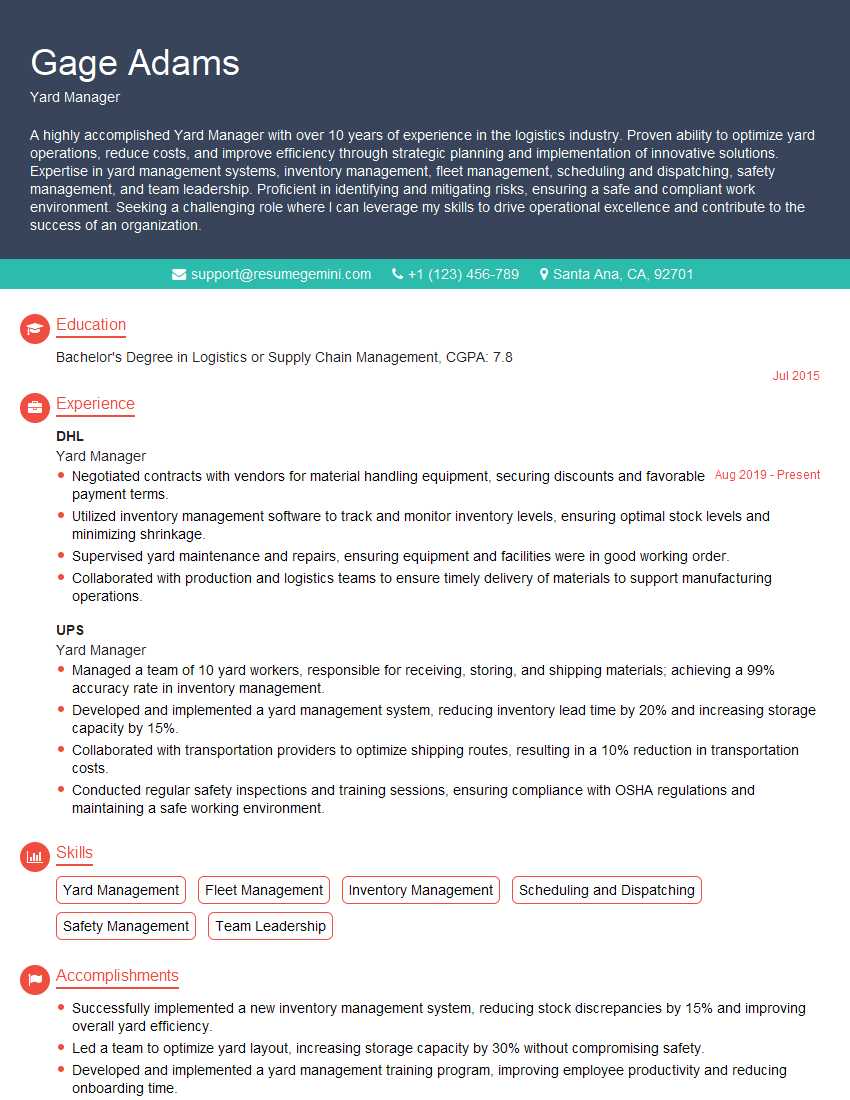
Mastering Shipyard Project Management significantly enhances your career prospects, opening doors to leadership roles and higher earning potential within this specialized and demanding industry. To maximize your chances of landing your dream job, crafting a compelling and ATS-friendly resume is crucial. ResumeGemini is a trusted resource that can help you build a professional and impactful resume, tailored to highlight your unique skills and experience. Examples of resumes specifically designed for Shipyard Project Management positions are available to guide you.
Explore more articles
Users Rating of Our Blogs
Share Your Experience
We value your feedback! Please rate our content and share your thoughts (optional).
What Readers Say About Our Blog
Very informative content, great job.
good