Interviews are more than just a Q&A session—they’re a chance to prove your worth. This blog dives into essential Collaboration with Producers and Engineers interview questions and expert tips to help you align your answers with what hiring managers are looking for. Start preparing to shine!
Questions Asked in Collaboration with Producers and Engineers Interview
Q 1. Describe your experience managing conflicting priorities between engineering and production teams.
Managing conflicting priorities between engineering and production is a constant juggling act. It often boils down to resource allocation and clear communication. Engineering might prioritize technical excellence and long-term scalability, while production focuses on meeting deadlines and minimizing costs. My approach involves:
- Regular Cross-Functional Meetings: Establishing a consistent forum (e.g., daily stand-ups, weekly syncs) where both teams openly discuss roadblocks and priorities. This allows for proactive identification of conflicts.
- Prioritization Matrix: Utilizing a system (e.g., MoSCoW method – Must have, Should have, Could have, Won’t have) to rank features based on business value and urgency. This helps objectively decide which tasks take precedence.
- Transparent Communication: Using tools like shared project management software (e.g., Jira, Asana) to ensure everyone has visibility into project status, dependencies, and potential delays. This reduces misunderstandings and promotes collaboration.
- Trade-off Analysis: When conflicts are unavoidable, I facilitate a discussion to explore potential trade-offs. For instance, we might agree to delay a less critical feature to meet a crucial deadline. The key is to make informed decisions collectively.
For example, in a previous project, engineering wanted to implement a complex new algorithm that would improve long-term performance. However, production needed the initial release within a tight timeframe. Using the prioritization matrix, we identified it as a ‘Should have’ and agreed to implement it in a subsequent release, focusing first on the core functionality needed for the launch.
Q 2. Explain a time you successfully mediated a dispute between a producer and an engineer.
In one project, a producer was insistent on a specific visual effect that the engineer believed was technically infeasible within the allocated time and budget. The engineer felt pressured and frustrated, while the producer felt their creative vision was being compromised. I intervened by:
- Active Listening: I separately met with both the producer and the engineer to understand their perspectives without judgment. This helped me identify the root cause – a miscommunication about the technical limitations and the potential impact on overall project quality.
- Finding Common Ground: I presented them with alternative solutions, including a modified version of the visual effect that would meet the producer’s artistic goals while being within the engineer’s technical capabilities.
- Collaborative Problem Solving: I facilitated a joint session where they collaboratively explored and evaluated the alternatives, leading to a mutually agreeable compromise. This strengthened their relationship and fostered a sense of shared ownership.
This experience reinforced the importance of empathetic communication and finding win-win solutions, rather than dictating a solution from a position of authority.
Q 3. How do you facilitate effective communication between engineering and production during project development?
Effective communication between engineering and production is crucial for project success. My strategies include:
- Daily Stand-up Meetings: Short daily meetings where both teams share progress, roadblocks, and upcoming tasks. This ensures everyone is on the same page and can address issues promptly.
- Regular Project Reviews: More in-depth meetings (weekly or bi-weekly) to review overall project progress, address significant challenges, and make necessary adjustments to the plan.
- Shared Project Management Tools: Using tools like Jira or Asana allows for centralized task management, progress tracking, and clear communication regarding changes or updates.
- Clear Communication Protocols: Defining a consistent communication style, for example, using specific templates for bug reports or feature requests, to ensure clarity and consistency.
- Embedding Team Members: Strategically embedding members of each team within the other’s workspace (if feasible) can foster informal communication and increase understanding of each other’s processes.
For example, embedding a production designer on the engineering team allowed for real-time feedback on the design, solving many issues before they impacted the production timeline.
Q 4. What strategies do you use to ensure alignment of engineering deliverables with production timelines?
Aligning engineering deliverables with production timelines requires meticulous planning and proactive communication. I use several key strategies:
- Detailed Project Planning: Creating a comprehensive project plan with clearly defined tasks, dependencies, and deadlines for both engineering and production. This involves breaking down larger tasks into smaller, manageable units.
- Sprint Planning (Agile): In Agile environments, sprint planning sessions collaboratively define the scope of work for each sprint, ensuring alignment with the overall production timeline. This iterative approach allows for flexibility and adaptation.
- Regular Progress Tracking: Using project management tools to track progress against the plan, identify potential delays, and take corrective action early on. This involves daily updates and weekly reviews.
- Risk Management: Proactively identifying potential risks that could impact deadlines (e.g., unforeseen technical challenges, resource constraints) and developing contingency plans. This prepares the team to handle setbacks efficiently.
For instance, we developed a Gantt chart that visually represented the dependencies between engineering milestones and production deadlines. This allowed us to easily identify potential conflicts and re-allocate resources to mitigate delays.
Q 5. How do you handle technical challenges that impact production schedules?
Technical challenges impacting production schedules are inevitable. My approach involves:
- Immediate Assessment: Quickly assess the severity and scope of the technical challenge to determine the impact on the production timeline.
- Problem Solving Team: Assemble a cross-functional team (including engineering, production, and potentially other relevant stakeholders) to brainstorm solutions.
- Prioritization and Mitigation: Prioritize the most critical aspects of the problem and develop a plan to mitigate the impact on the production schedule. This might include adjusting deadlines, re-allocating resources, or finding workarounds.
- Transparent Communication: Keep all stakeholders informed about the progress of addressing the technical challenge and any potential impact on the production timeline.
- Post-Mortem Analysis: After resolving the technical challenge, conduct a post-mortem analysis to identify root causes and implement preventive measures to reduce the likelihood of similar issues in the future.
In one instance, a critical bug was discovered just before the release date. The team quickly rallied, prioritized the fix, and implemented a workaround to release a minimally viable product on time. While some planned features were sacrificed, the core functionality was launched as intended.
Q 6. Describe your experience with Agile or Scrum methodologies in a production environment.
I have extensive experience with Agile and Scrum methodologies in production environments. The iterative nature of these frameworks is particularly well-suited to the dynamic nature of production projects, where requirements and priorities can shift frequently.
- Sprint Planning: Collaborative sessions at the beginning of each sprint to define goals, tasks, and acceptance criteria.
- Daily Stand-ups: Short daily meetings to track progress, identify roadblocks, and ensure collaboration.
- Sprint Reviews: Demonstrations of completed work at the end of each sprint to gather feedback from stakeholders.
- Sprint Retrospectives: Meetings to reflect on the past sprint, identify areas for improvement, and adapt processes for future sprints.
- Backlog Refinement: Regularly refining the product backlog to prioritize tasks, clarify requirements, and ensure alignment with the overall project goals.
These methodologies allow for flexibility, rapid iteration, and continuous improvement, resulting in increased productivity and higher quality outcomes in production settings. For example, using Scrum helped us seamlessly incorporate last-minute client feedback without causing major disruptions in the project schedule.
Q 7. How do you track and report on the progress of engineering tasks to production stakeholders?
Tracking and reporting on engineering task progress to production stakeholders requires a blend of technical tools and effective communication strategies. I use the following:
- Project Management Software: Using tools like Jira or Asana to track tasks, assign responsibilities, and monitor progress visually. This provides real-time visibility into the status of engineering tasks.
- Regular Reporting: Generating regular reports (daily, weekly, or as needed) summarizing the progress of engineering tasks, identifying any roadblocks, and highlighting potential risks to the production timeline.
- Visualizations: Employing charts and graphs (e.g., burndown charts, Gantt charts) to visualize progress and identify potential delays proactively.
- Status Meetings: Holding regular meetings with production stakeholders to review the progress reports, discuss any concerns, and answer questions.
- Custom Dashboards: Creating custom dashboards within the project management software to tailor the information presented to the specific needs of different stakeholders (e.g., a high-level overview for executive management versus detailed task breakdowns for production managers).
For instance, I created a custom dashboard in Jira that displayed critical path tasks, their progress, and potential bottlenecks, allowing the production team to anticipate and address issues before they impacted deadlines.
Q 8. How do you identify and mitigate potential risks to both engineering and production?
Identifying and mitigating risks in engineering and production requires a proactive, multi-faceted approach. It starts with a thorough risk assessment during the initial planning phases, identifying potential issues across the entire project lifecycle. This involves brainstorming sessions with both engineering and production teams, reviewing past project experiences, and considering external factors like market trends and regulatory changes.
- Technical Risks: These could include software bugs, hardware failures, or unforeseen complexities in the engineering design. Mitigation involves robust testing, contingency planning (e.g., having backup systems), and incorporating fail-safes.
- Production Risks: These could relate to supply chain disruptions, manufacturing delays, or quality control issues. Mitigation involves diversification of suppliers, detailed scheduling with buffer time, and rigorous quality checks at each stage.
- Communication Risks: Miscommunication between teams is a major risk. Mitigation includes using clear, concise communication protocols (e.g., regular project status meetings, shared online documentation), and fostering a collaborative environment.
For example, in a video game development project, a technical risk might be the game engine’s inability to handle a large number of simultaneous players. Mitigation would involve thorough performance testing and optimizing the game’s code for scalability. A production risk could be a delay in voice acting recording. Mitigation would involve building a buffer into the schedule and having backup voice actors.
Q 9. What experience do you have using project management software relevant to production and engineering?
I have extensive experience using various project management software, including Jira, Asana, and Monday.com. My proficiency extends beyond simply tracking tasks; I utilize these tools to manage the entire project lifecycle, from initial planning and resource allocation to tracking progress, identifying bottlenecks, and reporting on key performance indicators (KPIs).
In Jira, for example, I utilize Kanban boards to visualize workflows, assign tasks to individual engineers and producers, and track progress. Custom workflows and automation rules are configured to streamline approvals and ensure efficient communication between teams. Reporting features within these platforms are essential for identifying potential delays and proactively addressing issues before they escalate.
For instance, in a recent project using Asana, we integrated it with our design software, enabling automated updates on task completion based on design milestones. This allowed for real-time visibility across engineering and production, significantly reducing delays and misunderstandings.
Q 10. How do you ensure the quality of engineering deliverables meets production standards?
Ensuring engineering deliverables meet production standards requires a collaborative process built on clear communication and well-defined quality control measures. This starts with clearly defining the standards upfront—through detailed specifications, design reviews, and shared understanding between engineering and production teams.
- Regular Check-ins: Frequent communication and check-ins between engineers and production are crucial. This may involve daily stand-up meetings or weekly progress reviews.
- Prototyping and Testing: Prototyping allows for early identification and resolution of potential issues. Rigorous testing, including unit testing, integration testing, and user acceptance testing, is essential.
- Formal Quality Assurance (QA): A dedicated QA team, independent of both engineering and production, plays a critical role in identifying defects and ensuring the final product meets the agreed-upon quality standards.
For example, in a manufacturing setting, engineering might design a new component. Before mass production, prototypes would be tested extensively to ensure they meet specifications for strength, durability, and tolerances. This process would be closely monitored by the production team, who provide feedback based on manufacturability and cost-effectiveness.
Q 11. Explain your approach to managing budgets and resources across engineering and production teams.
Managing budgets and resources across engineering and production requires a balanced approach that prioritizes both efficiency and effectiveness. This involves detailed budgeting, resource allocation, and ongoing monitoring.
- Detailed Budgeting: A comprehensive budget breakdown for both engineering and production is crucial, outlining all anticipated costs.
- Resource Allocation: Resources (personnel, materials, tools) should be allocated strategically, based on priorities and project timelines.
- Regular Monitoring: Regular tracking of actual costs against the budget allows for proactive adjustments and prevents overspending.
- Contingency Planning: Allocating a portion of the budget for unforeseen expenses is a prudent strategy.
For example, in a software development project, I would create a detailed budget outlining costs for engineering labor, software licenses, testing, and deployment. I’d then allocate resources based on task complexity and dependencies, ensuring that critical tasks receive the necessary attention. Regular monitoring of the budget would allow me to identify and address any potential cost overruns promptly.
Q 12. How do you build and maintain strong working relationships with engineers and producers?
Building and maintaining strong working relationships with engineers and producers is fundamental to project success. This involves open communication, mutual respect, and a collaborative spirit.
- Open Communication: Establishing clear and consistent communication channels is essential. This may involve regular meetings, shared online platforms, and proactive updates.
- Mutual Respect: Recognizing and valuing the contributions of both engineers and producers is crucial.
- Collaborative Problem-Solving: Encouraging collaboration in problem-solving fosters a sense of shared ownership and commitment.
- Team-Building Activities: Informal team-building activities can strengthen relationships and improve morale.
For example, I always make a point of understanding each team member’s perspectives and contributions. I regularly solicit feedback and acknowledge accomplishments, both individually and as a team. This approach helps foster trust and a sense of camaraderie that is crucial for navigating project challenges.
Q 13. How do you handle situations where engineering solutions are not feasible within the production constraints?
When engineering solutions are not feasible within production constraints, a collaborative problem-solving approach is needed. This involves finding creative solutions that balance engineering requirements with production limitations. This often requires compromise and prioritization.
- Re-evaluation of Requirements: It may be necessary to re-evaluate the initial requirements to identify areas where compromises can be made.
- Exploring Alternative Solutions: The engineering team might explore alternative solutions that are more feasible within the production constraints.
- Phased Rollout: A phased rollout of features may be implemented, prioritizing critical functionalities first.
- Negotiation and Compromise: Open communication and negotiation between engineering and production teams are essential to reach a mutually agreeable solution.
For example, if an engineering solution requires a specific, expensive component unavailable within the project timeline, the team might explore using a readily available alternative, even if it results in a slightly less optimal solution. This might involve compromising on a minor feature or prioritizing other critical aspects of the product.
Q 14. Describe your experience with different production workflows and how they impact engineering requirements.
My experience encompasses various production workflows, including Agile, Waterfall, and hybrid approaches. Understanding these workflows is critical, as they directly impact engineering requirements and the way projects are executed.
- Agile: Agile emphasizes iterative development, frequent feedback, and adaptability. This requires engineers to be responsive to change and deliver working software in short cycles. This necessitates close collaboration with production, and constant communication.
- Waterfall: Waterfall follows a linear, sequential approach. Engineering requirements are fully defined upfront, and changes are difficult to implement later. This requires meticulous planning and comprehensive documentation.
- Hybrid: Hybrid approaches combine elements of both Agile and Waterfall, often tailoring the process to the specific needs of the project.
For example, in an Agile environment, engineers might deliver working prototypes early and often, receiving feedback from the production team to refine the design. In contrast, a Waterfall approach necessitates completing detailed engineering specifications before moving to the production phase. The chosen workflow significantly impacts resource allocation, timelines, and the overall project management strategy.
Q 15. How do you adapt your communication style to effectively collaborate with diverse team members (engineers and producers)?
Effective collaboration hinges on adapting communication to individual team members. With engineers, I favor precise, data-driven language, focusing on technical details and specifications. I utilize diagrams, flowcharts, and even code snippets to illustrate concepts. With producers, who often prioritize the bigger picture and deadlines, I emphasize the impact of technical decisions on the overall project timeline and creative vision. I use less technical jargon and focus on the practical implications of different approaches. For example, instead of discussing API latency, I might explain how a slower API could impact the user experience and lead to missed deadlines. I also actively listen to understand each individual’s perspective and concerns, ensuring everyone feels heard and valued. This approach fosters mutual respect and understanding, facilitating smoother collaboration.
Career Expert Tips:
- Ace those interviews! Prepare effectively by reviewing the Top 50 Most Common Interview Questions on ResumeGemini.
- Navigate your job search with confidence! Explore a wide range of Career Tips on ResumeGemini. Learn about common challenges and recommendations to overcome them.
- Craft the perfect resume! Master the Art of Resume Writing with ResumeGemini’s guide. Showcase your unique qualifications and achievements effectively.
- Don’t miss out on holiday savings! Build your dream resume with ResumeGemini’s ATS optimized templates.
Q 16. Explain your understanding of technical specifications and how you communicate them effectively to non-technical stakeholders.
Understanding technical specifications is crucial. It involves grasping the functional and non-functional requirements of a system. Functional specifications detail *what* the system should do (e.g., ‘the video player must support 4K resolution’), while non-functional requirements specify *how* it should perform (e.g., ‘the video player should load within 3 seconds’). I communicate these to non-technical stakeholders through clear, concise language, avoiding jargon. I use analogies and visual aids – a simple diagram explaining the relationship between system components or a timeline showing project milestones – to improve understanding. For instance, explaining a complex database schema as a well-organized library with different sections and books makes it easier for a producer to grasp. Crucially, I focus on the impact of the technical details on the project’s overall success, aligning technical requirements with business objectives.
Q 17. How familiar are you with version control systems relevant to production and engineering workflows?
I’m highly proficient with version control systems, primarily Git. I understand branching strategies (like Gitflow), merging techniques, and resolving conflicts effectively. My experience includes using platforms like GitHub and GitLab for collaborative development and code management. In production workflows, version control is vital for tracking changes, collaborating on assets, and reverting to previous versions if needed. For example, using Git branches allows engineers to work on new features simultaneously without disrupting the main production codebase. This is especially crucial in agile development environments, allowing for faster iteration and reduced risk. I am also adept at utilizing Git’s features for code review and ensuring that all changes are documented and approved before integration.
Q 18. Describe a time you had to make a difficult decision that involved balancing engineering needs with production demands.
In a previous project, we faced a critical situation where a major software update, crucial for improving performance (engineering need), was scheduled for release during a peak user period (production demand). Launching the update during peak hours risked causing significant downtime and negatively impacting user experience. The decision was difficult: postpone the update and miss the performance improvements or risk disruption. I proposed a phased rollout, starting with a smaller user segment to monitor for issues before a wider deployment. This approach successfully balanced both engineering and production concerns. We identified and resolved minor glitches in the initial phase, ensuring a smooth full release later, minimizing disruption and delivering the performance improvements. The key was collaborative discussion and data-driven decision-making to understand all angles and choose the solution with the lowest risk and maximum benefit.
Q 19. How do you manage expectations when dealing with unexpected technical issues that affect production?
Unexpected technical issues are inevitable. My approach focuses on transparency and proactive communication. When an issue arises, I immediately assess its impact on production and inform all stakeholders clearly and concisely. I avoid technical jargon and explain the problem in a way that everyone understands. I then present a prioritized plan of action, including realistic timelines for resolution. Regularly updating stakeholders on progress and any changes is crucial to manage expectations. For example, if a server outage impacts a live stream, I’ll immediately inform the producers, provide a realistic estimate for restoration, and explore alternative solutions like using backup servers. Maintaining open communication keeps everyone informed and reduces the risk of miscommunication and frustration.
Q 20. What metrics do you use to measure the success of collaborative efforts between engineers and producers?
Measuring the success of collaboration requires a multi-faceted approach. Key metrics include: On-time and on-budget delivery: This reflects efficient project management and coordination. Code quality: Measured through code reviews, bug reports, and automated testing. High code quality translates to fewer issues during production. User satisfaction: Feedback surveys and usage data help assess the end-user experience. Team morale and collaboration: Regular team meetings and feedback sessions help gauge team dynamics and satisfaction. By tracking these metrics, we can identify areas for improvement and foster continuous improvement in our collaborative processes. Ultimately, the success of collaboration is not just about meeting deadlines but also about building a strong, productive team environment.
Q 21. Describe your experience troubleshooting technical issues impacting production in a timely manner.
I have extensive experience troubleshooting technical issues. My approach is systematic. First, I gather all relevant information – error logs, system reports, user feedback – to understand the root cause. I then use debugging tools and techniques to pinpoint the problem. Once identified, I explore and implement solutions efficiently, prioritizing those with the quickest impact while considering long-term solutions. For example, a recent incident involved slow loading times on a website. By analyzing server logs, I discovered a database query inefficiency. I optimized the query, leading to a significant reduction in loading times, restoring the website’s performance within the hour. Effective communication during the troubleshooting process, keeping stakeholders informed of progress and potential solutions, is critical for maintaining confidence and mitigating further impact.
Q 22. How familiar are you with various production technologies and their implications for engineering design?
My familiarity with production technologies spans a wide range, from traditional methods to the latest advancements. Understanding these technologies is crucial for effective engineering design because they directly impact feasibility, cost, and the final product’s quality. For instance, a deep understanding of real-time rendering engines like Unreal Engine or Unity is critical when designing for interactive experiences. Knowing the limitations of a particular game engine informs design choices early on, preventing costly rework later. Similarly, familiarity with cloud-based production pipelines (like AWS or GCP) allows for efficient collaboration and scalable deployment, while awareness of various audio codecs dictates decisions regarding audio quality and file size. I’m proficient in numerous technologies, including:
- Game Engines: Unreal Engine, Unity
- Audio Production Software: Pro Tools, Logic Pro X, Ableton Live
- Video Editing Software: Adobe Premiere Pro, Avid Media Composer
- Cloud Platforms: AWS, Google Cloud Platform, Azure
- Version Control Systems: Git
I continuously update my skills to remain abreast of emerging technologies and their engineering implications. This ensures I can make informed decisions during the design phase, maximizing efficiency and minimizing risks.
Q 23. How do you balance creativity and technical feasibility during the development process?
Balancing creativity and technical feasibility is a constant juggling act, but a vital one for successful production. I approach this by establishing a strong collaborative process involving producers and engineers from the outset. We begin with brainstorming sessions where creative ideas are generated freely, without immediate constraints. Then, we move to a feasibility assessment, where we critically examine each idea against technical constraints, available resources, and project timelines. This involves detailed discussions about hardware limitations, software capabilities, and development timelines. For example, a visually stunning concept might require specialized rendering techniques that push the performance boundaries of our target hardware. We’d then explore solutions like optimizing the asset pipeline, leveraging procedural generation, or adjusting visual fidelity to ensure the project’s technical viability without sacrificing the overall artistic vision. This iterative process allows us to make informed compromises, often leading to innovative solutions that meet both artistic ambitions and technical realities.
Q 24. How do you contribute to a positive and collaborative team environment between engineers and producers?
Fostering a positive and collaborative environment is paramount. I believe in open communication, mutual respect, and a shared understanding of project goals. I actively promote clear communication channels, regular team meetings (both formal and informal), and a culture of constructive feedback. I encourage engineers to participate actively in the creative process, allowing them to voice their technical input early in the project life-cycle. Conversely, I work with producers to ensure they understand the technical challenges involved, preventing unrealistic expectations. For instance, I might utilize visual aids, prototypes, or even interactive demonstrations to communicate complex technical concepts effectively to non-technical team members. Conflict resolution is handled proactively and collaboratively, aiming to find solutions that benefit the whole team and the project.
Q 25. What are your preferred methods for documenting technical specifications for production teams?
My preferred method for documenting technical specifications is a layered approach. Firstly, I utilize a robust version control system like Git to manage code and associated documentation. This ensures traceability, collaboration, and easy revision tracking. Secondly, I create clear and concise documentation using tools such as Confluence or Notion, employing a structured format that allows for easy cross-referencing. This includes detailed descriptions of APIs, data structures, algorithms, and integration points. For complex systems, I’d utilize UML diagrams to visually represent system architecture and workflows. Finally, I maintain a comprehensive glossary of technical terms, ensuring everyone understands the terminology used. These documentation efforts are not just intended for engineers but also for the wider production team, with information tailored to each team member’s role and expertise. The goal is always to achieve maximum clarity and understandability.
Q 26. How do you manage technical debt and ensure it doesn’t impact future production cycles?
Managing technical debt is crucial for long-term project health. I employ a multi-pronged approach that begins with proactive planning. We identify potential technical debt during design reviews, weighing the benefits of immediate ‘clean’ solutions against the pressures of deadlines. When technical debt is unavoidable (due to time constraints or other priorities), we carefully document it, assigning priority levels based on impact and risk. This documentation includes the reasons for the debt, potential solutions, and estimated costs to address it in future sprints. Regular code reviews and automated testing processes help identify and mitigate emerging technical debt early on. Finally, we allocate specific time slots within future sprints to address the highest-priority technical debts. This approach prevents a snowball effect, maintaining a sustainable development cycle without compromising the project’s long-term stability.
Q 27. Describe your experience with developing and maintaining technical documentation for production use.
Throughout my career, I’ve consistently focused on creating and maintaining user-friendly and comprehensive technical documentation. In a previous role, I developed a complete API documentation suite for a large-scale game project, employing Swagger/OpenAPI to generate interactive documentation, ensuring seamless integration with our internal development tools. This documentation covered detailed API specifications, request/response structures, error handling, and usage examples. I’ve also contributed to user manuals, troubleshooting guides, and internal wikis for various projects. My goal is to provide documentation that isn’t just technically accurate, but also intuitive and accessible for its intended audience. I believe that well-maintained documentation significantly improves team efficiency, reduces errors, and contributes to the overall success of any project. In creating this documentation, I always prioritize clarity, accuracy, and accessibility.
Key Topics to Learn for Collaboration with Producers and Engineers Interview
- Understanding Project Scope and Goals: Learn to effectively extract and interpret project requirements from producers, aligning creative vision with technical feasibility.
- Effective Communication Strategies: Master clear and concise communication, using both technical and non-technical language to bridge the gap between creative and engineering teams. Practice active listening and feedback techniques.
- Technical Proficiency and its Communication: Demonstrate a solid understanding of relevant technical processes. Be able to explain technical concepts clearly to non-technical team members, and vice-versa.
- Problem-Solving and Conflict Resolution: Develop strategies for identifying and resolving conflicts that may arise between producers and engineers, balancing creative demands with technical limitations. Practice collaborative problem-solving approaches.
- Workflow and Pipeline Management: Understand the different stages of a project and how to efficiently manage tasks and deadlines within a collaborative environment. Explore common project management methodologies.
- Resource Allocation and Prioritization: Learn how to effectively manage resources, balancing competing priorities and ensuring the project stays on track and within budget.
- Version Control and Collaboration Tools: Familiarize yourself with various version control systems (e.g., Git) and collaborative platforms (e.g., project management software) used in production workflows.
Next Steps
Mastering collaboration between producers and engineers is crucial for career advancement in today’s dynamic creative industries. It showcases your ability to navigate complex projects, manage diverse teams, and deliver exceptional results. To maximize your job prospects, building an ATS-friendly resume is essential. ResumeGemini can significantly enhance your resume-building experience, ensuring your skills and experience are presented effectively to potential employers. We provide examples of resumes tailored to highlight expertise in Collaboration with Producers and Engineers, helping you present yourself as the ideal candidate.
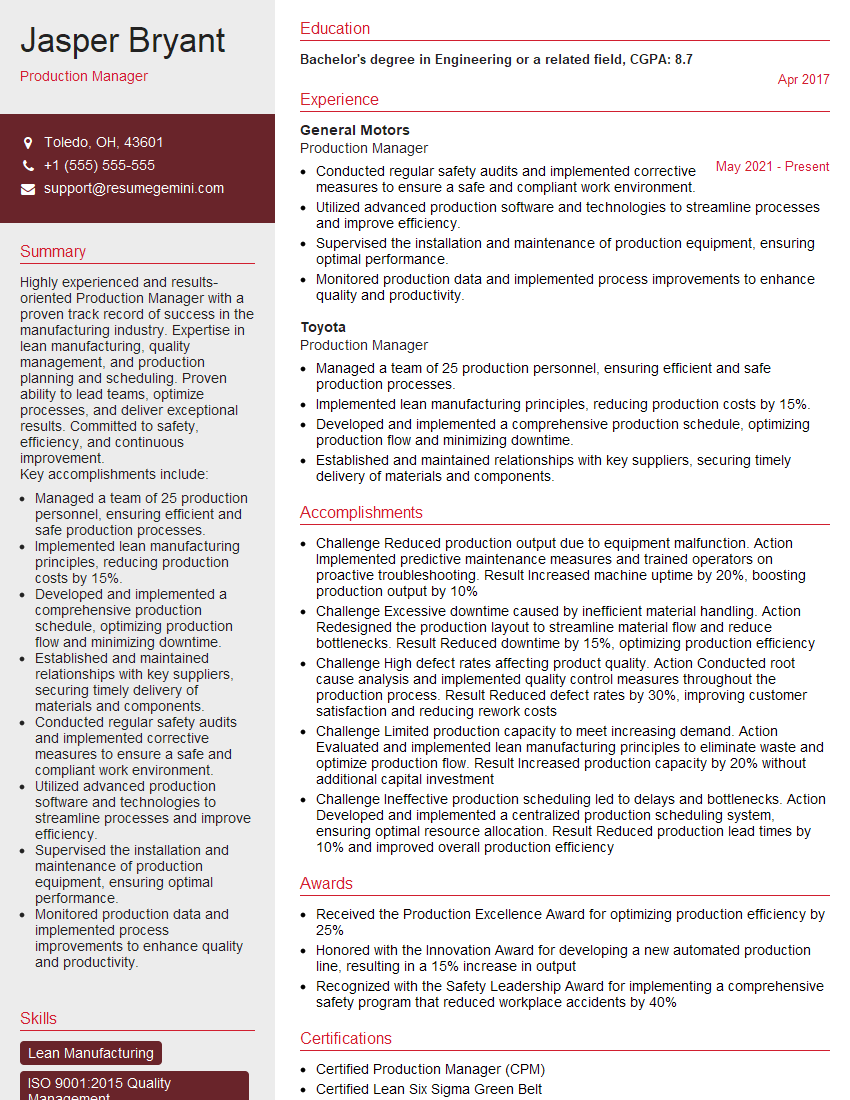
Production Manager Resume Sample

Production Coordinator Resume Sample
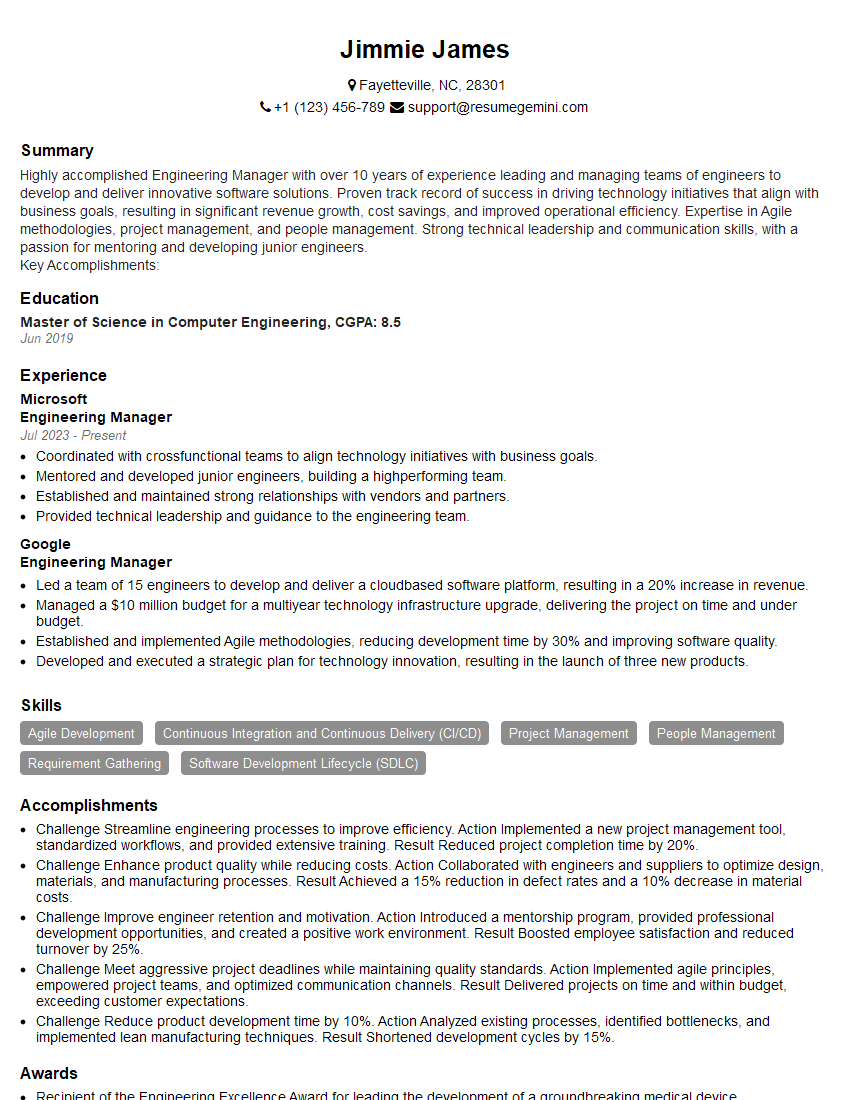
Engineering Manager Resume Sample
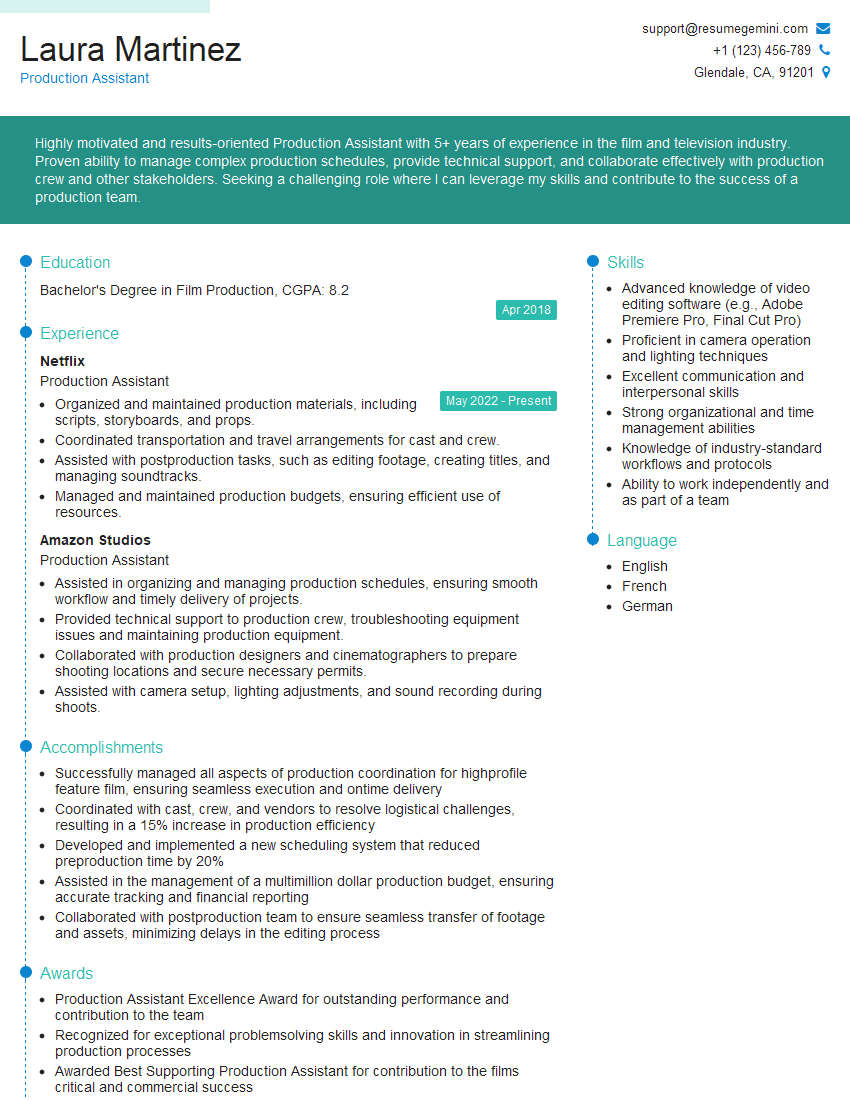
Production Assistant Resume Sample
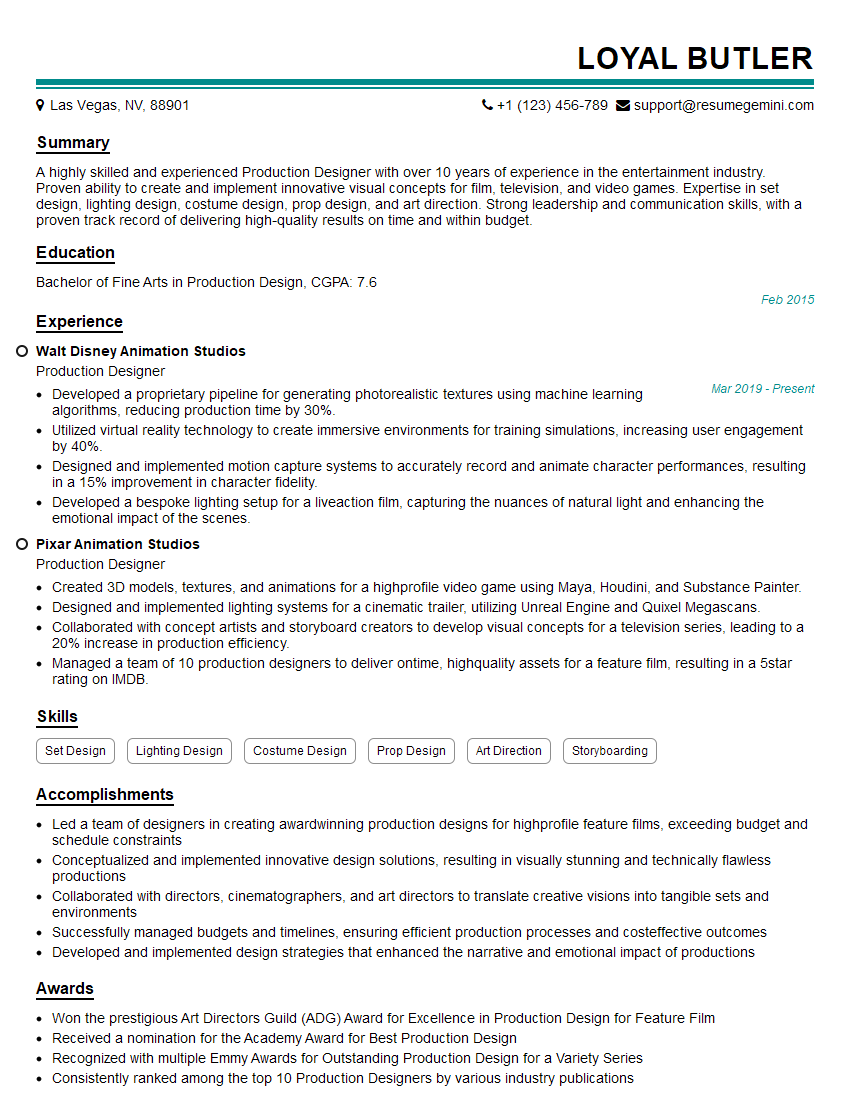
Production Designer Resume Sample
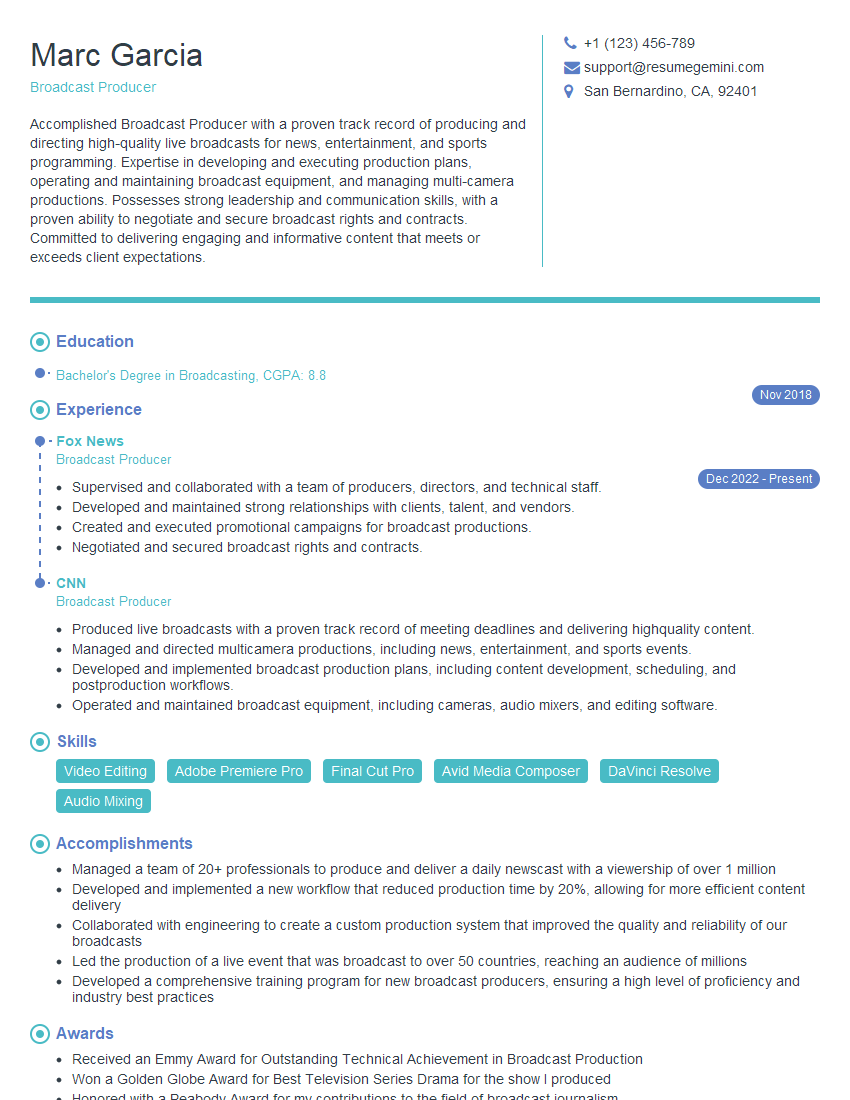
Broadcast Producer Resume Sample
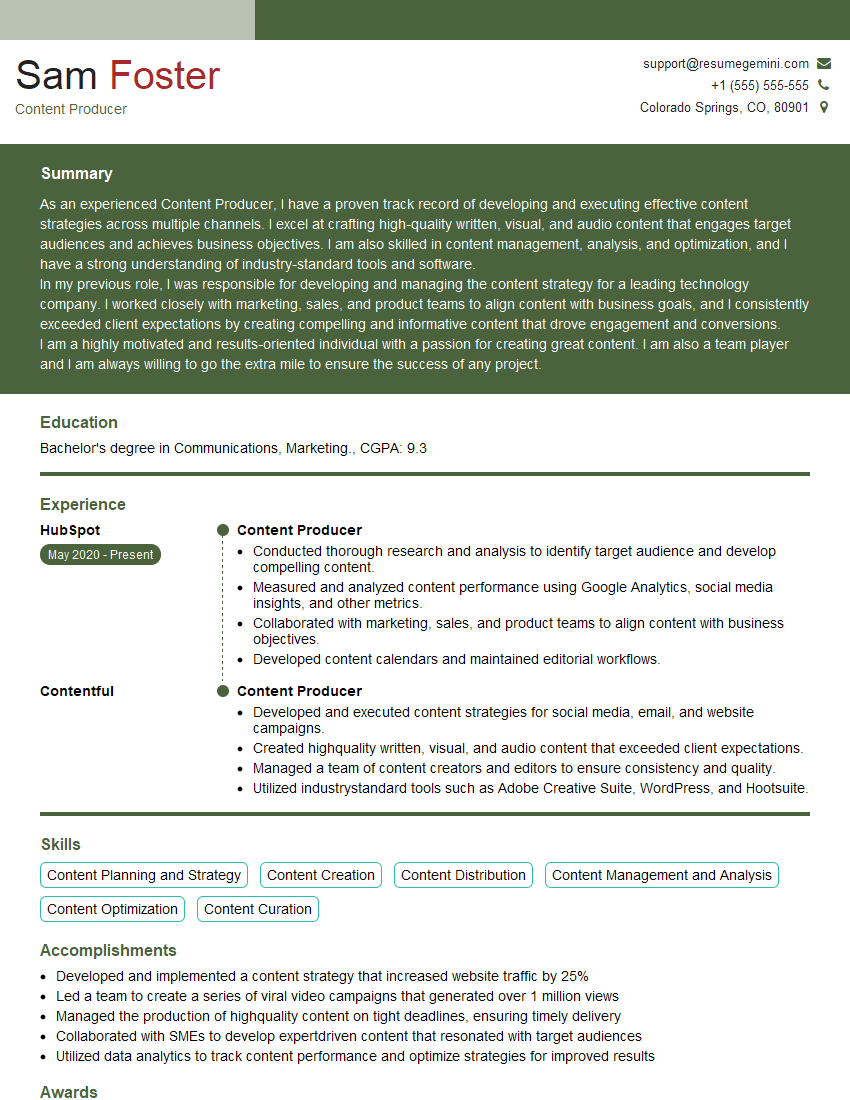
Content Producer Resume Sample
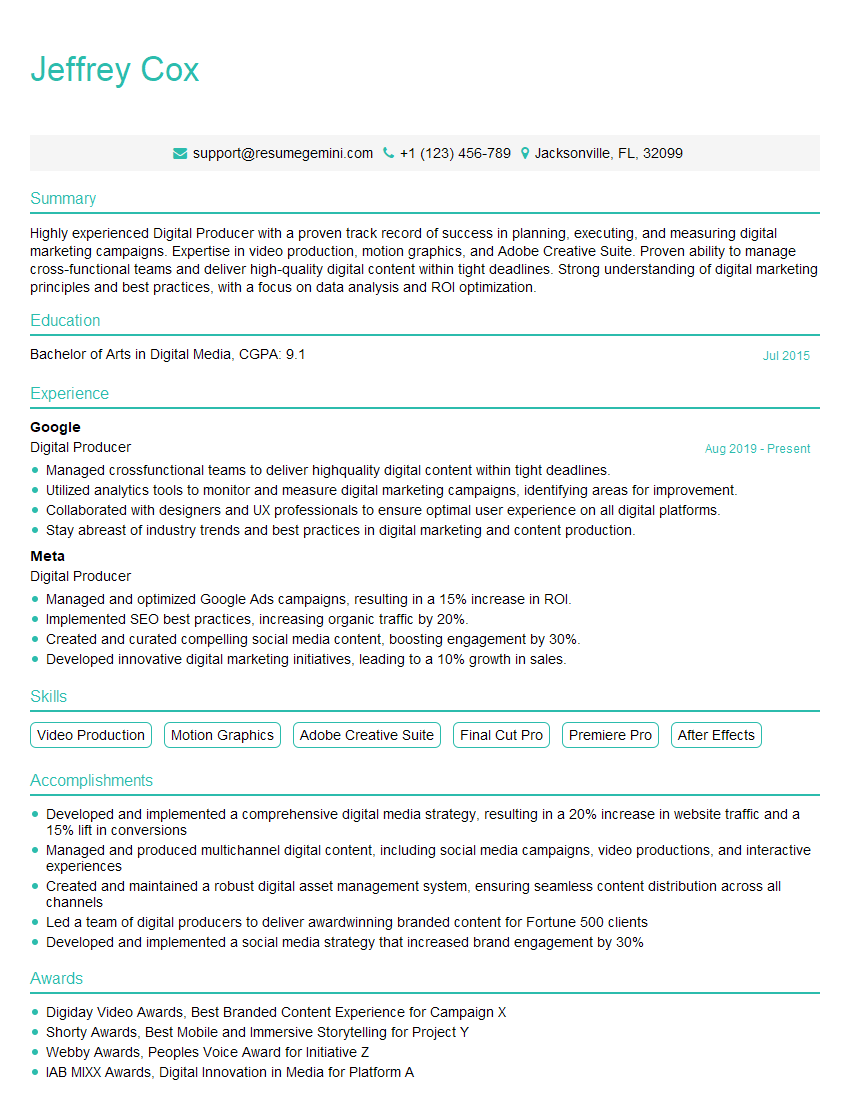
Digital Producer Resume Sample
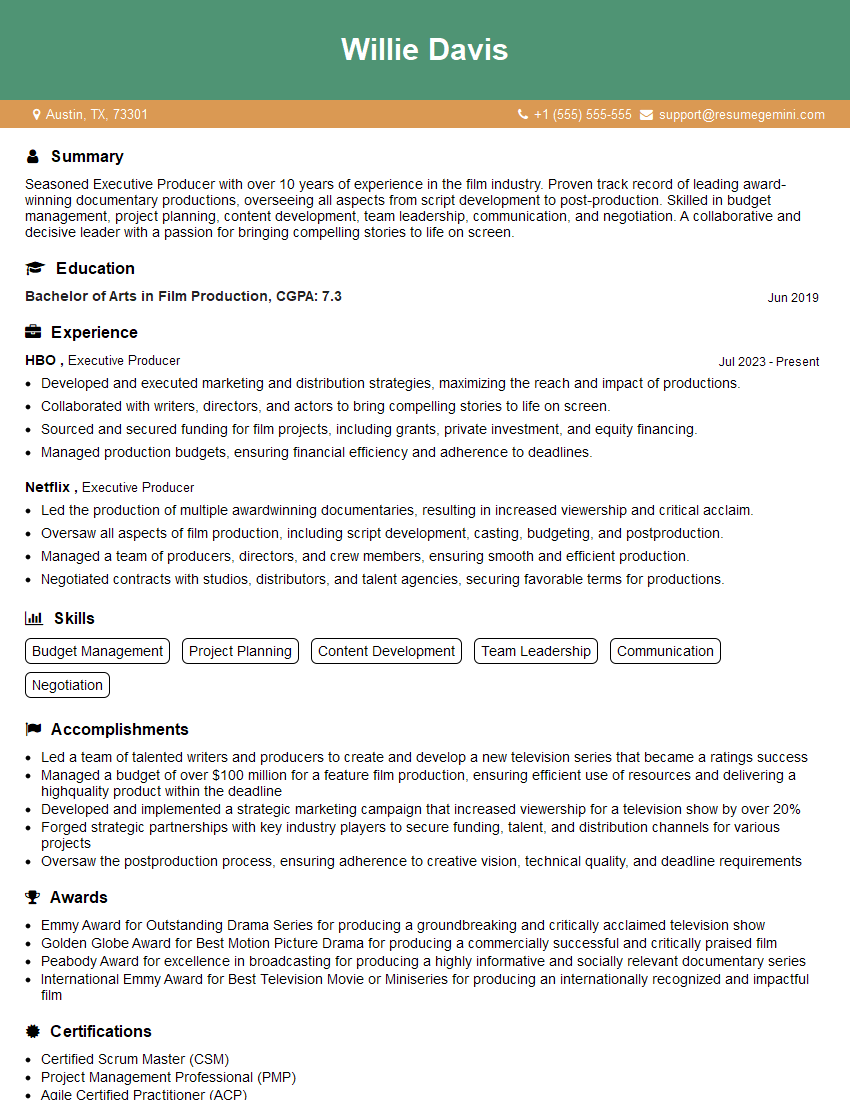
Executive Producer Resume Sample
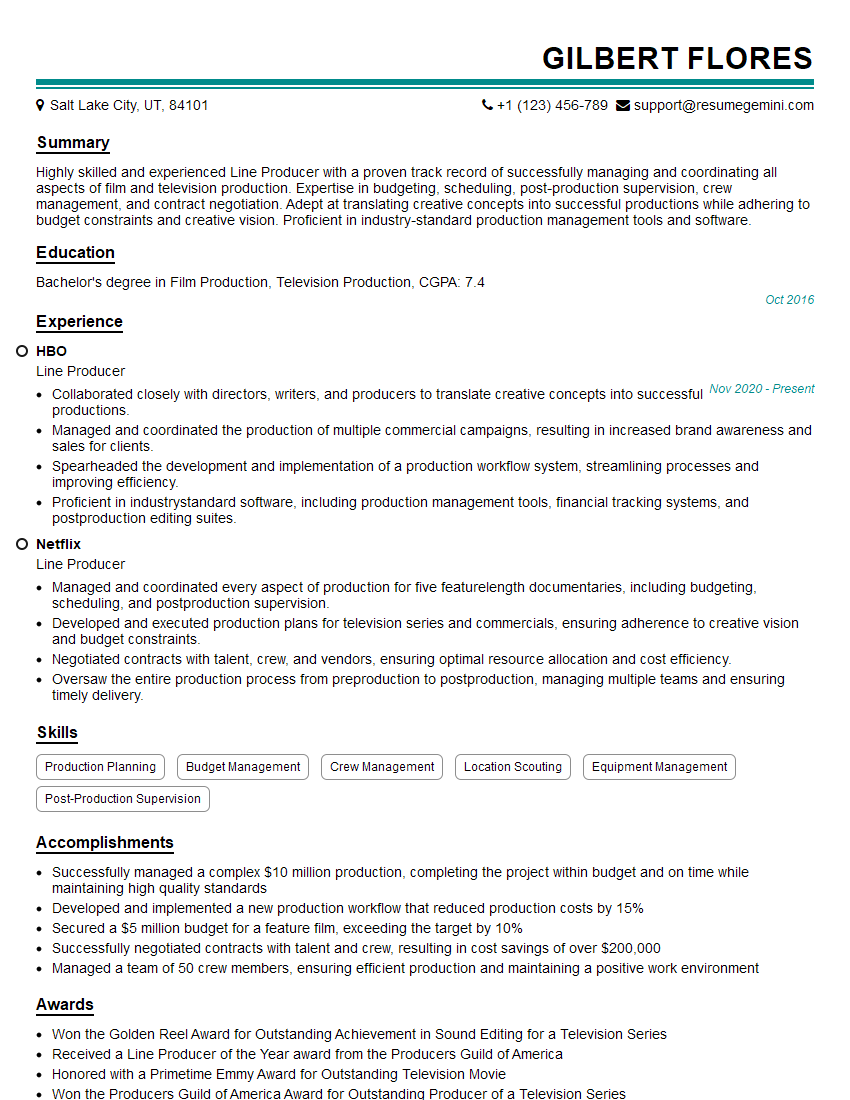
Line Producer Resume Sample
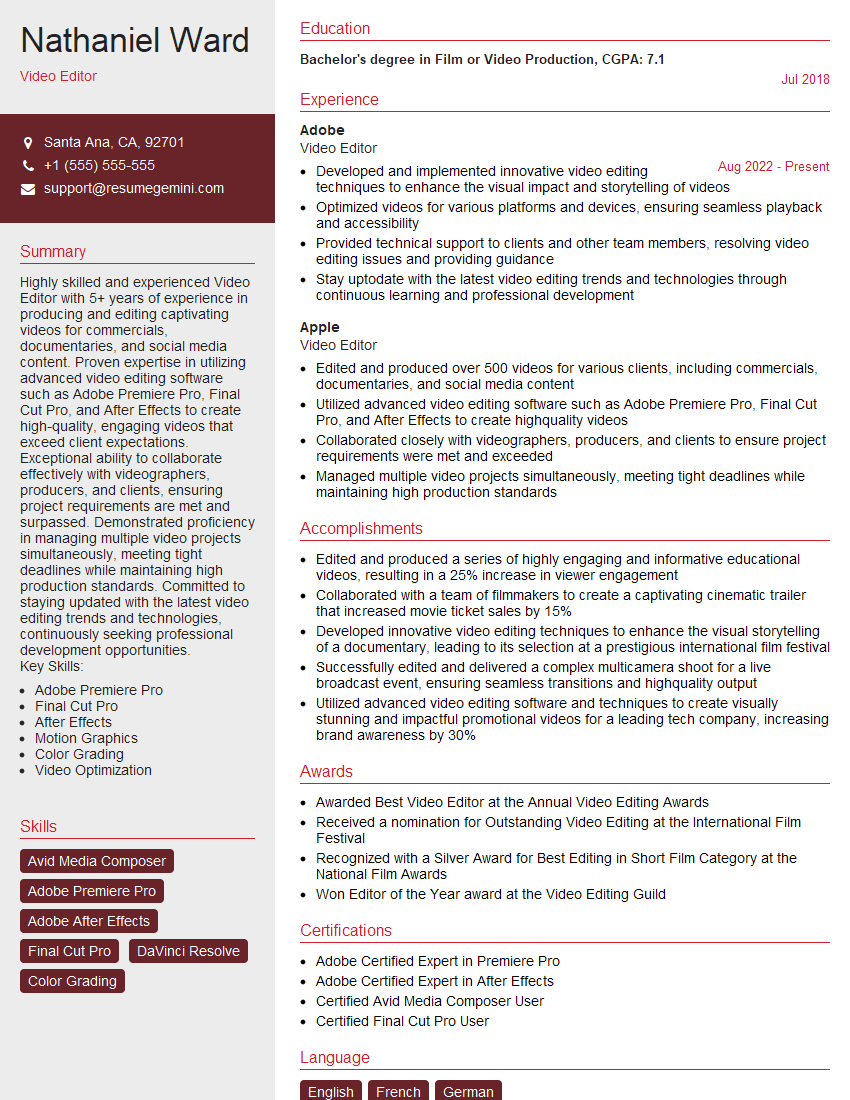
Video Editor Resume Sample
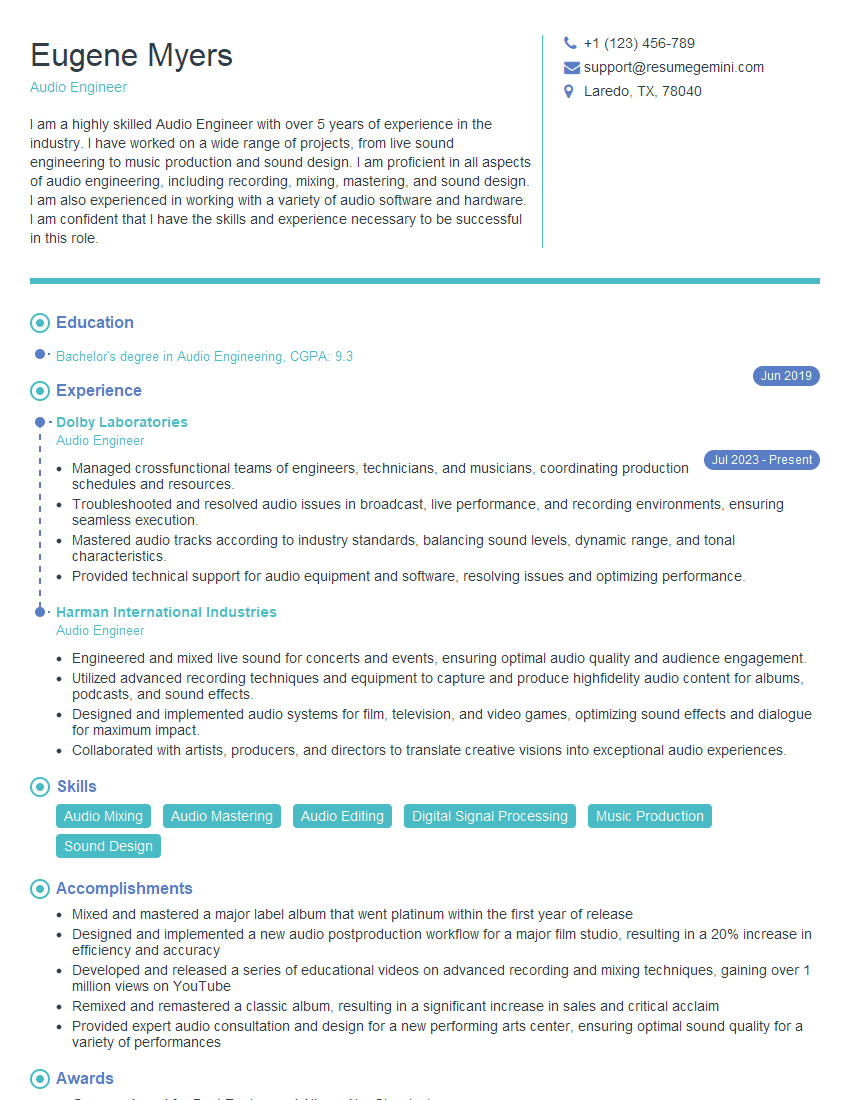
Audio Engineer Resume Sample
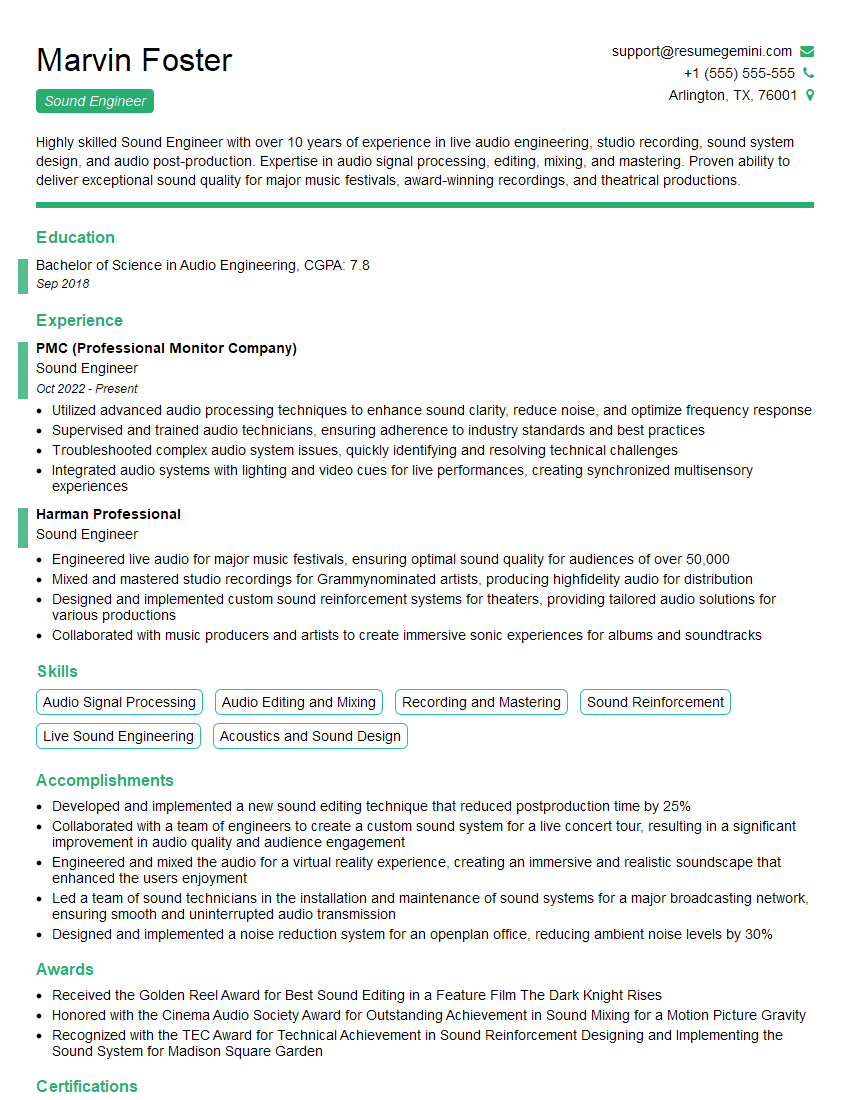
Sound Engineer Resume Sample
Explore more articles
Users Rating of Our Blogs
Share Your Experience
We value your feedback! Please rate our content and share your thoughts (optional).
What Readers Say About Our Blog
Very informative content, great job.
good