Are you ready to stand out in your next interview? Understanding and preparing for Collaboration with Veterinarians and Professionals interview questions is a game-changer. In this blog, we’ve compiled key questions and expert advice to help you showcase your skills with confidence and precision. Let’s get started on your journey to acing the interview.
Questions Asked in Collaboration with Veterinarians and Professionals Interview
Q 1. Describe your experience working collaboratively with veterinarians on complex cases.
Collaborating with veterinarians on complex cases requires a multifaceted approach built on trust, open communication, and mutual respect. My experience involves actively participating in case discussions, contributing my specialized knowledge (e.g., in diagnostic imaging or pathology), and leveraging my analytical skills to synthesize information from various sources. For instance, in one case involving a canine patient with a rare autoimmune disorder, I worked closely with the attending veterinarian, a veterinary immunologist, and a veterinary pathologist. We held regular meetings to discuss the patient’s progress, interpret test results, and collaboratively refine the treatment plan. My role was crucial in analyzing complex imaging data, helping pinpoint the underlying pathology, and ensuring consistent communication among the team. This collaborative approach ensured the best possible outcome for the animal.
This involved not only sharing my expertise but also actively listening to the veterinarian’s clinical observations and integrating that information into a holistic understanding of the case.
Q 2. How do you handle disagreements or conflicting opinions among veterinary professionals?
Disagreements among veterinary professionals are inevitable, given the complexity of veterinary medicine and the variability in clinical approaches. My approach emphasizes respectful dialogue, evidence-based reasoning, and a focus on the patient’s best interests. I facilitate these discussions by encouraging each party to clearly articulate their reasoning, ensuring all relevant data is considered. I would often ask clarifying questions to gain a thorough understanding of the perspectives and concerns. We aim to find common ground by focusing on shared goals – optimizing patient care. If a consensus cannot be immediately reached, I advocate for a structured approach that includes researching relevant literature, reviewing best practices, and potentially consulting with additional specialists. The ultimate goal is always a decision that is both scientifically sound and compassionate. Think of it as a team brainstorming session with the patient’s well-being at the heart of the discussion.
Q 3. Explain your process for communicating critical information to veterinarians and other stakeholders.
Communicating critical information requires clarity, accuracy, and timeliness. My process involves using a combination of methods tailored to the specific audience and urgency of the information. For instance, urgent matters, such as a sudden deterioration in a patient’s condition, are communicated immediately via phone call, followed by a detailed written report. For less urgent updates, emails or secure messaging platforms are used, ensuring the appropriate level of confidentiality is maintained. I always prioritize clarity by using precise language, avoiding jargon unless clearly defined, and summarizing key findings succinctly. All communications are meticulously documented, maintaining a comprehensive record of the case’s progression and the decisions made. We use a shared electronic health record system to facilitate this.
Q 4. How do you ensure effective communication and collaboration within a diverse veterinary team?
Effective communication and collaboration within a diverse veterinary team hinges on fostering an inclusive environment that values each member’s contribution. I actively promote open dialogue, encourage respectful interactions, and create space for all voices to be heard. This starts by actively seeking input from everyone, appreciating differing perspectives, and acknowledging each team member’s expertise. Regular team meetings, where both clinical and operational matters are discussed, are crucial. We use team-building activities to strengthen relationships and enhance trust. Furthermore, we establish clear roles and responsibilities, ensuring everyone understands their contributions to the collective goal of optimal patient care.
Q 5. Describe a situation where you had to negotiate a solution that met the needs of both veterinarians and clients.
In one instance, a client insisted on a treatment plan that contradicted the veterinarian’s recommendation. The client had strong emotional attachment to the preferred, though less evidence-based, treatment, while the veterinarian felt strongly about a more conventional approach. I facilitated a meeting where we empathetically listened to both sides. I presented research outlining the risks and benefits of each option, highlighting the potential implications for the patient’s health. This allowed the client to see the complete picture beyond their emotional response. By using a collaborative approach, we arrived at a modified plan, incorporating elements from both options and ensuring it was aligned with ethical veterinary practices and the patient’s best interest. The client felt heard and valued, and the veterinarian felt their professional judgment was respected. The outcome was a treatment plan that satisfied both parties while prioritizing the animal’s well-being.
Q 6. How do you contribute to a positive and collaborative work environment in a veterinary setting?
Contributing to a positive and collaborative work environment in a veterinary setting involves several key strategies: actively promoting open communication, creating a culture of mutual respect, acknowledging individual contributions, and fostering a shared sense of purpose. I encourage teamwork by fostering a supportive atmosphere where team members feel comfortable sharing their ideas and concerns without fear of judgment. Recognizing individual achievements and celebrating successes as a team boosts morale and strengthens professional relationships. I also actively participate in resolving conflicts, ensuring fair and equitable treatment for all members. Ultimately, a positive work environment is based on trust and mutual respect and leads to better patient care.
Q 7. How do you utilize technology to enhance collaboration among veterinary professionals?
Technology plays a significant role in enhancing collaboration among veterinary professionals. We utilize various tools, including electronic health records (EHRs) for seamless data sharing, telehealth platforms for remote consultations and expert opinions, and project management software for efficient task allocation and tracking. For example, secure messaging platforms allow for quick and easy communication about urgent patient matters while cloud-based imaging systems enable specialists to remotely access and review diagnostic images. These technologies streamline workflows, improve communication efficiency, and enhance the overall quality of care. Secure video conferencing also facilitates multi-disciplinary consultations, enabling real-time discussions among specialists regardless of their geographical location.
Q 8. Describe your experience using electronic health records (EHRs) for improved communication and collaboration in a veterinary practice.
Electronic Health Records (EHRs) are transformative in veterinary practice, revolutionizing communication and collaboration. In my experience, using EHRs has significantly improved efficiency and reduced errors. For example, we used to rely on handwritten notes and phone calls to communicate between vets, technicians, and clients. This often led to delays, misinterpretations, and missed details. Now, with our cloud-based EHR system, all team members have real-time access to a patient’s complete medical history, including test results, treatment plans, and progress notes.
This real-time access streamlines communication. For instance, if a technician performs a blood test, the results are instantly available to the veterinarian, speeding up diagnosis and treatment. The system also facilitates seamless handover of patient care, ensuring continuity even when different professionals are involved. We’ve seen a dramatic decrease in medication errors and improved adherence to treatment protocols since implementing the EHR.
Further, many EHR systems allow for secure messaging within the platform, allowing for quick and effective communication that maintains a detailed audit trail, crucial for compliance and quality assurance. This improved communication is not only more efficient; it also significantly improves patient care through better coordinated and informed decision-making.
Q 9. How do you manage competing priorities and deadlines while maintaining effective collaboration with veterinarians?
Managing competing priorities and deadlines while maintaining effective collaboration requires meticulous organization and proactive communication. I utilize project management tools to prioritize tasks based on urgency and impact, ensuring critical patient needs are always addressed first. This involves daily planning sessions with my team to review upcoming appointments, surgeries, and lab results, allowing for realistic scheduling and task assignment.
Open and transparent communication is essential. I regularly update the team on my workload and any potential delays, actively seeking input and assistance when needed. I also delegate tasks appropriately, ensuring each team member has the resources and support to succeed. Regular team meetings provide a forum to address any bottlenecks and to ensure everyone is on the same page. It’s about leveraging the strengths of each member to work efficiently and collaboratively, never sacrificing the quality of patient care in the pursuit of meeting deadlines.
Q 10. How do you handle conflicts related to differing treatment approaches amongst veterinary professionals?
Conflicts regarding treatment approaches are a natural part of veterinary medicine, given the complexity of cases and the diverse expertise within a team. My approach emphasizes respectful dialogue and evidence-based decision-making. When a conflict arises, I facilitate a structured discussion where each professional can present their perspective and supporting evidence, using relevant research and clinical guidelines as reference points.
The goal isn’t to find a ‘winner’, but to reach a consensus that prioritizes patient well-being. We might consult relevant literature, seek a second opinion from a specialist, or utilize established protocols to guide our decision-making process. Transparency and active listening are critical to ensuring all parties feel heard and respected. Sometimes, a collaborative treatment plan, integrating elements from different approaches, is the best solution. The focus always remains on the patient’s best interests and the rationale behind the chosen course of action is clearly documented in the EHR.
Q 11. How do you ensure patient safety when collaborating with veterinary professionals?
Patient safety is paramount in all veterinary collaborations. We achieve this through several key strategies. Firstly, comprehensive communication is key. This involves clear and concise handovers, using standardized checklists and protocols to avoid any miscommunications about medication dosages, procedures, or treatment plans. Our EHR system helps tremendously here by providing a central repository for all patient information, accessible to all authorized personnel.
Secondly, we promote a culture of transparency and open communication where team members feel comfortable raising concerns or questioning decisions that may compromise patient safety. Regular quality assurance reviews and training sessions reinforce safety protocols and best practices. We also have established procedures for incident reporting and investigation, allowing us to learn from mistakes and prevent their recurrence. Finally, we regularly audit our processes to identify potential weaknesses and to implement improvements. The aim is to create a robust, collaborative system that prioritizes patient well-being at every stage of care.
Q 12. Describe your approach to mentoring junior veterinary staff members.
Mentoring junior veterinary staff members is a rewarding aspect of my role. My approach is based on a combination of formal training and practical experience. I begin by establishing clear expectations and providing them with a structured onboarding experience. This includes familiarizing them with our protocols, technology, and team dynamics.
I then offer structured mentorship, providing regular feedback and guidance, tailored to their individual needs and learning styles. This includes observing them during procedures, providing constructive criticism, and encouraging them to take on progressively challenging tasks. I also encourage them to participate in continuing education programs and workshops to enhance their professional development. I believe in creating a supportive environment where they feel empowered to ask questions, learn from mistakes, and grow both professionally and personally. The ultimate goal is to nurture confident and competent professionals who can contribute effectively to our team and the wider veterinary community.
Q 13. How do you maintain confidentiality when collaborating with multiple veterinary professionals on sensitive patient information?
Maintaining confidentiality when collaborating with multiple veterinary professionals is critical. We adhere strictly to data protection regulations and internal policies. Access to patient information is strictly controlled through role-based access controls within our EHR system. Only authorized personnel with a legitimate need to access specific information are granted permission.
All electronic communications, including emails and messages within the EHR, are encrypted and secured. We also conduct regular training sessions to remind our staff of their responsibilities regarding patient confidentiality and data protection. Our commitment to confidentiality extends beyond just complying with regulations; it’s an ethical obligation we take seriously, recognizing the sensitive nature of the information we handle. Breaches of confidentiality are treated with the utmost seriousness and addressed through established disciplinary procedures.
Q 14. How would you address a situation where a veterinarian’s decision conflicts with established protocols?
If a veterinarian’s decision conflicts with established protocols, a careful and measured approach is essential. I would begin by engaging the veterinarian in a private discussion to understand the rationale behind their decision. This involves respectful questioning and active listening, to avoid being confrontational or judgmental.
The focus is on identifying the underlying reasons for the deviation. This could range from a genuine oversight to a belief that the protocol is not suitable for the specific case. If the reason is based on valid clinical concerns, we would explore alternative solutions together, potentially involving a consultation with a specialist. However, if the deviation is due to negligence or a disregard for established protocols, we would need to address this more formally, utilizing internal disciplinary procedures as needed. Documentation of the conflict, the steps taken to resolve it, and the final decision, is crucial for maintaining patient safety and accountability. Ultimately, the safety and well-being of the patient must remain the primary concern.
Q 15. Describe a successful outcome due to strong collaboration with veterinary professionals.
One successful outcome stemmed from collaborating with a veterinary ophthalmologist and a veterinary surgeon on a complex case involving a dog with a severe corneal ulcer and a concurrent eye tumor. Initially, the prognosis was grim. However, through detailed case discussions and shared decision-making – leveraging the ophthalmologist’s expertise in corneal repair techniques and the surgeon’s skill in oncology – we developed a multi-stage treatment plan. This involved meticulous corneal surgery followed by targeted tumor removal and chemotherapy. The dog made a remarkable recovery, retaining vision in the affected eye, a testament to the power of synergistic veterinary expertise.
Career Expert Tips:
- Ace those interviews! Prepare effectively by reviewing the Top 50 Most Common Interview Questions on ResumeGemini.
- Navigate your job search with confidence! Explore a wide range of Career Tips on ResumeGemini. Learn about common challenges and recommendations to overcome them.
- Craft the perfect resume! Master the Art of Resume Writing with ResumeGemini’s guide. Showcase your unique qualifications and achievements effectively.
- Don’t miss out on holiday savings! Build your dream resume with ResumeGemini’s ATS optimized templates.
Q 16. How do you adapt your communication style to meet the varying needs of different veterinary professionals?
Adapting communication style is crucial. I tailor my approach based on the veterinarian’s communication preferences and experience. For instance, with seasoned specialists, I use concise, data-driven language and focus on complex details. I might present statistical analyses or research findings relevant to their specific area of expertise. With newer practitioners, my communication is more interactive, emphasizing clarity and providing thorough explanations and background information. I always ensure that my language is clear, avoiding unnecessary jargon, and making sure to present information in a way that respects their time and experience level. I actively listen to understand their perspective and concerns, fostering a collaborative and trusting environment.
Q 17. How do you utilize feedback from veterinarians to improve your performance and collaboration?
Feedback is vital for improvement. I actively solicit feedback from veterinarians through formal reviews and informal discussions. For example, after a collaborative project, I’ll ask for specific comments on my communication, technical skills, or contributions to the team. Constructive criticism is valued highly. I document feedback systematically, identifying areas for improvement. This might involve refining data presentation methods, improving my responsiveness to urgent requests, or strengthening my understanding of specific veterinary procedures. I continuously update my knowledge and skills based on this feedback to ensure I am a more valuable collaborative partner.
Q 18. What strategies do you employ to build trust and rapport with veterinary professionals?
Building trust and rapport requires consistent effort. I start by being respectful and approachable. I actively listen to the veterinarian’s concerns and perspectives, validating their expertise. I demonstrate competence by staying well-informed on the latest veterinary advancements and exhibiting a thorough understanding of their specific area of practice. Transparency in communication, proactive problem-solving, and fulfilling my commitments consistently builds trust. I also make an effort to understand the veterinary practice’s workflow and culture to integrate smoothly and efficiently. Small gestures, like acknowledging their expertise during meetings or offering assistance when needed, also go a long way in fostering positive professional relationships.
Q 19. How do you prioritize tasks when collaborating with multiple veterinarians on several urgent cases?
Prioritizing tasks with multiple urgent cases requires a structured approach. I use a matrix that considers urgency and impact. Cases with immediate life-threatening consequences are prioritized first. I use a combination of tools such as project management software to track tasks and their deadlines. Clear communication with all involved veterinarians is crucial, ensuring everyone understands the prioritization and rationale behind it. Regular updates are provided, maintaining transparency and preventing misunderstandings. Flexibility is key, as unforeseen emergencies may require adjusting the prioritization plan. Open and honest communication with veterinarians regarding any changes is essential to maintain trust and collaboration.
Q 20. Explain how you integrate interdisciplinary input from various professionals in animal care decisions.
Integrating interdisciplinary input is key to optimal animal care. I facilitate collaborative discussions involving all relevant professionals – veterinarians, veterinary technicians, specialists (e.g., radiologists, pathologists), animal behaviorists, and other relevant experts. A structured approach to information gathering and sharing is crucial, utilizing case management systems or shared electronic health records. I ensure that each professional’s input is considered, leading to informed decisions based on a holistic understanding of the animal’s health, behavior, and needs. Consensus building is a priority, weighing the different viewpoints to arrive at the best course of action. The decisions made are clearly documented and communicated to all involved parties.
Q 21. How familiar are you with various veterinary regulations and their impact on collaborative efforts?
I am very familiar with relevant veterinary regulations, including those related to animal welfare, controlled substances, record-keeping, and data privacy (e.g., HIPAA in the US or GDPR in Europe). Understanding these regulations is crucial for ensuring ethical and legal compliance in collaborative veterinary projects. I know that regulatory compliance impacts the nature and scope of collaboration, influencing data sharing protocols, treatment procedures, and communication strategies. My awareness of these regulations helps me develop and implement compliant collaborative workflows, minimizing legal risks and maintaining high standards of animal care and professional practice.
Q 22. How do you ensure ethical and legal compliance when collaborating with veterinary professionals?
Ethical and legal compliance is paramount in veterinary collaborations. It’s not just about following the letter of the law, but upholding the spirit of responsible animal care. This involves understanding and adhering to relevant state and federal regulations, including those related to animal welfare, controlled substances, record-keeping, and client confidentiality (HIPAA compliance where applicable).
My approach involves several key strategies:
- Regular review of professional guidelines: I stay updated on the American Veterinary Medical Association (AVMA) guidelines, along with state-specific regulations, to ensure all our practices are compliant.
- Clearly defined roles and responsibilities: Each team member has a documented role with clearly outlined responsibilities to minimize misunderstandings and conflicts related to legal obligations.
- Informed consent: Clients always receive clear and concise information about proposed procedures and treatments, ensuring they provide informed consent.
- Maintaining meticulous records: All interactions, treatments, and client communication are carefully documented in accordance with legal requirements, creating an auditable trail.
- Professional liability insurance: Having adequate professional liability insurance protects all parties involved in case of unforeseen circumstances.
For example, when prescribing controlled substances, I ensure that all protocols regarding record-keeping, dispensing, and inventory management are strictly adhered to, preventing potential legal issues and maintaining patient safety.
Q 23. Describe your approach to conflict resolution among professionals with differing expertise levels.
Conflict resolution is an inevitable part of collaborative work, particularly when dealing with professionals from diverse backgrounds. My approach focuses on open communication, mutual respect, and a solution-oriented mindset. I firmly believe in utilizing a collaborative conflict resolution model rather than a competitive or avoiding approach.
My strategy involves the following steps:
- Active Listening: I encourage all parties to express their perspectives without interruption, ensuring everyone feels heard and valued.
- Identifying the root cause: We collaboratively pinpoint the underlying issues driving the conflict, rather than focusing solely on surface-level disagreements.
- Brainstorming solutions: We collectively brainstorm potential solutions, considering the expertise and perspectives of each professional.
- Compromise and negotiation: We strive to reach a mutually agreeable solution, even if it requires compromise from all parties. The focus is on a solution that best serves the animal’s well-being.
- Documentation and follow-up: The agreed-upon solution is documented, and a follow-up is scheduled to ensure its effectiveness and address any unforeseen challenges.
For instance, in a disagreement between a veterinarian and a veterinary technician about treatment protocols for a specific animal, I would facilitate a discussion, ensuring both sides express their rationale, and guide them to a compromise that balances both expertise and best practice, ultimately benefiting the animal’s health.
Q 24. How do you stay updated on the latest advancements in veterinary medicine and integrate that knowledge into collaborative practices?
Staying abreast of advancements in veterinary medicine is crucial for effective collaboration. It’s a continuous learning process, requiring a proactive and multi-faceted approach.
I utilize several methods:
- Professional journals and publications: I regularly read journals like the Journal of the American Veterinary Medical Association (JAVMA) and other relevant publications to stay informed about new research and treatment methodologies.
- Continuing education courses: I actively participate in continuing education courses, conferences, and webinars, focusing on areas relevant to my collaborations, such as advancements in diagnostics, pharmacology, or surgical techniques.
- Networking with professionals: I maintain a strong professional network with veterinarians, specialists, and other professionals in the field, engaging in discussions and exchanging knowledge.
- Online resources and databases: I utilize reputable online databases such as PubMed and veterinary-specific online resources to access the latest research and clinical trial data.
- Collaboration with veterinary specialists: Actively seeking consultations with specialists in diverse veterinary disciplines for complex cases allows for direct integration of the latest knowledge into collaborative practices.
For example, learning about a new diagnostic technique through a webinar allowed me to propose its use to a collaborating veterinarian, leading to earlier and more accurate diagnoses for our patients.
Q 25. Explain how you contribute to the development of best practices for collaboration within a veterinary team.
Contributing to the development of best practices involves a proactive and collaborative approach. It’s about fostering a culture of continuous improvement within the veterinary team.
My contributions include:
- Participating in team meetings: I actively participate in team meetings, offering my insights and expertise to improve workflow and treatment protocols.
- Developing standardized procedures: I help develop and implement standardized procedures for common tasks, enhancing efficiency and consistency in animal care.
- Implementing quality improvement initiatives: I assist in designing and implementing quality improvement initiatives to enhance patient outcomes and team performance.
- Sharing best practices: I share best practices from other veterinary teams and organizations, fostering a culture of continuous learning within the team.
- Facilitating interdisciplinary communication: I encourage and facilitate effective communication between veterinarians, technicians, and other support staff.
For example, I helped design a new protocol for managing post-operative pain in feline patients, improving their comfort and recovery time. This protocol, developed collaboratively, became a new best practice for the clinic.
Q 26. Describe a time you had to overcome a challenge through collaboration with a veterinary team.
One challenging case involved a critically injured dog brought in after a road accident. The dog had severe internal bleeding and multiple fractures. The initial assessment was dire, and the veterinary team was divided on the best course of action – aggressive surgical intervention versus palliative care.
To overcome this challenge, I facilitated a collaborative discussion, bringing together the veterinarian, surgical specialist, and veterinary technicians. We carefully weighed the risks and benefits of each approach, examining the dog’s specific condition and prognosis. We also considered the owner’s wishes and financial limitations.
Through open communication and a shared understanding of the dog’s situation, we reached a consensus. We opted for a staged surgical approach, prioritizing the most critical injuries first, while continuously monitoring the dog’s vital signs. This collaborative effort led to a successful outcome – the dog made a remarkable recovery, proving the power of teamwork and careful consideration.
Q 27. How would you involve a veterinarian in a decision-making process that directly affects animal welfare?
Involving a veterinarian in decision-making directly affecting animal welfare is non-negotiable. The veterinarian’s expertise is central to ensuring the animal receives appropriate and ethical care.
My approach involves:
- Open and transparent communication: I provide the veterinarian with all relevant information about the situation, including the animal’s medical history, current condition, and any proposed actions.
- Shared decision-making: I actively involve the veterinarian in the decision-making process, valuing their professional judgment and expertise in determining the best course of action for the animal’s welfare.
- Respect for professional autonomy: I respect the veterinarian’s professional autonomy and recognize their responsibility for making clinical decisions related to patient care.
- Documentation of discussions: All discussions and decisions are carefully documented in the animal’s medical record, providing an auditable trail of the collaborative decision-making process.
- Ethical considerations: All decisions are made with the animal’s best interest as the primary focus, ensuring ethical and humane treatment.
For example, if a decision about euthanasia is necessary, the veterinarian must be the one to make the final call based on the animal’s suffering and prognosis, with consideration for the owner’s wishes and input from the team.
Q 28. How do you assess the effectiveness of collaborative efforts within a veterinary practice?
Assessing the effectiveness of collaborative efforts requires a multifaceted approach, focusing on both the outcomes for the animals and the efficiency of the team.
My assessment methods include:
- Patient outcome data: Analyzing data on patient outcomes, including recovery rates, complication rates, and mortality rates, provides a measure of the success of collaborative treatment strategies.
- Client satisfaction surveys: Gathering feedback from clients provides valuable insights into their experiences with the veterinary team and the collaborative approach to animal care.
- Team performance metrics: Evaluating team performance indicators, such as workflow efficiency, task completion rates, and communication effectiveness, helps assess the efficiency of the collaborative process.
- Regular team meetings and feedback sessions: Regular meetings and feedback sessions allow for open discussion on what’s working well and areas for improvement, fostering continuous improvement.
- Benchmarking against other practices: Comparing our performance against benchmarks set by other veterinary practices provides context and highlights areas where improvements can be made.
For instance, by tracking post-operative infection rates, we can objectively evaluate the effectiveness of our collaborative protocols for surgical preparation and post-operative care. Similarly, client satisfaction surveys provide qualitative data about the experience of collaborating with our veterinary team.
Key Topics to Learn for Collaboration with Veterinarians and Professionals Interview
- Understanding Veterinary Terminology and Procedures: Familiarize yourself with common veterinary procedures, diagnostic tests, and medical terminology to effectively communicate with veterinarians.
- Effective Communication Strategies: Practice clear, concise, and empathetic communication techniques to build rapport and trust with veterinarians and other professionals. Consider how to deliver both positive and negative news effectively.
- Interprofessional Teamwork and Conflict Resolution: Explore strategies for navigating diverse perspectives and resolving conflicts constructively within a team setting. This includes understanding different professional roles and responsibilities.
- Ethical Considerations in Veterinary Practice: Familiarize yourself with the ethical considerations surrounding animal care, client communication, and professional conduct.
- Data Management and Record Keeping in Veterinary Settings: Understand the importance of accurate and efficient data management, including electronic health records and client information.
- Practical Application: Case Studies: Practice applying your knowledge to hypothetical scenarios involving collaboration with veterinarians and other professionals on patient care, research, or administrative tasks.
- Problem-Solving in Multidisciplinary Teams: Develop your ability to identify and solve problems collaboratively, considering the input and expertise of various team members.
Next Steps
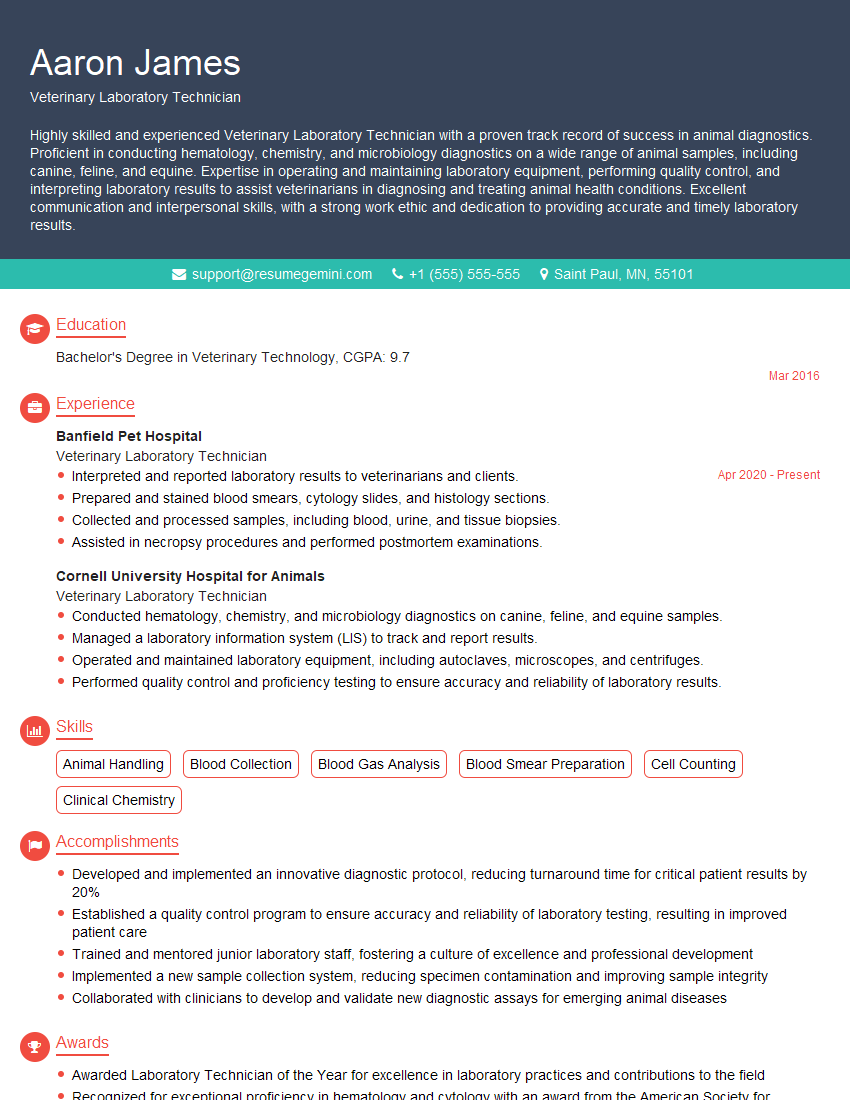
Mastering collaboration with veterinarians and professionals is crucial for career advancement in this field. It demonstrates key skills employers value highly, such as teamwork, communication, and problem-solving. To significantly increase your job prospects, it’s essential to create an ATS-friendly resume that highlights your relevant skills and experience. ResumeGemini is a trusted resource that can help you build a professional and impactful resume tailored to your specific career goals. Examples of resumes tailored to Collaboration with Veterinarians and Professionals are available to guide you through this process.

Explore more articles
Users Rating of Our Blogs
Share Your Experience
We value your feedback! Please rate our content and share your thoughts (optional).
What Readers Say About Our Blog
Very informative content, great job.
good