Every successful interview starts with knowing what to expect. In this blog, we’ll take you through the top Coloring Techniques interview questions, breaking them down with expert tips to help you deliver impactful answers. Step into your next interview fully prepared and ready to succeed.
Questions Asked in Coloring Techniques Interview
Q 1. Explain the difference between demi-permanent and permanent hair color.
The key difference between demi-permanent and permanent hair color lies in their lasting power and how they affect the hair shaft. Demi-permanent color coats the hair’s surface, adding tone and shine without altering the hair’s internal structure. Think of it like painting a wall – the color is visible but can be washed away over time. Permanent hair color, on the other hand, penetrates the hair shaft, lifting and depositing color molecules. This results in a more dramatic and long-lasting change, similar to staining wood. Demi-permanent colors typically fade gradually over 6-8 washes, while permanent colors require new growth to be noticeable.
In short: Demi-permanent is temporary and fades gradually, while permanent color is long-lasting and requires touch-ups for regrowth.
- Demi-permanent: Great for refreshing color, adding subtle highlights, or covering gray hair temporarily.
- Permanent: Ideal for major color changes, covering significant gray, and achieving long-lasting results.
Q 2. Describe the process of performing a balayage technique.
Balayage is a freehand highlighting technique that creates a natural-looking, sun-kissed effect. Unlike traditional foiling, balayage involves painting lightener directly onto sections of hair, allowing for a soft, blended transition between colors. The process begins with sectioning the hair. Then, using a brush and lightener, the stylist paints thin, vertical sections, often focusing on the surface layers to create a dimensional effect. The lightness and placement of the highlights depend on the client’s desired outcome and hair characteristics. The amount of lightener used and the processing time determine the final shade.
Step-by-step:
- Consultation: Discuss the desired look, hair history, and assess hair health.
- Sectioning: Divide the hair into manageable sections.
- Application: Apply lightener using a brush, focusing on the ends and mid-lengths for a natural look.
- Processing: Allow the lightener to process according to the manufacturer’s instructions.
- Rinsing: Rinse thoroughly with cool water.
- Toning (Optional): Use a toner to neutralize any brassiness or unwanted warmth.
- Styling: Style the hair to showcase the highlights.
For example, a client might want a subtle balayage to brighten their natural brown hair. In this case, I’d use a low-volume developer and focus on the ends for a soft transition. On the other hand, if the client seeks a bolder look, I’d use a higher-volume developer and paint thicker sections.
Q 3. How do you determine the correct level and tone for a client’s hair color?
Determining the correct level and tone is crucial for achieving the desired hair color result. The ‘level’ refers to the lightness or darkness of a hair color, ranging from level 1 (black) to level 10 (very light blonde). The ‘tone’ refers to the warmth or coolness of the color, such as ash, gold, red, or violet. To determine the correct level and tone, I use a combination of techniques. Firstly, I assess the client’s natural hair color using a color chart, noting its level and underlying tones. Next, I consider the client’s desired outcome, keeping in mind their skin tone and overall style.
For instance, a client with level 5 (medium brown) hair wanting a level 7 (light brown) might require a lift, demanding careful selection of a developer and color that accounts for their underlying tones. I might need to neutralize any unwanted warmth with a cool-toned color.
I also take into account the client’s hair history, considering previous color treatments which can impact the outcome. This careful analysis helps to avoid unwanted surprises and creates accurate results.
Q 4. What are the common causes of color correction issues and how do you address them?
Color correction issues can stem from various factors, including improper formulation, incorrect processing times, previous color treatments, and even environmental factors. Common issues include unwanted tones (e.g., brassiness, green), uneven color application, and damage to the hair.
Addressing these issues requires a systematic approach:
- Thorough Consultation: Understanding the client’s history, past treatments, and expectations is crucial.
- Assessment: Analyze the current hair condition, noting damage, color inconsistencies, and underlying tones.
- Formulation: Carefully select the right products and developer considering the desired outcome and the hair’s current state. This may involve using color removers, toners, and glosses.
- Strategic Application: Apply the color in sections, paying close attention to areas that need specific correction.
- Strand Test: A crucial step to preview how the chosen products will interact with the hair.
- Processing: Monitor closely, checking for the proper level of lift and desired tone.
- Post-Correction Care: Recommend appropriate products to maintain the color and repair any potential damage.
For example, if a client presents with brassy blonde hair, I’d use a toner to neutralize the yellow and orange tones, choosing a cool-toned toner based on their hair’s underlying level.
Q 5. Explain the importance of a strand test before applying hair color.
A strand test is a small-scale trial run of a hair color on a small section of the client’s hair. It’s essential for several reasons: It allows you to predict how the hair will react to the chosen products. You can observe the level of lift, the final color tone, and the processing time needed. This helps determine if the desired result can be achieved without damaging the hair. Additionally, it gives you an opportunity to check for any unexpected allergic reactions before applying the color to the entire head. This process protects the client and allows for adjustments in the formulation if necessary. Skipping a strand test can lead to disastrous results, particularly in color correction cases.
Q 6. How do you select the appropriate developer for different hair types and coloring techniques?
Developer plays a critical role in lifting and depositing color. The volume of developer (measured in volume, usually 10, 20, 30, or 40) dictates the amount of lift it provides. Higher volume developers lift more, but also increase the risk of hair damage. Choosing the appropriate developer depends on factors like the client’s hair type, current color, and desired outcome.
- Fine or damaged hair: Lower volume developers (10 or 20 volume) are preferred to minimize damage.
- Medium-textured hair: A wider range of volume developers can be used (10-30 volume).
- Coarse or resistant hair: Higher volume developers (30 or 40 volume) might be needed for significant lightening.
- Toning or glossing: Low-volume (10 volume) or even no developer might be used to simply add shine or subtle color adjustments.
For example, when lightening dark hair dramatically, a higher-volume developer might be necessary in stages to avoid damage. For a subtle change or a toner, a lower volume developer is ideal.
Q 7. Describe your experience with different hair coloring brands and products.
Throughout my career, I’ve worked extensively with various professional hair coloring brands and products, including Wella, Redken, Schwarzkopf, and L’Oréal Professionnel. Each brand offers a diverse range of colors and developers with distinct characteristics. For instance, Wella’s Koleston Perfect is renowned for its rich, long-lasting color and excellent gray coverage. Redken Shades EQ is a favorite for its demi-permanent options, ideal for subtle color enhancements or toning. I frequently select products based on client needs, balancing the desired color outcome with their hair’s health and texture. My familiarity with these brands ensures that I can create precise and personalized results, choosing from a vast palette to achieve specific looks.
Beyond specific brands, I prioritize understanding the formulation and chemistry of each product to achieve optimal results and maintain the integrity of the hair. My selection isn’t based solely on brand recognition but a thorough understanding of the capabilities of each product and its compatibility with the client’s hair.
Q 8. How do you handle client consultations to determine their desired hair color?
Client consultations are crucial for achieving the desired hair color. I begin by building rapport and understanding their vision. This involves a thorough discussion of their hair history, including previous color treatments, current hair health, and any allergies. I then analyze their natural hair color, texture, and density. We look at inspiration photos together, realistically assessing what’s achievable based on their base color and desired outcome. I explain the process, potential limitations, and maintenance required. It’s a collaborative process, not just me dictating the color. For example, if a client wants platinum blonde but has very dark hair, I’ll explain the multiple sessions and potential damage involved, offering alternative solutions that may be more realistic and less damaging. This ensures mutual understanding and realistic expectations.
Q 9. Explain the principles of color theory as they relate to hair coloring.
Color theory is fundamental to hair coloring. It’s based on the color wheel: primary colors (red, yellow, blue), secondary colors (green, orange, violet – created by mixing primaries), and tertiary colors (red-orange, yellow-orange, yellow-green, blue-green, blue-violet, red-violet – mixing a primary and a secondary). Understanding these relationships is crucial. For example, to neutralize unwanted brassiness (yellow tones in blonde hair), we use a blue-based toner. This is because blue is the complementary color of yellow; they neutralize each other on the color wheel. Similarly, green can counteract red tones. Knowing the level system (1 being the darkest black to 10 being the lightest blonde) is crucial for predicting the outcome when lifting or depositing color. Mastering color theory enables us to create custom blends, predict color results, and correct color issues effectively.
Q 10. What are the safety precautions you take when working with hair color products?
Safety is paramount. Before applying any product, I always perform a patch test 24-48 hours beforehand to check for allergic reactions. I wear gloves throughout the entire coloring process to protect my skin from chemical exposure. Proper ventilation is essential to minimize inhalation of fumes. I follow the manufacturer’s instructions meticulously regarding mixing ratios and application times, as exceeding these can damage hair and cause scalp irritation. I also always ensure the client’s scalp is healthy and free from any cuts or abrasions before starting the process. Additionally, I use protective barrier creams on the hairline and ears to prevent staining. I regularly check the client’s comfort level and address any concerns immediately.
Q 11. How do you manage different hair textures and densities when applying color?
Hair texture and density significantly influence how color is applied and the final result. Fine hair requires a gentler approach, avoiding overly aggressive lightening techniques to prevent breakage. For thicker, coarser hair, saturation and processing time might need to be adjusted for even color distribution. I section the hair methodically, adapting my application technique to ensure that color penetrates evenly throughout. For example, with tightly curled hair, I might use a slightly more diluted mixture to prevent uneven color deposition. With very thick hair, I may use more product and/or split the application into multiple sections to ensure even coverage.
Q 12. Explain your approach to achieving specific color results, such as vibrant reds or ashy blondes.
Achieving specific color results requires a tailored approach. For vibrant reds, I might use a combination of direct dyes and permanent color to ensure longevity and intensity. The base color plays a critical role; a lighter base will produce a brighter red. For ashy blondes, the process often involves pre-lightening to remove warm tones, followed by a toner with cool, blue or violet pigments to neutralize any remaining yellow or gold undertones. In both cases, selecting the right products, understanding the level and tone, and controlling the processing time is vital. The entire process needs precise mixing, application, and processing to minimize damage and maximize results. Each hair type and condition will require different application times and a bespoke color creation.
Q 13. How do you identify and address potential allergies or sensitivities to hair color products?
Identifying and addressing allergies or sensitivities is a crucial aspect of my work. The patch test mentioned earlier is non-negotiable. I carefully review the client’s history, asking about any previous reactions to hair color or other chemicals. If there are concerns, I may suggest a strand test to assess how the hair reacts to the chosen color. If a reaction occurs during the coloring process – such as itching, burning, or swelling – I immediately stop the process, rinse the hair thoroughly, and apply a soothing balm. In serious cases, I recommend seeking medical attention. Open communication with the client is key, and client safety always comes first.
Q 14. What are your strategies for maintaining color vibrancy and longevity between appointments?
Maintaining color vibrancy and longevity involves educating the client on proper at-home care. I recommend using color-safe shampoos and conditioners to avoid stripping the color. Avoiding excessive heat styling and using UV protection sprays can help prevent fading. I might also suggest color-enhancing glosses or masks to refresh the color between appointments and maintain shine. Regular trims can remove split ends, which can make the color look dull. Lastly, advising clients to schedule regular color-maintenance appointments to address root regrowth and refresh the overall color is important for a healthy, vibrant look over time.
Q 15. Describe your experience with various lightening techniques, such as highlights and lowlights.
Lightening techniques like highlights and lowlights are fundamental to creating dimension and depth in hair color. Highlights involve lightening specific sections of hair to create contrast and brightness, while lowlights add darker shades to add depth and richness. My experience encompasses a wide range of lightening methods, including foiling, balayage, and freehand painting.
For example, using the foiling technique, I can create precise, defined highlights by applying bleach or lightener to individual strands wrapped in foil. This provides excellent control and allows for intricate patterns. Balayage, on the other hand, offers a more natural, sun-kissed effect by hand-painting lightener onto the hair, creating a seamless blend of light and dark. Finally, freehand painting allows for maximum creativity and customization, enabling me to tailor the lightening to each client’s unique hair and desired style.
I’m proficient in choosing the right lightening technique based on factors like the client’s hair type, texture, current color, and desired outcome. For example, finer hair might require a gentler approach with balayage, whereas thicker hair can handle the more precise application of foiling.
Career Expert Tips:
- Ace those interviews! Prepare effectively by reviewing the Top 50 Most Common Interview Questions on ResumeGemini.
- Navigate your job search with confidence! Explore a wide range of Career Tips on ResumeGemini. Learn about common challenges and recommendations to overcome them.
- Craft the perfect resume! Master the Art of Resume Writing with ResumeGemini’s guide. Showcase your unique qualifications and achievements effectively.
- Don’t miss out on holiday savings! Build your dream resume with ResumeGemini’s ATS optimized templates.
Q 16. How do you blend different colors seamlessly to achieve a natural-looking result?
Seamless color blending is crucial for achieving a natural-looking result. It’s an art that combines understanding color theory with precise application techniques. The key is to avoid harsh lines and create gradual transitions between different shades.
I achieve this through a multi-step process that often involves using multiple colors and techniques. For instance, when blending a light brown into a darker brown, I might start with the darker shade at the roots and gradually introduce lighter shades as I move towards the ends. I use techniques like color melting (smooth transitions between colors), and babylights (very fine highlights) to create a natural look.
I also consider the client’s skin tone and overall style when selecting the shades to ensure the final result harmonizes with their natural features. Think of it like a painter creating a landscape—the colors are carefully chosen and blended to create a cohesive and visually appealing result.
Finally, I always assess the hair’s porosity and condition, ensuring the lightener or color is applied evenly for optimal blending. An uneven application can result in blotchy colors or visible streaks.
Q 17. Describe your experience with color correction techniques for uneven or previously damaged hair.
Color correction is a complex process requiring a deep understanding of color theory and the chemical properties of hair color. My experience includes correcting a wide range of issues, from uneven color application to previously damaged hair with color build-up or unwanted tones.
For example, if a client has brassy highlights, I would use a toner – a semi-permanent color – to neutralize the yellow or orange undertones and achieve a cooler, more natural-looking blonde. If a client has uneven color from a previous home coloring job, I would assess the current state of the hair carefully, determining the best approach to blend the colors together gradually. This usually requires a series of appointments to avoid further damaging the hair.
In cases of severely damaged hair, I prioritize hair health and often opt for less aggressive lightening or coloring techniques to restore shine and strength before tackling color correction. I utilize Olaplex or similar bonding treatments to minimize further damage. It’s essential to be patient and prioritize the health of the hair during this process. It’s like restoring a painting – the process can be slow and requires careful attention to detail.
Q 18. How do you address client concerns about hair damage during the coloring process?
Addressing client concerns about hair damage is paramount. Open communication and transparency are key. I begin by educating clients about the potential risks associated with hair coloring and what steps I’ll take to minimize those risks. This includes discussing their hair’s current condition, the chosen color, and the techniques involved.
I thoroughly assess the hair’s health before starting any coloring process. If I see signs of significant damage, I’ll discuss alternative options, such as a less aggressive color or a color-enhancing treatment that requires less processing. I might suggest using products such as Olaplex, which helps to repair bonds and prevent further damage.
Throughout the process, I consistently monitor the hair’s condition and adjust my techniques as needed. I regularly check the hair’s elasticity and moisture levels. If necessary, I might shorten the processing time or apply a deep conditioning treatment. Post-coloring, I recommend a tailored at-home hair care routine to maintain healthy hair and prolong the color’s vibrancy.
Q 19. What are your preferred tools and techniques for applying hair color precisely and efficiently?
Precision and efficiency are crucial for achieving optimal results. My preferred tools include various types of brushes – including fine-tipped brushes for detailed work and larger brushes for covering larger sections – foils, bowls, and measuring cups for precise mixing, and clips to section hair effectively. Beyond the tools, my technique focuses on careful sectioning and controlled application.
For example, when applying highlights, I precisely section the hair to ensure even lightening and avoid overlaps. I use a combination of techniques, including foiling and freehand painting, to achieve the desired results. For balayage, my brushwork is crucial for creating a soft, natural-looking transition.
Efficiency also comes from excellent organizational skills and a streamlined workflow. I carefully prepare all the necessary tools and materials beforehand to minimize downtime and ensure a smooth coloring process. My workspace is always meticulously organized to promote both efficiency and precision.
Q 20. Explain your process for creating a custom color formula for a client.
Creating a custom color formula is a collaborative process that starts with a thorough consultation. I carefully assess the client’s hair, skin tone, and personal style to determine their desired color and the best approach to achieve it. We discuss their preferences, looking at photos for inspiration, and taking into account their lifestyle and hair care routine.
I then use a color wheel to formulate the right mix of colors. For example, if a client desires a warm blonde, I might mix a light blonde base with a touch of gold and perhaps a hint of beige to neutralize any potential brassiness. The formula depends on the client’s current hair color, desired shade, and the overall look we are trying to create. I always take into account the underlying pigment in their hair to accurately predict the final result.
Before applying the final formula, I always do a strand test to ensure the color turns out as expected and to check for any potential reactions. This allows me to make adjustments before proceeding to the full application, saving both time and preventing unexpected results.
Q 21. Describe your experience with ombre and sombre techniques.
Ombre and sombre are both popular techniques that create a gradual transition between two or more colors. Ombre features a more dramatic contrast, typically transitioning from dark roots to significantly lighter ends. Sombre, on the other hand, offers a softer, more subtle transition, resulting in a more natural-looking effect.
My experience with both techniques includes using various methods to create the desired transition, including balayage, freehand painting, and the use of foils for precision. The choice of method depends on the client’s hair texture, current color, and the desired level of contrast.
For example, I might use balayage for a more natural-looking sombre effect, ensuring a smooth and seamless blend of colors. For a bolder ombre, I might opt for a more precise foiling technique or freehand painting with a bleach to create a more dramatic transition. In both cases, the key is to achieve a gradual transition without harsh lines or visible banding.
Q 22. How do you adapt your coloring techniques based on different hair textures (fine, medium, coarse)?
Adapting coloring techniques to different hair textures is crucial for achieving optimal results and minimizing damage. Fine hair requires a gentler approach, as it’s more prone to breakage. Medium hair offers more versatility, while coarse hair needs more processing time and may require pre-lightening techniques.
- Fine Hair: I use demi-permanent or semi-permanent colors, which deposit color without significant lift. I also avoid strong developers to prevent damage. Think of it like painting a delicate watercolor—gentle strokes are key. For example, I might opt for a low-volume developer (e.g., 5 or 10 volume) and apply the color in thin sections to ensure even distribution.
- Medium Hair: This texture offers the most flexibility. I can use a wider range of color techniques, from demi-permanent to permanent, depending on the desired result. I can also use slightly higher volume developers (e.g., 20 volume) with confidence. Think of this as a canvas that can handle a variety of paint types.
- Coarse Hair: Coarse hair typically requires a longer processing time and may need a higher volume developer (e.g., 30 or 40 volume) for sufficient lift, especially if lightening is involved. I also focus on thorough saturation to ensure the color penetrates the thicker hair shaft. This is like working with a thick, textured canvas—you need to work thoroughly to achieve the desired outcome. We might also need to consider bond builders to help protect the hair during this more intense process.
Q 23. What are some common mistakes to avoid when applying hair color?
Several common mistakes can lead to suboptimal or even damaging results when applying hair color. Avoiding these is essential for client satisfaction and hair health.
- Ignoring a strand test: Always conduct a strand test to determine how the hair will react to the chosen color and developer. This prevents unexpected results and potential damage.
- Using the wrong developer volume: Choosing an inappropriately high volume developer can severely damage the hair. A lower volume is always better when in doubt.
- Incorrect application technique: Uneven application leads to patchy color and inconsistencies. Sectioning the hair properly and using the correct application tools is vital.
- Ignoring previous color treatments: Failing to account for existing color treatments can lead to unpredictable results, such as unexpected tones or unwanted reactions. A thorough consultation is always crucial.
- Neglecting aftercare instructions: Providing clients with comprehensive aftercare instructions is crucial. Without the right products and practices, the color may fade prematurely or become damaged.
Q 24. How do you maintain up-to-date knowledge on the latest hair coloring trends and techniques?
Staying current in the dynamic world of hair coloring requires a multifaceted approach.
- Professional Development: I regularly attend advanced training courses and workshops offered by leading hair color brands and industry experts. These courses keep me up-to-date on the latest techniques, product innovations, and safety protocols.
- Industry Publications and Websites: I subscribe to industry magazines and regularly visit reputable websites and blogs dedicated to hair coloring. This exposes me to the latest trends and research.
- Networking with Colleagues: I actively participate in professional organizations and maintain a network of colleagues. Exchanging ideas and experiences with fellow stylists expands my knowledge and allows for collaborative learning.
- Social Media: Platforms like Instagram and Pinterest showcase a wealth of visual inspiration and innovative techniques. I actively follow leading hair colorists and brands to stay abreast of current trends.
Q 25. Explain your experience with working with different hair types and their unique coloring challenges.
My experience encompasses a broad spectrum of hair types, each presenting unique challenges.
- Gray Coverage: Achieving seamless gray coverage requires careful selection of color and developer, along with precise application techniques. The level of gray coverage needed, along with any underlying tones, will drastically affect the outcome.
- Highly Porous Hair: Hair with high porosity can lead to uneven color uptake and faster fading. I use specialized products and techniques to address this, focusing on minimizing damage while maximizing color retention.
- Chemically Treated Hair: Hair previously treated with relaxers or perms may have compromised structural integrity and require additional care to prevent further damage during coloring.
- Fine, Damaged Hair: Working with fine or damaged hair demands a delicate approach. I select gentle formulas and techniques to minimize risk while enhancing color vibrancy.
Each client’s hair is unique; a thorough consultation is essential to understand its history and current condition, allowing me to choose the best approach.
Q 26. Describe a time you had to troubleshoot a challenging color correction situation.
I once had a client who had previously attempted a home color correction that resulted in brassy orange tones. The client wanted to achieve a cool, ashy blonde.
- Consultation and Assessment: I began with a thorough consultation, assessing the hair’s current condition, porosity, and previous color treatments. I discussed her desired outcome and explained the potential challenges and steps involved.
- Strategic Color Correction Plan: I developed a multi-step color correction plan, involving a combination of color removing products to lift the unwanted orange tones, followed by toning techniques to neutralize brassiness and achieve the desired ashy blonde.
- Careful Application and Monitoring: I sectioned the hair meticulously, applying the color correction products carefully, regularly monitoring the process to avoid over-processing.
- Toning and Glazing: Once the unwanted tones were lifted, I applied a cool-toned toner to neutralize brassiness, followed by a gloss to enhance shine and add depth.
- Aftercare Recommendations: I provided detailed aftercare instructions, including recommendations for color-safe shampoos, conditioners, and styling products to help maintain the color and the health of her hair.
The outcome was a beautiful, cool ashy blonde. The key was patience, precision, and a well-structured plan.
Q 27. How do you handle client dissatisfaction with their hair color results?
Client satisfaction is paramount. When faced with dissatisfaction, I approach the situation with empathy and professionalism.
- Active Listening: I listen carefully to the client’s concerns and try to understand their perspective without interruption.
- Honest Assessment: I assess the situation honestly, determining if there is a legitimate concern with the color result or a misunderstanding about expectations.
- Solution-Oriented Approach: I collaborate with the client to determine the best course of action. If a correction is needed, I discuss the options and create a plan to address their concerns, possibly offering a complimentary service or adjustment to rectify the situation.
- Maintaining Transparency: I keep the client informed throughout the process, and explain the reasoning behind each step to maintain transparency and build trust.
- Follow-Up: I always follow up to ensure the client is satisfied with the outcome and to address any remaining concerns.
My primary focus is to resolve the issue professionally, restore client trust, and maintain a positive relationship.
Q 28. Describe your experience with using color charts and mixing ratios.
Color charts and mixing ratios are fundamental tools in hair coloring. They provide a visual guide to color tones and enable precise color formulation.
- Color Charts: These charts display various color shades and their corresponding numbers or codes. They provide a reference point for matching client preferences, creating custom blends, and documenting color formulas for future reference. Each company may have its own specific chart, and familiarizing myself with different brands is crucial for accuracy.
- Mixing Ratios: Precise mixing ratios are essential for achieving the desired color result. Formulas typically specify the ratio of color cream to developer, sometimes including other additions such as toners or bond builders. For example, a formula might specify 1:1.5 ratio of color to developer, meaning 1 part color to 1.5 parts developer. The developer volume chosen drastically influences the lift and the final shade achieved. Precise measurement using scales is crucial to consistency and quality control.
My experience includes extensive practice in using and interpreting these tools, resulting in highly accurate and repeatable color results.
Key Topics to Learn for Coloring Techniques Interview
- Color Theory Fundamentals: Understanding the color wheel, color harmonies (complementary, analogous, triadic), and color temperature (warm vs. cool).
- Hair Structure and Chemistry: Knowledge of hair porosity, elasticity, and the chemical processes involved in hair coloring (bleaching, toning, depositing color).
- Application Techniques: Mastering various application methods like balayage, foil highlighting, ombre, and root touch-ups. Understanding sectioning and precision placement.
- Color Correction: Troubleshooting common color issues such as unwanted tones, uneven color distribution, and addressing previous coloring mistakes.
- Product Knowledge: Familiarity with different types of hair color products (permanent, demi-permanent, temporary), their chemical compositions, and their effects on hair.
- Client Consultation: Effective communication skills to understand client needs, manage expectations, and advise on suitable coloring solutions.
- Safety and Sanitation: Adherence to safety protocols, proper handling of chemicals, and maintaining a clean and hygienic work environment.
- Trending Techniques: Staying updated on current coloring trends and innovative techniques within the industry.
- Problem-solving and Adaptability: Demonstrating the ability to creatively solve unexpected color challenges and adapt to different hair types and conditions.
Next Steps
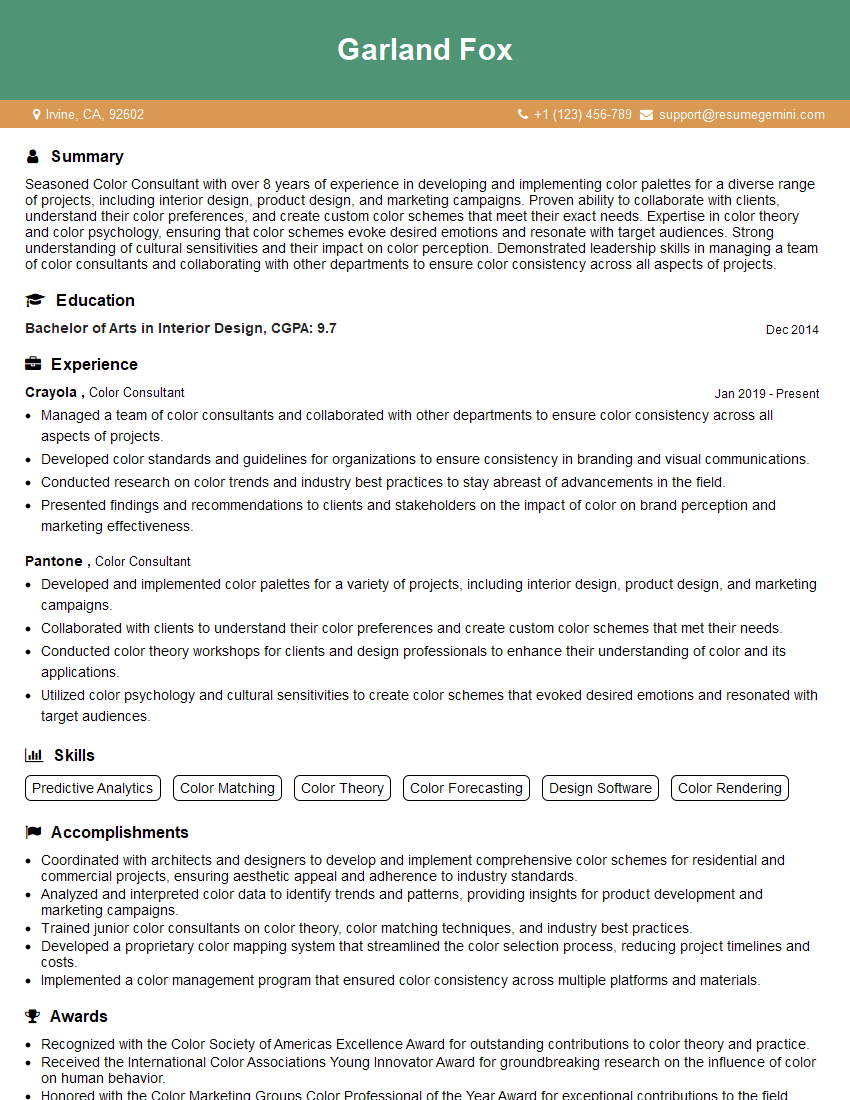
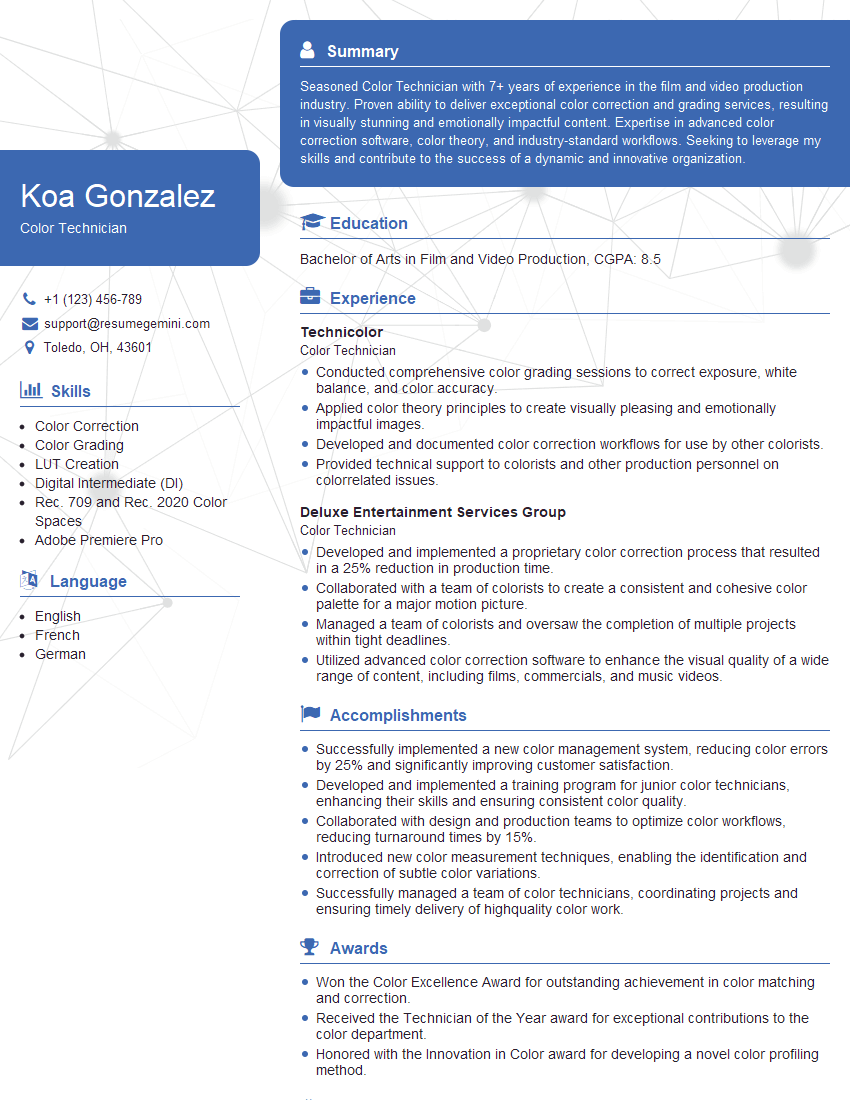
Mastering advanced coloring techniques is crucial for career advancement in the hairdressing industry, leading to higher earning potential and greater creative freedom. An ATS-friendly resume is essential to get your application noticed by potential employers. To create a professional and effective resume that highlights your skills and experience in Coloring Techniques, we strongly recommend using ResumeGemini. ResumeGemini provides tools and resources to craft a compelling resume, and examples of resumes tailored to Coloring Techniques are available to guide you. Invest in your future – build a standout resume today!
Explore more articles
Users Rating of Our Blogs
Share Your Experience
We value your feedback! Please rate our content and share your thoughts (optional).
What Readers Say About Our Blog
Attention music lovers!
Wow, All the best Sax Summer music !!!
Spotify: https://open.spotify.com/artist/6ShcdIT7rPVVaFEpgZQbUk
Apple Music: https://music.apple.com/fr/artist/jimmy-sax-black/1530501936
YouTube: https://music.youtube.com/browse/VLOLAK5uy_noClmC7abM6YpZsnySxRqt3LoalPf88No
Other Platforms and Free Downloads : https://fanlink.tv/jimmysaxblack
on google : https://www.google.com/search?q=22+AND+22+AND+22
on ChatGPT : https://chat.openai.com?q=who20jlJimmy20Black20Sax20Producer
Get back into the groove with Jimmy sax Black
Best regards,
Jimmy sax Black
www.jimmysaxblack.com
Hi I am a troller at The aquatic interview center and I suddenly went so fast in Roblox and it was gone when I reset.
Hi,
Business owners spend hours every week worrying about their website—or avoiding it because it feels overwhelming.
We’d like to take that off your plate:
$69/month. Everything handled.
Our team will:
Design a custom website—or completely overhaul your current one
Take care of hosting as an option
Handle edits and improvements—up to 60 minutes of work included every month
No setup fees, no annual commitments. Just a site that makes a strong first impression.
Find out if it’s right for you:
https://websolutionsgenius.com/awardwinningwebsites
Hello,
we currently offer a complimentary backlink and URL indexing test for search engine optimization professionals.
You can get complimentary indexing credits to test how link discovery works in practice.
No credit card is required and there is no recurring fee.
You can find details here:
https://wikipedia-backlinks.com/indexing/
Regards
NICE RESPONSE TO Q & A
hi
The aim of this message is regarding an unclaimed deposit of a deceased nationale that bears the same name as you. You are not relate to him as there are millions of people answering the names across around the world. But i will use my position to influence the release of the deposit to you for our mutual benefit.
Respond for full details and how to claim the deposit. This is 100% risk free. Send hello to my email id: [email protected]
Luka Chachibaialuka
Hey interviewgemini.com, just wanted to follow up on my last email.
We just launched Call the Monster, an parenting app that lets you summon friendly ‘monsters’ kids actually listen to.
We’re also running a giveaway for everyone who downloads the app. Since it’s brand new, there aren’t many users yet, which means you’ve got a much better chance of winning some great prizes.
You can check it out here: https://bit.ly/callamonsterapp
Or follow us on Instagram: https://www.instagram.com/callamonsterapp
Thanks,
Ryan
CEO – Call the Monster App
Hey interviewgemini.com, I saw your website and love your approach.
I just want this to look like spam email, but want to share something important to you. We just launched Call the Monster, a parenting app that lets you summon friendly ‘monsters’ kids actually listen to.
Parents are loving it for calming chaos before bedtime. Thought you might want to try it: https://bit.ly/callamonsterapp or just follow our fun monster lore on Instagram: https://www.instagram.com/callamonsterapp
Thanks,
Ryan
CEO – Call A Monster APP
To the interviewgemini.com Owner.
Dear interviewgemini.com Webmaster!
Hi interviewgemini.com Webmaster!
Dear interviewgemini.com Webmaster!
excellent
Hello,
We found issues with your domain’s email setup that may be sending your messages to spam or blocking them completely. InboxShield Mini shows you how to fix it in minutes — no tech skills required.
Scan your domain now for details: https://inboxshield-mini.com/
— Adam @ InboxShield Mini
Reply STOP to unsubscribe
Hi, are you owner of interviewgemini.com? What if I told you I could help you find extra time in your schedule, reconnect with leads you didn’t even realize you missed, and bring in more “I want to work with you” conversations, without increasing your ad spend or hiring a full-time employee?
All with a flexible, budget-friendly service that could easily pay for itself. Sounds good?
Would it be nice to jump on a quick 10-minute call so I can show you exactly how we make this work?
Best,
Hapei
Marketing Director
Hey, I know you’re the owner of interviewgemini.com. I’ll be quick.
Fundraising for your business is tough and time-consuming. We make it easier by guaranteeing two private investor meetings each month, for six months. No demos, no pitch events – just direct introductions to active investors matched to your startup.
If youR17;re raising, this could help you build real momentum. Want me to send more info?
Hi, I represent an SEO company that specialises in getting you AI citations and higher rankings on Google. I’d like to offer you a 100% free SEO audit for your website. Would you be interested?
Hi, I represent an SEO company that specialises in getting you AI citations and higher rankings on Google. I’d like to offer you a 100% free SEO audit for your website. Would you be interested?