Unlock your full potential by mastering the most common Communication Protocols (CAN, RS-485) interview questions. This blog offers a deep dive into the critical topics, ensuring you’re not only prepared to answer but to excel. With these insights, you’ll approach your interview with clarity and confidence.
Questions Asked in Communication Protocols (CAN, RS-485) Interview
Q 1. Explain the difference between CAN and RS-485.
CAN (Controller Area Network) and RS-485 are both communication protocols used in industrial and automotive applications, but they differ significantly in their architecture and operation. CAN is a multi-master broadcast network employing a prioritized arbitration scheme, while RS-485 is a point-to-point or multi-point communication system that uses differential signaling.
Think of it like this: CAN is like a busy city street with many cars (nodes) all trying to get to their destination (communicate data). The cars have different priorities, and a system ensures the most important cars get through first. RS-485 is more like a series of dedicated lanes or roads, where each communication is handled individually between specific points.
- CAN: Uses a shared bus, collision avoidance with bitwise arbitration, and supports multiple masters.
- RS-485: Uses differential signaling for noise immunity, allowing longer distances, and typically has one master and multiple slaves.
Q 2. Describe the CAN bus arbitration process.
CAN bus arbitration is the process that determines which node gets to transmit data onto the bus when multiple nodes want to transmit simultaneously. It’s a non-destructive arbitration method, meaning no collisions in the traditional sense occur. Instead, it uses a dominant/recessive bit scheme. Each bit in the message is transmitted as a dominant (recessive) bit according to the node’s CAN ID. The node with the dominant bits will win the arbitration. Let’s break it down:
- Message Identification: Each node has a unique CAN ID. The CAN ID is the first part of the CAN frame.
- Bitwise Comparison: When multiple nodes try to transmit simultaneously, their CAN IDs are compared bit by bit. The node with the most dominant bit (typically a 0) wins.
- Transmission: The winning node continues to transmit its message; the losing node will cease transmission and re-attempt later.
Imagine a race where the cars (nodes) are identified by a number (CAN ID). The lower the number, the higher the priority. The number is broadcast, and the car with the lowest number wins the right to go first.
Q 3. What are the advantages and disadvantages of CAN?
CAN offers several advantages, but also has some limitations:
- Advantages:
- High Reliability: The arbitration mechanism and error detection features ensure reliable communication.
- Deterministic Communication: Priority-based transmission guarantees predictable message delivery times.
- Real-Time Capabilities: Suitable for applications requiring immediate response times, like automotive systems.
- Multi-Master Capability: Multiple nodes can initiate communication without a central controller.
- Disadvantages:
- Limited Bandwidth (Standard CAN): The original CAN specification had relatively low bandwidth, limiting data transmission speeds.
- Complex Implementation: CAN controllers and the communication protocol itself can be more complex than some simpler protocols.
- Limited Message Length: The data payload in standard CAN is restricted to a certain number of bytes.
For instance, in an automotive application, CAN is ideal for managing critical engine parameters due to its real-time performance and robustness. However, it might not be suitable for applications requiring high data throughput, like streaming video.
Q 4. What are the advantages and disadvantages of RS-485?
RS-485, while different from CAN, offers its own set of advantages and disadvantages:
- Advantages:
- Long Distances: Differential signaling enables transmission over longer distances compared to other protocols.
- Multiple Nodes: Can support a large number of devices on a single bus.
- Noise Immunity: Differential signaling provides better resistance to electromagnetic interference.
- Simple Implementation: RS-485 transceivers are relatively inexpensive and easy to integrate.
- Disadvantages:
- Only One Master: Usually only one node can transmit at a time (exceptions exist with sophisticated schemes). This can introduce delays.
- Requires Termination Resistors: Proper termination is crucial to prevent signal reflections and ensure reliable communication.
- Susceptible to Bus Contention: While not a collision in the same sense as CAN, if multiple nodes try to transmit at once, data may be lost or corrupted.
An example application is industrial automation where long cable runs between sensors and controllers are common. RS-485’s noise immunity and long-distance capabilities are advantageous in such noisy environments.
Q 5. Explain CAN bus message framing.
A CAN message frame consists of several fields that organize the data for transmission:
- Start of Frame (SOF): A recessive-to-dominant transition indicates the beginning of a frame.
- Arbitration Field: Contains the CAN ID, used for arbitration and message prioritization.
- Control Field: Specifies the message length (number of data bytes).
- Data Field: Contains the actual data being transmitted.
- CRC Sequence: A cyclic redundancy check for error detection.
- CRC Delimiter: A recessive bit separating the CRC sequence from the ACK field.
- ACK Slot: Used for acknowledgement of message reception.
- End of Frame (EOF): Indicates the end of the message.
SOF | Arbitration Field | Control Field | Data Field | CRC Sequence | CRC Delimiter | ACK Slot | EOF
Each field has a specific format and length defined by the CAN specification. The correct framing of these fields is critical for successful transmission and reception of data.
Q 6. Explain the concept of CAN IDs.
CAN IDs are unique identifiers assigned to each message on the CAN bus. They play a vital role in message prioritization and routing. A shorter CAN ID indicates higher priority. The CAN ID structure is customizable depending on the application needs. For instance, a CAN ID could be structured to encode information about the message’s source or content. This enables efficient message filtering at the receiver end.
Imagine each message having a unique postal code (CAN ID). Mail sorters (CAN controllers) use this postal code to quickly sort the mail (messages) and deliver them to the correct address (receiver).
CAN IDs allow receivers to selectively filter messages, only processing those relevant to their function. This helps reduce processing overhead and improves efficiency.
Q 7. What is CAN FD and how does it differ from standard CAN?
CAN FD (CAN Flexible Data-Rate) is an enhancement of the standard CAN protocol that improves its data rate and message length capabilities. It achieves this by using different bit rates for the arbitration phase and the data phase. The arbitration phase uses the standard CAN bit rate, while the data phase can operate at a much higher bit rate.
- Higher Data Rate: CAN FD allows significantly faster data transmission compared to standard CAN.
- Increased Data Payload: CAN FD supports longer data frames, carrying much more data per message.
- Backward Compatibility: CAN FD is backward compatible with standard CAN, allowing interoperability between devices using both protocols.
In summary, CAN FD addresses the limitations of standard CAN, offering improved bandwidth and payload capacity without sacrificing backward compatibility. This makes it well-suited for modern applications requiring higher data throughput, such as advanced driver-assistance systems (ADAS) in automobiles or industrial automation requiring large data transfers.
Q 8. What is bit stuffing in CAN?
Bit stuffing in CAN is a crucial mechanism to prevent the occurrence of long sequences of identical bits, which could be misinterpreted by the receiver as a continuous dominant or recessive state. Think of it like adding a strategically placed ‘break’ in a long string of identical letters to avoid confusion. The CAN standard mandates that after five consecutive bits of the same polarity (either dominant or recessive), a bit of the opposite polarity is inserted. This ‘stuffed’ bit is then automatically removed by the receiver during data reception. This ensures reliable communication even over noisy channels.
For example, if you had a sequence of six consecutive dominant bits (represented as ‘1’), like this: 111111, bit stuffing would add a recessive bit (‘0’), resulting in 1111101. The receiver, knowing about this bit stuffing rule, would remove the ‘0’ before processing the data.
Q 9. How does error detection work in CAN?
CAN employs a sophisticated error detection mechanism primarily using Cyclic Redundancy Check (CRC). This is similar to how checksums work in other protocols – providing an extra piece of data to check message integrity. The transmitter calculates a CRC value based on the message content and appends it to the message. The receiver performs the same calculation on the received message, comparing the resulting CRC with the appended CRC. If they match, the message is considered valid; if not, an error is detected. This helps identify data corruption caused by noise or interference.
Additionally, CAN uses bit-wise error detection during transmission. Because of its bus architecture, any node can detect errors on the bus. The dominant state(logic 1) is usually the active state and a recessive (logic 0) state acts as an error detection state. This method detects bit errors quite efficiently.
Q 10. Describe different types of CAN controllers.
CAN controllers are categorized into several types, primarily based on their functionality and capabilities. Some common classifications include:
- Basic CAN Controllers: These controllers offer fundamental CAN functionalities like message transmission and reception. They are typically used in simpler applications.
- Advanced CAN Controllers: These provide more advanced features, including sophisticated error handling, message filtering, and hardware acceleration for various protocols. They are suitable for complex systems with higher demands.
- CAN FD (Flexible Data-rate) Controllers: These controllers support both the traditional CAN data rates and the higher data rates of CAN FD, allowing for more efficient transmission of larger amounts of data. This is crucial in applications with increasing data requirements.
- Stand-alone CAN Controllers: These are integrated circuits that manage all CAN communication, making integration into a system relatively straightforward.
- Microcontroller integrated CAN controllers: Many microcontrollers have integrated CAN controllers, offering a compact and cost-effective solution for embedded systems.
The choice of CAN controller depends heavily on the application’s specific needs, such as the required data rate, error handling, and processing power.
Q 11. Explain the role of terminators in RS-485.
Terminators in RS-485 are crucial for preventing signal reflections. Imagine sending a signal down a long cable; if the signal reaches the end without being absorbed, it reflects back, causing interference and data corruption. Terminators act like resistors, absorbing the signal energy at each end of the RS-485 bus, preventing these reflections. They’re typically 120 Ω resistors placed at both ends of the transmission line, matching the characteristic impedance of the cable to minimize signal reflections.
Without terminators on a long bus, you’ll likely encounter signal distortion, leading to communication errors. Imagine shouting in a canyon – the sound waves bounce off the walls, making it hard to understand. Terminators prevent this ‘echo effect’ in RS-485 networks.
Q 12. What are the common baud rates used in CAN and RS-485?
Common baud rates for CAN and RS-485 vary widely depending on the application and hardware limitations. CAN typically uses baud rates ranging from 10 kbps to 1 Mbps (Mega bits per second), while CAN FD offers even higher rates. Popular choices include 500 kbps, 250 kbps, 125 kbps and 10 kbps. RS-485 supports a broader range, from a few hundred bps (bits per second) to several Mbps. Common choices range from 9600 bps to 115200 bps and higher. The selection depends on factors such as cable length, noise levels, and desired data throughput.
The higher the baud rate, the faster the data transmission, but using higher rates requires shorter cable lengths and better signal quality to avoid signal degradation and error.
Q 13. How do you handle signal reflections in RS-485?
Signal reflections in RS-485 are primarily handled by proper cable termination, as mentioned earlier. In addition to that, careful cable selection and routing also play a role. Using cables with the correct impedance (typically 120 Ω for twisted-pair) minimizes reflections. Proper cable routing avoids creating unintended loops or discontinuities which could cause reflections. In cases of long cable runs, signal repeaters or other signal conditioning devices might be necessary to maintain signal integrity. One must ensure the correct termination is present for the chosen cable type and length.
You can think of it like minimizing the echo in a room. Proper soundproofing (termination), the use of appropriate materials (cable selection), and careful arrangement of objects (routing) all help in reducing unwanted reflections.
Q 14. What is differential signaling and why is it used in RS-485?
Differential signaling in RS-485 refers to transmitting data using the difference in voltage between two wires (A and B) rather than referencing one wire to ground. Data is encoded by the voltage difference between these two lines. For example, a positive voltage difference might represent a ‘1’, while a negative difference represents a ‘0’. This contrasts with single-ended signaling, where data is represented by the voltage of a single line relative to ground.
The key advantage of differential signaling is its immunity to common-mode noise. Common-mode noise is noise that affects both lines equally. Since differential signaling relies on the voltage difference, common-mode noise is largely cancelled out. This makes RS-485 ideal for noisy industrial environments where single-ended systems might be prone to errors.
Imagine listening to someone speaking amidst a crowd. In single-ended, it is like listening to a single microphone which picks up everything including the noise from the crowd. In differential signaling, it is like having two microphones, one placed right in front of the speaker and one placed a bit far from the speaker. Subtracting the noise received from one mic from the other gives you a clear signal.
Q 15. Explain the concept of multi-drop in RS-485.
Multi-drop in RS-485 refers to the ability to connect multiple devices on a single RS-485 bus. Unlike RS-232, which is point-to-point, RS-485 uses differential signaling, allowing many devices to share the same twisted-pair wiring. Think of it like a party line telephone system – multiple people can be on the line, but only one person can speak at a time.
Each device on the RS-485 bus needs a transceiver that handles the differential signaling. When a device wants to transmit, its transceiver enables the transmission line, sending data. All other devices receive the data. Only one device transmits at a time to avoid collisions; a mechanism like polling or token passing is often used to manage this.
For example, in an industrial automation setting, you might have multiple sensors and actuators connected to a single RS-485 bus, all communicating with a central control unit. This reduces wiring complexity and cost compared to using separate point-to-point connections for each device.
Career Expert Tips:
- Ace those interviews! Prepare effectively by reviewing the Top 50 Most Common Interview Questions on ResumeGemini.
- Navigate your job search with confidence! Explore a wide range of Career Tips on ResumeGemini. Learn about common challenges and recommendations to overcome them.
- Craft the perfect resume! Master the Art of Resume Writing with ResumeGemini’s guide. Showcase your unique qualifications and achievements effectively.
- Don’t miss out on holiday savings! Build your dream resume with ResumeGemini’s ATS optimized templates.
Q 16. How does RS-485 handle noise?
RS-485’s robustness against noise stems from its differential signaling. Instead of sending a signal relative to ground, RS-485 uses two wires: A and B. Data is represented by the voltage difference between these two wires. Common-mode noise, which affects both wires equally, is largely cancelled out because the receiver only cares about the difference.
Imagine you’re listening to someone talk in a noisy room. If the noise affects both your ears equally (common-mode), you still hear the person clearly. This is analogous to how differential signaling in RS-485 mitigates noise. However, this noise immunity isn’t unlimited; excessively high noise levels or large voltage surges can still cause problems. Using shielded twisted-pair cables and proper termination further enhances noise immunity.
Q 17. Describe different RS-485 transceiver configurations.
RS-485 transceiver configurations vary based on the number of drivers and receivers. Common configurations include:
- Half-duplex: One driver and one receiver per device. Only one device can transmit at a time. This is the most common configuration.
- Full-duplex (with separate transceivers): Separate transceivers for transmitting and receiving. Allows simultaneous transmission and reception, but requires more complex communication protocols to manage potential collisions.
- Multi-point: Multiple devices sharing a single bus with half-duplex communication. Requires a method to coordinate transmission, such as polling or token passing. This is typical in a multi-drop system.
The choice of configuration depends on the application’s needs. For simple systems with low data rates, a half-duplex configuration is usually sufficient. For more complex systems requiring higher throughput, a full-duplex configuration may be necessary, although it significantly increases the complexity.
Q 18. What are the maximum cable lengths for CAN and RS-485?
The maximum cable lengths for CAN and RS-485 are not fixed values but depend on several factors, including data rate, cable quality, termination, and the number of nodes on the bus.
- CAN: While the standard doesn’t explicitly specify a maximum distance, practical limitations often keep it under 40 meters at high data rates. Using repeaters can extend this range.
- RS-485: The maximum distance for RS-485 is typically around 1200 meters at lower data rates. Signal attenuation and reflections become increasingly problematic with longer distances and higher data rates. Proper termination is crucial to reduce reflections.
These limits are guidelines; exceeding them can lead to unreliable communication. Factors such as cable quality (shielding, impedance), noise, and the number of nodes significantly impact the achievable distance.
Q 19. How do you troubleshoot communication errors in CAN and RS-485?
Troubleshooting communication errors in CAN and RS-485 requires a systematic approach:
- Visual Inspection: Check for loose connections, damaged cables, or broken components.
- Signal Measurement: Use an oscilloscope to check for signal integrity. Look for signal attenuation, noise, or reflections.
- Termination: Verify proper termination at both ends of the bus (for RS-485). Incorrect termination is a common source of errors.
- Logic Analyzer/Bus Analyzer: Capture communication traffic to identify missing messages, errors, or collisions (detailed in next answer).
- Power Supply: Check power supply stability. Insufficient or fluctuating power can disrupt communication.
- Testing Individual Nodes: Isolate nodes to determine if a specific device is faulty.
The specific troubleshooting steps may vary depending on the specific error observed and the hardware involved. A structured approach is key to quickly identify the root cause of the communication problem.
Q 20. Explain the use of a bus analyzer for CAN and RS-485.
A bus analyzer is an invaluable tool for troubleshooting CAN and RS-485 communication issues. It acts like a ‘listening device’ that captures all communication traffic on the bus, allowing you to analyze the data exchanged between nodes. This helps you identify several problems:
- Missing Messages: Detecting if a node isn’t transmitting or receiving messages.
- Error Frames: Identifying error frames in CAN, indicating errors in transmission or reception.
- Collisions: Observing collisions in RS-485 if multiple nodes try to transmit simultaneously.
- Signal Integrity Issues: Analyzing the signal waveforms to detect noise or attenuation.
- Timing Problems: Examining message timing and identifying delays.
By visually inspecting the captured data, you can quickly pinpoint the source of communication errors and effectively debug the system. Using software integrated with the analyzer further allows for efficient filtering and data presentation.
Q 21. How would you diagnose a CAN bus communication problem?
Diagnosing a CAN bus communication problem begins by systematically checking different aspects of the system:
- Verify Physical Layer: Check for damaged wires, loose connections, and short circuits on the CAN bus.
- Check Terminations: Ensure proper 120-ohm termination at both ends of the bus. Incorrect termination is a common cause of communication failures.
- Power Supply: Confirm stable and adequate power supply to all CAN nodes. Power fluctuations can disrupt communication.
- Analyze Bus Traffic: Use a CAN bus analyzer to capture and analyze the messages. Look for error frames, missing messages, or excessive bus load. Identify the nodes involved in the problem.
- Isolate Faulty Nodes: Disconnect nodes one by one to isolate the problematic node or section of the bus.
- Examine CAN Controller Configuration: Verify the correct baud rate, communication mode (normal, loopback), and acceptance filters settings on the CAN controllers.
- Check CAN Transceivers: Ensure that the CAN transceivers are functioning correctly and within their specified voltage and current limits.
Remember to document your observations at each step. A methodical approach greatly increases the chance of a quick resolution. This approach enables you to effectively isolate the cause—be it a hardware or software issue—and restore communication effectively.
Q 22. Describe different types of CAN physical layers.
The CAN physical layer defines the electrical characteristics of the communication bus. Several variations exist, each optimized for different environments and requirements. They primarily differ in voltage levels, termination, and transmission speed.
- Standard CAN (ISO 11898-2): This is the most common type, utilizing a dominant/recessive signaling scheme with 3.5V as dominant and a recessive state near 0V. It’s well-suited for automotive and industrial applications.
- Low-speed CAN (ISO 11898-3): Uses a single wire and a voltage level-shift scheme suitable for slower data rates and shorter distances, often employed in less demanding applications. Think of it as the simpler, less robust cousin of the standard CAN.
- Fault-tolerant CAN: Incorporates redundancy to improve reliability, often using multiple physical buses with comparisons to ensure data integrity. This approach is critical where failure isn’t an option, like aerospace or critical medical devices.
- High-speed CAN FD (CAN with Flexible Data-rate): This is an advancement offering both high-speed data rates and increased data payload sizes within a single frame. Imagine it as a faster, more efficient highway for data.
The choice of physical layer depends greatly on the application’s speed requirements, distance limitations, and the desired level of robustness. For instance, standard CAN might be suitable for an automotive engine control unit, while fault-tolerant CAN would be better for a flight control system.
Q 23. What are common troubleshooting tools for CAN and RS-485?
Troubleshooting CAN and RS-485 networks requires a multi-pronged approach combining hardware and software tools.
- Bus analyzers/protocol analyzers: These specialized devices capture and decode CAN or RS-485 traffic, allowing you to see the transmitted data, identify errors, and pinpoint communication bottlenecks. They’re the equivalent of a mechanic’s diagnostic scanner for these communication buses.
- Multimeters: Used to check voltage levels on the bus, detect shorts or opens in the wiring, and verify proper termination. This ensures the basic electrical health of your setup.
- Oscilloscope: This instrument allows for detailed analysis of signal waveforms, detecting noise, signal integrity issues, and timing problems. Think of it as seeing the communication signals in a graphical format.
- Logic analyzers: Similar to bus analyzers but provide more detailed signal analysis, useful for isolating hardware or software problems. They’re used when you need to examine the nitty-gritty signal characteristics.
- Software tools: Many software packages exist for simulating CAN and RS-485 communication, logging data, and analyzing network behavior. These are essential for testing, development, and debugging.
Effective troubleshooting often involves a combination of these tools. For example, a bus analyzer might identify a communication error, while a multimeter can help locate the source of a short circuit.
Q 24. How do you ensure data integrity in CAN and RS-485 communication?
Data integrity in CAN and RS-485 is crucial for reliable operation. Several mechanisms are used to achieve this:
- Cyclic Redundancy Check (CRC): CAN uses a CRC checksum to detect errors introduced during transmission. If the received CRC doesn’t match the calculated CRC, the data is deemed corrupted and usually discarded. This is like adding a verification code to a package to ensure its integrity.
- Error detection and retransmission: RS-485 utilizes error detection schemes like parity checks or more sophisticated techniques. Some systems can re-transmit data if an error is detected. Think of it as a ‘please resend’ mechanism for corrupted messages.
- Data framing: Proper framing of data packets is essential. This ensures the receiver can correctly interpret the start and end of a message. It’s similar to the way a letter needs a proper header and closing to be understood.
- Signal filtering and noise reduction: Implementing proper shielding, twisted-pair wiring, and termination helps minimize noise interference that can corrupt data. Shielding is like wrapping your wires in protective armor.
- Redundancy: Using multiple communication channels or sending data multiple times improves reliability. Think of it as having backup routes in case one route fails.
The specific techniques used will depend on the application’s requirements for fault tolerance and data reliability.
Q 25. Explain the importance of proper grounding in CAN and RS-485 networks.
Proper grounding is absolutely paramount for reliable CAN and RS-485 communication. It creates a common reference point for all devices on the network, preventing ground loops and noise issues that can lead to communication errors or data corruption. Think of grounding as the electrical foundation of your network.
- Ground loops: Occur when there are multiple paths for ground current to flow, creating voltage differences that can interfere with communication. These are like creating multiple conflicting reference points in a map, causing confusion.
- Noise reduction: A well-grounded system provides a path for noise currents to dissipate, minimizing their impact on the communication signals. Think of this as a lightning rod, diverting harmful electrical energy away from the system.
- Electromagnetic compatibility (EMC): Proper grounding enhances the EMC characteristics of the system, making it less susceptible to external interference. This is akin to using a soundproof room to minimize disruptive sounds.
Failure to establish a solid ground connection can result in erratic communication, data loss, and even damage to equipment. In industrial settings where safety and reliability are crucial, proper grounding is a non-negotiable aspect of network design.
Q 26. Describe different methods for implementing CAN and RS-485 networks.
CAN and RS-485 networks can be implemented using various methods, each suited for different applications and scales.
- Bus topology: All nodes are connected to a single bus. This is simple to implement but can be vulnerable to a single point of failure. Imagine this as a simple network where all computers are plugged into a single cable.
- Star topology: Nodes connect to a central hub or switch. This topology provides better isolation, fault tolerance and can support many nodes. Think of this as computers connected to a central server.
- Linear topology: Nodes are connected in a line. This approach is easy to implement but also sensitive to signal degradation and failure at any point in the line. It is like a simple chain where a single break affects the entire line.
- Different physical media: CAN and RS-485 can utilize various physical media, including twisted-pair cables, shielded cables, and even fiber optic cables (for longer distances with RS-485). The cable choice is based on distance, noise susceptibility, and required data rate.
- Media converters: These devices facilitate communication between different network types. This is like a translator in communication between different languages.
The selection of implementation method involves considerations such as the number of nodes, distances, required bandwidth, and fault tolerance requirements.
Q 27. What are the safety considerations for using CAN and RS-485 in industrial environments?
Safety is critical when using CAN and RS-485 in industrial environments. Several key considerations apply:
- Electromagnetic interference (EMI): Proper shielding and grounding are necessary to prevent EMI from causing malfunctions or safety hazards. EMI is like static interference on a radio, which can disrupt communication and cause issues.
- Short circuits and overvoltage protection: Implementing circuit protection devices like fuses and transient voltage suppressors protects equipment from damage caused by short circuits or overvoltages. This is similar to having a circuit breaker at home to protect against overload.
- Isolation: In some applications, galvanic isolation is used to prevent ground loops and protect against voltage surges. Isolation acts like an electrical barrier, protecting sensitive devices from voltage differences.
- Functional safety standards: Industrial networks often need to meet specific functional safety standards such as IEC 61508 or ISO 26262. These standards define requirements for preventing hazardous situations. It’s like a set of strict rules to prevent accidents.
- Wiring and installation: Correct wiring practices and cable management minimize the risk of short circuits or accidental damage. This involves using appropriate connectors and techniques to protect wires and avoid physical damage.
Ignoring safety considerations can lead to equipment malfunction, data loss, and potential safety hazards for personnel. Following established safety guidelines and standards is mandatory.
Q 28. Compare and contrast the performance of CAN and RS-485 in different application scenarios.
CAN and RS-485 are both popular industrial communication protocols, but they have different strengths and weaknesses:
- Data rate: CAN generally offers higher data rates than RS-485, particularly in high-speed versions. CAN FD pushes this even further. Imagine CAN as a fast lane compared to RS-485 which is a more moderate-paced road.
- Distance: RS-485 can typically span much longer distances than CAN without repeaters. This makes RS-485 ideal for large distributed systems, whereas CAN is more appropriate for relatively shorter distances within a vehicle or machine.
- Topology: CAN traditionally employs a bus topology, while RS-485 can be implemented with various topologies (bus, star, etc.).
- Error handling: Both protocols have built-in error detection mechanisms. CAN’s built-in arbitration process ensures fair access for all nodes, making it less vulnerable to collision-related errors, especially in environments with many nodes.
- Cost: RS-485 transceivers are generally less expensive than CAN controllers.
- Number of nodes: CAN’s arbitration mechanism is better suited to many nodes, although specialized network topologies with RS-485 can also handle many devices.
The optimal choice depends on the specific needs of the application. For applications requiring high data rates and error-free transmission within a relatively short distance, CAN might be preferred. For systems requiring longer distances and lower costs, RS-485 is often a better choice.
Key Topics to Learn for Communication Protocols (CAN, RS-485) Interview
Ace your next interview by mastering these key concepts related to CAN and RS-485 communication protocols. Understanding these will showcase your technical expertise and problem-solving abilities.
- CAN Bus:
- CAN Frame structure and its components (ID, Data, CRC).
- Arbitration process and message prioritization.
- Different CAN communication modes (normal, error passive).
- Practical application in automotive systems and industrial automation.
- Troubleshooting common CAN bus issues (bus-off, error frames).
- RS-485:
- Differential signaling and its advantages (noise immunity, long distances).
- Multi-drop topology and its implications for network design.
- Termination resistors and their importance in signal integrity.
- Applications in industrial control, building automation, and SCADA systems.
- Understanding common RS-485 transceiver characteristics (driver strength, common mode voltage).
- Comparative Analysis:
- Comparing and contrasting CAN and RS-485 in terms of speed, distance, topology, and error handling.
- Choosing the appropriate protocol for a specific application based on its requirements.
Next Steps
Mastering communication protocols like CAN and RS-485 is crucial for career advancement in numerous high-demand fields. These skills demonstrate a strong foundation in embedded systems, automation, and industrial control. To maximize your job prospects, focus on creating a compelling and ATS-friendly resume that highlights your expertise.
ResumeGemini is a trusted resource to help you build a professional and impactful resume. Leverage their tools to craft a resume that showcases your skills effectively. Examples of resumes tailored to Communication Protocols (CAN, RS-485) roles are available to guide your preparation. Take the next step toward your dream career today!
Principal Engineer Resume Sample
Applications Engineer Resume Sample
Software Engineer Resume Sample
Systems Architect Resume Sample
Network Engineer Resume Sample
Firmware Engineer Resume Sample
Test Engineer Resume Sample
Integration Engineer Resume Sample
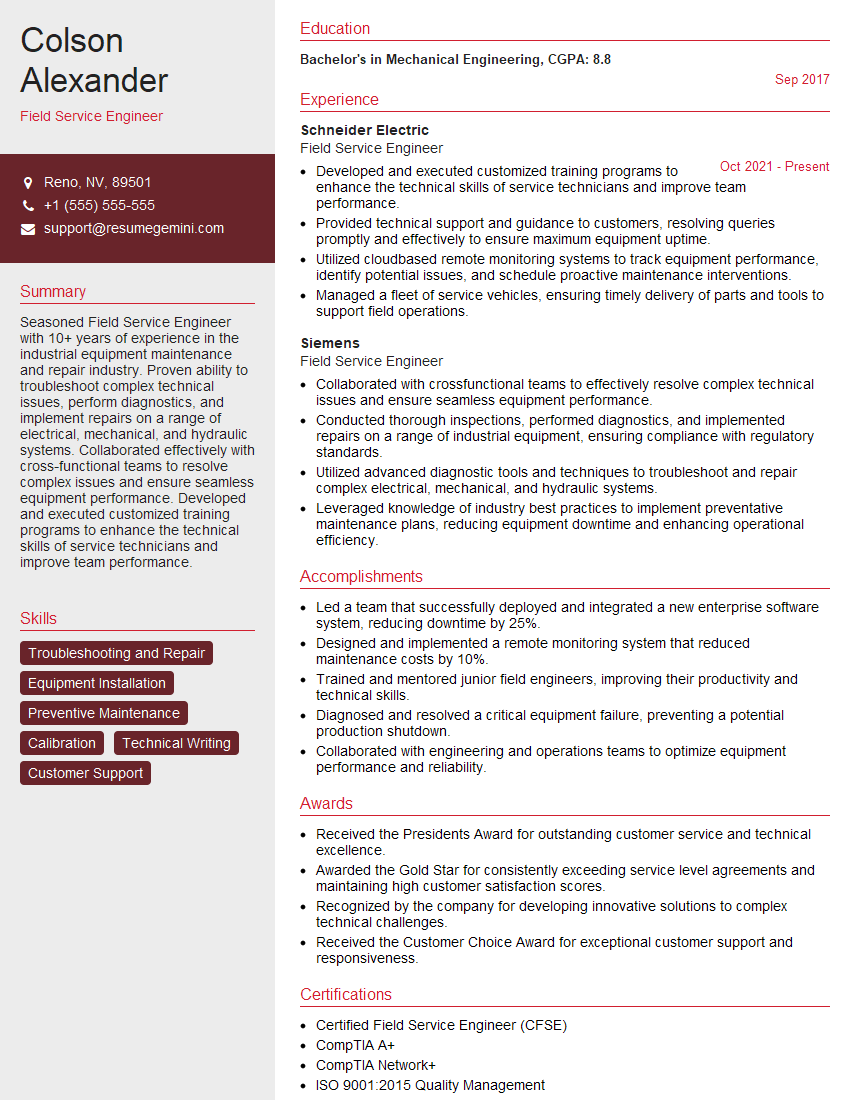
Field Service Engineer Resume Sample

Hardware Engineer Resume Sample
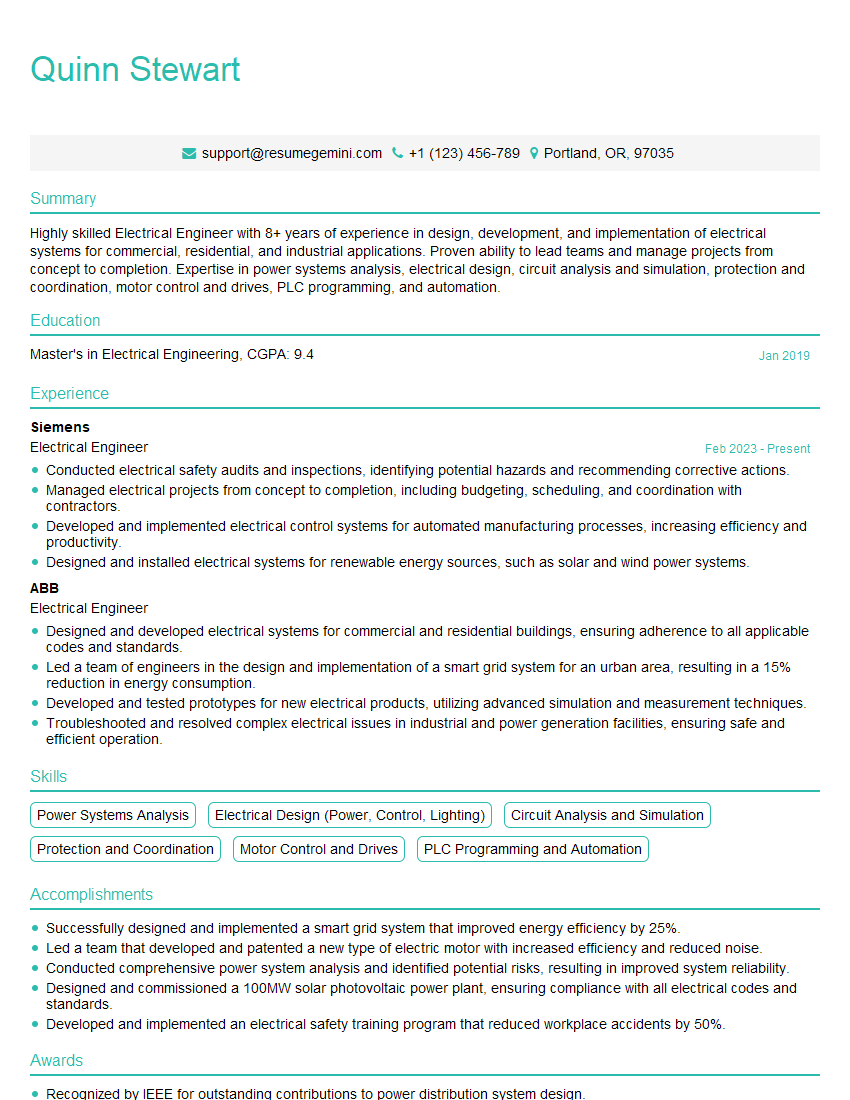
Electrical Engineer Resume Sample
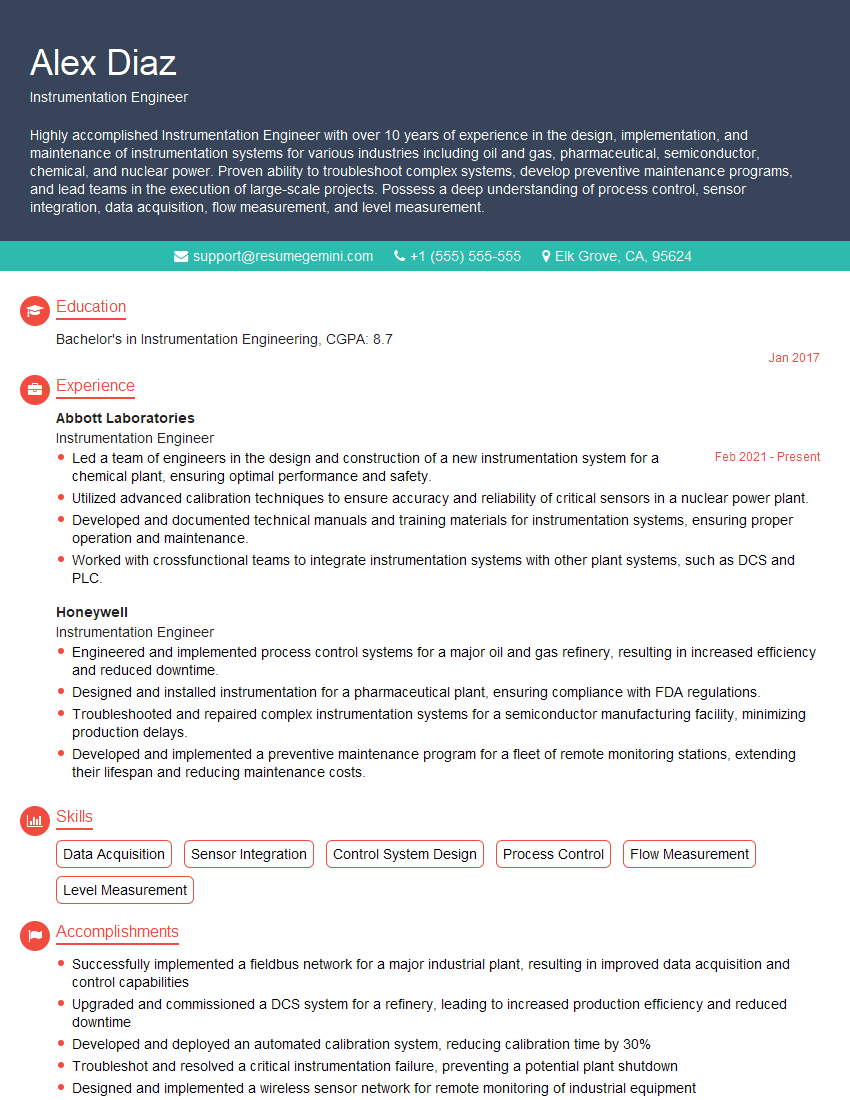
Instrumentation Engineer Resume Sample
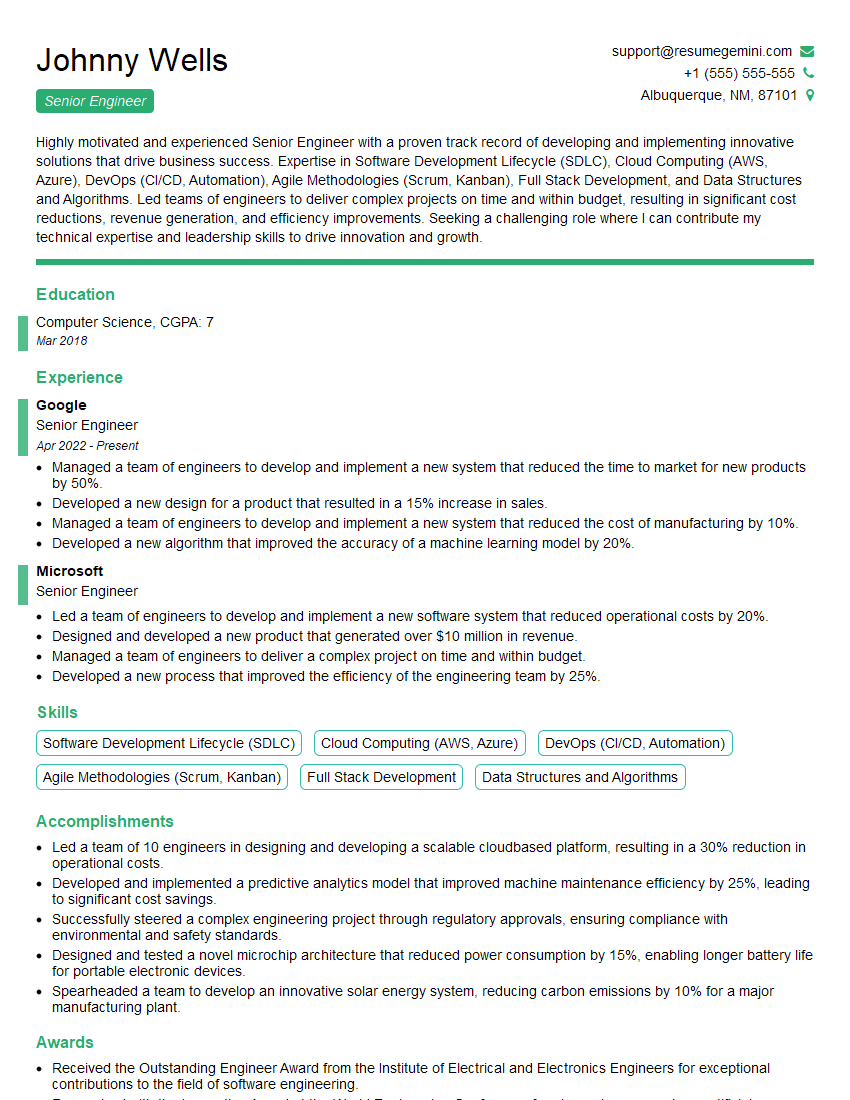
Senior Engineer Resume Sample
Automotive Engineer Resume Sample

Quality Assurance Engineer Resume Sample
Validation Engineer Resume Sample
Control Systems Engineer Resume Sample
Robotics Engineer Resume Sample
Embedded Systems Engineer Resume Sample
- Principal Engineer
- Applications Engineer
- Software Engineer
- Systems Architect
- Network Engineer
- Firmware Engineer
- Test Engineer
- Integration Engineer
- Field Service Engineer
- Hardware Engineer
- Electrical Engineer
- Instrumentation Engineer
- Senior Engineer
- Automotive Engineer
- Quality Assurance Engineer
- Validation Engineer
- Control Systems Engineer
- Robotics Engineer
- Embedded Systems Engineer
Explore more articles
Users Rating of Our Blogs
Share Your Experience
We value your feedback! Please rate our content and share your thoughts (optional).
What Readers Say About Our Blog
Very informative content, great job.
good