Interviews are more than just a Q&A session—they’re a chance to prove your worth. This blog dives into essential Fabrication and Repair interview questions and expert tips to help you align your answers with what hiring managers are looking for. Start preparing to shine!
Questions Asked in Fabrication and Repair Interview
Q 1. Describe your experience with different welding techniques (e.g., MIG, TIG, arc welding).
My experience spans a wide range of welding techniques, including MIG (Metal Inert Gas), TIG (Tungsten Inert Gas), and Shielded Metal Arc Welding (SMAW), commonly known as stick welding. Each process offers unique advantages depending on the material and application.
MIG welding, for example, is renowned for its speed and efficiency, particularly for joining thicker materials. I’ve used it extensively in automotive repair and structural fabrication, creating strong, consistent welds with a relatively fast deposition rate. I’m proficient in selecting the correct wire feed speed, voltage, and shielding gas based on the base metal and desired weld quality.
TIG welding demands higher precision and skill, producing incredibly clean, aesthetically pleasing welds ideal for thin materials and applications requiring high-quality finishes. My experience with TIG welding includes working on stainless steel components in the food processing industry, where sanitary welds are crucial. I’m adept at controlling the arc length, filler metal addition, and maintaining a consistent gas flow for optimal results.
SMAW, while simpler in setup than MIG or TIG, offers versatility in various environments, even outdoors, thanks to its self-shielding flux-coated electrodes. I’ve used this extensively in pipeline repair and field work, where portability and resilience to harsh conditions are critical. My knowledge includes the selection of appropriate electrodes for different steel grades and weld positions.
Q 2. What are the common causes of weld defects and how do you prevent them?
Weld defects can significantly compromise the integrity of a joint, leading to catastrophic failures. Common causes include improper preparation of the base metal (e.g., contamination, insufficient cleaning), incorrect welding parameters (e.g., excessive current, improper travel speed), and poor technique (e.g., inconsistent arc length, lack of penetration). Other factors include the type and condition of the welding equipment, and even environmental conditions like wind or humidity.
Prevention relies on a multi-pronged approach. Firstly, meticulous preparation is key. This includes ensuring the base metal is clean, dry, and free from any contaminants like grease, oil, or rust. Secondly, selecting the correct welding parameters – current, voltage, travel speed, and shielding gas – is critical, and this is determined by the metal thickness, type of welding process, and the desired weld bead profile. Understanding the relationship between these parameters is crucial. I always consult relevant codes and standards for guidance. Regular maintenance and calibration of the welding equipment is also essential. Thirdly, consistent practice and a well-defined welding procedure are crucial. This includes proper joint design and ensuring appropriate fit-up before welding commences. Finally, proper post-weld inspection and testing are crucial to identify any latent defects.
Q 3. Explain your experience with blueprint reading and interpreting technical drawings.
Blueprint reading and interpreting technical drawings are fundamental to my work. I’m proficient in reading various types of drawings, including orthographic projections, isometric views, and sectional views, interpreting dimensions, tolerances, material specifications, and welding symbols. For example, I’ve worked extensively with ASME (American Society of Mechanical Engineers) codes and symbols for pressure vessel fabrication, where accuracy and precision are paramount.
Understanding these drawings allows me to accurately translate the design intent into a physical product. I can identify key features, understand manufacturing processes indicated in the drawings, and plan the fabrication sequence effectively. My ability to accurately interpret blueprints ensures that the fabricated component aligns perfectly with the design specifications, minimizing rework and ensuring structural integrity. I always verify my interpretation of a drawing before proceeding, particularly if anything seems ambiguous or unclear.
Q 4. How do you troubleshoot and repair common equipment malfunctions?
Troubleshooting and repairing equipment malfunctions require a systematic approach. I start by identifying the symptoms of the malfunction – is there a lack of power, erratic operation, or unusual noise? Then, I systematically check for the root cause, starting with simple checks like power supply and connections, before moving to more complex issues.
For instance, if a MIG welder is not feeding wire correctly, I would first inspect the wire spool, check for kinks or obstructions in the wire feed mechanism, and examine the drive rollers. If the issue persists, I might check the voltage settings, current flow, and contact tips for wear and tear. I’m also familiar with safety procedures relating to electrical equipment and always adhere to lock-out/tag-out procedures before undertaking any repairs.
My experience includes resolving problems with various types of welding machines, cutting equipment, and bending presses, employing both preventative and corrective maintenance strategies. Keeping detailed records of maintenance activities and problems encountered is crucial for improving the efficiency and longevity of the equipment.
Q 5. Describe your experience with various metal fabrication processes (e.g., cutting, bending, forming).
My metal fabrication experience includes various processes such as cutting, bending, and forming. I’m proficient in using different cutting methods, including oxy-fuel cutting (for thicker materials), plasma cutting (for precise cuts on thinner materials), and shearing (for accurate, straight cuts on sheet metal). For bending and forming, I’ve used various press brakes, roll forming machines, and even hand tools depending on the material and the required geometry.
For example, in one project involving the construction of a custom-designed metal enclosure, I used a CNC plasma cutter for precise cutting of the sheet metal components, followed by a press brake to bend the edges for creating a secure and aesthetically pleasing seam. The choice of the fabrication method hinges on factors like material thickness, required accuracy, production volume, and available equipment. I always strive to utilize the most efficient and appropriate techniques for each task.
Q 6. What safety precautions do you follow when working with heavy machinery and welding equipment?
Safety is paramount in fabrication and repair. When working with heavy machinery and welding equipment, I strictly adhere to all relevant safety regulations and company policies. This includes wearing appropriate Personal Protective Equipment (PPE), such as welding helmets with appropriate shade filters, fire-resistant clothing, gloves, and safety footwear.
I’m meticulous in ensuring that the work area is well-ventilated and free from fire hazards, especially when using oxy-fuel cutting or welding. I always follow the lock-out/tag-out procedures before undertaking any maintenance or repair work on equipment. Furthermore, I ensure that all equipment is properly grounded to prevent electrical shocks, and I regularly inspect the equipment for any signs of damage or malfunction before use. Awareness of potential hazards, like sparks, fumes, and hot materials, is always top of mind. I work safely to protect not only myself, but also my colleagues.
Q 7. How do you ensure the quality and accuracy of your work?
Quality and accuracy are achieved through a combination of meticulous planning, precise execution, and thorough inspection. I begin by carefully reviewing the blueprints and specifications, ensuring I fully understand the requirements before commencing any work. Throughout the fabrication process, I regularly check dimensions and alignments using measuring instruments like calipers, rulers, and levels, ensuring that the work adheres to the tolerances specified in the drawings.
After completion, I conduct a thorough visual inspection, checking for any defects such as weld imperfections, misalignments, or dimensional inaccuracies. Depending on the application, I may also conduct non-destructive testing (NDT) such as visual inspection, magnetic particle inspection or liquid penetrant inspection to ensure the structural integrity of the fabricated component. Proper documentation of all steps and inspection results is essential for quality control and traceability. Continuous improvement is key, and I consistently seek feedback and methods to refine my processes and enhance the quality of my work.
Q 8. What are your preferred methods for measuring and inspecting fabricated parts?
Measuring and inspecting fabricated parts is crucial for ensuring quality and adherence to specifications. My preferred methods depend on the part’s complexity and required precision. For simple dimensions, I rely on accurate measuring tools like calipers, micrometers, and dial indicators. For more complex geometries or surface finish inspections, I utilize coordinate measuring machines (CMMs) and optical comparators. CMMs provide highly accurate three-dimensional measurements, while optical comparators are excellent for comparing a part against a master template.
For example, when fabricating a precision shaft, I would use a micrometer to ensure the diameter is within the tolerance specified on the blueprint. If the part had intricate features, a CMM would be used to verify all dimensions and detect any deviations. Surface finish would be checked using a surface roughness tester.
Beyond dimensional accuracy, visual inspection is paramount. This involves checking for defects like cracks, scratches, burrs, and deformities. Sometimes specialized tools, such as borescopes for internal inspection, are also necessary.
Q 9. Describe your experience with different types of materials (e.g., steel, aluminum, plastics).
My experience spans a wide range of materials, each presenting unique challenges and requiring specialized techniques. Steel, a workhorse in fabrication, requires a good understanding of its various grades and heat treatments to achieve desired strength and machinability. I’m proficient in working with mild steel, stainless steel, and various alloy steels, understanding the implications of each for welding, machining, and finishing.
Aluminum, known for its lightweight properties, presents different challenges. Its softness demands careful machining techniques to avoid deformation. I’m experienced in various aluminum alloys, knowing the differences in their strength and corrosion resistance. Working with aluminum often requires different cutting tools and speeds compared to steel.
Plastics, a diverse category, demand a meticulous approach due to their sensitivity to heat and pressure. I have experience with thermoplastics like ABS and acrylics, and thermosets like epoxy resins. Different techniques are needed for each, from machining to molding, and understanding the material’s melting point or curing process is crucial.
Q 10. How do you handle challenging or unexpected problems during a project?
Handling unexpected problems is a fundamental aspect of fabrication and repair. My approach is systematic and focuses on a structured problem-solving process. The first step is a thorough analysis to fully understand the problem. This might involve examining the faulty component, reviewing the design specifications, and consulting relevant documentation.
Once the problem is clearly defined, I explore potential solutions, prioritizing those that minimize downtime and cost. This often involves brainstorming with colleagues or searching for relevant technical information. Sometimes, prototyping a solution is necessary before implementing it on the final product. For example, I once encountered an unexpected warping issue during a welding operation. After carefully analyzing the situation, I adjusted the welding parameters and introduced a pre-heating step which solved the problem.
Throughout the process, accurate documentation is key. I maintain detailed records of the problem, the chosen solution, and its effectiveness. This helps in learning from mistakes and improving future processes. The goal is not just to fix the immediate problem but to prevent its recurrence.
Q 11. What is your experience with CNC machining?
I possess extensive experience with CNC machining, having operated and programmed various CNC milling and turning machines. My expertise includes selecting appropriate cutting tools, setting up the machine, writing and optimizing CNC programs (using software like Mastercam or Fusion 360), and monitoring the machining process to ensure accuracy and surface finish.
I’m proficient in various machining operations, such as milling, turning, drilling, and boring. I understand the importance of factors such as spindle speed, feed rate, and depth of cut and how these impact surface finish, tool life, and overall machining efficiency. For example, I’ve used CNC machining to create intricate parts for medical devices, requiring exceptional precision and surface quality.
My experience also extends to post-processing activities, including deburring, cleaning, and inspection. I’m comfortable working with different types of materials (steel, aluminum, plastics) and am proficient in interpreting and creating G-code programs.
Q 12. Explain your experience with different types of fasteners and joining methods.
I am familiar with a wide variety of fasteners and joining methods, selecting the most appropriate one based on the material, application, and required strength. This includes various types of screws, bolts, rivets, welds, adhesives, and press fits. Understanding the advantages and limitations of each method is critical.
For instance, welding is ideal for joining large metal components requiring high strength, while adhesives provide a strong and versatile solution for joining dissimilar materials. Rivets offer a reliable solution for joining thin sheet metals where welding might cause distortion. The selection process considers factors like load bearing capacity, corrosion resistance, aesthetic requirements, and ease of assembly/disassembly.
My experience extends to the use of specialized fasteners and joining techniques, like the use of torque wrenches to ensure proper bolt tightening, and the application of specialized welding techniques, such as TIG or MIG welding, depending on the material and joint design.
Q 13. How familiar are you with different types of cutting tools and their applications?
My understanding of cutting tools is comprehensive, ranging from basic hand tools to advanced CNC cutting tools. I’m familiar with the various types of drills, end mills, reamers, taps, and dies, and I understand how their geometry and material affect their performance. For instance, high-speed steel (HSS) tools are suitable for many applications, while carbide tools offer superior wear resistance for harder materials.
The selection of the appropriate cutting tool is critical for achieving the desired machining outcome, including surface finish, dimensional accuracy, and tool life. I consider the material being machined, the desired finish, and the specific operation to make an informed decision. For example, when machining aluminum, I would use different cutting tools and speeds compared to machining stainless steel to optimize performance and prevent tool damage. I also understand the importance of proper tool maintenance, including sharpening and regular inspection.
Beyond traditional cutting tools, I’m familiar with abrasive cutting tools such as grinding wheels and cutting discs, along with their safety considerations.
Q 14. How do you maintain and organize your tools and workspace?
Maintaining a clean and organized workspace is essential for efficiency and safety. My approach is based on a 5S methodology (Sort, Set in Order, Shine, Standardize, Sustain). I start by sorting through my tools, removing any that are broken, obsolete, or unnecessary. Tools are then organized logically, using shadow boards or labeled storage containers to ensure quick access and prevent loss.
Regular cleaning of my workspace is a routine practice, removing debris and ensuring everything is in its designated place. This prevents accidents and facilitates efficient workflow. Standardization involves establishing clear procedures for tool maintenance, storage, and cleanup, making it easier for others to use the workspace efficiently and safely. Finally, sustainability means consistently following these practices to ensure the workspace remains organized and clean over the long term.
This meticulous approach not only ensures safety but also significantly improves productivity by minimizing wasted time searching for tools and materials. A well-organized workspace also promotes a professional image and contributes to overall job satisfaction.
Q 15. What is your experience with preventative maintenance procedures?
Preventative maintenance (PM) is crucial for extending the lifespan of equipment and preventing costly breakdowns. My experience encompasses developing and implementing PM schedules, performing routine inspections, and proactively addressing potential issues before they escalate. This involves a thorough understanding of the equipment’s operational characteristics, identifying wear points, and adhering to manufacturer’s recommendations.
For example, in my previous role at Acme Manufacturing, I developed a PM schedule for our CNC milling machines, which included weekly lubrication checks, monthly tool inspections, and quarterly operational tests. This systematic approach reduced machine downtime by 25% in the first year, significantly improving overall productivity and reducing maintenance costs. This involved creating detailed checklists and documenting all maintenance activities for traceability and analysis.
- Regular lubrication reduces friction and wear.
- Tool inspections prevent tool failure and resulting damage to parts.
- Operational tests ensure the machine operates within specified parameters.
Career Expert Tips:
- Ace those interviews! Prepare effectively by reviewing the Top 50 Most Common Interview Questions on ResumeGemini.
- Navigate your job search with confidence! Explore a wide range of Career Tips on ResumeGemini. Learn about common challenges and recommendations to overcome them.
- Craft the perfect resume! Master the Art of Resume Writing with ResumeGemini’s guide. Showcase your unique qualifications and achievements effectively.
- Don’t miss out on holiday savings! Build your dream resume with ResumeGemini’s ATS optimized templates.
Q 16. Describe a time you had to troubleshoot a complex repair issue. How did you approach it?
During a critical production run, our laser cutting system started producing inconsistent cuts. Initially, the issue seemed minor, but the quality defects were accumulating rapidly. My troubleshooting approach was systematic and focused on isolating the root cause.
- Data Collection: I began by gathering data on the inconsistencies: measurements of cut widths, variations in power output, and any error messages from the machine’s control system.
- Visual Inspection: A thorough visual examination of the machine revealed some loose wiring near the laser head.
- Component Testing: I systematically tested each component in the laser system – from the power supply to the optics – checking for voltage fluctuations, signal integrity, and any mechanical issues.
- Hypothesis & Testing: I hypothesized the loose wiring might be causing intermittent electrical disruptions, affecting the laser’s accuracy. To test this, I secured the wiring and ran several test cuts. The results showed a dramatic improvement in cut consistency.
- Documentation & Prevention: After resolving the issue, I documented the entire process, including the steps taken, the root cause, and the corrective action. This was crucial for preventing similar problems in the future. Furthermore, a scheduled inspection was added to the preventative maintenance schedule to check for loose wiring.
Q 17. What software programs are you proficient in (e.g., CAD, CAM)?
I am proficient in several software programs essential for fabrication and repair. My expertise includes:
- Autodesk Inventor: For 3D modeling, design, and documentation of parts and assemblies.
- SolidWorks: Another powerful 3D CAD software I use for similar tasks, offering a slightly different interface and feature set.
- Mastercam: A widely-used CAM (Computer-Aided Manufacturing) software for generating CNC toolpaths for various machining operations. I use this to program our CNC mills and lathes.
- Fusion 360: A cloud-based CAD/CAM software offering a streamlined workflow for design and manufacturing.
Proficiency in these programs allows me to efficiently design, simulate, and manufacture parts, reducing errors and improving turnaround times.
Q 18. How do you manage your time effectively when working on multiple projects?
Effective time management is critical when juggling multiple projects. I use a combination of strategies:
- Prioritization: I prioritize tasks based on urgency and importance using methods like the Eisenhower Matrix (urgent/important).
- Project Planning: I break down large projects into smaller, manageable tasks with defined deadlines.
- Time Blocking: I allocate specific time blocks for different projects, minimizing context switching and improving focus. This also includes buffer time for unexpected delays.
- Task Management Software: Tools like Asana or Trello help me track progress, assign deadlines, and collaborate with colleagues.
By consistently applying these techniques, I ensure that all projects stay on schedule and meet their objectives.
Q 19. What are your strengths and weaknesses as a fabrication and repair technician?
Strengths: My primary strengths lie in my problem-solving skills, attention to detail, and my ability to work both independently and as part of a team. I’m adept at quickly diagnosing and resolving complex mechanical and electrical issues. My experience with various manufacturing processes ensures efficient and high-quality fabrication.
Weaknesses: One area I’m actively working to improve is my delegation skills. While I enjoy taking on challenges, I sometimes find it difficult to delegate tasks, particularly when dealing with time-sensitive projects. I’m actively working on improving this by practicing trusting my team members and clearly defining their responsibilities.
Q 20. Describe your experience working with different types of hand tools.
My experience with hand tools is extensive and encompasses a wide range, from basic measuring tools to specialized instruments used for precision work. This includes:
- Measuring Tools: Calipers, micrometers, rulers, levels, and dial indicators for accurate measurements.
- Cutting Tools: Hacksaws, hand files, chisels, punches, and various types of shears for material removal and shaping.
- Fastening Tools: Wrenches, screwdrivers, sockets, and specialized tools for tightening and loosening fasteners.
- Other Hand Tools: Pliers, hammers, screwdrivers, punches, and various specialized tools depending on the material and task.
Safe and proper use of hand tools is paramount to avoid injury and ensure quality workmanship. I’m also familiar with tool maintenance and the importance of keeping them in good working order.
Q 21. What is your understanding of ASME codes and standards?
ASME (American Society of Mechanical Engineers) codes and standards are essential for ensuring the safety and reliability of pressure vessels, piping systems, and other mechanical equipment. My understanding of ASME codes, specifically Section VIII (Pressure Vessels) and Section IX (Welding and Brazing Qualifications), includes:
- Code Requirements: I understand the design, fabrication, inspection, and testing requirements outlined in the codes to ensure compliance and safety.
- Material Selection: The codes dictate the appropriate materials for specific applications based on pressure, temperature, and other factors. My experience allows me to select appropriate materials for optimal performance and safety.
- Welding Procedures: ASME Section IX outlines the qualification requirements for welders and welding procedures. I understand these procedures and their importance in ensuring the integrity of welds.
- Non-Destructive Testing (NDT): I’m familiar with various NDT methods like radiographic testing (RT), ultrasonic testing (UT), and magnetic particle testing (MT) to verify weld quality and detect any flaws.
Adherence to these codes is crucial for ensuring the safe operation of equipment, preventing failures, and maintaining compliance with industry regulations.
Q 22. Explain your experience with hydraulic and pneumatic systems.
My experience with hydraulic and pneumatic systems spans over ten years, encompassing design, maintenance, and troubleshooting. I’ve worked extensively with both systems in various industrial settings, including manufacturing and heavy machinery. Hydraulic systems, using pressurized liquids, are incredibly powerful and precise. I’m proficient in identifying and repairing leaks, replacing components such as pumps, valves, and cylinders, and understanding the principles of fluid dynamics within the system. For example, I once diagnosed a slow leak in a hydraulic press by meticulously tracing the fluid path and using pressure gauges to pinpoint the faulty seal. Pneumatic systems, conversely, utilize compressed air. My expertise here includes understanding air compressors, actuators, and valves. I’m adept at troubleshooting issues like air leaks, pressure loss, and faulty pneumatic components. In one instance, I resolved a production line shutdown caused by a malfunctioning pneumatic gripper by quickly identifying a damaged air line and replacing it.
My understanding extends beyond basic repair and maintenance; I am also comfortable interpreting schematics, understanding pressure and flow calculations, and performing preventative maintenance to avoid costly downtime. I possess a strong working knowledge of safety regulations and procedures related to high-pressure systems.
Q 23. How do you prioritize tasks and manage your workload?
Prioritizing tasks and managing workload is crucial in fabrication and repair. I employ a combination of techniques to stay organized and efficient. I typically begin by using a system that prioritizes tasks based on urgency and importance using a method similar to the Eisenhower Matrix (Urgent/Important). This helps me focus on time-sensitive issues while ensuring long-term projects stay on track. I break down larger tasks into smaller, more manageable steps. This makes the process less daunting and allows for more consistent progress. I also use digital tools like project management software to track progress, deadlines, and dependencies. For instance, if a critical component is delayed, I can quickly adjust my schedule to mitigate its impact on other tasks.
Effective time management also involves realistic estimations. I’ve learned to accurately gauge the time required for each task, factoring in potential unforeseen complications. This helps prevent overcommitment and ensures timely completion of all responsibilities. Finally, communication is key. I maintain open communication with my supervisors and team members to proactively address any potential roadblocks and to ensure everyone is aligned on priorities.
Q 24. Describe your experience with working in a team environment.
I thrive in team environments. My experience shows a consistent ability to collaborate effectively, share knowledge, and contribute to a positive and productive work atmosphere. I believe in open communication and actively participate in team discussions, offering my expertise while also valuing the input of others. In past roles, I’ve worked as part of a team responsible for large-scale equipment overhauls. In these situations, effective communication and coordination were crucial for the project’s success. We successfully completed several projects ahead of schedule and under budget through clear task assignments, regular progress meetings, and mutual support among team members.
I’m also comfortable taking on leadership roles when needed, guiding and mentoring less experienced team members. I believe in fostering a collaborative environment where everyone feels valued and empowered to contribute their best work. My approach focuses on shared responsibility and mutual respect, leading to enhanced team cohesion and project outcomes.
Q 25. What are your salary expectations?
My salary expectations are in line with the market rate for a skilled Fabrication and Repair professional with my experience and qualifications. I am open to discussing a competitive compensation package that reflects my contributions and aligns with the company’s compensation structure. I am more interested in a fair and comprehensive compensation package that accounts for benefits and growth opportunities. I am confident that my skills and contributions would add significant value to your organization.
Q 26. What are your long-term career goals?
My long-term career goals involve continued growth within the field of fabrication and repair. I aim to become a highly skilled and respected expert in my field, potentially specializing in advanced techniques or leading complex projects. I am interested in taking on more leadership responsibilities and mentoring others. I am also keen on pursuing professional development opportunities, such as advanced certifications or specialized training programs to enhance my skills and stay abreast of the latest industry advancements. This continuous learning is crucial to remain competitive and contribute to innovation in the field.
Q 27. Are you comfortable working overtime or on weekends?
Yes, I am comfortable working overtime or on weekends when necessary to meet project deadlines or address urgent issues. I understand that in fabrication and repair, unexpected problems can arise, and I am committed to ensuring the timely completion of tasks. I believe in teamwork and understand that sometimes extra effort is required to achieve shared goals. However, I also believe in a healthy work-life balance and would appreciate transparent communication regarding overtime expectations to ensure it’s managed effectively.
Q 28. Why are you interested in this particular position?
I am interested in this position because it aligns perfectly with my skills and career aspirations. The opportunity to work on [mention specific projects or technologies mentioned in the job description] is particularly appealing. I am impressed by [mention something specific about the company, its culture, or its reputation]. I believe my expertise in hydraulic and pneumatic systems, combined with my experience in [mention relevant experience], would make me a valuable asset to your team. I am confident that I can make a significant contribution to your organization’s success.
Key Topics to Learn for Fabrication and Repair Interview
- Materials Science and Selection: Understanding the properties of various metals, polymers, and composites; selecting appropriate materials for specific applications based on strength, durability, and cost.
- Welding Techniques: Proficiency in various welding processes (e.g., MIG, TIG, stick) and their applications; understanding weld quality assessment and defect identification.
- Machining and Fabrication Processes: Familiarity with milling, turning, drilling, and other machining operations; understanding tolerances and precision machining techniques.
- Blueprint Reading and Interpretation: Ability to accurately read and interpret technical drawings, schematics, and specifications to guide fabrication and repair processes.
- Repair Techniques: Understanding different repair methods for various materials and components; knowledge of common repair techniques like brazing, soldering, and adhesive bonding.
- Quality Control and Inspection: Understanding quality control procedures and inspection techniques to ensure adherence to standards and specifications; experience with non-destructive testing (NDT) methods.
- Troubleshooting and Problem-Solving: Ability to identify and diagnose problems in fabricated components or systems; developing and implementing effective repair strategies.
- Safety Procedures and Regulations: Thorough understanding and adherence to relevant safety regulations and procedures in a fabrication and repair environment.
- Maintenance and Preventative Maintenance: Understanding the importance of preventative maintenance to minimize downtime and extend the lifespan of equipment.
- Tools and Equipment: Familiarity with a wide range of hand tools, power tools, and specialized equipment used in fabrication and repair.
Next Steps
Mastering Fabrication and Repair skills opens doors to diverse and rewarding career paths, offering opportunities for advancement and specialization. A strong resume is crucial for showcasing your expertise to potential employers. Creating an ATS-friendly resume will significantly increase your chances of getting noticed by recruiters. We strongly recommend using ResumeGemini to build a professional and impactful resume that highlights your skills and experience effectively. ResumeGemini offers examples of resumes tailored to the Fabrication and Repair field, providing you with a valuable resource to create a compelling application.
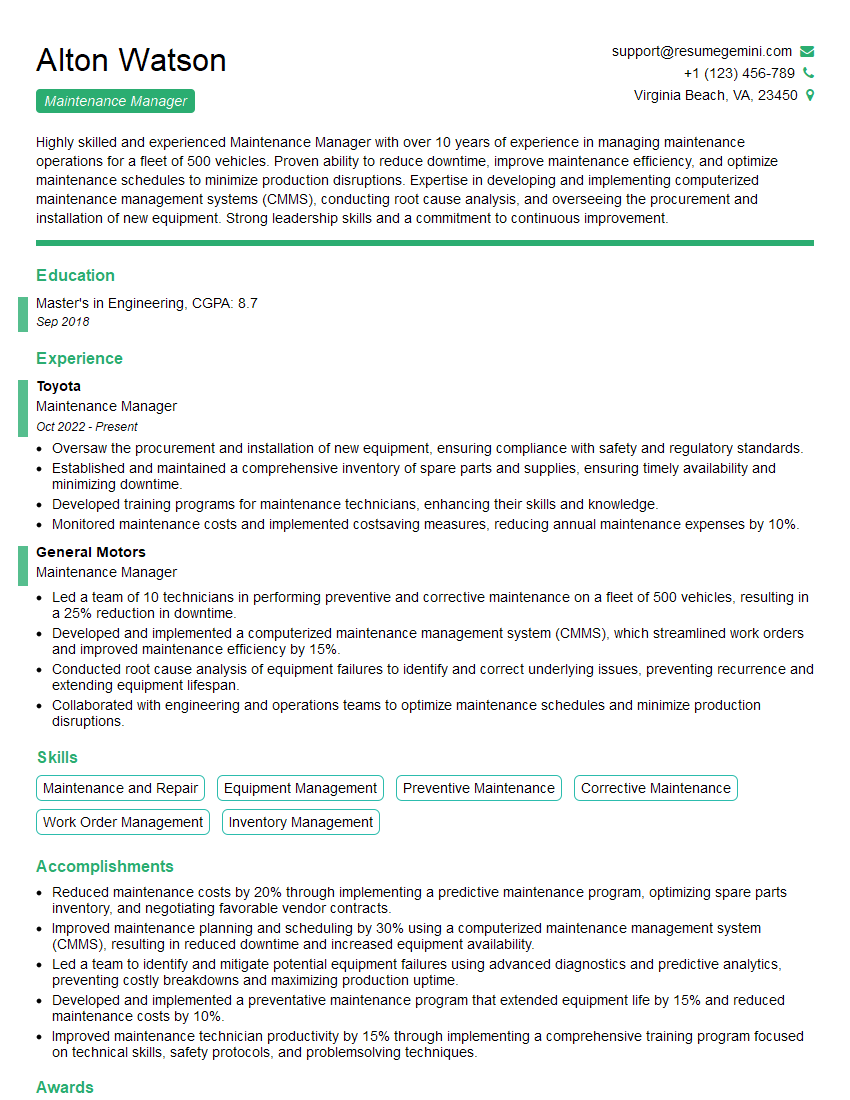
Maintenance Manager Resume Sample
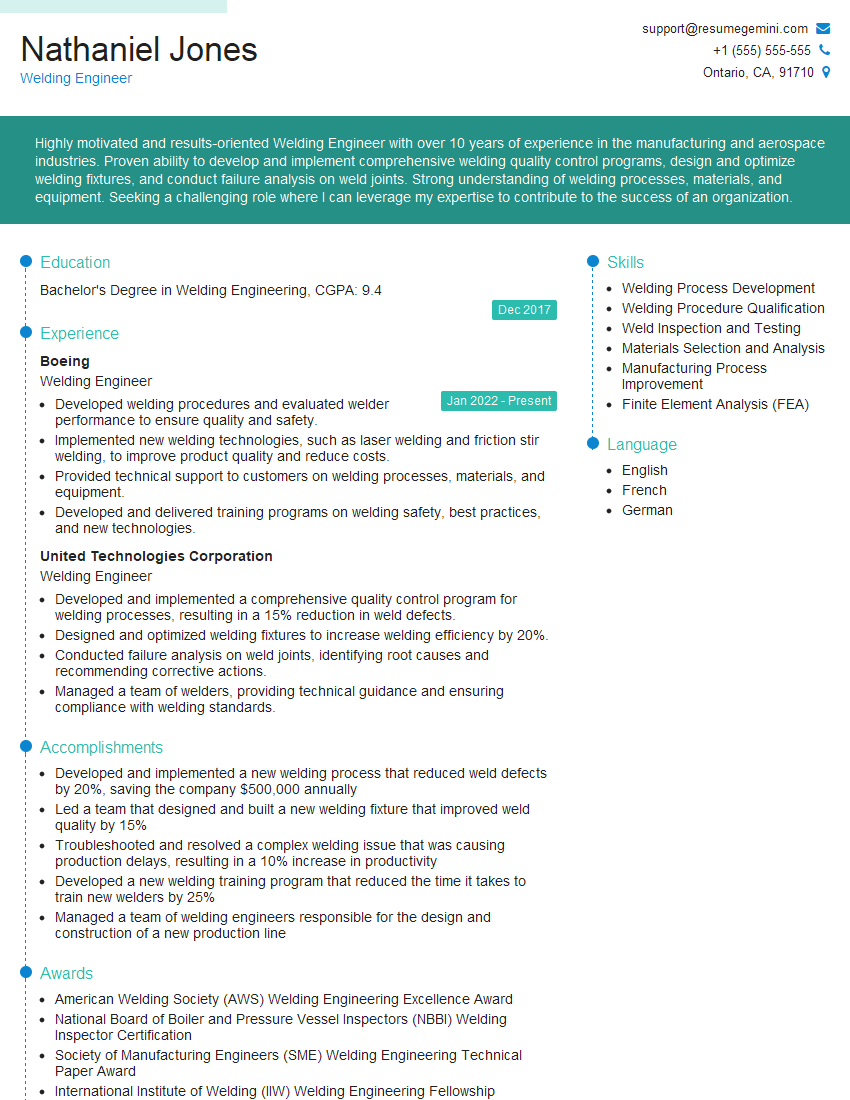
Welding Engineer Resume Sample
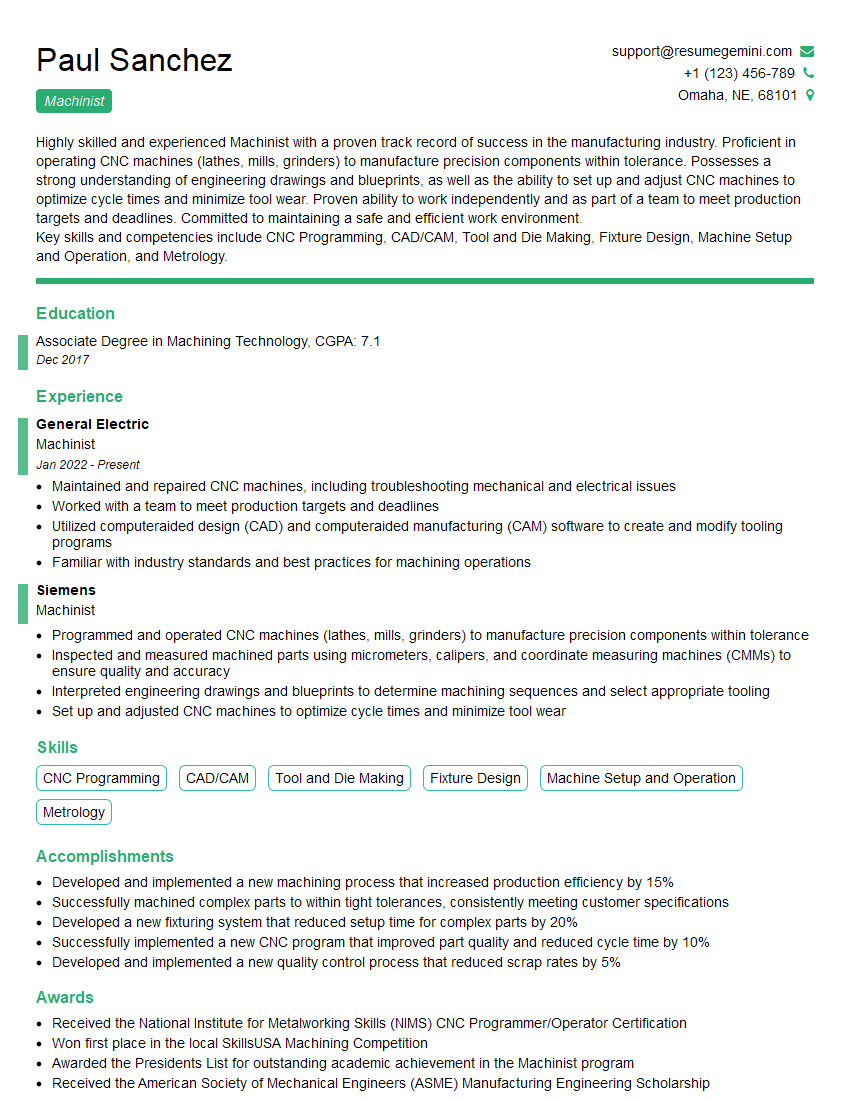
Machinist Resume Sample
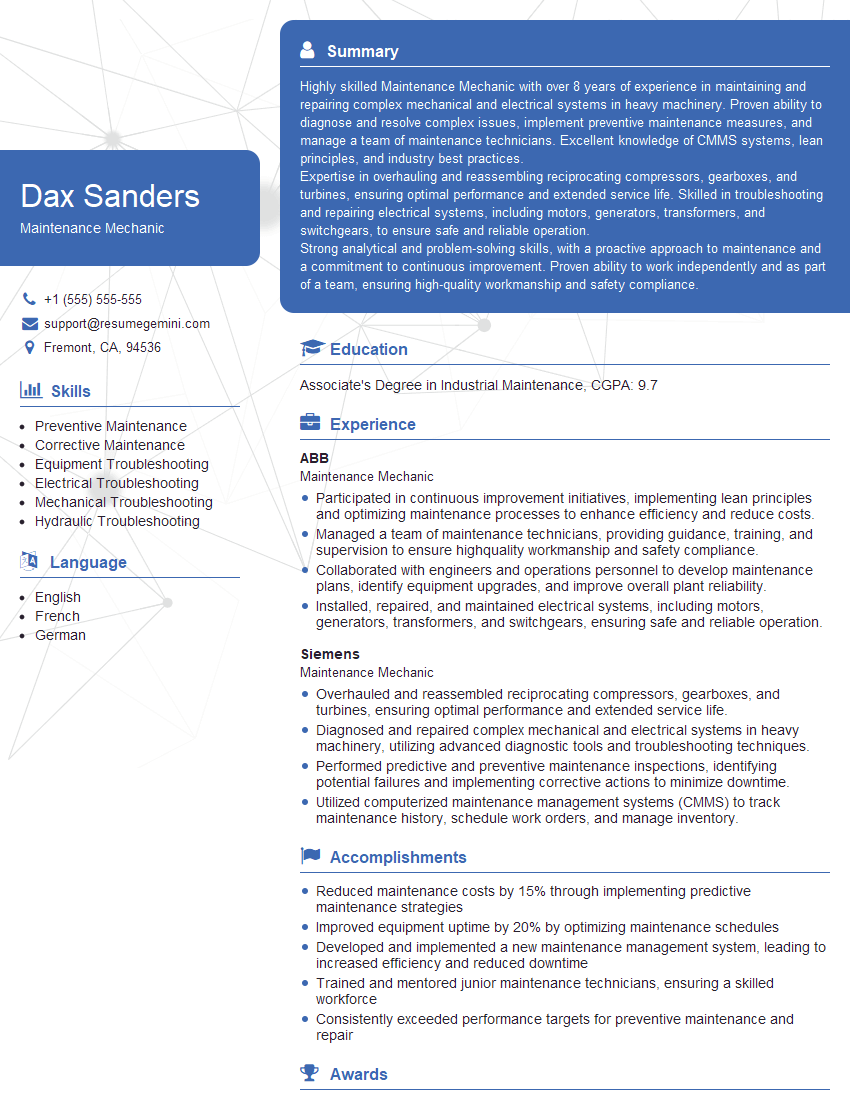
Maintenance Mechanic Resume Sample
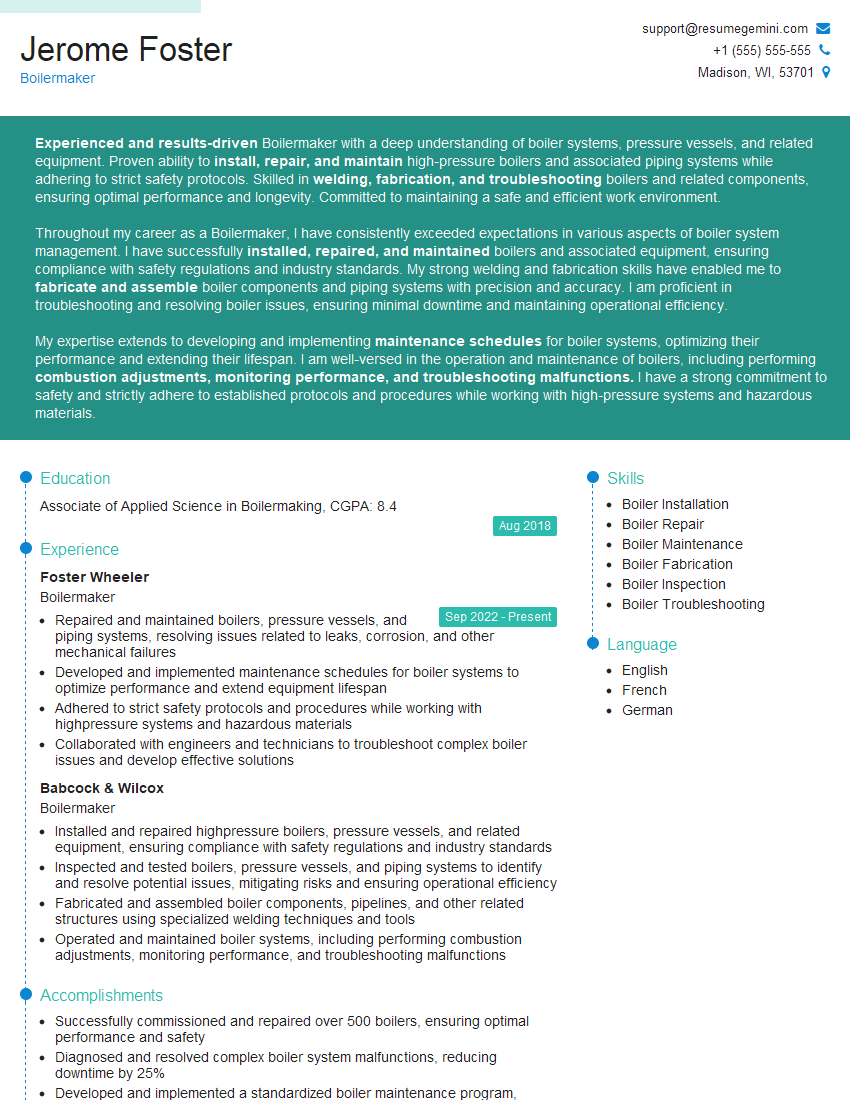
Boilermaker Resume Sample
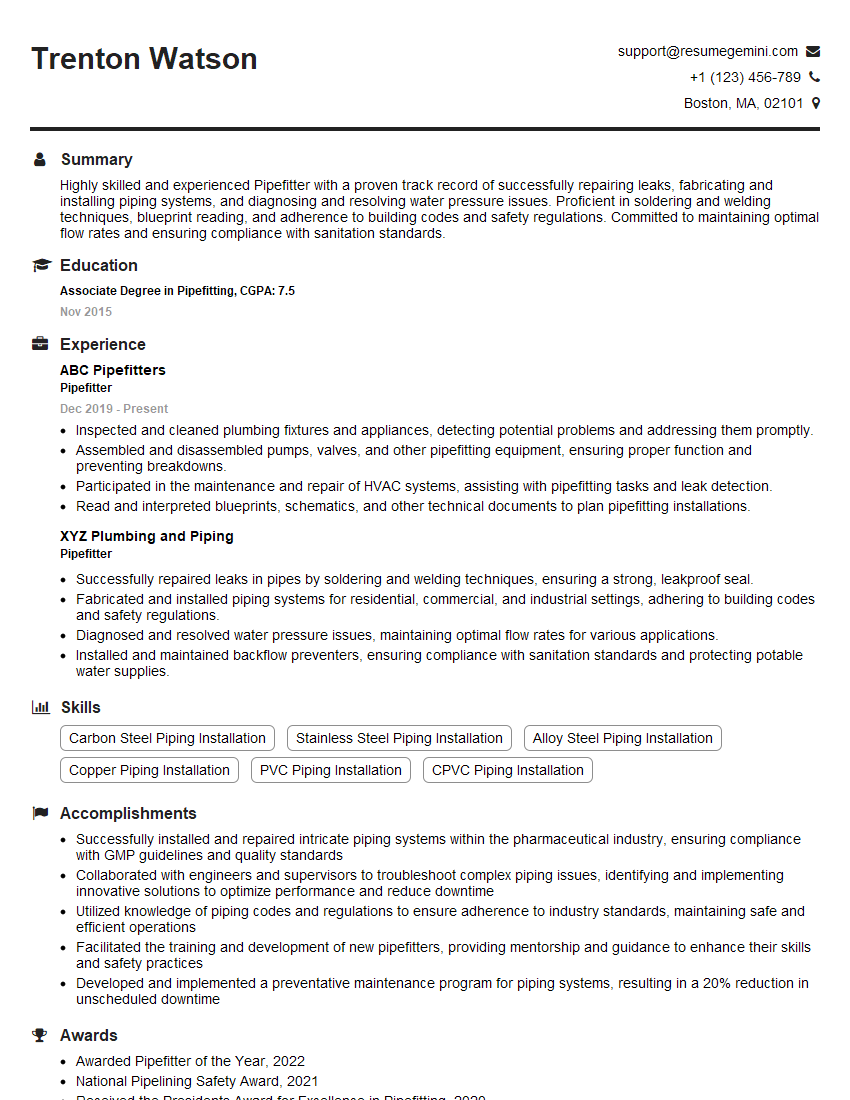
Pipefitter Resume Sample
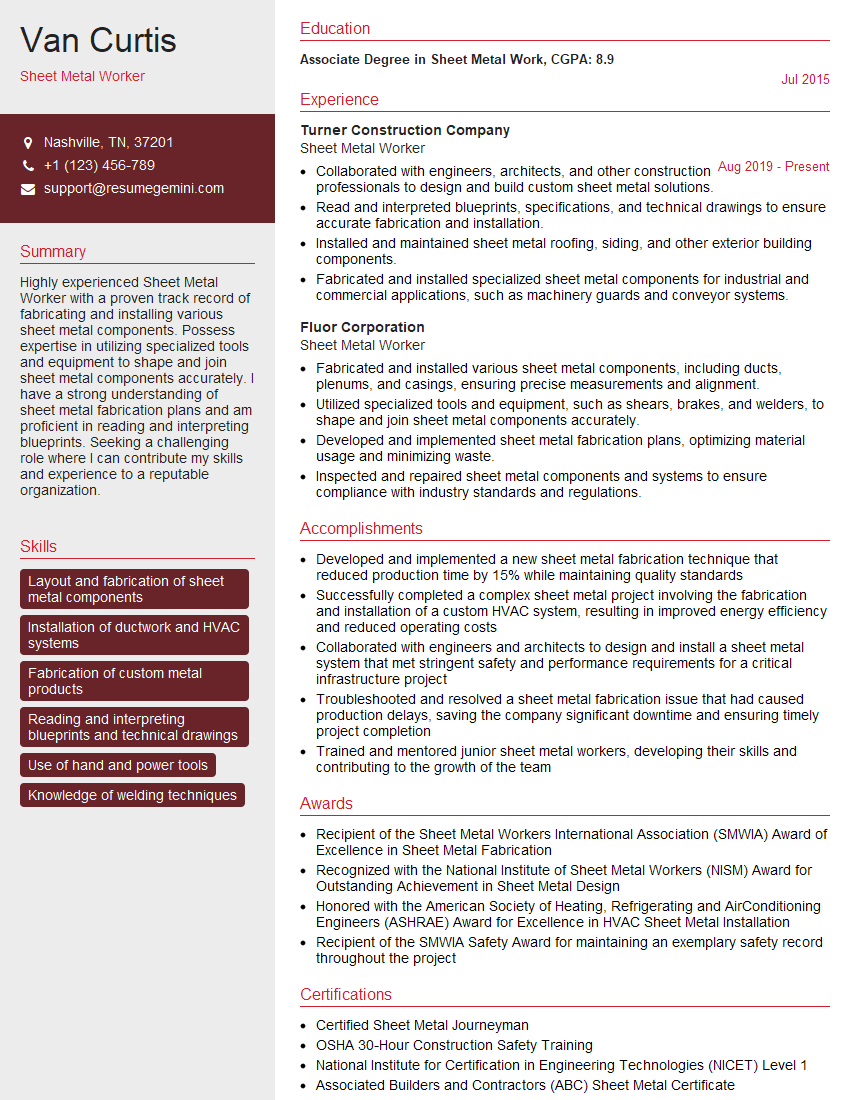
Sheet Metal Worker Resume Sample
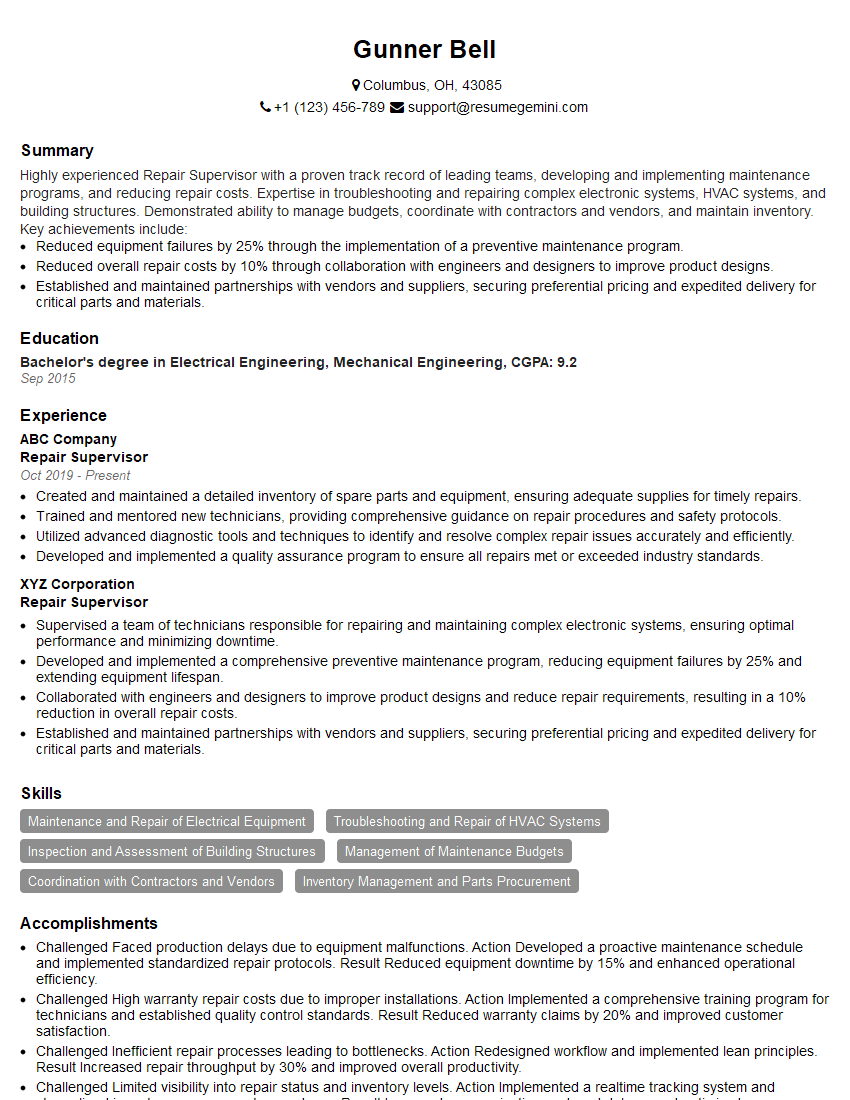
Repair Supervisor Resume Sample
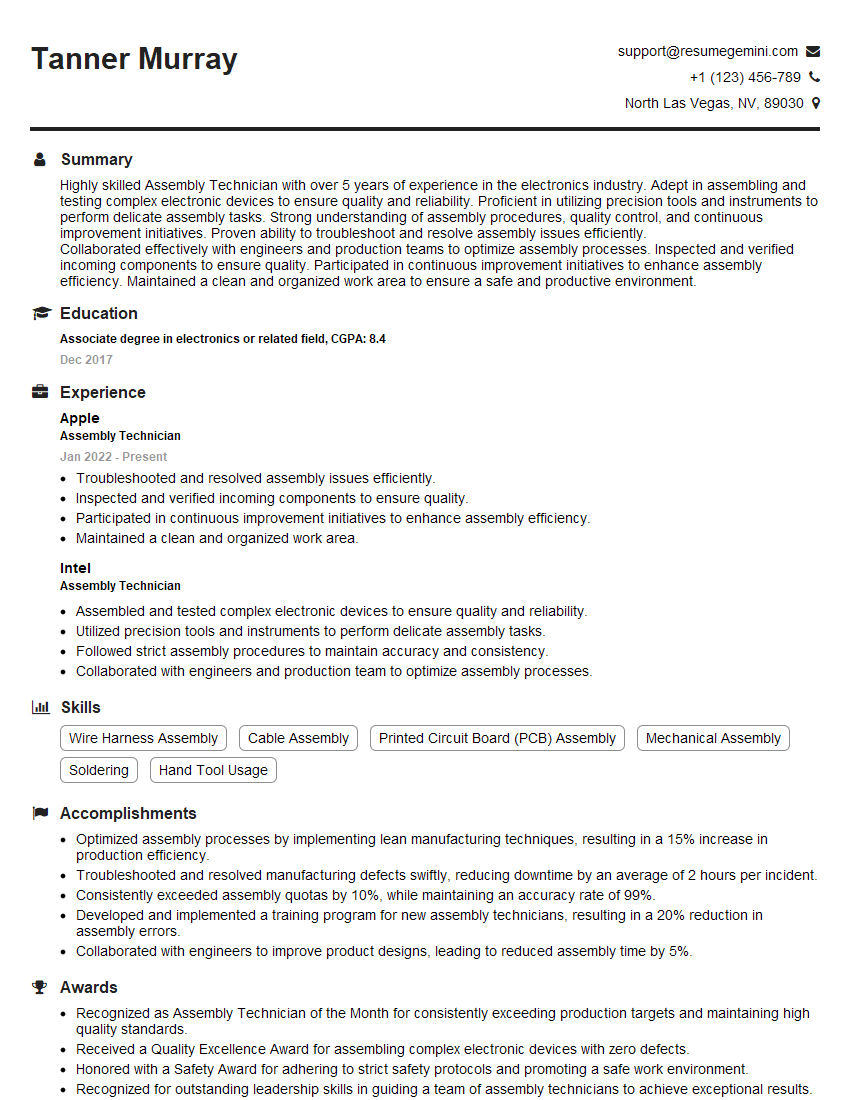
Assembly Technician Resume Sample
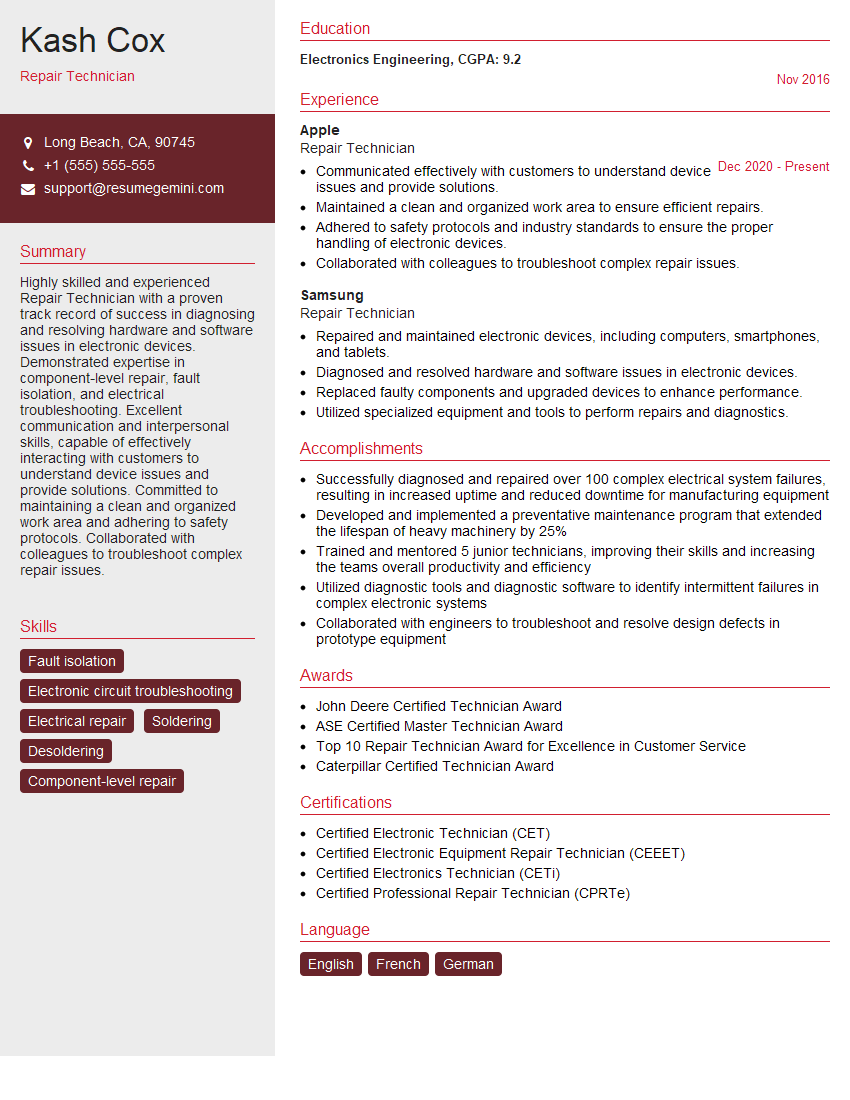
Repair Technician Resume Sample
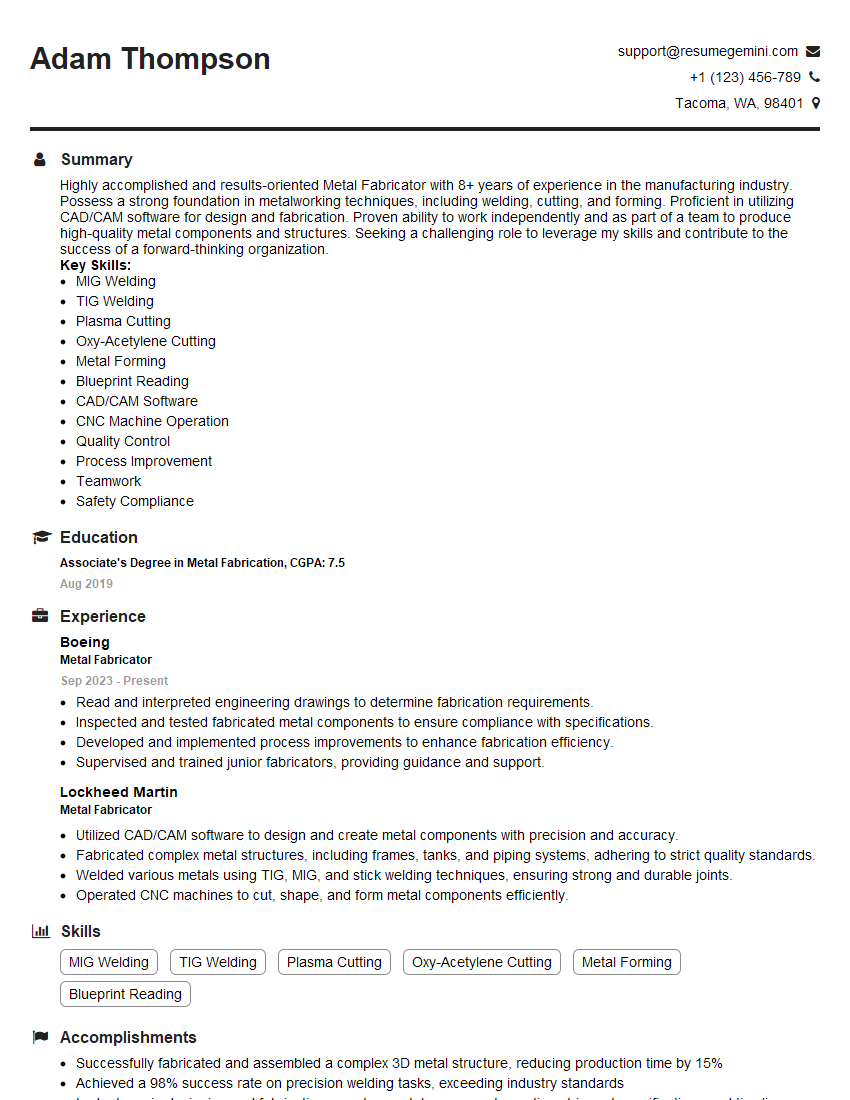
Metal Fabricator Resume Sample
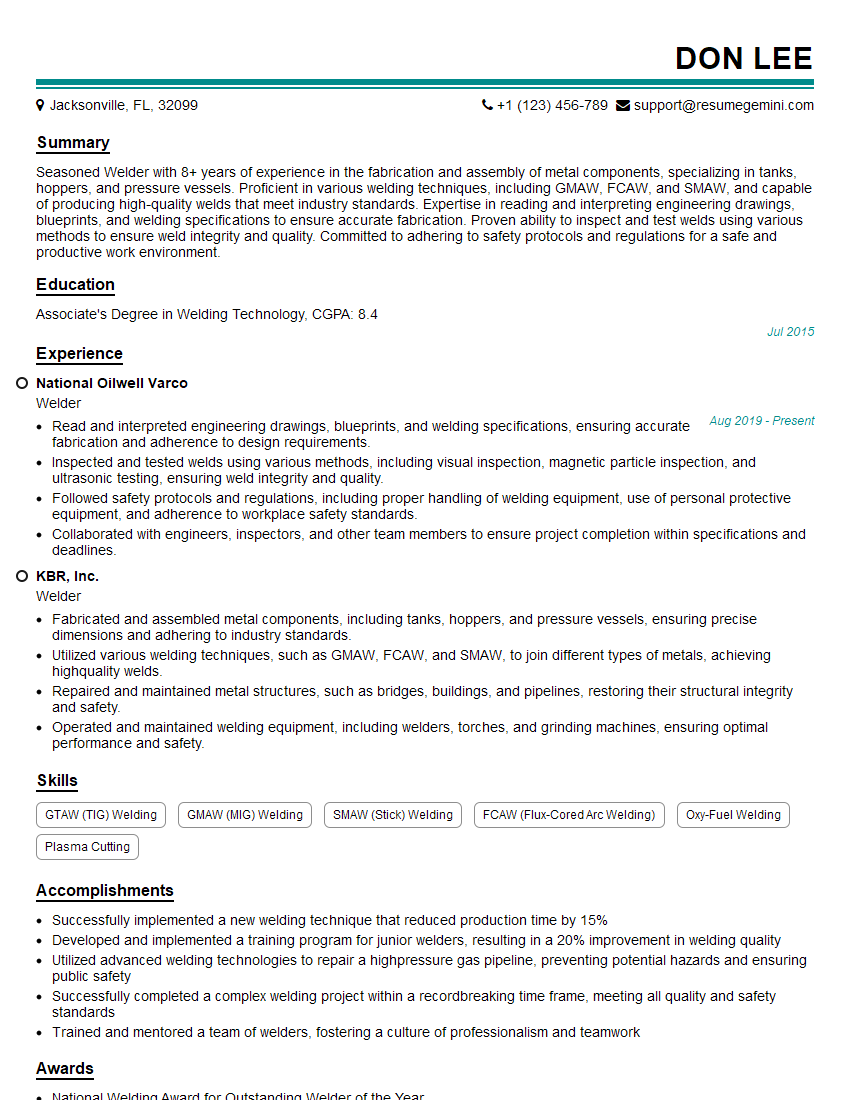
Welder Resume Sample
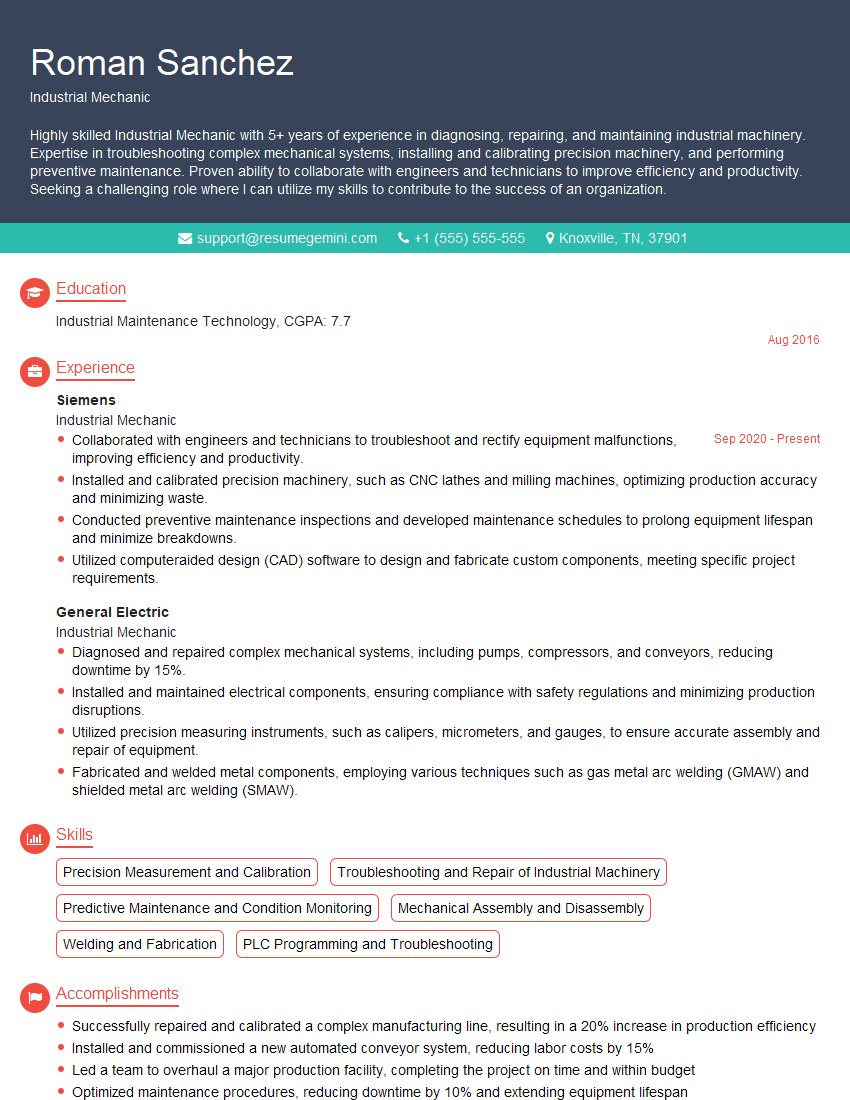
Industrial Mechanic Resume Sample
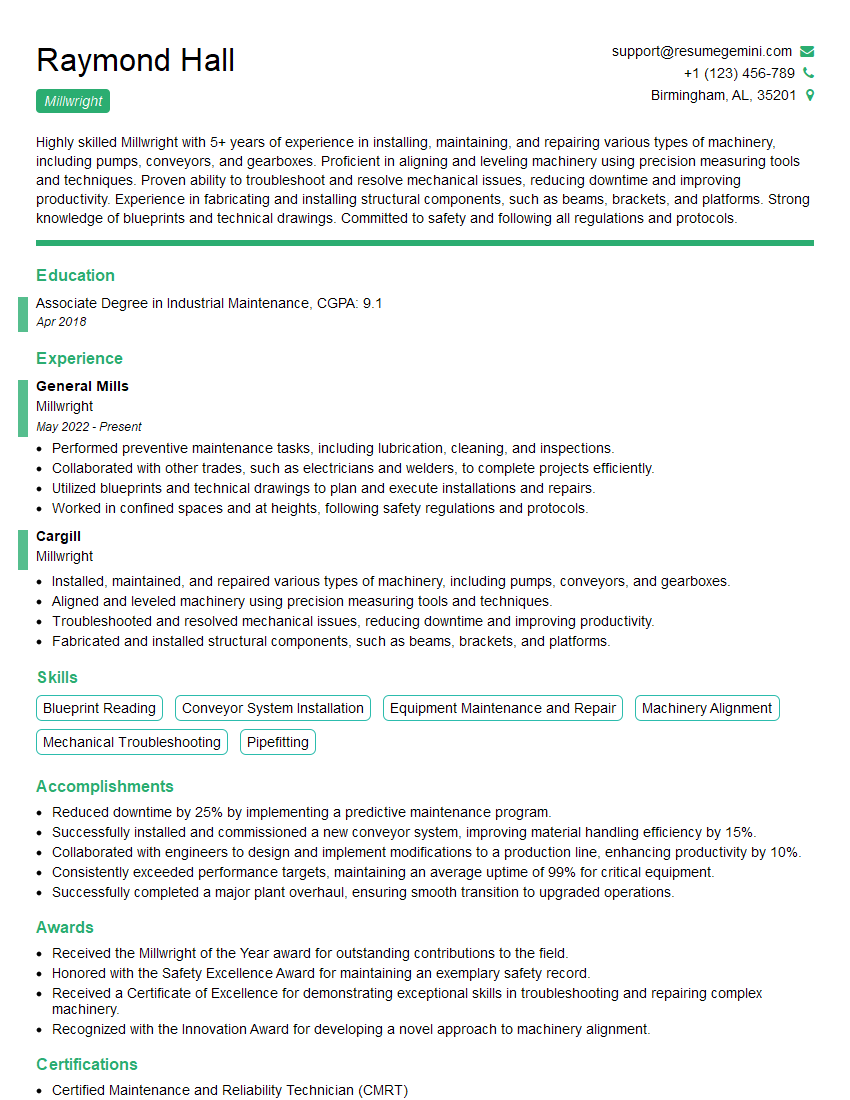
Millwright Resume Sample
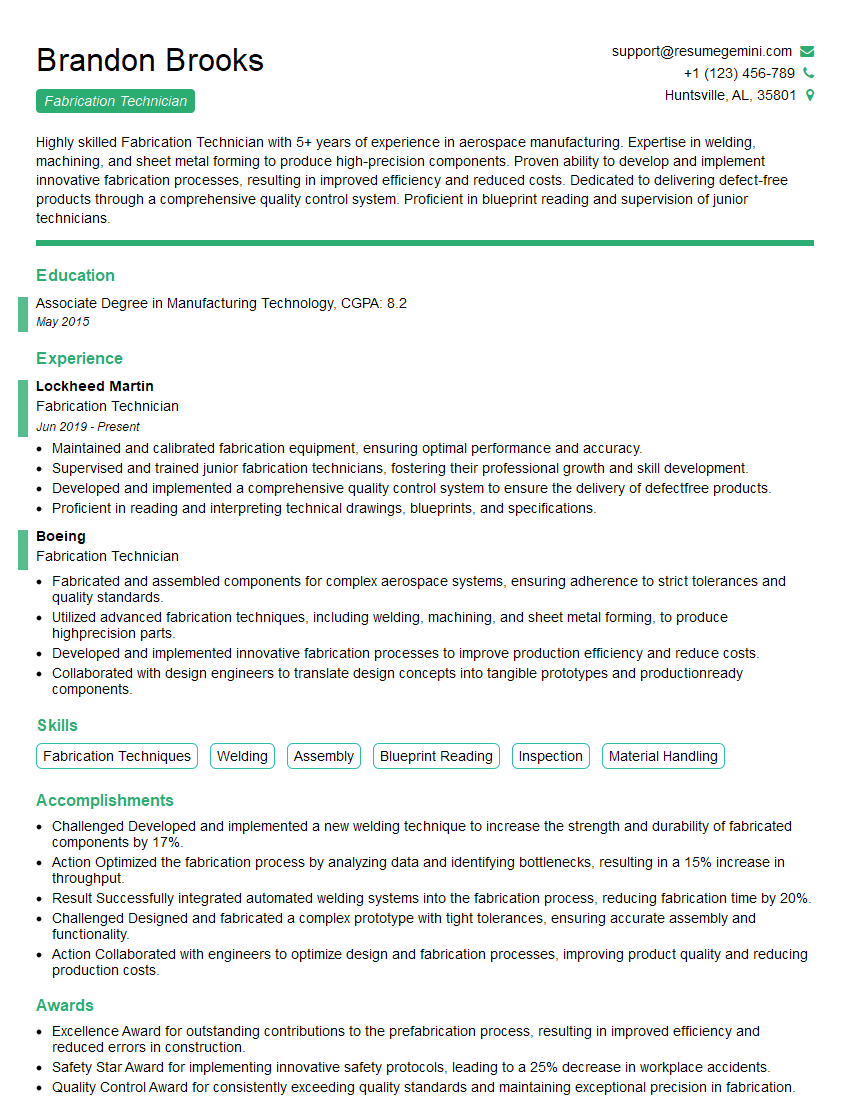
Fabrication Technician Resume Sample
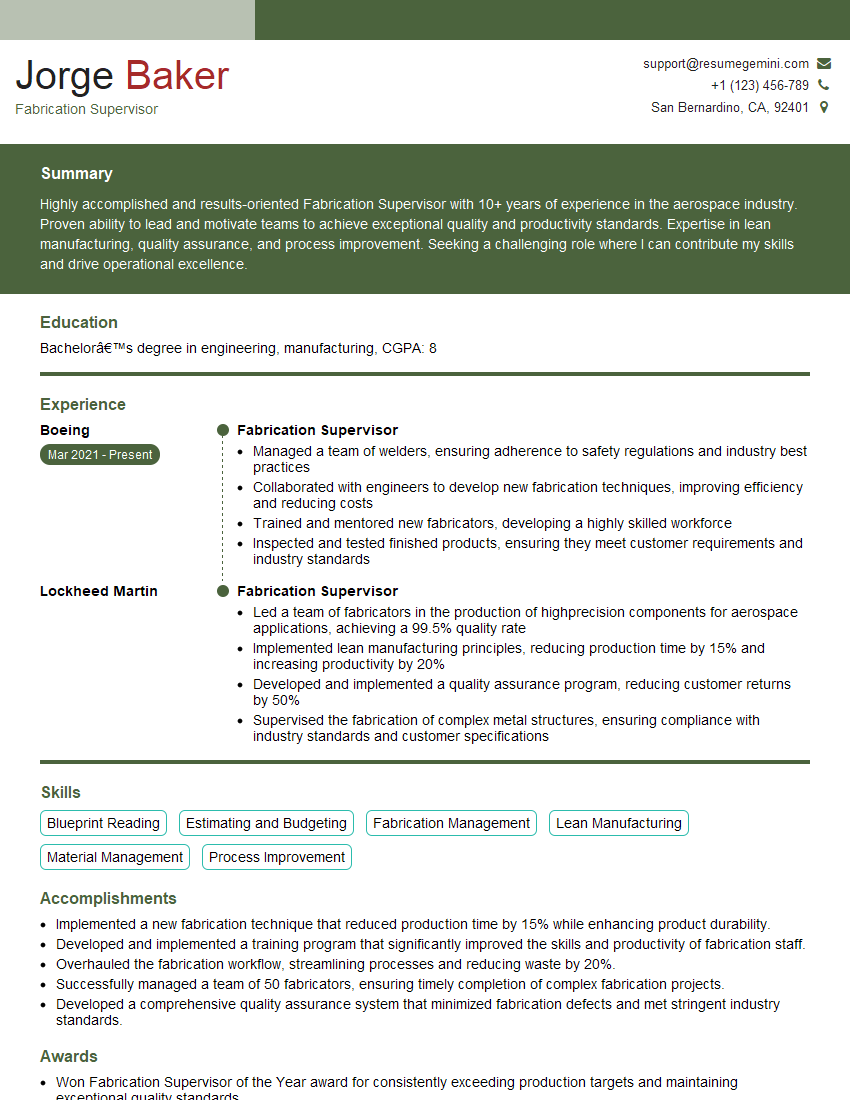
Fabrication Supervisor Resume Sample
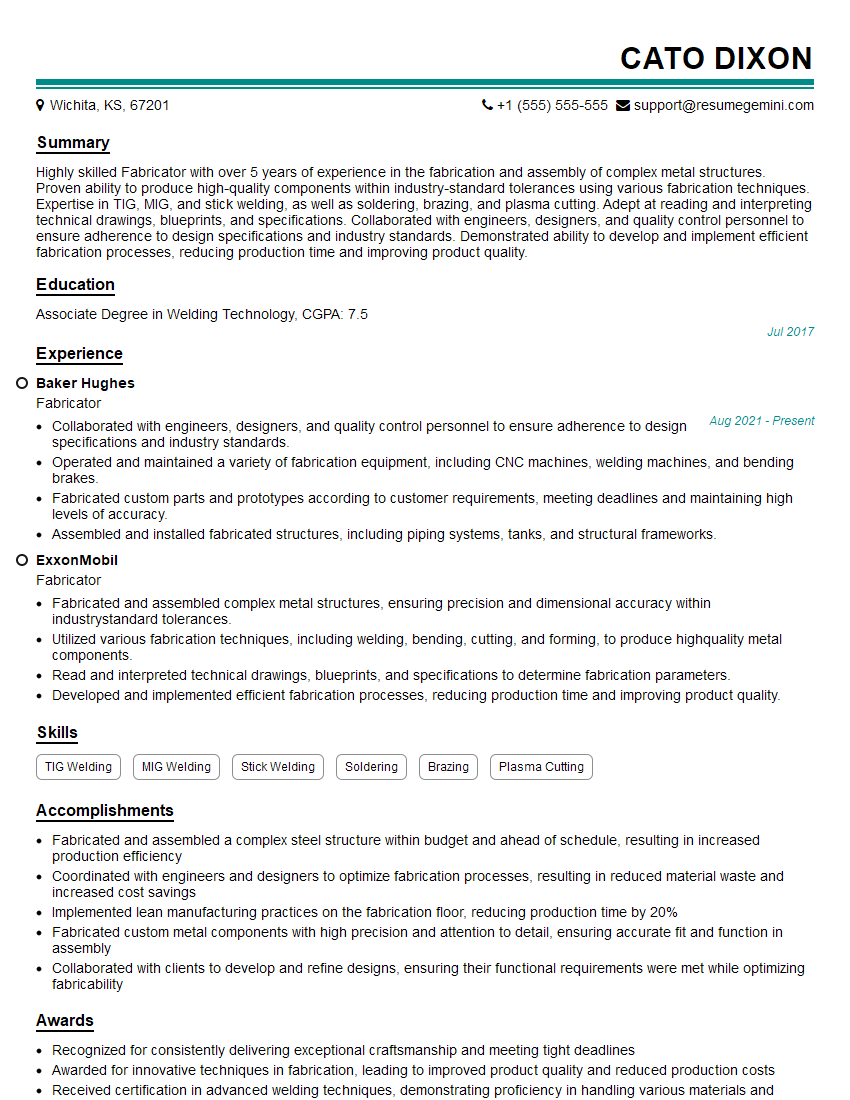
Fabricator Resume Sample
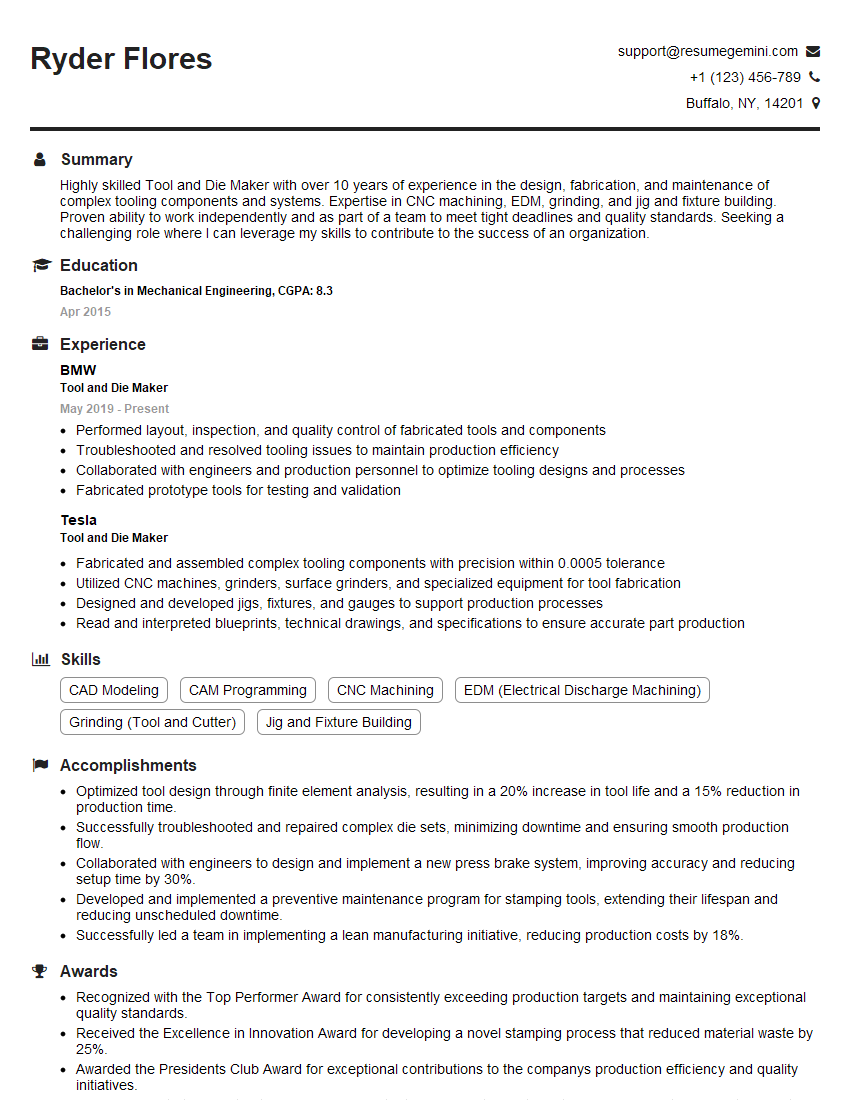
Tool and Die Maker Resume Sample
Explore more articles
Users Rating of Our Blogs
Share Your Experience
We value your feedback! Please rate our content and share your thoughts (optional).
What Readers Say About Our Blog
Very informative content, great job.
good