Cracking a skill-specific interview, like one for Communication Protocols (Modbus, Ethernet/IP), requires understanding the nuances of the role. In this blog, we present the questions you’re most likely to encounter, along with insights into how to answer them effectively. Let’s ensure you’re ready to make a strong impression.
Questions Asked in Communication Protocols (Modbus, Ethernet/IP) Interview
Q 1. Explain the difference between Modbus RTU and Modbus TCP.
Modbus RTU and Modbus TCP are both communication protocols used to interact with industrial devices, but they differ significantly in their underlying transport mechanisms. Think of it like this: RTU is like sending a message via carrier pigeon (serial communication over wires), while TCP is like sending an email (using the internet protocol).
- Modbus RTU (Remote Terminal Unit): This uses a serial communication line (RS-232, RS-485) to transmit data. It’s simpler and often found in older, less complex systems. Data is framed with start and stop bits, parity checks (for error detection), and no explicit addressing like TCP/IP. It’s inherently less efficient for large networks due to its reliance on serial communication.
- Modbus TCP (Transmission Control Protocol): This uses the TCP/IP protocol stack, leveraging the efficiency and scalability of Ethernet networks. It’s more modern and better suited for larger systems and networks. Data is encapsulated within TCP packets, offering error detection and correction along with built-in addressing mechanisms like IP addresses. This makes it easier to manage devices on a large network.
In essence, Modbus RTU is simpler, but slower and less scalable, while Modbus TCP is more complex, but faster and more suitable for larger, modern industrial networks.
Q 2. Describe the function of Modbus registers (holding, input, etc.).
Modbus registers are essentially memory locations within a device that hold various data points. Imagine them as labeled drawers in a filing cabinet, each holding specific information.
- Holding Registers (4X0000 – 4XFFFF): These are writable memory locations. You can use these to control device settings, such as setting a motor’s speed or adjusting a temperature controller’s setpoint. Think of these as the ‘adjustable settings’ in your device’s configuration.
- Input Registers (3X0000 – 3XFFFF): These are read-only memory locations that reflect the device’s current status. For instance, they might show the current temperature reading from a sensor, or the status of an output relay. These are like the ‘read-only’ status display on your device.
- Coils (0X0000 – 0XFFFF): These are single-bit registers typically used to control digital outputs (e.g., turning a light on or off). They represent discrete on/off states. Think of this as a simple on/off switch.
- Discrete Inputs (1X0000 – 1XFFFF): These are also single-bit registers that reflect the status of digital inputs (e.g., the state of a limit switch). They are read-only and reflect real-time digital input status.
Each register has a unique address within the device’s memory space, allowing for targeted data access. For example, 40001 might be the address for setting the speed of a particular motor.
Q 3. How does Modbus handle exception conditions?
Modbus uses exception codes to signal errors or exceptions during communication. Think of it as an error message generated when something goes wrong during data transfer.
When an exception occurs, instead of a normal response, the slave (device) sends a response with an exception code. This code indicates the nature of the error, allowing the master (controlling device) to diagnose and handle the issue appropriately. For example, an exception code might indicate that the requested data is out of range, the function code is not supported, or there’s a memory parity error within the slave device. This mechanism ensures that communication issues are promptly reported and addressed.
The exception codes are defined in the Modbus specification, providing a standardized way to handle errors across different devices.
Q 4. What are the common baud rates used in Modbus RTU?
Modbus RTU typically uses a variety of baud rates, depending on the application and hardware involved. The most common baud rates are:
9600 bps19200 bps38400 bps115200 bps
The choice of baud rate is a crucial factor in communication reliability; selecting an incorrect baud rate will result in communication failures. It is often dependent on the devices’ hardware capabilities, and mismatches can cause serious problems in data transmission. The selection usually involves checking the device’s documentation to ensure compatibility.
Q 5. Explain the concept of Modbus polling.
Modbus polling is a cyclical process where a master device periodically requests data from one or more slave devices. Imagine a teacher checking in on students periodically to see their progress.
The master device sends a request specifying the address of the slave and the data it wants to read. The slave receives the request, processes it, and sends the requested data back to the master. This process repeats at set intervals, allowing the master to monitor the state of the slave devices. It’s a crucial method for real-time monitoring and control in industrial automation systems. The polling frequency is configurable and depends on how frequently updates are needed.
Q 6. How does Modbus address devices on a network?
Modbus addresses devices using a unique slave address for each device on the network. Think of it as assigning each device a unique identification number.
In Modbus RTU, the slave address is a single byte (0-247), preceding each message. This ensures that only the addressed device responds to a given request. In Modbus TCP, the addressing is handled by the underlying TCP/IP protocol, using IP addresses to locate devices on the network. Each device will have a unique IP address configured in its network settings. The slave ID in Modbus TCP acts like a sub-address to indicate the Modbus slave within a particular device that might have multiple Modbus slaves, for instance, a network device having different sensors using Modbus communication. This allows for targeted communication with specific devices on even large networks.
Q 7. What is the purpose of Modbus function codes?
Modbus function codes are single-byte instructions that specify the type of operation the master device wants to perform on the slave device. Think of them as verbs in a sentence, telling the device what to do.
Each function code corresponds to a specific action, such as reading holding registers, writing to coils, or reading input registers. For example, 0x03 (Read Holding Registers) indicates a request to read data from the holding registers of the slave device, while 0x06 (Write Single Register) indicates a request to write data to a specific holding register. The consistent use of these codes allows for interoperability between devices from different manufacturers, which is crucial for a standardized industrial protocol.
Q 8. Describe the process of troubleshooting a Modbus communication failure.
Troubleshooting Modbus communication failures involves a systematic approach. Think of it like diagnosing a car problem – you need to check the basics first before diving into complex issues.
- Verify Physical Connections: Start by checking the physical wiring. Loose connections, broken wires, or incorrect wiring are common culprits. Use a multimeter to test continuity and voltage.
- Check Power Supply: Ensure both the master (e.g., PLC, HMI) and slave (e.g., sensor, actuator) devices have adequate power. A low voltage can lead to intermittent communication or complete failure.
- Baud Rate and Parity Settings: Ensure that the baud rate, parity (even, odd, none), data bits, and stop bits are correctly configured on both the master and slave. Mismatched settings are a frequent cause of communication problems. Think of it like trying to speak different languages – you need to be on the same page.
- Modbus Addressing: Confirm that the Modbus addresses used by the master to access the slave are correct. Using the wrong address is like trying to find a house using the wrong street number.
- Network Interference: In the case of Modbus RTU over long distances or noisy environments, interference can corrupt data. Shielding cables, using fiber optics, or implementing repeaters can mitigate this.
- Check for Errors: Most Modbus master devices provide diagnostic information, such as error codes or logs. Review these logs to identify potential problems. These logs can pinpoint the location and nature of the communication issue.
- Loopback Test: If possible, perform a loopback test to isolate whether the problem lies in the master, slave, or the communication medium. This involves connecting the master and slave directly without any other devices in between.
By systematically working through these steps, you can usually pinpoint the root cause of a Modbus communication failure.
Q 9. What are the advantages and disadvantages of using Modbus?
Modbus, while simple and widely adopted, has its strengths and weaknesses.
Advantages:
- Simplicity and Ease of Use: Modbus is relatively easy to understand and implement, requiring minimal specialized knowledge. Its straightforward structure makes it accessible to a wide range of users and devices.
- Wide Device Support: A vast number of devices support Modbus, ensuring compatibility across different manufacturers and product lines. This open standard greatly increases interoperability.
- Open Standard: The open nature of Modbus reduces licensing costs and vendor lock-in, allowing for greater flexibility in system design.
- Low Cost: Modbus implementations are generally inexpensive, both in terms of hardware and software.
Disadvantages:
- Limited Scalability and Performance: Modbus can struggle with large-scale applications or high-speed data requirements. Its simplicity can become a limitation in complex systems.
- No Built-in Error Detection and Correction: Modbus RTU offers limited error detection, making it susceptible to data corruption in noisy environments. Modbus TCP is better in this aspect, but still lacks strong error correction.
- Security Concerns: The lack of robust security features in Modbus RTU makes it vulnerable to unauthorized access and manipulation. Modern implementations like Modbus TCP offer improved security options, but it’s often an afterthought.
- Real-time Performance Limitations: Although Modbus TCP offers better speed, the master-slave architecture can limit real-time performance in certain applications that require very quick responses.
Q 10. Explain the difference between Modbus ASCII and Modbus RTU.
Modbus ASCII and Modbus RTU are two common implementations of the Modbus protocol that differ primarily in how they transmit data.
Modbus ASCII: Uses 7-bit ASCII characters for communication, requiring more bandwidth due to its textual representation. Each byte is encoded into two ASCII characters. It’s easier to debug as the data can be easily read in a text editor. It adds redundancy through error checking (checksum).
Modbus RTU (Remote Terminal Unit): Transmits data as raw bytes, making it more efficient and requiring less bandwidth. It is often preferred for applications where bandwidth is limited. It uses a CRC (Cyclic Redundancy Check) for error detection, which is generally more robust than the checksum used by Modbus ASCII.
Think of it like writing a letter: Modbus ASCII is like writing in a long, verbose letter with extra spaces and punctuation to make it easy to read, while Modbus RTU is like sending a telegram – concise and efficient, but more challenging to read.
Here’s a table summarizing the key differences:
| Feature | Modbus ASCII | Modbus RTU |
|---|---|---|
| Data Encoding | 7-bit ASCII | Raw bytes |
| Efficiency | Less efficient | More efficient |
| Error Detection | Checksum | CRC |
| Bandwidth Requirement | Higher | Lower |
| Noise Immunity | Lower | Higher |
Q 11. What is Ethernet/IP and how does it differ from Modbus?
Ethernet/IP is a widely used industrial Ethernet communication protocol designed for real-time applications. Unlike Modbus, which typically uses serial communication (RS-232, RS-485), Ethernet/IP leverages the Ethernet network for communication, providing significant advantages in terms of speed, scalability, and advanced features.
Key Differences:
- Communication Medium: Modbus uses serial communication (RTU over RS-485 or ASCII over RS-232), while Ethernet/IP utilizes Ethernet networks.
- Topology: Modbus typically uses a master-slave topology, while Ethernet/IP supports various topologies (e.g., star, ring, bus).
- Speed and Scalability: Ethernet/IP significantly outperforms Modbus in terms of speed and scalability, making it suitable for large, complex networks.
- Features: Ethernet/IP offers advanced features such as real-time data transfer, enhanced diagnostics, and improved security compared to Modbus.
- Cost: While Modbus implementations can be less expensive for simple setups, Ethernet/IP solutions might require more upfront investment, especially for complex networks, but overall lifecycle cost is often lower given the benefits.
In essence, Ethernet/IP is designed for demanding industrial applications requiring high speed, scalability, and advanced features, while Modbus remains a simpler, lower-cost option suitable for smaller and less complex systems.
Q 12. Describe the role of CIP (Common Industrial Protocol) in Ethernet/IP.
CIP (Common Industrial Protocol) is the underlying communication framework for Ethernet/IP. It’s a suite of services that define how data is structured and exchanged over an Ethernet network in industrial automation. Think of it as the foundation or language that Ethernet/IP speaks on the Ethernet network.
CIP provides services for:
- Data Transfer: Defining how data is packaged and sent between devices.
- Device Identification: Allowing devices to identify themselves and their capabilities.
- Error Handling: Providing mechanisms for handling communication errors.
- Connection Management: Managing connections between devices and ensuring reliable communication.
Without CIP, Ethernet/IP would not function. CIP provides the structure and rules that enable different devices to communicate seamlessly on an Ethernet network. Ethernet/IP uses CIP’s services to achieve real-time performance, robust error handling, and the ability to handle complex data exchange in an industrial environment.
Q 13. Explain the concept of connection-oriented and connectionless communication in Ethernet/IP.
Ethernet/IP supports both connection-oriented and connectionless communication, offering flexibility depending on the application’s requirements.
Connection-Oriented Communication: Similar to making a phone call – a dedicated connection is established between two devices before data transfer begins. This ensures reliable, ordered data delivery and provides acknowledgment of received data. This is often used for applications requiring reliable data transmission, like critical control loops.
Connectionless Communication: Similar to sending a postcard – data is sent without establishing a dedicated connection. This is faster and less resource-intensive but does not guarantee delivery or order. Connectionless communication is often used for applications where occasional data loss is acceptable and speed is prioritized, like sending status updates.
The choice between connection-oriented and connectionless communication depends on the specific needs of the application. If reliability is paramount, connection-oriented communication is preferred; if speed is crucial and occasional data loss is acceptable, connectionless communication may be more suitable.
Q 14. What are the different types of Ethernet/IP messages (e.g., Unconnected, Connected)?
Ethernet/IP uses different message types to handle various communication tasks. These are categorized based on whether a connection is established before data transfer.
Unconnected Messages: These are connectionless messages, sent without establishing a dedicated connection. Examples include:
- CIP Unconnected Send: Used to send small, non-critical data packets. Think of this as sending a quick text message.
Connected Messages: These messages involve establishing a connection before data transmission, ensuring reliable, ordered data transfer. Examples include:
- CIP Connected Data: Used for reliable data exchange in larger quantities, often used in real-time control applications. Think of this as a dedicated phone line for a conversation.
- CIP Explicit Messaging: Provides a more structured and efficient approach to connected communication, offering features like request-response mechanisms for managing complex interactions between devices.
The choice of message type depends on the application’s requirements for speed, reliability, and data volume. For real-time control where reliability is key, connected messages are usually preferred. For less critical applications where speed is more important, unconnected messages can be sufficient.
Q 15. How does Ethernet/IP handle device addressing?
Ethernet/IP uses a unique addressing scheme based on the device’s IP address on the network. Unlike Modbus which uses a simple device ID, Ethernet/IP leverages the power of TCP/IP networking. Each device on the network needs a valid IP address, subnet mask, and gateway configuration. This allows for greater scalability and flexibility compared to Modbus’s limited addressing space. Think of it like assigning a unique house number (IP address) to each house (device) on a street (network). To communicate with a specific device, you simply send data to its unique IP address.
The address isn’t just limited to the IP address; it also includes the connection object’s specific address within the device. This allows multiple services to operate simultaneously on a single device using the same IP address.
Career Expert Tips:
- Ace those interviews! Prepare effectively by reviewing the Top 50 Most Common Interview Questions on ResumeGemini.
- Navigate your job search with confidence! Explore a wide range of Career Tips on ResumeGemini. Learn about common challenges and recommendations to overcome them.
- Craft the perfect resume! Master the Art of Resume Writing with ResumeGemini’s guide. Showcase your unique qualifications and achievements effectively.
- Don’t miss out on holiday savings! Build your dream resume with ResumeGemini’s ATS optimized templates.
Q 16. Describe the process of configuring an Ethernet/IP network.
Configuring an Ethernet/IP network involves several steps, much like setting up a home Wi-Fi network, but with a focus on industrial communication. First, you assign static IP addresses to each device, ensuring they’re within the same subnet. This prevents communication problems. Next, configure the network settings including subnet mask and gateway on each device. Using DHCP is possible, but static IP addressing offers more control and predictability in an industrial setting. Then, you establish communication between the PLC (the central control unit) and the other devices (sensors, actuators, etc.). This often involves configuring communication paths or tags within the PLC programming software. Finally, you test connectivity and communication functionality. Using a network scanner helps to verify each device’s IP address and connection status. Tools like Wireshark can further inspect network traffic.
For example, consider a scenario where you’re setting up a temperature monitoring system. You would assign unique IP addresses to your temperature sensors and then create communication pathways in your PLC programming to read the temperature data from each sensor. Proper configuration guarantees reliable and efficient data exchange.
Q 17. What is the role of a PLC in an Ethernet/IP network?
In an Ethernet/IP network, the Programmable Logic Controller (PLC) acts as the central brain, coordinating and controlling all other devices. It’s the heart of the operation, receiving data from sensors, processing it based on programmed logic, and sending commands to actuators. Think of the PLC as the conductor of an orchestra, orchestrating the communication and actions of all the different instruments (devices).
The PLC manages communication using CIP (Common Industrial Protocol), the underlying protocol of Ethernet/IP. It acts as both a client and a server, depending on the communication. This allows the PLC to both initiate communication and respond to requests from other devices.
For instance, in a manufacturing line, the PLC receives data from sensors about the product’s position and quality, processes this information to adjust machinery accordingly, and sends commands to robotic arms for assembly tasks.
Q 18. Explain the different types of Ethernet/IP adapters.
Ethernet/IP adapters bridge the gap between devices and the Ethernet network. They come in various forms depending on the device. You’ll commonly find:
- Integrated Ethernet/IP ports on PLCs: Many modern PLCs have built-in Ethernet/IP interfaces, eliminating the need for separate adapters.
- Discrete Ethernet/IP modules: These modules plug into PLCs to provide Ethernet/IP connectivity. They offer flexibility for adding Ethernet/IP capabilities to legacy PLCs.
- Ethernet/IP communication cards for PCs: These cards allow PCs to communicate directly on the Ethernet/IP network, enabling supervisory control and data acquisition (SCADA) systems to interact with PLCs and other devices.
- Ethernet/IP interfaces for field devices: Many modern sensors and actuators include built-in Ethernet/IP interfaces, directly connecting them to the network without intermediary devices.
The choice of adapter depends on the specific needs and capabilities of the devices being connected.
Q 19. How does Ethernet/IP handle data redundancy and fault tolerance?
Ethernet/IP offers several mechanisms for data redundancy and fault tolerance to ensure reliable operation. Unlike some simpler protocols, its design inherently supports these critical features for industrial applications. Key techniques include:
- Redundant PLCs: Employing two PLCs, configured to automatically switch over if one fails, ensures continuous operation. This is achieved through specific network configurations and PLC programming.
- Redundant Network Infrastructure: Using redundant switches and network cables creates alternative paths for data transmission. This prevents network outages caused by component failures. It’s analogous to having multiple routes for traffic in a city.
- CIP Safety: CIP safety extensions offer mechanisms for detecting and responding to errors in a timely manner, reducing the risk of accidents or equipment damage. This is critical in safety-critical applications.
- Data Mirroring: Data can be mirrored across multiple devices to increase availability. If one device fails, the mirrored data is readily available from another.
These mechanisms work in tandem to guarantee high levels of reliability and minimize downtime, which is paramount in industrial settings where even short interruptions can have significant consequences.
Q 20. What are some common troubleshooting techniques for Ethernet/IP networks?
Troubleshooting Ethernet/IP networks involves systematic approaches. First, verify the physical layer: Check cables, connectors, and network hardware for physical damage or loose connections. Next, check the IP configuration of all devices. Ensure each device has a valid IP address, subnet mask, and gateway configuration, and that the IP addresses are all in the same subnet. Then, use network diagnostic tools (ping, tracert, etc.) to check connectivity between devices. Inspect network traffic with a protocol analyzer like Wireshark to identify potential communication errors. Check the device’s communication logs and error messages for clues to problems. Finally, consult device manuals and Ethernet/IP specifications for additional troubleshooting information. It’s frequently helpful to have a network diagram to assist in locating the problem within the network structure.
For example, if a specific sensor isn’t sending data, you’d first check its physical connection. If that’s fine, you’d then verify its IP address and ping its IP to confirm network connectivity. If the ping fails, you investigate the network path and identify any potential bottlenecks or faults.
Q 21. Compare and contrast Modbus TCP and Ethernet/IP.
Both Modbus TCP and Ethernet/IP are widely used industrial communication protocols that operate over Ethernet. However, they have key differences:
- Architecture: Modbus TCP is a simpler, master-slave architecture. Ethernet/IP is a more complex, producer-consumer architecture with more sophisticated features.
- Scalability: Ethernet/IP excels in large networks with numerous devices due to its sophisticated addressing and capabilities. Modbus TCP’s simplicity can be a limitation in very large systems.
- Features: Ethernet/IP offers more advanced features like integrated safety, data redundancy, and advanced data types. Modbus TCP is simpler, with a smaller feature set.
- Performance: Ethernet/IP, with its optimized architecture and support for higher-level features, generally offers better performance in demanding situations. Modbus TCP’s simplicity can, however, result in lower overhead in simpler systems.
- Cost: Modbus TCP’s simplicity can translate to lower costs in simple applications. Ethernet/IP’s advanced features often lead to higher initial costs but may reduce total cost of ownership in the long run.
In essence, Modbus TCP is a robust and widely used choice for simpler applications, while Ethernet/IP is better suited for complex, high-performance, and safety-critical industrial automation systems. The choice depends on the specific needs of the project.
Q 22. Discuss the security implications of using Modbus and Ethernet/IP in industrial environments.
Both Modbus and Ethernet/IP, while widely used in industrial automation, present significant security vulnerabilities if not properly implemented. Think of it like this: your factory floor is now connected to the wider world, and that creates new risks.
Modbus, being a relatively older protocol, lacks inherent security features. Its simplicity, which is advantageous for ease of use, also makes it easy to exploit. A malicious actor could easily scan a network for Modbus devices and attempt to read or write data without authentication. This could lead to process disruptions, data manipulation, or even physical damage to equipment. For example, an attacker could remotely adjust the temperature setpoint of a furnace or change the speed of a conveyor belt.
Ethernet/IP, being an Ethernet-based protocol, inherits the security challenges of Ethernet networks. While it offers more advanced features than Modbus for security, it still requires careful configuration. Vulnerabilities such as ARP spoofing, denial-of-service attacks, and man-in-the-middle attacks are all possible. A successful attack could result in network outages, data breaches, or unauthorized control of industrial assets. Proper implementation of firewalls, intrusion detection systems, and secure network segmentation is crucial for mitigating these risks.
In summary, securing these protocols requires a multi-layered approach including network segmentation, strong passwords, regular patching, the use of firewalls, intrusion detection systems, and, ideally, the implementation of security protocols like Modbus Secure (Modbus/TCP with TLS) or secure Ethernet/IP implementations leveraging existing network security infrastructure.
Q 23. How do you select the appropriate communication protocol for a given industrial application?
Choosing the right communication protocol hinges on several factors specific to the application. It’s like choosing the right tool for the job – a hammer won’t work for screwing in a screw!
- Network Size and Topology: Modbus RTU is suitable for smaller, simpler networks with point-to-point or master-slave configurations. Ethernet/IP, with its Ethernet foundation, excels in larger, complex networks with various topologies.
- Cost and Complexity: Modbus RTU often requires less expensive hardware and is simpler to implement. Ethernet/IP necessitates more sophisticated hardware and software, leading to higher initial costs and potentially greater complexity in setup and maintenance.
- Data Rate Requirements: If you need high-speed data transfer and real-time control, Ethernet/IP is the better choice. Modbus RTU is suitable for applications with less demanding data transfer rates.
- Existing Infrastructure: If your plant already uses an Ethernet network, Ethernet/IP would be a logical choice for integration. Modbus RTU might be preferable if you’re working with legacy systems or simpler setups that don’t have Ethernet infrastructure.
- Security Considerations: As discussed previously, Ethernet/IP offers more opportunities for security implementation, although both protocols require proper security configuration.
For example, a simple monitoring system in a small warehouse might benefit from Modbus RTU due to its simplicity and low cost. In contrast, a large automated manufacturing plant with numerous interconnected devices and high-speed requirements would likely benefit from the scalability and speed of Ethernet/IP.
Q 24. What are the limitations of Modbus and Ethernet/IP?
Both Modbus and Ethernet/IP have their limitations:
- Modbus: Its primary limitation is its lack of inherent security features and limited scalability for complex systems. It’s not inherently real-time, and its broadcast nature can cause network congestion in large networks. Also, the older RTU variant is susceptible to noise issues on longer cables.
- Ethernet/IP: While robust and scalable, it requires more complex hardware and software, leading to higher costs and a steeper learning curve. It also presents a larger attack surface if not properly secured.
For instance, using Modbus RTU in a noisy industrial environment might result in communication errors, and using Modbus TCP in a large distributed system without proper network segmentation can lead to performance bottlenecks.
Q 25. Explain the concept of data mapping in Modbus and Ethernet/IP.
Data mapping, in both Modbus and Ethernet/IP, refers to the process of assigning specific addresses (memory locations) to data points from various devices within the system. It’s essential for the controller to know where to find the data it needs from the individual devices.
Modbus: Uses register addresses (holding registers, input registers, etc.). Each register has a unique address, which is used to access the data stored in that register. For example, holding register 40001 might store the temperature of a sensor.
Ethernet/IP: Uses object models and data structures defined by the CIP (Common Industrial Protocol). Data is organized into objects, and each object has attributes that contain specific data points. For instance, a motor object might contain attributes for speed, current, and status.
Imagine a spreadsheet where each column represents a data point (temperature, pressure, etc.) and each row represents a device. Data mapping creates this organized structure allowing the controller to access the correct data from any given device.
Q 26. Describe your experience with configuring and troubleshooting industrial communication networks.
I have extensive experience in configuring and troubleshooting industrial communication networks using both Modbus and Ethernet/IP. I’ve worked on projects ranging from small-scale automation systems to large-scale manufacturing facilities.
My troubleshooting approach usually involves a systematic process:
- Identify the problem: Clearly define the issue (e.g., communication failure, data inconsistency, slow performance).
- Gather information: Collect data from various sources, including network logs, device status indicators, and operator reports.
- Isolate the source: Use diagnostic tools (e.g., network analyzers, protocol analyzers) to pinpoint the root cause (e.g., faulty cable, misconfigured device, network congestion).
- Implement the solution: Based on the root cause, I’ll implement the necessary fix (e.g., replacing a faulty cable, reconfiguring a device, optimizing network settings).
- Verify the solution: Test the network to ensure the problem is resolved and the system is functioning correctly.
For example, I once diagnosed a communication problem in a large manufacturing plant where a faulty network switch was causing intermittent connectivity issues. Using a network analyzer, I identified the switch and replaced it, resolving the problem.
Q 27. Have you worked with any other industrial communication protocols besides Modbus and Ethernet/IP? If so, which ones?
Yes, beyond Modbus and Ethernet/IP, my experience includes working with several other industrial communication protocols. These include:
- PROFINET: A widely used Ethernet-based protocol known for its robust real-time capabilities and suitability for demanding automation applications.
- Profibus: A fieldbus system known for its reliability and high speed.
- CANopen: A protocol used for communication in industrial embedded systems and robotics applications, valued for its high speed and deterministic nature.
Each protocol presents its own set of strengths and weaknesses, and the choice of protocol depends on the specific needs and constraints of the application, just as a carpenter selects different tools for diverse tasks. My experience with these diverse protocols allows me to provide well-rounded solutions to a wider range of industrial automation challenges.
Key Topics to Learn for Communication Protocols (Modbus, Ethernet/IP) Interview
- Modbus Basics: Understanding RTU, ASCII, and TCP/IP implementations; Master/Slave relationships; Function codes and their applications (read coil, read input register, write single coil, etc.).
- Modbus Practical Applications: Discuss experiences with Modbus in industrial automation, SCADA systems, and data acquisition. Be ready to explain how you’ve used Modbus to control or monitor devices.
- Ethernet/IP Fundamentals: Understanding CIP (Common Industrial Protocol), I/O communication, and the role of adapters and controllers. Familiarize yourself with different Ethernet/IP data types and addressing schemes.
- Ethernet/IP Real-world Use Cases: Prepare examples demonstrating your experience with Ethernet/IP in industrial settings, highlighting your ability to troubleshoot network issues and configure devices.
- Protocol Comparison: Be prepared to compare and contrast Modbus and Ethernet/IP, discussing their strengths and weaknesses in various applications. Consider factors like speed, complexity, and network topology.
- Troubleshooting and Problem Solving: Develop your ability to describe how you’ve diagnosed and resolved communication issues related to either protocol. Focus on your systematic approach to problem-solving.
- Security Considerations: Briefly discuss security aspects relevant to each protocol, and how you would address potential vulnerabilities in a real-world application.
Next Steps
Mastering communication protocols like Modbus and Ethernet/IP is crucial for career advancement in industrial automation and related fields. These protocols are fundamental to many modern control systems, and a strong understanding opens doors to exciting opportunities. To maximize your job prospects, invest time in crafting a professional, ATS-friendly resume that highlights your skills and experience. ResumeGemini is a trusted resource that can help you build a compelling resume showcasing your expertise in Communication Protocols. They provide examples of resumes tailored to roles involving Modbus and Ethernet/IP to guide your process.
Systems Integrator Resume Sample
Automation Engineer Resume Sample
Network Technician Resume Sample
Technical Support Specialist Resume Sample
Maintenance Technician Resume Sample
Field Service Engineer Resume Sample

Commissioning Engineer Resume Sample
Process Control Engineer Resume Sample
Electrical Engineer Resume Sample
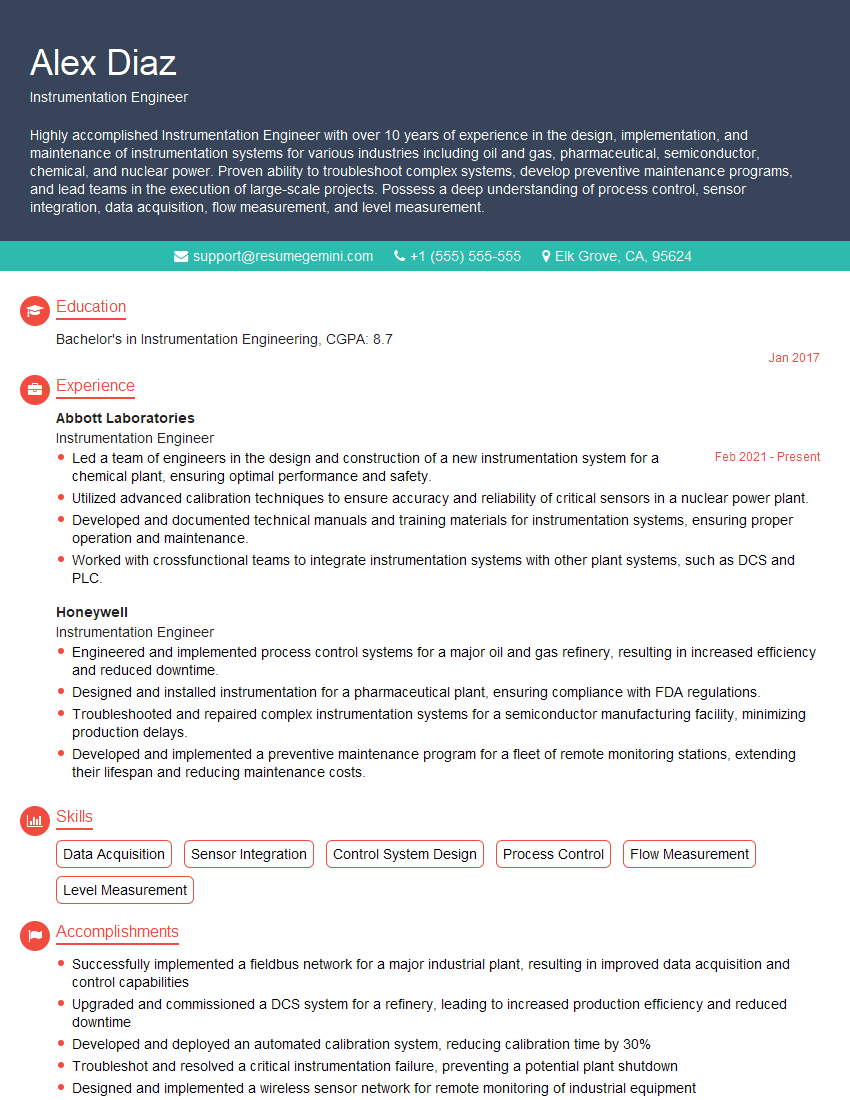
Instrumentation Engineer Resume Sample
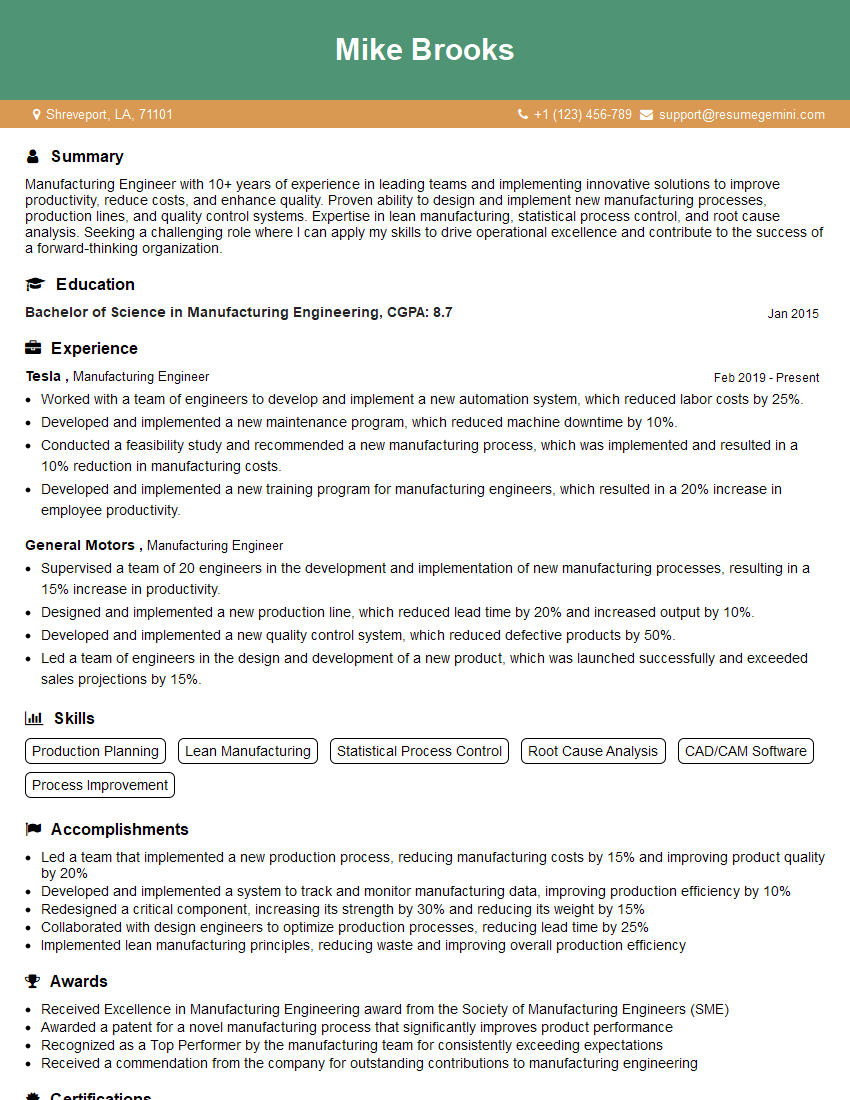
Manufacturing Engineer Resume Sample
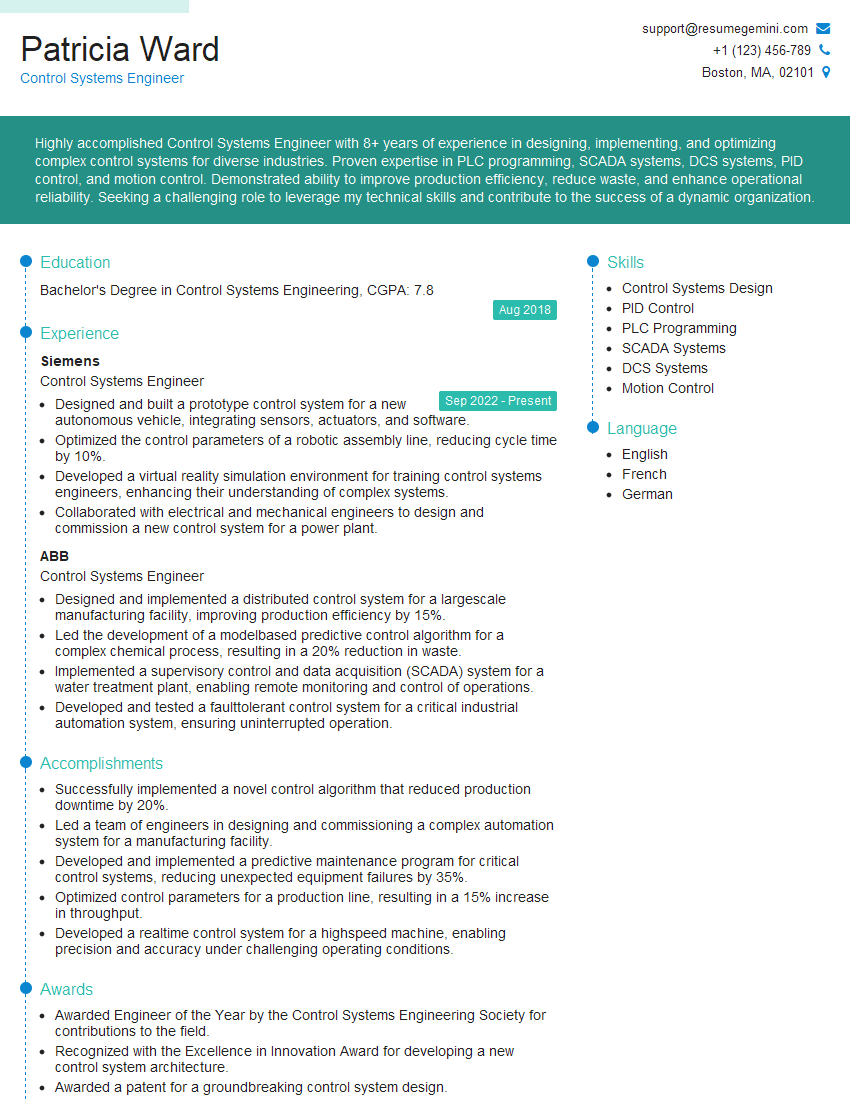
Control Systems Engineer Resume Sample
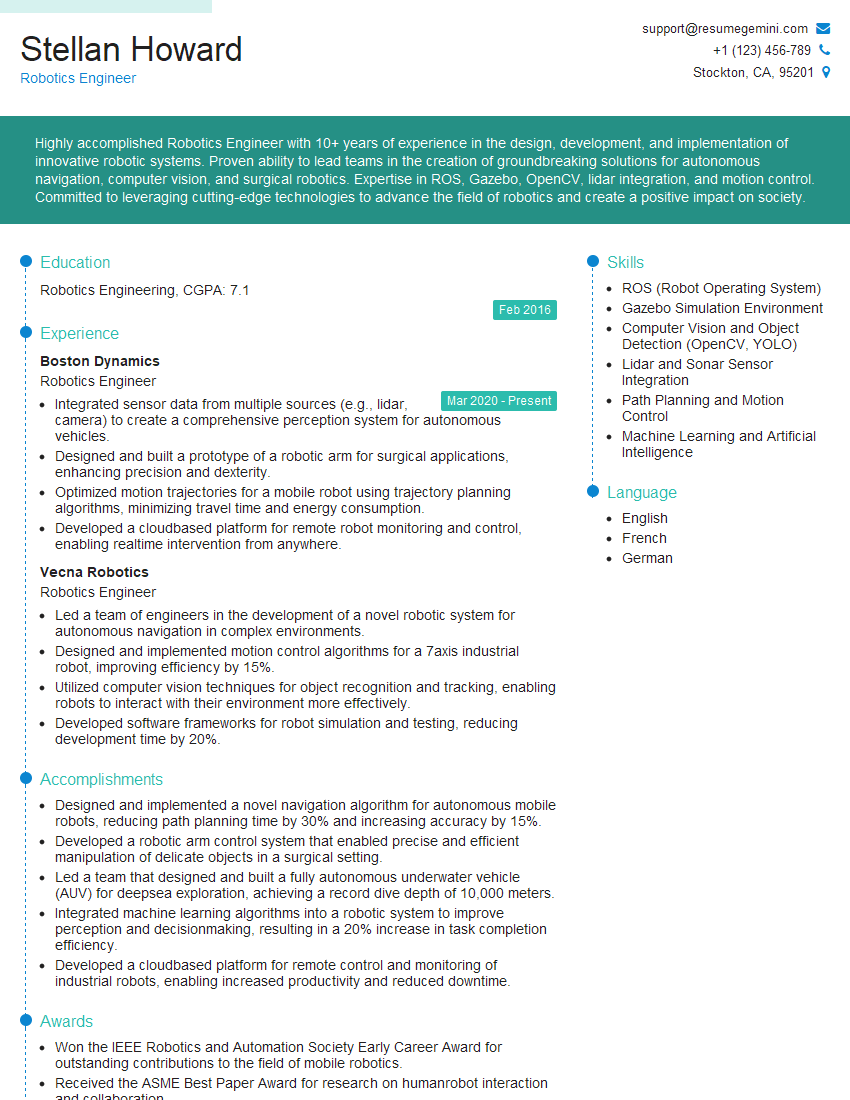
Robotics Engineer Resume Sample
Automation Technician Resume Sample
Robotics Technician Resume Sample
Industrial Electrician Resume Sample
Control Systems Technician Resume Sample
- Systems Integrator
- Automation Engineer
- Network Technician
- Technical Support Specialist
- Maintenance Technician
- Field Service Engineer
- Commissioning Engineer
- Process Control Engineer
- Electrical Engineer
- Instrumentation Engineer
- Manufacturing Engineer
- Control Systems Engineer
- Robotics Engineer
- Automation Technician
- Robotics Technician
- Industrial Electrician
- Control Systems Technician
Explore more articles
Users Rating of Our Blogs
Share Your Experience
We value your feedback! Please rate our content and share your thoughts (optional).
What Readers Say About Our Blog
Hello,
we currently offer a complimentary backlink and URL indexing test for search engine optimization professionals.
You can get complimentary indexing credits to test how link discovery works in practice.
No credit card is required and there is no recurring fee.
You can find details here:
https://wikipedia-backlinks.com/indexing/
Regards
NICE RESPONSE TO Q & A
hi
The aim of this message is regarding an unclaimed deposit of a deceased nationale that bears the same name as you. You are not relate to him as there are millions of people answering the names across around the world. But i will use my position to influence the release of the deposit to you for our mutual benefit.
Respond for full details and how to claim the deposit. This is 100% risk free. Send hello to my email id: [email protected]
Luka Chachibaialuka
Hey interviewgemini.com, just wanted to follow up on my last email.
We just launched Call the Monster, an parenting app that lets you summon friendly ‘monsters’ kids actually listen to.
We’re also running a giveaway for everyone who downloads the app. Since it’s brand new, there aren’t many users yet, which means you’ve got a much better chance of winning some great prizes.
You can check it out here: https://bit.ly/callamonsterapp
Or follow us on Instagram: https://www.instagram.com/callamonsterapp
Thanks,
Ryan
CEO – Call the Monster App
Hey interviewgemini.com, I saw your website and love your approach.
I just want this to look like spam email, but want to share something important to you. We just launched Call the Monster, a parenting app that lets you summon friendly ‘monsters’ kids actually listen to.
Parents are loving it for calming chaos before bedtime. Thought you might want to try it: https://bit.ly/callamonsterapp or just follow our fun monster lore on Instagram: https://www.instagram.com/callamonsterapp
Thanks,
Ryan
CEO – Call A Monster APP
To the interviewgemini.com Owner.
Dear interviewgemini.com Webmaster!
Hi interviewgemini.com Webmaster!
Dear interviewgemini.com Webmaster!
excellent
Hello,
We found issues with your domain’s email setup that may be sending your messages to spam or blocking them completely. InboxShield Mini shows you how to fix it in minutes — no tech skills required.
Scan your domain now for details: https://inboxshield-mini.com/
— Adam @ InboxShield Mini
Reply STOP to unsubscribe
Hi, are you owner of interviewgemini.com? What if I told you I could help you find extra time in your schedule, reconnect with leads you didn’t even realize you missed, and bring in more “I want to work with you” conversations, without increasing your ad spend or hiring a full-time employee?
All with a flexible, budget-friendly service that could easily pay for itself. Sounds good?
Would it be nice to jump on a quick 10-minute call so I can show you exactly how we make this work?
Best,
Hapei
Marketing Director
Hey, I know you’re the owner of interviewgemini.com. I’ll be quick.
Fundraising for your business is tough and time-consuming. We make it easier by guaranteeing two private investor meetings each month, for six months. No demos, no pitch events – just direct introductions to active investors matched to your startup.
If youR17;re raising, this could help you build real momentum. Want me to send more info?
Hi, I represent an SEO company that specialises in getting you AI citations and higher rankings on Google. I’d like to offer you a 100% free SEO audit for your website. Would you be interested?
Hi, I represent an SEO company that specialises in getting you AI citations and higher rankings on Google. I’d like to offer you a 100% free SEO audit for your website. Would you be interested?
good