Are you ready to stand out in your next interview? Understanding and preparing for Custom Dressmaking interview questions is a game-changer. In this blog, we’ve compiled key questions and expert advice to help you showcase your skills with confidence and precision. Let’s get started on your journey to acing the interview.
Questions Asked in Custom Dressmaking Interview
Q 1. Describe your experience with different fabric types and their drape characteristics.
Understanding fabric drape is crucial in dressmaking. Drape refers to how a fabric falls and hangs. Different fabrics have vastly different drape characteristics, impacting the final garment’s look and feel. For example, a lightweight silk chiffon will have a very soft, flowing drape, while a heavy wool broadcloth will have a stiff, structured drape.
- Lightweight fabrics like silk chiffon, georgette, and charmeuse drape beautifully, creating soft, flowing silhouettes. They are ideal for evening gowns and flowing blouses.
- Medium-weight fabrics such as cotton poplin, linen, and crepe have a moderate drape. They are versatile and suitable for a range of garments, from dresses and skirts to tailored trousers.
- Heavyweight fabrics like wool crepe, velvet, and brocade have a stiff drape, creating structured garments. They are often used for coats, jackets, and formal wear.
My experience encompasses working with a wide array of fabrics, from delicate laces to sturdy denim. I consider the drape of the fabric when selecting the pattern and construction techniques to achieve the desired aesthetic. For instance, a fabric with poor drape might require interfacing or lining to improve its structure and prevent sagging.
Q 2. Explain your process for taking accurate body measurements.
Accurate body measurements are fundamental to creating a well-fitting garment. I use a flexible tape measure and follow a consistent procedure to ensure accuracy. I always measure over undergarments similar to what the client will wear with the finished garment.
- Bust: Measure around the fullest part of the bust, keeping the tape measure level.
- Waist: Measure around the natural waistline, the narrowest part of your torso.
- Hips: Measure around the fullest part of the hips, keeping the tape measure level.
- Shoulder width: Measure from one shoulder bone to the other across the back.
- Back width: Measure across the back from armhole to armhole at the widest point.
- Sleeve length: Measure from the shoulder point to the wrist bone.
- Armhole depth: Measure the depth of the armhole from the shoulder point down.
- Full bodice length: Measure from the high point of the shoulder to the desired hemline, over the curve of the body. This takes into account the client’s posture.
Beyond these standard measurements, I take additional measurements depending on the garment’s style—for instance, the length of a skirt or the circumference of a sleeve. For intricate garments, I may create a custom body block for a more precise fit.
Q 3. How do you handle complex pattern alterations?
Complex pattern alterations require a thorough understanding of pattern design principles. I approach them systematically, using a combination of techniques including:
- Grading: Adjusting the pattern pieces to accommodate different sizes or body proportions. This might involve enlarging or reducing sections of the pattern to ensure a proper fit.
- Slash and spread: This technique involves making strategic cuts in the pattern to add or subtract fullness, adjust the shape of a curve, or alter other features.
- Pivot points: Identifying key points on the pattern to maintain balance and shape during alterations. I always consider the garment’s structure and how alterations could affect other areas.
- Muslin fitting: I typically create a muslin—a trial garment made from inexpensive fabric—to check the fit and make adjustments before cutting into the final fabric. This step is essential in identifying and resolving fitting issues early on.
For example, altering a shoulder slope involves slashing and spreading the pattern at the shoulder seam, adjusting the armscye (armhole) to maintain a smooth, comfortable fit. Every alteration is a careful calculation of balance and proportion to avoid creating unwanted wrinkles or pulling.
Q 4. What techniques do you use to ensure a precise fit?
Precise fit is paramount in custom dressmaking. I employ several techniques to achieve it:
- Accurate measurements: As previously discussed, accurate measurements are foundational to a good fit. I use precise measuring techniques and often double-check my measurements.
- Muslin fitting: The muslin fitting process allows me to identify and correct fitting problems before cutting into the final fabric.
- Ease: Understanding ease – the difference between the body measurement and the garment measurement – is crucial. This extra fabric allows for comfort and movement without constriction. The amount of ease depends on the fabric, style, and client preference.
- Grading and adjustments: Based on the muslin fitting, I make adjustments to the pattern, grading it to create the perfect fit for the individual client.
- Precise stitching: Paying close attention to stitching techniques, seam finishing and creating clean, well-finished seams maintains professional presentation and fit
A well-fitting garment should drape smoothly on the body, hang correctly, and provide comfort and freedom of movement. I strive for a balance between a flattering silhouette and comfortable wearability.
Q 5. Describe your experience with different sewing machine types and their applications.
My experience extends to various sewing machine types, each with its own application. The right machine is essential for different fabrics and sewing tasks.
- Industrial sewing machines: These are robust and efficient for high-volume work, particularly on heavier fabrics or when working with multiple layers. I utilize these for certain construction stages where precision and speed are required.
- Domestic sewing machines: Versatile and suitable for a wider range of fabrics and tasks, these are my go-to machines for most construction tasks. I choose the machine based on the fabric’s weight and characteristics.
- Sergers (Overlock machines): These machines are indispensable for professional seam finishing. They create clean, stretchy seams that prevent fraying. They are critical for projects that need a high level of finish.
- Specialty machines: I also have experience with machines like coverstitch machines (for creating professional-looking hems) and embroidery machines (for adding decorative details).
Selecting the appropriate machine for the job is essential. For instance, a delicate silk would be sewn on a machine with a fine needle and slow speed to prevent damage. A heavy denim, however, would benefit from a more powerful machine with a heavier needle.
Q 6. How do you create a custom pattern from scratch?
Creating a custom pattern from scratch is a meticulous process, but it offers unparalleled control over fit and design. I typically use the following steps:
- Drafting a basic block: This involves creating a fundamental pattern based on the client’s body measurements. This is the foundation upon which all further designs are built. Several techniques exist like the sloper method which uses body measurements to draft the fundamental pattern.
- Designing the garment: Once the basic block is created, I incorporate the design elements—such as the neckline, sleeve style, and skirt shape—by manipulating the pattern pieces.
- Muslin fitting: Creating and fitting a muslin of the new design ensures that the pattern is accurate. This might require several iterations of fitting and adjustments.
- Final pattern: After the muslin test fits perfectly, I create the final pattern from the muslin. This final pattern is then marked for cutting on fabric.
For example, to design a tailored jacket, I would start with a basic bodice and sleeve block, adding design features like darts, vents, and lapels, and then test the final design to ensure the perfect fit.
Q 7. Explain your process for fitting a garment during construction.
Fitting a garment during construction involves several stages and is crucial to achieving a precise fit.
- Initial fitting: After constructing the major components of the garment but before any final seams are sewn, I conduct the first fitting. I look for any areas that are too tight or too loose, pin adjustments directly onto the garment, and then re-measure. This prevents unnecessary mistakes.
- Marking adjustments: During the fitting process, I precisely mark any adjustments that need to be made, which may include adjustments to the shoulder seam, waistline, or other components.
- Re-cutting and sewing: I carefully adjust the pieces and re-sew any areas that require modification.
- Final fitting: Once major components are finished, the last fitting occurs before the finishing work. This ensures the final garment fits flawlessly. This may be followed by a final press before finishing.
The fitting process is iterative, and I may conduct multiple fittings to ensure the perfect fit. Each fitting builds on the previous one, refining the garment until it drapes perfectly and comfortably on the client.
Q 8. How do you manage client expectations and feedback?
Managing client expectations is paramount in custom dressmaking. It’s a collaborative process, starting with a thorough initial consultation. I listen actively to understand their vision, lifestyle, and preferences, clarifying any ambiguities. We discuss realistic timelines and budget constraints upfront. I provide mood boards, sketches, and fabric swatches to visually solidify the design and manage expectations about the final outcome. Regular updates throughout the process, including fittings, ensure transparency and allow for adjustments. Feedback is welcomed at every stage, enabling me to incorporate suggestions and refine the design. For example, if a client requests an intricate detail that might compromise the garment’s structural integrity or timeline, I’ll propose alternative solutions or manage their expectations by clearly explaining the implications. Open communication and a shared understanding are key to a positive experience.
Q 9. How do you handle challenging or complex design requests?
Complex design requests excite me! I approach them systematically. First, I break down the design into manageable components – for example, a dress with a complex draping technique, intricate embroidery, and unusual closure might be broken into: draping pattern creation, embroidery execution, and closure mechanism selection and implementation. Each component is meticulously planned and tested. I might create a toile (muslin mockup) to resolve fitting issues or to test the draping before working with the final fabric. Researching historical patterns or techniques might be necessary. I’ll also consult relevant resources, like books or online tutorials, if needed. For instance, if a client wants a specific historical silhouette, I’ll research the period’s construction techniques to ensure accuracy and structural integrity. Open communication with the client ensures they’re informed throughout this process, allowing them to participate in decisions and manage their expectations regarding the complexity and timeline.
Q 10. What are your preferred methods for finishing seams and hems?
My preferred seam finishes depend on the fabric weight and garment type. For lightweight fabrics like silk or chiffon, I frequently use French seams, which enclose raw edges for a clean, professional finish and enhance durability. For medium-weight fabrics like cotton or linen, Hong Kong finishes provide a beautifully neat and secure seam, especially effective for curved seams. Overlocking or serging is used for sturdy fabrics like denim or canvas, ensuring durability and preventing fraying. Hem finishes also vary: for lightweight fabrics, I might hand-roll hems, creating an invisible and delicate finish. For heavier fabrics, a blind hem stitch or double-turned hem provides a clean and durable finish. The choice always prioritizes durability, aesthetics, and appropriateness for the specific garment and fabric.
Q 11. Describe your experience with various types of closures (zippers, buttons, hooks).
I have extensive experience with various closures. Invisible zippers are my go-to for clean, seamless finishes, especially in formal wear. I can install them precisely, ensuring they function smoothly and remain invisible. For more decorative closures, I expertly sew on buttons, using techniques to reinforce them for durability and a professional look. I’m proficient with different types of buttonholes, including hand-worked and machine-worked options, choosing the most appropriate method based on the fabric and design. Hook-and-eye closures are ideal for delicate or fitted garments; I carefully hand-sew them for strength and a precise fit. My experience encompasses various closure techniques, from traditional methods to contemporary innovations, always choosing the most suitable option for the specific garment and client preference.
Q 12. How do you address fitting issues such as gaping or pulling?
Addressing fitting issues is critical. Gaping usually indicates insufficient ease or incorrect pattern adjustments. I address this by taking precise measurements and making necessary pattern alterations, such as adding darts, adjusting seam allowances, or reshaping the pattern pieces. Pulling, on the other hand, typically signifies areas of tension. This might involve easing seams, adjusting darts, or grading the pattern pieces. I use careful observation and manipulation of the fabric to pinpoint the exact issue. Multiple fittings are crucial to refine the fit progressively. For example, if a bodice gapes at the neckline, I might add a small dart or adjust the shoulder seam. If a sleeve pulls at the armhole, I might ease the sleeve cap or adjust the armhole curve. Systematic troubleshooting ensures a perfect fit.
Q 13. What are your skills in working with different types of linings?
My expertise extends to various linings. I select lining fabrics based on the outer fabric and garment type. Silk charmeuse provides a luxurious and smooth lining for delicate outer fabrics, while Bemberg offers a lightweight, breathable alternative. Cotton poplin is a durable and versatile option for everyday garments. I’m skilled in techniques specific to different linings. For instance, I use careful grading and understitching to ensure the lining doesn’t show. I’m also adept at handling difficult lining fabrics, ensuring a smooth, clean finish. Understanding the drape and weight of various lining fabrics allows me to achieve the perfect combination of comfort, aesthetics, and durability for the final garment.
Q 14. How do you select appropriate interfacings for various garments?
Selecting the right interfacing is crucial for garment structure and stability. The choice depends heavily on the fabric weight and the garment’s intended use. Lightweight fabrics benefit from lightweight interfacings like fusible interfacing or silk organza, offering minimal stiffness. Medium-weight fabrics might require woven interfacings or medium-weight fusible options, depending on the level of support required. For heavier fabrics, such as wool or tweed, heavier woven interfacings or even horsehair interfacing might be necessary. I consider the garment’s design elements, too. For example, a collar might need a firm interfacing for structure, while a lapel might need a lighter option for a softer drape. The correct interfacing choice ensures professional finishing and desired garment structure.
Q 15. Describe your experience with hand-sewing techniques.
Hand-sewing is the foundation of any skilled dressmaker. My experience encompasses a wide range of techniques, from basic running stitches and backstitches for seams to intricate embroidery and appliqué. I’m proficient in various stitches like the French seam, which creates a beautifully finished, clean edge ideal for delicate fabrics, and the blind stitch, perfect for invisible hems on tailored garments. I also have experience with specialized techniques like smocking, which involves gathering fabric in a decorative manner, and different types of buttonholes, hand-stitched for a luxurious, bespoke finish.
For example, when working with a silk charmeuse gown, I’d utilize a French seam to ensure a smooth, elegant finish, avoiding any visible seam allowances. Conversely, a blind stitch would be my go-to for seamlessly attaching a lining to a wool coat.
Career Expert Tips:
- Ace those interviews! Prepare effectively by reviewing the Top 50 Most Common Interview Questions on ResumeGemini.
- Navigate your job search with confidence! Explore a wide range of Career Tips on ResumeGemini. Learn about common challenges and recommendations to overcome them.
- Craft the perfect resume! Master the Art of Resume Writing with ResumeGemini’s guide. Showcase your unique qualifications and achievements effectively.
- Don’t miss out on holiday savings! Build your dream resume with ResumeGemini’s ATS optimized templates.
Q 16. How do you troubleshoot common sewing machine problems?
Troubleshooting sewing machine issues requires a systematic approach. I always start by checking the basics: is the machine plugged in? Is the needle correctly inserted and in good condition (not bent or dull)? Is the thread correctly wound and properly threaded through the machine? These simple checks often solve the majority of problems.
Beyond the basics, I’ll examine the tension. Incorrect tension can cause skipped stitches, broken threads, or puckered seams. I adjust the tension dial, and if necessary, check the bobbin case for proper alignment. If the machine still malfunctions, I’ll investigate the feed dogs – responsible for moving the fabric – ensuring they aren’t clogged with lint or debris. If all else fails, I have a good understanding of my machine’s mechanics and can consult the manual or a qualified repair technician.
For instance, if a client’s garment is showing puckering, I systematically check the needle, thread tension, and fabric feed, systematically eliminating each potential cause before moving to the next.
Q 17. What is your experience with draping techniques?
Draping is a crucial skill for creating unique and perfectly fitting garments. My draping experience involves using a dress form (mannequin) to manipulate fabric directly onto the form, shaping it into the desired silhouette. This allows me to visualize the garment’s drape and fit before cutting and sewing. I’m comfortable draping on both tailored and flowing fabrics, understanding how different fabric weights and textures affect the final drape. I use various pinning techniques to achieve specific effects and understand how to translate the draped form into a two-dimensional pattern.
For a recent client’s evening gown, I used draping to create a sophisticated asymmetrical neckline, adapting the classic technique to create a modern interpretation. The resulting pattern, derived from the draped muslin, guaranteed a flawless fit and a unique design.
Q 18. How do you maintain the quality of your work while managing deadlines?
Maintaining quality while meeting deadlines is a balancing act. I prioritize effective time management. This includes meticulously planning projects, breaking them down into smaller, manageable tasks, and allocating realistic timeframes for each. I use checklists and project management tools to stay organized. I also prioritize quality control at each stage of the process, checking for errors early on, preventing costly revisions later.
Furthermore, I communicate openly with clients about realistic deadlines, managing expectations transparently. This prevents unnecessary stress and allows me to focus on delivering a high-quality product, even under pressure. I might suggest slightly adjusting a design element to achieve a similar effect but using a simpler construction method if time is tight.
Q 19. Describe your experience with working with different types of embellishments.
My experience with embellishments spans a wide range of techniques and materials. I’m proficient in hand-beading, embroidery (including various stitches like cross-stitch, satin stitch, and French knots), and the application of sequins, pearls, lace, and other decorative elements. I understand how to select appropriate embellishments for different fabric types and garment styles, ensuring the embellishments enhance the garment’s overall aesthetic and durability. I also possess knowledge of different adhesive techniques and their suitability for various embellishments and fabric types.
Recently, I hand-beaded a delicate floral pattern onto a bridal gown using tiny seed beads, resulting in a stunning and intricate design. The careful selection of beads and meticulous execution of the stitching were key to the success of the project.
Q 20. What is your understanding of garment construction principles?
Garment construction principles are central to my work. I have a deep understanding of pattern making, including drafting, adjusting, and grading patterns to achieve the perfect fit. I’m well-versed in various construction techniques, such as setting in sleeves, constructing collars and facings, and creating different types of closures (zippers, buttons, hooks and eyes). I understand the importance of seam finishes, interfacing, and lining to create durable and well-finished garments. I also consider factors like grainlines, ease, and dart placement, ensuring a well-proportioned and flattering garment.
For example, understanding the correct placement of darts is essential for creating a garment that follows the body’s contours accurately. A misplaced dart can lead to a poorly fitting and unattractive garment, while correct placement contributes to a flattering and sophisticated silhouette.
Q 21. How do you create a professional presentation of your work?
Presenting my work professionally involves several key elements. I ensure the garments are impeccably finished, free of any loose threads or imperfections. I use appropriate garment bags and hangers for storage and transportation. For client presentations, I often use a well-lit setting to showcase the garment’s details and fabric. Photography is essential: professional photographs highlight the garment’s design and construction quality. Finally, I provide detailed documentation of the design process, including sketches, pattern pieces, and fabric swatches.
A recent project involved creating a custom wedding dress. To present it effectively, I not only showcased the finished gown on a professional model but also provided the client with a detailed portfolio including initial design sketches, fabric samples, and progress photos, showcasing the meticulous craftsmanship involved.
Q 22. How do you ensure the durability and longevity of your garments?
Ensuring the durability and longevity of my garments is paramount. It’s not just about creating a beautiful piece; it’s about crafting something that will withstand the test of time and numerous wearings. This involves a multifaceted approach that begins even before the first stitch.
Fabric Selection: I carefully choose high-quality fabrics known for their strength and resilience. Natural fibers like linen and silk, while requiring more care, often boast exceptional longevity compared to synthetics. I discuss fabric options extensively with clients, balancing their aesthetic preferences with the practicality of the chosen material. For example, a client wanting a durable everyday dress might opt for a sturdy cotton twill instead of a delicate chiffon.
Construction Techniques: My construction methods prioritize strength and precision. This includes using appropriate seam allowances, reinforced stress points (like shoulder seams and armholes), and employing techniques like French seams or Hong Kong finishes for a clean and durable interior. These details might seem small, but they significantly impact the garment’s longevity. Think of it like building a house – a strong foundation is crucial.
Finishing Touches: Proper finishing is key. I meticulously press seams, ensuring they lie flat and prevent fraying. I use high-quality interfacing to reinforce areas needing extra support, such as collars and button plackets. Even the choice of buttons and thread plays a role; durable materials ensure the garment remains intact longer.
Client Education: Finally, I educate my clients on proper garment care. I provide specific instructions on washing, ironing, and storing their garments, ensuring they understand how to maintain their investment.
Q 23. Describe your experience with different types of bridal wear.
My experience with bridal wear spans a wide range of styles and silhouettes. I’ve crafted everything from classic A-line gowns to intricate ballgowns, and even modern separates. Each design requires a unique approach.
Classic Ballgowns: These often involve working with luxurious fabrics like silk charmeuse or mikado, demanding precision and careful handling. The construction involves complex techniques like corsetry, intricate beading or embroidery, and careful shaping to create a flattering silhouette.
Modern Separates: This style offers a different challenge. While less intricate than ballgowns, the fit and coordination of the top and bottom (skirt, pants, or jumpsuit) are critical. Each piece must complement the other, demanding precise measurements and pattern adjustments.
Bohemian Styles: These usually feature flowing fabrics like lace or chiffon, requiring specialized techniques to manage the drape and create a soft, romantic look. Often, delicate hand-finishing is necessary to enhance the design’s ethereal feel.
Plus-Size Bridal: (This is addressed more fully in question 6) I approach plus-size bridal with the same attention to detail and fit as any other design. The key is understanding how to drape and pattern the fabric to create a flattering and comfortable silhouette for a fuller figure.
Each bridal design requires careful collaboration with the bride to understand her vision and create a garment that is both beautiful and reflects her personality.
Q 24. How do you manage time effectively when working on multiple projects?
Managing multiple projects effectively requires a structured approach. I use a combination of project management techniques and personalized strategies.
Detailed Project Breakdown: Each project is broken down into smaller, manageable tasks. This allows for better tracking of progress and identification of potential bottlenecks.
Prioritization & Scheduling: I prioritize projects based on deadlines and client needs. I utilize a digital calendar to schedule tasks and allocate specific time blocks for each project. This allows me to focus on one task at a time without feeling overwhelmed.
Communication is Key: Open communication with clients is vital to manage expectations. I provide regular updates on progress, address any concerns promptly, and remain flexible when necessary. This helps maintain a positive client relationship and avoids unexpected delays.
Regular Review & Adjustment: I regularly review my schedule and adjust as needed. Unexpected issues arise, and adaptability is key to staying on track. I might need to re-prioritize tasks or adjust timelines. This is a continuous process.
This multi-pronged approach helps me balance multiple projects effectively while maintaining high-quality workmanship and client satisfaction.
Q 25. Explain your familiarity with relevant health and safety regulations.
Health and safety are paramount in my workshop. I am familiar with and adhere to all relevant regulations, which include:
Proper use of machinery: I maintain and regularly service my sewing machines, overlockers, and other equipment. I always use safety guards and follow manufacturer’s instructions. This includes proper training and ongoing awareness of any safety updates for my tools.
Ergonomics and posture: I maintain a well-organized workspace that promotes good posture and reduces strain. I take regular breaks to prevent fatigue and potential injuries. Proper lighting is also important for eye health and reduced strain.
Needle disposal and sharps safety: Used needles are disposed of immediately and safely in designated containers. This prevents accidental punctures and infections. All sharp tools are handled with care and stored appropriately.
Fire safety: I have a well-defined fire safety plan in place, including a clear escape route and readily available fire extinguishers. I maintain the workshop free from clutter that could fuel a fire.
Material safety data sheets (MSDS): I ensure I have access to and understand the MSDS for all fabrics, dyes, and chemicals used in my workshop. This helps me handle materials safely and minimize potential health risks.
Regular reviews and updates on safety regulations are a part of my ongoing professional development to ensure a secure and safe environment for both myself and any assistants.
Q 26. How do you stay current with industry trends and technologies?
Staying current with industry trends and technologies is essential for any successful custom dressmaker. I employ several strategies to remain at the forefront:
Industry Publications & Blogs: I regularly read fashion magazines, blogs, and online resources to stay informed about new fabrics, techniques, and design trends. This provides valuable insights and inspiration for my work.
Trade Shows & Workshops: Attending trade shows and workshops allows me to network with other professionals, learn about new technologies, and see the latest innovations in the industry firsthand.
Online Courses & Tutorials: I leverage online platforms to enhance my skills in specific areas. This could involve learning new software for pattern making, exploring advanced sewing techniques, or understanding sustainable practices.
Networking with Peers: Connecting with other designers and dressmakers through professional organizations and social media groups allows for the exchange of ideas and best practices. Sharing experiences and challenges fosters mutual learning.
Continuous learning is not just an option but a necessity to provide clients with cutting-edge designs and impeccable craftsmanship.
Q 27. Describe your experience with creating custom patterns for plus-size garments.
Creating custom patterns for plus-size garments requires a nuanced understanding of body proportions and fabric drape. It’s not simply a matter of scaling up a standard pattern.
Accurate Measurements: Precise measurements are crucial. I use a full-body measurement system designed specifically for plus-size clients, including many more measurements than standard patterns. This ensures the pattern accurately reflects the individual’s unique body shape.
Understanding Body Proportions: I acknowledge that plus-size bodies are diverse. I consider factors such as bust, waist, hip circumference, and torso length, adjusting the pattern to ensure a flattering and comfortable fit. Generic plus-size patterns often fail to account for these nuances.
Fabric Drape & Choice: The choice of fabric significantly impacts the final look and fit. Supportive fabrics can help shape the body and create a more structured silhouette. Heavier fabrics can, however, emphasize areas that a client might prefer to de-emphasize. Careful selection and testing are key.
Multiple Muslin Mock-Ups: I often create several muslin mock-ups (a trial garment) before finalizing the pattern. This allows me to fine-tune the fit and make necessary adjustments based on how the fabric drapes on the client’s body. This iterative process ensures an exceptional fit.
Creating well-fitting plus-size garments requires patience, precision, and a deep understanding of the client’s needs. The goal is to create clothing that is not only well-made but also celebrates the client’s body.
Q 28. What is your approach to working with delicate or intricate fabrics?
Working with delicate or intricate fabrics demands a different approach compared to more robust materials. Precision and patience are key.
Specialized Tools & Techniques: I use specialized needles and thread appropriate for the fabric’s weight and structure. This might include using micro-tex needles for silk or using a walking foot for fabrics that are prone to shifting. My choice of stitch type is also crucial to prevent damage to delicate fabrics.
Careful Handling: I handle delicate fabrics with utmost care, avoiding sharp pulls or tugs that might damage the fibers. I use a pressing cloth when ironing to prevent scorching or shiny spots.
Pre-Washing & Testing: I always pre-wash delicate fabrics to check for shrinkage or color bleeding before cutting and constructing the garment. Testing a seam on a scrap piece allows me to ensure the correct stitch type and tension.
Seam Finishes: Choosing the right seam finish is crucial. For delicate fabrics, I often prefer French seams or other finishes that are invisible and protect the raw edges from fraying.
Working with delicate fabrics requires not only technical skill but also a deep appreciation for the material’s unique qualities. The result is a beautifully crafted garment that reflects both the quality of the fabric and the craftsmanship involved.
Key Topics to Learn for Your Custom Dressmaking Interview
- Client Consultation & Design: Understanding client needs, translating their vision into design sketches, and effectively communicating design options and limitations.
- Pattern Making & Draping: Creating accurate patterns from design sketches, adapting patterns for different body types, and mastering various draping techniques for unique garment construction.
- Fabric Selection & Knowledge: Understanding various fabric types (natural and synthetic), their drape, suitability for different garments, and care instructions. Knowing how fabric choice impacts design and cost.
- Sewing Techniques & Construction: Proficiency in various sewing techniques, including hand-sewing and machine sewing, mastering different seam finishes, and understanding garment construction principles for durability and a professional finish.
- Fitting & Alterations: Performing accurate fittings, identifying areas for adjustments, and making alterations to ensure a perfect fit for the client. Understanding different body types and common fitting issues.
- Pricing & Costing: Accurately estimating material costs, labor costs, and profit margins to create competitive and profitable pricing strategies.
- Time Management & Project Planning: Effectively managing multiple projects, meeting deadlines, and communicating timelines with clients.
- Business Acumen (for senior roles): Understanding business operations, marketing strategies, managing inventory, and client relationship management.
Next Steps
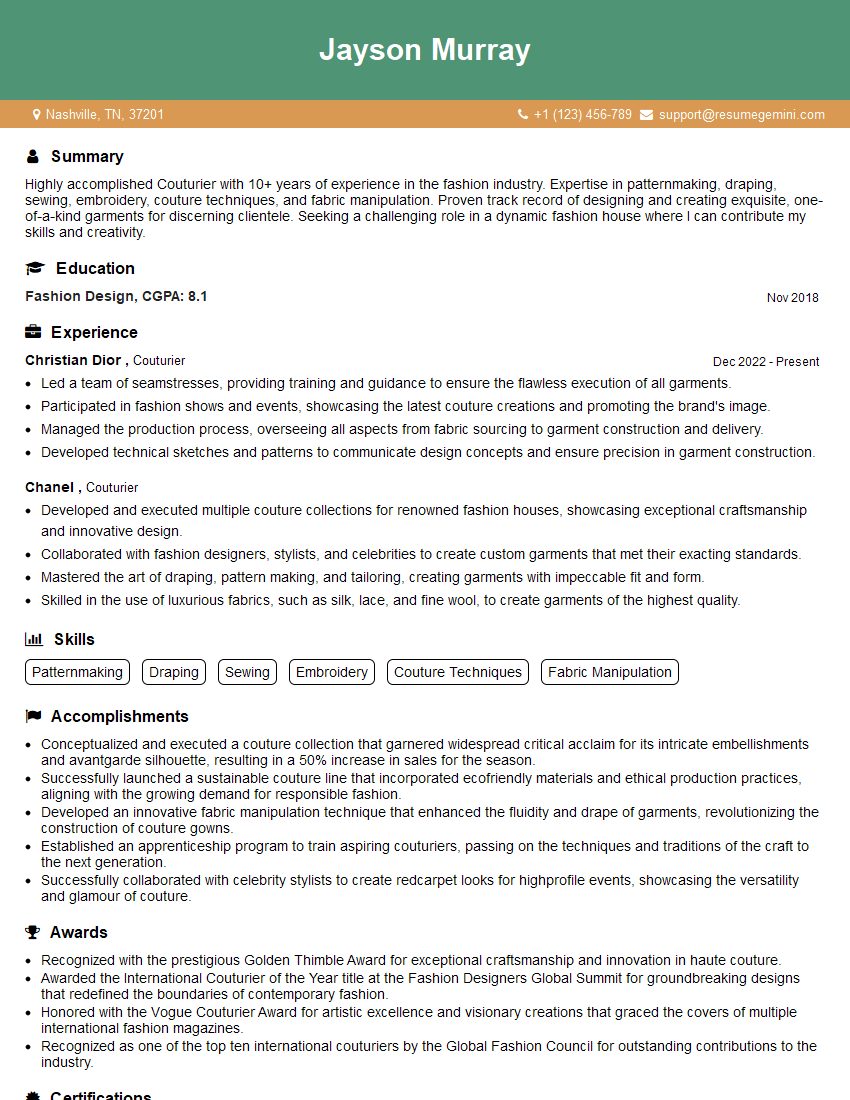
Mastering custom dressmaking opens doors to a fulfilling and creatively rewarding career. The demand for skilled and passionate professionals in this field continues to grow. To maximize your job prospects, it’s crucial to present your skills effectively. An ATS-friendly resume is key to getting your application noticed by potential employers. ResumeGemini is a trusted resource to help you build a strong, professional resume that highlights your unique talents and experience. Examples of resumes tailored specifically to the Custom Dressmaking industry are available to guide you. Take the next step in building your dream career today!
Explore more articles
Users Rating of Our Blogs
Share Your Experience
We value your feedback! Please rate our content and share your thoughts (optional).
What Readers Say About Our Blog
Very informative content, great job.
good