Are you ready to stand out in your next interview? Understanding and preparing for Communication with Rail Crews interview questions is a game-changer. In this blog, we’ve compiled key questions and expert advice to help you showcase your skills with confidence and precision. Let’s get started on your journey to acing the interview.
Questions Asked in Communication with Rail Crews Interview
Q 1. Describe your experience using different communication methods with rail crews (e.g., radio, phone, written reports).
My experience encompasses a wide range of communication methods with rail crews, each suited to specific needs. Two-way radios are the backbone of immediate communication, crucial for real-time updates on train movements, track conditions, and any unforeseen issues. For instance, I routinely use radios to relay speed restrictions, signal malfunctions, or to coordinate with maintenance crews working on the tracks. Telephone calls are more effective for longer conversations, such as debriefs after incidents or addressing complex operational changes. Written reports, meticulously documented, provide a permanent record of events, essential for regulatory compliance, post-incident investigations, and performance analysis. These reports detail everything from daily train schedules to comprehensive accounts of any incidents or near misses. Finally, I use digital communication platforms for disseminating information like safety bulletins or updates to operational procedures to a large number of crew members simultaneously.
Q 2. Explain how you would prioritize different communication needs during an emergency situation.
Prioritizing communication during emergencies relies on a clear understanding of the situation’s severity and impact. My approach follows a tiered system. First, immediate life-threatening situations take precedence; this involves clear, concise instructions relayed via radio to affected crew members to ensure immediate safety. For example, if a derailment occurs, the primary focus would be on evacuating personnel and securing the area. Next, I prioritize communications that mitigate further damage, such as stopping other trains approaching the affected area. This would involve issuing immediate track closures and diverting other trains. Finally, I address communication needs focused on post-emergency procedures, such as coordinating emergency services, beginning damage assessment, and keeping stakeholders informed. Clear, precise language, devoid of ambiguity, is paramount during this stressful time.
Q 3. How would you handle a situation where you receive conflicting information from different rail crew members?
Conflicting information from different crew members necessitates a methodical approach. I begin by individually verifying the information received from each crew member, asking clarifying questions to understand the context and potential discrepancies. For instance, I might ask about their location, the time of the event, and specific details supporting their statements. I also cross-reference the information against other data sources, such as track sensors or surveillance footage if available. Once I have a clearer picture, I reconcile the information, focusing on the most reliable and consistent sources. If the discrepancies persist, I prioritize safety and initiate further investigation, possibly involving on-site assessment. Transparency and clear communication with all parties involved are key, even if the final resolution is not immediately available.
Q 4. What techniques do you use to ensure clear and concise communication in stressful situations?
Clear and concise communication under pressure requires structured techniques. I use the KISS principle – Keep It Simple, Stupid – employing plain language, avoiding jargon, and focusing on delivering essential information. Before speaking, I formulate my message clearly in my mind. I then use a structured approach like the following steps: 1. State the problem, 2. Provide the solution or instructions, 3. Confirm understanding. For instance, instead of saying “the signal’s acting funky,” I would say “Signal 7 is malfunctioning, causing a stop. Proceed with caution to the next signal.” I also use active listening, confirming the recipient’s comprehension by asking for a brief acknowledgment or restatement of instructions. Repeating key instructions is also crucial to ensure everyone is on the same page.
Q 5. Describe your experience using rail-specific communication protocols and terminology.
Proficiency in rail-specific communication protocols and terminology is crucial for effective communication. I am familiar with standard operating procedures (SOPs), including signaling codes, emergency procedures, and the specific language used for reporting incidents. For example, understanding terms like ‘red signal,’ ‘speed restriction,’ ‘track circuit failure,’ and various train orders is fundamental. I am also adept at using specialized radio frequencies and communication systems used within the rail industry. Familiarity with these protocols ensures quick, precise, and unambiguous communication, vital in time-sensitive scenarios. Regular training and updates ensure my knowledge remains current.
Q 6. How do you ensure all rail crew members understand safety procedures and instructions?
Ensuring all rail crew members understand safety procedures is an ongoing process. It starts with thorough training programs covering all aspects of safety, from basic operating procedures to emergency response protocols. Regular refresher courses and safety briefings reinforce these procedures and address updates or new risks. Utilizing diverse communication methods – including presentations, hands-on simulations, written materials, and videos – ensures that information reaches all crew members effectively, regardless of their learning style. Feedback mechanisms are employed to gauge comprehension and identify areas needing further clarification. Consistent enforcement of safety rules, followed by prompt corrective actions when violations occur, strengthens the safety culture and reinforces compliance.
Q 7. Explain your method for documenting all communication with rail crews.
Documentation of all communication with rail crews is paramount for safety and accountability. I maintain a detailed log of all radio transmissions, phone calls, written reports, and digital communications. This log includes the date, time, parties involved, communication method, and a precise record of the conversation or message. A standardized format is followed to ensure consistency and easy retrieval of information. Crucially, incident reports follow a specific structure, outlining the incident details, actions taken, and the outcome. This comprehensive documentation serves as a critical record for regulatory compliance, post-incident investigations, and continuous improvement efforts. The system allows for easy data analysis and identification of recurring safety concerns or areas for improvement.
Q 8. How familiar are you with various types of rail communication equipment?
My familiarity with rail communication equipment is extensive. I have hands-on experience with a range of technologies, from traditional VHF radios and train-to-ground communication systems to more modern solutions like cellular-based systems, Ethernet-based networks for train control, and even satellite communication for remote locations. I understand the limitations and capabilities of each, and importantly, I recognize the critical role each plays in ensuring safe and efficient rail operations.
- VHF Radios: These are the workhorses of many rail operations, providing immediate voice communication between train crews and dispatchers. I understand their limitations regarding range and interference.
- Train-to-ground communication systems: These systems enable automated data transmission between trains and ground control systems, crucial for monitoring train location, speed, and status.
- Cellular-based systems: These offer broader coverage and more advanced features than traditional VHF, but are reliant on cellular network availability.
- Ethernet-based networks: These increasingly crucial networks support the data needs of modern train control systems and provide a platform for the integration of various subsystems.
- Satellite communication: Used in remote areas with limited terrestrial network coverage.
Q 9. How would you effectively communicate complex technical information to non-technical personnel?
Communicating complex technical information to non-technical personnel requires a clear, concise, and relatable approach. I avoid jargon and technical terms whenever possible. I use analogies and visual aids to help illustrate key concepts. For example, explaining complex signal system failures, I’d compare them to traffic lights malfunctioning, making it easier for the crew to understand the potential consequences.
I break down complex information into smaller, easily digestible chunks. I also actively seek feedback to ensure understanding. I frequently ask questions like, “Does that make sense?” or “Can you explain it back to me in your own words?” This two-way communication ensures the message is understood correctly. A visual aid showing a simplified diagram of the system’s flow, for instance, can be incredibly useful.
Q 10. How do you adapt your communication style to different individuals and groups within a rail crew?
Adapting my communication style is crucial. I tailor my approach based on an individual’s role, experience, and personality. For instance, I might use more direct and concise language with an experienced engineer who understands technical details, while adopting a more patient and detailed approach with a newer crew member. I prioritize active listening, observing body language, and adjusting my tone and delivery to ensure effective communication.
With a group, I ensure everyone has a chance to contribute and that the communication flow is inclusive. I utilize different communication channels appropriately – a quick radio message for urgent situations and a longer, more detailed conversation for complex or sensitive issues.
Q 11. How do you handle communication breakdowns with rail crews?
Communication breakdowns are addressed immediately and systematically. I first identify the root cause – was it a faulty radio, poor signal strength, unclear instructions, or a language barrier? Then, I take corrective action. This may involve switching to an alternative communication channel, repeating the message using simpler language, or confirming understanding with a verbal or written acknowledgment.
If the breakdown involves a safety issue, I immediately escalate the situation to the appropriate supervisor or control center. Thorough documentation of the breakdown and the subsequent actions taken is essential for future improvement and incident analysis.
Q 12. Describe a situation where you had to resolve a communication issue to prevent a safety hazard.
During a severe thunderstorm, communication between a freight train and the dispatcher was lost due to radio interference. The train was approaching a low-lying area prone to flooding. I immediately utilized a backup communication system – a satellite phone – to contact the train crew. I relayed crucial information regarding the approaching flood and instructed them to stop at a safe, higher elevation point. This averted a potential derailment and significant property damage. Following the incident, I advocated for improved redundancy in the communication infrastructure in this vulnerable location.
Q 13. What are some common communication challenges faced in the railway industry?
Common communication challenges in the railway industry include:
- Radio interference and dead zones: Terrain and infrastructure can hinder signal reception.
- Language barriers: Crews may have diverse linguistic backgrounds.
- Noise and distractions: The noisy environment of a train can impede communication.
- Multiple communication channels: Coordinating information across different systems can be complex.
- Lack of clear procedures: Ambiguous or inadequate communication protocols can lead to errors.
- Time pressure: Urgent situations can increase the risk of communication breakdowns.
Q 14. How do you maintain effective communication across different shifts and locations?
Maintaining effective communication across shifts and locations requires robust systems and clear procedures. Shift handover briefings, utilizing standardized checklists and reporting formats, are essential to ensure continuity. A central communication hub, perhaps a dedicated dispatcher or control center, is critical for information dissemination. The use of digital platforms for recording information and enabling access for all relevant personnel regardless of shift or location is also beneficial. Regular training on communication protocols and the use of technology is vital to minimize miscommunication and errors.
Q 15. What are some best practices for ensuring clear and consistent communication during train operations?
Clear and consistent communication in rail operations is paramount for safety and efficiency. It hinges on standardized procedures, clear terminology, and multiple communication channels.
- Standardized Procedures: Using pre-defined phrases and formats for messages ensures everyone understands the meaning consistently. For instance, using specific codes for track conditions prevents ambiguity.
- Clear Terminology: Avoid jargon and use plain language. Train crew members should be trained on a common vocabulary to minimize misunderstandings.
- Multiple Communication Channels: Relying on a single communication method is risky. A multi-layered approach, combining radio communication, written instructions (e.g., train orders), and visual signals (e.g., hand signals), creates redundancy and improves reliability.
- Regular Training and Drills: Consistent training and simulations help reinforce proper communication protocols and build crew confidence in handling various situations.
For example, instead of a vague radio message like “Problem ahead,” a standardized message might be: “Signal failure at milepost 127, proceeding at restricted speed.”
Career Expert Tips:
- Ace those interviews! Prepare effectively by reviewing the Top 50 Most Common Interview Questions on ResumeGemini.
- Navigate your job search with confidence! Explore a wide range of Career Tips on ResumeGemini. Learn about common challenges and recommendations to overcome them.
- Craft the perfect resume! Master the Art of Resume Writing with ResumeGemini’s guide. Showcase your unique qualifications and achievements effectively.
- Don’t miss out on holiday savings! Build your dream resume with ResumeGemini’s ATS optimized templates.
Q 16. How do you verify that a message has been received and understood correctly by the rail crew?
Verifying message receipt and understanding is crucial. This involves using techniques like readbacks, acknowledgements, and confirmations.
- Readbacks: The recipient repeats the message back to the sender, word-for-word, ensuring accuracy. This is especially vital for critical instructions.
- Acknowledgements: A simple “Understood” or similar affirmation from the crew confirms receipt. But this alone isn’t sufficient for critical instructions.
- Confirmations: For complex or critical instructions, a confirmation involves the crew explaining their understanding of the instructions and the actions they will take. For example, after receiving instructions for an emergency stop, the crew might respond: “Understood, initiating emergency braking procedure, will report after coming to a complete stop.”
Imagine a scenario where a dispatcher instructs a crew to divert to a different track. A simple acknowledgment wouldn’t suffice; a readback and confirmation of the diversion plan, including the specific track number and speed restrictions, are necessary.
Q 17. How do you maintain confidentiality when communicating sensitive information?
Maintaining confidentiality of sensitive information, such as train schedules, maintenance details, or security protocols, requires strict adherence to protocols.
- Need-to-Know Basis: Only authorized personnel should have access to sensitive information.
- Secure Communication Channels: Use encrypted channels for transmitting confidential information, especially when using digital communication systems.
- Password Protection and Access Control: Implement strong passwords and access controls for all systems containing sensitive data.
- Data Encryption: Employ data encryption techniques to protect information both in transit and at rest.
- Regular Security Audits: Conduct regular security audits and reviews to identify and address any vulnerabilities.
For instance, details about a planned infrastructure repair might only be shared with the relevant engineering and operations teams, and transmitted using encrypted channels to prevent unauthorized access.
Q 18. How would you handle a situation where a rail crew member refuses to follow instructions?
If a crew member refuses to follow instructions, the situation requires a calm, yet firm approach, prioritizing safety.
- Attempt to Understand: First, try to understand the reason behind their refusal. Are they unsure about the instructions? Do they have safety concerns?
- Clarify Instructions: Re-explain the instructions clearly and concisely, using different wording if necessary.
- Escalate if Necessary: If the refusal persists and safety is compromised, escalate the issue to a supervisor or manager. Document the entire incident thoroughly.
- Follow Company Policy: Adhere to company policies and procedures for handling such situations. This may involve disciplinary actions.
For example, if a crew member refuses to proceed through a section of track due to perceived safety concerns, it’s crucial to investigate their concerns before potentially overriding them. If the concerns are valid, the issue should be addressed immediately. If unfounded, the appropriate disciplinary measures may be implemented, always keeping safety as the top priority.
Q 19. What are some strategies for preventing communication errors during critical tasks?
Preventing communication errors during critical tasks requires a multi-faceted approach.
- Pre-flight Checklists: Thorough checklists ensure all parties are on the same page before critical operations.
- Double-Checking: Implementing systems where crucial instructions are confirmed by multiple individuals.
- Redundant Communication: Using multiple methods of communication to confirm instructions.
- Clear Visual Aids: Using diagrams, maps, or other visual aids to supplement verbal or written instructions, particularly in complex scenarios.
- Training and Practice: Rigorous training and regular practice drills for handling critical situations help minimize errors under pressure.
For instance, before a train enters a complex switching yard, a pre-departure checklist should be completed, and all instructions regarding track selection and speed restrictions should be confirmed by the dispatcher and the train crew, potentially even using a visual map of the yard.
Q 20. How do you leverage technology to improve rail crew communication?
Technology significantly enhances rail crew communication, improving safety and efficiency.
- Digital Train Radios: Modern digital radios offer clearer audio, better range, and features like GPS integration for precise location information.
- Automated Messaging Systems: Automated systems can send pre-programmed messages or alerts, reducing the potential for human error.
- Mobile Data Terminals (MDTs): MDTs in locomotives allow crews to access real-time information, such as track conditions, speed restrictions, and schedules.
- Computer-Aided Dispatch (CAD): CAD systems streamline communication between dispatchers and crews, providing efficient routing and instructions.
- Telematics and Data Analytics: Telematics systems gather data on train operations, allowing for analysis to identify potential communication bottlenecks and improve efficiency.
For example, a train experiencing mechanical problems can use its MDT to automatically notify the dispatcher, providing real-time location and a description of the issue, improving response time and reducing delays.
Q 21. Describe your experience working in a team environment and communicating with multiple stakeholders in a rail context.
Throughout my career, I’ve consistently worked in collaborative team environments within the rail industry, interacting with various stakeholders including dispatchers, train crews, maintenance personnel, and management.
In one project involving the implementation of a new signaling system, I coordinated closely with the engineering team, the operations team, and the training department. Effective communication was crucial. We used regular progress meetings, shared documentation platforms, and a structured feedback mechanism to ensure everyone was aligned. This involved translating complex technical specifications into easily understandable terms for non-technical stakeholders, and vice-versa. Clear communication prevented delays, ensured the project stayed within budget, and most importantly, contributed to the safe and efficient implementation of the new system.
My experience highlights the importance of active listening, clear articulation, empathy, and a proactive approach to communication challenges in ensuring seamless collaboration and successful project outcomes in a complex rail operational environment.
Q 22. What are some of the legal and regulatory requirements related to communication with rail crews?
Legal and regulatory requirements governing communication with rail crews are crucial for safety and operational efficiency. These regulations vary by country and region but generally focus on ensuring clear, concise, and unambiguous communication to prevent accidents and delays. Key areas include:
Federal Railroad Administration (FRA) Regulations (USA): The FRA mandates specific communication protocols, including the use of standardized terminology, emergency response procedures, and record-keeping requirements for all communications. For example, specific phrases must be used to report incidents or request assistance.
International Union of Railways (UIC) Standards: UIC publishes recommendations and standards for railway operations globally, including communication best practices. These guidelines influence national regulations and aim to harmonize communication protocols across different railway systems.
National Transportation Safety Board (NTSB) Investigations: Following accidents, the NTSB (USA) or equivalent bodies investigate and often cite communication failures as contributing factors. This leads to further regulatory changes and improved protocols.
Company-Specific Policies: Individual rail companies often have their own detailed communication procedures, which must comply with all applicable laws and regulations. These internal rules might cover aspects like radio etiquette, reporting procedures, and the use of specific communication technologies.
Non-compliance with these regulations can result in hefty fines, operational shutdowns, and damage to the company’s reputation. Therefore, understanding and adhering to these rules is paramount.
Q 23. How do you contribute to a positive and effective communication culture within a rail operation team?
Fostering a positive and effective communication culture within a rail operation team requires a multi-pronged approach. It’s not just about procedures; it’s about creating an environment where everyone feels comfortable and confident communicating openly and honestly.
Open Door Policy: Establish a culture where crews feel empowered to raise concerns or ask questions without fear of reprisal. Regular feedback sessions, both formal and informal, are essential.
Clear Communication Channels: Define clear pathways for various types of communication. For instance, separate channels for operational updates, safety concerns, and personal matters.
Training and Development: Provide comprehensive training on effective communication techniques, including active listening, clear articulation, and conflict resolution. This is particularly important for handling stress during critical situations.
Team Building: Organize team-building activities to improve interpersonal relationships and create a sense of camaraderie. When team members trust each other, communication flows more smoothly.
Technology Integration: Leverage modern communication tools like dispatch systems and mobile apps to enhance efficiency and provide clear, concise updates.
Recognition and Rewards: Acknowledge and reward individuals and teams for excellent communication and teamwork. This reinforces positive behaviors and motivates others to follow suit.
For example, I once implemented a peer-to-peer feedback system where crew members could anonymously offer suggestions or highlight positive interactions, leading to a significant improvement in overall communication.
Q 24. How do you use feedback to improve communication effectiveness with rail crews?
Feedback is invaluable for improving communication effectiveness. I use a combination of methods to gather and act upon feedback:
Regular Performance Reviews: Formal performance reviews provide a structured opportunity to discuss communication strengths and weaknesses, setting clear goals for improvement.
Informal Check-ins: Regular informal chats with crew members allow for spontaneous feedback and address concerns promptly. This helps to identify smaller communication issues before they escalate.
Incident Reviews: After incidents or near misses, analyzing communication breakdowns during the event is critical. This helps identify areas requiring improvement in procedures or training.
Surveys and Questionnaires: Anonymous surveys can gather broader feedback from the team, providing insights into overall communication effectiveness and areas of concern.
Observation and Shadowing: Observing crew interactions firsthand provides valuable insights into communication dynamics and potential challenges.
For instance, after receiving feedback that our daily briefing sessions were too lengthy and confusing, I implemented a new format using visual aids and shorter, more focused presentations. This led to increased comprehension and reduced fatigue among crew members.
Q 25. How do you identify and address communication barriers among different language speakers in a rail crew?
Addressing communication barriers among different language speakers requires a proactive and multi-faceted approach:
Language Proficiency Assessments: Determining the language skills of each crew member is essential to ensure adequate communication support.
Translation and Interpretation Services: Providing professional translation and interpretation services, especially for critical instructions or safety briefings, is crucial.
Multilingual Training Materials: Developing training manuals, safety guidelines, and other operational documents in multiple languages reduces misunderstandings.
Visual Aids and Symbols: Utilizing visual aids, symbols, and diagrams can supplement verbal communication, enhancing understanding across language barriers.
Designated Language Coordinators: Appointing crew members fluent in multiple languages can act as a bridge, facilitating communication within diverse teams.
Technology-Assisted Translation: Exploring the use of real-time translation technology such as apps or devices can assist in impromptu conversations.
For example, in a crew with several Spanish-speaking members, we developed a bilingual safety training program and provided Spanish translations of critical operational documents, significantly reducing communication-related incidents.
Q 26. How would you facilitate a meeting with diverse rail crew members to discuss operational changes?
Facilitating a meeting with diverse rail crew members to discuss operational changes requires careful planning and execution. The goal is to ensure everyone feels heard, understood, and involved in the process.
Pre-Meeting Preparation: Distribute materials in all relevant languages well in advance. Clearly define the meeting’s objective and agenda.
Structured Format: Utilize a structured format, allowing for presentations, open discussions, and question-and-answer sessions. Ensure ample time for each segment.
Language Support: Provide interpreters if needed, and ensure everyone has access to materials in their preferred language.
Visual Aids: Use visual aids to explain complex information, ensuring that it’s accessible to everyone regardless of language proficiency.
Active Listening and Clarification: Encourage active listening, and provide opportunities for clarification. Rephrase complex information in simpler terms.
Feedback Mechanisms: Incorporate methods for feedback, like anonymous questionnaires, to address concerns and capture diverse perspectives.
Follow-up: Distribute meeting minutes and key takeaways in multiple languages to ensure that everyone is on the same page.
For example, when introducing a new scheduling system, I held several smaller, language-specific breakout sessions before a larger plenary session, ensuring everyone had a chance to fully understand the changes before discussing implementation.
Q 27. What is your experience with using dispatch software or similar rail communication systems?
I have extensive experience using various dispatch software systems and rail communication platforms. My experience encompasses:
Train Dispatching Systems: Proficient in using systems for tracking train movements, managing schedules, issuing instructions, and coordinating with crews in real-time.
Radio Communication Integration: Experienced in systems that integrate radio communication with dispatch software, allowing for seamless communication and record-keeping.
Data Analysis and Reporting: I can effectively utilize dispatch software to analyze operational data, identifying trends and areas for improvement in communication efficiency.
Emergency Response Systems: Familiar with emergency response features in dispatch software, enabling swift and coordinated responses to incidents.
Specific Systems Used (Examples): [Insert specific systems used, e.g., ‘I have hands-on experience with systems such as Railcom, Trainline, and Dispatcher Pro.’]
My proficiency extends beyond simply using the software. I understand the underlying principles of these systems and can effectively troubleshoot issues, ensuring continuous and reliable communication.
Q 28. How proficient are you in using radio communication equipment and interpreting radio traffic?
I am highly proficient in using radio communication equipment and interpreting radio traffic. My expertise includes:
Radio Operation: I am skilled in operating various types of radio equipment, including hand-held radios, base stations, and mobile radio systems, adhering to strict radio etiquette and procedures.
Radio Traffic Interpretation: I can accurately and quickly interpret radio traffic, understanding the context and urgency of messages. I can differentiate between standard operating procedures and emergency communications.
Emergency Procedures: I am well-versed in emergency radio procedures, ensuring clear and concise communication during critical incidents. I know how to communicate effectively under pressure.
Troubleshooting: I can quickly diagnose and troubleshoot basic technical issues with radio equipment, ensuring reliable communication flow.
Clear Articulation: I communicate clearly and concisely, minimizing ambiguity and ensuring that my messages are received accurately even in noisy environments.
For example, during a recent incident, I was able to quickly interpret a distressed radio call from a train crew, relaying critical information to the emergency response team, allowing for a swift and effective rescue operation.
Key Topics to Learn for Communication with Rail Crews Interview
- Effective Verbal Communication Techniques: Understanding and applying clear, concise, and unambiguous language in high-pressure situations. This includes active listening and confirming understanding.
- Non-Verbal Communication and Safety: Recognizing and interpreting body language and using visual aids effectively to ensure safety messages are received and understood. Consider the impact of situational awareness on communication.
- Emergency Procedures and Protocols: Knowing and communicating emergency procedures accurately and calmly under stress. Practice relaying information quickly and efficiently to relevant parties.
- Technological Communication Tools: Proficiency with various communication technologies used in rail operations (radios, dispatch systems, etc.) and understanding their limitations and appropriate use.
- Cross-Cultural Communication: Addressing communication challenges arising from diverse workforces and accommodating varying communication styles within a team environment.
- Conflict Resolution and De-escalation: Developing skills to address and resolve conflicts professionally and calmly, while maintaining a focus on safety.
- Documentation and Reporting: Understanding the importance of accurate and complete documentation of all communications, especially incidents and near misses.
- Regulatory Compliance: Familiarity with relevant regulations and guidelines regarding communication practices within the rail industry.
Next Steps
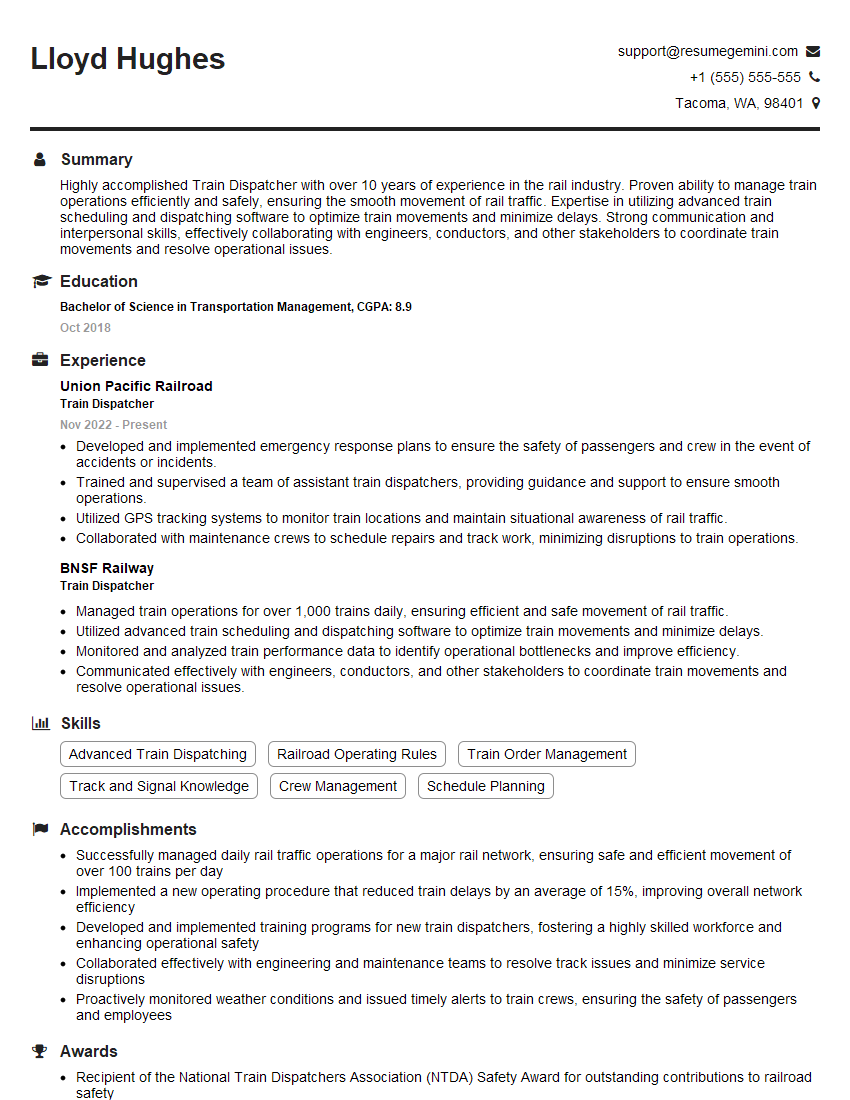
Mastering communication with rail crews is crucial for a successful and rewarding career in this vital industry. Strong communication skills are paramount for ensuring safety, efficiency, and smooth operations. To maximize your job prospects, it’s essential to create an ATS-friendly resume that highlights your relevant skills and experience. ResumeGemini can help you build a compelling resume that showcases your qualifications effectively. We offer examples of resumes tailored specifically to Communication with Rail Crews to provide you with a strong foundation. Take the next step towards your dream career today!
Explore more articles
Users Rating of Our Blogs
Share Your Experience
We value your feedback! Please rate our content and share your thoughts (optional).
What Readers Say About Our Blog
Very informative content, great job.
good