Every successful interview starts with knowing what to expect. In this blog, we’ll take you through the top Synthesizers interview questions, breaking them down with expert tips to help you deliver impactful answers. Step into your next interview fully prepared and ready to succeed.
Questions Asked in Synthesizers Interview
Q 1. Explain the difference between subtractive and additive synthesis.
Subtractive and additive synthesis are two fundamental methods for creating sounds using synthesizers. Think of it like sculpting: subtractive synthesis starts with a rich, complex sound and removes elements to shape it, while additive synthesis begins with basic building blocks and combines them to create a complex sound.
Subtractive Synthesis: This is the most common type, often used in analog synthesizers. It starts with a waveform (like a sawtooth or sine wave), which is a rich sound containing many frequencies (harmonics). A filter is then used to remove unwanted frequencies, shaping the timbre. Imagine a sculptor starting with a large block of clay and chiseling away parts to create a desired form. The filter controls which frequencies are ‘carved away’. Common filter types include low-pass, high-pass, band-pass, and notch filters. A low-pass filter, for instance, lets only low frequencies pass through, resulting in a warmer, less ‘bright’ sound.
Additive Synthesis: In contrast, additive synthesis builds sounds by combining simple waveforms – usually sine waves – at different frequencies and amplitudes. Each sine wave represents a single harmonic. By carefully selecting and adjusting the amplitude and frequency of many sine waves, complex timbres can be created. Think of building a Lego castle, starting with individual bricks (sine waves) and assembling them into a larger structure (complex sound). This method is computationally intensive and is often implemented digitally, offering a great deal of control and flexibility over the final sound.
Q 2. Describe the function of an LFO and its applications.
An LFO, or Low-Frequency Oscillator, is a wave-generating component that produces cyclical changes at a low frequency – usually below the range of human hearing. Think of it as a slow, rhythmic pulse. Instead of creating an audible tone, it’s used to modulate other parameters in a synthesizer, creating subtle or dramatic effects.
Applications: LFOs are incredibly versatile. Some common uses include:
- Vibrato: Modulating the pitch of a note, creating a slight wavering effect.
- Tremolo: Modulating the amplitude (volume) of a note, creating a pulsating effect.
- Filter Modulation: Changing the cutoff frequency of a filter, creating a sweeping or rhythmic filter effect, often heard in sweeping synth sounds.
- Panning: Moving a sound between left and right speakers rhythmically.
- Amplitude Modulation (AM): Creates a rich, dynamic waveform by varying the amplitude of a sound according to the LFO’s pattern.
For example, an LFO set to a slow triangle wave can smoothly modulate a filter’s cutoff frequency, creating a dramatic ‘wah’ effect. Fast LFOs can produce rapid, choppy effects.
Q 3. What are the key parameters of a filter and how do they affect sound?
Filters are essential components in subtractive synthesis. They shape the tone of a sound by controlling which frequencies pass through and which are attenuated (reduced or blocked). Key parameters are:
- Cutoff Frequency: This determines the frequency at which the filter starts to attenuate (reduce) the signal. A low cutoff frequency lets only low frequencies pass, resulting in a bassy sound; a high cutoff frequency lets higher frequencies pass, resulting in a brighter sound. Think of it as a gate that only allows certain ‘sized’ waves to pass.
- Resonance (or Q): This parameter determines how much the filter boosts the frequencies around the cutoff frequency. High resonance creates a ‘peaky’ sound with a prominent emphasis near the cutoff. Imagine it as the filter’s emphasis on the ‘gate’s edges’.
- Filter Type: Different filter types have distinct characteristics. Common types include:
- Low-pass: Allows frequencies below the cutoff to pass.
- High-pass: Allows frequencies above the cutoff to pass.
- Band-pass: Allows a specific band of frequencies around the cutoff to pass.
- Notch: Attenuates a specific band of frequencies around the cutoff (the opposite of a band-pass).
The interplay of these parameters drastically alters the sonic character. Adjusting the cutoff frequency while using resonance can create unique and expressive textures and sounds.
Q 4. Explain the concept of an envelope generator and its use in sound design.
An Envelope Generator (EG) is a component that shapes the amplitude (volume), filter cutoff, or other parameters of a sound over time. It does not create sound but controls how a sound develops and decays. Think of it as a dynamic control system that dictates the sound’s life cycle.
It typically has four stages:
- Attack (A): The time it takes for the sound to reach its peak volume from the moment the note is triggered.
- Decay (D): The time it takes for the sound to fall from its peak volume to the sustain level.
- Sustain (S): The level at which the sound maintains its volume while the key is held down.
- Release (R): The time it takes for the sound to decay to silence after the key is released.
Use in Sound Design: By adjusting the attack, decay, sustain, and release times and levels, you can create a wide range of sounds. A fast attack and short decay can create a sharp, percussive sound like a snare drum; a slow attack and long decay creates a sustained, lush pad sound. EGs can also shape other aspects of a sound beyond amplitude like modulating filter cutoff to create interesting transitions.
Q 5. What is the difference between a VCO, VCA, and VCF?
VCO, VCA, and VCF are core components often found in analog synthesizers, representing the Voltage-Controlled Oscillator, Voltage-Controlled Amplifier, and Voltage-Controlled Filter respectively. Each is controlled by a voltage signal, allowing for dynamic manipulation and expressive sound design.
- VCO (Voltage-Controlled Oscillator): This is the sound source, generating the basic waveform (sine, sawtooth, square, triangle, etc.). The voltage controls the frequency (pitch) of the oscillator, allowing the user to alter the pitch of the sound.
- VCA (Voltage-Controlled Amplifier): This controls the amplitude (volume) of the sound. The voltage controls the level of the audio signal. It’s used to shape the volume envelope of a note, from its initial attack to its eventual decay and release.
- VCF (Voltage-Controlled Filter): This shapes the tonal characteristics of the sound by filtering out certain frequencies. The voltage controls parameters such as cutoff frequency and resonance, allowing for dynamic filtering effects and sound sculpting.
In essence, the VCO generates the sound, the VCF shapes it, and the VCA controls its volume. These components work together to create a wide variety of sounds, forming the core of many analog synthesizer designs.
Q 6. How does a digital synthesizer differ from an analog synthesizer?
Analog and digital synthesizers differ fundamentally in how they generate and process sound. Analog synthesizers use electronic circuits to create and manipulate audio signals directly, whereas digital synthesizers use digital signal processing (DSP) to simulate analog components or employ entirely different methods of sound generation.
Analog Synthesizers:
- Warmth and Character: Often praised for their ‘warm’ and ‘organic’ sound due to the imperfections and nuances inherent in analog circuits. Slight variations and imperfections often add character.
- Limited Control: Typically have fewer parameters and less precise control than digital synthesizers.
- Physical Components: Use physical components like oscillators, filters, and amplifiers that interact directly with the audio signal.
Digital Synthesizers:
- Precision and Flexibility: Offer very precise control over parameters, with a vast array of options and capabilities often exceeding the range of analog instruments. Precise, repeatable sounds are easily achievable.
- Versatility: Can emulate analog sounds and implement various synthesis methods like FM synthesis, wavetable synthesis, granular synthesis, etc.
- Software-based: Many digital synthesizers are software based, providing extensive editing and manipulation options via a computer interface.
The choice between analog and digital often comes down to personal preference and the desired sonic characteristics. Many modern synthesizers blend aspects of both approaches.
Q 7. Describe your experience with different types of synthesis (FM, Wavetable, etc.).
My experience encompasses a wide range of synthesis methods, with a strong emphasis on understanding how each method contributes to the overall sonic landscape.
FM Synthesis (Frequency Modulation): I’ve extensively used FM synthesis, understanding its powerful ability to generate complex, evolving timbres from relatively simple setups. I’ve worked with both classic Yamaha DX7-style FM and more modern implementations that provide greater flexibility and control. FM’s strength lies in its capacity to create bell-like tones, metallic textures, and evolving soundscapes through carefully adjusting modulation indices and operator ratios. I particularly appreciate its use in creating rich, evolving soundscapes and otherworldly textures.
Wavetable Synthesis: Wavetable synthesis involves selecting and manipulating waveforms from a library of pre-recorded sounds, or creating custom wavetables. This method offers exceptional flexibility in timbre creation, allowing for a wide sonic palette. I have a deep understanding of how wavetable morphing and manipulation techniques can be used to create a huge variety of sonic textures and evolving sounds.
Subtractive Synthesis: My foundation in subtractive synthesis is strong. I’m proficient in shaping sounds using various filter types, envelope generators, and LFOs. This forms the backbone of my sound design approach, allowing for meticulous control and a deep understanding of the core principles of sound shaping. I view subtractive synthesis as a foundational skill, essential to understand before approaching more advanced techniques.
Beyond these, I have experience with additive and granular synthesis, recognizing their potential for unique sonic explorations. My approach always prioritizes a thorough understanding of the underlying principles of each method, allowing me to choose the right tool for the job and achieve the desired sonic results.
Q 8. What are your preferred DAWs and why?
My preferred DAWs are Ableton Live and Logic Pro X. My choice depends on the project. Ableton’s session view is incredibly powerful for live performance-oriented work and its workflow is highly intuitive for quickly sketching out ideas. I find its warping capabilities and Max for Live integration invaluable for creating unique effects and processing. Logic Pro X, on the other hand, excels in its comprehensive range of instruments, effects, and its robust MIDI editing capabilities, making it ideal for larger, more intricate productions where meticulous detail is crucial. Essentially, it’s a powerful tool for complex arrangements and mixing. Both offer exceptional integration with various synthesizers, both hardware and software.
Q 9. Explain your workflow for creating a specific synthesizer sound (e.g., pad, lead, bass).
My workflow for creating a synthesizer sound begins with a clear sonic goal. Let’s take a ‘warm, evolving pad’ as an example. I’d start by selecting a synthesizer known for its lush pads, perhaps a soft synth like Massive X or Omnisphere. Then, I’d experiment with the oscillator section. For a warm pad, I might choose sawtooth or triangle waveforms, or a combination of both, possibly detuned slightly for a thicker, richer timbre. Next, I’d focus on the filter, choosing a low-pass filter and slowly sweeping its cutoff frequency using an LFO (low-frequency oscillator) to create the evolving quality. I’d then add some subtle modulation to the resonance to enhance the movement. The envelope generators would be key; a long attack and release on the filter envelope would create a smooth, lush sound, while a slower decay would maintain the warmth. I’d also shape the amplitude envelope for sustain and release characteristics. Finally, I’d add effects like reverb and delay to place the sound in a space and add depth. For a lead sound, I would prioritize a more aggressive waveform, such as a square wave or a sharper sawtooth, and use a higher cutoff frequency on the filter. A bass sound would require a lower cutoff frequency and a heavier emphasis on the low frequencies; a square or sine wave would be suitable. Throughout this process, I constantly listen and adjust, iterating until I achieve the desired sound.
Q 10. How do you troubleshoot audio problems related to synthesizers?
Troubleshooting synthesizer audio problems involves a systematic approach. First, I’d check the most basic things: are the synthesizer and audio interface correctly connected? Are the levels properly adjusted? Are the correct channels selected? Then, I’d check for signal flow issues. Is the synth’s output routed correctly to the DAW? Is the track armed for recording or monitoring? Next, I’d examine the synth’s settings. Are there any unusual configurations that could cause clipping or distortion? Are there any conflicting plugins in the signal chain? I often use a spectrum analyzer to visualize the audio, pinpointing frequencies causing issues. If the problem persists, I’d test the synthesizer with different cables or audio interfaces to isolate the problem. Finally, if it’s a software synth, I’d check for updates or reinstall the software. It’s all about systematically eliminating possibilities, starting with the simplest and progressing to more complex diagnostics.
Q 11. Describe your experience with MIDI controllers and their use in music production.
MIDI controllers are indispensable tools in my workflow. I primarily use a keyboard controller with aftertouch and pitch bend capabilities, allowing for expressive performances and nuanced control over synth parameters. The expressiveness of aftertouch, where pressure on the keys affects dynamics or filter cutoff, is particularly valuable for creating dynamic and emotive sounds. I also use pads and knobs to control parameters in real time. For example, I might map the modulation wheel to a filter cutoff or an LFO rate to create dynamic changes. The use of a dedicated MIDI controller allows for a much more intuitive and tactile interaction with synthesizers compared to mouse and keyboard control. It’s the difference between painting with a brush and using a mouse – the brush offers a level of control and nuance that’s impossible to replicate digitally.
Q 12. How do you approach creating textures and atmospheres using synthesizers?
Creating textures and atmospheres with synthesizers involves focusing on subtle nuances and harmonic layering. I often start by creating a foundation with a low-frequency drone or pad, adding layers of higher frequency sounds to build density. I might use techniques like detuning oscillators slightly, layering multiple sounds, and utilizing granular synthesis or other effects to create a complex soundscape. Reverb is crucial here – a large reverb setting can place sounds in a virtual space and greatly enhance the atmosphere. I frequently experiment with different filter sweeps, LFO modulation, and effects like chorus and phaser to create a sense of movement and depth. For example, a slowly evolving pad with a subtle chorus effect can create a vast and ethereal soundscape. The key is to focus less on individual notes and more on the overall sonic texture.
Q 13. What are some common techniques for creating movement and evolution in synthesizer sounds?
Creating movement and evolution in synthesizer sounds requires manipulating various parameters over time. This often involves using LFOs (low-frequency oscillators) to modulate parameters like filter cutoff, resonance, pitch, or pan. Automation is another key technique; drawing parameter changes over time in the DAW allows for precise control of the sound’s evolution. I might automate filter cutoff to create a sweep effect, or automate the pitch to create a glissando or portamento. Another approach involves using envelopes to shape the sound’s dynamics, creating gradual changes in volume or other parameters. More advanced techniques include using sequencers to create rhythmic variations in the sound’s characteristics, or utilizing granular synthesis or other time-based effects to create textures and evolving soundscapes. Experimenting with these techniques creates interesting dynamic sonic movement.
Q 14. Explain the concept of aliasing and how to avoid it.
Aliasing is a digital audio artifact that occurs when a high-frequency signal is sampled at a rate lower than twice its frequency (Nyquist-Shannon sampling theorem). It results in unwanted lower-frequency tones, creating a harsh, metallic distortion. To avoid aliasing, it’s essential to use anti-aliasing filters, which attenuate high frequencies above half the sample rate before digital conversion. In practice, this often means using lower cutoff frequencies on filters or applying a dedicated anti-aliasing filter plugin within the synthesizer or DAW. Many modern synthesizers incorporate oversampling, which increases the internal sample rate before outputting the signal at the project’s sample rate, effectively mitigating aliasing. Also, working at higher sample rates (e.g., 96 kHz) increases the space between the highest frequency and the Nyquist limit, reducing the risk of aliasing. In essence, it’s about ensuring that the frequencies you are using are within the safe range that your system can handle without creating artifacts.
Q 15. How familiar are you with various effects processors (reverb, delay, chorus, etc.) and their use with synthesizers?
Effects processors are indispensable tools for shaping and enhancing synthesizer sounds. My familiarity encompasses a wide range, including reverb, delay, chorus, flanger, phaser, distortion, and equalization. I understand how each effect alters the sonic characteristics of a synthesizer sound, affecting its timbre, spatial qualities, and overall character.
Reverb simulates the acoustic environment, adding spaciousness and depth. For example, a large hall reverb on a synth pad creates a lush, atmospheric texture. Delay introduces echoes, which can be used rhythmically to create rhythmic interest or texturally to thicken a sound. A short delay can add subtle thickness, while a longer delay can produce pronounced echoes. Chorus thickens the sound by creating multiple slightly detuned versions of the original signal. It adds a rich, swirling quality, often used on lead synth lines for a more vibrant sound. I often use these in combination, for instance, a slightly detuned chorus followed by a subtle reverb to create a lush, spacious sound without muddying the mix.
My understanding extends to the practical application of these effects within a DAW (Digital Audio Workstation). I know how to adjust parameters such as decay time (reverb), delay time (delay), and depth (chorus) to achieve specific sonic results, and I’m proficient in routing effects in parallel and serial configurations to maximize creative options. I also have experience with various hardware and software effects units, ensuring that my knowledge spans a broad spectrum of options and workflows.
Career Expert Tips:
- Ace those interviews! Prepare effectively by reviewing the Top 50 Most Common Interview Questions on ResumeGemini.
- Navigate your job search with confidence! Explore a wide range of Career Tips on ResumeGemini. Learn about common challenges and recommendations to overcome them.
- Craft the perfect resume! Master the Art of Resume Writing with ResumeGemini’s guide. Showcase your unique qualifications and achievements effectively.
- Don’t miss out on holiday savings! Build your dream resume with ResumeGemini’s ATS optimized templates.
Q 16. Describe your experience with modular synthesizers.
My experience with modular synthesizers is extensive. I’ve worked extensively with systems from Moog, Eurorack, and others, building custom systems to explore sonic possibilities. It’s not just about connecting modules; it’s about understanding the signal flow, the inherent characteristics of each module (VCO, VCF, VCA, LFO, Envelope Generators, etc.), and how they interact to create complex and evolving soundscapes.
Modular synthesis allows for unparalleled flexibility and control, but it requires a deep understanding of synthesis fundamentals. I’ve tackled challenges such as patching complex modulation routes, designing custom waveforms, and troubleshooting unexpected behavior. I find the problem-solving aspect of modular synthesis incredibly rewarding, as it necessitates a comprehensive grasp of signal processing and audio engineering principles. A recent project involved designing a modular system capable of generating evolving ambient textures using a combination of LFOs controlling filter cutoff and resonance, combined with strategically placed VCAs to control dynamics.
Q 17. What is your experience with sample-based synthesizers?
I have significant experience with sample-based synthesizers, including both hardware and software instruments like Kontakt, Halion, and even classic samplers like the Akai S series. These synthesizers offer a different approach to sound design, where sounds are built from recorded audio samples. My experience includes both working with pre-made libraries and creating my own sample libraries. The latter involves recording and processing raw audio, manipulating samples with various techniques such as looping, time-stretching, and pitch-shifting.
Understanding the limitations and possibilities of sample-based synths is crucial. For instance, while they can reproduce incredibly realistic sounds, they often have limitations in terms of flexibility compared to subtractive or additive synthesizers. I know how to manage sample memory effectively, optimize sample playback for efficient CPU usage, and use advanced techniques like granular synthesis to manipulate samples creatively. I recently completed a project using sample-based synths to create realistic orchestral textures for a film score.
Q 18. How do you approach creating realistic sounds using synthesizers?
Creating realistic sounds on synthesizers often requires a multi-faceted approach, combining deep knowledge of acoustic instruments and advanced synthesis techniques. It’s not just about replicating the raw sound; it’s about understanding the nuances, the subtleties of the performance and the way the sound interacts with its surroundings.
My approach begins with detailed analysis of the target instrument. I’ll consider its spectral content – what frequencies are prominent? How do they evolve over time? I’ll then use subtractive synthesis techniques to sculpt these frequencies using oscillators, filters, and envelope generators. For example, to create a realistic acoustic piano sound, I might use multiple oscillators to represent the different harmonics of the note, shape the timbre using filters, and create realistic decay using amplitude envelopes. Additionally, I would use effects like reverb and sympathetic resonance to capture the acoustic space and the natural decay of the instrument.
Further realism can be achieved through the use of modulation. LFOs (Low Frequency Oscillators) can simulate vibrato or subtle pitch fluctuations, while envelope generators can control filter cutoff or resonance for dynamic changes in timbre. This layering of carefully crafted components is key to creating realistic sounds that not only sound correct but also respond authentically. I might even incorporate granular synthesis or spectral processing for more advanced modelling.
Q 19. Explain your understanding of different audio file formats (WAV, AIFF, MP3).
My understanding of audio file formats is crucial for professional audio production. WAV (Waveform Audio File Format) is a lossless format, meaning no data is lost during encoding. It is widely used in professional settings due to its high fidelity and compatibility. AIFF (Audio Interchange File Format) is another lossless format, similar to WAV but primarily used on Apple systems. Both WAV and AIFF are suitable for mastering and archiving, preserving the highest possible audio quality.
MP3 (MPEG Audio Layer III) is a lossy format, meaning some data is discarded during compression. This significantly reduces file size but results in a reduction in audio quality, particularly at lower bitrates. MP3 is widely used for streaming and distribution due to its small file size, but it is generally not suitable for professional audio production because of its inherent quality loss. The choice of format depends on the intended use; lossless formats are preferred for archiving and mastering, while lossy formats are better suited for distribution where file size is a primary concern.
Q 20. Describe your experience with audio editing software.
I have extensive experience with various audio editing software packages including Ableton Live, Logic Pro X, Pro Tools, and Cubase. My expertise encompasses tasks ranging from basic editing – trimming, cutting, and pasting audio – to more advanced techniques such as applying plugins, automation, and mixing and mastering. I am proficient in using various tools for spectral editing, noise reduction, restoration, and audio manipulation. My proficiency extends to understanding the complexities of digital signal processing within the DAW environment. I regularly use advanced features like MIDI editing, automation of parameters, and creating complex routing schemes for effects.
Beyond the technical proficiency, I possess a deep understanding of audio workflows and best practices. This includes using non-destructive editing, organizing projects efficiently, and understanding the limitations and capabilities of the chosen software. For instance, I am adept at working within the constraints of CPU usage and maintaining the integrity of audio during various editing processes. I recently used Pro Tools to edit and mix a complex orchestral recording, utilizing advanced plugin processing to achieve the desired sonic results.
Q 21. What are your strategies for optimizing CPU usage when working with multiple synthesizers?
Optimizing CPU usage when working with multiple synthesizers is vital for maintaining smooth performance and preventing audio dropouts or latency issues. My strategies involve a multifaceted approach.
- Reducing sample rate and bit depth: Working at a lower sample rate (e.g., 44.1kHz instead of 48kHz or 96kHz) and bit depth (e.g., 16-bit instead of 24-bit) can significantly reduce CPU load without significantly affecting audio quality, particularly if the project does not require the highest possible fidelity.
- Using less demanding synths: Some synthesizers are significantly more CPU-intensive than others. Choosing efficient instruments, or opting for simpler presets can reduce the burden on the system.
- Freezing tracks: Freezing tracks renders them to audio, eliminating the need for the CPU to process them in real-time, freeing up processing power for other parts of the project. This is especially helpful for complex synth patches that are not being further modified.
- Plugin optimization: Using fewer high-demand plugins or opting for less CPU-intensive alternatives can help. High-quality free plugins are a good alternative to CPU hungry commercial plugins.
- Using bounce-in-place: This renders audio tracks within the DAW to a single file, freeing up processing power, similar to freezing tracks.
- System optimization: Regularly upgrading RAM, using a solid-state drive (SSD), and closing unnecessary applications while working on the project, can all lead to significantly improved performance.
I always employ a combination of these strategies, tailored to the specific demands of each project. For example, in a project with many complex synth patches, I might prioritize freezing tracks and bouncing-in-place to ensure smooth performance.
Q 22. How do you handle feedback issues in a synthesizer setup?
Feedback in synthesizers refers to the process where a portion of the output signal is routed back into the input. This can create interesting effects, but uncontrolled feedback leads to instability and unwanted noise, potentially even causing oscillators to ‘ring’ uncontrollably. Handling feedback effectively is crucial for a clean and controlled sound.
The first step is understanding where the feedback is occurring. Is it within a single module (like an oscillator with internal feedback)? Or is it a result of patching different modules together (like routing the output of a delay back into the input of a filter)?
- Identifying the source: Carefully trace your signal path. If you’re using a modular synth, this might involve visually following the cables. For software synths, it might involve stepping through the signal flow diagram provided by the DAW or the synth itself.
- Adjusting levels: Once you’ve identified the feedback loop, the simplest solution is often to reduce the level of the signal being fed back. This can be done by adjusting the gain of the affected module or by using a dedicated attenuator in your signal chain. Think of it like turning down the volume of the echo effect in a guitar amp.
- Using filters: Feedback often exacerbates high frequencies, leading to harshness. Adding a filter—especially a low-pass filter—before the feedback point can significantly reduce unwanted high-frequency oscillations and improve stability.
- Delay Time (if applicable): If the feedback loop involves a delay effect, carefully adjust the delay time. Some delay times create more resonant feedback than others. Experimenting with slightly altered delay times can dramatically change the stability of the feedback loop.
- Using a limiter: In extreme cases where other methods are insufficient, you can use a limiter to prevent the signal from exceeding a certain threshold, effectively preventing runaway feedback.
For example, I once had a patch with a heavily delayed oscillator feeding back into a resonant filter. It was unstable and created a harsh, metallic sound. By adding a low-pass filter before the feedback point and slightly reducing the delay time, I could achieve a lush, controlled feedback effect rather than a chaotic mess.
Q 23. Explain the process of calibrating and maintaining electronic musical instruments.
Calibrating and maintaining electronic musical instruments ensures optimal performance and longevity. This process varies depending on the instrument, but generally involves checking and adjusting various components.
- Calibration: This often involves using specialized software or tools to adjust internal settings such as pitch accuracy (tuning), MIDI response, velocity sensitivity (for keyboards), or oscillator frequency accuracy. Many synthesizers have built-in calibration routines. Others might require specialized software or external tools, like MIDI tuning utilities. Some calibration might involve adjusting trimmer pots which require a skilled technician.
- Cleaning: Regular cleaning is vital to prevent dust and debris from accumulating and interfering with functionality. This includes gently cleaning the keyboard keys, knobs, faders, and any exposed circuitry using compressed air and a soft cloth. For analog synthesizers, carefully cleaning potentiometers can help restore reliable operation.
- Component Checks: Periodically check for faulty components like switches, knobs, or jacks. If something seems unreliable, it’s often best to seek professional repair rather than attempting DIY fixes that could cause further damage. This is especially important for vintage synthesizers with less readily available components.
- Software Updates: For virtual or software synthesizers, keeping the software up-to-date is crucial. Updates often include bug fixes, performance improvements, and new features. It is also important to ensure compatible operating system versions.
- Preventive Maintenance: Proper storage is key to preventing long-term damage. Avoiding extreme temperatures and humidity keeps synthesizers functioning as intended. Store them in a climate-controlled environment.
For example, I regularly use a MIDI tuning utility to check the pitch accuracy of my digital synths, ensuring they’re properly tuned to concert pitch (A4=440Hz). With my analog synths, I’ll periodically clean the potentiometers to maintain smooth control and reduce any crackling sounds. Preventing issues is far easier than fixing them.
Q 24. What are your preferred methods for sound library management?
Effective sound library management is critical, especially with the vast number of sounds available. My preferred methods focus on organization and efficient retrieval.
- Organized Folders: I use a hierarchical folder structure for my sample libraries. This usually involves categorizing by instrument type (e.g., synths, drums, guitars), then by genre (e.g., ambient, techno, hip-hop), then by specific sound characteristics (e.g., leads, basses, pads).
- Descriptive Naming: I use descriptive names for my sound files to easily recall their characteristics, e.g.,
'SynthLead_Bright_Arp_01.wav'. Avoid vague names like'sound1.wav'. - Metadata Tagging: Utilizing metadata tagging (using tools like MP3Tag or similar) allows me to search for specific sounds based on multiple criteria. I tag by instrument, genre, key, tempo, and other relevant characteristics.
- Database Software: For extremely large sound libraries, dedicated database software can be extremely helpful. This allows for more advanced searching and sorting and ensures easier maintenance.
- Regular Backups: This is paramount. I regularly back up my sound libraries to external hard drives and cloud storage to prevent data loss due to hard drive failure or other unforeseen events.
For example, if I’m looking for a dark, atmospheric pad for an ambient track, I can quickly search for files tagged as ‘Pad’, ‘Ambient’, ‘Dark’, and ‘Minor’ to find suitable sounds. This makes the sound selection process vastly more efficient.
Q 25. How do you incorporate synthesizers into a live performance setup?
Integrating synthesizers into a live performance setup requires careful planning and consideration. The approach will differ depending on your performance style and the type of synthesizer.
- Hardware vs. Software: Hardware synths offer immediate tactile control, but require more physical setup. Software synths offer flexibility and potentially more sounds, but require a robust computer system and potentially a MIDI controller.
- MIDI Control: Utilizing a MIDI controller (keyboard or other controllers) provides hands-on control over multiple parameters. Mapping controllers effectively to important synth parameters is crucial for expressive performance.
- Sound Selection: Pre-selecting and organizing your sounds is key. Using sets in your DAW, or using banks on your hardware, makes switching between sounds easy and quick during a performance. Consider using a secondary controller purely for sound selection.
- Effects Processing: Integrating effects processors (reverbs, delays, etc.) can greatly enhance your sound. Live effect manipulation can add dynamism to your performance. Consider using hardware or software effects based on latency requirements.
- Monitoring: Proper stage monitoring is vital to hear yourself clearly. Use headphones, in-ear monitors, or stage monitors appropriately. Ensure adequate volume levels without feedback.
- Backup Systems: Having backup systems or alternative controllers is always advisable. This mitigates any potential issues from equipment failures.
For instance, I use a combination of hardware and software synths in my live set. A hardware synth provides immediate control for basic sounds, while my software synths offer a vast range of sounds controlled through a MIDI keyboard. I have each synth’s sounds arranged in sets and color-coded for quick selection during a performance, minimizing the time spent tweaking settings on stage.
Q 26. How do you approach sound design for different musical genres?
Sound design varies significantly across genres, demanding adaptability and knowledge of each style’s sonic characteristics.
- Techno: Often involves driving basslines, punchy kicks, and atmospheric pads. Sound design often uses subtractive synthesis, distortion, and heavy use of effects like reverb and delay. Creating sounds with a strong low-end presence is essential.
- Ambient: Emphasizes texture and atmosphere. Often utilizes pads, drones, and evolving soundscapes. Reverb and delay are heavily used to create a spacious feel. Modulation and LFOs are often used to create subtle movements and textures.
- Hip-Hop: Requires hard-hitting 808s, crisp snares, and melodic leads with a wide array of timbres. Sound design involves sampling, synthesis, and extensive use of effects to create sounds that sit well in a hip-hop mix.
- Pop: Typically features bright, polished sounds, often including layered synthesizers. Sounds are usually designed to be clear and distinct in a dense mix. Emphasis is often put on melodic content and making the synth sounds easily perceptible.
For example, when designing sounds for a techno track, I might focus on creating a powerful bassline using a subtractive synthesizer with heavy distortion and emphasis on low frequencies. In contrast, for an ambient piece, I might layer several pads with subtle modulation and long reverb tails to create a vast, spacious soundscape. I always adjust my approach to the specific needs of the genre.
Q 27. Describe your experience with virtual analog synthesizers.
Virtual analog synthesizers (VA synths) aim to emulate the sound and behavior of classic analog synthesizers using digital technology. They offer a compelling blend of classic sound with the flexibility of digital processing.
My experience with VA synths is extensive. They are a staple in my workflow. I appreciate their ability to recreate the warmth and character of analog synths while benefiting from features like undo/redo, easy saving and recall of patches, and extensive modulation options. Many VA synths offer extremely detailed models of classic circuits, some replicating the idiosyncrasies of the originals.
However, it’s important to remember that while VA synths strive for authenticity, they are not perfect copies. Subtle differences in sound, especially in the behaviour of the filters and oscillators, exist between digital and analog models. The subtle imperfections of analog equipment can be a source of interest in themselves!
I frequently use VA synths for tasks ranging from recreating classic sounds to creating entirely new and unique soundscapes. The flexibility they offer in terms of modulation and sound shaping make them remarkably versatile.
Q 28. What are your strategies for creating unique and memorable synthesizer sounds?
Creating unique and memorable synthesizer sounds involves a combination of technique and creativity. It’s less about following strict formulas and more about exploring and experimenting.
- Unconventional Patching: Experiment with unusual routing and modulation configurations. Try feeding the output of one oscillator into the modulation input of another, or routing the filter’s output back into its own input to create feedback.
- Embrace Imperfection: Slight detuning of oscillators, adding subtle noise or distortion, and even occasional glitches can add character and life to a sound. Imperfections can be your friend.
- Advanced Modulation: Explore envelope followers, LFOs (low-frequency oscillators), and other modulation sources to dynamically change a sound’s character. Modulation can create complex and unpredictable sounds.
- External Effects: Integrate external effects processors (reverbs, delays, distortion pedals, etc.) to add further texture and depth to your synth sounds. Hardware effects can often add some beautiful grit and imperfections that are hard to replicate digitally.
- Sound Layering and Manipulation: Layer multiple sounds to create thicker, more complex sounds. Process layered sounds with effects to glue them together, or use effects to create interesting contrasts.
- Sampling and Granular Synthesis: These techniques can allow you to create textures and sounds that are impossible with traditional subtractive synthesis techniques.
For instance, I recently created a unique lead sound by layering two slightly detuned sawtooth wave oscillators, routing the output through a chorus effect, and then subtly modulating the filter cutoff using an LFO. The result was a warm, shimmering lead that was distinctly different from anything I’d heard before. The most creative results are often achieved through experimentation.
Key Topics to Learn for Synthesizers Interview
- Signal Processing Fundamentals: Understanding concepts like oscillators, filters, envelopes, and LFOs is crucial. Explore different types of synthesis (subtractive, additive, FM, wavetable, etc.) and their respective strengths and weaknesses.
- Practical Application: Be prepared to discuss how you would design a specific sound using a synthesizer. This might involve choosing appropriate oscillators, filters, and effects to achieve a desired timbre or sonic characteristic. Consider explaining your design choices and the reasoning behind them.
- Modular Synthesis: Familiarize yourself with the principles of modular synthesis, including patching, signal flow, and the interaction between different modules. Understanding how various modules interact to create complex sounds is essential.
- Digital Signal Processing (DSP): A solid grasp of DSP principles will be beneficial, particularly if you’re interviewing for roles involving digital synthesizer design or programming. This includes topics like sampling, quantization, and digital filter design.
- Audio Effects Processing: Understanding common audio effects such as reverb, delay, distortion, and compression, and how they can be used creatively in synthesizer-based music production is important.
- Troubleshooting and Problem-Solving: Be ready to discuss how you would approach troubleshooting a malfunctioning synthesizer, whether it’s a hardware or software issue. Demonstrate your analytical and problem-solving skills.
Next Steps
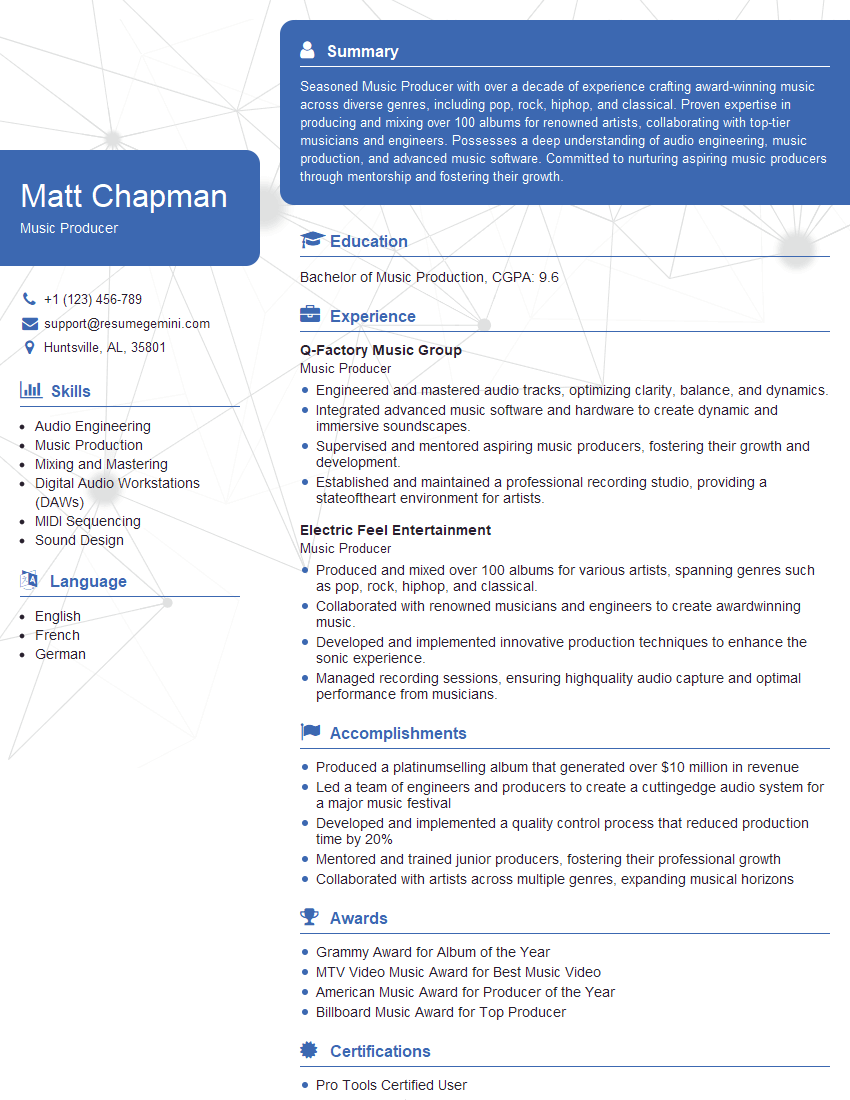
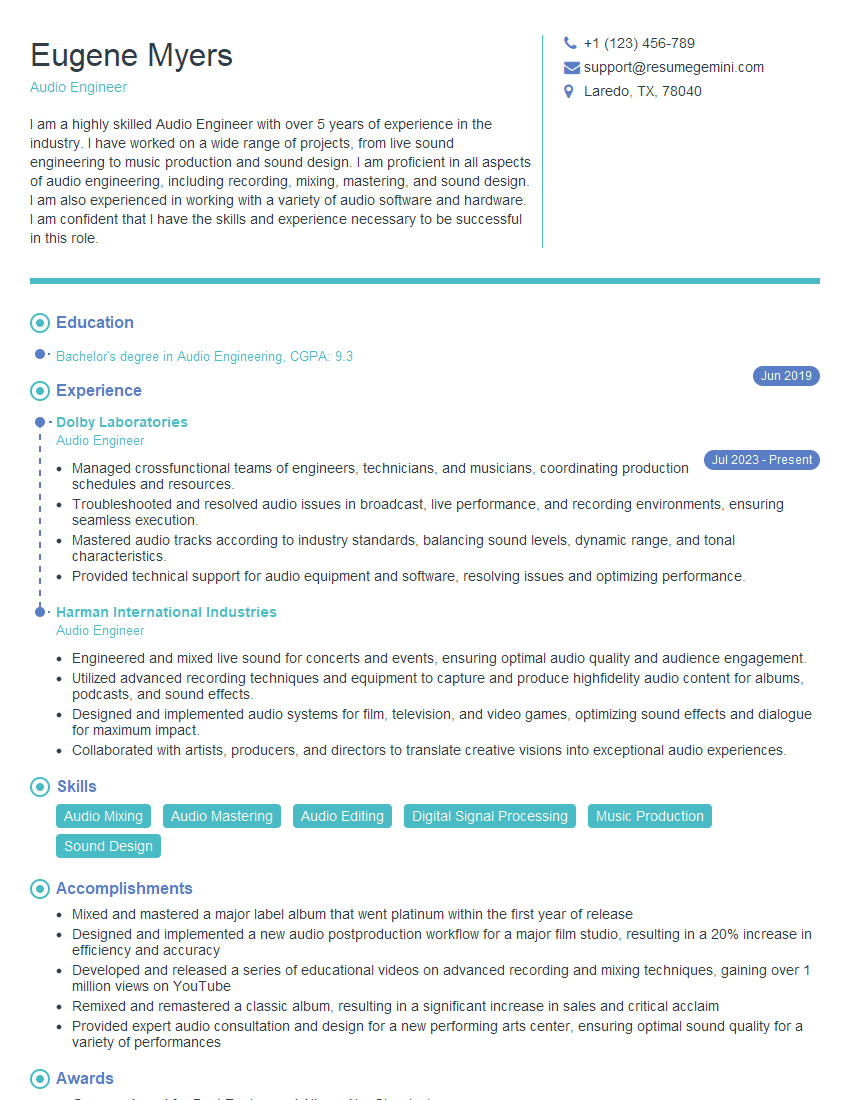
Mastering synthesizer knowledge significantly enhances your career prospects in music production, sound design, audio engineering, and related fields. A strong understanding of synthesizers demonstrates a high level of technical proficiency and creative problem-solving abilities, highly valued by employers. To stand out, create an ATS-friendly resume that highlights your skills and experience effectively. Use ResumeGemini to build a professional and impactful resume that showcases your expertise in synthesizers. Examples of resumes tailored to the Synthesizer field are available to help you craft the perfect application.
Explore more articles
Users Rating of Our Blogs
Share Your Experience
We value your feedback! Please rate our content and share your thoughts (optional).
What Readers Say About Our Blog
Very informative content, great job.
good