Interviews are more than just a Q&A session—they’re a chance to prove your worth. This blog dives into essential Communication with Victims and Witnesses interview questions and expert tips to help you align your answers with what hiring managers are looking for. Start preparing to shine!
Questions Asked in Communication with Victims and Witnesses Interview
Q 1. Describe your experience conducting interviews with traumatized individuals.
Interviewing traumatized individuals requires a highly specialized approach. My experience involves working with victims of various crimes, including assault, domestic violence, and human trafficking. A key aspect is recognizing that trauma manifests differently in each person, influencing their ability to recall details and articulate their experiences. I’ve learned to adjust my interviewing style to accommodate different emotional states, from intense anxiety and fear to dissociation or numbness. This often involves building trust slowly, allowing breaks as needed, and focusing on validating their feelings before attempting to gather specific information. For instance, I might begin a session by simply asking how they’re feeling today, allowing them to set the pace of the conversation. I frequently utilize open-ended questions, avoiding leading questions that might influence their responses, and ensure a safe and comfortable interview environment. A significant challenge is managing my own emotional response to hearing details of traumatic events, requiring self-awareness and professional boundaries to ensure I maintain objectivity and support the individual effectively.
Q 2. Explain the importance of active listening in communicating with victims.
Active listening is paramount in communicating with victims. It’s more than just hearing words; it’s about understanding the underlying emotions and perspectives. Active listening involves paying close attention to both verbal and nonverbal cues – body language, tone of voice, facial expressions – and reflecting back what the person is communicating to ensure comprehension. For example, if a victim says, “I felt completely powerless,” I might respond with, “It sounds like you felt a significant loss of control during that time.” This shows I’m truly listening and validates their feelings. Active listening creates a safe space, builds rapport, and fosters trust, enabling the victim to feel comfortable sharing sensitive information. It’s about making them feel heard and understood, regardless of the details shared.
Q 3. How do you build rapport and trust with a reluctant witness?
Building rapport and trust with a reluctant witness requires patience, empathy, and demonstrating genuine respect. It starts by acknowledging their hesitation and validating their concerns. I might begin by explaining the importance of their testimony and emphasizing that their safety and comfort are my top priorities. I use a non-judgmental approach, focusing on understanding their perspective rather than immediately demanding information. Building rapport involves finding common ground, perhaps discussing non-threatening topics to establish a connection before addressing the sensitive matter. I always clearly explain the process and answer any questions honestly and transparently. In one case, a reluctant witness was concerned about the impact on their family. Addressing these concerns directly, assuring confidentiality where possible, and offering support services helped establish the trust needed for them to fully participate.
Q 4. What techniques do you use to ensure the accuracy and reliability of witness statements?
Ensuring the accuracy and reliability of witness statements requires meticulous attention to detail and the use of specific techniques. I use open-ended questions to encourage detailed narratives rather than leading questions that might influence their responses. I avoid interrupting unless absolutely necessary, allowing them to recount the events in their own time and words. I take detailed notes, focusing on accuracy, and often record the interview (with consent) to ensure comprehensive documentation. I also utilize techniques like cognitive interviewing, which encourages the witness to recall the event from different perspectives and timelines. Crucially, I am aware of potential factors that can affect memory, such as stress, trauma, and the passage of time, carefully documenting these considerations. Finally, I corroborate information whenever possible by reviewing evidence and comparing accounts with other witnesses (when appropriate and ethical).
Q 5. How would you handle a situation where a victim is hesitant to disclose details?
When a victim is hesitant to disclose details, patience and understanding are key. Pressuring them will likely damage trust and hinder the process. I start by acknowledging their hesitation, assuring them there’s no pressure to share anything they aren’t comfortable with. I focus on creating a safe and non-judgmental environment, emphasizing their control over the information shared. I might offer different ways to convey information, like writing it down, drawing, or using visual aids. I also assure them that their feelings are valid, regardless of whether they can articulate every detail. I may start by gathering less sensitive information first, building confidence before addressing the more difficult aspects. If they are reluctant for reasons of fear of reprisal or other concerns, I will explain the supports available to them and work collaboratively to develop strategies to mitigate these concerns.
Q 6. Describe your understanding of trauma-informed interviewing.
Trauma-informed interviewing is a crucial approach that recognizes the profound impact of trauma on an individual’s memory, emotions, and ability to communicate. It prioritizes the victim’s safety, control, and empowerment. This approach avoids retraumatization by focusing on their experience from a strengths-based perspective. It emphasizes collaboration and partnership, rather than an adversarial interrogation style. Key components include creating a safe and supportive environment, validating their feelings, respecting their pace, and avoiding triggering questions or topics. The interviewer should be aware of the potential effects of trauma on memory and communication and adjust their techniques accordingly, offering opportunities for breaks and emphasizing control over the interview process. Respecting boundaries is paramount. The focus is on understanding the victim’s perspective and supporting their healing, rather than solely on obtaining legal evidence. This also involves recognizing and responding to signs of dissociation or other trauma responses during the interview.
Q 7. How do you adapt your communication style based on the victim’s age and vulnerability?
Adapting my communication style based on age and vulnerability is essential. With children, I use age-appropriate language and techniques, avoiding complex terminology or intimidating questions. I might use play therapy or visual aids to help them communicate. With older adults or individuals with cognitive impairments, I simplify my language, slow my pace, and provide clear instructions. I also need to be mindful of potential physical limitations or sensory sensitivities. For those with disabilities, I would adjust my approach to accommodate their specific needs, such as providing alternative communication methods or ensuring accessibility. In all cases, I ensure that the individual understands the process and feels comfortable and safe. I prioritize building rapport and trust, regardless of the individual’s age or level of vulnerability, ensuring that they feel empowered and respected throughout the process.
Q 8. What are the ethical considerations in interviewing victims and witnesses?
Ethical considerations in interviewing victims and witnesses are paramount. They revolve around ensuring fairness, respect, and minimizing further trauma. This includes obtaining informed consent, ensuring the interview is conducted in a safe and comfortable environment, treating individuals with dignity and empathy regardless of their background or the nature of the incident, avoiding leading questions or suggestive questioning that could influence their responses, and protecting their privacy and confidentiality to the fullest extent possible. For example, we must avoid language that could inadvertently blame the victim or minimize their experience. We must also be mindful of power dynamics and strive for a non-judgemental approach.
- Respect for Autonomy: Individuals have the right to decide whether, when, and how they want to participate in the interview.
- Beneficence: We strive to maximize the benefits of the interview while minimizing any potential harm.
- Non-maleficence: We must avoid causing any further psychological or emotional distress.
- Justice: We ensure fairness and equity in the interview process, regardless of an individual’s social status or background.
Q 9. Explain your understanding of confidentiality and its limits in this field.
Confidentiality in this field is crucial for building trust and encouraging open communication. Victims and witnesses are more likely to share crucial information if they feel assured their disclosures will remain private. However, there are legal and ethical limits. Confidentiality is not absolute. For instance, if a victim discloses information suggesting imminent harm to themselves or others, mandated reporting protocols require disclosure to the relevant authorities. Similarly, information may need to be shared with legal counsel or in court proceedings. It’s vital to clearly explain these limitations at the outset of the interview and emphasize that disclosure will be limited only to those directly involved in the investigation or legal process. We always act within the bounds of the law and our professional obligations. Think of it like this: Confidentiality is a promise, but certain circumstances may necessitate breaking that promise to protect someone from harm.
Q 10. How do you ensure the safety and well-being of victims during the interview process?
Ensuring safety and well-being is the top priority. This involves conducting interviews in a safe, private, and comfortable location, free from distractions and potential threats. We may need to accommodate specific needs, like providing a support person for the victim, or offering breaks as needed. It’s crucial to assess the individual’s emotional state throughout the interview. If the individual shows signs of significant distress, we might need to postpone or adjust the interview. Active listening and empathetic responses are vital in fostering a secure atmosphere. If a victim expresses fear of retribution, we’ll work with law enforcement to establish protective measures. For instance, if a domestic violence victim fears for their safety, we’d liaise with relevant support services to help them establish a safe haven and develop a safety plan. We would also provide information about resources such as shelters or counseling services.
Q 11. Describe your experience using various communication aids (e.g., visual aids, interpreters).
Using communication aids is essential for ensuring effective communication and accommodating diverse needs. Visual aids, such as photographs or maps, can help victims and witnesses recount events more accurately, especially in cases involving complex or traumatic experiences. For instance, a child may find it easier to point at a picture of the perpetrator rather than describe them verbally. Interpreters are crucial when there are language barriers. I’ve had experience using sign language interpreters, bilingual interpreters, and even specialized communication boards for individuals with cognitive disabilities. The key is to choose the most appropriate aid based on the individual’s specific needs and ensure the aid does not become a barrier itself. I always strive for a clear and open communication process that respects each person’s unique circumstances.
Q 12. How do you manage emotional outbursts or challenging behaviors from victims or witnesses?
Managing emotional outbursts or challenging behaviors requires patience, empathy, and understanding. It’s crucial to validate the individual’s feelings and acknowledge the significance of their experience. Providing a safe space where they feel comfortable expressing their emotions is key. If an outburst occurs, I’d pause the interview, offer a break, and provide reassurance. Techniques like deep breathing exercises or grounding techniques can also be helpful. In cases of extreme distress, I would consult with a mental health professional or refer the individual to appropriate support services. Remember, these outbursts are a manifestation of the trauma experienced, not a personal attack on the interviewer. Our role is to be supportive and understanding throughout the process. I would document the outburst and any support offered in the interview notes.
Q 13. What are some common challenges in interviewing victims and witnesses, and how do you overcome them?
Common challenges include memory recall issues, reluctance to disclose information, trauma-related responses (e.g., emotional flashbacks or dissociation), and language barriers. We address these by employing techniques such as memory aids (visual aids, timelines), building rapport through empathy and active listening, adapting the interview style to accommodate emotional needs (taking breaks, providing reassurance), and using interpreters or other communication tools. I find that setting a comfortable and safe atmosphere is crucial. By creating a non-judgemental and supportive environment, individuals are more likely to open up and share their experiences. Additionally, careful planning and preparation, such as reviewing any relevant case files in advance, greatly improve the efficiency and effectiveness of the interview.
Q 14. How do you document interview sessions accurately and comprehensively?
Accurate and comprehensive documentation is essential for maintaining the integrity of the interview and ensuring reliable evidence for legal proceedings. My documentation includes a detailed record of the date, time, location, and individuals present. I meticulously document all statements made by the victim and witness, verbatim whenever possible. Any nonverbal cues, emotional responses, or pauses are noted as well. If any communication aids or interpreters were used, this is explicitly stated. The documentation includes details of any breaks taken and any support services offered or discussed. I follow strict guidelines regarding the storage and security of the documentation to ensure confidentiality and prevent any tampering. It’s crucial to review the documentation after the interview for accuracy and completeness before filing it.
Q 15. Explain your understanding of the legal implications of witness statements.
Witness statements carry significant legal weight, forming a cornerstone of many investigations and court proceedings. Their admissibility hinges on several factors, including the witness’s competency (ability to understand and truthfully recount events), their credibility (believability), and the statement’s reliability (accuracy and freedom from undue influence). A statement obtained through coercion, improper questioning techniques, or leading questions might be deemed inadmissible. Inconsistencies between a witness’s statement and their testimony in court can also significantly impact the statement’s reliability. Furthermore, legal protections exist for witnesses, like the right against self-incrimination and the right to legal counsel, which must be scrupulously observed during the statement-taking process.
For example, a statement obtained from a child witness needs to adhere to specific guidelines designed to ensure the child feels safe and understands the process. Leading questions like, “Did the man hurt you?” are inappropriate; open-ended prompts like, “Can you tell me what happened?” are preferred. Any perceived coercion or pressure can compromise the statement’s legal validity.
Career Expert Tips:
- Ace those interviews! Prepare effectively by reviewing the Top 50 Most Common Interview Questions on ResumeGemini.
- Navigate your job search with confidence! Explore a wide range of Career Tips on ResumeGemini. Learn about common challenges and recommendations to overcome them.
- Craft the perfect resume! Master the Art of Resume Writing with ResumeGemini’s guide. Showcase your unique qualifications and achievements effectively.
- Don’t miss out on holiday savings! Build your dream resume with ResumeGemini’s ATS optimized templates.
Q 16. How do you differentiate between fact-finding and therapeutic communication in this context?
Fact-finding communication aims to objectively gather information relevant to a case, focusing on the ‘what,’ ‘when,’ ‘where,’ and ‘how’ of events. It prioritizes accuracy and neutrality, minimizing emotional impact on the witness. Therapeutic communication, on the other hand, prioritizes the emotional well-being of the individual, validating their feelings and experiences. While acknowledging the emotional aspects is important in witness interviews (especially with trauma survivors), the primary goal remains to obtain factual accounts. The two approaches aren’t mutually exclusive; a skilled interviewer integrates both, employing empathy and support while rigorously pursuing factual accuracy.
Imagine interviewing a witness to a robbery. Fact-finding would center on details: descriptions of the perpetrator, the sequence of events, items stolen. Therapeutic communication would involve acknowledging the witness’s fear and anxiety, creating a safe space for them to recount the experience, ensuring they feel heard and understood. The balance between these approaches is crucial for a successful interview.
Q 17. How do you handle conflicting accounts from different witnesses?
Conflicting accounts demand a thorough and unbiased investigation. I approach this systematically. First, I review each witness’s statement carefully, noting discrepancies and potential explanations (e.g., different perspectives, memory limitations, biases). Then, I conduct follow-up interviews, clarifying ambiguities and exploring possible reasons for the inconsistencies. I might utilize visual aids like maps or diagrams to aid recall and ensure the witness understands the questions. I carefully document all interactions and any explanations offered by witnesses. Sometimes, inconsistencies can highlight biases or inaccuracies. Other times, they may simply reflect the limitations of human memory and perspective. The goal is not to find fault but to understand the complete picture.
For example, in a car accident, one witness might focus on the speed of one vehicle while another focuses on the actions of the other driver. Reconciling these different perspectives requires careful questioning and potentially corroborating evidence like security footage.
Q 18. Describe your experience working with diverse populations and cultural backgrounds.
My experience encompasses working with diverse populations, including individuals from various cultural, linguistic, and socioeconomic backgrounds. This requires cultural sensitivity, awareness of potential communication barriers (language, nonverbal cues), and employing culturally appropriate interview techniques. I adapt my approach to accommodate individual needs. For example, I use interpreters when necessary, ensuring confidentiality and that the interpreter is properly briefed on the ethical responsibilities of their role. Understanding differing communication styles is also crucial – direct questioning might be more appropriate in some cultures, while a more indirect, relationship-building approach may be preferable in others. I always strive to create a safe and respectful environment for every individual.
I recall an instance where I interviewed a refugee who had experienced significant trauma. Understanding her background and employing a patient, empathetic approach allowed her to share her testimony. Using an interpreter who understood her cultural context was vital in establishing trust and gaining her cooperation.
Q 19. How do you ensure the accessibility and inclusivity of your interview techniques?
Ensuring accessibility and inclusivity necessitates proactive steps. This includes providing interviews in accessible locations, offering alternative communication methods (e.g., written statements for those with speech impairments), and utilizing assistive technologies where appropriate. I use clear and simple language, avoiding jargon, and I regularly check for understanding. Cultural considerations, as mentioned earlier, are also paramount. Ensuring confidentiality and maintaining the dignity and respect of the witness throughout the process are crucial. The environment should be comfortable, free from distractions, and considerate of any physical or cognitive limitations the witness may have. Offering accommodations for disabilities, such as providing large-print materials or adjusting lighting, is vital.
For a visually impaired individual, I would describe the scene visually, use tactile materials, and perhaps record the interview to allow them to review it later.
Q 20. What resources are available to support victims and witnesses during the interview process?
A range of resources are available to support victims and witnesses. These include: victim advocates who offer emotional support and practical assistance (like navigating the legal system); legal aid services providing legal representation; specialized trauma-informed services tailored to the specific needs of survivors; and crisis hotlines and mental health professionals providing immediate and ongoing support. Furthermore, many jurisdictions have witness protection programs for those whose safety might be at risk. The availability of these resources varies, but effective communication involves clearly informing witnesses about these options and ensuring they have access to the help they need.
It’s vital to provide information about available resources early in the process, empowering witnesses to make informed choices and access the support they require.
Q 21. How do you prepare for an interview with a victim who has experienced a specific type of trauma (e.g., domestic violence, sexual assault)?
Preparing for an interview involving trauma requires specific considerations. I would first familiarize myself with the dynamics of that particular type of trauma (e.g., the power imbalances inherent in domestic violence, the long-term psychological impact of sexual assault). I would build rapport carefully, ensuring a safe and controlled environment where the victim feels empowered and in control. I’d use open-ended questions, allowing them to set the pace of the interview. I would avoid pressure or leading questions, focusing on validating their experience and demonstrating empathy and understanding. Prioritizing their comfort and safety is paramount. The use of trauma-informed interviewing techniques, avoiding retraumatization, is crucial. Post-interview support and access to relevant resources must be offered.
For example, in a sexual assault case, I would ensure the interview takes place in a private, comfortable location, and I would emphasize the victim’s control over the process. I would be mindful of the potential for emotional distress and be prepared to offer breaks or adjustments as needed.
Q 22. How do you recognize and respond to signs of deception or manipulation during an interview?
Recognizing deception or manipulation during an interview requires keen observation and a nuanced understanding of human behavior. It’s not about looking for definitive ‘tells,’ but rather noticing inconsistencies and incongruities. I look for discrepancies between a person’s verbal and nonverbal communication – for example, a calm demeanor while describing a traumatic event might be inconsistent with the emotional weight of the narrative. Changes in posture, fidgeting, avoiding eye contact, or inconsistent descriptions of events can also be significant indicators. I might notice hesitation or repeated phrases, or evasiveness when answering specific questions. Responding involves carefully documenting these inconsistencies, asking clarifying questions without directly accusing, and employing techniques like repeating the person’s statement to ensure understanding and to prompt further elaboration. It’s also crucial to build rapport, creating a safe space where the individual feels comfortable and less likely to feel the need to be deceptive.
For example, if someone describes a robbery but their account of the perpetrator’s height changes several times during the interview, this warrants further investigation. Another example: a victim claims to have been completely unharmed, yet shows signs of physical trauma. This incongruity needs careful exploration through open-ended questions, such as, ‘Can you tell me more about what happened after the suspect left?’ This approach allows for more natural disclosure and reduces the pressure of direct confrontation.
Q 23. Describe your knowledge of different interview techniques (e.g., cognitive interviewing, narrative interviewing).
My experience encompasses several interview techniques, each suited to different circumstances. Cognitive interviewing relies on memory-enhancing techniques to help witnesses reconstruct events more accurately. This includes recreating the context of the event, encouraging free recall, and prompting them to describe the event from different perspectives. For instance, asking the witness to recall the event backward in time can surprisingly reveal details overlooked in chronological recounting. Narrative interviewing focuses on letting the witness tell their story uninterrupted, allowing for a natural flow of information. This technique minimizes interruption, which can disrupt a witness’s recall. I also use a combination of open-ended and closed-ended questions to gather both detailed accounts and specific information. The choice of technique is highly dependent on the individual’s emotional state, the nature of the event, and the information required. In cases involving trauma, I often begin with narrative interviewing to establish trust and rapport before moving towards more structured cognitive techniques.
Q 24. How would you deal with a situation where a victim recants their initial statement?
A victim recanting their initial statement is a complex situation requiring a sensitive and thorough approach. First, I wouldn’t immediately dismiss the recantation; instead, I would explore the reasons behind the change of statement. This often involves understanding the pressures or influences the victim may be under – fear of retribution, coercion, or even simple self-doubt. The interview should be conducted in a safe and supportive environment to ensure the individual feels comfortable sharing their concerns. I’d re-interview the victim using techniques like narrative interviewing to elicit their account without interrupting the flow of information. This allows me to identify inconsistencies and potential influences and to understand the reasons behind the change in their statement. It’s crucial to document everything carefully, including any inconsistencies between statements and any potential pressures influencing the recantation. This documentation will be vital for later analysis and any legal proceedings.
It’s also important to remember that recantations aren’t necessarily indicators of falsehood. They can be a result of fear, intimidation, or even a misinterpretation of events. A thorough reassessment of all available evidence is crucial before making any conclusions.
Q 25. What are your strategies for minimizing the impact of secondary trauma on yourself?
Minimizing the impact of secondary trauma is crucial for maintaining my own well-being and professional effectiveness. My strategies include maintaining clear professional boundaries, separating my personal life from my work, and engaging in regular self-care practices. This includes prioritizing physical health with regular exercise and healthy eating, and prioritizing mental well-being through meditation, mindfulness, or other stress reduction techniques. I actively seek supervision and debriefing sessions with colleagues, providing an opportunity to discuss challenging cases and process difficult emotions in a supportive environment. Furthermore, continuous professional development ensures I remain abreast of the latest trauma-informed practices and techniques, aiding in the management of secondary trauma. Recognizing my own limitations and seeking support when needed is paramount. I have a strong support system outside of work, which is crucial in maintaining a balance.
Q 26. How do you maintain objectivity while empathetically communicating with victims?
Maintaining objectivity while showing empathy is a delicate balancing act, but crucial for effective communication. It’s about understanding the victim’s emotional state and perspective while remaining neutral in assessing the facts of the case. Empathy involves actively listening, validating their feelings, and demonstrating care and concern without minimizing their experience. Objectivity means focusing on gathering information accurately and fairly, avoiding judgment or bias. This involves asking open-ended questions, focusing on factual details, and avoiding leading questions. I aim to create a safe and trusting environment, allowing the victim to share their story without feeling judged. Documenting the interview accurately and thoroughly is crucial for preserving objectivity. Regular supervision and debriefing sessions with colleagues allow for an external check on my objectivity and prevent biases from influencing my interactions with victims.
Q 27. Explain your experience in preparing victims and witnesses for court testimony.
Preparing victims and witnesses for court testimony is a critical part of my role. This involves several steps, beginning with understanding the specific details of the case and the individual’s role in it. We conduct practice sessions simulating the courtroom environment. I will help them anticipate potential questions from the lawyers and plan their responses, ensuring they are clear, concise, and accurate. This may also involve role-playing to help them cope with challenging questions or potential confrontations. A key aspect is to build their confidence, addressing their concerns and anxieties about testifying. I emphasize the importance of honesty and accuracy and explain the courtroom procedures to reduce their apprehension. Throughout this process, I maintain open communication and offer support, recognizing that courtroom testimony can be a very stressful experience. It is essential that I equip them with the necessary tools and reassurance, ensuring they feel empowered and prepared to provide the best possible testimony.
Q 28. Describe your understanding of legal and ethical guidelines related to recording interviews.
My understanding of legal and ethical guidelines related to recording interviews is comprehensive. I am thoroughly aware of the importance of obtaining informed consent before recording any interview. This consent must be explicit, voluntary, and freely given, ensuring the individual understands the purpose of the recording and their rights. The recording process must adhere to all relevant data protection laws and regulations, ensuring the security and confidentiality of the recording. Specific legislation regarding recording interviews varies by jurisdiction, and strict adherence to these laws is critical. Any recordings are stored securely, and access is carefully controlled, in accordance with the applicable laws. The ethical considerations involve respecting the dignity and privacy of the individuals involved. This includes being sensitive to their emotional state and allowing them to take breaks if necessary. I ensure transparency throughout the interview process and fully explain the procedures involved. Furthermore, I am aware of the potential legal implications of incorrect or incomplete recordings and work diligently to ensure accuracy and completeness.
Key Topics to Learn for Communication with Victims and Witnesses Interview
- Active Listening and Empathetic Communication: Understanding verbal and nonverbal cues, demonstrating genuine concern, and building rapport with individuals experiencing trauma.
- Trauma-Informed Communication: Recognizing the impact of trauma on communication styles and adapting your approach accordingly. This includes understanding the potential for delayed disclosure and the importance of validating experiences.
- Effective Questioning Techniques: Learning how to elicit information without retraumatizing the individual, using open-ended questions, and navigating sensitive topics with care and professionalism.
- Information Gathering and Documentation: Accurately recording statements and observations while maintaining ethical standards and legal considerations. Understanding the importance of clear, concise, and objective documentation.
- Crisis Intervention and Support: Providing immediate support and resources to individuals in crisis situations, connecting them with relevant services, and ensuring their safety and well-being.
- Legal and Ethical Considerations: Understanding the legal framework governing communication with victims and witnesses, maintaining confidentiality, and adhering to professional ethical codes of conduct.
- Cross-Cultural Communication: Recognizing and addressing cultural differences in communication styles and beliefs to ensure effective and respectful interactions.
- Dealing with Challenging Individuals: Developing strategies for managing difficult conversations, addressing resistance or reluctance to cooperate, and maintaining professionalism in challenging situations.
- Collaboration and Teamwork: Understanding the importance of effective collaboration with other professionals, such as law enforcement, medical personnel, and social workers.
Next Steps
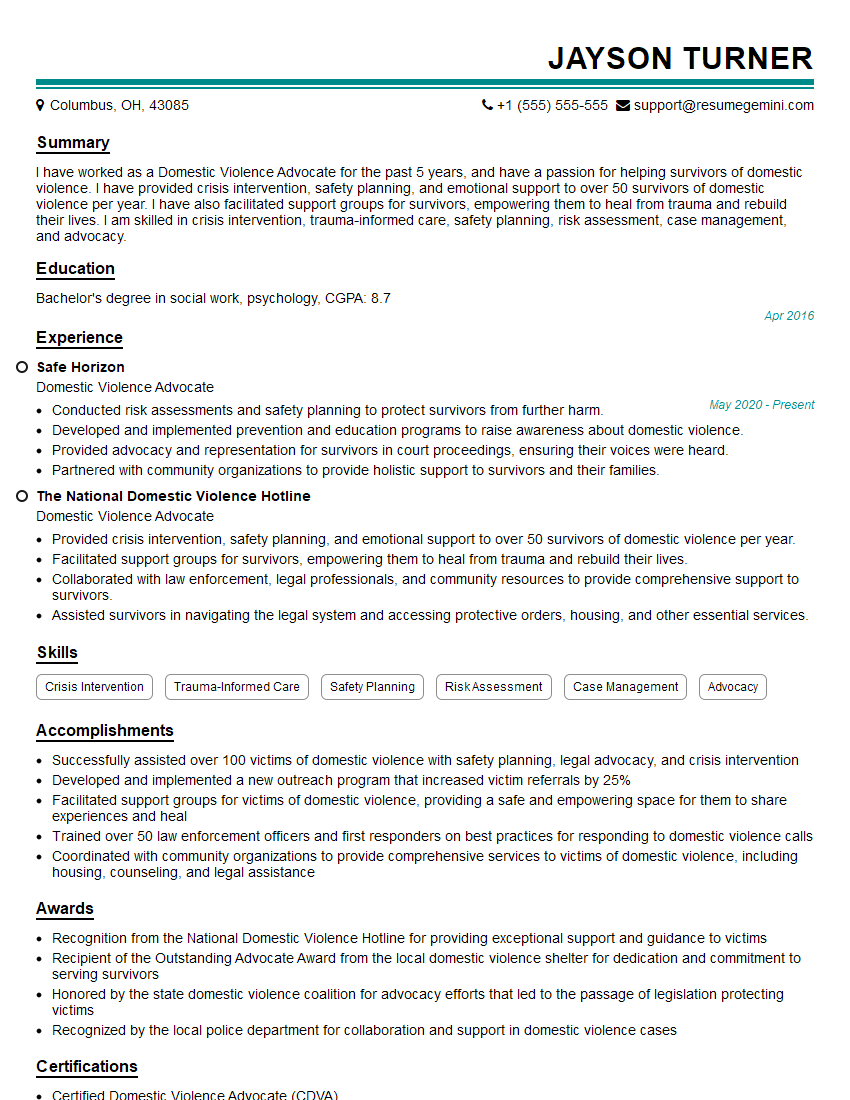
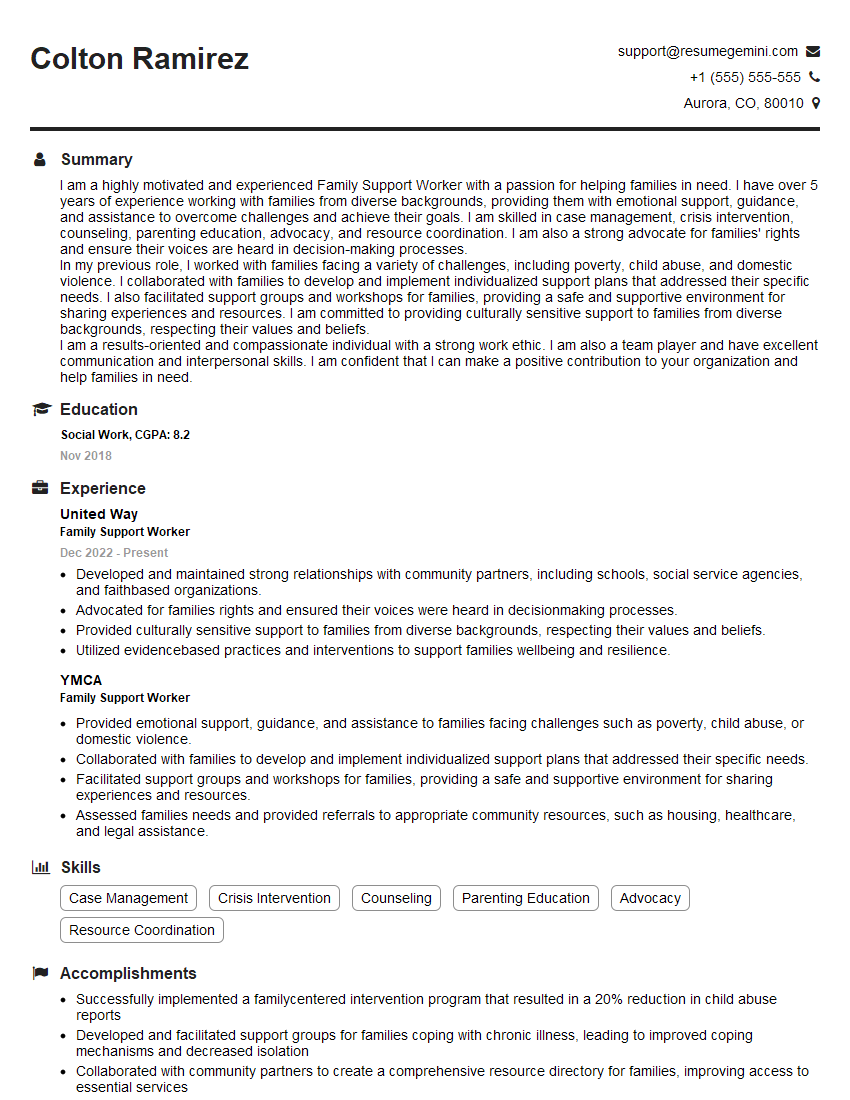
Mastering communication with victims and witnesses is crucial for career advancement in fields requiring sensitivity, empathy, and strong interpersonal skills. It demonstrates your ability to handle sensitive situations with professionalism and compassion, opening doors to diverse and rewarding opportunities. To significantly boost your job prospects, it’s vital to create an ATS-friendly resume that highlights these skills effectively. ResumeGemini is a trusted resource that can help you craft a compelling and impactful resume, showcasing your qualifications in the best possible light. Examples of resumes tailored to Communication with Victims and Witnesses are available to guide your resume building process.
Explore more articles
Users Rating of Our Blogs
Share Your Experience
We value your feedback! Please rate our content and share your thoughts (optional).
What Readers Say About Our Blog
Very informative content, great job.
good