Interviews are more than just a Q&A session—they’re a chance to prove your worth. This blog dives into essential Compliance and Audit Readiness interview questions and expert tips to help you align your answers with what hiring managers are looking for. Start preparing to shine!
Questions Asked in Compliance and Audit Readiness Interview
Q 1. Explain the COSO framework and its importance in internal controls.
The Committee of Sponsoring Organizations of the Treadway Commission (COSO) framework is a widely accepted internal control framework that provides a comprehensive model for designing, implementing, and evaluating an organization’s internal control system. It helps organizations achieve their objectives across operations, reporting, and compliance. Think of it as a blueprint for ensuring things run smoothly and reliably.
Its importance lies in providing a structured approach to managing risk. By implementing the COSO framework, companies can significantly reduce the likelihood of errors, fraud, and non-compliance. The framework’s five components – Control Environment, Risk Assessment, Control Activities, Information and Communication, and Monitoring Activities – work together to create a robust internal control system.
- Control Environment: This sets the tone at the top. It’s about the ethical values, integrity, and commitment to competence within the organization.
- Risk Assessment: This involves identifying and analyzing the risks that could affect the achievement of objectives. It’s about understanding what could go wrong.
- Control Activities: These are the actions established through policies and procedures to help ensure that risk responses are carried out. These are the actual safeguards put in place.
- Information and Communication: This ensures that relevant information is identified, captured, and communicated in a form and time frame that enables people to carry out their responsibilities. It’s about the flow of information.
- Monitoring Activities: These are ongoing evaluations of the effectiveness of the internal control system. It’s about regularly checking if the system is working as intended.
For example, a company might use COSO to assess the risk of financial statement misstatement. They’d identify relevant risks (e.g., errors in revenue recognition), implement controls (e.g., segregation of duties, regular reconciliations), and monitor their effectiveness (e.g., internal audits).
Q 2. Describe your experience with SOX compliance.
I have extensive experience with Sarbanes-Oxley Act (SOX) compliance, having led several SOX compliance initiatives across various industries. My experience includes designing and implementing SOX-compliant internal controls, performing risk assessments, documenting control procedures, and conducting SOX audits. In one particular instance, I helped a publicly traded company navigate a challenging SOX audit by implementing robust internal controls over financial reporting (ICFR), resulting in a clean audit opinion.
My expertise spans all aspects of SOX compliance, from developing and maintaining a comprehensive compliance program to training employees on SOX requirements. I have firsthand experience working with auditors, understanding their expectations and methodologies, and effectively addressing their queries.
Furthermore, I am proficient in utilizing various SOX compliance tools and technologies to streamline processes and ensure compliance documentation is up-to-date and readily accessible. This includes utilizing compliance management software to manage risk assessments, control testing, and remediation efforts.
Q 3. How do you identify and assess compliance risks?
Identifying and assessing compliance risks involves a systematic approach. It begins with understanding the applicable laws, regulations, and industry standards relevant to the organization. This is often done using a combination of top-down and bottom-up approaches. The top-down approach reviews existing frameworks such as COSO and industry best practices to identify key compliance requirements. The bottom-up approach involves detailed analysis of existing processes and associated risks.
Next, I conduct risk assessments utilizing various methods such as:
- Risk registers: These documents help identify, analyze, and track potential compliance risks across different business functions.
- Gap analysis: Comparing current practices with regulatory requirements to pinpoint areas of weakness.
- Vulnerability assessments: Identifying potential security weaknesses that could expose the organization to compliance violations.
- Interviews and surveys: Engaging with employees to gather their perspectives on potential compliance risks.
The assessment considers the likelihood and potential impact of each risk. A high likelihood and high impact risk warrants immediate attention and mitigation strategies. For example, failure to comply with data privacy regulations (like GDPR or CCPA) can result in significant fines and reputational damage; hence, it’s a high-priority risk.
Q 4. What are your strategies for mitigating compliance risks?
Mitigating compliance risks requires a multi-pronged approach involving:
- Developing and implementing robust internal controls: This ensures that processes are designed to prevent or detect compliance violations. Examples include segregation of duties, authorization matrices, and regular reconciliations.
- Training and awareness programs: Educating employees on relevant laws, regulations, and internal policies. Regular refresher training is essential to reinforce understanding and address changing regulatory landscapes.
- Regular monitoring and reporting: Continuously monitoring compliance activities, identifying gaps, and reporting to senior management. Key performance indicators (KPIs) should be established to measure compliance effectiveness.
- Incident response plan: Establishing a clear process to handle compliance violations or suspected violations. This includes investigation, remediation, and reporting.
- Technology solutions: Leveraging technology to automate compliance tasks, such as data loss prevention tools, access control systems, and compliance management software. This enhances efficiency and reduces human error.
For instance, if a risk assessment identifies a weakness in data security, the mitigation strategy could involve implementing stronger access controls, encrypting sensitive data, and providing security awareness training to employees. Continuous monitoring of these controls is also crucial to ensure their ongoing effectiveness.
Q 5. Explain your understanding of internal controls over financial reporting.
Internal controls over financial reporting (ICFR) are the processes designed to provide reasonable assurance regarding the reliability of financial reporting and the preparation of financial statements for external purposes in accordance with generally accepted accounting principles (GAAP).
Effective ICFR ensures that financial information is accurate, complete, and reliable. It encompasses a broad range of controls, including those related to:
- Authorization of transactions: Ensuring that all transactions are properly authorized before processing.
- Segregation of duties: Separating duties to prevent fraud and error.
- Record keeping: Maintaining accurate and complete records of all financial transactions.
- Reconciliations: Regularly reconciling accounts to detect discrepancies.
- Physical security of assets: Protecting physical assets from loss or theft.
A well-designed ICFR framework reduces the risk of material misstatements in financial statements, enhances the credibility of the financial reporting process, and protects the organization’s reputation and financial health. Failure to maintain effective ICFR can lead to significant financial losses, regulatory penalties, and reputational damage.
Q 6. What is your experience with conducting internal audits?
I have extensive experience conducting internal audits, including both financial and operational audits. My approach is risk-based, focusing on areas with the highest potential for material misstatement or operational inefficiency. I have led numerous audits covering a wide range of areas, including revenue recognition, accounts payable, inventory management, and IT security.
My experience encompasses all phases of the audit process, from planning and fieldwork to reporting and follow-up. I am proficient in using various audit methodologies and techniques, including data analytics, to identify and assess risks effectively. I am also experienced in communicating audit findings clearly and concisely to management and stakeholders, providing recommendations for improvement.
In a recent internal audit, I identified a significant weakness in the company’s inventory management process, resulting in overstated inventory values. My recommendations led to the implementation of improved inventory tracking and control procedures, resulting in significant cost savings and improved accuracy of financial reporting.
Q 7. How do you develop and implement a compliance program?
Developing and implementing a robust compliance program is an iterative process. It starts with a thorough understanding of applicable laws, regulations, and industry standards. This involves a detailed assessment of the organization’s risk profile to pinpoint areas needing attention. Think of this as a detective work phase.
The next step is designing a program that addresses identified risks. This includes:
- Establishing a clear compliance policy: This articulates the organization’s commitment to compliance and outlines the expectations for employees.
- Assigning clear responsibilities: Designating individuals responsible for overseeing and managing compliance initiatives.
- Developing and implementing procedures: Creating detailed procedures to ensure compliance with relevant laws, regulations, and internal policies.
- Training employees: Conducting regular training programs to educate employees on compliance requirements and their responsibilities.
- Monitoring and reporting: Establishing a system for monitoring compliance activities, identifying gaps, and reporting to senior management.
- Regular review and updates: Reviewing and updating the compliance program periodically to reflect changes in laws, regulations, and business operations.
Implementing a compliance program isn’t a one-time event; it’s a continuous cycle of assessment, improvement, and adaptation. Regular monitoring, feedback, and adjustments are essential to ensure the program remains effective and up-to-date in the face of evolving regulations and organizational changes. Using a combination of technology, policy, and trained personnel is key to sustainable compliance.
Q 8. Describe your experience with regulatory compliance (e.g., GDPR, HIPAA).
My experience with regulatory compliance spans several years and encompasses a wide range of regulations, including GDPR (General Data Protection Regulation) and HIPAA (Health Insurance Portability and Accountability Act). I’ve worked directly with organizations to implement and maintain compliance programs for these and other relevant laws. For example, with GDPR, I’ve assisted companies in developing data processing agreements, conducting data protection impact assessments (DPIAs), managing data breach response plans, and training employees on data privacy principles. Under HIPAA, my work has focused on securing protected health information (PHI) through the implementation of robust security protocols, access controls, and auditing mechanisms. I understand the nuances of each regulation, the penalties for non-compliance, and the best practices for achieving and maintaining compliance.
In one particular engagement, a healthcare provider faced potential HIPAA violations due to inadequate employee training. By conducting a thorough gap analysis, developing targeted training materials, and implementing regular compliance audits, we not only mitigated the risk of non-compliance but also significantly improved their overall data security posture. This highlights my ability to not only identify weaknesses but also to develop and implement effective solutions.
Q 9. How do you ensure the effectiveness of a compliance program?
Ensuring the effectiveness of a compliance program is an ongoing process that requires a multi-faceted approach. It begins with a strong foundation: a well-defined compliance policy that’s tailored to the specific risks and regulatory requirements of the organization. This policy should be regularly reviewed and updated to reflect any changes in legislation or industry best practices. Beyond the policy, effectiveness is determined by a combination of factors including:
- Regular Audits and Assessments: Internal and external audits are crucial for identifying weaknesses and ensuring the compliance program is functioning as intended.
- Employee Training and Awareness: Employees need to understand their roles and responsibilities in maintaining compliance. Ongoing training programs are essential.
- Risk Management Framework: A robust risk management framework helps identify and assess potential compliance risks, enabling proactive mitigation strategies.
- Monitoring and Reporting: Continuous monitoring of compliance activities and reporting to senior management ensures timely identification and resolution of any issues.
- Documentation: Meticulous record-keeping of compliance efforts, policies, procedures, and audit results provides evidence of due diligence.
Think of a compliance program as a living document – it needs constant nurturing and attention to remain effective.
Q 10. How do you handle non-compliance issues?
Handling non-compliance issues requires a structured and systematic approach. The first step is to identify and investigate the issue thoroughly to understand its root cause and extent. This often involves reviewing logs, interviewing stakeholders, and analyzing relevant documentation. Once the issue is understood, a remediation plan needs to be developed and implemented. This may involve corrective actions, such as updating policies, retraining employees, or implementing new controls. It’s critical to document every step of the process, including the root cause analysis, corrective actions, and verification that the issue has been resolved. In cases of significant non-compliance, it may be necessary to report the issue to the relevant regulatory authorities. The goal is not only to rectify the immediate issue but also to prevent similar incidents from occurring in the future.
For instance, if a data breach occurs, the response would involve immediately securing the system, notifying affected individuals, and reporting the incident to regulatory bodies like the relevant data protection authority (depending on the jurisdiction). Post-incident analysis is crucial to identify vulnerabilities and prevent future breaches.
Q 11. What is your experience with audit planning and execution?
My experience with audit planning and execution is extensive. I’ve led and participated in numerous internal and external audits across various industries. The process typically starts with understanding the audit objectives and scope, identifying key controls and risks, and developing an audit plan that outlines the procedures and timeline. This involves creating detailed checklists, designing test procedures, and selecting a suitable sample size for testing. During the execution phase, I use a combination of techniques, including interviews, document reviews, and system testing, to gather audit evidence. I meticulously document all findings and ensure that the audit is conducted in accordance with relevant auditing standards and regulations.
For example, in a recent audit of a financial institution, we utilized a risk-based approach to focus our testing on areas with the highest potential for material misstatement. This allowed us to efficiently allocate resources and maximize the effectiveness of the audit.
Q 12. How do you document audit findings and recommendations?
Documenting audit findings and recommendations is critical for ensuring accountability and facilitating corrective actions. I use a standardized reporting format that includes a clear description of the finding, the evidence supporting the finding, the impact of the finding, and a recommendation for corrective action. This documentation is typically presented in a formal audit report, which is distributed to management and relevant stakeholders. The report should be clear, concise, and easy to understand, even for individuals without an audit background. Each finding should be assigned a severity level (e.g., critical, major, minor) to prioritize remediation efforts.
I often utilize a standardized template for audit reports, including sections for executive summary, methodology, findings, recommendations, and management response. This ensures consistency and allows for easy comparison across audits.
Q 13. How do you communicate audit results to management?
Communicating audit results to management is crucial for driving improvements and ensuring that identified issues are addressed. I present the audit findings in a clear, concise, and objective manner, focusing on the key risks and recommendations. I tailor my communication style to the audience, ensuring that technical information is presented in a way that is easily understood by non-technical stakeholders. The communication process often involves a formal presentation followed by a question-and-answer session, enabling open dialogue and addressing any concerns. I also provide management with a detailed written report that supplements the presentation and serves as a reference point for future discussions. Following the presentation, I follow up to ensure that management understands the findings and is taking the necessary corrective actions.
A good analogy is a doctor explaining a patient’s diagnosis and treatment plan. Clarity and empathy are key to ensuring the patient understands the situation and cooperates with the treatment.
Q 14. What is your experience with using audit software?
I have extensive experience using various audit software tools, including ACL, IDEA, and TeamMate. These tools enhance the efficiency and effectiveness of the audit process by automating tasks such as data analysis, sampling, and reporting. For example, I use ACL to perform data analytics to identify anomalies and trends in large datasets, which would be very time-consuming to do manually. TeamMate helps me manage the entire audit workflow, from planning and execution to reporting. My proficiency in these tools allows me to perform audits more efficiently and effectively, providing higher quality results and insights. I am also comfortable learning and adapting to new audit software tools as needed.
Example: Using ACL to perform a Benford's Law analysis on financial transaction data to identify potential anomalies.
Q 15. Describe your experience with data analytics in compliance and audit.
Data analytics is transformative in compliance and audit. It allows us to move beyond manual, sample-based reviews to a more comprehensive, risk-based approach. Instead of relying on gut feelings or isolated incidents, we can leverage data to identify trends, anomalies, and potential compliance gaps.
For example, in a financial institution, I’ve used data analytics to analyze transaction data for patterns indicative of fraud. By applying machine learning algorithms to flag unusual transactions based on parameters like amount, frequency, and location, we were able to significantly improve the detection rate and reduce losses. Another example includes using data visualization tools to create dashboards that present key compliance metrics, providing real-time insights into our performance against regulatory requirements and allowing for proactive intervention.
My experience encompasses using tools like SQL, Python (with libraries like Pandas and Scikit-learn), and specialized compliance analytics platforms to extract, clean, analyze, and visualize data from various sources. This includes internal systems, databases, and external data providers. The outcome is always a more efficient and effective compliance program, and more robust audit reports.
Career Expert Tips:
- Ace those interviews! Prepare effectively by reviewing the Top 50 Most Common Interview Questions on ResumeGemini.
- Navigate your job search with confidence! Explore a wide range of Career Tips on ResumeGemini. Learn about common challenges and recommendations to overcome them.
- Craft the perfect resume! Master the Art of Resume Writing with ResumeGemini’s guide. Showcase your unique qualifications and achievements effectively.
- Don’t miss out on holiday savings! Build your dream resume with ResumeGemini’s ATS optimized templates.
Q 16. How do you stay current with compliance regulations?
Staying current with compliance regulations is an ongoing process, crucial for maintaining a robust compliance posture. My strategy is multi-faceted:
- Subscription to regulatory updates: I subscribe to newsletters and alerts from reputable organizations like the SEC, FCA, and relevant industry bodies. This provides me with immediate notification of changes.
- Professional development: I actively participate in webinars, conferences, and training programs to stay abreast of emerging trends and best practices in compliance. This allows me to proactively address potential compliance challenges.
- Networking: I regularly network with other compliance professionals through industry associations and events. Sharing experiences and best practices is invaluable.
- Internal knowledge sharing: I ensure that within my organization, we have a process for disseminating critical compliance updates to all relevant departments.
- Monitoring regulatory websites: Regularly reviewing websites of relevant regulatory bodies allows me to keep my finger on the pulse of the latest announcements and changes.
This holistic approach ensures that I’m not just reacting to changes but actively anticipating and mitigating potential risks.
Q 17. How do you manage conflicting priorities in a compliance and audit role?
Conflicting priorities are a common challenge in compliance. My approach involves a structured prioritization framework:
- Risk assessment: I start by assessing the risk associated with each task. High-risk activities, such as those with significant regulatory penalties or potential for financial loss, are prioritized.
- Urgency: Time-sensitive matters, such as impending deadlines or immediate compliance issues, take precedence.
- Resource allocation: I assess the resources required for each task, allocating resources to high-priority activities.
- Communication and collaboration: Open communication with stakeholders is critical. I communicate priorities clearly and seek support where needed.
- Regular review and adjustment: The priorities are not static. I regularly review and adjust them based on new information and changing circumstances.
Think of it like a triage system in a hospital – attending to the most critical cases first. This ensures that the most important compliance obligations are met and the overall risk to the organization is minimized.
Q 18. Describe a time you had to deal with a difficult audit finding.
During an audit of our data security practices, we uncovered a significant finding related to the lack of strong access controls on a critical database. This posed a material risk of data breaches and non-compliance with regulations like GDPR.
My immediate response involved a multi-step approach:
- Immediate remediation: We immediately implemented temporary access restrictions to mitigate the risk while developing a long-term solution.
- Root cause analysis: We conducted a thorough investigation to understand how the weakness arose, focusing on process gaps and inadequate oversight.
- Corrective action plan: We developed a comprehensive corrective action plan, including enhanced access controls, improved monitoring, and staff training. This plan included detailed timelines and responsibilities.
- Documentation and reporting: We meticulously documented our findings, remediation actions, and the effectiveness of the implemented controls. This documentation was crucial for the audit report.
- Follow-up audit: A follow-up audit was conducted to verify the effectiveness of our remediation efforts and ensure lasting compliance.
This experience underscored the importance of proactive risk management and the need for robust controls to prevent future incidents.
Q 19. What is your approach to risk assessment and management?
My approach to risk assessment and management follows a structured methodology, often using a framework like COSO or ISO 31000:
- Identify risks: This involves brainstorming sessions, reviewing past incidents, and analyzing relevant data to identify potential risks across all areas.
- Analyze risks: For each identified risk, we assess its likelihood and potential impact. This allows us to prioritize our efforts.
- Evaluate risks: Based on the likelihood and impact, we evaluate the overall risk level. This helps to determine the appropriate response.
- Treat risks: This involves developing and implementing appropriate responses, such as mitigation, avoidance, or acceptance. Mitigation strategies are documented and monitored for effectiveness.
- Monitor and review: Regularly monitoring and reviewing the effectiveness of our risk management processes ensures that they remain relevant and effective over time.
This systematic approach allows for a proactive and data-driven approach to risk management, leading to a more resilient and compliant organization.
Q 20. How do you ensure the independence and objectivity of audits?
Ensuring the independence and objectivity of audits is paramount. This is achieved through several key strategies:
- Clearly defined roles and responsibilities: Establishing clear separation of duties between those involved in the processes being audited and the audit team prevents bias and conflicts of interest.
- Documented audit methodology: Following a documented audit methodology that adheres to professional standards (e.g., IIA standards) ensures consistency and reduces subjectivity.
- Qualified and experienced auditors: Using qualified and experienced auditors with the necessary skills and knowledge ensures that the audit is conducted professionally and impartially.
- Regular quality assurance reviews: Regularly reviewing audit processes and findings through internal quality assurance activities helps maintain objectivity and identify any potential biases.
- External audits: Periodic external audits provide an independent assessment of the internal audit function’s effectiveness and objectivity.
Think of it as a system of checks and balances – multiple layers of review and scrutiny ensure that audits are truly independent and that findings are objective.
Q 21. What is your understanding of the Sarbanes-Oxley Act (SOX)?
The Sarbanes-Oxley Act of 2002 (SOX) is a landmark piece of legislation aimed at improving corporate governance and financial reporting practices in the United States. It was enacted in response to major corporate accounting scandals, such as Enron and WorldCom.
Key aspects of SOX include:
- Increased corporate responsibility: It holds senior executives accountable for the accuracy of financial reporting.
- Internal control oversight: It mandates the establishment and maintenance of effective internal controls over financial reporting (ICFR).
- Independent audit committees: It requires public companies to have independent audit committees composed of board members.
- Auditor independence: It establishes stricter requirements for auditor independence to prevent conflicts of interest.
- Enhanced financial disclosures: It mandates more comprehensive and transparent financial disclosures.
SOX compliance requires a robust internal control system, regular audits, and strong corporate governance practices. Non-compliance can result in significant penalties and reputational damage. My experience includes working with organizations to design and implement SOX compliant systems, ensuring accuracy in financial reporting, and conducting SOX audits.
Q 22. Describe your experience with different audit methodologies.
My experience encompasses a wide range of audit methodologies, including the widely used COSO framework for internal control, the three lines of defense model, and various risk assessment approaches. I’m proficient in both financial and operational audits, adapting my approach based on the specific context and objectives. For example, in a financial audit, I’d heavily utilize techniques like substantive testing and analytical procedures to verify financial statements. Conversely, an operational audit might involve process mapping, interviews, and observation to assess efficiency and effectiveness. I’ve also worked extensively with ISO 27001 (information security) and SOC 2 (service organization controls) audits, focusing on compliance with specific standards and controls. My experience includes conducting both internal audits, supporting management in improving internal processes, and external audits, providing independent assurance to stakeholders.
- COSO Framework: A widely accepted framework for evaluating internal controls, focusing on control environment, risk assessment, control activities, information and communication, and monitoring activities.
- Three Lines of Defense: A model outlining the roles and responsibilities of different parties in risk management: 1st line (business owners), 2nd line (compliance and risk management), and 3rd line (internal audit).
- Risk-Based Auditing: An approach that prioritizes audits based on the assessed level of risk. Higher risk areas receive more attention.
Q 23. How do you measure the effectiveness of internal controls?
Measuring the effectiveness of internal controls is a continuous process that involves a combination of qualitative and quantitative assessments. I employ a multi-faceted approach, starting with a thorough understanding of the control’s design and its intended purpose. This is followed by testing its operational effectiveness through various methods, including:
- Testing of Controls: Directly examining the operation of the control, such as reviewing documentation, interviewing staff, and observing processes. For example, I might test the accuracy of bank reconciliations to ensure that segregation of duties is effectively preventing fraud.
- Key Risk Indicators (KRIs): Monitoring metrics that signal potential control failures or emerging risks. A high error rate in a specific process, for instance, could indicate a weakness in a related control.
- Control Self-Assessments (CSAs): Regular evaluations by control owners, providing a first-line perspective on the effectiveness of controls. These are often supplemented with management reviews.
- Audit Findings and Remediation: Analyzing the results of audits to identify control weaknesses and tracking the effectiveness of corrective actions. This provides a valuable feedback loop for improvement.
Ultimately, the effectiveness of internal controls is measured by their ability to mitigate identified risks and prevent or detect errors and fraud.
Q 24. What are the key elements of a strong compliance culture?
A strong compliance culture isn’t simply about following rules; it’s about embedding ethical conduct and responsibility into the very fabric of an organization. Key elements include:
- Leadership Commitment: Visible and unwavering support from the top, demonstrating the importance of compliance through actions and communication. Leaders should ‘walk the talk’.
- Clear Policies and Procedures: Well-defined, accessible, and regularly updated policies and procedures that provide clear guidance on expected behavior and compliance obligations.
- Effective Training and Communication: Regular and engaging training programs that educate employees on relevant regulations and ethical standards. Communication should be transparent and easily understood.
- Accountability and Consequences: Clear consequences for non-compliance, ensuring that individuals are held accountable for their actions. This does not necessarily need to be punitive but should focus on learning and improvement.
- Whistleblowing Mechanism: A confidential and accessible channel for employees to report potential violations without fear of retaliation.
- Continuous Improvement: A culture of continuous improvement, proactively identifying and addressing compliance risks. Regular review and updates of policies are crucial.
For instance, a company with a strong compliance culture might conduct regular ethics training, using interactive scenarios and role-playing to reinforce compliance principles, rather than simply distributing a policy manual.
Q 25. How do you handle stakeholder management in compliance and audit?
Stakeholder management in compliance and audit is crucial for success. It involves proactively engaging with various stakeholders, understanding their perspectives, and managing expectations. My approach focuses on:
- Identifying Stakeholders: Clearly identifying all relevant stakeholders, including management, employees, external auditors, regulators, and other relevant parties.
- Communication Plan: Developing a tailored communication plan for each stakeholder group, ensuring that information is delivered in a timely and appropriate manner.
- Transparency and Openness: Maintaining transparency in the audit process and promptly addressing stakeholder concerns and questions.
- Active Listening: Actively listening to stakeholder feedback and incorporating it into the audit process whenever appropriate.
- Relationship Building: Building strong relationships based on trust and mutual respect.
- Conflict Resolution: Developing strategies for resolving conflicts and disagreements in a constructive and effective manner.
For example, when conducting an audit, I would schedule regular meetings with management to discuss progress and address any questions or concerns they might have. I would also communicate key findings and recommendations in a clear and concise manner, providing context and avoiding technical jargon where possible.
Q 26. Describe your experience with conducting fraud investigations.
My experience in conducting fraud investigations involves a structured approach, following established forensic accounting principles. This includes:
- Identifying and Assessing Allegations: Carefully reviewing initial allegations, gathering evidence, and assessing the potential for fraud.
- Developing an Investigation Plan: Creating a detailed plan outlining the scope, objectives, and methodology of the investigation. This includes identifying key individuals to interview and potential sources of evidence.
- Gathering and Analyzing Evidence: Collecting and analyzing evidence from various sources, including documents, interviews, and electronic data. I utilize data analysis tools to identify patterns and anomalies that might suggest fraudulent activity.
- Interviewing Witnesses: Conducting structured interviews with witnesses to gather information and corroborate evidence.
- Documenting Findings: Meticulously documenting all findings, evidence, and conclusions in a comprehensive report.
- Reporting and Remediation: Presenting findings to management and recommending appropriate remedial actions to prevent future fraud.
In one instance, I investigated an alleged procurement fraud case. Utilizing data analytics, I identified unusual patterns in purchasing orders and invoices. This led to interviews with relevant personnel, uncovering a scheme involving inflated pricing and kickbacks. The case was successfully resolved, leading to policy changes and improved internal controls.
Q 27. What are the challenges in maintaining compliance in a rapidly changing regulatory environment?
Maintaining compliance in a rapidly changing regulatory environment presents significant challenges. The constant evolution of laws, regulations, and industry best practices necessitates continuous learning and adaptation. Some key challenges include:
- Keeping Up with Changes: Staying abreast of new regulations and updates can be demanding, requiring dedicated resources and a robust monitoring system.
- Interpreting Regulations: Ambiguous or complex regulations can lead to misinterpretations and potential non-compliance. Seeking expert legal counsel is frequently necessary.
- Implementing Changes: Adapting existing processes and controls to reflect new regulations requires careful planning, execution, and testing.
- Resource Constraints: Compliance initiatives can be resource-intensive, requiring investments in technology, personnel, and training.
- Globalization: Operating in multiple jurisdictions adds complexity, requiring compliance with diverse regulations.
Effective strategies for mitigating these challenges include subscribing to regulatory updates, participating in industry conferences and training, implementing a robust compliance management system (CMS), and conducting regular gap analyses to identify areas needing improvement.
Q 28. How would you prioritize your tasks if you faced a high volume of compliance requirements?
Prioritizing compliance tasks with a high volume of requirements necessitates a structured approach. I would utilize a risk-based prioritization framework, considering the potential impact and likelihood of non-compliance for each requirement. This would involve:
- Risk Assessment: Assessing the inherent and residual risk associated with each requirement, considering factors such as the potential financial penalties, reputational damage, and operational disruptions.
- Urgency and Deadlines: Identifying requirements with imminent deadlines or critical timeframes.
- Resource Availability: Considering the resources (time, budget, personnel) available for each task.
- Dependency Analysis: Identifying any dependencies between tasks, ensuring that prerequisite tasks are completed before proceeding to dependent ones.
- Delegation: Delegating tasks where appropriate, ensuring clear communication and accountability.
- Regular Monitoring and Reporting: Regularly monitoring progress and reporting on the status of completed and outstanding tasks.
This approach allows for focusing resources on high-impact, time-sensitive requirements while managing less critical tasks effectively. It prevents being overwhelmed and promotes efficient use of resources. Visual tools like Kanban boards can assist in tracking progress and managing workflow effectively.
Key Topics to Learn for Compliance and Audit Readiness Interview
- Regulatory Frameworks: Understanding relevant laws, regulations, and industry standards (e.g., SOX, HIPAA, GDPR). Consider how these impact different business functions.
- Internal Controls: Designing, implementing, and testing internal controls to mitigate risks and ensure compliance. Be prepared to discuss specific control frameworks (e.g., COSO). Practical application: Analyze a given scenario and identify potential control weaknesses.
- Risk Assessment and Management: Identifying, analyzing, and mitigating operational, financial, and compliance risks. Consider how to prioritize risks and develop effective mitigation strategies.
- Audit Processes: Understanding the audit lifecycle, including planning, fieldwork, reporting, and follow-up. Be ready to discuss different audit methodologies and techniques.
- Data Analytics for Compliance: Leveraging data analytics tools and techniques to identify compliance risks and monitor control effectiveness. Practical application: Explain how data analysis can be used to detect fraudulent activities.
- Documentation and Reporting: Maintaining accurate and complete documentation of compliance activities and preparing clear and concise reports for management and auditors. Focus on clear communication of complex information.
- Communication and Collaboration: Effectively communicating compliance requirements and findings to various stakeholders. Discuss approaches for building strong working relationships with colleagues and external auditors.
Next Steps
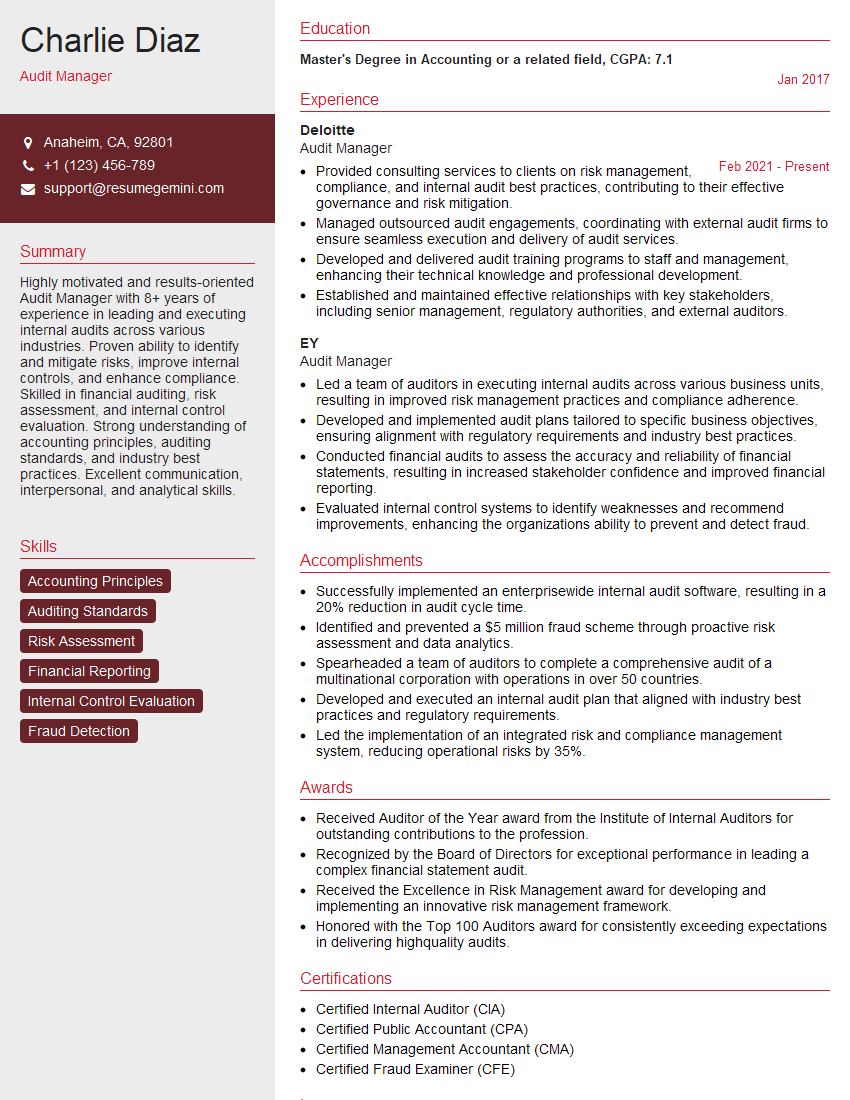
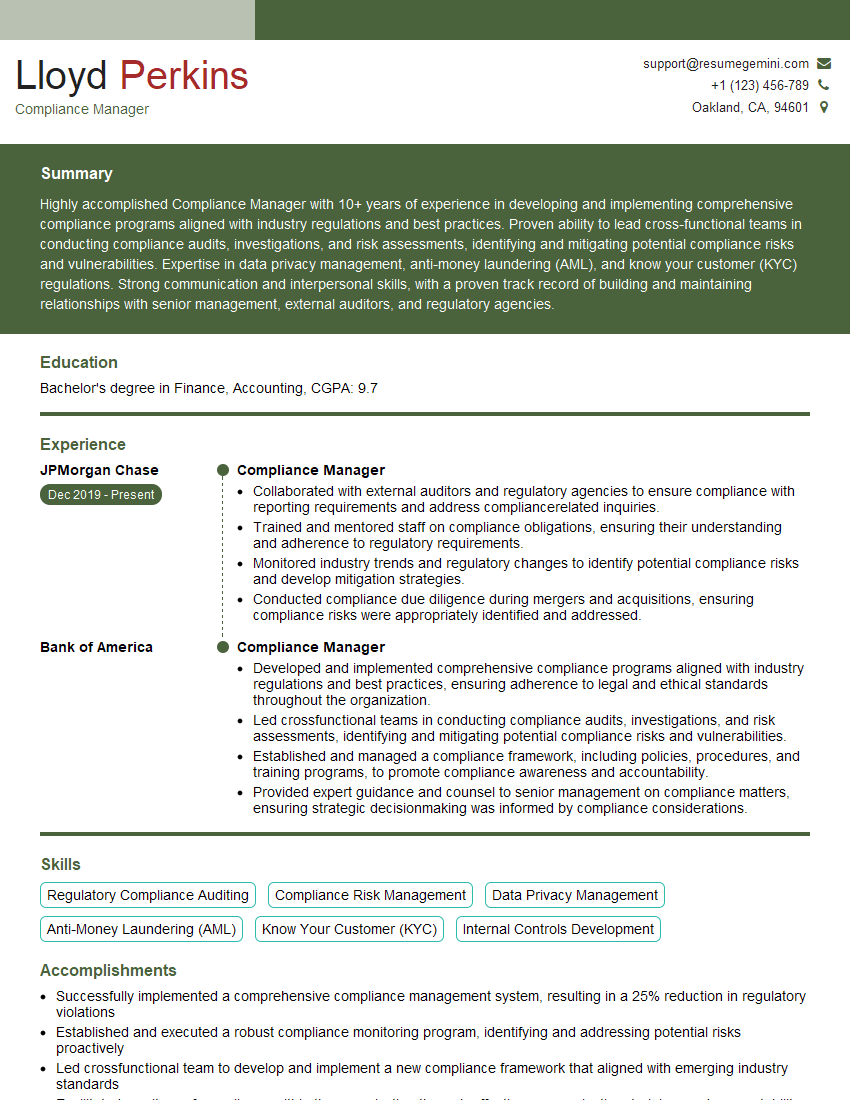
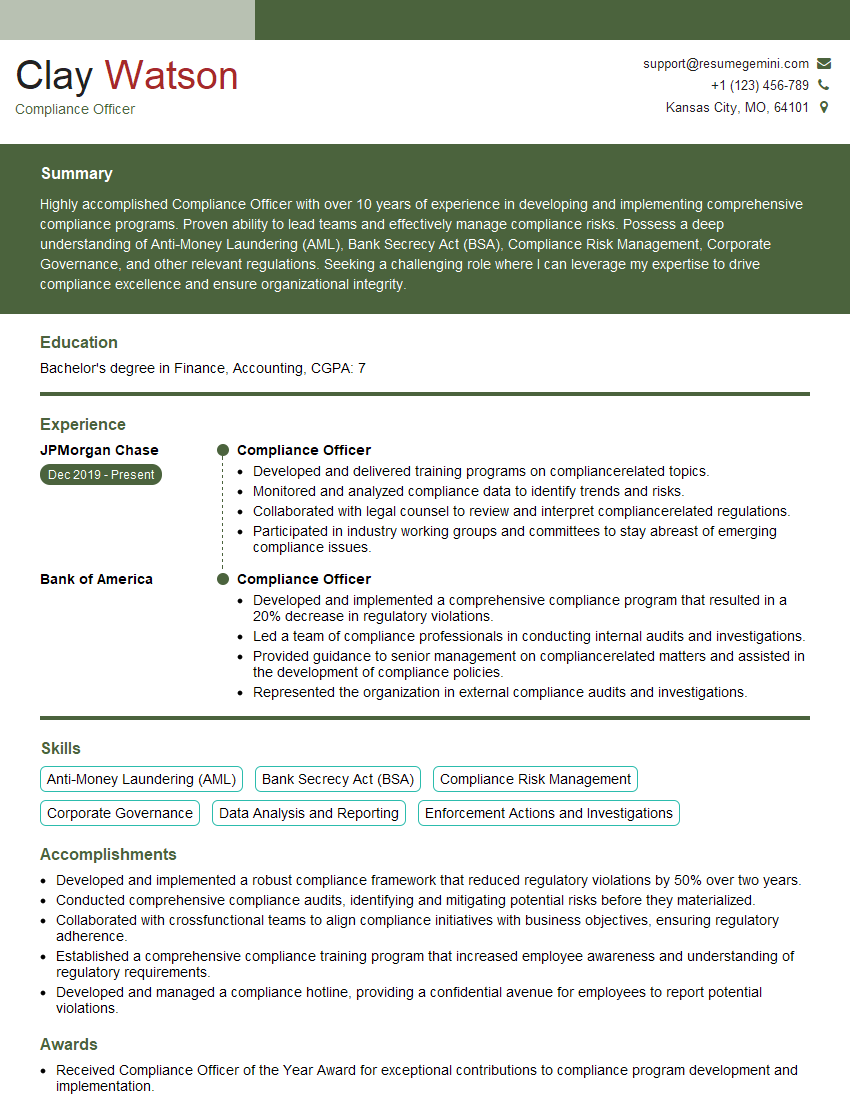
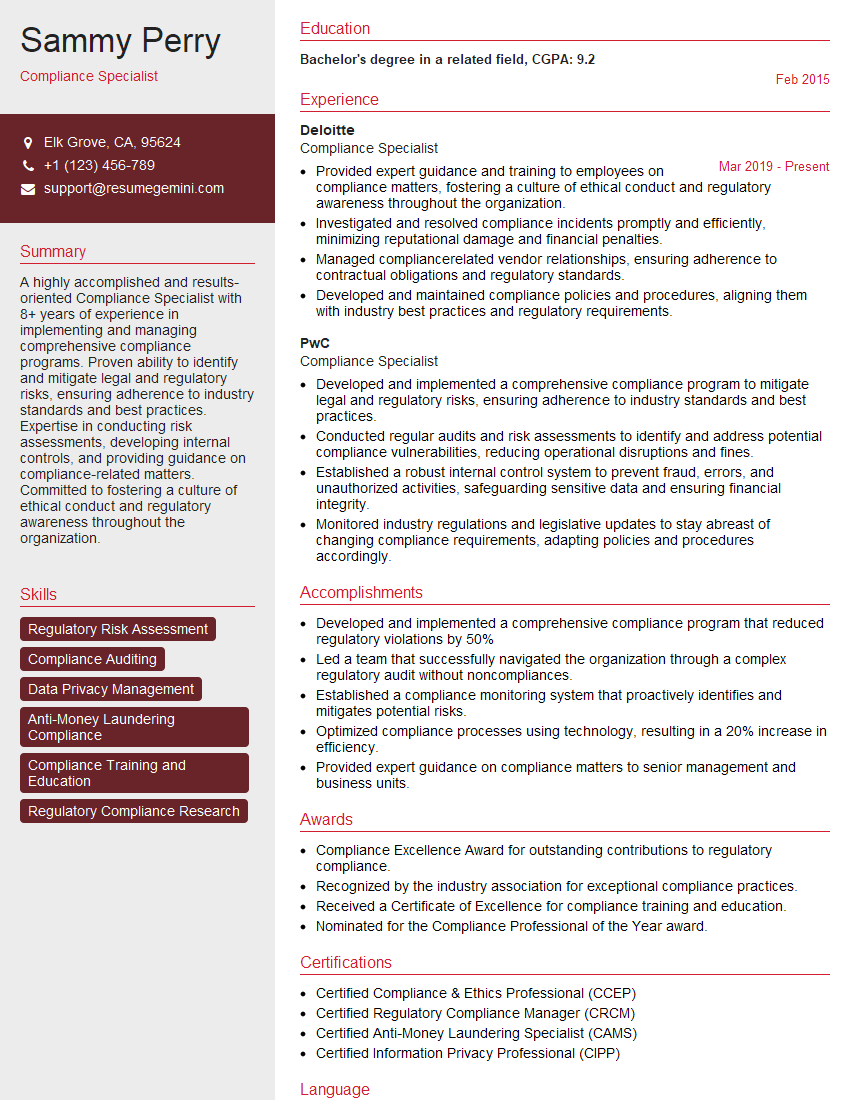
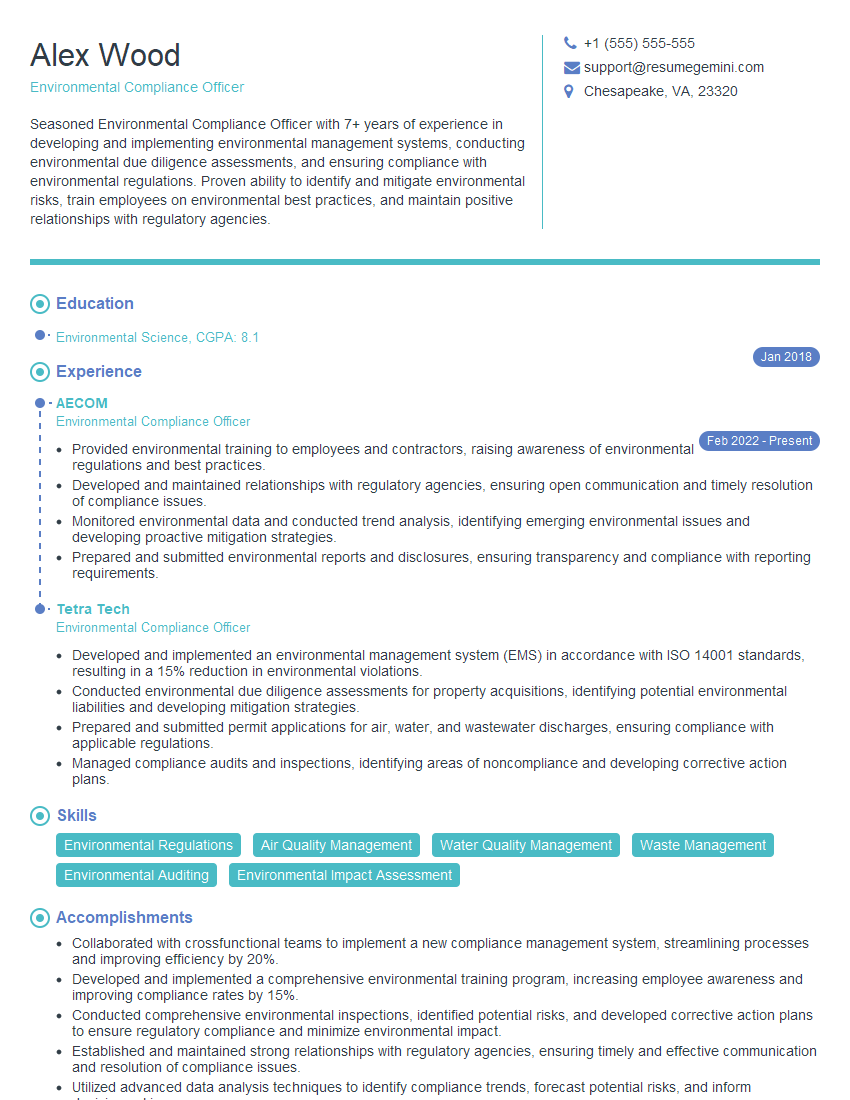
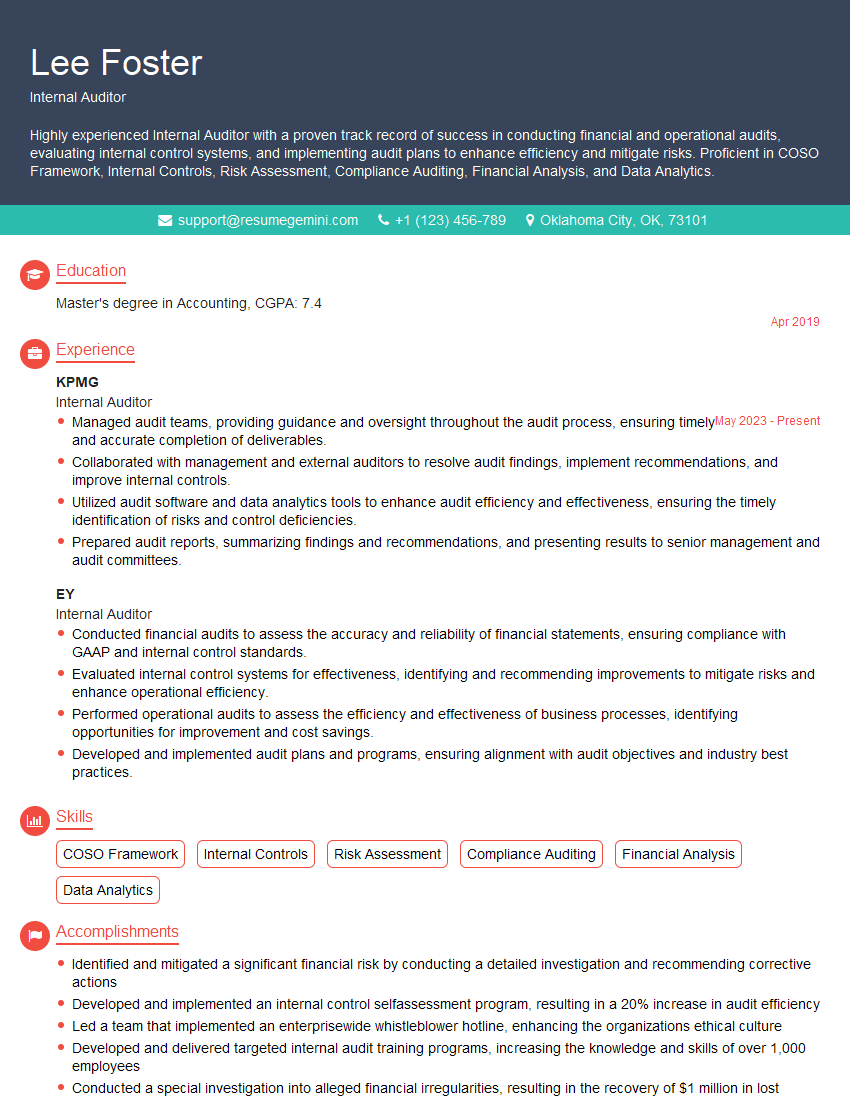
Mastering Compliance and Audit Readiness is crucial for career advancement in today’s regulated industries. It demonstrates your commitment to ethical practices and risk management, opening doors to leadership roles and higher earning potential. To maximize your job prospects, create an ATS-friendly resume that highlights your skills and experience effectively. ResumeGemini is a trusted resource that can help you build a professional resume that stands out. We provide examples of resumes tailored to Compliance and Audit Readiness to guide you through the process. Invest in your future – craft a compelling resume today!
Explore more articles
Users Rating of Our Blogs
Share Your Experience
We value your feedback! Please rate our content and share your thoughts (optional).
What Readers Say About Our Blog
Very informative content, great job.
good