Feeling uncertain about what to expect in your upcoming interview? We’ve got you covered! This blog highlights the most important Compliance with DOT/FMCSA Regulations interview questions and provides actionable advice to help you stand out as the ideal candidate. Let’s pave the way for your success.
Questions Asked in Compliance with DOT/FMCSA Regulations Interview
Q 1. Explain the difference between Hours-of-Service (HOS) regulations and ELD mandates.
Hours-of-Service (HOS) regulations and Electronic Logging Devices (ELDs) are intricately linked but distinct. HOS regulations dictate the maximum number of hours a commercial driver can drive and work within a specific timeframe to prevent driver fatigue and enhance road safety. These regulations specify on-duty, driving, off-duty, and sleeper-berth time limits. Think of them as the ‘rules of the road’ for driver work hours. ELD mandates, on the other hand, are the *enforcement mechanism* for HOS regulations. ELDs are electronic devices that automatically record a driver’s driving time and other relevant data, replacing paper logs. They ensure accurate and tamper-proof records, making it easier for enforcement agencies to verify compliance with HOS rules. In short, HOS sets the limits, while ELDs ensure those limits are followed and recorded accurately.
For example, an HOS regulation might limit a driver to 11 hours of driving within a 14-hour workday. The ELD automatically tracks this information, and if the driver exceeds the limit, the ELD will generate an alert and prevent further driving. Without ELDs, enforcement relied on manual log review, prone to inaccuracies and manipulation.
Q 2. Describe the process for conducting a DOT driver vehicle inspection report (DVIR).
Conducting a DOT Driver Vehicle Inspection Report (DVIR) is a crucial safety step. It’s a systematic pre-trip and post-trip inspection of a commercial motor vehicle to identify any potential mechanical issues that could lead to accidents or breakdowns. Think of it as a vehicle’s health check. The process involves a thorough visual examination of various vehicle components, documenting any defects found.
- Pre-trip inspection: Before commencing a trip, the driver must inspect various parts such as tires, lights, brakes, steering, wipers, and mirrors.
- Post-trip inspection: After completing a trip, the driver repeats the inspection, noting any new defects or changes to previously reported ones.
All defects must be meticulously recorded in the DVIR form. The driver must sign the form, and in case of defects, the driver may choose to operate the vehicle, repair it before operating or refuse service. The form becomes a legal document, crucial if a defect causes an accident or violation. Accurate DVIR completion is non-negotiable for maintaining compliance and preventing costly accidents.
Q 3. What are the key components of a DOT drug and alcohol testing program?
A DOT drug and alcohol testing program is vital for ensuring the safety of commercial drivers and the public. It’s a comprehensive system designed to detect and deter substance abuse among commercial motor vehicle drivers. Key components include:
- Pre-employment testing: Before hiring a driver, conducting a drug test is mandatory.
- Random testing: Random drug and alcohol testing of drivers is a cornerstone of the program, ensuring ongoing vigilance.
- Post-accident testing: If an accident occurs, involved drivers undergo mandatory testing.
- Reasonable suspicion testing: Supervisors can order testing if there’s reasonable suspicion of impairment.
- Return-to-duty testing: Drivers who fail a drug or alcohol test must undergo return-to-duty testing before returning to work.
- Follow-up testing: After returning to duty, drivers undergo follow-up testing to monitor sobriety.
Proper record-keeping and compliance with the Substance Abuse Professionals (SAP) guidelines are also paramount. Non-compliance results in severe penalties.
Q 4. How do you ensure compliance with FMCSA’s regulations on driver qualification files?
Maintaining compliant driver qualification files is an ongoing responsibility. The FMCSA mandates detailed records for each driver, verifying their qualifications to operate commercial vehicles. These files should be meticulously organized and easily accessible.
My approach involves a multi-step process. I first ensure all required documentation is collected, including:
- Medical certificates: Current medical examiner’s certificates are essential.
- Driving records: Clean driving records from all states are vital.
- Employment history: Comprehensive employment records must verify experience and history.
- Background checks: Thorough background checks are required to ensure no criminal history that could pose a safety risk.
I then employ a robust filing system, either physical or digital, to maintain accurate and readily accessible records. Regular audits and updates are essential to ensure compliance. Proper management of these files is crucial for preventing violations and ensuring that only qualified drivers are operating commercial vehicles.
Q 5. Explain the requirements for maintaining accurate driver logs.
Accurate driver logs are paramount for compliance with HOS regulations. These logs detail all on-duty, driving, off-duty, and sleeper-berth time. Prior to ELDs, the process was entirely manual. Now, ELDs automate much of the process but driver responsibility remains critical. The key requirements for maintaining accurate logs are:
- Timely entries: All entries must be made at the time of occurrence.
- Accuracy: Data must accurately reflect the driver’s activities and time.
- Completeness: All required information, such as location, must be recorded.
- Legibility: Logs must be easily readable and understandable, whether paper or electronic.
- Retention: Logs must be retained for the required period.
Drivers must understand how to properly use ELDs or paper logs, understand the implications of inaccurate reporting, and recognize how even seemingly minor errors can lead to significant consequences.
Q 6. What are the penalties for violating DOT/FMCSA regulations?
Penalties for violating DOT/FMCSA regulations can be severe and far-reaching. The severity depends on the nature and extent of the violation. They can range from:
- Warnings: For minor infractions, a warning might be issued.
- Fines: Significant fines can be levied for more serious violations.
- Suspension or revocation of operating authority: Companies might face temporary or permanent suspension of their operating authority, effectively shutting down their operations.
- Jail time: In some cases, particularly with serious violations involving reckless behavior, criminal charges and imprisonment can result.
- Civil penalties: Companies and drivers can face significant civil penalties and lawsuits from accidents caused by violations.
The financial burden and reputational damage from non-compliance can be devastating. Prevention through robust compliance programs is always the best strategy.
Q 7. Describe your experience with the CSA (Compliance, Safety, Accountability) program.
My experience with the Compliance, Safety, Accountability (CSA) program is extensive. I understand its core objective is to improve large truck and bus safety by using a data-driven approach. CSA uses safety data from inspections and crash reports to create safety scores for carriers. These scores are publically available and used for targeting enforcement and by shippers.
In my previous roles, I’ve been instrumental in developing and implementing CSA safety improvement plans. This involved thoroughly analyzing safety data, identifying areas for improvement, and developing targeted interventions. This includes driver training, vehicle maintenance programs and improved safety procedures. We also implemented systems for proactive monitoring and ongoing compliance to prevent future violations and maintain a favorable CSA score. A strong understanding of CSA’s data-driven metrics and their significance is essential for proactive safety management.
Q 8. How do you identify and mitigate risk related to DOT compliance?
Identifying and mitigating DOT compliance risks involves a proactive, multi-faceted approach. It starts with a thorough understanding of all applicable regulations, tailored to the specific operations of the company. This includes not only the Federal Motor Carrier Safety Regulations (FMCSRs) but also state-specific regulations that may apply.
Risk Identification: This is achieved through regular internal audits, driver vehicle inspection reports (DVIRs), analysis of accident reports, and review of driver hours-of-service (HOS) records. We also leverage technology such as electronic logging devices (ELDs) to monitor compliance in real-time and identify potential violations before they escalate. For example, a consistently high number of DVIR defects might indicate a need for improved vehicle maintenance procedures. Similarly, recurring HOS violations could signify a need for better driver training or scheduling adjustments.
Risk Mitigation: Once risks are identified, mitigation strategies are implemented. This might involve additional driver training on specific regulations (e.g., hazardous materials handling), improved maintenance schedules to reduce vehicle malfunctions, or the implementation of new software systems to better manage driver hours and ensure compliance with HOS regulations. For instance, if an audit reveals a lack of driver qualification files, a comprehensive review and update of all driver files will be conducted, ensuring complete compliance with the FMCSA regulations. We use a combination of corrective actions, preventative measures, and continuous monitoring to ensure compliance and minimize future risks.
Q 9. What are your strategies for staying updated on changes to DOT/FMCSA regulations?
Staying updated on DOT/FMCSA regulations requires a multi-pronged strategy. The regulatory landscape is constantly evolving, so staying informed is crucial for maintaining compliance.
- Subscription to Official Sources: Regularly reviewing the Federal Register and the FMCSA website is paramount. These are the primary sources for official updates and announcements.
- Industry Publications and Associations: Membership in industry associations like the American Trucking Associations (ATA) provides access to newsletters, webinars, and educational resources that provide insights into regulatory changes and best practices.
- Compliance Software and Services: Many software providers offer updates and alerts regarding regulatory changes, providing timely notification of significant updates to the rules.
- Professional Development: Attending industry conferences and seminars keeps me abreast of current trends and regulatory developments. It allows for networking and collaboration with other compliance professionals.
- Internal Training Programs: Keeping our drivers and staff updated is critical. We conduct regular training sessions to explain regulatory changes and how they affect our daily operations.
By combining these methods, we ensure that our understanding of the regulations remains current and our company maintains a high standard of compliance.
Q 10. Explain your understanding of the USDOT number and its importance.
The USDOT number (United States Department of Transportation number) is a unique identification number assigned to motor carriers operating in interstate commerce. It’s essentially the company’s official identifier within the DOT system.
Importance: The USDOT number is crucial for several reasons:
- Legal Operation: It’s legally required for any motor carrier operating in interstate commerce to have a USDOT number. Operating without one constitutes a serious violation.
- Safety and Compliance: The number allows the FMCSA to track the carrier’s safety performance, compliance history, and overall record. It is used to access safety data and identify potential risks.
- Enforcement and Investigations: In the event of accidents or violations, the USDOT number is essential for identifying the responsible party and tracking the incident.
- Public Information: The USDOT number allows the public to access a carrier’s safety record, fostering transparency and accountability.
In short, the USDOT number acts as the company’s official identification and serves as a vital link to its compliance record with the DOT.
Q 11. Describe your experience with record-keeping requirements for DOT compliance.
Record-keeping is a cornerstone of DOT compliance. Accurate and thorough record-keeping is essential for demonstrating compliance and avoiding potential penalties.
My experience encompasses maintaining a wide range of records, including:
- Driver Qualification Files: These files contain crucial information about each driver, including their medical certification, driving record, and employment history, ensuring compliance with FMCSA regulations for driver qualifications.
- Vehicle Maintenance Records: Detailed logs of all vehicle maintenance and repairs, including DVIRs, are kept to ensure that vehicles are properly maintained and safe for operation.
- Hours-of-Service Records: ELD data and supporting documents are meticulously maintained to demonstrate compliance with driver HOS regulations, including accurate records of driving time, on-duty time, and off-duty time.
- Accident Reports: Complete records of all accidents involving company vehicles, including police reports, driver statements, and witness accounts.
- Hazardous Materials Records (if applicable): Detailed records of hazardous materials transportation, including manifests, training records for drivers handling hazardous materials and emergency response plans.
These records are stored securely, both physically and electronically, adhering to all data privacy and retention policies. We utilize a comprehensive record-keeping system to ensure that all necessary documentation is readily available for audits and investigations.
Q 12. How would you handle a situation where a driver violates HOS regulations?
A driver violating HOS regulations is a serious matter with potentially severe consequences. My response would follow a structured process:
- Immediate Investigation: I would thoroughly investigate the circumstances of the violation, collecting all relevant data from the ELD, driver logs, and any other available sources to understand the reason for the violation. Was it a simple oversight, a deliberate act, or a result of system failures?
- Driver Counseling: The driver would be immediately counseled to understand the gravity of the violation, the potential consequences (fines, suspension, etc.), and to emphasize the importance of complying with HOS regulations. The focus is on corrective action and preventing future infractions.
- Disciplinary Action (if necessary): Depending on the severity and frequency of the violation, appropriate disciplinary action, ranging from written warnings to suspension, may be necessary. The severity of the infraction is a key factor to determine the appropriate response, with repeated violations resulting in stricter disciplinary actions.
- Reporting to FMCSA (if required): Serious violations may require reporting to the FMCSA. The process would involve accurately documenting the violation and submitting all necessary paperwork according to FMCSA guidelines.
- Preventive Measures: Following the incident, I’d review our existing HOS management procedures to identify any weaknesses and implement improvements to prevent similar violations in the future. This might involve better driver training, improved scheduling software or better support to the drivers.
The goal is to address the immediate violation while also focusing on preventing future incidents and ensuring continued compliance.
Q 13. What is your experience with pre-employment screening for drivers?
Pre-employment screening for drivers is a critical step in ensuring safety and compliance. It involves a thorough vetting process to verify the driver’s qualifications and suitability for employment.
My experience includes overseeing a comprehensive screening process that includes:
- Motor Vehicle Record (MVR) Check: This checks the driver’s driving history, including accidents, violations, and suspensions.
- Background Check: A background check is conducted to verify the driver’s identity and identify any criminal history.
- Physical Examination and Drug and Alcohol Testing: This ensures the driver is physically fit to operate a commercial motor vehicle and is free from substance abuse. This includes both pre-employment testing and random testing throughout their employment, maintaining the required records meticulously.
- Verification of Licenses and Certifications: We verify that the driver holds all required licenses and certifications, such as a commercial driver’s license (CDL).
- Employment Verification: We verify the driver’s employment history to evaluate their driving experience and reliability.
This multi-step process helps us ensure that we hire only qualified, safe, and reliable drivers who meet all DOT requirements. We utilize reputable third-party vendors to conduct these checks, ensuring compliance with all applicable privacy laws.
Q 14. How do you conduct internal audits to ensure DOT compliance?
Internal audits are essential for proactive compliance. They provide an independent assessment of our compliance efforts and identify any areas needing improvement.
Our audit process involves:
- Planning and Scope Definition: We define the scope of the audit, specifying the areas of DOT compliance to be reviewed. This might include a focus on specific regulations or a broader assessment of overall compliance.
- Data Collection: We gather relevant data from various sources, such as driver qualification files, maintenance records, ELD data, and other pertinent documents.
- Compliance Assessment: The collected data is analyzed against relevant DOT/FMCSA regulations. Any discrepancies or areas of non-compliance are documented.
- Reporting and Corrective Action: A comprehensive report is generated, outlining the findings of the audit, including both areas of compliance and any identified deficiencies. A detailed plan for corrective actions is then developed and implemented to address any non-compliance issues.
- Follow-up and Monitoring: Once corrective actions are implemented, we monitor their effectiveness to ensure continued compliance. This might involve follow-up audits or other monitoring measures.
Regular internal audits, along with driver training, and ongoing monitoring, are key elements in a strong DOT compliance program. By identifying and addressing potential issues proactively, we ensure that our operations remain compliant and safe.
Q 15. Explain the process for reporting accidents and incidents to the DOT.
Reporting accidents and incidents to the DOT is crucial for maintaining safety and transparency within the transportation industry. The process varies slightly depending on the severity of the incident, but generally involves immediate notification followed by a detailed written report. For example, a minor fender bender might only require an internal report to your company, but a fatality would necessitate immediate notification to the FMCSA and a comprehensive investigation.
The initial notification usually happens via phone to the appropriate authorities, followed by a written report submitted within a specified timeframe (often 24-48 hours). This report, typically filed using the FMCSA’s reporting system, must detail the circumstances surrounding the incident, including location, date, time, individuals involved, vehicle information, and contributing factors. Failure to report accidents properly can lead to serious penalties, including fines and operational restrictions.
- Immediate Notification: Phone call to relevant authorities (e.g., 911, FMCSA) for serious accidents.
- Written Report: Detailed report submitted through the FMCSA’s online portal or by mail, including all relevant information.
- Investigation: A thorough investigation is typically conducted, depending on the severity of the incident.
Career Expert Tips:
- Ace those interviews! Prepare effectively by reviewing the Top 50 Most Common Interview Questions on ResumeGemini.
- Navigate your job search with confidence! Explore a wide range of Career Tips on ResumeGemini. Learn about common challenges and recommendations to overcome them.
- Craft the perfect resume! Master the Art of Resume Writing with ResumeGemini’s guide. Showcase your unique qualifications and achievements effectively.
- Don’t miss out on holiday savings! Build your dream resume with ResumeGemini’s ATS optimized templates.
Q 16. What are the requirements for hazmat transportation compliance?
Hazmat transportation compliance is complex and requires meticulous adherence to numerous regulations. It involves a multi-faceted approach encompassing driver training, vehicle maintenance, packaging, documentation, and emergency response planning. The key element is the proper classification and handling of hazardous materials. This is primarily governed by the Hazardous Materials Regulations (HMR) under 49 CFR Part 172.
For instance, drivers must possess a hazardous materials endorsement on their commercial driver’s license (CDL), demonstrating their understanding of proper handling procedures. Vehicles used for hazmat transport require specific placards and markings, and the materials themselves must be packaged according to stringent standards to prevent leaks or spills. Comprehensive emergency response plans are mandatory, detailing procedures for handling accidents or incidents involving hazardous materials.
- Driver Training and Endorsement: Drivers must complete specific hazmat training and obtain the necessary endorsement on their CDL.
- Proper Packaging and Labeling: Hazardous materials must be correctly packaged and labeled according to their classification.
- Vehicle Placarding and Marking: Vehicles must display appropriate placards and markings indicating the type of hazardous material being transported.
- Emergency Response Plan: A comprehensive plan must be in place to address potential accidents or spills.
- Shipping Papers: Accurate and up-to-date shipping papers are required for every shipment.
Q 17. Explain your experience with vehicle maintenance and its role in DOT compliance.
Vehicle maintenance is absolutely paramount for DOT compliance. Regular and thorough maintenance directly impacts safety and significantly reduces the likelihood of accidents and breakdowns. In my experience, proactive maintenance not only prevents incidents but also minimizes costly repairs and downtime. We implemented a preventative maintenance program including regular vehicle inspections, fluid changes, and component replacements based on manufacturer recommendations and FMCSA guidelines.
For example, regular brake inspections are crucial for safety, as are tire checks and suspension reviews. Properly documented maintenance logs are required to show compliance during audits. Failure to maintain vehicles properly can result in out-of-service orders, significant fines, and damage to a company’s reputation. This also demonstrates a commitment to safety to drivers and the public.
I’ve personally overseen the implementation and management of such programs, resulting in a demonstrable reduction in mechanical failures and increased compliance scores during DOT inspections.
Q 18. How do you ensure compliance with vehicle inspection regulations?
Ensuring compliance with vehicle inspection regulations relies on a robust system of pre-trip, en-route, and post-trip inspections. These inspections are meticulously documented using the company’s inspection reporting system. Drivers are trained to perform thorough pre-trip inspections before each trip, checking key components such as brakes, tires, lights, steering, and wipers. This process is essential for identifying potential mechanical issues before they escalate into serious problems.
Further, we conduct regular random inspections of vehicles to ensure continued compliance. Any defects found during these inspections are immediately addressed, with documentation entered into the maintenance system. This ensures our entire fleet remains compliant and minimizes the risk of accidents. We also provide ongoing training to our drivers to ensure they are up-to-date on the latest inspection requirements and procedures.
I’ve personally overseen the development and implementation of a comprehensive vehicle inspection program that has significantly reduced the number of out-of-service violations and improved our overall safety record.
Q 19. What is your understanding of the role of the DOT in transportation safety?
The Department of Transportation (DOT), specifically the Federal Motor Carrier Safety Administration (FMCSA), plays a critical role in ensuring the safety of the nation’s transportation system. Their primary objective is to establish and enforce safety regulations that govern commercial motor vehicles and drivers. This includes establishing minimum safety standards, conducting audits and inspections, and investigating accidents to determine the causes and identify areas for improvement.
The DOT’s regulatory power extends to various areas including driver qualifications, vehicle maintenance, hours of service, hazardous materials transportation, and drug and alcohol testing. The agency’s role is vital in preventing accidents, protecting the public, and ensuring the efficient movement of goods and people across the country. They achieve this through a combination of regulations, enforcement, and data analysis to identify trends and address emerging safety concerns.
Q 20. Explain your experience with driver training and safety programs.
My experience with driver training and safety programs encompasses both the development and implementation of comprehensive training curriculums and the oversight of ongoing safety initiatives. I’ve been involved in designing and delivering training programs that cover a wide range of topics including safe driving techniques, hours-of-service regulations, defensive driving, hazardous materials handling, and accident avoidance strategies.
For example, I’ve developed and implemented a new driver training program that incorporated advanced driver-assistance system (ADAS) training. This addressed the specific challenges posed by newer technologies in commercial vehicles. This program utilized both classroom instruction and hands-on driving simulations to enhance driver competency and safety. We also implemented a system for ongoing driver feedback and coaching, allowing us to promptly identify and address performance issues before they become safety concerns. Furthermore, we emphasize the importance of reporting near misses to foster a culture of proactive safety. This proactive approach has led to significant improvements in our safety metrics and driver performance.
Q 21. Describe your familiarity with different types of endorsements (e.g., Hazmat, Passenger).
Commercial Driver’s License (CDL) endorsements signify a driver’s qualification to operate specific types of vehicles or transport particular cargo. These endorsements demonstrate a higher level of competency and training beyond the standard CDL. The most common endorsements include the Hazardous Materials (H) endorsement, the Passenger (P) endorsement, and the School Bus (S) endorsement.
The Hazardous Materials (H) endorsement, as discussed earlier, requires specialized training in handling, packaging, and transporting hazardous materials. The Passenger (P) endorsement allows drivers to operate vehicles designed to transport passengers, requiring additional training on passenger safety and emergency procedures. The School Bus (S) endorsement necessitates rigorous training focusing on the unique safety considerations associated with transporting children.
My experience includes working directly with drivers to ensure they possess the appropriate endorsements for the type of work they perform, and I’m familiar with the specific training requirements for each endorsement. I ensure all drivers maintain valid endorsements and undergo necessary refresher training to stay current on regulations and best practices.
Q 22. How do you handle a situation where a driver refuses to undergo a drug test?
A driver refusing a drug test is a serious violation of DOT regulations and company policy. My immediate response would be to calmly and firmly reiterate the company’s zero-tolerance policy and the legal requirement for compliance. I would explain the consequences of refusal, which include immediate termination and potential disqualification from operating a commercial motor vehicle.
I would then document the refusal meticulously, including the date, time, location, the driver’s statement (if any), and the names of any witnesses. This documentation is crucial for any subsequent investigation or legal proceedings. A copy of this documentation would be submitted to the DOT immediately. Depending on the circumstances, such as reasonable suspicion, we might consult with legal counsel before proceeding. The company’s safety manager would also be informed for further action, such as arranging for a retest, initiating the disciplinary process and potentially reporting the incident to the DOT.
For example, if a driver claims a medical condition prevented them from taking a test, we would ensure they seek appropriate medical clearance before attempting another test. We also need to maintain driver privacy throughout this process while still fulfilling our regulatory obligations. The goal is not just enforcement but also ensuring driver safety and wellness while meeting DOT requirements.
Q 23. Explain your understanding of the process for obtaining a USDOT number.
Obtaining a USDOT number is the first step for any company engaged in interstate commerce that transports hazardous materials or passengers. It’s essentially a registration process with the Department of Transportation’s Federal Motor Carrier Safety Administration (FMCSA). The process begins by completing the Unified Registration System (URS) application online. This involves providing detailed information about the company, its operations, and its safety program.
The application requires information such as the company’s legal name, address, type of operation, and the names and contact information of key personnel. You’ll also need to provide information regarding your insurance and your operations, such as the types of vehicles you operate and the commodities you transport. Once submitted, the FMCSA reviews the application, and if everything is in order, they issue a USDOT number. This number is crucial for compliance with DOT regulations and is required for various filings and operational activities. The USDOT number is like a social security number for your business – it identifies you in the DOT’s system.
Following the successful application, maintaining the company’s registration information current and accurate is critical. Changes in company information, such as address or ownership, must be reported promptly to the FMCSA to prevent any issues or potential sanctions. Failing to update registration information after significant changes can lead to hefty fines and delays in DOT compliance activities.
Q 24. What is your experience with managing and responding to DOT audits?
I have extensive experience managing and responding to DOT audits. These audits can cover various aspects of a company’s operations, including driver qualification files, vehicle maintenance records, hours-of-service logs, drug and alcohol testing programs, and safety management systems. My approach is proactive and organized. We start by conducting thorough internal audits to identify and correct any potential deficiencies before a DOT audit.
During a DOT audit, I ensure clear and accessible documentation is readily available for the auditors. I collaborate fully with the auditors and answer their questions accurately and promptly. A crucial aspect is maintaining a professional and respectful demeanor throughout the audit process. We treat any finding as an opportunity for improvement rather than a criticism. Following the audit, we carefully review the findings and implement corrective actions where necessary.
For instance, in one audit, we were found to have some minor discrepancies in our driver qualification files. This provided us with an opportunity to review our onboarding process to ensure greater accuracy and consistency in our record-keeping. The result was a more robust driver qualification file system.
Q 25. Describe your experience with implementing and maintaining a DOT compliance program.
Implementing and maintaining a DOT compliance program requires a multi-faceted approach. It starts with a thorough understanding of all applicable regulations and then developing policies and procedures that ensure compliance. This involves creating and distributing a comprehensive compliance manual to all employees, providing regular training, and implementing robust record-keeping systems.
Key components of a successful DOT compliance program include establishing effective driver qualification files, implementing a rigorous drug and alcohol testing program, maintaining accurate hours-of-service records (either paper or ELD), and ensuring proper vehicle maintenance. It also requires a system for regularly monitoring compliance, conducting internal audits, and responding promptly to any identified issues. Effective communication and training are vital, ensuring all personnel understand their responsibilities and the consequences of non-compliance.
In a previous role, I was instrumental in establishing a new DOT compliance program for a rapidly growing trucking company. This involved designing the program’s structure, developing training materials, implementing software to support record-keeping, and providing ongoing support to staff. The program significantly reduced the risk of violations and improved the company’s safety record.
Q 26. How do you stay current with changes in DOT regulations and best practices?
Staying current with changes in DOT regulations and best practices requires ongoing vigilance. I subscribe to relevant industry publications, participate in professional development courses and webinars, and actively monitor the FMCSA website for updates and announcements. I also network with other compliance professionals to share knowledge and insights.
Attendance at industry conferences and workshops allows me to stay abreast of the latest legal interpretations and emerging compliance challenges. Regularly reviewing and updating the company’s compliance manual and training materials is also crucial to maintain adherence to the latest regulations and guidance. It’s critical to remember that these rules are continually evolving, so maintaining updated knowledge ensures the company’s ongoing compliance.
The FMCSA’s website itself is a great resource for direct access to the latest rules and enforcement guidelines.
Q 27. Explain your experience with using compliance management software or systems.
I have extensive experience using various compliance management software and systems. These systems significantly improve efficiency and accuracy in managing DOT compliance requirements. They often integrate with ELDs (Electronic Logging Devices), allowing for seamless data transfer and reporting. Some of the functionalities I’ve utilized include:
- Driver qualification file management: Securely storing and managing all driver-related documents, ensuring easy access during audits.
- Vehicle maintenance tracking: Scheduling maintenance, recording repairs, and generating reports to demonstrate compliance with vehicle maintenance regulations.
- Hours-of-service monitoring: Analyzing driver logs and ELD data to identify potential violations and prevent fatigue-related accidents.
- Drug and alcohol testing management: Scheduling tests, managing results, and ensuring compliance with DOT drug and alcohol testing regulations.
- Reporting and auditing: Generating reports for internal audits and providing data for DOT audits.
I am proficient in using several commercial software packages commonly employed in the trucking industry for managing DOT compliance.
Q 28. How would you address a discrepancy between a driver’s logbook and the ELD data?
Discrepancies between a driver’s logbook and ELD data require a thorough and careful investigation. My first step would be to gather all relevant information, including the driver’s logbook, the ELD data, and any supporting documentation. I would then compare the data meticulously, looking for any inconsistencies or anomalies.
Possible reasons for discrepancies might include accidental errors in manual logbook entry or technical glitches with the ELD. We need to interview the driver to understand their perspective and any possible explanations for the discrepancy. Depending on the severity of the discrepancy and the driver’s explanation, different actions would be taken. Minor discrepancies might be addressed through retraining or a simple correction. More significant discrepancies may lead to disciplinary action, depending on company policy and the severity of the violation.
For instance, if the discrepancy suggests a violation of hours-of-service regulations, we would thoroughly investigate and document the situation. The FMCSA guidelines would guide our response, depending on the nature and extent of the violation. Documentation of the investigation, including the driver’s explanation and any corrective actions taken, would be maintained for auditing purposes.
Key Topics to Learn for Compliance with DOT/FMCSA Regulations Interview
- Driver Qualification Files (DQFs): Understanding the components, maintenance, and legal implications of accurate and complete DQFs. This includes practical application of record-keeping best practices and the ability to identify potential compliance gaps.
- Hours of Service (HOS) Regulations: Mastering the intricacies of HOS rules, including electronic logging devices (ELDs), exceptions, and record-keeping requirements. Be prepared to discuss practical scenarios involving HOS violations and their consequences.
- Vehicle Maintenance and Inspection: Understanding preventative maintenance schedules, vehicle inspection reports (e.g., pre-trip inspections), and the importance of maintaining accurate records. Consider practical application scenarios involving vehicle malfunctions and the necessary compliance procedures.
- Hazardous Materials (HazMat) Transportation: Familiarize yourself with the regulations surrounding the transportation of hazardous materials, including proper documentation, placarding, and emergency response procedures. Consider how to identify and address potential HazMat compliance issues.
- Drug and Alcohol Testing Programs: Deep understanding of the DOT’s drug and alcohol testing regulations, including random testing, post-accident testing, and reasonable suspicion testing. Prepare to discuss practical application of these regulations and the consequences of non-compliance.
- Safety Management Systems (SMS): Understanding the principles of SMS and how they contribute to a safer work environment. Consider discussing the practical implementation of SMS within a transportation company and its role in overall compliance.
Next Steps
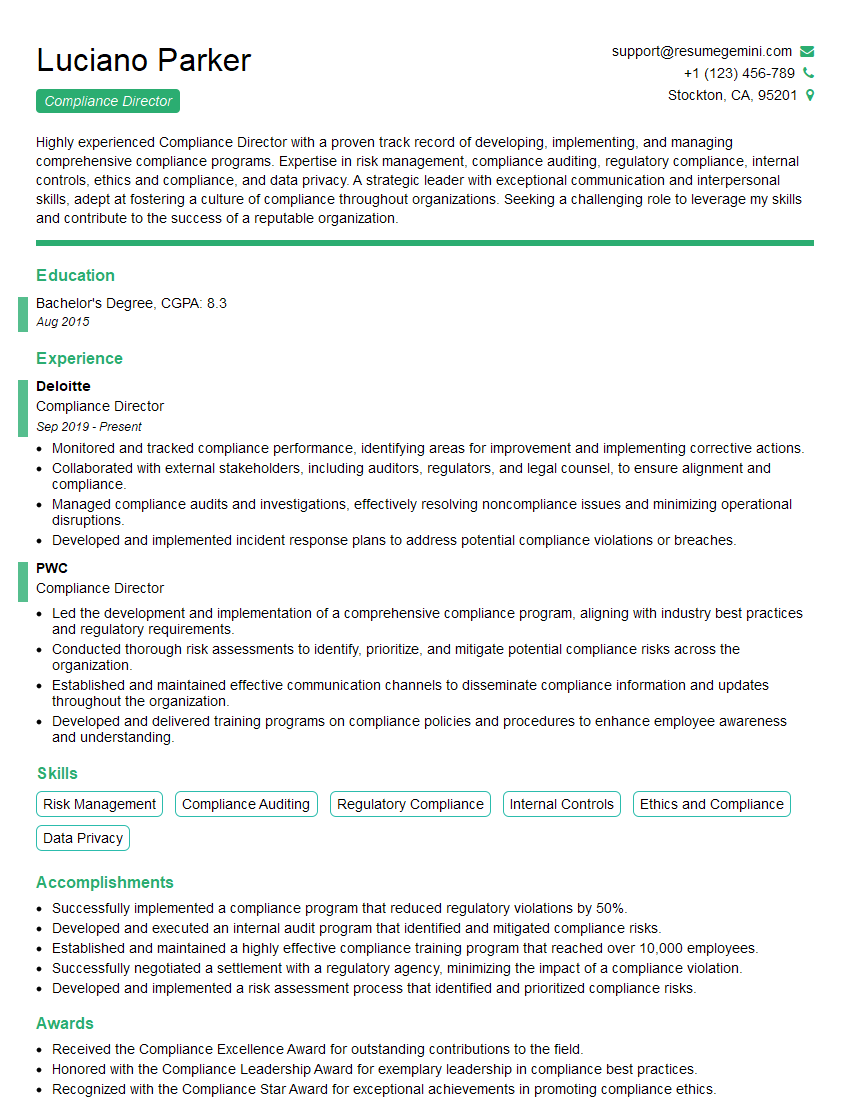
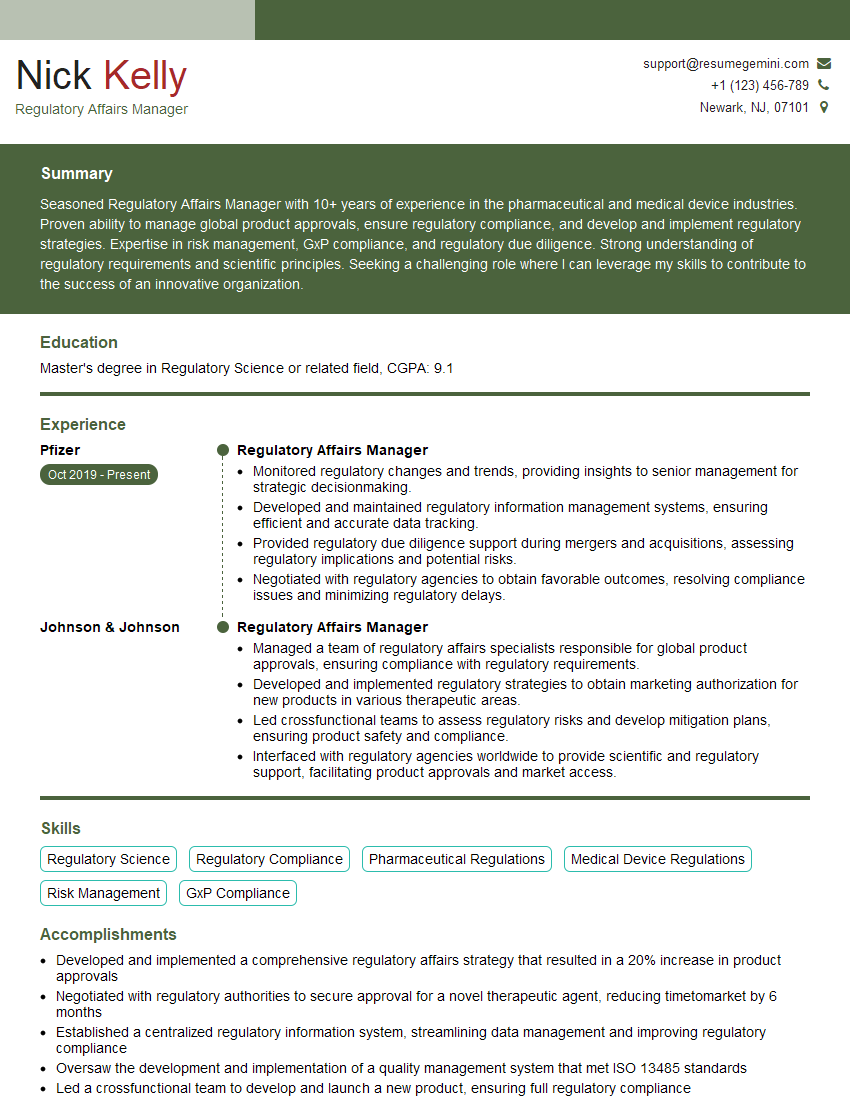
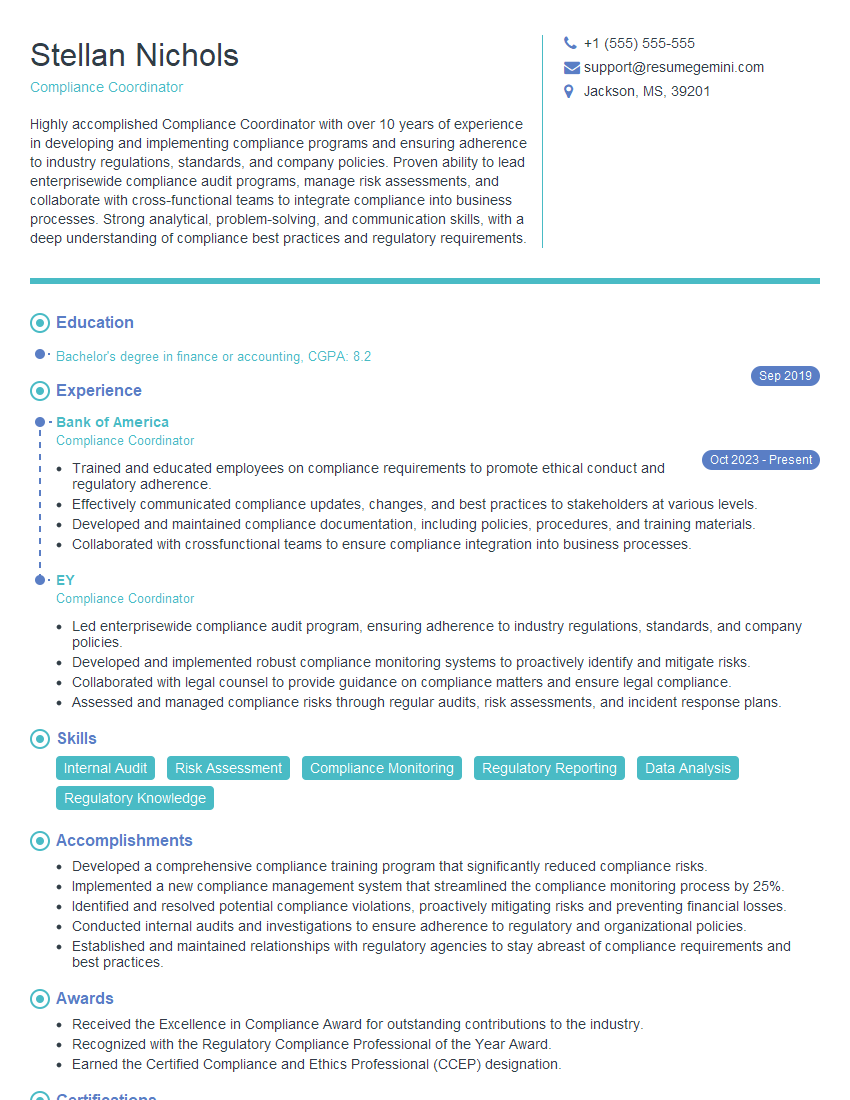
Mastering Compliance with DOT/FMCSA Regulations is crucial for career advancement in the transportation industry. Demonstrating a thorough understanding of these regulations showcases your commitment to safety and legal compliance, making you a highly valuable asset to any organization. To maximize your job prospects, create an ATS-friendly resume that highlights your relevant skills and experience. ResumeGemini is a trusted resource to help you build a professional and impactful resume that catches the eye of recruiters. Examples of resumes tailored to Compliance with DOT/FMCSA Regulations are available to help you get started.
Explore more articles
Users Rating of Our Blogs
Share Your Experience
We value your feedback! Please rate our content and share your thoughts (optional).
What Readers Say About Our Blog
Very informative content, great job.
good