Unlock your full potential by mastering the most common Design and Space Planning interview questions. This blog offers a deep dive into the critical topics, ensuring you’re not only prepared to answer but to excel. With these insights, you’ll approach your interview with clarity and confidence.
Questions Asked in Design and Space Planning Interview
Q 1. Explain your experience with different space planning methodologies (e.g., adjacency matrix, bubble diagrams).
Space planning methodologies are crucial for organizing and optimizing the use of space. I’m experienced with several, including adjacency matrices and bubble diagrams. An adjacency matrix is a table that shows the relationships between different spaces. For example, a ‘1’ might indicate a strong relationship (e.g., office and conference room), while a ‘0’ shows no direct relationship. This helps visualize optimal placement to minimize travel time and maximize efficiency. Think of it like a social network for your building’s rooms! A bubble diagram takes this further visually, representing each space as a circle, sized proportionally to its area. The proximity of circles reflects the desired adjacency from the matrix, allowing for a quick, intuitive overview of spatial relationships. In one project, designing a new office layout, the adjacency matrix highlighted the need for close proximity between the marketing and sales teams, resulting in a significantly improved workflow. The bubble diagram then helped to visually confirm the layout and identify potential space conflicts before detailed design commenced.
Q 2. Describe your process for analyzing space requirements and developing a functional program.
Analyzing space requirements and developing a functional program involves a systematic approach. It starts with a thorough understanding of the client’s needs, which often involves questionnaires, interviews, and site visits. This informs the programming phase, where we define the required spaces, their sizes, and the relationships between them. For example, I recently worked on a school renovation project. We started by interviewing teachers, students, and administrators to understand their individual needs and workflows. This resulted in a detailed program outlining the number of classrooms, administrative offices, library space, and common areas, each with specific area requirements. We then analyzed this data to create a preliminary space plan, considering factors like circulation, accessibility, and overall efficiency. This iterative process continues, refining the program based on feasibility studies and space analysis until a well-defined and achievable program is established.
Q 3. How do you incorporate user needs and workflow analysis into your space planning designs?
User needs and workflow analysis are fundamental to successful space planning. Understanding how people will interact with a space is critical. We use various methods such as observations, interviews, and workflow diagrams. For instance, observing how employees move through their current workspace reveals bottlenecks and inefficiencies. Interviews provide direct feedback on individual needs and preferences. Workflow diagrams, illustrating the sequence of tasks and interactions, are then used to optimize the arrangement of spaces. For a recent healthcare facility, we used workflow diagrams to optimize the patient flow from check-in to examination rooms, minimizing wait times and improving patient experience. By integrating this data into the design, we create spaces that are both functional and user-friendly, enhancing productivity and well-being.
Q 4. What software programs are you proficient in (AutoCAD, Revit, SketchUp, etc.)?
I’m proficient in several software programs crucial for space planning, including AutoCAD, Revit, and SketchUp. AutoCAD is my go-to for 2D drafting and precise detailing. Revit’s BIM capabilities are invaluable for complex projects, allowing for collaborative design and building information management. SketchUp’s user-friendly interface is ideal for quick concept sketches and client presentations. My expertise spans from basic drafting to advanced modeling and rendering, enabling me to create comprehensive and visually compelling design documents.
Q 5. Explain your approach to addressing accessibility requirements in your designs.
Accessibility is paramount in all my designs. I adhere strictly to ADA (Americans with Disabilities Act) guidelines and other relevant regulations. This includes ensuring appropriate dimensions for doorways, ramps, and hallways; providing accessible restroom facilities; and incorporating features such as tactile paving and visual cues. In a recent retail space design, I carefully considered the placement of ramps and elevators to ensure easy access for all customers, including those with mobility impairments. Furthermore, I collaborate with accessibility consultants to address complex challenges and ensure the design meets all legal and ethical standards.
Q 6. How do you balance aesthetic considerations with functional requirements in space planning?
Balancing aesthetics and functionality is a core principle of my design philosophy. A beautiful space is useless if it doesn’t function well. I believe in creating designs that are both visually appealing and highly efficient. This often involves finding creative solutions that combine form and function. For example, in a recent restaurant design, we incorporated a visually striking feature wall that also cleverly concealed storage and ventilation systems. The result was a stunning visual effect without compromising functionality or efficiency. It’s about finding the sweet spot between aesthetics and practicality, ensuring the design meets both the client’s stylistic preferences and their functional requirements.
Q 7. Describe your experience with sustainable design principles in space planning.
Sustainable design is integral to my approach. I incorporate sustainable principles at every stage of the design process, from material selection to energy efficiency. This includes selecting environmentally friendly materials with low VOCs (volatile organic compounds), designing for natural light and ventilation to reduce energy consumption, and incorporating rainwater harvesting or greywater recycling systems where appropriate. For a recent office building project, we prioritized energy-efficient lighting, low-flow plumbing fixtures, and the use of recycled and sustainably sourced materials, significantly reducing the building’s environmental impact. My commitment to sustainable design extends beyond just compliance; it’s about creating spaces that are environmentally responsible and contribute to a healthier, more sustainable future.
Q 8. How do you manage project timelines and budgets for space planning projects?
Managing project timelines and budgets for space planning requires a meticulous approach. It starts with a detailed project scope, which clearly defines deliverables, timelines, and associated costs. I use project management software (like Asana or Monday.com) to create a Work Breakdown Structure (WBS), breaking the project into smaller, manageable tasks with assigned deadlines and responsible parties. This allows for better tracking of progress and identification of potential delays. Budget management involves creating a comprehensive budget that accounts for all expenses, including design fees, materials, construction, and permits. Regular budget reviews, comparing actual spending against the projected budget, are crucial for identifying and addressing any discrepancies. Contingency planning is also critical; I always include a buffer to accommodate unforeseen circumstances or cost overruns.
For example, in a recent office renovation, I used a Gantt chart to visualize the project timeline, highlighting key milestones like design completion, contractor selection, and final move-in date. By breaking down the tasks into smaller components, we could easily monitor progress and make adjustments as needed. We also held regular progress meetings with the client to review budget performance and address any emerging issues proactively.
Q 9. What are your preferred methods for communicating design concepts to clients and stakeholders?
Effective communication is paramount. My preferred methods involve a multi-faceted approach, combining visual presentations, interactive workshops, and detailed documentation. I begin by creating mood boards and initial sketches to convey the overall design aesthetic. Then, I use 3D renderings and virtual reality (VR) experiences to allow clients to ‘walk through’ the space before any construction begins. This is far more engaging than 2D plans alone. I also conduct regular client meetings to gather feedback, address concerns, and maintain transparency throughout the process. Detailed written reports, which consolidate design choices and their rationale, ensure a clear record of decisions and approvals. Finally, I leverage interactive tools like online project management portals to share updates, designs, and schedules in a convenient and accessible manner.
Q 10. Describe a challenging space planning project and how you overcame the obstacles.
One particularly challenging project involved renovating a historic building into a modern co-working space. The biggest hurdle was balancing the preservation of historical features with the demands of a contemporary, functional workspace. The building’s structural limitations and existing mechanical systems posed significant constraints. We overcame these challenges by engaging a team of historical preservation specialists and structural engineers early in the process. This collaborative approach allowed us to develop creative solutions that integrated modern design elements without compromising the building’s historical integrity. For example, we incorporated exposed brick walls as a design feature, while strategically concealing modern HVAC systems behind custom-built millwork. Through thorough planning, innovative solutions, and clear communication with all stakeholders, we successfully delivered a design that both honored the building’s past and met the client’s modern needs.
Q 11. How do you handle design conflicts between different stakeholders?
Design conflicts are inevitable, especially in projects involving multiple stakeholders with diverse needs and preferences. My approach involves fostering open communication and collaboration from the outset. This includes actively listening to all stakeholders, understanding their concerns, and identifying common goals. I use facilitated workshops or meetings to encourage open dialogue and discussion, providing a neutral platform for expressing opinions and finding common ground. I often employ compromise and negotiation, aiming for solutions that accommodate the needs of each stakeholder as much as possible. In cases where complete consensus cannot be reached, I document the differing viewpoints and decisions made, ensuring transparency and accountability. Visualization tools, like 3D models and mockups, can be particularly effective in resolving conflicts by allowing stakeholders to visualize and evaluate various design options before committing to a final decision.
Q 12. Explain your understanding of building codes and regulations related to space planning.
Understanding building codes and regulations is fundamental to successful space planning. I am familiar with the International Building Code (IBC) and local jurisdiction-specific codes. This includes requirements related to occupancy, accessibility (ADA compliance), fire safety, egress, and structural integrity. Before initiating any design, I conduct a thorough review of the applicable codes and regulations. This often involves collaborating with structural engineers, mechanical, electrical, and plumbing (MEP) engineers, and fire protection specialists to ensure the design meets all requirements. I integrate these requirements into the design process from the outset, avoiding costly rework or delays due to non-compliance. For example, I meticulously review egress requirements to ensure adequate pathways for occupants in case of emergency, and I work closely with the MEP engineers to ensure that the HVAC system meets energy efficiency standards while adhering to zoning regulations.
Q 13. How do you incorporate flexibility and adaptability into your space planning designs?
Flexibility and adaptability are crucial in today’s dynamic work environments. I achieve this through several strategies. Modular furniture systems allow for easy reconfiguration of spaces to adapt to changing needs. Demountable partitions create easily adjustable room layouts without major structural changes. Open-plan layouts with flexible work zones cater to diverse work styles and team collaborations. Technology integration, such as smart lighting and power distribution, enhances space utilization and customization. Incorporating multi-functional spaces that can be easily adapted for various purposes (meetings, training, informal gatherings) adds versatility. Consider a large open area that can be divided using mobile partitions for various events or reconfigured into team work areas. This future-proofing approach ensures the space remains relevant and efficient even as needs evolve.
Q 14. Describe your experience with different types of space planning projects (e.g., office, retail, healthcare).
My experience spans various space planning project types. In office design, I focus on optimizing workflow, fostering collaboration, and creating engaging workspaces that enhance employee productivity and well-being. I’ve designed everything from traditional private offices to modern open-plan layouts, incorporating elements like activity-based working and agile methodologies. In retail spaces, my focus shifts to creating visually appealing and customer-centric environments that enhance the shopping experience. This involves careful consideration of wayfinding, product placement, and overall store atmosphere. In healthcare, I’ve worked on projects emphasizing patient flow, infection control, and staff efficiency. I’ve designed clinics, hospital wards, and research labs, incorporating principles of healing environments and accessibility standards. Each project type demands a unique approach, requiring a deep understanding of the specific functional needs and regulatory requirements of that sector.
Q 15. How do you use data analysis to inform your space planning decisions?
Data analysis is crucial for evidence-based space planning. Instead of relying solely on intuition, we use data to understand how a space is currently used and to predict future needs. This involves collecting data from various sources.
- Occupancy Sensors: These provide real-time data on how many people are in a space at any given time, revealing peak usage periods and underutilized areas.
- Surveys and Interviews: Gathering feedback from users about their workspace preferences, needs, and challenges helps tailor the design to their specific requirements. For example, a survey might reveal a need for more collaborative spaces or better access to natural light.
- Workflow Analysis: Observing how people move through a space and interact with each other helps optimize traffic flow and improve collaboration. This could identify bottlenecks or areas needing redesign.
- Building Management Systems (BMS): BMS data provides insights into energy consumption, environmental factors (temperature, humidity), and equipment performance, which are crucial for creating sustainable and efficient spaces.
By analyzing this data, we can identify patterns, trends, and inefficiencies. For instance, if occupancy data shows a consistently low usage rate in a particular area, it might suggest repurposing that space for a more needed function. This data-driven approach ensures that the final design is optimized for the specific needs of its occupants, maximizing its functionality and value.
Career Expert Tips:
- Ace those interviews! Prepare effectively by reviewing the Top 50 Most Common Interview Questions on ResumeGemini.
- Navigate your job search with confidence! Explore a wide range of Career Tips on ResumeGemini. Learn about common challenges and recommendations to overcome them.
- Craft the perfect resume! Master the Art of Resume Writing with ResumeGemini’s guide. Showcase your unique qualifications and achievements effectively.
- Don’t miss out on holiday savings! Build your dream resume with ResumeGemini’s ATS optimized templates.
Q 16. Explain your approach to creating effective space planning documentation.
Effective space planning documentation is vital for successful project execution and client communication. My approach involves creating a comprehensive set of drawings and documents that clearly communicate the design intent.
- Schematic Diagrams: These initial sketches illustrate the overall space layout, showing the arrangement of major functional areas. They serve as a starting point for discussions and refinements.
- Floor Plans: Detailed drawings showing the precise dimensions, location of walls, doors, windows, furniture, and equipment. These are crucial for construction and fit-out.
- Reflective Ceiling Plans: Showing placement of lighting, HVAC diffusers, and other ceiling-mounted elements. These are critical for coordinating MEP (Mechanical, Electrical, Plumbing) systems.
- Elevations and Sections: Illustrating the vertical dimensions and details of specific areas. Useful for visualizing design elements and ensuring proper clearances.
- 3D Models and Renderings: Creating visual representations of the space to help clients visualize the design and understand the spatial relationships. This improves client buy-in.
- Specifications and Schedules: Detailed lists of materials, finishes, and equipment. These are necessary for ordering and procurement.
Throughout the documentation process, I maintain clear and consistent labeling, use appropriate scales, and follow industry standards. This ensures that the documents are easily understood by all stakeholders, from architects and contractors to clients and end-users.
Q 17. What are the key considerations for designing ergonomic and efficient workspaces?
Ergonomic and efficient workspaces are critical for employee well-being and productivity. Key considerations include:
- Adjustable Furniture: Offering chairs, desks, and monitor arms that adjust to individual needs, allowing for personalized comfort and posture. This prevents musculoskeletal issues.
- Proper Lighting: Combining natural light with adjustable task lighting to reduce eye strain and promote alertness. Avoid harsh glare and shadows.
- Appropriate Space Allocation: Providing sufficient personal space while facilitating collaboration where needed. Consider activity-based working principles, providing a variety of spaces for different tasks.
- Acoustic Design: Minimizing noise distractions through sound-absorbing materials and strategic space planning. Private spaces and quiet zones improve focus and reduce stress.
- Environmental Controls: Maintaining a comfortable temperature and humidity level to promote productivity and well-being. Good ventilation is essential.
- Accessibility: Ensuring the space complies with accessibility standards, accommodating employees with disabilities. This includes ramps, wider doorways, and accessible restrooms.
For example, I recently designed a workspace where we incorporated sit-stand desks, individual climate control, and sound-masking technology to promote worker comfort and productivity. This resulted in a noticeable decrease in reported musculoskeletal complaints and an increase in employee satisfaction.
Q 18. How do you stay current with industry trends in design and space planning?
Staying current is vital in the rapidly evolving design and space planning world. My strategies include:
- Industry Publications and Websites: Regularly reading publications such as *Interior Design*, *Architectural Record*, and online resources to stay updated on new materials, technologies, and design trends.
- Conferences and Trade Shows: Attending industry events to network with peers, learn about innovative solutions, and see new products firsthand. These events often have presentations on cutting-edge concepts.
- Continuing Education: Participating in professional development courses and workshops to enhance my skills and knowledge in areas such as sustainable design, technology integration, and user experience. Many professional organizations offer relevant training.
- Professional Organizations: Membership in organizations like the International Facility Management Association (IFMA) provides access to resources, networking opportunities, and industry insights.
- Online Communities: Engaging in online forums and communities where designers and space planners share ideas, discuss challenges, and showcase their work.
By consistently using these methods, I maintain a cutting-edge understanding of the latest advancements and best practices in design and space planning.
Q 19. Explain your understanding of universal design principles.
Universal design principles focus on creating spaces and products that are usable and accessible to people of all ages and abilities. The core principles include:
- Equitable Use: The design is useful and marketable to people with diverse abilities.
- Flexibility in Use: The design accommodates a wide range of individual preferences and abilities.
- Simple and Intuitive Use: Use is easy to understand, regardless of the user’s experience, knowledge, language skills, or concentration level.
- Perceptible Information: The design communicates necessary information effectively to the user, regardless of the user’s sensory abilities.
- Tolerance for Error: The design minimizes hazards and the adverse consequences of accidental actions.
- Low Physical Effort: The design can be used efficiently and comfortably and with a minimum of fatigue.
- Size and Space for Approach and Use: Appropriate size and space is provided for approach, reach, manipulation, and use regardless of user’s body size, posture, or mobility.
Applying these principles ensures inclusivity and accessibility. For instance, designing a restroom with ample space for wheelchair users, clearly labeled controls, and grab bars exemplifies universal design. Similarly, using color contrast for better visual perception supports users with visual impairments.
Q 20. Describe your experience with space optimization techniques.
I have extensive experience with various space optimization techniques aimed at maximizing the usability and efficiency of a space. These include:
- Activity-Based Working (ABW): Designing flexible workspaces that support diverse work styles and needs, offering a variety of settings for different tasks (individual focus, collaboration, informal meetings).
- Space Stacking: Efficiently arranging spaces vertically to maximize floor area, particularly in high-rise buildings. This can involve optimizing the placement of elevators and stairs.
- Modular Furniture: Utilizing furniture systems that can be easily reconfigured to adapt to changing needs, offering flexibility and cost-effectiveness.
- Multi-functional Spaces: Creating spaces that can serve multiple purposes, such as a conference room that can also be used for training or social gatherings.
- Furniture Footprint Reduction: Selecting smaller, more efficient furniture to create a more open and spacious feel.
- Technology Integration: Using technology to streamline workflow and optimize space use. This could include incorporating video conferencing to reduce the need for travel and physical meeting rooms.
In one project, by implementing ABW and modular furniture, we were able to reduce the overall office footprint by 20% while increasing employee satisfaction and productivity. This showcased how strategic space optimization can lead to significant cost savings and improvements in efficiency.
Q 21. How do you address the impact of technology on space planning?
Technology significantly impacts space planning, influencing both design and usage. Here’s how I consider its impact:
- Remote Work and Hybrid Models: The rise of remote work necessitates designing spaces that support both in-office and remote collaboration. This often involves creating more collaborative and flexible workspaces, rather than focusing on individual workstations.
- Technology Integration: Incorporating smart building technologies like occupancy sensors, BMS, and environmental controls to optimize energy efficiency and create a more responsive environment. This can lead to improved sustainability and cost savings.
- Data Visualization and Analytics: Utilizing technology to collect and analyze data on space usage, allowing for data-driven design decisions and optimized layouts.
- Virtual and Augmented Reality (VR/AR): Using VR/AR for visualization and client presentations, improving stakeholder engagement and facilitating design collaboration.
- Flexible Technology Infrastructure: Planning for adaptable power and data cabling to accommodate changing technological needs and future upgrades.
For example, in a recent project we designed a ‘smart office’ incorporating occupancy sensors that automatically adjusted lighting and HVAC based on real-time occupancy data, leading to significant energy savings. The integration of video conferencing capabilities also reduced the need for extensive travel, making the workspace more sustainable and cost-effective.
Q 22. Describe your experience with furniture selection and specification.
Furniture selection and specification is a crucial aspect of space planning that goes beyond simply choosing aesthetically pleasing pieces. It involves a deep understanding of ergonomics, durability, functionality, and budget constraints. My process starts with a thorough understanding of the client’s needs and the intended use of the space. This includes considering the number of occupants, their activities, and the overall atmosphere desired.
For example, in designing a collaborative workspace, I might specify height-adjustable desks to promote ergonomic comfort and dynamic work styles. For a waiting area, I’d focus on comfortable seating with durable fabrics that withstand heavy use. I always research and specify furniture from reputable manufacturers, considering warranties and maintenance requirements. I also create detailed specifications that include dimensions, materials, finishes, and any special features required. This ensures consistency and quality throughout the project. I’m proficient in using software like Revit and AutoCAD to model furniture placement and evaluate space optimization.
Finally, creating mood boards and presenting furniture options to the client ensures transparency and buy-in throughout the process. This collaborative approach strengthens the relationship with the client and ensures the final furniture selection reflects their vision and needs effectively.
Q 23. How do you incorporate branding and identity into space planning designs?
Incorporating branding and identity into space planning is about creating an environment that visually and experientially communicates a company’s values, personality, and message. This isn’t just about adding a logo here and there; it’s a holistic approach that integrates branding throughout every design element.
For instance, I might use a company’s signature colors in the wall paint, flooring, and furniture upholstery. The choice of materials – whether it’s sleek glass for a modern tech company or warm wood for a rustic café – reflects the brand’s aesthetic. Even the layout of the space can contribute to the brand identity; an open-plan office might symbolize collaboration, while individual offices could represent privacy and focus. Signage, lighting, and even the artwork selected all contribute to building the branded experience.
A recent project involved designing a coworking space for a sustainable energy company. We used recycled materials, natural light, and biophilic design principles to create a space that reflected their commitment to environmental responsibility. The result was a space that not only functioned efficiently but also effectively communicated the company’s values to its members and visitors.
Q 24. What are the key factors to consider when planning for wayfinding and signage?
Effective wayfinding and signage are crucial for creating intuitive and user-friendly spaces. Key factors to consider include:
- Clarity and Consistency: Signage should be easy to read and understand, using consistent fonts, colors, and symbols throughout the space. Think clear, concise language and consistent placement of signs.
- Visibility and Location: Signs must be placed strategically in high-traffic areas and at decision points. They should be visible from a sufficient distance and well-lit.
- Accessibility: Signage must adhere to accessibility guidelines for people with disabilities, including appropriate font sizes, braille, and tactile elements.
- Cultural Considerations: In diverse environments, consider using multilingual signage or universally understood symbols.
- Integration with Architecture: The signage should complement the overall design of the space, rather than appearing as an afterthought. This requires careful consideration of materials, colors, and fonts.
For example, in a large hospital, a poorly designed wayfinding system can lead to confusion and delays, potentially impacting patient care. A well-designed system, however, can significantly improve navigation and reduce stress for patients, visitors, and staff.
Q 25. Describe your understanding of building information modeling (BIM) and its application in space planning.
Building Information Modeling (BIM) is a digital representation of physical and functional characteristics of a place. In space planning, BIM is invaluable for creating accurate and detailed models of spaces. It allows for collaborative design, clash detection, and efficient coordination among various stakeholders.
Using BIM software, I can create 3D models of spaces, incorporating furniture, fixtures, and equipment (FFE). This allows for accurate space planning, ensuring efficient use of space and minimizing conflicts between different building systems. Furthermore, BIM enables detailed cost estimations, material quantification, and facilitates communication with contractors and construction teams.
For example, in a recent project, BIM helped us identify a conflict between the HVAC ductwork and a planned wall. This issue was detected during the design phase, using BIM’s clash detection capabilities, avoiding costly rework during construction. BIM also allows for virtual walkthroughs, giving clients a realistic preview of the finished space before construction begins.
Q 26. How do you manage and resolve design conflicts during the construction phase?
Design conflicts during construction are inevitable, but proactive measures can minimize their impact. My approach involves:
- Detailed Documentation: Thoroughly documented drawings, specifications, and models are essential. Any ambiguities should be clarified before construction starts.
- Regular Site Visits: Frequent site visits allow for early detection of discrepancies and prompt resolution. This keeps communication open between the design team and the construction team.
- Collaborative Problem-Solving: Conflicts should be addressed through open communication and collaboration with the contractor, subcontractors, and the client. Finding mutually acceptable solutions is crucial.
- Change Management Processes: Formal processes for managing design changes are necessary, including documentation of changes, impact assessments, and cost implications.
For example, if a subcontractor discovers a discrepancy between the structural drawings and the plumbing plans, I would work with all involved parties to resolve the issue efficiently, possibly through minor design adjustments or a revised construction schedule. Detailed documentation ensures everyone is on the same page and prevents misunderstandings.
Q 27. Explain your experience with post-occupancy evaluation (POE) and its role in space planning.
Post-occupancy evaluation (POE) is a systematic process of assessing the performance of a built environment after it has been occupied. It’s a critical step in understanding how well a space meets the needs of its users and identifying areas for improvement. This feedback loop refines future space planning efforts.
My experience with POE includes conducting user surveys, interviews, and observations to gather data on space utilization, user satisfaction, and functional performance. I analyze this data to identify design successes and areas requiring modification. This information is invaluable for informing future design decisions and improving the overall effectiveness of space planning strategies.
For instance, a POE of a recently completed office might reveal that the meeting rooms are underutilized, while the collaborative workspaces are overcrowded. This information would inform future designs, perhaps by reducing the number of meeting rooms and increasing the size of the collaborative spaces. POE helps bridge the gap between design intent and actual use, creating truly effective environments.
Q 28. How do you measure the success of a space planning project?
Measuring the success of a space planning project goes beyond simply completing the project on time and within budget. It involves assessing whether the space meets its intended purpose and satisfies its users. I utilize a multi-faceted approach:
- User Satisfaction: Surveys and feedback sessions provide direct input from users regarding their experience in the space.
- Space Utilization: Tracking how efficiently the space is used, including occupancy rates and the effectiveness of different zones.
- Productivity and Efficiency: For workspaces, measuring productivity gains or improvements in operational efficiency can demonstrate the project’s impact.
- Cost-Effectiveness: Comparing the initial investment with the long-term operational costs and potential returns on investment.
- Sustainability: Assessing the environmental performance of the space through energy consumption, water usage, and material selection.
By combining quantitative data (like occupancy rates) with qualitative data (like user feedback), I can gain a holistic understanding of the project’s success and identify areas for continuous improvement. This data-driven approach ensures future projects learn from past successes and challenges.
Key Topics to Learn for Design and Space Planning Interview
- Space Programming & Needs Analysis: Understanding client requirements, conducting thorough site analysis, and defining functional needs for successful space planning.
- Design Principles & Theories: Applying principles like balance, proportion, scale, and rhythm to create functional and aesthetically pleasing spaces. Consider the impact of different design styles and their application in various contexts.
- Building Codes & Regulations: Demonstrating familiarity with relevant building codes, ADA compliance, and safety regulations impacting design and space planning decisions.
- CAD Software Proficiency: Showcasing expertise in industry-standard software like AutoCAD, Revit, or SketchUp for design visualization and documentation. Be prepared to discuss your experience level and specific projects.
- Sustainability & Green Design: Understanding sustainable design principles, LEED certification, and incorporating eco-friendly materials and practices into space planning solutions.
- Project Management & Collaboration: Demonstrating experience in managing projects, working within budgets and timelines, and collaborating effectively with architects, contractors, and clients.
- Presentation & Communication Skills: Highlighting your ability to clearly communicate design concepts, present proposals effectively, and respond to client feedback constructively.
- Ergonomics & Workplace Design: Understanding the principles of ergonomic design to create healthy and productive workspaces. Be prepared to discuss different workplace layouts and their impact on employee well-being.
- Cost Estimation & Budgeting: Demonstrating the ability to develop accurate cost estimates for design projects and manage budgets effectively.
- Problem-Solving & Creative Thinking: Showcase your ability to solve complex space planning challenges creatively and efficiently, adapting your approach to different constraints and contexts.
Next Steps
Mastering Design and Space Planning opens doors to exciting career opportunities with significant growth potential. A strong, ATS-friendly resume is crucial for showcasing your skills and experience effectively to potential employers. To enhance your job prospects and create a truly compelling resume, leverage the power of ResumeGemini. ResumeGemini provides a user-friendly platform to build professional resumes, and we offer examples tailored specifically to Design and Space Planning to help you get started. Invest the time to craft a resume that reflects your unique talents and experience – it’s a key step in landing your dream job.

Sustainability Consultant Resume Sample
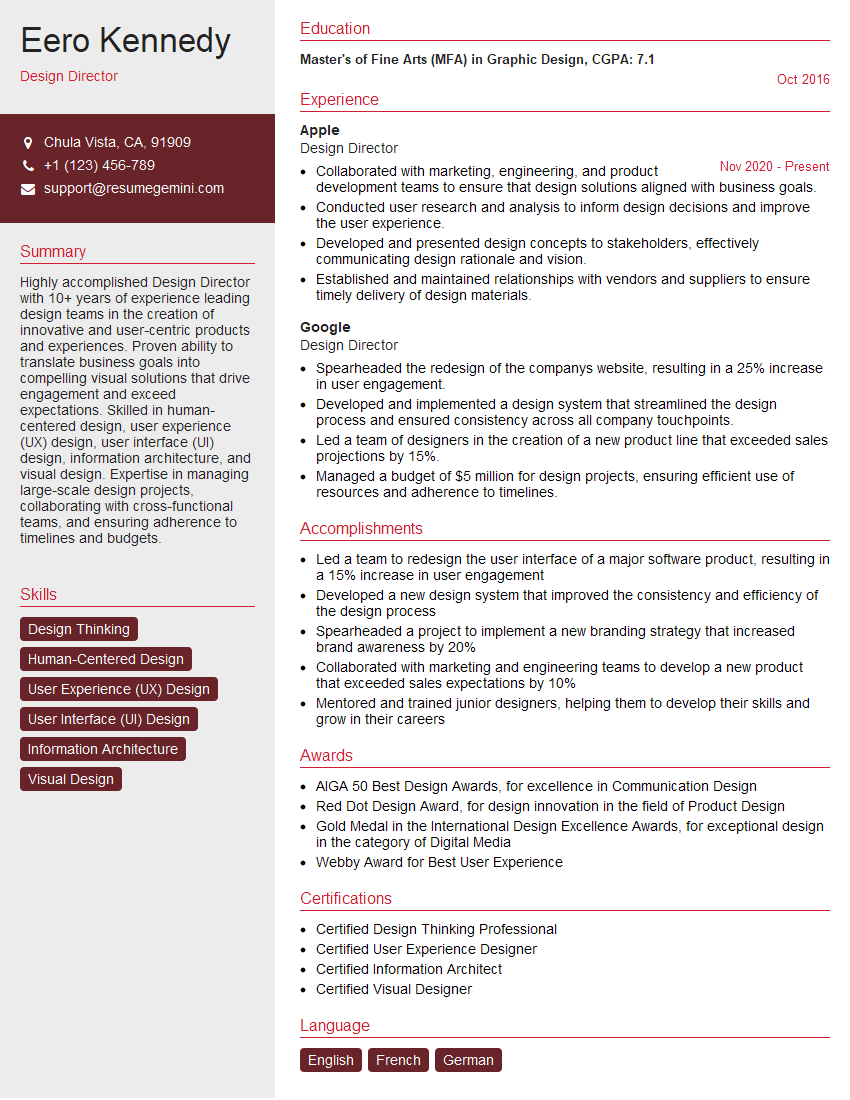
Design Director Resume Sample
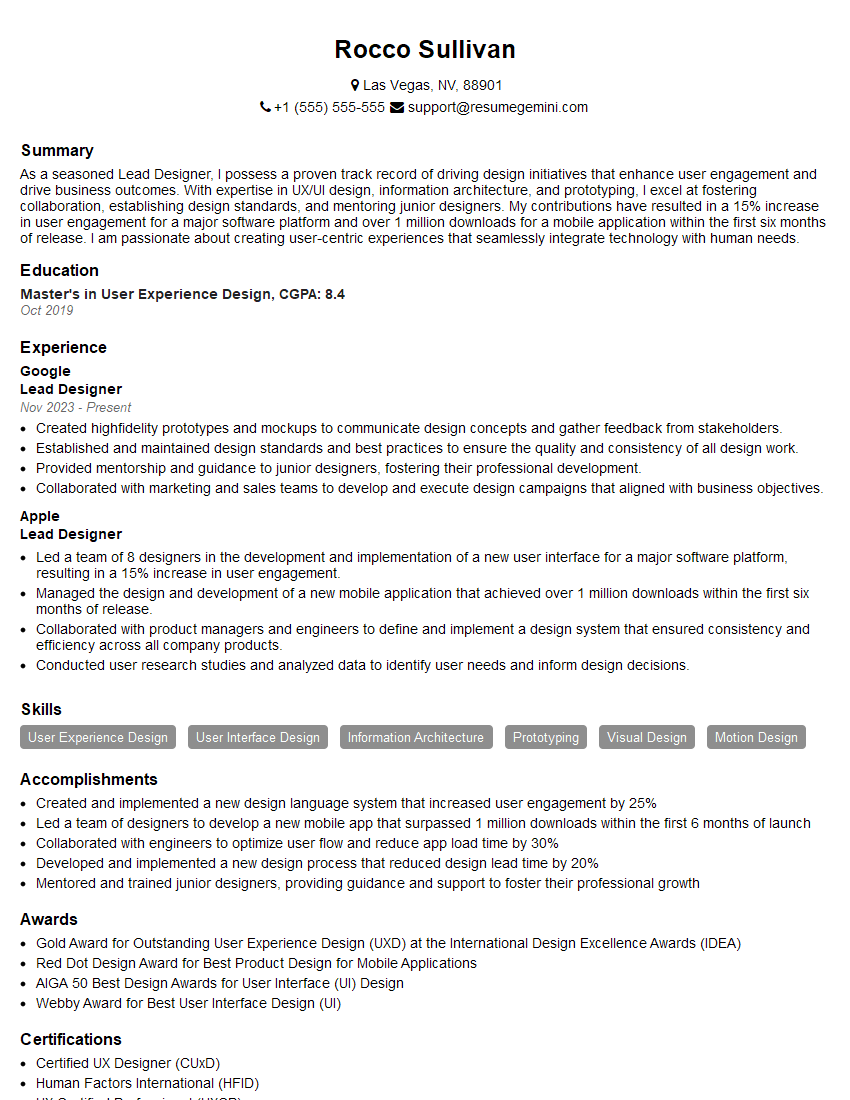
Lead Designer Resume Sample
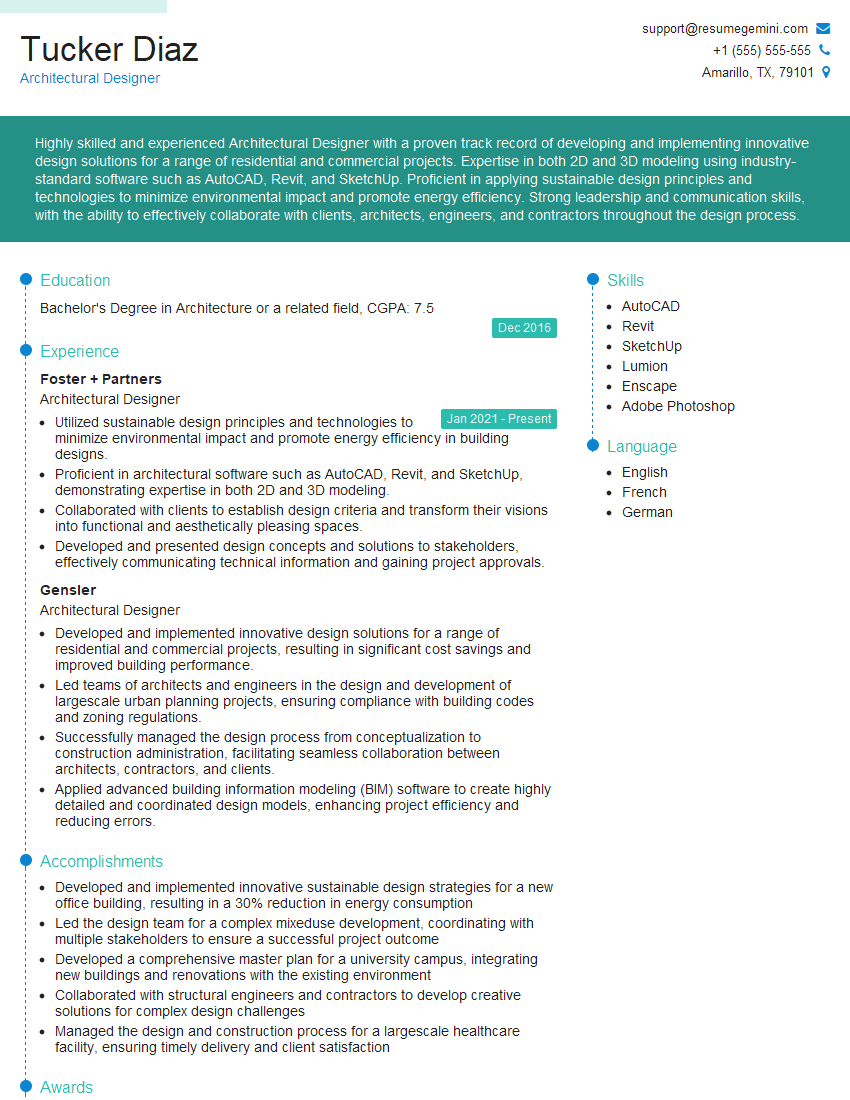
Architectural Designer Resume Sample
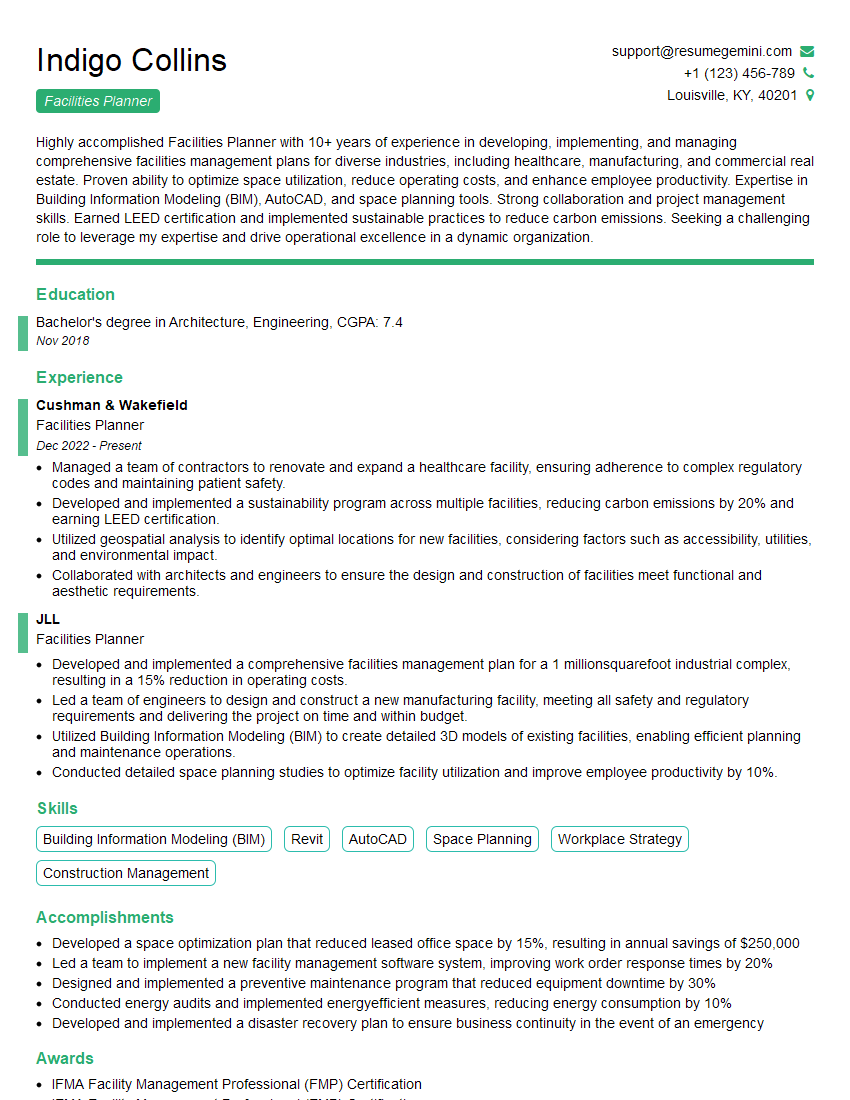
Facilities Planner Resume Sample
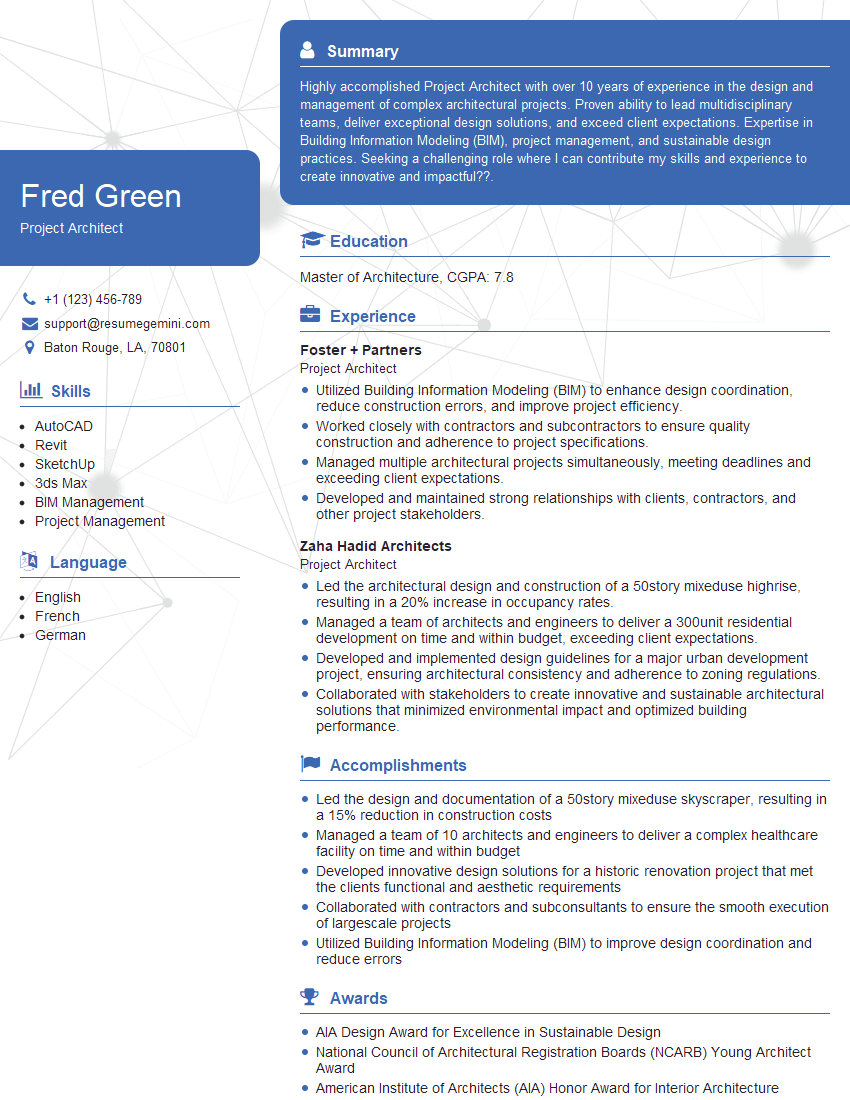
Project Architect Resume Sample
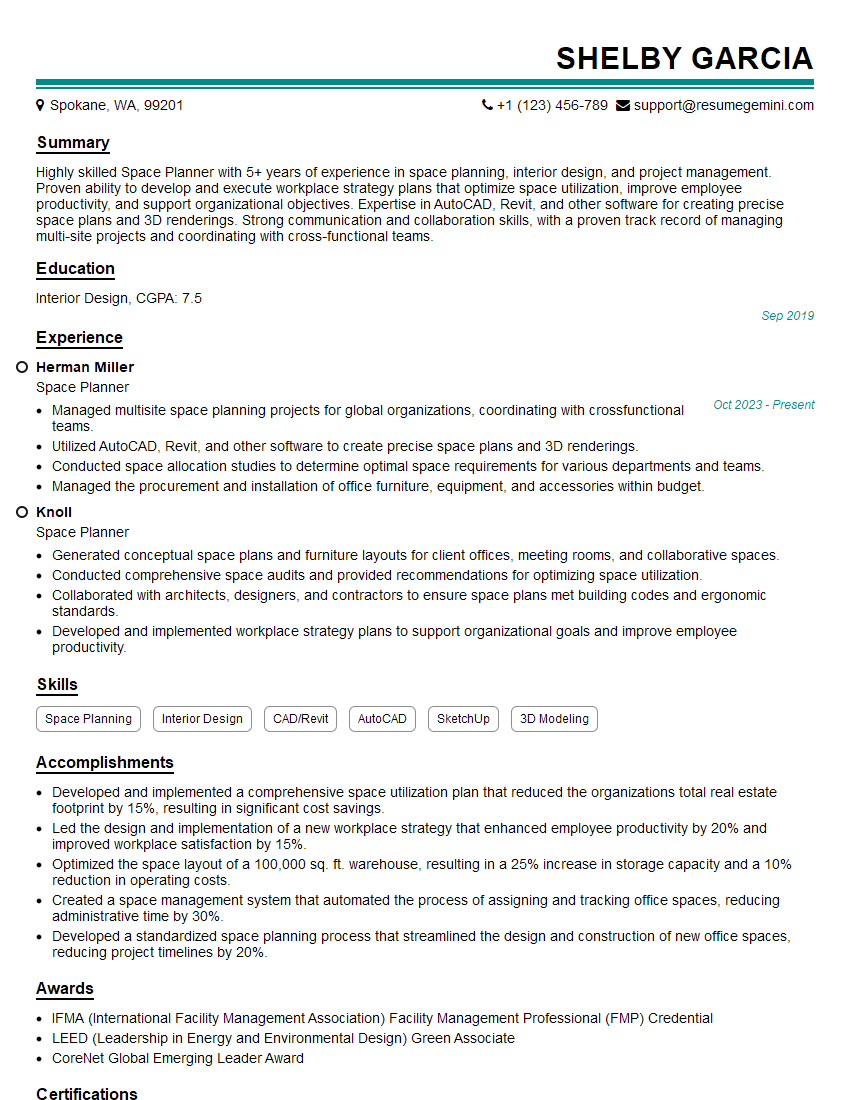
Space Planner Resume Sample
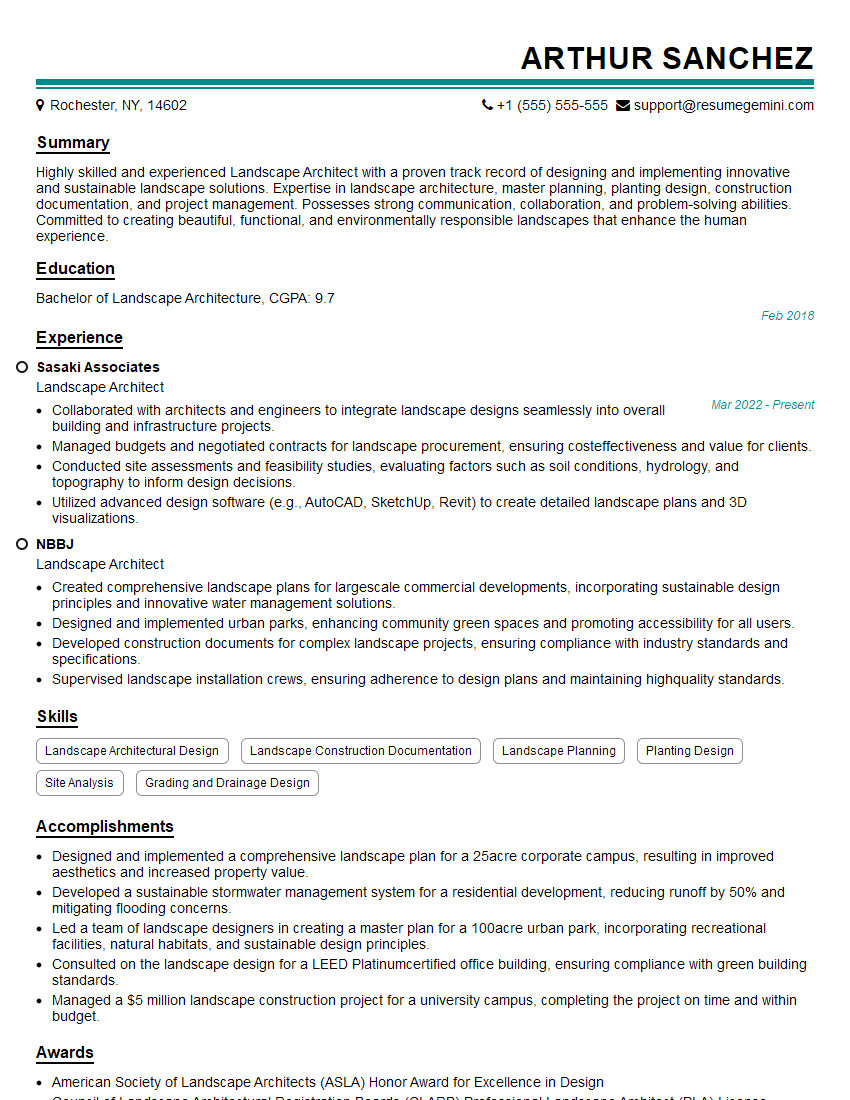
Landscape Architect Resume Sample
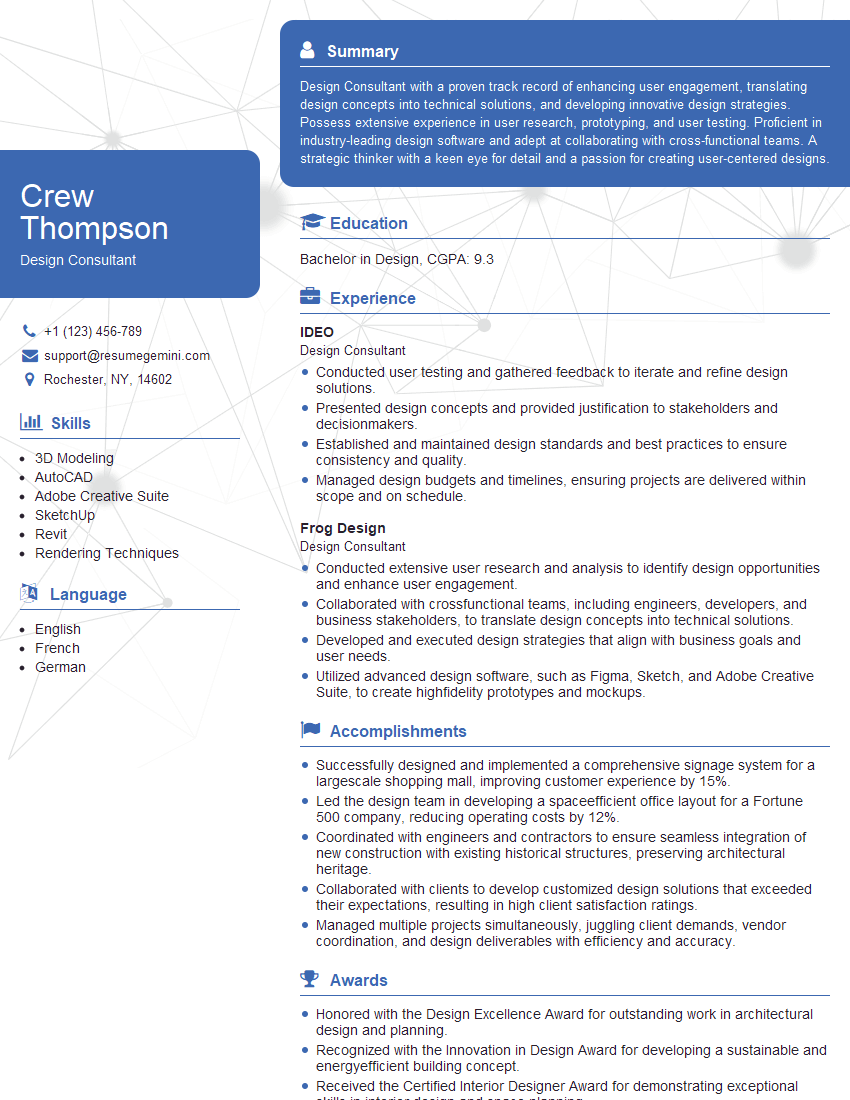
Design Consultant Resume Sample
Explore more articles
Users Rating of Our Blogs
Share Your Experience
We value your feedback! Please rate our content and share your thoughts (optional).
What Readers Say About Our Blog
Very informative content, great job.
good