Unlock your full potential by mastering the most common RAPID interview questions. This blog offers a deep dive into the critical topics, ensuring you’re not only prepared to answer but to excel. With these insights, you’ll approach your interview with clarity and confidence.
Questions Asked in RAPID Interview
Q 1. Explain the difference between RAPID and other robot programming languages.
RAPID (Robot Application Programming ID) is ABB’s proprietary programming language specifically designed for their industrial robots. Unlike general-purpose languages like Python or C++, RAPID is tailored to the unique needs of robotic control, including precise motion control, interaction with external devices (sensors, I/O), and real-time operations. Other robot programming languages, while sometimes possessing similar constructs, often lack the integrated features RAPID offers for handling robot-specific tasks such as trajectory planning and coordinated movement of multiple axes. For example, a general-purpose language might require extensive libraries to achieve the same level of robot control that RAPID provides natively.
Think of it like this: a general-purpose language is like a Swiss Army knife – versatile, but not optimized for any single task. RAPID, on the other hand, is like a specialized tool designed specifically for robotic tasks; it’s highly efficient and streamlined for its purpose.
Q 2. Describe the RAPID data types and their uses.
RAPID supports several data types crucial for robotic programming. Here are some key ones:
- NUM: Represents numerical values, such as joint angles or Cartesian coordinates. Example:
num myAngle := 30; - BOOL: Boolean values (TRUE or FALSE), used for logical operations and conditional statements. Example:
bool safetySwitch := TRUE; - STRING: Text strings, useful for displaying messages or storing data. Example:
string productName := "Robot Arm"; - POS: Represents a robot’s position and orientation in Cartesian space. This is fundamental for specifying target locations. Example:
pos targetPos := [100, 200, 300, 0, 0, 0]; - JOINT: Represents the joint angles of a robot arm, essential for precise joint-level control. Example:
joint jointAngles := [10, 20, 30, 40, 50, 60]; - ROBTARGET: Combines position and orientation in a single data type.
The choice of data type depends on the specific information being handled within the robot program. For example, a program controlling a robot’s movement would heavily rely on POS and JOINT types, while a program monitoring sensor readings might use NUM or BOOL types.
Q 3. How do you handle errors and exceptions in RAPID?
RAPID provides robust error handling mechanisms to ensure program stability and safety. The primary method involves using TRY...CATCH blocks. The code within the TRY block is executed, and if an error occurs, the corresponding CATCH block is executed. This allows you to gracefully handle exceptions and prevent unexpected program termination. For instance, if a sensor fails to provide valid data, your program can react appropriately without crashing.
TRY
  // Code that might cause an error
  num result := 10 / 0; // Example: division by zero
CATCH
  // Error handling code
  TPWrite("Division by zero error!");
ENDTRY
Another essential aspect is utilizing the ErrorLevel system variable, which indicates the status of the system. Checking its value enables reacting to specific errors, such as collisions or unexpected signals from external devices. The use of appropriate error handling is crucial to building robust and safe robotic systems.
Q 4. What are the different types of motion instructions in RAPID?
RAPID offers a range of motion instructions to control robot movements with varying levels of precision and flexibility:
- MoveJ (Joint Movement): Moves the robot to a specified joint configuration. Useful for quickly changing the robot’s posture while ignoring the path taken.
- MoveL (Linear Movement): Moves the robot along a straight line in Cartesian space. This ensures smoother and more predictable movements.
- MoveC (Circular Movement): Moves the robot along a circular arc between two points in Cartesian space. Essential for tasks requiring precise curved paths.
- MoveAbsJ/MoveAbsL (Absolute Movements): These move the robot to a specified absolute position or joint configuration in the workspace.
- MoveRelJ/MoveRelL (Relative Movements): Moves the robot relative to its current position.
The choice of instruction depends on the application. For example, MoveL is ideal for painting or welding, where a smooth continuous path is needed. MoveJ is suitable for fast pick-and-place operations where path accuracy is less critical. Using the correct motion instruction is vital for efficient and accurate robot operation.
Q 5. Explain the concept of modules and subroutines in RAPID.
Modules and subroutines in RAPID promote code reusability, organization, and maintainability. Modules are essentially self-contained blocks of code that encapsulate specific functionalities. They can contain variables, procedures, and other modules, improving code structure and reducing redundancy. Subroutines, on the other hand, are procedures within a module or main program that can be called multiple times, reducing duplicated code. A module focused on a specific task, like ‘vision processing’ or ‘gripper control’, enhances code clarity and makes it easier to manage. Think of it like building with prefabricated components instead of creating every part from scratch.
For example, imagine a robot program with multiple pick-and-place cycles. You could create a module containing a subroutine that handles the pick-and-place logic. This subroutine can then be called repeatedly throughout the main program, avoiding repetitive coding. This modular approach is crucial for developing large, complex robot programs.
Q 6. How do you use variables and data structures in RAPID programs?
Variables and data structures in RAPID are used to store and manipulate data within the robot program. Variables are declared with a data type and a name, for example: num count := 0;. RAPID also supports arrays (array of NUM), allowing you to store multiple values of the same type under a single name. Structures, which are user-defined data types grouping related variables, can represent complex data, such as sensor readings or workpiece specifications. This enhances code clarity and organization, especially when handling complex data sets.
For example, a structure might be defined to represent a workpiece:STRUCT workpiece
num x;
num y;
num z;
ENDSTRUCT
This improves readability and makes the code easier to maintain. Effective use of variables and data structures significantly improves the efficiency and organization of RAPID programs.
Q 7. Describe the process of creating and calling procedures in RAPID.
Creating and calling procedures in RAPID involves defining a block of code that performs a specific task. Procedures improve code reusability and modularity. They are defined using the PROC and ENDPROC keywords. Once defined, procedures can be called from other parts of the program, passing arguments as needed. This structured approach makes programs more readable and easier to maintain. This is particularly beneficial in collaborative projects, where different programmers work on different parts of the system.
PROC myProcedure(NUM inputValue)
  //Procedure body
  num result := inputValue * 2;
  TPWrite(result);
ENDPROC

// Calling the procedure:
myProcedure(10);
The example shows a simple procedure that doubles an input value. More complex procedures can handle more sophisticated tasks, such as coordinating multiple robot movements or interacting with external equipment. The ability to create and call procedures is crucial for structuring and managing large-scale RAPID programs.
Q 8. How do you perform input/output operations in RAPID?
Input/output (I/O) in RAPID involves interacting with external devices and sensors connected to the robot controller. This is crucial for tasks like receiving sensor data, controlling external actuators, and interacting with a supervisory system. We primarily use the InOut() function and the associated data structures to manage this.
For example, to read a digital input from a sensor connected to a specific input port, you might use:
SIGNAL sensorValue;
VAR sensorPort : INT := 1;
sensorValue := InOut(sensorPort, 1);
This code snippet reads the value from port 1 (assuming it’s a digital input). The InOut() function takes the port number and the operation type (1 for reading a digital input) as arguments. Remember to declare the appropriate signal type (SIGNAL) beforehand. For analog inputs and outputs, and more complex scenarios, more parameters will be needed. Careful configuration within the robot controller’s I/O settings is essential for successful I/O communication.
Conversely, to control an external pneumatic valve (digital output), you might use:
InOut(valvePort, 2, 1);
This sets the output on the specified valvePort to high (1), turning the valve on. The ‘2’ indicates a digital output operation. Error handling is crucial. Always check return values and consider potential communication failures.
Q 9. Explain the use of interrupts in RAPID.
Interrupts in RAPID are used to respond to asynchronous events – events that occur outside the normal program flow. Think of them as ’emergency calls’ that temporarily suspend the main program execution to handle a critical situation and then resume afterward. These are particularly useful for handling safety-related events or real-time data acquisition.
A common use case is reacting to a safety sensor triggering. If a safety light curtain is broken, an interrupt would immediately halt the robot’s motion, preventing accidents. The interrupt service routine (ISR) could then initiate appropriate safety procedures, such as emergency stops and error reporting.
In RAPID, you define interrupt routines that execute when a specific event occurs. This might be a change in a digital input, a timer expiring, or a specific communication event. These routines need to be concise and efficient because they are time-critical. The INTERRUPT statement is used to declare an interrupt routine and link it to a specific event, including assigning priorities to manage multiple simultaneous interrupts.
INTERRUPT InterruptRoutine ON PortChange(1) ;
This example shows defining an interrupt routine called InterruptRoutine that is triggered whenever the state of input port 1 changes.
Q 10. How do you work with different coordinate systems in RAPID?
RAPID supports various coordinate systems for precise robot control. Understanding and utilizing these systems is fundamental for effective robot programming. The most common are:
- World Coordinate System (WCS): This is a fixed, user-defined coordinate system relative to the robot’s environment. Think of it as a map of the robot’s workspace.
- Base Coordinate System (BCS): This is attached to the robot base, moving with the robot.
- Tool Coordinate System (TCS): This is attached to the robot’s end effector (tool), allowing movements relative to the tool’s orientation.
- User Coordinate Systems (UCS): These are programmable coordinate systems that can be defined anywhere in the workspace to simplify complex tasks.
Switching between coordinate systems is done using MoveL, MoveJ, and other motion instructions, specifying the target coordinates and the relevant coordinate system. For example:
MoveL p1, v1000, z100, tool1;
This moves the robot to point p1 (which could be defined in WCS, TCS, UCS, or BCS) at a speed of 1000 mm/s, with a zone of 100 mm, using tool tool1. The specific coordinate system used depends on how p1 is defined. Defining appropriate coordinate systems significantly simplifies programming complex paths, especially in applications involving multiple parts or objects.
Q 11. Describe your experience with RAPID’s trajectory generation features.
RAPID offers robust trajectory generation capabilities for creating smooth and efficient robot movements. These capabilities are vital for optimizing cycle times, reducing wear and tear on the robot, and ensuring precision in complex tasks.
Key trajectory generation features include specifying velocity, acceleration, and deceleration profiles. MoveL (linear movement) and MoveJ (joint movement) instructions allow setting velocity (v) and zone (z) parameters. This permits tailoring the robot’s movement to the specific application’s needs; for example, slow speeds when approaching delicate parts and faster speeds in open spaces.
Advanced trajectory planning involves using functions for path planning and spline generation, ensuring smooth transitions between waypoints. This is crucial for applications like painting, welding, and intricate assembly, where smooth and controlled movements are essential for quality and precision. I’ve used these features extensively to optimize robot paths in high-speed pick-and-place applications, dramatically reducing cycle times and improving precision.
Moreover, RAPID allows for the implementation of more advanced control algorithms, such as those used in force control applications, enabling robots to react to external forces and adjust their trajectories accordingly. This is crucial when working in unstructured environments or with compliant materials.
Q 12. Explain how to implement safety functions in RAPID programs.
Safety is paramount in robotics. RAPID provides several mechanisms for implementing safety functions, ensuring safe operation and preventing accidents. These mechanisms include:
- Safety-rated digital inputs and outputs: Connecting safety sensors (e.g., emergency stops, light curtains) to dedicated safety I/O interfaces and using them in interrupt routines to immediately halt robot operations.
- Safety-rated motion control: Utilizing reduced speed and acceleration in specific areas or during certain operations; this may involve using zones or specific safety-related instructions.
- Software safety checks: Including checks throughout the code to ensure the robot is operating within defined safety limits (e.g., joint limits, speed limits). These are often incorporated within the main program flow and interrupt routines.
- Emergency stop routines: Implementing dedicated routines that execute when an emergency stop is activated, bringing the robot to a safe and controlled halt.
Example: A safety light curtain’s signal can trigger an interrupt routine that immediately stops the robot and logs the event. Proper configuration of the safety components and the controller’s safety settings is crucial for effective safety implementation.
Q 13. How do you debug and troubleshoot RAPID code?
Debugging RAPID code requires a systematic approach. The ABB RobotStudio simulation environment plays a vital role, allowing you to test and debug code offline before deploying it on the actual robot. This significantly reduces downtime and risks.
Debugging Strategies:
- Breakpoints: Setting breakpoints in RobotStudio allows you to pause execution at specific points in your code, inspecting variable values and program flow.
- Single-stepping: Executing the code line by line, observing each step’s effect.
- Watch variables: Monitoring the values of key variables during program execution, helping to identify incorrect calculations or logic errors.
- Logging: Using
Tracestatements to log important variables and events during runtime. This is incredibly useful for analyzing program behavior in complex scenarios. - ABB’s RAPID debugging tools: Leveraging the integrated debugging tools within RobotStudio, including variable inspection, stack trace analysis, and error message analysis.
Systematic approach: When a bug occurs, start with the most recent changes to your code. Review the sequence of operations, checking for out-of-range values, incorrect variable assignments, or logical flaws. If the issue persists, proceed with debugging tools and strategies mentioned above.
Q 14. How do you handle synchronization between multiple robots using RAPID?
Synchronizing multiple robots requires careful planning and implementation. RAPID offers several approaches, each suitable for different scenarios:
- Shared memory: Using shared memory areas accessible to all robots’ controllers to exchange data and synchronize actions. This approach requires careful management of access and potential race conditions.
- External controller or PLC: Employing an external controller (PLC or another higher-level system) to coordinate the robots’ actions. This is particularly useful for complex scenarios requiring advanced synchronization and control.
- RAPID’s built-in communication functions: Utilizing RAPID’s built-in communication capabilities (e.g., TCP/IP sockets, other industrial communication protocols) for exchanging synchronization signals and data between robots. This approach offers flexibility but requires robust error handling and communication management.
Example: In a collaborative assembly task, one robot might signal completion of its sub-task via shared memory, triggering the next robot to initiate its phase. The choice of method depends on the application’s complexity, performance requirements, and available hardware.
Important considerations: Robust error handling, clear communication protocols, and well-defined synchronization mechanisms are crucial for reliable multi-robot coordination. Efficient data exchange and minimizing latency are vital for optimal performance.
Q 15. What is the purpose of the TP (Teach Pendant) in relation to RAPID programming?
The Teach Pendant (TP) is the human-machine interface (HMI) for ABB robots using RAPID programming. It’s essentially the robot’s control panel, allowing you to interact with the robot directly. Think of it as a combination of joystick, computer keyboard, and display screen. You use it for several key RAPID-related tasks:
- Program execution: Starting, stopping, and stepping through RAPID programs.
- Manual control: Directly manipulating the robot’s movements – crucial for teaching points and verifying joint positions in a program. This is how you record the robot’s physical path for later automation.
- Debugging: Monitoring variables, observing program flow, and identifying errors within the code. The TP provides real-time feedback, helping to isolate and correct problems.
- Program editing (limited): While full program development happens on a PC, the TP offers basic editing functionalities such as viewing and potentially minor modifications to some RAPID code aspects.
- System diagnostics: Accessing information on the robot’s status, error logs, and other system variables.
In essence, the TP is the bridge connecting the human operator to the robot’s RAPID program execution and its internal state. Without it, directly interacting with and controlling a robot running a RAPID program would be practically impossible.
Career Expert Tips:
- Ace those interviews! Prepare effectively by reviewing the Top 50 Most Common Interview Questions on ResumeGemini.
- Navigate your job search with confidence! Explore a wide range of Career Tips on ResumeGemini. Learn about common challenges and recommendations to overcome them.
- Craft the perfect resume! Master the Art of Resume Writing with ResumeGemini’s guide. Showcase your unique qualifications and achievements effectively.
- Don’t miss out on holiday savings! Build your dream resume with ResumeGemini’s ATS optimized templates.
Q 16. Explain your experience with different RAPID libraries and modules.
My experience encompasses a wide range of RAPID libraries and modules. I’ve extensively used modules for:
- Motion control:
MoveJ,MoveL,MoveCfor precise joint, linear, and circular movements. I’m proficient in utilizing these commands with various speed and acceleration parameters for optimal trajectory planning, considering factors like payload and the robot’s physical limitations. - I/O handling: Working with digital and analog inputs and outputs (DIO, AIO) to interface with sensors, actuators, and other peripherals. For example, I’ve used
SetDOandGetDIfunctions to control pneumatic grippers based on sensor feedback. - Process data: Utilizing the
ProcessDatamodule for handling and manipulating real-time data from various sources including sensors and PLCs. This includes writing customized data handling routines to filter noise or implement complex logical control systems. - Vision integration: Integrating robot control with machine vision systems. This involves using RAPID to retrieve image data and process location information from vision systems to guide robot movements for precise part picking or assembly. For instance, I used RAPID commands to trigger image acquisition, parse coordinate data, and subsequently update the robot’s target positions based on vision feedback.
- Robotics libraries: Libraries specifically designed for advanced motion planning, path optimization, and collision avoidance.
I’m also familiar with utilizing ABB’s RobotStudio simulation software for developing and testing RAPID programs offline. This significantly reduces downtime and allows for iterative testing without affecting the physical robot.
Q 17. How do you integrate RAPID programs with other systems (e.g., PLCs, SCADA)?
Integrating RAPID programs with external systems like PLCs and SCADA systems typically involves utilizing the robot’s I/O capabilities and communication protocols. Several methods are commonly used:
- I/O signals: Directly connecting digital and analog I/O signals between the robot controller and the external system. This allows for simple data exchange, such as triggering robot actions based on external events or signaling completion of robot tasks to the PLC.
- Ethernet/IP, PROFINET, Modbus TCP: Using industrial communication protocols for more robust and complex data exchange. This approach allows for high-speed transfer of data between the robot controller and other automation devices on the factory network. I have extensive experience using these protocols to facilitate communication between RAPID programs and PLC-based systems for synchronizing and coordinating operations.
- OPC UA: Using OPC UA as a universal communication standard provides an open and interoperable way to connect RAPID to a wide range of industrial devices, including SCADA systems. This is particularly useful when dealing with heterogeneous industrial automation environments.
The specific method chosen depends on the complexity of the integration, the capabilities of the external systems, and the desired level of data exchange. It often involves configuring the communication settings on both the robot controller and the external system, as well as developing appropriate RAPID code to handle the data exchange.
Q 18. Describe your experience with RAPID’s process data handling.
RAPID’s process data handling is a cornerstone of advanced robotic control. I’ve used it extensively to manage real-time data for tasks ranging from simple sensor feedback to complex process monitoring and control. This typically involves:
- Data acquisition: Reading data from various sources, including I/O modules, sensors, and external systems. For example, I’ve used RAPID to monitor the pressure from a pressure sensor using
GetAIfunction and implement a safety shutdown if the pressure exceeds a threshold. - Data manipulation: Processing and transforming data, applying calculations and logical operations to make it useful for control decisions. I’ve built routines that filter noise, average values, and perform complex calculations based on sensor readings.
- Data logging: Storing data for analysis and troubleshooting. This is crucial for identifying patterns, optimizing processes, and debugging. I commonly employ methods to save data to the robot controller’s internal storage or export data to external databases.
- Data integration: Integrating process data with other aspects of the robot’s operation, such as trajectory planning and motion control. For example, I’ve integrated process data from a force sensor into a control loop to adapt the robot’s movements during part insertion.
Efficient process data handling in RAPID often requires meticulous planning to ensure data integrity, accuracy, and real-time performance. Careful selection of data structures and efficient coding practices are crucial to avoid bottlenecks and ensure smooth operation.
Q 19. What are your preferred methods for testing and validating RAPID programs?
Testing and validating RAPID programs requires a multi-faceted approach. I typically use a combination of these methods:
- Simulation: Utilizing RobotStudio to simulate the robot’s movements and behavior in a virtual environment before deploying the program to the physical robot. This allows for early detection and correction of errors, reducing downtime on the factory floor.
- Unit testing: Testing individual functions and modules separately to ensure they behave as expected. This often involves creating small test programs to verify the output of specific routines with various inputs.
- Integration testing: Testing the interaction between different modules and subsystems to ensure they work seamlessly together. This verifies the overall program functionality and checks for integration issues.
- System testing: Testing the complete robot system, including the robot, peripheral devices, and external systems to ensure they function as intended. This typically involves a comprehensive test program that simulates various real-world scenarios.
- Regression testing: Retesting the system after making changes to the program code or the robot system. This ensures that changes do not introduce new bugs.
Thorough documentation of test procedures and results is vital for maintaining program quality and facilitating future modifications.
Q 20. Explain your understanding of RAPID’s object-oriented programming capabilities (if applicable).
While RAPID isn’t purely object-oriented like Java or C++, it does incorporate some object-oriented concepts. It utilizes modules and data structures that can be considered analogous to classes and objects. Modules encapsulate data and functions, promoting code reusability and organization. For example, a module could be created to represent a specific gripper, containing functions for opening, closing, and monitoring its state.
Although inheritance and polymorphism aren’t directly supported in the same way as in fully object-oriented languages, you can achieve similar functionalities through modular design and the use of function pointers. You can create modularized functions that can be called with varying arguments or handle different data types.
While RAPID’s object-oriented features are less robust than languages specifically designed for object-oriented programming, utilizing this design principle still makes the development and maintenance of large and complex RAPID programs much more manageable and efficient.
Q 21. How would you handle a robot malfunction during program execution?
Handling a robot malfunction during program execution requires a systematic approach, prioritizing safety and efficient troubleshooting. My approach would involve these steps:
- Emergency Stop: Immediately pressing the emergency stop button on the TP to halt all robot motion and prevent potential damage or injury.
- Safety Check: Assessing the situation to ensure the safety of personnel and equipment. This may involve isolating the affected area and disabling any power to the robot if necessary.
- Error Diagnosis: Examining the robot controller’s error logs and messages on the TP to identify the cause of the malfunction. This might reveal specific error codes, indicating the source of the problem.
- Debugging: If the error is related to a specific part of the RAPID program, use the TP’s debugging tools to isolate the faulty section. This might involve stepping through the program line by line, monitoring variable values, and checking for unexpected conditions.
- Corrective Action: Based on the error diagnosis, take corrective action such as repairing hardware faults, modifying the RAPID code to address logical errors, or replacing faulty components.
- Testing: After implementing a fix, thoroughly test the robot program to ensure that the malfunction has been resolved and that the robot functions correctly.
- Documentation: Documenting the malfunction, the steps taken to diagnose and resolve it, and any changes made to the RAPID program. This is crucial for preventative maintenance and future troubleshooting.
The key is a calm and methodical approach, prioritizing safety above all else. Proper training and experience are essential to effectively handle robot malfunctions.
Q 22. Describe your experience with RAPID’s simulation tools.
My experience with RAPID’s simulation tools is extensive. I’ve used them extensively throughout my career to design, test, and optimize robot programs before deploying them to physical robots. This significantly reduces downtime and risk. The simulators, such as RobotStudio, allow you to create a virtual replica of your robot cell, including the robot arm, end-effector, and workpieces. You can then program and test your RAPID code within this virtual environment. This is invaluable for complex tasks. For example, I once used the simulation to optimize the path of a robot arm painting car parts. By tweaking the program in the simulation, I was able to reduce the paint usage and cycle time by 15% before even touching the real robot.
Key features I leverage include collision detection – preventing costly errors before they happen; offline programming – allowing me to program while the real robot is still in use; and path optimization tools – helping refine the robot’s movements for improved efficiency and speed. I am proficient in using various simulation features to verify program correctness, visualize robot motion, and troubleshoot potential issues well before deploying on the physical hardware.
Q 23. Explain your experience with different ABB robot controllers.
I’ve worked with several generations of ABB robot controllers, including IRC5, IRC5 Compact, and the newer OmniCore controllers. Each controller has its strengths and nuances in how it interacts with RAPID. The IRC5, for instance, is a robust and widely used controller known for its reliability. The Compact version offers a more space-saving design while still maintaining performance. However, the OmniCore represents a significant leap forward, offering faster processing speeds and improved integration capabilities.
My experience covers programming across these different platforms, understanding the subtle differences in communication protocols and specific RAPID functions available on each. This experience allows me to adapt quickly to various project requirements and readily troubleshoot issues related to controller-specific limitations or functionalities.
For example, I recently migrated a complex palletizing program from an older IRC5 to a newer OmniCore controller. This involved adapting the RAPID code to take advantage of the OmniCore’s enhanced capabilities while ensuring backward compatibility with existing hardware. The process required careful consideration of communication protocols and hardware adjustments.
Q 24. What are the advantages and disadvantages of using RAPID for robot programming?
RAPID, ABB’s proprietary programming language, offers several advantages. It’s a structured language, making large programs manageable and easier to debug. Its extensive library of functions provides pre-built solutions for common robotics tasks, speeding up development. Further, it seamlessly integrates with ABB hardware and software, making deployment smoother.
- Advantages: Structured, readily available functions, great integration with ABB hardware, strong community support.
- Disadvantages: It is proprietary, meaning it limits portability to non-ABB systems, and it has a steeper learning curve compared to more common languages like Python or C++. The debugging tools, while functional, could be improved in certain areas.
In practice, the advantages usually outweigh the disadvantages, especially when working exclusively within the ABB ecosystem.
Q 25. How do you optimize RAPID programs for speed and efficiency?
Optimizing RAPID programs for speed and efficiency involves a multi-pronged approach. First, I analyze the program’s logic to identify any bottlenecks or redundant calculations. This often involves profiling the code to pinpoint areas where execution time is highest. Next, I implement several strategies:
- Minimizing I/O operations: Reading and writing to external devices (sensors, I/O modules) can be time-consuming. I often batch these operations or use more efficient communication protocols to reduce delays.
- Using optimized motion instructions: Instead of using many small movements, I combine them into larger, more efficient movements whenever possible. Functions like
MoveL(linear movement) andMoveJ(joint movement) are carefully selected based on the application’s requirements. - Efficient data structures: I choose data structures that minimize memory access time and improve data manipulation efficiency.
- Avoiding unnecessary calculations: If a value is already calculated, I reuse it instead of recomputing it multiple times.
- Using advanced motion instructions: Techniques like path planning algorithms and dynamic motion control, which the newer controllers support, help reduce cycle times and improve trajectory smoothness.
For instance, I once optimized a pick-and-place program by switching from individual point-to-point movements to a more efficient path planning approach, which reduced the cycle time by over 20%. Code analysis tools within RobotStudio help in this optimization process.
Q 26. Explain your approach to documenting RAPID code.
My approach to documenting RAPID code is thorough and consistent, following a clear structure to ensure maintainability and collaboration. I always use meaningful variable names and include comprehensive comments explaining the purpose of each module, function, and significant code section. I follow the standard ABB commenting styles.
/* This is a multi-line comment explaining the purpose of this module */
// This is a single-line comment explaining a specific line of code.
Beyond inline comments, I create external documentation that includes: a high-level overview of the program’s functionality; a detailed description of the inputs and outputs; a flowchart or pseudocode illustrating the program’s logic; and any relevant assumptions or limitations. This detailed approach is vital in larger collaborative projects. It makes understanding and maintaining the code considerably easier for myself and other team members even after months or years. Furthermore, it significantly reduces the time spent on troubleshooting or modification later.
Q 27. Describe a challenging RAPID programming task you’ve overcome.
One challenging task involved programming a robot to perform complex assembly operations involving small, delicate parts within a tight workspace. The robot needed to accurately place several components with precise orientation, and any slight error could lead to assembly failure. The difficulty stemmed from the tight tolerances, the need for precise force control, and the complex interactions between the various assembly steps.
My solution involved a combination of strategies. First, I used RAPID’s built-in force control capabilities to ensure gentle and controlled placement of the components. Second, I incorporated vision system integration to verify component positioning and orientation before each assembly step, correcting minor deviations. Third, I developed a sophisticated error-handling mechanism that stopped the robot and alerted the operator if unexpected conditions occurred. Fourth, extensive simulation in RobotStudio helped refine the program, predicting potential collisions and optimizing the robot’s movements before deploying to the physical robot.
Through careful planning, extensive simulation, and leveraging advanced RAPID features, I successfully completed the project within budget and time constraints, resulting in a reliable and efficient assembly system. This required meticulous attention to detail and demonstrated the importance of integrating vision systems and utilizing simulation tools for complex robotics applications.
Key Topics to Learn for RAPID Interview
- RAPID Methodology Overview: Understand the core principles, phases, and iterative nature of the RAPID methodology. Consider its strengths and limitations compared to other agile frameworks.
- Requirements Analysis & Prioritization: Learn how to effectively gather, analyze, and prioritize requirements using various techniques within the RAPID framework. Practice identifying and resolving conflicting requirements.
- Agile Development Practices: Familiarize yourself with the agile principles and practices integrated into RAPID, such as sprint planning, daily stand-ups, sprint reviews, and retrospectives.
- Risk Management in RAPID: Explore how risks are identified, assessed, and mitigated throughout the RAPID lifecycle. Understand the importance of proactive risk management in iterative development.
- Iteration Planning & Execution: Master the art of effective iteration planning, including task breakdown, estimation, and resource allocation. Practice executing iterations efficiently and adapting to changing circumstances.
- Communication & Collaboration: Understand the crucial role of effective communication and collaboration within RAPID teams. Discuss techniques for fostering a collaborative environment and managing stakeholder expectations.
- Metrics & Reporting: Learn how to track progress, measure success, and report on key metrics within a RAPID project. Understand the importance of data-driven decision-making.
- Problem-Solving within RAPID: Practice applying the RAPID methodology to solve real-world problems. Focus on developing your ability to adapt and respond to challenges effectively.
Next Steps
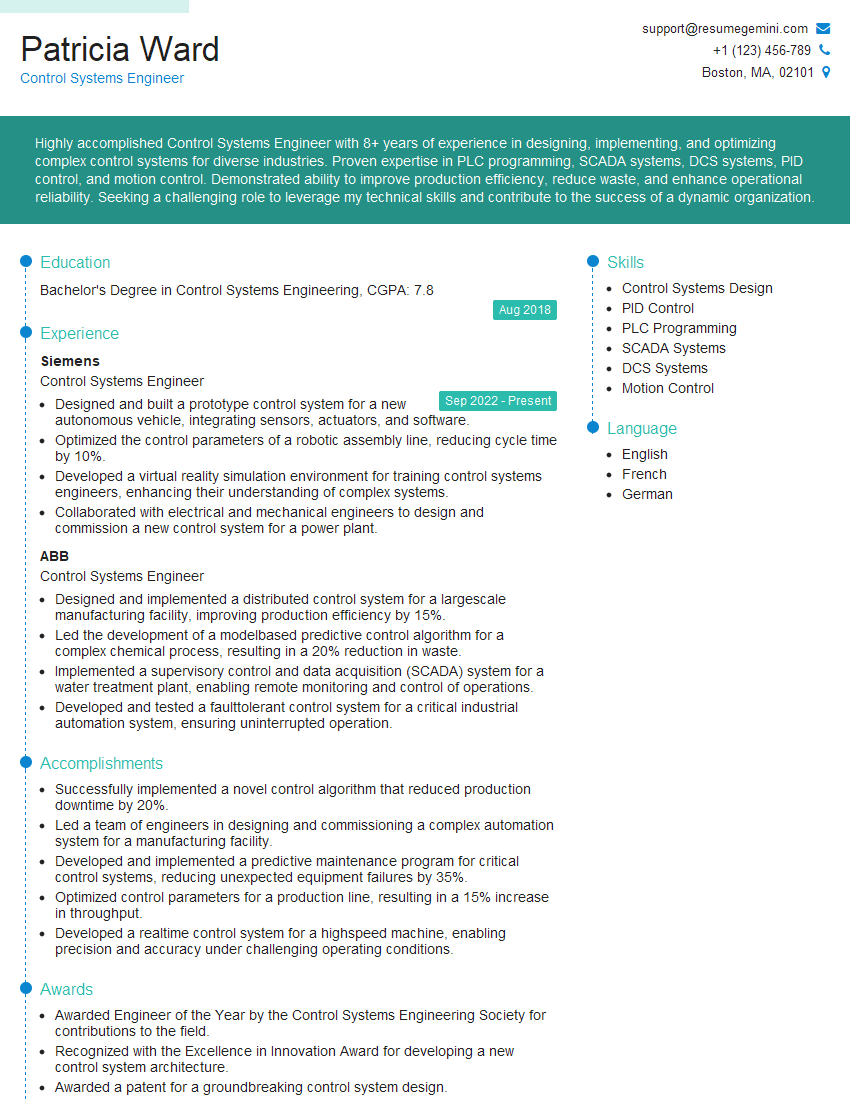
Mastering RAPID significantly enhances your career prospects in project management and software development. A strong understanding of this methodology demonstrates your ability to deliver projects efficiently and effectively in a dynamic environment. To maximize your job search success, create an ATS-friendly resume that highlights your RAPID skills and experience. ResumeGemini is a trusted resource that can help you build a professional and impactful resume. Examples of resumes tailored to showcasing RAPID expertise are available to further guide your preparation.
Explore more articles
Users Rating of Our Blogs
Share Your Experience
We value your feedback! Please rate our content and share your thoughts (optional).
What Readers Say About Our Blog
Very informative content, great job.
good