Interviews are opportunities to demonstrate your expertise, and this guide is here to help you shine. Explore the essential Composition for Film, Television, and Video Games interview questions that employers frequently ask, paired with strategies for crafting responses that set you apart from the competition.
Questions Asked in Composition for Film, Television, and Video Games Interview
Q 1. Explain your approach to creating a musical theme for a specific genre (e.g., horror, comedy, sci-fi).
My approach to composing a musical theme starts with deeply understanding the genre’s inherent emotional landscape. For example, a horror score demands a sense of unease and dread, achieved through dissonant harmonies, unsettling rhythms, and perhaps the use of unusual instruments like the prepared piano. Comedy, conversely, requires lightness and wit, often employing playful melodies, unexpected rhythmic shifts, and perhaps a touch of slapstick in the instrumentation. Sci-fi allows for a broader palette, potentially incorporating futuristic sounds, synthesized textures, and sweeping orchestral sections depending on the specific tone (e.g., dystopian versus optimistic).
I begin by brainstorming thematic ideas that encapsulate the essence of the genre and the narrative’s core themes. For a horror film focusing on isolation, I might develop a motif based on a lonely, descending cello line. For a comedic piece, I might start with a catchy, upbeat melody played on a clarinet. Once I have a central theme, I build variations to create a complete musical language for the project. This often involves exploring different instrumental combinations and textures to emphasize specific moments of suspense, humor, or emotional impact within the narrative.
Let’s take a sci-fi example: if the film involves a journey through space, I might begin with a simple, repetitive arpeggio played on synthesizers to evoke a feeling of vastness and emptiness. As the story progresses, I’d layer other elements, like strings or percussion, to enhance the musical narrative, mirroring the characters’ journey and the rising tension.
Q 2. Describe your experience with different musical notation software (e.g., Sibelius, Finale, Logic Pro X).
I’m proficient in several musical notation software packages, each with its strengths. Sibelius excels in its elegant interface and powerful engraving capabilities, making it ideal for creating polished scores for orchestral works. Finale is similarly robust, offering a vast array of tools for composition and scoring. I often utilize Logic Pro X for its seamless integration with audio editing and sound design capabilities; it’s particularly handy for composing electronic elements and incorporating pre-recorded samples or synthesizers into my scores.
The choice of software often depends on the project’s requirements. For example, a large-scale orchestral score for a film would likely benefit from the engraving power of Sibelius or Finale, whereas a project with a significant electronic component would be better suited for Logic Pro X. I find it advantageous to be comfortable with multiple programs, allowing me to choose the most efficient tool for the task at hand. I regularly use each software’s scripting capabilities (e.g. Sibelius’ Python support) for automation, streamlining repetitive tasks like creating score templates or generating variations of a musical theme.
Q 3. How do you incorporate sound design elements into your compositions to enhance the overall narrative?
Sound design plays an integral role in enhancing the narrative. It’s not simply about adding ambience or effects; it’s about creating a cohesive sonic world that mirrors and amplifies the emotional impact of the visuals. I carefully craft sound design elements – from subtle foley work to more dramatic sonic effects – to complement and deepen the impact of the musical score.
For instance, in a tense scene, a simple musical cue might be dramatically enhanced by incorporating layers of unsettling background sounds: a low, droning hum that suggests impending danger, or the subtle creak of a door, designed to mirror the music’s escalating tension. In contrast, in a lighthearted moment, the inclusion of whimsical sound effects can reinforce the feeling of playfulness and comedy. The key is to ensure that the sound design is carefully interwoven with the music, not competing with it but acting as a powerful complement.
In a recent project, a scene where a character was facing an intense moral dilemma featured a subtle, discordant drone in the background that intensified as he wrestled with his decision. The music mirrored the emotional journey, while the sound design heightened the sense of unease and internal conflict.
Q 4. What are your preferred methods for collaborating with directors and producers on a project?
Collaboration is key in film, television, and game composition. My preferred method involves open communication and mutual respect. I begin by having detailed discussions with the director and producers, understanding their creative vision for the project, its thematic elements, and target audience. This often involves reviewing storyboards, early cuts of the footage, and discussing their expectations for the music’s emotional impact and stylistic approach.
I usually present several thematic sketches or demos, allowing the team to offer feedback and guide my compositional direction. I view these initial sessions as a collaborative brainstorming process, iteratively refining the musical approach until we reach a shared vision. Regular check-ins and open communication channels (e.g., shared cloud-based project folders, regular video conference calls) throughout the process are crucial for keeping everyone on the same page and addressing any emerging challenges.
I find it helpful to create clear and concise documentation of all aspects of the composition, including detailed score notes, sound design specifications, and even visual representations of the musical structure. This clarity facilitates seamless collaboration and minimizes misunderstandings.
Q 5. How do you adapt your compositional style to different platforms (film, TV, games)?
Adapting my compositional style for different platforms requires understanding the unique constraints and creative opportunities each one presents. Film often demands a more expansive, cinematic sound, employing full orchestras and large-scale sonic textures. Television, especially episodic formats, sometimes requires modularity and efficiency to allow for flexible integration across different episodes and scenes.
Video games, on the other hand, require a highly dynamic and interactive score. The music needs to adapt to the player’s actions and respond to the unfolding gameplay, often incorporating dynamic mixing, adaptive tempo changes, and the use of procedural music generation techniques. I might utilize middleware tools such as Wwise or FMOD to facilitate the integration of my music into the game engine. This might include creating multiple stems or variations of a musical cue, triggered by specific game events, ensuring the music enhances the player’s experience without being repetitive or disruptive.
In essence, my approach involves adapting the scale, complexity, and interactivity of my compositions to best fit the specific platform’s creative requirements and technological constraints.
Q 6. Discuss your experience working with orchestral and/or electronic instruments.
I have extensive experience working with both orchestral and electronic instruments. Orchestral work offers a rich and powerful palette, capable of conveying a wide range of emotions. I enjoy the challenge of orchestrating for large ensembles, carefully balancing individual instrumental lines to create a cohesive and impactful sonic tapestry. I’m equally comfortable with electronic instruments and sounds, utilizing synthesizers, samplers, and various digital effects to create innovative textures and soundscapes.
Often, the most effective compositions blend these two worlds. I frequently combine the warmth and expressiveness of orchestral instruments with the versatility and innovative textures afforded by electronic sounds. This approach allows for a dynamic and engaging sonic experience, often blending the organic feel of acoustic instruments with the experimental possibilities of electronic sound design. For example, I might use synthesized pads to create a dreamy atmosphere for a film scene, then layer in strings to add emotional depth and weight.
In practice, I utilize DAWs (Digital Audio Workstations) like Logic Pro X to seamlessly integrate orchestral samples, virtual instruments and electronic sounds, allowing me to easily experiment with different combinations and create hybrid soundscapes.
Q 7. How do you manage deadlines and time constraints in a fast-paced production environment?
Managing deadlines in a fast-paced production environment demands meticulous planning and efficient workflow. I begin by creating a detailed project schedule, breaking down the composition process into manageable tasks, each with its own specific deadline. I prioritize tasks based on their importance and urgency, ensuring that crucial elements are completed first. This allows for flexibility in addressing unforeseen challenges or changes in the project’s scope.
Efficient time management relies on clear communication and strong organizational skills. I regularly update the production team on my progress, allowing for proactive identification and resolution of any potential delays. Utilizing templates and pre-prepared musical elements can streamline the composition process. For example, having a library of pre-recorded sound effects or orchestral templates can significantly reduce the time spent on repetitive tasks.
In situations where deadlines are extremely tight, I’m prepared to prioritize core elements, focusing on the most crucial musical moments while potentially streamlining less critical sections. The goal is to deliver a high-quality score that meets the project’s artistic goals while adhering to the agreed-upon schedule.
Q 8. Explain your process for creating dynamic music that adapts to gameplay events (video games).
Creating dynamic music for video games requires a multifaceted approach. It’s not just about composing a good soundtrack; it’s about crafting a responsive musical system that interacts intelligently with the gameplay. My process typically involves several key steps:
- Gameplay Analysis: I meticulously study the game’s design document and play extensively to understand the pacing, key moments, and emotional arc. This helps identify specific points where music needs to shift dynamically.
- Modular Composition: Instead of composing long, continuous tracks, I create shorter musical modules or “cells.” These cells can be combined and layered algorithmically to create different musical states based on events in the game (e.g., combat, exploration, puzzle-solving).
- Implementation with Middleware: I usually work closely with game developers to implement these modules using middleware like Wwise or FMOD. These tools allow me to define various parameters and triggers for my music. For example, I might trigger a more intense variation of the main theme when the player’s health drops below a certain threshold.
- Parameter Mapping: This is where the magic happens. I map game variables – such as player health, score, or proximity to enemies – to specific musical parameters like tempo, intensity, instrumentation, and harmony. This creates a nuanced and responsive musical landscape.
- Iterative Testing and Refinement: I continuously playtest the game with the implemented music, making adjustments and fine-tuning the musical responses based on the actual gameplay experience. This iterative process ensures a seamless integration of music and gameplay.
For example, in a racing game, the music might gradually increase in intensity and tempo as the player gains speed, while in a stealth game, the music might become more ambient and subdued when the player is hiding, and heighten during moments of confrontation. This level of dynamic interaction is key to creating an immersive and engaging gameplay experience.
Q 9. How familiar are you with different audio file formats (e.g., WAV, MP3, AIFF)?
I’m very familiar with various audio file formats, each with its strengths and weaknesses. My choices depend heavily on the project’s requirements and the delivery pipeline.
- WAV (Waveform Audio File Format): A lossless format that preserves audio quality. Ideal for high-fidelity audio needed during mixing and mastering, but significantly larger file sizes. It’s my preferred format for the early stages of a project.
- MP3 (MPEG Audio Layer III): A lossy compressed format offering smaller file sizes, perfect for distribution and online streaming. However, some audio quality is sacrificed during compression.
- AIFF (Audio Interchange File Format): Another lossless format commonly used on Apple platforms, offering high quality but large file sizes similar to WAV.
Choosing the right format is crucial for workflow efficiency and audio quality. I often work with WAV files during production and then convert to MP3 or other compressed formats only for the final delivery, striking a balance between quality and file size constraints.
Q 10. Describe your experience with music libraries and sample packs.
I have extensive experience working with both music libraries and sample packs. They’re valuable tools that can significantly speed up the composition process while maintaining creative control. However, it’s crucial to use them strategically.
- Music Libraries: Offer pre-composed tracks or loops that can be licensed for various projects. They’re excellent for finding background music or establishing a mood quickly. I prefer libraries that offer a wide variety of styles and high-quality audio.
- Sample Packs: These collections of individual sounds, loops, and instruments provide building blocks for original compositions. I often use them to create unique soundscapes or textures, but I always aim to blend them seamlessly into my original compositions to avoid a generic or ‘stock’ sound.
My approach is to use these resources as inspiration and starting points, always aiming for originality and careful integration to avoid a homogenous sound. I always meticulously check licensing agreements to ensure compliance.
Q 11. What strategies do you use to ensure the emotional impact of your composition aligns with the visual narrative?
Aligning the emotional impact of my compositions with the visual narrative is paramount. It’s about creating a symbiotic relationship between sound and image that enhances the overall storytelling.
- Storyboarding and Script Analysis: I start by thoroughly reviewing the storyboards, script, and animatics to understand the emotional arc and key dramatic moments. I identify specific scenes requiring specific musical treatments (e.g., suspenseful moments, moments of joy, or reflection).
- Musical Motif Development: I often create distinct musical motifs associated with specific characters, locations, or themes within the narrative. This thematic consistency strengthens the emotional connection throughout the project.
- Dynamic Range and Instrumentation: The choice of instrumentation, dynamic range, and musical texture plays a vital role in conveying the desired emotional tone. For example, a tense scene might feature dissonant harmonies and a low, percussive soundscape, while a romantic scene might employ lush strings and a gentle melody.
- Tempo and Rhythm: The tempo and rhythm of the music can also significantly impact the emotional experience. A fast tempo can create a sense of urgency or excitement, while a slow tempo can evoke a feeling of calm or sadness.
For instance, in a scene depicting a character’s loss, I might use a slow tempo, minor key, and mournful instrumentation to mirror the character’s emotional state. This nuanced approach ensures the music doesn’t just accompany the visuals, but actively enhances and amplifies their emotional impact.
Q 12. How do you address feedback and incorporate revisions into your work?
Feedback is crucial for creating successful compositions. My approach to incorporating revisions is iterative and collaborative.
- Active Listening: I listen carefully to all feedback, considering the context and the source. This includes feedback from directors, producers, sound designers, and even playtesters.
- Organized Documentation: I maintain meticulous records of all notes, comments, and changes made throughout the process. This detailed documentation ensures transparency and efficiency in making revisions.
- Prioritization: Not all feedback is equal. I prioritize the most critical aspects, focusing on changes that significantly improve the emotional impact or clarity of the composition.
- Iterative Refinement: I make changes in an iterative manner, testing and refining each revision until the desired outcome is achieved. I often present multiple iterations to ensure everyone’s concerns are adequately addressed.
I consider feedback a crucial part of the creative process, viewing it as an opportunity to learn, improve, and elevate the final product. Open communication and a collaborative spirit are vital to this process.
Q 13. How do you handle copyright issues related to music samples and licensing?
Copyright issues are a serious concern when working with music samples and licensing. I adhere to a strict protocol to avoid any legal complications.
- Clear Licensing Agreements: I always meticulously review and understand the licensing terms before using any samples or pre-existing musical material. This includes understanding the permitted uses (e.g., commercial vs. non-commercial), geographical restrictions, and any attribution requirements.
- Royalty-Free Resources: For many projects, I prefer royalty-free sample packs and libraries, which provide clear licensing terms and avoid ongoing payment obligations.
- Original Composition: Whenever possible, I prioritize original composition to avoid potential copyright infringement. This allows for greater creative freedom and reduces legal risks.
- Proper Attribution: I always provide proper attribution when required by the licensing agreement. This demonstrates respect for the original creators and ensures legal compliance.
I understand that respecting intellectual property rights is paramount. My commitment to proper licensing and attribution ensures that my work is legally sound and ethically responsible.
Q 14. Describe your experience working with different audio mixing and mastering techniques.
I have extensive experience with various audio mixing and mastering techniques, crucial for achieving a polished and professional sound.
- Mixing: My mixing process involves carefully balancing individual instruments and audio elements to create a cohesive and clear sonic landscape. This includes EQ (equalization), compression, reverb, delay, and other effects to enhance the sonic quality and clarity of each element.
- Mastering: After mixing, mastering is the final stage, where I optimize the overall loudness, dynamic range, and frequency balance of the entire project. This ensures consistency across different playback systems and enhances the overall impact of the composition.
- DAW Proficiency: I’m proficient with industry-standard Digital Audio Workstations (DAWs) like Pro Tools, Logic Pro X, and Ableton Live, allowing me to efficiently execute these processes.
- Reference Tracks: I use reference tracks (high-quality examples of similar styles) to guide my mixing and mastering decisions, ensuring that my work meets professional standards.
My goal in mixing and mastering is to create a polished, professional, and emotionally resonant final product that enhances the listening experience regardless of the playback medium. This is critical for any professional audio production.
Q 15. Discuss your knowledge of different audio editing software (e.g., Pro Tools, Ableton Live, Cubase).
My experience spans several prominent Digital Audio Workstations (DAWs). Pro Tools is my primary tool for film and television scoring due to its robust features for large-scale projects, its industry-standard compatibility, and its powerful editing and mixing capabilities. I utilize its extensive automation features for complex dynamic scoring, and its powerful MIDI editing allows for intricate musical arrangements. Ableton Live, on the other hand, is my go-to for more experimental or electronic compositions, leveraging its intuitive workflow and flexible looping capabilities. Its session view is particularly useful for building soundscapes and creating interactive elements. Cubase, with its vast array of virtual instruments and powerful mixing capabilities, often serves as a great alternative for projects requiring a specific sound palette or a high degree of precision in editing and arrangement. Choosing the right DAW depends entirely on the project’s specifics, and my familiarity with all three allows for flexibility and optimal workflow.
For instance, in a recent film project featuring a dramatic chase scene, I used Pro Tools’ extensive automation capabilities to dynamically adjust the intensity of the score, mirroring the escalating action on screen. For a short experimental film incorporating ambient soundscapes, I relied on Ableton Live’s intuitive interface to quickly layer and process sounds, creating a more organic and textured listening experience.
Career Expert Tips:
- Ace those interviews! Prepare effectively by reviewing the Top 50 Most Common Interview Questions on ResumeGemini.
- Navigate your job search with confidence! Explore a wide range of Career Tips on ResumeGemini. Learn about common challenges and recommendations to overcome them.
- Craft the perfect resume! Master the Art of Resume Writing with ResumeGemini’s guide. Showcase your unique qualifications and achievements effectively.
- Don’t miss out on holiday savings! Build your dream resume with ResumeGemini’s ATS optimized templates.
Q 16. What is your approach to scoring scenes that require a specific emotional response from the audience?
Scoring emotionally resonant scenes begins with a deep understanding of the scene’s emotional arc and the director’s vision. I start by closely analyzing the script and the visuals, identifying key emotional moments. Then, I create a mood board, gathering visual and musical references that align with the desired feelings. This aids in selecting appropriate instrumentation, tempo, harmony, and rhythmic patterns. The process often involves experimenting with different sonic textures and approaches, iteratively refining the score in close collaboration with the director.
For example, a scene requiring a sense of impending doom might use low, rumbling strings combined with dissonant harmonies and a gradually increasing tempo to build tension. Conversely, a scene of quiet reflection might utilize solo cello or piano with sparse, simple harmonies and a slow tempo to create a sense of serenity and introspection. The use of specific instruments or sound design is crucial; for example, the use of higher-pitched woodwinds might represent hope, whereas low brass would communicate fear or aggression.
Q 17. How do you ensure your composition complements the visual elements of a scene without overshadowing them?
The key is balance – ensuring the music supports and enhances the visuals, but doesn’t dominate them. I achieve this through careful dynamic control and textural layering. Instead of always playing loudly, I might use quieter, more subtle cues to underpin the visuals, allowing the emotional impact of the images to breathe. I also consider the visual rhythm and pace and align the music’s rhythm and tempo accordingly. It’s about finding that sweet spot where the music serves as an unobtrusive but essential component of the overall storytelling.
For example, in a scene with a slow, deliberate camera movement across a vast landscape, I might use a sparse, ambient texture that adds to the feeling of space and tranquility without drawing focus away from the scenery. Conversely, in a fast-paced action sequence, the music would be more rhythmic and intense, enhancing the excitement without drowning out the visual action.
Q 18. Describe your experience working within a team, including roles and responsibilities.
Teamwork is crucial in composition. My roles typically involve collaborating closely with directors, sound designers, editors, and other composers. My responsibilities extend beyond just composing the music. I actively participate in spotting sessions, where we determine precisely where music cues should begin and end within the visual timeline. I also offer input on sound design choices and help to integrate the music seamlessly with the overall sound landscape of the project. I believe in open communication and proactive collaboration, ensuring all team members are informed and involved throughout the process.
In a recent project, I worked alongside a sound designer to create a cohesive soundscape. They handled the intricate foley work and ambient sounds, while I concentrated on the musical score. We constantly reviewed each other’s work, ensuring the music complemented the overall soundscape, creating a unified and emotionally impactful experience. This collaboration proved key to the project’s success.
Q 19. How do you stay up-to-date with the latest trends and advancements in music composition technology?
Staying current in this rapidly evolving field involves a multi-pronged approach. I regularly attend industry conferences and workshops to learn about new technologies and techniques. I subscribe to relevant industry publications and follow prominent composers and sound designers online. I experiment with new virtual instruments, plugins, and DAW features. Active participation in online communities and forums allows me to exchange knowledge and insights with other professionals.
Recently, I’ve been exploring advancements in AI-powered music composition tools, not to replace my creative process, but to use these tools to augment my workflow and discover new creative avenues. I see these technologies as powerful tools to enhance, not to replace, human creativity.
Q 20. What are your strengths and weaknesses as a composer?
My strengths lie in my ability to craft emotionally resonant scores that seamlessly integrate with the visual narrative. I excel at collaborating effectively within a team and adapting my style to suit diverse projects. My weaknesses are occasionally a tendency towards perfectionism, which can sometimes slow down the workflow. I’m actively working to mitigate this by establishing clearer deadlines and prioritizing efficient work habits. I also aim to constantly broaden my instrumental palette and musical knowledge, always seeking new compositional challenges.
Q 21. Describe your experience in creating interactive music for video games.
Creating interactive music for video games requires a different approach. Instead of a linear score, I create modular musical elements that respond dynamically to player actions. This involves programming musical cues to trigger based on events within the game, ensuring a responsive and engaging soundscape. I use middleware like Wwise or FMOD to implement these systems. The challenge lies in creating a system that is both flexible and efficient, capable of adapting to diverse gameplay scenarios while maintaining a cohesive musical identity.
For example, in a stealth game, the music might become more tense and dramatic as the player gets closer to enemies, gradually fading back to ambient sounds when they are undetected. In an action game, the score might dynamically increase in intensity during combat sequences, changing based on the player’s actions and the current state of the game. This dynamic interplay between the player and the music is essential to creating a truly immersive gaming experience.
Q 22. How do you design music that adapts to player choices in a game?
Designing music that dynamically responds to player choices in a game requires a sophisticated approach combining traditional composition with procedural audio techniques. Instead of composing a linear score, we create modular musical elements – short loops, melodies, and sound effects – that can be combined and manipulated in real-time based on player actions.
Think of it like building with LEGOs. We have various musical ‘bricks’ – a tense string section for combat, a whimsical flute melody for exploration, a triumphant brass fanfare for victory. A game engine then uses these modules to create a unique and fitting soundscape depending on the in-game context. For example, the intensity of the combat music could increase with the number of enemies, or the tempo might slow during puzzle-solving segments.
This often involves using middleware like Wwise or FMOD, which allows developers to define ‘triggers’ based on game events. These triggers determine which musical elements are played, their volume, and their interplay. //Example pseudo-code: if (player.health < 25%) { play(intense_music_loop); increase_volume(intense_music_loop); } The more detailed and sophisticated the event system, the more reactive and dynamic the music will be, creating a compelling and responsive player experience.
Q 23. Explain the difference between leitmotifs and underscore.
Leitmotifs and underscore are both crucial compositional tools in film, television, and games, but they serve distinct purposes. A leitmotif is a recurring musical theme associated with a specific character, object, idea, or emotion. It acts as a musical shorthand, instantly conveying meaning to the audience. Think of Darth Vader's imperial march in Star Wars – the instantly recognizable theme immediately signals his presence and power.
Underscore, on the other hand, is background music that supports the action and emotion of a scene without being overtly thematic. It's more atmospheric and less melodically prominent than a leitmotif. It's like the subtle seasoning in a dish – it enhances the overall experience but doesn't steal the spotlight. A suspenseful underscore might use dissonant harmonies and rising tempo to build tension during a chase sequence without a specific character-related theme.
The difference is one of focus: leitmotifs are character-driven and highly recognizable, while underscore provides atmospheric support and emotional coloring.
Q 24. How would you approach composing music for a documentary vs. a feature film?
Composing for a documentary versus a feature film requires vastly different approaches. A documentary score often prioritizes subtlety and atmosphere, serving as a complement to the visual narrative and archival footage. The music shouldn't overshadow the subject matter; instead, it should enhance the emotional impact and thematic resonance of the documentary.
I might use more ambient textures, understated melodies, and carefully chosen instrumentation – perhaps acoustic guitar, piano, or strings – to create an appropriate tone. The style would depend heavily on the documentary's topic. A nature documentary would likely call for organic and uplifting sounds, while a historical piece might need something more reflective and somber.
In contrast, a feature film score has more freedom to be bold, expansive, and emotionally driven. It can utilize a wider range of instruments, styles, and techniques to build dramatic tension, create memorable moments, and enhance the narrative arc. A feature film allows for the use of leitmotifs, grand orchestral passages, and impactful musical cues to coincide with significant plot points.
Essentially, the documentary composer is more of a storyteller in the background, whilst the feature film composer is an active participant in creating and driving the emotionality of the story.
Q 25. Discuss your understanding of the relationship between music tempo and scene pacing.
The relationship between music tempo and scene pacing is incredibly important for creating a cohesive and engaging cinematic experience. Tempo, the speed of the music, directly influences the perceived pacing of a scene. A fast tempo generally conveys urgency, excitement, or even chaos, while a slow tempo can create a sense of calm, reflection, or suspense.
For instance, a chase scene might use a rapidly increasing tempo to intensify the feeling of pursuit. Conversely, a romantic scene might use a slow, legato melody to underscore intimacy and tranquility. However, it’s important to avoid a strictly literal relationship. Sometimes a slower tempo can heighten anticipation in a tense scene by creating a contrast between the music and the action. This is known as 'dramatic irony'.
Effective use involves careful consideration of the emotional arc and intended impact on the audience. A filmmaker might use tempo changes to highlight turning points in a scene, or to create a feeling of rising and falling tension.
Q 26. What are your strategies for creating memorable and iconic musical themes?
Creating memorable and iconic musical themes requires a combination of musical craftsmanship and intuitive understanding of narrative and emotion. There's no single formula, but some key strategies include:
- Simplicity and memorability: Iconic themes are often surprisingly simple, using easily recognizable melodic contours and rhythmic patterns. Think of the main theme from Jurassic Park – it's instantly recognizable and yet relatively straightforward.
- Emotional resonance: The theme must connect with the audience on an emotional level. This involves careful consideration of harmony, melody, instrumentation, and overall mood. A theme that evokes sadness, joy, or fear will be far more impactful than a generic or neutral one.
- Instrumentation and orchestration: The choice of instruments significantly influences the feel of a theme. A heroic theme might use brass instruments, while a romantic theme might feature strings. The arrangement is crucial too; a simple melody can be dramatically enhanced by a rich orchestral arrangement.
- Repetition and variation: Repeating a theme with slight variations reinforces its memorability. This allows the composer to build familiarity and emotional depth. The variations can be as simple as changing the tempo or instrumentation, or as complex as developing entirely new melodic lines while maintaining the essence of the original theme.
Ultimately, creating a memorable theme is about striking a balance between simplicity and complexity, musical craftsmanship and emotional impact.
Q 27. How would you address a situation where your initial composition doesn't meet the director's expectations?
If my initial composition doesn't meet a director's expectations, my first response is to actively engage in a collaborative discussion to understand their specific concerns. Open communication is key. I'd ask specific questions like: 'What elements of the music don't quite work for you?','What is your vision for this scene emotionally?', and 'Are there specific references (other films, songs) that might help explain your vision?'
Once I understand the director's feedback, I'd start revising the music accordingly. This might involve adjusting the tempo, dynamics, instrumentation, or even rewriting sections entirely. If necessary, I might explore different musical styles or incorporate elements suggested by the director. I'd present multiple revisions to ensure we're both satisfied with the final result. Collaboration is critical: it’s not a matter of simply accepting the director's requests, but of translating their vision into a musical form. I treat this as an opportunity to enhance the final product and better serve the story through the music.
A professional composer always prioritizes open communication, creative problem-solving, and a collaborative spirit. The goal is not simply to deliver a piece of music, but to create a powerful and effective contribution to the final film or game.
Key Topics to Learn for Composition for Film, Television, and Video Games Interview
- Rule of Thirds & Leading Lines: Understand the theoretical basis of these fundamental compositional techniques and how they create visual interest and guide the viewer's eye. Practical application includes analyzing existing films/games and applying these rules in your own work.
- Framing & Shot Composition: Master various shot types (wide, medium, close-up, etc.) and their impact on storytelling and emotional resonance. Explore how to use framing to control the narrative and emphasize specific elements.
- Depth of Field & Focus: Grasp the technical aspects of depth of field and how shallow or deep focus affects mood, emphasis, and storytelling. Practical application involves understanding how to manipulate depth of field in various software to achieve specific artistic effects.
- Camera Movement & Angles: Analyze the impact of different camera movements (panning, tilting, tracking, etc.) and angles (high, low, Dutch) on the viewer's perspective and emotional response. Understand how to use them effectively to enhance the narrative.
- Visual Storytelling & Mise-en-scène: Explore how composition contributes to the overall narrative and meaning of a scene. Discuss the relationship between composition, lighting, set design, and character placement to create a cohesive visual language.
- Aspect Ratios & Screen Formats: Understand the impact of different aspect ratios (e.g., 16:9, 2.35:1) on the visual experience and how to compose shots effectively for various formats. Consider how composition changes with different screen sizes and resolutions.
- Composition in Different Genres: Analyze how compositional techniques vary across different genres (action, drama, comedy, horror, etc.) and adapt your approach accordingly. Explore genre conventions and how they influence visual storytelling.
Next Steps
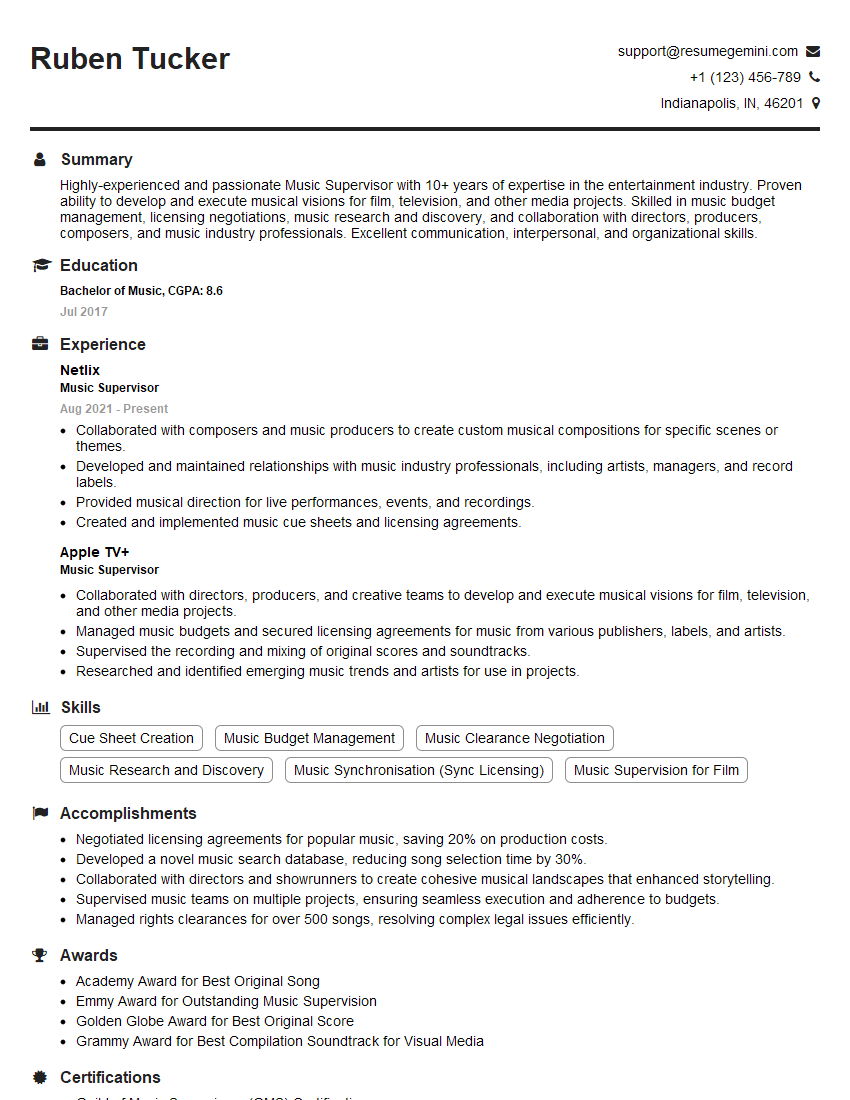
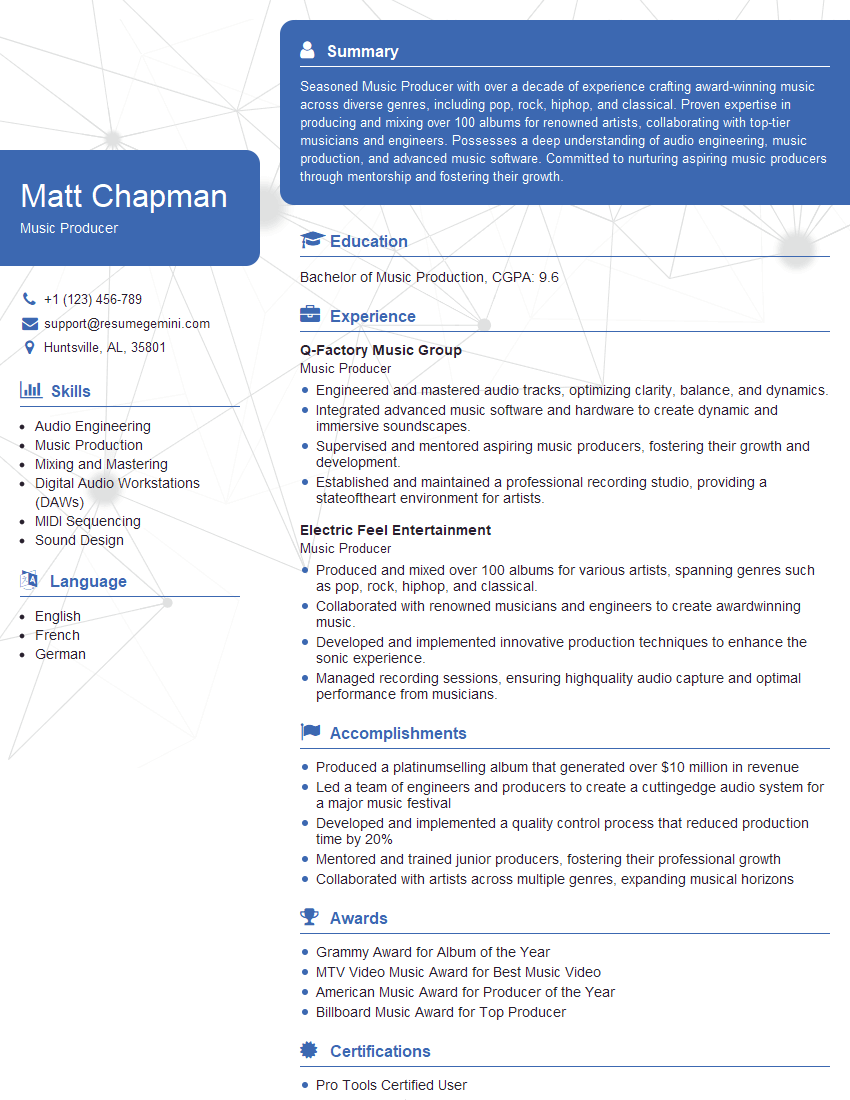
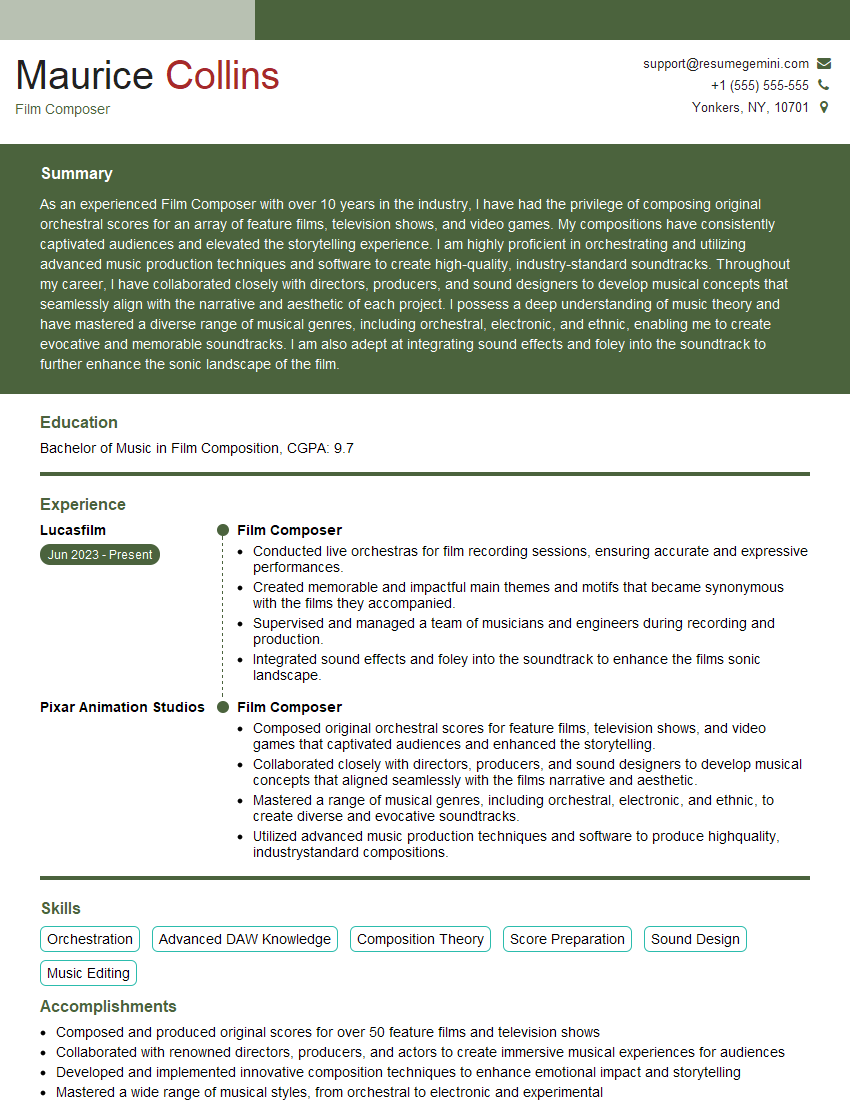
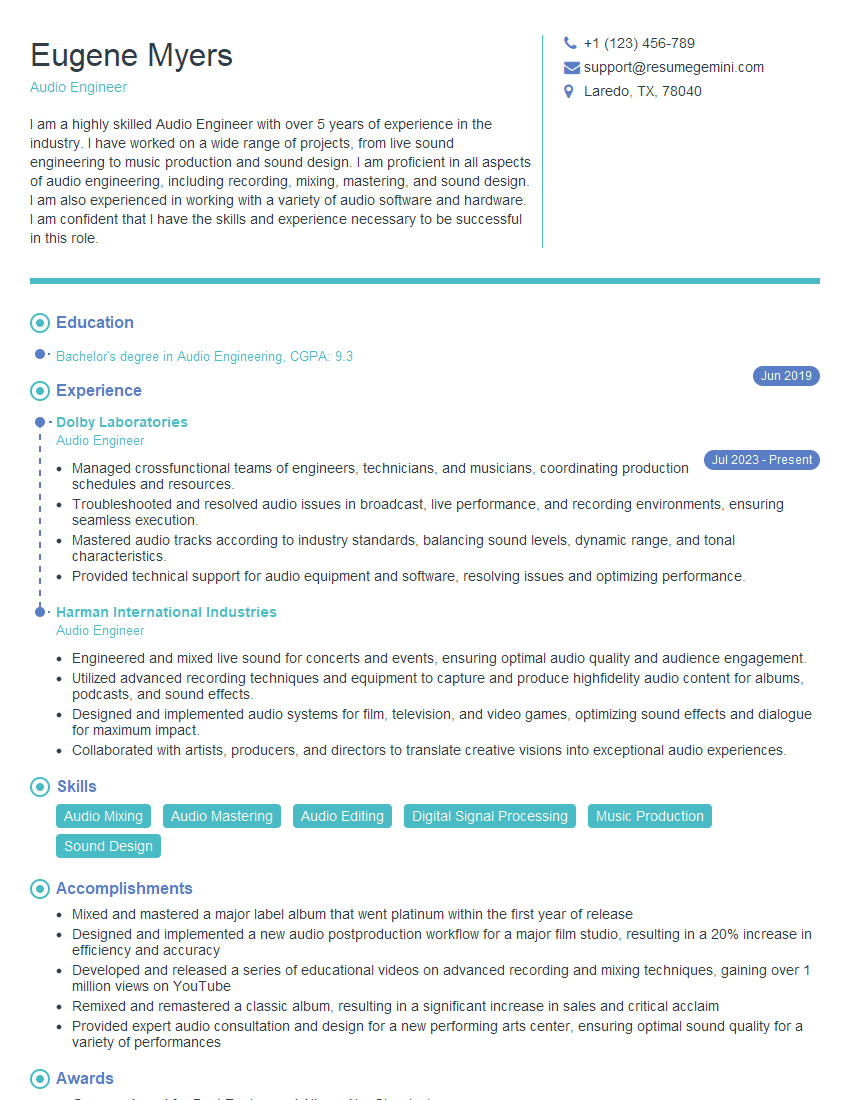
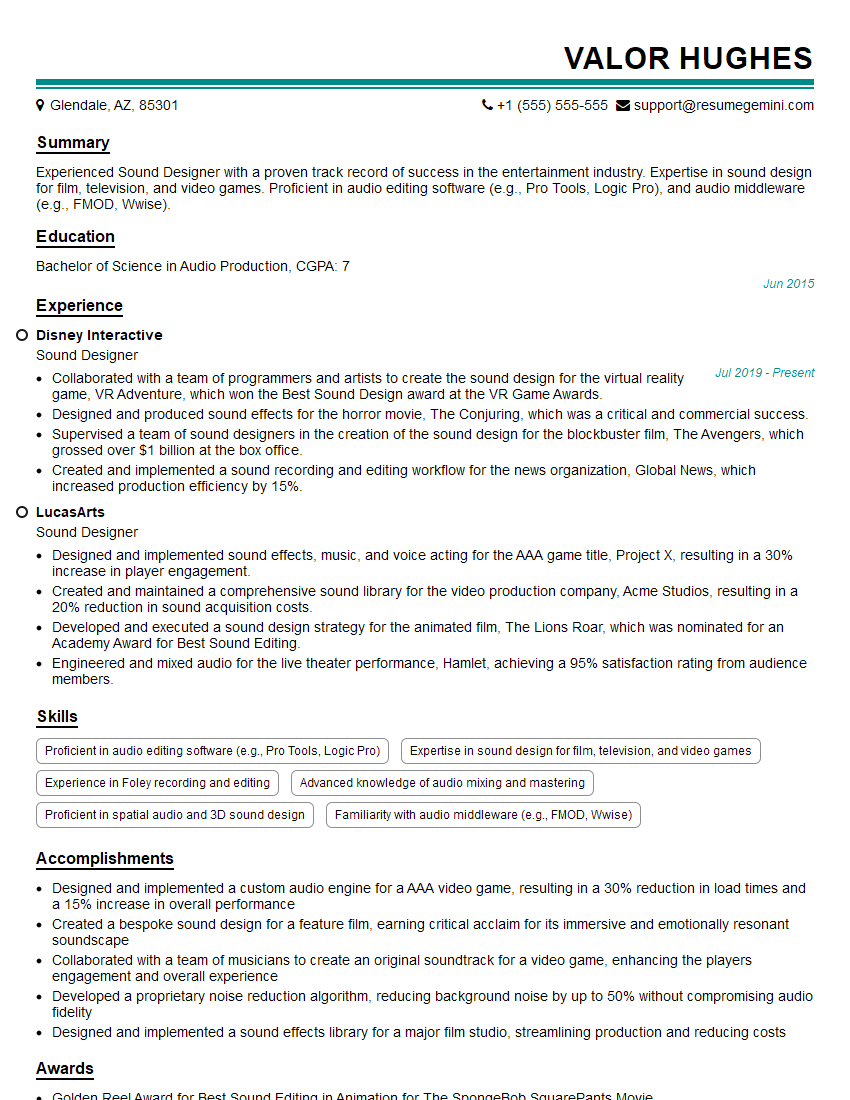
Mastering composition is crucial for career advancement in film, television, and video game production. A strong understanding of these principles allows you to visually communicate effectively, tell compelling stories, and create engaging experiences for your audience. To significantly increase your chances of landing your dream role, focus on crafting an ATS-friendly resume that highlights your skills and experience. ResumeGemini is a trusted resource that can help you build a professional and impactful resume, and we provide examples of resumes tailored specifically to Composition for Film, Television, and Video Games to help guide you.
Explore more articles
Users Rating of Our Blogs
Share Your Experience
We value your feedback! Please rate our content and share your thoughts (optional).
What Readers Say About Our Blog
Very informative content, great job.
good