Every successful interview starts with knowing what to expect. In this blog, we’ll take you through the top Computerized Platemaking interview questions, breaking them down with expert tips to help you deliver impactful answers. Step into your next interview fully prepared and ready to succeed.
Questions Asked in Computerized Platemaking Interview
Q 1. Explain the process of Computer-to-Plate (CTP) imaging.
Computer-to-Plate (CTP) imaging is a digital process that replaces traditional film-based methods for creating printing plates. Instead of using film negatives, CTP systems directly expose printing plates using a laser or other imaging device controlled by computer data. This results in a highly precise and efficient workflow.
The process typically begins with a digital file, usually a PDF, containing the artwork. This file is processed by RIP (Raster Image Processor) software, which converts the vector-based data into a raster image suitable for the CTP device. The RIP also performs tasks like color separation, halftoning, and imposition (arranging pages for printing on a sheet).
Next, the RIP sends the raster image to the CTP imager. The imager uses a high-precision laser to expose the photosensitive plate, creating the image. The exposure process varies depending on the plate type (thermal, violet, etc.). After exposure, the plate is processed to develop the image, making it ready for mounting on the printing press.
Think of it like a high-tech printer, but instead of printing on paper, it’s ‘printing’ on a metal plate that will later print thousands of copies.
Q 2. Describe the different types of CTP plates and their applications.
CTP plates are categorized primarily by their photosensitive layer and the type of imaging technology they use. Common types include:
- Thermal Plates: These plates use heat from a laser to expose the photosensitive layer. They are known for their relatively low cost and ease of use, making them popular for short to medium runs. However, their resolution can be slightly lower compared to other types.
- Violet Plates: These plates utilize violet lasers for exposure, offering higher resolution and finer detail than thermal plates. They are ideal for high-quality printing, such as magazines or high-end brochures, requiring precise color reproduction and sharp details. Violet plates typically last longer than thermal plates.
- UV Plates: Utilizing ultraviolet lasers, these plates provide exceptional image quality and durability, often favored for long print runs and demanding applications. They are also known for their wide color gamut reproduction.
The choice of plate depends heavily on the print job’s requirements. A small print shop might primarily use thermal plates for cost-effectiveness, whereas a large commercial printer might opt for violet or UV plates for high-volume, high-quality work.
Q 3. What are the key factors affecting plate quality in CTP?
Several factors significantly impact CTP plate quality. These include:
- Plate Type and Quality: Different plates have different sensitivities and resolutions. Using a low-quality plate will inevitably compromise image quality.
- RIP Settings: Incorrect RIP settings, such as insufficient resolution or incorrect color profiles, can lead to poor image reproduction.
- Imager Calibration and Maintenance: A poorly calibrated imager or one requiring maintenance will result in inconsistent exposure and potentially defects on the plate.
- Plate Processing: Improper processing, such as using the wrong chemicals or incorrect processing times, will affect the image quality and durability of the plate.
- Environmental Factors: Temperature and humidity can affect the plate’s sensitivity and development process. Maintaining a stable environment is crucial.
- Substrate Quality: If the plate base is damaged or flawed, it directly impacts the final print quality.
In my experience, consistent quality control procedures, regular maintenance of the CTP equipment, and using high-quality materials are key to consistently producing high-quality plates.
Q 4. How do you troubleshoot common CTP imaging issues?
Troubleshooting CTP imaging issues requires a systematic approach. I typically follow these steps:
- Identify the Problem: Is it a consistent issue across all plates, or only affecting specific jobs? What are the visible defects (e.g., banding, scratches, ghosting)?
- Check the Input File: Ensure the digital file is properly formatted and free of errors. Review the RIP settings to make sure the resolution, color profile, and other parameters are appropriate.
- Inspect the CTP Imager: Verify the laser power, focusing, and alignment are correct. Check for any mechanical issues or debris.
- Examine the Plate Processing: Ensure the processing chemicals are fresh and properly mixed, and that the processing times and temperatures are correct. Check for any contamination of the processing units.
- Review Environmental Conditions: Verify temperature and humidity are within acceptable ranges.
- Test Plates: Run test plates to isolate the problem. If the issue persists, consult the equipment’s documentation or the manufacturer for further assistance.
For example, banding often suggests an issue with the laser power or scanning mechanism. Ghosting might indicate a problem with the plate processing or improper cleaning. A thorough investigation is always required to pinpoint the exact cause.
Q 5. What are the advantages and disadvantages of different CTP technologies (e.g., thermal, violet)?
The choice between thermal and violet CTP technologies involves a trade-off between cost, resolution, and longevity.
- Thermal CTP: Advantages include lower initial cost of plates and equipment, simpler processing, and suitable for shorter runs. Disadvantages include lower resolution compared to violet, potentially faster plate wear, and a slightly narrower color gamut.
- Violet CTP: Advantages include higher resolution, better detail, finer lines, and longer plate life, particularly beneficial for high-quality and long print runs. Disadvantages include higher initial cost of plates and equipment, more complex processing, and higher running costs.
In practice, the optimal technology depends on the specific needs of the print job. If cost is a primary concern and the print quality requirements aren’t extremely demanding, thermal might be sufficient. For high-quality applications requiring exceptional detail and longer runs, violet technology provides better value.
Q 6. How do you ensure accurate color reproduction in CTP?
Accurate color reproduction in CTP involves meticulous attention to detail at every stage of the process. This includes:
- Color Management: Implementing a robust color management system (CMS) throughout the workflow, from design to plate making, is critical. This ensures consistent color across different devices and prevents color shifts.
- Accurate Color Profiles: Using accurate ICC profiles for all devices—monitors, printers, and CTP imager—is crucial. These profiles describe the color characteristics of each device, enabling the software to accurately translate colors between them.
- Calibration and Proofing: Regular calibration of the CTP imager and the use of high-quality soft proofing ensure that the on-screen representation accurately predicts the final print output.
- High-Quality Input Files: Using appropriately color-managed artwork files and avoiding color inconsistencies in the design process significantly contributes to achieving accurate color reproduction.
- Careful RIP Settings: Correctly configuring the RIP’s color management settings, including the use of appropriate rendering intents, is essential.
Think of it like baking a cake – using precise measurements and following the recipe correctly are fundamental to getting the desired results. The same principle applies to color reproduction in CTP; attention to detail at every step is essential.
Q 7. Describe your experience with plate processing and handling.
My experience with plate processing and handling spans over [Number] years, encompassing various CTP technologies and workflows. I’m proficient in all aspects, from plate loading and exposure to post-processing and quality control. My responsibilities have included:
- Plate Preparation: This involves receiving plates from storage, inspecting for defects, and ensuring they’re correctly loaded into the processor.
- Processing and Development: I’m well-versed in the chemical processes involved in developing different types of plates, adhering strictly to manufacturer’s guidelines to ensure optimal results.
- Quality Control: After processing, I meticulously inspect each plate for defects like pinholes, scratches, or uneven exposure. This ensures only defect-free plates reach the press.
- Plate Storage and Handling: Proper storage and handling procedures are critical to maintaining plate quality and preventing damage. I’m adept at following best practices for storing and handling plates to minimize defects and extend their lifespan.
- Troubleshooting: I have extensive experience troubleshooting processing issues, identifying the root causes of problems (e.g., chemical imbalances, faulty equipment), and implementing corrective measures.
During my career, I’ve handled large-scale commercial print jobs requiring thousands of plates, as well as smaller projects with more specific needs. This broad experience has provided me with a thorough understanding of all facets of plate processing and handling.
Q 8. What is the importance of pre-flighting in CTP workflow?
Preflighting in Computer-to-Plate (CTP) is like a pre-flight checklist for an airplane – crucial for ensuring a smooth and successful printing process. It’s a vital step where the digital files are rigorously checked for errors and inconsistencies before they’re sent to the CTP imager. This prevents costly mistakes like incorrect color profiles, missing fonts, low-resolution images, or improper imposition, saving time and materials.
A preflight check typically involves verifying:
- Image Resolution: Ensuring images are at the required resolution for optimal print quality. Insufficient resolution leads to blurry or pixelated output.
- Color Profiles: Confirming that the correct color profiles are embedded to achieve consistent color reproduction. Using the wrong profile can drastically alter the final colors.
- Fonts: Checking for any missing or corrupt fonts that could cause rendering errors. Substituting fonts during preflight can prevent print delays.
- Imposition: Verifying the correct arrangement of pages on the printing plate. Incorrect imposition leads to pages being out of order or missing.
- Bleeds and Margins: Ensuring proper bleeds and margins are set to avoid unwanted white spaces or cropped content.
- File Format Compatibility: Confirming the file format is compatible with the RIP software and CTP imager.
For example, I once caught a missing font during preflight that would have resulted in a whole printing run with incorrect text. This saved the client significant time and money.
Q 9. How do you maintain and calibrate CTP equipment?
Maintaining and calibrating CTP equipment is an ongoing process that’s vital for consistent, high-quality plate production. It involves regular cleaning, preventative maintenance, and precise calibration to ensure accuracy and longevity.
Maintenance involves daily cleaning of the imaging unit, laser optics, and the plate handling system. This removes dust and debris that could affect the imaging process. Regular checks are performed on the vacuum system, rollers and other mechanical components. We also replace wear parts according to the manufacturer’s recommendations.
Calibration is done using standardized test plates and software. This involves aligning the laser system to ensure accurate imaging, checking the density and exposure levels of the plates, and verifying the plate dimensions are precise. Frequency of calibration depends on usage and manufacturer specifications, sometimes daily, sometimes weekly.
Imagine it like maintaining a precision instrument – a slight misalignment can significantly impact the result. For instance, inconsistent exposure can lead to plates with varying densities, resulting in uneven ink coverage on the final print.
Example Calibration Procedure: Using a densitometer to measure the density of test plates and adjusting laser power and exposure time accordingly.Q 10. What safety precautions are necessary when working with CTP chemicals?
Safety is paramount when working with CTP chemicals, many of which are hazardous. We must always adhere to strict safety protocols and utilize proper Personal Protective Equipment (PPE).
- PPE: This includes safety glasses, gloves (appropriate to the specific chemical), lab coats, and sometimes respirators, depending on the chemicals used.
- Ventilation: CTP processing often involves volatile chemicals, so adequate ventilation is crucial. Working in a well-ventilated area or using a fume hood is essential.
- Chemical Handling: Following manufacturer instructions for handling and storage of chemicals is crucial. This includes proper labeling, storage in designated areas, and avoiding mixing incompatible chemicals.
- Waste Disposal: CTP chemicals must be disposed of according to local regulations. This often involves collecting waste in designated containers and arranging for appropriate disposal by a licensed hazardous waste contractor.
- Emergency Procedures: Having a well-defined emergency response plan, including procedures for spills, exposure, and first aid is essential. Employees should be trained in these procedures.
A single careless act could result in serious injury or environmental damage; preventative measures are key.
Q 11. Explain your understanding of RIP software and its role in CTP.
RIP software, or Raster Image Processor, is the brain of the CTP workflow. It acts as the translator between the digital design files and the CTP imager. The RIP takes the design file, processes it according to pre-set parameters (resolution, color profiles, screening etc.), and creates the digital instructions that the imager uses to expose the printing plate.
Think of it as a chef preparing a recipe (the digital file) using specific instructions (RIP settings) and special equipment (CTP imager) to create a final dish (the printing plate).
In CTP, the RIP’s role is critical. It manages:
- Image processing: Converting vector and raster images into a format suitable for the imager.
- Color management: Ensuring consistent color reproduction across different devices and color spaces.
- Imposition: Arranging pages onto the plate according to the job requirements.
- Screening: Converting continuous-tone images into halftones for printing. Different screening angles and frequencies can be chosen to optimize print quality.
- Plate optimization: Adjusting parameters to improve image quality, reduce dot gain and improve printing performance.
Choosing the right RIP software and optimizing its settings is essential for achieving optimal print quality and efficiency.
Q 12. How do you manage different file formats in the CTP workflow?
Managing different file formats is a routine aspect of CTP workflow. We commonly encounter various formats like PDF, TIFF, EPS, and PostScript. The key is ensuring all files are pre-flighted and correctly converted to a format compatible with our RIP software and the imager before processing.
Many modern RIPs support a wide range of formats, but certain conversions may be necessary. For example, high-resolution TIFF files are generally preferred for their quality and compatibility. Vector files (like EPS and AI) might need to be rasterized depending on the RIP’s capabilities. If necessary, we use dedicated software to convert files and ensure image integrity. We also maintain a strict file naming and organization system to avoid confusion.
One important consideration is embedding necessary fonts and color profiles to avoid errors during processing. Missing fonts or incorrect color profiles can severely impact print quality.
Q 13. How do you handle errors and inconsistencies during plate production?
Handling errors and inconsistencies during plate production requires a systematic approach combining preventative measures and efficient troubleshooting. The first step is always identifying the root cause. This often involves checking logs in the RIP and CTP imager software.
Common Issues and Solutions:
- Image quality problems (blurriness, banding): This could be due to low-resolution images, incorrect screening, or problems with the laser. Solution: Check the image resolution, adjust screening parameters in the RIP, and perform laser alignment calibration if necessary.
- Exposure issues (too light or too dark plates): This could indicate problems with the exposure settings, laser power, or the plate chemistry. Solution: Adjust exposure settings in the RIP, check the laser power, and ensure the plate processing chemistry is fresh and properly mixed.
- Mechanical problems (plates not feeding correctly, jams): These problems could stem from mechanical faults, worn parts, or improper handling of plates. Solution: Check mechanical parts for damage or wear, clean rollers and other moving parts, and review plate handling procedures.
For complex issues, we consult with the equipment manufacturer’s technical support. Documentation of all troubleshooting steps and solutions is essential for future reference.
Q 14. What quality control measures do you employ in CTP?
Quality control (QC) in CTP is crucial to guarantee consistent high-quality prints. We implement several measures throughout the process.
- Preflight checks: As mentioned earlier, these identify potential issues before plate making begins.
- Test plates: We produce test plates periodically to assess the quality of the imaging and processing. We check these for density, dot gain, and overall sharpness using a densitometer.
- Visual inspection: Plates are visually inspected for any defects like scratches, blemishes, or inconsistencies in density.
- Proofing: Before a large print run, we produce a test print to ensure the final output meets the client’s expectations.
- Data logging: The CTP system maintains logs that track settings and processing parameters. This information is valuable for troubleshooting and identifying patterns.
- Regular maintenance and calibration: As described earlier, this helps to ensure the equipment remains in optimal working order.
Our QC procedures are designed to be proactive, identifying and correcting issues early in the process to minimize waste and maintain consistency.
Q 15. Describe your experience with plate mounting and registration.
Plate mounting and registration are crucial steps in the print production process, ensuring the printed image aligns perfectly with the intended design. Think of it like assembling a jigsaw puzzle: each piece (plate) needs to fit precisely in its designated spot to create the complete picture.
My experience encompasses both manual and automated plate mounting systems. Manual mounting requires precision and attention to detail, using specialized tools to ensure accurate positioning and firm adherence to the cylinder. Automated systems, while efficient, still require regular calibration and maintenance to guarantee consistent registration. I’ve worked with various types of mounting tapes and adhesives, selecting the appropriate one based on the substrate and printing press requirements. Addressing registration issues often involves meticulous checking of the plate’s alignment marks, cylinder adjustments, and the press’s own registration settings. A common problem might be inconsistent pressure from the mounting tape leading to plate slippage. I’ve solved this by using a pressure gauge to ensure even adhesion across the plate.
- Regular calibration of the mounting system.
- Careful inspection of plates for any damage before mounting.
- Using appropriate mounting tools and techniques.
- Troubleshooting registration issues using a combination of press adjustments and plate repositioning.
Career Expert Tips:
- Ace those interviews! Prepare effectively by reviewing the Top 50 Most Common Interview Questions on ResumeGemini.
- Navigate your job search with confidence! Explore a wide range of Career Tips on ResumeGemini. Learn about common challenges and recommendations to overcome them.
- Craft the perfect resume! Master the Art of Resume Writing with ResumeGemini’s guide. Showcase your unique qualifications and achievements effectively.
- Don’t miss out on holiday savings! Build your dream resume with ResumeGemini’s ATS optimized templates.
Q 16. Explain the concept of dot gain and its impact on CTP.
Dot gain refers to the enlargement of halftone dots during the printing process. Imagine printing a tiny dot – it will appear larger on the printed sheet than it was originally designed to be. This occurs because the ink spreads slightly as it’s transferred from the plate to the substrate (paper or other material). In CTP (Computer-to-Plate), dot gain is particularly important because it affects the overall color reproduction and image quality. Excessive dot gain leads to muddy, dark images, while insufficient dot gain results in pale and washed-out prints.
Controlling dot gain involves careful calibration of the RIP (Raster Image Processor) software, which converts digital files into instructions for the CTP system. Different printing methods and substrates have varying levels of dot gain. For example, uncoated paper generally shows more dot gain than coated paper. To compensate, we create color profiles specifically tailored to each combination of substrate, ink and CTP system, a process crucial for achieving accurate color reproduction. I use sophisticated color management tools to measure and profile the dot gain characteristics of each process to minimize variations.
Q 17. How do you identify and address problems related to plate defects?
Identifying and addressing plate defects is a critical aspect of ensuring high-quality printing. These defects can range from scratches and blemishes to inconsistencies in the imaging process. My approach involves a systematic process:
- Visual Inspection: A thorough visual inspection under bright lighting is the first step, checking for scratches, pinholes, or other obvious physical damage.
- RIP Software Analysis: Examining the RIP’s output files helps detect any errors in the image processing that may have led to defects. For instance, a missing or corrupted file can result in imaging problems.
- Plate Processing Review: Analyzing the platemaking process itself – the exposure, processing chemistry, and washing – helps pinpoint issues such as uneven exposure or improper chemical handling. This might be as simple as checking chemical levels.
- Print Test: A test print is often essential for identifying subtle defects that might not be apparent during visual inspection of the plate itself. This allows for a more nuanced understanding of the outcome.
- Troubleshooting: Based on the findings, I address the root cause. This may involve cleaning the plate imager, recalibrating the exposure settings, replacing chemicals, or adjusting the RIP settings. For example, if pinholes are seen, the problem might be a clogged laser.
Q 18. What is your experience with different plate types (e.g., PS, polyester)?
My experience includes working with various plate types, each with its own advantages and disadvantages:
- PS Plates (Photosensitive Plates): These are traditional plates that are exposed to UV light and then chemically processed. They offer good print quality and are relatively cost-effective. However, they require more processing steps and have a shorter lifespan compared to some other types.
- Polyester Plates: These are increasingly popular due to their durability, stability, and longer lifespan. They typically require less processing, leading to increased efficiency. The choice often depends on the desired run length and press type. For long print runs, the durability of a polyester plate is a clear advantage. The reduced environmental impact is another plus.
I’m also familiar with thermal plates which offer faster processing times and improved environmental friendliness, and processless plates which have further reduced environmental impact.
Q 19. Explain your knowledge of color management profiles in CTP.
Color management profiles are essential for accurate color reproduction in CTP. They act as a translation device, ensuring that the colors displayed on a monitor are faithfully reproduced on the printed sheet. These profiles characterize the entire color chain, from the digital file to the final print. They mathematically map the color spaces to ensure consistency.
My experience involves creating, using, and maintaining color profiles for different substrates, inks, and printing presses. This process utilizes specialized color measurement tools like spectrophotometers and software that builds color profiles using complex algorithms. Without accurate color profiles, the colors on the printed sheet might differ significantly from the designed file – leading to costly reprints and dissatisfied clients.
For example, the profile for coated paper will be different from that for uncoated paper, reflecting the differing ink absorption rates. Each profile is a unique fingerprint.
Q 20. How do you ensure consistency and accuracy in plate production across different jobs?
Maintaining consistency and accuracy across different jobs requires meticulous attention to detail and a standardized workflow. This involves:
- Consistent RIP Settings: Using standardized RIP settings for each press type and substrate prevents unwanted variations in dot gain and color reproduction.
- Regular Calibration: Regular calibration of the CTP system, including the imager, processor, and other components, is crucial to maintain consistency. This helps maintain consistent exposure and processing across all jobs.
- Standard Operating Procedures (SOPs): Implementing well-defined SOPs for plate handling, mounting, and storage minimizes errors and ensures uniformity. Everyone involved follows the same process.
- Color Management System: A robust color management system using ICC profiles guarantees that colors are accurately reproduced across different jobs. Consistent application of these profiles is key.
- Pre-flight Checks: Always performing pre-flight checks on files before processing ensures that the job is ready for printing, helping identify potential errors early on.
Q 21. Describe your troubleshooting skills related to RIP software issues.
Troubleshooting RIP software issues requires a systematic approach. My experience covers a wide range of issues, from minor configuration problems to major software glitches. I start by systematically isolating the problem:
- Error Messages: Carefully analyze any error messages provided by the RIP software. These messages often pinpoint the source of the problem.
- Job History: Review the job history for clues, noting any patterns or unusual events preceding the error. For instance, it might reveal a file incompatibility.
- File Integrity: Verify the integrity of the input files, ensuring they are not corrupted or missing any parts. A corrupted file often causes unpredictable behavior.
- Software Updates: Ensure that the RIP software and all associated drivers are up-to-date. Outdated software may contain bugs that cause issues.
- Hardware Check: Confirm that all hardware components (the computer, the RIP processing server, and network connections) are functioning correctly and are not causing issues. This often involves basic checks such as cable connections.
- Contacting Support: If the issue persists, contacting the RIP software vendor’s technical support team is necessary. A dedicated support team is very useful in diagnosing and resolving difficult issues.
For example, a common issue is an unexpected halt during processing. I’ve discovered this was often due to insufficient hard disk space on the RIP server. Regular monitoring of disk space usage prevents this.
Q 22. Explain your experience working with different CTP devices and manufacturers.
My experience spans a wide range of Computer-to-Plate (CTP) devices from leading manufacturers like Heidelberg, Agfa, Kodak, and Fuji. I’ve worked extensively with both thermal and violet laser CTP systems, each having its own nuances. For example, thermal CTPs, while generally simpler to maintain, often require specific plate types optimized for their lower energy output. Violet laser systems, on the other hand, offer higher resolution and faster processing speeds but necessitate more stringent environmental control due to the laser’s higher sensitivity to dust and debris. I’ve personally been involved in the installation, troubleshooting, and daily operation of various models within these brands, including the Heidelberg Suprasetter, Agfa Avalon, Kodak Trendsetter, and Fuji Javelin systems. This hands-on experience has allowed me to develop a deep understanding of their strengths and limitations, enabling me to select the most appropriate technology for specific printing needs and budgets.
For instance, in one project, we needed high-volume, short-turnaround production. The Fuji Javelin, with its speed and automation features, proved to be the optimal choice, streamlining our workflow significantly. In another project with more emphasis on high-resolution color reproduction, we chose the Kodak Trendsetter for its superior image quality and consistency. This demonstrates my ability to assess the specific requirements of each project and leverage the best technology available.
Q 23. How do you manage workflow optimization in a busy CTP environment?
Workflow optimization in a busy CTP environment is crucial for maximizing efficiency and minimizing downtime. My approach involves a multi-pronged strategy focusing on process automation, preventative maintenance, and efficient job scheduling. This begins with implementing a robust workflow management system (WfMS), such as those offered by companies like Prinect or Esko, which allows for automated tasks like preflighting, imposition, and plate creation. This automation reduces human error and speeds up the overall process. For example, integrating a barcode system for tracking plates helps in minimizing errors and improving traceability.
Preventative maintenance is key. I follow a strict maintenance schedule for all CTP devices, including regular cleaning of the laser unit, replacement of consumable parts, and calibration checks. This helps to prevent unexpected downtime and extends the lifespan of the equipment. Effective job scheduling, often using a prioritized queuing system, ensures that urgent jobs are processed first, while also ensuring optimal utilization of resources, balancing throughput and minimizing idle time. I also leverage data analysis tools within the WfMS to identify bottlenecks and inefficiencies, continually refining the workflow to improve overall performance.
Q 24. What are the key performance indicators (KPIs) in CTP production?
Key Performance Indicators (KPIs) in CTP production are critical for measuring efficiency, quality, and overall productivity. These metrics can be broadly categorized into quality, speed, and cost-effectiveness.
- Plate Production Speed (plates/hour): Measures the number of plates produced per hour, reflecting equipment efficiency and workflow optimization.
- Plate Defect Rate (%): Indicates the percentage of plates rejected due to defects like scratches, pinholes, or poor image quality. A low defect rate is crucial for minimizing waste and maintaining print quality.
- Plate-Making Cost per Plate ($): This calculation includes all costs associated with plate production, such as materials, labor, and equipment maintenance. Reducing this cost is essential for profitability.
- Throughput Time (minutes/job): The total time taken from job submission to plate completion, highlighting overall efficiency.
- Machine Uptime (%): Represents the percentage of time the CTP device is operational and actively producing plates, showing reliability and minimizing downtime.
Regular monitoring of these KPIs allows for proactive identification of areas for improvement, optimization of resources and ultimately contributes to the overall success of the print operation.
Q 25. How familiar are you with the environmental impact of CTP and its solutions?
The environmental impact of CTP is a significant concern, and the industry is constantly striving for greener solutions. Traditional platemaking processes often involved significant chemical usage and waste disposal, resulting in considerable environmental impact. CTP technology, while significantly reducing this compared to traditional methods, still has an environmental footprint. The main considerations include:
- Plate Material: The composition of the plates themselves, focusing on utilizing more environmentally friendly materials with recyclable components.
- Energy Consumption: CTP devices consume considerable energy, particularly laser-based systems. Improvements in energy efficiency are constantly being made.
- Waste Reduction: Minimizing plate waste through optimized imposition and workflow management is crucial. The implementation of automated plate cleaning systems can reduce water consumption.
- Chemical Usage (for processing): While CTP substantially reduces chemical usage compared to analog methods, some plates still require processing solutions. The focus is on using less hazardous and more biodegradable chemistry.
Several solutions address this, including the development of more environmentally friendly plate materials, improved energy-efficient CTP equipment, and sophisticated workflow optimization software to minimize waste. I am very familiar with these initiatives and actively work to implement best practices to reduce our environmental impact.
Q 26. Describe your experience with image processing and adjustments for optimal plate output.
Image processing and adjustments are critical for optimal plate output. My experience encompasses utilizing various software tools like Adobe Photoshop, and specialized prepress software such as Esko, for color management, image sharpening, and halftone screening. I am proficient in applying different screening techniques such as amplitude modulated (AM) and frequency modulated (FM) screening depending on the requirements of the printing press and the desired print quality.
For instance, I regularly perform color correction using ICC profiles to ensure consistent color reproduction across different devices and printing materials. Careful attention is given to sharpening images to maintain details without introducing artifacts. I’m also adept at adjusting halftone parameters—like angle, frequency, and shape—to optimize the printed result, ensuring a balance between sharpness, smoothness, and dot gain. Furthermore, I’m skilled at identifying and correcting common prepress issues, such as moiré patterns, color casts, and undesirable dot patterns. My experience allows me to consistently produce plates with high-quality, accurate color representation that translates perfectly onto the printed substrate.
Q 27. What is your experience with different types of printing presses and their respective plate requirements?
My experience covers various printing presses, each with specific plate requirements. I understand the differences between sheetfed and web offset presses, as well as different printing technologies like lithographic offset, flexography, and screen printing. Sheetfed offset presses typically require plates with a higher resolution and stability for accurate registration on smaller sheets. Web offset presses, due to their high speed and continuous operation, necessitate plates that are durable and resistant to wear. Different plate types, such as thermal, violet, or hybrid plates, have varying suitability depending on the press type and printing requirements.
For example, a high-speed web offset press demands a very durable, robust plate, often a violet laser-imaged plate, while a smaller sheetfed press might use a thermal plate suitable for medium-volume jobs. Flexographic presses have very different plate requirements, often utilizing polymer plates created through various imaging technologies. My knowledge encompasses choosing the appropriate plate material and ensuring its compatibility with the press’s specifications and ensuring seamless integration into the entire printing process.
Q 28. How do you stay updated with the latest advancements in CTP technology?
Staying updated in the rapidly evolving CTP technology landscape is crucial for maintaining expertise. I actively participate in industry conferences and trade shows, such as drupa and Graph Expo, to network with professionals and learn about new developments directly from manufacturers. I also regularly read industry publications like ‘Printing News’, ‘WhatTheyThink’, and ‘Graphic Arts Monthly’ to stay informed about technological breakthroughs, market trends, and best practices. Further, I engage with online communities and forums, participate in webinars offered by equipment manufacturers and software providers, and actively pursue training opportunities to enhance my skills with new software and hardware.
Moreover, I actively collaborate with other professionals in the field, exchanging knowledge and best practices. The constant evolution of this field requires a commitment to continuous learning, and I embrace this challenge to remain at the forefront of CTP technology.
Key Topics to Learn for Computerized Platemaking Interview
- Prepress Workflow: Understanding the entire process from design file receipt to plate output, including file preparation, trapping, color management, and imposition.
- Digital Platemaking Technologies: Familiarity with various platemaking technologies (e.g., thermal, violet, UV) and their respective strengths and weaknesses. This includes understanding the chemical processes involved and their impact on print quality.
- Platemaking Equipment Operation and Maintenance: Practical knowledge of operating and troubleshooting common issues with platemaking equipment, including CTP devices, processors, and plate handling systems. This includes preventative maintenance procedures.
- Quality Control and Troubleshooting: Understanding quality control measures for plates, including dot gain, density, and registration. Ability to identify and resolve common platemaking problems, such as scratches, defects, and poor image quality.
- Color Management and Profile Creation: Knowledge of color management principles and the creation and application of ICC profiles to ensure accurate color reproduction in the final print.
- RIP Software and Workflow Software: Proficiency in using RIP software (Raster Image Processor) and workflow software to manage and process files for platemaking. Understanding job ticketing and workflow automation is crucial.
- Health and Safety: Understanding and adherence to relevant health and safety regulations and procedures related to handling chemicals and operating platemaking equipment.
- File Formats and Specifications: Knowledge of various file formats (PDF, TIFF, etc.) and their implications for platemaking. Understanding industry-standard specifications for resolution, color spaces, and prepress requirements.
Next Steps
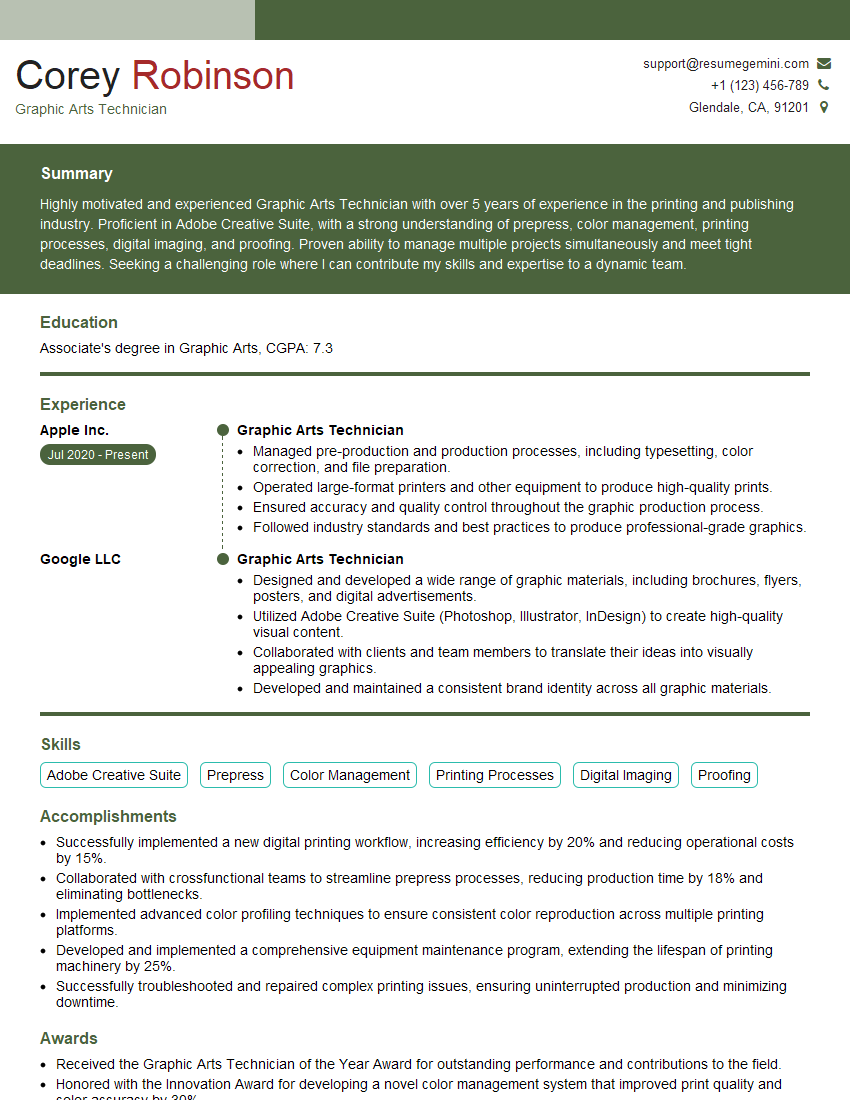
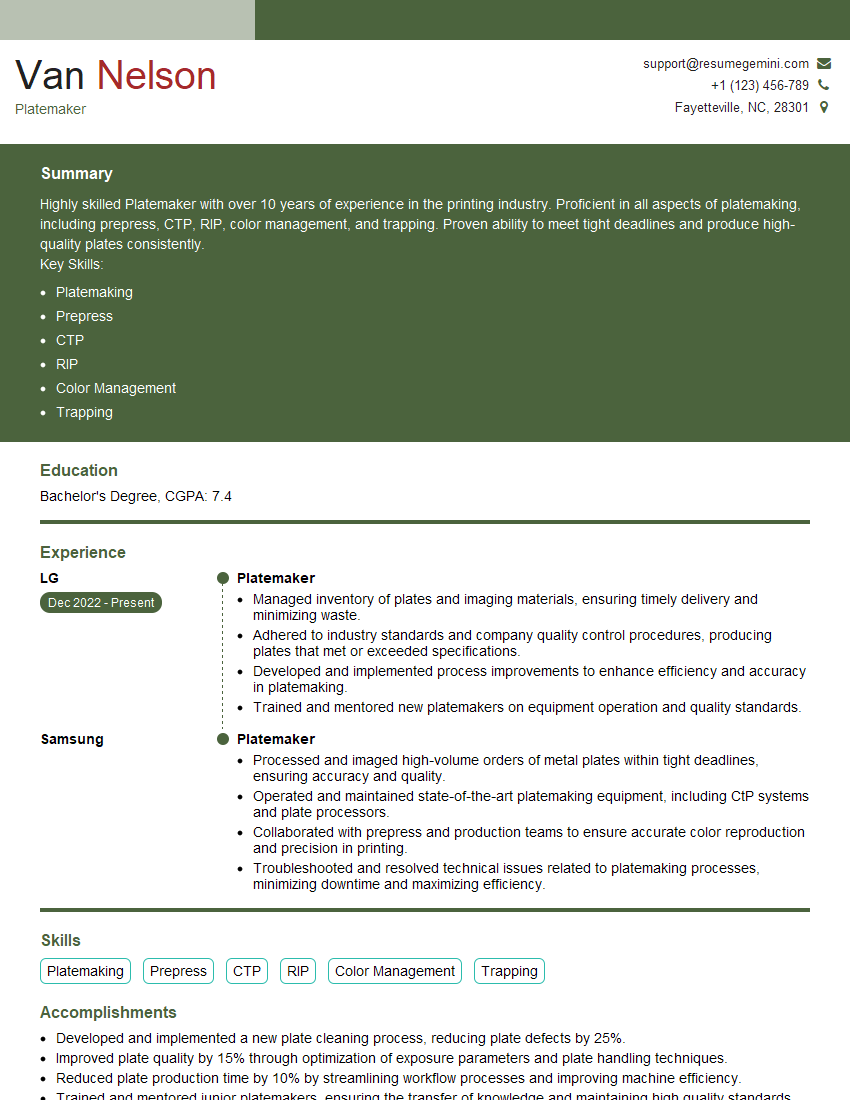
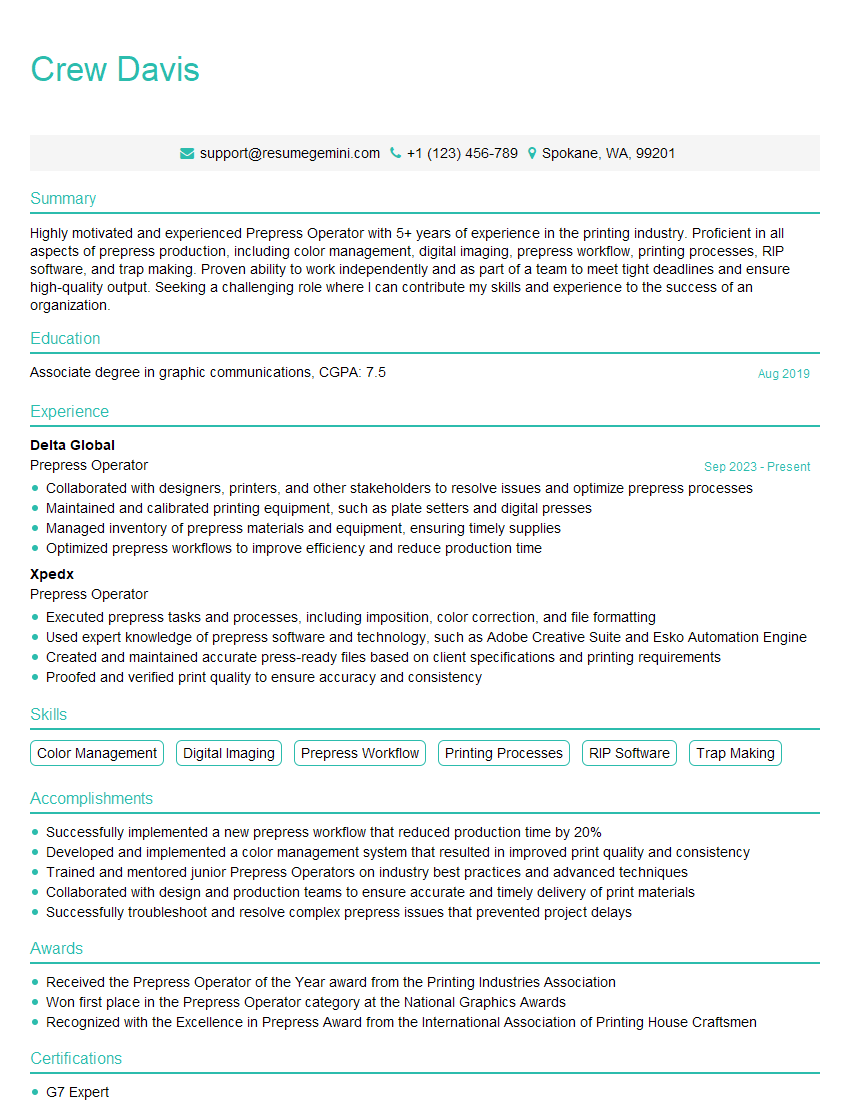
Mastering computerized platemaking opens doors to rewarding careers in the printing industry, offering opportunities for growth and specialization. To significantly boost your job prospects, create an ATS-friendly resume that highlights your skills and experience effectively. ResumeGemini is a trusted resource to help you build a professional and impactful resume, ensuring your qualifications shine. Examples of resumes tailored to Computerized Platemaking are available to guide you. Investing time in crafting a strong resume will significantly increase your chances of landing your dream job.


Explore more articles
Users Rating of Our Blogs
Share Your Experience
We value your feedback! Please rate our content and share your thoughts (optional).
What Readers Say About Our Blog
Very informative content, great job.
good