The thought of an interview can be nerve-wracking, but the right preparation can make all the difference. Explore this comprehensive guide to Dragline Assembly and Disassembly interview questions and gain the confidence you need to showcase your abilities and secure the role.
Questions Asked in Dragline Assembly and Disassembly Interview
Q 1. Describe the steps involved in assembling a dragline’s bucket.
Assembling a dragline bucket is a meticulous process requiring precision and safety. Think of it like building a complex metal puzzle, where each part needs to fit perfectly to ensure functionality and longevity. The steps generally involve:
- Pre-assembly Inspection: Carefully inspect all components – the shell, teeth, lip, and wear plates – for any damage or wear. Replace any defective parts.
- Attachment of Cutting Teeth: Securely weld or bolt the cutting teeth onto the bucket lip, ensuring proper alignment and spacing. This is crucial for effective digging.
- Lip and Wear Plate Installation: The lip and wear plates (which protect the bucket from abrasion) are carefully attached to the shell using strong welds or high-tensile bolts. Alignment is vital here to avoid premature wear.
- Shell Assembly: The bucket shell sections are joined together, often with heavy-duty bolts and high-strength welds. This requires precise alignment to maintain structural integrity.
- Attachment to the Bucket Linkage: Finally, the assembled bucket is attached to the dragline’s linkage system using pins, bushings, and other connecting hardware. This ensures proper movement and digging action.
- Final Inspection: A thorough inspection is conducted to verify that all components are correctly installed and securely fastened. Check for any potential leaks or misalignments.
For example, during one project, we encountered a slightly warped bucket shell. We used a specialized hydraulic press to correct the warping before assembly, preventing future problems.
Q 2. Explain the process of disassembling a dragline’s hoist mechanism.
Disassembling a dragline’s hoist mechanism requires a systematic approach, prioritizing safety and careful documentation of each step. Imagine it like taking apart a complex clock – each component has a specific place and function. The process usually includes:
- Isolation and Lockout/Tagout (LOTO): Begin by isolating the hoist mechanism from power sources completely. LOTO procedures are absolutely crucial to prevent accidental activation.
- Removal of Protective Covers: Carefully remove any guards or covers protecting the mechanism. These often require specialized tools.
- Disconnecting Hydraulic Lines: Disconnect hydraulic lines using appropriate tools, ensuring proper drainage of hydraulic fluid to prevent spills and environmental damage. Label all lines meticulously to avoid confusion during reassembly.
- Disassembly of Components: Systematically remove components such as sheaves, drums, brakes, and motors, carefully noting their orientation and position. Use lifting equipment where needed, as some parts can be quite heavy.
- Inspection and Cleaning: Thoroughly inspect each component for wear, damage, or corrosion. Clean parts using suitable cleaning agents and compressed air.
- Component Storage: Store disassembled components in a safe and organized manner to prevent damage or loss.
In a past project, we used specialized software to create a 3D model of the hoist mechanism before disassembly. This digital map helped us reassemble the unit quickly and accurately, avoiding costly downtime.
Q 3. What safety precautions are crucial during dragline assembly and disassembly?
Safety is paramount during dragline assembly and disassembly. A single mistake can have severe consequences. Key precautions include:
- Lockout/Tagout (LOTO): Always implement a robust LOTO procedure to isolate all power sources (electrical, hydraulic, pneumatic) before commencing any work.
- Personal Protective Equipment (PPE): Mandatory PPE includes safety helmets, safety glasses, gloves, steel-toe boots, and high-visibility clothing.
- Lifting Equipment: Use appropriate lifting equipment such as cranes and slings, ensuring proper load ratings and safe operating procedures.
- Fall Protection: Implement fall protection measures, such as harnesses and safety nets, when working at heights.
- Confined Space Entry: If working in confined spaces, follow confined space entry procedures, including atmospheric monitoring and rescue plans.
- Heavy Equipment Operation: Only authorized and trained personnel should operate heavy equipment.
- Emergency Response Plan: Develop and communicate a comprehensive emergency response plan for potential accidents or injuries.
For instance, during a recent disassembly, we required a dedicated spotter for crane operations to ensure the safe handling of heavy components. This prevented a near-miss incident.
Q 4. How do you troubleshoot hydraulic system issues during dragline assembly?
Troubleshooting hydraulic system issues during dragline assembly requires a systematic approach. Think of it like diagnosing a car’s engine problem; you need to find the root cause, not just treat the symptoms.
- Visual Inspection: Check for leaks, loose connections, or damaged hoses and fittings.
- Pressure Testing: Conduct pressure tests to check for leaks or pressure drops in the system. This requires specialized equipment and knowledge of hydraulic pressures.
- Fluid Level Check: Verify the correct fluid level and quality. Low levels or contaminated fluid can cause significant issues.
- Filter Inspection: Inspect and replace hydraulic filters if needed. Clogged filters significantly impede the hydraulic system.
- Component Testing: If necessary, test individual components such as pumps, valves, and cylinders for proper function.
- Diagnostic Tools: Utilize diagnostic tools such as pressure gauges, flow meters, and hydraulic system analyzers to pinpoint the problem.
In one case, a seemingly simple leak turned out to be caused by a faulty hydraulic pump seal. Replacing the seal immediately solved the problem, avoiding costly downtime.
Q 5. What are the common causes of dragline component failures?
Dragline component failures are often caused by a combination of factors. Understanding these causes is crucial for preventive maintenance.
- Wear and Tear: Normal wear and tear from constant operation leads to component degradation, especially in high-stress areas like the bucket teeth and hoist drums.
- Material Fatigue: Repeated stress cycles can cause material fatigue, leading to cracking and failure of components.
- Improper Maintenance: Neglecting routine maintenance, such as lubrication and inspection, significantly shortens component lifespan.
- Environmental Factors: Exposure to harsh weather conditions, such as extreme temperatures and humidity, can accelerate component degradation.
- Operator Error: Incorrect operation, such as overloading the machine or operating it beyond its design limits, can contribute to component failure.
- Manufacturing Defects: Rarely, but occasionally, manufacturing defects can cause premature component failure. This is why quality control during manufacturing is crucial.
For example, excessive wear on the bucket teeth can indicate a problem with the digging technique or soil conditions, requiring adjustment or modification.
Q 6. Describe your experience with different types of dragline components.
My experience encompasses a wide range of dragline components, from buckets and hoist mechanisms to the intricate hydraulic and electrical systems. I’ve worked with various manufacturers and designs, including those using different materials and technologies.
- Buckets: I’ve been involved in the assembly and repair of various bucket designs, ranging from simple rock buckets to complex, high-capacity buckets used for large-scale mining operations.
- Hoist Mechanisms: My experience includes working with both mechanical and electric hoist mechanisms, troubleshooting various problems and ensuring their safe and efficient operation.
- Hydraulic Systems: I have extensive knowledge of hydraulic systems, including pumps, valves, actuators, and fluid management, capable of diagnosing and resolving complex hydraulic problems.
- Electrical Systems: I’m proficient in working with dragline electrical systems, including motor controls, instrumentation, and safety systems.
- Structural Components: My expertise extends to the structural components of draglines, ensuring their integrity and proper alignment.
One memorable experience involved working on a dragline with a unique, custom-designed bucket. Understanding its specific design and operational requirements was crucial for its successful repair.
Q 7. What tools and equipment are essential for dragline assembly and disassembly?
The tools and equipment required for dragline assembly and disassembly vary based on the specific task and the dragline’s design. However, some essential tools and equipment always include:
- Lifting Equipment: Cranes, hoists, and slings with appropriate load capacities are essential for handling heavy components.
- Welding Equipment: Welding machines, electrodes, and related safety equipment are necessary for welding repairs or joining components.
- Hydraulic Tools: Hydraulic wrenches, torque wrenches, and other specialized tools are essential for working with hydraulic systems and heavy fasteners.
- Pneumatic Tools: Impact wrenches, drills, and other pneumatic tools are commonly used for various tasks.
- Measuring and Alignment Tools: Levels, squares, tapes, and alignment tools are critical for accurate assembly and installation.
- Hand Tools: A comprehensive set of hand tools, including wrenches, sockets, screwdrivers, and hammers, is always necessary.
- Specialized Tools: Specialized tools may be required depending on the dragline’s design and the task at hand (e.g., bearing pullers, hydraulic cylinder testing equipment).
Properly maintaining and calibrating all tools ensures accurate and safe work. A well-stocked toolbox is a dragline technician’s best friend!
Q 8. Explain the importance of proper lubrication during dragline assembly.
Proper lubrication is paramount during dragline assembly, acting as the lifeblood of the machine, preventing premature wear and tear, and ensuring smooth operation. Think of it like oiling the joints of a complex robot; without it, friction leads to damage and failure.
We use a variety of specialized greases and lubricants, each chosen for its compatibility with specific materials and operating conditions. For example, high-temperature grease is crucial for components subjected to intense heat, like the hoist drum brakes. During assembly, each lubrication point is meticulously addressed according to the manufacturer’s specifications, often involving the use of specialized grease guns and application techniques.
Failure to lubricate properly can lead to increased friction, seizing of components, accelerated wear, and ultimately, costly repairs or even catastrophic failure during operation. A thorough lubrication schedule, carefully documented and followed during assembly, is a cornerstone of safe and efficient dragline operation.
Q 9. How do you ensure the alignment of dragline components during assembly?
Ensuring the alignment of dragline components is critical for optimal performance and safety. Misalignment can induce significant stress on the structure, leading to premature wear and potential structural failure. It’s like building a skyscraper – every beam and column must be precisely positioned.
We use a combination of precision surveying instruments, laser alignment tools, and experienced personnel to achieve accurate alignment. This begins with careful groundwork, ensuring a level and stable foundation. Then, each component – from the boom to the hoist mechanism – is meticulously aligned using these tools. Any deviations are carefully measured and corrected before proceeding to the next step. We often use temporary bracing and shimming to fine-tune the alignment, ensuring everything is perfectly plumb and level. This meticulous approach ensures the long-term stability and operational efficiency of the dragline.
Q 10. Describe your experience with different types of dragline booms.
My experience encompasses a wide range of dragline booms, from the traditional lattice booms, known for their strength and relatively lower weight, to more modern box-section booms which offer increased stiffness and load-bearing capacity. Each type has its strengths and weaknesses.
Lattice booms, with their triangular structures, are excellent in terms of weight to strength ratio and are easily repairable in the field. However, they are more susceptible to vibration and fatigue. Box-section booms are typically used in larger draglines requiring higher load-bearing capabilities. They are more resistant to vibration but can be more challenging to repair in the field.
I’ve also worked with booms of varying lengths and capacities, necessitating adjustments to assembly techniques and safety precautions. Longer booms require more robust support systems and more meticulous alignment checks during assembly.
Q 11. How do you handle unexpected problems during dragline assembly?
Unexpected problems are a fact of life in dragline assembly. They might range from a missing part to a damaged component, or even unforeseen ground conditions. My approach is methodical and always prioritizes safety.
The first step is always a thorough assessment of the problem. This often involves consulting the assembly drawings and manufacturer’s specifications, and conferring with colleagues. Then, a solution is developed, keeping in mind the safety implications and the need to maintain the integrity of the structure. We often use alternative methods or temporary fixes to overcome obstacles, always documenting the changes made.
For example, if a component is found to be damaged, we might utilize a replacement part if available or explore a temporary repair solution while ordering a replacement. Safety is paramount, and we will always halt assembly if a problem poses a safety risk until it is appropriately addressed.
Q 12. What are the key differences between assembling different sizes of draglines?
Assembling different sizes of draglines involves significant scaling differences. It’s not simply a matter of increasing the dimensions – the underlying principles remain the same, but the scale of operations and the equipment used are vastly different.
Smaller draglines might be assembled using smaller cranes and lifting equipment, while larger machines require much larger and more powerful equipment. The weight of individual components also dramatically increases, requiring more elaborate lifting plans and safety precautions. For example, the sheer size of a boom on a large dragline requires specialized transportation and rigging techniques.
Furthermore, the complexity of the hydraulic and electrical systems increases with size, requiring a deeper level of expertise in those areas. So, while the fundamental assembly principles remain consistent, the scale and complexity of the undertaking increase dramatically with the size of the dragline.
Q 13. Describe your experience with working at heights during dragline assembly.
Working at heights during dragline assembly is an inherent part of the job. Safety is absolutely non-negotiable in this context. We strictly adhere to all relevant safety regulations and utilize appropriate fall protection equipment. This includes harnesses, safety lines, and regularly inspected scaffolding.
Before commencing work at height, a thorough risk assessment is carried out, and a comprehensive safety plan is developed and communicated to the entire team. The use of proper lifting equipment and the careful planning of each step are critical. Regular safety checks and communication between team members are also essential to maintain a safe working environment. We adhere to the highest safety standards, making sure that everyone is appropriately trained and equipped before working at heights. Nothing is worth compromising safety.
Q 14. How do you inspect and test components after dragline assembly?
After dragline assembly, a rigorous inspection and testing process is crucial to ensure operational safety and performance. This involves a multi-stage approach, beginning with a visual inspection of all components, welds, and connections. We then proceed to functional testing, involving the hydraulics, electrical systems, and the mechanical operation of the various components.
Testing involves careful monitoring of all parameters during operation, checking for leaks, unusual noises, or any signs of malfunction. We use specialized equipment to verify alignment and stress levels within the structure. Documentation of all inspections and tests is meticulously maintained, creating a comprehensive record of the assembled machine’s condition.
Ultimately, successful completion of these inspections and tests is the final sign-off before the dragline can be deemed ready for operation. This rigorous process is essential in ensuring the long-term reliability and safety of the machine.
Q 15. What are the common wear points on a dragline, and how do they affect disassembly?
Draglines, like any heavy machinery, experience wear and tear in specific areas. Understanding these wear points is crucial for efficient disassembly and subsequent maintenance or repair. Common areas include the bucket teeth, digging components like the dragline rope and sheaves, the hoist and swing mechanisms (gears, bearings, and shafts), and the turntable. The extent of wear significantly impacts disassembly. For instance, severely worn bucket teeth might require specialized tools for removal, whereas excessive wear on bearings necessitates careful dismantling to avoid damage to other components. Similarly, a severely worn dragline rope can cause complications during disassembly, potentially requiring sectioning the rope for safer removal.
- Bucket Teeth: Severe wear leads to increased disassembly time as they might be welded or require specialized extraction tools.
- Sheaves and Drums: Grooved sheaves and worn drums necessitate meticulous cleaning and inspection before removal, sometimes requiring specialized lifting gear to prevent damage.
- Swing Mechanism Bearings: Worn bearings can jam, demanding more time and effort to separate components safely.
During disassembly, a thorough inspection of each component for wear is essential to plan the best removal strategy and identify potential replacements needed for reassembly.
Career Expert Tips:
- Ace those interviews! Prepare effectively by reviewing the Top 50 Most Common Interview Questions on ResumeGemini.
- Navigate your job search with confidence! Explore a wide range of Career Tips on ResumeGemini. Learn about common challenges and recommendations to overcome them.
- Craft the perfect resume! Master the Art of Resume Writing with ResumeGemini’s guide. Showcase your unique qualifications and achievements effectively.
- Don’t miss out on holiday savings! Build your dream resume with ResumeGemini’s ATS optimized templates.
Q 16. Explain the process of disassembling a dragline’s swing mechanism.
Disassembling a dragline’s swing mechanism is a complex process requiring careful planning and execution. It’s typically a multi-stage process involving:
- Isolation: First, disconnect the electrical power and hydraulic lines to the swing mechanism. This is critical for safety.
- Component Removal: Begin removing the readily accessible components, such as covers and inspection plates. This will provide access to the internal workings.
- Bearing Disassembly: Carefully remove the swing bearings. This usually involves using hydraulic presses and specialized tools to avoid damage. Accurate measurements and recording of the bearing’s position are essential for reassembly.
- Gearbox Disassembly: If necessary, the gearbox is disassembled, requiring careful removal of gears, shafts, and other internal parts. Note the position and order of removal for accurate reassembly.
- Cleaning and Inspection: Thoroughly clean all components and inspect them for wear and damage before reassembly.
Throughout the process, proper lifting equipment (such as cranes and chain blocks) is essential to handle heavy components safely and prevent accidents. Detailed documentation of each step is vital for efficient reassembly.
Q 17. How do you manage the disposal of hazardous materials during disassembly?
Managing hazardous materials during dragline disassembly is paramount. This includes things like used oils, hydraulic fluids, batteries, and potentially asbestos (in older models). Our procedure involves:
- Identification: A thorough inspection to identify and catalog all hazardous materials present.
- Segregation: Separating hazardous waste from non-hazardous waste, storing them in clearly labeled containers.
- Safe Handling: Using appropriate personal protective equipment (PPE) and following safety protocols during handling, transporting, and storage.
- Disposal: Contracting licensed waste disposal companies to handle and dispose of the hazardous materials in compliance with all environmental regulations.
- Documentation: Maintaining detailed records of all hazardous waste materials generated, including their type, quantity, and disposal method. This is essential for regulatory compliance.
We prioritize environmental protection and worker safety throughout the process. This includes training all personnel on proper handling and disposal procedures for hazardous materials.
Q 18. What are the key safety considerations when working with electrical components on a dragline?
Working with electrical components on a dragline presents significant safety risks. Our safety protocols strictly adhere to lockout/tagout procedures, ensuring complete isolation of electrical power before any work begins. This prevents accidental electrocution. Specific measures include:
- Lockout/Tagout: A formalized procedure to lock out and tag out the power source, verifying power is off before commencing work.
- Voltage Verification: Using a voltage tester to confirm power is absent before beginning any work on electrical components.
- PPE: Appropriate PPE including insulated gloves, safety glasses, and footwear is mandatory.
- Grounding: Ensuring proper grounding to prevent electrical shocks.
- Training: All personnel working on electrical components receive thorough training in electrical safety procedures.
These safety measures are meticulously followed to minimize risk and ensure the safety of all personnel involved.
Q 19. Describe your experience using specialized lifting equipment during dragline assembly and disassembly.
My experience with specialized lifting equipment during dragline assembly and disassembly is extensive. I’ve worked with a variety of equipment, including:
- Crawler Cranes: For lifting and positioning heavy components such as the boom, counterweight, and machinery house.
- Mobile Cranes: For lifting smaller components and assisting with the overall assembly and disassembly process.
- Chain Blocks and Hoists: Used for precise positioning of smaller parts and components within sub-assemblies.
- Hydraulic Presses: Essential for pressing bearings and other tight-fitting components.
I’m proficient in safely rigging and operating this equipment, adhering strictly to safety regulations and using proper lifting techniques to avoid damage to components and ensure worker safety. I have personal experience troubleshooting equipment failures and adapting to various site conditions, always prioritizing safety.
For example, on a recent project, we had to use a specialized crane with a long reach to remove the boom from a dragline situated on difficult terrain. This required careful planning and coordination to ensure a safe and efficient removal.
Q 20. How do you interpret technical drawings and schematics for dragline assembly?
Interpreting technical drawings and schematics is fundamental to successful dragline assembly and disassembly. My approach involves:
- Review and Understanding: Carefully reviewing the drawings to understand the overall layout and the relationship between different components.
- Component Identification: Clearly identifying each component and its corresponding reference number or designation.
- Assembly Sequence: Determining the correct sequence for assembling or disassembling components, following the instructions provided in the schematics.
- Dimensions and Tolerances: Paying close attention to dimensions and tolerances to ensure accurate fitting of components.
- Cross-Referencing: Using multiple views and cross-referencing information across different drawings to obtain a comprehensive understanding.
I’m proficient in using CAD software to view and manipulate 3D models, which significantly aids in visualizing the assembly process and identifying potential conflicts or challenges.
Q 21. What is your experience with preventative maintenance on draglines?
Preventative maintenance is crucial for extending the lifespan and operational efficiency of a dragline. My experience includes implementing and overseeing several preventative maintenance programs. These programs typically include:
- Regular Inspections: Scheduled inspections to detect wear and tear, including visual checks, lubrication checks, and functional testing.
- Lubrication: Regular lubrication of moving parts to reduce friction and wear.
- Component Replacement: Proactive replacement of worn components before they fail, minimizing downtime and potential damage.
- Electrical System Checks: Regular checks of electrical systems, including insulation testing and connection checks.
- Hydraulic System Checks: Regular checks of hydraulic systems, including fluid levels, leaks, and pressure checks.
I’m adept at developing and implementing customized preventative maintenance schedules based on operating conditions and manufacturer recommendations. This proactive approach minimizes unexpected downtime and significantly reduces the long-term cost of ownership.
For instance, I implemented a program that reduced unscheduled downtime by 20% within a year by simply scheduling more frequent lubrication and minor component replacements.
Q 22. Explain the use of torque wrenches during dragline assembly.
Torque wrenches are absolutely critical during dragline assembly to ensure the correct tightening of bolts and fasteners. Over-tightening can lead to stripped threads or component damage, while under-tightening results in loose connections and potential failures. Think of it like this: you wouldn’t want your bicycle wheel bolts too loose or too tight, and the same principle applies, but on a much larger and more critical scale.
We use torque wrenches calibrated to the specific specifications outlined in the manufacturer’s assembly manual. Each bolt has a recommended torque value, and the wrench allows us to precisely apply that force. For instance, a large connecting bolt might require 1500 ft-lbs of torque. The torque wrench clicks or registers when the specified torque is reached, preventing over-tightening. We always double-check readings to maintain accuracy and prevent errors.
We also regularly calibrate our torque wrenches to ensure their accuracy, and we use different types of torque wrenches, like beam-type, click-type and digital torque wrenches, based on the specific application and bolt size.
Q 23. How do you ensure the proper tensioning of cables and wires during assembly?
Proper cable and wire tensioning is paramount for the safe and efficient operation of a dragline. Incorrect tension can lead to premature wear, breakage, or even catastrophic failure. We use tensioning devices like dynamometers or load cells to measure the tension in cables and wires precisely.
For example, when tensioning the hoist cable, we use a calibrated dynamometer to pull the cable to the specified tension as per the manufacturer’s recommendations, often expressed in tons or kilograms. It’s a delicate balance; too little tension, and the cable might slip, but too much, and it could snap under stress. We carefully monitor the tension during operations and make adjustments as needed. Proper lubrication also plays a vital role in reducing friction and maintaining optimal cable tension.
We also visually inspect the cables regularly for any signs of damage like fraying, bending or other irregularities and document the tension settings for future reference and maintenance purposes.
Q 24. How do you handle discrepancies in the assembly instructions?
Discrepancies in assembly instructions are rare but can happen. When this occurs, I follow a structured approach. First, I thoroughly review the instructions to rule out any misinterpretations on my part. Then, if the issue persists, I consult the manufacturer’s technical support. I document every step, including the discrepancies, the steps taken to resolve them, and the final decisions made. It’s vital to maintain a clear chain of communication and documentation. Sometimes, additional information may be needed, such as reviewing schematics or contacting the original equipment manufacturer (OEM).
One time, a discrepancy involved conflicting measurements for a certain component. By carefully cross-referencing other sections of the manual and contacting the manufacturer, we identified a printing error in the initial manual. This emphasized the importance of having multiple reference points and clearly documenting any deviations from the standard procedure.
Q 25. What is your experience working with different types of fasteners?
My experience encompasses a wide range of fasteners, from standard bolts and nuts to specialized high-strength bolts and hydraulically tensioned components. I’m familiar with different materials, including stainless steel, high-tensile steel, and even specialized alloys used in high-stress areas. The choice of fastener depends heavily on the specific application and the load it will bear. For instance, connecting the main boom to the machinery typically uses high-strength, oversized bolts to manage the immense forces at play.
I’m also adept at identifying and using appropriate locking mechanisms to prevent loosening under vibration. This includes things like lock washers, locking nuts, cotter pins, and even specialized locking compounds. Understanding the strengths and limitations of each fastener is crucial to ensuring the integrity and safety of the entire assembly.
Q 26. Describe your experience with using welding equipment during repair and assembly.
Welding is often necessary during repair and assembly, especially for structural components or when dealing with damaged sections. I have extensive experience with various welding techniques, including shielded metal arc welding (SMAW), gas metal arc welding (GMAW), and gas tungsten arc welding (GTAW). The choice of technique depends on the metal type, thickness, and the required weld quality. For example, GTAW is preferred for precision work on thinner materials, ensuring a clean and strong weld.
Safety is paramount when using welding equipment. I always adhere to strict safety protocols, including wearing appropriate personal protective equipment (PPE) such as welding helmets, gloves, and fire-resistant clothing. I also ensure proper ventilation to prevent the inhalation of harmful fumes. All welding work is performed according to relevant safety codes and regulations.
Q 27. How do you maintain accurate records during assembly and disassembly?
Maintaining accurate records is crucial for traceability and future maintenance. We meticulously document each step of the assembly and disassembly process. This typically involves using digital logs that contain information like date, time, components used, serial numbers, measurements, and any deviations from the standard procedure. Photos and videos are also incorporated for visual verification and documentation.
These records are stored in a secure database and regularly backed up. This information is invaluable during maintenance and repair operations, facilitating efficient troubleshooting, parts identification and cost estimation. It’s a comprehensive and detailed history of the machine’s life.
Q 28. Describe your troubleshooting approach for a malfunctioning dragline component after assembly.
Troubleshooting a malfunctioning dragline component after assembly requires a systematic approach. I begin by carefully reviewing the assembly records and identifying the specific component that’s malfunctioning. Then, I visually inspect the component and surrounding areas for any obvious signs of damage, wear, or misalignment. If no physical defect is found, I use diagnostic tools to check the system for electrical or hydraulic faults (depending on the component). This may involve using multimeters, pressure gauges, or specialized diagnostic software.
Let’s say the hoist drum is malfunctioning. My troubleshooting might involve checking the motor’s electrical connections, testing the hydraulic system’s pressure, and examining the drum for any signs of mechanical wear. I might utilize schematics and troubleshooting guides provided by the manufacturer and check if the issue is related to some other faulty component rather than the drum itself. I document each step, findings, and any repairs or replacements made.
The systematic approach helps isolate the problem quickly and efficiently, minimizing downtime and ensuring the safety of the equipment and personnel. If the problem persists, consulting experienced colleagues or the equipment manufacturer is the next step in resolving the issue.
Key Topics to Learn for Dragline Assembly and Disassembly Interview
- Understanding Dragline Components: Familiarize yourself with the function and operation of each major component, including the boom, bucket, hoist, swing mechanism, and crawler system. Consider the various types and their specific applications.
- Assembly Procedures: Master the step-by-step process of assembling a dragline, including proper sequence, safety protocols, and the use of specialized tools and equipment. Practice visualizing the assembly process.
- Disassembly Techniques: Learn the safe and efficient methods for disassembling a dragline, focusing on the reverse order of assembly, component protection, and proper storage.
- Troubleshooting and Maintenance: Understand common issues encountered during assembly and disassembly, including potential mechanical failures and their solutions. Explore preventative maintenance strategies.
- Safety Regulations and Procedures: Thoroughly understand and be prepared to discuss all relevant safety regulations, risk assessment, and personal protective equipment (PPE) related to dragline assembly and disassembly.
- Hydraulic and Electrical Systems: Gain a strong understanding of the hydraulic and electrical systems within a dragline, including diagnostics and troubleshooting common problems.
- Blueprint Reading and Technical Drawings: Develop your ability to interpret technical drawings and schematics to understand the dragline’s design and assembly process.
- Practical Application: Be ready to discuss real-world scenarios involving assembly and disassembly, including challenges faced and solutions implemented. Consider different terrain and environmental conditions.
Next Steps
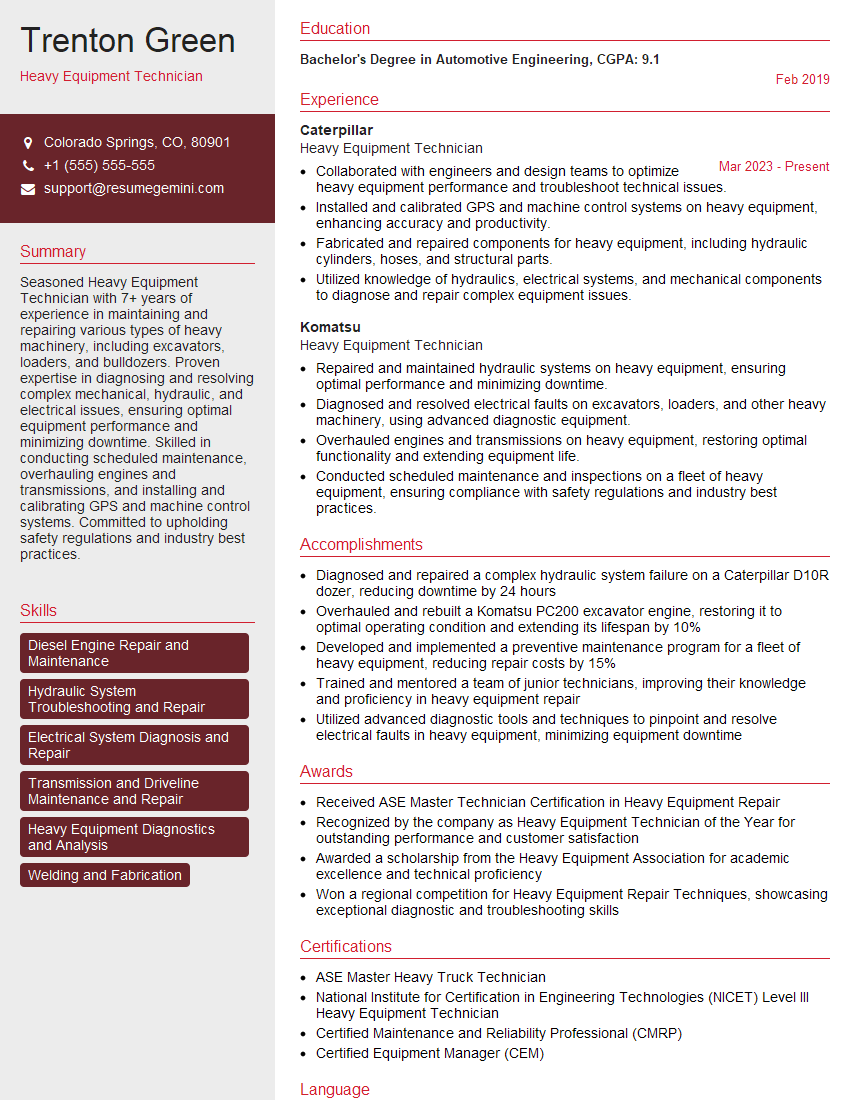
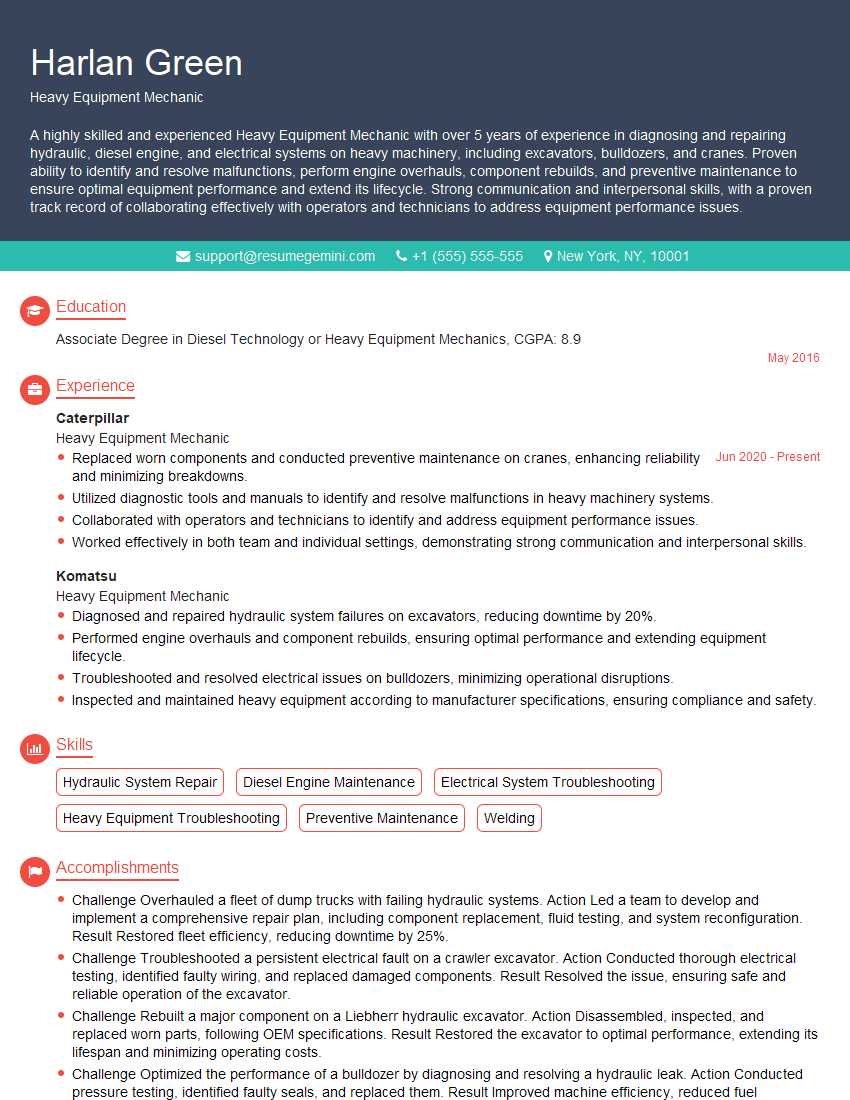
Mastering dragline assembly and disassembly is crucial for career advancement in the heavy equipment industry, opening doors to higher-paying roles and increased responsibility. A well-crafted resume is your key to unlocking these opportunities. Creating an ATS-friendly resume is essential to ensure your application is seen by recruiters. We highly recommend using ResumeGemini to build a professional and impactful resume that highlights your skills and experience effectively. ResumeGemini provides examples of resumes tailored to Dragline Assembly and Disassembly professionals, helping you showcase your qualifications in the best possible light.

Explore more articles
Users Rating of Our Blogs
Share Your Experience
We value your feedback! Please rate our content and share your thoughts (optional).
What Readers Say About Our Blog
Very informative content, great job.
good