Unlock your full potential by mastering the most common Concrete Drilling interview questions. This blog offers a deep dive into the critical topics, ensuring you’re not only prepared to answer but to excel. With these insights, you’ll approach your interview with clarity and confidence.
Questions Asked in Concrete Drilling Interview
Q 1. What types of concrete drilling equipment are you familiar with?
My experience encompasses a wide range of concrete drilling equipment, from handheld rotary hammers for smaller jobs to large, powerful core drills and even robotic drilling systems for large-scale projects. Handheld drills are great for smaller holes, while core drills are essential for larger diameter, precise holes. I’m also familiar with various types of bits, including diamond core bits for precise cuts in reinforced concrete and carbide tipped bits for general-purpose drilling.
- Handheld Rotary Hammers: Ideal for smaller holes and quick tasks, often used with carbide bits.
- Core Drills: Used for creating precise, cylindrical holes of various diameters, typically employing diamond core bits.
- Magnetic Drills: Useful for drilling on vertical or overhead surfaces, offering stability and control.
- Robotic Drilling Systems: Automated systems used in large-scale projects for high accuracy and efficiency.
Each piece of equipment has specific applications and capabilities. Selecting the right tool is crucial for efficiency and safety.
Q 2. Describe your experience with different drilling methods (e.g., core drilling, percussion drilling).
My experience covers several drilling methods. Core drilling is my most frequently used method, particularly for applications requiring clean, precise holes, such as installing pipes or conduits. Percussion drilling is employed when dealing with extremely hard concrete or when speed is more important than precision. I’ve also used other methods like dry drilling and wet drilling, each with its advantages and disadvantages.
- Core Drilling: A precise method using a diamond core bit to cut a cylindrical hole. It produces clean cuts and is ideal for precise work.
- Percussion Drilling: A forceful method that utilizes a hammering action to break up the concrete. It’s faster but less precise than core drilling.
- Dry Drilling: A method that doesn’t use water for lubrication. It’s quicker but generates more dust and heat, which can damage the drill bit.
- Wet Drilling: Uses water to cool and lubricate the drill bit, reducing dust and extending bit life.
For instance, I once had to drill through exceptionally reinforced concrete for a large HVAC system installation. Core drilling with specialized diamond bits was necessary to avoid damaging the reinforcement and ensure a precise fit for the pipes.
Q 3. How do you determine the appropriate drilling technique for a specific application?
Choosing the right drilling technique depends on several factors: the type and thickness of the concrete, the size and depth of the hole required, the presence of reinforcing bars, and the desired level of precision. For instance, a small hole in thin concrete can be done with a rotary hammer, while a large hole in reinforced concrete will require a core drill with diamond bits.
I typically consider:
- Hole Size and Depth: Small holes can be done with handheld drills, while large holes necessitate core drilling.
- Concrete Strength: Hard concrete may require percussion drilling, while softer concrete may be suitable for core drilling.
- Reinforcement: The presence of rebar influences bit selection and drilling technique. Specialized bits and methods are needed.
- Accuracy Requirements: High precision jobs need core drilling, while less precision work can be done with other methods.
I always conduct a thorough site assessment before commencing any drilling work to determine the optimal method.
Q 4. Explain the safety procedures you follow when operating concrete drilling equipment.
Safety is paramount. I always begin by assessing the work area for potential hazards, like overhead obstructions or unstable surfaces. I then utilize the appropriate personal protective equipment (PPE), including safety glasses, hearing protection, a dust mask (especially for dry drilling), and sturdy work boots. Before turning on any equipment, I ensure the area is clear of personnel and that the equipment is properly grounded and in good working order. I regularly inspect the equipment for any signs of damage or wear and tear.
Beyond PPE, I adhere to strict operating procedures: ensuring a firm grip on the equipment, maintaining proper posture to avoid strain, and always using the correct drill bits for the material. When working at heights, fall protection measures are essential. Furthermore, I maintain a safe working distance from bystanders throughout the process.
Q 5. What are the potential hazards associated with concrete drilling and how do you mitigate them?
Concrete drilling presents several hazards:
- Dust Inhalation: Concrete dust is harmful to the respiratory system, necessitating the use of a respirator or dust extraction system.
- Hearing Damage: Loud noise from the equipment requires hearing protection.
- Eye Injuries: Debris and dust can cause eye injuries; safety glasses are crucial.
- Electrical Shock: When using electrical tools, ensure proper grounding and insulation.
- Rebar Strikes: Striking rebar can damage the drill bit and create a safety hazard. Employing appropriate techniques and detection methods is vital.
- Collisions and Falls: Maintain a safe distance from others and ensure stability when operating equipment at height.
Mitigation involves careful planning, employing appropriate PPE, using safety equipment like dust extraction systems, and adhering to strict safety protocols.
Q 6. How do you ensure the accuracy and precision of your drilling work?
Accuracy and precision are achieved through careful planning and the use of appropriate equipment and techniques. I begin by precisely marking the drilling location using a layout tool such as a laser level or a chalk line. For core drilling, I use a center punch to create a starting point for the bit. I also select the appropriate drill bit size to match the requirements of the project.
During drilling, I maintain a consistent speed and pressure to ensure straight, accurate holes. When working with large, heavy equipment I use appropriate stabilizing measures, including sturdy stands or magnetic bases to prevent wobbling. Regular calibration of equipment ensures continued precision. Finally, I always double-check my work after completion to ensure accuracy.
Q 7. What are the common problems encountered during concrete drilling and how do you troubleshoot them?
Common problems include drill bit breakage, wandering drills, and hitting rebar.
- Drill Bit Breakage: Often caused by excessive force, incorrect bit selection, or hitting rebar. Solution: Use appropriate bits for the material, apply correct pressure, and utilize rebar detectors.
- Wandering Drills: Can be caused by dull bits, improper technique, or unstable equipment. Solution: Use sharp bits, ensure proper equipment stability, and maintain correct pressure.
- Hitting Rebar: Causes drill bit damage and potential injury. Solution: Use rebar detectors, adjust the drilling path, or select bits specifically designed for reinforced concrete.
- Dust Buildup: Can hinder visibility and damage the bit. Solution: Use wet drilling or a dust extraction system.
Troubleshooting usually involves identifying the root cause and taking corrective action. This often requires experience and a methodical approach.
Q 8. Describe your experience with different types of concrete (e.g., reinforced, pre-stressed).
My experience encompasses a wide range of concrete types, each presenting unique drilling challenges. Reinforced concrete, for instance, requires careful consideration of rebar placement to prevent bit damage and ensure operator safety. I use specialized techniques like core drilling with diamond bits to navigate rebar effectively, often employing a pre-drilling stage to identify and assess the rebar layout before the main core drilling process. Prestressed concrete demands even greater precision due to the high tensile strength of the tendons. Here, I rely heavily on accurate surveying and planning to avoid damaging these critical structural elements. I’ve worked extensively with various concrete mixes, including high-strength, lightweight, and even fiber-reinforced concrete, each demanding adjustments to drilling parameters – from bit selection to rotation speed and feed rate – to maintain efficiency and prevent premature wear.
For example, I once encountered a project involving exceptionally high-strength concrete. Standard drilling techniques proved inadequate. Through careful analysis of the concrete’s compressive strength, I opted for a specialized diamond core bit with a higher segment density and a slower feed rate, successfully completing the project without incident.
Q 9. How do you handle drilling in confined spaces or difficult-to-access areas?
Drilling in confined or hard-to-reach areas requires adaptability and specialized equipment. I routinely employ compact, portable drills with flexible shafts to navigate tight spaces. For extremely limited access, remote-controlled robotic drilling systems offer a safe and precise solution. I’ve successfully used these in situations where human access was severely restricted, such as drilling through narrow walls or within cramped utility shafts. Proper planning is critical; I always carefully assess the site, considering factors like available space, surrounding infrastructure, and potential obstructions. I create detailed plans incorporating precise measurements and risk assessments before commencing any work.
For instance, during a recent project involving drilling ventilation holes in a confined attic space, I utilized a small, hand-held drill with an extended shaft, making sure to use appropriate safety measures including fall prevention systems to avoid damaging the structure and ensuring the safety of the team. This adaptability is crucial for successfully completing projects under challenging conditions.
Q 10. What are your experiences with different drill bit types and their applications?
My experience with drill bits is extensive, encompassing various types for different applications. Diamond core bits are my go-to for precision drilling in concrete, offering clean, accurate holes for applications like installing anchors or conduits. I select bits based on the concrete’s hardness and the required hole diameter and depth. For rougher work, such as creating larger openings, I use carbide-tipped bits, but these often create more dust and produce a less precise hole. Hammer drills with SDS-Max chucks are utilized for larger-diameter holes and demolition work, particularly when speed is prioritized over precision. Each bit type requires a different drilling approach – diamond bits need consistent pressure and cooling, while carbide bits benefit from higher RPMs and controlled hammering.
Selecting the wrong bit can lead to significant delays and even damage to the structure, underscoring the importance of understanding the properties of each type. I always make sure to match the bit with the concrete type and the desired hole characteristics.
Q 11. How do you maintain and care for concrete drilling equipment?
Maintaining concrete drilling equipment is crucial for optimal performance and longevity. After each use, I meticulously clean the equipment, removing concrete dust and debris. Regular lubrication of moving parts is essential to prevent wear and tear. Diamond bits require careful handling to avoid chipping or damage to the diamond segments. I store bits in protective cases to prevent damage during transport and storage. I also perform regular inspections of the drill’s motor, checking for any signs of overheating or damage. Furthermore, I maintain detailed maintenance logs, tracking every service and repair to ensure compliance with safety regulations and prolong the equipment’s lifespan.
For example, after a particularly challenging drilling job involving reinforced concrete, I meticulously cleaned the diamond core bit using specialized cleaning agents, ensuring its segments were free of debris before securely storing it away. This proactive maintenance prevents premature wear and ensures the accuracy and longevity of the equipment.
Q 12. What are the factors that influence the speed and efficiency of concrete drilling?
Several factors influence the speed and efficiency of concrete drilling. The concrete’s compressive strength is paramount; harder concrete requires more power and slower feed rates. The type of drill bit used significantly impacts efficiency, with diamond bits generally faster for precise holes than carbide bits. The drill’s power and rotational speed are crucial – higher power and speed often translate to faster drilling, but this must be balanced with the risk of bit damage and the need for effective cooling. Adequate cooling is essential to prevent overheating and premature bit failure; this is often achieved through water or air cooling systems. Finally, operator skill significantly impacts efficiency. A skilled operator can optimize drilling parameters for maximum speed while maintaining accuracy and safety.
For example, I’ve noticed that utilizing a water-cooled diamond core bit on a high-powered drill significantly increases drilling speed and precision compared to using an air-cooled bit on a less powerful model. This highlights the interplay between different factors affecting drilling efficiency.
Q 13. How do you calculate the required drilling depth and diameter?
Calculating the required drilling depth and diameter depends on the specific application. For instance, installing an anchor requires a hole deep enough to accommodate the anchor’s length, with a diameter slightly larger than the anchor’s shaft. Installing a conduit needs a hole large enough for the conduit itself, accounting for any potential protective sleeve. I always refer to the manufacturer’s specifications for the equipment being installed. Detailed blueprints and project drawings are essential for determining the exact location and dimensions of the holes. Accurate measurements are critical to avoid damaging surrounding structures or jeopardizing the structural integrity of the concrete. In some cases, I utilize laser measurement tools to ensure precise dimensions and hole placement.
For example, installing a large diameter pipe, I would first carefully review the plans to determine the precise diameter and depth required, then account for any potential tolerances in drilling and the size of the pipe itself to determine the final required hole dimensions.
Q 14. What are your experiences with using surveying equipment during drilling operations?
Surveying equipment plays a crucial role in ensuring the accuracy and safety of drilling operations, especially in large-scale projects. I routinely use laser levels and total stations to establish precise reference points for hole locations, ensuring that holes are drilled in the correct position and orientation. This is particularly important when drilling multiple holes in a coordinated manner, for instance, when installing a complex array of anchors or conduits. Digital surveying instruments help in recording the exact coordinates of each drilled hole, enabling accurate documentation and verification of the work completed. This also aids in planning and coordination with other trades on the construction site.
On a recent project involving the installation of numerous anchors for a large façade, using a total station allowed us to accurately locate each anchor point, minimizing the risk of errors and ensuring a perfectly aligned installation. The accuracy provided by these tools is critical in minimizing rework and maintaining project quality.
Q 15. Describe your experience with working from blueprints and specifications.
Interpreting blueprints and specifications is fundamental to successful concrete drilling. My experience encompasses thoroughly reviewing drawings to identify precise drilling locations, depths, diameters, and any special considerations like rebar proximity or existing conduit. I’m proficient in understanding various notations, including those indicating concrete strength, reinforcement patterns, and tolerance levels. For instance, I’ve worked on projects where the blueprints specified the use of a specific type of anchor, dictated by the structural load requirements, and I meticulously followed those directives to ensure a secure and code-compliant installation. I always verify measurements on-site against the blueprints to prevent costly errors. If discrepancies arise, I immediately consult with the engineers or project supervisors for clarification and documentation before proceeding.
Career Expert Tips:
- Ace those interviews! Prepare effectively by reviewing the Top 50 Most Common Interview Questions on ResumeGemini.
- Navigate your job search with confidence! Explore a wide range of Career Tips on ResumeGemini. Learn about common challenges and recommendations to overcome them.
- Craft the perfect resume! Master the Art of Resume Writing with ResumeGemini’s guide. Showcase your unique qualifications and achievements effectively.
- Don’t miss out on holiday savings! Build your dream resume with ResumeGemini’s ATS optimized templates.
Q 16. How do you ensure compliance with relevant safety regulations and standards?
Safety is paramount in concrete drilling. I’m meticulous about adhering to OSHA regulations, as well as any site-specific safety plans. This includes using appropriate personal protective equipment (PPE), such as safety glasses, hearing protection, dust masks, and hard hats. Before starting any project, I conduct a thorough risk assessment, identifying potential hazards like dust inhalation, falling debris, or electrical hazards from hidden wiring. I implement control measures, such as using dust extraction systems, implementing confined space entry procedures if necessary, and employing ground fault circuit interrupters (GFCIs) for electrical tools. Regular equipment inspections are crucial to ensure tools are in proper working condition, and I maintain detailed records of safety checks and training certifications. For example, on one project, I identified a potential risk of encountering asbestos-containing materials and immediately halted work, notifying the appropriate authorities and following their protocols for safe removal before resuming operations.
Q 17. What is your experience with post-drilling activities such as cleaning and disposal?
Post-drilling activities are crucial for maintaining a clean and safe work environment. My experience includes properly cleaning the drilled area, removing all debris and dust using appropriate vacuums and brushes. Waste disposal is handled responsibly, segregating different types of waste according to local regulations. For example, concrete dust is collected separately and disposed of following proper environmental guidelines to avoid air and ground pollution. I always ensure the area is left clean, organized, and safe for other trades to access, often making minor repairs to any surface damage caused during the process. This meticulous approach minimizes disruption to other project phases and demonstrates professionalism.
Q 18. Explain your experience with different types of concrete anchors and their installation.
I have extensive experience with various concrete anchors, including mechanical anchors (like wedge anchors and sleeve anchors), chemical anchors (epoxy resin-based), and expansion anchors. The selection of the appropriate anchor depends on several factors, including the concrete strength, the load requirements of the object being installed, and the substrate conditions. For instance, I’ve installed heavy machinery using high-strength chemical anchors in high-load situations, whereas for lighter fixtures, mechanical anchors are sufficient. I’m proficient in using specialized tools for installation and know how to follow manufacturer’s instructions for setting depths and curing times. I’ve encountered challenges, such as unexpected voids in the concrete, which required adjustments to the anchoring strategy and selection of a more suitable anchor type. Careful assessment and flexibility are crucial for successful installations.
Q 19. How do you manage multiple tasks and priorities on a drilling project?
Managing multiple tasks on a drilling project requires strong organizational skills and prioritization. I typically use a project management system, either digital or physical, to keep track of tasks, deadlines, and resource allocation. I break down large projects into smaller, manageable tasks, assigning realistic timelines for each. Communication is essential; I maintain open channels with supervisors and other trades to coordinate activities and anticipate potential conflicts. For example, on a recent project, I had to manage several drilling tasks simultaneously for different teams. By meticulously planning the sequence of drilling operations, I ensured that the work flowed efficiently and minimized delays. Regular progress checks and adjustments to the schedule as needed are part of my standard procedure.
Q 20. What is your experience with concrete repair and patching after drilling?
Concrete repair and patching are essential to restore the structural integrity and aesthetics of the concrete after drilling. My experience includes selecting suitable patching materials, such as epoxy-based mortars or cement-based repair compounds, appropriate to the type of concrete and the size of the hole. I apply the patching material carefully, following manufacturer instructions to ensure proper curing and adhesion. For larger holes, I may need to create a form to ensure a clean and level repair. I’m adept at matching the color of the repair to the existing concrete for a seamless finish, which is often crucial in aesthetically sensitive areas. Proper preparation of the surface to be repaired is key to a durable and long-lasting mend. I’ve also had to deal with situations where significant cracking occurred near a drilled hole, requiring a more extensive repair approach using specialized crack injection techniques.
Q 21. How do you ensure the structural integrity of the concrete after drilling?
Ensuring the structural integrity of the concrete after drilling is a critical responsibility. My approach involves careful planning and execution, starting with a thorough assessment of the concrete’s strength and the location of reinforcements. I avoid drilling too close to edges or corners, which could compromise structural stability. When necessary, I use specialized tools and techniques to minimize cracking or damage. For instance, I might use a smaller drill bit than initially required and slowly increase the size if possible. If there’s any concern about the load-bearing capacity, I consult with engineers for approval on the project. In some cases, additional reinforcement or structural support might be needed. Post-drilling inspections and regular monitoring are essential to detect any unforeseen issues or signs of weakness. Properly executed repairs, as mentioned above, are also crucial to maintaining structural soundness.
Q 22. Describe your experience with working on large-scale projects.
I have extensive experience working on large-scale concrete drilling projects, including high-rise building constructions and major infrastructure developments. For example, I was the lead driller on a project involving the installation of over 500 anchor bolts in a 30-story skyscraper. This required meticulous planning, precise execution, and effective coordination with other trades. Another significant project involved drilling numerous core samples for geotechnical analysis on a large highway expansion. These projects demanded careful attention to detail, adherence to strict safety protocols, and the ability to manage large teams and diverse equipment.
- Project Planning: I’m adept at reviewing blueprints, identifying potential challenges, and creating detailed work plans to ensure efficient and safe execution.
- Resource Management: I have experience managing equipment, personnel, and materials on large projects to stay within budget and on schedule.
- Problem Solving: I’ve successfully overcome numerous unforeseen obstacles on large-scale projects, such as unexpected reinforcement bars or difficult geological conditions, by adapting my techniques and utilizing alternative methods.
Q 23. How do you communicate effectively with supervisors, coworkers, and clients?
Effective communication is crucial in our field. I prioritize clear and concise communication with supervisors, coworkers, and clients. With supervisors, I provide regular updates on project progress, highlighting any potential issues or delays proactively. With coworkers, I foster a collaborative environment through open communication and teamwork. For example, I actively participate in pre-job briefings to ensure everyone is aware of the plan and potential hazards. With clients, I maintain open lines of communication, explaining complex technical details in easily understandable terms. I use visual aids and diagrams when necessary, and always ensure they are comfortable with the process and understand the expected outcomes. I believe in actively listening and addressing all concerns promptly and professionally.
Q 24. Describe your experience with using personal protective equipment (PPE).
Safety is paramount in concrete drilling. I have extensive experience using and maintaining personal protective equipment (PPE), including safety helmets, high-visibility vests, safety glasses, hearing protection, and respiratory protection, such as dust masks or respirators depending on the task. I strictly adhere to all safety regulations and ensure all team members do the same. I regularly inspect my PPE to ensure it’s in good working order and replace it as needed. For example, I always conduct a thorough PPE check before starting any project and remind my team to do the same. This includes checking for any damage or wear and tear on helmets, ensuring that safety glasses fit properly, and checking the functionality of respiratory equipment.
Q 25. What is your experience with preventative maintenance of drilling equipment?
Preventative maintenance of drilling equipment is essential for safety and efficiency. I am proficient in performing regular inspections and maintenance on various drilling machines, including core drills, hammer drills, and rotary drills. This involves checking for wear and tear on drill bits, lubricating moving parts, ensuring proper cooling systems functionality, and regularly cleaning the equipment. I follow manufacturer’s recommendations and maintain detailed logs of all maintenance activities. I understand the importance of preventative maintenance in preventing costly repairs and downtime. For example, I regularly check the drill bit sharpness, replacing them when necessary to prevent premature wear of the drill bit and improve efficiency.
Q 26. How do you interpret engineering drawings and specifications related to drilling?
Interpreting engineering drawings and specifications is a critical aspect of my work. I am highly proficient in reading and understanding architectural, structural, and mechanical drawings related to concrete drilling. I can identify key information such as drill locations, depths, diameters, and reinforcement details. I also understand the importance of following specific tolerances and adhering to relevant building codes. I utilize various tools, including digital measurement instruments, to verify measurements and ensure accurate drilling. For instance, I can easily interpret a drawing indicating the exact placement of anchor bolts for structural support and understand the implications of drilling near existing utilities.
Q 27. What are your salary expectations for this role?
My salary expectations are in line with the industry standard for experienced concrete drillers with my qualifications and experience. I am open to discussing a specific range based on the complete compensation package, including benefits and opportunities for professional development.
Q 28. Do you have any questions for me?
Yes, I have a few questions. First, could you describe the specific projects I would be working on in this role? Second, what are the opportunities for professional development and advancement within your company? Finally, what is your company’s approach to safety and training?
Key Topics to Learn for Concrete Drilling Interview
- Types of Concrete Drilling Equipment: Understanding the various drills, their capabilities, and limitations (e.g., core drills, hammer drills, diamond drills). Practical application: Knowing when to use each type for optimal results and safety.
- Drilling Techniques and Procedures: Mastering safe and efficient drilling techniques, including hole sizing, depth control, and minimizing damage to surrounding structures. Practical application: Describing your experience with different drilling methods and adapting to various concrete types and reinforcement.
- Concrete Properties and Considerations: Understanding the impact of concrete strength, density, and reinforcement on drilling operations. Practical application: Explaining how you adjust drilling parameters based on the specific concrete composition.
- Safety Regulations and Best Practices: Demonstrating knowledge of relevant safety standards, personal protective equipment (PPE), and risk mitigation strategies. Practical application: Describing your experience implementing safety protocols on site.
- Troubleshooting and Problem Solving: Identifying and resolving common issues encountered during drilling, such as drill bit wear, broken bits, and unexpected obstructions. Practical application: Sharing examples of problems you’ve encountered and how you successfully addressed them.
- Post-Drilling Procedures: Understanding the importance of cleaning and maintaining drilled holes, including considerations for future applications (e.g., anchoring, conduits). Practical application: Describing your experience with post-drilling cleanup and preparation for subsequent work.
Next Steps
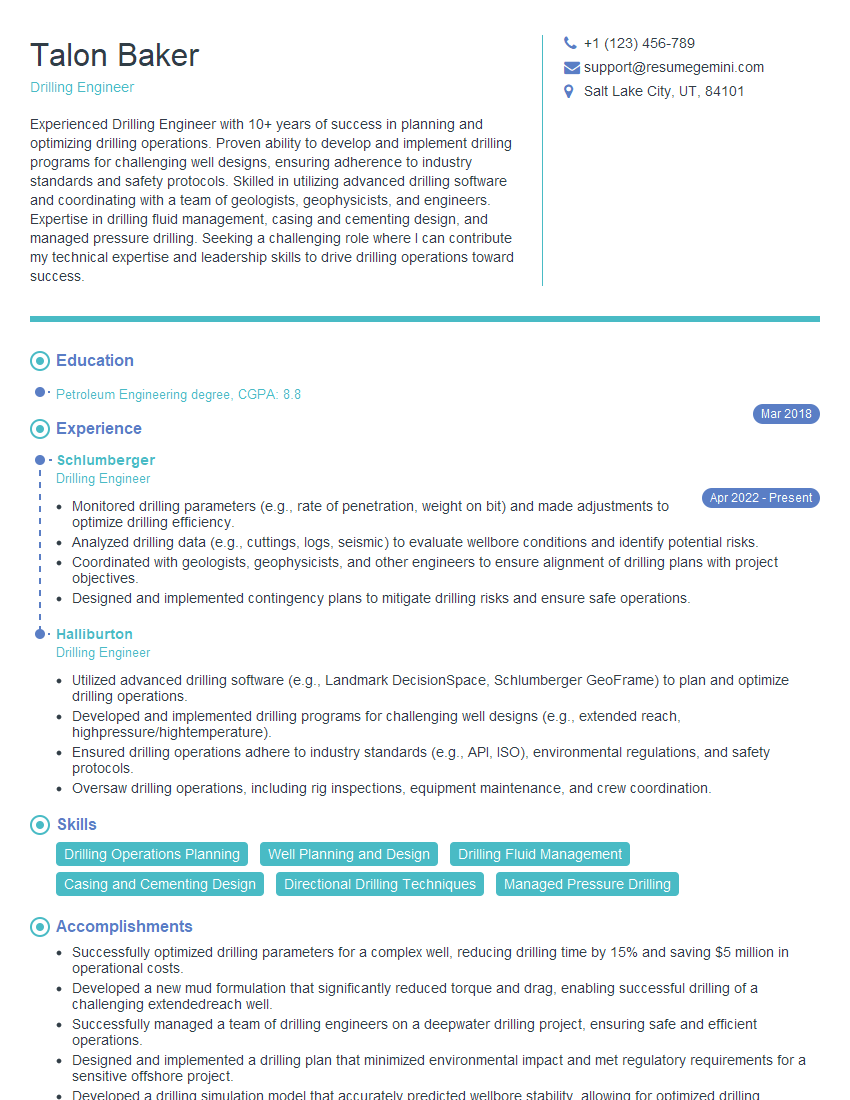
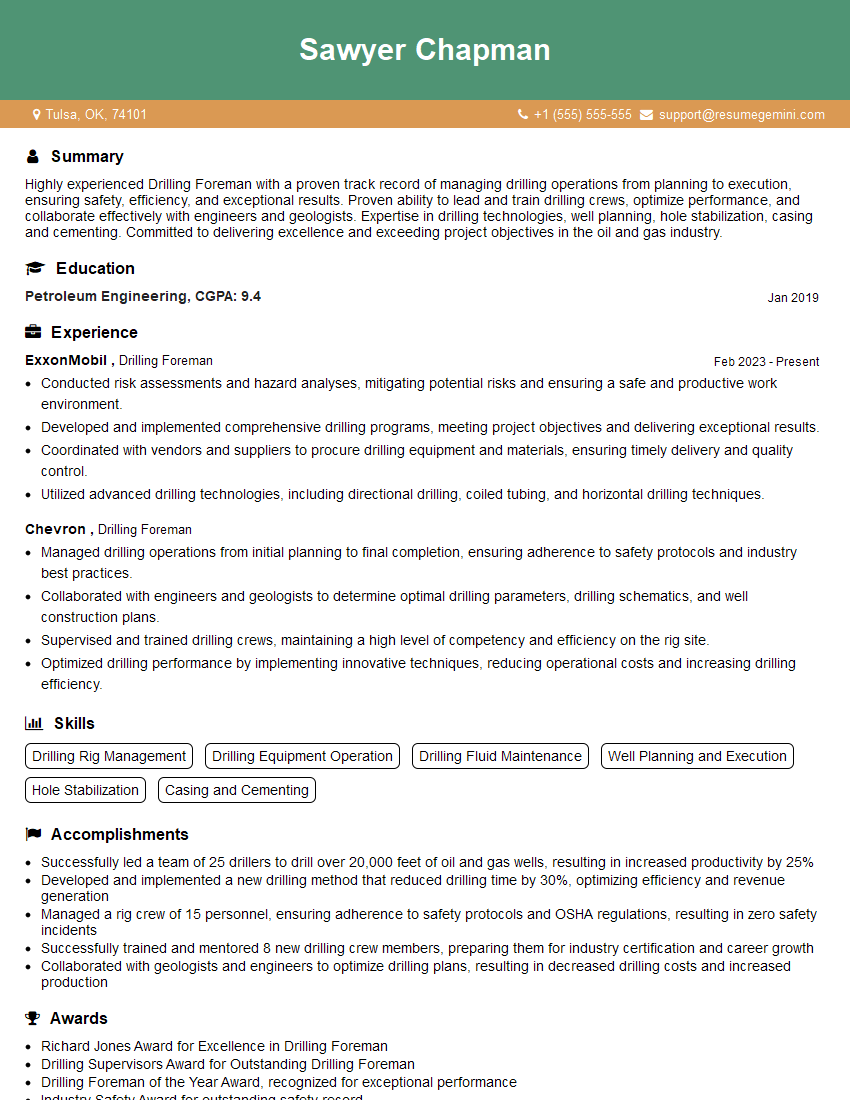
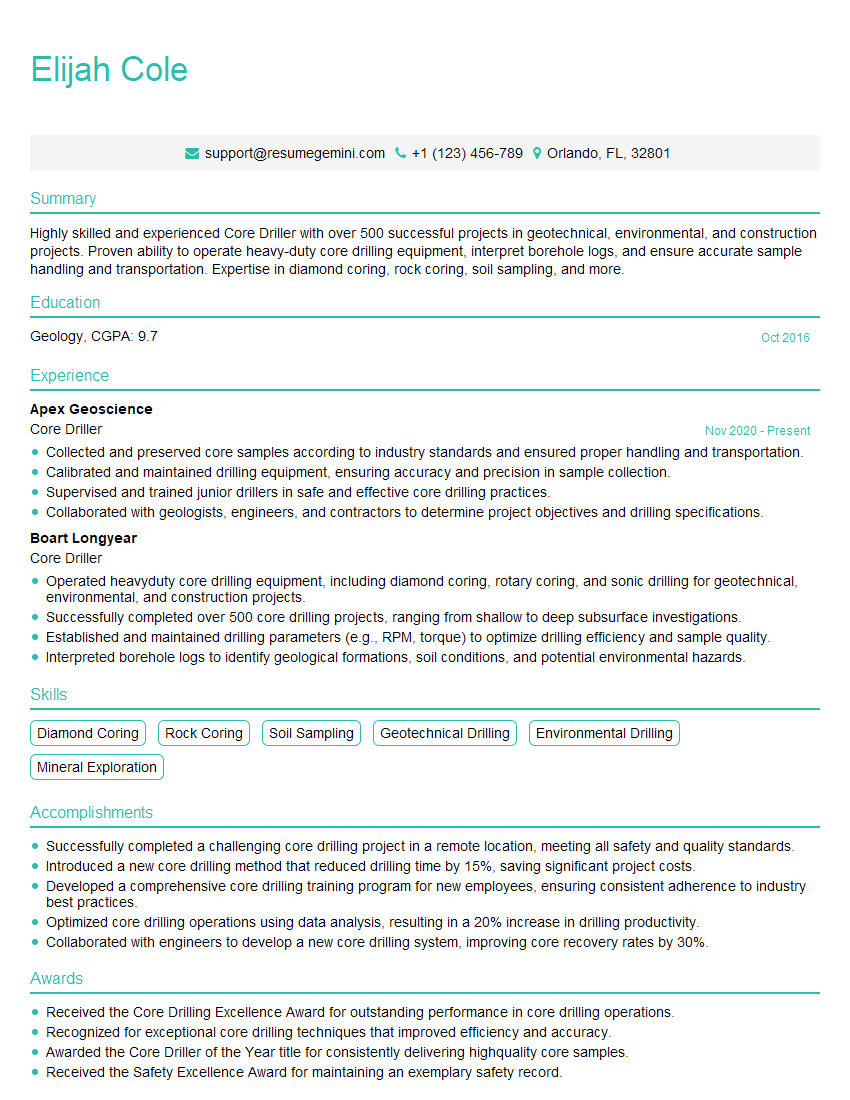
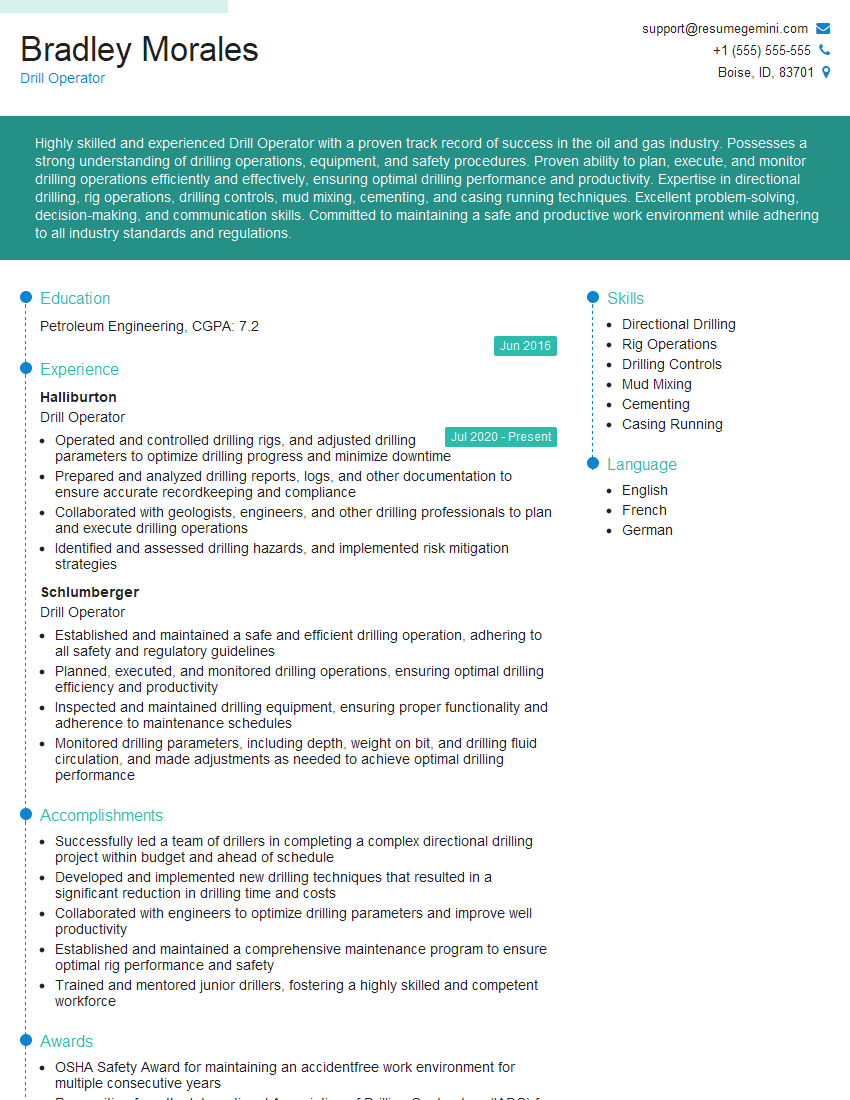
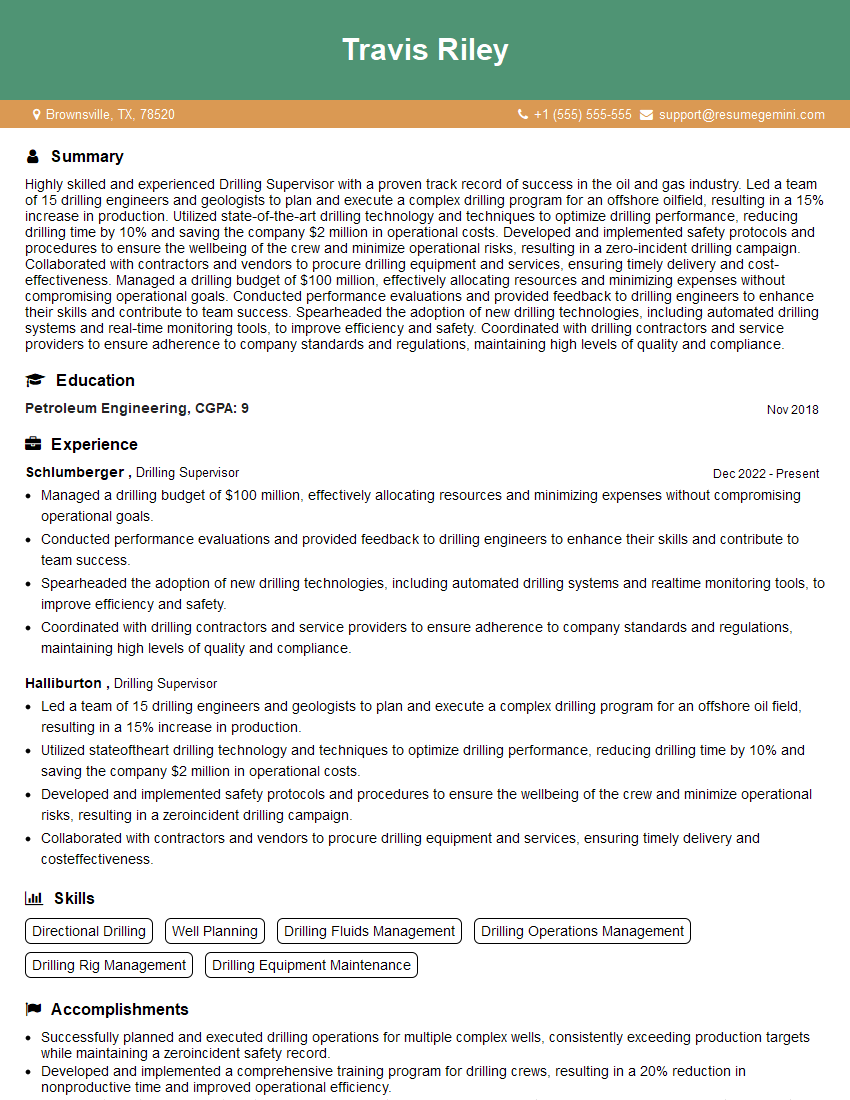
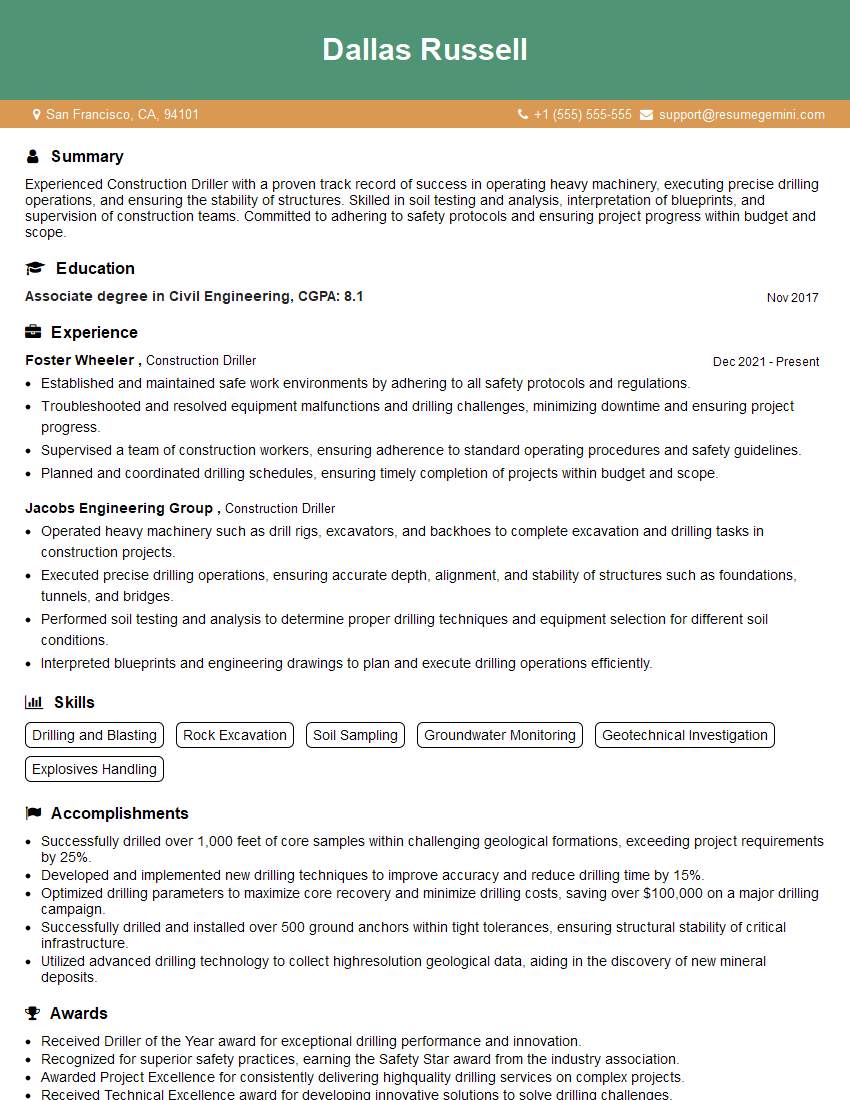
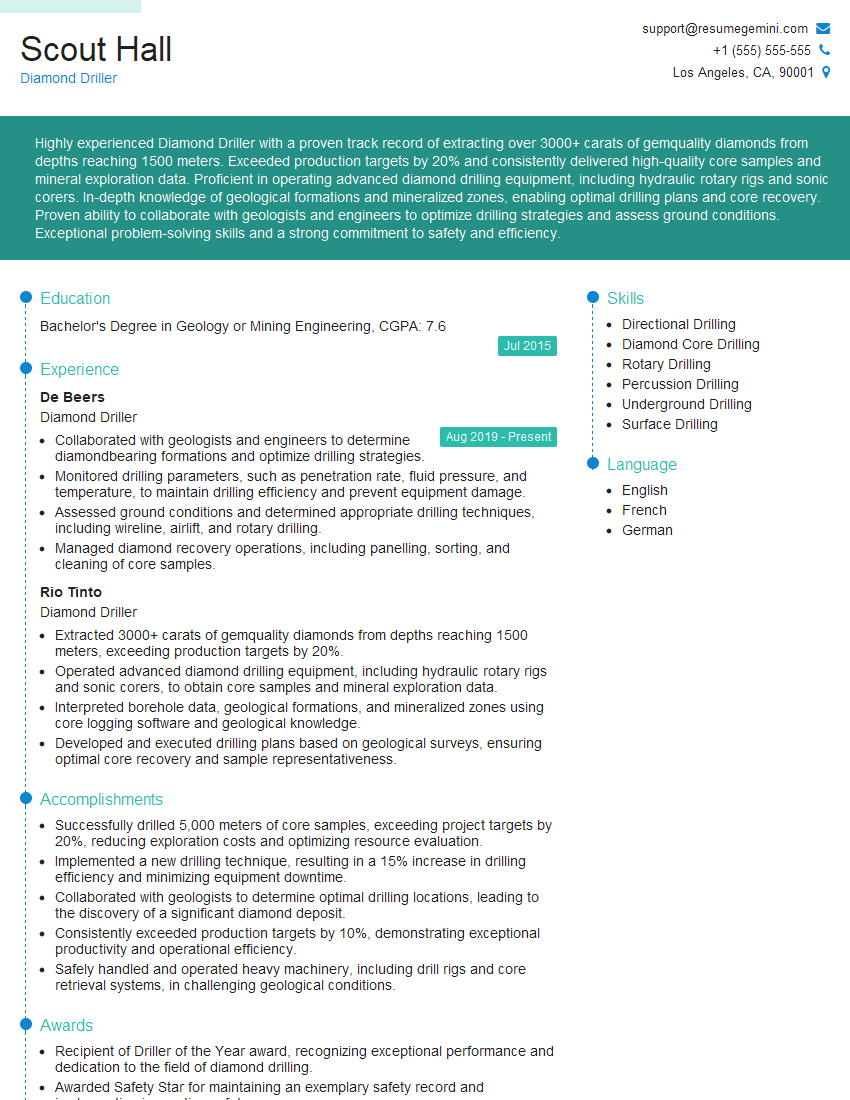
Mastering concrete drilling techniques opens doors to diverse and rewarding career opportunities in construction, infrastructure development, and specialized contracting. To maximize your job prospects, it’s crucial to present your skills effectively through a well-crafted, ATS-friendly resume. ResumeGemini can help you build a professional resume that highlights your concrete drilling expertise and catches the eye of recruiters. We provide examples of resumes tailored specifically to the Concrete Drilling field to help you get started. Take the next step toward your dream career – build your resume with ResumeGemini today!

Explore more articles
Users Rating of Our Blogs
Share Your Experience
We value your feedback! Please rate our content and share your thoughts (optional).
What Readers Say About Our Blog
Very informative content, great job.
good