Preparation is the key to success in any interview. In this post, we’ll explore crucial Concrete Surface Cleaning interview questions and equip you with strategies to craft impactful answers. Whether you’re a beginner or a pro, these tips will elevate your preparation.
Questions Asked in Concrete Surface Cleaning Interview
Q 1. What types of concrete cleaning methods are you familiar with?
Concrete cleaning methods vary depending on the type of stain, the severity of the soiling, and the type of concrete. I’m proficient in several techniques:
- Pressure washing: This uses high-pressure water to remove loose dirt, grime, and some stains. It’s effective for general cleaning but can damage delicate surfaces if not done carefully.
- Chemical cleaning: This involves applying specialized cleaning agents to dissolve or lift stains. Different chemicals are used for different types of stains, from oil-based to biological. This is often paired with pressure washing for optimal results.
- Abrasive blasting: For stubborn stains or coatings, abrasive blasting (like sandblasting, but often with gentler media) is used. This method is powerful but requires careful control to avoid damaging the concrete.
- Dry ice blasting: A newer method using dry ice pellets propelled at high velocity. This is particularly useful for removing graffiti, coatings, and other contaminants without the use of water or harsh chemicals.
- Rotary scrubbing: Using specialized rotary brushes and cleaning solutions, this technique is effective for removing ingrained dirt and stains from larger areas. It’s frequently used on heavily soiled surfaces.
The choice of method depends entirely on the specific situation and always involves a thorough assessment of the concrete surface before starting.
Q 2. Describe your experience with high-pressure cleaning equipment.
I have extensive experience operating various high-pressure cleaning equipment, from smaller, portable units for residential jobs to large industrial-grade machines. My experience includes:
- Selecting the appropriate nozzle and pressure: Understanding how different nozzle tips affect the spray pattern and pressure is crucial to avoid damage. A too-high pressure can etch the concrete’s surface, while too low won’t clean effectively. For instance, a 0-degree nozzle offers maximum cleaning power but demands precise control, whereas a 40-degree nozzle is gentler.
- Maintaining equipment: Regular maintenance, including cleaning the nozzles, checking for leaks, and ensuring proper lubrication, is essential for efficient and safe operation. This prevents costly repairs and ensures consistent performance.
- Understanding safety protocols: Working with high-pressure equipment requires strict adherence to safety regulations – including proper PPE (Personal Protective Equipment) such as eye protection, hearing protection, and water-resistant boots.
I’ve worked on a wide range of projects, from cleaning small driveways to large industrial floors, always prioritizing safety and efficiency.
Q 3. How do you assess the condition of a concrete surface before cleaning?
Assessing concrete before cleaning is paramount. It determines the cleaning method, chemicals, and necessary safety precautions. My assessment involves:
- Visual inspection: I carefully examine the surface for cracks, pitting, spalling, efflorescence (salt deposits), and the types of stains present. Photographs are often taken for documentation.
- Type of concrete: Different types of concrete react differently to cleaning agents and pressure. Knowing whether it’s stamped, stained, or plain concrete is key.
- Porosity: A more porous concrete will absorb cleaning solutions more readily and may require different techniques than a less porous surface.
- Existing coatings: The presence of sealants or coatings will influence cleaning methods and could require specialized techniques for their removal or preservation.
This initial assessment ensures I develop a customized cleaning plan that’s both effective and protects the concrete’s integrity. Imagine trying to clean a delicate antique with the same tools used for a rough stone wall; a thorough assessment prevents such mistakes.
Q 4. What are the different types of concrete stains and how are they removed?
Concrete stains come in various types, each requiring a specific removal approach:
- Oil stains: These often require a degreasing agent followed by pressure washing. Sometimes, specialized solvents are necessary for stubborn stains.
- Biological stains (mold, mildew): A biocide is usually applied to kill the growth, followed by pressure washing and sometimes a specialized cleaning solution to remove the discoloration.
- Rust stains: These can be treated with specialized rust removers or oxalic acid solutions. The success depends on the depth of penetration.
- Water stains (efflorescence): These often require removal of the salt deposits via wire brushing or scraping, followed by a thorough rinsing. The underlying cause (moisture intrusion) should also be addressed.
- Paint stains: These might necessitate a combination of methods – pressure washing, chemical stripping, or abrasive blasting, depending on the type of paint and its adhesion.
Choosing the right approach requires careful observation and understanding of stain chemistry. It’s a little like solving a chemical puzzle – you need the right ‘solvent’ to dissolve the ‘problem’ without damaging the surrounding material.
Q 5. Explain the process of removing graffiti from concrete surfaces.
Graffiti removal from concrete depends on the type of paint used. My approach is systematic:
- Assessment: Determine the type of paint (e.g., acrylic, enamel) and its adhesion to the surface. This dictates the appropriate cleaning method.
- Testing: In an inconspicuous area, I test different cleaning agents and methods to determine their effectiveness and potential impact on the concrete.
- Cleaning: Methods can include pressure washing with appropriate nozzle and pressure, chemical cleaning (graffiti removers), dry ice blasting (for delicate surfaces or stubborn graffiti), or abrasive blasting (for very persistent paint).
- Protection: After cleaning, the concrete surface might need protection from future graffiti with a sealant. This forms a protective barrier.
Safety is critical throughout the process. Always use appropriate PPE, ensure adequate ventilation when using chemicals, and follow manufacturer’s instructions meticulously.
Q 6. How do you handle different types of concrete damage (cracks, pitting)?
Concrete damage requires specialized handling. While cleaning can’t repair damage, it needs to be considered carefully:
- Cracks: Cleaning around cracks requires extra care to prevent further damage. High-pressure washing should be avoided directly on cracks. Minor cracks may be filled and sealed after cleaning.
- Pitting: Pitting is usually caused by deterioration and cannot be easily cleaned away. Cleaning should focus on removing surface contaminants, ensuring there is no further damage during the process. Significant pitting might require professional repair or resurfacing.
- Spalling: Spalling involves the breaking or chipping away of concrete. Cleaning must be done gently to prevent further damage. Repair is often necessary after cleaning.
In cases of significant damage, I recommend consulting with a structural engineer to assess the severity of the problem and determine the necessary repair steps. Cleaning is one aspect; addressing structural integrity is often more critical.
Q 7. What safety precautions do you take during concrete cleaning?
Safety is my top priority. My safety precautions include:
- Personal Protective Equipment (PPE): This always includes safety glasses, hearing protection, waterproof gloves, and steel-toe boots. Depending on the chemicals used, respirators or full-body protection may be necessary.
- Chemical handling: I strictly adhere to the manufacturer’s instructions for all chemicals, using the proper dilutions and handling procedures. Ventilation is crucial when working with solvents or strong chemicals.
- High-pressure equipment safety: I follow all safety protocols when operating high-pressure equipment, including maintaining safe distances, using appropriate nozzles, and regularly inspecting the equipment for leaks or damage.
- Site safety: I ensure the work area is clearly marked and secure, especially when working near traffic or in public areas. This includes using cones or caution tape.
- Emergency preparedness: I always have a first-aid kit on hand and am aware of emergency procedures in case of accidents or injuries.
Safety is not just a set of rules; it’s a mindset. A safe work environment ensures quality work and protects everyone involved.
Q 8. What are the environmental considerations for concrete cleaning?
Environmental considerations in concrete cleaning are paramount. We must minimize the impact on water resources, air quality, and surrounding ecosystems. This involves careful selection of cleaning agents, prioritizing biodegradable and low-toxicity options. For example, instead of harsh acids, we often utilize eco-friendly detergents or specialized cleaning solutions that are phosphate-free and readily break down. Proper waste disposal is crucial. We meticulously collect and dispose of wastewater according to local regulations, preventing contamination of soil and water sources. Dust suppression is another key element, especially during grinding or abrasive blasting, often employing water misting systems or HEPA-filtered vacuum systems to minimize airborne particles and protect both workers and the environment.
Furthermore, we always strive to conserve water by using pressure washing techniques efficiently and recycling wastewater whenever feasible. We educate clients on the importance of sustainable practices, encouraging them to choose materials and methods that align with environmental responsibility. This proactive approach safeguards both the environment and the long-term integrity of the concrete surfaces.
Q 9. Describe your experience with different cleaning chemicals and their applications.
My experience encompasses a wide range of cleaning chemicals, each tailored to specific concrete conditions and staining. For instance, I’ve extensively used alkaline cleaners for removing grease, oil, and other organic substances. These cleaners are highly effective but require careful handling due to their corrosive nature. Acidic cleaners, like muriatic acid (diluted appropriately, of course!), are effective on mineral deposits and efflorescence, but their use demands utmost caution and protective gear. I’ve also worked with specialized enzymatic cleaners for biological stains like mold and mildew, which are environmentally friendly and potent in breaking down organic matter. Finally, I’ve experimented with various proprietary concrete cleaning solutions, each with unique formulations optimized for different types of soiling and concrete types. The selection process always prioritizes safety, effectiveness, and environmental impact.
For example, on a project involving heavy grease stains in a commercial kitchen, we employed a powerful, yet biodegradable, alkaline cleaner, followed by a thorough rinsing. In another instance, where efflorescence was a problem, we utilized a diluted solution of muriatic acid, neutralized afterward with a baking soda solution, a crucial step in preventing further damage to the concrete. The choice of chemical always depends on the type of stain, the concrete’s condition, and the surrounding environment.
Q 10. How do you determine the appropriate cleaning solution for a given surface?
Determining the appropriate cleaning solution involves a systematic assessment. Firstly, I carefully inspect the concrete surface, identifying the type of stain or soiling (organic, inorganic, biological, etc.). Secondly, I assess the concrete’s condition, noting its age, porosity, and any existing damage. Thirdly, I consider the surrounding environment – proximity to water sources, vegetation, etc. – to make informed decisions on chemical selection and waste disposal. For example, heavily stained concrete might require a stronger cleaning agent, while delicate or aged concrete may necessitate a milder approach.
After this assessment, I select a cleaning solution compatible with the stain type and concrete condition. For oil stains, I might use a degreaser. For efflorescence, a diluted acid cleaner. For mold, an enzymatic cleaner. If unsure, a small test area is cleaned first to evaluate the effectiveness and potential risks before proceeding with the entire surface. This careful approach prevents damage and ensures optimal results.
Q 11. How do you maintain and troubleshoot concrete cleaning equipment?
Maintaining and troubleshooting concrete cleaning equipment is critical for both safety and efficiency. Regular maintenance involves inspecting all equipment thoroughly after each use. This includes checking hoses for leaks, ensuring nozzles are free from obstructions, and verifying the proper functioning of pumps and motors. Proper cleaning of equipment is essential; removing any residual cleaning solution prevents corrosion and contamination. Lubricating moving parts, like those in pressure washers, extends their lifespan and smooths their operation.
Troubleshooting usually involves identifying the source of the problem. A pressure washer that won’t start may have a faulty motor or low fuel. A clogged nozzle reduces water pressure. A lack of cleaning power may indicate the use of an ineffective solution. I keep a detailed log of maintenance and repairs to track potential problems and ensure longevity of the equipment. Regular preventative maintenance minimizes downtime and extends the lifespan of these crucial tools.
Q 12. What is your experience with concrete grinding and polishing techniques?
My experience with concrete grinding and polishing is extensive. I’ve utilized various grinding techniques, from diamond grinding for removing surface imperfections and creating a level base to honing and polishing for achieving a high-gloss finish. Different types of diamond abrasives are employed, each with varying grit sizes, to progressively refine the surface. The process starts with coarse grits to remove significant imperfections and then progresses to finer grits for achieving the desired level of smoothness and shine.
For instance, in a recent project, we used diamond grinding to remove old coatings and level a severely damaged concrete floor. This was followed by honing and polishing to achieve a polished concrete floor with a stunning high gloss. The choice of techniques and abrasives always depends on the desired finish, the concrete’s condition, and the client’s specifications. Safety precautions, including proper personal protective equipment (PPE), are always prioritized during these operations.
Q 13. How do you ensure the longevity of a cleaned concrete surface?
Ensuring the longevity of a cleaned concrete surface involves several key steps. First, proper cleaning is fundamental. Using the right cleaning agents and techniques prevents damage and removes contaminants. Second, post-cleaning care is crucial. Allowing the surface to dry thoroughly prevents water staining and promotes proper curing. Third, protective coatings and sealants are essential for shielding the concrete from future damage, preventing staining, and increasing its durability. For instance, applying a quality sealant creates a barrier against moisture penetration, preventing damage from freeze-thaw cycles and reducing the likelihood of staining.
Furthermore, regular maintenance, including routine cleaning and addressing any minor damages promptly, helps prolong the lifespan of the surface. Educating clients on proper maintenance practices, such as avoiding harsh chemicals and addressing spills promptly, is crucial for long-term preservation.
Q 14. Describe your experience with sealants and coatings for concrete.
My experience with sealants and coatings for concrete is vast. I’ve worked with various types, including acrylic sealers for enhancing appearance and providing moderate protection, epoxy coatings for added durability and chemical resistance, and polyurethane sealers for high-gloss finishes and superior stain protection. The choice of sealant or coating depends on factors such as the intended use of the concrete surface, the desired aesthetic, and the level of protection required.
For example, in a commercial setting requiring high chemical resistance, we might opt for an epoxy coating. For a residential driveway needing protection against staining and weathering, an acrylic sealer might suffice. Application techniques vary depending on the product, often involving multiple coats for optimal results. Proper surface preparation, including cleaning and allowing sufficient drying time, is paramount for successful application and optimal performance of the sealant or coating.
Q 15. What is your experience with concrete restoration projects?
My experience in concrete restoration spans over 15 years, encompassing a wide range of projects from small residential driveways to large-scale commercial structures. I’ve worked on projects involving everything from simple cleaning and sealing to complex repairs involving crack injection, joint restoration, and surface grinding. I’m proficient in assessing damage, selecting appropriate restoration techniques, and managing all aspects of the project, from initial consultation to final inspection. For example, I recently led a team in restoring a historic building’s concrete façade, which involved meticulous cleaning, repair of significant spalling, and the application of a protective coating to prevent future deterioration. This project demanded a deep understanding of historical preservation techniques alongside modern restoration methods.
Career Expert Tips:
- Ace those interviews! Prepare effectively by reviewing the Top 50 Most Common Interview Questions on ResumeGemini.
- Navigate your job search with confidence! Explore a wide range of Career Tips on ResumeGemini. Learn about common challenges and recommendations to overcome them.
- Craft the perfect resume! Master the Art of Resume Writing with ResumeGemini’s guide. Showcase your unique qualifications and achievements effectively.
- Don’t miss out on holiday savings! Build your dream resume with ResumeGemini’s ATS optimized templates.
Q 16. How do you manage a team during a concrete cleaning project?
Managing a team during a concrete cleaning project requires clear communication, delegation, and safety awareness. I establish a clear project plan, assigning roles and responsibilities based on each team member’s skills and experience. Daily briefings ensure everyone is informed about the day’s tasks and potential challenges. I emphasize safety protocols, ensuring everyone utilizes proper personal protective equipment (PPE) and adheres to safety guidelines. Regular progress checks allow me to address any issues promptly and maintain momentum. For instance, on a large parking lot cleaning, I divided the team into smaller units, each focusing on a specific section. This approach maximized efficiency and allowed for close supervision, minimizing errors and ensuring high-quality results.
Q 17. How do you handle unexpected problems during a cleaning job?
Unexpected problems are an inherent part of concrete cleaning. My approach involves a systematic problem-solving process. First, I assess the situation, identifying the problem’s root cause. Then, I evaluate available resources and determine the best solution. This might involve adjusting cleaning methods, sourcing additional equipment, or even calling in specialized assistance. Maintaining open communication with the client is crucial to keep them informed and manage expectations. For example, if we discover unexpected subsurface damage during pressure washing, I’ll immediately document it, photograph it, and discuss the implications with the client, outlining repair options and potential cost adjustments.
Q 18. Describe a time you had to adapt your cleaning methods due to unforeseen circumstances.
During a large-scale warehouse floor cleaning, we encountered unexpectedly high levels of embedded oil stains. Our initial pressure washing method proved ineffective. To adapt, I researched alternative cleaning solutions and decided to incorporate a degreasing agent followed by a more aggressive, yet controlled, pressure washing approach using a specialized nozzle. This two-step process effectively removed the oil stains without damaging the concrete. The adaptation not only solved the immediate problem but also saved time and cost in the long run compared to continuing with the ineffective initial approach.
Q 19. What are the different types of concrete and how does that affect cleaning?
Concrete comes in various types, each affecting cleaning methods.
- Standard Portland Cement Concrete: This is the most common type, relatively porous and can be cleaned with various methods.
- Colored Concrete: Often contains pigments that can be sensitive to aggressive cleaning chemicals; gentler methods are required.
- Stamped Concrete: Has a textured surface that requires careful cleaning to avoid damaging the pattern.
- Exposed Aggregate Concrete: Shows the aggregate stones; cleaning must avoid dislodging the stones.
- Stained Concrete: The stain’s type will influence the cleaning methods. Some stains are acid-based, requiring different techniques than oil-based stains.
Q 20. Explain the difference between cleaning and restoration of concrete surfaces.
Concrete cleaning aims to remove surface dirt, grime, and stains to restore its original appearance. Restoration, however, goes beyond cleaning; it involves repairing damage, such as cracks, spalling, or deterioration, to restore both aesthetics and structural integrity. Cleaning focuses on surface improvements, while restoration addresses both surface and subsurface issues. For example, cleaning a driveway might involve pressure washing and sealing, while restoration might include repairing cracks, patching damaged sections, and applying a protective coating.
Q 21. What are the common challenges faced in concrete cleaning?
Common challenges in concrete cleaning include:
- Efflorescence: White, powdery deposits that appear on the surface, requiring specialized cleaning methods.
- Stains: Oil, grease, paint, and other stains require specific cleaning agents and techniques.
- Graffiti: Removal often necessitates specialized graffiti removers and careful application.
- Weather conditions: Extreme temperatures and precipitation can affect cleaning efficiency and safety.
- Access limitations: Reaching all areas of a large concrete surface might require specialized equipment.
Q 22. How do you prioritize tasks during a large concrete cleaning project?
Prioritizing tasks on a large concrete cleaning project is crucial for efficiency and meeting deadlines. I use a phased approach, starting with a thorough site assessment to identify the most critical areas and the severity of the staining or damage. This might involve mapping out the project area, noting the type of concrete, the extent of soiling (e.g., oil stains, efflorescence, graffiti), and any structural considerations.
Next, I prioritize tasks based on several factors: urgency (e.g., areas needing immediate attention due to safety hazards), accessibility (starting with easy-to-reach areas), and dependencies (tasks that need to be completed before others can begin). For instance, removing loose debris and pre-treating heavily stained areas often takes precedence. I then create a detailed schedule, assigning specific teams or individuals to different phases of the project, keeping communication open and adapting the plan as needed. Think of it like building a house – you lay the foundation before you install the roof.
- Phase 1: Assessment and Planning – This crucial first phase ensures we have a clear understanding of the scope of work.
- Phase 2: Preparation – Includes safety setup, equipment deployment, and initial surface cleaning.
- Phase 3: Targeted Cleaning – Focusing on specific stain removal using appropriate methods and chemicals.
- Phase 4: Final Cleaning and Inspection – This involves a thorough rinse, inspection for any missed spots, and final cleanup of the site.
Q 23. What is your experience with different types of concrete cleaning tools?
My experience with concrete cleaning tools is extensive. I’m proficient in using a wide range of equipment, from basic tools to specialized machinery. This includes:
- Pressure Washers: I’m familiar with various types, including cold water, hot water, and ultra-high-pressure (UHP) washers. The choice depends on the type of concrete and the severity of the stain. Hot water is often better for grease and oil, while UHP is suitable for tougher stains but requires careful handling to avoid damage.
- Rotary and Orbital Floor Machines: These are excellent for larger areas and can be used with various pads and cleaning solutions for different cleaning tasks. Orbital machines are gentler on the surface than rotary machines.
- Hand Tools: Scrub brushes, scrapers, and chisels are invaluable for detailed work, removing stubborn stains or loose materials from cracks and crevices.
- Specialized Equipment: I have experience with shot blasting for extremely tough stains, diamond grinding for surface leveling, and laser cleaning for delicate surfaces.
Choosing the right tool is crucial; using a high-pressure washer on delicate concrete could cause damage, for example. I always assess the concrete’s condition and the nature of the staining before selecting the appropriate equipment.
Q 24. How do you ensure the quality of your work after a concrete cleaning project?
Quality assurance is paramount. After completing a concrete cleaning project, I follow a rigorous quality control process. This starts with a thorough final inspection, comparing the cleaned surfaces to the initial assessment and the agreed-upon project specifications. We take before and after photos to document the work objectively. We check for:
- Evenness of Cleaning: Ensuring consistent cleanliness across the entire area, without streaks or missed spots.
- Stain Removal: Verifying that all targeted stains have been effectively removed or at least significantly reduced.
- Surface Damage: Inspecting the concrete for any unintended damage caused by the cleaning process (e.g., etching, pitting).
- Overall Appearance: Assessing the final look and feel of the concrete surface; it should be clean, consistent, and meet the client’s expectations.
Client feedback is also crucial. We encourage clients to point out any areas they are not satisfied with, allowing us to address any issues immediately. Post-project follow-up ensures long-term satisfaction and helps us improve our procedures.
Q 25. What are the key performance indicators for a successful concrete cleaning project?
Key Performance Indicators (KPIs) for a successful concrete cleaning project include:
- On-time Completion: Meeting project deadlines without compromising quality.
- Within-budget Completion: Staying within the agreed-upon budget, avoiding cost overruns.
- Client Satisfaction: Achieving high levels of client satisfaction as measured through feedback surveys or reviews.
- Safety Record: Maintaining a zero-incident safety record throughout the project.
- Quality of Cleaning: The effectiveness of stain removal and overall improvement in the concrete’s appearance, assessed through visual inspection and client feedback.
- Waste Management: Proper disposal of cleaning agents and waste materials, adhering to environmental regulations.
Tracking these KPIs helps us monitor our performance, identify areas for improvement, and ensure consistent delivery of high-quality services. We regularly review these metrics to refine our processes and enhance our efficiency.
Q 26. Describe your experience with using specialized cleaning agents for specific stains.
I have extensive experience using specialized cleaning agents for different types of stains. The choice of cleaning agent is critical and depends heavily on the nature of the stain. For example:
- Oil-based stains: Require degreasers and solvents to break down the oil and lift it from the concrete’s pores. I often use alkaline-based cleaners for this purpose.
- Efflorescence (salt deposits): This requires a specific acid-based cleaner to dissolve the salt crystals. However, this needs careful application to prevent further damage to the concrete.
- Graffiti: Can often be removed using specialized graffiti removers that are tailored to the type of paint used. Sometimes, a combination of chemical and mechanical methods is required.
- Rust stains: Often require a combination of chemical treatments and mechanical scrubbing to remove completely.
Safety is paramount when using these agents. I always wear appropriate personal protective equipment (PPE), such as gloves, goggles, and respirators, and ensure adequate ventilation. I also follow the manufacturer’s instructions carefully and test any cleaning agent on a small, inconspicuous area before applying it to the entire surface.
Q 27. How do you handle client expectations regarding the outcome of a concrete cleaning project?
Managing client expectations is a key aspect of my work. I begin by having a thorough initial consultation, providing a realistic assessment of what can be achieved. This includes discussing the limitations of concrete cleaning, explaining what types of stains might be challenging to remove completely, and setting clear expectations about the timeframe and costs. I also provide samples of my previous work and testimonials to build trust.
Transparency is essential. If I encounter unexpected challenges during the project, I immediately communicate these to the client, explaining the situation and proposing alternative solutions. Open communication and clear explanations minimize misunderstandings and maintain a positive client relationship. It’s about building a partnership, not just completing a job.
Q 28. What is your understanding of relevant safety regulations for concrete cleaning?
Safety is my top priority. My understanding of relevant safety regulations for concrete cleaning is comprehensive. I’m familiar with OSHA (Occupational Safety and Health Administration) guidelines, local regulations, and industry best practices. This includes:
- Personal Protective Equipment (PPE): Always wearing appropriate PPE, including safety glasses, gloves, respirators (especially when using chemicals), and hearing protection (when using loud equipment).
- Chemical Handling: Proper storage, handling, and disposal of cleaning agents, following all manufacturer’s instructions and relevant environmental regulations.
- Equipment Safety: Regular inspection and maintenance of all equipment to ensure it’s in safe working order. Proper operation of pressure washers and other machinery.
- Worksite Safety: Maintaining a safe work environment, including proper signage, hazard awareness, and emergency response procedures.
- Fall Protection: Utilizing appropriate fall protection measures when working at heights.
I conduct thorough safety briefings with my team before each project and enforce strict adherence to safety rules throughout the process. Safety is not an option, it’s an integral part of every project.
Key Topics to Learn for Concrete Surface Cleaning Interview
- Surface Preparation: Understanding different concrete types and their cleaning requirements (e.g., porous vs. non-porous), appropriate pre-cleaning assessments, and the selection of suitable cleaning agents.
- Cleaning Methods: Practical application of various cleaning techniques, including pressure washing, chemical cleaning, and abrasive blasting. Understanding the advantages and limitations of each method and selecting the optimal approach based on the specific job requirements and concrete condition.
- Equipment Operation & Maintenance: Safe and efficient operation of pressure washers, cleaning chemicals, and other relevant equipment. Understanding preventative maintenance procedures to maximize equipment lifespan and minimize downtime.
- Safety Procedures & Regulations: Adherence to safety protocols, including proper personal protective equipment (PPE) use, handling of hazardous materials, and awareness of relevant industry regulations and best practices.
- Stain & Graffiti Removal: Specialized techniques for effectively removing various stains (oil, grease, paint) and graffiti from concrete surfaces, including understanding the chemical properties of different stains and selecting appropriate removal methods.
- Post-Cleaning Procedures: Proper rinsing and drying techniques to prevent damage and ensure a quality finish. Understanding the importance of protecting cleaned surfaces from re-contamination.
- Problem-Solving & Troubleshooting: Identifying and resolving common issues encountered during concrete cleaning, such as equipment malfunctions, unexpected staining, or ineffective cleaning solutions. Demonstrating a methodical approach to diagnosis and problem-solving.
- Environmental Considerations: Understanding environmentally friendly cleaning practices, responsible disposal of waste materials, and minimizing the environmental impact of cleaning operations.
Next Steps
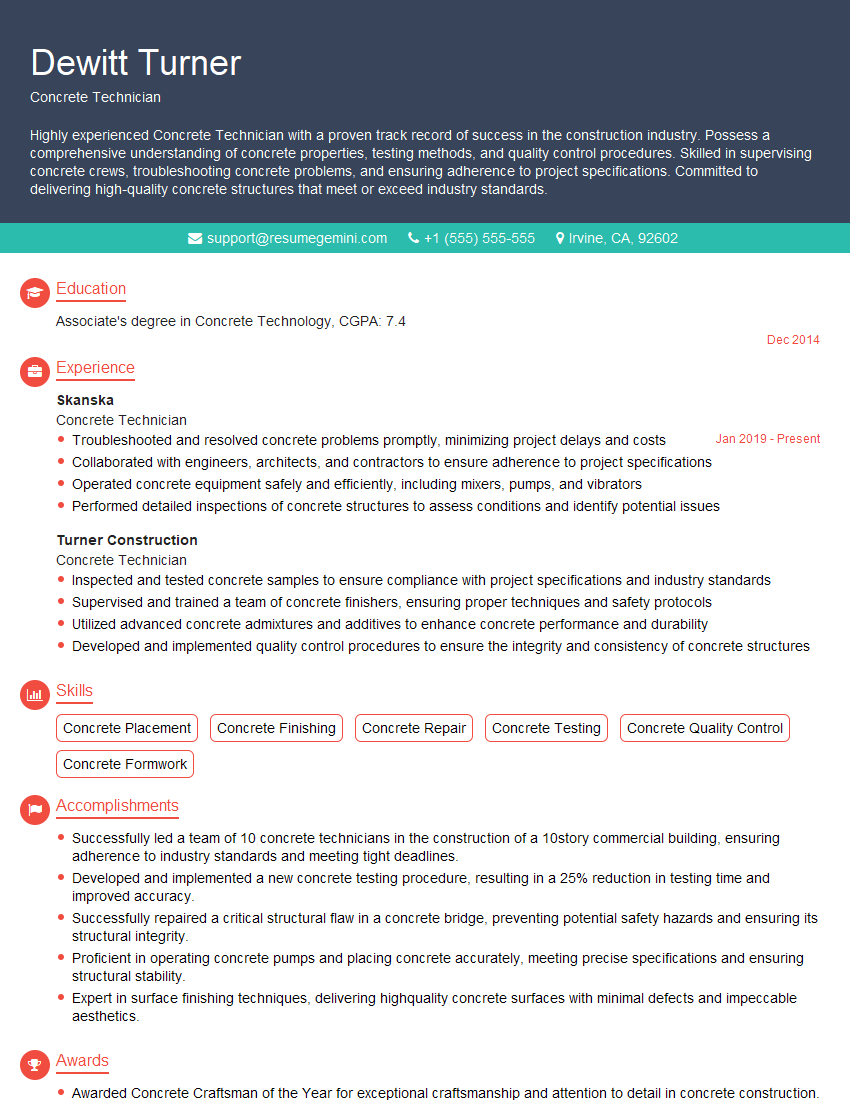
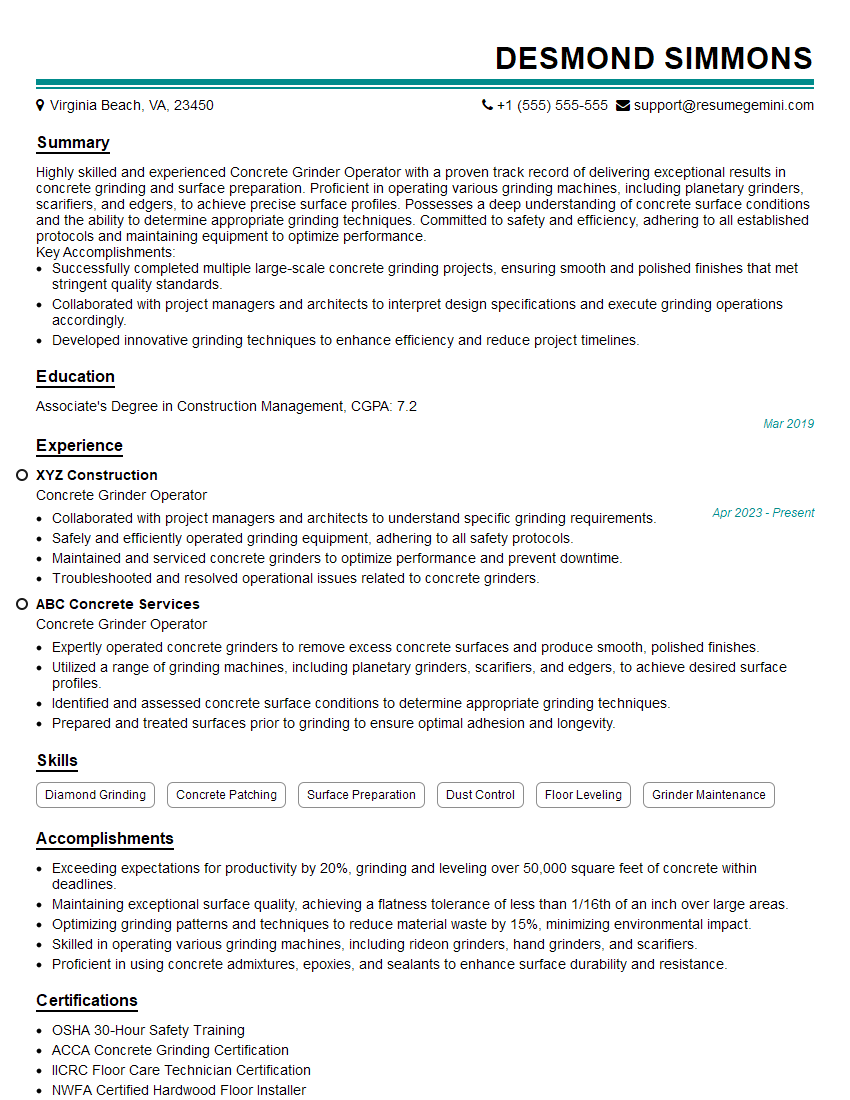
Mastering concrete surface cleaning opens doors to a rewarding career with opportunities for advancement and specialization. A strong resume is crucial for showcasing your skills and experience to potential employers. Crafting an ATS-friendly resume significantly improves your chances of getting your application noticed. ResumeGemini is a trusted resource for building professional, effective resumes that stand out. We provide examples of resumes tailored to the Concrete Surface Cleaning industry to help you present yourself in the best possible light.
Explore more articles
Users Rating of Our Blogs
Share Your Experience
We value your feedback! Please rate our content and share your thoughts (optional).
What Readers Say About Our Blog
Very informative content, great job.
good