The right preparation can turn an interview into an opportunity to showcase your expertise. This guide to Conditioning and Restoration interview questions is your ultimate resource, providing key insights and tips to help you ace your responses and stand out as a top candidate.
Questions Asked in Conditioning and Restoration Interview
Q 1. Explain the difference between preventative conditioning and restorative conditioning.
Preventative conditioning focuses on proactive measures to protect an item from future damage, while restorative conditioning addresses existing damage to bring an item back to its original state or a usable condition. Think of it like this: preventative conditioning is like regular car maintenance – oil changes, tire rotations – to prevent major problems. Restorative conditioning is like fixing a dented fender after an accident.
- Preventative Conditioning: This involves techniques like regular cleaning, proper storage (climate control, UV protection), and the application of protective coatings to prevent deterioration. For example, regularly waxing a wooden floor prevents moisture damage and maintains its luster. Another example is using archival-quality materials and acid-free boxes to store valuable documents.
- Restorative Conditioning: This encompasses methods to repair damage such as cleaning stains, repairing tears, stabilizing weakened materials, and consolidating fragile objects. For instance, restoring a water-damaged painting involves carefully cleaning the canvas, removing mold, and consolidating the paint layers to prevent further deterioration.
Q 2. Describe your experience with various conditioning agents and their applications.
My experience spans a wide range of conditioning agents, tailored to specific materials and damage types. For example:
- Leather: I’ve used leather conditioners containing natural oils and waxes to restore suppleness and prevent cracking. The specific blend depends on the leather type (e.g., suede requires a different approach than full-grain leather).
- Wood: I’ve worked extensively with wood consolidants to stabilize weakened structures, and various wood polishes and finishes to protect against moisture and UV damage. The choice depends on the wood type and the desired finish.
- Textiles: For textiles, I’ve utilized specialized cleaning solutions and stain removers, depending on the fabric type and the nature of the stain. I’ve also used pH-neutral solutions to prevent further damage to delicate fibers.
- Paper and Documents: Here, I employ techniques involving deacidification to neutralize acidity that causes degradation, and careful cleaning to remove surface dirt and mold.
The selection of a conditioning agent is critical; incorrect application can cause more harm than good. It’s essential to thoroughly research the material’s composition and test any agent on an inconspicuous area before widespread application.
Q 3. How do you assess the condition of a damaged item before beginning restoration?
Assessing the condition of a damaged item is the cornerstone of effective restoration. It involves a methodical approach combining visual inspection with more detailed testing where necessary. My process includes:
- Visual Inspection: A careful examination to identify the type, extent, and location of damage. This helps determine the best course of action.
- Material Identification: Determining the composition of the material is crucial to select appropriate cleaning and restoration techniques. I use various tools, including microscopy, to accurately identify materials.
- Testing for Moisture Content: Measuring the moisture content, particularly in water-damaged items, is essential to prevent further damage during the restoration process. I utilize moisture meters to do this precisely.
- Documentation: Thorough photographic documentation (before, during, and after) is crucial for tracking progress and identifying potential issues. I also maintain detailed written records.
For example, before restoring a water-damaged book, I’d assess the extent of water damage, determine the paper’s type and condition, and measure its moisture content to guide my drying and cleaning methods.
Q 4. What are the key factors to consider when selecting appropriate restoration techniques?
Selecting appropriate restoration techniques requires careful consideration of several key factors:
- Type and Extent of Damage: Different techniques are suitable for different types of damage (water, fire, mold, etc.). The extent of damage dictates the complexity of the restoration process.
- Material Composition: Restoration methods vary drastically based on the material’s properties. What works for leather won’t necessarily work for paper or textiles.
- Historical Significance and Value: The historical significance and value of the item impact the choice of techniques. More aggressive methods may be acceptable for less valuable items but are generally avoided for significant artifacts.
- Ethical Considerations: Ethical considerations always guide my approach. Reversibility is key – restoration should be possible to undo, if necessary, without further damaging the item. Minimal intervention is preferred, only doing what’s necessary to stabilize and preserve.
For instance, cleaning a delicate antique painting requires a far gentler approach than cleaning a mass-produced piece of furniture.
Q 5. Explain your process for documenting the restoration process, including photography and record-keeping.
Documentation is integral to every restoration project, ensuring accountability and providing a record of the process. This is particularly crucial for insurance purposes and for future reference.
- Photography: I use high-resolution digital photography to capture detailed images at every stage: before, during, and after treatment. This includes close-up shots of the damage and the application of treatments.
- Detailed Written Records: I maintain a comprehensive written record documenting all aspects of the process, including material identification, treatments used, observations, and any challenges encountered. This information is maintained in a secure, archival-quality format.
- Material Samples: For complex projects, I might retain small samples of the materials used and any removed debris for future analysis.
This meticulous record-keeping enables me to track the effectiveness of my techniques, identify patterns, and refine my approach. It’s also invaluable for recreating the process if required.
Q 6. Describe your experience with different types of damage (water, fire, mold, etc.) and their restoration methods.
My experience encompasses a wide variety of damage types and restoration methods:
- Water Damage: This often involves careful drying to prevent mold growth, followed by cleaning and possible consolidation of weakened materials. The drying process can involve controlled environmental conditions to minimize further damage.
- Fire Damage: Fire damage restoration is complex, often involving soot removal, smoke odor remediation, and structural repairs. It requires specialized equipment and techniques to address the unique challenges of fire damage.
- Mold Damage: Mold remediation requires careful removal of the mold, cleaning and disinfection of affected areas, and often the use of specialized antimicrobial agents. Safety precautions are paramount due to the potential health risks.
- Insect Damage: This involves identifying the insect species, treating the infestation, and repairing the damage caused by the insects. Preventive measures are crucial in preventing future infestations.
The specific approach depends on the nature and extent of the damage and always prioritizes safety and the preservation of the item’s integrity.
Q 7. What safety precautions do you take when handling hazardous materials during restoration?
Safety is paramount when handling hazardous materials during restoration. My protocols include:
- Personal Protective Equipment (PPE): This includes respirators, gloves, eye protection, and protective clothing, depending on the specific hazard. I always select PPE appropriate for the material being handled.
- Proper Ventilation: I ensure adequate ventilation to minimize exposure to harmful fumes and vapors. This might involve using specialized air filtration systems or working outdoors.
- Hazardous Waste Disposal: I follow all regulations for the safe disposal of hazardous materials, ensuring environmentally responsible practices. This often involves specialized waste disposal companies.
- Emergency Procedures: I’m trained in emergency response procedures for handling spills or accidents involving hazardous materials, ensuring I can react safely and effectively in case of an unforeseen event.
- Material Safety Data Sheets (MSDS): I always consult the MSDS for any hazardous material before handling it, to understand potential risks and necessary precautions.
Adherence to strict safety protocols is not just about personal safety; it’s essential to protect the item being restored and the surrounding environment.
Q 8. How do you handle unexpected challenges or complications during a restoration project?
Unexpected challenges are inevitable in restoration. My approach involves a proactive, multi-step process. First, I meticulously document the initial condition of the artifact, including any existing damage. This baseline provides a crucial reference point for assessing progress and troubleshooting. When facing an unforeseen complication – perhaps discovering hidden decay during a seemingly straightforward cleaning – I immediately pause the current task. I then carefully analyze the problem, consulting relevant literature, contacting colleagues for expert opinions, or conducting targeted research if necessary. This might involve material analysis using techniques like microscopy or X-ray fluorescence to determine the composition and the best course of action. Once I have a clear plan, I document it thoroughly, adjusting my project timeline and budget accordingly. For example, during the restoration of a 19th-century painting, I encountered unexpected flaking of the paint layer caused by previous, poorly executed repairs. Instead of proceeding, I consulted a conservator specializing in paintings, who recommended a specific type of consolidant. Thorough documentation of this process, including the type and amount of consolidant used, ensures transparency and traceability.
Q 9. Explain your understanding of different material types and their specific restoration needs.
Understanding material properties is paramount. Different materials react differently to cleaning methods and environmental conditions. For example, wood requires different treatment than textiles. Wood, especially antique furniture, might suffer from wood rot or insect infestation, requiring treatment with consolidants and biocides. Textiles, on the other hand, are vulnerable to fading, weakening of fibers, and pest damage. They may need careful cleaning with appropriate solvents and support structures to prevent further damage during the process. Metals, such as bronze or iron, are prone to corrosion and require specific cleaning and stabilization techniques to prevent further deterioration. Stone, depending on its type (marble, limestone, etc.), might be susceptible to water damage, efflorescence (salt deposits), or biogrowth, needing specialized cleaning and consolidation methods. Each material demands a tailored approach, relying on my knowledge of their chemical and physical properties, their vulnerabilities, and the appropriate conservation techniques. I always prioritize minimally invasive methods, starting with the gentlest techniques and escalating only if necessary. This approach allows me to preserve the object’s integrity and historical value.
Q 10. What are your preferred methods for cleaning and stabilizing artifacts?
Cleaning and stabilization are critical first steps. My preferred methods are always the least invasive. For cleaning, I often start with dry methods like gentle brushing with soft-bristled brushes or using low-pressure air to remove loose dust and debris. For delicate artifacts, I might utilize specialized vacuum systems with HEPA filters to prevent further damage. Wet cleaning involves using deionized water or specialized solvents, carefully controlled to avoid damage or discoloration. The choice of solvent depends entirely on the material’s composition and its sensitivity to different chemicals. For stabilization, I use appropriate consolidants to strengthen weakened materials. These consolidants are carefully chosen based on the material type, aiming to improve the item’s structural integrity without obscuring any original features. For example, I might use a Paraloid B-72 solution for consolidating flaking paint on canvas paintings. This whole process needs to be meticulously documented and monitored to ensure the efficacy of the treatment and prevent unforeseen reactions.
Q 11. Describe your experience with the use of specialized tools and equipment in restoration.
Specialized tools and equipment are essential. My expertise includes proficiency in using various tools, from simple scalpels and brushes to sophisticated instruments like microscopes for material analysis, X-ray fluorescence (XRF) for compositional analysis, and environmental control chambers for carefully regulated cleaning and storage. I’m experienced with using specialized vacuum systems for delicate cleaning, ultrasonic baths for cleaning small, intricate objects, and various types of adhesives and consolidants for repair work. For example, during the restoration of a fragmented ceramic vase, I used a microscope to analyze the fracture surfaces and a specialized epoxy resin to carefully rejoin the fragments, ensuring minimal visual impact and maintaining the structural integrity of the artifact. The appropriate selection and application of these tools are critical in achieving successful and ethical restoration.
Q 12. How do you ensure the structural integrity of an item during restoration?
Structural integrity is paramount. I use a range of techniques depending on the artifact and the type of damage. For fragile objects, I may employ supportive structures, such as custom-made cradles or mounts, to provide stability during treatment. For objects with structural weaknesses, I use consolidants and fillers to strengthen the damaged areas. This might involve injecting consolidants into cracks or applying fillers to reconstruct missing sections. The key is to use materials that are compatible with the original artifact and reversible, so that future conservators can undo my work if necessary. Each step must be thoroughly documented, using photography and detailed notes to track the progress and the materials used. Consider, for instance, a damaged wooden sculpture: I would assess the extent of the damage, perhaps using X-rays to examine internal deterioration, before carefully consolidating cracked areas using a compatible resin. Then, I might create a custom support structure to prevent further damage and ensure stability during handling and display.
Q 13. What is your approach to ethical considerations in restoration?
Ethical considerations guide every decision. My approach prioritizes the preservation of the artifact’s historical integrity and authenticity. I avoid techniques that irrevocably alter the object or obscure its history. This means minimizing invasive interventions, using reversible materials whenever possible, and maintaining a transparent record of all treatments. For example, I wouldn’t over-clean an object to the point of removing original patination or paint layers, and I would always prioritize the original material over replacement. Informed consent is crucial, particularly when working with objects of significant cultural or historical importance. This involves collaborating with owners, curators, and other stakeholders to establish shared goals and ensure that the restoration aligns with ethical guidelines and best practices within the field.
Q 14. How do you prioritize tasks and manage your time effectively during a restoration project?
Effective time management and prioritization are key. I usually begin by developing a detailed work plan, breaking down the project into manageable tasks with realistic timelines. This plan considers the complexity of each step, potential challenges, and the availability of resources. I utilize project management tools to track progress, manage deadlines, and allocate resources efficiently. Prioritization involves focusing on tasks that are crucial for the artifact’s stabilization and preservation first, addressing immediate threats like pest infestations or structural instability before moving to more cosmetic aspects. Regular review of the plan, coupled with open communication with stakeholders, allows for adjustments to ensure the project stays on track and within budget. This structured approach, combined with effective delegation when necessary, helps ensure efficient completion of the restoration project while maintaining a high standard of quality.
Q 15. Explain your understanding of color matching and replication in restoration.
Color matching and replication in restoration is crucial for maintaining the aesthetic integrity of an object. It’s more than just finding a visually similar shade; it involves understanding the historical context, the original materials used, and the degradation processes that have affected the object’s color over time.
My approach begins with a thorough analysis of the existing color, considering factors like light exposure, fading, and the presence of any overpainting. I use sophisticated tools like spectrophotometers to accurately measure the color and obtain numerical data (e.g., L*a*b* values). This data provides an objective baseline for color matching.
Then, I investigate the original palette, often through historical records, paint analysis (if possible), and comparison with similar objects from the same period. For example, if restoring a Victorian-era chair, I’d consult period paint swatches, analyze paint samples from less visible areas, and compare the object to similar pieces in museums or archives. This research helps me understand the range of acceptable variations and avoid anachronisms.
Finally, I carefully select pigments and binders that are compatible with the original materials and that will age gracefully. I usually make multiple test swatches to evaluate color stability and ensure accurate replication under various lighting conditions. The process is iterative, refining the color match until it harmonizes visually and chemically with the object’s existing surface. It’s an art as much as a science, requiring a keen eye for detail and a deep understanding of materials science and historical context.
Career Expert Tips:
- Ace those interviews! Prepare effectively by reviewing the Top 50 Most Common Interview Questions on ResumeGemini.
- Navigate your job search with confidence! Explore a wide range of Career Tips on ResumeGemini. Learn about common challenges and recommendations to overcome them.
- Craft the perfect resume! Master the Art of Resume Writing with ResumeGemini’s guide. Showcase your unique qualifications and achievements effectively.
- Don’t miss out on holiday savings! Build your dream resume with ResumeGemini’s ATS optimized templates.
Q 16. How do you determine the authenticity of materials and techniques used in restoration?
Determining the authenticity of materials and techniques in restoration relies on a multi-faceted approach that combines scientific analysis with historical research. It’s like detective work, piecing together clues to reveal the object’s true history.
First, I begin with visual examination and documentation, noting any unusual characteristics or inconsistencies. I then utilize non-destructive testing methods, such as microscopy, X-ray fluorescence (XRF), and infrared reflectography (IRR). These techniques allow me to analyze the composition of materials without causing damage, identifying the pigments, binders, and other components used.
For example, XRF can reveal the elemental composition of a pigment, helping to differentiate between genuine historical pigments and modern substitutes. IRR can reveal underlying layers of paint, revealing previous restorations or alterations. Microscopy allows for close-up examination of the brushstrokes, providing insight into the artist’s techniques.
This scientific data is then compared with historical records, such as archival photographs, artist’s letters, and material-use analysis of similar artworks from the same period. The goal isn’t just to identify the materials but to understand how they were used, the techniques employed, and any signature marks left by the original makers. Combining scientific analysis with historical research builds a strong case for the authenticity of materials and techniques used, allowing informed decisions during the restoration process.
Q 17. Describe your experience with working in a team environment during restoration projects.
Restoration projects inherently require collaboration. I thrive in team environments, viewing each team member’s skills and expertise as crucial components in achieving a successful outcome. My experience involves coordinating with conservators, art historians, scientists, and project managers.
In one project, restoring a damaged fresco, I collaborated with a conservator specializing in wall painting stabilization. Their expertise in consolidating the weakened plaster was essential before I could begin the painstaking work of color matching and inpainting. Effective communication was key; daily meetings allowed for quick responses to unforeseen issues, shared decision-making, and efficient task allocation.
My approach emphasizes clear communication, mutual respect, and a shared understanding of project goals. I believe in open dialogue, constructive feedback, and a flexible team dynamic that adapts to changing circumstances. The goal is a collaborative effort where everyone’s expertise is valued, leading to a superior outcome.
Q 18. How do you communicate technical information clearly to both technical and non-technical audiences?
Communicating technical information clearly to diverse audiences is crucial in the restoration field. My strategy is to tailor my communication style to the audience’s level of understanding, using clear, concise language, avoiding jargon whenever possible.
For technical audiences, I’ll use precise terminology and detailed descriptions of processes and materials. For example, when discussing pigment analysis with a fellow conservator, I’ll utilize specific chemical names and analytical techniques. However, when explaining the restoration process to a client, I’ll use analogies and less technical terms, focusing on the overall goals and the impact of the work.
I utilize visual aids extensively – photographs, diagrams, and even short videos – to make complex information more accessible. I also employ storytelling to engage my audience, providing context and explaining the significance of the work. For instance, instead of saying “We used XRF analysis,” I might say, “We used a special type of scanner to examine the paint without damaging it, and the results showed…” This approach makes the technical aspects more relatable and easier to understand, regardless of the audience’s background.
Q 19. How do you handle client expectations and potential conflicts during a restoration project?
Managing client expectations and potential conflicts requires proactive communication, transparency, and a collaborative approach. Early and consistent communication is key to setting realistic expectations from the outset.
I start by providing a thorough assessment of the object’s condition, outlining the potential challenges and the proposed treatment plan. I present this information clearly, answering all questions openly and honestly, and making sure to address any concerns or misconceptions. This helps set realistic expectations about timelines, costs, and the ultimate outcome.
If conflicts arise, which is sometimes unavoidable in large projects, I engage in active listening, seeking to understand the client’s perspective. I strive to find solutions that meet both technical requirements and the client’s priorities. Transparency remains crucial. Open communication, coupled with documentation of decision-making processes, helps to resolve conflicts fairly and efficiently. In instances where the restoration goals are incompatible, it’s sometimes necessary to compromise or even reassess the project’s feasibility.
Q 20. What are your strategies for budgeting and cost control in restoration projects?
Budgeting and cost control in restoration projects require meticulous planning and detailed tracking. My approach begins with a thorough assessment of the object’s condition, which allows me to create a detailed scope of work. This scope identifies all necessary tasks, materials, and labor, forming the basis for a realistic budget.
I break down the project into manageable phases, each with its own cost estimate. This allows for better monitoring of progress and the identification of potential cost overruns early on. I use project management software to track expenses, labor hours, and material usage, providing transparent financial reporting to the client.
Contingency planning is crucial. Unexpected issues are common in restoration projects, so I allocate a percentage of the budget to cover unforeseen circumstances. This could range from discovering hidden damage to needing specialized materials or equipment. Careful procurement of materials and efficient scheduling of labor are also key factors in ensuring the project stays within budget.
Q 21. How do you ensure the long-term preservation of a restored item?
Ensuring the long-term preservation of a restored item involves not only skillful restoration but also careful post-treatment care and environmental controls. It’s about preventing future damage and extending the life of the object.
Post-treatment includes stabilizing the object’s condition and protecting it from further deterioration. This may include applying protective coatings, consolidating fragile materials, and carefully cleaning the surface. I will also create detailed documentation of the restoration process, including materials used, techniques employed, and recommendations for long-term care.
Environmental control plays a vital role. This involves controlling temperature, relative humidity, and light exposure to minimize degradation. For example, I would recommend storing the object in a climate-controlled environment, away from direct sunlight and sources of pollution. Regular monitoring of the object’s condition and appropriate environmental controls are essential for long-term preservation.
Furthermore, providing clear guidelines for future handling and cleaning to the owner is crucial. This ensures the object will continue to be treated carefully, maximizing its chances of surviving for future generations.
Q 22. Describe your experience with various types of adhesives and their applications in restoration.
My experience with adhesives in restoration is extensive, encompassing a wide range of materials tailored to specific substrates and damage types. The choice of adhesive is critical; a poorly chosen adhesive can cause more harm than good. For instance, animal glue is a traditional choice for many wooden artifacts, offering reversibility and good adhesion to porous materials. However, its sensitivity to moisture requires careful environmental control. For more robust repairs, I often use acrylic adhesives, which offer excellent strength and durability, particularly for plastics and some metals. Polyvinyl acetate (PVA) is another reliable choice, ideal for paper and textiles due to its flexibility and relative ease of removal. In contrast, epoxy resins are employed for stronger bonds where gaps are large or the materials are non-porous; however, their irreversibility demands careful application. Each project necessitates a thorough assessment to determine the most appropriate adhesive, considering factors like the material’s age, composition, and the nature of the damage.
For example, I recently repaired a cracked ceramic vase using a low-viscosity cyanoacrylate adhesive, carefully injected into the fissure. Its quick setting time and high strength were crucial in this instance. However, for a delicate antique book with a torn page, I opted for a wheat starch paste, a reversible adhesive well-suited to the paper’s delicate nature. This careful selection process is vital to ensure both the effective repair and the preservation of the artifact’s integrity.
Q 23. What are your methods for repairing cracks, tears, and other structural damage?
Repairing cracks, tears, and structural damage requires a multifaceted approach, starting with a thorough assessment of the damage and the object’s material. My methods begin with careful cleaning of the affected area to remove loose debris. For cracks in wooden objects, I may use consolidants to strengthen weakened wood fibers before employing wood fillers matched to the original color and grain. These fillers are carefully applied and shaped, ensuring a seamless repair. For tears in textiles, I might use a Japanese tissue repair technique, carefully mending the tear using a fine needle and thread before consolidating with a suitable adhesive.
Larger structural damage, such as a broken leg on a chair, often involves more complex methods. This might include creating a supporting structure using dowels or wooden splines, reinforced with appropriate adhesives. Throughout the process, careful attention is paid to minimize invasiveness, ensuring that any intervention is reversible and respects the artifact’s history. Documentation of each step, including photography and detailed notes, is crucial for future reference and transparency.
Q 24. Explain your understanding of the principles of conservation ethics.
Conservation ethics are fundamental to my practice. It’s a guiding principle that emphasizes minimizing intervention, respecting the object’s integrity, and prioritizing its long-term preservation over immediate aesthetic appeal. It means that any intervention should be reversible, documented transparently, and informed by scientific understanding. The goal is not to create a perfect ‘new’ object, but rather to stabilize, consolidate, and preserve as much of the original material as possible.
For example, instead of aggressively cleaning an object, I might opt for a gentler approach, only removing surface dirt that poses a threat. Similarly, repairs should be as minimally invasive as possible. Instead of completely replacing a missing section, I might choose to fill it with a compatible material that clearly differentiates itself from the original. This ensures that future researchers will understand the history and nature of the object, allowing informed decisions about future treatments.
Q 25. Describe your experience with digital imaging techniques used in restoration documentation.
Digital imaging plays a vital role in restoration documentation. High-resolution photography, including macro photography and 3D scanning, is used to capture the object’s condition before, during, and after treatment. This detailed record allows me to track progress, identify subtle changes, and assess the effectiveness of the interventions. Software such as Photoshop and specialized image editing software are used to create detailed reports and enhance the visibility of certain features, like small cracks or textile fibers.
For instance, ultraviolet (UV) and infrared (IR) photography can reveal hidden details or damage not visible to the naked eye. This information is crucial in formulating appropriate treatment plans. The digital record ensures that future conservators have access to detailed information about the object’s history and treatment, leading to more informed decisions in the future. This comprehensive documentation helps maintain the object’s integrity and value in a transparent and accessible way.
Q 26. How do you assess the environmental conditions that could affect the preservation of a restored item?
Assessing environmental conditions is critical to prevent further damage to a restored item. This involves measuring temperature, relative humidity, light levels, and air quality. Fluctuations in temperature and humidity can cause expansion and contraction of materials, leading to cracking, warping, and other damage. Excessive light exposure can cause fading and deterioration of materials, especially pigments and dyes. Pollutants in the air can also contribute to deterioration. For example, sulfur dioxide can corrode metals, and particulate matter can accumulate on surfaces.
I use various instruments, such as hygrometers, thermometers, and light meters, to assess environmental conditions. I often recommend controlled environments, such as climate-controlled display cases or storage areas, to mitigate these risks. These environments are crucial for items that are particularly sensitive to environmental changes, like ancient manuscripts or delicate paintings.
Q 27. What are your methods for preventing further damage or deterioration during the restoration process?
Preventing further damage during restoration requires a meticulous and careful approach. This starts with proper handling and stabilization techniques. Before beginning any treatment, I carefully assess the object’s condition and identify any areas that require immediate stabilization. I might use supports, cradles, or other methods to prevent further damage during the process. I also avoid using harsh chemicals or techniques that might damage the artifact. Cleanliness is paramount; appropriate cleaning methods, using soft brushes and inert solvents, are vital to minimize contamination.
For instance, when working on a fragile painting, I would use a dust mask and gloves to protect both the artifact and myself from particulate matter and potentially harmful materials. Once the restoration is complete, I advise on proper handling, storage, and display techniques, ensuring that the item is protected from the damaging effects of light, temperature fluctuations, and environmental pollutants, further prolonging its lifespan.
Q 28. Explain your experience with using different types of coatings and finishes in restoration.
My experience with coatings and finishes in restoration is extensive, requiring careful selection based on the artifact and its material. Coatings can protect against environmental damage, enhance aesthetic appeal, and even consolidate fragile materials. However, the choice of coating must be carefully considered, ensuring reversibility and compatibility with the underlying material. Natural waxes are often used for their ability to provide a protective layer without altering the appearance significantly. However, they can be susceptible to abrasion. Acrylic resins offer a more durable alternative, offering UV protection and better resistance to environmental factors.
For example, I might use a microcrystalline wax on a wooden sculpture to protect it from moisture damage. However, for a more delicate piece, I might opt for a reversible acrylic coating. The goal is always to select a coating that provides the necessary protection without obscuring the object’s original characteristics or causing potential harm. The application method, even more than the material itself, requires attention to prevent irregularities and ensure uniform coverage.
Key Topics to Learn for Your Conditioning and Restoration Interview
- Material Science Fundamentals: Understanding the properties of various materials (wood, metal, fabric, etc.) and how they react to different cleaning and restoration methods is crucial. Consider the impact of moisture, temperature, and chemical exposure.
- Damage Assessment & Analysis: Learn to accurately identify and assess the type and extent of damage to materials. This includes recognizing signs of water damage, mold infestation, fire damage, and other common issues. Practical experience with diagnostic tools will be beneficial.
- Cleaning & Preservation Techniques: Mastering various cleaning methods (e.g., dry cleaning, wet cleaning, specialized chemical treatments) and preservation techniques (e.g., stabilization, consolidation) is essential. Familiarize yourself with the safety protocols associated with each method.
- Restoration Methods & Procedures: Develop a strong understanding of different restoration techniques for various materials. This includes repairing structural damage, replacing components, and refinishing surfaces. Be prepared to discuss specific case studies.
- Health & Safety Regulations: Demonstrate familiarity with relevant health and safety regulations, including handling hazardous materials, using personal protective equipment (PPE), and adhering to environmental regulations.
- Project Management & Documentation: Showcase your ability to manage restoration projects efficiently, including scheduling, budgeting, and communication with clients. Knowing how to document your work thoroughly is critical.
- Ethical Considerations: Understanding the ethical responsibilities of a conditioning and restoration professional is crucial. This includes honesty, transparency, and preserving the historical significance of items where applicable.
Next Steps
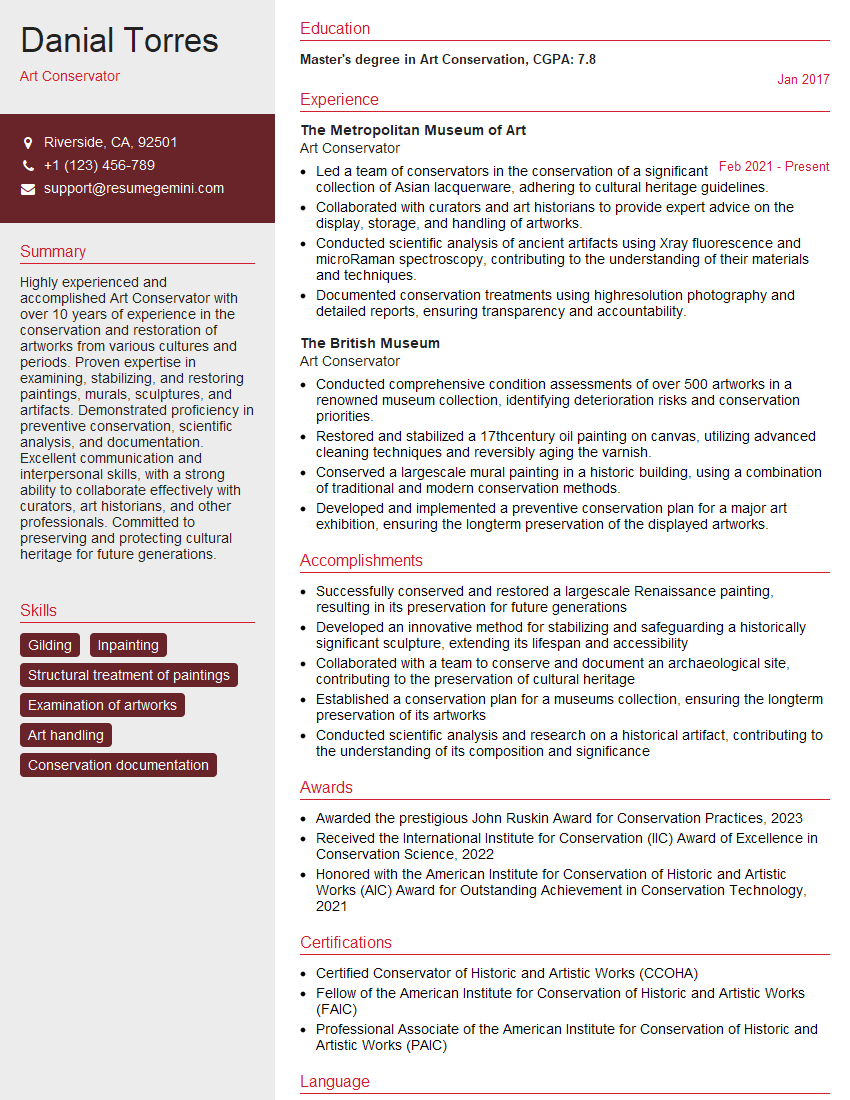
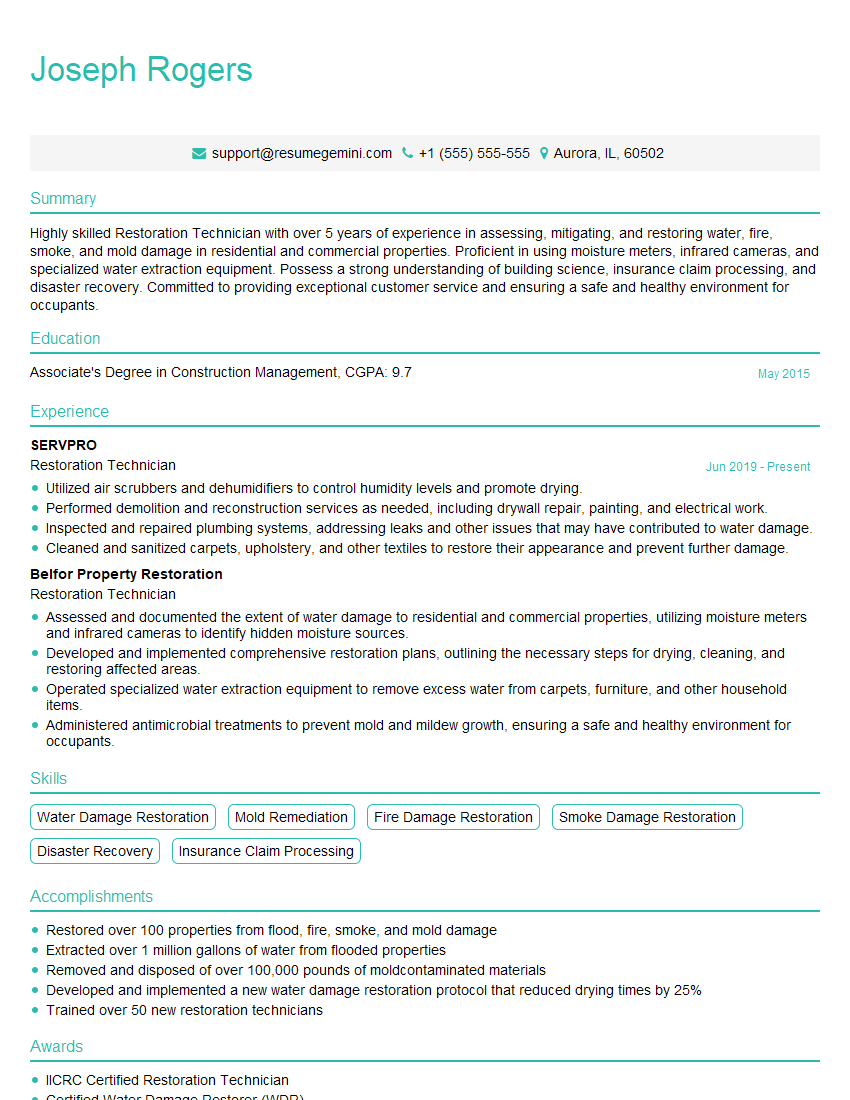
Mastering the principles of Conditioning and Restoration opens doors to exciting career opportunities and professional growth within the preservation and restoration industry. A strong understanding of these principles, coupled with practical experience, makes you a highly sought-after candidate. To maximize your chances, crafting a compelling and ATS-friendly resume is critical. ResumeGemini is a trusted resource for building professional resumes that highlight your skills and experience effectively. We offer examples of resumes tailored to the Conditioning and Restoration field to help you get started. Invest time in refining your resume; it’s your first impression on potential employers.
Explore more articles
Users Rating of Our Blogs
Share Your Experience
We value your feedback! Please rate our content and share your thoughts (optional).
What Readers Say About Our Blog
Very informative content, great job.
good