Interviews are more than just a Q&A session—they’re a chance to prove your worth. This blog dives into essential Conservation Forestry interview questions and expert tips to help you align your answers with what hiring managers are looking for. Start preparing to shine!
Questions Asked in Conservation Forestry Interview
Q 1. Explain the principles of sustainable forest management.
Sustainable forest management (SFM) is about balancing the economic, social, and ecological needs of forests. It ensures that forests are managed to meet the needs of present generations without compromising the ability of future generations to meet their own needs. Think of it like managing a bank account – you can withdraw some money (resources from the forest), but you must ensure enough remains for future withdrawals, and that the account itself (the forest ecosystem) remains healthy and productive.
- Maintaining Biodiversity: SFM prioritizes preserving the variety of plant and animal species within the forest ecosystem. This includes protecting endangered species and their habitats.
- Protecting Soil and Water Resources: Sustainable practices minimize soil erosion and water pollution, ensuring the long-term health of the forest and surrounding areas.
- Ensuring Economic Viability: SFM supports the livelihoods of people who depend on forests, such as timber harvesters, forest product gatherers, and ecotourism operators, while ensuring the long-term economic value of the forest.
- Climate Change Mitigation: Forests play a vital role in carbon sequestration, and SFM practices aim to enhance their ability to absorb and store atmospheric carbon dioxide.
- Community Involvement: Successful SFM involves the active participation of local communities in decision-making processes. It considers their traditional knowledge and rights.
For example, a sustainably managed forest might involve selective logging, where only mature trees are harvested, allowing younger trees to grow and the forest to regenerate naturally. This contrasts with clear-cutting, which removes all trees in an area, often leading to significant environmental damage.
Q 2. Describe different forest harvesting methods and their environmental impacts.
Forest harvesting methods vary greatly, each with its own environmental impacts. Choosing the right method depends heavily on the forest type, species composition, and management goals.
- Clear-cutting: This involves removing all trees from a designated area. While efficient and cost-effective, it can lead to soil erosion, loss of biodiversity, and altered water cycles. It’s often criticized for its visual impact.
- Selective logging: This method targets only mature or specific trees, leaving the rest intact. It minimizes disruption to the forest ecosystem but can be more labor-intensive and expensive.
- Shelterwood logging: This involves removing trees in stages, leaving some trees to provide shade and protection for regeneration. It mimics natural forest disturbances and helps maintain biodiversity.
- Seed-tree logging: A small number of seed trees are left standing to regenerate the forest. This is often used in conjunction with other methods.
The environmental impacts are significant. Clear-cutting, for instance, can lead to increased runoff, altering stream flow and potentially causing water pollution. Selective logging minimizes these effects, but improper execution can still result in damage to remaining trees and soil compaction from heavy machinery. Choosing the appropriate method requires careful planning and consideration of ecological factors.
Q 3. What are the key indicators of forest health?
Forest health is a complex concept encompassing various factors. Key indicators provide a snapshot of the forest’s overall well-being.
- Tree Species Diversity: A healthy forest generally displays a wide range of tree species, indicating a resilient ecosystem capable of withstanding environmental stresses.
- Tree Growth and Vitality: Vigorous tree growth, indicated by robust crown development and lack of disease symptoms, suggests a healthy forest.
- Understory Vegetation: A rich and diverse understory indicates a healthy soil environment and suitable habitat for various organisms.
- Soil Health: Healthy soil, characterized by good structure, nutrient content, and microbial activity, supports tree growth and overall ecosystem productivity.
- Water Quality: Clean and healthy streams and rivers flowing through the forest suggest proper water management and minimal pollution.
- Presence of Indicator Species: Certain plant and animal species are particularly sensitive to environmental changes and their presence or absence can serve as an indicator of forest health.
- Pest and Disease Levels: High levels of pest and disease outbreaks can indicate stress in the forest ecosystem.
For example, a decline in the population of a particular indicator bird species might suggest a problem with habitat loss or food availability within the forest.
Q 4. How do you assess forest biodiversity?
Assessing forest biodiversity requires a multi-faceted approach, going beyond simply counting species. It involves considering the richness, evenness, and composition of species at various levels.
- Species Inventories: Conducting thorough surveys to identify and count all plant and animal species present in the forest.
- Species Composition: Analyzing the relative abundance of each species to understand the overall structure of the community.
- Genetic Diversity: Assessing the genetic variation within species, as this contributes to their resilience to environmental change.
- Habitat Diversity: Evaluating the variety of habitats within the forest, as different habitats support different species.
- Functional Diversity: Analyzing how species interact and perform different ecological functions, such as pollination, nutrient cycling, and decomposition.
Techniques might involve using camera traps to monitor animal populations, conducting vegetation surveys to assess plant diversity, or employing molecular techniques to analyze genetic diversity. The data is then analyzed using statistical methods to quantify biodiversity, often employing indices like the Shannon Diversity Index.
Q 5. Explain the role of GIS in conservation forestry.
Geographic Information Systems (GIS) are invaluable tools in conservation forestry. They allow for the spatial analysis and visualization of forest data, enabling better decision-making.
- Mapping and Monitoring: GIS allows for the creation of detailed maps of forest resources, including tree cover, species distribution, and habitat types. This information is vital for monitoring forest change over time.
- Spatial Analysis: GIS facilitates spatial analysis to identify patterns and relationships between various forest attributes, such as the correlation between elevation and tree species distribution.
- Habitat Modeling: GIS can be used to model suitable habitats for specific species, helping to identify areas requiring protection or restoration.
- Planning and Management: GIS supports forest planning and management by visualizing different management scenarios and assessing their potential impacts on forest resources.
- Communication and Outreach: GIS-based maps and visualizations are effective communication tools to engage stakeholders and convey complex information about forest conservation.
For example, GIS can be used to identify areas most susceptible to deforestation or wildfire, allowing for targeted intervention strategies.
Q 6. Discuss the importance of forest certification schemes (e.g., FSC).
Forest certification schemes, like the Forest Stewardship Council (FSC), play a crucial role in promoting sustainable forest management. They provide independent verification that forests are managed according to environmentally sound, socially beneficial, and economically viable principles.
- Increased Market Demand: FSC certification helps to increase market demand for sustainably produced timber and forest products, incentivizing sustainable practices.
- Improved Forest Management: Certification requires adherence to strict standards, leading to improved forest management practices and better protection of forest resources.
- Enhanced Transparency and Traceability: Certification ensures transparency and traceability in the supply chain, allowing consumers to make informed choices about the products they buy.
- Reduced Deforestation: By promoting sustainable forestry, certification contributes to the reduction of deforestation and habitat loss.
- Social Benefits: Many certification schemes also consider social aspects, ensuring the rights of local communities and workers are respected.
Consumers can look for the FSC logo on wood and paper products to ensure they are buying products from sustainably managed forests. This market demand directly influences forest management practices globally.
Q 7. How do you manage forest pests and diseases sustainably?
Sustainable management of forest pests and diseases requires an integrated approach that minimizes the use of harmful chemicals and focuses on preventing outbreaks.
- Monitoring and Early Detection: Regular monitoring of forests for signs of pests and diseases is crucial for early detection and rapid response.
- Integrated Pest Management (IPM): IPM employs a combination of strategies, including biological control (using natural predators), cultural control (modifying forest management practices to make the forest less susceptible to pests), and chemical control (using pesticides only as a last resort).
- Promoting Forest Resilience: Healthy and diverse forests are more resistant to pest and disease outbreaks. Promoting forest resilience through sustainable management practices is crucial.
- Quarantine and Biosecurity Measures: Preventing the introduction and spread of invasive pests and diseases through strict quarantine and biosecurity measures is vital.
- Public Education and Awareness: Educating the public about the importance of preventing the spread of pests and diseases can significantly contribute to successful management.
For example, introducing natural predators like ladybugs to control aphid populations is a biological control method. Similarly, using resistant tree species or diversifying tree species composition makes the forest less susceptible to widespread damage.
Q 8. Describe your experience with reforestation or afforestation projects.
My experience with reforestation and afforestation projects spans over a decade, encompassing diverse geographical locations and ecological settings. I’ve been involved in projects ranging from large-scale government initiatives to smaller community-based efforts. For instance, in the Amazon rainforest, I participated in a project focused on restoring degraded pastureland using native tree species. This involved meticulous site preparation, careful species selection based on soil type and climate, and ongoing monitoring to assess survival rates and growth. Another project in the Himalayas focused on afforestation using fast-growing species to prevent soil erosion and improve local livelihoods. This involved significant community engagement, training local people in sustainable forestry practices, and establishing community-managed forest areas. These experiences have taught me the importance of considering ecological factors, engaging local communities, and employing adaptive management strategies for successful outcomes.
- Site assessment and preparation: This involves careful analysis of soil conditions, water availability, and other environmental factors to select appropriate tree species and planting methods.
- Species selection: Choosing the right tree species is critical for success. This depends on the site’s environmental conditions, intended purpose (e.g., timber production, carbon sequestration, biodiversity enhancement), and local ecological knowledge.
- Planting techniques: Techniques vary depending on the scale and location of the project, from manual planting to the use of drones for larger areas.
- Monitoring and evaluation: Regular monitoring of survival rates, growth, and overall health of planted trees is essential to adapt management practices as needed.
Q 9. What are the challenges of balancing timber production with conservation goals?
Balancing timber production with conservation goals is a significant challenge, demanding a delicate dance between economic needs and ecological protection. The key lies in adopting sustainable forestry practices that mimic natural forest dynamics. Imagine a forest as a complex ecosystem; you can’t just harvest trees without considering the impact on soil, water, biodiversity, and the overall health of the forest.
Traditional clear-cutting, for example, severely disrupts the ecosystem, resulting in soil erosion, habitat loss, and reduced carbon sequestration. Sustainable alternatives include selective logging, where only mature trees are harvested, leaving the forest structure largely intact. Another approach is reduced-impact logging, which minimizes damage to the remaining trees and understory vegetation. Furthermore, incorporating long rotation cycles allows forests to fully mature, resulting in higher-quality timber and enhanced carbon storage. Certification schemes, like the Forest Stewardship Council (FSC), play a vital role in ensuring that timber production adheres to strict environmental and social standards.
- Sustainable logging techniques: Selective logging, reduced-impact logging.
- Long rotation cycles: Allowing forests to reach maturity before harvesting.
- Certification schemes: Adhering to standards like FSC.
- Reforestation and afforestation: Replanting harvested areas and expanding forest cover.
Q 10. Explain the concept of carbon sequestration in forests.
Carbon sequestration in forests refers to the process by which trees and other vegetation absorb carbon dioxide (CO2) from the atmosphere and store it in their biomass (leaves, branches, stems, roots) and in the soil. Think of trees as natural carbon sinks, continuously drawing down CO2, a major greenhouse gas contributing to climate change. Through photosynthesis, trees convert CO2 and water into sugars, using sunlight as energy. This carbon is then incorporated into the tree’s structure. A significant portion of carbon is also stored in the soil in the form of organic matter, primarily through the decomposition of fallen leaves, branches, and other plant material. The amount of carbon sequestered depends on various factors, including forest type, tree species, age, and forest management practices.
For example, old-growth forests generally store much more carbon than young, actively managed forests. Protecting and restoring forests is, therefore, crucial for mitigating climate change.
Q 11. How do you monitor and evaluate the effectiveness of conservation interventions?
Monitoring and evaluating conservation interventions is essential to ensure their effectiveness. This involves a multi-faceted approach combining field data collection with remote sensing technologies and statistical analysis. We use a variety of methods, including:
- Ground-truthing: Directly assessing forest health, tree growth, species composition, and other parameters using field surveys and plots.
- Remote sensing: Utilizing satellite imagery and aerial photography to monitor deforestation, forest degradation, and changes in forest cover over time.
Example: Using NDVI (Normalized Difference Vegetation Index) to assess vegetation health. - Biodiversity monitoring: Assessing the diversity of plant and animal species to evaluate the impact of interventions on biodiversity.
- Carbon stock assessment: Measuring the amount of carbon stored in trees and soil to determine the effectiveness of carbon sequestration efforts.
- Socio-economic surveys: Evaluating the impact of interventions on local communities, including livelihoods and well-being.
The collected data are then analyzed using statistical methods to determine whether the interventions are achieving their intended goals. This information is crucial for adaptive management, allowing us to adjust strategies based on what is actually happening on the ground.
Q 12. Describe your experience with community engagement in forest management.
Community engagement is absolutely fundamental to successful forest management. It’s not just about getting local communities to participate; it’s about empowering them as active stewards of their forests. I’ve found that participatory approaches, where local communities are involved in every stage of the process—from planning and implementation to monitoring and benefit-sharing—lead to the most sustainable outcomes.
In one project, we worked closely with indigenous communities to develop a co-managed forest reserve. This involved a series of workshops and meetings to understand their traditional forest management practices, incorporate their knowledge into the project design, and develop a mutually agreed-upon plan for forest management and benefit-sharing. This approach fostered a sense of ownership and responsibility among the community members, resulting in improved forest conservation outcomes and enhanced livelihoods.
Q 13. What are the main threats to forest ecosystems in your region?
(This answer will vary depending on the specific region, but examples can be given): In many regions, the main threats to forest ecosystems include:
- Deforestation and forest degradation: Driven by agriculture, logging, and urbanization.
- Climate change: Increased temperatures, altered precipitation patterns, and extreme weather events.
- Invasive species: Outcompeting native species and disrupting ecosystem processes.
- Illegal logging and poaching: Reducing forest cover and threatening biodiversity.
- Forest fires: Destroying vast areas of forest and releasing large amounts of carbon into the atmosphere.
- Pollution: Air and water pollution negatively affecting forest health.
The specific threats and their relative importance vary depending on the geographical location and ecological context.
Q 14. Explain the importance of watershed management in forest conservation.
Watershed management is integral to forest conservation because forests play a critical role in regulating water flow and quality. Forests act like giant sponges, absorbing rainfall and releasing it slowly, preventing floods and droughts. The tree roots also help to stabilize the soil, preventing erosion and sedimentation of streams and rivers. Healthy forest ecosystems maintain water quality by filtering pollutants and sediment. Degraded forests, on the other hand, can lead to increased runoff, soil erosion, flooding, reduced water availability, and impaired water quality.
Effective watershed management involves protecting and restoring forest cover in upstream areas, implementing sustainable forestry practices, and managing land use to minimize erosion and pollution. This integrated approach helps to ensure the sustainable supply of clean water for downstream communities and ecosystems. For instance, protecting riparian zones (areas along rivers and streams) is particularly important as they are crucial for maintaining water quality and providing habitat for aquatic species.
Q 15. How do you integrate climate change considerations into forest management plans?
Integrating climate change into forest management requires a proactive, multi-faceted approach. It’s not just about acknowledging the threat; it’s about building resilience and mitigating future risks. This involves forecasting how climate change will affect specific forest ecosystems—changes in temperature, precipitation patterns, and increased frequency of extreme weather events like droughts and wildfires—and adjusting management strategies accordingly.
Species Selection and Genetic Diversity: We need to shift towards planting tree species more tolerant to drought, heat, and pests, which are projected to increase with climate change. Promoting genetic diversity within stands is crucial as it provides a buffer against unforeseen environmental pressures.
Silvicultural Practices: Traditional forestry practices need to be adapted. For example, we may need to consider thinning forests earlier to reduce competition for water during droughts, or change planting densities to create more resilient stands.
Fire Management: Climate change will exacerbate the risk of wildfires. We need to implement proactive fire prevention measures, such as creating fuel breaks and conducting controlled burns under safe conditions, to minimize the severity and impact of future fires. This requires advanced fire modelling and sophisticated planning.
Monitoring and Adaptive Management: Continuous monitoring of forest health using remote sensing technologies, coupled with ground-truthing, is crucial to assess the effectiveness of management strategies and adapt them as needed. This is an iterative process, adapting to what the forest tells us, rather than rigidly following pre-defined plans.
For instance, in a project I worked on in the Mediterranean region, we modeled future climate scenarios to predict the impact on drought-sensitive pine forests. Based on these models, we developed a strategy involving thinning specific areas, promoting more drought-resistant species, and implementing strategic water harvesting techniques to enhance the forest’s resilience to future droughts.
Career Expert Tips:
- Ace those interviews! Prepare effectively by reviewing the Top 50 Most Common Interview Questions on ResumeGemini.
- Navigate your job search with confidence! Explore a wide range of Career Tips on ResumeGemini. Learn about common challenges and recommendations to overcome them.
- Craft the perfect resume! Master the Art of Resume Writing with ResumeGemini’s guide. Showcase your unique qualifications and achievements effectively.
- Don’t miss out on holiday savings! Build your dream resume with ResumeGemini’s ATS optimized templates.
Q 16. What is your experience with forest fire prevention and suppression?
Forest fire prevention and suppression is a critical aspect of conservation forestry. My experience encompasses both preemptive measures and active suppression strategies. Prevention focuses on minimizing the risk of ignition and reducing fuel loads. This involves:
Public Education and Outreach: Educating communities about fire safety practices, such as responsible campfire use and the dangers of discarded cigarettes, is fundamental.
Fuel Management: This includes prescribed burns (controlled fires under specific conditions), mechanical thinning, and creating fuel breaks to disrupt the spread of wildfires.
Early Detection Systems: Implementing robust surveillance systems, such as tower spotting and remote sensing technologies, allows for early detection and rapid response to fire outbreaks.
Suppression involves deploying firefighting resources – personnel, equipment, and aerial support – to extinguish fires. Successful suppression relies on effective communication, coordination, and rapid deployment of resources. I’ve been involved in numerous wildfire responses, where strategic deployment of crews and equipment, guided by sophisticated fire modeling software, was essential to controlling fire spread and minimizing environmental damage. I also have experience with post-fire recovery planning, focusing on reforestation and soil stabilization efforts.
Q 17. Describe your familiarity with relevant legislation and regulations.
My familiarity with relevant legislation and regulations is extensive. This includes national and international laws concerning forest conservation, endangered species protection, sustainable logging practices, and environmental impact assessment. I’m well-versed in the intricacies of laws such as the [Insert relevant national or international legislation, e.g., National Environmental Policy Act (NEPA) in the US, or the European Union’s Habitats Directive] and understand the permitting processes required for forestry projects. I understand the legal requirements for environmental impact assessments and the procedures for obtaining necessary approvals. Furthermore, I am knowledgeable about regulations concerning timber harvesting, forest road construction, and the protection of water resources within forested areas. Staying up-to-date on changing regulations and incorporating them into project planning is a critical part of my work. Understanding the legal framework ensures compliance and fosters ethical and sustainable practices.
Q 18. How do you assess the economic viability of conservation forestry projects?
Assessing the economic viability of conservation forestry projects requires a holistic approach that considers both costs and benefits. A simple cost-benefit analysis is often insufficient. It needs to encompass a broader evaluation of ecological, social, and economic factors. This might involve:
Cost Analysis: This involves quantifying project costs such as land acquisition, planting, maintenance, monitoring, and labor.
Benefit Assessment: This is more complex and includes the quantification of ecosystem services (e.g., carbon sequestration, water purification, recreation opportunities), timber production (if applicable), and biodiversity conservation values. Methods like contingent valuation and travel cost methods can be used to estimate the value of non-market benefits.
Risk Assessment: Identifying potential risks and uncertainties—such as climate change impacts, pest outbreaks, and market fluctuations—is crucial to provide a robust evaluation.
Financial Modeling: Developing financial models that project cash flows over the project’s lifespan is crucial to determine its long-term financial viability.
For example, a project I worked on involved assessing the economic benefits of reforestation in a degraded area. We not only considered the potential timber revenue but also quantified the value of carbon sequestration using carbon pricing methodologies and the enhanced recreational value derived from increased biodiversity. This comprehensive approach demonstrated the project’s economic feasibility and secured funding.
Q 19. Explain the role of protected areas in biodiversity conservation.
Protected areas play a fundamental role in biodiversity conservation by safeguarding habitats and species from human-induced threats such as habitat destruction, unsustainable resource extraction, and pollution. They provide a refuge for threatened and endangered species, enabling populations to recover and maintain genetic diversity. The effectiveness of protected areas depends on several factors:
Size and Connectivity: Larger, well-connected protected areas are more effective in conserving biodiversity as they support larger populations and allow for species dispersal. The creation of ecological corridors between protected areas is also crucial.
Management Effectiveness: Active management is often essential to address threats within protected areas. This may involve controlling invasive species, managing human impacts, and enforcing regulations.
Community Engagement: Involving local communities in the management and monitoring of protected areas is critical for their long-term success. This can involve providing employment opportunities, promoting sustainable resource use, and ensuring that conservation efforts align with local needs and values.
For instance, I’ve worked on projects involving the establishment of community-based protected areas in tropical rainforests, where local communities are actively involved in monitoring biodiversity, managing sustainable forest products, and promoting ecotourism. This participatory approach proved to be far more sustainable and effective than a top-down approach.
Q 20. Describe your experience with data analysis and reporting in forestry.
My experience with data analysis and reporting in forestry is extensive. I’m proficient in using various statistical software packages (e.g., R, SPSS) and GIS software (e.g., ArcGIS) to analyze data from various sources. This includes:
Forest Inventory Data: Analyzing data from forest inventories to assess forest structure, composition, growth rates, and carbon stocks.
Remote Sensing Data: Using satellite imagery and aerial photographs to monitor forest cover change, detect forest disturbances (e.g., wildfires, deforestation), and assess forest health.
Field Data: Analyzing data collected during field surveys to assess biodiversity, measure tree growth, and monitor environmental variables.
I’m adept at creating various types of reports, from technical scientific publications to visually appealing presentations tailored for diverse audiences. I use data visualization techniques to effectively communicate complex datasets and findings. For example, in a recent project, I used spatial analysis techniques to model the impact of climate change on forest distribution, producing maps and reports that informed management decisions.
Q 21. How do you communicate complex scientific information to non-technical audiences?
Communicating complex scientific information to non-technical audiences requires clear, concise language and effective visualization techniques. I avoid jargon and technical terms whenever possible, focusing instead on using analogies and relatable examples. I tailor my communication style to the specific audience, understanding their background knowledge and interests. My approach includes:
Storytelling: Weaving scientific findings into engaging narratives helps to make complex information more memorable and accessible.
Visual Aids: Using charts, graphs, maps, and images to illustrate key findings is essential for improving understanding.
Interactive Presentations: Engaging audiences through interactive presentations, workshops, and field trips helps enhance knowledge retention and create a more impactful experience.
Simplified Language: Using plain language and avoiding jargon makes the information understandable to everyone.
For example, when explaining the concept of carbon sequestration to a community group, I used the analogy of a sponge absorbing water to illustrate how trees absorb carbon dioxide from the atmosphere. This helped to make a complex scientific concept easily understandable and relatable.
Q 22. Describe a situation where you had to solve a complex problem in forestry.
One complex problem I encountered involved developing a sustainable logging plan for a rainforest area threatened by illegal logging and habitat fragmentation. This wasn’t simply about maximizing timber yield; it required balancing economic needs with biodiversity conservation. The challenge was multifaceted.
- Illegal activity: We needed strategies to deter illegal logging while working with local communities who sometimes relied on it for survival.
- Biodiversity hotspots: Identifying and protecting critical habitats for endangered species within the logging area was paramount.
- Sustainable yield: Determining a sustainable logging rate that wouldn’t deplete the forest’s resources while meeting economic demands was crucial.
My solution involved a multi-pronged approach: We collaborated with local communities to develop alternative income sources, implemented a rigorous monitoring system using remote sensing (discussed further in question 5), and employed selective logging techniques focused on mature trees while leaving younger growth intact. We also worked closely with law enforcement to curb illegal activity. The success was measured by a reduction in illegal logging, improved community livelihoods, and a measurable increase in biodiversity within the logged area. This project highlighted the importance of integrated approaches combining economic, social, and ecological considerations.
Q 23. How do you prioritize conservation efforts when faced with limited resources?
Prioritizing conservation efforts with limited resources requires a strategic and data-driven approach. I typically use a framework combining risk assessment, cost-effectiveness analysis, and stakeholder engagement.
- Risk Assessment: Identifying the most threatened species or ecosystems (e.g., those facing habitat loss, invasive species, or climate change impacts) is crucial. We use vulnerability assessments and species distribution modelling to identify areas of highest risk.
- Cost-Effectiveness: We evaluate the cost-benefit ratio of different conservation interventions. For instance, protecting a large area with low biodiversity might be less effective than focusing on a smaller, high-biodiversity area. This often involves using economic modeling techniques to estimate the long-term benefits of various strategies.
- Stakeholder Engagement: Collaborating with local communities, landowners, and other stakeholders is paramount. Their input is essential in ensuring the success and sustainability of conservation projects.
For example, if we have limited funds to combat invasive species, we might prioritize areas with high endemism (unique species found nowhere else) and high likelihood of invasion success. This ensures maximum impact with the available resources. A transparent prioritization process, openly communicated to all stakeholders, builds trust and ensures that conservation efforts are aligned with the overall goals and values.
Q 24. What are the ethical considerations in conservation forestry?
Ethical considerations in conservation forestry are multifaceted and crucial for ensuring fairness and long-term success. They involve:
- Indigenous Rights: Respecting the rights and traditional knowledge of indigenous communities who often have deep connections to the forests is fundamental. Free, prior, and informed consent (FPIC) regarding any conservation project impacting their territories is paramount.
- Social Equity: Conservation efforts must not displace or disadvantage local communities who depend on forest resources for their livelihoods. This often requires incorporating sustainable development strategies that benefit local people.
- Transparency and Accountability: Conservation projects need to be transparent, with clear goals, methodologies, and mechanisms for monitoring and evaluation. Accountability for the use of resources and impact on communities is critical.
- Intergenerational Equity: Conservation decisions should consider the needs of future generations, ensuring the long-term health and sustainability of forest ecosystems. This involves maintaining biodiversity and ecosystem services for the benefit of those who will follow.
Ignoring these ethical considerations can lead to conflict, resentment, and the failure of conservation efforts. A truly ethical approach necessitates a collaborative and participatory process involving all stakeholders.
Q 25. Explain the difference between preservation and conservation approaches.
Preservation and conservation are distinct approaches to managing natural resources, though often conflated.
- Preservation: This approach emphasizes protecting natural areas in their pristine state, with minimal human intervention. The focus is on maintaining the area’s intrinsic value, often setting it aside as a wilderness area or national park, strictly limiting access and human impact.
- Conservation: This approach aims to use natural resources wisely and sustainably, ensuring their long-term availability. It involves managing resources to meet present needs without compromising the ability of future generations to meet their own needs. Sustainable forestry, where logging occurs but is carefully managed to prevent forest depletion, is a prime example.
Think of it like this: preservation is like putting a valuable artifact in a museum, untouched; conservation is like using a valuable tool carefully, ensuring its longevity. Both are crucial, but their applications differ depending on the specific ecological and social context.
Q 26. Describe your experience using remote sensing technologies in forest monitoring.
Remote sensing technologies are indispensable tools for forest monitoring. My experience involves using satellite imagery (e.g., Landsat, Sentinel) and aerial photography to assess forest cover change, deforestation rates, and species distribution.
I’ve used GIS software (like ArcGIS) to process and analyze this data. For example, we can use Normalized Difference Vegetation Index (NDVI) calculations from satellite imagery (NDVI = (NIR - Red) / (NIR + Red), where NIR is near-infrared reflectance and Red is red reflectance) to monitor forest health and detect areas of stress or degradation. Change detection analyses help us track deforestation over time, identifying areas requiring immediate intervention. LiDAR (Light Detection and Ranging) data allows us to create highly accurate 3D models of the forest canopy, providing information on forest structure, biomass, and carbon storage.
These technologies are crucial for efficient and large-scale monitoring, allowing us to identify and respond to threats quickly and accurately. This remote data significantly reduces the need for expensive and time-consuming ground surveys, although ground-truthing remains an important part of the validation process.
Q 27. How do you adapt forest management strategies to changing environmental conditions?
Adapting forest management strategies to changing environmental conditions is crucial for ensuring forest resilience. This requires a flexible and adaptive approach that incorporates climate change projections, predictions of increased pest and disease outbreaks, and altered precipitation patterns.
- Climate Change Adaptation: We incorporate climate projections into forest planning by selecting tree species that are better suited to future climatic conditions. This includes promoting species that are more drought-tolerant or resistant to extreme weather events. We might also adjust planting densities to optimize water use efficiency.
- Pest and Disease Management: We monitor for outbreaks of pests and diseases and use integrated pest management strategies to minimize their impact. This may involve promoting forest diversity to reduce susceptibility to widespread outbreaks or using biological control methods.
- Water Resource Management: Changes in precipitation patterns necessitate adjustments to water management strategies, possibly including improved water harvesting techniques or the implementation of water-efficient forestry practices.
Adaptive management, a cyclical process of planning, implementation, monitoring, and evaluation, is key. Regular monitoring allows us to assess the effectiveness of our strategies and adjust them accordingly. This iterative approach ensures the continued resilience of forest ecosystems in the face of environmental change.
Q 28. What are your career goals in the field of conservation forestry?
My career goals in conservation forestry are centered around advancing sustainable forest management practices and promoting biodiversity conservation on a larger scale. I aim to:
- Lead and mentor: I want to lead teams in developing and implementing innovative conservation strategies, mentoring young professionals to become future leaders in the field.
- Policy Influence: I aspire to contribute to the development of effective forest policies that balance conservation and sustainable resource use.
- Technological Advancement: I plan to continue exploring and applying cutting-edge technologies, such as remote sensing and AI, to enhance monitoring, assessment, and management effectiveness.
- International Collaboration: I seek to expand my work internationally, collaborating with organizations and researchers to address global forest conservation challenges.
Ultimately, I strive to contribute to a future where forests are healthy, resilient, and provide essential ecosystem services for both present and future generations.
Key Topics to Learn for Conservation Forestry Interview
- Forest Ecosystem Dynamics: Understanding forest structure, composition, and function; including nutrient cycling, succession, and disturbance regimes. Practical application: Assessing forest health and resilience to climate change.
- Sustainable Forest Management Practices: Exploring silvicultural techniques, harvesting methods, and forest certification schemes (e.g., FSC). Practical application: Developing and implementing sustainable logging plans minimizing environmental impact.
- Conservation Biology Principles: Applying principles of biodiversity conservation, habitat restoration, and species management within forest ecosystems. Practical application: Designing and implementing reforestation projects to enhance biodiversity.
- Forest Policy and Legislation: Familiarity with relevant national and international regulations and policies related to forest conservation and management. Practical application: Analyzing the effectiveness of forest protection laws.
- GIS and Remote Sensing in Forestry: Utilizing Geographic Information Systems and remote sensing technologies for forest inventory, monitoring, and planning. Practical application: Mapping forest cover change and identifying areas requiring conservation intervention.
- Climate Change Impacts on Forests: Understanding the effects of climate change on forest ecosystems, including increased frequency of wildfires, pest outbreaks, and altered species distributions. Practical application: Developing strategies for climate change adaptation and mitigation in forest management.
- Community Engagement and Stakeholder Participation: Building consensus and collaboration with local communities and stakeholders involved in forest management. Practical application: Facilitating participatory forest management planning processes.
- Forest Economics and Valuation: Understanding the economic aspects of forest management, including timber production, non-timber forest products, and ecosystem services valuation. Practical application: Conducting cost-benefit analyses of different forest management strategies.
Next Steps
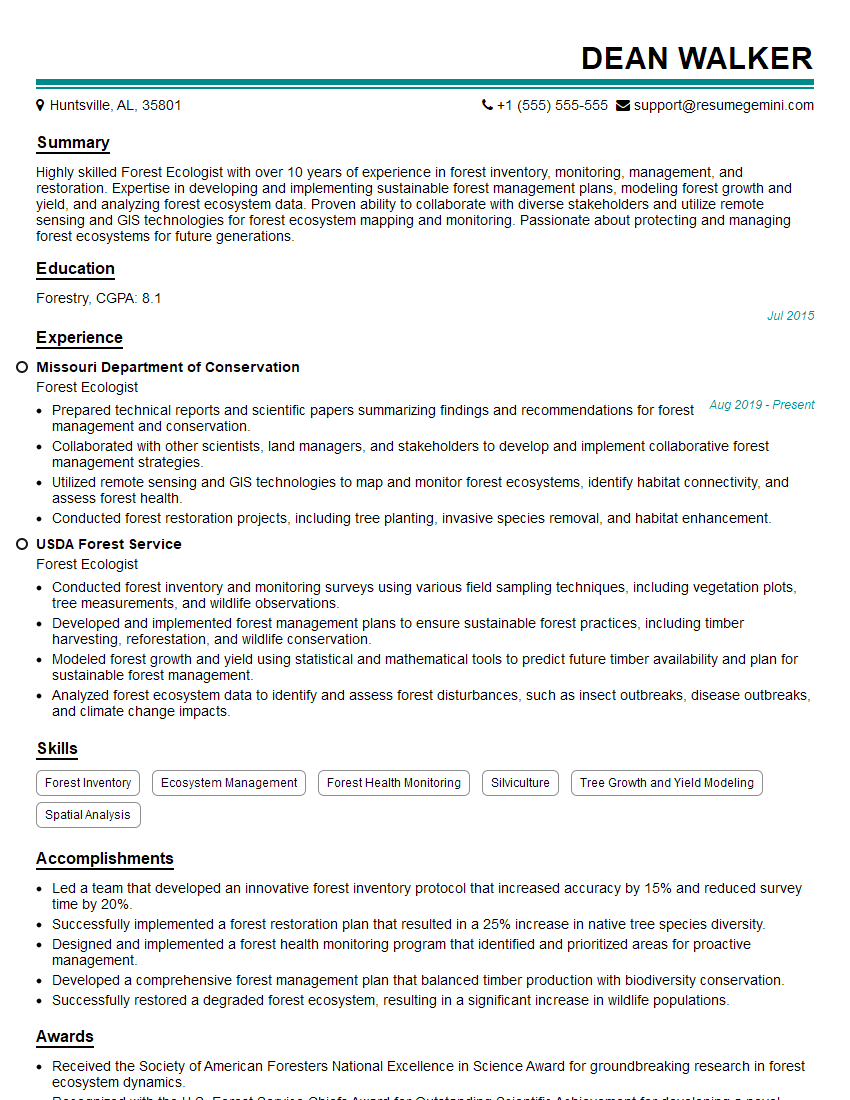
Mastering Conservation Forestry opens doors to a rewarding career dedicated to protecting our planet’s vital forests. To significantly boost your job prospects, a well-crafted, ATS-friendly resume is crucial. ResumeGemini is a trusted resource that can help you create a professional and impactful resume tailored to the Conservation Forestry sector. We provide examples of resumes specifically designed for this field to guide your resume development. Invest the time to build a strong resume – it’s your first impression and a key to unlocking your career aspirations.
Explore more articles
Users Rating of Our Blogs
Share Your Experience
We value your feedback! Please rate our content and share your thoughts (optional).
What Readers Say About Our Blog
Very informative content, great job.
good