Unlock your full potential by mastering the most common Consignment and Auction Management interview questions. This blog offers a deep dive into the critical topics, ensuring you’re not only prepared to answer but to excel. With these insights, you’ll approach your interview with clarity and confidence.
Questions Asked in Consignment and Auction Management Interview
Q 1. Explain the difference between a live auction and an online auction.
The core difference between live and online auctions lies in the bidding process and the physical presence of participants. In a live auction, bidders gather in a physical location, and an auctioneer manages the bidding process in real-time. Think of a classic estate sale or a high-profile art auction. The energy and immediacy are key characteristics. The atmosphere, the ability to inspect items firsthand, and the competitive spirit of live bidding are significant advantages. However, geographic limitations restrict participation.
An online auction, conversely, allows bidders to participate remotely through a digital platform. Bidding takes place over a defined period, often with automated systems managing bids and tracking progress. This expands reach globally but removes the immediate human interaction of a live auction. Platforms like eBay are prime examples of online auctions, offering convenience but potentially sacrificing the excitement and direct assessment of the items.
For example, a rare antique might fetch a higher price in a live auction due to the competitive atmosphere and potential for spontaneous bidding wars, while a more common item might find a broader buyer pool and competitive pricing in an online auction.
Q 2. Describe your experience with consignment agreements and their legal implications.
Consignment agreements are legally binding contracts between the consignor (owner of the item) and the auction house. These agreements outline the terms under which the auction house will sell the consignor’s items. Crucial aspects include the commission percentage the auction house will receive, the reserve price (the minimum acceptable price), the duration of the consignment, and the handling of unsold items. Legally, these agreements must be clear, unambiguous, and must fully disclose all fees and responsibilities. I have extensive experience in drafting and reviewing these agreements to ensure they are fair and protect both parties.
Significant legal implications can arise if the agreement is poorly drafted or breached. Disputes concerning commission payments, the handling of damaged goods, or the failure to meet reserve prices can lead to legal action. For example, I once worked on a case where a poorly defined reserve price led to a dispute between a consignor and an auction house regarding the sale of a valuable painting. The meticulous detailing of these agreements is paramount in avoiding costly and time-consuming legal battles. I always ensure that agreements are reviewed by legal counsel to minimize risks.
Q 3. How do you determine the fair market value of an item for auction?
Determining fair market value is a crucial aspect of auction management. It’s a multifaceted process involving research and professional judgment. We utilize several approaches:
- Comparable Sales: Researching recent sales of similar items (similar age, condition, maker, etc.) is fundamental. Online databases, auction records, and specialist appraisers’ reports are invaluable resources.
- Condition Assessment: The item’s condition significantly impacts value. Wear and tear, restoration work, and any damage are carefully documented and considered.
- Expert Appraisal: For high-value or specialized items, engaging independent experts provides an objective assessment and adds credibility to the auction process. This is especially crucial for rare collectibles or artworks.
- Market Research: Understanding current market trends and demand for the type of item being sold is critical. This includes identifying potential buyer demographics and their current preferences.
For instance, when determining the value of a vintage car, we’d research recent sales of similar models, note the car’s condition (originality, restoration history), and consult with a classic car appraiser. This multi-pronged approach ensures a reasonably accurate estimation of fair market value, leading to a successful auction.
Q 4. What strategies do you employ to attract bidders and maximize auction proceeds?
Attracting bidders and maximizing auction proceeds requires a strategic approach combining marketing, item presentation, and auction management techniques.
- Targeted Marketing: Identifying the ideal buyer demographic is crucial. We utilize various channels, including online advertising (targeted social media campaigns, search engine optimization), print media (specialized publications), email marketing, and collaborations with relevant organizations or collectors’ groups.
- Compelling Item Descriptions: High-quality photographs and detailed, accurate descriptions are essential. Highlighting unique features and provenance increases desirability.
- Pre-Auction Viewing: Offering opportunities to inspect items (in-person or virtually) builds trust and allows potential bidders to assess the items firsthand.
- Competitive Bidding Strategies: Setting appropriate reserve prices and employing techniques like staggered lot sequencing (grouping similar items together) can encourage bidding competition.
- Auctioneer Skill: A skilled auctioneer can significantly influence the bidding atmosphere, building excitement and encouraging participation.
For a successful online auction, for instance, we use targeted advertising on platforms where the intended buyers are most active, accompanied by professional high-resolution images and detailed condition reports, all aimed at converting website traffic into active bidders.
Q 5. How do you handle disputes between consignors and bidders?
Handling disputes requires a fair and transparent approach. Our process prioritizes clear communication and documentation.
- Thorough Documentation: Maintaining detailed records of the auction process, including bidding history, payment information, and the terms of the consignment agreement is paramount. This forms the basis for resolving any disputes.
- Mediation: We attempt to resolve disputes amicably through mediation, facilitating communication between the consignor and the bidder. This often leads to mutually agreeable solutions.
- Arbitration: If mediation fails, we may refer the dispute to a neutral third party arbitrator, whose decision is legally binding.
- Legal Action: In extreme cases, where all other options have been exhausted, we may pursue legal action to protect the interests of our clients. This is, however, a last resort.
For example, a dispute over the condition of an item might be settled through a combination of reviewing photographic documentation and engaging in mediation with both the consignor and the winning bidder to reach a mutually satisfying resolution.
Q 6. Describe your experience with auction software and related technologies.
I’m proficient in various auction software platforms, ranging from simple online auction management tools to sophisticated systems that integrate with payment gateways, inventory management databases, and customer relationship management (CRM) systems. I’ve worked with platforms offering live bidding functionalities, online bidding platforms, and systems managing inventory tracking, order processing, and financial reporting.
Example: I am familiar with using software that tracks consignments, generates reports on auction performance, manages bidder accounts, and processes payments securely. This streamlines operations and minimizes errors.
Technology integration is crucial. For example, we use software to manage online bidding, allowing bidders to participate remotely, enhancing accessibility and potentially increasing participation. Furthermore, the use of live-streaming capabilities for online auctions replicates the experience of a live event, offering bidders a more engaging experience.
Q 7. How do you manage inventory and logistics for a large auction event?
Managing inventory and logistics for large auction events is a complex operation requiring meticulous planning and execution. It’s a multi-stage process:
- Item Receiving and Cataloging: A systematic process of receiving items from consignors, documenting their condition, assigning unique identification numbers, and creating detailed descriptions.
- Storage and Security: Secure storage facilities are essential to protect items from damage or theft. This might involve climate-controlled environments for sensitive items like art or antiques.
- Pre-Auction Organization: Items need to be organized and displayed effectively, either in a physical venue or digitally on an online platform, maximizing visibility and attractiveness.
- Transportation and Handling: Careful planning is crucial to transport items safely from storage to the auction venue or to buyers’ locations after the sale. This involves coordinating with specialized transportation companies for delicate items.
- Post-Auction Handling: Managing the transfer of items to buyers, including arranging shipping and insurance, is critical for a smooth post-auction process.
Imagine organizing a large estate auction with hundreds of items. A robust inventory management system, coupled with detailed logistical plans for receiving, storing, displaying, and shipping each item ensures an efficient and incident-free event. Effective communication with all parties involved – consignors, bidders, shipping companies – is essential for flawless execution.
Q 8. What is your approach to marketing and promoting an auction?
My approach to marketing and promoting an auction is multifaceted and leverages both traditional and digital strategies. It begins with identifying the target audience for the specific auction – are we targeting seasoned collectors, first-time buyers, or a broader demographic? This dictates our marketing channels.
- Digital Marketing: We utilize targeted online advertising campaigns across platforms like Google Ads and social media (Facebook, Instagram, etc.), focusing on relevant keywords and demographics. We create visually appealing online catalogs with high-quality images and detailed item descriptions. A well-designed auction website is crucial, offering easy registration, bidding, and live auction streaming.
- Traditional Marketing: Print advertising in relevant publications (magazines, newspapers) and direct mail marketing to curated mailing lists reach potential bidders who may not be as digitally engaged. We also leverage public relations efforts – press releases announcing significant items or the auction itself – to generate media coverage.
- Pre-Auction Events: Hosting previews of the items allows potential bidders to examine them in person, fostering excitement and building relationships. This also gives us a chance to personally connect with potential buyers.
- Partnerships: Collaborating with complementary businesses, such as art galleries or antique dealers, expands our reach to their customer base. For example, if we’re auctioning off fine art, partnering with a local art gallery could significantly boost visibility.
Ultimately, successful auction marketing requires careful planning, a clear understanding of the target audience, and a consistent, multi-channel approach.
Q 9. Explain your process for handling delicate or high-value items.
Handling delicate or high-value items requires meticulous care and specialized handling throughout the entire process. This begins with proper documentation – detailed condition reports with high-resolution photography are essential. We employ specialized packing materials and techniques to ensure safe transport and storage. For particularly fragile items, we might use custom-made crates or employ climate-controlled storage.
- Insurance: High-value items are insured throughout the entire process, from the moment they are received until they are delivered to the winning bidder. We work with reputable insurance providers specializing in fine art and collectibles.
- Specialized Handling: We use white-glove handling services for extremely delicate or valuable items. This means trained professionals handle each item with utmost care, minimizing the risk of damage.
- Secure Storage: Secure, climate-controlled storage facilities are used to protect items from damage, theft, or environmental factors. Access to these facilities is strictly controlled and monitored.
- Professional Appraisal: We often collaborate with independent appraisers to accurately assess the value of high-value items, ensuring fair pricing and accurate insurance coverage.
For instance, a rare antique clock might require specialized packing with custom cushioning to protect its delicate mechanism. A priceless painting would necessitate white-glove handling and secure climate-controlled storage until its sale.
Q 10. How do you ensure the security and safety of items during an auction?
Security is paramount in auction management. We implement a multi-layered approach to ensure the safety of items:
- Secure Premises: The auction house itself must be secure, with features like robust alarm systems, video surveillance, and controlled access points. We often use security personnel during events and storage periods.
- Item Tracking: Each item is meticulously tracked with unique identification numbers. This helps in monitoring its location throughout the auction process and minimizes the risk of loss or misplacement.
- Inventory Management: Robust inventory management systems help keep accurate records, which is crucial for tracking items from receipt to sale. This includes documenting condition, location, and insurance details.
- Security Personnel: During the auction, trained security personnel monitor the premises, ensuring the safety of both attendees and auctioned items. This is particularly important when handling high-value items.
- Transportation Security: Secure transportation methods are employed for moving items to and from the auction house, utilizing armored vehicles if necessary.
We regularly review and update our security protocols to address emerging threats and best practices. Our goal is a zero-loss policy.
Q 11. Describe your experience with financial reporting and accounting for an auction house.
My experience in financial reporting and accounting for an auction house encompasses all aspects, from initial item consignments to final payouts. This includes:
- Consignment Agreements: Precisely managing consignment agreements, tracking percentages and commissions owed to consignors.
- Sales Revenue Tracking: Accurately recording all sales, including buyer’s premiums and taxes.
- Expense Management: Tracking and managing all auction-related expenses, such as marketing, security, insurance, and staff salaries.
- Financial Reporting: Preparing regular financial reports for management and stakeholders, showing profitability, cash flow, and other key metrics.
- Tax Compliance: Ensuring complete compliance with all relevant tax laws and regulations, accurately processing sales taxes and reporting income.
- Accounts Receivable/Payable: Managing accounts receivable (payments from buyers) and accounts payable (payments to consignors and vendors).
I am proficient with accounting software and utilize robust financial reporting tools to ensure accuracy and efficiency. Maintaining meticulous records and reconciliation is crucial for transparency and legal compliance.
Q 12. How do you comply with relevant laws and regulations in auction management?
Compliance with relevant laws and regulations is paramount in auction management. This requires a thorough understanding of:
- Licensing and Permits: Obtaining all necessary licenses and permits to operate legally, which varies by location.
- Anti-Money Laundering (AML) Regulations: Strictly adhering to AML regulations, implementing Know Your Customer (KYC) procedures to prevent the use of auctions for money laundering.
- Sales Tax and Tax Reporting: Accurately collecting and reporting sales tax according to local, state, and federal regulations.
- Consumer Protection Laws: Adhering to all relevant consumer protection laws and regulations, ensuring fair business practices.
- Intellectual Property Rights: Respecting and upholding intellectual property rights, verifying the authenticity and ownership of items to avoid legal disputes.
- Import/Export Regulations: Understanding and complying with all import/export regulations if handling internationally sourced items.
Regular training and updates on relevant laws and regulations are essential for maintaining compliance. We work with legal counsel to ensure our procedures are up-to-date and in alignment with current legal requirements.
Q 13. What strategies do you use to identify and mitigate risks in an auction?
Risk mitigation is crucial in auction management. Our strategies include:
- Due Diligence: Thorough due diligence on consigned items, verifying authenticity, ownership, and condition. This minimizes the risk of disputes or legal challenges.
- Insurance: Comprehensive insurance coverage protects against loss, damage, or theft of items.
- Security Measures: Robust security measures, as previously discussed, protect items from theft or damage.
- Contractual Agreements: Clear and comprehensive contractual agreements with consignors and buyers define responsibilities and obligations, limiting potential liabilities.
- Financial Controls: Strict financial controls and accurate record-keeping minimize the risk of fraud or financial loss.
- Reputation Management: Maintaining a strong reputation built on trust and transparency minimizes potential reputational risks.
- Contingency Planning: Developing contingency plans to address unforeseen events, such as technical failures or natural disasters.
For example, if we’re auctioning a piece of art, we would commission an independent appraisal to validate its authenticity and value, reducing the risk of selling a forgery. Similarly, we maintain meticulous records of all transactions, mitigating risks associated with fraud or disputes.
Q 14. Describe your experience with client communication and relationship management.
Client communication and relationship management are critical to success. We prioritize:
- Clear and Timely Communication: Maintaining clear, consistent, and timely communication with both consignors and buyers throughout the entire auction process.
- Personalized Service: Providing personalized service, tailoring communication to each client’s needs and preferences.
- Building Trust: Building strong relationships based on trust, transparency, and professionalism.
- Conflict Resolution: Effectively addressing any disputes or concerns that arise in a fair and professional manner.
- Feedback Mechanisms: Implementing mechanisms for collecting feedback from clients to continuously improve our services.
- Post-Auction Follow-Up: Following up with clients after the auction to address any questions or concerns, fostering long-term relationships.
For example, we regularly update consignors on the progress of their items and keep buyers informed about the auction schedule and results. We also proactively seek feedback to improve our services and ensure client satisfaction.
Q 15. How do you handle unexpected issues or challenges during an auction?
Handling unexpected issues during an auction requires a calm, decisive approach and a well-rehearsed contingency plan. Think of it like conducting an orchestra – even with the best preparation, unexpected notes might appear. My strategy involves proactive risk assessment before the auction. This includes thorough vetting of consigned items, verifying authenticity where necessary, and having backup plans for technical glitches (internet outages, microphone failures etc.).
During the auction, clear communication is key. If a problem arises, I address it transparently with the bidders, explaining the situation and the steps being taken to resolve it. For instance, if a dispute arises about a bid, I’d immediately review the bidding process, consult auction records, and calmly engage with the involved parties to ensure a fair resolution, possibly delaying the lot’s sale momentarily for clarification.
Post-auction, I conduct a thorough review of what happened, analyzing the incident to determine if procedural changes are needed to prevent similar issues in future auctions. This could include improving our technical infrastructure or refining our communication protocols.
Career Expert Tips:
- Ace those interviews! Prepare effectively by reviewing the Top 50 Most Common Interview Questions on ResumeGemini.
- Navigate your job search with confidence! Explore a wide range of Career Tips on ResumeGemini. Learn about common challenges and recommendations to overcome them.
- Craft the perfect resume! Master the Art of Resume Writing with ResumeGemini’s guide. Showcase your unique qualifications and achievements effectively.
- Don’t miss out on holiday savings! Build your dream resume with ResumeGemini’s ATS optimized templates.
Q 16. Explain your knowledge of different auction types (e.g., English, Dutch, sealed-bid).
Auction types vary significantly in their bidding processes and are chosen based on the type of items and the desired outcome. Imagine choosing the right tool for the right job.
- English Auction (Open Cry): The most common type, where bidding starts low and increases until only one bidder remains. It’s transparent and creates excitement. Example: A traditional art auction.
- Dutch Auction: Bidding starts at a high price and gradually decreases until a bidder accepts. It’s efficient for selling large quantities of similar items. Example: Flower auctions where many identical blooms are sold quickly.
- Sealed-Bid Auction: Bidders submit their offers in writing without knowing others’ bids. It eliminates the competitive pressure of open bidding and is often used for unique or high-value items. Example: Government contracts, or high-end real estate.
- Reverse Auction: The seller sets a starting price, and bidders compete to offer the lowest price. This is common for procuring goods and services. Example: A construction company seeking bids for a project.
Understanding these variations is crucial for selecting the optimal auction type that will maximize value for both consignors and buyers, aligning with the specific characteristics of the items and the target audience.
Q 17. How do you attract and retain consignors?
Attracting and retaining consignors is the lifeblood of a successful auction house. It’s about building trust and demonstrating value. Think of it as nurturing valuable relationships.
- Competitive Commission Rates: Offering competitive commission rates is essential but needs to balance profitability.
- Marketing & Promotion: Strong marketing and promotion across multiple channels (online, print, social media) to showcase the auction house’s expertise and previous successes.
- Strong Communication: Maintaining open communication with consignors throughout the entire process, providing regular updates, and addressing any concerns promptly.
- Transparent Reporting: Providing detailed reports on the auction results, including sales prices, commissions, and payment details.
- Building Relationships: Personal contact, offering advice, and building rapport ensures future consignments.
- Exceptional Customer Service: Addressing problems promptly and efficiently builds lasting trust.
My approach involves more than just a transaction; I strive to build long-term relationships with consignors based on trust and mutual benefit.
Q 18. What is your experience with creating and managing auction catalogs?
Creating and managing auction catalogs is a crucial aspect of the process, requiring attention to detail and visual appeal. Think of it as curating a story.
My experience involves leveraging various software for catalog design, image editing and management (often specialized software for auctions). The process involves:
- Item Description: Accurate, detailed descriptions with high-quality images, emphasizing key features and condition.
- Organization: Logical catalog organization, grouping similar items together for easy browsing.
- Proofreading & Editing: Meticulous proofreading to ensure accuracy and professionalism.
- Distribution: Utilizing print and online platforms to reach a broader audience.
- Inventory Management: Tracking and managing all items listed, including their details and status.
The catalog is more than just a list; it’s a marketing tool that showcases the quality and value of the items offered, attracting potential bidders.
Q 19. Describe your process for setting reserve prices.
Setting reserve prices is a delicate balance between maximizing returns for the consignor and ensuring competitive bidding. It’s about finding the sweet spot.
My process involves:
- Research & Appraisal: Thorough research on comparable items sold in previous auctions, online marketplaces, and expert appraisals to establish a fair market value.
- Consignor Consultation: Discussing the consignor’s expectations and desired outcome, understanding their minimum price acceptance.
- Market Analysis: Considering current market trends and demand for the particular item category.
- Risk Assessment: Weighing the risk of the item not selling if the reserve is set too high versus potentially losing profit if set too low.
The goal is to set a reserve that’s realistic yet attractive enough to encourage bidding while protecting the consignor’s interests.
Q 20. How do you handle unsold items after an auction?
Handling unsold items requires a strategic approach that balances the needs of the consignor with the auction house’s interests. It’s about finding alternative solutions.
My strategy typically involves:
- Negotiation with Consignor: Discussing options with the consignor, including lowering the reserve price for a future auction, negotiating a private sale, or considering consignment elsewhere.
- Online Resale: Listing unsold items on online marketplaces (e.g., eBay).
- Storage & Future Auctions: Securely storing items for inclusion in future auctions or specialized sales.
- Donation/Charity: If appropriate, exploring the option of donating unsold items to charity.
Open communication and transparency are essential in this process to ensure a satisfactory resolution for both the consignor and the auction house.
Q 21. What are your strategies for managing bidder registration and verification?
Managing bidder registration and verification is crucial for maintaining the integrity and security of the auction. It’s about ensuring a fair and transparent process.
My process typically includes:
- Online Registration: Utilizing a secure online registration system to collect bidder information and potentially pre-qualify high-value bidders.
- Identity Verification: Implementing measures to verify bidder identity (e.g., driver’s license, passport, credit card verification). This minimizes the risk of fraudulent bidding.
- Registration Fee (where applicable): Collecting registration fees which may help deter casual bidders and offset administrative costs.
- Communication: Providing clear instructions and communication to bidders throughout the registration process.
- Data Security: Protecting bidder information through secure data storage and adherence to relevant data privacy regulations.
A secure and well-managed registration process builds confidence among bidders and ensures the smooth operation of the auction.
Q 22. How do you deal with fraudulent activity in auctions?
Combating fraudulent activity in auctions requires a multi-layered approach combining proactive measures and reactive responses. Proactive measures include rigorous due diligence on consignments – verifying provenance, authenticity, and ownership. We use reputable third-party appraisers and authenticate items whenever possible. We also utilize advanced technology like image recognition software to detect potential fakes or replicas. During the auction itself, we monitor bidding patterns for suspicious activity. For example, unusually rapid bidding from new or anonymous accounts may trigger further investigation. If suspicion arises, we may temporarily suspend bidding or contact the bidder directly to verify their identity and intentions. Reactively, we document all transactions meticulously, including bidder information and lot details, making this easily accessible for investigations. Should fraud be confirmed, we work closely with law enforcement and legal counsel to pursue appropriate action, including legal recourse and possibly banning the fraudulent bidder.
For example, in one instance, we noticed unusually high bids placed in rapid succession from a newly registered account on a high-value item. Our investigation revealed that the account details were fabricated and we were able to prevent the fraudulent sale. We subsequently enhanced our account verification protocols.
Q 23. Explain your understanding of insurance and liability related to auctions.
Insurance and liability in auctions are critical considerations. From the auction house’s perspective, we carry comprehensive liability insurance covering potential losses from damaged goods, theft, or claims related to misrepresentation or authenticity disputes. This protects both the consignor and the auction house. The level of coverage is typically adjusted based on the value of the items handled. For consignors, it’s vital they understand their responsibility in accurately representing items. They also usually obtain their own insurance to protect their consignment, particularly from damage or loss before the auction. This is especially important for high-value items. We advise consignors on obtaining appropriate coverage, and often have preferred insurance partners to make this process smoother. Liability extends to the buyer as well. We clarify the terms of sale, emphasizing that items are sold “as is” unless otherwise stated, limiting liability for unforeseen defects or issues unless explicitly misrepresented. Transparency and clear communication regarding insurance and liability are key to minimizing disputes and fostering trust.
Q 24. Describe your experience with post-auction settlements and payments.
Post-auction settlements and payments are managed meticulously to ensure accuracy and efficiency. Once an item sells, we issue an invoice to the winning bidder detailing the purchase price, buyer’s premium, sales tax (where applicable), and any other associated fees. We typically use secure payment gateways to process payments, prioritizing buyer and seller security. Payments are usually required within a set timeframe, often a week or two. Once the payment is received and verified, we initiate the process of transferring ownership to the buyer. This involves transferring title, providing relevant documentation, and arranging for the item’s safe and secure shipping or pickup. For consignors, we promptly remit payment after deducting our commission and any agreed-upon fees, providing a detailed settlement statement. This whole process is documented digitally, ensuring a clear audit trail and helping in any future disputes. We have a dedicated team to handle these settlements, addressing inquiries and resolving any issues that may arise, ensuring a smooth and satisfactory experience for both buyers and sellers.
Q 25. What is your experience with using auction marketing analytics?
Auction marketing analytics play a vital role in optimizing our strategies and maximizing our reach. We use a variety of tools and techniques to track and analyze key performance indicators (KPIs). These include website traffic, bidding activity, conversion rates (bidders to buyers), and social media engagement. We use data analytics software to identify trends in buyer preferences, allowing us to tailor marketing campaigns to specific demographics and target high-value items effectively. For example, we might analyze auction catalogue views to see which items are garnering the most attention, which in turn informs our marketing strategy, perhaps highlighting those items through targeted social media campaigns or special pre-auction features. The data also helps us evaluate the effectiveness of various marketing channels, such as email marketing, social media advertising, and public relations efforts. This helps us reallocate our marketing budget for optimal results and refine our approaches to reach a wider audience.
Q 26. How do you manage the legal aspects of consignment contracts?
Managing the legal aspects of consignment contracts requires careful attention to detail and compliance with relevant laws. Our contracts are meticulously drafted to protect the interests of both the consignor and the auction house. These contracts clearly define the terms of consignment, including the commission rates, the duration of the agreement, the responsibilities of each party (particularly concerning the authenticity and description of the item), and the payment schedule. We ensure that the contract complies with all relevant state and federal laws concerning sales, property transfer, and consumer protection. In cases of dispute, we refer to the terms of the contract and relevant legal precedents to resolve the issue. We also retain legal counsel to review and update our contracts regularly, ensuring they remain current and effective. We place a strong emphasis on building trusting relationships with our consignors, transparent communication, and ensuring a fair and equitable agreement.
Q 27. How would you address a situation where a bidder disputes the authenticity of an item?
When a bidder disputes the authenticity of an item, a calm and methodical approach is crucial. We first review the item’s provenance documentation and any expert appraisals provided prior to the auction. We then initiate a dialogue with the bidder, gathering details about their concerns. Depending on the nature of the dispute, we may consult with independent experts to re-examine the item. If the dispute is significant, we might engage an accredited gemologist, art conservator, or other specialized appraiser to provide an impartial evaluation. We document all communications and findings meticulously. The process often involves careful consideration of the terms of sale, particularly the “as is” clause. If the dispute is substantiated, and a material misrepresentation can be proven, we would work to resolve the issue fairly, which might involve a partial or full refund, depending on the specifics and agreement reached. Our goal is to maintain fairness and uphold trust with our clients.
Q 28. Describe your experience with different appraisal methods.
My experience encompasses a range of appraisal methods, each with its own strengths and applications. For example, the market approach relies on comparable sales data of similar items, providing a relatively objective valuation. This is frequently used for common items or those with well-established market values. The cost approach is relevant for unique or newly created items, focusing on the cost of materials and labor involved in their creation. This is more subjective and depends on detailed cost accounting. The income approach is particularly useful for items generating revenue, such as rental properties or income-producing artwork. It assesses the present value of future income streams. We frequently utilize a combination of these approaches, particularly for high-value or unique items. The choice of method depends on the nature of the item, its rarity, and the availability of relevant data. Each appraisal is carefully documented, justifying the chosen method and supporting the final valuation with clear reasoning and references. We collaborate with reputable and accredited appraisers for complex or high-value items to ensure accuracy and credibility.
Key Topics to Learn for Consignment and Auction Management Interview
- Consignment Agreements & Contracts: Understanding the legal aspects, terms, and conditions of consignment agreements. Practical application: Analyzing a sample contract to identify key clauses and potential risks.
- Inventory Management: Tracking, valuing, and managing consigned goods effectively. Practical application: Describing methods for optimizing inventory processes and minimizing losses.
- Pricing Strategies: Developing effective pricing strategies for various items considering market trends and competitive analysis. Practical application: Justifying a pricing decision based on market research and item specifics.
- Marketing & Promotion: Creating and implementing marketing strategies to attract bidders and maximize sales. Practical application: Outlining a marketing plan for a specific auction event.
- Auction Procedures & Regulations: Understanding the legal and procedural aspects of conducting auctions, including bidding processes, dispute resolution, and compliance. Practical application: Explaining how to handle a bidding dispute fairly and efficiently.
- Financial Management: Managing financial aspects of consignments and auctions, including accounting, commission calculations, and payment processing. Practical application: Calculating commission payouts and reconciling accounts.
- Customer Relationship Management (CRM): Building and maintaining strong relationships with consignors and buyers. Practical application: Describing strategies for handling difficult clients or resolving complaints.
- Technology & Software: Familiarity with auction management software and online auction platforms. Practical application: Comparing the features and benefits of different auction software solutions.
- Risk Management: Identifying and mitigating risks associated with consignment and auction management, such as fraud, damage, and non-payment. Practical application: Developing a risk mitigation plan for a specific auction scenario.
Next Steps
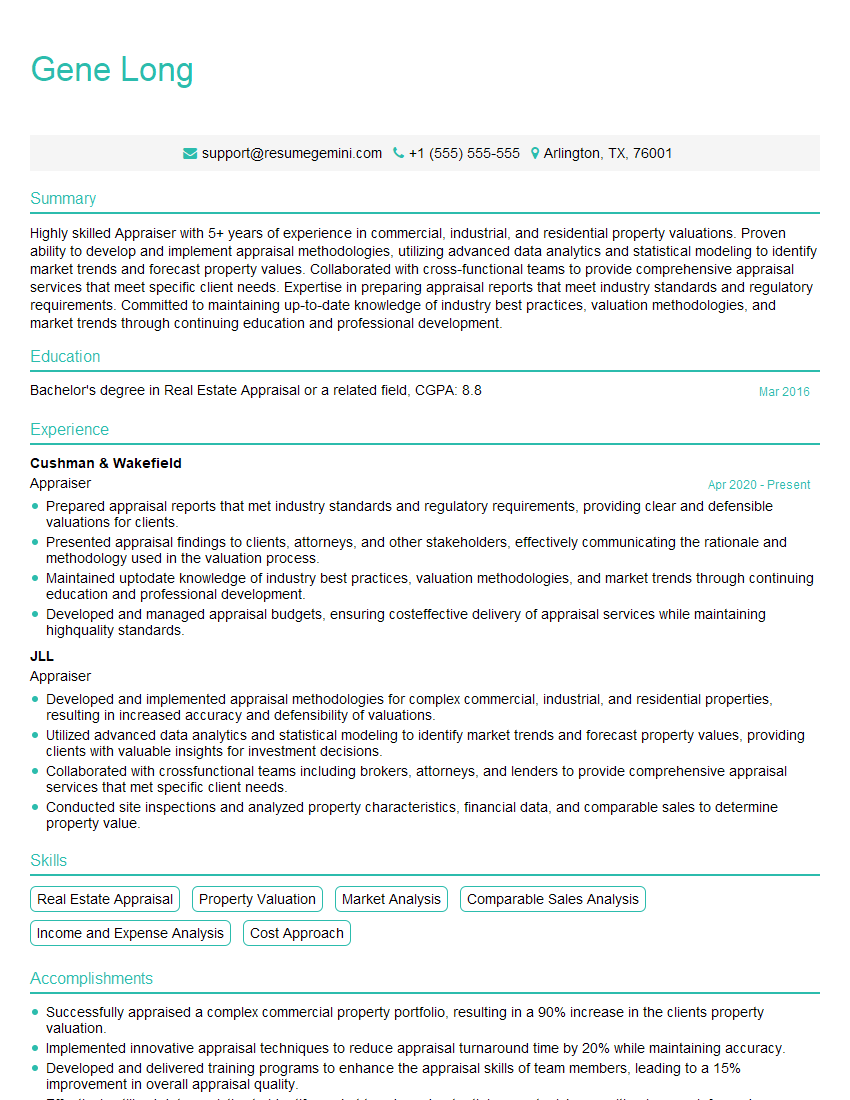
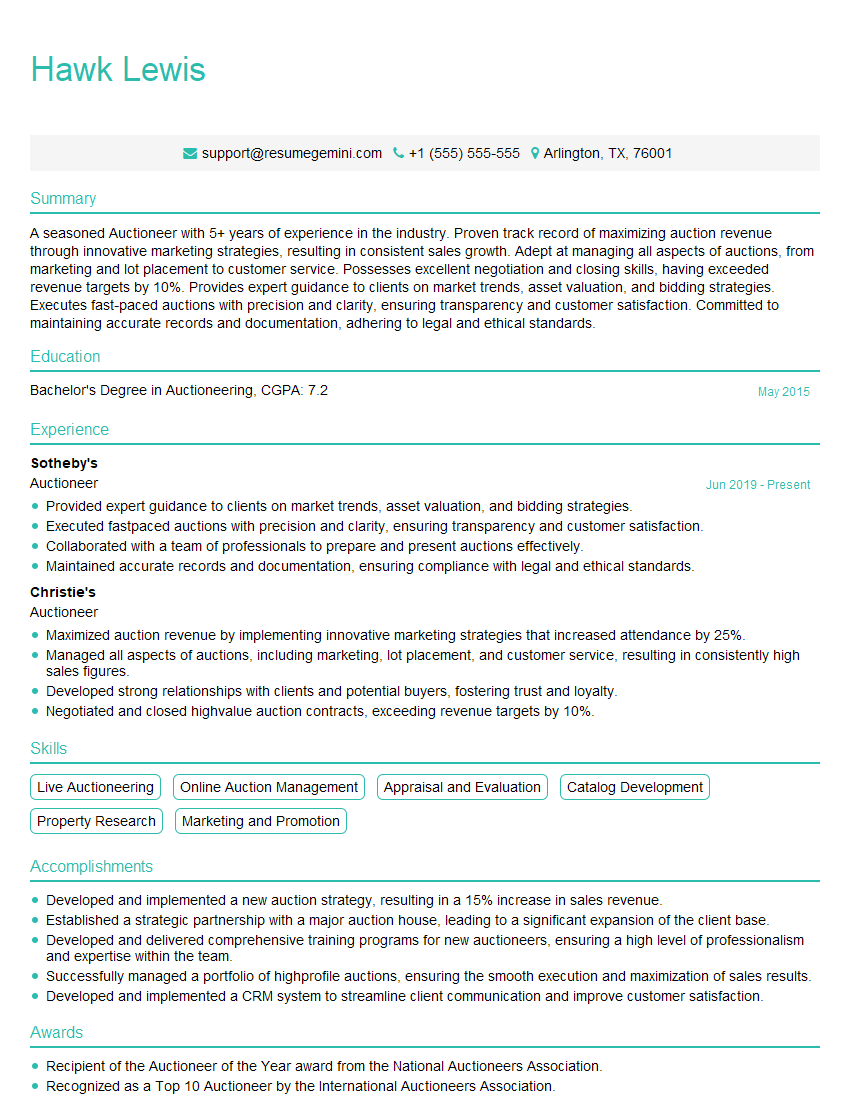
Mastering Consignment and Auction Management opens doors to exciting career opportunities in a dynamic industry. Demonstrating your expertise through a strong resume is crucial for landing your dream job. Creating an ATS-friendly resume significantly increases your chances of getting noticed by recruiters. We highly recommend using ResumeGemini, a trusted resource for building professional resumes, to help you present your skills and experience effectively. ResumeGemini provides examples of resumes tailored to Consignment and Auction Management to help guide you through the process. Invest in your future and craft a resume that showcases your potential!
Explore more articles
Users Rating of Our Blogs
Share Your Experience
We value your feedback! Please rate our content and share your thoughts (optional).
What Readers Say About Our Blog
Very informative content, great job.
good