The thought of an interview can be nerve-wracking, but the right preparation can make all the difference. Explore this comprehensive guide to Construction management and contract administration interview questions and gain the confidence you need to showcase your abilities and secure the role.
Questions Asked in Construction management and contract administration Interview
Q 1. Explain the different types of construction contracts.
Construction contracts define the agreement between the owner and the contractor. Several types exist, each with its own risk allocation and payment structure. The most common are:
- Lump Sum (Fixed Price): The contractor agrees to complete the project for a predetermined price. This is ideal for projects with well-defined scopes, minimizing cost overruns for the owner but shifting risk to the contractor. For example, building a single-family home based on detailed blueprints would often use a lump-sum contract.
- Cost Plus Fee: The owner reimburses the contractor for all project costs plus an agreed-upon fee (percentage or fixed amount). This is suitable for projects with uncertain scopes, shifting risk to the owner but providing flexibility to the contractor. Think of large infrastructure projects where unforeseen ground conditions might arise.
- Unit Price: The contractor is paid based on the quantity of work completed, with pre-agreed prices per unit. This works well for projects where quantities are difficult to estimate upfront, such as road construction where the exact amount of excavation isn’t known initially.
- Design-Build: A single entity is responsible for both design and construction, streamlining the process and potentially reducing conflicts. This is commonly used for complex projects where integrated design and construction are beneficial.
- Construction Management at Risk (CMAR): The construction manager acts as the owner’s representative, managing the project and subcontractors, while also bearing some construction risk. This model fosters collaboration and expertise but requires careful contract negotiation.
The choice of contract type depends on project complexity, risk tolerance, and the relationship between the owner and contractor.
Q 2. Describe your experience with change order management.
Change order management is crucial for successful project execution. My approach involves a structured process:
- Formal Request: All changes must be documented formally, including a detailed description, drawings, and cost/schedule impacts.
- Review and Analysis: I meticulously review the change request, assessing its impact on the project scope, schedule, and budget. This often includes discussions with the design team, subcontractors, and the owner.
- Pricing and Scheduling: I develop a detailed cost estimate and a revised schedule reflecting the change. This is supported by clear justification and documentation.
- Negotiation and Approval: I negotiate the change order with the owner, ensuring all parties agree on the terms before finalizing it. This step is critical to avoiding disputes later on.
- Implementation and Tracking: Once approved, the change is implemented, and I closely monitor its progress, making adjustments as necessary. This includes tracking costs and reporting regularly to the owner.
In one project, a change order was required to address unforeseen rock formations during excavation. By following this process, we were able to accurately assess the impact, negotiate a fair price, and prevent delays.
Q 3. How do you manage project risks and mitigate potential issues?
Risk management is an ongoing process, starting with proactive identification and ending with post-project analysis. My approach involves:
- Risk Identification: This includes brainstorming potential issues, reviewing historical data, and utilizing checklists. Examples include weather delays, material shortages, and labor disputes.
- Qualitative and Quantitative Analysis: Each risk is assessed based on its likelihood and potential impact. I use tools like probability and impact matrices to prioritize risks.
- Risk Mitigation Strategies: I develop strategies to reduce the likelihood or impact of each risk. This could include procuring materials early, having contingency plans for weather delays, or incorporating robust quality control measures.
- Risk Response Planning: Specific plans are developed for how to respond to identified risks if they occur, ensuring that potential issues are addressed efficiently and effectively.
- Monitoring and Control: The risks are regularly monitored throughout the project, and the effectiveness of mitigation strategies is reviewed. Any changes are reflected in updated risk registers.
For example, on a coastal construction project, we identified the risk of severe weather and mitigated it through a detailed weather monitoring plan and a contingency schedule that accounted for potential delays. This allowed us to minimize disruption and cost overruns.
Q 4. What is your experience with scheduling software and techniques?
I have extensive experience with various scheduling software and techniques. My proficiency includes:
- Microsoft Project: I’m adept at using Microsoft Project to create, update, and analyze project schedules, including critical path analysis and resource allocation.
- Primavera P6: For larger, more complex projects, I utilize Primavera P6 for its advanced scheduling capabilities, enabling efficient management of complex dependencies.
- Agile Methodologies: On projects requiring adaptability, I incorporate agile scheduling practices, adjusting the schedule iteratively based on progress and changing requirements.
- Critical Path Method (CPM): I apply CPM to identify the critical path, the sequence of tasks that determines the shortest possible project duration, allowing for focused resource allocation and effective risk management.
Example Gantt Chart Data (simplified):Task | Duration | Predecessor
A | 5 days | None
B | 3 days | A
C | 4 days | A
D | 2 days | B, C
Using this data in a scheduling software, I would visually represent the project’s timeline and identify the critical path (A-B-D or A-C-D depending on dependencies).
Q 5. Describe your approach to cost control and budgeting.
Cost control and budgeting are critical to project success. My approach is proactive and involves:
- Detailed Budgeting: I develop comprehensive budgets that break down project costs into detailed line items, considering all aspects of the project. This includes materials, labor, equipment, permits, and contingencies.
- Cost Estimating: I utilize various estimating techniques, including parametric, bottom-up, and analogy methods, to achieve the most accurate cost estimation.
- Cost Tracking and Reporting: I track expenses closely, comparing actual costs to the budget. Regular reports are prepared, highlighting variances and potential problems.
- Value Engineering: I actively seek opportunities to improve the design or construction methods without compromising quality, reducing overall project costs.
- Change Management: As mentioned earlier, I meticulously manage change orders, ensuring that all cost implications are accurately assessed and approved.
By employing these strategies, I’ve successfully kept projects within budget even in cases with unexpected challenges. For instance, by implementing value engineering strategies, I was able to reduce material costs by 15% on a recent project without compromising functionality.
Q 6. How do you handle conflicts between subcontractors?
Handling subcontractor conflicts requires diplomacy, strong communication, and a fair approach. My steps include:
- Early Conflict Detection: I actively monitor communication and performance between subcontractors, addressing minor issues before they escalate.
- Mediation and Facilitation: If conflicts arise, I facilitate discussions between the involved parties, helping them understand each other’s perspectives and find common ground.
- Contract Review: I review the relevant contracts to determine each party’s responsibilities and obligations, ensuring a fair resolution.
- Documentation: I maintain meticulous records of all communications, agreements, and decisions related to the conflict.
- Escalation Procedure: If mediation fails, I follow a clear escalation procedure, potentially involving legal counsel if necessary.
A recent conflict involved a delay by one subcontractor impacting another. By reviewing the contracts and facilitating a meeting, I helped both parties reach an agreement on a revised schedule and additional compensation, avoiding delays to the entire project.
Q 7. Explain your understanding of critical path analysis.
Critical Path Analysis (CPA) is a scheduling technique used to identify the longest sequence of tasks in a project, determining the shortest possible project duration. The critical path activities have zero float (or slack), meaning any delay in these tasks will directly delay the entire project. Understanding the critical path is crucial for effective resource allocation and risk management.
The process involves:
- Activity Definition: Breaking down the project into individual tasks.
- Sequencing: Determining the order in which activities must be performed.
- Duration Estimating: Estimating the time required for each activity.
- Network Diagram Creation: Visualizing the relationships between activities using a network diagram (often a Gantt chart or precedence diagram).
- Critical Path Identification: Determining the longest path through the network, representing the critical path.
- Float Calculation: Calculating the amount of time an activity can be delayed without delaying the project (float or slack).
By focusing on the critical path, project managers can prioritize resources and manage risks effectively, minimizing delays and maximizing efficiency. Imagine building a house – pouring the foundation must precede framing, which must precede roofing. These are likely critical path activities, and delays in these would push back the entire project.
Q 8. How do you ensure quality control throughout a project?
Ensuring quality control throughout a construction project is paramount. It’s not a one-time event but a continuous process integrated into every stage, from initial design to final handover. My approach involves a multi-pronged strategy encompassing proactive planning, rigorous inspections, and robust documentation.
- Proactive Planning: This begins with clearly defined quality standards, documented in the project specifications and meticulously communicated to all stakeholders. We use quality control plans that detail specific quality checks at each stage, including material testing, work processes, and inspections. For example, on a recent high-rise project, we implemented a pre-pour concrete inspection checklist to ensure the correct mix design, proper curing, and reinforcement placement before each concrete pour.
- Rigorous Inspections: Regular inspections, both internal and independent, are crucial. We schedule these based on the project’s critical path and risk assessment. Inspections cover all aspects, from the quality of materials used to the workmanship of the construction crews. We use checklists and photographic documentation to track progress and highlight any discrepancies. We also use daily reports to document findings and actions taken.
- Robust Documentation: Maintaining meticulous records is essential. All inspections, testing results, and corrective actions are documented in a central repository accessible to all parties involved. This documentation provides a clear audit trail, facilitates efficient problem-solving, and protects against potential disputes. We use specialized construction management software for this purpose.
Think of quality control as building a strong foundation. If you cut corners early, the consequences are far-reaching and costly later on. A thorough quality control program not only saves money in the long run, but it also enhances the reputation of both the project and the involved parties.
Q 9. What is your experience with construction safety regulations?
Construction safety is an absolute non-negotiable for me. My experience encompasses a deep understanding and strict adherence to all relevant OSHA (Occupational Safety and Health Administration) regulations and other local safety codes. This includes knowledge of hazard identification, risk assessment, and the implementation of preventative measures.
- Hazard Identification & Risk Assessment: Before any work begins, we conduct thorough site surveys to identify potential hazards, from falling objects to electrical risks. A detailed risk assessment is performed, prioritizing hazards based on their likelihood and severity. This allows for the development of appropriate control measures.
- Preventive Measures: We implement a range of preventative measures, including the use of Personal Protective Equipment (PPE), safety training programs for all workers, and regular safety inspections. We utilize safety audits as well as regular toolbox talks to reinforce safety consciousness.
- Incident Reporting & Investigation: A robust system for reporting and investigating any incidents is essential. All incidents, no matter how minor, are documented, investigated, and corrective actions implemented to prevent recurrence. This also includes maintaining accurate records of safety training and certifications for all personnel.
I’ve personally witnessed the devastating impact of accidents and the importance of proactive safety management. It’s not just a matter of compliance; it’s about fostering a culture of safety where everyone feels responsible and empowered to contribute to a safe working environment.
Q 10. Describe your experience with project closeout procedures.
Project closeout procedures are critical for finalizing a project successfully and avoiding future disputes. My approach is methodical and focuses on several key areas.
- Final Inspections: We conduct thorough final inspections with the client to ensure all work meets specifications and is free of defects. This often involves punch list generation and completion. We meticulously document all findings during this inspection and ensure that all necessary repairs and clean-up are completed.
- Documentation Completion: This involves collecting all final as-built drawings, test results, and other relevant documents, ensuring they are properly organized and archived. We also ensure all permits and approvals have been obtained and all necessary close-out paperwork is completed.
- Financial Closeout: We reconcile all invoices and payments, ensuring all outstanding amounts are settled. We prepare a final financial statement to showcase a comprehensive accounting of costs, revenue and profit margins, along with explanations for any variances.
- Warranty & Maintenance: We provide the client with details about the project warranty and procedures for filing maintenance requests. This often involves the preparation of an Operations & Maintenance manual detailing all aspects of the project’s functionality and upkeep.
- Client Handover: We conduct a formal handover of the project to the client, providing all necessary documentation and training on the operation and maintenance of the completed facility.
A well-managed closeout minimizes the risk of disputes and ensures a smooth transition from the construction phase to the operational phase. Failing to complete a proper closeout can result in costly disputes, insurance claims and damage to reputation.
Q 11. How do you manage project documentation effectively?
Effective project documentation management is crucial for success. My approach utilizes a combination of digital and physical methods to ensure all information is readily accessible, organized, and secure.
- Centralized System: We use a cloud-based document management system to store all project documents. This allows for easy access and collaboration by all stakeholders. Version control is a core function of this system so everyone is working with the most up-to-date versions.
- Organized Filing Structure: A clear and consistent filing structure is critical. We use a standardized system of folders and subfolders to categorize documents based on their type (drawings, specifications, meeting minutes, etc.) and project phase.
- Metadata Tagging: We employ metadata tagging to enhance searchability and retrieval. This involves assigning relevant keywords and descriptions to each document, making it easier to locate specific information quickly.
- Regular Backups: Regular backups of all project data are crucial to prevent data loss. We utilize both local and cloud-based backups to ensure data redundancy and security.
- Access Control: We implement access control measures to ensure only authorized personnel can access sensitive project information.
Think of documentation as the project’s memory. Without proper documentation, it’s impossible to track progress, identify problems, or resolve disputes effectively. A robust system ensures transparency, accountability, and ease of access to information.
Q 12. What are your preferred methods for communication and reporting?
Communication and reporting are integral to successful project management. My preferred methods prioritize clarity, consistency, and accessibility.
- Regular Meetings: We hold regular project meetings with all key stakeholders, including the client, subcontractors, and our internal team. Agendas are distributed in advance, and meeting minutes are documented and distributed promptly after each meeting.
- Progress Reports: We prepare regular progress reports that detail project status, milestones achieved, and any challenges encountered. These reports include visual aids like charts and graphs to enhance understanding.
- Digital Communication Tools: We use project management software and collaboration tools such as Microsoft Teams or Slack for efficient communication, file sharing, and task management.
- Email Communication: While emails are used, they are structured clearly, using subject lines that clearly communicate the context of the email, and a clear and concise body.
- Transparency: Open and transparent communication is paramount. We proactively communicate any potential issues or delays to all stakeholders to ensure they are informed and involved in the decision-making process.
Effective communication keeps everyone informed, minimizes misunderstandings, and fosters a collaborative working environment. It’s like the glue that holds a project together.
Q 13. Explain your experience with different project delivery methods (e.g., Design-Bid-Build, CM at Risk).
I have extensive experience with various project delivery methods, including Design-Bid-Build, Construction Management at Risk (CM at Risk), and Design-Build. Each method presents unique advantages and challenges.
- Design-Bid-Build: This traditional method involves separate contracts for design and construction. The owner hires a designer, then bids the completed design to contractors. It offers clear responsibility delineation but can lead to potential conflicts between designer and contractor. It can also be prone to cost overruns due to the possibility of unforeseen issues not identified during design.
- Construction Management at Risk (CM at Risk): In this method, the construction manager acts as an advisor during the design phase and then takes on the risk of delivering the project within a guaranteed maximum price (GMP). This approach can foster better collaboration between the design and construction teams, leading to greater efficiency and potentially lower costs. However, the CM’s risk is significant, requiring careful risk management.
- Design-Build: This method combines design and construction under a single contract. It streamlines the process and potentially reduces project duration. However, it requires careful selection of a qualified design-build firm capable of managing both aspects effectively. It can also make it more difficult to assign responsibility in case of disputes.
My experience with these methods enables me to select and implement the most appropriate method based on the specific requirements of each project. This involves carefully weighing the advantages and disadvantages of each approach with the client to ensure alignment on goals and expectations.
Q 14. Describe your experience with claims administration and dispute resolution.
Claims administration and dispute resolution are unfortunately common aspects of construction projects. My experience involves a proactive approach that emphasizes prevention and a structured process for handling disputes when they arise.
- Proactive Prevention: The best way to handle disputes is to prevent them. This involves clear contract language, regular communication, and meticulous documentation. We strive for thorough understanding and alignment between parties from the outset.
- Claim Management: When claims arise, a structured approach is crucial. We systematically document all aspects of the claim, including supporting evidence, and promptly notify all relevant parties. We engage in open communication to attempt to reach a mutually agreeable resolution.
- Dispute Resolution Methods: If negotiation fails, we explore alternative dispute resolution (ADR) methods like mediation or arbitration. These methods offer a more efficient and cost-effective alternative to litigation. We would select the best method based on the context of the dispute.
- Litigation: As a last resort, litigation may be necessary. We prepare thoroughly by assembling all relevant documentation and expert witnesses.
Addressing claims and disputes effectively requires a combination of strong negotiation skills, a deep understanding of contract law, and a commitment to finding fair and equitable solutions. My aim is always to resolve conflicts constructively while minimizing disruption to the project.
Q 15. How do you handle project delays and their impact on the schedule and budget?
Project delays are an inevitable challenge in construction. My approach focuses on proactive prevention and reactive mitigation. Prevention involves meticulous planning, including realistic scheduling, thorough risk assessment (identifying potential delays like material shortages or inclement weather), and robust communication with all stakeholders. Reactive mitigation begins with a thorough investigation to pinpoint the root cause of the delay – was it unforeseen circumstances, subcontractor issues, design changes, or something else? Once identified, I utilize several strategies:
- Formal Delay Claim Analysis: This involves meticulously documenting the delay, calculating its impact on the schedule using scheduling software (like Primavera P6), and quantifying the associated cost overruns. This documentation is crucial for negotiating extensions of time and potential cost adjustments with the client.
- Schedule Acceleration: If the delay isn’t critical path impacting, I explore options to accelerate the remaining work, potentially requiring additional resources or overtime. This always involves careful cost-benefit analysis to ensure it’s the most economically sound approach.
- Negotiation and Collaboration: Open communication with all stakeholders (owner, subcontractors, architects, etc.) is critical. Collaborative problem-solving can often resolve issues more efficiently than adversarial approaches. This often involves identifying potential compromises and finding alternative solutions.
- Change Order Management: If the delay is caused by a change in scope (e.g., client requested modifications), the process involves issuing a formal change order detailing the impact on time and cost. This needs to be approved by all parties involved.
For example, on a recent high-rise project, a supplier delay impacted the delivery of crucial structural steel. We immediately initiated a formal delay claim, engaged in negotiations with the supplier to expedite delivery, and concurrently explored schedule acceleration options for non-critical path activities to minimize the overall project impact. Through proactive communication and careful documentation, we minimized the financial and schedule repercussions.
Career Expert Tips:
- Ace those interviews! Prepare effectively by reviewing the Top 50 Most Common Interview Questions on ResumeGemini.
- Navigate your job search with confidence! Explore a wide range of Career Tips on ResumeGemini. Learn about common challenges and recommendations to overcome them.
- Craft the perfect resume! Master the Art of Resume Writing with ResumeGemini’s guide. Showcase your unique qualifications and achievements effectively.
- Don’t miss out on holiday savings! Build your dream resume with ResumeGemini’s ATS optimized templates.
Q 16. What is your experience with using BIM (Building Information Modeling)?
My experience with BIM is extensive, encompassing its use throughout the entire project lifecycle. I’ve leveraged BIM for design coordination, clash detection, 4D scheduling (visualizing the construction sequence over time), 5D cost estimation, and facility management. I’m proficient in using various BIM software platforms such as Revit, Navisworks, and AutoCAD.
For instance, on a recent hospital project, we used BIM to identify and resolve potential clashes between MEP (Mechanical, Electrical, and Plumbing) systems and structural elements during the design phase, preventing costly rework on site. Furthermore, the 4D BIM model allowed us to simulate the construction sequence, helping to optimize the construction schedule and resource allocation. This significantly reduced potential delays and improved overall project efficiency.
Beyond the technical aspects, I understand the importance of BIM in facilitating better communication and collaboration among all project stakeholders. The shared model acts as a single source of truth, ensuring everyone is working with the same information, thereby minimizing misunderstandings and errors.
Q 17. Describe a time you had to make a difficult decision on a project.
On a large-scale commercial development, we encountered significant unforeseen subsurface conditions during excavation – unstable soil that significantly increased excavation costs and threatened the project timeline. The decision was whether to proceed with the project incurring extra costs, potentially delaying the completion significantly, or to renegotiate the contract with the client, accepting potential penalties.
My approach involved a thorough cost-benefit analysis: we evaluated the various options, including potential cost overruns, schedule impacts, and contract penalties. We also explored engineering solutions to stabilize the soil. After careful consideration and consultation with the project team, the client, and legal counsel, we opted for a hybrid solution: We implemented the most cost-effective stabilization method and simultaneously initiated negotiations with the client to adjust the contract price to reflect the unforeseen costs. This required transparent communication, clearly demonstrating the reasons behind the cost increase and the steps taken to mitigate the situation. This approach preserved the project’s completion while maintaining a positive working relationship with the client.
Q 18. How do you manage stakeholder expectations?
Managing stakeholder expectations requires proactive communication, transparency, and consistent updates. I employ a multi-faceted approach:
- Regular Meetings and Reports: I hold regular meetings with stakeholders to discuss progress, address concerns, and provide updates. Detailed progress reports with clear visuals and metrics are also provided.
- Proactive Communication: I anticipate potential issues and communicate them proactively to stakeholders, rather than reacting after problems arise. This fosters trust and allows for collaborative problem-solving.
- Realistic Expectations: From the outset, I work to establish realistic expectations about the project timeline, budget, and potential challenges. This minimizes the risk of disappointment and conflict later on.
- Conflict Resolution: When conflicts arise, I utilize active listening and collaborative negotiation to find mutually acceptable solutions. Documentation is crucial in resolving disagreements.
For example, on a recent project, I proactively communicated potential material delivery delays to the client, explaining the steps being taken to mitigate the issue. This transparency prevented misunderstandings and ensured the client remained informed and confident in our ability to deliver the project successfully.
Q 19. What software programs are you proficient in (e.g., Primavera P6, MS Project)?
I am proficient in several software programs essential for construction management and contract administration. My expertise includes:
- Primavera P6: For critical path method (CPM) scheduling, resource allocation, and delay analysis.
- Microsoft Project: For project scheduling and tracking.
- Autodesk BIM 360: For project collaboration and document management.
- Microsoft Excel and Word: For data analysis, reporting, and communication.
I’m also familiar with other specialized software, such as cost estimation programs and quantity surveying software, depending on the project’s specific requirements.
Q 20. Explain your experience with value engineering.
Value engineering is a systematic method of analyzing project design and construction methods to identify cost-saving opportunities without compromising quality, functionality, or safety. My experience involves participating in value engineering workshops, reviewing design documents, and identifying areas for potential cost reductions.
For example, on a recent project, we identified an opportunity to substitute a high-cost material with a readily available, equally functional alternative, resulting in significant cost savings without impacting the project’s overall quality. We also explored alternative construction methods and techniques, such as prefabrication, which reduced on-site construction time and labor costs. The success of value engineering relies on collaboration among designers, contractors, and clients, to ensure that any changes are thoroughly evaluated and approved before implementation.
A key aspect of value engineering is documenting all proposed changes, including cost savings, potential risks, and the overall impact on the project schedule. This comprehensive documentation is then presented to the client for approval, ensuring transparency and buy-in.
Q 21. How do you ensure compliance with building codes and regulations?
Ensuring compliance with building codes and regulations is paramount. My approach involves a multi-layered strategy:
- Early Engagement with Authorities: From the outset, I engage with the relevant building authorities to understand all applicable codes and regulations. This includes obtaining necessary permits and approvals.
- Regular Inspections: I schedule regular inspections throughout the project lifecycle to ensure ongoing compliance with building codes. This includes engaging third-party inspectors as needed.
- Documentation: Meticulous record-keeping is crucial. All inspections, approvals, and any modifications to the design are documented thoroughly. This ensures traceability and minimizes the risk of non-compliance issues arising later.
- Training and Awareness: I ensure that the entire project team is aware of the relevant codes and regulations, and is adequately trained to implement them.
- Material Selection and Verification: We carefully select materials and components that meet all relevant standards and specifications. Certifications and test reports are reviewed to verify compliance.
Ignoring building codes can lead to significant legal and financial repercussions. My commitment to compliance isn’t just about avoiding penalties, it’s about ensuring a safe and functional building for its occupants.
Q 22. What is your experience with procurement and subcontractor selection?
Subcontractor selection and procurement are critical for successful construction projects. It’s a multi-stage process that begins with defining clear requirements, including scope of work, deliverables, and timelines. Then, I meticulously review potential subcontractors’ qualifications, including their experience, financial stability, safety records, and insurance coverage. This often involves requesting proposals, conducting interviews, and performing background checks.
I utilize a weighted scoring system to objectively compare bids, considering factors beyond just price, like technical expertise and past performance. For example, a subcontractor with a lower bid but a history of delays might score lower than a slightly more expensive, but reliable, option. Finally, thorough contract negotiation is crucial to ensure alignment on payment terms, risk allocation, and dispute resolution mechanisms. I always aim for win-win scenarios, fostering positive and collaborative relationships with our subcontractors.
In one project, we were building a high-rise in a challenging urban environment. Careful subcontractor selection was paramount. We prioritized firms with experience in similar projects within dense city settings, ensuring they understood the complexities of working with limited space and stringent regulations. This proactive approach minimized delays and conflicts during the project.
Q 23. Describe your understanding of contract law as it pertains to construction.
Construction contract law is complex, governing everything from contract formation and interpretation to dispute resolution. Understanding key concepts like offer, acceptance, consideration, and breach of contract is essential. Different contract types, such as lump-sum, cost-plus, and unit-price contracts, each have unique implications for risk allocation and payment mechanisms. I’m well-versed in various contract clauses, including those related to payment schedules, change orders, variations, and termination provisions.
The law also addresses important aspects of liability, including indemnification (protecting against financial loss), insurance requirements, and adherence to building codes and regulations. A strong understanding of these legal frameworks is critical for mitigating risk, preventing disputes, and ensuring project success. For instance, I’ve had to navigate situations where change orders were disputed, and a clear understanding of contract language and relevant case law was crucial in reaching a fair resolution.
Q 24. How do you monitor and control project costs?
Cost monitoring and control involves a proactive approach, starting with accurate budgeting and forecasting. We use Earned Value Management (EVM) to track project progress against the budget and schedule. This involves regular cost reporting, comparing planned versus actual costs, and identifying variances. Any significant deviations trigger an immediate investigation to pinpoint the root cause and implement corrective actions.
Regular cost meetings with the project team are essential to address potential cost overruns. We might utilize value engineering to identify opportunities to reduce costs without compromising quality. For example, substituting a more cost-effective material without impacting the structural integrity of the building. Transparent and consistent reporting to clients is crucial, ensuring they’re informed about the project’s financial status. A detailed change management process, where any changes to the scope are meticulously documented, reviewed, and approved, is key to avoiding uncontrolled cost escalation.
Q 25. Explain your experience with project planning and execution.
Project planning and execution are intertwined. Planning starts with a clear understanding of the project scope, objectives, and constraints. We use various tools and techniques, including critical path method (CPM) scheduling and work breakdown structures (WBS), to create a detailed project plan. This plan outlines tasks, dependencies, durations, and resource allocation.
Execution involves implementing the plan, monitoring progress, and making necessary adjustments. Regular progress meetings, coupled with risk management processes, address potential delays or challenges proactively. Effective communication throughout the project team and with stakeholders is critical to ensure everyone is aligned and informed. I have experience leading diverse teams across various project sizes, from small renovations to large-scale construction projects, utilizing agile methodologies where appropriate for greater flexibility and adaptability.
Q 26. How do you measure project success?
Measuring project success involves looking beyond just completing the project on time and within budget. Key metrics include client satisfaction, adherence to quality standards, safety performance, and environmental impact. We regularly conduct client surveys to gauge satisfaction and identify areas for improvement.
Other indicators of success include the successful completion of all milestones, a positive safety record with minimal accidents, and the project’s environmental sustainability. For example, the use of green building materials or minimizing waste. Post-project reviews are vital for learning from past experiences, identifying best practices, and improving future projects. Ultimately, a successful project is one that delivers value to the client, meets stakeholder expectations, and enhances our team’s capabilities and reputation.
Q 27. Describe a project where you had to overcome significant challenges.
On a recent project, we faced unexpected delays due to unforeseen subsurface conditions. Initial soil testing didn’t fully capture the complexity of the ground, leading to significant foundation issues. This resulted in budget overruns and schedule delays. To overcome this challenge, I immediately convened a team of engineers, subcontractors, and stakeholders.
We implemented a phased approach, addressing the foundation problems in stages while minimizing disruption to other parts of the project. We leveraged advanced geotechnical solutions and implemented rigorous quality control measures to ensure the foundation’s stability. Open and transparent communication with the client was critical throughout this process. Ultimately, we successfully resolved the issue, though it required creative problem-solving, effective risk mitigation, and strong collaboration with all stakeholders.
Q 28. How do you prioritize tasks and manage your time effectively?
Effective time management and task prioritization are crucial in construction. I use several techniques, including prioritizing tasks based on urgency and importance using Eisenhower Matrix (urgent/important). I also utilize project management software to track progress, manage deadlines, and allocate resources efficiently.
Breaking down large tasks into smaller, manageable sub-tasks simplifies the process and allows for better progress tracking. I regularly review my schedule, adjusting priorities as needed to accommodate unforeseen circumstances. Delegation is also a key strategy, empowering my team to take on responsibility and maximize efficiency. Effective communication ensures everyone is aware of priorities and responsibilities, minimizing confusion and maximizing productivity. I find that regular time-blocking and minimizing distractions also improves focus and output.
Key Topics to Learn for Construction Management and Contract Administration Interviews
- Project Planning & Scheduling: Understanding critical path method (CPM), Gantt charts, and resource allocation techniques. Practical application: Developing a realistic project schedule and managing potential delays.
- Cost Control & Budgeting: Mastering cost estimating, budget preparation, and variance analysis. Practical application: Identifying cost overruns and implementing corrective actions.
- Contract Law & Administration: Deep knowledge of different contract types (e.g., lump sum, cost-plus), change orders, and dispute resolution. Practical application: Interpreting contract terms and managing contractual relationships effectively.
- Risk Management: Identifying, assessing, and mitigating potential risks throughout the project lifecycle. Practical application: Developing and implementing a comprehensive risk management plan.
- Quality Control & Assurance: Implementing quality control measures and ensuring compliance with building codes and regulations. Practical application: Conducting regular inspections and addressing quality issues promptly.
- Procurement & Subcontractor Management: Selecting and managing subcontractors, negotiating contracts, and monitoring their performance. Practical application: Ensuring timely completion of subcontractor work within budget.
- Communication & Collaboration: Effective communication with stakeholders (clients, architects, engineers, subcontractors). Practical application: Holding regular meetings and maintaining clear documentation.
- Safety Management: Implementing and enforcing safety regulations on construction sites. Practical application: Conducting regular safety inspections and training programs.
- Contract Closeout: Managing final inspections, payments, and documentation to ensure project completion. Practical application: Ensuring all contractual obligations are fulfilled.
Next Steps
Mastering Construction Management and Contract Administration is crucial for career advancement in the construction industry, opening doors to senior roles and increased earning potential. An ATS-friendly resume is vital for getting your application noticed by recruiters and securing interviews. To build a professional and impactful resume, leverage the power of ResumeGemini. ResumeGemini offers a trusted platform and resources to create a resume that highlights your skills and experience effectively. Examples of resumes tailored to Construction Management and Contract Administration are available to guide you. Take the next step in your career journey today!
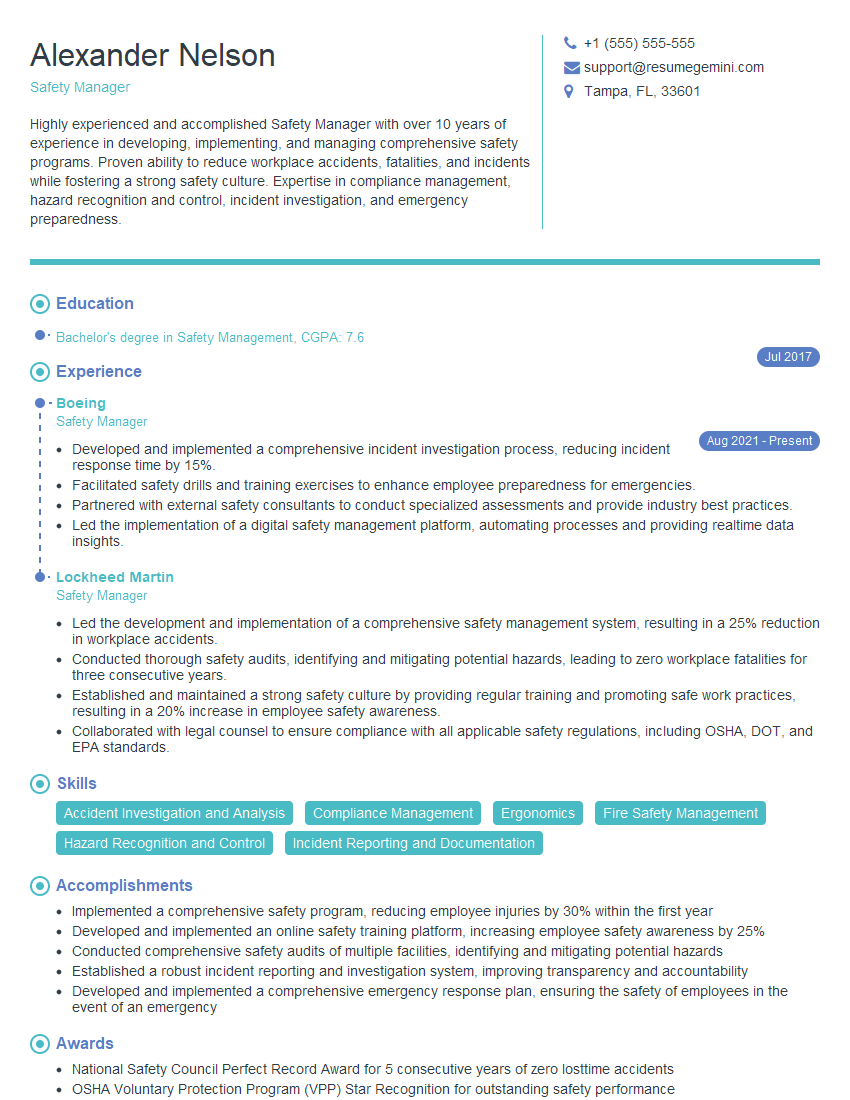
Safety Manager Resume Sample
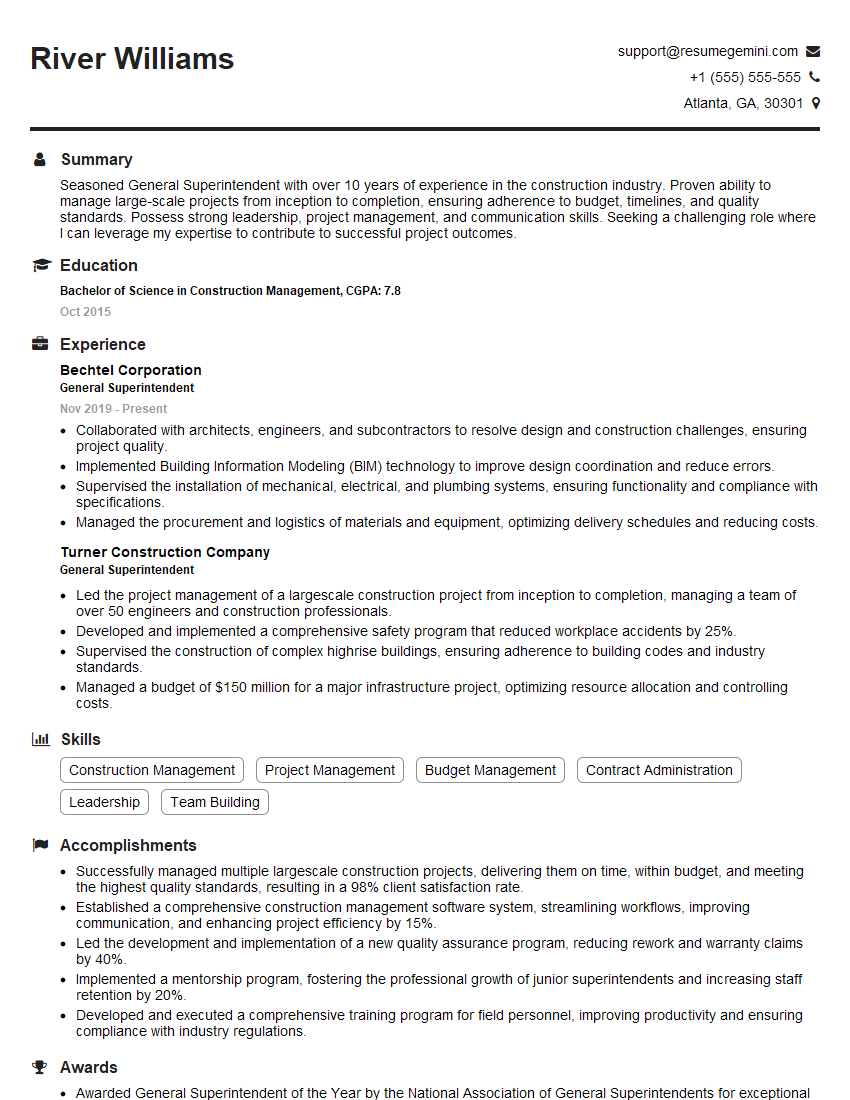
General Superintendent Resume Sample
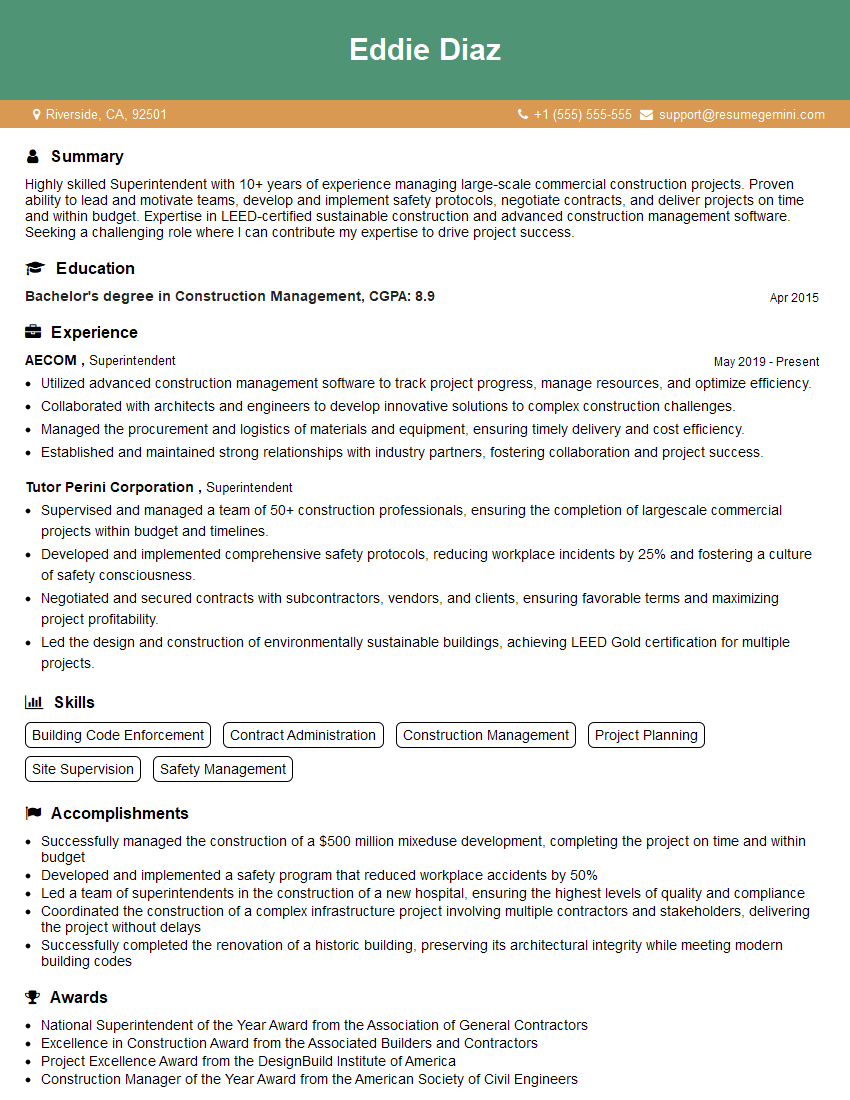
Superintendent Resume Sample
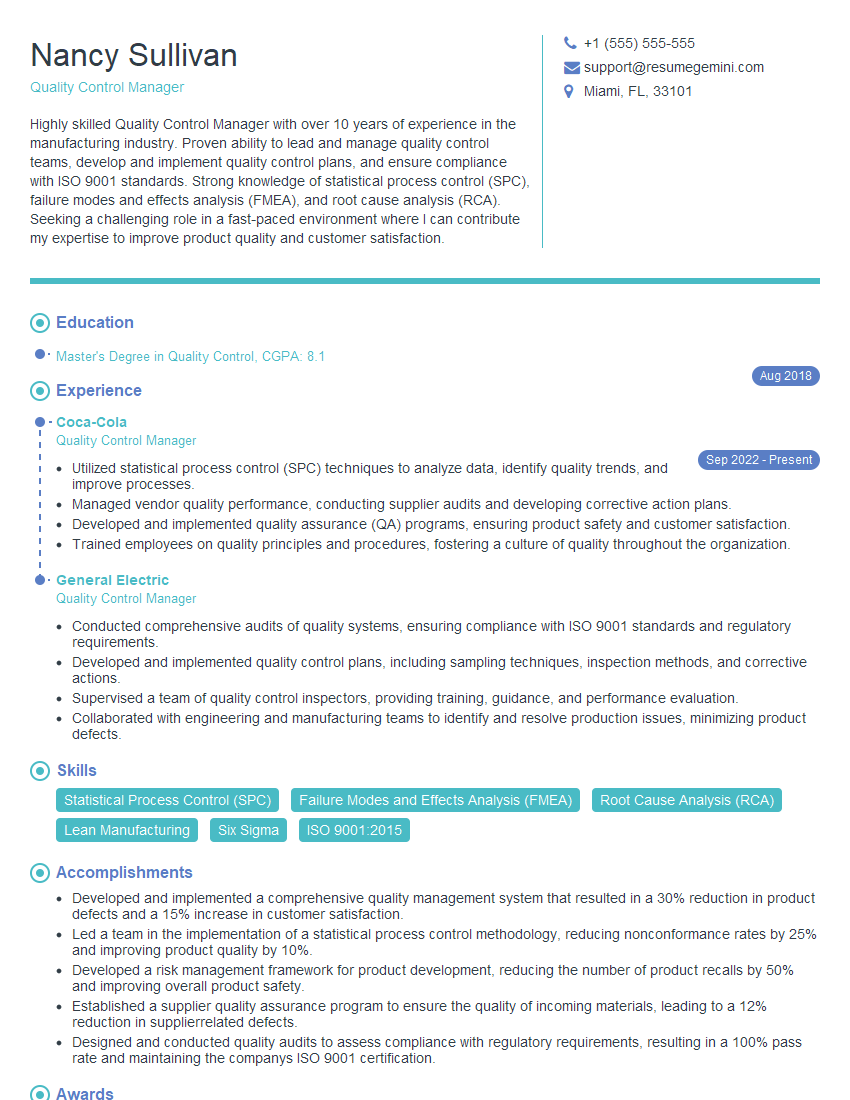
Quality Control Manager Resume Sample
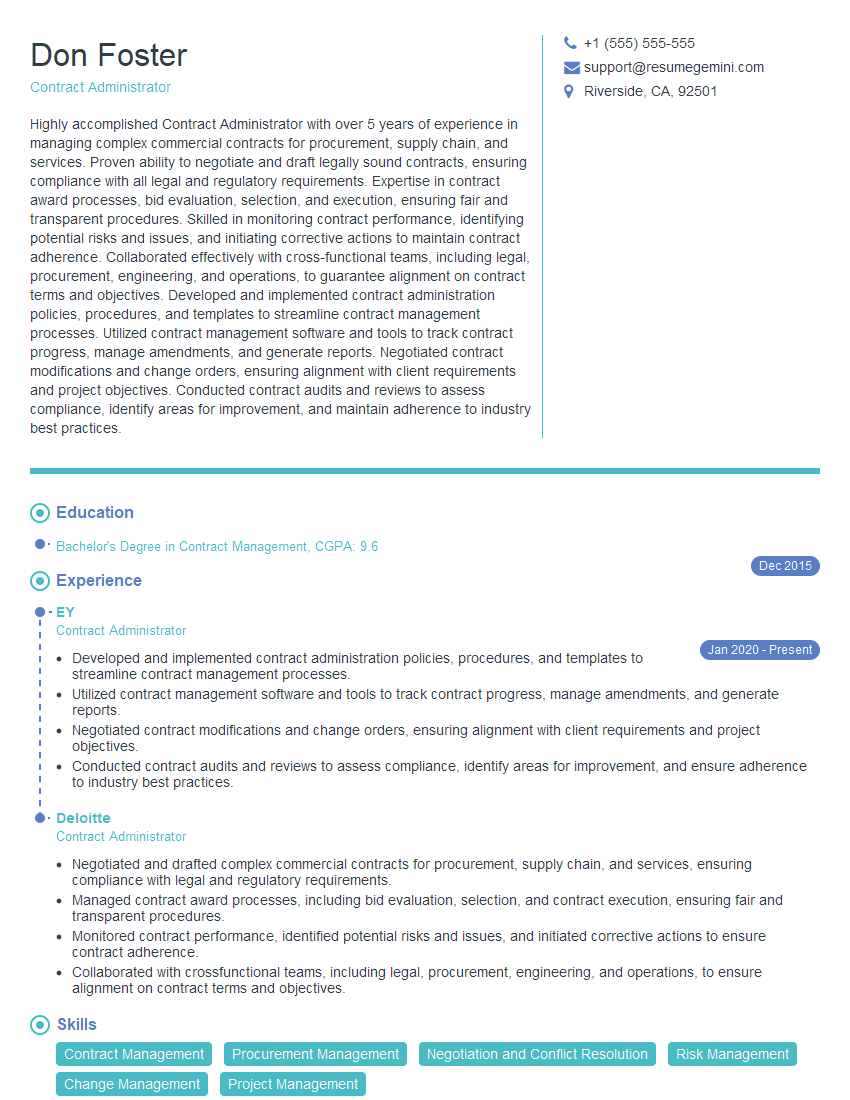
Contract Administrator Resume Sample

Procurement Manager Resume Sample
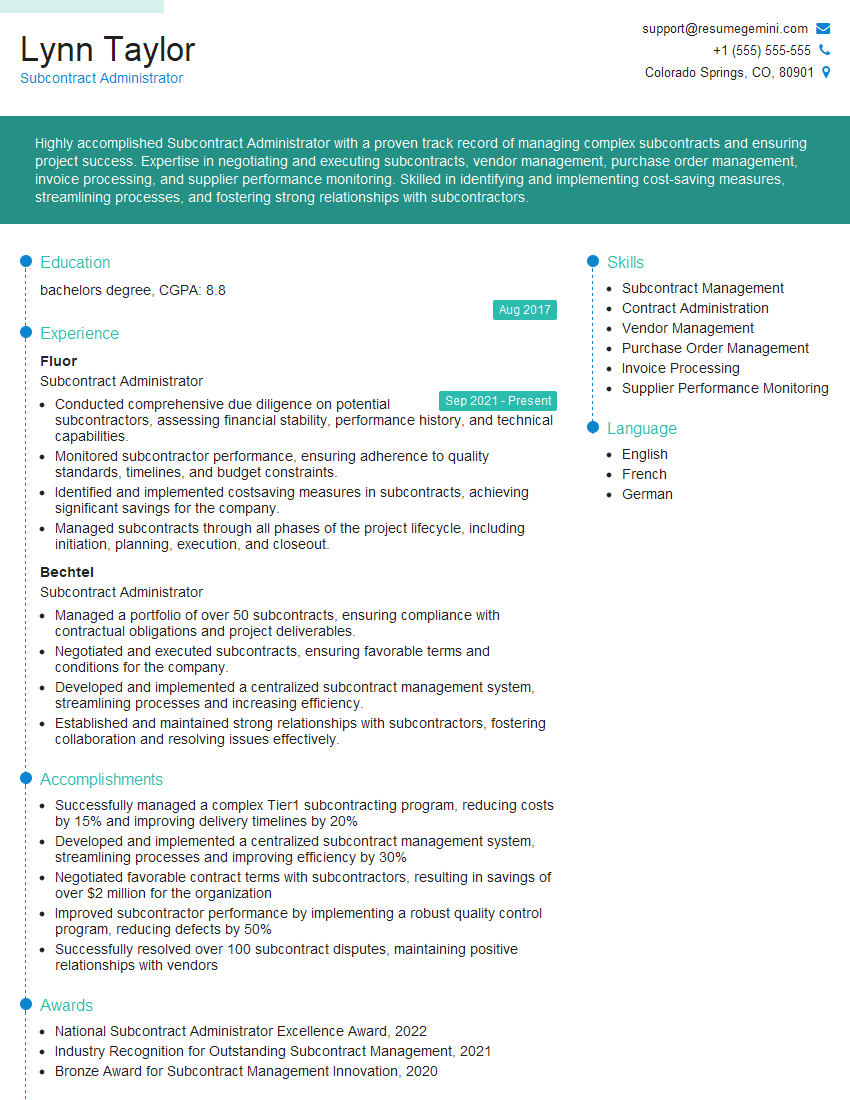
Subcontract Administrator Resume Sample
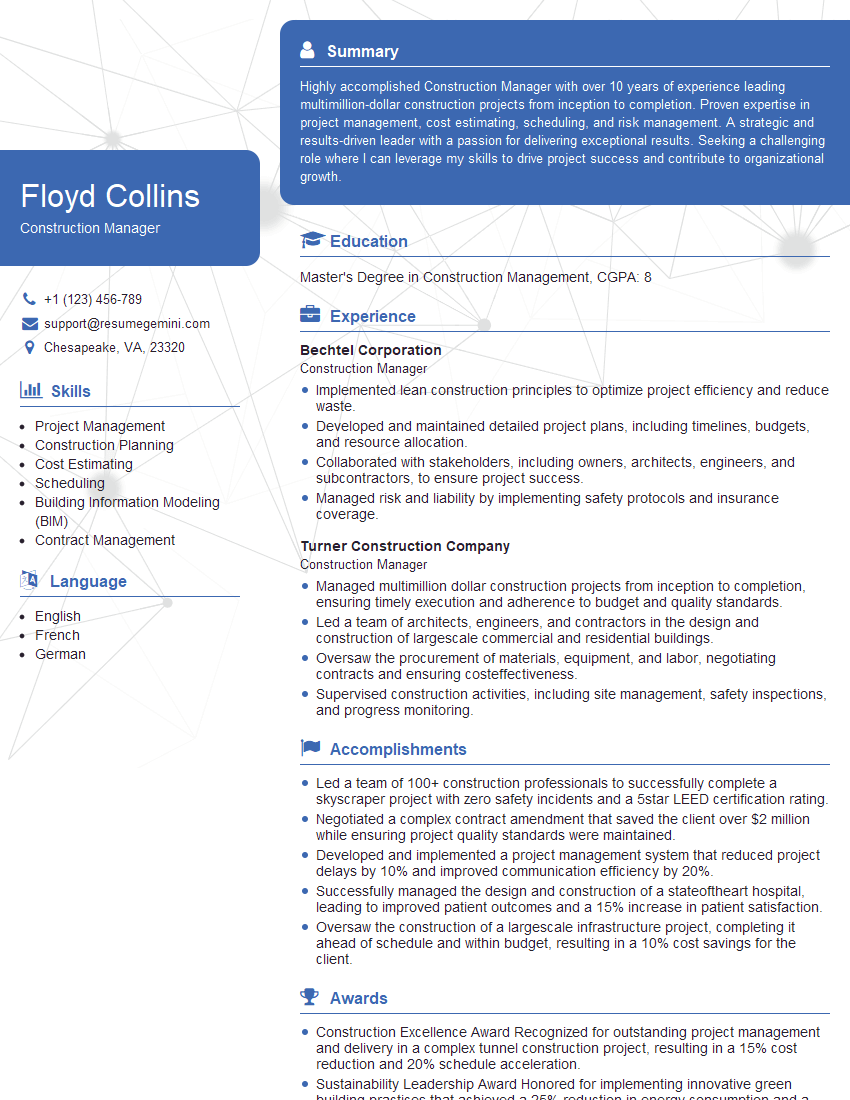
Construction Manager Resume Sample

Construction Superintendent Resume Sample

Project Manager Resume Sample
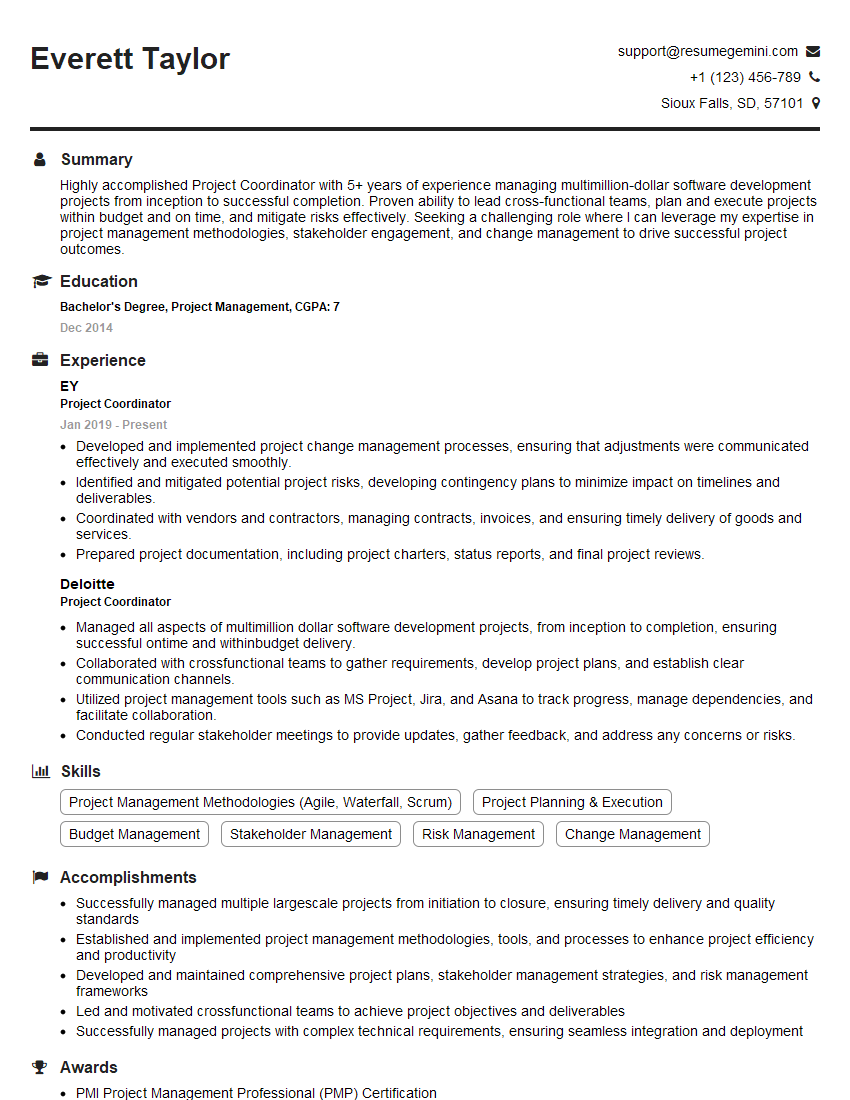
Project Coordinator Resume Sample

Project Engineer Resume Sample
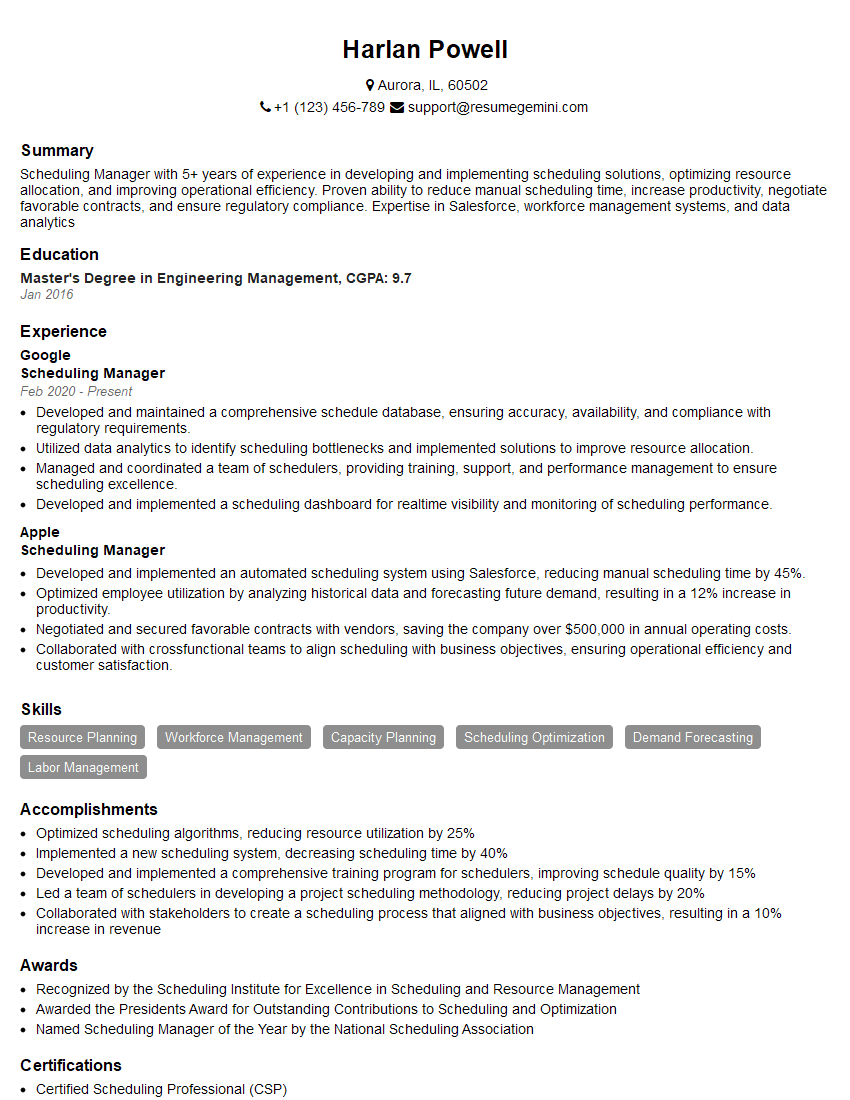
Scheduling Manager Resume Sample
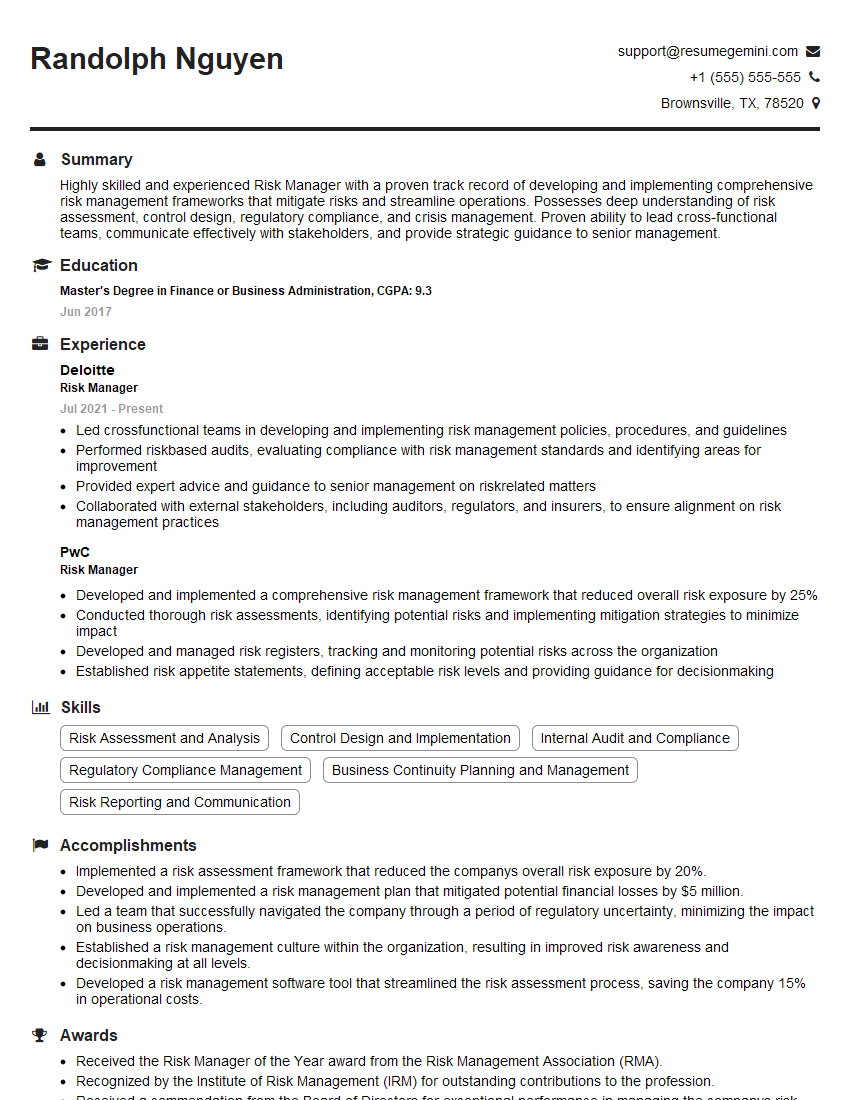
Risk Manager Resume Sample
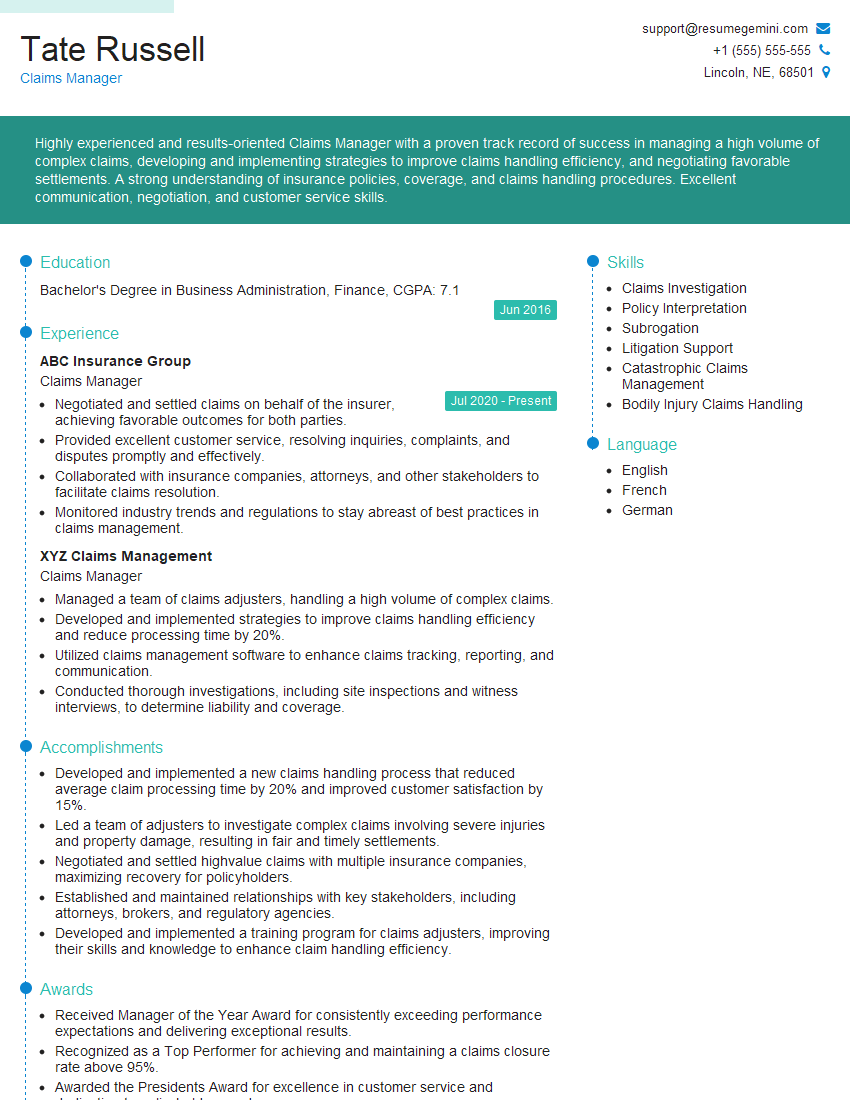
Claims Manager Resume Sample
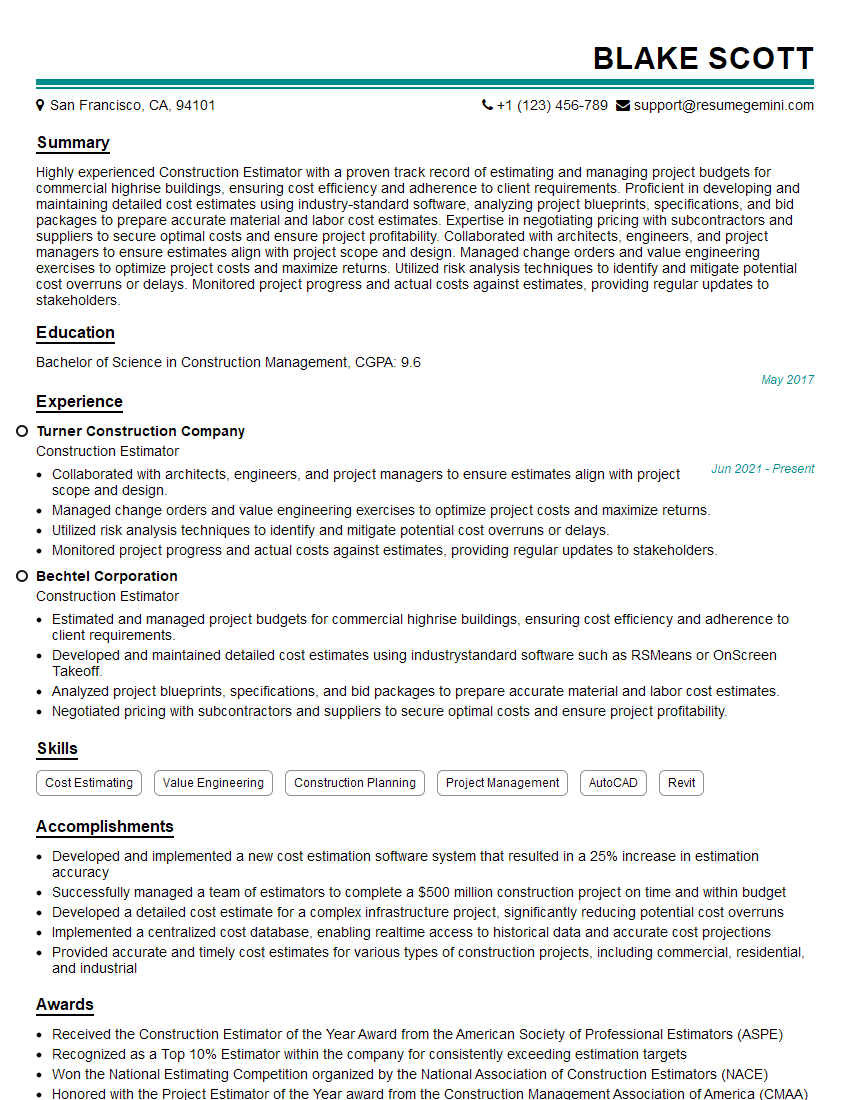
Construction Estimator Resume Sample
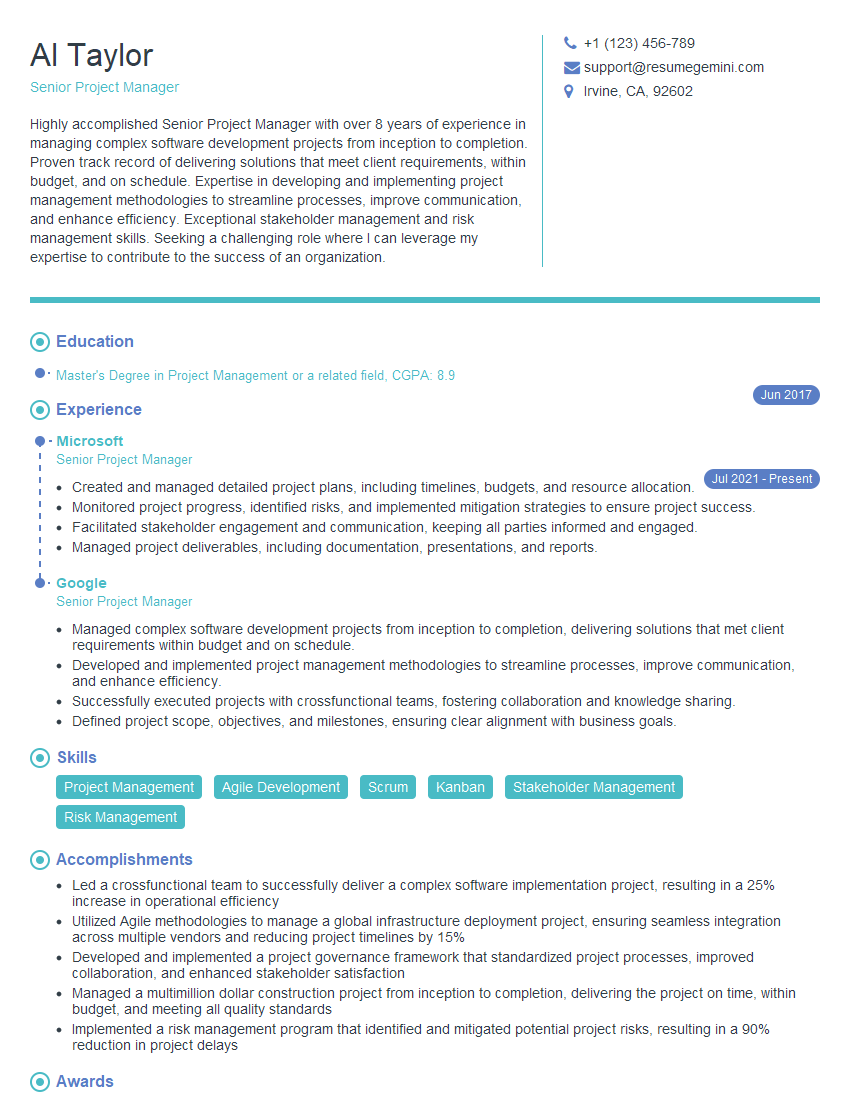
Senior Project Manager Resume Sample
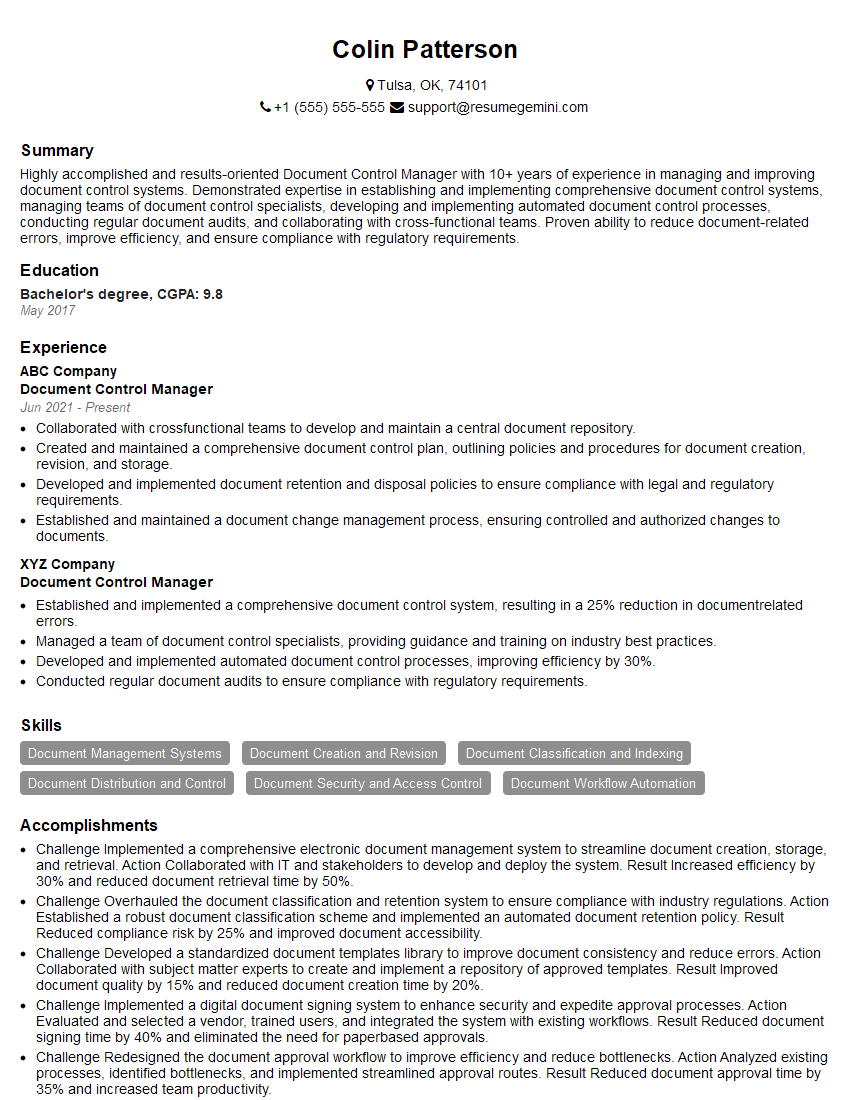
Document Control Manager Resume Sample
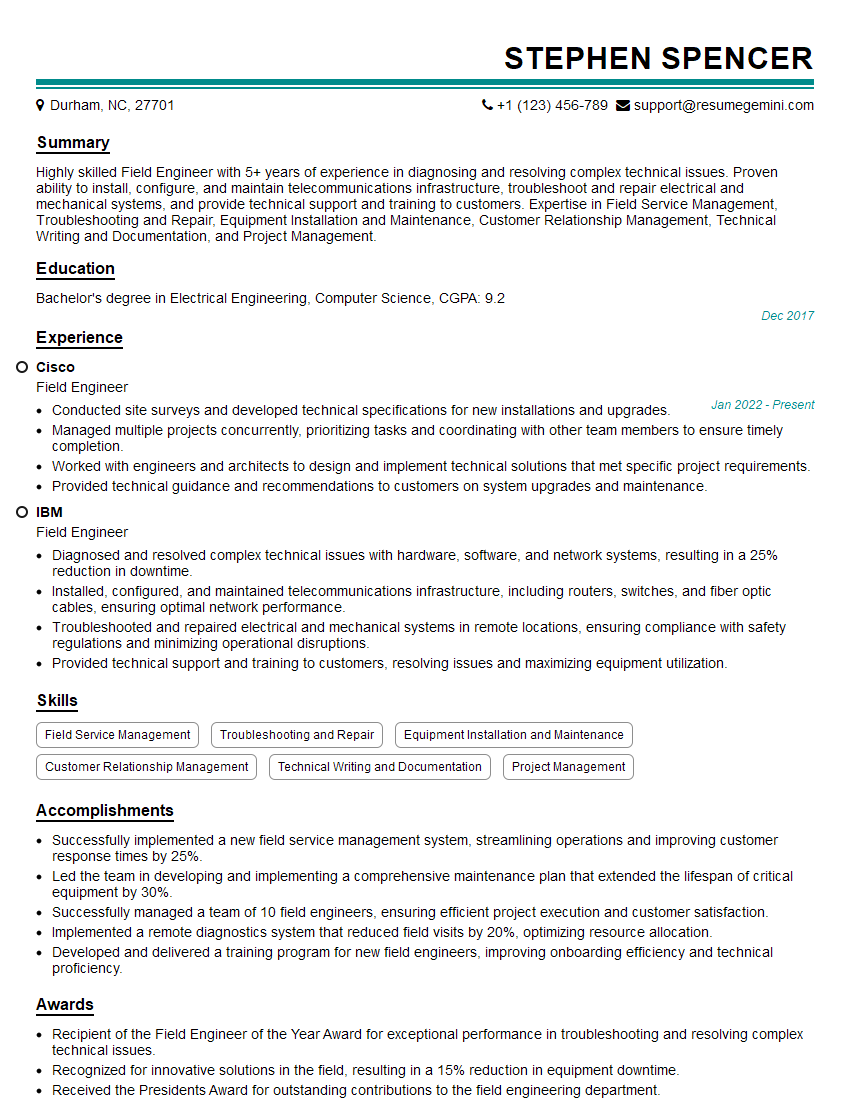
Field Engineer Resume Sample
- Safety Manager
- General Superintendent
- Superintendent
- Quality Control Manager
- Contract Administrator
- Procurement Manager
- Subcontract Administrator
- Construction Manager
- Construction Superintendent
- Project Manager
- Project Coordinator
- Project Engineer
- Scheduling Manager
- Risk Manager
- Claims Manager
- Construction Estimator
- Senior Project Manager
- Document Control Manager
- Field Engineer
Explore more articles
Users Rating of Our Blogs
Share Your Experience
We value your feedback! Please rate our content and share your thoughts (optional).
What Readers Say About Our Blog
Very informative content, great job.
good