Feeling uncertain about what to expect in your upcoming interview? We’ve got you covered! This blog highlights the most important Construction Sequencing interview questions and provides actionable advice to help you stand out as the ideal candidate. Let’s pave the way for your success.
Questions Asked in Construction Sequencing Interview
Q 1. Explain the critical path method (CPM) and its application in construction sequencing.
The Critical Path Method (CPM) is a powerful project management technique used to determine the shortest possible duration for completing a project. In construction sequencing, it helps identify the tasks that directly impact the overall project timeline, known as the critical path. These critical path activities cannot be delayed without delaying the entire project.
Imagine building a house. The foundation must be laid before the walls can go up, and the walls must be finished before the roof. If laying the foundation takes longer than anticipated, the whole project is delayed. This foundation task is part of the critical path. CPM helps pinpoint these critical tasks and allows for focused resource allocation and risk management. We use it to optimize the sequence of construction tasks, minimizing the project duration and cost.
In practice, CPM involves creating a network diagram showing all the tasks and their dependencies. We then calculate the earliest and latest start and finish times for each task. The difference between these times determines the float or slack – the amount of leeway a task has before affecting the overall project duration. Tasks with zero float are on the critical path.
Q 2. Describe the difference between forward and backward pass scheduling.
Forward pass scheduling calculates the earliest possible start and finish times for each task. You start at the beginning of the project and work your way through, adding up the durations of the preceding tasks to determine when each task can begin and end, assuming all preceding tasks start as early as possible. It identifies the shortest possible project duration.
Backward pass scheduling works in reverse. It starts from the project’s end date and works backward, calculating the latest possible start and finish times for each task without delaying the overall project completion. This helps identify the latest possible start time for each task while still meeting the overall deadline. Comparing the forward and backward pass results allows us to find the critical path and tasks with slack (float).
Think of it like planning a road trip. The forward pass is like planning the fastest possible route – you work out the journey time from start to finish. The backward pass is like planning the latest you can leave each location while still arriving on time – ensuring you don’t miss your flight at the destination!
Q 3. How do you handle schedule delays and disruptions during construction?
Handling schedule delays and disruptions requires a proactive and systematic approach. First, we identify the cause of the delay – is it weather, material shortages, subcontractor issues, or design changes? Once the cause is pinpointed, we assess its impact on the critical path. If a critical path task is delayed, we need to develop a recovery plan.
This plan could involve accelerating some tasks by adding resources, re-sequencing tasks to shorten the critical path, or negotiating with subcontractors to expedite their work. We also need to update the schedule, reflecting the actual progress and the revised plan. Communication is crucial – we keep all stakeholders informed of the delay, the recovery plan, and any potential impact on the overall project budget and completion date.
For example, if a hurricane delays the delivery of steel beams, we might need to accelerate the work on other non-critical elements of the building while sourcing alternative steel suppliers to expedite the beam delivery.
Q 4. What software are you proficient in for construction scheduling (e.g., Primavera P6, MS Project)?
I’m proficient in Primavera P6, which is an industry-standard software for managing complex construction schedules. I also have experience with Microsoft Project, especially for smaller projects or when collaborating with clients who prefer that platform. Primavera P6’s strength lies in its robust features for managing large, intricate projects with multiple stakeholders and complex dependencies. I’m comfortable using both programs to create detailed schedules, track progress, analyze critical paths, and manage resources effectively.
Q 5. Explain your experience with resource allocation and leveling in construction projects.
Resource allocation and leveling are crucial for efficient project delivery. Resource allocation involves assigning resources (labor, equipment, materials) to specific tasks. This needs careful consideration of resource availability, cost, and skill sets. Leveling aims to smoothen resource utilization over time, minimizing peaks and valleys in resource demand. This prevents overspending on resources during busy periods and ensures resources are utilized effectively throughout the project.
For example, if we have a limited number of skilled welders, we might level their workload by strategically scheduling welding tasks throughout the project, rather than concentrating them in one short period. This prevents bottlenecks and potential schedule delays. In Primavera P6, I use resource leveling tools to optimize resource allocation and minimize conflicts.
Q 6. How do you identify and mitigate potential conflicts in a construction schedule?
Identifying and mitigating potential schedule conflicts requires careful analysis of task dependencies and resource availability. We use the schedule software to identify any potential clashes in resource needs or task sequencing. For example, if two tasks require the same crane at the same time, a conflict arises. We resolve such conflicts through re-sequencing tasks (if possible), adjusting the resource allocation, or extending the project duration (as a last resort).
Another potential conflict is a subcontractor’s availability clashing with the project timeline. Early identification and communication are key. This could involve negotiating with subcontractors to adjust their schedules or finding alternative subcontractors to minimize project delays. Regular schedule updates and review meetings with the project team and stakeholders are essential to proactively address and mitigate conflicts.
Q 7. Describe your process for developing a construction schedule from a project plan.
Developing a construction schedule from a project plan begins with a thorough understanding of the project scope, drawings, specifications, and the overall project objectives. I then break down the project into smaller, manageable tasks, defining the duration, dependencies, and resource requirements for each. This usually involves collaborating closely with the project team including architects, engineers, and subcontractors.
Next, I create a network diagram using a scheduling software like Primavera P6 or MS Project, defining the sequence of tasks and their relationships (predecessors and successors). I then conduct a forward and backward pass analysis to determine the critical path and any potential float. Resource allocation and leveling follows to optimize resource utilization and prevent conflicts. The final schedule is then reviewed with stakeholders, and any necessary revisions are made before final approval and implementation. Throughout the process, careful attention is paid to risk identification and mitigation, enabling a robust and achievable plan.
Q 8. What are the key performance indicators (KPIs) you track for construction scheduling?
Key Performance Indicators (KPIs) in construction scheduling are crucial for monitoring progress and identifying potential issues early. They provide a quantifiable measure of how well the project is adhering to the plan. I typically track a range of KPIs, categorized for clarity:
- Schedule Performance: This includes metrics like Schedule Variance (SV), which compares the planned progress to the actual progress, and Schedule Performance Index (SPI), which indicates the efficiency of schedule execution. A SPI of 1.0 means we’re on schedule; less than 1 indicates we’re behind, and greater than 1 means we’re ahead.
- Cost Performance: While not directly related to scheduling, cost overruns can significantly impact the schedule. I track the Cost Performance Index (CPI) and budget adherence to anticipate schedule disruptions from budget constraints.
- Milestone Achievement: Tracking the completion dates of key milestones provides a high-level view of overall schedule progress. Delays in critical milestones can ripple through the rest of the project.
- Resource Utilization: Monitoring resource allocation and utilization (labor, equipment, materials) helps identify potential bottlenecks that could cause schedule delays. For instance, if we’re consistently underutilizing a specific crew, it might be a sign of scheduling inefficiencies.
- Critical Path Monitoring: The critical path is the sequence of activities that determines the shortest possible project duration. I constantly monitor the activities on the critical path for potential delays and proactively address them.
Regular reporting and analysis of these KPIs allow for proactive adjustments to the schedule, minimizing delays and cost overruns. For example, if the SPI consistently drops below 1.0, I would immediately investigate the cause and implement corrective actions, such as resource reallocation or schedule adjustments.
Q 9. How do you incorporate risk management into your construction sequencing process?
Risk management is interwoven into every stage of my construction sequencing process. It’s not a separate activity but an integral part of planning and execution. My approach involves these key steps:
- Risk Identification: I start by systematically identifying potential risks – anything that could impact the schedule, such as weather delays, material shortages, subcontractor performance issues, or regulatory changes. We use brainstorming sessions, checklists, and historical data to develop a comprehensive risk register.
- Qualitative Risk Assessment: We assess the likelihood and impact of each identified risk, prioritizing those with higher probability and potential consequences. This involves team discussion and judgment, often aided by tools like risk matrices.
- Quantitative Risk Assessment: Where appropriate, we use quantitative methods like Monte Carlo simulations to assess the uncertainty around activity durations and the overall project schedule. This helps determine the probability of meeting the deadlines.
- Risk Response Planning: For each identified risk, we develop mitigation strategies. These could include buffer times built into the schedule, contingency plans (alternate materials or subcontractors), insurance, or simply careful monitoring and early warning systems.
- Risk Monitoring and Control: Throughout the project, I regularly monitor identified risks, track their status, and implement the planned responses as needed. We also actively look for new risks as they emerge.
For example, on a recent project, we anticipated potential rain delays. Our risk response included building extra buffer time into the schedule for outdoor activities and securing a covered workspace as a contingency.
Q 10. Explain your understanding of Earned Value Management (EVM) and its application.
Earned Value Management (EVM) is a project management technique that integrates scope, schedule, and cost to measure project performance and predict future outcomes. It’s a powerful tool for making data-driven decisions about construction projects.
EVM uses three key metrics:
- Planned Value (PV): The budgeted cost of work scheduled to be completed at a given point in time.
- Earned Value (EV): The value of work actually completed at a given point in time.
- Actual Cost (AC): The actual cost incurred to complete the work.
These metrics are then used to calculate several key performance indicators (KPIs), including:
- Schedule Variance (SV) = EV – PV
- Schedule Performance Index (SPI) = EV / PV
- Cost Variance (CV) = EV – AC
- Cost Performance Index (CPI) = EV / AC
By tracking these KPIs, EVM provides a clear picture of project performance and allows for early detection of potential problems. For example, a negative SV indicates a schedule slippage, while a CPI less than 1 signals cost overruns. I use EVM to track progress, forecast completion dates, and make informed decisions about resource allocation and risk mitigation.
Q 11. How do you communicate schedule updates and changes to stakeholders?
Effective communication is essential for successful construction scheduling. I employ a multi-faceted approach to keep all stakeholders informed about schedule updates and changes:
- Regular Meetings: I hold regular project meetings with key stakeholders, including the owner, subcontractors, and the project team. These meetings cover schedule progress, identify potential issues, and discuss any necessary changes.
- Visual Reporting: I utilize visual tools like Gantt charts and progress reports to present schedule information clearly and concisely. These visuals are much more accessible and easier to understand than lengthy written reports.
- Project Management Software: We use project management software (e.g., Primavera P6, MS Project) to centralize schedule information and provide real-time updates to stakeholders. This allows for collaborative scheduling and easy access to the latest information.
- Formal Change Management Processes: Any schedule changes are documented and communicated formally through change orders or similar mechanisms, ensuring all parties are aware and approve the modifications.
- Proactive Communication: I don’t wait for problems to arise; I proactively communicate potential issues or delays to stakeholders, giving them ample time to react and make necessary adjustments.
For example, if a delay is anticipated due to inclement weather, I’ll inform the stakeholders immediately and propose mitigation strategies, such as adjusting the sequence of activities or seeking approval for a schedule extension.
Q 12. Describe your experience with different scheduling techniques (e.g., Gantt charts, network diagrams).
My experience encompasses a range of scheduling techniques, each with its strengths and weaknesses. I select the appropriate technique based on project complexity and stakeholder needs:
- Gantt Charts: These are excellent for visualizing the schedule in a simple, easy-to-understand format. They show the duration and dependencies of tasks, making them ideal for smaller, less complex projects or for presenting high-level overviews to non-technical stakeholders. However, for large, intricate projects, Gantt charts can become cumbersome and difficult to manage.
- Network Diagrams (CPM/PERT): These diagrams are more powerful for larger, complex projects. They explicitly show the relationships between tasks, identifying critical paths and facilitating what-if analysis. Techniques like Critical Path Method (CPM) and Program Evaluation and Review Technique (PERT) are built upon network diagrams and enable better risk management and resource allocation. They are particularly useful for projects where the duration of tasks is uncertain.
- Other Techniques: I’m also familiar with other techniques like Line of Balance, which is especially beneficial for repetitive tasks and helps optimize resource allocation, and Last Planner System (LPS), which emphasizes collaboration and a pull-based approach to scheduling.
For instance, on a large infrastructure project, I used network diagrams and CPM to analyze the critical path and identify potential bottlenecks. This allowed us to allocate resources more effectively and minimize potential delays.
Q 13. How do you manage change orders and their impact on the construction schedule?
Managing change orders and their impact on the construction schedule requires a systematic and documented approach. My process typically involves:
- Formal Request and Review: All change orders are submitted formally, including a detailed description of the change, its impact on the scope, schedule, and budget. A formal review process is established to evaluate the feasibility and impact of the change.
- Impact Assessment: I thoroughly assess the impact of the change order on the existing schedule. This often involves updating the schedule using project management software and analyzing the critical path to identify any potential delays.
- Schedule Revision: Based on the impact assessment, I revise the schedule to reflect the changes, including the addition of new tasks, updates to task durations, and adjustments to resource allocation. This revised schedule is then shared with all relevant stakeholders.
- Cost and Time Impacts: I calculate the cost and time impacts associated with the change order. This information is crucial for negotiating the revised contract terms and securing necessary approvals.
- Documentation: The entire change management process, including the request, review, assessment, revision, and approval, is meticulously documented to provide a clear audit trail. This is essential for managing disputes and ensuring transparency.
For example, if a change order requires adding a new feature to a building, I would assess how this impacts the existing schedule, potentially delaying the project. I would then propose a revised schedule, detailing the delay and the necessary adjustments, and work with the client to manage the impact.
Q 14. What is your approach to resolving schedule conflicts between different trades or contractors?
Resolving schedule conflicts between different trades or contractors requires proactive communication, collaboration, and a well-defined process. My approach involves these steps:
- Early Identification: I use the project management software to monitor the schedule closely for potential conflicts. This often involves analyzing task dependencies and resource utilization.
- Communication and Collaboration: Once a conflict is identified, I immediately involve the affected trades or contractors in a collaborative discussion. This allows for open communication and a shared understanding of the issue.
- Conflict Resolution Strategies: Several strategies can be employed to resolve schedule conflicts. These could include adjusting task sequencing, reallocating resources, extending the project timeline, negotiating changes in scope, or implementing a phased approach.
- Documentation and Agreement: Any agreement reached regarding the resolution of the conflict is documented formally and agreed upon by all parties involved. This ensures clarity and avoids future disputes.
- Monitoring and Adjustment: Even after a conflict has been resolved, I continue to monitor the schedule to ensure the resolution is effective and no new conflicts arise. Necessary adjustments can be made if needed.
For example, if a plumber’s work is dependent on an electrician’s work, but the electrician is delayed, I would facilitate a discussion between the two, perhaps adjusting the plumber’s schedule to accommodate the delay, or finding ways to expedite the electrician’s work. The outcome would be documented to ensure everyone is on the same page.
Q 15. Explain your experience with look-ahead scheduling and its benefits.
Look-ahead scheduling is a crucial technique in construction management that focuses on planning the next few weeks or months of work in detail. It’s like having a detailed roadmap for the immediate future, allowing for proactive problem-solving and resource allocation. Unlike a long-term master schedule, which provides a high-level overview, a look-ahead schedule dives into the specifics of tasks, resources, and potential conflicts within a shorter timeframe.
In my experience, using look-ahead scheduling has significantly improved project efficiency. For instance, on a recent high-rise project, we employed a two-week look-ahead schedule. This allowed us to anticipate material deliveries, identify potential clashes between trades, and proactively address any resource constraints. By visualizing the upcoming tasks and dependencies, we were able to optimize the workflow, minimizing delays and maximizing productivity. This resulted in a faster completion time and reduced overall project costs. The benefits include:
- Improved coordination: Identifying and resolving potential conflicts between different trades before they happen.
- Enhanced resource allocation: Optimizing the use of equipment, materials, and labor.
- Proactive problem-solving: Addressing potential issues before they escalate into major delays.
- Reduced rework: Avoiding costly mistakes by carefully planning each step.
Career Expert Tips:
- Ace those interviews! Prepare effectively by reviewing the Top 50 Most Common Interview Questions on ResumeGemini.
- Navigate your job search with confidence! Explore a wide range of Career Tips on ResumeGemini. Learn about common challenges and recommendations to overcome them.
- Craft the perfect resume! Master the Art of Resume Writing with ResumeGemini’s guide. Showcase your unique qualifications and achievements effectively.
- Don’t miss out on holiday savings! Build your dream resume with ResumeGemini’s ATS optimized templates.
Q 16. How do you ensure the accuracy and reliability of your construction schedule?
Ensuring the accuracy and reliability of a construction schedule is paramount. It’s a multifaceted process that begins with meticulous data collection and continues throughout the project lifecycle. I approach this using a combination of strategies:
- Accurate task breakdown: Defining each task clearly, including duration, dependencies, and resource requirements. We use Work Breakdown Structures (WBS) to ensure a comprehensive and granular breakdown of the project.
- Realistic duration estimation: Estimating task durations based on historical data, expert judgment, and considering potential risks and uncertainties. We utilize techniques like three-point estimating to account for variability.
- Regular monitoring and updates: Constantly tracking progress against the schedule, identifying variances, and making necessary adjustments. We hold regular progress meetings and use project management software to monitor progress visually.
- Collaboration and communication: Regularly communicating with all stakeholders—from subcontractors to clients—to ensure everyone is on the same page and that potential issues are identified early. Transparent communication is key.
- Critical path analysis: Identifying the critical path—the sequence of tasks that directly impacts the project completion date—and focusing on managing the risks and constraints related to those specific tasks. This highlights the most vulnerable parts of the schedule.
By employing these methods, we significantly reduce the risk of schedule inaccuracies and ensure the construction timeline remains reliable.
Q 17. Describe a situation where you had to revise a construction schedule due to unforeseen circumstances.
During the construction of a large-scale retail development, we encountered unforeseen circumstances when an unexpected archeological find was discovered on the site. This discovery mandated a complete halt to excavation work in a significant portion of the site, and we needed to immediately revise our construction schedule. This was a classic example of a ‘constraint’ in project management.
Our immediate response involved:
- Assessing the impact: We carefully determined the affected tasks and their dependencies within the schedule.
- Collaborating with stakeholders: Engaging with the authorities, archeologists, and the client to understand the regulatory requirements and timeline for the archeological investigation.
- Developing contingency plans: We explored alternative sequencing options to minimize the disruption to the overall project timeline. This included re-sequencing tasks in unaffected areas and prioritizing critical path activities.
- Re-scheduling impacted tasks: We revised the schedule to accommodate the delay caused by the archeological find, incorporating the revised timelines for the investigation and subsequent work.
- Communicating the changes: We transparently communicated the revised schedule and the reasons behind the change to all stakeholders, keeping them informed every step of the way.
Through proactive collaboration and effective scheduling adjustments, we were able to mitigate the impact of this unexpected event and deliver the project with minimal overall delays.
Q 18. How do you utilize technology to improve the efficiency of construction sequencing?
Technology plays a vital role in improving the efficiency of construction sequencing. We leverage several software solutions and tools to enhance our processes:
- 4D BIM (Building Information Modeling): This software integrates 3D models with time-based data to create a virtual representation of the project, allowing us to simulate different sequencing options and identify potential clashes before they occur on-site. It enables visualization of the construction process.
- Project management software (e.g., Primavera P6, MS Project): These tools enable us to create, manage, and update schedules efficiently, track progress, identify critical paths, and perform ‘what-if’ analyses to explore different scenarios.
- Mobile apps for field data collection: Real-time updates on task progress, material availability, and potential issues from the field using dedicated apps provide timely data for schedule adjustments.
- Cloud-based collaboration platforms: Facilitating seamless communication and data sharing among team members, subcontractors, and clients, regardless of their location. This improves transparency and efficiency.
The integration of these technologies allows for better visualization, improved coordination, enhanced communication, and ultimately, a more efficient and streamlined construction sequencing process.
Q 19. What are the key factors to consider when developing a realistic construction schedule?
Developing a realistic construction schedule requires careful consideration of several key factors:
- Project scope and requirements: A clear and detailed understanding of the project scope is fundamental. This includes all the tasks, deliverables, and specifications.
- Resource availability: Accurately assessing the availability of labor, equipment, materials, and subcontractors is essential. Delays in resource procurement can significantly impact the schedule.
- Site conditions and constraints: Understanding the site conditions, including access, topography, utilities, and potential environmental restrictions, is crucial for realistic scheduling.
- Risk assessment and mitigation: Identifying potential risks and developing mitigation plans is essential for creating a robust schedule that can withstand unforeseen events.
- Regulatory requirements and approvals: Incorporating necessary permits, inspections, and approvals into the schedule is critical to avoid delays.
- Stakeholder expectations and communication: Clearly communicating the schedule and expectations to all stakeholders and obtaining their buy-in is essential for successful execution.
By carefully considering all these factors, we can develop a construction schedule that is not only realistic but also flexible enough to adapt to changing circumstances.
Q 20. Explain your experience with constraint management in construction scheduling.
Constraint management is a crucial aspect of construction scheduling. Constraints are limitations or restrictions that can impact the project’s timeline or budget. These can include resource limitations, regulatory approvals, site conditions, or external factors. My experience in constraint management involves a proactive approach focusing on identification, analysis, and mitigation.
For example, on a recent project, a critical path activity was constrained by the availability of a specialized crane. To manage this constraint, we:
- Identified the constraint: Clearly defined the limited availability of the crane and its impact on the critical path.
- Analyzed the impact: Assessed the potential delays and cost implications of the constraint.
- Developed mitigation strategies: Explored alternative options, such as renting an additional crane or re-sequencing tasks to minimize the reliance on the constrained resource.
- Implemented the chosen strategy: After evaluating the options, we decided to rent an additional crane, thereby mitigating the potential delay.
- Monitored the effectiveness: We closely monitored the impact of the implemented strategy and made further adjustments as needed.
Effective constraint management requires a combination of proactive planning, careful analysis, and creative problem-solving. It’s about anticipating potential bottlenecks and developing strategies to overcome them before they significantly impact the project.
Q 21. How do you handle the impact of weather delays on the construction schedule?
Weather delays are an inevitable challenge in construction. My approach involves a multi-pronged strategy focused on prediction, mitigation, and adaptation. Firstly, we use weather forecasting tools and historical data to anticipate potential delays. This allows for proactive planning and the incorporation of weather-related buffer time into the schedule.
Secondly, we develop contingency plans that address specific weather-related risks. This might involve securing alternative materials that are less susceptible to weather damage or having backup plans for indoor work during inclement weather. Thirdly, we continuously monitor weather conditions throughout the project and adjust the schedule accordingly. If unexpected weather events occur, we promptly reassess the impact on the critical path and make the necessary adjustments, often involving reallocation of resources or task re-sequencing. Transparent communication with all stakeholders is crucial during such events.
Finally, using a project management software allows for seamless tracking and reporting of weather-related delays. This data is then used to inform future project planning and resource allocation, making the project more resilient to weather-related disruptions.
Q 22. Describe your experience with optimizing resource utilization in construction projects.
Optimizing resource utilization in construction is crucial for on-time and within-budget project delivery. It involves strategically allocating resources like labor, equipment, and materials to maximize efficiency and minimize idle time. My approach involves a multi-pronged strategy:
- Resource Leveling: I utilize scheduling software to analyze resource demands over time. This helps identify potential bottlenecks and allows for the smoothing of resource allocation, preventing over-allocation in certain periods and under-utilization in others. For example, if we have a large concrete pour scheduled, we can analyze if we have enough skilled labor and equipment available, or if we need to adjust the schedule to prevent delays.
- Critical Path Analysis: By identifying the critical path – the sequence of tasks that directly impacts the project’s overall duration – we can focus resource allocation on these activities to minimize schedule slippage. Delaying non-critical path activities, where feasible, can free up resources for the critical path.
- Resource Smoothing: This technique involves adjusting the schedule to reduce peaks and valleys in resource demand without extending the project duration. This ensures consistent workflow and avoids the need for expensive last-minute resource acquisition or lay-offs.
- Collaboration and Communication: Effective communication with subcontractors and suppliers is vital. Accurate forecasting of material deliveries and subcontractor availability prevents delays and ensures optimal resource utilization.
In a recent high-rise project, resource leveling allowed us to shift some carpentry tasks slightly, freeing up skilled carpenters for the critical structural steel erection, thus preventing a significant schedule delay. This saved the project thousands of dollars in potential penalties.
Q 23. Explain your knowledge of different types of schedules (e.g., master schedule, project schedule).
Construction projects utilize various schedules, each serving a unique purpose:
- Master Schedule: This high-level schedule provides a broad overview of the entire project, outlining major milestones and key phases. It’s often presented as a bar chart showing the duration of each phase. Think of it as the project’s roadmap.
- Project Schedule: This is a more detailed schedule, breaking down the master schedule into individual tasks and activities. It shows the sequence of these tasks, their durations, and dependencies. This is the detailed itinerary of the project.
- Sub-schedules: These further break down the project schedule into even smaller, more manageable components. For example, a sub-schedule might detail the activities for a specific subcontractor or a particular building phase.
- Look-ahead Schedules: These short-term schedules, typically covering a week or a month, focus on the immediate tasks. They’re essential for daily planning and coordination.
In practice, I often use software like Primavera P6 or Microsoft Project to create and manage these schedules, ensuring seamless integration and clear visibility across all levels of the project.
Q 24. What are the potential consequences of inaccurate or poorly planned construction sequencing?
Inaccurate or poorly planned construction sequencing can lead to a cascade of negative consequences:
- Cost Overruns: Inefficient sequencing can lead to increased labor costs, equipment idle time, and material waste. Delays often result in increased overhead and potential penalties.
- Schedule Delays: Poor sequencing can create bottlenecks, where one activity is delayed and holds up subsequent activities. This snowball effect can significantly delay project completion.
- Safety Hazards: Uncoordinated sequencing can create unsafe working conditions, leading to accidents and injuries.
- Quality Issues: Rushing to compensate for delays can compromise the quality of workmanship.
- Client Dissatisfaction: Delays and cost overruns inevitably lead to unhappy clients, potentially damaging your reputation and future business.
For instance, if the foundation isn’t completed before the framing begins, the entire project can be halted, leading to substantial financial losses and reputational damage.
Q 25. How do you use progress tracking and reporting to manage the construction schedule?
Progress tracking and reporting are integral to managing the construction schedule. My approach involves:
- Regular Site Visits: Conducting frequent site inspections allows for firsthand assessment of progress, identification of potential issues, and prompt corrective action.
- Progress Meetings: Holding regular meetings with the project team allows for collaborative problem-solving and ensures everyone is aligned on progress and upcoming tasks.
- Progress Reporting Software: Using software to track progress against the schedule allows for easy visualization and analysis of performance. This can involve updating task completion percentages and identifying variances from the plan.
- Earned Value Management (EVM): EVM provides a quantitative approach to assess the project’s performance, comparing planned costs and schedule against actual progress. This helps identify areas that are ahead or behind schedule and budget.
Using these methods, I can proactively address any deviations from the plan, preventing small problems from becoming major setbacks. I also generate regular reports to stakeholders, keeping them informed and ensuring transparency.
Q 26. Describe your experience with integrating construction sequencing with other project management processes.
Construction sequencing is deeply intertwined with other project management processes. It requires seamless integration with:
- Risk Management: Identifying and mitigating potential risks that could impact sequencing is crucial. Delays due to weather, material shortages, or unforeseen site conditions need to be addressed proactively.
- Quality Control: Sequencing needs to be planned to ensure that quality inspections can be carried out at appropriate stages, preventing defects from propagating.
- Procurement Management: Material procurement needs to be carefully coordinated with the construction schedule to avoid delays. Timely ordering and delivery are essential for maintaining the schedule.
- Cost Control: Sequencing directly impacts project costs. By optimizing sequencing, we can minimize waste, maximize resource utilization, and ensure that the project remains within budget.
In a recent project, integrating sequencing with procurement allowed us to stagger material deliveries, preventing our site from becoming overcrowded and improving overall safety and efficiency.
Q 27. How do you ensure that the construction schedule aligns with the overall project budget?
Aligning the construction schedule with the overall project budget requires careful planning and continuous monitoring:
- Detailed Cost Estimates: Accurate cost estimates for each task are essential. These estimates should factor in labor, equipment, materials, and contingency costs.
- Resource Allocation Optimization: Optimizing resource allocation, as discussed earlier, minimizes costs by reducing idle time and preventing waste.
- Value Engineering: Identifying areas where cost savings can be achieved without compromising quality or functionality is crucial. This often involves exploring alternative materials or construction methods.
- Regular Budget Monitoring: Closely monitoring actual costs against the budget throughout the project is essential. Any variances require immediate investigation and corrective actions.
- Contingency Planning: Incorporating a contingency fund to address unforeseen costs is prudent. This helps absorb unexpected expenses without derailing the project.
By employing these strategies, I can ensure that the schedule is realistic and achievable within the allocated budget. Regular communication with stakeholders keeps everyone informed and prevents surprises.
Key Topics to Learn for Construction Sequencing Interview
- Critical Path Method (CPM): Understanding how to identify and manage the critical path to optimize project schedules and minimize delays. Practical application includes analyzing network diagrams and calculating float times.
- Precedence Diagramming Method (PDM): Mastering the creation and interpretation of PDM networks, including the various types of dependencies (finish-to-start, start-to-start, etc.). Practical application involves scheduling complex projects with multiple interdependent tasks.
- Resource Allocation and Leveling: Learn how to effectively allocate resources (labor, equipment, materials) across different phases of a project, optimizing resource utilization and minimizing conflicts. Practical application involves using scheduling software to level resources and mitigate peak demand.
- Constraint Management: Understanding and mitigating the impact of various project constraints (time, budget, resources, regulations). Practical application involves developing contingency plans and making informed trade-off decisions.
- Sequencing Strategies: Explore different sequencing techniques, including fast-tracking, crashing, and other optimization methods. Practical application involves applying appropriate strategies based on project specifics and objectives.
- Risk Assessment and Mitigation in Sequencing: Identifying potential risks that can disrupt the sequence and developing strategies to mitigate their impact. Practical application includes incorporating buffers in the schedule and developing contingency plans.
- Software Proficiency (Primavera P6, MS Project): Demonstrating familiarity with industry-standard scheduling software is crucial. Practical application involves showcasing your experience in creating, updating, and analyzing project schedules using these tools.
Next Steps
Mastering Construction Sequencing is paramount for career advancement in the construction industry. A strong understanding of these concepts demonstrates your ability to manage complex projects efficiently, minimizing costs and maximizing profitability. To significantly boost your job prospects, creating a well-structured, ATS-friendly resume is crucial. ResumeGemini is a trusted resource to help you craft a professional and impactful resume that highlights your skills and experience effectively. Examples of resumes tailored specifically to Construction Sequencing professionals are available to guide you. Invest the time to build a compelling resume – it’s your first impression on potential employers.
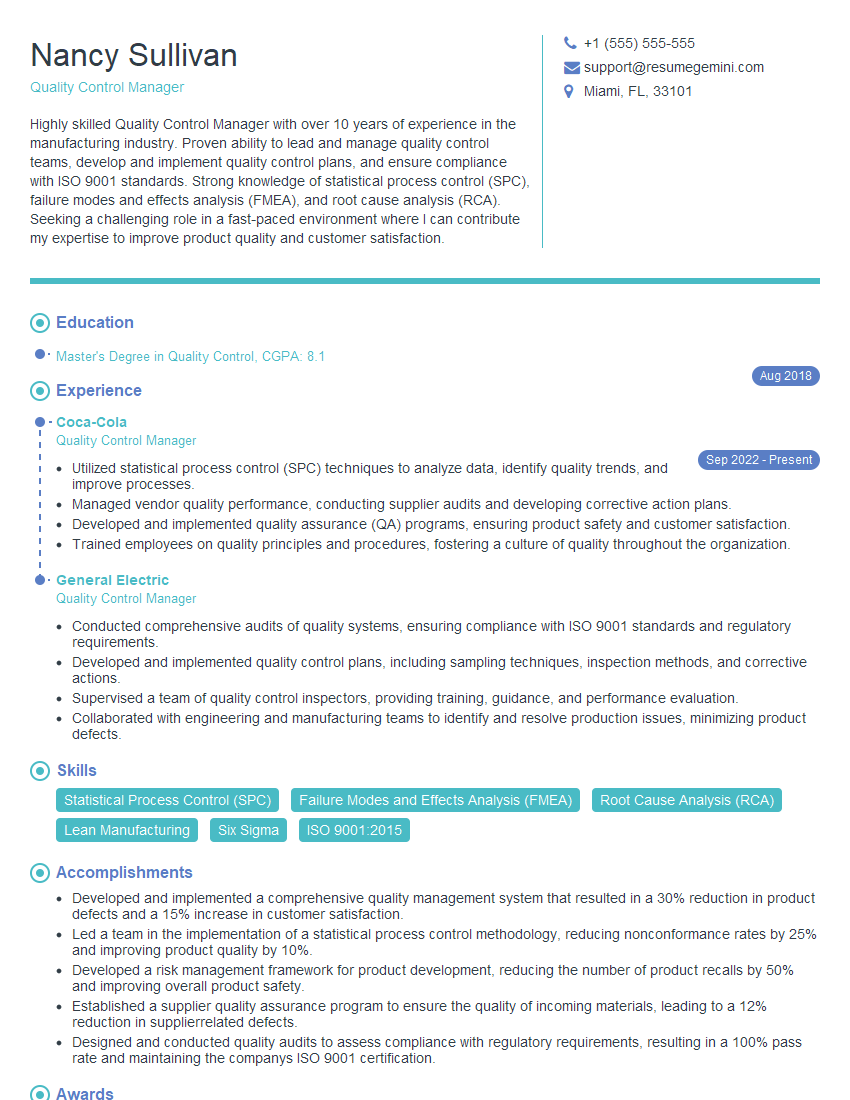
Quality Control Manager Resume Sample
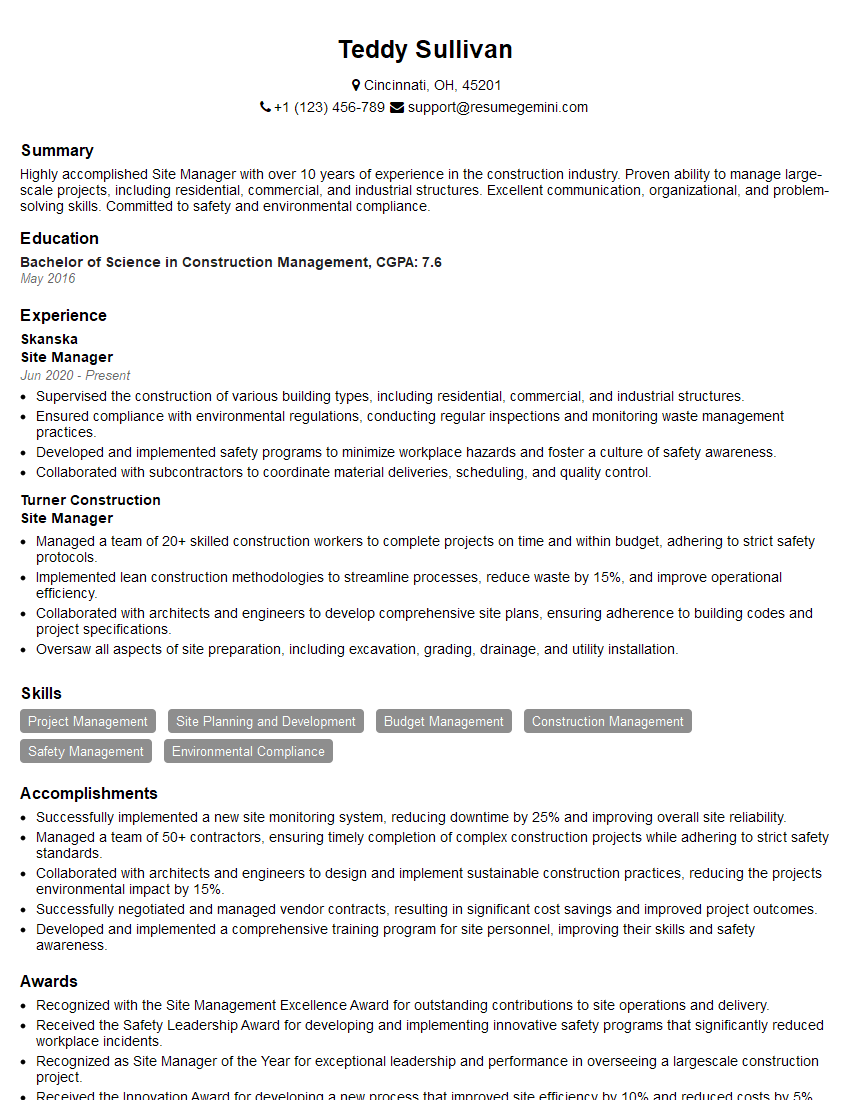
Site Manager Resume Sample
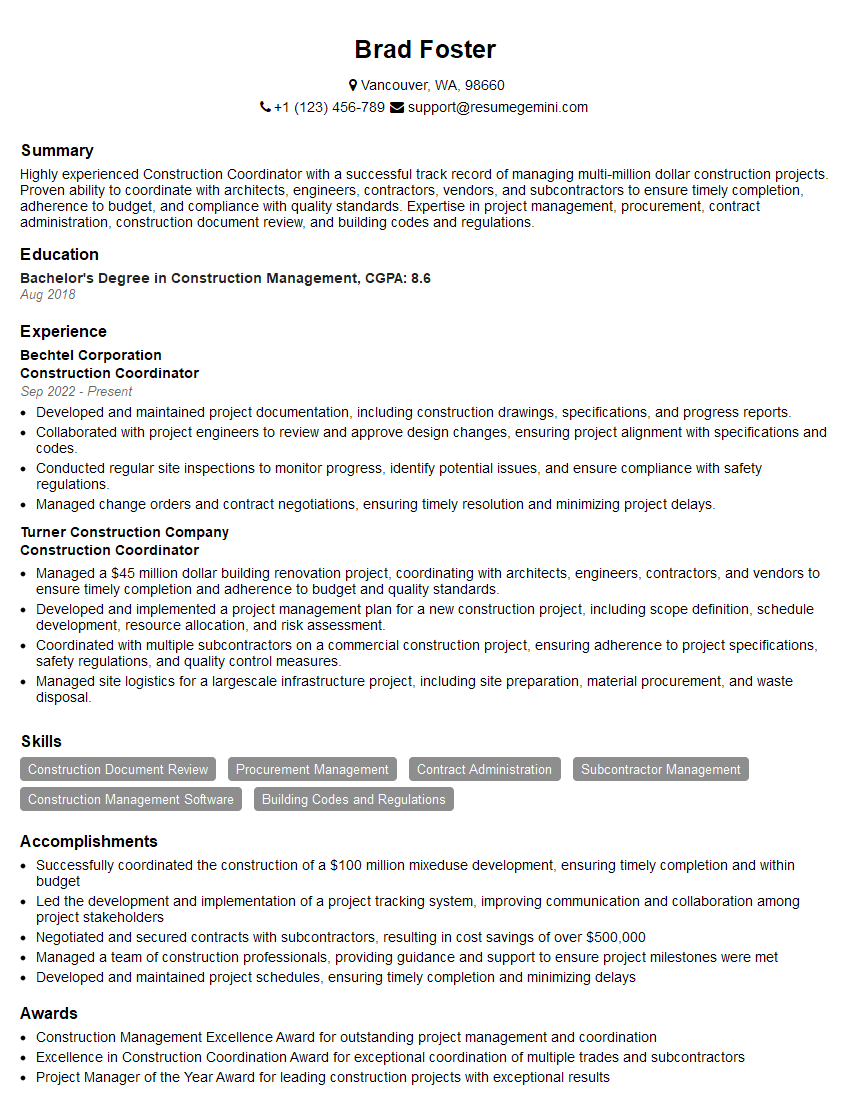
Construction Coordinator Resume Sample

Construction Superintendent Resume Sample
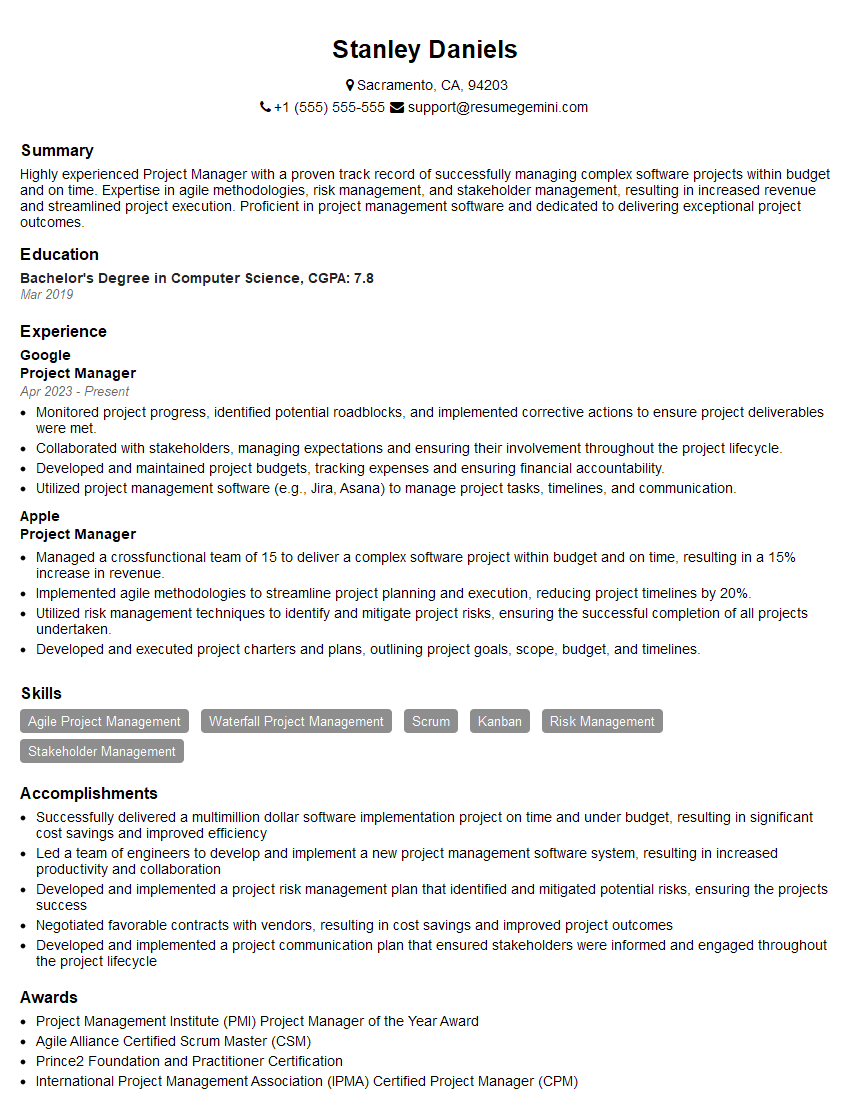
Project Manager Resume Sample

Project Engineer Resume Sample
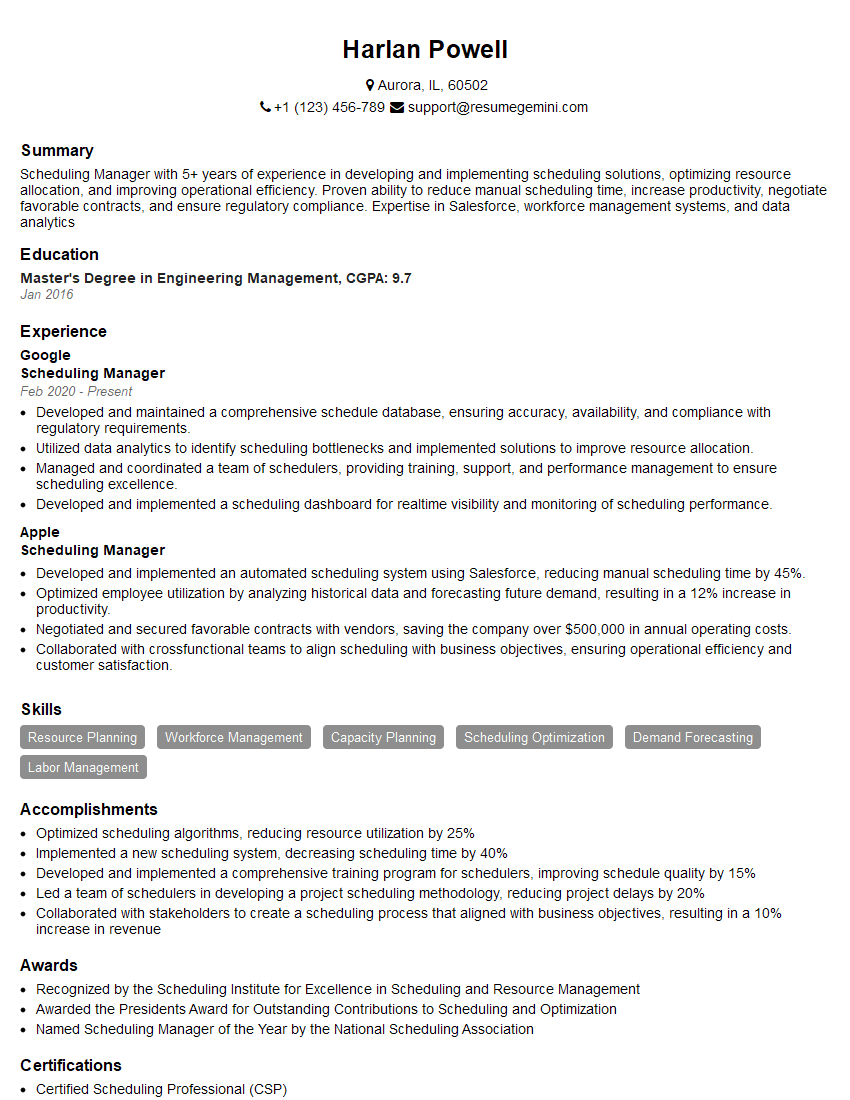
Scheduling Manager Resume Sample
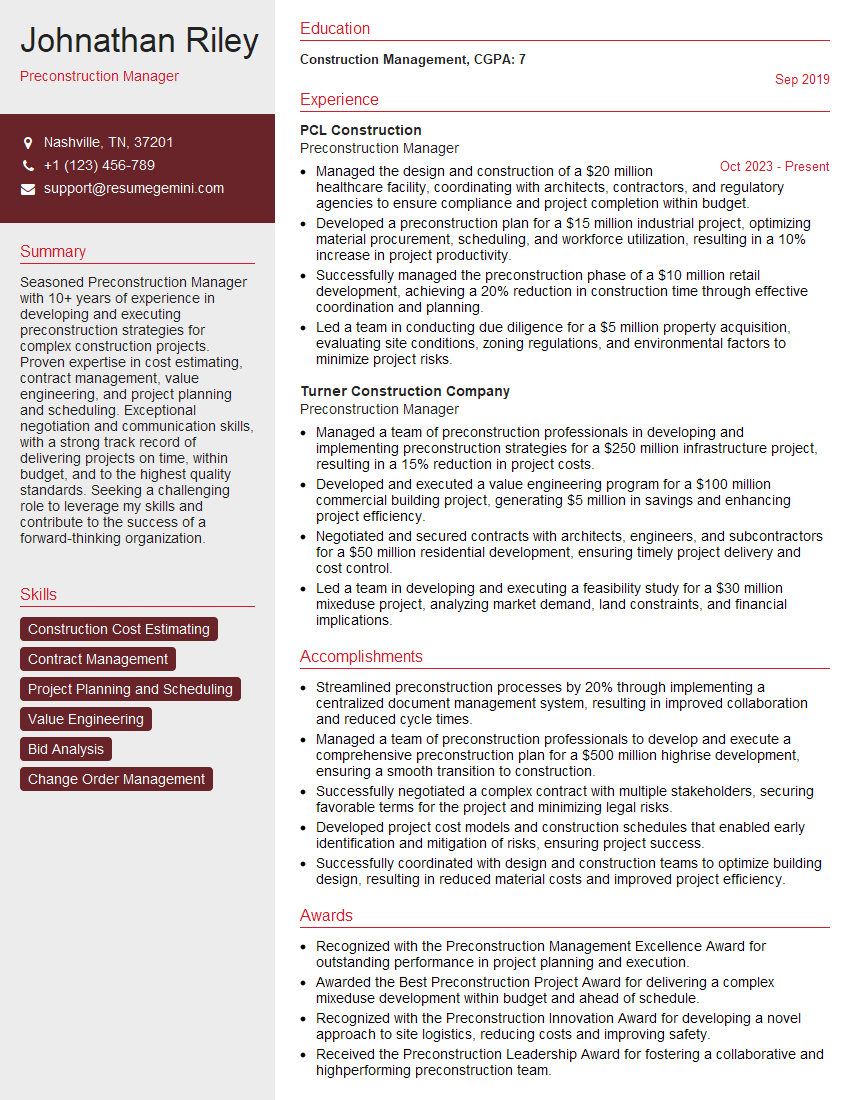
Preconstruction Manager Resume Sample
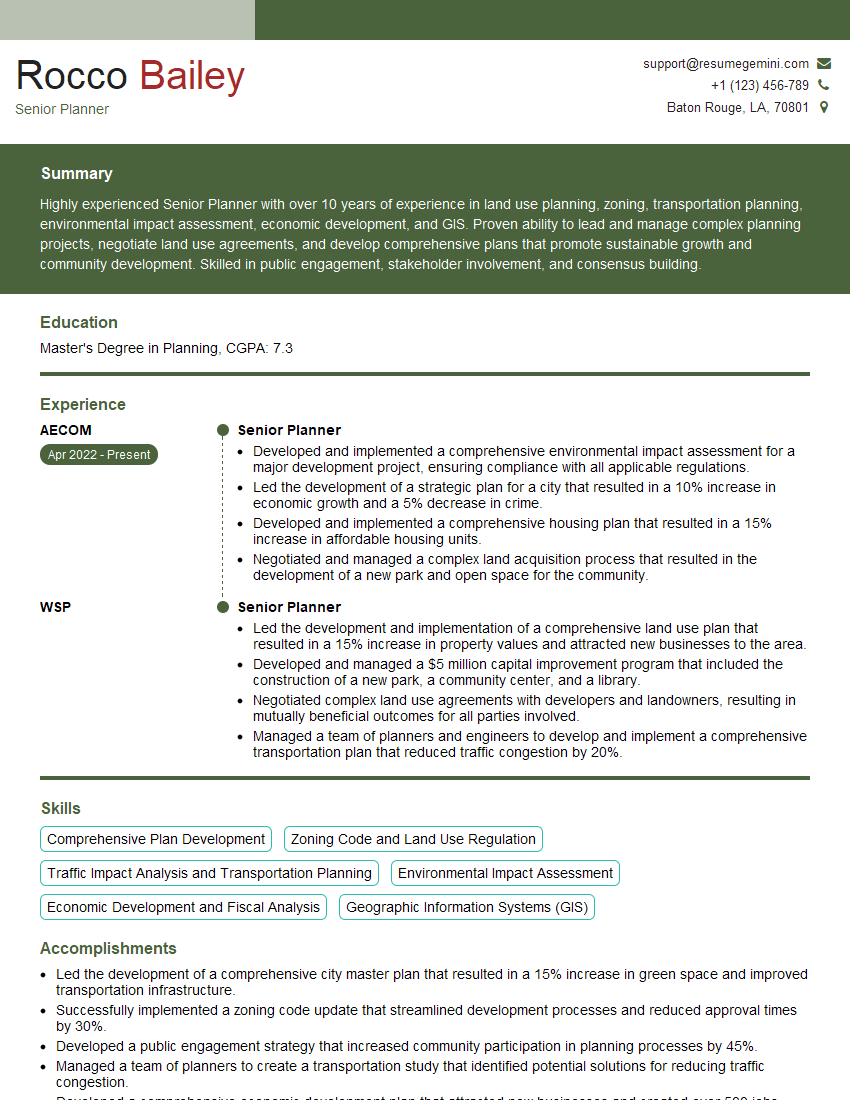
Senior Planner Resume Sample
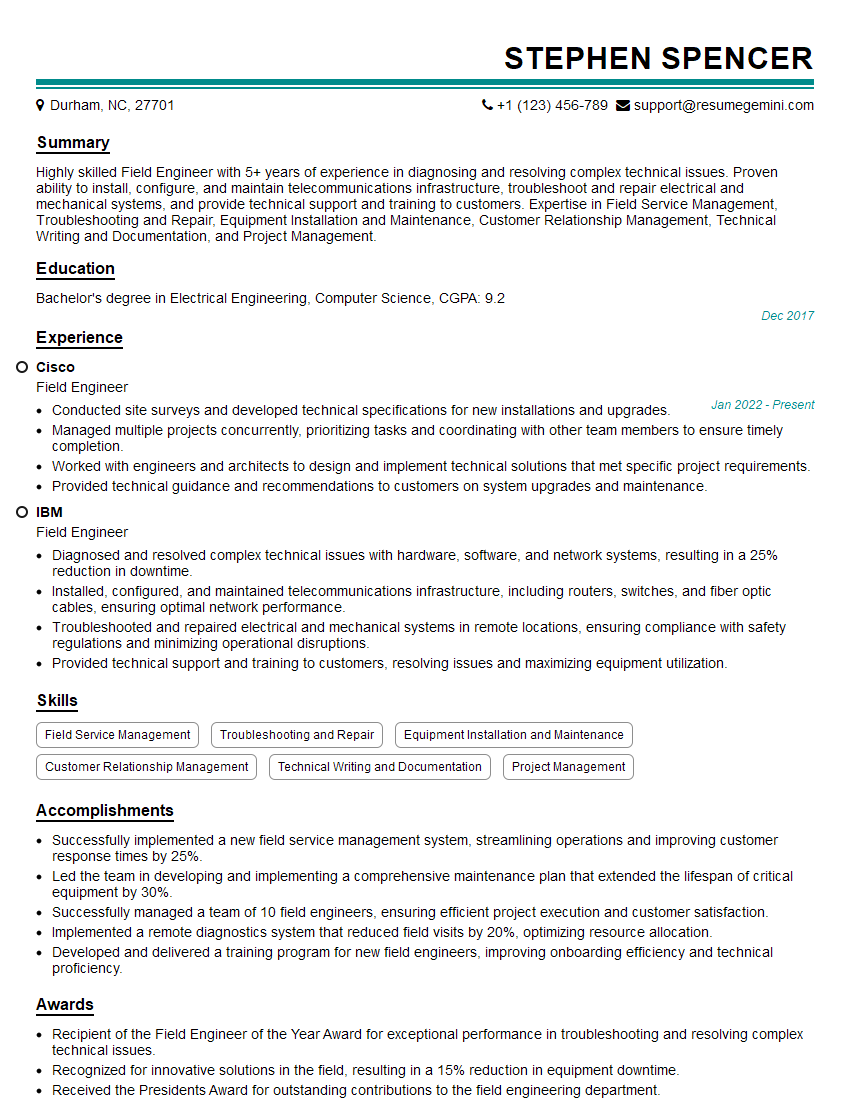
Field Engineer Resume Sample
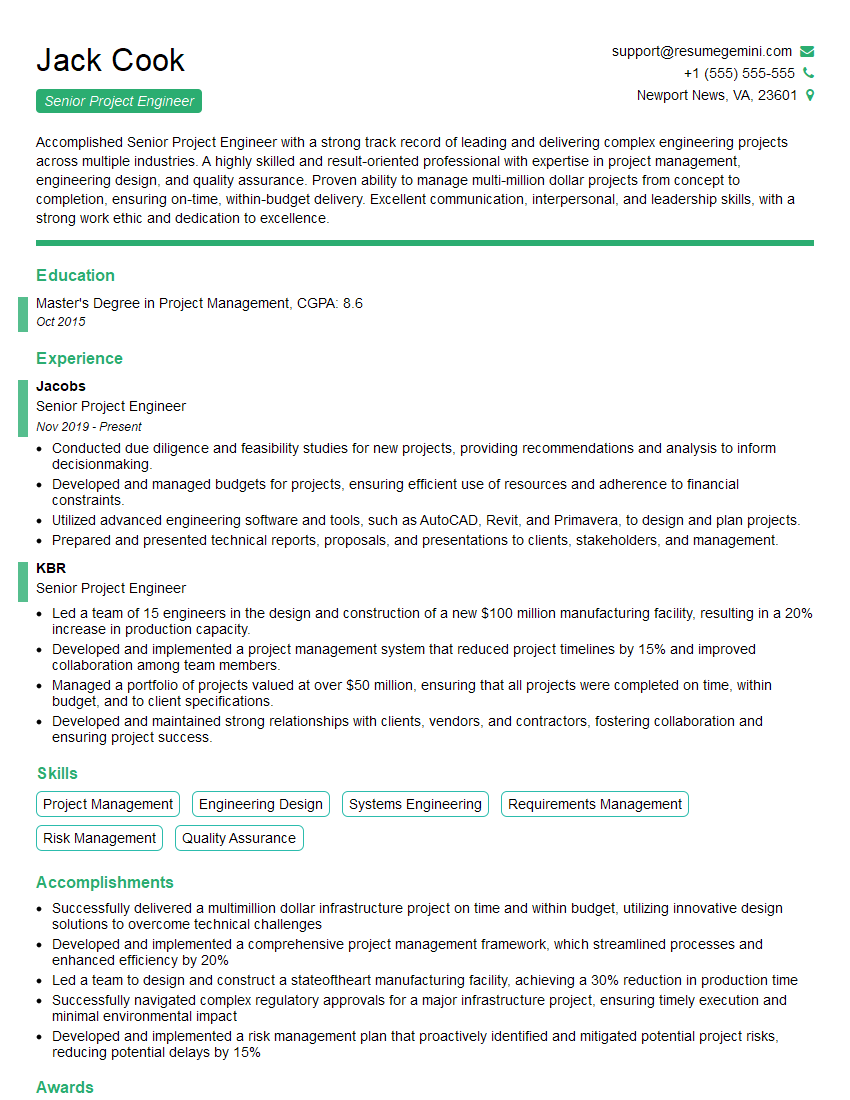
Senior Project Engineer Resume Sample
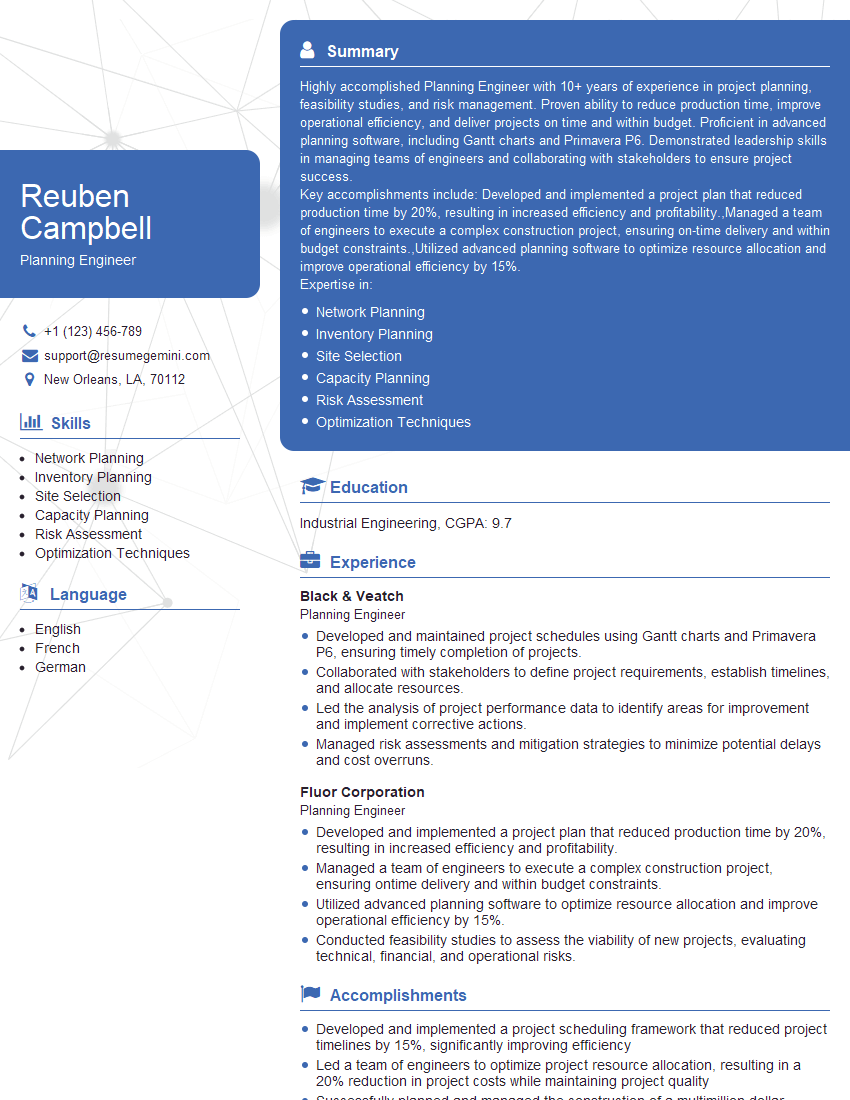
Planning Engineer Resume Sample
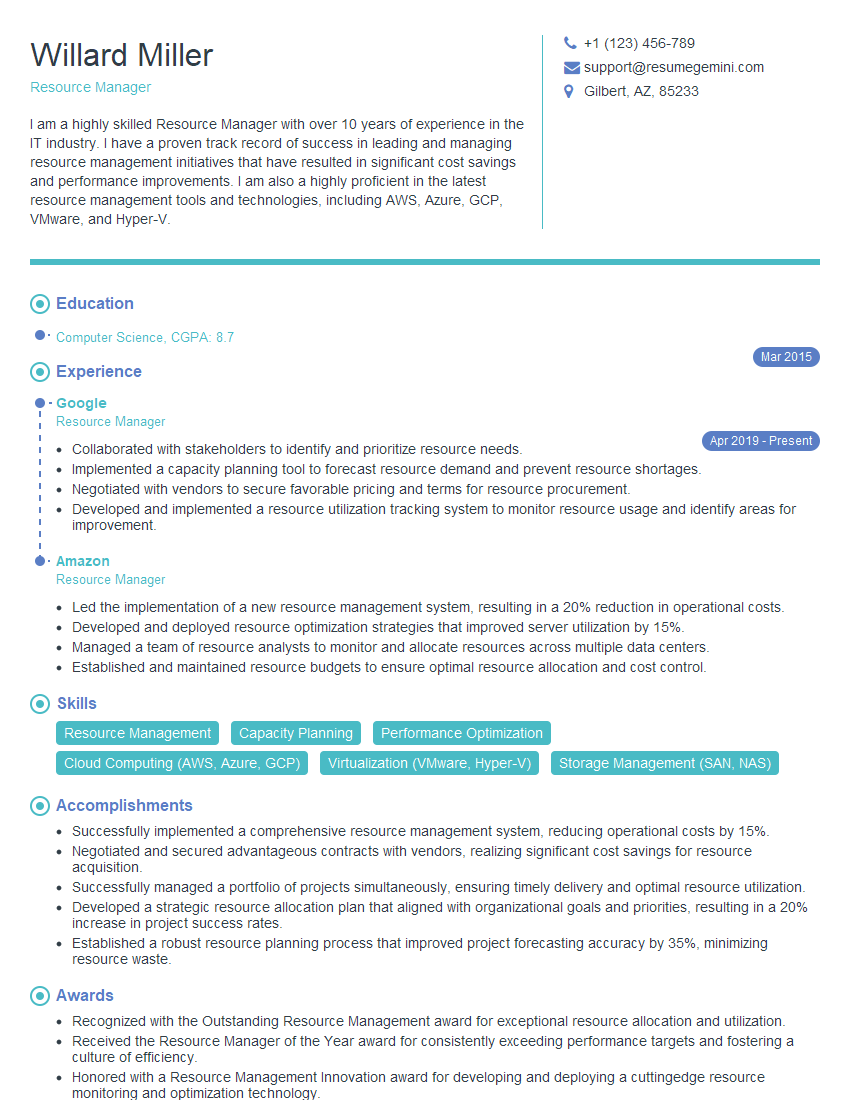
Resource Manager Resume Sample
Explore more articles
Users Rating of Our Blogs
Share Your Experience
We value your feedback! Please rate our content and share your thoughts (optional).
What Readers Say About Our Blog
Very informative content, great job.
good