Every successful interview starts with knowing what to expect. In this blog, we’ll take you through the top Budget and Schedule Management interview questions, breaking them down with expert tips to help you deliver impactful answers. Step into your next interview fully prepared and ready to succeed.
Questions Asked in Budget and Schedule Management Interview
Q 1. Explain the difference between Earned Value Management (EVM) and traditional project budgeting.
Traditional project budgeting focuses primarily on creating a cost baseline—a total estimate of project expenses. It’s often a static document, updated infrequently. Earned Value Management (EVM), on the other hand, is a powerful project performance measurement technique. EVM uses a baseline budget, but then integrates it with the project schedule to track progress and predict future performance. It compares planned work (Budget) to actual work (Actual Cost) and the value of the work completed (Earned Value) to provide a comprehensive picture of project health.
Think of it this way: traditional budgeting is like having a roadmap that shows you the destination and estimated travel time, but doesn’t tell you if you’re on track or if unexpected roadblocks are delaying your journey. EVM is like having that same roadmap, plus a GPS that constantly monitors your speed, location, and alerts you to potential delays. It provides key metrics like Schedule Variance (SV) and Cost Variance (CV) to help managers make informed decisions.
Q 2. Describe your experience with various scheduling methods (e.g., Critical Path Method, Gantt charts).
I have extensive experience with various scheduling methods, including the Critical Path Method (CPM) and Gantt charts. The CPM identifies the longest sequence of tasks—the critical path—that determines the shortest possible project duration. Any delay on the critical path directly impacts the overall project completion date. Gantt charts offer a visual representation of tasks and their dependencies, timelines, and resources allocation. They’re excellent for communication and monitoring project progress.
In practice, I often combine these methods. I’ll use CPM to analyze task dependencies and identify the critical path, which I then visually represent in a Gantt chart, making it easier to understand for stakeholders. For instance, in a recent software development project, CPM analysis revealed that the database integration phase was on the critical path. Using the Gantt chart, I could clearly communicate this to the team, highlighting the importance of timely completion to avoid delays.
Q 3. How do you handle budget overruns or schedule delays?
Handling budget overruns or schedule delays requires a proactive and systematic approach. The first step is to understand the root cause. Are there unforeseen challenges, scope creep, inaccurate estimations, or resource constraints? Once identified, I implement corrective actions. For budget overruns, this might involve value engineering—finding ways to reduce costs without compromising quality—negotiating with vendors, or reallocating resources. For schedule delays, I might adjust the project timeline, re-sequence tasks, or add resources to expedite critical activities.
Open and honest communication with stakeholders is crucial. Transparency builds trust and allows for collaborative problem-solving. I always present various options and their potential implications, involving stakeholders in the decision-making process. For example, in one instance, a supplier delay threatened a schedule slip. By transparently communicating the issue and collaboratively exploring alternatives, we opted for a slightly more expensive but readily available component, successfully minimizing the impact on the overall timeline.
Q 4. What are some common risks associated with budget and schedule management?
Several common risks threaten budget and schedule management. Inaccurate estimations are a major culprit, leading to both budget overruns and schedule delays. Scope creep—uncontrolled changes to project requirements—is another significant threat. Unexpected technical difficulties, resource conflicts, and external factors like regulatory changes or economic downturns also pose considerable risks. Poor communication and lack of stakeholder engagement can exacerbate these risks.
Risk management is an integral part of my approach. I use techniques like SWOT analysis (Strengths, Weaknesses, Opportunities, Threats) to identify potential risks and develop mitigation strategies. Contingency planning is essential to prepare for unforeseen events and allocate resources effectively.
Q 5. How do you develop and maintain a project budget?
Developing a project budget involves a thorough understanding of project scope, required resources, and associated costs. I begin with a work breakdown structure (WBS) to break down the project into manageable tasks. Each task is then estimated for its cost, considering labor, materials, equipment, and other expenses. These individual estimates are aggregated to create the overall budget. Throughout the project, I regularly monitor actual spending against the budget, using tools like spreadsheets or project management software.
Maintaining the budget involves regular review and updates. Variance analysis helps identify any deviations from the planned budget and allows for timely corrective action. Change management processes are essential to handle any changes to the project scope, ensuring that budget adjustments are properly documented and approved.
Q 6. Explain your process for creating and managing a project schedule.
Creating and managing a project schedule involves defining tasks, sequencing them logically based on dependencies, estimating task durations, and allocating resources. I typically use project management software like Microsoft Project or Primavera P6 to create and maintain the schedule. The schedule is often presented as a Gantt chart, providing a visual representation of the project timeline.
The process involves ongoing monitoring and updates. I track actual progress against the planned schedule, using techniques like Earned Value Management (EVM) to assess performance and identify potential delays. Any changes to the schedule require careful consideration and approval through a change management process. Regular status meetings keep the team synchronized and ensure everyone is working towards the same goals.
Q 7. How do you communicate budget and schedule information to stakeholders?
Effective communication is vital for successful budget and schedule management. I use a variety of methods to keep stakeholders informed. Regular progress reports, incorporating both visual representations like Gantt charts and key metrics like EVM data, provide clear insights into project status. I hold regular stakeholder meetings to discuss progress, address concerns, and make decisions collaboratively. Project management software can also be used to provide real-time access to project data and facilitate communication.
The communication style should be tailored to the audience. Technical details are shared with the project team, while high-level summaries are presented to senior management. Using clear, concise language and avoiding technical jargon when communicating with non-technical stakeholders is crucial for ensuring effective information dissemination.
Q 8. Describe a time you had to make a difficult decision regarding budget or schedule.
One of the most challenging situations I faced involved a large-scale software development project. We were nearing the deadline, and a critical feature was proving far more complex than initially anticipated. This complexity directly impacted both the schedule and the budget. The difficult decision was whether to cut scope and deliver a slightly less functional product on time and within budget, or to extend the deadline and potentially exceed the allocated funds.
After carefully analyzing the risks and rewards of each option, we opted for a phased rollout. We delivered the core functionality on time and within budget, then released the remaining, less critical features in subsequent phases. This approach mitigated the risk of a complete project failure and allowed us to manage stakeholder expectations effectively. It required transparent communication with the stakeholders about the changes and their impact. This demonstrated my ability to make difficult trade-off decisions under pressure, balancing schedule, budget, and the quality of the final product.
Q 9. What software or tools are you proficient in for budget and schedule management?
I’m proficient in several software tools for budget and schedule management. My primary tools include Microsoft Project for scheduling and task management, which allows for detailed Gantt charts, resource allocation, and critical path analysis. For budget management, I utilize Microsoft Excel for creating detailed budgets, tracking expenses, and generating reports. I also have experience with more sophisticated project management software like Primavera P6, which is particularly beneficial for large and complex projects requiring advanced scheduling and resource optimization capabilities. Finally, I’m familiar with cloud-based solutions like Asana and Trello for collaborative task management and simpler project tracking.
Q 10. How do you track progress against the budget and schedule?
Tracking progress against budget and schedule requires a multifaceted approach. For budget tracking, I regularly compare actual expenses against the planned budget using tools like Microsoft Excel, creating variance reports that highlight overspending or underspending in specific areas. For schedule tracking, I utilize project management software like Microsoft Project to monitor task completion, identify delays, and assess the impact on the overall project timeline. Regular status meetings with team members and stakeholders allow me to gather real-time updates, identify potential roadblocks, and make necessary adjustments. This combination of software tools and consistent communication ensures proactive progress monitoring.
For example, I might use a simple formula in Excel like =SUM(B:B)-SUM(C:C) to calculate the variance between planned costs (column B) and actual costs (column C). This allows for immediate identification of cost overruns or savings.
Q 11. What is your approach to risk management in relation to budget and schedule?
My approach to risk management is proactive and involves identifying potential risks early in the project lifecycle. I utilize a risk register to document potential issues, assess their likelihood and impact, and develop mitigation strategies. This register might include risks such as unexpected cost increases, resource unavailability, or changes in scope. For each risk, I define a contingency plan, including alternative solutions and the resources required to implement them. Regular risk reviews are crucial, allowing for the reassessment of risks and the adjustment of mitigation strategies as the project progresses. It’s a crucial component of ensuring both schedule and budget remain on target.
Q 12. Explain the concept of critical path analysis and its importance.
Critical Path Analysis (CPA) is a technique used to identify the longest sequence of tasks in a project, determining the shortest possible project duration. The critical path represents the tasks that cannot be delayed without delaying the entire project. Tasks on the critical path are the most critical and require close monitoring. CPA’s importance lies in its ability to optimize the project schedule, allowing for the identification of potential bottlenecks and facilitating resource allocation to critical tasks.
Imagine building a house. Pouring the foundation must happen before the walls can go up, which must happen before the roof can be installed. If pouring the foundation is delayed, the entire project is delayed. That’s the critical path.
Q 13. How do you identify and mitigate potential budget or schedule conflicts?
Potential budget or schedule conflicts are identified through proactive monitoring and communication. Regularly comparing actuals against the plan, as described earlier, highlights potential overruns. Schedule conflicts, like resource contention, can be uncovered through resource allocation tools in software like Microsoft Project. When conflicts arise, a collaborative approach is necessary, involving stakeholders to discuss potential solutions. This may include negotiating priorities, reallocating resources, adjusting task durations, or potentially revising the scope to eliminate the conflict. Open communication is key to finding mutually agreeable solutions. It’s often a matter of prioritizing tasks and setting realistic expectations.
Q 14. How do you handle changes in scope that impact the budget and schedule?
Scope changes are a common occurrence in projects and must be managed carefully to avoid impacting the budget and schedule. Whenever a change request is made, a thorough impact assessment is necessary. This involves evaluating the impact on the schedule, budget, and resources. A formal change request process is essential, documenting the request, the proposed solution, the estimated cost and time implications, and the approval process. This ensures all stakeholders are aware of the changes and their impact. Approved changes are then incorporated into the project plan, updating both the schedule and the budget accordingly. Transparency is key to prevent scope creep and to maintain the integrity of the project.
Q 15. What is your experience with resource allocation and leveling?
Resource allocation involves assigning the right people with the right skills to the right tasks at the right time. Resource leveling, on the other hand, smooths out resource demand over the project’s duration, preventing over-allocation and ensuring a consistent workload. In my experience, I’ve used various software tools like Microsoft Project and Primavera P6 to optimize resource allocation. For example, in a recent software development project, I used resource leveling to address a bottleneck in the testing phase. Initially, we had several testers heavily loaded towards the end of the project. By carefully analyzing the task dependencies and available resources, I was able to redistribute tasks and bring in additional support earlier, thereby avoiding costly delays and preventing tester burnout.
I also leverage techniques like resource histograms and critical path analysis to identify potential resource conflicts and develop mitigation strategies. Effective resource management is not just about assigning resources, but also about proactively anticipating and managing potential resource constraints.
Career Expert Tips:
- Ace those interviews! Prepare effectively by reviewing the Top 50 Most Common Interview Questions on ResumeGemini.
- Navigate your job search with confidence! Explore a wide range of Career Tips on ResumeGemini. Learn about common challenges and recommendations to overcome them.
- Craft the perfect resume! Master the Art of Resume Writing with ResumeGemini’s guide. Showcase your unique qualifications and achievements effectively.
- Don’t miss out on holiday savings! Build your dream resume with ResumeGemini’s ATS optimized templates.
Q 16. How do you monitor and control costs throughout a project lifecycle?
Monitoring and controlling project costs requires a proactive approach throughout the entire project lifecycle. It starts with creating a detailed budget, which breaks down the project costs into manageable components. I regularly compare actual costs against the planned budget using Earned Value Management (EVM) techniques. This involves tracking the planned value (PV), earned value (EV), and actual cost (AC) at regular intervals. Any variances are carefully analyzed to identify their root causes.
For instance, if the actual cost (AC) exceeds the earned value (EV), it indicates a cost overrun, requiring immediate attention. I utilize various tools, like cost performance indexes (CPI) and schedule performance indexes (SPI), to identify problematic areas and take corrective actions. Regular cost reporting, including variance analysis and forecasting, keeps stakeholders informed and allows for timely intervention to prevent further cost overruns. I also encourage a culture of cost consciousness within the project team, promoting value engineering and efficient resource utilization.
Q 17. Describe your experience with forecasting and reporting on budget and schedule performance.
Forecasting and reporting on budget and schedule performance are crucial for effective project management. I utilize various techniques, including trend analysis, statistical modeling, and expert judgment, to forecast future performance based on historical data and current trends. This helps proactively identify potential issues and allows for corrective actions to be taken before they escalate into major problems. I use a variety of reporting tools and dashboards to visually communicate project progress and performance to stakeholders. These reports typically include key metrics such as budget and schedule variances, burn-down charts, and critical path updates.
For example, in a construction project, we used historical weather data combined with current forecasts to predict potential delays in the project schedule. This allowed us to proactively adjust the project plan and communicate any potential impacts to stakeholders, mitigating the risk of significant cost overruns.
Q 18. What metrics do you use to evaluate the success of a project’s budget and schedule?
Several metrics are used to evaluate the success of a project’s budget and schedule. Key metrics include:
- Budget Variance: The difference between the planned budget and the actual cost. A low or zero variance indicates good budget control.
- Schedule Variance: The difference between the planned schedule and the actual completion date. A low or zero variance indicates good schedule control.
- Cost Performance Index (CPI): EV/AC (Earned Value / Actual Cost). A CPI greater than 1 indicates that the project is under budget, while a CPI less than 1 indicates cost overruns.
- Schedule Performance Index (SPI): EV/PV (Earned Value / Planned Value). An SPI greater than 1 indicates that the project is ahead of schedule, while an SPI less than 1 indicates delays.
- Actual vs. Planned Completion Date: A simple but effective measure of schedule performance.
Beyond these quantitative metrics, I also consider qualitative factors such as stakeholder satisfaction and the overall quality of the deliverables to assess the project’s overall success.
Q 19. How do you manage stakeholder expectations regarding budget and schedule?
Managing stakeholder expectations requires open communication and transparency. I start by establishing clear communication channels and providing regular updates on budget and schedule performance. This includes both formal reports and informal discussions to ensure everyone is on the same page. I use a variety of communication methods to suit different stakeholders’ preferences and needs, including email, presentations, and face-to-face meetings. It’s crucial to be proactive in identifying and addressing potential issues before they impact stakeholders. Early identification and transparent communication of potential risks and their potential impact on budget and schedule helps manage expectations and gain stakeholder buy-in to mitigation plans.
For example, if a potential delay is identified, I would proactively communicate this to the stakeholders, explaining the reasons for the delay and outlining the plan to mitigate the impact. This approach helps maintain trust and minimizes negative reactions.
Q 20. Explain the importance of baseline budgets and schedules.
Baseline budgets and schedules are crucial for project control. The baseline budget is the approved budget at the start of the project, serving as a benchmark against which actual costs are compared. Similarly, the baseline schedule represents the planned timeline for completing the project’s tasks. These baselines provide a point of reference for tracking progress, identifying variances, and making informed decisions. Any changes to the baseline must be formally documented and approved through a change control process, maintaining the integrity of the project’s financial and time management.
Imagine building a house without a blueprint – chaos! The baseline budget and schedule are the blueprints for successful project execution. They allow for effective monitoring, control, and reporting.
Q 21. How do you ensure the accuracy and reliability of your budget and schedule data?
Ensuring the accuracy and reliability of budget and schedule data is paramount. This involves several key steps:
- Detailed Planning: Thorough upfront planning, including detailed work breakdown structures (WBS) and accurate cost estimation, is crucial for laying a solid foundation.
- Data Validation: Regularly verifying the accuracy of data inputs and ensuring consistency across different sources. This might involve cross-checking data with multiple sources or conducting independent audits.
- Regular Monitoring: Consistent monitoring and tracking of actual progress against the baseline, identifying variances early on.
- Version Control: Implementing a system for managing different versions of the budget and schedule to prevent confusion and ensure everyone is working with the most up-to-date information.
- Use of Appropriate Tools: Leveraging project management software that incorporates error checks and validation rules. This helps minimize human errors.
By meticulously following these procedures, we minimize errors, ensure data integrity, and produce reliable project forecasts and reports that stakeholders can trust.
Q 22. Describe your experience with different types of budget models (e.g., bottom-up, top-down).
Budget models are crucial for resource allocation and project financial control. Two common types are top-down and bottom-up.
Top-down budgeting starts with a high-level budget determined by senior management. This figure is then allocated to different projects or departments. It’s quick and easy but can be inaccurate if it doesn’t consider the granular needs of individual projects. Imagine a company allocating a $1 million budget for all IT projects – this lacks detail and can lead to underfunding of specific critical initiatives.
Bottom-up budgeting involves estimating costs for individual tasks and summing these up to create a project budget. This approach is more accurate as it’s based on detailed assessments. However, it’s more time-consuming and requires significant input from project teams. For example, building a house using a bottom-up approach would involve estimating the costs of materials, labor for each phase (foundation, framing, etc.), and permits, then adding them up for a total project cost.
In my experience, I’ve successfully utilized both methods, often employing a hybrid approach. Starting with a top-down figure to set a broad financial target and then using bottom-up estimation to refine and validate that target ensures a more realistic and controlled budget.
Q 23. How do you use earned value management (EVM) to track project performance?
Earned Value Management (EVM) is a powerful project performance measurement technique that integrates scope, schedule, and cost. It allows us to track progress objectively and identify potential problems early on.
EVM utilizes three key metrics:
- Planned Value (PV): The budgeted cost of work scheduled to be accomplished at a given point in time.
- Earned Value (EV): The value of work actually accomplished at a given point in time.
- Actual Cost (AC): The actual cost incurred in accomplishing the work performed to date.
These metrics are used to calculate several key performance indicators (KPIs):
- Schedule Variance (SV = EV – PV): Indicates schedule performance; a positive SV indicates ahead of schedule, a negative SV indicates behind schedule.
- Cost Variance (CV = EV – AC): Indicates cost performance; a positive CV indicates under budget, a negative CV indicates over budget.
- Schedule Performance Index (SPI = EV / PV): Indicates the efficiency of schedule; an SPI > 1 indicates ahead of schedule, an SPI < 1 indicates behind schedule.
- Cost Performance Index (CPI = EV / AC): Indicates the efficiency of cost; a CPI > 1 indicates under budget, a CPI < 1 indicates over budget.
By regularly monitoring these KPIs, I can proactively manage risks, identify cost overruns, and adjust the project plan as needed. For instance, if the SPI drops below 1, it’s a clear indication of schedule slippage requiring immediate attention and corrective action.
Q 24. How familiar are you with Agile methodologies and their impact on budget and schedule management?
Agile methodologies, such as Scrum and Kanban, significantly impact budget and schedule management. Traditional methods often struggle with change, while Agile embraces it.
In Agile, the budget and schedule are not fixed upfront. Instead, work is broken down into short iterations (sprints) with frequent reassessments. This allows for flexibility and adaptation based on evolving priorities and feedback. Budgeting often involves allocating funds per sprint, allowing for adjustments based on the completed work and remaining backlog. Instead of a detailed upfront schedule, Agile uses sprint backlogs and release plans offering a more dynamic and responsive approach to planning.
While this flexibility is a strength, it requires robust tracking and monitoring. Transparency and collaboration are key; daily stand-ups and sprint reviews provide continuous feedback on budget and schedule performance, ensuring early detection and mitigation of any potential issues.
Q 25. What is your understanding of the three-point estimating technique?
Three-point estimating is a risk management technique used to estimate task duration or cost more accurately than using a single-point estimate. It considers three values:
- Optimistic Estimate (O): The shortest possible time or cost to complete the task under ideal conditions.
- Most Likely Estimate (M): The most probable time or cost to complete the task under normal conditions.
- Pessimistic Estimate (P): The longest possible time or cost to complete the task under unfavorable conditions.
These values are used to calculate the expected value (E) using the formula: E = (O + 4M + P) / 6. This weighted average gives a more realistic estimate considering the uncertainty associated with the task.
For example, estimating the time to develop a software module: O = 2 days, M = 4 days, P = 8 days. The expected value would be E = (2 + 4*4 + 8) / 6 = 4.33 days. This is a far more nuanced prediction than simply stating ‘4 days’, reflecting potential delays.
Q 26. How would you handle a situation where a critical task is delayed?
A delay in a critical task is a serious situation that requires immediate action. My approach involves a structured process:
- Identify the root cause: What caused the delay? Is it resource constraints, unforeseen issues, or a scope creep?
- Assess the impact: How does the delay affect the overall project schedule and budget? What are the downstream consequences?
- Develop mitigation strategies: This could include: reallocating resources, adjusting the scope, fast-tracking other tasks, negotiating extended deadlines, or adding resources.
- Communicate the situation: Keep stakeholders informed about the delay, the proposed solutions, and the revised schedule and budget.
- Monitor and adjust: Track progress closely to ensure the mitigation strategies are working and make further adjustments as needed.
For example, if a critical software development task is delayed due to unforeseen bugs, I’d first assess the bug’s severity and impact. Then, I’d decide if additional developers are needed, or if other tasks can be temporarily deprioritized to free up resources. The stakeholders would be informed about the delay and the plan to resolve it, providing transparency and managing expectations.
Q 27. How do you prioritize tasks when faced with limited resources?
Prioritizing tasks with limited resources requires a well-defined strategy. I often use a combination of methods such as:
- Prioritization Matrix: Using a matrix based on urgency and importance (e.g., Eisenhower Matrix) to classify tasks. Urgent and important tasks get top priority.
- Dependency Analysis: Identifying tasks that are dependent on others and prioritizing based on the critical path—the sequence of tasks that determines the shortest project duration.
- Value-Based Prioritization: Focusing on tasks that deliver the highest business value. This could involve scoring tasks based on their contribution to project objectives.
- MoSCoW Method: Categorizing requirements as Must have, Should have, Could have, and Won’t have, allowing for a clear prioritization based on necessity.
Using these methods, I can make data-driven decisions, ensuring the most important and impactful tasks are completed even under resource constraints. For example, in a software project, fixing a critical bug that impacts a core feature would always take precedence over improving a less crucial aesthetic element.
Q 28. What are some common pitfalls to avoid in budget and schedule management?
Several common pitfalls can derail even the most well-planned budgets and schedules:
- Inaccurate estimations: Underestimating task duration and cost is a major source of problems. Employing robust estimation techniques such as three-point estimating and incorporating risk assessments is crucial.
- Poor communication: Lack of communication between stakeholders leads to misunderstandings and conflicts, impacting both budget and schedule. Regular and transparent communication is paramount.
- Scope creep: Uncontrolled changes to the project scope can dramatically increase costs and extend timelines. A clear change management process is necessary.
- Lack of contingency planning: Not accounting for unexpected delays or cost overruns leaves the project vulnerable to setbacks. Including contingency reserves in the budget is essential.
- Insufficient risk management: Failing to identify and address potential risks proactively increases the likelihood of budget and schedule overruns.
Avoiding these pitfalls involves a proactive approach that incorporates robust planning, effective communication, and diligent monitoring of progress against the baseline plan.
Key Topics to Learn for Budget and Schedule Management Interview
- Budgeting Fundamentals: Understanding budgeting principles, forecasting techniques (e.g., bottom-up, top-down), and variance analysis. Practical application: Developing a realistic budget for a project given limited resources and potential risks.
- Scheduling Techniques: Mastering critical path method (CPM), program evaluation and review technique (PERT), and Gantt charts. Practical application: Creating and managing a project schedule, identifying critical tasks, and mitigating schedule delays.
- Resource Allocation: Efficiently assigning resources (personnel, materials, equipment) to tasks, considering constraints and optimizing resource utilization. Practical application: Developing a resource-loaded schedule and addressing resource conflicts.
- Cost Control and Monitoring: Implementing cost control measures, tracking actual costs against the budget, and identifying cost overruns early. Practical application: Developing and implementing a system for tracking and reporting project costs.
- Risk Management: Identifying, assessing, and mitigating potential risks that could impact budget and schedule. Practical application: Creating a risk register and developing contingency plans.
- Earned Value Management (EVM): Understanding EVM principles and metrics (e.g., Earned Value, Schedule Variance, Cost Variance) to monitor and control project performance. Practical application: Analyzing EVM data to identify potential problems and take corrective action.
- Reporting and Communication: Effectively communicating budget and schedule status to stakeholders using clear and concise reports. Practical application: Preparing regular project status reports and presenting findings to management.
- Software Proficiency: Demonstrating familiarity with project management software (e.g., Microsoft Project, Primavera P6). Practical application: Discuss your experience using such software to manage budgets and schedules.
Next Steps
Mastering Budget and Schedule Management is crucial for career advancement in many fields, opening doors to leadership roles and higher earning potential. A strong understanding of these principles demonstrates valuable skills to prospective employers. To significantly boost your job prospects, crafting an ATS-friendly resume is essential. ResumeGemini is a trusted resource that can help you build a professional and impactful resume tailored to highlight your skills and experience. We provide examples of resumes specifically designed for candidates in Budget and Schedule Management to help you create a winning application.
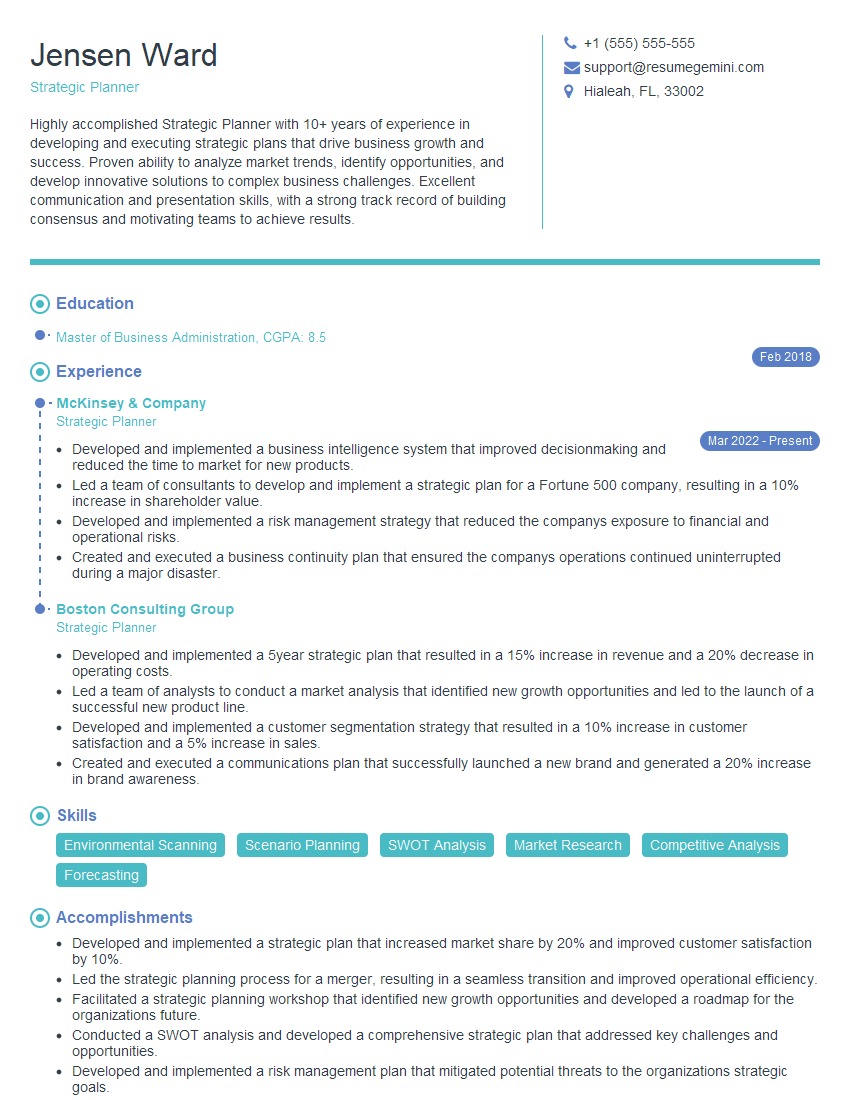
Strategic Planner Resume Sample

Operations Manager Resume Sample
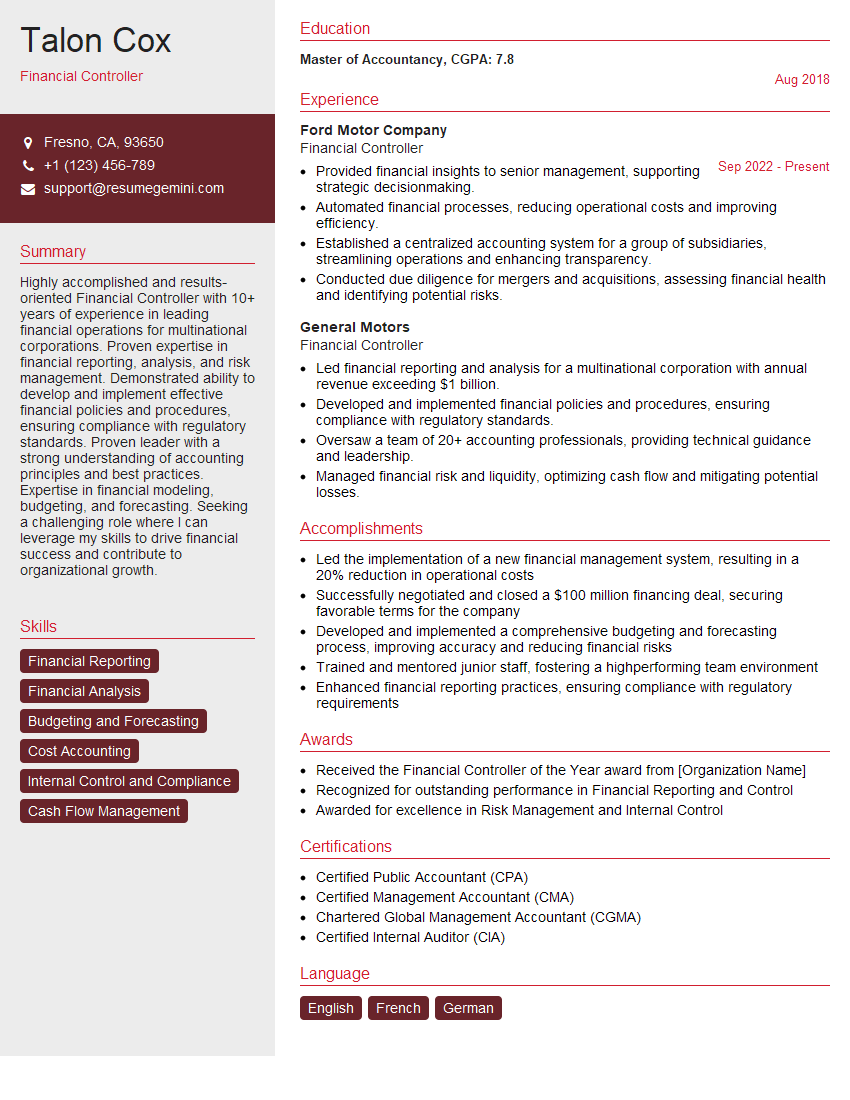
Financial Controller Resume Sample

Budget Manager Resume Sample
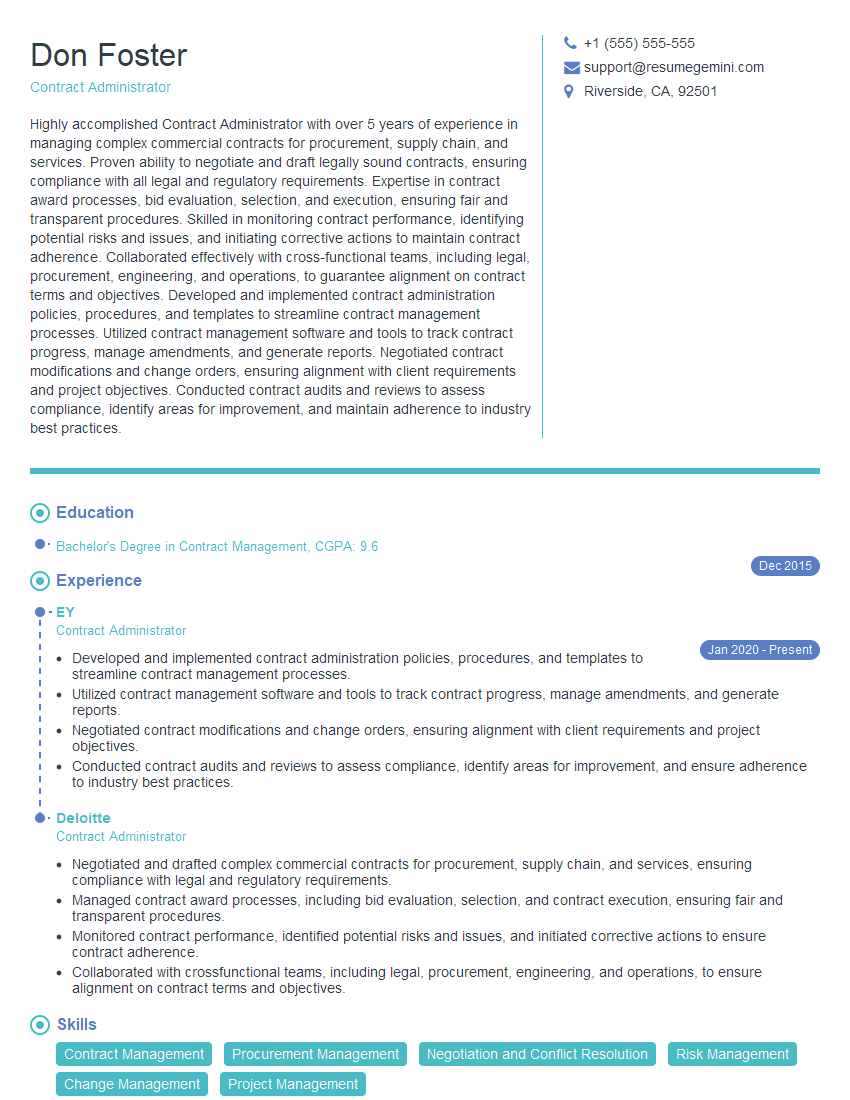
Contract Administrator Resume Sample

Procurement Manager Resume Sample
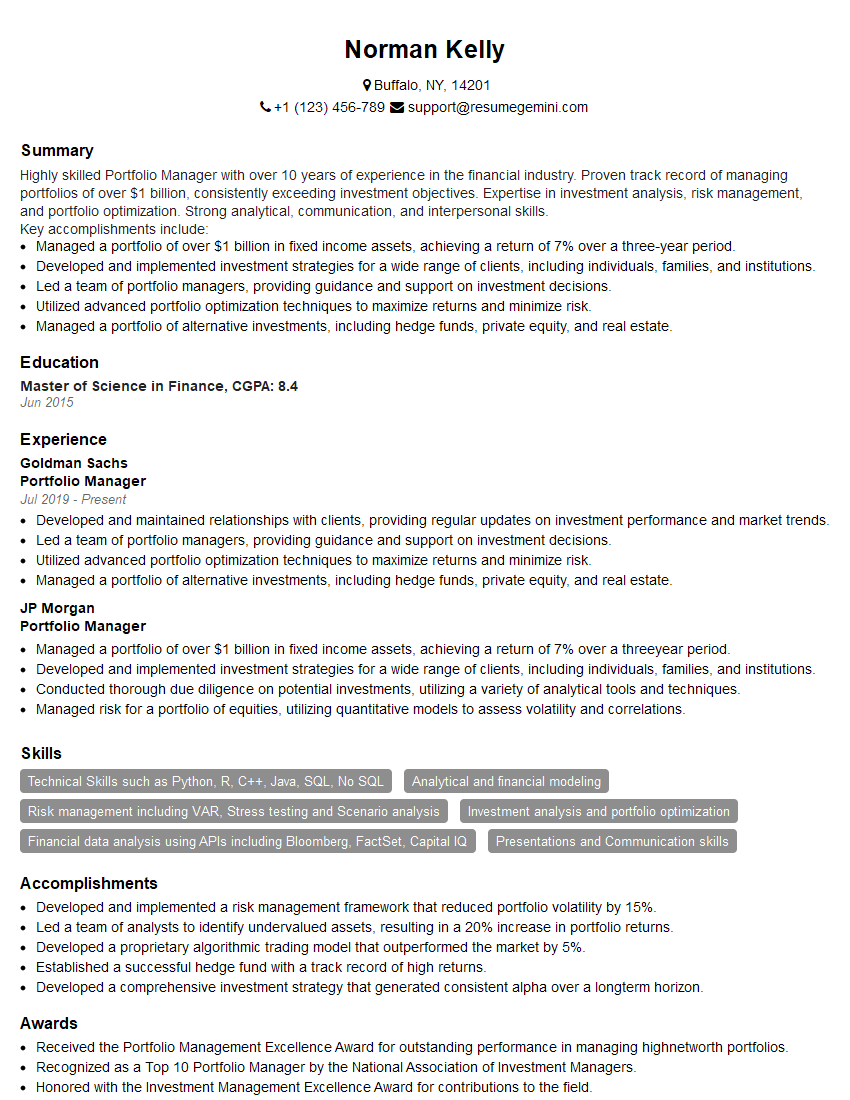
Portfolio Manager Resume Sample

Risk Management Specialist Resume Sample
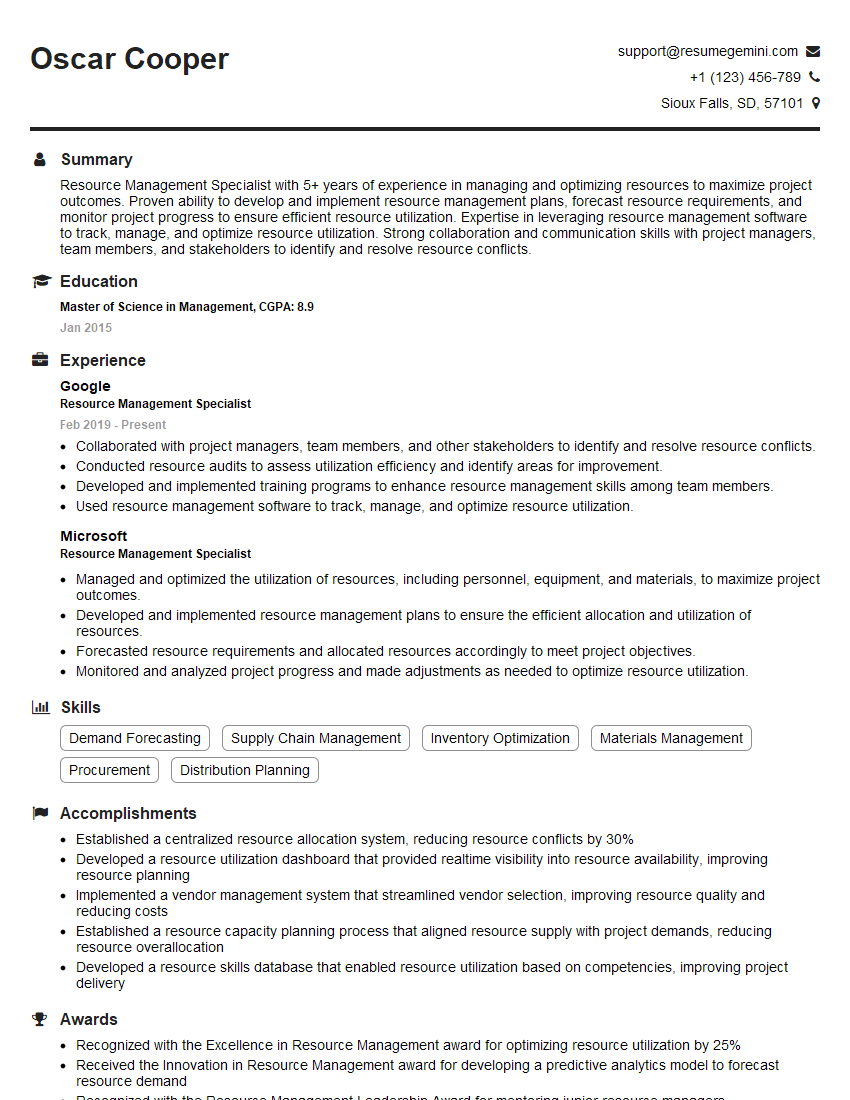
Resource Management Specialist Resume Sample
Explore more articles
Users Rating of Our Blogs
Share Your Experience
We value your feedback! Please rate our content and share your thoughts (optional).
What Readers Say About Our Blog
Very informative content, great job.
good