Interviews are more than just a Q&A session—they’re a chance to prove your worth. This blog dives into essential Construction Skills interview questions and expert tips to help you align your answers with what hiring managers are looking for. Start preparing to shine!
Questions Asked in Construction Skills Interview
Q 1. Explain your experience with different construction methods.
My experience encompasses a wide range of construction methods, from traditional stick-built framing to modern prefabricated and modular techniques. I’ve worked extensively with concrete structures, including both cast-in-place and precast elements, and have significant experience in steel construction, utilizing various connection methods.
For example, on a recent high-rise project, we employed a hybrid approach, using prefabricated modular units for the core structure and then utilizing traditional methods for the exterior façade. This allowed for faster construction and better quality control. In another project, a large warehouse, we utilized tilt-up concrete construction, which significantly reduced construction time and cost compared to traditional poured concrete walls.
My understanding also extends to earth-sheltered construction, where I’ve overseen projects involving the integration of natural elements and sustainable materials for energy-efficient buildings. Each method requires a unique approach to planning, execution, and safety, and I’m adept at adapting to the specific demands of each project.
Q 2. Describe your experience with project scheduling and management software.
I’m proficient in several project scheduling and management software packages, including Primavera P6, Microsoft Project, and Autodesk BIM 360. My expertise extends beyond simply using these tools; I understand their capabilities for optimizing workflows, tracking progress, and managing resources effectively.
For instance, on a recent renovation project, using Primavera P6, I created a detailed schedule that included resource allocation, critical path analysis, and risk assessment. This allowed us to proactively identify potential delays and mitigate them before they impacted the overall timeline. I’m also skilled in utilizing the reporting functions of these programs to provide regular, transparent updates to stakeholders.
Furthermore, I’m comfortable integrating these software solutions with other tools like BIM (Building Information Modeling) software, creating a seamless flow of information across all project phases. This ensures that everyone is working with the most current data, leading to increased efficiency and fewer errors.
Q 3. How do you ensure safety on a construction site?
Safety is paramount on any construction site. My approach to safety is proactive and multi-layered. It begins with a comprehensive safety plan developed before construction even starts, and includes regular safety meetings, thorough training for all workers, and strict adherence to all OSHA regulations and best practices.
This includes implementing a robust toolbox talk program, where we discuss specific safety concerns and procedures before each shift. We use a system of daily safety inspections to identify and rectify potential hazards immediately. Furthermore, I insist on the use of proper personal protective equipment (PPE) by all personnel at all times, and ensure that all equipment is properly maintained and regularly inspected.
I also believe that leading by example is crucial. I always prioritize safety in my own actions and encourage a safety-conscious culture within the team. In the event of an accident or incident, a thorough investigation is conducted to identify root causes and prevent recurrence.
Q 4. What are your experience with reading and interpreting blueprints?
Reading and interpreting blueprints is fundamental to my role. I’m highly proficient in understanding architectural, structural, mechanical, and electrical drawings. I can decipher symbols, dimensions, specifications, and details with accuracy and precision.
My experience extends to understanding various blueprint formats, including digital and hardcopy versions. I’m adept at identifying potential conflicts or discrepancies in the drawings and resolving them through collaboration with the design team. For example, I once identified a conflict between the plumbing and electrical plans that could have led to significant delays and cost overruns had it not been caught early in the process.
I also use this skill to effectively communicate design intent to the construction crew, ensuring that the final product aligns precisely with the original design. This requires not only reading the blueprints but also understanding the context of the design and the implications of the various elements.
Q 5. How do you handle conflicts or disagreements with subcontractors?
Handling conflicts with subcontractors requires a diplomatic yet firm approach. My strategy focuses on open communication, clear expectations, and fair resolution. I begin by actively listening to all parties involved, understanding their perspectives and concerns.
I then review the contract documents to establish the contractual obligations of each party. If a disagreement arises from a misinterpretation of the contract, I clarify the terms to reach a mutually acceptable understanding. If the disagreement is related to performance issues, I document the problem, provide clear expectations for improvement, and set deadlines for resolution.
In more complex situations, I may facilitate a mediation process to help the parties reach a compromise. My goal is always to maintain positive working relationships while ensuring that the project stays on track and within budget. A collaborative approach usually yields the best outcomes for everyone involved.
Q 6. Describe your experience with cost estimating and budgeting.
Cost estimating and budgeting are critical skills in construction management. My approach involves a detailed breakdown of all project costs, including materials, labor, equipment, permits, and contingency funds. I utilize various estimating methods, including quantity take-off, parametric estimating, and unit pricing, depending on the project’s scope and complexity.
For instance, on a recent commercial building project, I developed a detailed cost estimate using a combination of quantity take-off and unit pricing methods. This allowed me to accurately predict the project’s total cost, enabling me to secure financing and negotiate contracts with subcontractors effectively. Throughout the project, I carefully track actual costs against the budget and regularly report on variances.
I also employ software like spreadsheets and specialized estimating software to ensure accuracy and efficiency. Regular budget reviews and proactive cost control measures are essential to keep the project financially viable and meet client expectations.
Q 7. How do you manage project risks and potential delays?
Managing project risks and potential delays requires a proactive and systematic approach. I employ a risk management framework that involves identifying, analyzing, planning, and monitoring potential risks throughout the project lifecycle.
This starts with a thorough risk assessment at the beginning of the project, where potential delays and issues are identified and categorized based on their likelihood and potential impact. Then, I develop mitigation strategies for each identified risk. For example, if weather delays are a potential risk, I build contingency time into the schedule and explore alternative construction methods that are less susceptible to weather impacts.
Regular monitoring and communication are key to effective risk management. I track progress against the schedule, closely monitor the budget, and communicate potential issues to the stakeholders promptly. This proactive approach allows for timely intervention and prevents minor issues from escalating into major problems that could jeopardize the project’s success.
Q 8. Explain your experience with quality control and assurance processes.
Quality control (QC) and quality assurance (QA) are crucial for successful construction projects. QC focuses on ensuring individual tasks meet specifications, while QA ensures the overall project adheres to quality standards. My experience encompasses implementing and overseeing both processes throughout various project phases.
For instance, on a recent high-rise project, I established a robust QC program involving daily inspections, material testing, and meticulous documentation. This included using checklists for concrete pours, verifying steel reinforcement placement, and performing regular inspections of welding seams. Any deviations from specifications were immediately flagged, documented, and addressed with corrective actions. For QA, I implemented regular project meetings to review progress, identify potential risks, and ensure adherence to quality plans. This proactive approach minimized costly rework and ensured the project’s overall quality.
Further, I’m proficient in utilizing statistical process control (SPC) techniques to track key quality metrics and identify trends, allowing for early intervention and process improvement. This ensures consistent quality across the entire project lifecycle.
Q 9. How do you maintain effective communication with project stakeholders?
Effective communication is the cornerstone of any successful construction project. My approach involves employing multiple channels and adapting my communication style to suit the audience.
- Regular Meetings: I conduct frequent project meetings, including daily stand-ups with the crew to discuss immediate tasks and challenges, and weekly meetings with the project management team and stakeholders to review progress and address concerns.
- Detailed Reporting: I provide regular, concise, and visually appealing reports using charts and graphs to highlight progress, identify potential roadblocks, and communicate key performance indicators (KPIs).
- Open Communication Channels: I foster a culture of open communication, encouraging direct feedback from all stakeholders, including subcontractors and laborers. This helps to identify and solve problems promptly.
- Technology Integration: I utilize project management software to ensure transparent communication, including document sharing, task assignments, and progress tracking. This allows stakeholders to access crucial project information in real-time.
For example, during a recent renovation project, I used a collaborative platform to share design drawings, updated schedules, and meeting minutes. This ensured that all parties were consistently informed and contributed to faster decision-making. Clear, concise, and proactive communication significantly reduced misunderstandings and delays.
Q 10. Describe your experience with different types of construction materials.
My experience spans a wide range of construction materials, including concrete, steel, timber, masonry, and various composites. I understand their properties, applications, and limitations. This includes familiarity with different grades of concrete, various steel alloys, different timber species, and their suitability for different construction methods and environmental conditions.
For example, I’ve worked extensively with high-strength concrete for high-rise buildings and specialized engineered timber for sustainable construction projects. I understand the importance of material selection based on factors such as structural requirements, budget constraints, environmental impact, and aesthetics. I am also familiar with the testing and quality control procedures for each material type to ensure they meet project specifications.
Furthermore, my experience includes working with innovative materials, such as self-consolidating concrete and recycled aggregates, which demonstrates my commitment to exploring sustainable and cost-effective alternatives.
Q 11. How do you ensure compliance with building codes and regulations?
Compliance with building codes and regulations is paramount. My strategy involves a multi-faceted approach that begins even before construction starts.
- Early Consultation: I engage with relevant authorities and regulatory bodies at the design stage to ensure the proposed design complies with all applicable codes.
- Regular Inspections: I schedule and oversee regular inspections by qualified inspectors throughout the construction process to verify compliance at every stage.
- Detailed Documentation: I maintain meticulous records of inspections, testing results, and any necessary modifications or deviations to ensure a clear audit trail.
- Professional Consultation: I work closely with engineers and other professionals to ensure adherence to codes, including structural, electrical, plumbing, and fire safety regulations.
In a past project, we encountered a discrepancy in the local code’s interpretation regarding fire-resistant materials. By actively engaging with the building inspector early on and providing supporting documentation and alternative solutions, we successfully resolved the issue without delays or significant cost implications.
Q 12. What is your experience with sustainable construction practices?
Sustainable construction practices are integral to my approach. I actively seek opportunities to incorporate environmentally friendly materials and methods throughout the project lifecycle.
- Material Selection: I prioritize using recycled or sustainably sourced materials, such as reclaimed timber or recycled steel.
- Energy Efficiency: I implement strategies to improve the energy efficiency of buildings, including high-performance insulation, energy-efficient windows, and renewable energy sources like solar panels.
- Waste Management: I implement robust waste management plans to minimize construction waste and divert materials from landfills through recycling and reuse programs. For example, on a recent project, we achieved a 90% diversion rate.
- Water Conservation: I use water-saving techniques during construction and incorporate water-efficient fixtures in the final building.
On a recent project, we incorporated green building materials, achieving LEED certification and reducing the project’s carbon footprint significantly. This demonstrated the tangible benefits of environmentally conscious construction practices, leading to cost savings and a positive environmental impact.
Q 13. Explain your experience with procurement and material management.
Effective procurement and material management are critical for on-time and within-budget project completion. My approach involves a strategic plan covering the entire process from initial material selection to final delivery and installation.
- Early Planning: I create detailed material take-offs early in the design phase to accurately estimate quantities and costs.
- Vendor Selection: I carefully select reliable and reputable vendors, considering factors such as price, quality, delivery timelines, and sustainability practices.
- Inventory Management: I implement robust inventory management systems to track material deliveries, storage, and usage, minimizing waste and potential delays.
- Just-in-Time Delivery: Where possible, I utilize just-in-time delivery strategies to optimize storage space and reduce the risk of material damage or loss.
In a past project, by strategically planning material procurement, negotiating favorable pricing with suppliers, and implementing an efficient inventory system, I was able to save the client approximately 15% on material costs without compromising quality or schedule.
Q 14. How do you resolve on-site problems and challenges?
Problem-solving is a critical skill in construction. My approach involves a structured process:
- Identify the Problem: Clearly define the problem, gathering all relevant information and data.
- Analyze the Cause: Determine the root cause of the problem. This may involve analyzing drawings, specifications, and site conditions.
- Develop Solutions: Brainstorm potential solutions, considering their feasibility, cost, and impact on the project schedule.
- Implement the Solution: Choose the most effective solution and implement it, ensuring proper communication with all stakeholders.
- Monitor and Evaluate: Monitor the effectiveness of the implemented solution and make necessary adjustments.
For example, on one project, we experienced unforeseen delays due to unexpected soil conditions. By analyzing the soil reports, consulting with geotechnical engineers, and implementing alternative foundation solutions, we successfully mitigated the problem and minimized the impact on the project’s schedule and budget. A proactive and systematic approach is key to overcoming on-site challenges effectively.
Q 15. Describe your experience with working under pressure and deadlines.
Working under pressure and meeting deadlines is a cornerstone of successful construction. It’s not just about speed; it’s about efficient prioritization and effective resource allocation. My experience spans various high-pressure projects, from fast-track renovations where we had to deliver within incredibly tight timelines to large-scale developments requiring meticulous planning and execution.
For example, on a recent hotel renovation, we had a mere 6 weeks to complete the entire interior refurbishment. This meant operating around the clock, sometimes using a two-shift system. We used a daily ‘huddle’ to address challenges, assigning tasks based on worker expertise and available resources. Transparency was key – everyone understood the critical path, and any delays were immediately flagged. We successfully met the deadline and achieved exceptional quality, showcasing our ability to manage stress and adapt to high-pressure environments.
Another example involved coordinating the simultaneous construction of multiple sections of a large infrastructure project, with overlapping dependencies. Through meticulous scheduling, utilizing project management software to track progress and anticipate potential conflicts, and maintaining clear communication across all teams, we successfully avoided bottlenecks and completed the project on time and under budget.
Career Expert Tips:
- Ace those interviews! Prepare effectively by reviewing the Top 50 Most Common Interview Questions on ResumeGemini.
- Navigate your job search with confidence! Explore a wide range of Career Tips on ResumeGemini. Learn about common challenges and recommendations to overcome them.
- Craft the perfect resume! Master the Art of Resume Writing with ResumeGemini’s guide. Showcase your unique qualifications and achievements effectively.
- Don’t miss out on holiday savings! Build your dream resume with ResumeGemini’s ATS optimized templates.
Q 16. How do you manage a team of construction workers?
Managing a construction team requires a blend of leadership, communication, and technical expertise. It’s about fostering a safe, productive, and collaborative environment. My approach involves several key strategies:
- Clear Communication: Daily briefings, regular progress meetings, and open communication channels ensure everyone is on the same page, understands their roles, and feels comfortable raising concerns.
- Delegation & Empowerment: I empower team members by assigning tasks according to their skillsets, providing them with the necessary resources and support, and trusting them to deliver.
- Motivation & Recognition: Positive reinforcement and timely recognition of achievements boost morale and team cohesion. Celebrating milestones, both big and small, helps maintain motivation.
- Conflict Resolution: Addressing conflicts promptly and fairly is crucial. This usually involves open dialogue, understanding the underlying issues, and finding mutually agreeable solutions.
- Safety First: A safe work environment is paramount. This includes implementing strict safety protocols, providing necessary safety equipment, and conducting regular safety training.
For instance, on a recent project, a conflict arose between two subcontractors regarding the sequence of their tasks. Instead of imposing a solution, I facilitated a discussion where both sides voiced their concerns and collaborated to find a mutually acceptable schedule adjustment that avoided project delays. This approach strengthened team collaboration.
Q 17. Explain your experience with using various construction tools and equipment.
My experience with construction tools and equipment is extensive, spanning a wide range from basic hand tools to heavy machinery. I’m proficient in operating and maintaining equipment such as excavators, bulldozers, cranes, concrete mixers, and various power tools (e.g., saws, drills, nail guns). My skills extend beyond operation; I understand the safety protocols associated with each piece of equipment and perform routine maintenance checks.
I am also familiar with various surveying instruments, including total stations and GPS receivers, vital for accurate site measurements and layout. This includes understanding the limitations of each tool and knowing when to utilize a specific tool for optimal efficiency and accuracy. For example, knowing when to use a laser level for precise leveling versus a builder’s level for less demanding tasks.
Beyond machinery, my proficiency extends to specialized tools specific to different construction trades, such as plumbing tools, electrical tools, and carpentry tools. This broad understanding facilitates better coordination and problem-solving across different trades on a construction site.
Q 18. How do you deal with unexpected changes or issues during construction?
Dealing with unexpected issues is an inevitable part of construction. My approach is proactive, focusing on anticipation, mitigation, and swift problem-solving. This involves several steps:
- Assessment: Quickly assess the situation to understand the nature and extent of the problem.
- Risk Evaluation: Evaluate the potential impact on the project schedule, budget, and safety.
- Problem Solving: Develop and implement solutions, leveraging my technical expertise and the team’s skills.
- Communication: Keep stakeholders informed of the issue and the mitigation strategy.
- Documentation: Document the issue, solution, and its impact on the project.
For instance, during a recent project, we encountered unexpected soil conditions that compromised the foundation design. Instead of panicking, we immediately stopped work, consulted with a geotechnical engineer, revised the design, and implemented the necessary changes, causing minimal delays.
Q 19. Describe your experience with documentation and record-keeping on construction projects.
Meticulous documentation and record-keeping are vital for effective project management and legal compliance. My experience includes maintaining comprehensive project files, including contracts, drawings, specifications, meeting minutes, inspection reports, change orders, and daily progress reports. I’m proficient in utilizing various software to maintain these records (e.g., project management software, BIM software).
I understand the importance of maintaining a clear audit trail and following established procedures for document control. This is crucial for managing risks, tracking progress, and ensuring accountability. For instance, in a recent project, we encountered a change order request. I meticulously documented the process from the initial request through approval, implementation, and cost adjustments, creating a robust record for potential future reference and dispute resolution.
Q 20. What is your experience with construction technology and software?
I am proficient in utilizing various construction technologies and software, enhancing project efficiency and accuracy. My experience includes using Building Information Modeling (BIM) software such as Revit and AutoCAD for design visualization, clash detection, and quantity takeoff. I also utilize project management software like Primavera P6 for scheduling and resource allocation, and cloud-based collaboration platforms for seamless information sharing among the project team.
Furthermore, I’m familiar with drone technology for site surveying and progress monitoring. These technologies significantly improve project efficiency, reduce errors, and enable better decision-making. For example, using BIM software on a recent project allowed us to identify potential clashes between different building systems during the design phase, preventing costly rework during construction.
Q 21. How do you ensure project completion within budget and on time?
Ensuring project completion within budget and on time requires a multifaceted approach that begins long before construction commences. It involves meticulous planning, efficient resource management, and proactive risk management.
- Detailed Budgeting: Accurate cost estimation, including contingency plans for unexpected expenses, is crucial.
- Realistic Scheduling: Creating a detailed schedule that accounts for potential delays and dependencies, regularly monitoring progress against the schedule, and promptly addressing any deviations.
- Efficient Resource Allocation: Optimizing material procurement, equipment utilization, and labor deployment to minimize costs and maximize productivity.
- Proactive Risk Management: Identifying and mitigating potential risks throughout the project lifecycle.
- Value Engineering: Exploring alternative solutions to reduce costs without compromising quality.
- Regular Monitoring & Reporting: Tracking project expenses, progress, and resource utilization, and generating regular reports to stakeholders.
For example, on a recent project, we identified potential delays due to material supply chain issues. By proactively securing alternative suppliers and adjusting the schedule, we managed to complete the project on time and within budget.
Q 22. Explain your experience with negotiating contracts with suppliers and subcontractors.
Negotiating contracts with suppliers and subcontractors is a crucial aspect of successful project management in construction. It requires a blend of strong communication, strategic thinking, and a thorough understanding of the project requirements and market conditions. My approach involves several key steps:
- Pre-Negotiation Preparation: Before any meeting, I meticulously review the project specifications, budget constraints, and desired timelines. I then research potential suppliers and subcontractors, comparing their quotes, experience, and reputation. This preparation gives me a strong negotiating position.
- Clear Communication: During negotiations, I maintain open and transparent communication. I clearly articulate the project’s needs, expectations, and payment terms. I actively listen to the supplier’s or subcontractor’s concerns and try to find mutually beneficial solutions. For instance, on a recent project, a subcontractor was initially hesitant due to a tight deadline. By offering a phased payment schedule, we reached an agreement that benefitted both parties.
- Risk Assessment and Mitigation: Contracts should incorporate clauses that address potential risks, such as delays, material shortages, or unforeseen site conditions. I make sure these risks are clearly defined and mitigation strategies are outlined. This is critical in protecting the project from financial setbacks.
- Documentation: Every detail of the negotiation, including agreed-upon terms, payment schedules, and responsibilities, is meticulously documented in the final contract. This prevents misunderstandings and disputes down the line. I always review the contract thoroughly before signing, ensuring all aspects are clear and legally sound.
Through this structured approach, I have consistently secured favorable contracts that protect the project’s interests while fostering positive working relationships with suppliers and subcontractors.
Q 23. Describe your experience with change management on construction projects.
Change management on construction projects is a critical skill. Unexpected events, design modifications, or client requests frequently necessitate adjustments to the original plan. My approach emphasizes proactive communication, thorough impact assessment, and diligent documentation.
- Formal Change Management Process: I advocate for a formal process, involving a documented change request, a detailed impact assessment (cost, time, resources), and approval from relevant stakeholders. This prevents chaotic changes and ensures everyone is on the same page.
- Impact Assessment: Before implementing any change, I conduct a thorough assessment of its implications on the project schedule, budget, and resources. This involves analyzing potential delays, cost overruns, and risks.
- Collaboration and Communication: Changes rarely occur in isolation. I work closely with the client, project team, and subcontractors to communicate the change, its impact, and the proposed mitigation strategies. Transparency is crucial in maintaining trust and collaboration.
- Documentation and Monitoring: All changes are meticulously documented, including approvals, revised schedules, and cost adjustments. This creates an accurate record of the project’s evolution and helps to track progress effectively. Regular monitoring ensures that the change is implemented as planned and that any unforeseen issues are promptly addressed.
For example, on a recent project, a client requested a significant design change mid-construction. By following a structured change management process, we successfully incorporated the changes, minimizing disruptions and remaining within the revised budget and timeline.
Q 24. How do you handle customer complaints or concerns?
Handling customer complaints or concerns requires empathy, effective communication, and a problem-solving approach. My strategy centers on active listening, understanding their perspective, and finding a mutually satisfactory resolution.
- Active Listening: I begin by patiently listening to the customer’s concerns without interrupting. I aim to fully understand their perspective and the root cause of their dissatisfaction.
- Empathy and Acknowledgement: I acknowledge their feelings and validate their concerns. This demonstrates that I value their feedback and am committed to finding a solution. A simple phrase like, ‘I understand your frustration,’ can go a long way.
- Investigation and Analysis: I investigate the situation thoroughly, gathering all relevant information to determine the cause of the problem. This might involve reviewing project documents, talking to other team members, or even visiting the site.
- Problem-Solving and Solution Implementation: Once the problem is understood, I collaborate with the customer to develop a practical solution. This may involve a repair, a replacement, or a financial adjustment. I ensure the solution is implemented promptly and effectively.
- Follow-up: I always follow up with the customer after the solution has been implemented to ensure they are satisfied and to address any remaining concerns. This demonstrates my commitment to customer service and helps to build trust.
By addressing customer concerns with professionalism and empathy, I have consistently turned potential negative experiences into opportunities to strengthen customer relationships.
Q 25. What is your understanding of different contract types in construction?
Construction contracts are legally binding agreements that define the terms and conditions of a project. Different contract types allocate risk and responsibility differently. Understanding these variations is crucial for successful project management.
- Lump Sum (Fixed Price): In this type, the contractor agrees to complete the work for a pre-determined fixed price. The risk of cost overruns lies primarily with the contractor. This is suitable for well-defined projects with minimal expected changes.
- Cost Plus Fee: This type involves the contractor being reimbursed for actual costs incurred plus a predetermined fee or percentage. The risk of cost overruns is shared between the client and contractor. It’s suitable for projects with uncertain scopes or frequent design changes.
- Unit Price: The contractor is paid a set price per unit of work (e.g., cubic meter of concrete, per square foot of flooring). This is beneficial for projects where the quantity of work is not fully known upfront. It offers more flexibility compared to lump sum contracts.
- Design-Build: The contractor is responsible for both the design and construction of the project. This streamlines the process but places more responsibility on the contractor.
Choosing the right contract type depends on factors such as project complexity, risk tolerance, and the client’s involvement. My experience covers all these types, enabling me to negotiate and manage contracts effectively, ensuring project success and minimizing potential disputes.
Q 26. Describe your experience with health and safety regulations on a construction site.
Health and safety regulations on construction sites are paramount. My experience encompasses a deep understanding and strict adherence to relevant legislation and best practices. This includes:
- Risk Assessments: Before commencing work, comprehensive risk assessments are conducted to identify potential hazards and implement preventive measures. This involves regular site inspections and consultations with the safety officer.
- Method Statements: Detailed method statements outlining safe working procedures for each task are developed and implemented. These are reviewed and updated as needed.
- Personal Protective Equipment (PPE): Ensuring all workers have and use the appropriate PPE (helmets, high-visibility clothing, safety boots, etc.) is non-negotiable. Regular checks are carried out to enforce compliance.
- Training and Competency: All workers undergo appropriate training in safety procedures relevant to their tasks. Competency checks are performed to ensure they can work safely.
- Emergency Procedures: Clear emergency procedures, including fire evacuation plans, are established and regularly practiced. First aid provisions are in place, and workers are trained in first aid.
- Reporting and Investigation: All accidents, near misses, and hazardous incidents are reported, investigated, and remedial actions implemented to prevent recurrence. This is vital for continuous improvement of site safety.
My commitment to health and safety is unwavering. I prioritize creating a safe working environment for all personnel, contributing to a zero-accident culture on construction sites.
Q 27. Explain your experience with site surveys and planning.
Site surveys and planning are foundational to successful construction projects. They lay the groundwork for efficient execution and minimize unforeseen challenges. My experience covers various aspects of this process:
- Pre-Construction Survey: This involves a thorough examination of the site to identify existing conditions, such as underground utilities, soil type, and surrounding structures. This data is critical for accurate design and planning.
- Topographical Survey: Utilizing surveying equipment and techniques, I create accurate site plans, including elevations, contours, and boundaries. This data is essential for designing foundations and grading the site.
- Utilities Identification: Locating underground utilities (water pipes, electricity cables, gas lines) is paramount to prevent damage during construction. We engage utility companies to mark the location of their lines, and I meticulously incorporate this information into the site plan.
- Access and Logistics Planning: I plan for efficient material delivery, waste disposal, and worker access. This includes designating designated areas for material staging and ensuring safe access routes for construction equipment.
- Sequencing and Scheduling: Based on the site survey and plan, I develop a detailed construction sequence and schedule. This ensures that different stages of work are completed in a logical order, minimizing conflicts and maximizing efficiency.
Effective site surveys and planning are essential for avoiding costly delays and rework. My meticulous approach to this phase guarantees a smooth and productive construction process.
Q 28. How do you manage waste and disposal on a construction site?
Managing waste and disposal on a construction site is crucial for environmental responsibility and regulatory compliance. My approach involves a multi-faceted strategy:
- Waste Minimization: The first step is minimizing waste generation. This includes careful planning, accurate material ordering, and utilizing efficient construction techniques. For example, prefabrication of components can significantly reduce on-site waste.
- Waste Segregation: Different types of waste (wood, metal, concrete, plastic) are segregated at the source to facilitate efficient recycling and disposal. Clearly labeled containers are provided for each waste stream.
- Recycling and Reuse: Wherever possible, materials are recycled or reused. For instance, suitable wood waste can be chipped for landscaping, and metal scraps can be sold for recycling.
- Licensed Disposal: All waste is disposed of through licensed contractors in accordance with relevant environmental regulations. We maintain accurate records of all waste generated and disposed of.
- Waste Management Plan: A comprehensive waste management plan is developed and implemented, incorporating all aspects from waste generation to final disposal. This plan is regularly reviewed and updated as needed.
My commitment to responsible waste management contributes to a cleaner and more sustainable construction process. It also ensures compliance with environmental regulations and promotes a positive environmental footprint.
Key Topics to Learn for Construction Skills Interview
- Safety Regulations and Practices: Understanding and applying OSHA standards, hazard identification, and risk mitigation strategies on construction sites. Practical application includes describing your experience with safety protocols and incident reporting.
- Blueprint Reading and Interpretation: Deciphering architectural and engineering drawings, understanding symbols, dimensions, and specifications. Practical application involves explaining how you’ve used blueprints to guide your work and identify potential issues.
- Construction Methods and Techniques: Familiarity with various building techniques (e.g., framing, concrete pouring, drywall installation). Practical application includes detailing your experience with different construction methods and explaining your problem-solving approach when challenges arose.
- Project Management Fundamentals: Understanding project timelines, budgeting, resource allocation, and team coordination. Practical application includes describing your experience in managing tasks, deadlines, and resources within a construction project.
- Material Selection and Estimation: Knowledge of different building materials, their properties, and cost-effective selection. Practical application involves explaining your experience in material selection, considering factors like cost, durability, and sustainability.
- Quality Control and Assurance: Implementing quality checks throughout the construction process to ensure adherence to standards and specifications. Practical application includes detailing your experience in identifying and addressing quality issues, and ensuring compliance with building codes.
- Problem-Solving and Troubleshooting: Addressing unforeseen challenges and finding creative solutions to maintain project timelines and quality. This involves describing how you approach problem-solving, utilizing your technical skills and experience.
Next Steps
Mastering Construction Skills is crucial for career advancement, opening doors to higher-paying roles and increased responsibility within the industry. A well-crafted resume is your key to unlocking these opportunities. Creating an ATS-friendly resume is essential to ensure your application gets noticed by potential employers. We highly recommend using ResumeGemini to build a professional and effective resume that highlights your unique skills and experience. ResumeGemini offers examples of resumes tailored to Construction Skills, helping you showcase your qualifications in the best possible light.
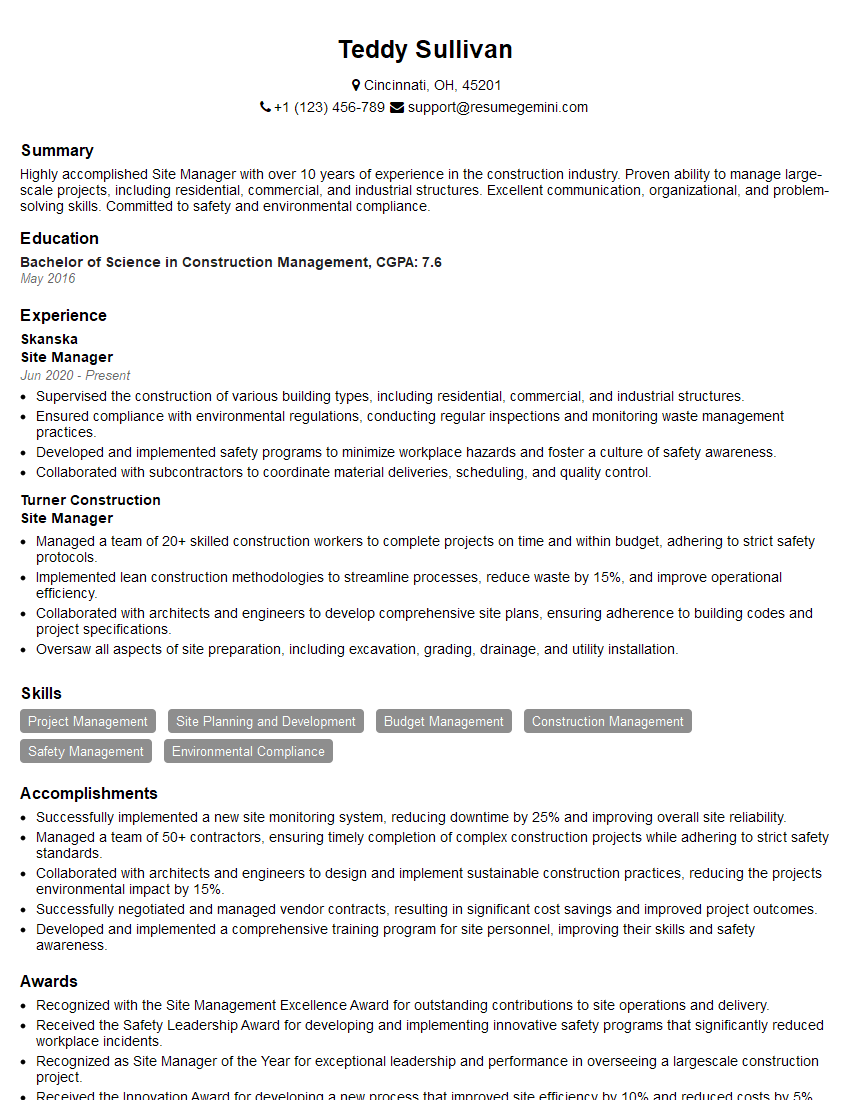
Site Manager Resume Sample
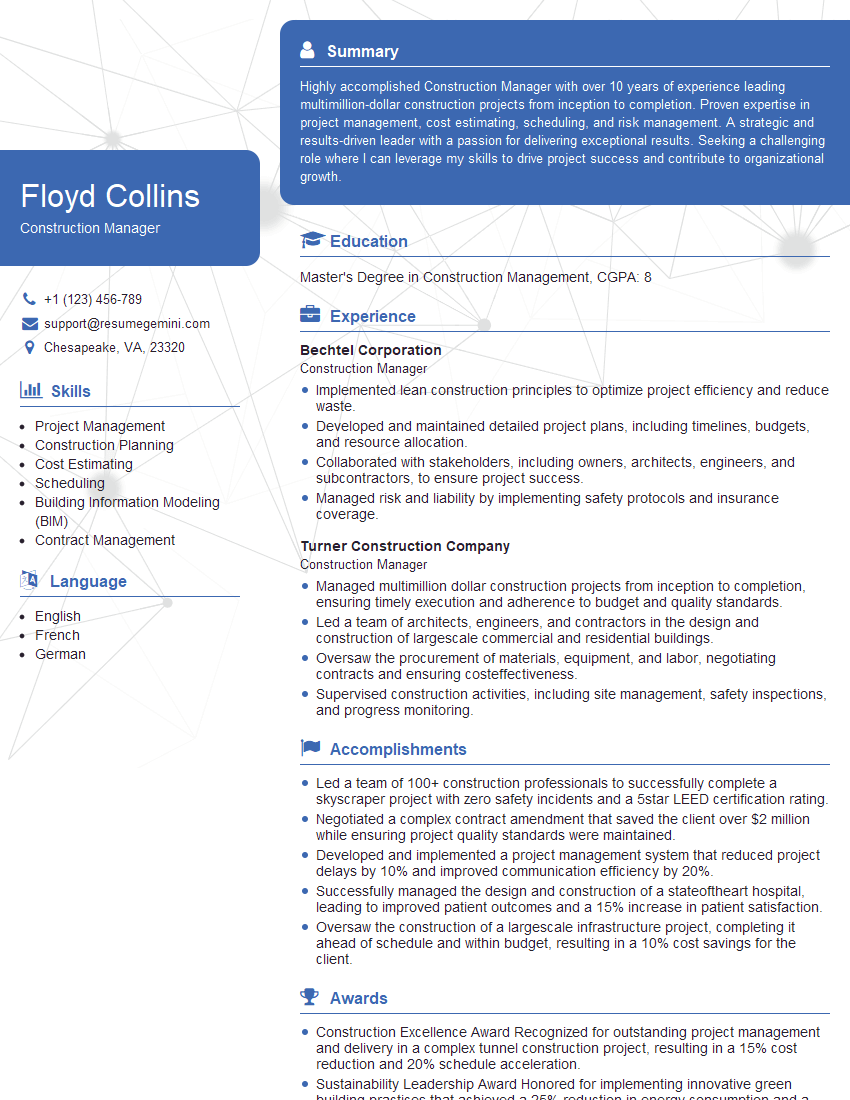
Construction Manager Resume Sample

Construction Superintendent Resume Sample
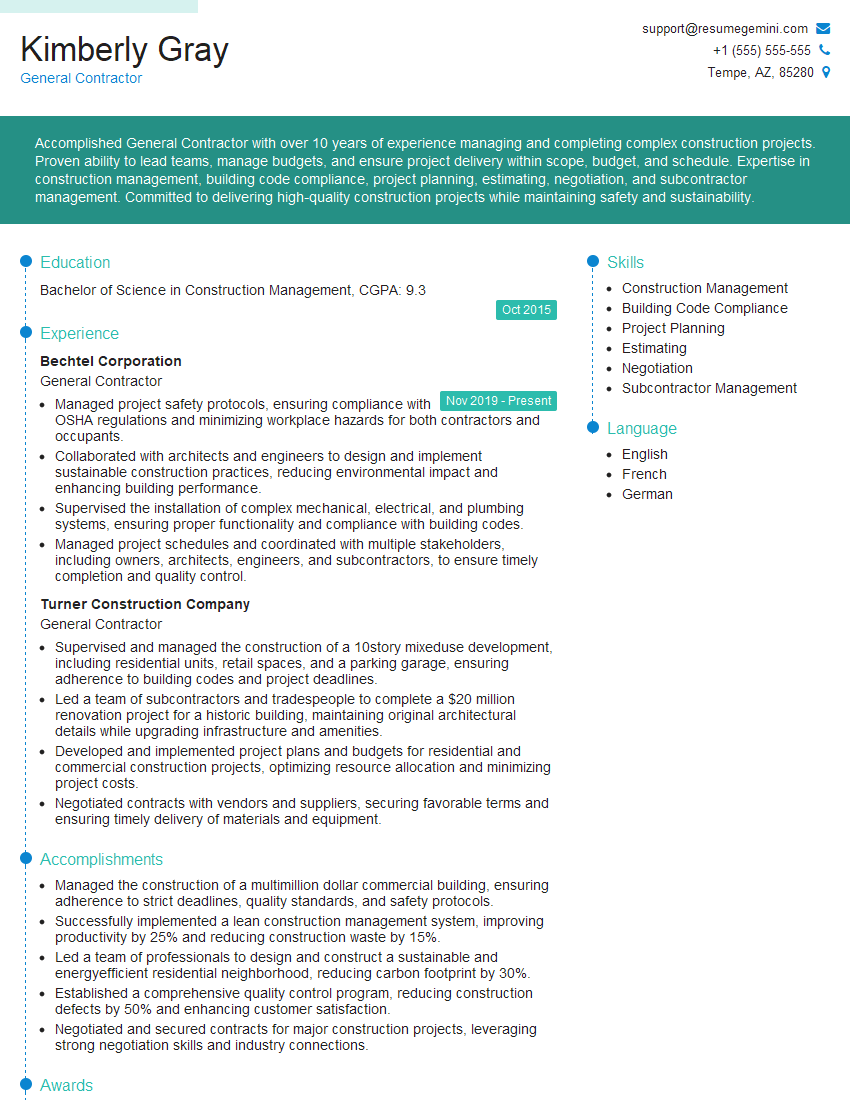
General Contractor Resume Sample
Project Manager Resume Sample
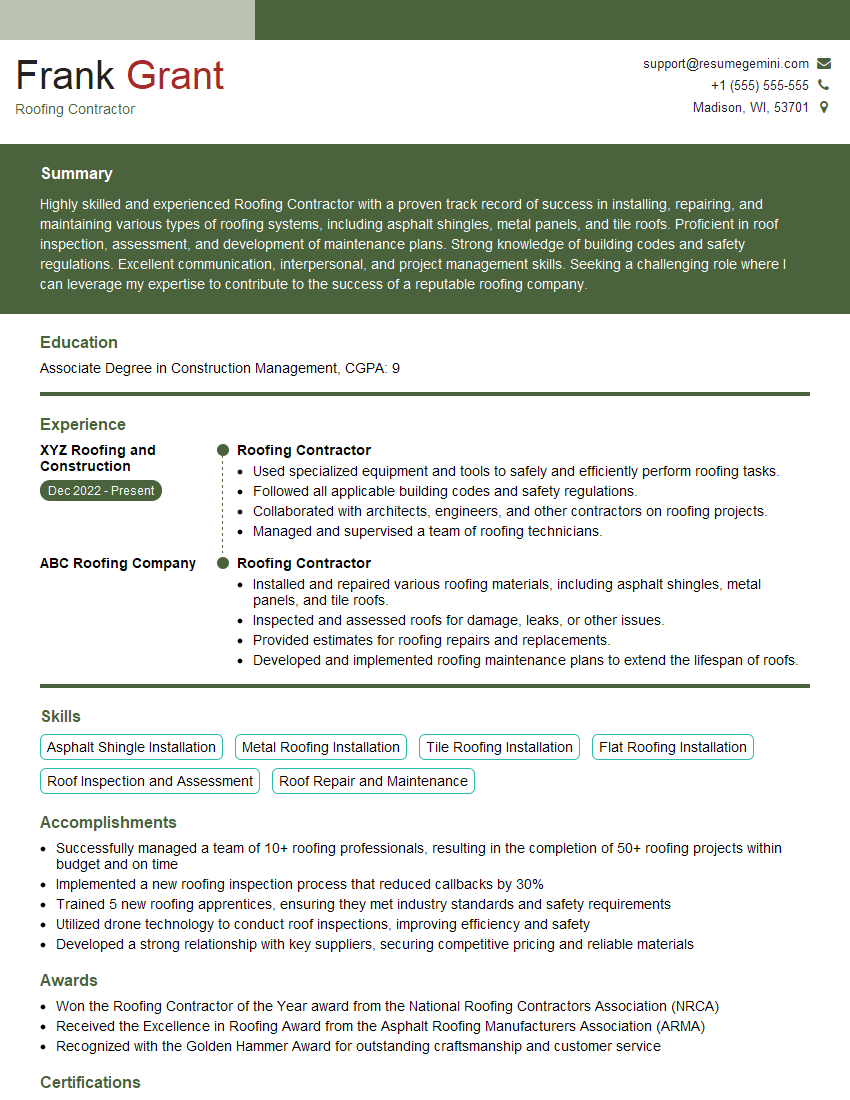
Roofing Contractor Resume Sample

Project Engineer Resume Sample
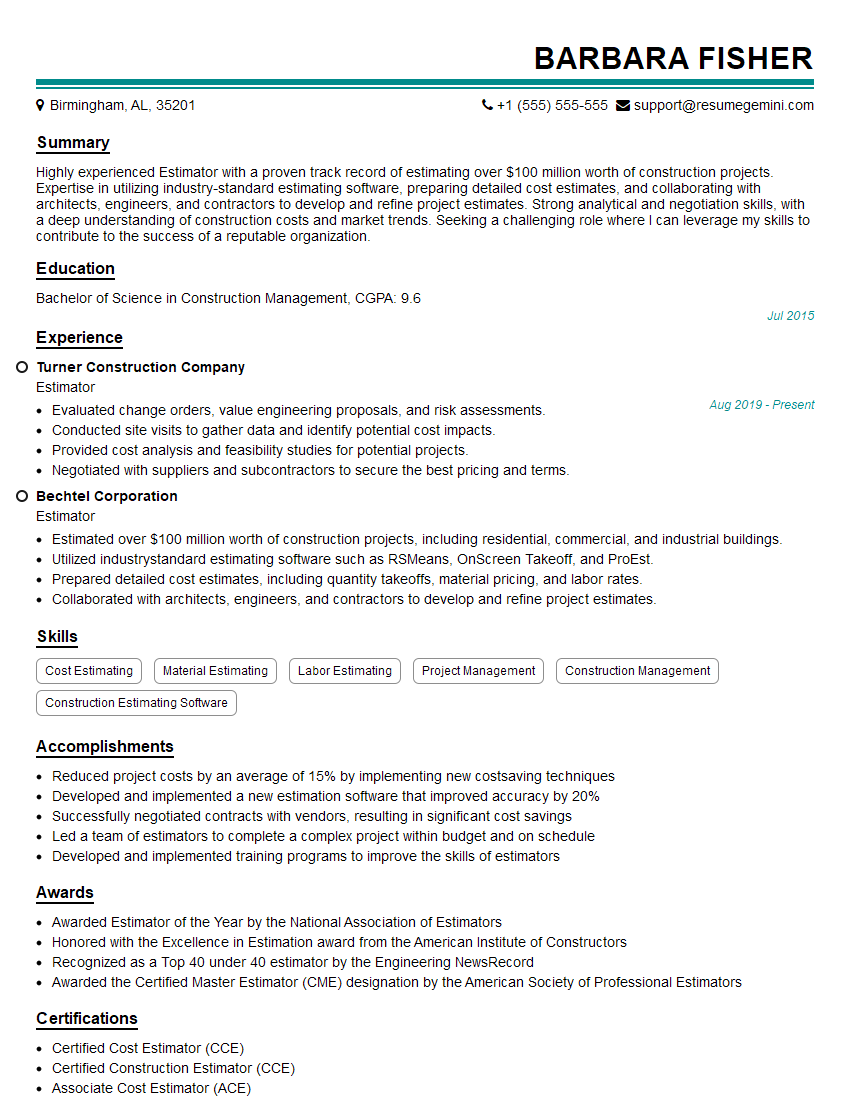
Estimator Resume Sample
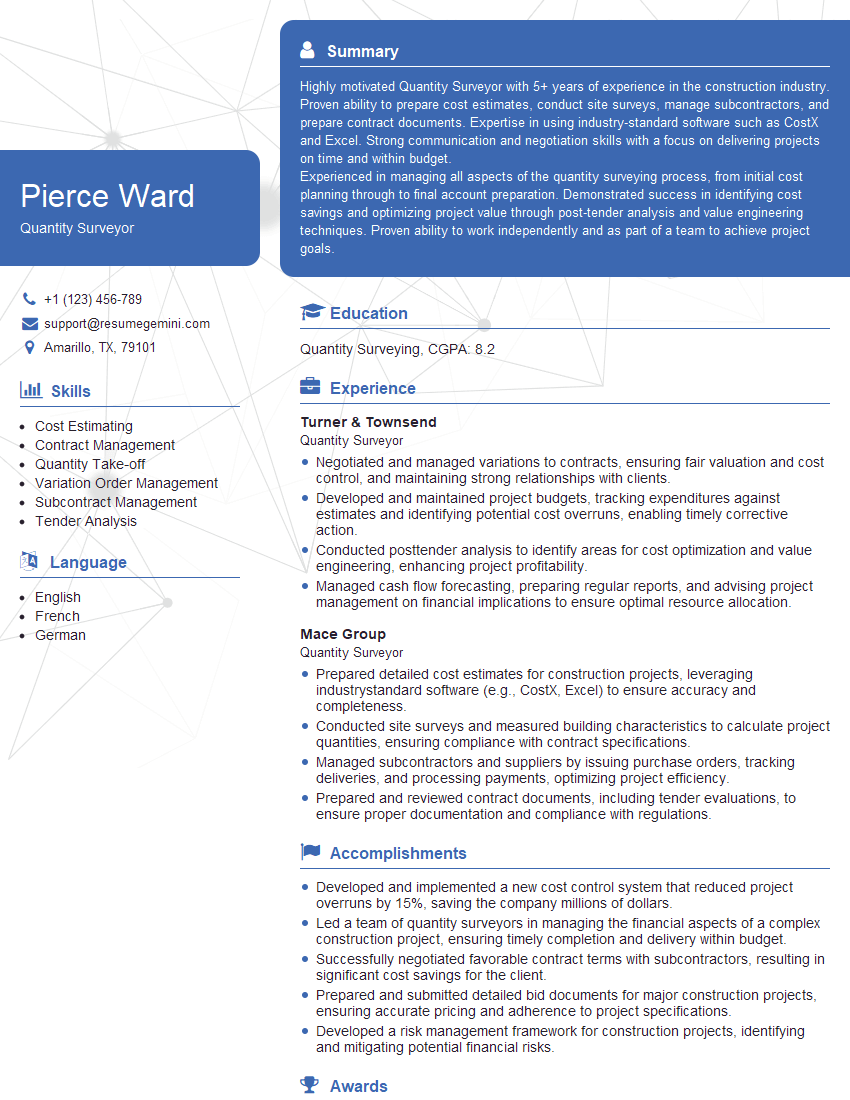
Quantity Surveyor Resume Sample
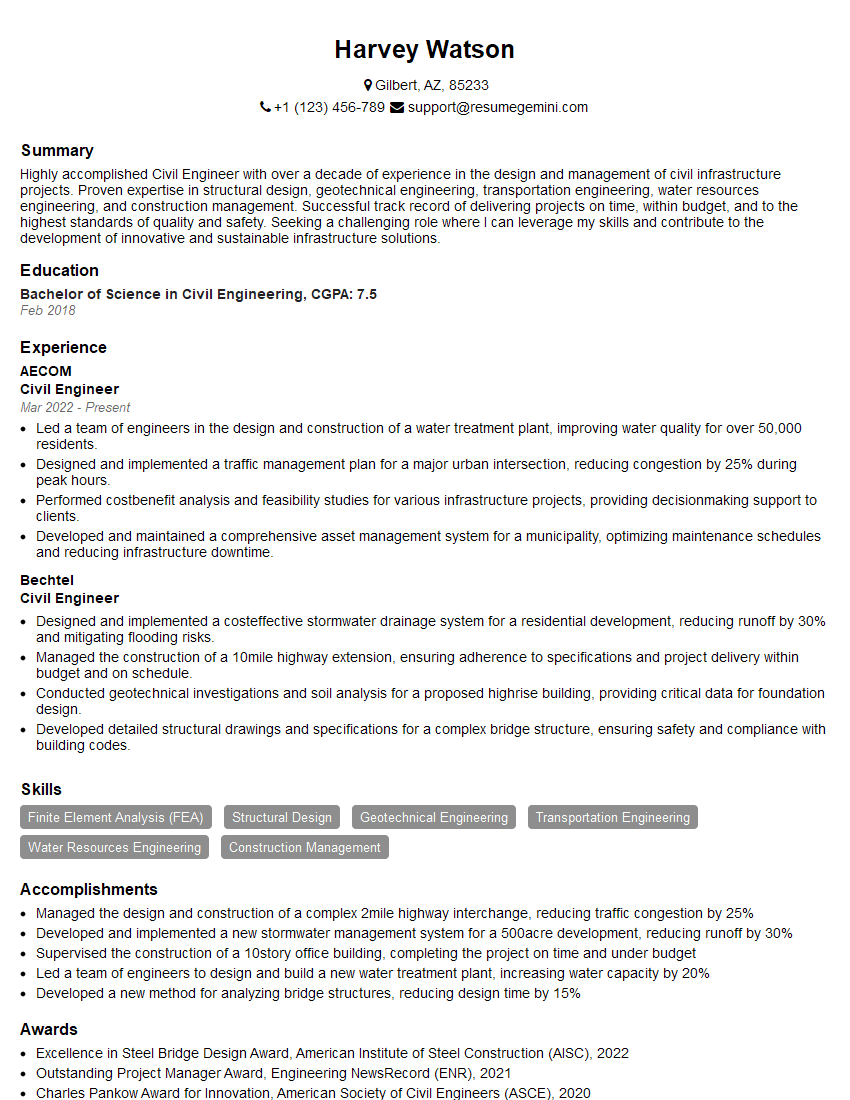
Civil Engineer Resume Sample
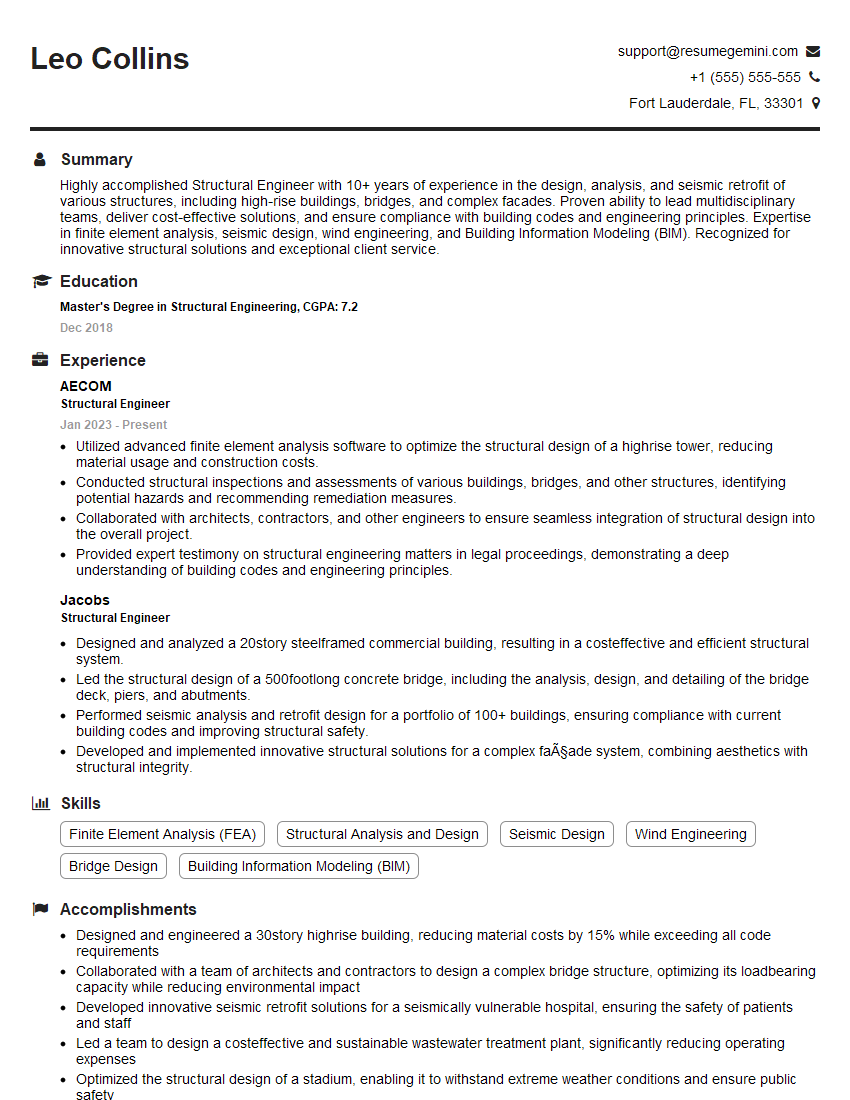
Structural Engineer Resume Sample
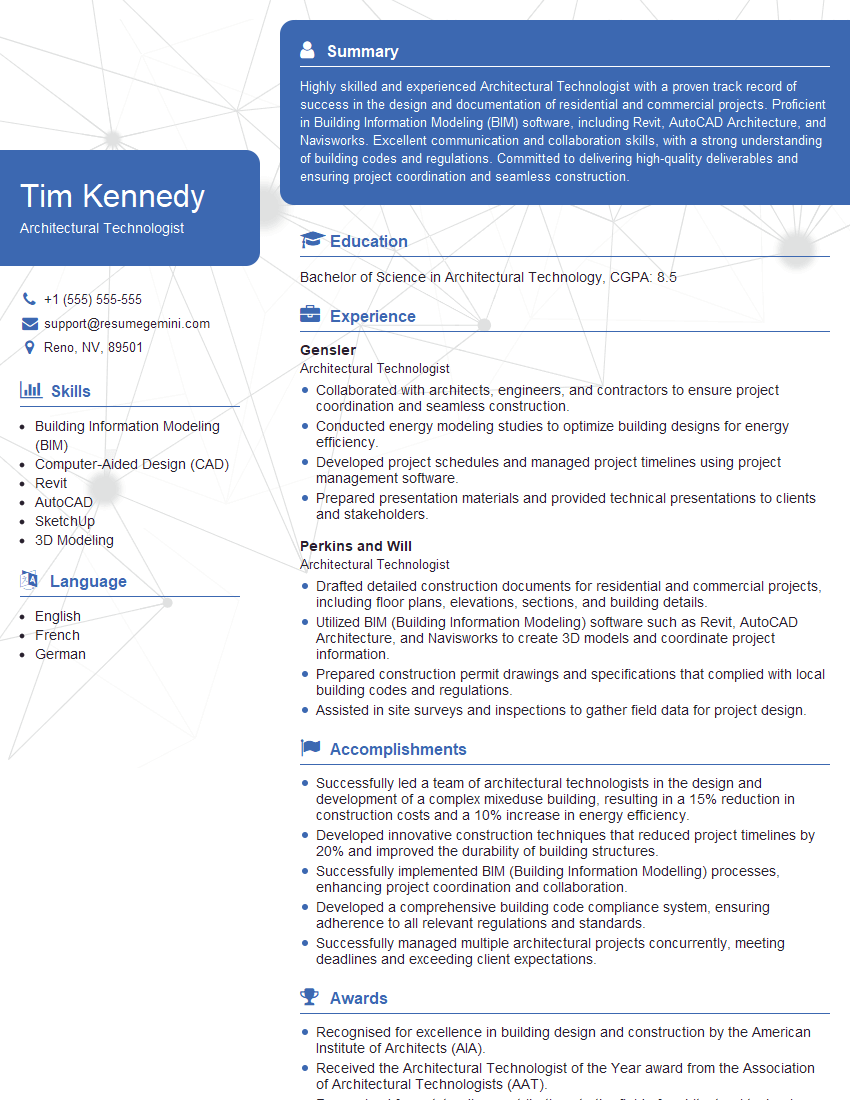
Architectural Technologist Resume Sample
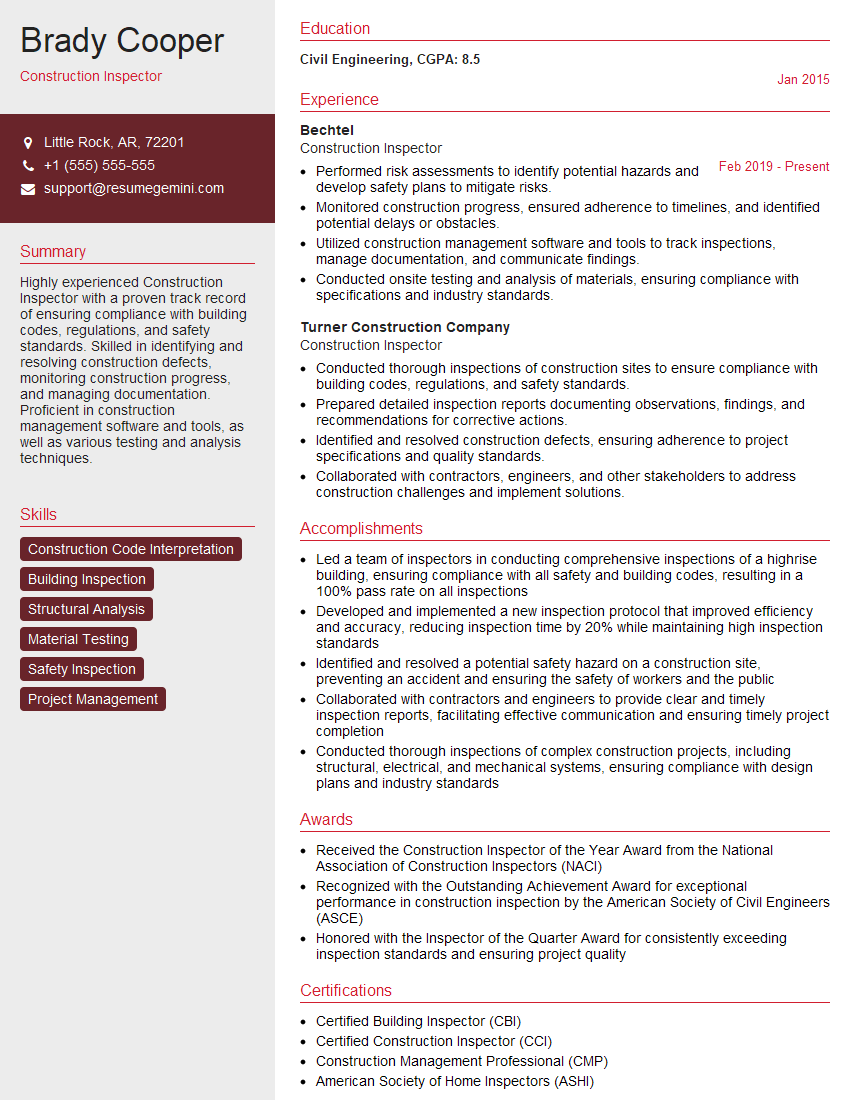
Construction Inspector Resume Sample
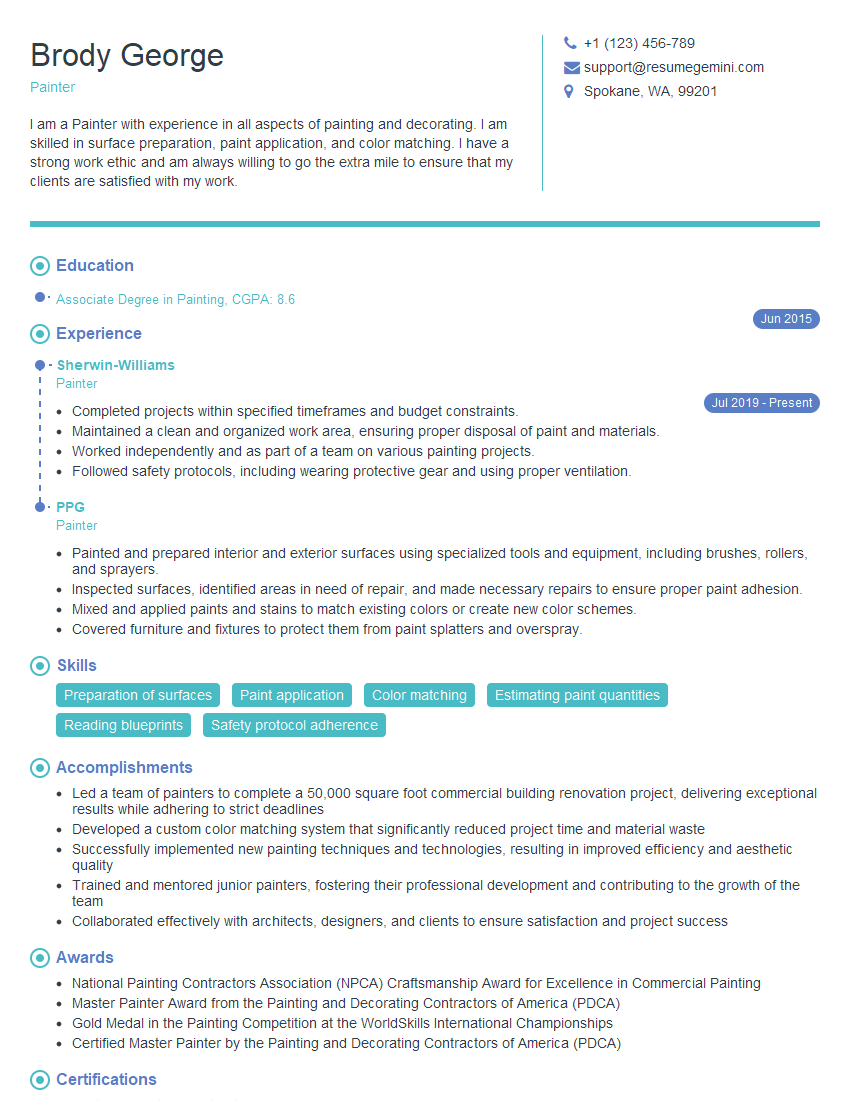
Painter Resume Sample
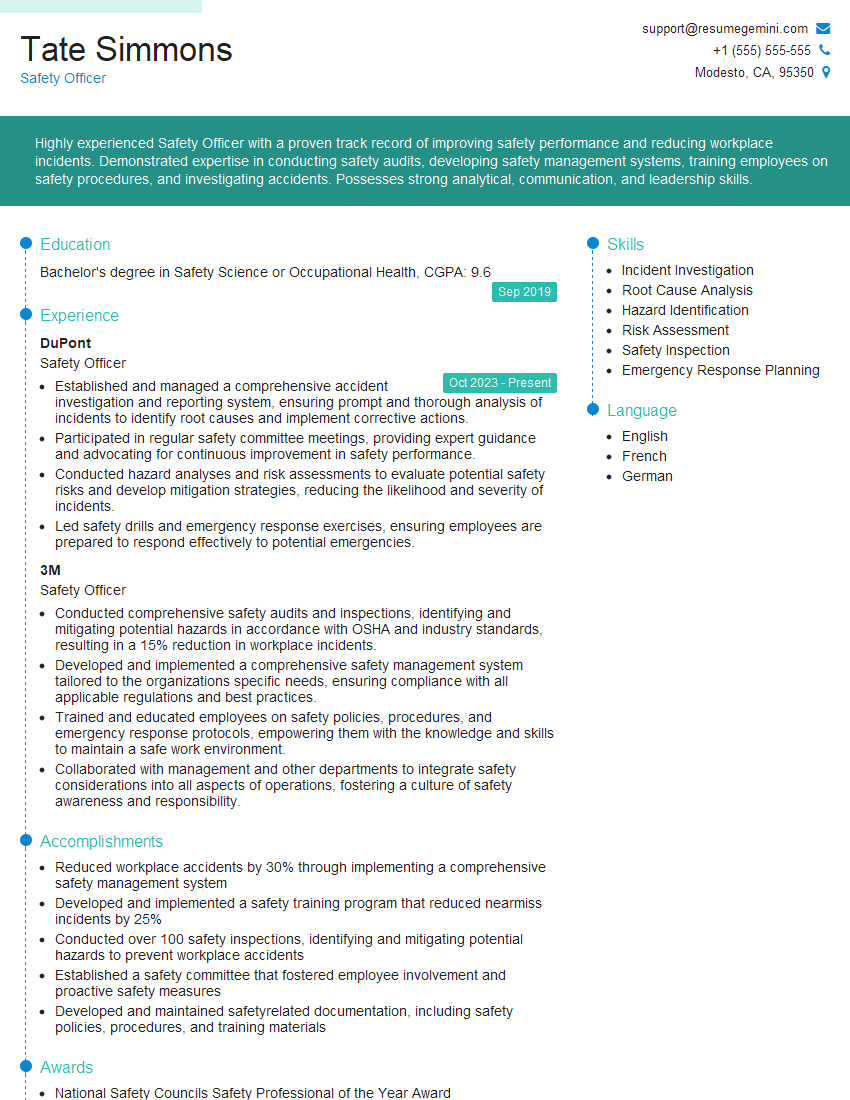
Safety Officer Resume Sample
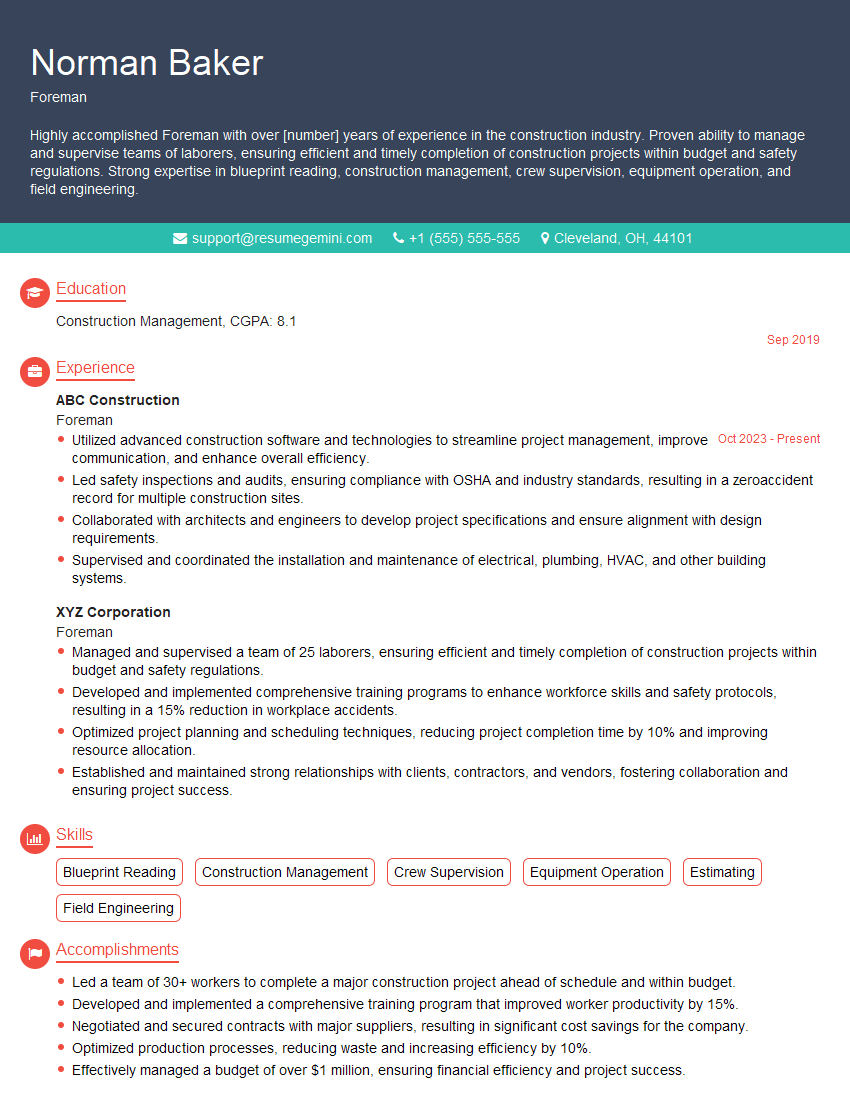
Foreman Resume Sample
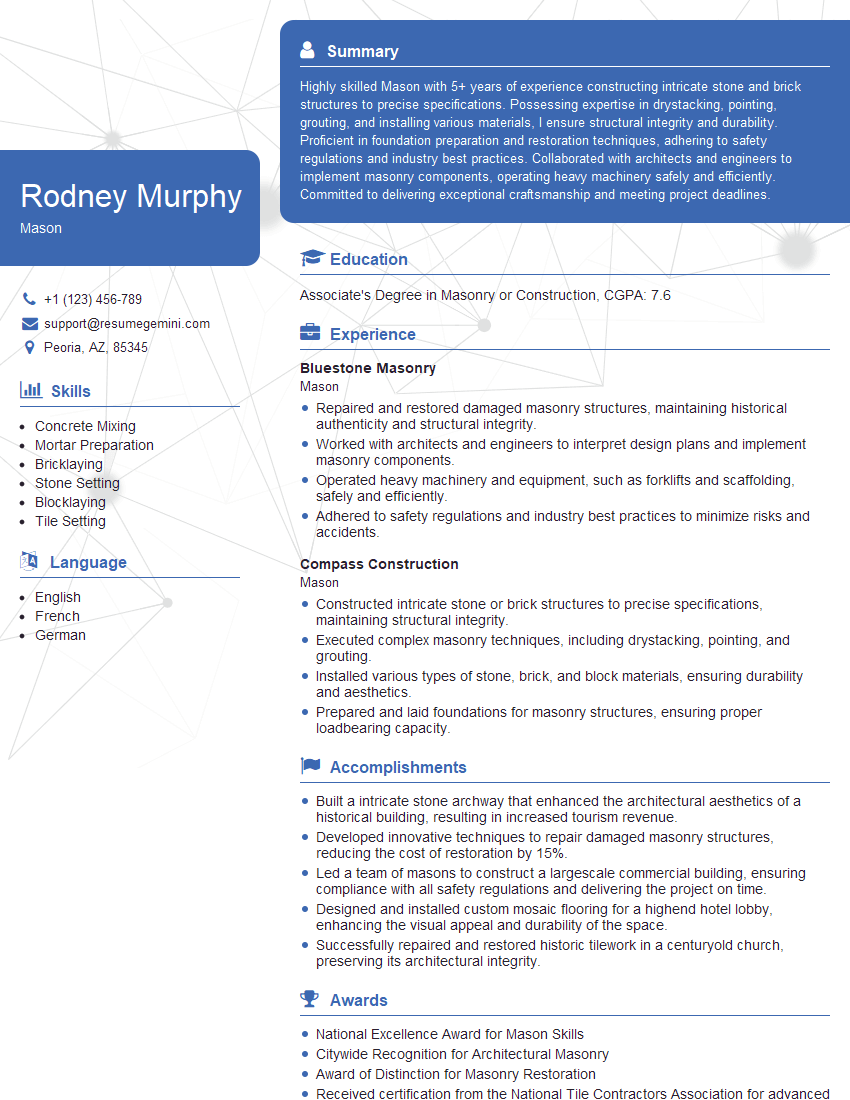
Mason Resume Sample
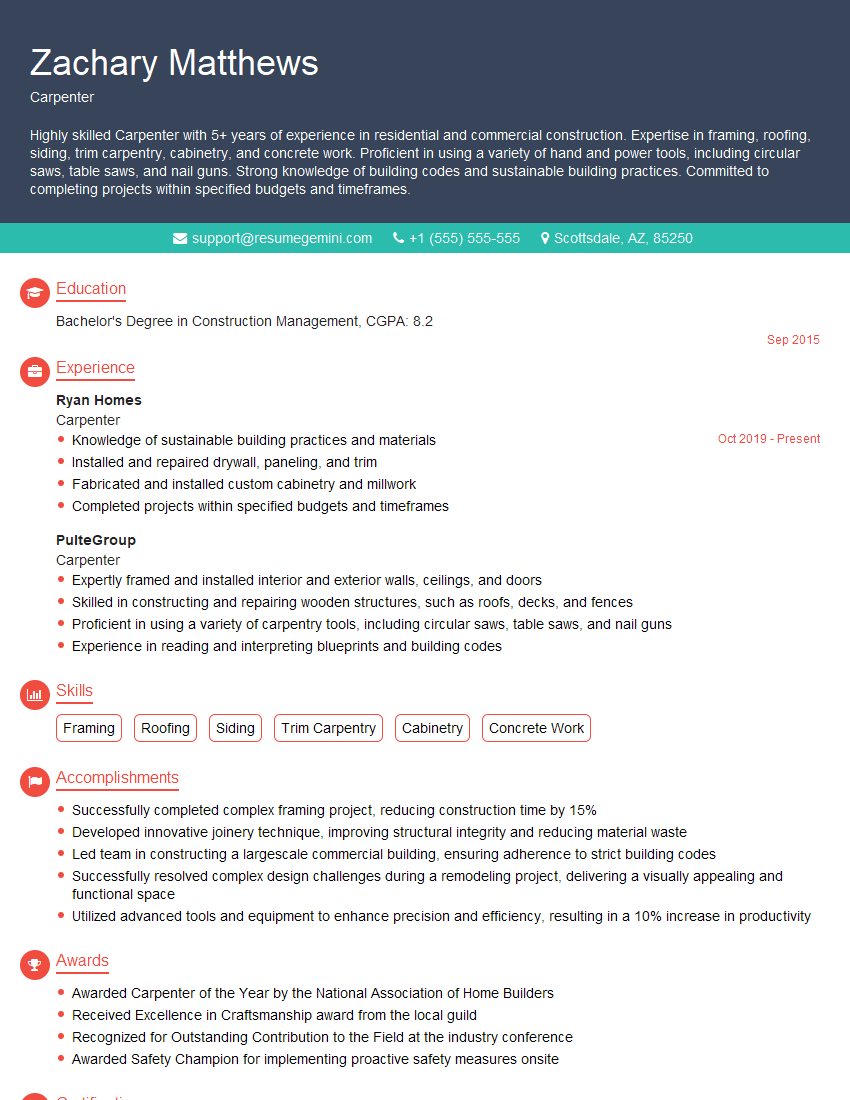
Carpenter Resume Sample
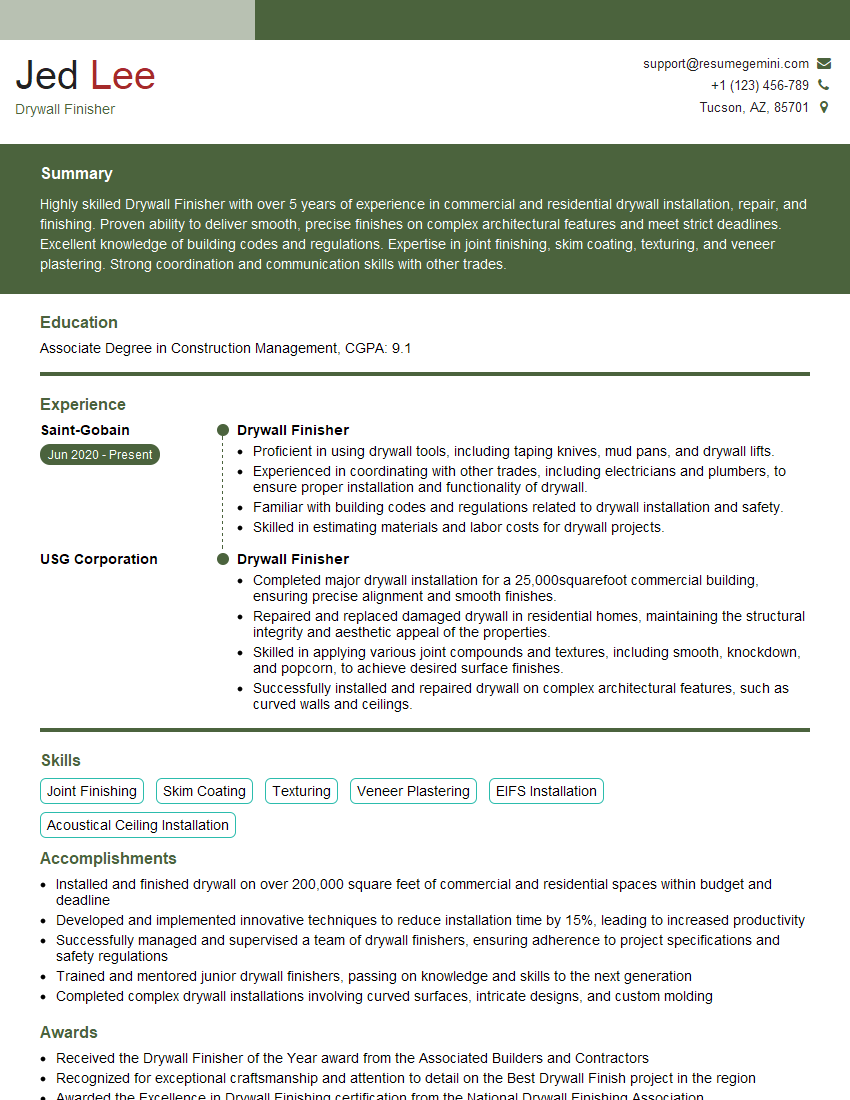
Drywall Finisher Resume Sample
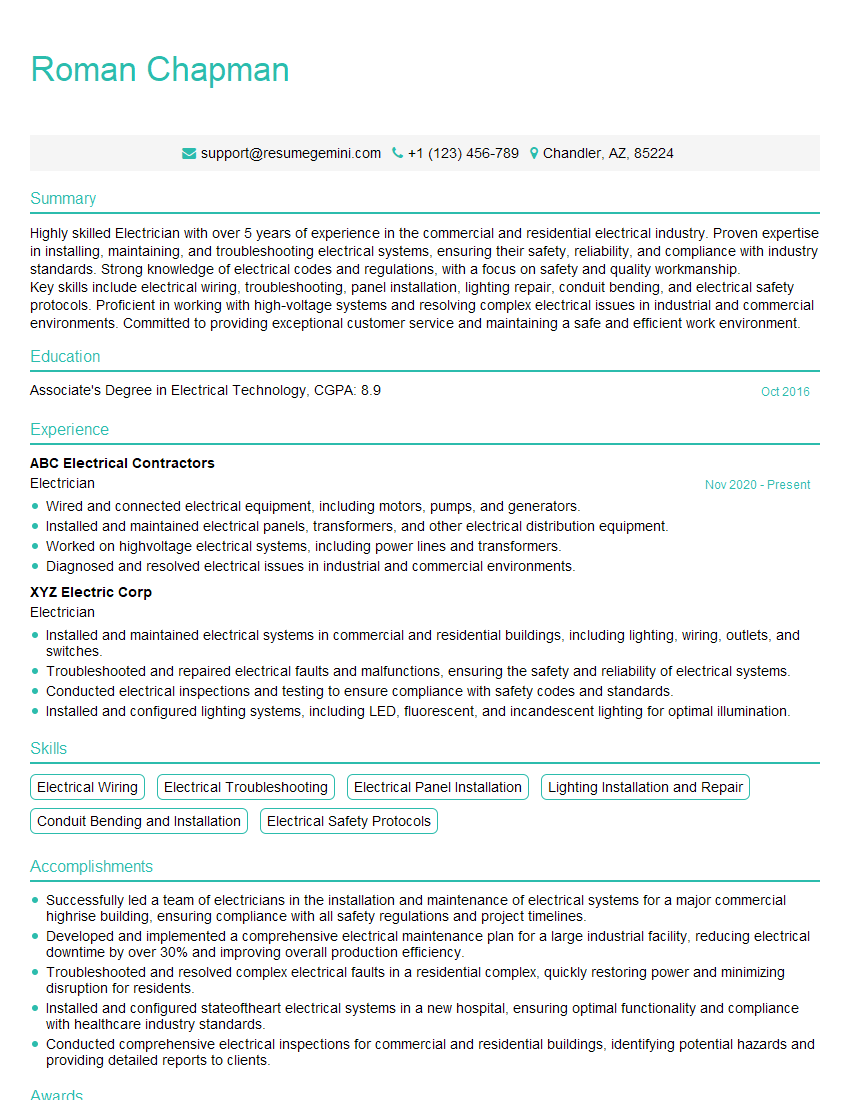
Electrician Resume Sample
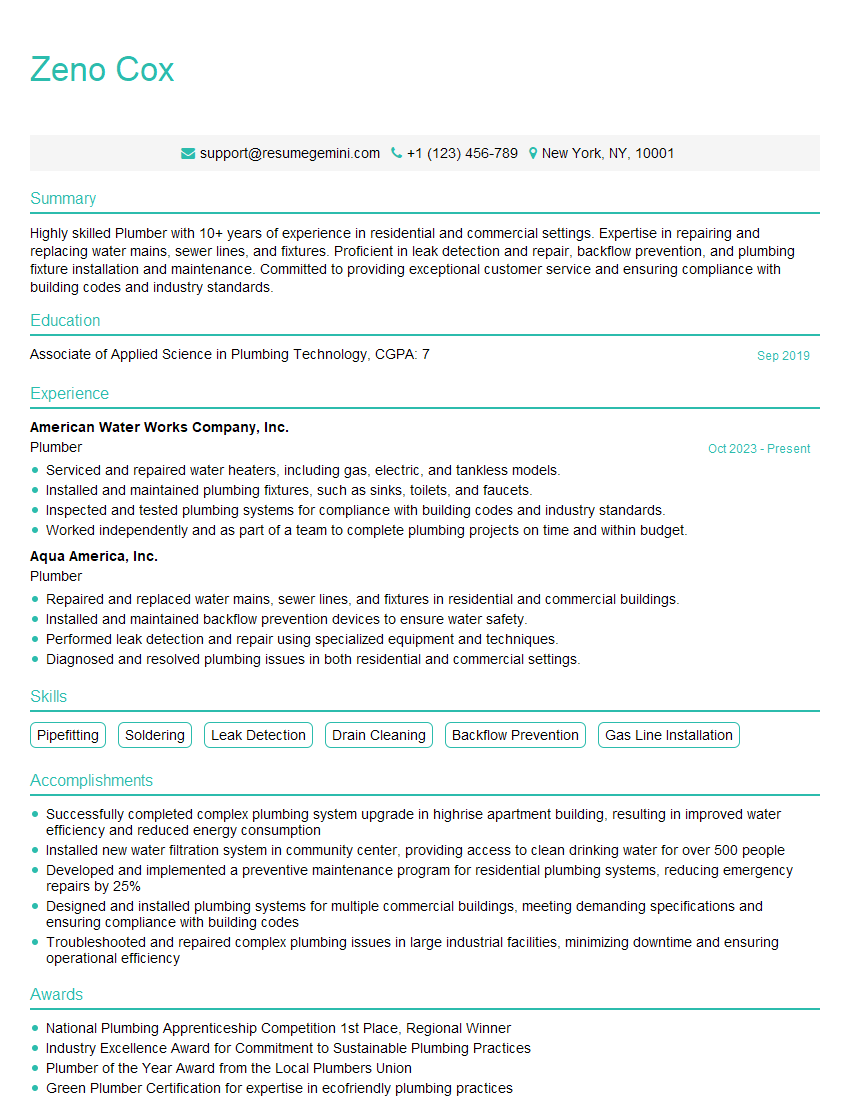
Plumber Resume Sample
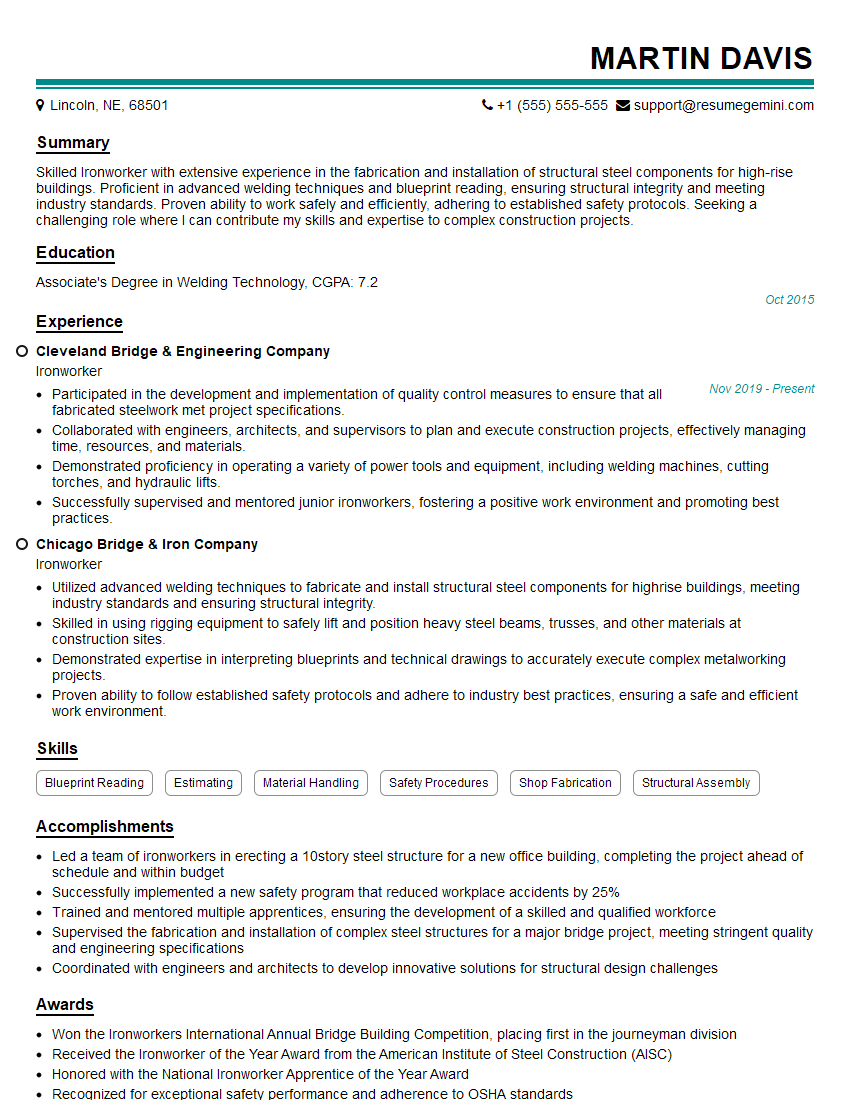
Ironworker Resume Sample
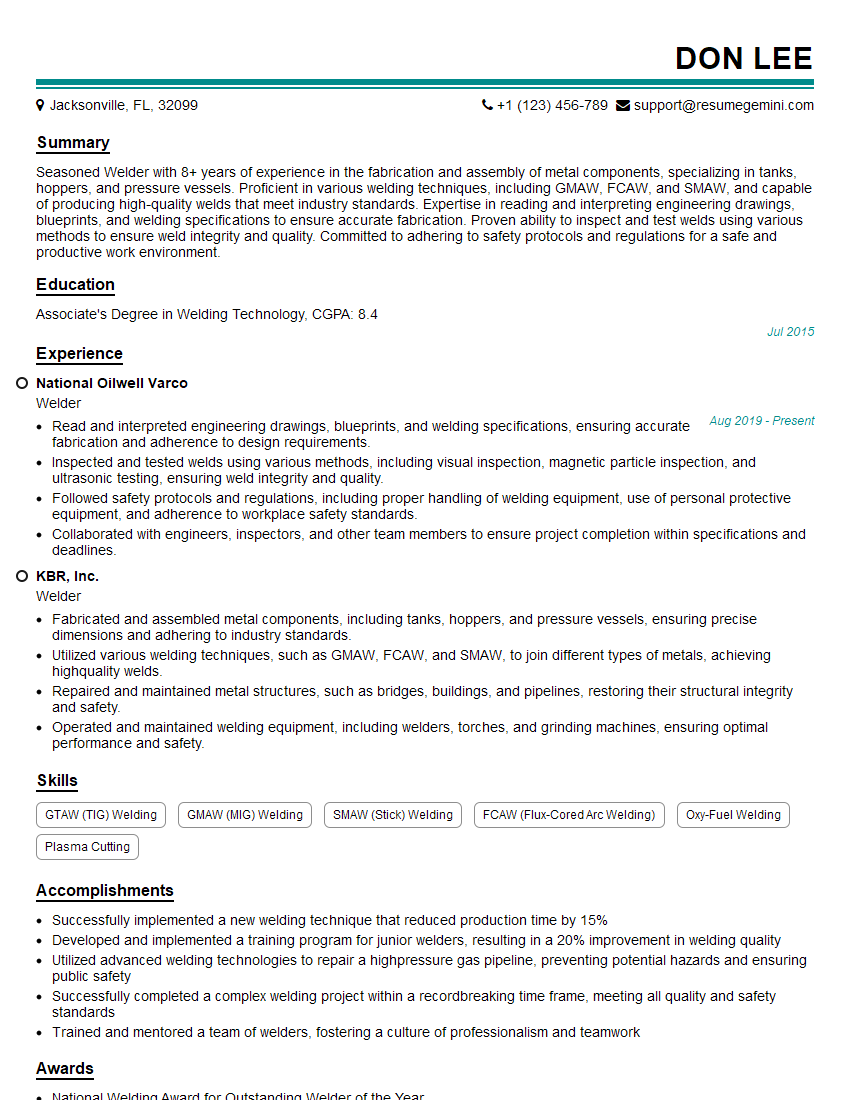
Welder Resume Sample
- Site Manager
- Construction Manager
- Construction Superintendent
- General Contractor
- Project Manager
- Roofing Contractor
- Project Engineer
- Estimator
- Quantity Surveyor
- Civil Engineer
- Structural Engineer
- Architectural Technologist
- Construction Inspector
- Painter
- Safety Officer
- Foreman
- Mason
- Carpenter
- Drywall Finisher
- Electrician
- Plumber
- Ironworker
- Welder
Explore more articles
Users Rating of Our Blogs
Share Your Experience
We value your feedback! Please rate our content and share your thoughts (optional).
What Readers Say About Our Blog
Very informative content, great job.
good