Preparation is the key to success in any interview. In this post, we’ll explore crucial Consumer Product Safety Act (CPSA) interview questions and equip you with strategies to craft impactful answers. Whether you’re a beginner or a pro, these tips will elevate your preparation.
Questions Asked in Consumer Product Safety Act (CPSA) Interview
Q 1. Explain the key provisions of the Consumer Product Safety Act (CPSA).
The Consumer Product Safety Act (CPSA) is a US federal law designed to protect the public from unreasonable risks of injury or death associated with consumer products. Its key provisions revolve around empowering the Consumer Product Safety Commission (CPSC) to:
- Set safety standards: The CPSC can develop and enforce mandatory safety standards for various products. Think of things like cribs meeting specific strength requirements to prevent collapse.
- Ban hazardous products: If a product poses an unacceptable risk, the CPSC can ban its manufacture, sale, or import. For example, certain types of toys containing harmful chemicals might be banned.
- Recall defective products: The CPSC can order manufacturers to recall dangerous products and repair or replace them. This is a crucial aspect, as it directly addresses risks already in consumers’ hands.
- Require product reporting: Manufacturers must report injuries and deaths associated with their products to the CPSC. This allows for the identification of trends and potential hazards.
- Conduct investigations and research: The CPSC actively investigates consumer product-related injuries and conducts research to identify emerging safety hazards.
Essentially, the CPSA acts as a safety net, aiming to prevent harm before it occurs and swiftly address issues when they arise.
Q 2. Describe the role of the Consumer Product Safety Commission (CPSC).
The Consumer Product Safety Commission (CPSC) is an independent US government agency responsible for enforcing the CPSA. Its role is multifaceted and critical for public safety. Key responsibilities include:
- Developing and enforcing safety standards: The CPSC sets and monitors compliance with safety standards for thousands of consumer products.
- Investigating hazards: The CPSC investigates reports of product-related injuries and deaths, determining the causes and taking appropriate action.
- Recalling defective products: The CPSC works with manufacturers to initiate recalls of dangerous products, coordinating the notification and remediation process.
- Educating consumers: The CPSC disseminates crucial safety information to consumers through various channels, raising awareness of potential hazards and promoting safe product use.
- Enforcing the law: The CPSC has the authority to impose civil penalties on companies that violate the CPSA.
Think of the CPSC as the ‘safety watchdog’ for consumer products, constantly monitoring, investigating, and intervening to prevent harm.
Q 3. What are the reporting requirements for hazardous products under CPSA?
The CPSA mandates several reporting requirements for hazardous products. Manufacturers, distributors, and retailers have specific obligations depending on their role and knowledge of a hazard. These reporting requirements typically involve:
- Reporting of injuries and deaths: Companies must report any injuries or deaths associated with their products to the CPSC within a specified timeframe (often 24 hours for serious incidents).
- Reporting of defects: Companies must report any known defects in their products that could pose a substantial risk of injury or death.
- Submission of safety reports: For certain products, manufacturers are required to submit periodic safety reports to the CPSC, detailing any potential hazards identified.
- Immediate reporting of significant hazards: In cases of substantial risk of serious injury or death, manufacturers must report immediately and initiate recall procedures.
Failure to comply with these reporting requirements can lead to severe penalties, highlighting the importance of proactive hazard identification and reporting.
Q 4. How does the CPSA define a ‘hazardous product’?
Under the CPSA, a ‘hazardous product’ is defined as any consumer product that presents an unreasonable risk of injury or death. This determination considers several factors, including:
- Probability of injury: How likely is it that someone will be injured using this product?
- Severity of injury: How severe is the potential injury (e.g., minor scratch versus death)?
- Avoidability of injury: Could the risk be reduced or eliminated through design modifications or warnings?
- Economic costs: What is the balance between the costs of preventing injury and the societal costs of injuries caused by the product?
It’s not just about inherent danger; it’s about the overall risk in the context of foreseeable use. A sharp knife isn’t inherently hazardous, but its lack of proper safety features (like a protective sheath) could make it so.
Q 5. Explain the process for recalling a defective product under CPSA.
Recalling a defective product under CPSA involves a multi-stage process, often initiated by the manufacturer or mandated by the CPSC. It typically involves these steps:
- Hazard identification and assessment: Identify the defect, assess the risk, and determine the scope of the problem.
- Development of a recall plan: Design a plan outlining how to notify consumers, collect the defective product, and provide a remedy (repair, replacement, or refund).
- CPSC notification: Inform the CPSC about the recall, providing details of the plan and the number of affected products.
- Consumer notification: Notify consumers through various channels (e.g., press releases, website announcements, direct mail, etc.) about the recall, clearly explaining the hazard and the necessary actions.
- Remedy implementation: Execute the recall plan, providing remedies to consumers and tracking their return of defective products.
- CPSC monitoring: The CPSC monitors the effectiveness of the recall and may take further action if necessary.
Successful product recalls hinge on effective communication, prompt action, and a genuine commitment to consumer safety. Poorly executed recalls can lead to further injuries and damage to the company’s reputation.
Q 6. What are the penalties for non-compliance with CPSA regulations?
Penalties for non-compliance with CPSA regulations can be substantial and range from civil penalties to criminal charges. The severity of the penalty depends on factors such as the nature of the violation, the number of affected products, and the presence of willful misconduct. Possible penalties include:
- Civil penalties: Significant fines for each violation, potentially reaching millions of dollars.
- Injunctions: Court orders requiring companies to stop producing, selling, or distributing hazardous products.
- Product seizures: Government seizure of dangerous products from the market.
- Criminal prosecution: In cases of willful or reckless disregard for safety, companies and individuals can face criminal charges, leading to imprisonment and substantial fines.
The CPSC takes non-compliance very seriously, emphasizing the importance of adhering to regulations to ensure public safety. The potential financial and legal repercussions serve as a strong deterrent.
Q 7. Describe your experience with conducting product safety testing.
Throughout my career, I’ve been extensively involved in conducting various types of product safety testing, focusing on both compliance and hazard identification. My experience encompasses:
- Mechanical testing: Evaluating the strength, durability, and stability of products using methods such as impact testing, tensile testing, and fatigue testing. For example, I’ve conducted drop tests on children’s toys to ensure they withstand impacts without breaking.
- Chemical testing: Analyzing the chemical composition of products to identify hazardous substances, determining compliance with regulations such as those for lead and phthalates in children’s products.
- Electrical testing: Assessing the electrical safety of products, ensuring compliance with relevant standards to prevent electrical shocks and fires.
- Flammability testing: Evaluating the flammability of materials used in products, ensuring compliance with fire safety standards to minimize fire risks.
- Risk assessment: Conducting systematic risk assessments to identify potential hazards throughout a product’s lifecycle. This includes analyzing potential failure modes and determining the likelihood and severity of potential injuries.
I am proficient in using various testing equipment and interpreting the results to identify potential hazards and ensure products meet safety requirements. My work has directly contributed to improving the safety of numerous consumer products, ensuring they meet regulatory standards and minimizing the risk of harm to consumers.
Q 8. How do you identify and assess product hazards?
Identifying and assessing product hazards involves a systematic approach combining engineering principles, toxicological data, and consumer behavior analysis. It’s like being a detective, meticulously examining every aspect of a product to uncover potential dangers.
We begin with hazard identification, which involves analyzing the product’s design, materials, intended use, and foreseeable misuse. This might involve reviewing design drawings, conducting material testing (e.g., flammability, toxicity), and performing simulations to understand how the product might fail or cause harm. For example, a children’s toy might be assessed for small parts that could be choking hazards or sharp edges that could cause cuts.
Next comes hazard assessment, where we evaluate the severity and likelihood of harm associated with each identified hazard. This often involves risk matrices, which quantify the severity (e.g., minor injury, death) and probability (e.g., rare, frequent) of each hazard. A high severity and high probability hazard necessitates immediate action, such as redesigning the product or adding safety warnings.
We use various tools and techniques like Failure Mode and Effects Analysis (FMEA), Fault Tree Analysis (FTA), and Hazard and Operability Studies (HAZOP) to comprehensively assess risks. These allow us to prioritize hazards based on the level of risk and develop appropriate mitigation strategies.
Q 9. Explain your understanding of risk assessment methodologies in relation to CPSA.
Risk assessment methodologies under CPSA are crucial for determining the acceptability of product risks. Think of it as a weighing scale: balancing the benefits of a product against its potential harms. The process isn’t just about identifying hazards; it’s about understanding how likely those hazards are to cause harm and how severe that harm could be.
Common methodologies include:
- Qualitative Risk Assessment: This relies on expert judgment and experience to categorize risks based on descriptive scales (e.g., low, medium, high) for both likelihood and severity.
- Quantitative Risk Assessment: This involves numerical estimations of risk, often using statistical data on incidence rates and severity measures. For example, we might calculate the probability of a child choking on a small toy part based on historical data.
The CPSA doesn’t mandate a specific methodology, but it does emphasize a thorough and science-based approach. The chosen methodology must be appropriate to the product and its inherent risks. The goal is to identify risks and implement controls to reduce the likelihood and severity of harm to an acceptable level.
Q 10. How do you ensure compliance with CPSA regulations throughout the product lifecycle?
Ensuring CPSA compliance throughout the product lifecycle—from design to disposal—requires a proactive and comprehensive approach. It’s like building a house—you wouldn’t skip inspections or use substandard materials.
We employ a multi-stage process:
- Design Stage: Incorporating safety features into the product design, selecting safe materials, and conducting thorough risk assessments.
- Manufacturing Stage: Implementing quality control measures to ensure consistency and adherence to safety standards; monitoring the manufacturing process for potential hazards.
- Distribution Stage: Ensuring proper labeling and packaging, complying with transportation regulations, and selecting reliable distributors.
- Retail Stage: Providing clear and accurate information to consumers through labels and instructions; cooperating with retailers to ensure safe handling and display.
- Post-Market Surveillance: Monitoring product performance after launch, addressing consumer complaints, and conducting post-market studies to identify potential safety issues. This often involves analyzing incident reports to identify trends and patterns.
Regular audits and internal reviews are essential to verify compliance with CPSA regulations and continuously improve our safety management system.
Q 11. Describe your experience with creating and implementing a product safety management system.
I have extensive experience in developing and implementing product safety management systems (PSMS) based on ISO 9001 and ISO 14001 principles, adapted for CPSA compliance. A PSMS is the backbone of a company’s safety efforts, providing structure and accountability. Think of it as a comprehensive roadmap that guides every step of the product lifecycle, from concept to disposal.
My experience includes:
- Developing and documenting PSMS policies and procedures.
- Training employees on product safety responsibilities and procedures.
- Establishing a system for tracking and analyzing product incidents.
- Conducting regular internal audits to ensure compliance.
- Implementing corrective and preventive actions to address identified safety issues.
In one project, I led the implementation of a PSMS for a children’s toy manufacturer. This involved creating detailed safety procedures for all aspects of the production process, training factory workers on these procedures, and setting up a system for tracking and investigating any reported incidents. This significantly reduced the number of reported safety issues.
Q 12. What is your experience with CPSC reporting and documentation requirements?
My experience with CPSC reporting and documentation requirements is extensive. This is a critical aspect of CPSA compliance, ensuring transparency and facilitating prompt action in case of safety concerns. It’s like maintaining a meticulous record for any potential investigation.
I’m proficient in:
- Preparing and submitting timely reports to the CPSC as required by regulations, including incident reports, recall notifications, and annual reports.
- Maintaining detailed records of safety testing, risk assessments, and incident investigations.
- Ensuring that all documentation meets CPSC requirements for format, content, and retention.
- Responding effectively to CPSC inquiries and investigations.
I’ve successfully managed numerous reporting instances, ensuring accurate and comprehensive documentation that met all CPSC requirements, leading to efficient resolution of reported issues and avoiding any potential penalties. I understand the importance of precise and complete record-keeping, which is crucial during audits and investigations.
Q 13. How familiar are you with the different CPSA standards and guidelines?
My familiarity with CPSA standards and guidelines is comprehensive, encompassing a wide range of regulations and industry best practices. This knowledge is essential for ensuring product compliance and minimizing potential liabilities. Think of it like being fluent in the language of product safety.
I possess in-depth knowledge of:
- Specific standards relevant to different product categories (e.g., toys, children’s products, household appliances).
- Testing and certification requirements for various products.
- Labeling and packaging regulations.
- Requirements for children’s products concerning lead content, small parts, and flammability.
I routinely consult and interpret these standards during product development and risk assessments, ensuring all products are designed, manufactured, and marketed in accordance with the latest regulations. Staying updated on the ever-evolving regulatory landscape is crucial for maintaining compliance.
Q 14. Explain your experience in managing product recalls.
Managing product recalls is a critical aspect of product safety management and demands a highly structured and coordinated approach. It’s a complex process that requires swift action, clear communication, and meticulous record-keeping. Think of it as a carefully orchestrated emergency response.
My experience includes:
- Identifying the need for a recall based on incident reports, risk assessments, or CPSC notifications.
- Developing and implementing a comprehensive recall plan, including strategies for identifying affected products, notifying consumers, and providing appropriate remedies (repair, replacement, refund).
- Coordinating with regulatory agencies (e.g., the CPSC) throughout the recall process.
- Managing communication with consumers, retailers, and distributors.
- Maintaining detailed records of the recall process, including costs and outcomes.
I’ve successfully managed several product recalls, ensuring the timely and effective resolution of safety concerns while minimizing disruptions to the business. This involves collaboration with multiple departments, effective communication, and a steadfast commitment to consumer safety.
Q 15. How do you communicate product safety information to consumers?
Communicating product safety information to consumers effectively is paramount. We utilize a multi-pronged approach, ensuring information reaches consumers through various channels and in easily understandable formats.
- Clear and concise labeling: Every product bears labels clearly stating warnings, cautions, and instructions for safe use, meeting all CPSA requirements. For instance, a children’s toy might have a label specifying age appropriateness and warnings about small parts.
- User manuals and instructions: Detailed manuals accompany products, explaining safe operation and maintenance procedures. We use simple language, visuals, and diagrams for optimal understanding. For example, a power tool manual would contain safety precautions and operational guidelines with clear illustrations.
- Website and online resources: Our website features dedicated safety sections with FAQs, videos demonstrating safe product usage, and downloadable safety guides. We also actively address safety concerns and questions raised through our online channels.
- Social media engagement: We proactively use social media platforms to disseminate safety information, respond to concerns, and issue any necessary recalls or updates promptly. This provides a direct line of communication with consumers.
- Recall and alert systems: In case of product defects posing a safety hazard, we collaborate with the CPSC to issue immediate recalls, notifying consumers via multiple channels (website, email, press releases, and cooperation with retailers) to ensure swift action.
Career Expert Tips:
- Ace those interviews! Prepare effectively by reviewing the Top 50 Most Common Interview Questions on ResumeGemini.
- Navigate your job search with confidence! Explore a wide range of Career Tips on ResumeGemini. Learn about common challenges and recommendations to overcome them.
- Craft the perfect resume! Master the Art of Resume Writing with ResumeGemini’s guide. Showcase your unique qualifications and achievements effectively.
- Don’t miss out on holiday savings! Build your dream resume with ResumeGemini’s ATS optimized templates.
Q 16. What is your experience working with CPSC inspectors?
I’ve had extensive experience collaborating with CPSC inspectors. These interactions are crucial for ensuring compliance and maintaining a safe product environment. My experiences have consistently been professional and collaborative, focusing on ensuring the safety and quality of products.
- Inspections: I’ve facilitated numerous on-site inspections, providing inspectors with full transparency regarding our testing procedures, quality control measures, and product safety documentation. This often involved demonstrating compliance with specific CPSA regulations, such as those related to flammability or mechanical hazards.
- Data provision: I’ve been responsible for providing inspectors with comprehensive data regarding product testing results, incident reports, and any corrective actions taken. Open communication and a willingness to cooperate are key to a smooth inspection process.
- Corrective actions: In instances where CPSC inspectors have identified areas for improvement, we’ve worked collaboratively to implement corrective actions, ensuring quick resolution and demonstrating a commitment to product safety. This may have involved redesigning a product component, modifying manufacturing processes, or enhancing our quality control systems.
Building a strong, positive relationship with CPSC inspectors is paramount to proactive compliance and efficient resolution of any safety concerns.
Q 17. How do you stay updated on changes in CPSA regulations?
Staying updated on CPSA regulations is an ongoing process requiring a multi-faceted approach.
- CPSC website monitoring: Regularly reviewing the CPSC website for updates, proposed rule changes, and new regulations is essential. This includes subscribing to their email alerts for immediate notification of important changes.
- Industry publications and newsletters: Subscribing to industry-specific publications and newsletters provides valuable insights into emerging safety concerns and regulatory trends.
- Industry events and conferences: Attending conferences and workshops offers opportunities to network with experts and hear firsthand about the latest regulatory developments and best practices.
- Legal counsel: We work closely with legal counsel specializing in product safety law to ensure our understanding and implementation of regulations are completely up-to-date and compliant.
Proactive monitoring and continuous learning are critical to ensure we maintain compliance with the ever-evolving CPSA landscape.
Q 18. Describe a situation where you had to resolve a product safety issue.
In one instance, we discovered a potential hazard in a children’s toy involving a small, detachable part that could be a choking hazard.
- Problem identification: Internal testing revealed the risk. We immediately halted production and initiated a thorough investigation to determine the root cause.
- Risk assessment: We conducted a detailed risk assessment, evaluating the severity and likelihood of the choking hazard. We categorized it as a high-priority safety concern.
- Corrective action: We redesigned the toy to eliminate the detachable part, implementing stricter quality control measures to prevent similar incidents in the future. This involved updating our manufacturing processes and conducting additional testing.
- Recall and communication: We initiated a voluntary recall, cooperating fully with the CPSC to notify retailers and consumers about the hazard and the recall process. Clear and transparent communication with customers was prioritized.
This situation highlighted the importance of proactive testing, thorough risk assessment, and swift, transparent communication when dealing with product safety issues.
Q 19. How do you prioritize product safety risks?
Prioritizing product safety risks involves a systematic approach using a risk assessment matrix. We typically consider these factors:
- Severity: How serious is the potential harm? (e.g., minor injury, serious injury, death)
- Likelihood: How likely is the hazard to occur? (e.g., rare, probable, almost certain)
- Exposure: How many people are likely to be exposed to the hazard?
We use this information to create a risk matrix, ranking hazards based on a combination of severity and likelihood. For example, a hazard with high severity and high likelihood would receive top priority, requiring immediate action. This approach ensures that resources are allocated effectively to address the most critical safety concerns first. We regularly review and update our risk assessments, as circumstances can change.
Q 20. What is your experience with international product safety standards?
My experience encompasses familiarity with several international product safety standards, including those from the European Union (EU), Canada, and Australia. We ensure our products meet the most stringent requirements across different jurisdictions.
- Harmonization: In many cases, there is significant harmonization between standards, simplifying the process. However, we are aware of subtle differences and ensure our products meet all applicable requirements.
- Testing and certification: We utilize accredited testing laboratories to ensure compliance with all relevant international standards. This often includes obtaining necessary certifications to prove compliance with local regulations.
- Global supply chain management: We meticulously manage our global supply chain, ensuring our suppliers adhere to the same high standards of product safety and compliance. This often entails conducting audits of supplier facilities.
Understanding and meeting international safety standards is critical for companies operating in global markets. This demonstrates a commitment to consumer safety worldwide.
Q 21. How do you balance product safety with business objectives?
Balancing product safety with business objectives is not a compromise but rather a synergistic approach. We recognize that robust product safety is a key driver of long-term business success.
- Cost-benefit analysis: While safety measures may involve costs, we perform thorough cost-benefit analyses to determine the optimal level of investment. The long-term costs associated with product recalls, litigation, and reputational damage far outweigh the initial investment in safety.
- Proactive safety design: Incorporating safety features into product design from the outset is significantly more cost-effective and efficient than making changes later on. This is a proactive approach that leads to safer and more reliable products.
- Continuous improvement: We regularly review and improve our safety processes, utilizing data from testing, incident reports, and customer feedback. Continuous improvement leads to increased efficiency and improved safety.
- Culture of safety: Establishing a strong safety culture throughout our organization is vital. This involves empowering employees at all levels to identify and report potential hazards.
Investing in safety is not an expense, but an investment that protects our brand reputation, ensures consumer trust, and ultimately contributes to long-term business sustainability.
Q 22. How do you ensure your company’s supply chain is compliant with CPSA?
Ensuring supply chain compliance with the Consumer Product Safety Act (CPSA) is paramount. It’s not a one-time task, but a continuous process requiring proactive engagement with every supplier. My approach involves a multi-pronged strategy:
- Supplier Audits: We conduct regular audits of our suppliers, evaluating their facilities, manufacturing processes, and quality control systems. This includes verifying their adherence to CPSA regulations and relevant industry standards. For example, we’d check their testing procedures for lead in children’s toys, or flammability tests for upholstered furniture.
- Material Verification: We meticulously verify the composition of all materials used in our products, ensuring they comply with CPSA restrictions on hazardous substances. This often involves requesting Certificates of Compliance (COCs) from suppliers, documenting the source and safety of every component.
- Ongoing Communication and Training: Open communication with our suppliers is vital. We provide them with our safety standards, conduct training sessions on CPSA regulations, and encourage reporting of any potential safety issues immediately.
- Documentation Review: We meticulously review all relevant documentation from our suppliers, including test reports, material safety data sheets (MSDS), and manufacturing records. Thorough documentation provides a critical audit trail and facilitates efficient problem-solving.
- Regular Reporting and Analysis: We track key performance indicators (KPIs) related to supply chain compliance, analyzing trends and identifying potential areas for improvement. This data-driven approach allows for continuous enhancement of our safety program.
By implementing this comprehensive approach, we mitigate risks and proactively ensure our supply chain consistently meets the high standards demanded by the CPSA.
Q 23. Explain your experience with conducting root cause analysis of product failures.
Root cause analysis (RCA) is crucial for preventing future product failures. My experience involves employing structured methodologies such as the ‘5 Whys’ and Fishbone diagrams.
For example, let’s say a batch of children’s toys had a high failure rate due to broken hinges. Using the ‘5 Whys’:
- Why did the toys break? Because the hinges were weak.
- Why were the hinges weak? Because the plastic used was substandard.
- Why was substandard plastic used? Because the supplier switched to a cheaper material without notifying us.
- Why didn’t the supplier notify us? Because their internal communication processes were inadequate.
- Why were their internal communication processes inadequate? Because they lacked a formal change management system.
This analysis identifies the root cause: inadequate communication and change management within the supplier’s organization. This allows us to implement corrective actions, such as strengthening supplier communication protocols and requiring prior approval for material changes. Using Fishbone diagrams helps to visually map out potential contributing factors from various perspectives (materials, design, manufacturing, etc.), providing a holistic view of the problem.
Q 24. How do you ensure that your product safety documentation is accurate and complete?
Maintaining accurate and complete product safety documentation is essential for compliance and traceability. We utilize a comprehensive document management system, which includes:
- Version Control: All documents are version-controlled, ensuring only the most current and approved versions are used. This prevents confusion and ensures everyone is working with the latest safety information.
- Centralized Repository: All safety-related documentation is stored in a centralized, secure repository accessible to authorized personnel only. This enhances organization and simplifies retrieval of information.
- Regular Reviews and Updates: Documents are reviewed and updated regularly to reflect changes in regulations, manufacturing processes, or product designs. This ensures ongoing accuracy and relevance.
- Standard Operating Procedures (SOPs): We have clearly defined SOPs for creating, reviewing, approving, and archiving documents, ensuring consistency and accountability.
- Electronic Signatures and Audit Trails: All documents are electronically signed and tracked, establishing an audit trail that documents every change made, by whom, and when. This facilitates accountability and supports compliance audits.
This systematic approach ensures our documentation is accurate, complete, readily accessible, and compliant with CPSA requirements. It also simplifies our response to any safety-related inquiries or audits.
Q 25. Explain your understanding of the role of labeling in product safety.
Proper labeling plays a vital role in product safety. It communicates crucial information to consumers, enabling them to use the product safely and understand its limitations. Accurate labeling is a key aspect of CPSA compliance. It includes:
- Warnings and Cautions: Labels must clearly warn consumers of any potential hazards associated with the product’s use, misuse, or disposal, such as ‘Caution: Hot Surface’ or ‘Warning: Choking Hazard’.
- Instructions for Use: Labels should provide clear, concise instructions on how to safely use the product. Complex products might require a separate instruction manual, but basic instructions should always be on the product itself.
- Manufacturer Information: Labels must display the manufacturer’s name and contact information, enabling consumers to report defects or request further information.
- Country of Origin: The country of origin should be clearly stated. This helps consumers identify where the product was made and enables traceability if necessary.
- Material Composition: Especially for children’s products, labels often need to specify the materials used, particularly if they are subject to specific regulations or restrictions.
Failure to comply with labeling regulations can result in serious consequences, including product recalls and legal penalties. Accurate and complete labeling is a fundamental aspect of consumer protection.
Q 26. Describe your experience with the development and implementation of a safety program.
Developing and implementing a comprehensive product safety program requires a structured approach. My experience involves:
- Risk Assessment: Identifying potential hazards associated with our products throughout their lifecycle, from design to disposal. This involves reviewing material safety data sheets, conducting testing, and analyzing potential failure modes.
- Safety Policies and Procedures: Establishing clear safety policies and procedures that guide employees’ actions and ensure consistent adherence to safety standards. This includes documenting processes for reporting and investigating incidents.
- Training and Education: Providing thorough training and education to all employees on product safety regulations, procedures, and best practices. Regular refresher training ensures ongoing competency.
- Testing and Inspection: Implementing a rigorous testing and inspection program to ensure products meet safety standards before release. This includes both internal testing and potentially third-party certifications.
- Incident Reporting and Investigation: Establishing a system for reporting and investigating product-related incidents, enabling prompt identification and resolution of safety issues. This also informs future design improvements.
- Corrective Actions and Preventative Measures: Implementing effective corrective actions to address identified safety issues and establishing preventive measures to prevent similar problems from recurring. This is crucial for continuous improvement.
A successful safety program is not static; it continuously evolves to adapt to new technologies, regulatory changes, and emerging safety concerns. Regular audits and reviews are necessary to ensure its continued effectiveness.
Q 27. How familiar are you with the different types of product safety certifications?
Familiarity with various product safety certifications is critical for ensuring compliance and building consumer trust. Some key certifications include:
- UL (Underwriters Laboratories): Provides safety certifications for a wide range of products, including electrical appliances and building materials. UL certification is widely recognized and respected.
- CSA (Canadian Standards Association): Similar to UL, CSA provides safety certifications for products sold in Canada and internationally.
- CE Marking (Conformité Européenne): Indicates conformity with European Union health, safety, and environmental protection legislation. Essential for products sold within the EU.
- ISO 9001: Focuses on quality management systems, indirectly supporting product safety through consistent processes and quality control. It’s a widely recognized international standard.
- Industry-Specific Certifications: Many industries have their own specific safety certifications, like those for toys, medical devices, or automotive parts.
The specific certifications required vary depending on the product type and target market. Understanding these various certifications enables us to ensure our products meet the relevant safety requirements for their intended use and distribution.
Q 28. Describe your approach to ensuring product safety during the design and manufacturing phases.
Ensuring product safety during the design and manufacturing phases is crucial. My approach involves:
- Design for Safety: Incorporating safety considerations into the product design from the outset. This includes hazard analysis, failure mode and effects analysis (FMEA), and the use of safe materials and components.
- Prototyping and Testing: Developing prototypes and conducting rigorous testing throughout the design process to identify and mitigate potential safety issues early on. This includes both functional testing and safety testing, such as drop tests or impact tests.
- Manufacturing Process Control: Implementing robust quality control measures throughout the manufacturing process to ensure consistency and prevent defects. This involves regular inspections, monitoring of production parameters, and utilization of statistical process control (SPC) methods.
- Supplier Management: Working closely with suppliers to ensure they adhere to safety standards and provide quality components. This involves supplier audits, material verification, and clear communication of safety requirements.
- Continuous Improvement: Regularly reviewing the design and manufacturing processes to identify areas for improvement and implement changes to enhance product safety. This is critical for maintaining compliance and reducing risks.
This proactive approach reduces the likelihood of safety-related incidents and helps to create products that are both safe and reliable.
Key Topics to Learn for Consumer Product Safety Act (CPSA) Interview
Ace your CPSA interview by mastering these key areas. Remember, understanding the “why” behind the regulations is just as important as knowing the “what.”
- CPSA Definitions and Scope: Understand the Act’s definition of “consumer product,” “substantial product hazard,” and the types of products covered. Consider how these definitions might apply in various scenarios.
- Manufacturer Responsibilities: Focus on the duties of manufacturers under the CPSA, including reporting requirements for injuries and defects, recall procedures, and record-keeping obligations. Think through practical examples of how a manufacturer might handle a potential hazard.
- Hazard Identification and Risk Assessment: Learn the methodologies used to identify and assess potential hazards associated with consumer products. Explore different risk assessment tools and techniques. Consider how to prioritize hazards based on severity and likelihood.
- Compliance and Enforcement: Familiarize yourself with the CPSC’s enforcement powers and the penalties for non-compliance. Understand the different types of actions the CPSC might take against manufacturers.
- Testing and Standards: Understand the role of safety standards in ensuring product compliance. Explore different testing methods and the interpretation of test results. Consider how to select appropriate testing methods for specific products.
- Recall Procedures and Communication: Study the procedures involved in conducting a product recall, including communication strategies and consumer notification methods. Think through the steps involved in a successful recall.
- Legal Aspects of CPSA: Gain a foundational understanding of the legal framework surrounding the CPSA. This includes understanding relevant case law and its impact on industry practices.
Next Steps
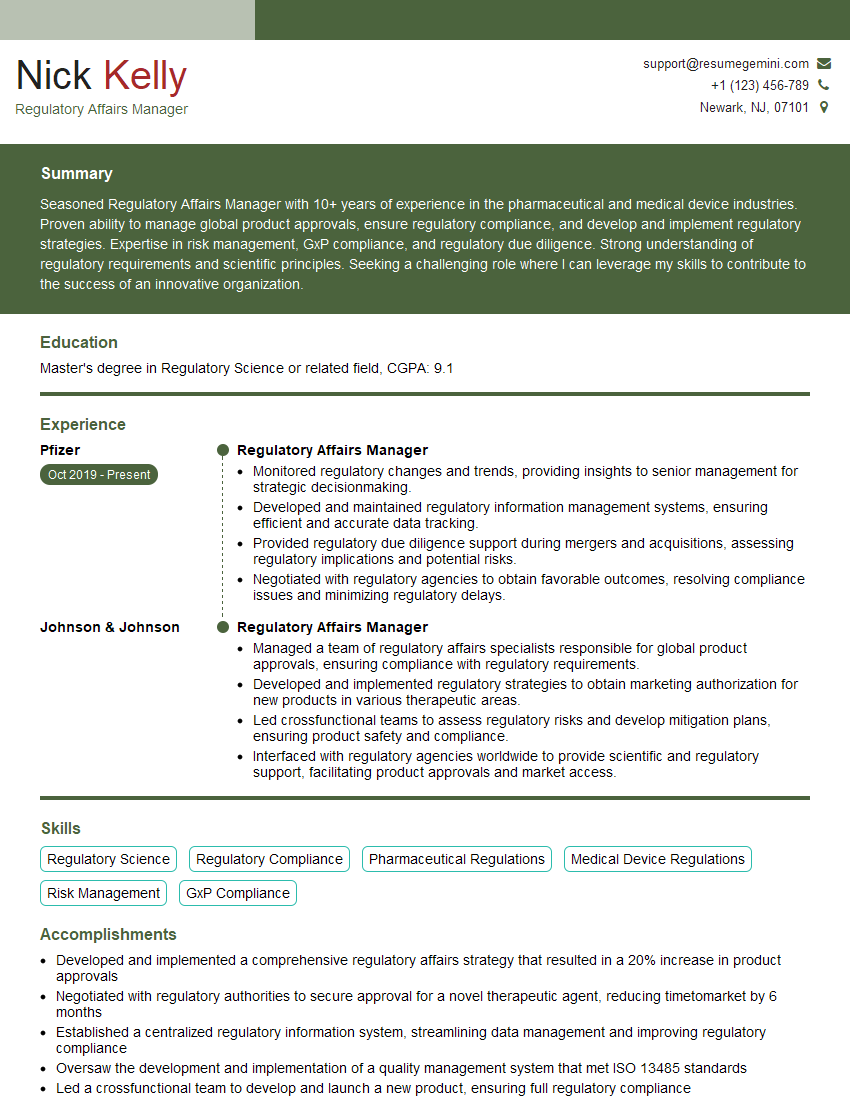
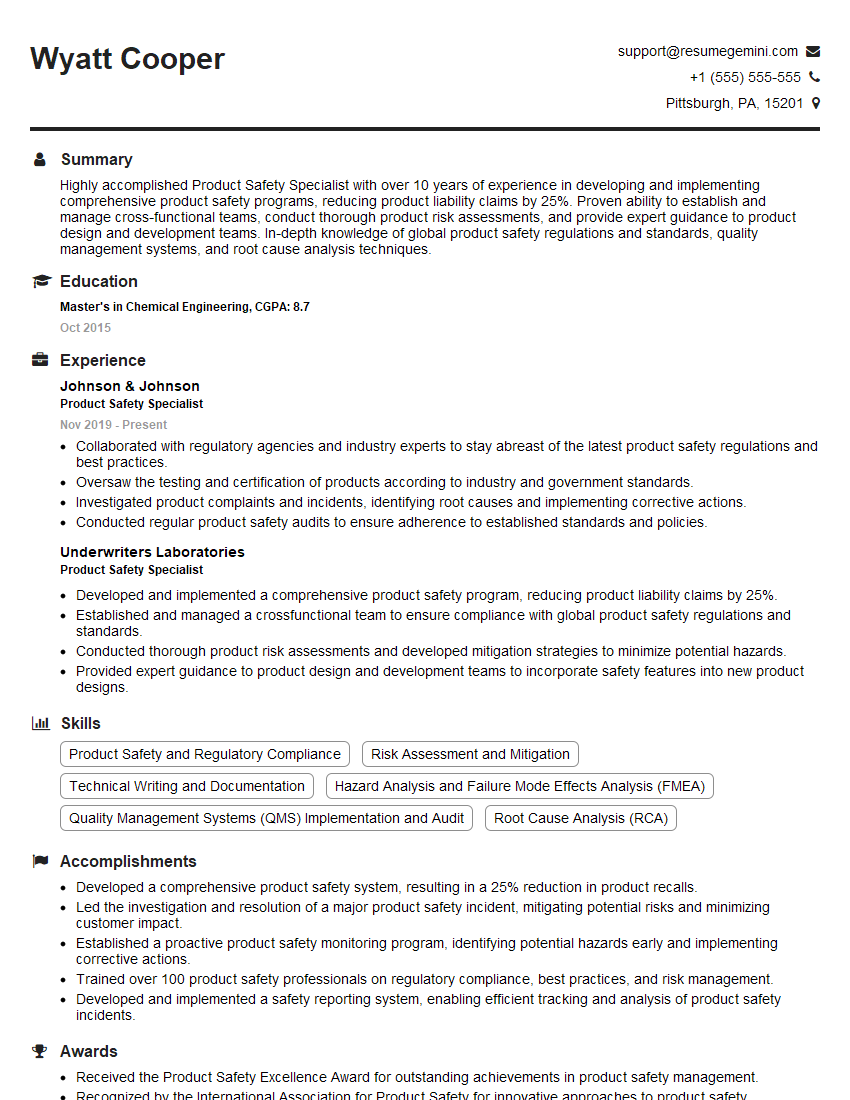
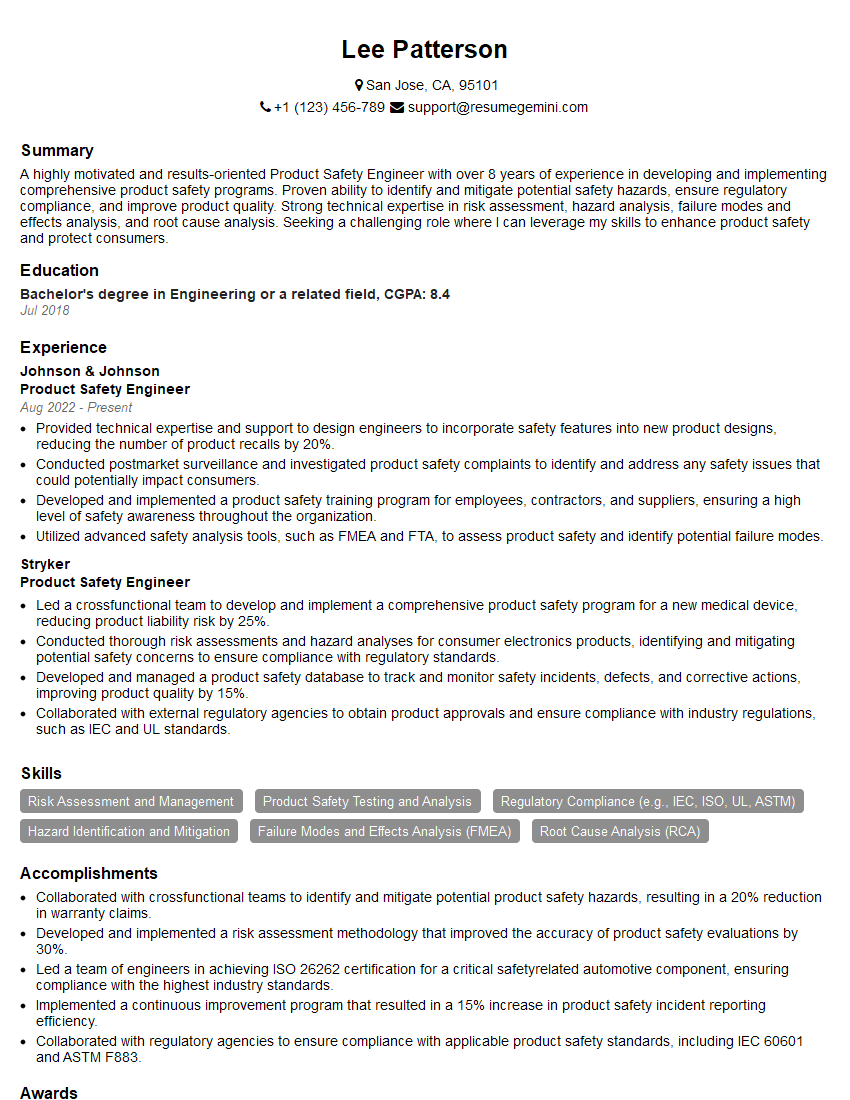
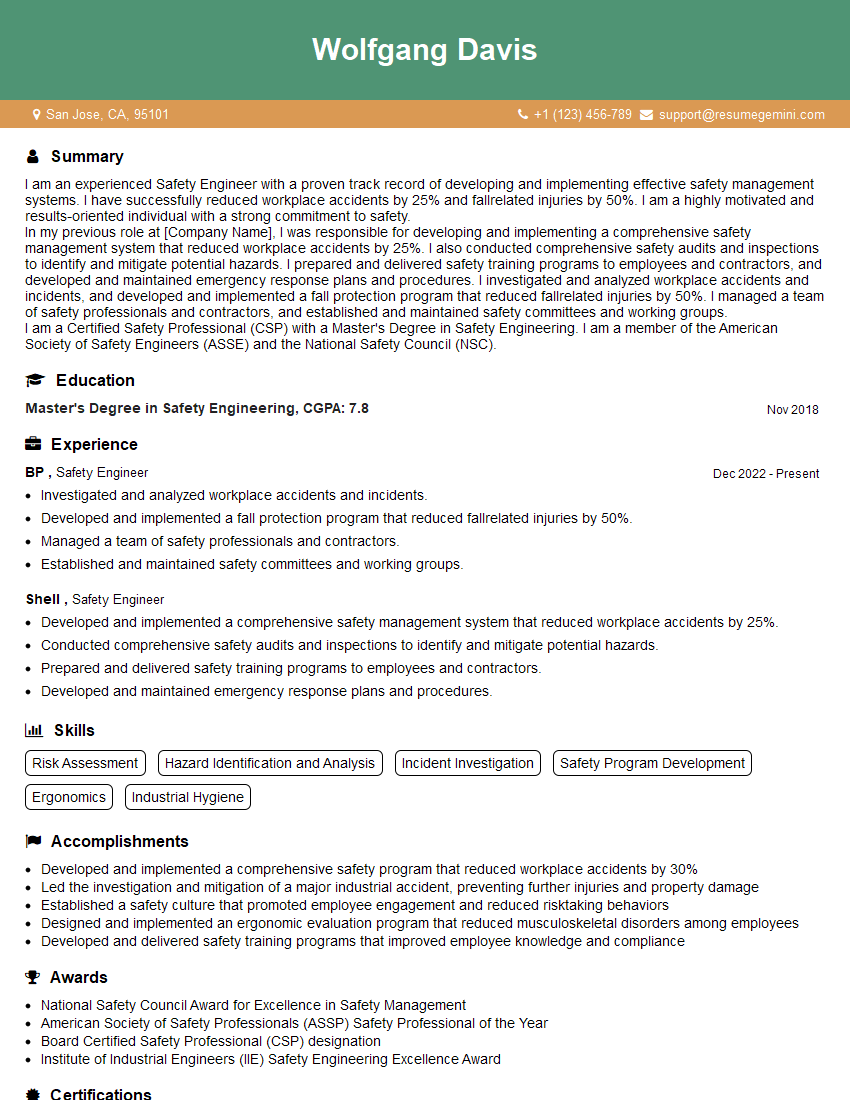
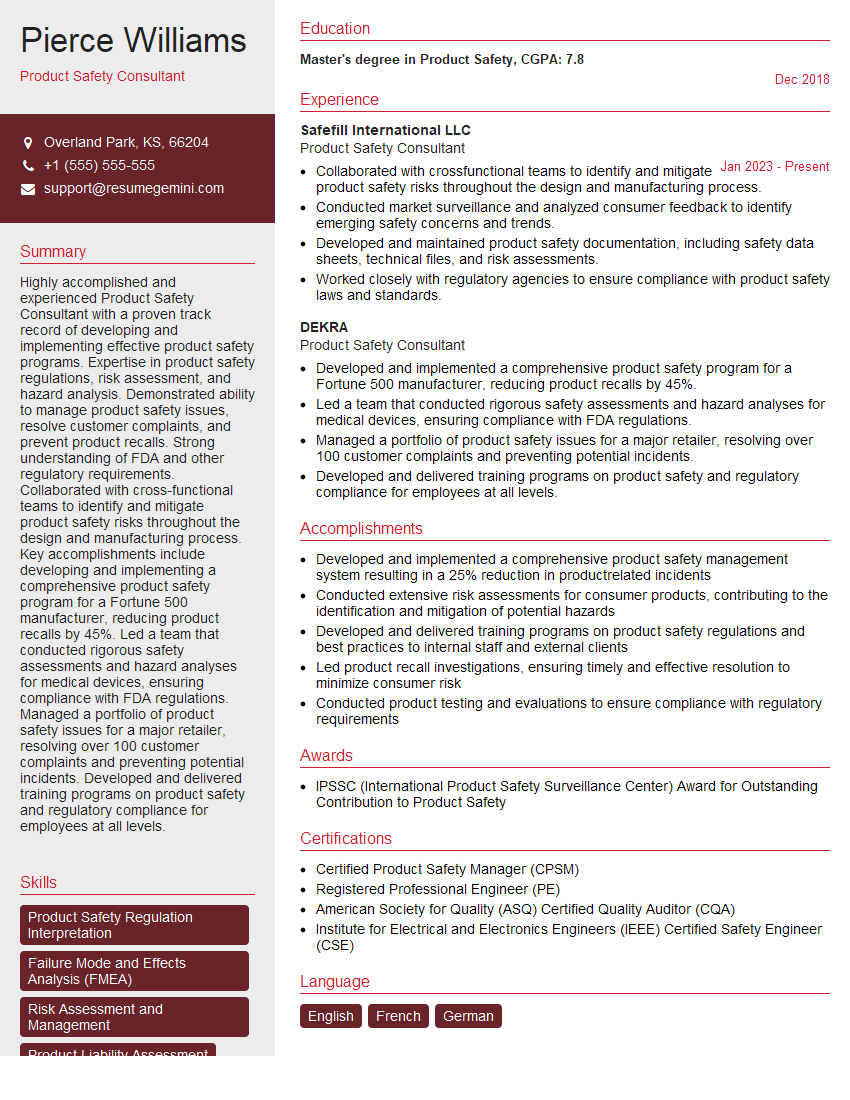
Mastering the CPSA opens doors to exciting career opportunities in a field dedicated to protecting consumers. A strong understanding of the Act demonstrates commitment and expertise, making you a highly desirable candidate. To significantly enhance your job prospects, create an ATS-friendly resume that highlights your skills and experience. We highly recommend using ResumeGemini to build a professional and impactful resume. ResumeGemini offers examples of resumes tailored to the Consumer Product Safety Act (CPSA) field, providing you with a strong template to customize.
Explore more articles
Users Rating of Our Blogs
Share Your Experience
We value your feedback! Please rate our content and share your thoughts (optional).
What Readers Say About Our Blog
Very informative content, great job.
good