Unlock your full potential by mastering the most common Consumer Product Safety Laws interview questions. This blog offers a deep dive into the critical topics, ensuring you’re not only prepared to answer but to excel. With these insights, you’ll approach your interview with clarity and confidence.
Questions Asked in Consumer Product Safety Laws Interview
Q 1. Explain the role of the Consumer Product Safety Commission (CPSC).
The Consumer Product Safety Commission (CPSC) is an independent federal regulatory agency responsible for protecting the public from unreasonable risks of injury or death associated with consumer products. Think of them as the safety net for everyday items. Their role encompasses a wide range of activities, including:
- Developing and enforcing safety standards: The CPSC creates and updates safety standards for various products, ranging from cribs and toys to power tools and electronics. These standards set minimum safety requirements that manufacturers must meet.
- Investigating product hazards: When a product is suspected of causing injuries or deaths, the CPSC investigates to determine the cause and take appropriate action.
- Recalling hazardous products: If a product is found to be unsafe, the CPSC works with manufacturers to recall the product and prevent further harm. This involves identifying the problem, coordinating a recall, and notifying consumers.
- Educating consumers: The CPSC provides information to consumers about product safety, including tips on how to use products safely and what to do if a product is hazardous. This includes public awareness campaigns and online resources.
- Working with industry: The CPSC collaborates with manufacturers, retailers, and other stakeholders to improve product safety. They often provide guidance and work proactively to prevent accidents before they occur.
In essence, the CPSC acts as a watchdog, ensuring that the consumer products we use daily are as safe as reasonably possible.
Q 2. Describe the process for reporting a hazardous product to the CPSC.
Reporting a hazardous product to the CPSC is a crucial step in protecting public safety. You can report through several channels:
- Online: The CPSC’s website provides a detailed online reporting form, making it easy to submit information about the product, the incident, and any injuries sustained.
- Phone: You can call the CPSC’s hotline to report a hazard. A trained representative will guide you through the process and gather necessary information.
- Mail: While less common, you can also send a written report by mail to the CPSC’s address. This option is suitable for more detailed or complex reports.
When reporting, be sure to include as much detail as possible, including the product name and model number, the date of purchase, the nature of the hazard, and any injuries or damages that resulted. Photographs or videos of the product and the incident can also be helpful. Think of it as providing a crime scene report for unsafe products. The more information you provide, the more effective the CPSC’s investigation can be.
Q 3. What are the key provisions of the Consumer Product Safety Act?
The Consumer Product Safety Act (CPSA) is the cornerstone legislation governing consumer product safety in the United States. Key provisions include:
- Authority to set safety standards: The CPSA gives the CPSC the authority to establish mandatory safety standards for consumer products. This power enables them to address identified hazards proactively.
- Power to ban hazardous products: The CPSC can ban products that pose unreasonable risks, even if they don’t meet a specific standard. This is often used for products with inherent dangers that are difficult to mitigate.
- Authority to issue recalls: The CPSA empowers the CPSC to mandate recalls of hazardous products. This is a crucial tool for removing unsafe products from the marketplace.
- Requirement for reporting injuries: Manufacturers and retailers are required to report incidents involving their products that result in serious injury or death. This proactive reporting is vital for CPSC surveillance.
- Civil penalties for violations: The Act establishes significant penalties for manufacturers and distributors who violate its provisions. This creates a strong incentive for compliance.
The CPSA is designed to create a proactive and reactive system to protect consumers, combining preventative measures with swift responses to identified dangers. The act’s power lies in its wide-ranging authority and significant penalties for non-compliance.
Q 4. Explain the different types of product recalls and their procedures.
Product recalls are a critical part of the CPSC’s work. There are several types, each with its own procedures:
- Class I Recall: This is the most serious type of recall, involving products that pose a significant risk of serious injury or death. The CPSC works with the manufacturer to quickly remove the product from the market and inform consumers. For example, a crib with a design flaw that could lead to infant suffocation would trigger a Class I recall.
- Class II Recall: These recalls involve products that pose a reasonable risk of injury or illness. The recall process is still urgent, but the risk isn’t as immediate as in a Class I recall. A toy with small parts that could be choking hazards might fall into this category.
- Class III Recall: This type of recall involves products that pose only a minor risk of injury or illness. While less urgent, it still requires notification to consumers and appropriate corrective actions. A product with minor cosmetic defects that don’t pose a safety risk might be subject to a Class III recall.
The recall procedure generally involves the manufacturer identifying the problem, notifying the CPSC, developing a plan for notifying consumers, offering a repair, replacement, or refund, and tracking the effectiveness of the recall. The CPSC actively monitors the recall process to ensure that it’s effective and that consumers are protected.
Q 5. How do you conduct a risk assessment for a consumer product?
Conducting a risk assessment for a consumer product is a systematic process to identify potential hazards and determine the likelihood and severity of injury or harm. It involves:
- Hazard Identification: This involves identifying all potential hazards associated with the product, including foreseeable misuse. For example, a children’s toy might present hazards of choking on small parts or sharp edges.
- Hazard Analysis: This step evaluates the severity of each identified hazard. A sharp edge is more severe than a minor scratch.
- Exposure Assessment: This step determines how likely a consumer is to be exposed to each hazard. A toy marketed to infants will have a higher exposure to choking hazards.
- Risk Characterization: This combines the severity and exposure assessments to determine the overall risk associated with each hazard. It’s crucial to understand the context of use.
- Risk Control: Based on the risk characterization, appropriate control measures are implemented, including design modifications, warnings, or instructions. The aim is to reduce the risk to an acceptable level.
A well-conducted risk assessment uses a combination of quantitative and qualitative data, drawing on engineering principles, toxicology, human factors, and psychology to create a comprehensive picture of the product’s safety profile. A robust risk assessment is a proactive measure that helps prevent accidents and injuries.
Q 6. What are some common product safety hazards you’ve encountered?
Throughout my career, I’ve encountered a wide range of product safety hazards. Some common ones include:
- Choking hazards: Small parts in toys, particularly those aimed at young children, are a significant concern. I’ve seen recalls involving toys with detachable small parts or those that could easily break into small pieces.
- Sharp edges and points: Sharp edges on furniture, toys, and other products can cause lacerations and other injuries. Properly rounded edges and protective coverings are essential.
- Fire hazards: Flammable materials in clothing, bedding, and toys can lead to serious fires and burns. Testing for flammability is a key component of product safety.
- Electrical hazards: Faulty wiring, inadequate insulation, and improper grounding in electrical products can result in electric shocks and fires. Proper testing and manufacturing practices are critical.
- Chemical hazards: Toxic chemicals in paints, cleaning products, and other consumer products can cause poisoning and other health problems. Proper labeling and safety data sheets are crucial.
These are just a few examples. The hazards encountered vary widely depending on the product type and intended use. The constant evolution of consumer products necessitates ongoing vigilance and rigorous safety testing.
Q 7. Describe your experience with CPSC regulations and standards.
My experience with CPSC regulations and standards has been extensive. I’ve been involved in:
- Developing and reviewing safety standards: I’ve participated in the development and review of numerous CPSC safety standards, ensuring they are scientifically sound, technically feasible, and effective in mitigating risks. This includes working with industry experts and CPSC staff to create standards that balance safety and practicality.
- Conducting product safety testing: I’ve performed numerous product safety tests to assess compliance with relevant CPSC standards and regulations. This requires specialized knowledge of testing methods and interpreting results.
- Analyzing incident reports: I’ve reviewed numerous incident reports involving consumer products to identify trends and patterns, helping to inform the development of new standards and recall decisions. Identifying common causes of accidents is critical for prevention.
- Advising manufacturers on compliance: I’ve provided guidance to manufacturers on how to comply with CPSC regulations and standards. This frequently involves addressing specific issues, providing solutions, and supporting efforts to prevent product-related hazards.
My experience highlights the importance of staying current with CPSC regulations and standards, as well as the complex interplay between technical expertise, legal requirements, and the practical challenges of bringing safe products to market.
Q 8. Explain the importance of hazard analysis and critical control points (HACCP) in product safety.
Hazard Analysis and Critical Control Points (HACCP) is a systematic, preventative approach to food safety and, increasingly, to the safety of other consumer products. It focuses on identifying potential hazards throughout the product lifecycle and establishing control measures to minimize or eliminate those risks. Think of it like a detailed safety net woven throughout the entire process of creating and distributing a product.
In essence, HACCP involves:
- Hazard Analysis: Identifying biological, chemical, and physical hazards that could contaminate or compromise product safety at each stage. For example, in manufacturing a toy, a hazard might be small parts that a child could choke on.
- Critical Control Point (CCP) Identification: Pinpointing the specific steps in the process where control is essential to prevent or eliminate the identified hazards. In the toy example, the CCP might be the assembly line where small parts are attached.
- Critical Limits Establishment: Setting measurable limits for each CCP to ensure safety. This could involve specifying the maximum size of small parts in the toy.
- Monitoring: Regularly checking the CCPs to ensure they are within the established critical limits.
- Corrective Actions: Establishing procedures to address deviations from the critical limits. If a small part is found to be too large, the entire batch is inspected.
- Record Keeping: Maintaining detailed records of the entire HACCP process, including hazard analysis, CCPs, monitoring, and corrective actions.
- Verification: Regularly verifying the effectiveness of the HACCP system through audits and reviews.
Implementing HACCP ensures proactive risk management, reducing the likelihood of product recalls and enhancing consumer confidence. It’s not just about reacting to problems; it’s about preventing them in the first place.
Q 9. How do you ensure compliance with product safety regulations throughout the product lifecycle?
Ensuring product safety compliance across the entire product lifecycle requires a multi-faceted strategy that starts long before a product reaches the consumer and continues well after its sale. It’s a journey, not a destination.
- Design Phase: Incorporating safety into the design from the outset through risk assessments, material selection, and rigorous testing. We use robust design failure mode and effects analysis (DFMEA) techniques to identify and mitigate potential hazards before manufacturing even begins.
- Manufacturing Phase: Implementing quality control measures to monitor the manufacturing process, ensuring consistency and adherence to safety standards. Regular audits are critical, as are clear protocols for handling defects or non-conformances.
- Distribution & Retail Phase: Establishing systems for tracking products, managing inventory, and responding to potential issues promptly. We ensure proper packaging to prevent damage during transport and clearly label products with warnings and instructions for use.
- Post-Market Surveillance: Actively monitoring product performance post-sale to identify and address any potential problems or safety concerns, including consumer feedback and incident reporting systems. This includes reacting rapidly to and addressing consumer complaints.
- Regulatory Compliance: Maintaining comprehensive knowledge of relevant safety regulations and standards, including those set by CPSC (in the US) and similar bodies globally. Staying abreast of evolving regulations and participating in industry working groups ensures compliance.
A proactive and comprehensive approach to safety compliance isn’t optional; it’s a necessity to protect consumers and a company’s reputation.
Q 10. Describe your experience with developing and implementing product safety policies and procedures.
Throughout my career, I’ve been involved in developing and implementing comprehensive product safety policies and procedures for various product categories. In one instance, I spearheaded the creation of a new safety management system for a toy manufacturer. This involved:
- Risk Assessment Workshops: Conducting workshops with engineers, designers, and manufacturing personnel to identify potential hazards and develop mitigation strategies.
- Policy Development: Drafting detailed policies covering areas such as design review, material selection, testing protocols, and incident reporting.
- Procedure Documentation: Creating step-by-step procedures for every aspect of the product lifecycle, from initial design to post-market surveillance. These were made readily accessible to all relevant staff.
- Training Programs: Designing and delivering training programs to educate employees on the new policies and procedures. Regular refresher courses were also implemented.
- Internal Audits: Performing regular internal audits to ensure compliance with the established policies and procedures. This provided a continuous feedback loop for improvement.
This initiative resulted in a significant reduction in product-related incidents and a demonstrable improvement in our safety culture. The key was clear communication, consistent application, and a commitment to continuous improvement.
Q 11. What are some best practices for designing safe products?
Designing safe products requires a holistic approach, considering the entire product lifecycle and potential interactions with users. Some best practices include:
- Inherent Safety: Designing products that are inherently safe by minimizing hazards through design choices. For instance, using rounded corners on furniture to reduce the risk of sharp edges.
- Fail-Safe Mechanisms: Incorporating redundant safety features or fail-safe mechanisms that prevent accidents even if one component fails. An example is a dual-circuit braking system in a car.
- User-Centered Design: Designing products that are intuitive and easy to use, minimizing the potential for user error. Clear instructions and warnings are paramount.
- Material Selection: Choosing appropriate and safe materials that won’t pose a risk to health or the environment. Careful consideration should be given to potential allergens or toxins.
- Thorough Testing: Conducting rigorous testing, including environmental testing (temperature, humidity), mechanical stress testing, and electrical testing (if applicable) to ensure product durability and reliability.
- Compliance with Standards: Adhering to relevant national and international safety standards, seeking appropriate certifications to demonstrate compliance.
Safety should not be an afterthought; it should be the driving force behind every design decision.
Q 12. Explain how you would handle a product safety incident or recall.
Handling a product safety incident or recall requires a swift, decisive, and transparent response. My approach would involve:
- Immediate Investigation: Launching a thorough investigation to determine the root cause of the incident and the extent of the problem. Data collection is critical at this stage. We’d use incident reports, consumer feedback, and potentially testing to identify potential defects or causes.
- Risk Assessment: Assessing the potential risks associated with the incident, considering the severity of the potential harm and the number of affected products.
- Recall Strategy Development: Developing a comprehensive recall strategy, including communication plans, logistics, and customer support measures. This often involves determining whether a voluntary recall or a mandated recall by the regulatory body is needed.
- Communication Plan: Communicating promptly and transparently with relevant stakeholders, including consumers, retailers, regulatory agencies, and the media. Clear, consistent messaging is vital.
- Recall Execution: Effectively executing the recall, ensuring that affected products are retrieved and replaced or repaired, as appropriate.
- Post-Recall Analysis: Conducting a thorough post-recall analysis to identify lessons learned, implement corrective actions, and improve future product safety.
Transparency and a customer-centric approach are key to minimizing negative impact and restoring consumer trust. An effective recall plan is a testament to proactive risk management.
Q 13. Describe your experience with testing and certification of products to meet safety standards.
I have extensive experience with product testing and certification to meet various safety standards. This has involved working with nationally recognized testing laboratories (NRTL) and obtaining certifications such as UL, CSA, and CE markings, depending on the product and target market. My experience includes:
- Test Plan Development: Collaborating with engineers to develop comprehensive test plans that encompass all relevant safety standards and requirements.
- Sample Selection & Preparation: Selecting representative samples for testing and ensuring appropriate preparation according to testing protocols.
- Testing Coordination: Coordinating testing activities with NRTLs, managing communication and ensuring timely completion.
- Data Analysis & Reporting: Analyzing test data, preparing comprehensive reports, and interpreting results to ensure compliance with safety standards.
- Certification Application: Preparing and submitting certification applications to the relevant regulatory bodies and addressing any deficiencies identified by the certification bodies.
This rigorous approach ensures that our products meet or exceed relevant safety standards and provides consumers with the assurance that our products are safe to use. Testing is not merely a box-ticking exercise; it’s a critical component of a responsible product safety culture.
Q 14. How do you stay updated on changes in consumer product safety laws and regulations?
Staying updated on changes in consumer product safety laws and regulations requires a multi-pronged approach:
- Regulatory Agency Websites: Regularly monitoring the websites of relevant regulatory agencies, such as the CPSC in the US, the European Commission, and equivalent bodies in other regions. These websites provide updates on new regulations, enforcement actions, and safety alerts.
- Industry Publications and Newsletters: Subscribing to industry publications, newsletters, and journals that provide updates on changes in regulations and best practices. These often offer expert commentary and analysis.
- Professional Organizations: Actively participating in professional organizations related to product safety, attending conferences and workshops to network with peers and learn about new developments. This allows access to a broader community of experts.
- Legal Counsel: Consulting with legal counsel specializing in product liability and safety regulations to obtain expert advice on complex legal issues.
- Software and Databases: Utilizing specialized software and databases that provide updates on safety regulations and standards. These often offer alerts for changes in relevant rules.
Staying informed isn’t just a good idea; it’s essential for maintaining compliance and protecting consumers. It is a continuous learning process that requires dedicated effort and vigilance.
Q 15. Explain your understanding of product liability and its implications.
Product liability is the legal responsibility manufacturers and sellers have for injuries or damages caused by their products. It essentially means that if a product is defective and causes harm, the company responsible can be held legally accountable. This accountability extends beyond simply manufacturing flaws; it includes design defects, inadequate warnings or instructions, and even failure to adequately test for foreseeable risks. The implications are significant, ranging from financial penalties (lawsuits, settlements, recalls) to reputational damage and loss of consumer trust. For instance, a toy company might face massive liability if a small part detaches and poses a choking hazard to a child.
There are several legal theories underpinning product liability claims, including negligence (failure to exercise reasonable care), strict liability (liability regardless of fault if the product is defective), and breach of warranty (failure to meet express or implied promises about the product). Understanding these legal frameworks is critical for proactively mitigating risk and ensuring product safety.
Career Expert Tips:
- Ace those interviews! Prepare effectively by reviewing the Top 50 Most Common Interview Questions on ResumeGemini.
- Navigate your job search with confidence! Explore a wide range of Career Tips on ResumeGemini. Learn about common challenges and recommendations to overcome them.
- Craft the perfect resume! Master the Art of Resume Writing with ResumeGemini’s guide. Showcase your unique qualifications and achievements effectively.
- Don’t miss out on holiday savings! Build your dream resume with ResumeGemini’s ATS optimized templates.
Q 16. What are some common safety testing methods and standards used in your field?
Safety testing methods and standards vary depending on the product type but generally involve a combination of laboratory testing and real-world simulations. Common methods include:
- Mechanical testing: This assesses the strength, durability, and resistance to stress of a product. For instance, a toy might undergo drop tests to ensure it doesn’t break easily.
- Chemical testing: This identifies harmful substances in materials, such as lead or phthalates in children’s products. Chromatography and mass spectrometry are frequently used techniques.
- Electrical testing: This evaluates electrical safety aspects like insulation resistance, leakage current, and surge protection for electrical appliances.
- Flammability testing: This assesses how easily a product catches fire and how quickly the flames spread, crucial for textiles and furniture.
Standards are often established by organizations like ASTM International (ASTM), Underwriters Laboratories (UL), and the International Organization for Standardization (ISO). These standards provide guidelines for testing methods and acceptable performance levels. For example, a children’s toy might need to meet ASTM F963, which outlines safety standards for toys and children’s products.
Q 17. How do you communicate product safety information to consumers?
Communicating product safety information effectively is crucial for consumer protection. We use a multi-faceted approach:
- Clear and concise labeling: Labels must prominently display warnings, instructions, and any necessary precautions. We aim for plain language, avoiding jargon and using universally understood symbols.
- User manuals and instructions: Detailed manuals provide step-by-step instructions for safe usage, maintenance, and troubleshooting. We use visuals and simple language for clarity.
- Website and online resources: Our website provides FAQs, safety alerts, and detailed information about product safety and recalls. Videos and interactive tutorials can be especially helpful.
- Social media and public relations: We utilize social media to quickly disseminate safety information and address any concerns. We proactively engage with consumers and media outlets to build trust and transparency.
- Recall processes: If a safety hazard is identified, we have a robust recall process involving contacting consumers directly, informing retailers, and working with regulatory agencies to ensure a swift and effective resolution.
Q 18. How do you collaborate with different teams (engineering, legal, marketing) on product safety matters?
Collaboration is essential for effective product safety management. I work closely with several teams:
- Engineering: I collaborate with engineers from the design phase, providing input on safety considerations and ensuring that safety features are adequately incorporated into the product design. We regularly review test data and identify potential hazards.
- Legal: The legal team advises on compliance with regulations and provides guidance on liability issues. They help draft safety-related documents and manage potential legal actions.
- Marketing: I work with marketing to ensure that safety information is accurately and effectively communicated to consumers. This involves review of marketing materials for accuracy and potential misleading claims.
Regular meetings and cross-functional communication are vital for ensuring a cohesive and efficient approach to product safety. We often use shared documents and project management tools to facilitate collaboration.
Q 19. Describe a time you identified a potential product safety hazard. How did you address it?
During the development of a children’s toy, we discovered that a small component could potentially detach and become a choking hazard. The initial design lacked sufficient retention mechanisms.
To address this:
- We immediately halted further production.
- A cross-functional team (engineering, safety, legal) was convened to assess the risk, analyze the failure mode, and propose solutions.
- Engineering redesigned the component to enhance its retention, using more robust materials and a modified fastening system.
- The redesigned component underwent rigorous testing to verify its safety and durability, exceeding relevant safety standards.
- We documented the issue, corrective actions, and test results meticulously.
- A formal risk assessment was conducted to evaluate the likelihood and severity of the hazard, helping inform our subsequent actions.
This proactive approach prevented a potential recall and ensured the safety of our young consumers.
Q 20. Explain your understanding of the different types of product labeling requirements.
Product labeling requirements vary widely depending on the product, its intended use, and the relevant regulations. Generally, labels must include:
- Product identification: Manufacturer’s name, address, product name, and model number.
- Warnings and cautions: Clear and prominent warnings about potential hazards, including safety instructions and precautions for use.
- Material composition: Information about the materials used in the product, especially important for items that might contain allergens or toxic substances.
- Care instructions: Instructions for proper cleaning, maintenance, and storage.
- Country of origin: Information on where the product was manufactured.
- Age appropriateness (for children’s products): Clearly indicating the recommended age range.
Compliance with labeling requirements is crucial for avoiding legal issues and protecting consumers. Failing to provide adequate warnings can result in liability for injuries caused by the product.
Q 21. What is your experience with international product safety standards?
I have extensive experience with international product safety standards, including those set by the European Union (CE marking), the International Organization for Standardization (ISO), and various national standards from countries like Canada, Australia, and Japan. Understanding these standards requires navigating different regulatory frameworks and terminology.
For example, working with European clients necessitates understanding the CE marking, which indicates conformity with EU health, safety, and environmental protection requirements. This involves compliance with numerous directives and regulations depending on the product category. Similarly, understanding the requirements of different countries helps us adapt our products and labeling to comply with local regulations. Successfully navigating these international standards is essential for global product distribution and avoiding legal complications.
Q 22. How do you ensure supply chain safety for your products?
Ensuring supply chain safety is paramount to producing safe consumer products. It’s not enough to just test the final product; we must ensure safety at every stage, from raw materials to delivery. This requires a multi-faceted approach:
- Supplier Audits: We conduct rigorous audits of our suppliers, verifying their adherence to safety standards and their own quality control processes. This includes on-site inspections and document reviews. For example, if we source plastic components, we’d verify their use of certified, non-toxic materials and their manufacturing processes to ensure no harmful chemicals leach into the finished product.
- Material Traceability: We implement robust tracking systems to trace materials throughout the entire supply chain. This allows us to quickly identify and isolate any potential source of contamination or defects. If a batch of materials is found to be substandard, we can quickly pinpoint all products potentially affected.
- Manufacturing Oversight: We engage in regular communication and collaboration with our manufacturing partners. This involves reviewing their production processes, inspecting their facilities, and providing training on safety protocols. Think of this as a continuous improvement loop. Regular checks allow us to promptly catch potential issues before they escalate.
- Transportation and Storage: We establish clear guidelines for the safe transportation and storage of our products to prevent damage or deterioration during transit. This might include temperature-controlled shipping for sensitive materials and ensuring proper packaging to mitigate the risk of damage.
- Third-Party Testing: Even with robust internal checks, we often utilize independent third-party testing to verify compliance with safety standards. An unbiased external perspective ensures that our safety procedures are rigorous and effective.
By implementing these strategies, we build a culture of safety throughout the supply chain, significantly reducing the risk of product defects and ensuring the safety of our consumers.
Q 23. What are some effective strategies for preventing product-related injuries?
Preventing product-related injuries is a proactive process, requiring a holistic approach that encompasses design, manufacturing, and post-market surveillance. Key strategies include:
- Hazard Analysis and Risk Assessment (HARA): This involves systematically identifying potential hazards associated with the product throughout its lifecycle. We use techniques like Failure Mode and Effects Analysis (FMEA) to predict potential failures and assess their severity, occurrence, and detectability. This allows us to prioritize mitigation strategies.
- Safe Design Principles: We incorporate safety into the product design from the very beginning. This includes using safe materials, incorporating safety features (like child-resistant packaging), and adhering to relevant safety standards. For example, a toy designed for young children would undergo rigorous testing to ensure it’s free of small parts that could be choking hazards.
- Manufacturing Quality Control: Strict quality control measures are essential at every stage of manufacturing. This includes regular inspections, testing, and process monitoring to ensure consistency and identify potential defects early on.
- Clear and Comprehensive Instructions: User manuals and labels must be clear, concise, and easily understandable. Warning labels should be prominent and clearly indicate potential hazards. Imagine a power tool – clear warnings about potential electrical shock or moving parts are crucial for safe operation.
- Post-Market Surveillance: We actively monitor for reports of incidents involving our products. This may involve establishing a dedicated reporting system, analyzing warranty claims, and collaborating with regulatory agencies to identify potential problems and implement necessary corrective actions.
By combining these proactive measures, we significantly reduce the likelihood of product-related injuries and build a reputation for safety and consumer trust.
Q 24. Explain your understanding of the legal ramifications of non-compliance with CPSC regulations.
Non-compliance with CPSC (Consumer Product Safety Commission) regulations carries severe legal ramifications. The penalties can be substantial and far-reaching, including:
- Civil Penalties: The CPSC can impose significant fines for violations. The amount of the fine depends on the severity of the violation and the company’s history of compliance. A company might face millions of dollars in fines for a serious violation.
- Product Recalls: The CPSC can mandate a product recall, requiring the company to remove the defective product from the market. This is a costly and time-consuming process, often involving significant financial losses and reputational damage.
- Criminal Charges: In cases involving egregious negligence or intentional misconduct, criminal charges can be filed, leading to hefty fines, imprisonment, and significant legal fees. This is rare but reflects the gravity of serious non-compliance.
- Injunctions: The CPSC can issue injunctions to halt the manufacture, distribution, or sale of a hazardous product. This can effectively shut down a company’s operations until the violations are corrected.
- Legal Liability: Companies face potential lawsuits from consumers who are injured by a defective product. These lawsuits can result in substantial financial settlements or judgments.
Beyond the legal penalties, non-compliance can severely damage a company’s reputation, erode consumer trust, and negatively impact its bottom line. Proactive compliance is far more cost-effective than reacting to a crisis.
Q 25. Describe your experience with conducting root cause analysis for product failures.
Conducting a root cause analysis (RCA) for product failures is crucial for preventing future incidents. My approach involves a structured methodology:
- Data Gathering: The first step is to gather all relevant information, including incident reports, test data, manufacturing records, and design specifications. This includes gathering information from various sources such as customer feedback, internal quality control reports, and supplier communications.
- Team Formation: A cross-functional team, including engineers, manufacturing personnel, and quality control experts, is formed to conduct the analysis. Diverse perspectives are key to uncovering root causes.
- Technique Selection: Various RCA techniques can be employed, such as the ‘5 Whys’, fishbone diagrams, and fault tree analysis. The choice of technique depends on the complexity of the problem. For example, a simple issue might be resolved using the ‘5 Whys,’ while a more complex situation might require fault tree analysis.
- Root Cause Identification: The team systematically analyzes the data to identify the underlying cause(s) of the failure, rather than focusing solely on the symptoms. This often involves iterative questioning and elimination of possibilities.
- Corrective Actions: Once the root cause is identified, corrective actions are developed and implemented to prevent recurrence. These actions could include design modifications, process improvements, or changes in supplier relationships.
- Verification and Validation: The effectiveness of the corrective actions is verified and validated to ensure the problem has been resolved and is unlikely to reappear.
For example, in one case, a recurring failure in a children’s toy was traced back to a supplier using subpar materials. By switching to a higher-quality supplier and implementing stricter incoming inspection procedures, we were able to eliminate the problem.
Q 26. How would you manage conflicting priorities between product cost and product safety?
Balancing product cost and product safety is a constant challenge. However, safety should *never* be compromised for cost savings. Instead, we prioritize a risk-based approach:
- Cost-Benefit Analysis: We conduct a thorough cost-benefit analysis to evaluate the cost of implementing safety measures against the potential cost of product failures and resulting liabilities. For instance, investing in a superior material that adds slightly to the product cost might be far cheaper in the long run than dealing with lawsuits or recalls.
- Value Engineering: We use value engineering techniques to identify cost savings without sacrificing safety. This might involve finding alternative materials or processes that are both cost-effective and safe.
- Prioritization of Critical Safety Features: We prioritize safety features crucial to consumer safety. Non-essential cost-saving measures are only considered if they don’t compromise critical safety features.
- Transparency and Communication: Open communication with all stakeholders, including management, engineering, and procurement, is essential to ensure everyone understands the importance of safety and is committed to finding cost-effective solutions.
- Long-Term Perspective: We take a long-term perspective, recognizing that investing in safety upfront is far less expensive than dealing with the consequences of accidents and recalls later.
In short, we view safety as an investment, not a cost. The long-term financial and reputational benefits of a safe product far outweigh any short-term cost savings achieved by compromising safety.
Q 27. Describe your approach to using data and metrics to track and improve product safety.
Data and metrics are essential for tracking and improving product safety. We use a range of data sources and analytical methods:
- Incident Reporting System: We have a robust system for collecting and analyzing reports of product incidents. This allows us to track trends, identify emerging issues, and prioritize corrective actions.
- Warranty Claims Data: Analysis of warranty claims can reveal patterns of product failures and help identify potential design or manufacturing defects. This is particularly useful in pinpointing recurring problems.
- Testing and Inspection Data: We track results from material testing, product testing, and manufacturing inspections. This data helps to identify areas where quality control measures need improvement.
- Supplier Performance Metrics: We monitor our suppliers’ performance in terms of safety and quality. This data informs our supplier selection and management decisions.
- Key Performance Indicators (KPIs): We use key performance indicators, such as the number of product incidents, recall rates, and customer complaints, to monitor our overall safety performance. These KPIs allow for targeted improvements in specific areas.
- Data Visualization: We use dashboards and other visualization tools to make safety data easy to understand and track progress towards safety goals.
By leveraging data effectively, we can identify emerging safety risks, proactively address potential issues, and continuously improve our product safety performance. This data-driven approach allows us to move beyond reacting to problems and towards preventing them proactively.
Key Topics to Learn for Consumer Product Safety Laws Interview
- The Consumer Product Safety Act (CPSA): Understanding the core tenets of the CPSA, its scope, and its regulatory authority. This includes understanding the definitions of “consumer product” and “manufacturer”.
- Hazard Identification and Risk Assessment: Learn to identify potential hazards in consumer products and conduct thorough risk assessments to determine appropriate safety measures. This includes practical application of risk assessment methodologies.
- Recall Procedures and Reporting Requirements: Familiarize yourself with the process of initiating and managing product recalls, including communication strategies and compliance with reporting regulations.
- Mandatory Standards and Voluntary Standards: Understand the differences between mandatory and voluntary safety standards and how they impact product design and compliance. Analyze case studies demonstrating the application of each.
- Enforcement and Penalties: Explore the mechanisms for enforcing compliance with consumer product safety laws and the potential penalties for non-compliance. Consider the legal precedents and their interpretations.
- Children’s Product Safety: Focus on the specific regulations and safety requirements applicable to products intended for children, including choking hazards, flammability, and lead paint.
- Data Analysis and Reporting: Understand how data is used to monitor product safety, identify trends, and inform regulatory decisions. Develop your ability to interpret safety data and create compelling reports.
- Ethical Considerations in Product Safety: Explore the ethical responsibilities of manufacturers and regulators in ensuring consumer product safety. Analyze real-world examples of ethical dilemmas and their resolution.
Next Steps
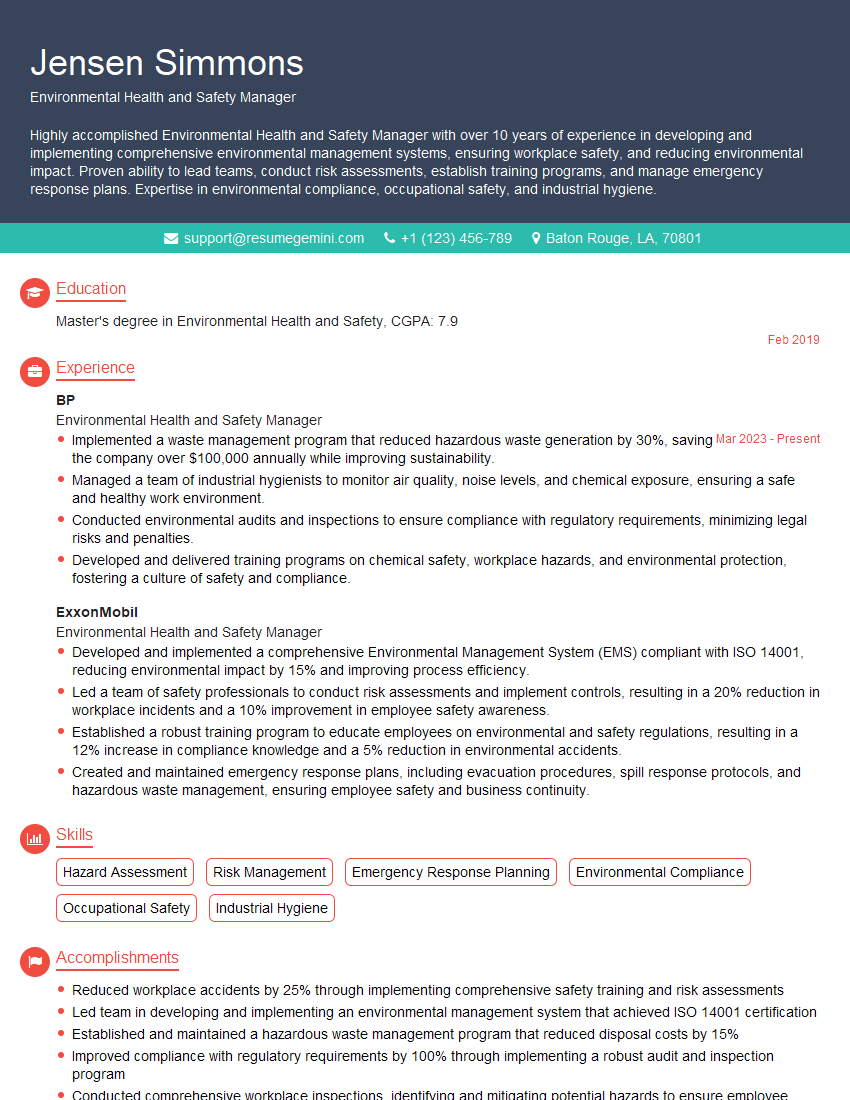
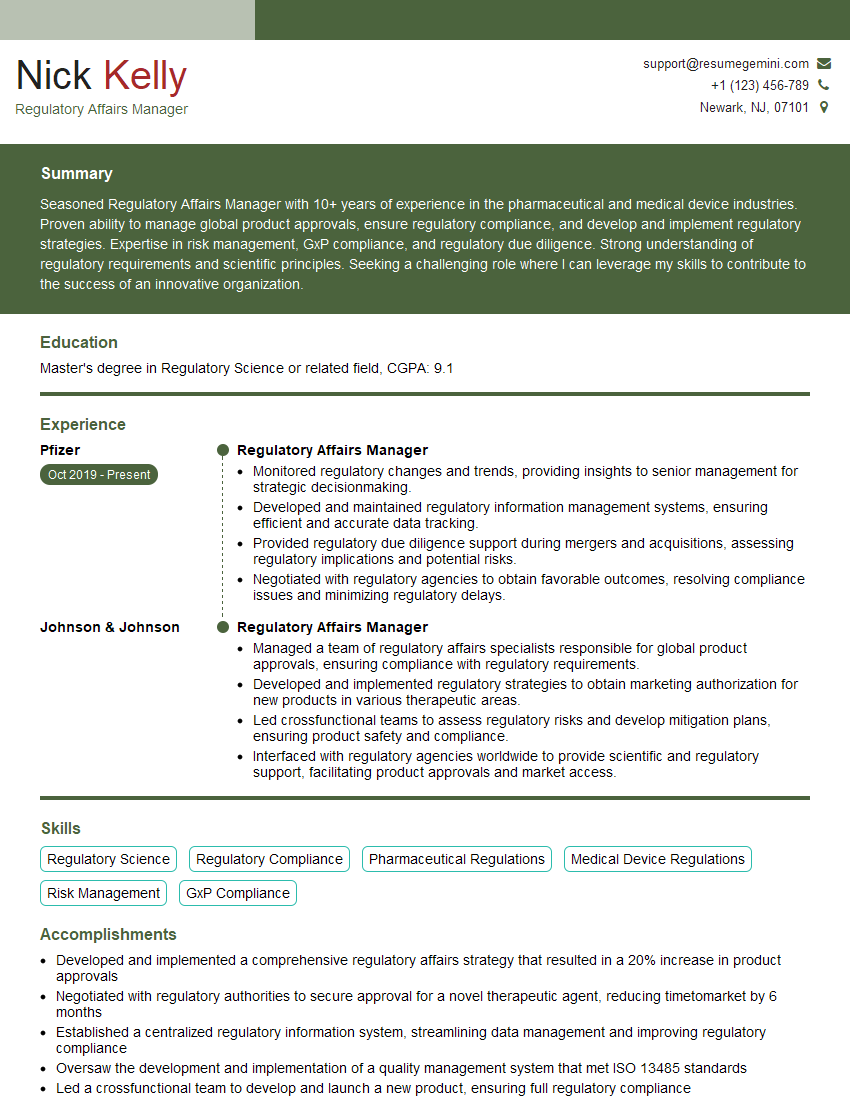
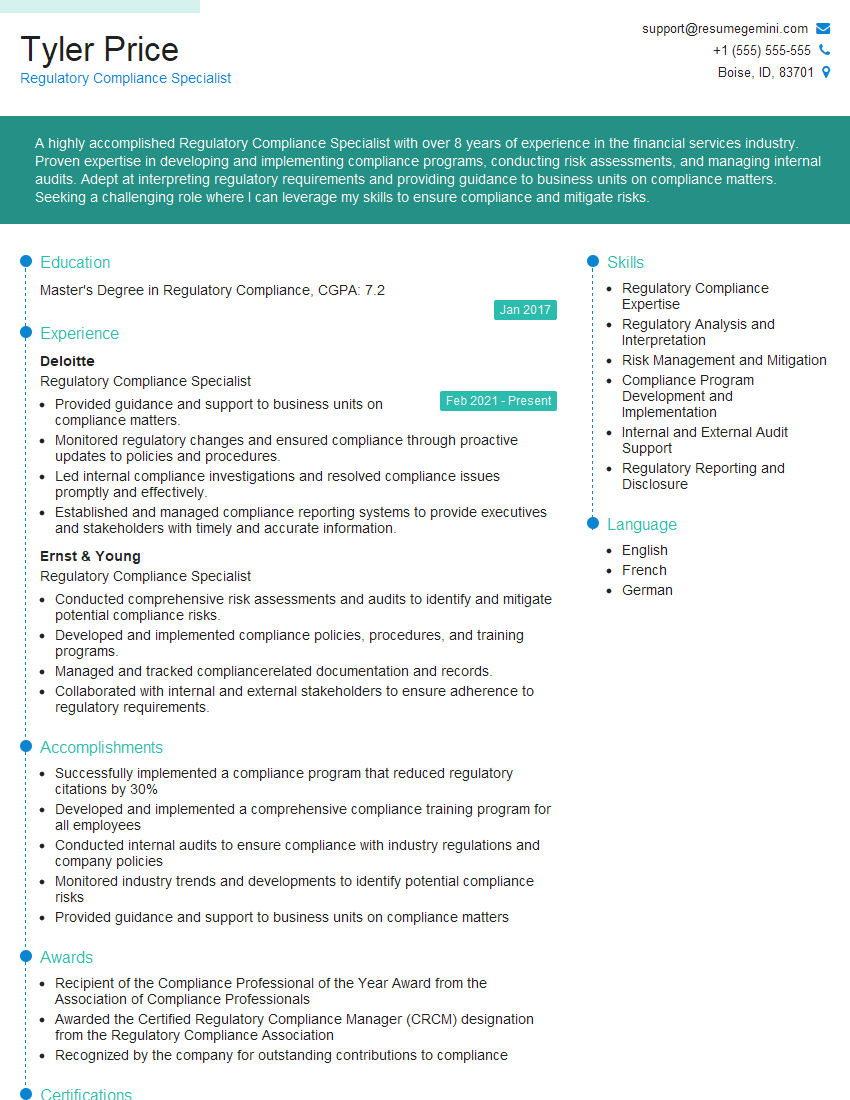
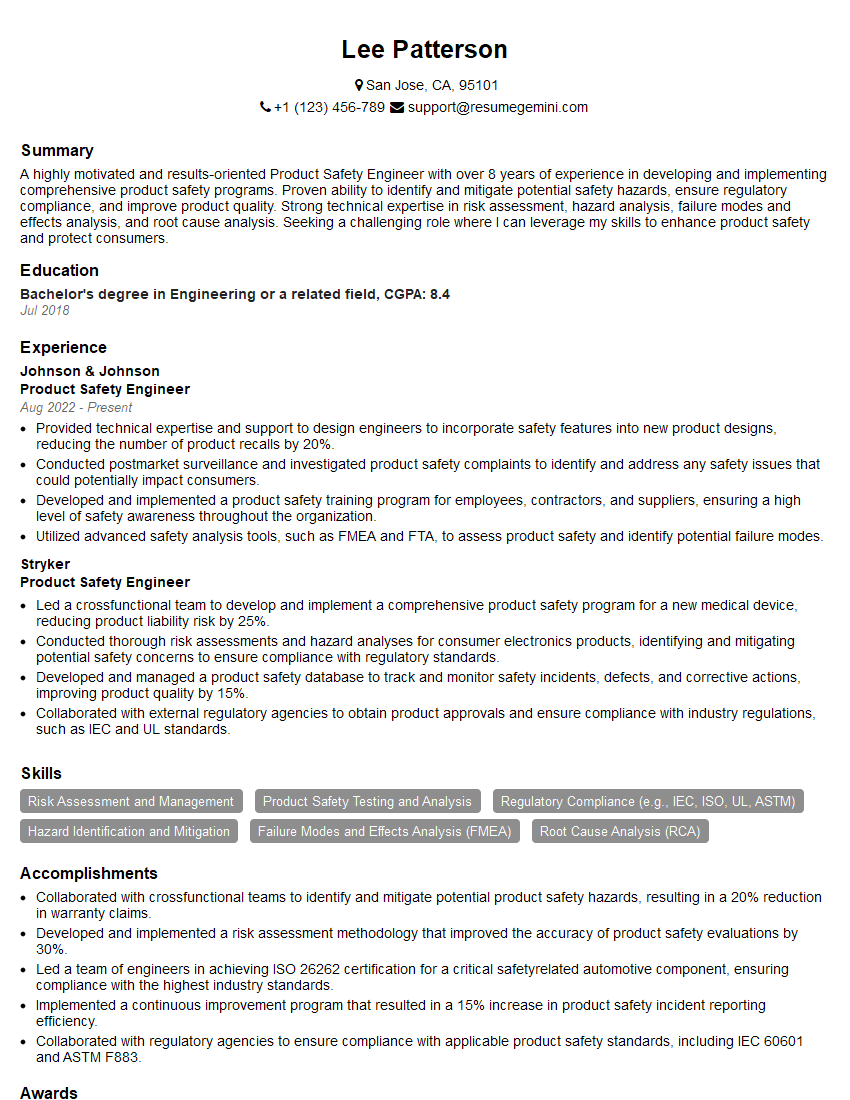
Mastering Consumer Product Safety Laws is crucial for career advancement in this critical field. A strong understanding of these regulations demonstrates your commitment to consumer safety and opens doors to leadership roles within regulatory agencies, manufacturing companies, and legal practices. To maximize your job prospects, building an ATS-friendly resume is essential. ResumeGemini is a trusted resource that can help you craft a compelling and effective resume tailored to showcase your expertise. ResumeGemini provides examples of resumes specifically designed for professionals in Consumer Product Safety Laws to help you create a standout application.
Explore more articles
Users Rating of Our Blogs
Share Your Experience
We value your feedback! Please rate our content and share your thoughts (optional).
What Readers Say About Our Blog
Very informative content, great job.
good