Interviews are more than just a Q&A session—they’re a chance to prove your worth. This blog dives into essential Familiar with Electrical Diagrams and Schematics interview questions and expert tips to help you align your answers with what hiring managers are looking for. Start preparing to shine!
Questions Asked in Familiar with Electrical Diagrams and Schematics Interview
Q 1. Explain the difference between a wiring diagram and a schematic diagram.
Wiring diagrams and schematic diagrams both represent electrical systems, but they differ significantly in their purpose and level of detail. Think of a wiring diagram as a detailed map showing the physical layout of wires and connections within a device or system. A schematic, on the other hand, is a symbolic representation that focuses on the electrical function and relationships between components, regardless of their physical arrangement.
A wiring diagram shows exactly how wires are routed, the colors of the wires, and the physical location of terminals and components. It’s crucial for installation and troubleshooting physical wiring problems. Imagine installing a light fixture; a wiring diagram shows you precisely where each wire needs to connect.
A schematic diagram simplifies the circuit to show its logical function, using standardized symbols for components like resistors, capacitors, and transistors. It omits details like wire lengths and physical placement, focusing instead on the electrical flow and component interactions. A schematic helps you understand how a circuit works and troubleshoot electrical faults by tracing signals through the system.
For example, a wiring diagram for a simple light switch would show the path of the wires from the power source, through the switch, and to the light bulb, noting the physical locations of each. The schematic, however, would depict the switch as a simple symbol, connected to the power source and the bulb, illustrating the circuit’s functionality without the physical details.
Q 2. What are the standard symbols used in electrical schematics?
Standard symbols in electrical schematics ensure consistent understanding across different engineers and technicians. These symbols are defined by standards organizations like IEEE and IEC. While variations exist, many symbols are universally recognized.
- Power Source: Often represented by a circle with a plus (+) and minus (-) symbol, or a battery symbol.
- Resistor: A zigzag line.
- Capacitor: Two parallel lines representing plates.
- Inductor (Coil): A series of loops or a spiral.
- Transistor: Various symbols depending on the type (NPN, PNP, MOSFET, etc.).
- Diode: A triangle with a line at its point.
- Switch: A variety of symbols depending on the switch type (SPST, SPDT, etc.).
- Ground: A triangle or a ground symbol.
Using these symbols, even a complex circuit can be clearly represented in a concise manner, promoting easy understanding and collaboration.
Q 3. How do you interpret a ladder logic diagram?
Ladder logic diagrams are used primarily in programmable logic controllers (PLCs) for industrial automation. They depict the logic of a control system in a visual, easy-to-understand format. Imagine it as a ladder, with two vertical rails representing the power supply. The rungs between the rails represent the individual logic statements.
Each rung consists of input conditions (like sensors or switches) on the left and output actions (like motors or lights) on the right. If the input conditions are met, the output is activated. For example, a rung might have a pressure sensor (input) and a valve (output). If the pressure is above a certain level (the condition is met), the valve opens (output action).
Understanding ladder logic involves interpreting the logic gates (AND, OR, NOT) represented by the connections between inputs and outputs on each rung. You trace the signals through the rungs to determine the overall state of the system. It is a powerful tool for designing and understanding complex industrial automation systems, and its visual nature makes troubleshooting relatively straightforward.
Q 4. Describe your experience using electrical CAD software.
I have extensive experience using various electrical CAD software packages, including AutoCAD Electrical, EPLAN Electric P8, and Altium Designer. My proficiency includes creating and modifying schematics, generating wiring diagrams automatically, creating bill of materials (BOMs), and performing design rule checks.
In a recent project, I used AutoCAD Electrical to design the electrical system for a new manufacturing facility. This involved creating detailed schematics for various subsystems, generating panel layouts, and collaborating with other engineers to ensure seamless integration. The software’s automation features significantly reduced design time and improved accuracy, leading to a successful and timely project completion. I am comfortable using libraries of standard components within the software, and also proficient in creating custom components when needed.
Q 5. How do you troubleshoot an electrical circuit using a schematic?
Troubleshooting an electrical circuit using a schematic is a systematic process. First, carefully examine the schematic to understand the circuit’s intended function and the flow of signals.
- Identify the Problem: What symptom indicates the circuit is malfunctioning? (e.g., no power, incorrect output, component overheating).
- Trace the Signal Path: Starting from the power source, follow the path of the signal to the point where the problem occurs. The schematic helps visualize this pathway precisely.
- Check Component Values: Compare the component values on the schematic to the actual components in the circuit. Mismatched components can lead to malfunctions.
- Isolate the Faulty Component: Using a multimeter, check voltages and currents at various points along the signal path to pinpoint the component causing the issue.
- Verify Connections: Inspect the physical wiring and ensure all connections are sound. A wiring diagram would be helpful at this stage.
- Replace or Repair: Once the faulty component is identified, replace it or repair it as needed.
Schematics provide a roadmap for this troubleshooting process, allowing for efficient identification of the root cause, preventing unnecessary work by guiding the investigation logically.
Q 6. What safety precautions do you follow when working with electrical diagrams and schematics?
Safety is paramount when working with electrical diagrams and schematics. Understanding the electrical system is the first step towards safe working practices.
- Lockout/Tagout Procedures: Always follow proper lockout/tagout procedures before working on any live electrical equipment. This prevents accidental energization.
- Personal Protective Equipment (PPE): Wear appropriate PPE, including safety glasses and insulated gloves, when working with electrical systems.
- Proper Tools: Use insulated tools and test equipment to avoid electric shock.
- Circuit Verification: Before touching any component, verify that the circuit is de-energized using a multimeter or other appropriate testing device.
- Working Environment: Maintain a clean and organized workspace to minimize the risk of accidents.
- Compliance with Regulations: Ensure all work complies with relevant safety regulations and codes.
My approach to safety is proactive, I always double-check my work and prioritize safety above all else.
Q 7. Explain the concept of a single-line diagram.
A single-line diagram (SLD) is a simplified representation of an electrical power system, typically used for large systems like power grids or industrial plants. It focuses on the main power flow, omitting unnecessary details. Imagine it as a high-level overview map of a large highway system, showing the main routes and interconnections, but not the individual streets and houses along the way.
In an SLD, components like generators, transformers, transmission lines, and buses are represented by simple symbols. The lines connecting these symbols represent the power flow. It doesn’t show the internal wiring of components or the detailed control circuitry. It is exceptionally valuable for system planning, analysis, and protection coordination. Analyzing faults, calculating short-circuit currents, and understanding power flow are made significantly easier with an SLD’s clear presentation of the key elements.
Q 8. How do you identify different types of components on an electrical schematic?
Electrical schematics use standardized symbols to represent components. Identifying these symbols is crucial for understanding the circuit’s function. Think of it like learning a visual language for electronics. Each symbol represents a specific electrical component, whether it’s a resistor, capacitor, transistor, or integrated circuit.
Resistors: Usually represented by a zig-zag line, sometimes with numerical values indicating their resistance in ohms (e.g.,
1kΩ).Capacitors: Depicted as two parallel lines, often with a curved line indicating a polarized capacitor.
Inductors: Shown as a coil of wire, sometimes with a letter ‘L’ next to it.
Transistors: Have different symbols depending on the type (BJT, MOSFET), often including arrows and lines to show the base, collector, and emitter.
Integrated Circuits (ICs): Represented by a rectangle with pins numbered, often with an alphanumeric code to identify the specific IC.
Familiarity with these symbols, usually found in an engineering handbook or online resources, is fundamental. For example, seeing a zig-zag line immediately tells me it’s a resistor, and its value (if provided) allows me to calculate voltage drops and current flow.
Q 9. Describe your experience interpreting P&IDs (Piping and Instrumentation Diagrams).
I have extensive experience interpreting P&IDs, having worked on projects involving process control systems and industrial automation. P&IDs are crucial for understanding the flow of fluids (liquids and gases) and instrumentation within a process plant. My experience involves not only reading and understanding the diagrams but also using them for troubleshooting and design modifications.
Interpreting a P&ID involves recognizing the various symbols representing pipes, valves, instruments (pressure gauges, flow meters, temperature sensors), pumps, and other equipment. I’m proficient in tracing fluid pathways, identifying control loops, and understanding the interplay between different components. For instance, I can easily trace the path of a fluid from a tank through a series of valves and pumps to a reactor, while simultaneously assessing the role of sensors and control systems regulating the process.
A key skill is understanding the instrumentation loops. I can analyze how sensors measure process variables, and how these measurements are used by controllers to manipulate actuators (like valves) to maintain the desired operating conditions. This knowledge is essential for identifying potential problems or bottlenecks in the process.
Q 10. How do you use schematics to diagnose electrical faults?
Schematics are invaluable for diagnosing electrical faults. It’s like having a roadmap of the electrical system. Troubleshooting starts by understanding the expected behavior of the circuit based on the schematic. When a fault occurs, I systematically compare the actual behavior to the expected behavior.
My approach involves:
- Visual Inspection: I start by carefully examining the schematic for any obvious issues, like incorrect connections or missing components.
- Tracing Signals: I’ll then trace the path of signals through the circuit, using the schematic to identify potential points of failure. For example, if a certain component isn’t receiving power, I can trace the power lines back to the source to find the break.
- Measuring Voltages and Currents: Using multimeters, I’ll measure voltages and currents at various points in the circuit to confirm suspected faults. The readings will either support or refute my hypotheses based on the schematic’s design.
- Component Testing: If measurements suggest a faulty component, I’ll use appropriate testing equipment to verify its condition and replace it as needed.
For example, if a light doesn’t turn on, the schematic might show a series circuit with a switch, a fuse, and the light bulb itself. I would use a multimeter to test the voltage across the fuse and the switch to determine whether the issue is a blown fuse, a faulty switch, or a problem with the bulb.
Q 11. What are the different types of electrical schematics?
Several types of electrical schematics exist, each with a specific purpose. The choice depends on the complexity of the circuit and the intended audience.
Block Diagrams: These provide a high-level overview of a system, showing major functional blocks and their interconnections. Think of it as a simplified roadmap. It doesn’t show the intricate details of each block’s internal circuitry.
Wiring Diagrams: These show the physical layout of wires and components, useful for assembly and physical tracing. It is like a detailed map with a precise location of every wire and component.
Logic Diagrams: These are used in digital circuits to illustrate the logical relationships between inputs and outputs, using logic gates (AND, OR, NOT, etc.). These diagrams show the flow of logic, not the physical connections of components.
Schematic Diagrams: These are the most detailed, showing all components and their connections using standardized symbols. This is the most common type of schematic for detailed analysis.
In practice, I often work with schematic diagrams and wiring diagrams together to both understand the circuit’s logic and its physical implementation.
Q 12. Explain the significance of grounding symbols in electrical schematics.
Grounding symbols in electrical schematics are crucial for safety and proper circuit operation. They represent the connection of a point in the circuit to earth, providing a return path for current and protecting against electrical hazards.
The significance of grounding lies in its role in:
Safety: Grounding provides a low-impedance path for fault currents to flow to the earth, preventing dangerous voltage build-up on exposed metal parts. If a fault occurs, this path safely diverts the current, minimizing the risk of electric shock.
Noise Reduction: Grounding can reduce electrical noise and interference by providing a common reference point for different parts of the circuit.
Stable Voltage Reference: Ground provides a stable 0-volt reference point necessary for many circuit functions.
Grounding symbols typically vary, but they often involve a triangle or a ground symbol to illustrate the connection to earth. Misunderstanding or neglecting grounding symbols can lead to severe safety risks and unpredictable circuit behavior.
Q 13. How do you interpret color coding in electrical wiring diagrams?
Color coding in electrical wiring diagrams helps to quickly identify different circuits or voltage levels, simplifying troubleshooting and installation. The color codes are standardized to ensure consistency. Though standards may vary by region or application, understanding the local standards is crucial.
For instance, in many systems:
Black or Brown: Often represents the ‘hot’ or live wire carrying the main power supply.
White or Gray: Typically represents the neutral wire, completing the circuit back to the source.
Green or Green with Yellow Stripe: Always represents the ground wire, providing a path to earth for safety.
Other Colors: May represent control signals, specific circuits, or different voltage levels within a system, depending on the application and standards.
Incorrect color coding can be dangerous, leading to incorrect connections, short circuits, and potential safety hazards. Always refer to the specific color codes defined for a particular system or project.
Q 14. What is the difference between AC and DC circuits, as depicted in a schematic?
AC (Alternating Current) and DC (Direct Current) circuits differ fundamentally in how the voltage and current behave over time, and this is clearly reflected in schematics.
DC Circuits: The current flows in one direction only. In schematics, DC voltage sources are typically represented by a symbol that resembles a battery (a long and a short line). The current in a DC circuit is constant unless the circuit’s resistance or the voltage source changes. Example: +---[Battery]---+---[Resistor]---+---GND---
AC Circuits: The current direction reverses periodically, following a sinusoidal waveform. AC voltage sources are typically denoted by a circle with a sine wave symbol inside. In schematics, AC circuits often include components like transformers, capacitors, and inductors that behave differently with AC compared to DC. Example: +---[AC Source]---+---[Inductor]---+---[Capacitor]---+---GND---
Understanding this difference is critical because components react differently to AC and DC. For example, a capacitor blocks DC but allows AC to pass through, while an inductor has the opposite behavior. These differences need to be considered when analyzing circuit behavior and selecting components.
Q 15. How do you determine the voltage and current ratings of components from a schematic?
Determining the voltage and current ratings of components from a schematic is fundamental to understanding a circuit’s operational parameters and ensuring safe and proper functionality. These ratings are usually indicated directly on the component symbol itself or in a parts list accompanying the schematic.
- Directly on the Symbol: Many schematic symbols include annotations directly on the component symbol. For example, a resistor might be labeled “1kΩ, 1/4W”, indicating a 1 kilohm resistance and a power rating of 1/4 watt. A capacitor might show “10µF, 25V,” indicating a 10 microfarad capacitance and a 25-volt voltage rating.
- Parts List: More complex schematics often include a separate parts list that provides detailed specifications for each component. This list cross-references the component designators on the schematic with their full specifications, including voltage and current ratings, tolerances, and other relevant information. This is particularly helpful for identifying components represented by generic symbols.
Example: Imagine a schematic showing a transistor with the designation “Q1” and a reference in the parts list that states “Q1: 2N3904”. A quick search of the 2N3904 datasheet would then provide the complete specifications, including its maximum collector-emitter voltage, maximum collector current, and power dissipation.
Career Expert Tips:
- Ace those interviews! Prepare effectively by reviewing the Top 50 Most Common Interview Questions on ResumeGemini.
- Navigate your job search with confidence! Explore a wide range of Career Tips on ResumeGemini. Learn about common challenges and recommendations to overcome them.
- Craft the perfect resume! Master the Art of Resume Writing with ResumeGemini’s guide. Showcase your unique qualifications and achievements effectively.
- Don’t miss out on holiday savings! Build your dream resume with ResumeGemini’s ATS optimized templates.
Q 16. Describe your process for verifying the accuracy of an electrical schematic.
Verifying the accuracy of an electrical schematic is crucial to prevent costly errors during design, construction, or maintenance. My process involves a multi-step approach:
- Component Cross-Referencing: I meticulously compare the components listed in the schematic’s parts list against the actual components used or intended for use. Discrepancies can lead to malfunctions.
- Connection Verification: I carefully trace every connection shown on the schematic to ensure it corresponds to the actual wiring or PCB layout. Missed connections or incorrect wiring can have significant consequences.
- Logic Check: I review the circuit’s logic to ensure that it operates as intended. This involves understanding the function of each component and its interaction with others within the circuit. Simulations using software like LTSpice are valuable here.
- Compliance Checks: I verify that the schematic adheres to relevant industry standards and safety regulations. This includes checks for proper grounding, fusing, and isolation.
- Peer Review (where applicable): If feasible, I seek a second opinion from another engineer to review the schematic for any overlooked issues. A fresh set of eyes can often spot errors easily missed during self-review.
A practical example is verifying a power supply design. I would check for correct sizing of components like transformers, rectifiers, and filters based on the intended output voltage and current. Incorrect calculations could lead to overheating or failure.
Q 17. How do you identify potential hazards or safety concerns from a schematic?
Identifying potential hazards and safety concerns in a schematic requires a thorough understanding of electrical safety principles. High voltages, high currents, and improper grounding are major concerns.
- High Voltage: Schematics involving high voltages (above 50V, for example) require careful examination of insulation, clearances, and protective devices. Proper fusing and circuit breakers are essential.
- High Current: Large currents necessitate the use of appropriate-sized conductors and protective devices to prevent overheating and fire hazards. Wire gauges and fuse ratings must be checked for adequacy.
- Grounding: I examine the schematic for proper grounding practices. Inadequate grounding can lead to electric shock and equipment damage. Ground symbols and connection points should be meticulously reviewed.
- Protective Devices: The presence and proper sizing of fuses, circuit breakers, and other protective devices are critical. These prevent damage to equipment and protect personnel.
For example, in a motor control circuit, I would look for proper fusing in the motor control lines to protect against short circuits and overcurrents. Absence of these protective measures represents a significant hazard.
Q 18. Can you explain the use of different types of connectors shown on a schematic?
Different connector types are represented in schematics to provide clear information about the physical interface between components or circuits. The symbols convey information about the connector’s type, number of pins, and sometimes even its specific function within the system.
- Generic Connectors: Simple connectors are often shown with a rectangular symbol with lines representing pins or contacts. The number of pins is indicated, and sometimes a label clarifies the connector’s function (e.g., “DB9,” “RJ45”).
- Specific Connectors: More detailed schematics might use manufacturer-specific symbols or detailed representations to clarify the exact connector being used. This is crucial for assembly and maintenance.
- Power Connectors: These are often depicted with distinct symbols, such as circles with plus and minus signs indicating polarity. Different symbols may be used for various voltage levels (e.g., low voltage DC, high voltage AC).
- Circular Connectors: These might be shown as circles with numbered pins, offering a clear indication of pin assignments.
Example: An industrial control panel schematic might show a specific connector for a pressure sensor, with detailed pin assignments to show how the sensor’s power and signal lines connect to the controller. This level of detail prevents installation errors.
Q 19. Explain your experience with using schematics for preventive maintenance.
Schematics are invaluable tools for preventive maintenance. By carefully studying a schematic, maintenance personnel can accurately identify components for inspection, testing, or replacement. This reduces downtime and improves the reliability of the system.
- Component Location: Schematics provide a visual representation of the system’s components and their locations, allowing for efficient targeting of maintenance tasks.
- Troubleshooting: A schematic is essential for tracing signal paths to pinpoint the source of malfunctions. This expedites troubleshooting and reduces repair time.
- Testing Procedures: Schematics facilitate the development of systematic testing procedures. They enable the precise measurement of voltages, currents, and other parameters at different points in the circuit.
- Preventive Replacement: By understanding the stress and wear-and-tear on various components, we can develop schedules for their preventative replacement, thus avoiding unexpected failures.
Example: In a large industrial motor drive system, the schematic can guide a technician to inspect specific capacitors known to be prone to failure over time. This allows for their replacement before failure, preventing costly production downtime.
Q 20. How do you interpret relay logic symbols in a schematic?
Relay logic symbols are crucial in understanding the switching and control aspects of a circuit. They represent the logical functions of relays in controlling power circuits based on input conditions.
Common symbols include:
- Normally Open (NO) Contact: Often shown as a pair of lines that are separated when the relay is de-energized (open circuit) and connected when the relay is energized (closed circuit).
- Normally Closed (NC) Contact: Shown as a pair of lines connected when the relay is de-energized and separated when energized.
- Relay Coil: Represented by a coil symbol with the relay’s designation. The coil energizes the relay, causing its contacts to change state.
Interpreting Relay Logic: I analyze the interconnections of these symbols to understand the sequence of events. For instance, a normally open contact in series with a load indicates that the load will be energized only when the relay is energized. Understanding the states of the contacts (NO or NC) and the coil’s activation conditions is critical for determining the overall operation of the circuit.
Example: A simple motor control circuit might show a NO contact connected in series with the motor, and the relay coil controlled by a limit switch. This means the motor runs only when the limit switch is activated.
Q 21. How do you use a schematic to trace a signal path?
Tracing a signal path on a schematic is a fundamental skill. It involves following the connections from the signal’s source to its destination, noting all components and connections along the way. This is critical for understanding how a signal is processed and modified throughout the circuit.
My process typically includes:
- Identify the Source: Pinpoint the origin of the signal (e.g., a sensor, an input terminal).
- Follow the Connections: Trace the signal line from the source, paying close attention to how it connects to various components.
- Note Component Interactions: Record how each component modifies or affects the signal (amplification, filtering, etc.).
- Identify the Destination: Determine where the signal eventually ends up (e.g., an output terminal, a display device).
- Verify Signal Integrity: Consider potential signal degradation or noise along the path.
Example: In an audio amplifier schematic, I might trace the signal path from the microphone input to the speaker output, observing how the signal passes through preamplifiers, amplifiers, and filters along the way. This helps understand the signal’s processing and any potential bottlenecks.
Q 22. Describe your experience working with different levels of detail in electrical schematics.
Electrical schematics exist at various levels of detail, ranging from high-level block diagrams to extremely detailed component-level drawings. My experience spans this entire spectrum. High-level schematics, often used in initial design phases, focus on the overall system architecture, showing major blocks and their interconnections. These are great for understanding the system’s functionality without getting bogged down in individual components. For instance, a high-level schematic of a building’s electrical system might show the main power distribution panel, major branch circuits, and critical loads like HVAC systems represented as single blocks.
As the design progresses, the level of detail increases. Detailed schematics pinpoint every component, wire, and connection. This allows for precise manufacturing, installation, and troubleshooting. Imagine designing a complex industrial control system. A high-level schematic might show the PLC, actuators, and sensors as blocks. The detailed schematic would then illustrate each input and output on the PLC, the wiring to sensors (e.g., proximity switches, limit switches), and the precise connections to the actuators (e.g., motor starters, solenoid valves). I’m proficient in navigating this range of detail, understanding which level is appropriate for a given task, and seamlessly transitioning between them.
Q 23. Explain how you would create a simple schematic from a physical electrical system.
Creating a schematic from a physical system involves a systematic approach. First, I would carefully examine the physical system, documenting every component, its type, and its connections. This includes taking photographs and detailed notes. For example, I’d note the voltage and amperage ratings of each component as well as the types and sizes of wires. Next, I would select appropriate symbols based on industry standards (like IEEE or IEC) to represent each component in the schematic. This step ensures clarity and consistency. Then, I’d carefully trace the wiring, noting the connection points and labeling wires with descriptive names (e.g., ‘Power Input,’ ‘Sensor Output’). Finally, I would use a computer-aided design (CAD) software, such as AutoCAD Electrical or Eagle, to create the schematic. The software’s features help to ensure accuracy and maintain consistent symbology. For instance, in a simple lighting circuit, I would accurately represent the power source, switch, and light bulb with their correct symbols, paying close attention to how they’re wired together. The final schematic provides a clear, visual representation of the physical system’s electrical connections, readily understandable by anyone familiar with electrical schematics.
Q 24. How do you manage revisions and updates to electrical schematics?
Managing revisions and updates to electrical schematics requires a robust system to maintain accuracy and avoid errors. I typically employ version control software, such as Git, to track changes over time and allow for collaboration. Each revision is clearly identified with a version number and a description of the changes implemented. This is vital for managing different iterations of the design, allowing for easy rollback to previous versions if necessary. A revision control system also provides a detailed history of the schematic, a crucial element for auditing and troubleshooting. Furthermore, I use a formal change management process, where modifications are reviewed and approved before being implemented, ensuring accuracy and maintaining the integrity of the design. For instance, if a component needs to be replaced with a different model, I’d update the schematic accordingly, noting the change in the revision notes and obtaining the necessary approvals. This method ensures the documentation accurately reflects the ‘as-built’ system.
Q 25. What are the limitations of using schematics for troubleshooting?
While schematics are invaluable tools for design and documentation, they have limitations when it comes to troubleshooting. Schematics primarily show the intended connections, not the actual state of the system. For example, a wire might be broken or a connection loose, which wouldn’t be evident in the schematic. Additionally, schematics don’t usually indicate component failures or problems with wiring that aren’t visible. A component might have failed due to overheating or some other cause that can’t be seen in the schematic. Finally, very complex schematics can be difficult to navigate and understand quickly, especially during a time-sensitive troubleshooting scenario. Therefore, for effective troubleshooting, schematics need to be used in conjunction with physical inspection of the system, voltage measurements, and other diagnostic tools to accurately identify and resolve the issue.
Q 26. How do you interpret symbols for protection devices (fuses, circuit breakers) on a schematic?
Symbols for protection devices, like fuses and circuit breakers, are standardized to provide clear identification on a schematic. Fuses are typically represented by a simple rectangular symbol, often with a diagonal line to indicate the fuse’s breaking point. The amperage rating is usually indicated numerically within or near the symbol. For example, a fuse with a rating of 15A might show ’15A’ next to its rectangular symbol. Circuit breakers are commonly represented by a rectangular symbol with a distinct switch-like element indicating its ability to interrupt the circuit. Similarly, the amperage and voltage ratings are generally part of the circuit breaker’s symbol or nearby annotation. Understanding these symbols is critical for quick identification of protection devices and their ratings during design review, installation, and maintenance. Mistaking a 5A fuse for a 20A fuse can have severe consequences, emphasizing the need for correct interpretation of these symbols.
Q 27. Explain your experience working with control system schematics.
I have extensive experience working with control system schematics, which often involve Programmable Logic Controllers (PLCs), Human-Machine Interfaces (HMIs), sensors, and actuators. These schematics are more complex than simple power distribution diagrams, as they show the logic and flow of signals within the control system. I’m comfortable interpreting ladder diagrams, function block diagrams, and other representations used in control systems. For example, in a process control system, I’ve worked with schematics that show the signals from temperature sensors being processed by a PLC, which then actuates valves to maintain a desired temperature range. My experience includes understanding and documenting the intricate relationships between these components, their interconnections, and the logic governing their operation. This experience involves not just understanding the hardware connections but also the software logic behind the control system’s functionality.
Q 28. How do you ensure the schematics are compliant with relevant safety standards?
Ensuring schematic compliance with relevant safety standards is paramount. My approach involves adhering to nationally recognized standards like NEC (National Electrical Code) in the US, or IEC (International Electrotechnical Commission) standards internationally. This means incorporating appropriate safety measures throughout the design process, and this needs to be reflected accurately in the schematics. For instance, I make sure to include proper grounding symbols, wire sizing compliant with current carrying capacities, and the correct selection and placement of overcurrent protection devices. Additionally, clear labeling and annotation are crucial for understanding safety features in the system. The schematic should precisely indicate emergency stop circuits, safety interlocks, and other features. Regular audits of the schematics against the applicable safety standards are a key part of my workflow to maintain compliance. This diligent approach ensures the electrical system’s safety and is vital for preventing accidents and ensuring compliance with regulatory requirements.
Key Topics to Learn for Familiar with Electrical Diagrams and Schematics Interviews
- Understanding Basic Electrical Symbols: Mastering the language of electrical diagrams – recognizing and interpreting common symbols for components like resistors, capacitors, inductors, transistors, and integrated circuits.
- Circuit Analysis Techniques: Applying Ohm’s Law, Kirchhoff’s Laws, and other fundamental circuit analysis techniques to understand voltage, current, and power relationships within a circuit.
- Reading and Interpreting Schematics: Developing the skill to decipher complex electrical schematics, tracing signal paths, and identifying key components and their interconnections.
- Types of Electrical Diagrams: Familiarizing yourself with different diagram types, such as wiring diagrams, block diagrams, and ladder diagrams, and understanding their respective applications.
- Troubleshooting and Problem-Solving: Practicing identifying potential issues within a circuit based on the schematic and applying logical reasoning to pinpoint faults and propose solutions.
- Practical Applications: Connecting theoretical knowledge to real-world scenarios by understanding how schematics are used in various applications, such as home automation, industrial control systems, or automotive electronics.
- Safety Precautions: Understanding and emphasizing the importance of safety procedures when working with electrical systems and interpreting safety-related symbols on diagrams.
Next Steps
Mastering electrical diagrams and schematics is crucial for career advancement in numerous electrical and electronics-related fields. A strong understanding of these concepts demonstrates a solid foundation and problem-solving aptitude, highly valued by employers. To significantly boost your job prospects, creating an ATS-friendly resume is essential. This ensures your skills and experience are effectively communicated to applicant tracking systems. ResumeGemini can help you build a powerful, ATS-optimized resume that showcases your expertise. We offer examples of resumes tailored to highlight proficiency in familiarizing with electrical diagrams and schematics, helping you present yourself in the best possible light to potential employers.

Electrical Superintendent Resume Sample

Project Engineer Resume Sample

Electrical Estimator Resume Sample

Automation Engineer Resume Sample

Test Engineer Resume Sample

Design Engineer Resume Sample

Field Service Engineer Resume Sample

Commissioning Engineer Resume Sample

Maintenance Engineer Resume Sample

Electronics Engineer Resume Sample
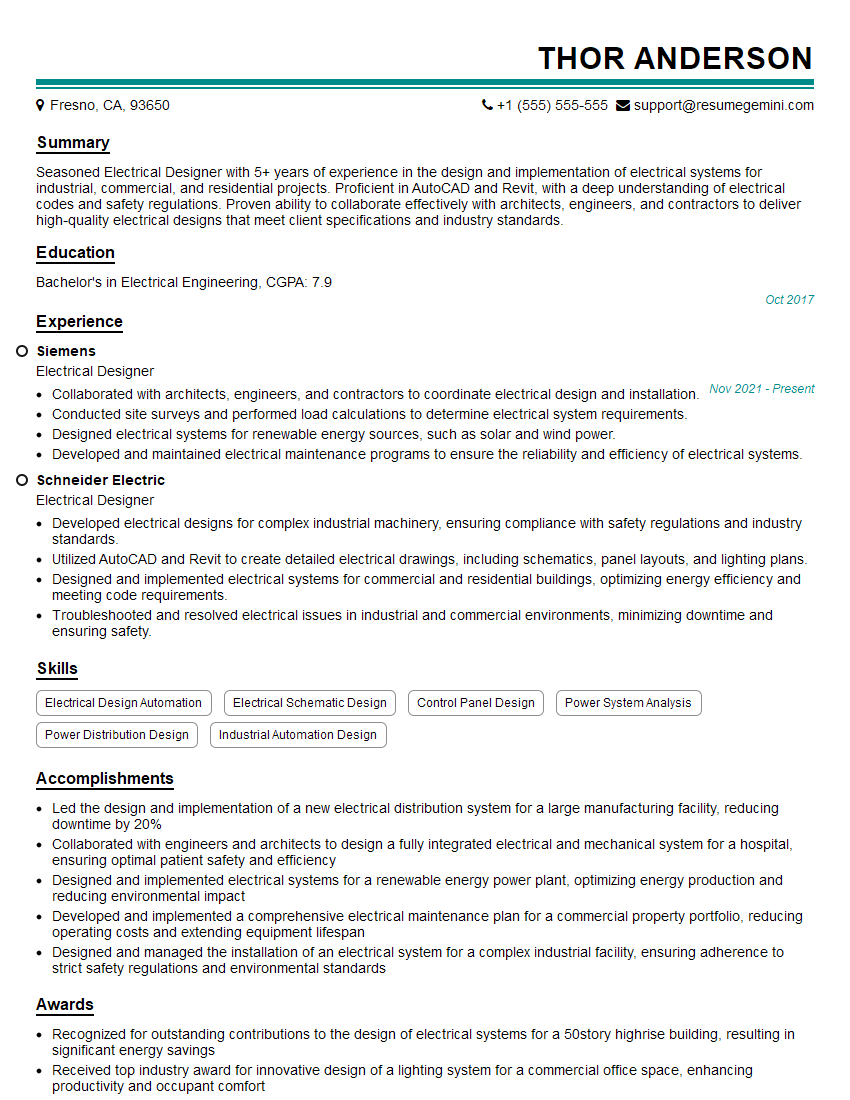
Electrical Designer Resume Sample

Electrical Engineer Resume Sample

Instrumentation Engineer Resume Sample
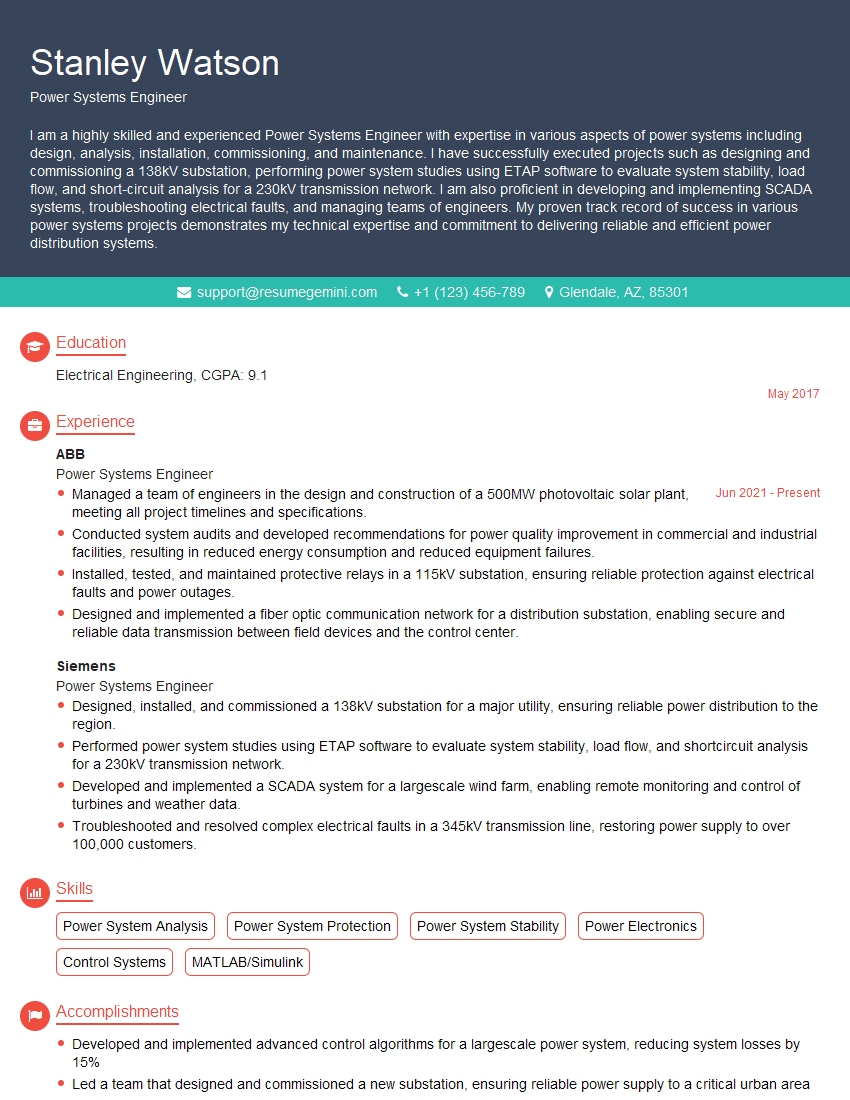
Power Systems Engineer Resume Sample

Control Systems Engineer Resume Sample

Robotics Engineer Resume Sample

Electrical Drafter Resume Sample

Electronics Technician Resume Sample
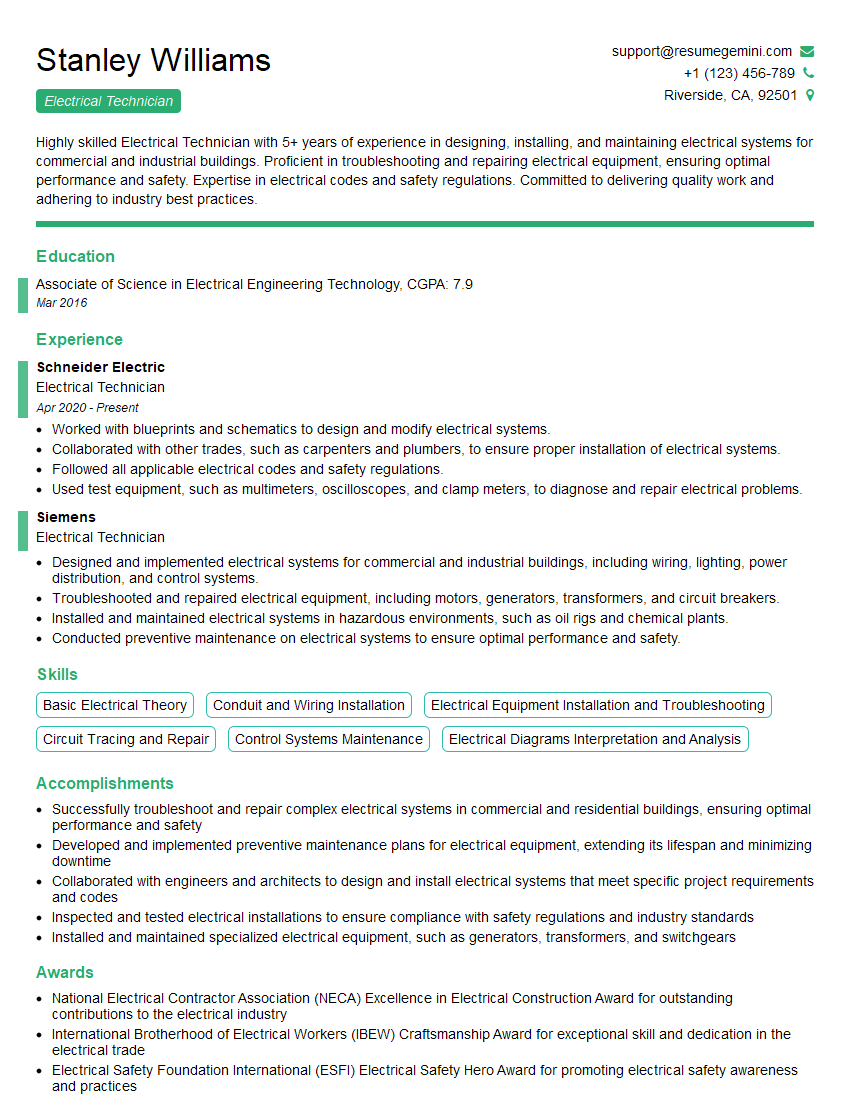
Electrical Technician Resume Sample
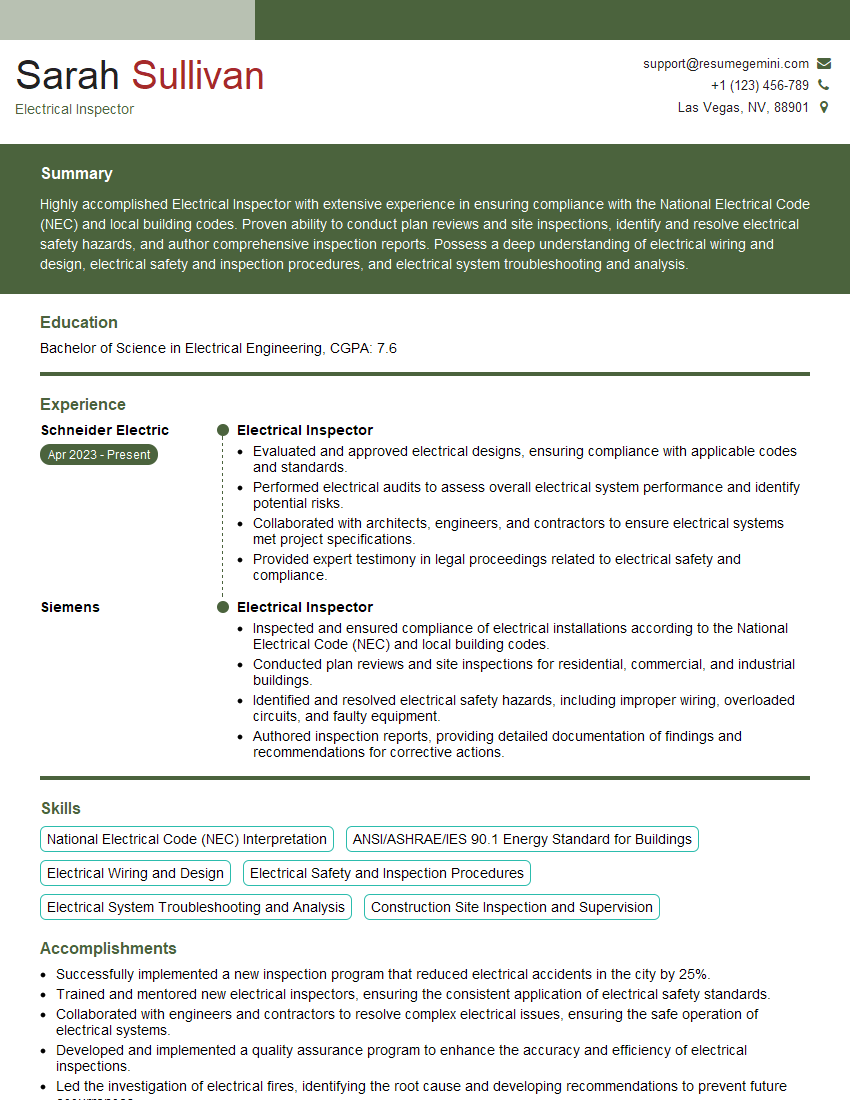
Electrical Inspector Resume Sample
- Electrical Superintendent
- Project Engineer
- Electrical Estimator
- Automation Engineer
- Test Engineer
- Design Engineer
- Field Service Engineer
- Commissioning Engineer
- Maintenance Engineer
- Electronics Engineer
- Electrical Designer
- Electrical Engineer
- Instrumentation Engineer
- Power Systems Engineer
- Control Systems Engineer
- Robotics Engineer
- Electrical Drafter
- Electronics Technician
- Electrical Technician
- Electrical Inspector
Explore more articles
Users Rating of Our Blogs
Share Your Experience
We value your feedback! Please rate our content and share your thoughts (optional).
What Readers Say About Our Blog
Very informative content, great job.
good