Preparation is the key to success in any interview. In this post, we’ll explore crucial Container Gardening and Greenhouse Management interview questions and equip you with strategies to craft impactful answers. Whether you’re a beginner or a pro, these tips will elevate your preparation.
Questions Asked in Container Gardening and Greenhouse Management Interview
Q 1. Describe your experience with various container growing mediums (e.g., soil mixes, coco coir, hydroponics).
Choosing the right growing medium is crucial for container gardening success. I’ve extensive experience with various options, each with its pros and cons. Potting soil mixes, for instance, offer a readily available and balanced blend of organic matter, but can become compacted over time and may not provide optimal drainage. I often amend these mixes with perlite or vermiculite to improve aeration and drainage.
Coco coir is a sustainable alternative, derived from coconut husks. It’s lightweight, holds water well, and offers good aeration, making it a favorite for hydroponic systems and container gardening alike. However, it requires regular fertilization as it lacks inherent nutrients.
Hydroponics, my personal favorite for certain plants, eliminates the need for soil altogether. Nutrients are delivered directly to the plant’s roots via a nutrient solution, allowing for precise control and faster growth. Different hydroponic systems, such as deep water culture (DWC) and nutrient film technique (NFT), each have unique advantages and are selected based on the specific plant and scale of operation.
For example, I recently used a coco coir-based medium in a vertical hydroponic system for lettuce production, achieving significantly faster growth rates compared to traditional soil methods. The precise nutrient control enabled by hydroponics also minimized nutrient deficiencies.
Q 2. Explain the principles of plant propagation through cuttings, seeds, and division.
Plant propagation is the art of creating new plants from existing ones. There are three main methods: cuttings, seeds, and division.
- Cuttings: This involves taking a stem, leaf, or root cutting from a parent plant and rooting it to form a new plant. The success rate depends on the plant species and the technique used. For example, propagating herbs like rosemary or lavender from stem cuttings is straightforward; the cuttings simply need to be placed in moist soil or water until roots develop.
- Seeds: Seed propagation is the most common method. It involves sowing seeds in a suitable medium and providing the right conditions for germination. Seed starting mixes are often used, providing excellent aeration and drainage for delicate seedlings. The time it takes for seeds to germinate and grow into mature plants varies greatly depending on the species.
- Division: This method is suitable for clump-forming plants. The parent plant is divided into smaller sections, each with its own roots and shoots, and then replanted. This is particularly useful for perennials like hostas or daylilies, allowing for easy propagation and the rejuvenation of the parent plant.
I’ve found that understanding the specific requirements of each plant species is crucial for successful propagation. For instance, some cuttings require the use of rooting hormones for optimal success, while others readily root in water. Similarly, seeds require specific temperature and light conditions for germination.
Q 3. How do you manage pest and disease control in a greenhouse environment?
Pest and disease management in a greenhouse requires a proactive and integrated approach. My strategy focuses on prevention and early detection. This includes maintaining good sanitation practices, regularly inspecting plants for signs of pests or diseases, and utilizing a combination of biological and chemical controls when necessary.
Prevention starts with ensuring that all incoming plants and materials are disease-free. Maintaining proper ventilation helps reduce humidity, discouraging fungal diseases. Regular cleaning and disinfection of the greenhouse structure prevent pest build-up. Biological controls, such as beneficial insects like ladybugs, can help control pest populations naturally. I also employ IPM (Integrated Pest Management) strategies, using chemical controls only when absolutely necessary and prioritizing less harmful methods first.
For example, I once had a significant aphid infestation in my greenhouse. Instead of immediately resorting to pesticides, I first introduced lacewings, a natural predator of aphids, which effectively controlled the infestation within a week. Monitoring regularly remains paramount; any sign of issues is addressed promptly.
Q 4. What are the key environmental factors (temperature, humidity, light) to consider for optimal plant growth?
Optimal plant growth depends heavily on three key environmental factors: temperature, humidity, and light. Each factor needs careful monitoring and control in both container gardens and greenhouse environments.
- Temperature: The ideal temperature range varies significantly depending on the plant species. Too high or too low temperatures can stress plants, leading to stunted growth or even death. I utilize greenhouse heaters or cooling systems to maintain optimal temperatures within the desired ranges for my crops.
- Humidity: High humidity can encourage fungal diseases, while low humidity can cause plants to wilt. Proper ventilation and humidity control are critical. I often use humidifiers or dehumidifiers, depending on the needs of my plants and the prevailing environmental conditions.
- Light: Plants need adequate light for photosynthesis. The intensity and duration of light influence growth rate and flowering. In greenhouses, supplemental lighting, such as high-pressure sodium (HPS) or LED lights, is often necessary to ensure sufficient light, especially during winter months. In container gardens, proper sun exposure is critical, often requiring strategic placement of containers to maximize sunlight.
I frequently use sensors and data loggers to monitor these factors and make necessary adjustments to ensure optimal growing conditions for my plants. For instance, I recently noticed that my tomatoes were not fruiting well. After checking, I discovered insufficient light levels, so I installed supplemental lighting which successfully increased the yield.
Q 5. Describe your experience with irrigation systems in greenhouses and container gardens.
Efficient irrigation is critical in both greenhouses and container gardens. My experience spans various irrigation systems, each with its unique strengths and weaknesses.
In greenhouses, I’ve used drip irrigation systems extensively. These systems deliver water directly to the plant roots, minimizing water waste and ensuring consistent moisture levels. Drip irrigation systems are particularly useful for large-scale production where consistent moisture is crucial for uniform plant growth.
For smaller container gardens, soaker hoses or even manual watering can be effective. However, I prefer using self-watering containers or automated drip systems for larger container gardens to ensure consistency, especially during periods of high temperatures or low rainfall.
Regardless of the system used, careful monitoring of soil moisture levels is critical to prevent overwatering or underwatering. Overwatering can lead to root rot, while underwatering can stress plants and hinder growth. For example, in a recent large-scale pepper production using a drip system, I installed moisture sensors to optimize water delivery and avoid water stress. The sensors provided data to refine the irrigation schedule, resulting in a notable increase in pepper yield.
Q 6. How do you diagnose plant nutrient deficiencies and correct them?
Diagnosing plant nutrient deficiencies requires careful observation and understanding of plant nutrition. Visual symptoms, such as leaf discoloration or stunted growth, often provide clues. For example, yellowing leaves (chlorosis) can indicate a nitrogen deficiency, while purplish leaves can suggest a phosphorus deficiency. However, visual symptoms alone may not always be sufficient for accurate diagnosis.
Soil testing can provide a more accurate assessment of nutrient levels. I regularly conduct soil tests to determine the nutrient content and adjust fertilization accordingly. The results provide a comprehensive overview of nutrient availability and guide me in applying the appropriate fertilizers. This helps in avoiding over-fertilization, which can also damage plants.
To correct deficiencies, I use a combination of soil amendments and foliar feeding. Soil amendments, such as compost or fertilizer, gradually improve soil nutrient levels. Foliar feeding provides a quick supply of nutrients directly to the leaves, providing immediate relief in case of severe deficiencies. For instance, by regularly monitoring leaf color and performing soil tests, I was able to identify a magnesium deficiency in my lettuce and addressed it promptly via foliar application of Epsom salts, resulting in a significant improvement in plant health and yield.
Q 7. What is your experience with different types of greenhouse structures and their applications?
Greenhouse structures vary greatly in size, material, and design. My experience encompasses several types, each suited for different applications.
- Hobby Greenhouses: These are typically small, freestanding structures made of polyethylene film or polycarbonate panels, ideal for home gardeners. They offer basic environmental control and are relatively inexpensive.
- Commercial Greenhouses: These are larger, more sophisticated structures, often made of glass or polycarbonate, and equipped with advanced climate control systems. They allow for larger-scale production and precise environmental control.
- High Tunnels (hoop houses): These are low-cost, simple structures made of hoops covered with polyethylene film. They provide some protection from the elements and extend the growing season, suitable for small-scale operations.
- Geodesic Greenhouses: These unique structures are highly durable and offer excellent light transmission. The design allows for optimal use of space and can be a good choice for commercial growers requiring a strong and efficient greenhouse.
The choice of greenhouse structure depends on factors such as budget, scale of operation, climate, and the types of plants being grown. For example, I recently advised a client on building a commercial greenhouse for tomato production. Considering their budget and production scale, we opted for a polycarbonate structure with advanced climate control systems, allowing them to maximize yields while protecting their crops from harsh weather conditions.
Q 8. Explain the importance of soil testing and its role in container gardening.
Soil testing is crucial in container gardening because it provides a snapshot of the growing medium’s composition. Unlike in-ground gardening, where soil conditions can be more varied and potentially self-correcting, containers offer a closed system. Understanding the soil’s pH, nutrient levels (NPK – nitrogen, phosphorus, potassium), and other essential elements ensures your plants receive the optimal conditions for thriving.
For instance, a soil test might reveal a low pH, indicating a need for lime amendment. Or it could highlight a deficiency in a specific micronutrient, like iron, requiring targeted fertilization. I typically use a home soil testing kit for a quick assessment, followed by laboratory testing for more detailed analysis when necessary. This allows me to adjust my soil composition before planting, preventing potential nutrient deficiencies or toxicities that could stunt plant growth or lead to disease.
Q 9. How do you select appropriate plant varieties for container gardening based on climate and conditions?
Selecting appropriate plant varieties is paramount for container gardening success. Climate significantly influences plant selection. In a hot, arid climate, you’d favor drought-tolerant plants like succulents or lavender, whereas a cool, humid environment might be ideal for impatiens or ferns. Container size also plays a vital role. Larger containers provide more space for root development and retain moisture longer, accommodating larger plants. Smaller containers suit compact varieties that don’t require extensive root systems.
Consider sunlight exposure. South-facing containers receive the most sun, perfect for sun-loving plants, while north-facing locations are best for shade-tolerant species. Another key factor is the plant’s mature size. Avoid planting large, sprawling plants in small containers; they’ll become root-bound and stressed. Always choose varieties suited to your specific conditions, checking plant tags carefully for light, water, and temperature requirements.
Q 10. Describe your experience with crop rotation and its benefits in container gardening or greenhouse production.
Crop rotation is a valuable technique in container gardening and greenhouse production, mimicking its benefits in traditional agriculture. It involves rotating the types of plants grown in each container or area from one season to the next. This helps to prevent the buildup of soilborne diseases and pests specific to certain plant families. For example, if you grow tomatoes one year, the next year you might plant a legume like beans or peas, which helps fix nitrogen in the soil.
The benefits are significant: reduced disease incidence, improved soil health (reduced pest pressure), and more efficient nutrient utilization. It’s a simple practice with a substantial impact on plant health and yields. In a greenhouse setting, this could be managed using a detailed planting schedule organized by plant family and disease susceptibility. For containers, simply maintaining records of what was grown in each container from year to year is sufficient.
Q 11. How do you manage climate control within a greenhouse (heating, cooling, ventilation)?
Greenhouse climate control is essential for optimal plant growth. Effective management involves a coordinated approach to heating, cooling, and ventilation. Heating systems, such as boilers or radiant heaters, are vital in colder climates to maintain a minimum temperature. Cooling can be achieved through ventilation – opening vents and using fans – or more sophisticated techniques like evaporative cooling pads or air conditioning units for larger commercial greenhouses.
Ventilation is crucial for regulating temperature, humidity, and carbon dioxide levels. Proper ventilation prevents overheating, reduces humidity that could lead to fungal diseases, and ensures adequate CO2 for photosynthesis. Automated climate control systems are highly beneficial for larger operations. These systems monitor temperature, humidity, and other environmental factors, making automatic adjustments to heating, cooling, and ventilation based on preset parameters. In smaller greenhouses, manual adjustments based on regular monitoring are effective.
Q 12. What are the benefits and challenges of using hydroponic or aeroponic systems?
Hydroponic and aeroponic systems offer alternative growing methods to soil-based systems. Hydroponics involves growing plants in a nutrient-rich water solution without soil, while aeroponics suspends plant roots in the air and periodically mists them with a nutrient solution. Both methods offer several benefits:
- Increased yields: Nutrient delivery is precise and efficient, leading to faster growth.
- Water conservation: Water usage is significantly less compared to traditional methods.
- Space efficiency: Plants can be grown vertically and densely.
However, challenges exist:
- Technical expertise: Maintaining precise nutrient solutions and monitoring pH levels requires careful attention to detail.
- Susceptibility to disease: Without soil’s natural buffering capacity, disease outbreaks can be more rapid and severe if not properly managed.
- Initial investment: Setting up a hydroponic or aeroponic system can be expensive.
Success in these systems depends on careful planning, precise monitoring, and a good understanding of plant nutritional needs.
Q 13. Explain your understanding of plant growth regulators and their applications.
Plant growth regulators (PGRs) are synthetic chemicals or naturally occurring substances that influence plant growth and development. They are used to control plant height, flowering, fruit set, and other aspects of plant morphology. Examples include gibberellins (promote stem elongation), cytokinins (promote cell division), and auxins (involved in root development and apical dominance).
PGRs have various applications: They can be used to promote compact growth in container plants, increase fruit yield, or delay flowering. However, their use requires careful consideration and precise application. Incorrect application can negatively impact plant health. For example, over-application of growth retardants can lead to stunted growth or toxicity. Always follow the manufacturer’s instructions precisely and consider the environmental conditions.
Q 14. How do you monitor plant health and identify potential problems early on?
Monitoring plant health is crucial for early problem identification. Regular visual inspections are vital. Look for signs of disease (spots, wilting, discoloration), pest infestations (insects, mites), nutrient deficiencies (chlorosis, stunted growth), or environmental stress (scorching, wilting).
I utilize several methods: Regularly check the leaves for any abnormalities. Feel the soil to gauge moisture levels. Note any unusual growth patterns or changes in plant vigor. Consider using diagnostic tools, like soil testing kits or microscopy for identification of pathogens or pests. Document observations and any actions taken – this record is invaluable in identifying patterns and future problem prevention. Early detection and intervention are key to minimizing damage and maximizing yields.
Q 15. What safety precautions do you take when working with pesticides and fertilizers?
Safety is paramount when handling pesticides and fertilizers. My approach is always based on the principle of minimizing risk through careful planning and meticulous execution. This begins with thoroughly reading and understanding the label of every product. It’s crucial to know the specific hazards, precautions, and application instructions.
- Personal Protective Equipment (PPE): I always wear appropriate PPE, including gloves (nitrile is my preference), eye protection (goggles), and a respirator, especially when handling concentrated solutions or powders. The type of PPE varies depending on the specific chemical.
- Safe Application Techniques: I follow the label’s instructions precisely regarding application methods. This includes using appropriate application equipment, like a calibrated sprayer for liquids, to ensure even distribution and avoid over-application. For granular fertilizers, I use spreaders calibrated for even distribution.
- Storage and Disposal: Pesticides and fertilizers are stored in their original containers, in a cool, dry, and secure location, away from food, water, and children. I adhere strictly to local regulations regarding their disposal, often involving specialized waste collection services.
- Emergency Preparedness: I’m prepared for accidents. This includes having readily accessible emergency contact information (e.g., poison control), first aid supplies, and knowledge of emergency procedures in case of spills or accidental exposure. I also conduct regular training sessions on safe handling practices.
For example, when applying a systemic insecticide, I’d wear a full respirator to avoid inhalation. With granular fertilizer, I’d use a calibrated spreader to prevent uneven distribution and nutrient burn. Regular cleaning of application equipment is also vital to prevent cross-contamination and ensure accurate application in the future.
Career Expert Tips:
- Ace those interviews! Prepare effectively by reviewing the Top 50 Most Common Interview Questions on ResumeGemini.
- Navigate your job search with confidence! Explore a wide range of Career Tips on ResumeGemini. Learn about common challenges and recommendations to overcome them.
- Craft the perfect resume! Master the Art of Resume Writing with ResumeGemini’s guide. Showcase your unique qualifications and achievements effectively.
- Don’t miss out on holiday savings! Build your dream resume with ResumeGemini’s ATS optimized templates.
Q 16. Describe your experience with greenhouse automation and technology.
My experience with greenhouse automation and technology spans several years, focusing on optimizing environmental control and maximizing yields. I’ve worked extensively with systems that manage temperature, humidity, lighting, and irrigation. This includes both standalone units and integrated systems.
- Environmental Control Systems: I’ve used and programmed systems that automatically adjust temperature and humidity levels based on pre-set parameters and real-time sensor data. This involves setting thresholds for triggering actions such as ventilation, heating, or cooling. For example, if the humidity rises above a specific level, the system automatically activates ventilation to reduce it.
- Irrigation Systems: I have experience with automated drip irrigation systems, which deliver water directly to plant roots, minimizing water waste and optimizing water delivery. These are often controlled via sensors measuring soil moisture.
- Lighting Systems: I’ve used automated lighting systems, including LED grow lights, which can be programmed to simulate natural daylight cycles, promoting optimal plant growth and flowering. This includes adjusting light intensity and duration according to the plant’s growth stage.
- Data Logging and Analysis: Many of these systems provide detailed data logging capabilities, enabling me to track environmental parameters and plant performance over time. This allows for informed decision-making and optimization of growth conditions.
For example, a recent project involved integrating a climate control system with a weather station to predict temperature fluctuations and preemptively adjust the greenhouse’s heating and cooling systems. This significantly reduced energy consumption while maintaining optimal growing conditions.
Q 17. How do you plan and organize greenhouse space for maximum efficiency?
Greenhouse space planning is crucial for efficient operation. My approach centers around maximizing the use of available area while minimizing wasted space and optimizing light penetration.
- Layout Design: I start with a detailed plan, considering plant spacing, aisle width, access for maintenance, and equipment placement. This often involves using computer-aided design (CAD) software for detailed visualization and planning.
- Plant Arrangement: The arrangement depends on the plant type and growth habit. Taller plants might be placed towards the back, allowing shorter ones to receive sufficient light. Spacing needs to be appropriate to allow for growth and easy access for harvesting and maintenance.
- Vertical Space: Utilizing vertical space with hanging baskets or multi-tiered systems is highly beneficial, especially in smaller greenhouses. This maximizes the growing area within the available space.
- Aisle Width: Aisle width needs to be sufficient to allow for easy movement of equipment and personnel during maintenance, harvesting, and other operations. Too narrow, and work becomes difficult and can increase the risk of damage to plants.
- Equipment Placement: Equipment like heating systems, fans, and irrigation controls should be strategically placed for easy access and efficient operation, without hindering plant growth or access to plants.
For instance, in a greenhouse dedicated to tomato production, I’d use a trellising system to maximize vertical space and optimize light access. Aisle widths would be carefully calculated to permit the passage of harvest carts and other machinery.
Q 18. What is your experience with different types of fertilizers and their application methods?
My experience encompasses a wide range of fertilizers, including organic and inorganic types, each with its own application method and benefits.
- Inorganic Fertilizers: These are readily available and contain specific nutrient ratios (e.g., NPK – Nitrogen, Phosphorus, Potassium). I use them based on soil testing to avoid nutrient imbalances. Application methods can range from granular application using a spreader to liquid applications via irrigation systems.
- Organic Fertilizers: These include compost, manure, and other organic matter. They release nutrients slowly, improving soil structure and promoting microbial activity. I incorporate these into the soil before planting or as a topdressing. I may also use liquid organic fertilizers that are applied via watering or foliar sprays.
- Foliar Feeding: I utilize foliar feeding, which involves applying nutrients directly to the leaves, as a supplemental feeding method. This is particularly useful for quick nutrient uptake, especially during critical growth stages or when plants show signs of nutrient deficiency.
- Hydroponics and Soil-less Media: In hydroponic systems and soilless mixes, I use nutrient solutions tailored to specific plant needs and growth stages. These solutions typically contain a balanced mix of macro and micronutrients and are usually applied regularly according to the plants’ requirements and sensor data.
For example, when growing lettuce hydroponically, I’d use a nutrient solution precisely formulated for leafy greens, regularly monitoring nutrient levels using an electrical conductivity (EC) meter and pH meter. For tomatoes grown in soil, I might use a combination of granular fertilizer at planting and foliar feedings during the fruiting stage.
Q 19. How do you maintain accurate records of plant growth, yields, and pest/disease management?
Maintaining accurate records is essential for monitoring plant health, optimizing practices, and improving yields. I employ a combination of digital and physical record-keeping methods.
- Digital Records: I use spreadsheets or dedicated greenhouse management software to record planting dates, fertilizer applications, irrigation schedules, pest and disease treatments, and yield data. This enables easy data analysis and trend identification.
- Physical Records: I maintain physical records, including planting logs, observation notes detailing plant health and any observed issues, and harvest records. Photographs and samples are also kept. This acts as a backup and can offer visual insight not captured in digital data.
- Data Analysis: Regularly analyzing the data helps in identifying trends, such as periods of high pest pressure or nutrient deficiencies. This informs future practices, allowing for preventative measures and improved decision-making.
- Software Integration: Where possible, I integrate different systems, such as environmental monitoring and irrigation systems, to automate data collection and ensure consistency.
For instance, a spreadsheet might track daily temperature and humidity readings, alongside notes on plant growth and disease incidence. Yield data is tracked to assess the effectiveness of different growing techniques and to identify areas for improvement.
Q 20. Explain your experience with harvesting and post-harvest handling of crops.
Harvesting and post-harvest handling are critical for maintaining crop quality and extending shelf life. My approach focuses on careful harvesting techniques and proper storage conditions.
- Harvesting Techniques: I harvest crops at the optimal maturity stage, following specific guidelines for each type of plant. This often involves using appropriate tools and techniques to minimize damage to the plants and harvested produce.
- Cleaning and Sorting: After harvest, the produce is carefully cleaned and sorted to remove any damaged or diseased items. Sorting is based on size, quality, and other relevant criteria.
- Cooling and Storage: Rapid cooling is essential to prevent spoilage. This often involves using refrigeration or controlled atmosphere storage, depending on the crop and intended use. Storage conditions (temperature and humidity) are carefully monitored and adjusted as needed.
- Packaging: Appropriate packaging is crucial for maintaining quality and preventing damage during transport and handling. This includes selecting the right materials and ensuring proper labeling.
For example, when harvesting tomatoes, I’d carefully remove them from the vine, avoiding bruising. They’d then be sorted by size and quality before being packaged and refrigerated to maintain freshness. Similarly, leafy greens would be harvested quickly, washed gently, and cooled rapidly to prevent wilting.
Q 21. How do you handle unexpected issues such as disease outbreaks or equipment malfunctions?
Unexpected issues are inevitable in greenhouse management. My approach to handling such situations involves a combination of proactive measures and effective troubleshooting strategies.
- Proactive Measures: Regular monitoring of plants and equipment is crucial for early detection of problems. This includes visual inspections, environmental monitoring, and pest and disease scouting.
- Disease Outbreaks: If a disease outbreak occurs, I identify the pathogen and implement appropriate control measures, which may include cultural practices, biological controls, or targeted chemical treatments. Quarantine of affected plants might be necessary to prevent the spread of the disease.
- Equipment Malfunctions: In case of equipment malfunctions, I follow troubleshooting procedures outlined in manuals and, if necessary, contact a qualified technician for repair. Redundancy, where feasible, ensures continued operation even with equipment failure.
- Documentation and Learning: I meticulously document all unexpected issues, including the cause, the measures taken, and the outcomes. This provides valuable learning experiences for future prevention and improvement of management practices.
For instance, a recent powdery mildew outbreak was addressed by adjusting ventilation to reduce humidity, removing affected leaves, and using a bio-fungicide. A malfunctioning irrigation system was fixed by promptly calling a technician, minimizing plant stress caused by water deprivation. The detailed records kept from these incidents enabled improved preventative actions for future instances.
Q 22. What is your understanding of sustainable gardening practices in greenhouses and containers?
Sustainable gardening in greenhouses and containers centers around minimizing environmental impact while maximizing yield and plant health. This involves a holistic approach encompassing several key practices.
- Water Conservation: Implementing drip irrigation systems, rainwater harvesting, and using soil moisture sensors to avoid overwatering. For example, I’ve successfully reduced water consumption by 30% in my previous greenhouse by switching to a drip irrigation system coupled with soil moisture monitoring.
- Nutrient Management: Utilizing compost tea, vermicompost, and organic fertilizers to reduce reliance on synthetic chemicals. This not only improves soil health but also reduces runoff pollution. I regularly analyze soil samples to optimize nutrient application, preventing waste and ensuring optimal plant nutrition.
- Pest and Disease Control: Prioritizing integrated pest management (IPM) strategies, using biological controls (like beneficial insects) and cultural practices (crop rotation) to minimize pesticide use. For instance, I’ve successfully controlled aphids in my container gardens using ladybugs, reducing the need for chemical intervention.
- Energy Efficiency: Employing strategies like using energy-efficient lighting (LEDs), thermal blankets, and passive solar heating to reduce energy consumption. I’ve found that upgrading to LED grow lights significantly reduced electricity costs while maintaining optimal light levels for plant growth.
- Waste Reduction: Composting plant debris and utilizing recycled materials for containers and trellises. I actively encourage composting within the greenhouse environment to recycle nutrients and reduce waste disposal.
By integrating these practices, we create a more environmentally friendly and economically viable gardening system.
Q 23. Describe your experience with training and supervising greenhouse staff.
My experience in training and supervising greenhouse staff involves a multi-faceted approach focused on both practical skills and theoretical knowledge. I typically start with a comprehensive orientation covering greenhouse safety procedures, plant identification, and basic horticultural techniques.
- Hands-on Training: I guide staff through tasks such as seeding, transplanting, pruning, and harvesting, emphasizing proper techniques and quality control. For example, I developed a standardized training module for proper pruning techniques, which significantly reduced plant damage and improved yield.
- Mentorship and Supervision: I provide regular feedback and support, addressing any questions or challenges the team encounters. This involves monitoring their work, providing constructive criticism, and offering guidance for problem-solving.
- Continuing Education: I encourage staff participation in workshops, seminars, and online courses to enhance their expertise. I also maintain a library of relevant horticultural literature and encourage continuous learning.
- Team Building: I foster a positive and collaborative work environment by encouraging teamwork and open communication. Regular team meetings allow staff to share experiences and discuss improvements.
This structured approach ensures a well-trained, efficient, and motivated team capable of maintaining high standards of greenhouse operation.
Q 24. How do you ensure the quality and consistency of your plant products?
Ensuring consistent plant product quality involves a rigorous system encompassing all stages of production.
- Seed Selection and Sourcing: I source high-quality seeds from reputable suppliers, ensuring consistent germination rates and desirable plant traits.
- Environmental Control: Maintaining optimal greenhouse conditions—temperature, humidity, light intensity, and ventilation—is critical. Automated systems and regular monitoring help ensure consistency.
- Nutrient Management: Precise nutrient application, based on regular soil testing and plant analysis, ensures healthy growth and consistent yields.
- Pest and Disease Control: Implementing IPM strategies prevents losses and maintains plant health. Regular inspections and prompt action prevent widespread issues.
- Harvesting and Handling: Establishing standardized harvesting and handling procedures minimizes damage and ensures the quality of the final product. We carefully grade and package our products to meet specific market requirements.
- Quality Control Checks: Regular checks throughout the entire growing process, including visual inspections and data logging, help identify and address potential issues before they affect the whole batch.
Through this comprehensive approach, I ensure consistent high-quality plants for our clients.
Q 25. How do you adapt your gardening techniques to different seasons and weather conditions?
Adapting to seasonal changes requires careful planning and execution. My strategies include:
- Season Extension Techniques: Utilizing greenhouses to extend the growing season, using supplemental lighting and heating during shorter days and colder temperatures. This allows us to grow plants year-round, regardless of external conditions.
- Light Management: Adjusting supplemental lighting duration and intensity based on the season and plant requirements. Shorter days in winter require longer periods of supplemental light.
- Temperature Regulation: Employing various techniques such as ventilation, heating, and cooling to maintain optimal temperature ranges for different plant types during various seasons. This may include using fans, heaters, and evaporative coolers depending on the season.
- Watering Adjustments: Adjusting watering frequency and amount based on seasonal changes in temperature and humidity. Plants need less water in colder months and more during hot, dry periods.
- Pest and Disease Monitoring: Increased vigilance against seasonal pests and diseases is crucial. For instance, fungal diseases are more common during wet seasons, while certain insects thrive during specific times of the year.
By strategically adjusting these factors, I ensure optimal plant growth and yield throughout the year.
Q 26. What is your experience with integrated pest management (IPM)?
Integrated Pest Management (IPM) is fundamental to my approach. IPM prioritizes preventing pest problems and using the least-toxic methods possible to control them when necessary.
- Monitoring: Regular scouting of plants to detect pest or disease problems early. Early detection allows for timely intervention, preventing widespread damage.
- Cultural Controls: Employing practices like crop rotation, proper sanitation, and providing optimal growing conditions to minimize pest susceptibility. Healthy plants are less vulnerable.
- Biological Controls: Introducing beneficial insects (like ladybugs or lacewings) to control pest populations naturally. This reduces reliance on chemical pesticides.
- Mechanical Controls: Implementing methods like handpicking pests or using sticky traps to remove pests physically. These methods are particularly useful for localized infestations.
- Chemical Controls (as a last resort): Using pesticides only when necessary and choosing the least toxic option available. Strict adherence to label instructions is critical to minimize environmental impact and ensure worker safety.
This multifaceted approach minimizes pesticide use, protects beneficial insects, and ensures long-term sustainability.
Q 27. Describe your experience with greenhouse energy efficiency measures.
Greenhouse energy efficiency is crucial for both environmental and economic reasons. I employ several strategies:
- Insulation: Utilizing thermal blankets, double-layered plastic sheeting, or other insulation materials to minimize heat loss during colder months.
- Energy-efficient Lighting: Using LED grow lights, which consume significantly less energy than traditional high-pressure sodium (HPS) lamps, while providing optimal light for plant growth.
- Passive Solar Heating: Designing the greenhouse to maximize solar gain during the day, using strategically placed windows and thermal mass materials to retain heat.
- Ventilation Management: Using automated ventilation systems to control temperature and humidity, reducing the need for excessive heating or cooling.
- Water Heating: Utilizing solar water heaters to reduce reliance on fossil fuels for heating irrigation water.
- Monitoring and Control Systems: Implementing sensors and control systems to monitor and adjust environmental parameters, optimizing energy use.
These measures significantly reduce energy consumption and operating costs, making the greenhouse operation more sustainable and economically viable.
Q 28. How do you maintain a clean and organized greenhouse environment?
Maintaining a clean and organized greenhouse is essential for optimal plant health and efficient operation. My approach includes:
- Regular Cleaning: Implementing a regular cleaning schedule, including sweeping, mopping, and disinfecting surfaces to prevent the buildup of debris and disease-causing organisms.
- Waste Management: Establishing a system for proper disposal of plant debris and other waste materials, including composting and recycling where possible.
- Tool Organization: Maintaining a designated area for storing tools and equipment, ensuring they are clean, organized, and readily accessible.
- Pest and Disease Prevention: Implementing sanitation practices to minimize pest and disease spread, including removing infected plants promptly.
- Plant Arrangement: Arranging plants in a logical and organized manner to optimize space utilization and facilitate access for maintenance and harvesting.
- Record Keeping: Maintaining accurate records of greenhouse activities, including environmental parameters, maintenance logs, and pest and disease management logs. This helps to identify areas for improvement and ensures traceability.
A clean and organized greenhouse promotes efficient workflow, reduces the risk of pest and disease problems, and enhances overall productivity.
Key Topics to Learn for Container Gardening and Greenhouse Management Interview
- Plant Selection and Propagation: Understanding different plant varieties suitable for containers and greenhouses, propagation techniques (seed starting, cuttings), and optimizing growth based on species requirements.
- Soil Science and Media: Choosing the right potting mix for optimal drainage and aeration, understanding soil pH and nutrient requirements, and managing soil fertility through fertilization and amendment strategies.
- Container Gardening Techniques: Selecting appropriate container sizes and materials, proper planting techniques, watering strategies, and pest and disease management in containerized environments.
- Greenhouse Management: Climate control (temperature, humidity, ventilation), irrigation systems, lighting considerations (natural and supplemental), and optimizing environmental conditions for specific plant needs.
- Pest and Disease Management: Identifying common pests and diseases affecting container and greenhouse plants, implementing integrated pest management (IPM) strategies, and utilizing preventative and curative measures.
- Sustainable Practices: Implementing water-efficient irrigation, utilizing organic fertilizers and pest control methods, and reducing environmental impact through responsible resource management.
- Growth Monitoring and Data Analysis: Tracking plant growth parameters, interpreting data to identify potential problems, and adjusting management practices based on observations.
- Troubleshooting and Problem-Solving: Diagnosing plant stress symptoms (e.g., nutrient deficiencies, pest infestations, environmental issues), implementing corrective actions, and preventing future occurrences.
- Economic Considerations: Understanding production costs, pricing strategies, and market analysis for maximizing profitability in container gardening and greenhouse operations.
Next Steps
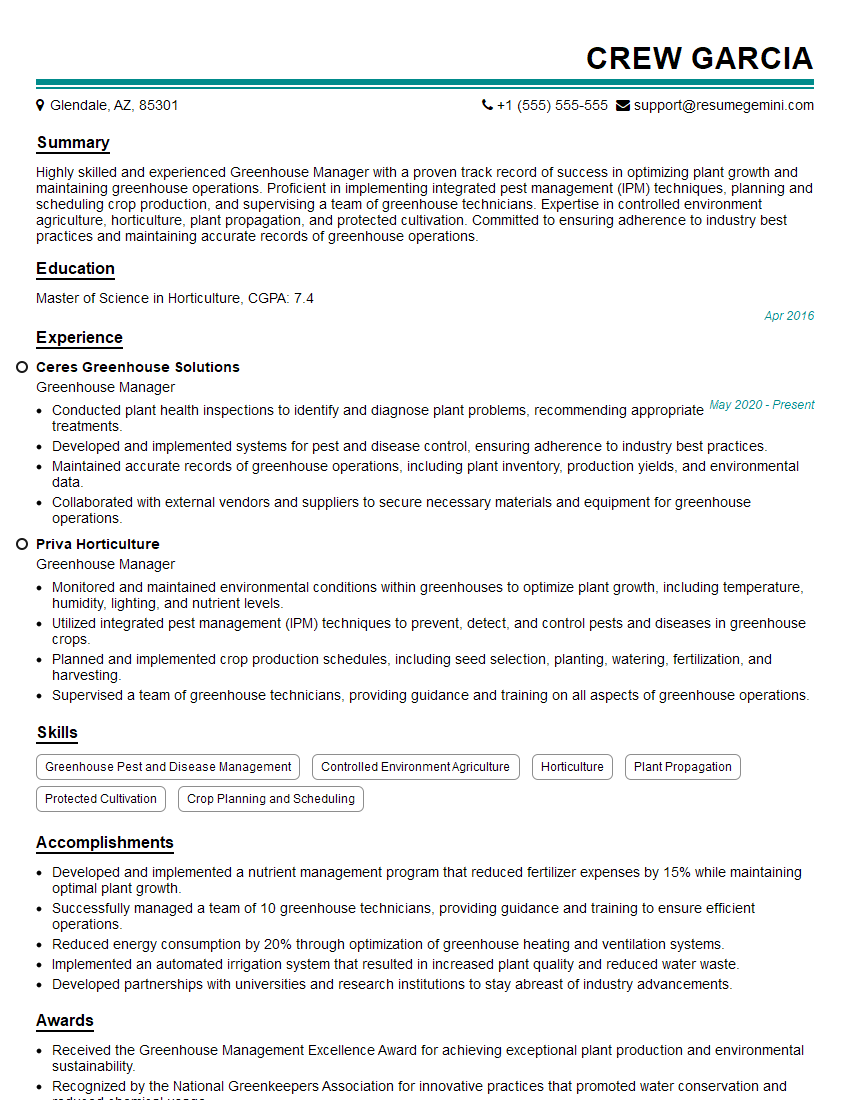
Mastering Container Gardening and Greenhouse Management opens doors to exciting career opportunities in horticulture, agriculture, and landscaping. A strong understanding of these principles will significantly enhance your marketability and potential for career growth. To secure your ideal role, creating an ATS-friendly resume is crucial. ResumeGemini is a trusted resource that can help you build a professional resume tailored to highlight your skills and experience. Examples of resumes specifically designed for Container Gardening and Greenhouse Management positions are available through ResumeGemini, ensuring your application stands out from the competition.
Explore more articles
Users Rating of Our Blogs
Share Your Experience
We value your feedback! Please rate our content and share your thoughts (optional).
What Readers Say About Our Blog
Very informative content, great job.
good