Cracking a skill-specific interview, like one for Contingency Operations Planning, requires understanding the nuances of the role. In this blog, we present the questions you’re most likely to encounter, along with insights into how to answer them effectively. Let’s ensure you’re ready to make a strong impression.
Questions Asked in Contingency Operations Planning Interview
Q 1. Describe your experience developing contingency plans.
Developing contingency plans is a core competency of mine. I’ve been involved in crafting plans for various scenarios, from natural disasters and cyberattacks to supply chain disruptions and public health emergencies. My approach always starts with a deep understanding of the organization’s critical functions and dependencies. For example, in my previous role at a financial institution, we developed a comprehensive contingency plan to address potential outages of our core banking system. This involved outlining alternative processing methods, identifying critical personnel, and establishing communication protocols to minimize disruption to customer services. Another project focused on a manufacturing company’s response to potential supplier failures, leading to the development of multiple sourcing strategies and inventory buffer plans. Each plan included detailed procedures, timelines, responsibilities, and resource allocation to ensure a coordinated and effective response.
I emphasize a collaborative, iterative approach, involving key stakeholders at every stage to ensure alignment and ownership. This proactive approach allows us to identify potential blind spots and develop more resilient and robust plans.
Q 2. Explain the process of risk assessment within contingency planning.
Risk assessment is the cornerstone of effective contingency planning. It’s a systematic process of identifying, analyzing, and evaluating potential threats and vulnerabilities that could disrupt operations. I typically employ a structured approach involving these steps:
- Identify Potential Threats: This involves brainstorming sessions with various stakeholders, reviewing historical incident data, and researching industry best practices to identify potential events, such as natural disasters, cyber breaches, equipment failures, or pandemics.
- Identify Vulnerabilities: Once threats are identified, we assess the organization’s vulnerabilities to each threat. This considers weaknesses in processes, systems, resources, or personnel that could exacerbate the impact of a disruptive event.
- Analyze Likelihood and Impact: For each identified threat and vulnerability, we analyze the likelihood of occurrence and the potential impact on the organization. This often involves using qualitative or quantitative methods to score the risks and prioritize them for mitigation.
- Document Findings: All identified threats, vulnerabilities, likelihoods, and impacts are documented and communicated to relevant stakeholders. This forms the basis for developing effective mitigation strategies.
For instance, in a risk assessment for a hospital, we might identify a pandemic as a high-likelihood, high-impact threat, leading to a focus on developing plans for surge capacity, resource allocation, and infection control.
Q 3. How do you prioritize risks and vulnerabilities in a contingency plan?
Prioritizing risks and vulnerabilities is crucial for efficient resource allocation in contingency planning. I use a combination of qualitative and quantitative methods to achieve this. One common approach involves creating a risk matrix that plots the likelihood and impact of each risk on a graph. This allows for a visual representation of the relative severity of each risk. Risks are typically categorized into high, medium, and low priority based on their position in the matrix.
Another method is to assign weighted scores to different criteria. For example, we might assign weights to factors such as the likelihood of occurrence, the potential financial impact, reputational damage, legal ramifications, and the overall business impact. This allows for a more nuanced prioritization, taking into account multiple dimensions of risk. In the hospital example, a risk assessment might reveal that a power outage is a high-priority risk due to the potential impact on life-saving equipment, warranting a dedicated mitigation strategy such as an emergency power generator. The prioritization helps us focus resources on the most critical areas first.
Q 4. What methodologies do you utilize for developing contingency plans (e.g., BIA, HAZOP)?
I utilize various methodologies when developing contingency plans, adapting my approach based on the specific context and requirements. Some of the common methodologies I employ include:
- Business Impact Analysis (BIA): This is a crucial first step, helping us understand the critical functions and dependencies of the organization. A BIA helps determine the impact of disruptions to each function, assisting in prioritization.
- Hazard and Operability Study (HAZOP): This systematic method is particularly useful in identifying potential hazards in complex processes, like those found in manufacturing or chemical plants. It uses a structured approach to guide team discussions and uncover potential risks.
- Failure Mode and Effects Analysis (FMEA): This technique helps identify potential failure modes within a system and assess their impact. It’s valuable for systematically evaluating different components and their potential contribution to system failures.
- Scenario Planning: This involves developing several plausible scenarios that might unfold, allowing for proactive responses to a wider range of possibilities.
The selection of methodologies depends greatly on the organization’s industry, size, and complexity. For example, HAZOP is particularly relevant for process-intensive industries, while a BIA is more widely applicable across different sectors.
Q 5. How do you ensure stakeholder buy-in and communication during contingency planning?
Ensuring stakeholder buy-in and effective communication is critical for successful contingency planning. I achieve this through:
- Early and Frequent Engagement: I start by engaging key stakeholders from the outset, clearly defining objectives, and establishing a shared understanding of the goals. This helps build consensus and foster a sense of ownership.
- Transparency and Open Communication: I maintain transparent communication channels throughout the process. Regular updates, progress reports, and open forums ensure that stakeholders are informed and can provide valuable feedback.
- Collaboration and Teamwork: I foster a collaborative environment where stakeholders feel empowered to contribute their expertise and perspectives. This involves actively seeking feedback and incorporating different viewpoints into the plan.
- Tailored Communication: I adapt the communication style and format to suit the different needs and preferences of stakeholders. This may involve using different communication mediums and levels of detail depending on the audience.
For example, during the development of a contingency plan for a large retail company, I held regular meetings with various departments, including operations, IT, marketing, and human resources. This ensured that the plan addressed the specific needs and concerns of each department, building a sense of collective ownership and commitment.
Q 6. Describe your experience in testing and exercising contingency plans.
Testing and exercising contingency plans is crucial to ensure their effectiveness and identify areas for improvement. I have extensive experience in conducting various types of tests, including:
- Tabletop Exercises: These involve a facilitated discussion of potential scenarios with key personnel to test the plan’s effectiveness and identify any gaps in communication or procedures. This is a relatively low-cost and efficient method for testing the plan’s overall coherence.
- Functional Exercises: These involve testing specific aspects of the plan, such as activating emergency response systems or deploying backup resources. For example, testing the failover of a critical IT system to a backup location is a functional exercise.
- Full-Scale Exercises: These are more comprehensive tests involving multiple departments and potentially external organizations. They simulate a real-world event to test the entire plan’s functionality. These are usually more costly and resource-intensive but provide the most comprehensive evaluation.
After each exercise, a thorough after-action report is prepared, documenting observations, identifying areas for improvement, and updating the plan accordingly. This iterative process of testing, reviewing, and updating is essential for maintaining the plan’s relevance and effectiveness.
Q 7. Explain your experience with business impact analysis (BIA).
A Business Impact Analysis (BIA) is a critical component of any comprehensive contingency planning process. It’s a structured assessment that identifies the critical business functions and determines the impact of a disruption to those functions. My experience with BIAs has shown their value in prioritizing resources and determining the appropriate recovery strategies. I typically conduct a BIA using a phased approach:
- Identify Critical Business Functions: This involves identifying the functions essential for the organization’s continued operation and success. We use workshops and interviews to gain input from across the organization. For instance, in a hospital, critical functions might include patient care, emergency services, and pharmaceutical dispensing.
- Determine Maximum Tolerable Downtime (MTD): For each critical function, we determine the maximum amount of downtime that can be tolerated before unacceptable consequences occur. This involves considering financial, operational, legal, and reputational impacts.
- Analyze Impact: We analyze the potential impact of disruptions to each function, considering financial losses, operational disruptions, legal liabilities, and reputational damage. We often use qualitative and quantitative metrics to measure this impact.
- Develop Recovery Strategies: Based on the BIA findings, we develop recovery strategies, including backup systems, alternative processes, and resource allocation plans.
The output of a BIA is a prioritized list of critical functions and their associated recovery time objectives (RTOs) and recovery point objectives (RPOs). This forms the foundation for developing effective contingency plans tailored to the specific needs of the organization.
Q 8. How do you measure the effectiveness of a contingency plan?
Measuring the effectiveness of a contingency plan isn’t a simple yes/no answer; it’s an ongoing process of evaluation and refinement. We need to assess how well the plan achieved its objectives during and after a crisis. This involves a multi-faceted approach.
- Plan Adherence: Did the plan guide actions effectively? Were all critical steps followed? Deviations should be analyzed and documented to identify areas for improvement.
- Resource Utilization: Were resources allocated efficiently? Were there bottlenecks or unexpected resource needs? We can use metrics like resource consumption rates compared to the budget and projected needs.
- Timeliness: How quickly was the organization able to respond and recover? This is often measured using Recovery Time Objectives (RTO) and Recovery Point Objectives (RPO), which I will detail later.
- Impact Mitigation: How effectively did the plan reduce the negative impact of the crisis on the organization? We use key performance indicators (KPIs) to measure the financial, operational, and reputational impact. For example, comparing lost revenue with pre-crisis levels.
- Lessons Learned: A post-incident review is crucial. We gather feedback from all stakeholders involved to identify strengths and weaknesses in the plan and processes. This is often documented in a formal report used to update the plan.
For example, in a recent project involving a major cybersecurity breach, our contingency plan resulted in a faster system recovery than initially projected, minimizing data loss and financial impact. This success was largely due to the plan’s detailed communication protocols and effective resource allocation, factors we documented thoroughly for future reference.
Q 9. What are the key elements of a robust communication plan during a crisis?
A robust communication plan during a crisis is critical to coordinate responses, manage stakeholders, and maintain calm. It should be clear, concise, consistent, and readily accessible to everyone involved.
- Designated Spokesperson: Having a single point of contact for media and external communications ensures consistent messaging and prevents conflicting information.
- Multiple Communication Channels: We leverage various channels such as email, SMS, internal portals, and even social media to reach all stakeholders. Redundancy is key in case one channel fails.
- Pre-established Messaging: Pre-written templates for common crisis situations greatly expedite communication during a chaotic event. This minimizes confusion and wasted time crafting messages in the midst of the crisis.
- Regular Updates: Frequent, even if brief, updates keep stakeholders informed and reduce anxiety. We must address concerns promptly and transparently.
- Feedback Mechanisms: We need systems in place to gather feedback from different teams and stakeholders to ensure the communication is understood and effective. We regularly review the effectiveness of the communication strategies post-crisis to adapt for future events.
Imagine a natural disaster impacting our office building. Our pre-established communication plan ensured that employees were immediately informed about safety protocols, emergency contacts, and temporary work arrangements through SMS and email alerts, mitigating panic and ensuring continuity of operations.
Q 10. How do you handle unforeseen circumstances or deviations from the contingency plan?
Unforeseen circumstances are inevitable. The key is to have a flexible and adaptable contingency plan that allows for deviations. This is where robust training, scenario planning, and a clear escalation path are vital.
- Scenario Planning: We shouldn’t just plan for the most likely scenarios but also for less probable yet impactful ones. This ‘what-if’ analysis helps to anticipate and prepare for a wider range of disruptions.
- Decision-Making Authority: Clear lines of authority and well-defined roles and responsibilities are essential. Individuals at various levels should understand their roles and be empowered to make decisions based on the evolving situation.
- Incident Management Team: A dedicated team to manage the crisis, assess the situation, implement the plan, and make necessary changes in real-time is crucial. The team should have clear reporting structures and decision making processes.
- Flexibility and Adaptability: The plan must not be rigid. It needs to be a living document that allows for adaptations during the crisis, based on real-time information and feedback.
During a recent product launch, a critical software component unexpectedly failed. Our incident management team swiftly assessed the situation, triggering the contingency plan’s ‘alternate launch strategy’ section, which involved deploying a temporary alternative. This averted a major disruption and minimized negative publicity.
Q 11. Describe your experience with resource allocation in crisis situations.
Resource allocation in crisis situations requires a strategic and often rapid approach. It involves prioritizing needs, optimizing available resources, and managing expectations.
- Prioritization Matrix: We use a matrix to rank resources based on their criticality to the recovery effort. This ensures that the most vital resources are allocated first.
- Resource Inventory: A comprehensive inventory of all available resources (personnel, equipment, funding, etc.) is essential for informed decision-making. Real-time tracking of resource consumption is equally important.
- Cross-functional Collaboration: Effective resource allocation demands cooperation across departments. Clear communication and collaboration are key to ensuring that resources reach where they are most needed.
- Scalability: The allocation process must be scalable to accommodate evolving needs. The ability to quickly procure or reallocate resources as the situation changes is vital.
In a severe weather event that impacted our data center, the initial resource allocation prioritized power restoration and securing our critical servers, while less critical systems were handled later. This prioritized approach minimized downtime and protected our core operational capabilities.
Q 12. Explain your understanding of recovery time objectives (RTO) and recovery point objectives (RPO).
Recovery Time Objective (RTO) and Recovery Point Objective (RPO) are crucial metrics in contingency planning, particularly for IT systems and data recovery.
- Recovery Time Objective (RTO): This defines the maximum acceptable downtime for a system or application after an outage. It specifies the target time for restoration. For example, an RTO of 4 hours means the system must be restored within 4 hours of an outage.
- Recovery Point Objective (RPO): This determines the acceptable data loss in the event of a disruption. It defines the point in time to which the system needs to be recovered. An RPO of 2 hours means that no more than 2 hours of data should be lost during recovery.
A lower RTO and RPO indicates a higher level of business resilience and reduced risk of data loss and downtime. These objectives guide the design and testing of the recovery procedures and the choice of recovery solutions (e.g., backups, failover systems).
Q 13. How do you integrate contingency planning with other organizational strategies?
Contingency planning shouldn’t exist in isolation; it must be integrated with other organizational strategies for a holistic approach. It supports and enhances business continuity, risk management, and disaster recovery efforts.
- Business Continuity Planning (BCP): Contingency plans form a key component of BCP. They define the actions to be taken during a crisis to maintain essential business functions.
- Risk Management: Contingency plans address identified risks. They detail mitigation strategies and recovery procedures for various scenarios. They provide a practical response to the identified risks.
- Disaster Recovery: Contingency plans are crucial for disaster recovery, defining the steps for restoring IT systems, data, and other critical infrastructure after a major event.
- Strategic Planning: Contingency planning feeds into strategic planning by identifying potential vulnerabilities and informing decisions about resource allocation and investment in resilience measures. It informs the organizational resilience.
For instance, our organization’s strategic plan explicitly considers climate change risks. The contingency plan integrates these considerations by detailing procedures for addressing potential disruptions due to extreme weather events, aligning with our broader strategic goals of sustainable operations.
Q 14. What software or tools do you use for contingency planning?
Various software and tools can facilitate contingency planning, depending on the complexity and specific needs. The choice often depends on the size and the nature of the organization.
- Spreadsheet Software (e.g., Microsoft Excel, Google Sheets): For simpler plans, spreadsheets can be used to document key elements, procedures, and contact information. They are user-friendly for smaller organizations with less complex needs.
- Project Management Software (e.g., Microsoft Project, Jira): These tools are helpful for managing tasks, timelines, and resources involved in the plan’s development and execution. They are particularly useful for more complex and long-term projects.
- Business Continuity Management Software (e.g., Specialized BCM software solutions): These dedicated platforms offer comprehensive features for creating, managing, and testing contingency plans, including features like automated alerts, communication workflows, and reporting dashboards. They are useful for organizations needing more sophisticated functionality.
- Diagram Software (e.g., Lucidchart, draw.io): Visual tools aid in mapping out processes and workflows, improving communication and understanding of the plan.
Our organization uses a combination of spreadsheet software for basic documentation and a dedicated business continuity management software solution to manage and test more complex contingency plans and to facilitate collaboration and version control.
Q 15. Describe your experience with different types of contingency plans (e.g., IT, supply chain, pandemic).
My experience spans various contingency plan types, each demanding a unique approach. For example, IT contingency plans focus on business continuity during technology failures, encompassing disaster recovery, data backups, and system redundancy. I’ve worked on plans involving failover systems and cloud-based solutions to ensure minimal downtime. Supply chain contingency plans, on the other hand, address disruptions in the flow of goods and services. Here, the focus is on risk mitigation across sourcing, logistics, and inventory management. I’ve been involved in developing plans that included diverse sourcing strategies, establishing buffer stocks, and exploring alternative transportation routes. Finally, pandemic contingency plans are designed to address large-scale health crises. These plans typically include protocols for remote work, employee safety measures, and business continuity during lockdowns. My involvement has encompassed developing communication strategies, establishing remote work infrastructure, and adapting operational procedures to comply with public health guidelines.
Each of these plans requires a different level of detail and consideration. For instance, an IT contingency plan needs a strong technical focus, while a pandemic plan requires a significant understanding of public health and employee welfare.
Career Expert Tips:
- Ace those interviews! Prepare effectively by reviewing the Top 50 Most Common Interview Questions on ResumeGemini.
- Navigate your job search with confidence! Explore a wide range of Career Tips on ResumeGemini. Learn about common challenges and recommendations to overcome them.
- Craft the perfect resume! Master the Art of Resume Writing with ResumeGemini’s guide. Showcase your unique qualifications and achievements effectively.
- Don’t miss out on holiday savings! Build your dream resume with ResumeGemini’s ATS optimized templates.
Q 16. How do you maintain and update contingency plans?
Maintaining and updating contingency plans is an ongoing process, not a one-time task. I use a structured approach that combines regular reviews, proactive updates, and post-incident analysis. Regular reviews, typically conducted annually or more frequently for high-risk areas, assess the plan’s effectiveness and identify potential gaps. These reviews involve cross-functional teams and incorporate feedback from stakeholders. Proactive updates are crucial. Changes in technology, regulations, or the business environment necessitate updates to the plan. I employ a version control system to track changes and ensure everyone works with the most current version. Post-incident analysis is critical. After any significant disruption, we conduct a thorough review to analyze what went well, what could be improved, and to identify any unanticipated weaknesses. This feedback directly informs future revisions and enhancements. Think of it like a living document that constantly adapts to change and learns from experience.
Q 17. Explain your understanding of the different phases of incident management.
Incident management typically involves four phases: Preparation, Response, Recovery, and Mitigation. Preparation involves developing and testing the contingency plan. This phase includes defining roles and responsibilities, establishing communication channels, and ensuring access to resources. The Response phase kicks in when an incident occurs. It focuses on immediate actions to contain the damage, protect critical assets, and ensure the safety of personnel. Recovery focuses on restoring normal operations. This phase involves repairing damaged infrastructure, restoring data, and getting essential services back online. Finally, Mitigation aims to prevent similar incidents from happening again. This involves analyzing the root cause of the incident, implementing corrective actions, and updating the contingency plan.
Imagine a building fire: Preparation is having fire drills and escape routes. Response is evacuating the building and calling emergency services. Recovery is repairing the damage and restoring services. Mitigation is installing better fire safety systems to prevent future fires.
Q 18. How do you ensure the plan complies with relevant regulations and standards?
Compliance is paramount in contingency planning. I ensure compliance with relevant regulations and standards by integrating them directly into the planning process. This involves identifying all applicable laws, industry best practices, and internal policies. For example, data privacy regulations like GDPR or CCPA dictate specific requirements for data backups and recovery. Industry standards like ISO 27001 (information security) or NIST Cybersecurity Framework influence the design and implementation of IT contingency plans. Internal policies related to crisis communication, employee safety, and business continuity also need to be integrated. Regularly auditing the plan against these standards and regulations helps maintain compliance and avoids legal and operational risks.
Q 19. Describe a time you had to adapt a contingency plan during a crisis.
During a major software outage affecting our e-commerce platform, our initial contingency plan focused on directing customers to our physical stores. However, the outage coincided with a severe snowstorm, rendering many stores inaccessible. We quickly had to adapt. We activated an alternative plan, focusing on communication. We used social media and email to proactively inform customers about the outage and offer alternative purchasing options like phone orders. We also collaborated with our customer service team to manage the influx of calls. This experience highlighted the importance of flexibility and adaptability in contingency planning. We later revised the plan to include alternative sales channels and address potential weather-related disruptions.
Q 20. How do you handle conflicting priorities during a crisis?
Handling conflicting priorities during a crisis requires a structured and decisive approach. I use a prioritization matrix that considers factors such as the impact of each task on business continuity, the urgency of the situation, and the available resources. This matrix helps objectively rank priorities and allocate resources accordingly. Open communication is key. I ensure all stakeholders are informed about the priorities and the rationale behind the decisions. Transparent communication reduces confusion and helps maintain morale during stressful times. Finally, I use a clear escalation path to handle situations that are beyond my authority. This ensures timely resolution of critical issues.
Q 21. What are the key performance indicators (KPIs) you use to evaluate contingency planning success?
Key Performance Indicators (KPIs) for evaluating contingency planning success include: Recovery Time Objective (RTO) – the time it takes to restore critical business functions; Recovery Point Objective (RPO) – the maximum acceptable data loss; Mean Time To Repair (MTTR) – the average time taken to resolve incidents; and Plan effectiveness score – a subjective assessment of the plan’s overall effectiveness based on post-incident analysis. We track these KPIs and use the data to continuously improve our plans and preparedness. A low RTO and RPO, a short MTTR, and a high plan effectiveness score indicate a successful contingency plan.
Q 22. How do you involve different teams and departments in contingency planning?
Involving diverse teams and departments in contingency planning is crucial for a comprehensive and effective plan. It’s not a solo endeavor; it requires a collaborative approach. I employ a phased strategy. First, I identify all relevant stakeholders – from IT and security to legal, PR, and operations. Then, I establish a central planning team, composed of representatives from each key department. This team serves as the conduit for communication and ensures all perspectives are considered.
Next, I utilize structured workshops and meetings, tailoring the level of detail to each department’s specific responsibilities. For instance, the IT team focuses on technical recovery strategies, while the PR team drafts communication protocols. This participatory approach fosters ownership and buy-in. Finally, I utilize project management tools to track progress, manage tasks, and maintain clear communication across all teams. This collaborative process prevents silos and ensures the plan accounts for every critical aspect of the organization’s response.
For example, during my time at [Previous Company Name], we developed a plan for a major cyberattack. The IT team focused on data recovery and system restoration, while the legal team addressed potential liability and regulatory compliance. This joint effort created a robust plan that minimized disruption and mitigated potential damage.
Q 23. Describe your experience with post-incident reviews and lessons learned.
Post-incident reviews and lessons learned are critical for continuous improvement. I’ve always viewed these reviews as an opportunity to learn and adapt, not just as a blame-finding exercise. My approach follows a structured methodology. First, we gather all relevant data, including incident logs, communication records, and post-event assessments from all involved teams. We then hold a facilitated review session, inviting participants from across affected departments.
During the session, we meticulously analyze the events leading to the incident, the effectiveness of the response, and areas where the contingency plan fell short. We use a structured framework, like the 5 Whys, to delve into root causes and avoid superficial solutions. Finally, we document all findings, proposed improvements, and assign action items with clear owners and deadlines. These improvements are then incorporated into revised contingency plans and procedures.
In one instance, a server failure exposed a weakness in our backup system. The post-incident review identified the issue, leading to the implementation of a redundant backup system in a geographically separate location, significantly enhancing our resilience.
Q 24. How do you ensure the plan is scalable to handle various levels of crisis?
Scalability in contingency planning is paramount. A plan needs to adapt to various crisis levels, from minor incidents to major disasters. I achieve this through modular design and tiered responses. The plan is divided into modules addressing specific aspects, like communication, resource allocation, and technical recovery. Each module has predefined levels of activation, corresponding to different crisis severity levels.
For example, a minor power outage might trigger only the first level of the communication module (internal alerts), while a major earthquake could escalate to full-scale external communication and resource mobilization across all modules. This tiered approach ensures that resources are deployed appropriately and prevents overreaction to minor incidents while allowing a robust response to significant threats. Furthermore, I incorporate flexible resource allocation mechanisms, such as pre-defined contracts with external vendors, enabling rapid scaling of resources as needed.
During my involvement in the development of a contingency plan for a large-scale event, we used this modular approach to design a response that could scale from a minor delay to a complete event cancellation, allowing for a flexible and proportionate response to various scenarios.
Q 25. Explain your understanding of the importance of redundancy and failover mechanisms.
Redundancy and failover mechanisms are cornerstones of robust contingency planning. Redundancy means having backup systems or processes in place to maintain operations if a primary system fails. Failover mechanisms automate the switch to backup systems when a primary system becomes unavailable. These are crucial for ensuring business continuity and minimizing downtime during a crisis.
Consider a data center: redundancy involves having multiple servers, power supplies, and network connections. A failover mechanism would automatically switch to a backup server if the primary server fails. This minimizes disruption and prevents data loss. I always ensure that our plans incorporate redundant systems for critical infrastructure, data storage, and communication channels. Regular testing and drills ensure these mechanisms work flawlessly under pressure.
For example, in a previous role, we implemented a geographically redundant data center. When a hurricane impacted our primary facility, the failover system seamlessly switched operations to the backup center, with minimal disruption to our services.
Q 26. What are some common pitfalls to avoid when developing a contingency plan?
Several pitfalls can undermine the effectiveness of a contingency plan. One common mistake is failing to involve key stakeholders early in the planning process. This often leads to plans that are unrealistic, incomplete, or lack buy-in from those responsible for execution. Another frequent error is creating overly complex or unrealistic plans that are difficult to understand and implement under pressure. Plans must be clear, concise, and easily accessible.
Lack of regular testing and updates is another critical pitfall. Contingency plans are not static documents; they need to be regularly tested and revised to reflect changes in the organization, technology, and potential threats. Finally, neglecting to address communication strategies and stakeholder engagement can lead to chaos and misinformation during a crisis. A clear communication plan is essential for managing expectations, maintaining morale, and coordinating response efforts.
For instance, a poorly tested plan can lead to confusion and delays during a crisis, exacerbating the situation. Regular testing ensures that the plan is workable and identifies potential shortcomings.
Q 27. How do you effectively communicate the status of a crisis to stakeholders?
Effective crisis communication is crucial for maintaining calm, coordinating responses, and mitigating reputational damage. My approach centers around a pre-defined communication plan that outlines key messages, designated spokespeople, and communication channels for various scenarios. This plan ensures consistent, accurate information reaches stakeholders promptly.
I utilize a multi-channel communication strategy, combining email, SMS, social media, and potentially even press releases, depending on the crisis. A dedicated communication team is responsible for disseminating information, monitoring public sentiment, and addressing inquiries. Transparency and honesty are key; avoiding speculation and providing regular updates, even if information is limited, builds trust.
During a past incident, our pre-defined communication plan ensured that we were able to provide timely and accurate updates to our customers and employees, reducing anxiety and preventing the spread of misinformation. This proactive communication significantly helped mitigate the negative impact of the crisis.
Key Topics to Learn for Contingency Operations Planning Interview
- Risk Assessment and Management: Understanding and applying various risk assessment methodologies, identifying potential threats and vulnerabilities, and developing mitigation strategies.
- Scenario Planning and Development: Creating realistic scenarios based on potential crises, considering various factors like political instability, natural disasters, or technological failures. This includes developing robust “what-if” scenarios.
- Resource Allocation and Prioritization: Optimizing the allocation of limited resources (personnel, equipment, funding) during a contingency operation, prioritizing critical needs and managing competing demands.
- Communication and Coordination: Developing and implementing effective communication plans, ensuring clear and timely information flow between stakeholders at all levels.
- Contingency Execution and Monitoring: Understanding the phases of a contingency operation, outlining clear roles and responsibilities, and establishing mechanisms for monitoring progress and making necessary adjustments.
- Post-Incident Analysis and Lessons Learned: Conducting thorough post-operation reviews to identify areas for improvement, capturing lessons learned, and integrating them into future planning efforts.
- Legal and Ethical Considerations: Understanding relevant legal frameworks, ethical guidelines, and international humanitarian law governing contingency operations.
- Technological Applications: Exploring the use of technology in supporting contingency planning, such as GIS mapping, data analytics, and communication systems.
- Crisis Communication Strategies: Developing plans to communicate effectively with the public, media, and other stakeholders during a crisis.
Next Steps
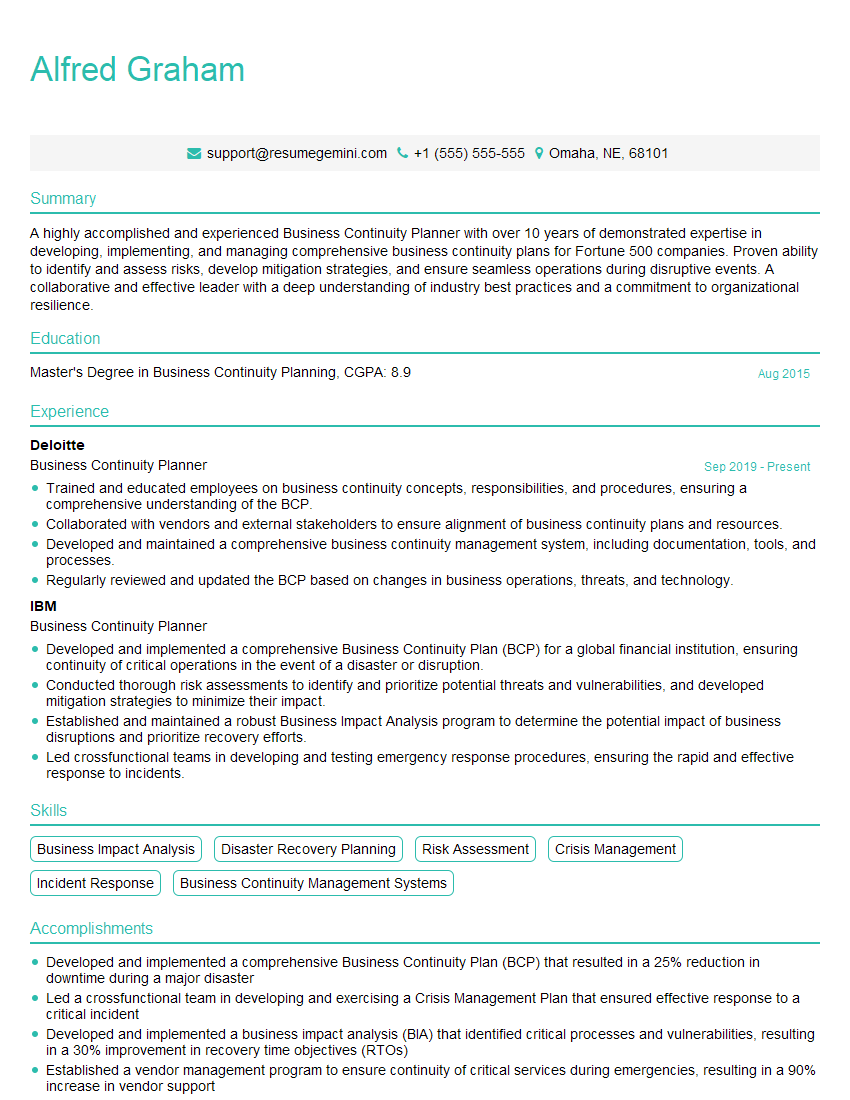
Mastering Contingency Operations Planning is crucial for career advancement in various sectors demanding strategic thinking and problem-solving under pressure. A strong understanding of these concepts significantly enhances your marketability and opens doors to leadership roles. To maximize your job prospects, crafting an ATS-friendly resume is essential. ResumeGemini is a trusted resource to help you build a professional and impactful resume that showcases your skills and experience effectively. Examples of resumes tailored to Contingency Operations Planning are available through ResumeGemini to provide you with inspiration and guidance.
Explore more articles
Users Rating of Our Blogs
Share Your Experience
We value your feedback! Please rate our content and share your thoughts (optional).
What Readers Say About Our Blog
Very informative content, great job.
good