Unlock your full potential by mastering the most common Wildlife Tracking and Monitoring interview questions. This blog offers a deep dive into the critical topics, ensuring you’re not only prepared to answer but to excel. With these insights, you’ll approach your interview with clarity and confidence.
Questions Asked in Wildlife Tracking and Monitoring Interview
Q 1. Describe your experience with different wildlife tracking methods (e.g., scat analysis, camera trapping, GPS tracking).
My experience in wildlife tracking spans a broad range of methods, each offering unique insights into animal behavior and ecology. I’ve extensively used scat analysis, identifying species through fecal matter characteristics like size, shape, color, and the presence of undigested food remains. This is particularly useful in areas where direct observation is difficult. For instance, I once used scat analysis to confirm the presence of a rare clouded leopard species in a remote rainforest region based on the unique size and composition of its scat compared to other felines.
Camera trapping is another cornerstone of my work. I’m adept at deploying and maintaining camera trap networks across diverse habitats, using techniques that minimize human disturbance and maximize capture rates. The data provides invaluable information on species richness, abundance, activity patterns, and interactions. For example, in a study on forest fragmentation, camera trap data revealed a significant decline in large mammal diversity in smaller, isolated forest patches.
Finally, GPS tracking offers the most precise data on animal movements. I’ve experienced success using GPS collars on various species, from migratory birds to large mammals. The data generated reveals fine-scale details about home ranges, migration routes, and habitat use. In a study on elk migration, GPS collar data showed a preference for specific riparian corridors during migration, highlighting the crucial role of these habitats in conservation efforts.
Q 2. Explain the importance of accurate data collection in wildlife monitoring.
Accurate data collection is paramount in wildlife monitoring because it forms the foundation for informed conservation decisions. Inaccurate data can lead to misinterpretations of population trends, habitat requirements, and species interactions, potentially resulting in ineffective or even harmful conservation strategies. Imagine a scenario where inaccurate data suggests a stable population of a threatened species, leading to a delay in crucial conservation actions. This delay could be detrimental to the species’ survival.
Accuracy hinges on multiple factors, including the choice of appropriate tracking methods, rigorous data recording protocols (minimizing errors and bias), and regular calibration of equipment (e.g., GPS collars). Data quality control, involving careful review and validation of all collected data, is also critical.
Q 3. How do you identify and mitigate potential biases in wildlife tracking data?
Bias can creep into wildlife tracking data in various ways. For example, sampling bias can arise if study sites are not representative of the entire population, leading to skewed estimations of population size or distribution. Observer bias can occur if researchers unintentionally misinterpret observations or data. For example, different observers might have varying interpretations of camera trap images.
Detection bias can occur when some animals are more easily detected than others using a specific method. For example, nocturnal animals might be underrepresented in daytime surveys. To mitigate these biases, we use rigorous sampling designs, standardized protocols for data collection, and statistical methods to account for potential biases during data analysis. Blind data analysis, where the analyst is unaware of the study details, can also help reduce bias.
Q 4. What software and tools are you proficient in for analyzing wildlife tracking data (e.g., ArcGIS, R)?
I’m proficient in several software packages for wildlife data analysis. ArcGIS is essential for spatial analysis, allowing me to map animal locations, analyze habitat use, and model species distributions. I use it extensively for visualizing and analyzing camera trap data, creating maps of animal activity, and generating habitat suitability models. I use R for advanced statistical analysis, including the development of population models, assessing the effectiveness of conservation interventions, and calculating indices of habitat use.
I also have experience with specialized software for analyzing GPS tracking data, allowing me to estimate home ranges, analyze movement patterns, and assess habitat connectivity. In addition to these, I use data management software to organize and store data, ensuring data integrity and traceability.
Q 5. Describe your experience with habitat assessment and its relevance to wildlife tracking.
Habitat assessment is intrinsically linked to wildlife tracking. Understanding the environment that animals inhabit is crucial for interpreting tracking data effectively. Without habitat information, we can only describe animal movements; we cannot understand why they move as they do. A habitat assessment might involve mapping vegetation types, measuring habitat structural complexity, and assessing water availability, food resources, and the presence of potential threats.
For example, in a study on the impact of deforestation on a primate species, I used GIS to map habitat loss and then overlayed this information with GPS tracking data to assess the primates’ response to habitat fragmentation. The results revealed a shift in their home range use, indicating avoidance of degraded habitats.
Q 6. How do you determine appropriate sample sizes for wildlife monitoring studies?
Determining the appropriate sample size for a wildlife monitoring study depends on several factors, including the study objective, the target species’ abundance and distribution, the desired level of precision, and available resources. We typically use power analysis to determine the minimum sample size needed to detect a biologically meaningful change in the target population or variable. This involves specifying parameters such as the effect size (the magnitude of change we wish to detect), the significance level (the probability of making a Type I error – falsely rejecting a true null hypothesis), and the power (the probability of detecting a true effect).
For example, if studying a rare species, we would need a larger sample size than if studying a common species to achieve the same level of precision. Software packages like R offer functions for power analysis to aid in this process.
Q 7. Explain the ethical considerations involved in wildlife tracking and monitoring.
Ethical considerations are central to wildlife tracking and monitoring. Minimizing disturbance to animals is paramount. This includes careful consideration of capture techniques, the use of appropriate tracking devices, and adherence to strict guidelines for handling animals. We must also ensure that our research does not inadvertently lead to increased vulnerability of the animals to predation or poaching. Furthermore, all research must be conducted with appropriate permits and in accordance with all relevant regulations and ethical guidelines.
Data sharing and transparency are also essential. Researchers have a responsibility to share their data and findings openly to maximize the benefits for conservation efforts. Data transparency ensures accountability and supports collaborative research. Finally, it’s crucial to acknowledge and respect the rights and perspectives of Indigenous communities and local stakeholders who often hold valuable traditional ecological knowledge and may be impacted by our research activities.
Q 8. Describe your experience with GPS collar deployment and data management.
GPS collar deployment and data management are crucial for effective wildlife tracking. My experience encompasses the entire process, from collar selection based on animal size and study objectives to data download, cleaning, and analysis. Collar selection involves considering factors like battery life, GPS accuracy, and the animal’s behavior (e.g., a collar designed for a terrestrial animal won’t be suitable for an aquatic species). Deployment itself requires careful planning and execution, minimizing stress on the animal. This often involves darting or trapping the animal, attaching the collar securely, and monitoring its behavior post-deployment to ensure proper fit and function.
Data management involves using specialized software to organize the large datasets generated by GPS collars. This includes checking for data errors, correcting for potential biases like signal blockage, and formatting the data for analysis using programs like R or ArcGIS. For example, I’ve worked on projects where we had to account for GPS error, using techniques like smoothing algorithms to correct for inaccurate location data points. Data cleaning is vital, as inaccurate data can lead to flawed conclusions. Finally, efficient data management ensures that the data is readily accessible for subsequent analysis and reporting, minimizing data loss and promoting reproducibility.
Q 9. How do you interpret animal movement patterns from GPS tracking data?
Interpreting animal movement patterns from GPS data requires a multi-faceted approach. It’s not simply about plotting points on a map; it’s about understanding the why behind the movements. We use various tools and techniques to analyze these patterns, starting with visualizing the data using maps and graphs to identify home ranges, core areas, and movement corridors. We then look for patterns in space use – is the animal spending more time in certain areas? What environmental factors influence this? Are there seasonal changes in movement?
Further analysis might involve calculating metrics like step length, speed, and turning angle to understand movement behavior. For instance, a sudden increase in speed and turning angle might indicate a predator-prey interaction or a flight response. Statistical modeling is employed to identify significant relationships between movement patterns and environmental variables (e.g., vegetation type, proximity to water sources, human activity). Ultimately, by combining spatial analysis with ecological knowledge, we can draw meaningful conclusions about the animal’s behavior, habitat use, and ecological relationships.
Q 10. What are some common challenges encountered during wildlife tracking and how do you overcome them?
Wildlife tracking presents numerous challenges. Equipment malfunction (e.g., GPS collar failure, camera trap malfunction) is a common hurdle. We mitigate this by using redundant equipment, regularly checking equipment functionality, and employing robust data backup systems. Another challenge is dealing with harsh environmental conditions – extreme temperatures, rough terrain, and remote locations can severely limit fieldwork. Preparation is key, including appropriate gear, vehicles, and safety protocols. Animals can also pose challenges, including collar rejection, where the animal removes the collar. This often necessitates collar modifications, alternative tracking techniques, or choosing less intrusive methods.
Data limitations, like signal interference or infrequent data points, are also common. We address this through careful study design, using complementary tracking methods (e.g., combining GPS tracking with camera traps), and employing statistical methods to deal with missing data. Finally, ethical considerations regarding animal welfare and research permissions are paramount and require careful planning and adherence to strict ethical guidelines throughout the project.
Q 11. Explain your understanding of population estimation techniques used in wildlife monitoring.
Population estimation is a critical aspect of wildlife monitoring, providing vital information for conservation efforts. Several techniques are employed, each with its strengths and limitations. Mark-recapture is a widely used method where a subset of the population is captured, marked, released, and then recaptured at a later time. The proportion of marked individuals in the second capture allows estimation of the total population size. Distance sampling estimates abundance by relating the observed number of animals to the distance from the observer. This method is commonly used in line transect surveys where the observer travels along a line and records the distance to any observed animal.
Density surface modeling uses data like GPS locations, camera trap detections, or sign surveys to create spatial models of animal density. These models can incorporate environmental variables to account for habitat heterogeneity. Finally, index methods, like track counts or fecal pellet group counts, provide relative measures of abundance rather than absolute estimates. The choice of technique depends on the species, study area, available resources, and research questions. For example, mark-recapture would be ideal for a small, easily captured species, while distance sampling might be suitable for large mammals across a large area.
Q 12. How do you ensure the safety of both yourself and the animals during fieldwork?
Safety is paramount in wildlife fieldwork. For animal safety, we follow strict guidelines to minimize stress and disturbance. This includes using appropriate capture and handling techniques, selecting appropriate study sites to minimize habitat disruption, and ensuring that any devices used do not harm the animal. We always prioritize the animal’s welfare above all else. For our own safety, we undergo thorough risk assessments before embarking on fieldwork and develop contingency plans for various scenarios (e.g., equipment failure, animal encounters, inclement weather).
This includes carrying first-aid kits, communication devices, and sufficient supplies of water and food. We work in teams, maintaining communication at all times, and are trained in wildlife safety protocols. We are aware of potential hazards in the field such as encountering dangerous animals or dealing with difficult terrain. We follow specific safety protocols when handling equipment and adhere strictly to all relevant regulations.
Q 13. Describe your experience with analyzing wildlife camera trap data.
Analyzing wildlife camera trap data involves several steps. First, the images and videos need to be sorted and organized, often using specialized software. This can involve identifying images with animals, removing blurry or unusable images, and categorizing species. Then, we identify individual animals using unique markings or characteristics, which is crucial for estimating population density and studying individual behavior. Species identification is another key task, requiring expertise in local fauna and often using image recognition tools.
After data cleaning and organization, we can move to quantitative analysis. This might involve calculating detection rates for each species, assessing species richness and diversity, and determining the relative abundance of different species. We can also use the data to understand habitat use and species interactions. For example, we might analyze the number of species present in different habitat types or the frequency of interactions between predator and prey species. Software such as R, python with packages like opencv and specialized wildlife monitoring software are commonly used for this analysis.
Q 14. How do you differentiate between animal tracks from different species?
Differentiating between animal tracks from different species requires knowledge of animal anatomy and gait, coupled with careful observation of track characteristics. Key features to examine include size and shape of the track, number of toes, presence of claws, and the pattern of gait (e.g., walking, running, trotting). For example, a canine track will typically have distinct claw marks and a pair of parallel tracks, unlike a feline track which usually lacks distinct claw marks and displays a more widely spaced pattern. Furthermore, the size of the track is a key differentiator, with larger tracks often belonging to larger animals.
Careful study of track patterns in relation to the surrounding environment can also help. For example, the direction of the tracks and the location of tracks near a stream might provide clues about the animal’s movement patterns and habitat preference. Field guides, experienced trackers, and online resources such as track databases can be valuable tools for track identification. It’s important to note that track identification can be challenging and sometimes requires expert knowledge or careful comparison with known examples.
Q 15. What are some common signs of animal presence that you look for?
Identifying animal presence often involves a detective-like approach, relying on indirect evidence rather than direct sightings. We look for a variety of signs, categorized broadly as:
- Scat (Feces): Shape, size, and contents (e.g., bones, seeds) are crucial for species identification. For example, the presence of fish scales in scat indicates a piscivorous animal like a bear or otter.
- Tracks and Trails: Size, shape, gait, and spacing of tracks reveal species and even individual animals. Measuring track length and width helps to determine the animal’s size and, when combined with trail direction, provides movement information.
- Vocalizations: Bird songs, howls, or other animal calls can pinpoint a species’ location. Recording and analyzing these sounds is increasingly important, particularly for elusive species.
- Feeding Signs: This includes gnawed branches, uprooted plants, stripped bark, or partially eaten carcasses. For example, deer browse marks are easily distinguished from those of rabbits.
- Rubs and Scrapes: These are often used by animals to mark territory, usually involving scraping against trees or the ground. The presence of scent glands further helps in identification.
- Dens, Burrows, and Nests: These structures provide crucial information about species and breeding behavior. For example, the presence of a specific type of burrow indicates a particular rodent or small mammal.
- Sign of disturbance of the habitat: Wallows in muddy areas, disturbed ground cover, and trails in vegetation are helpful indicators of animal presence and their activities.
The combination of these signs provides a much more comprehensive understanding of animal presence than any single indicator alone. Often, it’s the careful interpretation of multiple signs in a specific context that leads to the most accurate conclusions.
Career Expert Tips:
- Ace those interviews! Prepare effectively by reviewing the Top 50 Most Common Interview Questions on ResumeGemini.
- Navigate your job search with confidence! Explore a wide range of Career Tips on ResumeGemini. Learn about common challenges and recommendations to overcome them.
- Craft the perfect resume! Master the Art of Resume Writing with ResumeGemini’s guide. Showcase your unique qualifications and achievements effectively.
- Don’t miss out on holiday savings! Build your dream resume with ResumeGemini’s ATS optimized templates.
Q 16. Explain the importance of maintaining detailed field notes.
Maintaining detailed field notes is absolutely crucial for the credibility and utility of any wildlife monitoring project. They serve as the primary record of your observations and methodology, allowing for accurate data analysis, reproducibility of your work, and future reference. Think of them as a detailed scientific diary.
- Accuracy and Reproducibility: Clear notes help others understand your methods and replicate your study. This ensures the reliability and validity of your findings.
- Data Quality Control: Detailed notes allow you to identify and correct errors during data entry or analysis. You may realize an initial observation was misinterpreted upon reviewing your notes later.
- Long-Term Data Management: Notes help track changes over time, which is vital for understanding population dynamics and environmental impacts. This longitudinal data is critical in conservation efforts.
- Contextual Information: Notes capture essential contextual details like weather conditions, time of day, observer bias, and any unusual events. This information can be critical in interpreting the data.
For example, simply noting ‘saw deer’ is insufficient. A proper entry would include: ‘Observed three adult mule deer (Odocoileus hemionus) at 14:30 near the creek, approximately 100m from the observation point. Sunny conditions, light breeze. Deer were grazing in an open field.’
Using a standardized data sheet is highly recommended to ensure consistency and completeness.
Q 17. Describe your experience with data visualization and presentation.
Data visualization and presentation are essential for effectively communicating findings from wildlife monitoring projects to both scientific and public audiences. My experience encompasses a range of techniques, from simple graphs and charts to interactive maps and dashboards.
- Software Proficiency: I’m proficient in software such as ArcGIS, QGIS, R, and Python for spatial analysis, data manipulation, and creating maps and graphs. I’ve used these tools to create species distribution maps, track animal movements, and visualize population trends over time.
- Chart Selection: I choose the most appropriate chart type for the data. For example, line graphs are ideal for displaying trends over time, while bar charts show comparisons between groups. Scatter plots can illustrate correlations between variables.
- Map Creation: GIS software enables the creation of detailed maps illustrating animal locations, habitat types, and movement patterns. I’ve used heat maps to visualize animal density and path analyses to illustrate movement corridors.
- Interactive Dashboards: For complex datasets, I utilize interactive dashboards to allow users to explore the data themselves, filtering and visualizing information according to their interests.
- Presentation Skills: I am experienced in presenting complex data to diverse audiences, adapting my communication style to the context and technical background of the listeners. I effectively employ visuals to simplify and clarify my message.
In one project, I used a combination of interactive maps and time-series graphs to demonstrate the effect of habitat fragmentation on the movement patterns of a threatened bird species. The results were visually compelling and easily understood by both scientists and conservation stakeholders. Effective visualization can be the difference between data that is simply presented and data that successfully informs and motivates action.
Q 18. How do you handle missing data in wildlife monitoring projects?
Missing data is a common challenge in wildlife monitoring. Ignoring it can bias your results, so handling it correctly is crucial. My approach involves a multi-step process:
- Identify and document: First, I carefully document all instances of missing data, noting the reasons if possible (e.g., equipment failure, inaccessible location, poor weather). This is important for understanding the nature and extent of the data gaps.
- Explore patterns: I look for patterns in the missing data. Is it random, or is it concentrated in certain areas or time periods? Understanding the pattern helps choose the appropriate imputation method.
- Imputation techniques: Several techniques exist, depending on the nature and extent of the missing data. These include:
- Mean/median imputation: Replacing missing values with the average or median of the available data. Simple but can distort the variance of the data.
- Regression imputation: Predicting missing values based on their relationship with other variables. More sophisticated but requires understanding the relationships between variables.
- Multiple imputation: Creating multiple plausible datasets to account for the uncertainty in the missing values. This technique gives a more realistic representation of uncertainty.
- Model-based imputation: Integrating the imputation within a statistical model. This allows the model to handle the uncertainty of missing data more effectively.
- Sensitivity analysis: I assess the impact of imputation on the main results. This helps to understand how sensitive the conclusions are to the chosen imputation method. It is crucial to be transparent about how missing data was handled.
The best approach always depends on the specific project and dataset, and transparency about the methods used is essential for scientific rigor.
Q 19. What are your experiences with different types of wildlife surveys?
My experience with wildlife surveys is extensive and encompasses a variety of methods, each with its strengths and limitations. The chosen method depends heavily on the target species, the research question, and available resources.
- Distance sampling: Used to estimate the abundance of animals in a defined area, based on the distance of detected animals from the observer. This method requires careful planning and training to ensure consistent observation.
- Mark-recapture: Involves capturing, marking, and releasing animals, then recapturing them at a later time to estimate population size. This requires specialized knowledge of handling techniques and the potential impact on animals.
- Camera trapping: Utilizing motion-activated cameras to record animal presence. Cost-effective for many species, particularly secretive or nocturnal animals. Requires careful camera placement and data management.
- Line transects: Walking or driving along a predetermined line and recording all animals observed within a specific distance. Simple to implement but susceptible to detection bias.
- Point counts: Counting animals at pre-determined points. This is relatively straightforward, and efficient for birds, but can be inaccurate if animals are difficult to detect.
- Acoustic monitoring: Using microphones to record animal calls. Particularly valuable for nocturnal or cryptic species. Analysis requires specialized software and knowledge of vocalizations.
For instance, in a study of endangered primates, a combination of camera trapping and behavioral observations provided a comprehensive understanding of their habitat use and social structure. The selection of the most appropriate survey method(s) is crucial to ensure effective and accurate data collection.
Q 20. How do you ensure the quality control of data collected in the field?
Ensuring data quality is paramount. It starts before data collection even begins and continues throughout the process. My approach involves several key steps:
- Standardized protocols: Developing clear, written protocols for data collection ensures consistency among observers. This includes defining observation criteria, data recording methods, and equipment calibration procedures.
- Training and calibration: Thorough training is crucial to standardize data collection practices among team members. Calibration exercises help assess inter-observer reliability and address any inconsistencies.
- Data validation and cleaning: A crucial step involves checking for errors and inconsistencies in the data. This may involve comparing data from different sources, flagging outliers, and reviewing field notes. Data cleaning is often iterative, refining as you learn more about the data.
- Data management system: Implementing a robust data management system ensures that data are securely stored, organized, and readily accessible. This system typically involves database software or spreadsheets that track data collection, processing, and analysis.
- Regular quality checks: Periodic audits and internal reviews are essential to maintain data quality and address emerging issues. This might include regular comparisons with previous data sets or external validation by other experts.
For example, in a large-scale bird survey, we implemented a rigorous quality control system involving regular team meetings to discuss discrepancies and standardize identification protocols. This significantly improved the accuracy and reliability of our final dataset.
Q 21. How do you determine the appropriate scale for your wildlife monitoring study?
Determining the appropriate scale for a wildlife monitoring study is crucial for its success. The scale must be appropriate for the research question and the species being studied. Too small a scale can miss important spatial variation, while too large a scale can be unmanageable.
Factors influencing scale selection include:
- Species home range: The study area should be large enough to encompass the home range of the target species or at least a representative portion of it. A study on small mammals needs a much smaller scale than one involving large mammals like elephants.
- Research question: Different questions require different scales. A study on local population density may require a smaller scale than one investigating the impact of landscape-level changes on species distribution.
- Habitat heterogeneity: A more heterogeneous habitat may necessitate a smaller scale to capture variations in habitat use. A relatively uniform habitat might permit a larger scale.
- Resources and feasibility: The scale should be feasible given the available resources (time, budget, personnel). A large-scale study requires more resources than a small-scale one.
- Existing data: The scale might be influenced by the availability of existing data, such as habitat maps or previous survey results.
Often, a hierarchical approach is used, with multiple scales incorporated into the study design. For example, a study of a large predator might use a broad scale to assess its overall distribution, and a finer scale to understand habitat use within its core range. Careful consideration of these factors ensures that the study scale is appropriate, scientifically sound, and yields meaningful results.
Q 22. Describe your experience working with different stakeholders (e.g., land managers, researchers).
My experience working with diverse stakeholders in wildlife tracking and monitoring has been extensive and rewarding. I’ve collaborated extensively with land managers from various agencies, including state parks, national forests, and private conservation organizations. These collaborations often involve adapting monitoring protocols to their specific management needs and resource constraints. For example, with a national forest, we adapted a camera trap survey to focus on specific areas of concern for deer populations, prioritizing areas with high human-wildlife conflict potential. With researchers, the collaboration is often focused on data analysis and interpretation, helping to translate field data into scientific publications. I’ve contributed to several peer-reviewed papers on species distribution modeling and habitat use, drawing on data collected in joint fieldwork with academic researchers. Effective communication and mutual understanding are critical to success in these partnerships, emphasizing clear goals, data sharing protocols, and equitable distribution of project benefits.
Q 23. How do you communicate complex scientific information to a non-scientific audience?
Communicating complex scientific information to a non-scientific audience requires a tailored approach, focusing on clarity, simplicity, and relevance. I utilize several strategies: Firstly, I avoid technical jargon whenever possible, replacing it with easily understood terms. Secondly, I use visual aids such as graphs, maps, and photographs to illustrate key findings. For instance, when explaining population trends, I might use a simple line graph rather than a complex statistical analysis. Thirdly, I relate scientific findings to the audience’s concerns and interests. For example, if discussing wildlife conservation to a local community, I would emphasize the economic benefits of tourism or the impact on local ecosystems. Finally, I encourage questions and foster a dialogue to make sure the information is understood and relatable. This makes the subject accessible and builds trust.
Q 24. Describe your experience with writing scientific reports.
I have extensive experience writing scientific reports, primarily focusing on wildlife tracking and monitoring projects. My reports follow a standard format, including a clear introduction outlining the study’s objectives, methods, results, and discussion. I am adept at presenting data in tables and figures, making complex data understandable. For instance, a recent report on cougar movement ecology detailed GPS tracking data using maps displaying movement corridors and home ranges, illustrated with statistical analysis of space use. Crucially, I ensure clarity and precision in my writing, utilizing rigorous referencing to support all claims. I am proficient in various software programs for data analysis and report generation, including R and ArcGIS, allowing efficient and effective delivery of high-quality reports.
Q 25. What are your career goals in wildlife tracking and monitoring?
My career goals in wildlife tracking and monitoring revolve around applying innovative technologies and data analysis techniques to improve conservation outcomes. I aim to lead and mentor teams in designing and implementing impactful monitoring programs that inform evidence-based conservation decisions. This includes integrating emerging technologies like drone surveys and AI-based image recognition to enhance data collection efficiency and accuracy. I also hope to play a key role in developing and implementing citizen science initiatives, empowering local communities to participate in wildlife monitoring efforts. Ultimately, I aspire to contribute to a world where scientific research is effectively translated into effective wildlife conservation practices.
Q 26. Explain your understanding of relevant wildlife legislation and regulations.
My understanding of relevant wildlife legislation and regulations is comprehensive, encompassing federal, state, and local laws. I am familiar with the Endangered Species Act, the Migratory Bird Treaty Act, and various state-specific regulations regarding wildlife handling, research permits, and habitat protection. My work always adheres to these regulations, ensuring ethical and legal compliance. For example, in projects involving endangered species, I meticulously follow all permitting requirements and implement rigorous non-invasive tracking techniques to minimize disturbance. Regular updates on legal changes are important to ensure projects remain compliant. I believe responsible and ethical research is paramount in wildlife conservation.
Q 27. Describe your experience with habitat restoration and its impact on wildlife populations.
I have been involved in several habitat restoration projects and have witnessed firsthand their positive impact on wildlife populations. One notable project involved restoring riparian habitat along a degraded river system. This involved planting native vegetation, removing invasive species, and controlling erosion. Post-restoration monitoring showed significant increases in riparian-dependent species such as beavers and otters, which demonstrated the success of our efforts. In other projects, we’ve observed that restoring habitat connectivity through habitat corridors facilitated species movement and gene flow, increasing the resilience of local populations. The success of these efforts underscores the importance of integrating habitat restoration into comprehensive wildlife conservation strategies.
Q 28. How would you design a wildlife monitoring program for a specific species in a particular habitat?
Designing a wildlife monitoring program requires a systematic approach. First, we define clear objectives: What specific information do we need about the species and its habitat? This will determine the methods employed. Then, we select appropriate techniques: for example, camera trapping for elusive species, GPS tracking for detailed movement patterns, or mark-recapture for population estimation. We must also consider the study area and habitat type, ensuring that chosen methods are suitable for the environment. Next, we establish a robust sampling design, optimizing the number and location of sampling points to ensure reliable data while considering logistical and budgetary constraints. Finally, a detailed data analysis plan is critical, specifying how the collected data will be analyzed and interpreted to answer the initial research questions. Data storage and sharing protocols should also be pre-determined. This structured approach guarantees effective, efficient, and scientifically sound results.
Key Topics to Learn for Wildlife Tracking and Monitoring Interview
- Wildlife Sign Interpretation: Understanding animal tracks, scat, and other signs to identify species, sex, age, and behavior. Practical application includes using this knowledge to design effective monitoring strategies.
- Tracking Techniques: Mastering various tracking methods, including GPS tracking, camera trapping, and radio telemetry. Consider the challenges and limitations of each method, and how to select the most appropriate technique for a given study.
- Data Collection and Analysis: Proper data recording, management, and analysis using statistical software. This includes understanding population estimation methods and designing effective data visualizations.
- Habitat Assessment and Mapping: Understanding the relationship between wildlife and their environment. This includes GIS mapping skills and the ability to interpret habitat suitability models.
- Ethical Considerations and Conservation Practices: Minimizing disturbance to wildlife during tracking and monitoring. Understanding relevant regulations and best practices for responsible wildlife research.
- Problem-Solving in the Field: Anticipating and addressing challenges like equipment malfunction, difficult terrain, and unexpected wildlife behavior. This includes developing contingency plans and adapting strategies based on field conditions.
- Reporting and Communication: Effectively communicating findings to both technical and non-technical audiences through reports, presentations, and publications.
Next Steps
Mastering Wildlife Tracking and Monitoring opens doors to diverse and rewarding careers in conservation, research, and management. To maximize your job prospects, it’s crucial to present your skills and experience effectively. An ATS-friendly resume is essential for getting your application noticed by recruiters and hiring managers. We highly recommend using ResumeGemini to build a professional and impactful resume that highlights your unique qualifications. ResumeGemini provides examples of resumes tailored to Wildlife Tracking and Monitoring to guide you through the process, ensuring your application stands out from the competition.
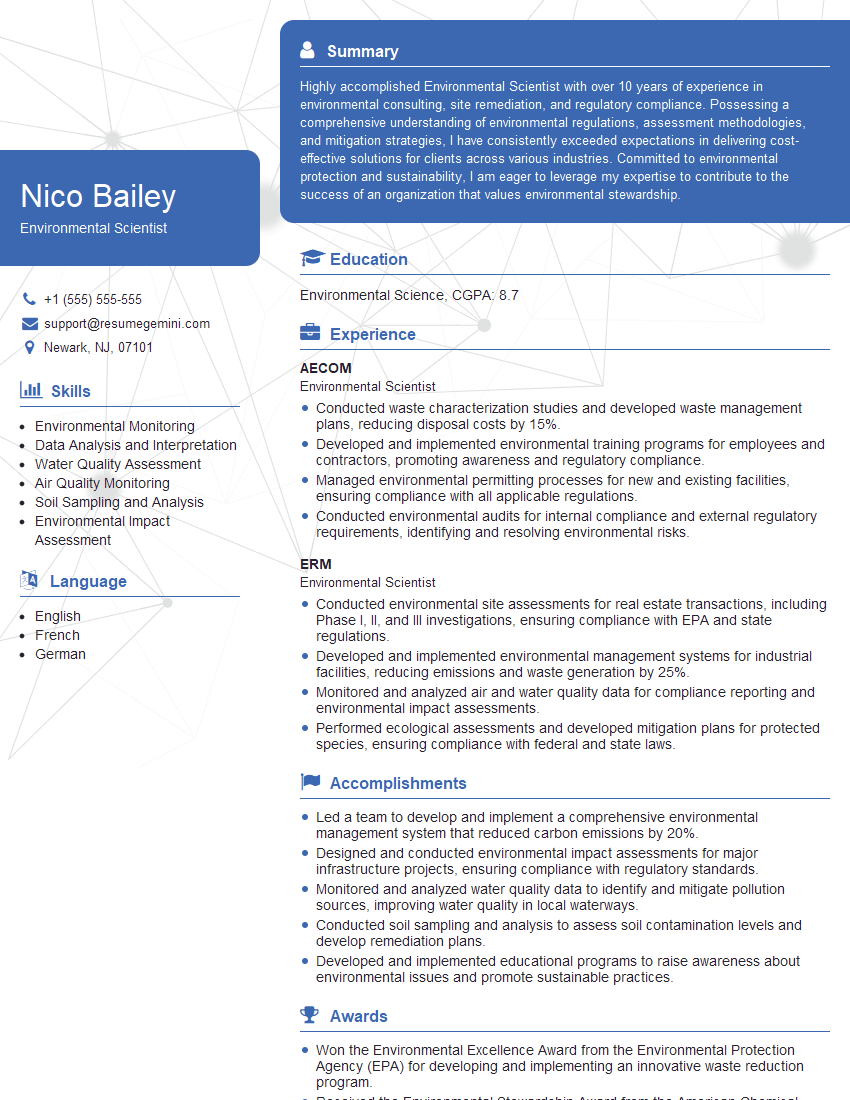
Environmental Scientist Resume Sample

Environmental Consultant Resume Sample

Wildlife Biologist Resume Sample

Herpetologist Resume Sample
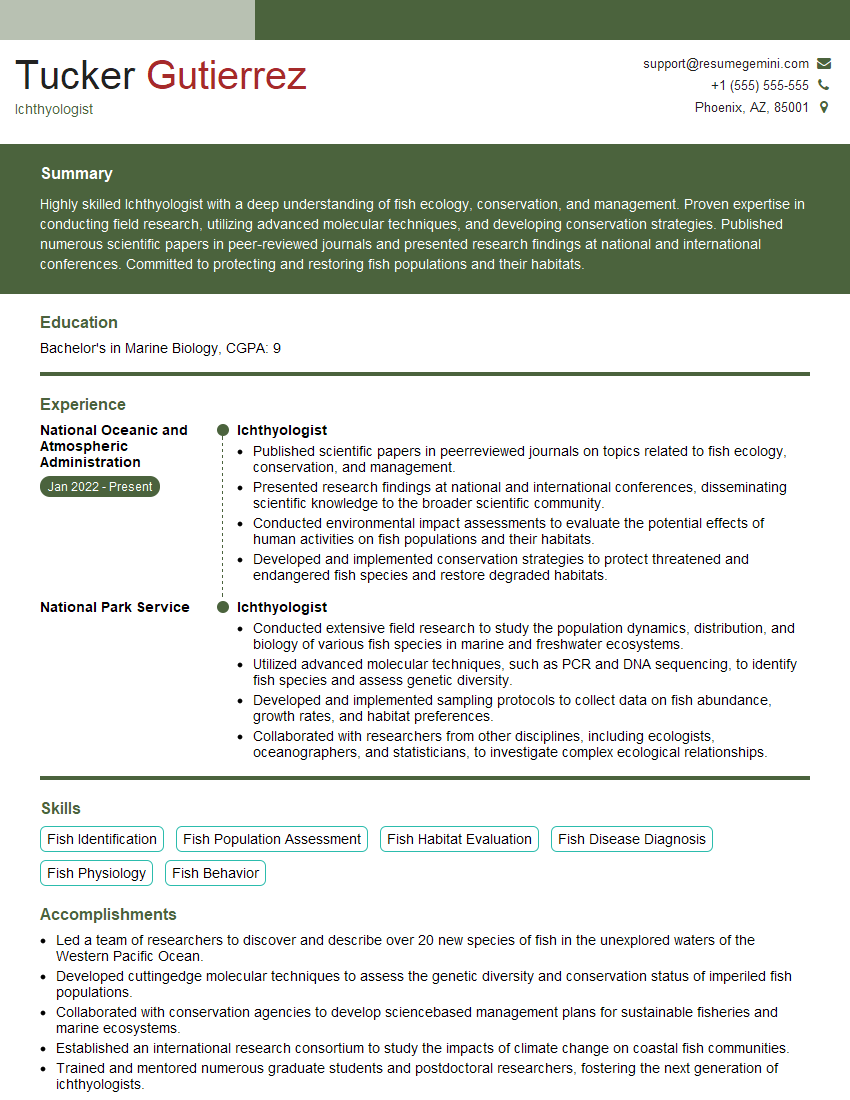
Ichthyologist Resume Sample
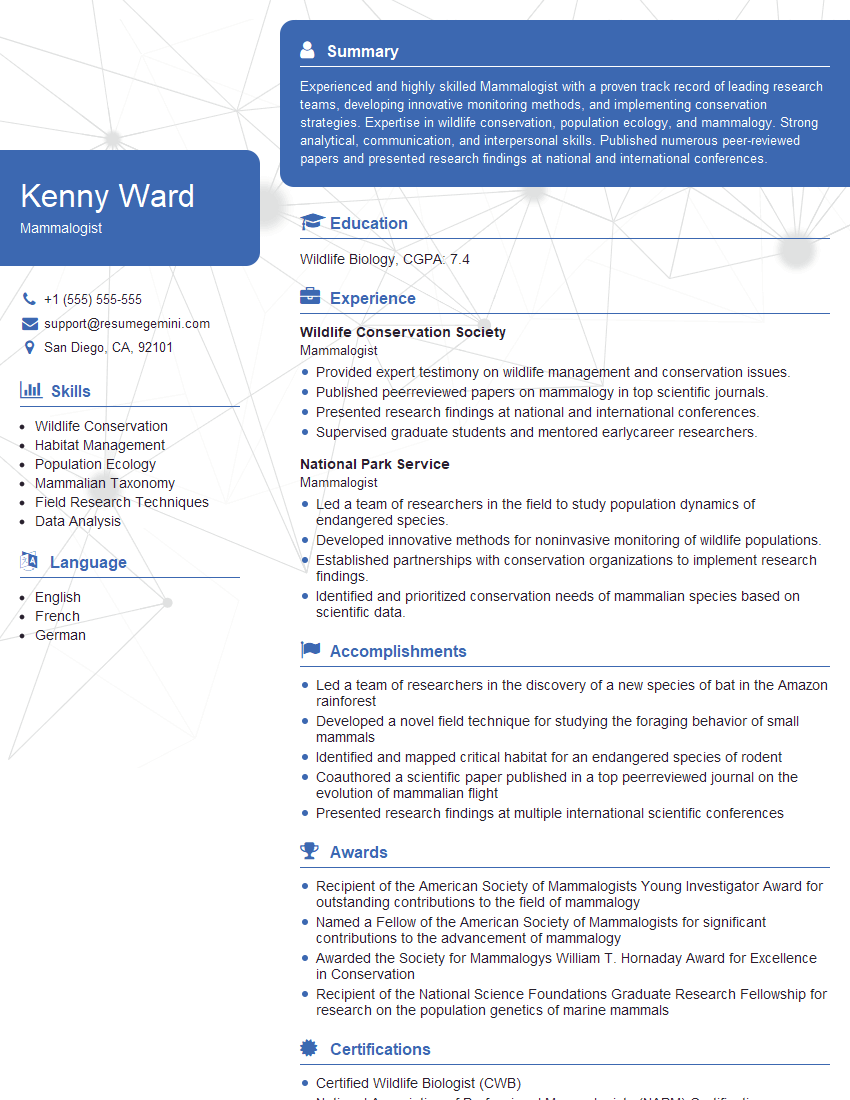
Mammalogist Resume Sample

Ornithologist Resume Sample

Wildlife Ecologist Resume Sample

Wildlife Technician Resume Sample

Zoologist Resume Sample
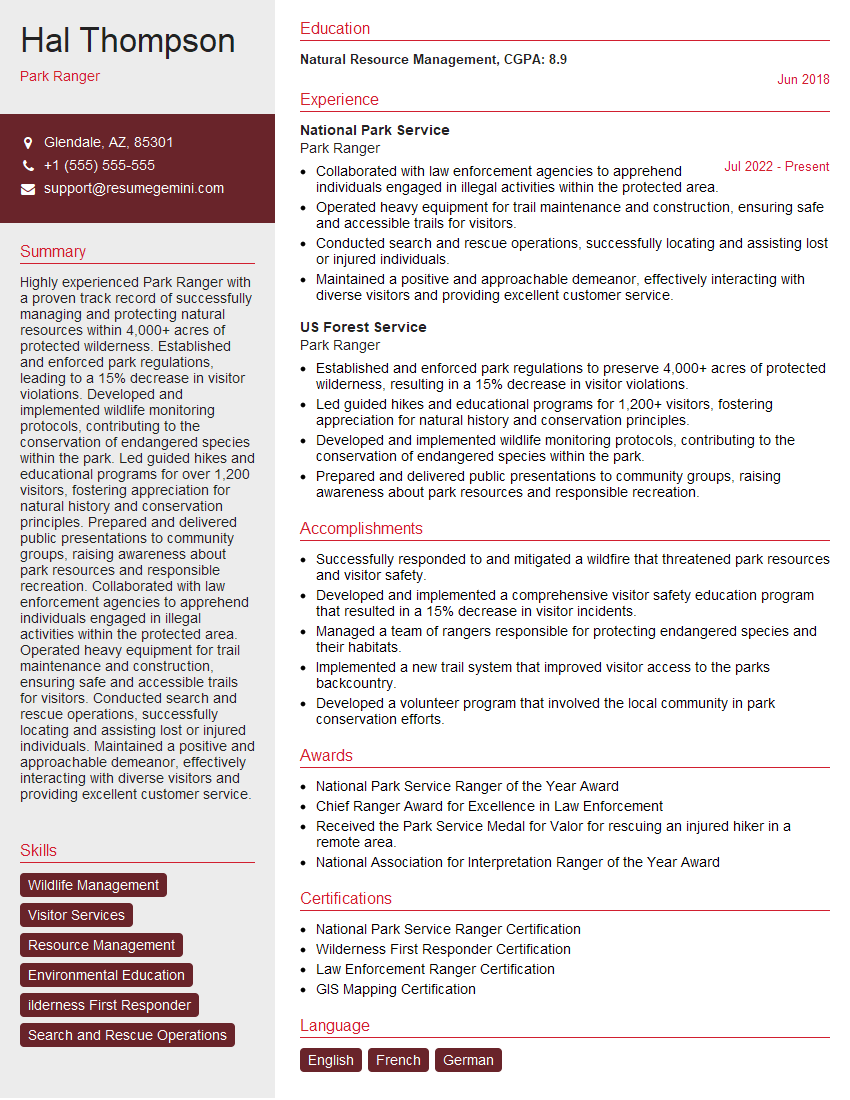
Park Ranger Resume Sample
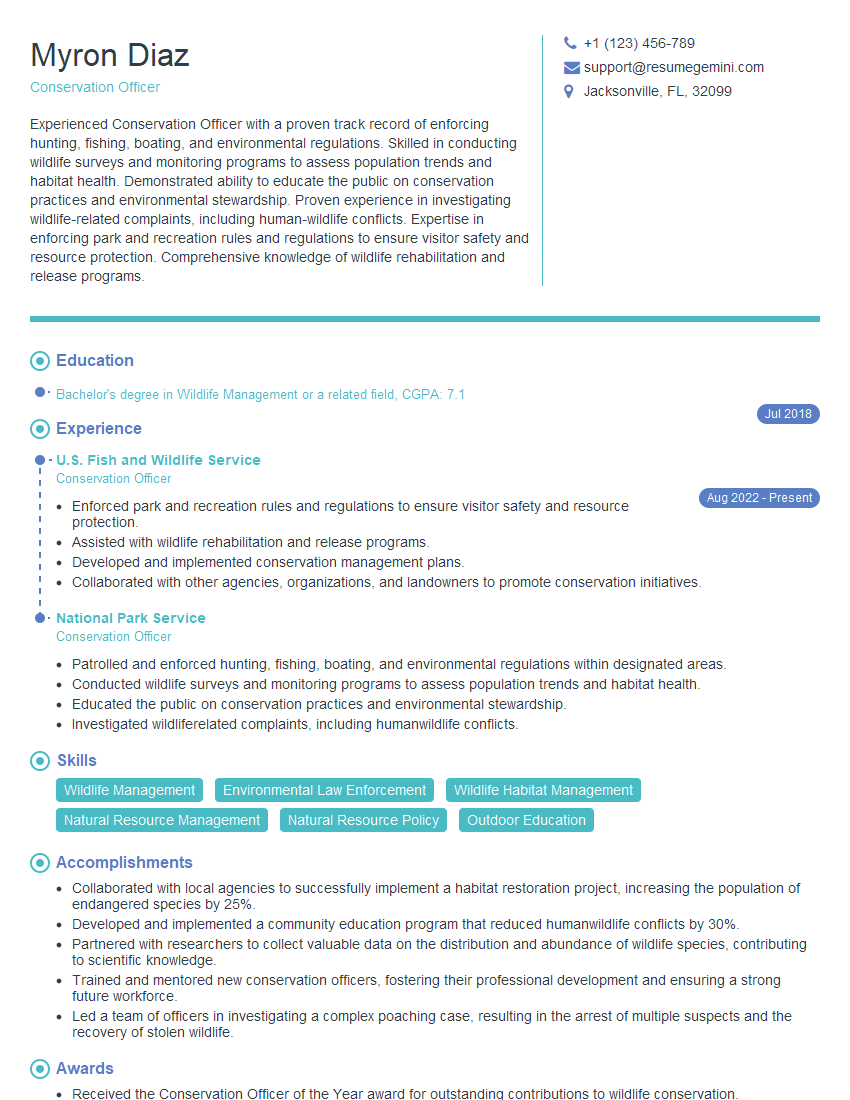
Conservation Officer Resume Sample

Wildlife Rehabilitator Resume Sample
Explore more articles
Users Rating of Our Blogs
Share Your Experience
We value your feedback! Please rate our content and share your thoughts (optional).
What Readers Say About Our Blog
Very informative content, great job.
good