Interviews are opportunities to demonstrate your expertise, and this guide is here to help you shine. Explore the essential Control Systems Integration interview questions that employers frequently ask, paired with strategies for crafting responses that set you apart from the competition.
Questions Asked in Control Systems Integration Interview
Q 1. Explain the difference between open-loop and closed-loop control systems.
The core difference between open-loop and closed-loop control systems lies in their feedback mechanisms. An open-loop system operates without feedback; it simply executes a pre-programmed sequence of actions regardless of the actual outcome. Think of a toaster: you set the time, and it runs for that duration, irrespective of whether the bread is perfectly toasted or burnt. The control action is independent of the system’s output.
In contrast, a closed-loop system, also known as a feedback control system, incorporates feedback from the system’s output to adjust its control actions. This feedback allows the system to continually correct its behavior and maintain a desired output. A thermostat is a perfect example: it measures the room temperature (feedback) and adjusts the heating or cooling accordingly to maintain the set temperature. The control action is directly influenced by the system’s output.
Consider a simple robotic arm tasked with placing a part in a specific location. An open-loop approach would involve pre-programming the arm’s movements. Any inaccuracies in the initial positioning or external disturbances would lead to errors. A closed-loop system, however, would use sensors to measure the arm’s actual position and adjust its movements until the part is accurately placed, compensating for uncertainties.
Q 2. Describe your experience with Programmable Logic Controllers (PLCs). What brands are you familiar with?
I have extensive experience programming and troubleshooting PLCs across various industrial applications, including automation of manufacturing processes, process control in chemical plants, and building management systems. My expertise spans the entire PLC lifecycle, from initial design and programming to commissioning, maintenance, and troubleshooting.
I’m proficient in using ladder logic, structured text, and function block diagram programming languages. I’m familiar with several PLC brands, including Allen-Bradley (Rockwell Automation), Siemens (SIMATIC), Schneider Electric (Modicon), and Omron. My experience includes working with different PLC series within these brands, enabling me to adapt to diverse project requirements. For example, I’ve used Allen-Bradley’s CompactLogix PLCs for smaller-scale applications and their ControlLogix PLCs for large, complex systems. I’ve also worked extensively with Siemens’ S7-1200 and S7-1500 PLCs, appreciating their robust features and comprehensive diagnostics.
I’m comfortable working with various input/output modules, networking protocols, and communication interfaces. A recent project involved integrating a new robotic arm into an existing manufacturing line using an Allen-Bradley PLC, requiring careful consideration of safety protocols and precise timing synchronization.
Q 3. What SCADA systems have you worked with? Describe your experience with their configuration and troubleshooting.
My SCADA experience includes working with various systems like Rockwell Automation’s FactoryTalk, Siemens WinCC, and Schneider Electric’s Wonderware InTouch. I’m proficient in configuring these systems to monitor and control industrial processes, from designing the HMI screens to configuring alarms, trends, and reports.
SCADA configuration involves setting up communication drivers, defining data points, creating alarm limits, and designing user-friendly HMIs. Troubleshooting involves systematically identifying and resolving issues such as communication failures, data inconsistencies, and alarm malfunctions. I typically employ a structured approach to troubleshooting, starting with checking the basic communication links, then moving to data integrity, and finally investigating any underlying logic errors within the SCADA application or the underlying PLC program.
For instance, I once encountered a situation where a remote tank level sensor stopped reporting data. Using my understanding of the SCADA system and PLC communication protocols, I systematically checked the sensor, its wiring, the communication modules, and the SCADA configuration. Ultimately, it turned out to be a faulty communication cable that was easily replaced, restoring normal operation. My approach combines deep technical knowledge with effective problem-solving strategies to minimize downtime.
Q 4. Explain the concept of PID control and its tuning methods.
PID control is a widely used feedback control algorithm that adjusts the control output based on three factors: Proportional (P), Integral (I), and Derivative (D). The proportional term responds to the current error (difference between the desired and actual value), providing immediate corrective action. The integral term accounts for accumulated error over time, eliminating persistent offset. The derivative term anticipates future error based on the rate of change of the error, improving stability and reducing overshoot.
The PID controller equation is typically represented as:
Output = Kp * error + Ki * integral(error) + Kd * derivative(error)Where Kp, Ki, and Kd are the tuning parameters, which determine the controller’s responsiveness and stability. Tuning these parameters is crucial for optimal performance. Several methods exist, including:
- Trial and error: A simple, but time-consuming method where the parameters are manually adjusted based on the system’s response.
- Ziegler-Nichols method: A systematic approach that involves finding the ultimate gain and period of oscillation of the system.
- Auto-tuning: Many modern PLCs and SCADA systems offer auto-tuning features that automatically adjust the PID parameters based on the system’s response.
Choosing the right tuning method depends on the complexity of the system and the desired level of accuracy. In practice, I often employ a combination of methods, starting with auto-tuning and then fine-tuning the parameters using trial and error to optimize the controller’s performance for specific operational conditions.
Q 5. How do you handle control system failures and implement troubleshooting procedures?
Handling control system failures requires a structured approach, encompassing preventative measures and effective troubleshooting. My approach prioritizes safety, efficiency, and minimal disruption to operations.
Preventative Measures: Regular maintenance, including inspections of wiring, sensors, and actuators; redundancy in critical components; robust error handling in the PLC program; and systematic backups of PLC programs and SCADA configurations significantly reduce the likelihood of failures.
Troubleshooting Procedures: When failures occur, I follow a systematic approach:
- Safety First: Isolate the affected section of the system to prevent further damage or injury.
- Gather Information: Collect data from alarm logs, historical trends, and operator observations to understand the nature of the failure.
- Isolate the Problem: Use diagnostic tools provided by the PLC and SCADA systems to identify the root cause, verifying sensor readings, communication statuses, and PLC program logic.
- Implement Corrective Actions: Repair or replace faulty components, correct programming errors, or modify the control strategy as needed.
- Document the Findings: Record the root cause, corrective actions, and preventative measures taken to avoid future occurrences. This feeds into continuous improvement.
A recent experience involved a sudden shutdown of a conveyor system. By analyzing the PLC alarm logs, I quickly identified a short circuit in a motor starter. Replacing the starter resolved the issue, minimizing production downtime. This highlights the importance of preventative maintenance and prompt, effective troubleshooting.
Q 6. What are your experiences with different communication protocols used in control systems (e.g., Modbus, Ethernet/IP, Profibus)?
I’m experienced with various communication protocols commonly used in control systems. My proficiency includes:
- Modbus: A widely adopted serial communication protocol, suitable for various applications, including those requiring simpler networking. I’ve used it extensively for communicating between PLCs, HMIs, and sensors.
- Ethernet/IP: A robust Ethernet-based protocol, ideal for high-speed communication and complex networks. My experience includes its use in large-scale industrial automation projects involving multiple PLCs and devices.
- Profibus: A fieldbus protocol commonly used in industrial automation, particularly within Siemens systems. I’ve utilized it in projects requiring real-time communication and deterministic performance.
- Profinet: Another Ethernet-based protocol primarily used in Siemens systems, offering high bandwidth and sophisticated features for advanced automation applications.
- OPC UA: This platform-independent protocol is gaining popularity for its interoperability and security features, allowing for seamless communication across different vendors’ systems. I’m familiar with its implementation for data exchange and integration.
Choosing the right protocol depends on factors such as speed requirements, network size, interoperability needs, and specific hardware compatibility. For example, in a situation involving a large number of devices with high-speed data exchange requirements, Ethernet/IP or Profinet would be preferred over Modbus.
Q 7. Describe your experience with HMI (Human-Machine Interface) design and development.
My HMI design and development experience encompasses the entire process, from conceptualization and design to implementation and testing. I leverage my understanding of human factors and ergonomics to create intuitive and user-friendly interfaces. I’m proficient in using various HMI development tools, including those integrated within SCADA packages, and standalone development environments.
I begin by understanding the operator’s tasks and workflows to create a clear and efficient interface. This includes designing clear displays, using intuitive symbols and graphics, and strategically positioning critical information. I focus on providing operators with the information they need to effectively monitor and control the process without being overwhelmed. I also consider alarm management, ensuring that alarms are clear, concise, and prioritize critical issues.
A recent project involved redesigning the HMI for a chemical plant. By reorganizing the screens and using more effective visualization techniques, we improved operator efficiency and reduced the risk of errors. The updated HMI incorporated alarm prioritization, trend analysis tools, and clear operational instructions, significantly enhancing the plant’s overall performance and safety.
Q 8. How do you ensure the safety and reliability of a control system?
Ensuring safety and reliability in a control system is paramount, especially in industries like manufacturing, aerospace, and healthcare where failures can have severe consequences. It’s a multifaceted process involving several key strategies.
Redundancy and Fail-safes: Implementing redundant components (e.g., dual processors, backup power supplies) ensures the system continues operating even if one component fails. Fail-safe mechanisms, like emergency shutdowns, are crucial to prevent catastrophic events. For example, a robotic arm might have multiple sensors monitoring its position and speed; if one sensor fails, the others provide backup data to prevent uncontrolled movement.
Robust Design and Testing: Rigorous design practices, including thorough simulations and testing under various conditions (normal, fault, and stress), are essential. This includes testing individual components, subsystems, and the entire integrated system. Unit, integration, and system testing phases are vital to uncovering potential problems.
Regular Maintenance and Calibration: Scheduled maintenance and calibration of sensors, actuators, and other components are necessary to maintain accuracy and prevent degradation. This is akin to regularly servicing your car to prevent major issues down the line.
Safety Instrumented Systems (SIS): In high-risk applications, SIS are independently designed and verified systems that automatically intervene to mitigate hazards. These systems often incorporate independent sensors and actuators, ensuring that even if the primary control system fails, safety is maintained.
Safety Standards and Regulations Compliance: Adhering to relevant safety standards (e.g., IEC 61508 for functional safety) ensures the system meets established safety requirements. This involves proper documentation, hazard analysis, and risk assessment.
In my experience, a layered approach to safety, incorporating multiple strategies, is most effective. It’s not enough to rely on a single safety mechanism; a combination of redundancies, fail-safes, and continuous monitoring provides the best protection.
Q 9. Explain your experience with control system documentation and version control.
Effective documentation and version control are vital for maintaining a clear understanding of the control system’s design, functionality, and evolution. In past projects, I’ve utilized a combination of strategies.
Version Control Systems (e.g., Git): For managing code, configuration files, and documentation, I rely on Git, which enables collaborative development, tracks changes, and allows for easy rollback if needed. This also simplifies integration with automated testing pipelines.
Structured Documentation: Creating well-organized documentation, including design specifications, hardware and software diagrams, test procedures, and user manuals, is crucial. I often use standardized formats (like those specified by IEC 61131-3) to ensure consistency and clarity.
Configuration Management: Tools like configuration management databases help track changes to hardware and software configurations, ensuring consistency across different versions of the system. This is particularly important when dealing with distributed systems with multiple components.
Centralized Repository: Storing all documentation and code in a centralized, accessible repository simplifies collaboration and reduces the risk of version conflicts. This makes maintenance, troubleshooting, and future development smoother.
For instance, on a recent project involving a complex automated packaging system, using Git allowed multiple developers to work concurrently on different aspects of the software while maintaining a consistent and well-documented codebase. This proved crucial for rapid development and efficient debugging.
Q 10. Describe your experience with control system testing and validation.
Control system testing and validation is a critical phase that ensures the system meets its requirements and operates safely and reliably. My approach involves a multi-stage process:
Unit Testing: Testing individual components (e.g., a specific algorithm, a sensor interface) to verify their functionality in isolation.
Integration Testing: Testing the interaction between different components to ensure they work together correctly.
System Testing: Testing the entire integrated system to verify its overall functionality and performance under various conditions. This may include simulations, hardware-in-the-loop testing, and even real-world testing in a controlled environment.
Validation Testing: Verifying that the system meets its specified requirements and performs its intended function. This often involves comparing the system’s performance to predefined acceptance criteria.
Automated Testing: Using automated scripts and tools to reduce testing time and ensure consistency and repeatability. This is particularly beneficial for regression testing when changes are made to the system.
For example, in a project involving a temperature control system for a chemical reactor, we used a combination of simulations and hardware-in-the-loop testing to verify the controller’s ability to maintain the desired temperature under various disturbances. We also conducted extensive validation testing to ensure the system complied with safety regulations.
Q 11. What is your experience with different types of sensors and actuators used in control systems?
I have extensive experience with a wide range of sensors and actuators used in control systems. My familiarity covers various technologies and their applications.
Sensors: I’ve worked with various types including temperature sensors (thermocouples, RTDs, thermistors), pressure sensors (piezoresistive, capacitive), flow sensors (Coriolis, ultrasonic), level sensors (capacitive, ultrasonic), proximity sensors (inductive, capacitive), and vision systems (cameras, image processing). The choice of sensor depends heavily on the application’s requirements for accuracy, range, response time, and environmental robustness.
Actuators: My experience includes working with electric motors (servo motors, stepper motors), pneumatic actuators (cylinders, valves), hydraulic actuators (cylinders, valves), and solenoids. The selection depends on factors like required force, speed, accuracy, and the overall system design. For instance, high-precision positioning might require servo motors, while a simple on/off valve control might use solenoids.
Understanding the limitations and characteristics of different sensors and actuators is crucial for designing effective and reliable control systems. Improper selection can lead to inaccurate measurements, slow response times, or even system failures.
Q 12. How familiar are you with industrial networking concepts and topologies?
Industrial networking is crucial for connecting various components in a distributed control system. My experience encompasses several key concepts and topologies:
Protocols: I’m familiar with various industrial communication protocols including Ethernet/IP, PROFINET, Modbus TCP/RTU, Profibus, and CAN bus. Each protocol has its own strengths and weaknesses concerning speed, reliability, and complexity.
Topologies: I’ve worked with various network topologies like star, ring, bus, and mesh. The choice of topology impacts factors such as scalability, fault tolerance, and cost.
Network Security: Implementing appropriate security measures, such as firewalls, intrusion detection systems, and secure authentication protocols, is essential to protect the control system from cyber threats.
Network Management: Effective network management tools and techniques are necessary for monitoring network performance, identifying and resolving network issues, and ensuring the overall reliability of the communication infrastructure. For example, network monitoring tools allow for proactive detection of issues before they cause system disruptions.
In a recent project involving a large-scale manufacturing process, we utilized a PROFINET network with a star topology to connect various PLCs, sensors, and actuators. The choice of PROFINET was based on its determinism and suitability for real-time control applications.
Q 13. Describe your experience with real-time operating systems (RTOS) in the context of control systems.
Real-time operating systems (RTOS) are essential for control systems requiring deterministic and timely responses. My experience with RTOS includes:
Scheduling Algorithms: Understanding different scheduling algorithms (e.g., round-robin, priority-based) and their implications for real-time performance. The choice of algorithm significantly impacts the responsiveness and predictability of the system.
Interrupt Handling: Efficient interrupt handling is crucial to ensure that critical events are processed promptly. This often involves careful prioritization of interrupts to handle time-sensitive tasks first.
Memory Management: Effectively managing memory resources is crucial to prevent memory leaks and ensure sufficient resources are available for real-time tasks. Memory allocation strategies need careful consideration in RTOS environments.
RTOS Platforms: I have experience working with various RTOS platforms like VxWorks, FreeRTOS, and QNX. Each platform offers different features and capabilities, and the choice depends on the specific application requirements.
For example, in a robotics project, we used VxWorks to control the robot’s movement and sensor data processing. The deterministic nature of VxWorks ensured that the robot responded to commands and sensor inputs in a timely and predictable manner.
Q 14. What is your experience with control system design methodologies (e.g., IEC 61131-3)?
Control system design methodologies, such as IEC 61131-3, provide a structured approach to developing and implementing control systems. My experience includes:
IEC 61131-3 Programming Languages: Proficiency in using the five programming languages defined by IEC 61131-3 (Ladder Diagram (LD), Function Block Diagram (FBD), Structured Text (ST), Instruction List (IL), and Sequential Function Chart (SFC)) allows for flexibility in choosing the most appropriate language for different tasks. For example, LD is often used for simpler control logic, while ST is preferred for complex algorithms.
Structured Design: Following a structured approach, breaking down the system into smaller, manageable modules, simplifies design, testing, and maintenance. This modular approach enhances reusability and maintainability of code.
Configuration and Commissioning: The use of IEC 61131-3 compliant tools simplifies configuration and commissioning of PLCs and other control devices. This often involves downloading software and configuring I/O modules.
Documentation and Standards Compliance: Adherence to IEC 61131-3 standards ensures consistency, interoperability, and portability of the control system. This is vital for maintainability and troubleshooting in the long term.
In a recent project involving a water treatment plant, we utilized IEC 61131-3 standards and programming languages (primarily Structured Text and Function Block Diagrams) to develop a robust and maintainable control system. The structured design approach simplified the commissioning process and ensured compliance with industry regulations.
Q 15. Explain your experience with data acquisition and logging in control systems.
Data acquisition and logging are fundamental to any control system. It involves collecting real-time data from various sensors and actuators within a system and storing it for later analysis, monitoring, and troubleshooting. This process typically involves hardware like analog-to-digital converters (ADCs) and digital-to-analog converters (DACs) to interface with the physical world. The logged data provides critical insights into system performance and helps identify potential issues.
In my experience, I’ve worked extensively with various data acquisition systems, from simple microcontroller-based setups to complex industrial SCADA systems. I’ve used various software and hardware to accomplish this, including NI LabVIEW, Python with libraries like PyVISA, and industrial PLCs with built-in data logging capabilities. For example, in one project involving a robotic arm, we used LabVIEW to collect data on joint angles, motor currents, and end-effector position. This data was crucial for optimizing the robot’s trajectory and detecting any anomalies in motor performance.
Effective data logging requires careful consideration of sampling rates, data formats, storage capacity, and data security. Choosing the right sampling rate depends on the dynamics of the system. Too low a rate might miss critical events, while too high a rate can lead to excessive storage requirements and processing overhead. Data formats are chosen to balance ease of access and storage efficiency. Data security is paramount, especially in industrial settings, and appropriate measures must be implemented to protect sensitive data.
Career Expert Tips:
- Ace those interviews! Prepare effectively by reviewing the Top 50 Most Common Interview Questions on ResumeGemini.
- Navigate your job search with confidence! Explore a wide range of Career Tips on ResumeGemini. Learn about common challenges and recommendations to overcome them.
- Craft the perfect resume! Master the Art of Resume Writing with ResumeGemini’s guide. Showcase your unique qualifications and achievements effectively.
- Don’t miss out on holiday savings! Build your dream resume with ResumeGemini’s ATS optimized templates.
Q 16. How do you handle conflicting priorities in a control system design project?
Conflicting priorities are a common challenge in any project, and control system design is no exception. It’s often the case that budget constraints, performance requirements, safety regulations, and timelines all compete for attention. To handle this effectively, I use a prioritization framework that combines technical feasibility with business needs. This often involves:
- Prioritization Matrix: I create a matrix listing all priorities, ranking them based on importance and urgency (using a system like Eisenhower Matrix). This clarifies which aspects must be addressed first.
- Trade-off Analysis: I systematically analyze the impact of compromising one priority to achieve another. This involves quantifying the costs and benefits of each potential trade-off.
- Stakeholder Communication: Open communication with all stakeholders (clients, engineers, management) is essential to ensure everyone understands the trade-offs and agrees on the final priorities. This ensures buy-in and avoids future conflicts.
For instance, in a project involving a water treatment plant, we had conflicting demands for high accuracy, fast response times, and a low budget. Through the prioritization matrix, we identified high accuracy as the top priority due to safety implications. We then explored cost-effective solutions to meet the fast response time requirement while maintaining the accuracy level. This involved careful selection of sensors and controllers, and optimizing the control algorithm.
Q 17. Describe a challenging control system project you worked on and how you overcame the obstacles.
One particularly challenging project involved designing a control system for a large-scale solar power plant. The primary challenge was integrating diverse components—solar panels, inverters, transformers, and grid connection equipment—into a cohesive, reliable system. The plant’s geographical location presented additional obstacles, including extreme temperature fluctuations and occasional dust storms.
To overcome these challenges, we adopted a modular design approach, breaking the system into smaller, manageable units. Each unit was rigorously tested individually before integration. We also employed robust fault detection and recovery mechanisms to handle potential failures. To address environmental concerns, we implemented protective measures for overheating and dust accumulation, including special cooling systems and automated cleaning routines. We also utilized advanced communication protocols, enabling remote monitoring and control, which was crucial given the remote location of the plant. The project was ultimately successful, resulting in a highly efficient and reliable solar power plant.
Q 18. What are your experiences with different programming languages used in control systems (e.g., Ladder Logic, Structured Text)?
My experience spans a range of programming languages commonly used in control systems. I’m proficient in Ladder Logic (LD), primarily for PLC programming, and Structured Text (ST), used for more complex logic and algorithms. I also have experience with other languages like C, C++, and Python for higher-level control applications and data analysis.
Ladder Logic is well-suited for visualizing control logic in a way that’s easily understood by technicians and electricians. It’s excellent for simple on/off control and sequential operations. Structured Text, on the other hand, provides more flexibility and power for implementing complex algorithms, particularly when dealing with mathematical calculations and advanced control strategies like PID control. //Example of Structured Text code: IF temperature > 100 THEN output := TRUE; END_IF; This code snippet demonstrates a simple conditional statement in ST.
C and C++ are often used for low-level programming and real-time applications, particularly when performance is critical, while Python is increasingly used for data analysis, system simulation, and developing user interfaces.
Q 19. How do you ensure the scalability and maintainability of a control system?
Scalability and maintainability are crucial for long-term success. To ensure these qualities, I employ several strategies:
- Modular Design: Breaking the system into independent modules facilitates expansion and simplifies troubleshooting. Changes in one module don’t necessarily affect others.
- Standardized Components: Using industry-standard hardware and software components improves interoperability, reduces maintenance costs, and simplifies upgrades.
- Well-Documented Code: Clear, concise code documentation is essential for ease of understanding and modification. This includes comments explaining the purpose of code sections and variable definitions.
- Version Control: Using a version control system (e.g., Git) allows tracking changes, reverting to earlier versions if necessary, and facilitates collaborative development.
- Database Management: For large systems, a well-structured database is critical for storing and managing configuration data, historical data, and alarm logs. This enables efficient data retrieval and analysis.
For instance, in a building automation system, a modular design allows adding more sensors and controllers as the building expands, while standardized components allow for easy replacement or upgrades. Comprehensive documentation makes it simpler for technicians to understand the system’s operation and troubleshoot issues.
Q 20. What are your experiences with cybersecurity considerations in industrial control systems?
Cybersecurity is a paramount concern in industrial control systems (ICS). These systems are often targets for malicious attacks, which can have significant consequences, including production disruptions, safety hazards, and financial losses. My experience includes implementing various security measures, including:
- Network Segmentation: Isolating the ICS network from the corporate network reduces the risk of lateral movement by attackers.
- Firewall Protection: Employing firewalls to control network traffic and block unauthorized access.
- Intrusion Detection Systems (IDS): Monitoring network activity for suspicious patterns and alerting personnel to potential threats.
- Regular Software Updates: Keeping all software components up-to-date to patch known vulnerabilities.
- Access Control: Implementing strict access control policies to limit who can access and modify the system.
- Security Audits: Conducting regular security audits to identify and address weaknesses in the system’s security posture.
The consequences of a cyberattack on an ICS can be devastating. In one instance, I worked on a project to enhance the cybersecurity of a water treatment facility. This involved implementing network segmentation, deploying a robust firewall, and integrating an IDS. These measures significantly improved the system’s resistance to cyberattacks.
Q 21. Explain your understanding of different control system architectures (e.g., centralized, decentralized).
Control system architectures can be broadly categorized into centralized and decentralized systems. Each has its own advantages and disadvantages.
- Centralized Architecture: In this architecture, a single central controller manages all aspects of the system. This simplifies control logic and reduces redundancy. However, a failure of the central controller can bring down the entire system. Think of a traditional home heating system controlled by a single thermostat.
- Decentralized Architecture: This architecture uses multiple controllers, each managing a specific part of the system. This offers greater redundancy and fault tolerance; if one controller fails, the rest can continue operating. However, coordinating the different controllers can be complex. Consider a large manufacturing plant with multiple independent production lines, each controlled by its own PLC.
The choice between centralized and decentralized architectures depends on the specific application and its requirements. Factors to consider include system size, complexity, safety requirements, and the acceptable level of risk. In some cases, a hybrid approach combining elements of both architectures might be the optimal solution.
Q 22. Describe your familiarity with different types of industrial controllers (e.g., microcontrollers, PLCs, PACs).
My experience encompasses a wide range of industrial controllers. Think of them as the brains of an automated system. Each type excels in different situations.
- Microcontrollers (MCUs): These are small, low-cost computers ideal for embedded applications, like controlling a single motor or sensor. They’re often found in smaller, simpler systems, perhaps managing a valve in a small processing unit. I’ve worked with various Arduino and ARM-based MCUs for projects requiring precise, real-time control in resource-constrained environments.
- Programmable Logic Controllers (PLCs): PLCs are workhorses of industrial automation. They are robust, reliable, and designed for harsh industrial environments. They handle complex logic and control numerous I/O points, making them perfect for larger-scale applications such as managing an entire assembly line. My experience includes extensive work with Siemens S7 and Allen-Bradley PLCs, programming in languages like Ladder Logic and Structured Text.
- Programmable Automation Controllers (PACs): PACs bridge the gap between PLCs and industrial PCs. They combine the ruggedness and real-time capabilities of PLCs with the flexibility and open architectures of industrial PCs. This makes them suited for complex applications demanding high-performance computing and sophisticated networking capabilities. I’ve used PACs in projects involving advanced process control and data acquisition in large-scale manufacturing facilities.
Choosing the right controller is crucial. The selection depends on factors like the complexity of the control algorithm, the number of I/O points, the required processing power, environmental conditions, and budget.
Q 23. How do you approach the integration of legacy systems into a modern control system?
Integrating legacy systems into modern control systems requires a careful and phased approach. It’s like renovating an old house – you need to assess what works, what needs replacing, and how to seamlessly blend the old with the new.
- Assessment: First, a thorough assessment of the legacy system is crucial. This involves identifying the system’s architecture, communication protocols, and data formats. We need to understand its strengths, limitations, and potential risks.
- Data Migration: Next, we need a strategy for migrating data from the legacy system to the modern system. This may involve creating custom interfaces or using existing protocols to bridge the gap. Careful data mapping and validation are essential to prevent errors.
- Incremental Integration: A phased approach is often best. Start by integrating the most critical parts of the legacy system, then progressively add other components. This minimizes disruption and allows for thorough testing at each stage.
- Redundancy and Fail-safe Mechanisms: During the transition, it is vital to implement redundancy and fail-safe mechanisms. This ensures that the system remains operational even if some parts of the legacy system experience issues.
- Testing and Validation: Thorough testing and validation are essential throughout the process. This includes unit testing, integration testing, and system testing, ensuring data integrity and the overall reliability of the integrated system.
For example, I once integrated an old pneumatic control system into a new distributed control system (DCS) using a custom interface built with a PLC. This allowed us to leverage the existing pneumatic infrastructure while upgrading the overall control strategy and data management capabilities.
Q 24. What is your experience with control system simulation and modeling?
Simulation and modeling are indispensable tools for designing, testing, and optimizing control systems. Think of it as a virtual testbed before implementing changes in the real world, saving time and resources.
My experience includes using various simulation tools such as MATLAB/Simulink, and specialized process simulation software. I use these tools to build models of the system’s dynamics, test control algorithms under various operating conditions, and identify potential issues before deployment.
For instance, I recently used Simulink to model a complex chemical process. By simulating different control strategies in the model, we identified the optimal control parameters, minimizing energy consumption and maximizing product quality. This significantly reduced commissioning time and improved overall system performance when implemented on the actual plant.
Q 25. How do you handle project scope changes in a control systems integration project?
Managing scope changes is critical in any project, especially in control systems integration where intricate systems are involved. It requires a clear process and good communication.
- Change Control Process: A well-defined change control process is vital. This typically involves a formal request process, impact assessment, cost estimation, and approval by stakeholders. The change is only implemented after careful evaluation and consideration of its impact on project timelines, budget, and overall system integrity.
- Impact Assessment: Thoroughly assess the impact of any scope change on the project’s overall schedule, budget, and functionality. This might involve updating project documentation, schedules, and risk assessments.
- Communication: Open and transparent communication with all stakeholders is paramount. Changes should be communicated promptly and clearly to prevent misunderstandings and delays.
- Configuration Management: Maintain meticulous configuration management to track all changes to the system. This ensures traceability and helps manage potential conflicts.
In one project, a late client request for additional functionality required careful evaluation. We followed our change management process, evaluated the impact, and negotiated a revised timeline and budget with the client. This ensured a smooth transition and prevented project delays or failures.
Q 26. Describe your understanding of different control system algorithms (e.g., state-space, predictive control).
Control system algorithms are the core of how we make a system behave. They define the system’s response to inputs and disturbances.
- State-Space Control: This approach represents the system’s dynamics using state variables and matrices. It provides a powerful framework for analyzing system stability and designing controllers. I’ve used it extensively in designing controllers for multivariable systems where interactions between different parts of the system need careful management.
- Predictive Control (MPC): MPC algorithms predict the future behavior of the system and optimize control actions to achieve desired outcomes. They are particularly useful in complex systems with constraints, like those found in chemical processes or power systems. I’ve implemented MPC algorithms in optimizing the energy efficiency of industrial processes.
- PID Control: Proportional-Integral-Derivative (PID) control is a classic, widely used algorithm. While simpler than state-space or MPC, it remains highly effective for many applications. I’ve used PID controllers in numerous projects involving temperature, pressure, and flow control.
The choice of control algorithm depends on factors such as the system’s complexity, the desired performance characteristics, and the availability of system information. For example, a simple temperature control system might use a PID controller, whereas a complex chemical reactor might require an MPC controller.
Q 27. Explain your experience with different types of industrial communication networks (e.g., fieldbus, Ethernet).
Industrial communication networks are the nervous system of any automated system. They allow different devices and controllers to communicate and exchange data.
- Fieldbuses: Fieldbuses like Profibus, Modbus, and Foundation Fieldbus are point-to-point or point-to-multipoint communication protocols optimized for industrial environments. They are robust and reliable, often used for connecting sensors and actuators to PLCs.
- Ethernet: Ethernet, particularly Industrial Ethernet (e.g., PROFINET, EtherNet/IP), is increasingly used for high-bandwidth communication in industrial automation. It offers flexibility and scalability, allowing for the integration of a wider range of devices and systems. I’ve used Ethernet extensively in projects involving advanced data acquisition and large-scale control systems.
- Wireless Communication: Wireless technologies like Wi-Fi and WirelessHART are also finding increasing applications, especially in situations where cabling is difficult or impractical. However, considerations regarding security and reliability are crucial when implementing wireless communication in industrial environments.
Selecting the appropriate communication network depends on factors such as the required data rate, the distance between devices, the environmental conditions, and the system’s overall architecture. For example, a high-speed process control system might use Industrial Ethernet, while a simple monitoring system might use a less complex fieldbus.
Q 28. How do you stay up-to-date with the latest technologies and trends in control systems integration?
Staying current in the rapidly evolving field of control systems integration requires a proactive approach. It’s a continuous learning process.
- Industry Publications and Conferences: I regularly read industry publications like Control Engineering and Automation World, and attend conferences such as ISA and Automation Fair. These offer insights into the latest technologies and trends.
- Online Courses and Webinars: Online platforms like Coursera and edX offer courses on advanced control algorithms, network technologies, and other relevant topics. Webinars and online tutorials are also valuable resources.
- Professional Organizations: Membership in professional organizations, such as the ISA (International Society of Automation), provides access to resources, networking opportunities, and continuing education opportunities.
- Vendor Training Programs: Manufacturer training programs offer valuable hands-on experience with specific hardware and software. I regularly participate in training programs offered by vendors such as Siemens, Rockwell Automation, and Schneider Electric.
By actively engaging in these activities, I remain at the forefront of the field and can effectively apply the latest technologies and best practices in my projects.
Key Topics to Learn for Control Systems Integration Interview
- System Modeling & Analysis: Understanding and applying techniques like transfer functions, block diagrams, and state-space representations to model dynamic systems. This includes analyzing system stability and performance.
- Control System Design: Gaining proficiency in designing controllers (PID, lead-lag, etc.) to achieve desired system responses, considering factors like transient and steady-state performance.
- Hardware & Software Integration: Familiarizing yourself with various hardware components (sensors, actuators, PLCs) and software platforms used in control systems, understanding their interaction and integration challenges.
- Industrial Communication Protocols: Mastering common protocols like Modbus, Profibus, Ethernet/IP, and understanding their role in data exchange within industrial control systems.
- Real-time Systems: Grasping the concepts of real-time operating systems (RTOS) and their importance in ensuring timely control actions in dynamic environments.
- Troubleshooting & Debugging: Developing skills in identifying and resolving issues within control systems, utilizing diagnostic tools and methodologies.
- Safety and Reliability: Understanding the critical role of safety standards and procedures in industrial control systems and applying reliability engineering principles for robust designs.
- Practical Applications: Exploring real-world examples across diverse industries such as manufacturing, process control, robotics, and automation to solidify understanding.
- Advanced Topics (for senior roles): Consider exploring areas like predictive control, model predictive control (MPC), and artificial intelligence (AI) applications in control systems.
Next Steps
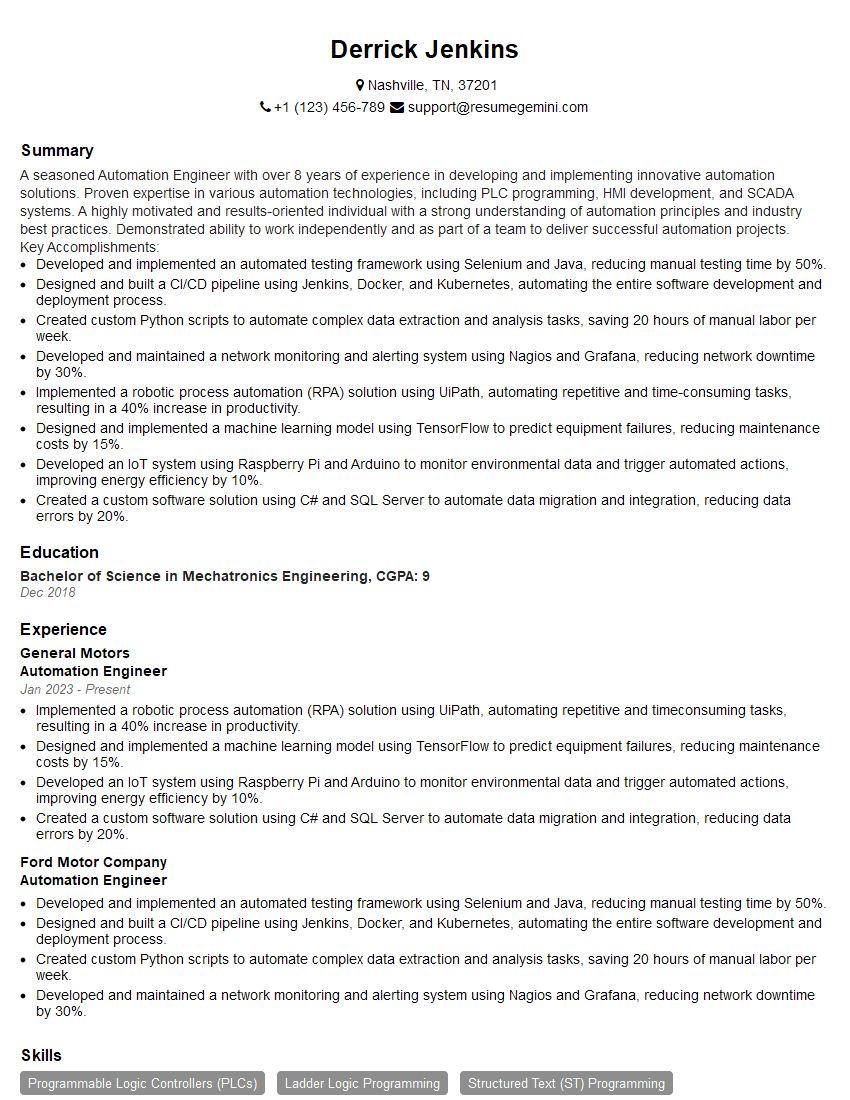
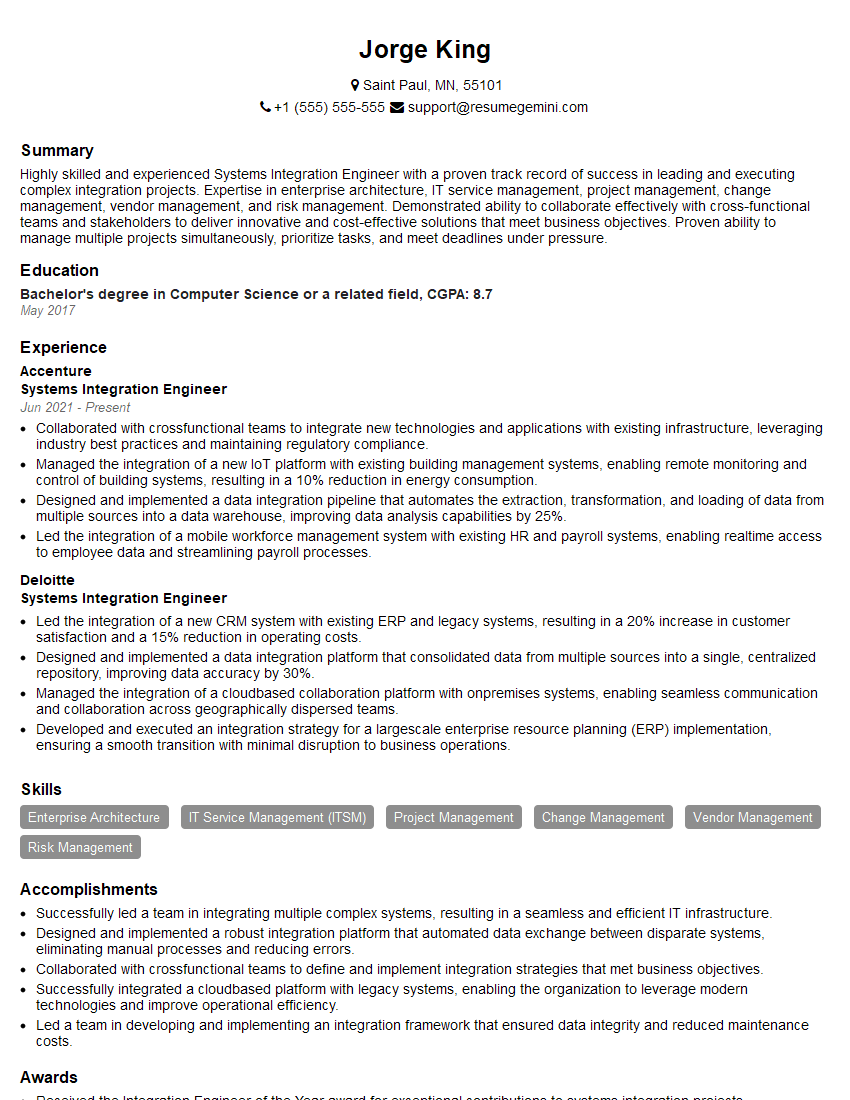
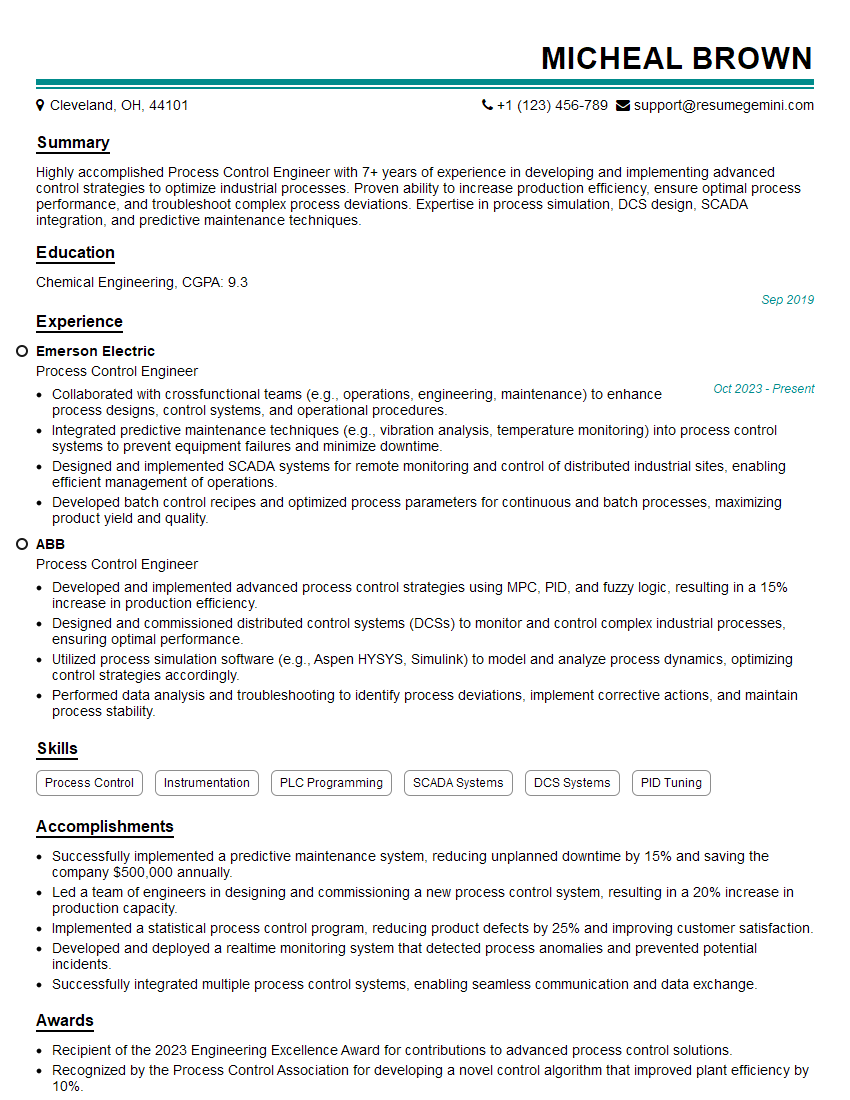
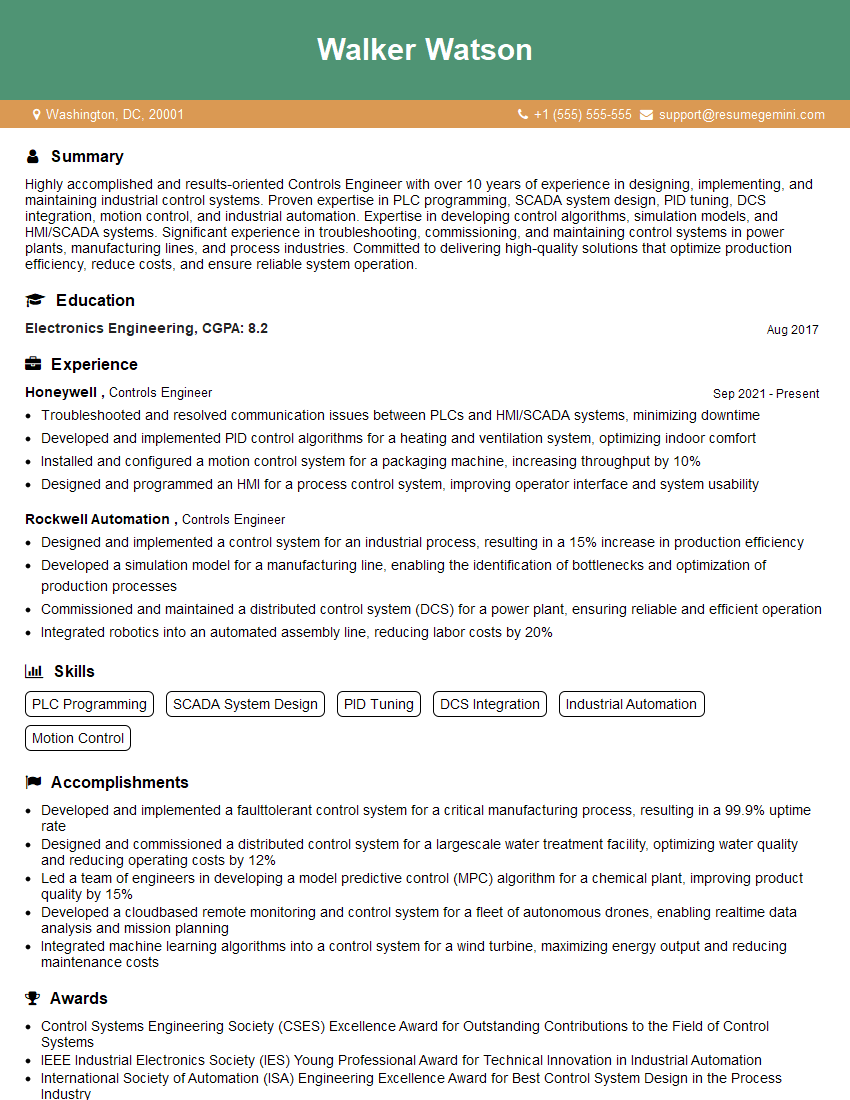
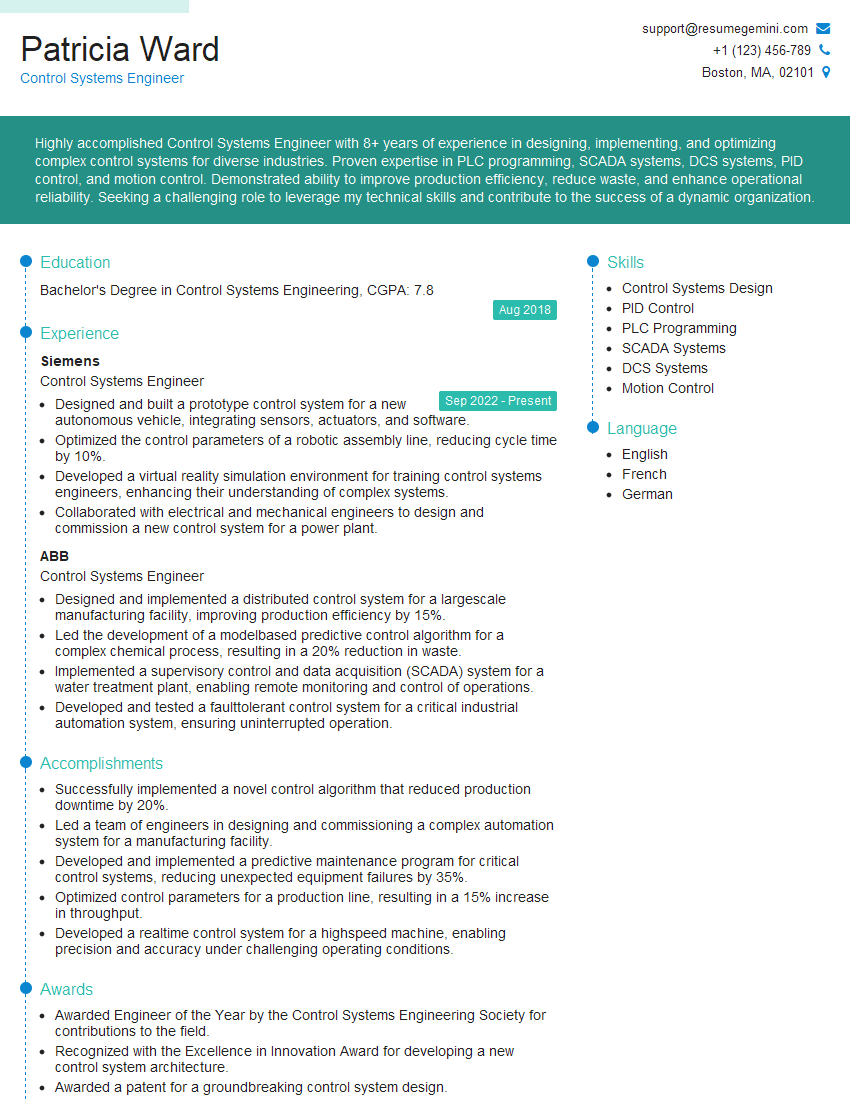
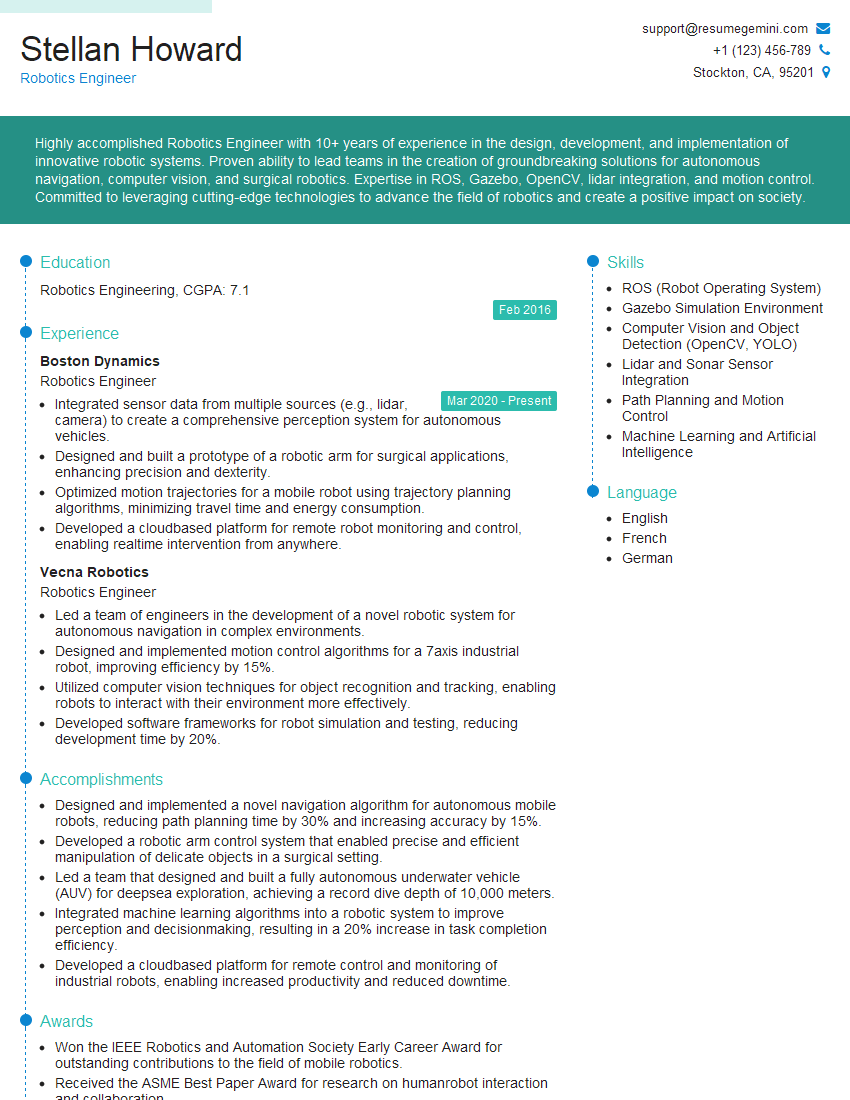
Mastering Control Systems Integration opens doors to exciting and impactful careers in automation and industrial technology. A strong foundation in these concepts will significantly enhance your job prospects and contribute to your career growth. To make a compelling impression, invest in creating an ATS-friendly resume that effectively showcases your skills and experience. ResumeGemini is a trusted resource to help you build a professional and impactful resume. Examples of resumes tailored to Control Systems Integration are available to help guide you through the process.
Explore more articles
Users Rating of Our Blogs
Share Your Experience
We value your feedback! Please rate our content and share your thoughts (optional).
What Readers Say About Our Blog
Very informative content, great job.
good