Cracking a skill-specific interview, like one for Bindery Knowledge, requires understanding the nuances of the role. In this blog, we present the questions you’re most likely to encounter, along with insights into how to answer them effectively. Let’s ensure you’re ready to make a strong impression.
Questions Asked in Bindery Knowledge Interview
Q 1. Explain the difference between perfect binding and saddle stitching.
Perfect binding and saddle stitching are two common bookbinding methods, each suited for different types of publications. Perfect binding, ideal for books with a high page count (like textbooks or novels), involves gluing the edges of the pages together to create a smooth spine. Think of it like a glued paperback. The cover is then wrapped around this block of glued pages. Saddle stitching, on the other hand, is best for magazines or booklets with a lower page count. It involves folding pages in half and securing them with wire staples along the spine. Imagine a simple brochure – that’s likely saddle-stitched. The key difference lies in the page count and the resulting spine; perfect binding offers a more robust, lay-flat spine, while saddle stitching is simpler, faster, and more cost-effective for thinner publications.
Example: A 500-page textbook would be perfect bound, while a 20-page brochure would be saddle stitched.
Q 2. Describe the process of three-hole drilling.
Three-hole drilling is a crucial step in preparing documents for binding using a three-ring binder. It involves precisely punching three holes along the spine of the document, allowing it to be easily inserted into and removed from the binder. This process ensures consistent hole placement, critical for smooth operation and preventing page tearing or binder damage. The process typically utilizes a specialized machine with adjustable guides to maintain uniform spacing and depth across all pages. The process starts with aligning the document correctly in the machine’s guides, followed by engaging the punching mechanism. The machine punches three holes simultaneously, ensuring precision and speed.
Practical Application: Imagine working in an office that needs to create and maintain many important reports and documents in a three-ring binder. Accurate three-hole drilling ensures those documents stay organized and intact over time.
Q 3. What are the common types of paper folding?
Paper folding techniques vary based on the final product’s desired format. Common types include:
- Half Fold: Folding a sheet of paper in half, creating two equal panels.
- Letter Fold: Folding a sheet of paper in thirds, typically used for letters.
- Double Parallel Fold: Folding a sheet of paper twice parallel to the first fold, creating four panels.
- Gate Fold: A double parallel fold where the outer panels fold inward, creating a gate-like effect.
- Roll Fold: Folding a sheet of paper multiple times in a cylindrical manner.
Example: A simple brochure might use a double parallel fold, while a more complex invitation might employ a gate fold.
Q 4. How do you ensure accurate gathering of pages?
Accurate gathering of pages is paramount for a professional-looking bound document. Inaccurate gathering leads to pages out of order and a frustrating experience for the reader. Several methods enhance accuracy:
- Signature Checking: Pages are grouped into ‘signatures,’ which are bundles of sheets printed and folded together. Each signature is carefully numbered or coded for accurate assembly.
- Gathering Machines: These automated machines accurately pick the correct signatures in the sequence, minimizing human error.
- Visual Verification: After gathering, a visual check ensures the page sequence is correct before proceeding to binding.
- Signature Collation: A process where multiple signatures are checked and matched before final binding.
Practical Application: Imagine printing hundreds of copies of a company report. Accurate gathering ensures each copy is free from errors and projects a professional image.
Q 5. What are the different types of binding methods and when would you use each?
Numerous binding methods exist, each with specific applications:
- Perfect Binding: (as discussed previously) Ideal for higher page count books and novels.
- Saddle Stitching: (as discussed previously) Best for magazines, brochures, and booklets with lower page counts.
- Spiral Binding: Uses a plastic or metal coil to bind pages. Great for reports, calendars, and documents that need to lay flat.
- Wire-O Binding: Uses double-loop wire to create a professional and durable binding. Excellent for high-use documents like notebooks and calendars.
- Case Binding: A robust method commonly used for hardback books. Involves sewing the pages together, creating a spine, and then covering it with a hard cover. Suitable for high quality books.
Example: A high-end coffee table book would utilize case binding, while a simple student notebook might be spiral-bound.
Q 6. Explain the role of scoring in bookbinding.
Scoring, in bookbinding, is the process of creating a shallow groove or crease in the paper. This improves the foldability and prevents cracking, especially when working with heavier paper stocks. It allows the paper to fold more cleanly and sharply at the designated points, enhancing the overall quality and appearance of the finished product. Scoring is particularly crucial for perfect binding, gate folds, and other complex folds where sharp creases are needed.
Practical Application: Think of scoring like pre-folding a piece of paper before making a sharp crease; it ensures a cleaner fold and prevents the paper from tearing or looking sloppy.
Q 7. How do you troubleshoot common issues with a perfect binding machine?
Troubleshooting a perfect binding machine involves a systematic approach. Common issues include:
- Glue Issues: Check the glue temperature and viscosity. Ensure the glue is applied evenly and that there is no clogging of the glue mechanism.
- Spine Issues: Examine the spine for uneven adhesion. This could indicate problems with the glue application, the clamping pressure, or the paper itself.
- Mechanical Issues: Inspect the rollers, belts, and other moving parts for wear and tear. Ensure proper lubrication and alignment.
- Paper Jams: These are usually caused by misaligned paper or insufficient clamping pressure. Check the paper feed and clamping mechanisms.
Step-by-Step Troubleshooting: First, visually inspect the machine for any obvious issues. Then, check the glue supply and settings. If the problem persists, consult the machine’s manual or contact a service technician.
Q 8. Describe the process of die-cutting.
Die-cutting is a crucial process in bindery where a sharp, custom-shaped blade cuts through a stack of paper or other materials to create unique shapes, designs, or even perforations. Imagine using a cookie cutter, but on a much larger scale and with incredible precision. The process involves creating a steel rule die, a precisely engineered tool containing the shape you want to cut. This die is then placed in a die-cutting press, which applies immense pressure to the stack of material, cleanly cutting through it along the die’s edges.
The process is highly customizable, allowing for intricate designs and diverse applications. For example, you might use die-cutting to create unique business cards with rounded corners, custom-shaped product packaging, or even intricate elements for greeting cards. The resulting pieces have clean, precise edges and are ready for the next steps in the bindery process, such as folding or assembling.
Q 9. What are the safety precautions associated with operating bindery equipment?
Safety is paramount in a bindery environment. Operating heavy machinery demands strict adherence to safety protocols. This includes wearing appropriate personal protective equipment (PPE), such as safety glasses, hearing protection, and cut-resistant gloves. Regular machine inspections are crucial to identify any potential malfunctions or hazards before operating. Never attempting to clear a jam while the machine is running is an absolute necessity. Always turn off and disconnect the power before performing any maintenance or cleaning. Furthermore, appropriate training and certification for each piece of equipment are essential for all operators.
Specific precautions vary depending on the machine. For example, when operating a guillotine cutter, ensuring that fingers are kept well clear of the blade is vital, using the safety guard properly is non-negotiable. With folding machines, regular checks for misaligned rollers or damaged components are crucial to prevent jams and accidents. A clean and organized workspace is also essential for preventing trips and falls, another common bindery hazard. Regular safety training and refresher courses are vital for maintaining a safe working environment.
Q 10. How do you maintain the quality of finished products?
Maintaining the quality of finished products involves a multi-faceted approach, starting from the selection of raw materials. Choosing high-quality paper stock appropriate for the chosen binding method is vital. Careful monitoring of each stage of the bindery process, from cutting and folding to stitching and binding, is also necessary. This includes regular checks for misaligned cuts, crooked folds, and inconsistencies in binding. Using calibrated equipment and properly maintained machinery helps ensure consistency and precision. Careful attention to detail prevents defects like misaligned pages, uneven folds, or poorly bound products.
Implementing robust quality control checks at each stage allows for the early identification and correction of errors. This can involve visual inspections by trained personnel, as well as the use of automated quality control systems where applicable. Finally, regularly scheduled maintenance and calibration of equipment prevent wear and tear which can affect product quality. A commitment to quality should be evident throughout the entire process, from initial design to final delivery.
Q 11. What is the importance of quality control in the bindery process?
Quality control in the bindery process is paramount for ensuring customer satisfaction and maintaining a professional reputation. It impacts the final product’s aesthetics and functionality, directly affecting the end-user experience. Consistent quality minimizes waste by reducing the number of rejected pieces, leading to cost savings. Furthermore, a reputation for producing high-quality work enhances credibility and attracts more clients. A robust quality control system helps maintain brand consistency across different batches of work.
Effective quality control reduces errors and rework, thereby improving efficiency and throughput. It ensures that the final product meets the client’s specifications and expectations, increasing satisfaction and minimizing potential disputes or returns. A well-implemented quality control system is an investment that pays off in many ways, from improving the bottom line to enhancing overall company reputation.
Q 12. How do you handle a jam in a folding machine?
Handling a jam in a folding machine requires a methodical and safe approach. First and foremost, always power down the machine and ensure it’s completely disconnected from the power source. Never attempt to clear a jam while the machine is running. Once the machine is off and safe, carefully examine the machine for the location of the jam. This often involves gently opening access panels or removing components to gain a clear view of the paper path.
Once you locate the jam, carefully remove the jammed sheets. Avoid pulling or forcing the paper, as this can damage the machine or the paper itself. If the paper is severely creased or damaged, it’s best to discard it. After removing the jam, inspect the paper path for any obstructions or misaligned parts. Clean away any debris that might have contributed to the jam. Before restarting the machine, ensure that everything is back in its correct place and operating smoothly. Properly aligned rollers and guides are critical to prevent future jams.
Q 13. Describe your experience with different types of paper and their suitability for various binding methods.
My experience encompasses a wide range of paper types, each with its own unique properties influencing suitability for different binding methods. For instance, heavier weight papers, like 100lb cover stock, are ideal for saddle-stitching or case binding, offering a robust and durable finished product. However, these heavier stocks might not be suitable for perfect binding, as they can be challenging to glue and create a bulky spine. Lighter weight papers, such as 20lb bond, are better suited for methods like perfect binding or wire-o binding, allowing for a slimmer, more flexible final product.
The paper’s finish also plays a crucial role. Uncoated papers, with their porous surface, absorb ink better but may not always work well with certain types of adhesive binding. Coated papers, on the other hand, offer a smoother finish and are often used for publications requiring high-quality printing, but might not be as easily folded or scored. Understanding the interplay between paper type, weight, and finish, along with the chosen binding method, is crucial for optimizing the final product’s quality and aesthetics. I’ve successfully used this knowledge to recommend and implement suitable paper and binding combinations for numerous projects, ensuring optimal results for each.
Q 14. How do you calculate the estimated cost for different binding options?
Calculating the estimated cost for different binding options involves considering several factors. First, the quantity of pieces plays a significant role—larger quantities generally lower the per-unit cost. The type of binding method significantly influences the price. Perfect binding, for example, is usually more expensive than saddle stitching due to the more complex process and materials involved. The paper stock selection also affects the price; higher-quality, heavier papers naturally increase the overall cost.
Additional factors include the size and complexity of the document, any special finishing requirements (such as foil stamping or embossing), and the level of customization. To provide a reliable estimate, I typically use a cost estimation software, factoring in all these variables. The software allows me to compare different binding options and present clients with a detailed breakdown of costs. Providing a clear and transparent cost estimate ensures client satisfaction and helps avoid any surprises during the project execution. I’ve successfully developed and used these cost-estimation strategies to give clients accurate and competitive pricing options.
Q 15. What are the different types of glues used in bindery operations?
The choice of glue in bindery operations depends heavily on the type of binding and the materials being used. We use several types, each with its strengths and weaknesses:
- Hot Melt Adhesives: These are thermoplastic glues that are melted and applied hot. They offer fast setting times and strong bonds, making them ideal for high-speed production. Examples include EVA (ethylene-vinyl acetate) and PUR (polyurethane reactive) hot melts. PUR is particularly strong and flexible, suitable for demanding applications.
- Cold Case Binding Glues: These glues are applied cold and are usually PVA (polyvinyl acetate)-based. They are suitable for smaller runs and less demanding applications, offering good adhesion but requiring a longer drying time. They are often preferred for books requiring a more flexible spine.
- Perfect Binding Adhesives: These are specifically formulated for perfect binding, where the pages are glued to the cover. They need to have excellent initial tack to hold the pages securely while the spine is being created, and strong ultimate adhesion for durability. These are often specialized formulations based on PUR or EVA.
- Case Binding Adhesives: These are used in the case binding process, where the cover is glued to the book’s spine. This usually involves a strong adhesive, often PUR, for superior durability and resistance to stress.
Choosing the right glue is critical for a successful binding job. The wrong glue can lead to pages falling out, covers detaching, or a less-than-professional finish.
Career Expert Tips:
- Ace those interviews! Prepare effectively by reviewing the Top 50 Most Common Interview Questions on ResumeGemini.
- Navigate your job search with confidence! Explore a wide range of Career Tips on ResumeGemini. Learn about common challenges and recommendations to overcome them.
- Craft the perfect resume! Master the Art of Resume Writing with ResumeGemini’s guide. Showcase your unique qualifications and achievements effectively.
- Don’t miss out on holiday savings! Build your dream resume with ResumeGemini’s ATS optimized templates.
Q 16. Explain the difference between a guillotine cutter and a three-knife trimmer.
Both guillotine cutters and three-knife trimmers are used for trimming stacks of paper to create clean, even edges, but they differ significantly in their cutting mechanisms and applications:
- Guillotine Cutter: This uses a single, long blade that descends vertically to cut through a stack of paper. It’s simple, relatively inexpensive, and suitable for smaller stacks. Think of it like a giant paper cutter you might find in an office, but on a much larger scale. It’s great for quick cuts and straight edges on smaller volumes.
- Three-Knife Trimmer: This employs three separate blades that cut simultaneously, from three sides, allowing for precision trimming of three sides of the book block at once. It’s significantly faster and more efficient for larger print runs because it allows for higher speeds and reduces handling. It’s also much more precise, crucial for maintaining uniform size and ensuring a professional finish.
The choice between them depends largely on the volume of work and the required precision. For high-volume production with tight tolerances, a three-knife trimmer is almost always the preferred option. For smaller runs or less demanding precision requirements, a guillotine cutter may suffice.
Q 17. How do you ensure the correct sequence of pages during the binding process?
Ensuring the correct page sequence is paramount. Errors here lead to a completely unusable product. We use a multi-step process:
- Imposition Software: Before printing, specialized software creates imposition sheets, determining the precise arrangement of pages on the press sheet to ensure correct page order after folding and gathering. This is crucial for maintaining the correct page order when the sheets are folded, assembled and collated
- Verification during Printing: Throughout the print run, regular checks are performed to ensure the correct page sequence is maintained on each printed sheet. This can include visual checks, and automated barcode verification system
- Gathering and Collating Machines: Modern gathering and collating machines use sophisticated technology (often including barcode recognition) to automatically assemble pages in the correct order. Any discrepancy halts the machine, preventing errors from propagating through the entire production run.
- Manual Spot Checking: Even with automated systems, manual spot checks are carried out at various stages to verify the page order. Experienced bindery personnel visually inspect several completed books to ensure accuracy.
A robust quality control system throughout the entire process, from pre-press to final binding, is essential for preventing page sequence errors.
Q 18. What is your experience with automated bindery equipment?
I have extensive experience operating and maintaining a wide range of automated bindery equipment, including:
- High-speed perfect binding machines: I’m proficient in setting up, operating, and troubleshooting these machines, ensuring optimal production speeds and quality. My expertise extends to adjusting the glue settings, speed, and various other parameters to handle different paper stocks and book sizes.
- Three-knife trimmers: I’m skilled in operating and maintaining these high-precision machines, including blade adjustments, ensuring sharp blades and accurate cuts. Precise blade alignment is critical to ensuring clean edges and consistent trim on large runs
- Automated gathering and collating systems: I’m familiar with various systems, from simple to highly sophisticated, and adept at troubleshooting jams, misfeeds, and other common problems. Understanding the error codes of these machines is crucial to minimize downtime.
- Casemaking machines: I have experience with both manual and automated casemaking equipment, from cover preparation and gluing to final case assembly. A deep understanding of the machinery is crucial for setting up for different book sizes and ensuring consistent quality.
My experience encompasses both preventative maintenance and resolving operational issues to maximize uptime and minimize production delays.
Q 19. Describe your experience with troubleshooting and repairing bindery machinery.
Troubleshooting and repairing bindery machinery requires a blend of technical skills and problem-solving abilities. I have a proven track record in diagnosing and resolving a wide range of issues. My approach typically involves:
- Careful Assessment: First, I meticulously assess the problem, identifying the symptoms and potential causes. This often involves examining error messages, listening to machine sounds, and visual inspection.
- Systematic Troubleshooting: I employ a systematic approach, checking individual components and processes to isolate the faulty part. I use schematics, manuals, and my own experience to guide the process.
- Part Replacement & Repair: Once the problem is identified, I’ll either replace faulty parts or undertake necessary repairs, always adhering to safety guidelines.
- Testing and Verification: After repair or replacement, I thoroughly test the machine to ensure the issue is resolved and the machine is operating correctly before resuming production.
- Preventative Maintenance: I am a strong believer in preventative maintenance to minimize breakdowns. Regular lubrication, cleaning, and inspections are key to machine longevity.
For example, recently I resolved a recurring jam in a perfect binding machine by identifying a slight misalignment in the rollers. A simple adjustment solved the issue, avoiding costly downtime.
Q 20. How do you manage large print runs efficiently?
Managing large print runs efficiently requires meticulous planning and execution. Key strategies include:
- Careful Pre-Production Planning: This includes thorough job costing, ensuring all materials are available on time, and creating detailed production schedules. Thorough planning avoids delays and minimizes wasted resources.
- Optimization of Bindery Workflow: This involves streamlining the entire process, eliminating unnecessary steps, and ensuring a smooth flow of materials. Improving workflows is key to improving throughput and minimizing downtime.
- Proactive Maintenance: Regular maintenance prevents unexpected breakdowns, which can significantly disrupt large print runs. Schedule maintenance to avoid production delays.
- Teamwork and Communication: Effective communication between different teams (pre-press, printing, bindery, finishing) is crucial for a smooth process. Teamwork ensures that everyone is on the same page.
- Quality Control: Frequent quality checks throughout the process prevent errors from propagating through the entire run, reducing the need for costly rework.
By implementing these strategies, we can handle large print runs efficiently, meeting deadlines and ensuring high-quality results.
Q 21. What software are you familiar with using in a bindery setting?
My experience encompasses several software applications relevant to bindery operations:
- Imposition Software: I’m proficient in using various imposition software packages, such as [mention specific software, e.g., Imposition Pro, or other relevant software], to create efficient imposition layouts for different binding types and page counts. This allows for optimal use of printing sheets and reduces waste
- Pre-press Software: I have experience with pre-press software used for file preparation and preflighting, ensuring files are properly formatted for printing and binding. This reduces errors and speeds up the overall process.
- MIS (Management Information Systems): I’m familiar with various MIS software used for managing jobs, tracking costs, and monitoring production efficiency. This helps to streamline workflows and improve overall productivity.
- ERP (Enterprise Resource Planning) systems: In larger companies, I have experience using ERP systems integrated with bindery operations. This facilitates real-time tracking of production and resources.
My familiarity with these software tools contributes significantly to my ability to manage and optimize bindery operations efficiently.
Q 22. How do you prioritize tasks in a fast-paced bindery environment?
Prioritizing tasks in a fast-paced bindery requires a strategic approach combining urgency, importance, and resource allocation. I use a system that blends visual tools like Kanban boards with a strong understanding of the production schedule.
First, I assess each job’s due date and its impact on downstream processes. Jobs with imminent deadlines and those crucial for meeting client commitments take precedence. Then, I consider the resources needed – personnel, machinery, and materials. I avoid bottlenecks by sequencing jobs to optimize equipment use. For example, if we have a large perfect binding job and a smaller saddle stitch job, I might schedule the perfect binding first, as it requires longer setup time and dedicated equipment. Once this is done, I can quickly move to the saddle stitch. This helps maintain a smooth workflow.
Finally, I regularly review and adjust the priority list based on any unexpected delays, urgent requests, or changes in the production schedule. This requires constant communication with the prepress and printing departments. For example, if printing is delayed, the entire bindery schedule needs to be reassessed and re-prioritized.
Q 23. What is your experience with different types of covers and their application?
My experience encompasses a wide range of cover types, each with its unique application and advantages.
- Hardcovers: I’m proficient in casemaking, using various board thicknesses and cover materials like cloth, leather, or paperboard. I understand the importance of accurate casing-in to ensure a robust, aesthetically pleasing final product. I’ve worked with both traditional and automated casemaking equipment.
- Softcovers: I’m familiar with different types of paper covers, including matte, gloss, and textured finishes. My experience includes perfect binding and saddle stitching, and I know how to select the appropriate cover stock for different printing methods and desired durability. For example, a high-gloss finish might be perfect for a high-impact marketing piece, but a matte finish might be more suitable for a technical manual.
- Specialty Covers: I’ve worked with unusual materials like plastic, metal, or even fabric covers, requiring me to adapt techniques and ensure proper adhesion and durability. It’s crucial to carefully consider the material properties before selecting the appropriate binding method. For example, a metal cover would probably require a different approach than a typical paper cover.
Choosing the right cover isn’t just about aesthetics; it involves understanding the job’s demands for durability, budget, and the desired overall look and feel. I always consult with the client or project manager to select the optimal cover type and materials.
Q 24. Explain the importance of understanding customer specifications in the bindery process.
Understanding customer specifications is paramount to a successful bindery process. It ensures that the final product precisely meets the client’s expectations, prevents costly rework, and maintains a high level of client satisfaction.
Specifications encompass various aspects including:
- Binding type: Perfect binding, saddle stitching, wire-o, coil binding, etc. The chosen method significantly influences the equipment and processes used. Incorrect interpretation can lead to significant delays and errors.
- Cover materials and finishes: The choice of paper stock, lamination, and other finishes greatly affects the final product’s appearance and durability. An incorrect finish can be costly and unacceptable.
- Page size and orientation: Precision in page dimensions and orientation prevents misalignment and other issues affecting the final product. These specifications must be precisely followed.
- Number of pages and sections: Accurate page counts influence material usage and production time. If not adhered to, the project may be delayed or over budget.
I carefully review all specifications before commencing any job, and I don’t hesitate to clarify any ambiguities with the client or project manager before proceeding. This proactive approach helps prevent costly errors and ensures that the final product meets the client’s expectations perfectly.
Q 25. How do you work collaboratively with other departments in a print shop?
Collaboration is crucial in a print shop. I work closely with the prepress and printing departments to ensure a seamless workflow.
With Prepress, I communicate regularly about the specifications of incoming jobs. Any issues with the file setup (like incorrect bleeds or imposition) are addressed early, preventing problems in the bindery. For example, I might alert the prepress department if a particular design choice would make perfect binding difficult or expensive.
With the Printing department, I coordinate delivery schedules and ensure that printed materials arrive on time and in good condition. Communication about potential delays or issues is essential. For example, if the printing department has a delay, I can adjust the bindery schedule accordingly. I also offer feedback about print quality that might affect bindery operations.
This proactive communication ensures that issues are addressed proactively, reducing delays and ensuring efficient production. Open lines of communication and mutual respect are key to successful collaboration.
Q 26. Describe a situation where you had to solve a complex problem in the bindery.
We once received a rush order for a large number of books with a unique binding requirement – a combination of perfect binding and a custom-designed slipcase. The slipcase had intricate embossing, requiring very precise measurements and alignment. The tight deadline and complexity presented a significant challenge.
My approach involved several steps:
- Thorough analysis: We first examined the specifications closely, identifying potential issues like alignment and embossing accuracy.
- Teamwork: I collaborated closely with the prepress team to ensure the embossing design was suitable for production, and with the printing team to ensure the covers were printed correctly. We held meetings to create a detailed plan.
- Process optimization: I adjusted our usual workflow to prioritize this job, assigning skilled operators to the critical parts of the process. We also reviewed and optimized the slipcase production process itself, using jigs and templates to ensure accurate alignment.
- Quality control: Rigorous quality checks were implemented at each stage – cover printing, perfect binding, slipcase creation, and insertion – to ensure accuracy and eliminate defects early.
Through meticulous planning, teamwork, and efficient process adjustments, we successfully delivered the project on time and to the client’s complete satisfaction. This experience emphasized the importance of adapting and overcoming challenges through collaboration and a systematic approach.
Q 27. What are your career goals related to bindery work?
My career goals center on continuous improvement and expertise within the bindery field. I aim to enhance my knowledge of advanced binding techniques and explore automation and new technologies in the industry.
Specifically, I want to develop expertise in:
- Advanced binding techniques: I’m interested in learning more specialized binding methods and materials for high-end publications and unique projects.
- Automation and technology: I plan to stay updated on industry advancements and explore how automation can improve efficiency and accuracy in the bindery.
- Leadership and training: I aspire to take on a leadership role, mentoring and training new bindery staff, sharing my knowledge and contributing to a well-trained and skilled workforce.
Ultimately, I strive to contribute significantly to the success of a bindery operation by leveraging my expertise and commitment to high-quality workmanship and efficient production.
Key Topics to Learn for Bindery Knowledge Interview
- Bindery Equipment Operation: Understanding the mechanics and operation of various bindery equipment, including different types of folding machines, stitching machines, perfect binding machines, and casemaking machinery. This includes preventative maintenance and troubleshooting.
- Finishing Techniques: Mastering various finishing techniques such as trimming, scoring, perforating, drilling, and embossing. Understand the application of each technique to different project types and the impact on the final product’s quality and presentation.
- Material Knowledge: Deep understanding of different paper types, weights, and finishes, as well as their suitability for various binding methods. Knowing how material choices affect the overall binding process and final product is crucial.
- Quality Control and Inspection: Developing keen observation skills to identify defects and inconsistencies in bound materials. Understanding quality control procedures and implementing corrective actions is essential.
- Workflow and Production Processes: Familiarize yourself with efficient workflow management within a bindery environment. Understanding the sequence of operations, job scheduling, and optimizing production processes will demonstrate practical experience.
- Safety Procedures and Regulations: Thorough understanding and adherence to safety protocols related to bindery machinery and materials handling. This will demonstrate responsibility and commitment to a safe work environment.
- Estimating and Costing: Ability to estimate material costs, labor, and machine time for various binding projects. This shows a practical understanding of the financial aspects of bindery operations.
Next Steps
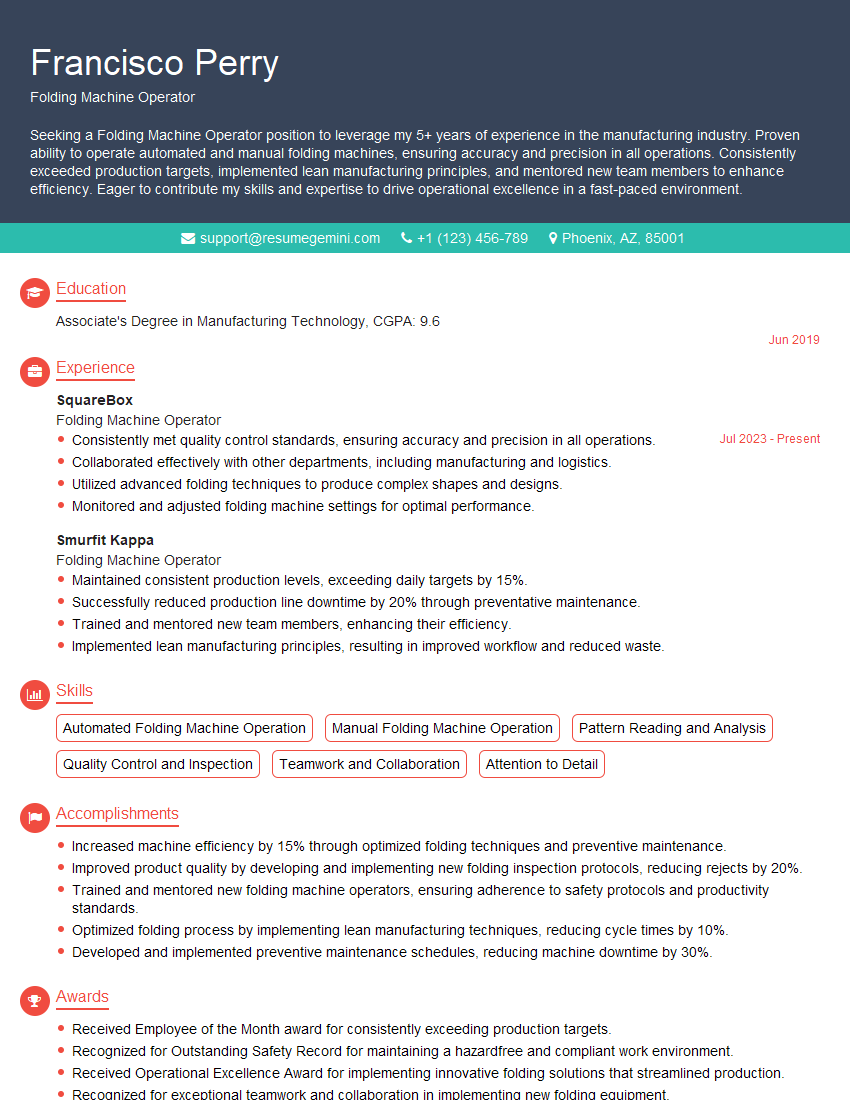
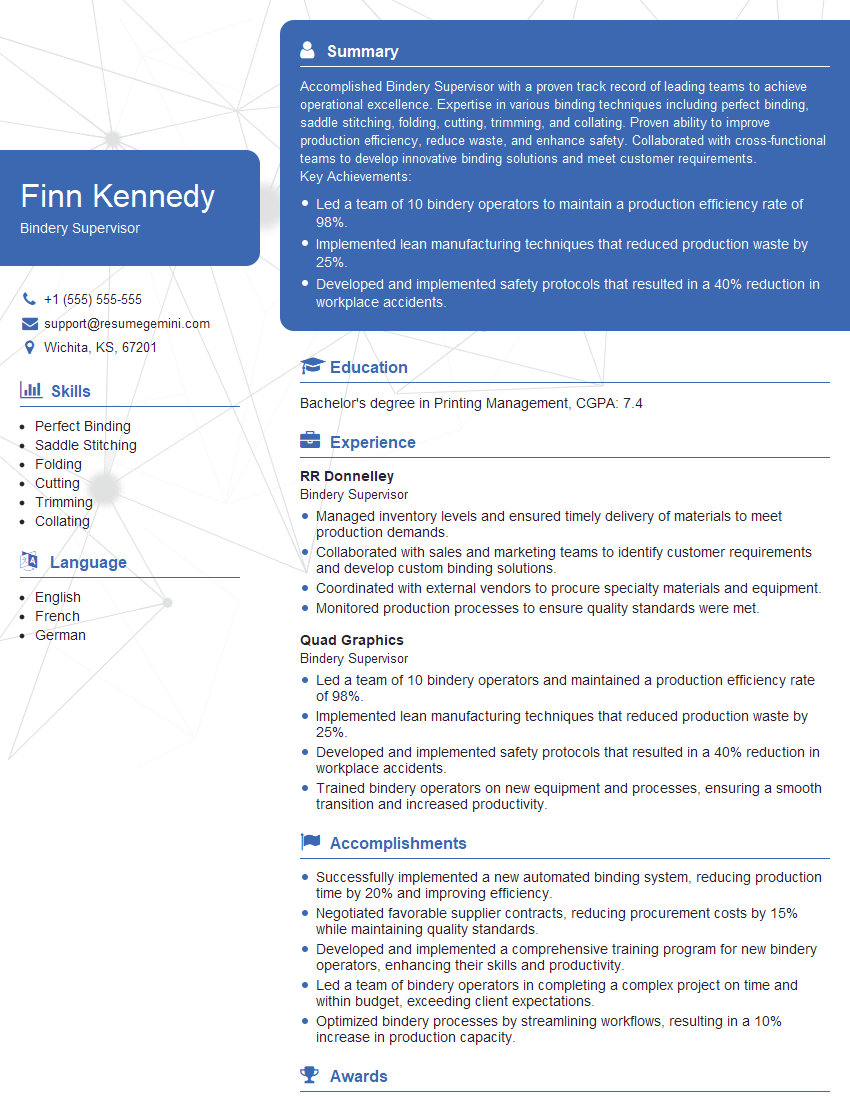
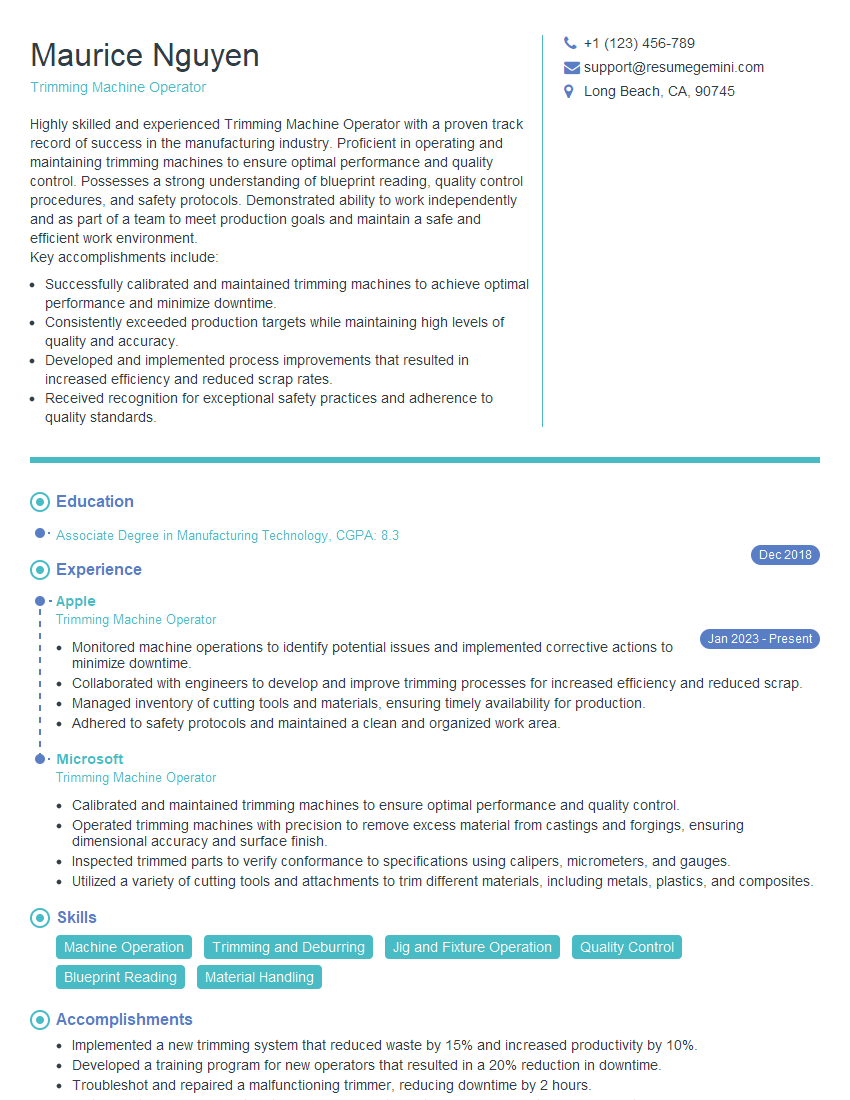
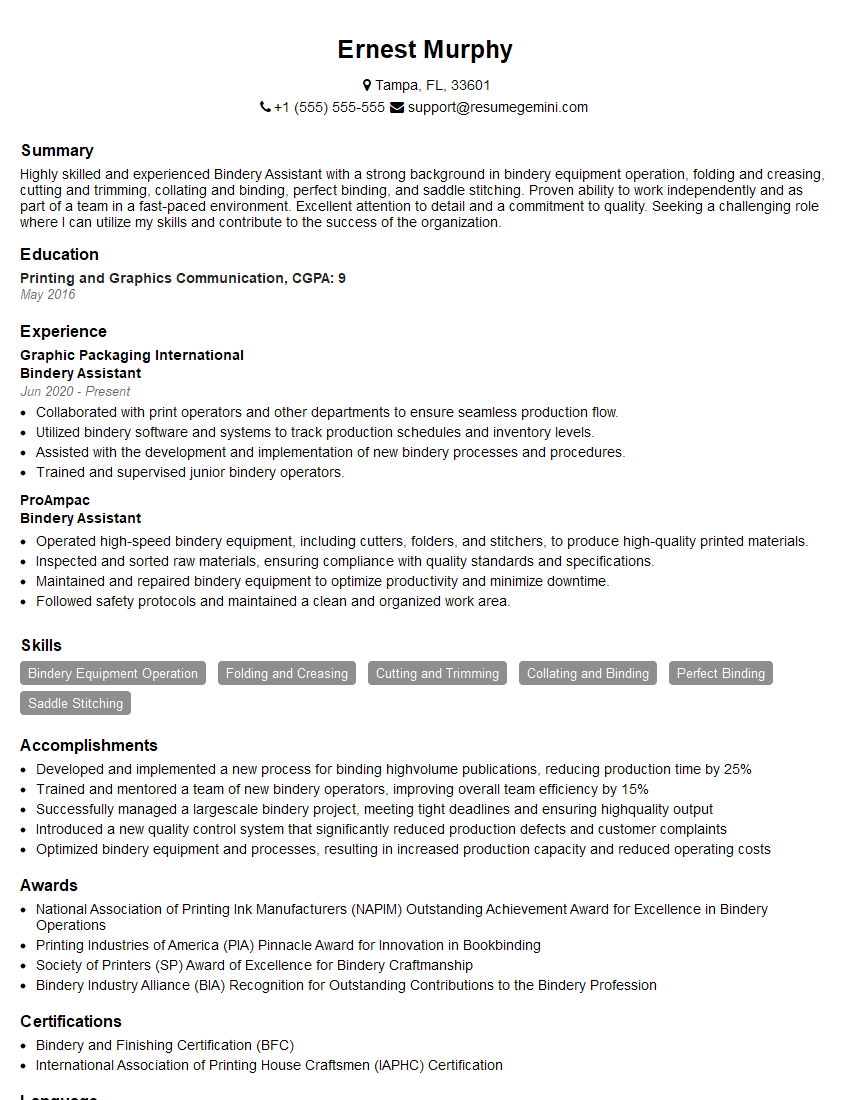
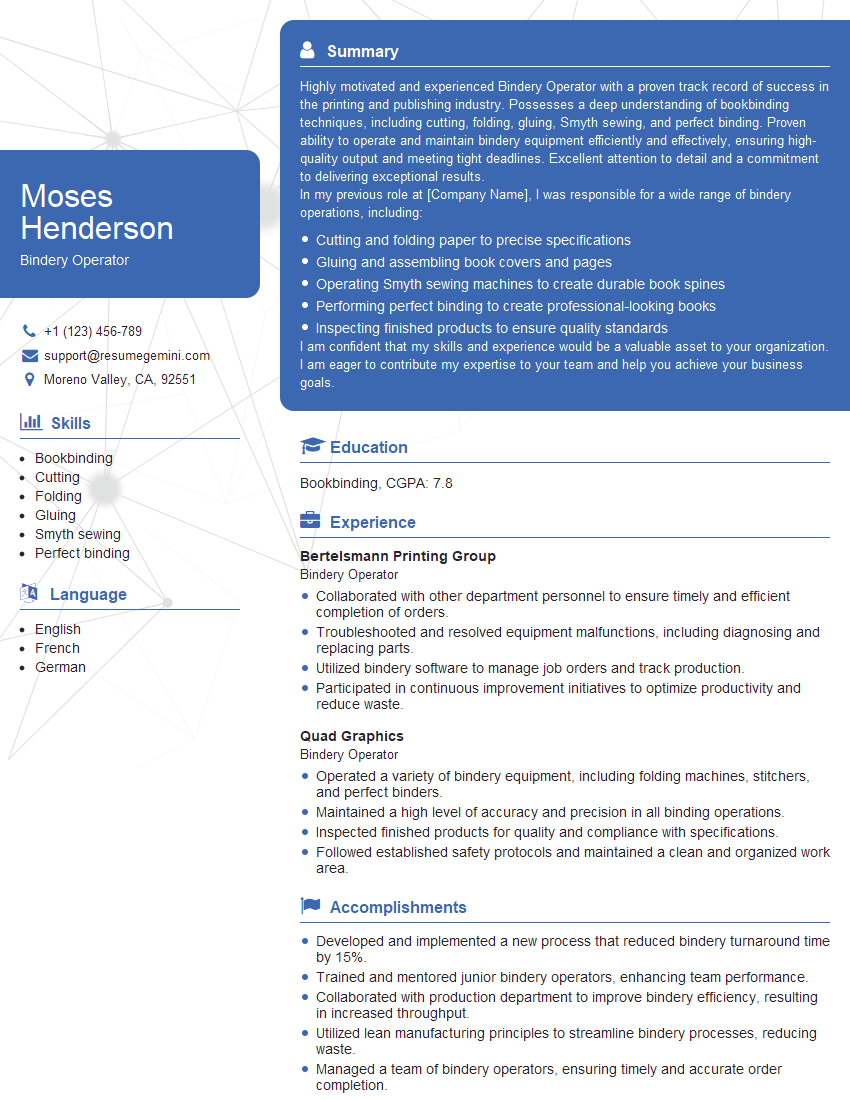
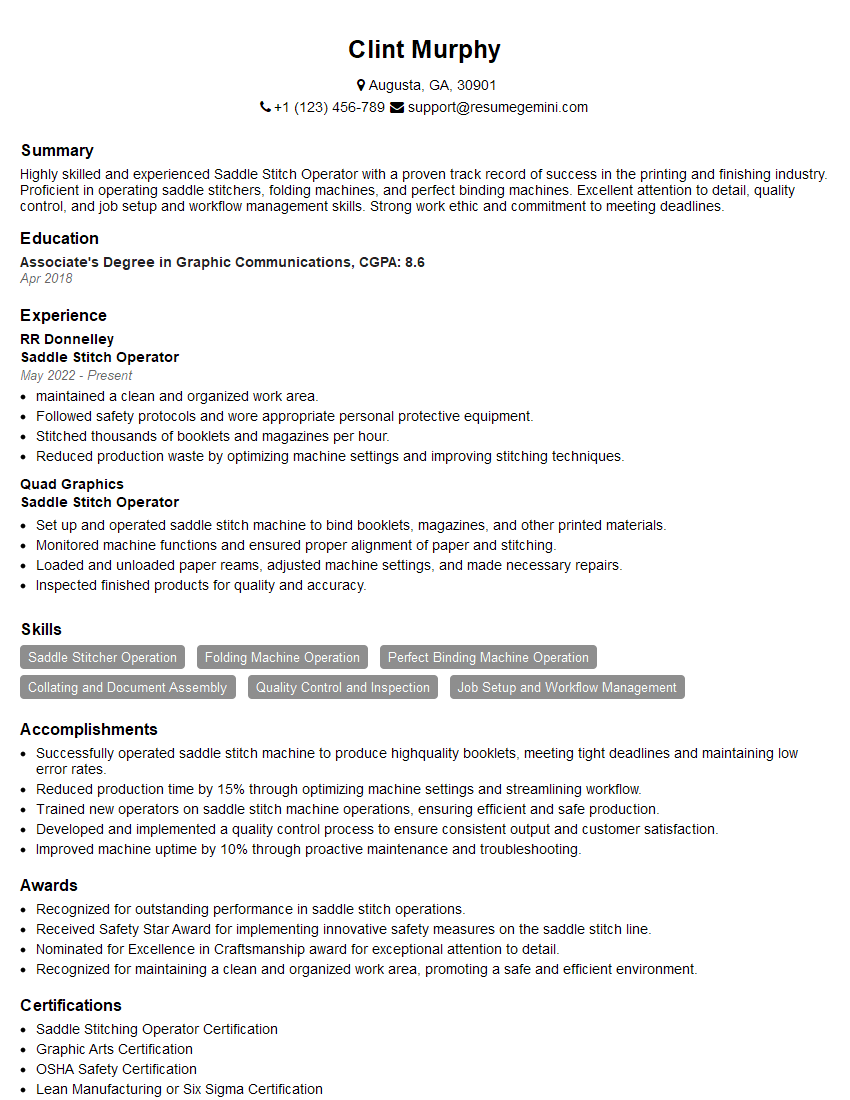
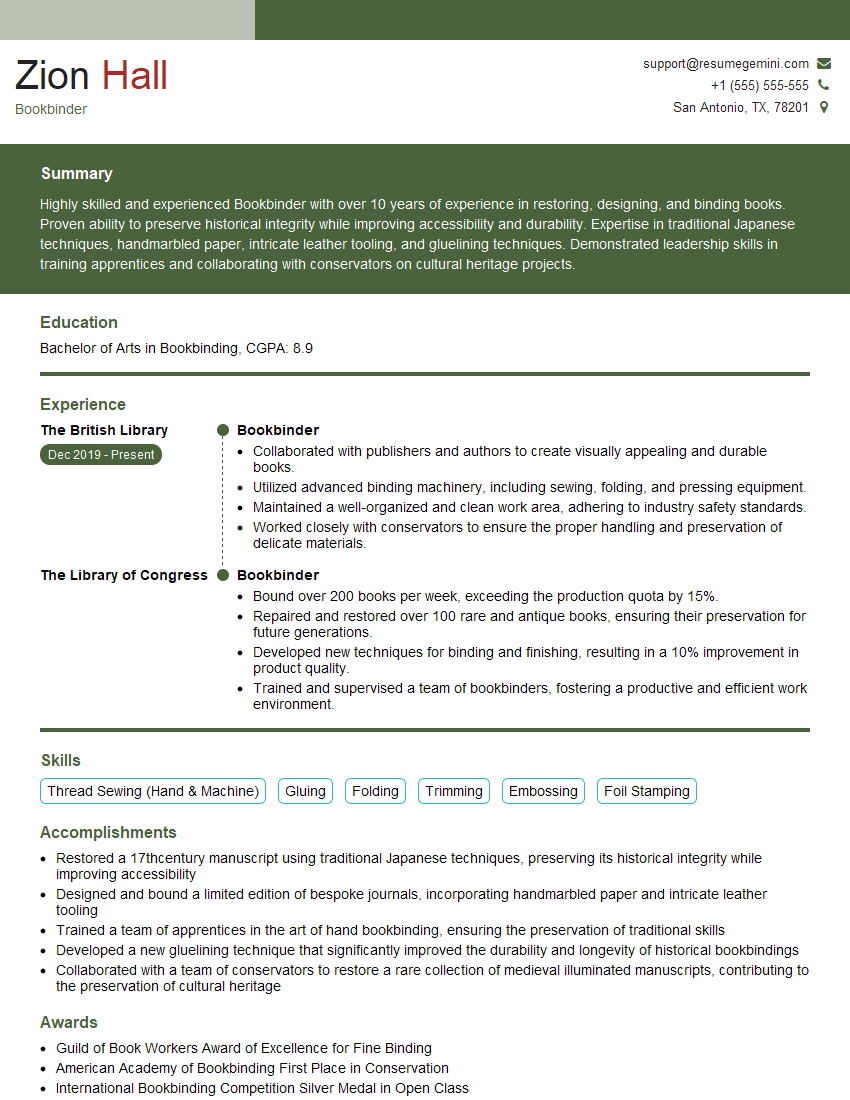
Mastering Bindery Knowledge significantly enhances your career prospects, opening doors to specialized roles and higher earning potential within the print and publishing industries. A strong understanding of these processes demonstrates valuable skills and attention to detail highly sought after by employers. To further enhance your job search, focus on creating an ATS-friendly resume that highlights your skills and experience effectively. We strongly recommend using ResumeGemini to build a professional and impactful resume. ResumeGemini provides tools and resources to create a standout resume, and examples of resumes tailored to Bindery Knowledge are available to guide you.
Explore more articles
Users Rating of Our Blogs
Share Your Experience
We value your feedback! Please rate our content and share your thoughts (optional).
What Readers Say About Our Blog
Very informative content, great job.
good