Every successful interview starts with knowing what to expect. In this blog, we’ll take you through the top Controlled Atmosphere Heat Treating interview questions, breaking them down with expert tips to help you deliver impactful answers. Step into your next interview fully prepared and ready to succeed.
Questions Asked in Controlled Atmosphere Heat Treating Interview
Q 1. Explain the difference between endothermic and exothermic atmospheres.
Endothermic and exothermic atmospheres are classified based on their heat exchange during a chemical reaction within the furnace. Think of it like this: exothermic reactions release heat, making the furnace hotter, while endothermic reactions absorb heat, cooling the furnace down.
- Exothermic Atmospheres: These atmospheres generate heat during their reactions. A common example is the combustion of natural gas with air, used in some older heat treating processes. The reaction generates heat, making it less energy-efficient but simpler to control in some scenarios.
- Endothermic Atmospheres: These atmospheres require energy input to sustain the reaction. They are typically generated by reacting hydrocarbons (like natural gas) with air and steam over a catalyst bed at high temperatures. The resulting atmosphere is often rich in carbon monoxide and hydrogen, useful for preventing oxidation and decarburization of steel during heat treating. A common example of an endothermic atmosphere generator uses natural gas, steam and air to create a reducing atmosphere of CO and H2. The heat of reaction is endothermic thus requiring a significant energy input to maintain a high enough temperature to create the atmosphere.
The choice between endothermic and exothermic atmospheres depends on the specific heat treatment process and the desired outcome. For example, a process requiring a strongly reducing atmosphere and precise control of the carbon potential would likely use an endothermic generator, whereas a simpler process might use an exothermic atmosphere.
Q 2. Describe the dew point and its importance in controlled atmosphere heat treating.
The dew point is the temperature at which water vapor in the atmosphere begins to condense into liquid water. In controlled atmosphere heat treating, it’s critically important because moisture can react with the metal surface, leading to oxidation, scaling, or other defects. Imagine leaving a freshly polished metal part out in the humid air – it will quickly rust. The same principle applies here, but on a more controlled scale.
A low dew point (below -40°C is generally desirable) indicates a very dry atmosphere, minimizing the risk of these unwanted reactions. Monitoring and controlling the dew point is crucial for ensuring the quality and consistency of the heat treatment. This is typically achieved using desiccant dryers to remove water vapor from the process gas.
For instance, in bright annealing of stainless steel, a high dew point can lead to the formation of oxides, ruining the surface finish. Maintaining a very low dew point is key to achieving a bright, shiny surface.
Q 3. What are the common types of controlled atmosphere furnaces used in industry?
Various types of controlled atmosphere furnaces are used in industry, each designed for specific applications and throughput requirements. Here are some common examples:
- Batch Furnaces: These are versatile and suitable for various heat treatments. They’re ideal for smaller batches or when precise control of the atmosphere is paramount.
- Continuous Furnaces: These furnaces are highly efficient for mass production, offering a high throughput rate. They are often used for processes like continuous carburizing or annealing of long parts.
- Pit Furnaces: Commonly found in applications requiring high temperatures or larger components. They usually accommodate larger parts and have excellent temperature uniformity.
- Box Furnaces: Compact and used for smaller batches, they usually have excellent temperature control.
- Rotary Furnaces: Designed for efficient and even processing of small parts with continuous movement through the furnace.
The choice of furnace type depends largely on the production volume, part size, and complexity of the heat treatment process.
Q 4. How do you determine the appropriate heat treatment cycle for a given material?
Determining the appropriate heat treatment cycle for a given material requires a thorough understanding of the material’s properties, the desired outcome, and the available equipment. This process involves several steps:
- Material Identification: Start by precisely identifying the material’s composition (e.g., grade of steel, alloy type). Different materials require different heat treatment cycles.
- Desired Properties: Define the desired properties after heat treatment, such as hardness, tensile strength, ductility, or surface finish.
- Literature Review: Consult material data sheets, handbooks, or scientific literature to find established heat treatment parameters for the specific material and desired properties. This might include recommended temperature ranges, soaking times, and cooling rates.
- Trial Runs and Optimization: Conduct initial trial runs, closely monitoring the results. You may need to adjust parameters (temperature, time, atmosphere composition) to fine-tune the process and achieve the desired properties. This often involves destructive and non-destructive testing of samples to assess the outcome of the heat treatment.
- Documentation: Maintain meticulous records of the entire process for future reference and quality control.
For instance, if you’re heat treating a high-speed steel tool, you’ll need a complex multi-stage process to achieve the desired hardness and toughness. In contrast, annealing a mild steel component requires a simpler cycle focused on stress relief.
Q 5. Explain the principles of carburizing and nitriding.
Carburizing and nitriding are case hardening processes that enhance the surface hardness and wear resistance of steel components without significantly altering the core properties. They both involve diffusing atoms into the steel’s surface, but they differ in the diffusing element:
- Carburizing: This process diffuses carbon atoms into the steel’s surface, creating a hard, wear-resistant case. It’s typically carried out at high temperatures (900-950°C) in a controlled atmosphere rich in carbon monoxide. The carbon diffuses into the steel, increasing its carbon content and creating a hard outer layer. Following carburizing, the part is typically quenched and tempered to obtain the desired hardness.
- Nitriding: This process involves diffusing nitrogen atoms into the steel’s surface. Nitriding is performed at lower temperatures (500-570°C) using a gas atmosphere containing ammonia or nitrogen plasma. The nitrogen diffuses into the surface, forming nitrides that increase surface hardness and wear resistance. Nitriding produces a thin case that offers excellent corrosion resistance and fatigue strength.
The choice between carburizing and nitriding depends on the specific application requirements. Carburizing produces a thicker, harder case and is suitable for applications demanding high wear resistance, while nitriding creates a thinner case, better suited for applications requiring high fatigue strength and corrosion resistance.
Q 6. What are the potential defects associated with improper controlled atmosphere heat treating?
Improper controlled atmosphere heat treating can result in several defects, significantly impacting the quality and performance of the treated parts:
- Scaling: Oxidation of the metal surface, resulting in a rough, unsightly finish and potential loss of dimensional accuracy.
- Decarburization: Loss of carbon from the surface, reducing hardness and wear resistance, particularly problematic for high-carbon steels.
- Carburization Defects: Inconsistent carbon penetration, resulting in uneven hardness and potential cracking during quenching.
- Soft Spots: Areas of low hardness within the treated layer.
- Surface Cracking: Can occur due to stresses generated during rapid cooling or improper atmosphere control.
- Distortion: Uneven heating or cooling can lead to warping or distortion of the part.
These defects highlight the importance of precise control over temperature, atmosphere composition, and cooling rates during the heat treatment process. Preventing these defects requires careful planning and execution, including proper material selection, atmosphere control, and quality assurance procedures.
Q 7. How do you monitor and control the atmosphere within a furnace?
Monitoring and controlling the atmosphere within a furnace is crucial for successful heat treating. It usually involves a combination of methods:
- Atmosphere Analyzers: These instruments continuously monitor the composition of the furnace atmosphere, measuring key parameters like oxygen, carbon monoxide, carbon dioxide, and dew point. They provide real-time feedback to ensure the atmosphere remains within the specified range.
- Sensors and Control Systems: Temperature sensors monitor the furnace temperature, while flow meters and pressure transducers track the gas flow rates and pressure. These are integrated into a control system that automatically adjusts gas flow rates and other parameters to maintain the desired atmosphere.
- Dew Point Controllers: These control the moisture content of the atmosphere by using desiccant dryers or other methods to remove moisture.
- Regular Calibration: All sensors and instruments need regular calibration to ensure accuracy and reliable operation.
- Visual Inspection: Visual inspection of the treated parts can reveal surface defects like scaling or discoloration, indicating potential problems with the atmosphere.
Continuous monitoring and control allow for proactive adjustments, preventing deviations from the ideal atmosphere and reducing the risk of defects. For example, if the oxygen level rises above a set limit, the control system automatically adjusts the gas flow rates to maintain the reducing atmosphere.
Q 8. Describe the process of quenching and its impact on material properties.
Quenching is a critical step in heat treatment where a heated workpiece is rapidly cooled, typically in a liquid medium like oil or water. This rapid cooling alters the microstructure of the material, significantly impacting its properties. Think of it like baking a cake – if you let it cool slowly, you get a different texture than if you rapidly chill it.
The impact on material properties depends heavily on the material itself and the quenching medium. For instance, quenching steel can increase its hardness and strength by transforming the austenite phase (formed at high temperatures) into martensite, a very hard and brittle phase. However, this rapid cooling can also introduce internal stresses, leading to distortion or even cracking if not managed correctly. Oil quenching, for example, is generally gentler than water quenching, resulting in less distortion but potentially lower hardness.
For example, a high-carbon steel knife blade might be oil-quenched to achieve excellent hardness and edge retention while minimizing the risk of cracking. In contrast, a large steel component where distortion is a major concern may require a more controlled quench, potentially involving a combination of air cooling and liquid quenching.
Q 9. Explain the importance of proper material handling before and after heat treatment.
Proper material handling is paramount throughout the entire heat treating process. Before heat treatment, it’s crucial to ensure the parts are clean and free from contaminants such as oil, grease, or scale. These contaminants can interfere with the heat transfer process and lead to inconsistent results, or even hazardous reactions with the controlled atmosphere. Parts should also be properly identified and sorted to avoid mixing different materials or batches with differing heat treatment requirements.
After heat treatment, parts need to be carefully handled to avoid damage from residual stresses induced during the quenching process. Allowing parts to cool slowly and uniformly in a controlled environment is often critical, minimizing internal stresses and preventing warping or cracking. Additionally, post-heat treatment cleaning might be necessary to remove any oxidation or discoloration that formed during the heating process.
Imagine trying to bake a perfectly shaped cake without first properly preparing your ingredients and pans – the result would be far from ideal! Similarly, neglecting material handling in heat treating can lead to inconsistent or defective parts.
Q 10. How do you ensure the safety of personnel and equipment during controlled atmosphere heat treating?
Safety is paramount in controlled atmosphere heat treating. This involves several key aspects:
- Proper ventilation: Controlled atmosphere furnaces often involve gases that can be toxic or flammable (e.g., endothermic gas, nitrogen). Adequate ventilation systems are crucial to remove these gases and prevent build-up in the work area.
- Personal Protective Equipment (PPE): Personnel working around heat treating furnaces must wear appropriate PPE, including safety glasses, heat-resistant gloves, and appropriate clothing to protect against burns or exposure to hazardous gases.
- Emergency procedures: Clear emergency procedures, including fire suppression and evacuation plans, must be in place and regularly practiced. Knowing what to do in case of a furnace malfunction or fire is crucial.
- Regular maintenance: Regularly scheduled maintenance on the furnace and associated equipment is essential to prevent accidents. This includes checking for gas leaks, monitoring temperature sensors, and ensuring proper functioning of safety devices.
- Lockout/Tagout procedures: Implementing and strictly following lockout/tagout procedures during maintenance or repairs on the furnace ensures the safety of personnel working on the equipment.
Ignoring safety protocols can have serious consequences, from minor injuries to severe burns or even fatalities. A safety-first culture is essential in any heat treating operation.
Q 11. What are the common gases used in controlled atmosphere heat treating?
The choice of gases used in controlled atmosphere heat treating depends largely on the specific application and the desired results. Common gases include:
- Endothermic gas: This is a gas mixture typically produced by passing natural gas over a heated catalyst. It’s widely used to provide a low-oxygen, carbon-rich atmosphere that prevents oxidation and decarburization of steel parts.
- Exothermic gas: Similar to endothermic gas, this mixture is also carbon-rich, but generated through a different chemical process. It’s used for specialized applications where a slightly different gas composition is desired.
- Nitrogen: An inert gas commonly used to create a neutral atmosphere, preventing oxidation. It’s often employed in processes where preventing oxidation is crucial, but carbon control isn’t a primary requirement.
- Argon: Another inert gas, offering similar benefits to nitrogen, and can be used in applications requiring even higher purity.
- Hydrogen: Can be added to controlled atmospheres to enhance certain reactions or reduce specific oxides.
Each gas has its own properties and application, and the selection process often involves careful consideration of material properties, required atmosphere composition, and cost.
Q 12. Describe your experience with different types of furnace controls (e.g., PID controllers).
I have extensive experience with various furnace controls, including PID (Proportional-Integral-Derivative) controllers. PID controllers are widely used for their ability to maintain precise temperature control within the furnace. They work by continuously monitoring the actual temperature and comparing it to the setpoint (desired temperature). Based on the difference, they adjust the heating elements to minimize the error.
The proportional term addresses the immediate error, the integral term addresses accumulated errors over time, and the derivative term anticipates future errors. Tuning the PID parameters (Kp, Ki, Kd) is crucial for optimal performance. Proper tuning ensures stable temperature control, minimizes overshoot, and reduces oscillations. Improper tuning can lead to temperature fluctuations, causing inconsistent heat treatment and potential part defects.
Beyond PID controllers, I’m also familiar with more advanced control systems such as those incorporating programmable logic controllers (PLCs) for complex sequences and data logging features. My experience includes working with both analog and digital controllers, enabling me to adapt to different furnace technologies and control strategies.
Q 13. How do you troubleshoot common problems encountered during controlled atmosphere heat treating?
Troubleshooting in controlled atmosphere heat treating often involves systematic investigation. Here’s a common approach:
- Identify the problem: Begin by clearly defining the issue. Are parts not reaching the correct hardness? Is there excessive scaling or decarburization? Is the atmosphere not stable?
- Review process parameters: Examine the heating cycle, cooling rate, and atmosphere composition. Look for any deviations from the standard operating procedure. Has anything changed recently?
- Inspect the furnace: Check for gas leaks, faulty sensors, problems with the heating elements, or any other potential mechanical issues.
- Analyze the atmosphere: Verify the gas composition using appropriate analytical instruments. This could include checking for oxygen, carbon monoxide, carbon dioxide, and other gases.
- Check the parts: Inspect the parts themselves for any signs of defects, such as cracks, warping, or discoloration. This can provide valuable clues about the source of the problem.
Systematic troubleshooting, careful data analysis, and experience are essential for effectively diagnosing and resolving common problems during controlled atmosphere heat treating. Often, a combination of issues contributes to a problem.
Q 14. Explain the role of process documentation and quality control in heat treating.
Process documentation and quality control are critical for ensuring consistent and reliable heat treatment results. Comprehensive documentation should include details of the heat treatment process, including the material specifications, the heat treatment cycle, gas composition, and the resulting material properties.
Quality control measures such as regular inspections, testing of parts and atmospheres, and statistical process control (SPC) are implemented to monitor and improve the quality of the heat treatment process. SPC tools, like control charts, help detect trends or deviations from acceptable tolerances. This allows for timely intervention to prevent defects and maintain process consistency.
Imagine a construction project without blueprints or quality checks – chaos would ensue. Similarly, proper documentation and quality control are essential for successful and repeatable heat treating, ensuring that customer specifications are consistently met and parts perform as expected.
Q 15. How do you interpret heat treatment specifications and drawings?
Interpreting heat treatment specifications and drawings requires a meticulous approach. It’s like reading a recipe for metal – you need to understand every ingredient and step to achieve the desired outcome. First, I carefully examine the drawing for dimensions, tolerances, material specifications (including alloy type), and the desired final properties (e.g., hardness, strength, ductility). The specifications will detail the heat treatment process itself, outlining the heating cycle (temperature and soak time), the atmosphere used, the quenching method, and any post-heat treatment operations. For example, a drawing might specify a ‘solution anneal’ at 1100°C followed by an ‘oil quench’ to achieve a specific microstructure. I pay close attention to any specific notations or deviations from standard procedures. Then, I cross-reference the specifications with established industry standards and material data sheets to ensure complete understanding and consistency. Any ambiguities are clarified with the design engineer before proceeding.
Career Expert Tips:
- Ace those interviews! Prepare effectively by reviewing the Top 50 Most Common Interview Questions on ResumeGemini.
- Navigate your job search with confidence! Explore a wide range of Career Tips on ResumeGemini. Learn about common challenges and recommendations to overcome them.
- Craft the perfect resume! Master the Art of Resume Writing with ResumeGemini’s guide. Showcase your unique qualifications and achievements effectively.
- Don’t miss out on holiday savings! Build your dream resume with ResumeGemini’s ATS optimized templates.
Q 16. What are the different types of atmosphere generators used?
Atmosphere generators are crucial for controlled atmosphere heat treating, providing the precise gaseous environment needed to prevent undesirable reactions during the process. Several types exist, each with its strengths and weaknesses.
- Exothermic generators: These use a mixture of hydrocarbon gas and air, producing a reducing atmosphere rich in carbon monoxide and hydrogen. They are cost-effective but can be less precise in controlling atmosphere composition.
- Endothermic generators: These employ a controlled mixture of natural gas, air, and sometimes a catalyst, generating a reducing atmosphere with precisely controlled dew point and carbon potential. They offer more precise control over the atmosphere than exothermic generators.
- Nitrogen generators: These utilize membrane separation or pressure swing adsorption technologies to separate nitrogen from compressed air. They produce a nitrogen-rich atmosphere, commonly used for bright annealing or to reduce oxidation.
- Gas blending systems: These combine different gases (e.g., nitrogen, hydrogen, carbon monoxide, methane) in precise ratios to achieve a customized atmosphere composition. They are very versatile but require more complex control systems.
Q 17. Explain the concept of critical cooling rate.
Critical cooling rate is the minimum cooling rate required to transform austenite into martensite during quenching. Think of it as a race against time. Austenite, a high-temperature phase of steel, is unstable at lower temperatures. If the cooling rate is slower than the critical cooling rate, the austenite will transform into other phases, like pearlite or bainite, resulting in different mechanical properties. To achieve the desired hardness in steel, you must cool it fast enough to surpass this critical rate. This rate depends heavily on the alloy’s composition and microstructure. Higher alloy content generally results in a lower critical cooling rate, meaning it can cool down slower and still form martensite. For example, a low-alloy steel might require a very fast quench in oil or water, while a high-alloy tool steel might allow for a slower air cool.
Q 18. What are the advantages and disadvantages of using controlled atmosphere heat treating?
Controlled atmosphere heat treating offers several significant advantages over conventional methods.
- Improved surface quality: Minimizes scaling, decarburization, and oxidation, leading to a cleaner, brighter surface finish.
- Precise control over microstructure: Allows for accurate control of carbon potential, leading to consistent and predictable mechanical properties.
- Enhanced process efficiency: Reduced cycle times due to optimized heating and cooling rates.
- Reduced distortion: Minimizes warping and distortion during the process.
- Higher capital investment: Controlled atmosphere furnaces are generally more expensive than conventional furnaces.
- Increased complexity: Requires specialized expertise in atmosphere control and monitoring.
- Safety considerations: Handling of gases requires strict adherence to safety protocols.
Q 19. How do you validate the performance of a controlled atmosphere furnace?
Validating the performance of a controlled atmosphere furnace is crucial to ensure it delivers consistent and reliable results. This typically involves a multi-step process. First, we calibrate all sensors and control systems using traceable standards, guaranteeing the accuracy of temperature and atmosphere measurements. Then, we perform a series of controlled heat treatment cycles on calibration coupons of known composition. We meticulously monitor and record all parameters throughout the process. Post-heat treatment, we analyze the coupons using techniques like hardness testing, microstructure examination (metallography), and chemical analysis to verify that the actual properties match the specifications. This allows us to detect and rectify any deviation from the target parameters. For example, we might compare the measured carbon content of a carburized sample to the specified value. Calibration and verification data are documented and archived to ensure traceability and compliance with quality standards.
Q 20. Describe your experience with different types of quenching mediums.
My experience encompasses a wide range of quenching mediums, each suited for specific applications.
- Water: Provides the fastest cooling rate, ideal for achieving maximum hardness in steels with high critical cooling rates. But, it can lead to increased distortion and cracking if not carefully controlled.
- Oil: Offers a slower cooling rate than water, reducing distortion risks. Different oil types offer various cooling rates allowing for tailored heat treatments.
- Polymer quenchants: Provide even slower and more controlled cooling rates, further minimizing distortion. These are often used for high-value components requiring minimal warping.
- Air: The slowest cooling method, suitable for applications where distortion needs to be minimized and less stringent hardness requirements exist.
Q 21. How do you calculate the required atmosphere composition for a specific heat treatment?
Calculating the required atmosphere composition involves a combination of theoretical calculations, empirical data, and practical experience. It’s not simply a formula, but rather a careful balancing act. The desired atmosphere composition depends primarily on the material being treated, the desired microstructure, and the heat treatment process. For example, carburizing requires a high carbon potential atmosphere, often achieved by precisely adjusting the ratio of carbon monoxide and hydrogen in an endothermic generator. Factors like temperature, pressure, and gas flow rates also significantly influence the final atmosphere composition. Specialized software tools and databases are often used to model and predict the atmosphere composition, considering these variables. However, practical experience is crucial to fine-tune the calculations based on the specific furnace and its operating characteristics. The atmosphere composition is routinely monitored during the heat treatment cycle, allowing for adjustments to maintain the desired conditions. I frequently rely on equilibrium diagrams and empirical data derived from previous runs to guide my calculations and refine the process.
Q 22. What are the environmental considerations related to controlled atmosphere heat treating?
Environmental considerations in controlled atmosphere heat treating primarily revolve around minimizing emissions and waste. The atmosphere gases used, such as nitrogen, hydrogen, and carbon monoxide, can be greenhouse gases or contribute to air pollution if improperly managed. Properly designed and maintained systems use efficient gas delivery systems to minimize waste and incorporate exhaust gas scrubbing or filtration systems to remove harmful byproducts before venting to the atmosphere. Another crucial aspect is energy consumption. Heat treating is an energy-intensive process, so optimizing furnace design and control systems to improve thermal efficiency is vital for environmental sustainability. Finally, the disposal of any spent atmosphere gas purification media or other process waste needs to be handled responsibly and in compliance with all local, state, and federal regulations.
- Gas emissions: Monitoring and minimizing emissions of greenhouse gases and pollutants through efficient gas usage and scrubbing systems.
- Energy efficiency: Optimizing furnace design, insulation, and control systems to reduce energy consumption.
- Waste management: Proper handling and disposal of spent purification media and other process byproducts.
Q 23. How does the atmosphere composition affect the surface properties of the treated material?
The atmosphere composition directly impacts the surface properties of the treated material. For example, a slightly carburizing atmosphere, rich in carbon monoxide, can increase the surface hardness and wear resistance of steel components. Conversely, a decarburizing atmosphere, such as one with a high oxygen potential, can reduce the carbon content at the surface, leading to a softer and potentially more brittle surface. A neutral atmosphere, primarily nitrogen or argon, will minimize changes in surface chemistry, preserving the original properties. The precise composition and control of the atmosphere is therefore crucial for achieving the desired surface characteristics.
- Carburizing atmospheres: Increase surface carbon content, resulting in increased hardness and wear resistance.
- Decarburizing atmospheres: Decrease surface carbon content, potentially leading to reduced hardness and brittleness.
- Neutral atmospheres: Maintain the existing surface chemistry, minimizing changes in properties.
Q 24. Describe your experience with statistical process control (SPC) in heat treating.
Statistical Process Control (SPC) is integral to maintaining consistent and high-quality heat treatments. In my experience, we utilize SPC techniques to monitor critical process parameters such as temperature, atmosphere composition (e.g., dew point, CO/CO2 ratio), and cycle time. We collect data from each heat treatment cycle, generating control charts to track the mean and variation of these parameters over time. This allows for the early detection of any deviations from the established process parameters, allowing for corrective actions before non-conforming parts are produced. For example, using a control chart for furnace temperature will alert us to any drift in temperature or increased variability, which can be caused by a malfunctioning heater or a faulty temperature sensor. The implementation of SPC greatly reduces variability, ensures consistent product quality, and provides valuable data for continuous improvement initiatives.
Q 25. Explain the concept of decarburization and how to prevent it.
Decarburization is the loss of carbon from the surface of a ferrous material during heat treatment. This occurs when the heat treating atmosphere has a high oxygen potential, allowing carbon atoms to diffuse out of the material and form carbon oxides. This results in a reduced surface hardness and potentially increased brittleness. To prevent decarburization, we must ensure a controlled atmosphere with low oxygen potential. This can be achieved through:
- Careful atmosphere control: Using appropriate gases and controlling the dew point to minimize oxygen.
- Proper furnace sealing: Ensuring minimal air infiltration into the furnace chamber.
- Optimized heating rates: Avoiding excessively high temperatures or extended dwell times.
- Protective coatings: Applying specialized coatings to the parts before heat treatment.
For example, utilizing a high-purity nitrogen atmosphere with a controlled dew point below -40°C significantly reduces the risk of decarburization in many applications.
Q 26. How do you manage and maintain a controlled atmosphere heat treating system?
Managing and maintaining a controlled atmosphere heat treating system requires a proactive approach. Routine maintenance includes regular inspection of gas supply lines, leak checks, and calibration of sensors (temperature, dew point, gas composition). We perform regular cleaning of the furnace chamber to remove any accumulated scale or debris that can affect the atmosphere control or even damage the heating elements. We also implement a preventative maintenance schedule involving inspections and servicing of critical components according to manufacturer recommendations. Regular calibration of process parameters and analysis of process data (using SPC) is fundamental to ensuring the system consistently performs within specifications and provides high-quality heat treatment. Detailed records of all maintenance activities and calibration results are maintained for traceability.
Q 27. What are the latest advancements in controlled atmosphere heat treating technology?
Recent advancements in controlled atmosphere heat treating technology include:
- Improved atmosphere control systems: More precise and responsive gas control systems allow for better regulation of atmosphere composition and dew point, leading to more consistent heat treatments and reduced waste.
- Advanced sensors and instrumentation: The use of more accurate and reliable sensors for temperature, gas composition, and dew point allows for better process monitoring and control.
- Energy-efficient furnace designs: Improvements in furnace insulation and heating elements have led to significant reductions in energy consumption.
- Automated systems and data acquisition: Automated systems and sophisticated data acquisition allow for more efficient and consistent operation and provide valuable data for process optimization and troubleshooting.
- Development of new atmosphere mixtures: The development of new gas mixtures tailored for specific applications and materials continues to provide improved control over surface properties and microstructure.
These advancements contribute to improved process efficiency, higher quality heat treatments, enhanced environmental performance and improved safety.
Q 28. Describe a time you had to troubleshoot a complex problem in a heat treating process.
One time, we experienced inconsistent hardness values on a batch of high-strength steel components after a heat treatment cycle. Initial investigations revealed that the average hardness was acceptable, but the variation was significantly higher than usual. We systematically investigated several factors. We started with the simplest, confirming accurate temperature control, then checking for air leaks in the furnace seal. The gas composition analysis and dew point readings appeared normal. After thoroughly reviewing the process data and control charts, we noticed a subtle correlation between the inconsistent hardness and slight variations in the heating rate during the critical austenitizing phase. A further investigation of the furnace’s heating elements revealed that one element was experiencing intermittent power fluctuations which caused these small, yet consequential, variations in heating rate. Replacing the faulty element restored consistent and predictable hardness values.
This highlighted the importance of meticulous data analysis and the investigation of all potential factors, even subtle ones, when troubleshooting complex issues. It underscored the value of rigorous preventative maintenance and reliable sensor and control systems in maintaining consistent processes.
Key Topics to Learn for Controlled Atmosphere Heat Treating Interview
- Atmosphere Types and Composition: Understanding the properties and applications of various atmospheres (e.g., endothermic, exothermic, nitrogen-based) and their impact on different materials.
- Furnace Operation and Control: Practical knowledge of furnace operation, including temperature control, atmosphere regulation, and safety procedures. This includes troubleshooting common issues such as leaks or inconsistent heating.
- Material Selection and Heat Treatment Processes: Knowledge of how different materials respond to various heat treatments and selecting the appropriate atmosphere for optimal results (e.g., carburizing, nitriding, carbonitriding).
- Quality Control and Testing: Understanding methods for testing the effectiveness of heat treatment, such as hardness testing, microstructure analysis, and dimensional inspection. This also includes documenting and analyzing results.
- Safety Protocols and Regulations: Familiarity with relevant safety standards and regulations pertaining to high-temperature processes and handling of controlled atmospheres.
- Process Optimization and Troubleshooting: Ability to analyze process parameters, identify potential problems, and implement solutions to optimize heat treatment efficiency and product quality.
- Economic Considerations: Understanding the cost implications of different atmosphere choices and optimization strategies, including energy consumption and material usage.
- Emerging Technologies: Awareness of advancements in Controlled Atmosphere Heat Treating, such as advanced furnace designs and process control systems.
Next Steps
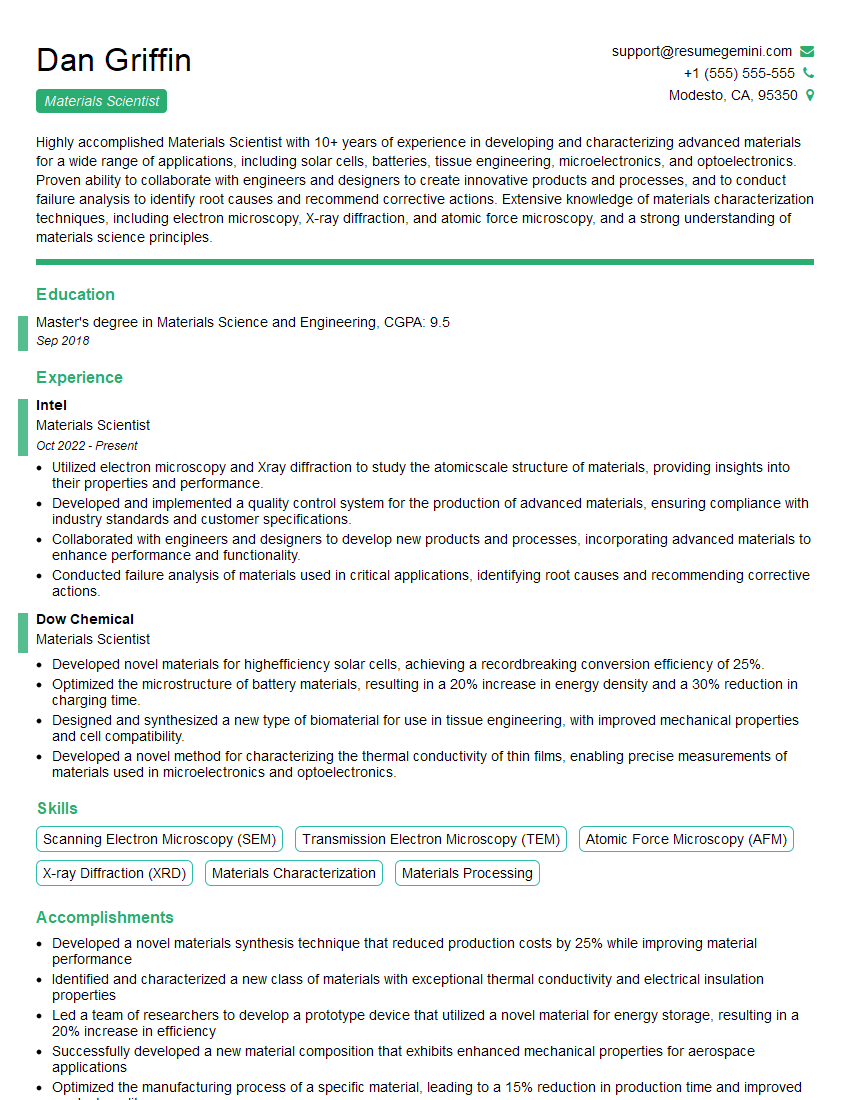
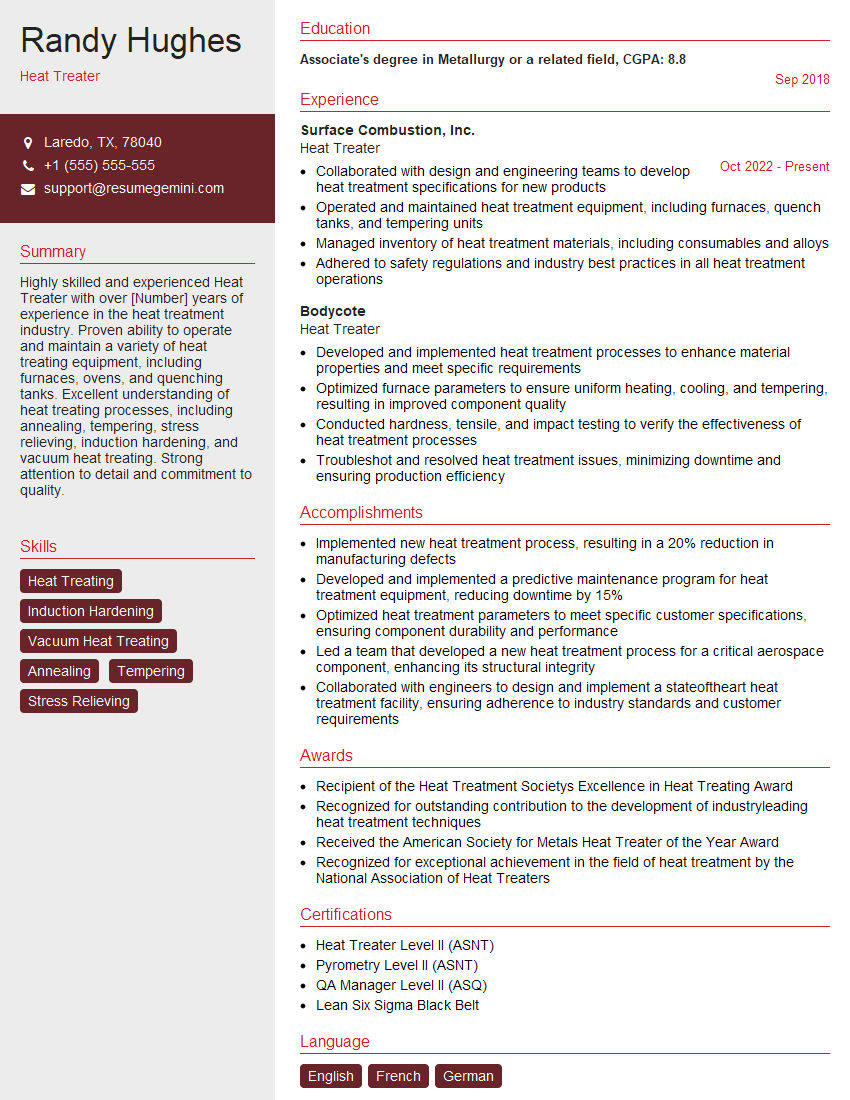
Mastering Controlled Atmosphere Heat Treating opens doors to exciting career opportunities in manufacturing, aerospace, automotive, and other high-tech industries. To maximize your chances of landing your dream job, a strong, ATS-friendly resume is crucial. ResumeGemini is a trusted resource that can help you craft a professional and impactful resume that highlights your skills and experience effectively. ResumeGemini provides examples of resumes tailored to Controlled Atmosphere Heat Treating to help guide you in showcasing your unique qualifications. Invest time in creating a compelling resume – it’s your first impression to potential employers.


Explore more articles
Users Rating of Our Blogs
Share Your Experience
We value your feedback! Please rate our content and share your thoughts (optional).
What Readers Say About Our Blog
Very informative content, great job.
good