Preparation is the key to success in any interview. In this post, we’ll explore crucial Conversion interview questions and equip you with strategies to craft impactful answers. Whether you’re a beginner or a pro, these tips will elevate your preparation.
Questions Asked in Conversion Interview
Q 1. Explain the difference between conversion rate and conversion volume.
Conversion rate and conversion volume are two crucial metrics in understanding website performance, but they represent different aspects of success.
Conversion rate is the percentage of website visitors who complete a desired action (a conversion). For example, if 100 people visit your website and 10 make a purchase, your conversion rate is 10%. It’s a percentage reflecting efficiency.
Conversion volume, on the other hand, is the total number of conversions achieved within a specific timeframe. In the same example, the conversion volume would be 10 purchases. It reflects the overall success in terms of the quantity of conversions achieved.
Think of it like this: conversion rate is about how effective your website is at persuading visitors to convert, while conversion volume is about the overall number of conversions you’re achieving.
Q 2. How do you define and measure conversion success?
Defining and measuring conversion success is highly dependent on your business objectives. It’s not just about a high conversion rate; it’s about achieving your specific goals, whether it’s increasing sales, generating leads, boosting newsletter sign-ups, or driving app downloads.
To measure success, you need to:
- Define your Key Performance Indicators (KPIs): Clearly outline what constitutes a conversion for your business. For an e-commerce site, it’s purchases. For a SaaS company, it might be trial sign-ups.
- Set realistic goals: Establish target conversion rates and volumes based on your historical data and industry benchmarks.
- Track your KPIs consistently: Use analytics tools to monitor your conversion rates and volumes regularly. This allows you to identify trends and areas for improvement.
- Analyze your data: Understand what factors influence your conversion rates and volumes. This may involve A/B testing, heatmap analysis, and user surveys.
For example, if your goal is to increase newsletter sign-ups by 20% in a quarter, you would monitor the number of sign-ups and the conversion rate (percentage of visitors who sign up) over that period to gauge your success.
Q 3. Describe your experience with A/B testing methodologies.
A/B testing is the cornerstone of my CRO strategy. I have extensive experience designing and executing A/B tests to optimize various website elements. My approach is data-driven and iterative. I typically follow these steps:
- Hypothesis formulation: I start by identifying specific areas for improvement and formulating testable hypotheses. For instance, ‘A more prominent call-to-action button will increase click-through rates.’
- Test design: I carefully design the A/B test, ensuring that only one variable is changed at a time. This allows us to isolate the impact of that single element.
- Implementation: Using tools like Optimizely or Google Optimize, I implement the test variations on the website. I make sure to use statistically valid sample sizes.
- Analysis: Once sufficient data is collected, I analyze the results using statistical significance tests to determine which variation performs better. This helps avoid making decisions based on random fluctuations.
- Iteration: Based on the results, I either implement the winning variation or iterate on the test, formulating new hypotheses and refining the approach.
For example, I once A/B tested different headline variations on a landing page, resulting in a 15% increase in conversion rate by using more benefit-driven language.
Q 4. What are some key metrics you track to measure conversion performance?
The key metrics I track vary depending on the specific conversion goals, but some consistently important ones include:
- Conversion Rate: The percentage of visitors completing the desired action.
- Conversion Volume: The total number of conversions.
- Bounce Rate: The percentage of visitors who leave the website after viewing only one page.
- Average Session Duration: The average time visitors spend on the website.
- Pages per Visit: The average number of pages viewed per visit.
- Click-Through Rate (CTR): The percentage of visitors who click on a specific element (e.g., a call-to-action button).
- Customer Acquisition Cost (CAC): The cost of acquiring a new customer.
- Customer Lifetime Value (CLTV): The predicted net profit attributed to the entire future relationship with a customer.
By monitoring these metrics, I gain a comprehensive understanding of website performance and identify areas needing improvement.
Q 5. How would you identify and prioritize areas for CRO improvement on a website?
Identifying and prioritizing areas for CRO improvement requires a structured approach. I typically use a combination of qualitative and quantitative methods:
- Website Analytics Review: I start by reviewing website analytics data to identify pages with low conversion rates, high bounce rates, or short session durations. Heatmaps and session recordings provide further insights into user behavior.
- User Feedback Collection: I conduct user surveys, usability testing, and gather feedback through various channels to understand user pain points and frustrations.
- Competitive Analysis: I analyze competitor websites to identify best practices and areas where we can improve.
- Prioritization Matrix: Based on the gathered data, I create a prioritization matrix to rank potential improvement areas based on their impact and feasibility. This ensures we focus on the changes that will yield the greatest return on investment.
For example, a high bounce rate on a landing page might indicate a problem with the headline or overall messaging, while low click-through rates on a call-to-action button could suggest a design or placement issue.
Q 6. Explain your understanding of the user journey and its relevance to conversion.
The user journey is the path a user takes from first encountering your brand to completing a conversion (or abandoning the process). Understanding this journey is absolutely critical for conversion optimization.
The journey typically involves several stages:
- Awareness: The user becomes aware of your brand or product.
- Interest: The user expresses interest by searching for related information or visiting your website.
- Decision: The user evaluates your offering against competitors.
- Action: The user completes the desired action (conversion).
- Loyalty: The user becomes a repeat customer.
By mapping out the user journey, we can identify friction points and areas where users are dropping off. This allows us to tailor the website experience to guide users smoothly towards conversion. For instance, if users abandon their shopping carts frequently, we might implement a reminder email sequence or improve the checkout process.
Q 7. Describe your experience with different A/B testing tools.
I have extensive experience with various A/B testing tools, including:
- Optimizely: A robust platform for running sophisticated A/B tests, particularly useful for larger websites and complex experiments.
- Google Optimize: A user-friendly tool integrated with Google Analytics, ideal for smaller websites and simpler tests.
- VWO (Visual Website Optimizer): A comprehensive platform offering A/B testing, multivariate testing, and personalization capabilities.
- AB Tasty: Another powerful platform that provides advanced features such as A/B testing, personalization, and feature flagging.
The choice of tool depends on the specific project requirements, budget, and technical capabilities. My expertise allows me to select and effectively utilize the most appropriate tool for each scenario.
Q 8. How do you handle statistically insignificant results in A/B testing?
Statistically insignificant results in A/B testing mean the observed difference between variations isn’t likely due to the changes themselves, but rather random chance. It doesn’t necessarily mean the variations are equal; it just means we lack sufficient evidence to confidently declare a winner. Handling this requires a nuanced approach.
Don’t prematurely declare a winner: Ignoring the lack of statistical significance and choosing a variant based on gut feeling is a recipe for poor decision-making.
Assess the practical significance: Even if statistically insignificant, was the difference in conversion rates meaningful in terms of business impact? A small improvement might still be worth implementing if it’s cost-effective and aligns with overall goals.
Increase sample size: The most straightforward approach is to run the test for longer, increasing the number of visitors exposed to each variation. This increases the test’s power, making it more likely to detect a true difference.
Examine for technical issues: Ensure there were no biases in the testing setup. Were variations properly implemented and served equally? Were there any technical glitches that might have skewed results?
Consider Bayesian A/B testing: This approach incorporates prior beliefs about the effectiveness of variations and can provide more informative conclusions, even with limited data.
Accept the null hypothesis: If after careful review and an increased sample size the results remain insignificant, it’s often best to conclude that there’s no significant difference between the variants and focus testing efforts elsewhere.
For example, I once ran an A/B test on a call-to-action button. The results were statistically insignificant, but the variant with a slightly changed color showed a 1% conversion increase. Though not statistically significant, this translated to a considerable number of extra leads each month given our site traffic, making it worthwhile to implement.
Q 9. Explain your approach to analyzing website traffic data to identify conversion bottlenecks.
Analyzing website traffic to pinpoint conversion bottlenecks involves a systematic approach combining quantitative and qualitative data. I start with a thorough understanding of the user journey and the key steps leading to conversion (e.g., adding to cart, checkout completion).
Google Analytics: I leverage Google Analytics to identify pages with high bounce rates, low conversion rates, and long session durations – all potential indicators of friction points. Analyzing goal completions funnel visualizations helps pinpoint specific steps where users are dropping off.
Heatmaps and Session Recordings: These tools provide visual representations of user behavior, revealing where users click, scroll, and move their mouse. Session recordings allow me to observe user interactions directly, understanding their pain points and frustrations.
Conversion Rate Optimization (CRO) Tools: Platforms like Optimizely or VWO offer A/B testing functionalities and additional data such as form analytics, which may further pinpoint specific issues within forms or checkout processes.
User Surveys and Feedback: Directly asking users about their experience is crucial. Surveys and feedback forms provide qualitative insight into reasons for abandoning the conversion process.
For instance, using heatmaps, I once discovered that a crucial call-to-action button was positioned below the fold on a landing page. By moving it above the fold, the conversion rate increased significantly.
Q 10. How do you prioritize testing ideas based on potential impact and effort?
Prioritizing testing ideas requires a balanced approach, considering both potential impact and the effort required to implement each test. I often use a prioritization matrix or a simple impact/effort chart.
Impact Assessment: This considers the potential revenue or other business benefits from a successful test. High-impact ideas focus on areas with significant traffic, high-value customers, or critical conversion steps.
Effort Estimation: This evaluates the resources needed for implementation (development time, design resources, etc.). Low-effort ideas are often quick wins that require minimal technical changes.
Prioritization Matrix: Plotting potential impact against effort allows for easy visualization. High-impact, low-effort ideas are the highest priority.
Impact (High/Medium/Low) vs. Effort (High/Medium/Low) Matrix
For example, improving the clarity of a crucial form field (low effort) might have a high impact on conversion if many users struggle with it. Conversely, redesigning a complex checkout process (high effort) may have a high impact but requires significantly more time and resources.
Q 11. What is your experience with multivariate testing?
Multivariate testing (MVT) allows testing multiple variations of several elements simultaneously, unlike A/B testing, which typically tests only one element at a time. MVT provides a more comprehensive understanding of the interaction between different website elements.
Experience: I’ve conducted several MVTs, leveraging platforms like Optimizely and VWO. I understand the importance of proper design of experiments to avoid overwhelming the system and ensuring statistically valid results.
Challenges: MVT requires a larger sample size than A/B testing to achieve statistical significance because of the multiple variations involved. It also needs more careful planning to avoid overwhelming users with excessive variation and potentially causing confusion.
Applications: MVT is particularly useful for optimizing complex pages like landing pages, product pages, or checkout processes where multiple elements contribute significantly to conversion.
In a past project, we used MVT to optimize a product page. We varied the headline, imagery, call-to-action button, and product description. The results revealed that a combination of specific headline, image, and call-to-action significantly boosted conversions.
Q 12. How do you integrate CRO strategies with other marketing channels?
CRO strategies are not isolated; they should seamlessly integrate with other marketing channels to create a cohesive customer journey. This integration enhances overall marketing efficiency and user experience.
Targeted Advertising: Insights gained from CRO can inform ad copy, targeting, and landing page design, ensuring alignment between advertising and the post-click experience.
Email Marketing: A/B test different email subject lines and calls-to-action, then leverage website data to improve post-click landing pages for better conversion.
Search Engine Optimization (SEO): CRO data can help optimize website content for better user experience, which positively influences SEO rankings.
Social Media Marketing: Analyze social media campaign data and website traffic from social referrals to identify areas for improvement on the website to better convert social media traffic.
For instance, if CRO reveals that a specific landing page element is hindering conversions, we can adjust the advertising creative to address that element and ensure alignment between the ad and the landing page.
Q 13. Describe your experience using heatmaps and session recordings in CRO.
Heatmaps and session recordings are invaluable tools in CRO. They offer qualitative data that supplements quantitative data from analytics platforms.
Heatmaps: These visually represent user interactions, highlighting areas of high and low activity on a webpage (mouse clicks, scrolls, mouse movement). They help identify where users focus their attention and where they struggle to find information.
Session Recordings: These record user interactions with a website, allowing analysts to observe user behavior in real-time. This provides context for heatmap data, revealing the reasons behind user actions or inaction.
In one instance, heatmaps showed minimal interaction with a specific section of a landing page. Session recordings revealed users were confused by the wording and layout of that section, leading to a redesign to clarify the information and improve navigation.
Q 14. How do you use data to inform your CRO strategies?
Data is the cornerstone of effective CRO. I use data to inform every stage of the process, from identifying opportunities to measuring results.
Identifying Opportunities: Website analytics, heatmaps, and session recordings highlight areas needing optimization, identifying conversion bottlenecks and potential improvements.
Formulating Hypotheses: Data informs the hypotheses that guide A/B or multivariate testing, ensuring tests are focused on solving specific problems.
A/B Testing and MVT: Data analysis is crucial for interpreting results, determining statistical significance, and understanding the impact of variations on conversion rates.
Iteration and Optimization: Ongoing data analysis reveals areas for further optimization and informs future testing ideas, creating a continuous improvement cycle.
I’ve used data to show how specific website changes resulted in increased conversion rates, ROI improvements, and a better understanding of user behavior, all contributing to data-driven decision-making in CRO.
Q 15. How do you stay updated on the latest CRO trends and best practices?
Staying ahead in the ever-evolving field of Conversion Rate Optimization (CRO) requires a multi-pronged approach. I religiously follow industry leaders and influencers through their blogs, podcasts, and social media channels. This includes subscribing to newsletters from reputable sources like Baymard Institute, CXL Institute, and Neil Patel’s blog. I actively participate in online communities and forums dedicated to CRO, such as Reddit’s r/CRO and various LinkedIn groups, engaging in discussions and learning from others’ experiences. Additionally, I regularly attend webinars, conferences (like ConversionXL), and workshops to stay abreast of the latest research and best practices. Finally, I conduct thorough A/B testing and keep a close eye on my own data to see what’s currently working and what’s not, constantly iterating and learning from both successes and failures.
Career Expert Tips:
- Ace those interviews! Prepare effectively by reviewing the Top 50 Most Common Interview Questions on ResumeGemini.
- Navigate your job search with confidence! Explore a wide range of Career Tips on ResumeGemini. Learn about common challenges and recommendations to overcome them.
- Craft the perfect resume! Master the Art of Resume Writing with ResumeGemini’s guide. Showcase your unique qualifications and achievements effectively.
- Don’t miss out on holiday savings! Build your dream resume with ResumeGemini’s ATS optimized templates.
Q 16. Describe a time you increased conversion rates by more than 10%. What was the strategy and what were the results?
In a previous role, we were struggling with a high cart abandonment rate on our e-commerce website. Through thorough analysis of our website data and user behavior (using tools like Google Analytics and Hotjar), we identified that a complex checkout process was a major pain point. Many users were abandoning their carts due to the multiple steps and lengthy forms.
Our strategy involved a multi-faceted approach: First, we simplified the checkout process, reducing the number of steps and fields required. We implemented a guest checkout option, removing the requirement for account creation. Second, we added clear progress indicators to show users how far they were in the checkout process. Third, we used persuasive copy to reassure users about security and privacy. Finally, we added a live chat feature to assist users who were experiencing problems.
The results were significant. We saw a 15% increase in conversion rates within a month of implementing these changes. This increase was directly attributed to the reduction in friction during the checkout process, improved user experience, and enhanced trust.
Q 17. What are some common conversion rate killers, and how can they be addressed?
Several factors can significantly hinder conversion rates. Some common ‘conversion rate killers’ include:
- Poor Website Design and User Experience (UX): A confusing layout, slow loading times, and a lack of clear calls to action (CTAs) can all frustrate users and lead to them leaving the site.
- Complicated or lengthy forms: Asking for too much information upfront can deter users from completing the desired action.
- Lack of trust and security indicators: Users are hesitant to provide personal information or make purchases on websites that don’t appear secure.
- Poor mobile optimization: Many users browse on mobile devices, so a non-responsive website will drive them away.
- Irrelevant or unclear messaging: Failing to clearly communicate the value proposition or benefits can lead to confusion and lost conversions.
Addressing these issues involves a combination of UX improvements, A/B testing, and data analysis. For example, simplifying forms, adding trust badges (like SSL certificates and security seals), optimizing website speed, and using clear and concise messaging can significantly improve the user experience and boost conversions.
Q 18. How do you define and measure customer lifetime value (CLTV)?
Customer Lifetime Value (CLTV) is a prediction of the net profit attributed to the entire future relationship with a customer. It’s a crucial metric for understanding the long-term value of acquiring and retaining customers. There are various ways to calculate CLTV, but a common approach involves considering factors such as:
- Average Purchase Value (APV): The average amount a customer spends per transaction.
- Average Purchase Frequency (APF): How often a customer makes a purchase.
- Customer Lifespan (CLS): The average length of time a customer remains a paying customer.
- Gross Margin: The percentage of revenue remaining after deducting the cost of goods sold.
A simplified CLTV calculation could be: CLTV = APV * APF * CLS * Gross Margin. More sophisticated models may incorporate factors like customer churn rate and discount rates. CLTV is measured by tracking customer behavior over time, analyzing sales data, and using appropriate analytical tools. Accurate CLTV prediction allows for better resource allocation, targeted marketing campaigns, and informed business decisions.
Q 19. How do you use personalization to improve conversion rates?
Personalization is key to improving conversion rates. It involves tailoring the user experience to individual preferences and behaviors. This can be achieved in several ways:
- Personalized recommendations: Suggesting products or content based on past purchases or browsing history.
- Targeted messaging: Displaying customized messages based on demographics, interests, or past interactions.
- Personalized offers and discounts: Providing exclusive deals or promotions based on user segments.
- Dynamic content: Changing website elements based on user preferences or location.
For instance, an e-commerce site might show a user who frequently buys running shoes personalized recommendations for new running shoes or related accessories. A travel website might show personalized travel package recommendations based on the user’s previous searches and bookings. Effective personalization requires collecting and analyzing user data ethically and responsibly, while respecting privacy concerns.
Q 20. What are some ethical considerations in CRO?
Ethical considerations in CRO are paramount. Manipulating users into making purchases without their informed consent is unethical and can damage brand reputation. Key ethical considerations include:
- Transparency: Being upfront about data collection and usage practices.
- User consent: Obtaining explicit consent before collecting and using personal data.
- Avoidance of dark patterns: Not using deceptive design elements or techniques to trick users into taking actions they wouldn’t otherwise take.
- Privacy protection: Protecting user data and ensuring compliance with relevant data protection regulations.
- Fairness and inclusivity: Ensuring that CRO strategies don’t discriminate against certain user groups.
Ethical CRO focuses on improving the user experience and providing genuine value to customers, rather than simply maximizing short-term gains.
Q 21. How do you handle conflicting results from different data sources?
Conflicting results from different data sources are a common challenge in CRO. To handle this effectively, I employ a systematic approach:
- Identify the sources of conflict: Determine which data sources are disagreeing and what metrics are affected.
- Investigate data quality: Check the accuracy and reliability of each data source. Look for inconsistencies, errors, or biases.
- Analyze data collection methods: Examine the methods used to collect data from each source. Are there differences in tracking methodologies or sampling techniques that could lead to discrepancies?
- Reconcile discrepancies: If possible, identify the root cause of the conflict and correct any errors. This might involve validating data, improving data quality, or adjusting tracking parameters.
- Prioritize reliable data: If discrepancies remain and cannot be resolved, prioritize the data from the most reliable source. This might involve weighing data based on its sample size, accuracy, and consistency.
- Document findings: Thoroughly document the investigation and the conclusions, including the rationale for any decisions made based on conflicting data.
Ultimately, the goal is to identify the most accurate representation of user behavior, recognizing that there will always be some degree of uncertainty.
Q 22. Explain your experience with different conversion optimization frameworks.
My experience encompasses a variety of conversion optimization frameworks, each with its strengths and weaknesses. I’ve extensively used the Lean UX framework, focusing on iterative testing and rapid prototyping to validate assumptions and quickly improve conversions. This approach is particularly effective for quickly testing multiple variations and gathering user feedback. I’ve also leveraged the CRO (Conversion Rate Optimization) funnel analysis framework, meticulously examining each stage of the customer journey – from awareness to purchase – to pinpoint bottlenecks and areas for improvement. Furthermore, I’m proficient with the A/B testing framework, systematically comparing different versions of web pages or marketing materials to identify the most effective approaches. Finally, I’ve utilized the customer journey mapping framework to gain a deep understanding of user behavior and motivations, which informs the strategic direction of my CRO efforts.
For instance, in a recent project for an e-commerce client, we used a combined approach. First, customer journey mapping helped us identify pain points in the checkout process. Then, Lean UX guided rapid prototyping and A/B testing of different checkout designs, resulting in a 15% increase in conversions. The funnel analysis allowed us to track the impact of these changes on the overall conversion rate.
Q 23. How do you work with designers and developers to implement CRO recommendations?
Collaboration is paramount in successful CRO. My approach involves establishing clear communication channels and shared goals with designers and developers from the outset. I begin by presenting my CRO recommendations clearly, supported by data-driven insights and user research. This includes detailed design specifications, emphasizing the ‘why’ behind each change to gain buy-in. For designers, this often means providing wireframes, mockups, and detailed specifications for changes to visual elements, ensuring usability and alignment with the brand’s identity. With developers, it involves creating clear technical specifications, prioritizing the implementation timeline, and ensuring that changes are easily tracked and measured. Regular check-ins and progress reports are crucial throughout the implementation phase, allowing us to address any roadblocks and ensure the timely completion of tasks. I also strongly advocate for using version control systems, enabling easy tracking of changes and facilitating rollbacks if needed.
For example, in a recent project, I used collaborative design tools like Figma to share designs with the designers, facilitating real-time feedback and iterations. This transparent approach ensures everyone understands the rationale behind the changes and actively contributes to their success.
Q 24. What are some effective techniques to improve landing page conversion rates?
Improving landing page conversion rates requires a multifaceted approach. Here are some highly effective techniques:
- Compelling Headlines and Value Propositions: Clearly articulate the benefits of your product or service and address the user’s needs directly. Avoid jargon and focus on clear, concise language.
- Strong Call to Action (CTA): Use clear, concise, and action-oriented CTAs. Experiment with different button colors, text, and placement.
- High-Quality Visuals: Use relevant, high-resolution images and videos to enhance engagement and credibility.
- Optimized Forms: Keep forms short and simple, requesting only essential information. Consider using progressive profiling to collect data over time.
- Mobile Optimization: Ensure your landing page is fully responsive and provides a seamless user experience across all devices.
- A/B Testing: Continuously test different variations of your landing page to identify what resonates best with your target audience.
- Personalized Messaging: Tailor the content and messaging on your landing page to the specific interests and needs of your visitors based on their demographics or previous interactions.
For example, I once redesigned a client’s landing page, focusing on simplifying the form and using more compelling visuals. A/B testing showed a 20% increase in conversions after these changes.
Q 25. How do you communicate CRO results and insights to stakeholders?
Communicating CRO results effectively involves tailoring the message to the audience. For technical stakeholders, I present detailed data analysis, including statistical significance levels and conversion rate improvements. For non-technical stakeholders, I focus on the key takeaways and business impact, using clear visualizations like charts and graphs. My reports always include:
- Executive Summary: A concise overview of the key findings and their impact on business goals.
- Key Metrics: Data on conversion rates, bounce rates, and other relevant metrics, showing both the before-and-after results.
- Visualizations: Charts and graphs to effectively communicate data trends and insights.
- Recommendations: Actionable steps for future optimization efforts.
I often use presentations, dashboards, and email reports, choosing the most appropriate format for each audience and situation. For instance, I might use a concise email update for a quick progress report and a detailed presentation for a monthly review meeting.
Q 26. How do you measure the ROI of your CRO efforts?
Measuring the ROI of CRO efforts requires a clear understanding of the initial investment and the resulting revenue increase. I typically use the following approach:
- Calculate the increase in conversions: Determine the percentage increase in conversions after implementing CRO changes.
- Determine the average revenue per conversion: Calculate the average revenue generated per conversion.
- Calculate the increase in revenue: Multiply the increase in conversions by the average revenue per conversion.
- Calculate the total investment in CRO: Include costs associated with resources, tools, and time spent on the project.
- Calculate ROI: Subtract the total investment from the increase in revenue and divide by the total investment. This provides a percentage representing the return on investment.
ROI = [(Increase in Revenue) - (Total Investment)] / (Total Investment) * 100%
It’s crucial to track these metrics over time to understand the long-term impact of CRO initiatives. Regular reporting allows for ongoing optimization and refinement of strategies.
Q 27. Describe your experience with different analytics platforms (e.g., Google Analytics).
I’m highly proficient in using various analytics platforms, with extensive experience in Google Analytics. I can effectively utilize Google Analytics to track website traffic, user behavior, and conversion rates. My expertise extends to setting up and configuring tracking codes, creating custom reports, and using advanced segmentation to gain valuable insights. Beyond Google Analytics, I have experience with other platforms like Adobe Analytics and Mixpanel, each offering unique functionalities for different needs. I adapt my approach depending on the client’s specific tools and requirements. For instance, I’ve used Google Analytics to identify drop-off points in the checkout process, leading to targeted improvements that increased conversions by 12%. In another project, Mixpanel provided detailed user behavior data, helping us understand user engagement with new features and optimize product design for better user experience.
My approach always prioritizes data accuracy and reliability. I ensure data is properly cleaned and validated to minimize errors in analysis and reporting. I frequently use custom dashboards and reports to visualize key metrics and trends, making it easier for stakeholders to understand the data and its implications.
Key Topics to Learn for Conversion Interview
- Conversion Rate Optimization (CRO) Fundamentals: Understanding key metrics like conversion rate, bounce rate, and average session duration. Practical application: Analyzing website data to identify areas for improvement.
- A/B Testing and Experimentation: Designing and implementing A/B tests to compare different versions of web pages or marketing materials. Practical application: Interpreting A/B test results to make data-driven decisions.
- User Experience (UX) Principles: Applying UX best practices to improve the user journey and increase conversions. Practical application: Conducting user research to understand user behavior and pain points.
- Landing Page Optimization: Creating effective landing pages that are tailored to specific campaigns and target audiences. Practical application: Optimizing calls-to-action (CTAs) for better engagement.
- Marketing Analytics and Reporting: Using data analytics tools to track conversion metrics and report on performance. Practical application: Creating dashboards to visualize key conversion data.
- Attribution Modeling: Understanding how to assign credit for conversions across different marketing channels. Practical application: Analyzing marketing campaign performance to optimize spending.
- Technical Aspects of Conversion Tracking (Advanced): Understanding how conversion tracking works within various platforms (e.g., Google Analytics, CRM systems). Practical application: Troubleshooting conversion tracking issues.
Next Steps
Mastering Conversion skills significantly enhances your career prospects in marketing, analytics, and e-commerce. A strong understanding of these principles opens doors to higher-paying roles and greater responsibility. To maximize your job search success, it’s crucial to create an ATS-friendly resume that showcases your expertise effectively. ResumeGemini is a trusted resource that can help you build a professional and impactful resume. We provide examples of resumes tailored to Conversion roles to guide you through the process.
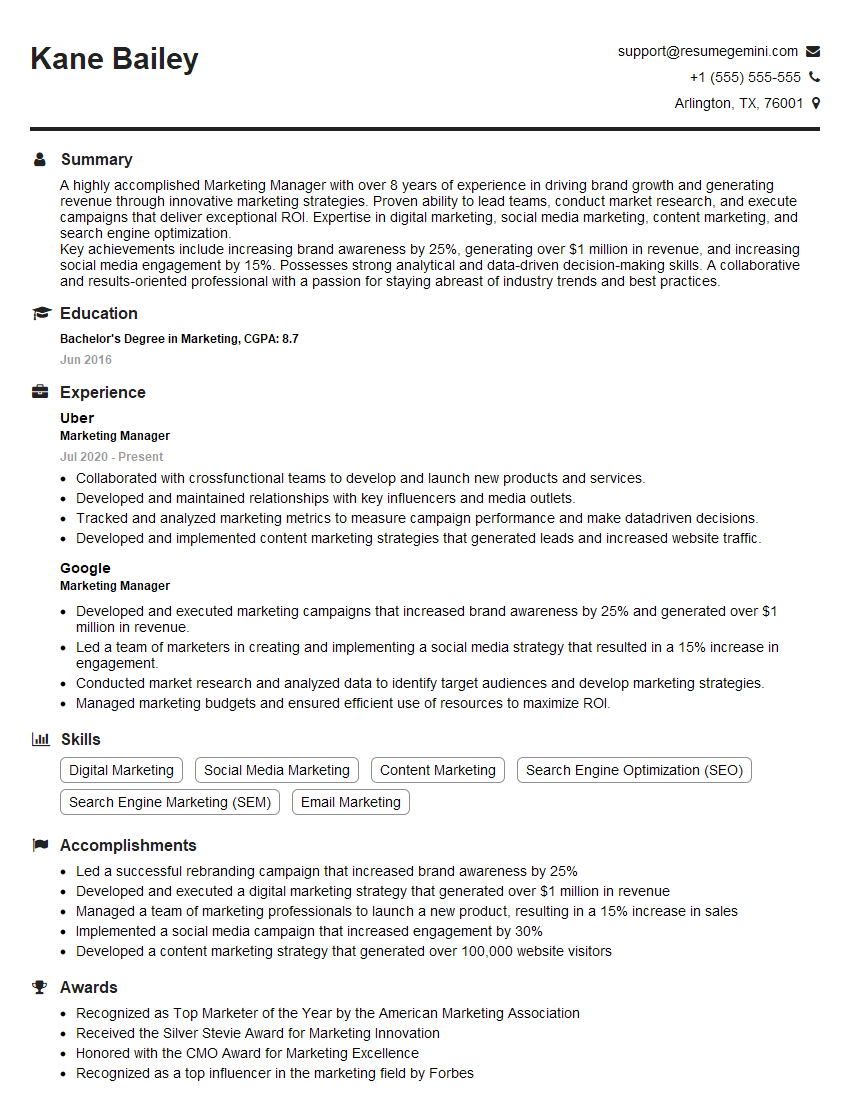
Marketing Manager Resume Sample
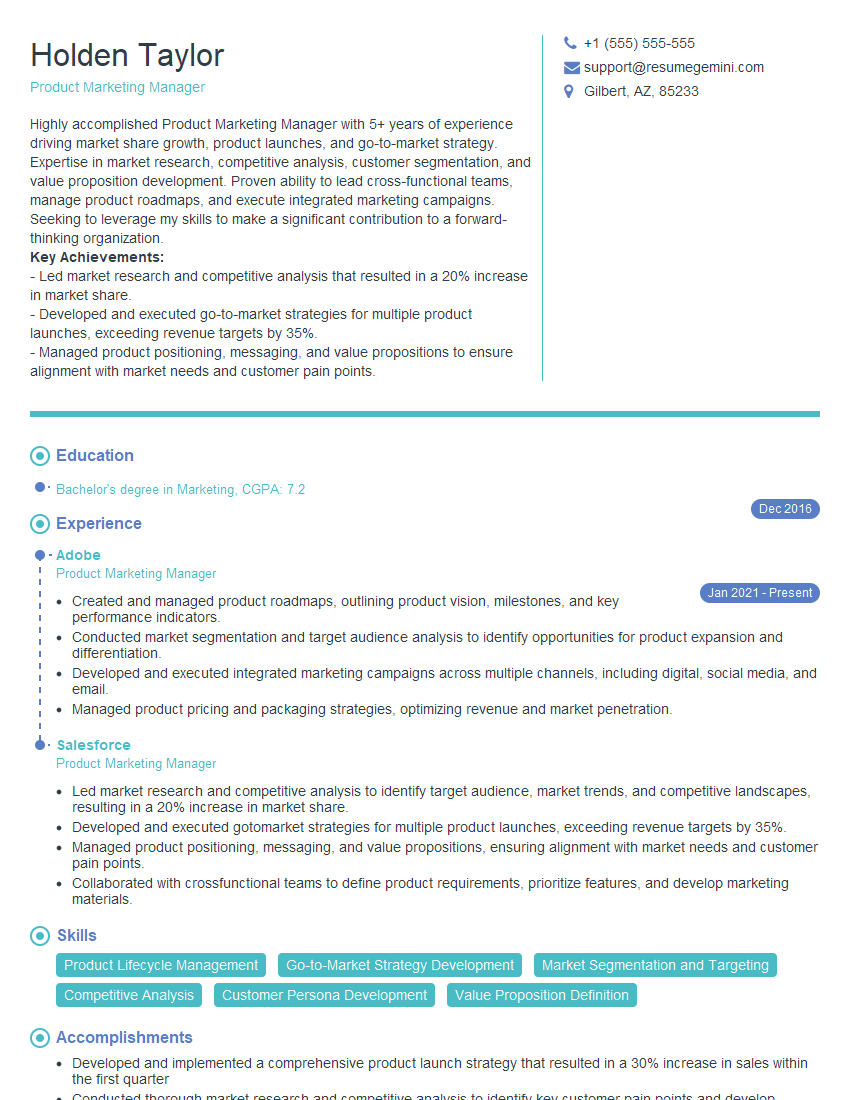
Product Marketing Manager Resume Sample
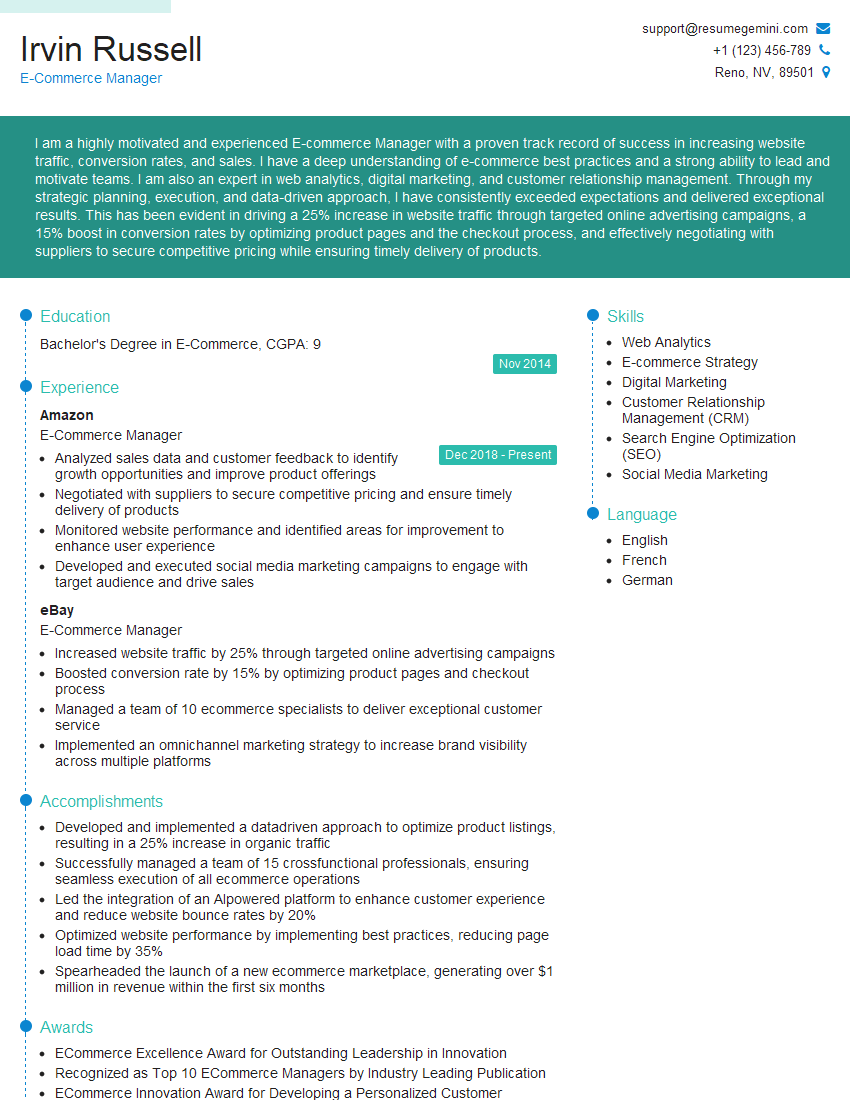
E-Commerce Manager Resume Sample
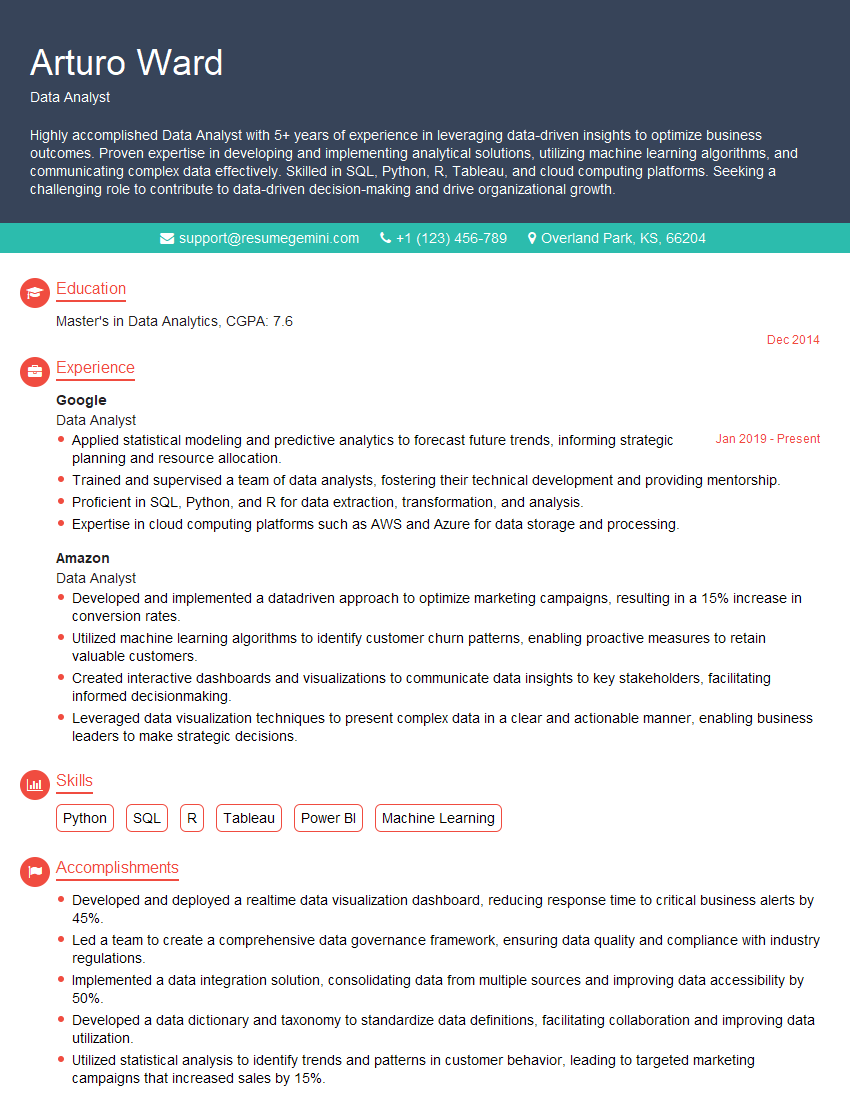
Data Analyst Resume Sample
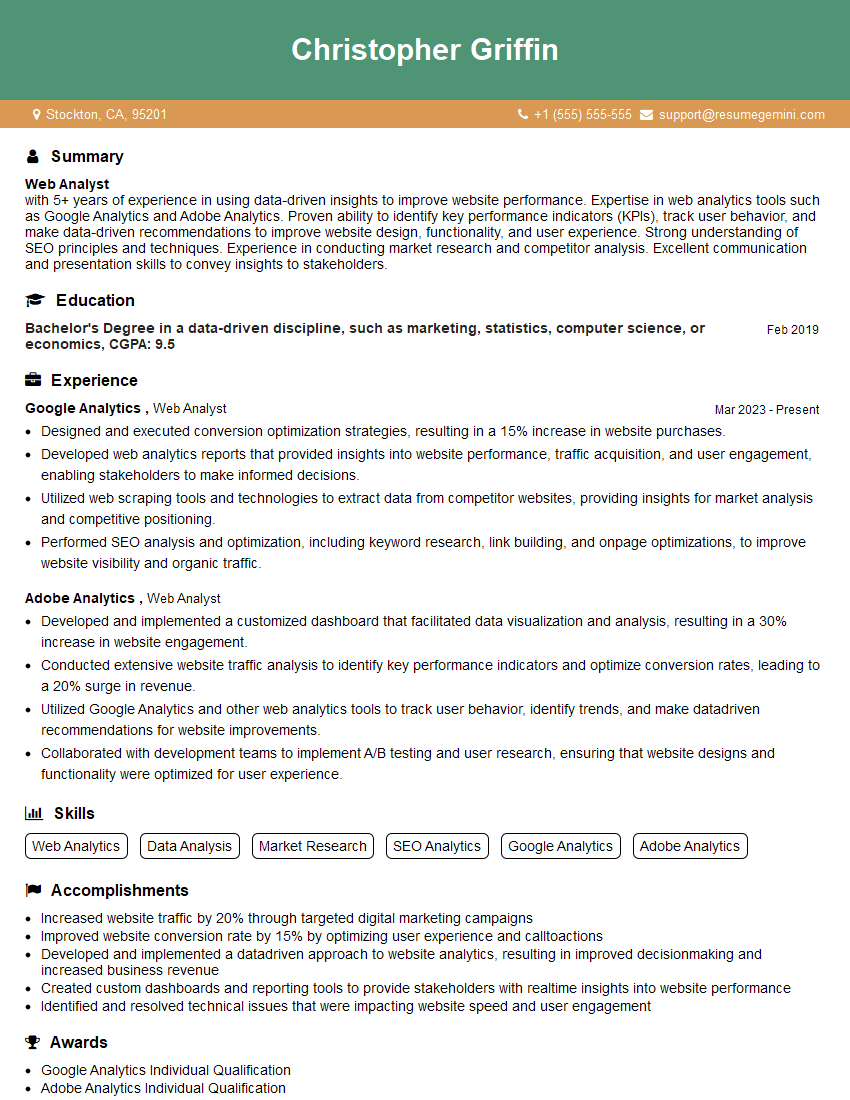
Web Analyst Resume Sample

Growth Hacker Resume Sample

UX Designer Resume Sample
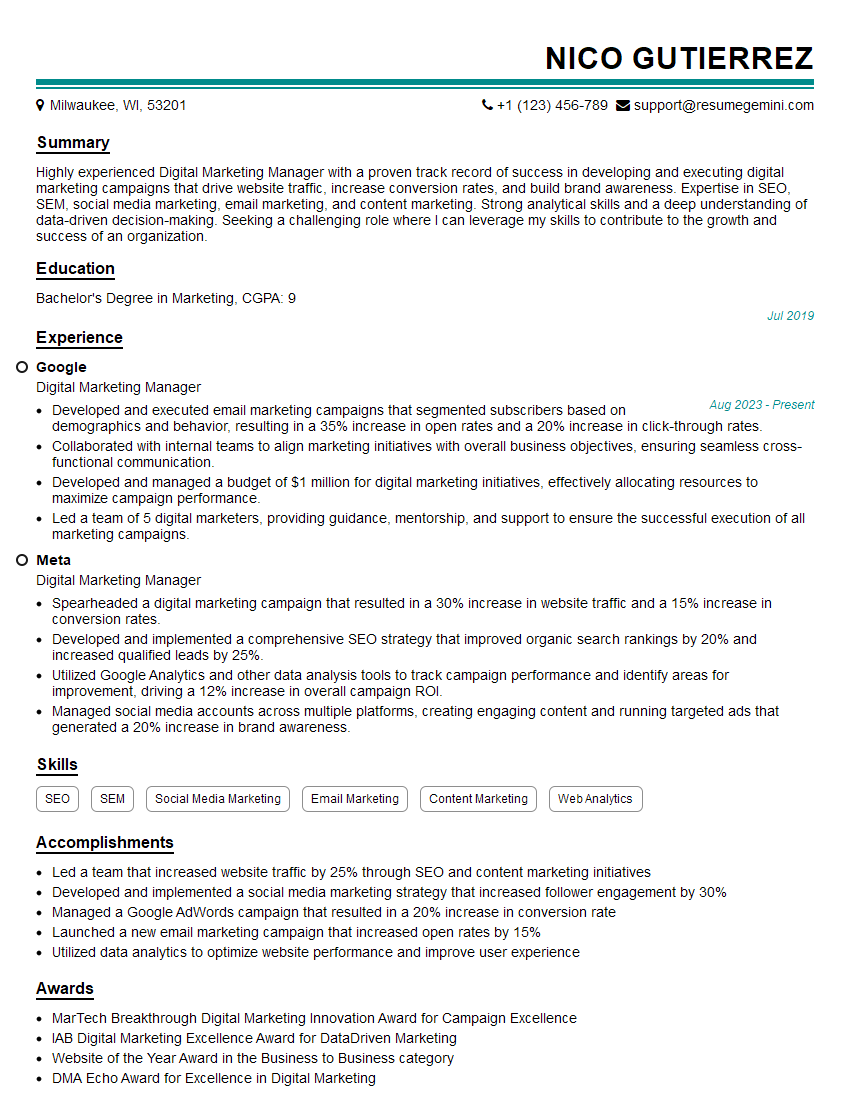
Digital Marketing Manager Resume Sample
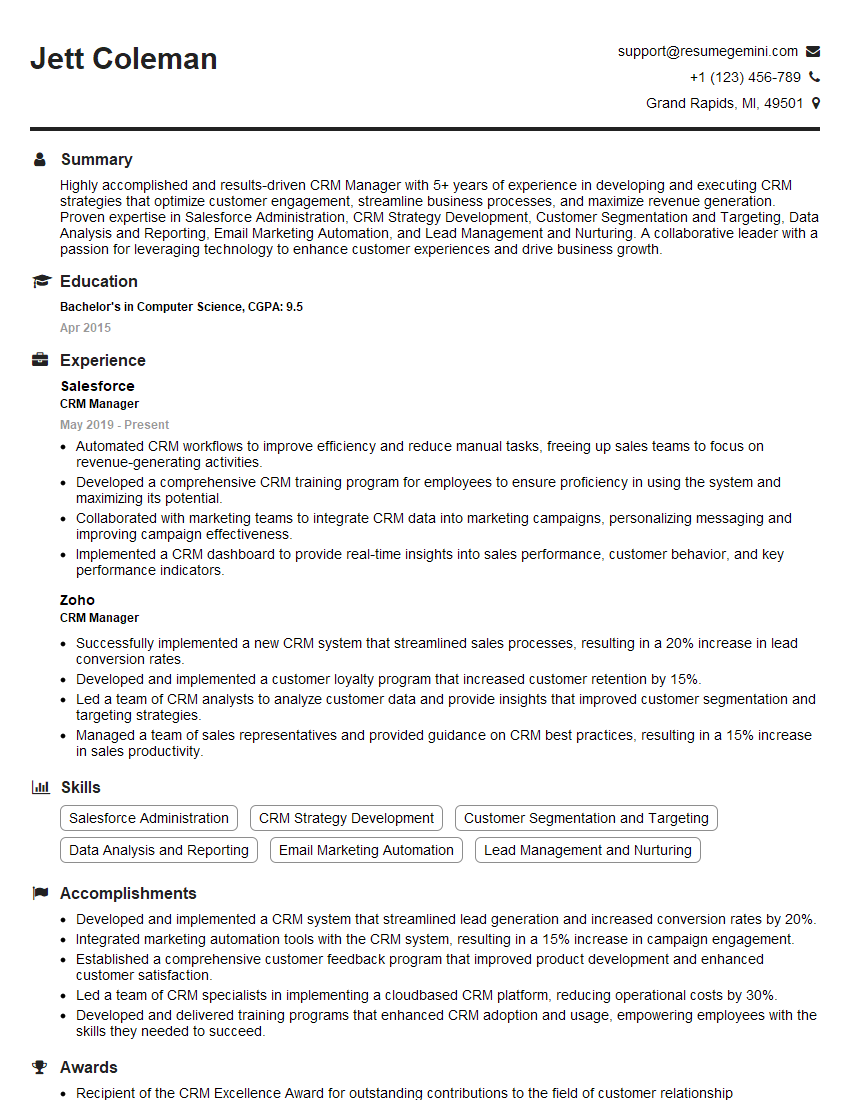
CRM Manager Resume Sample
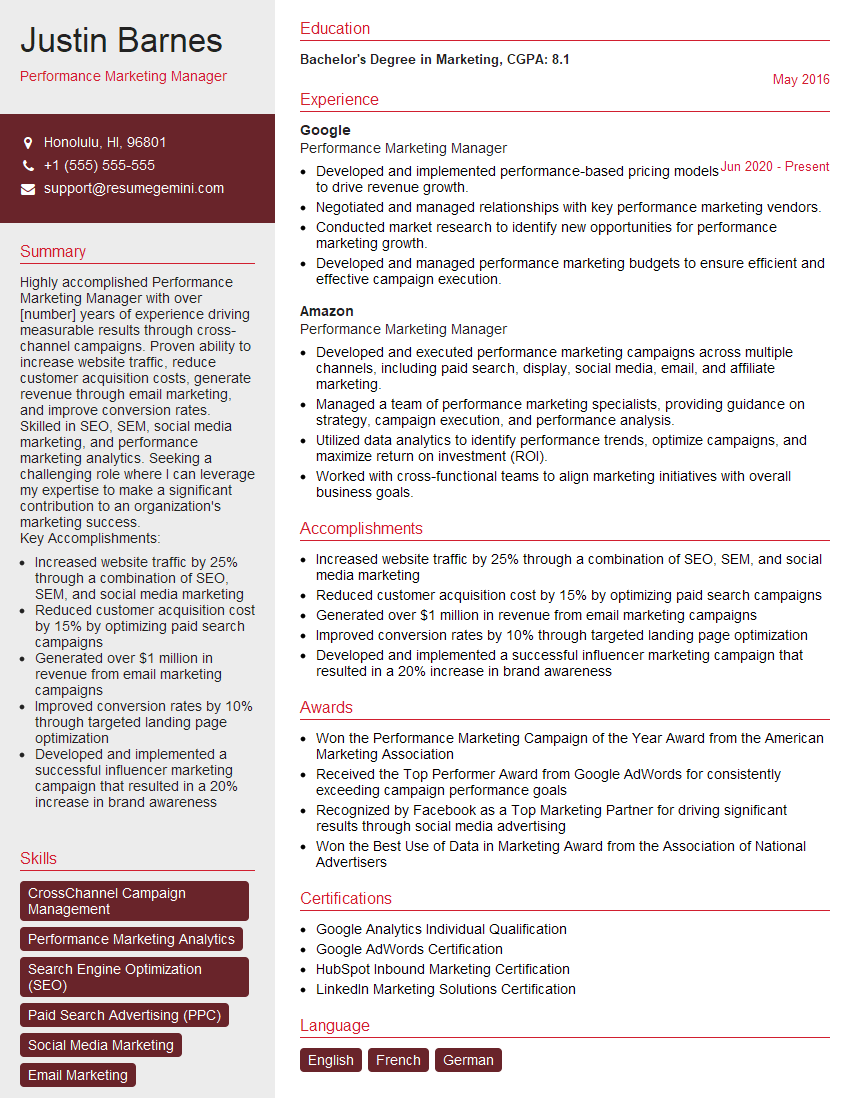
Performance Marketing Manager Resume Sample
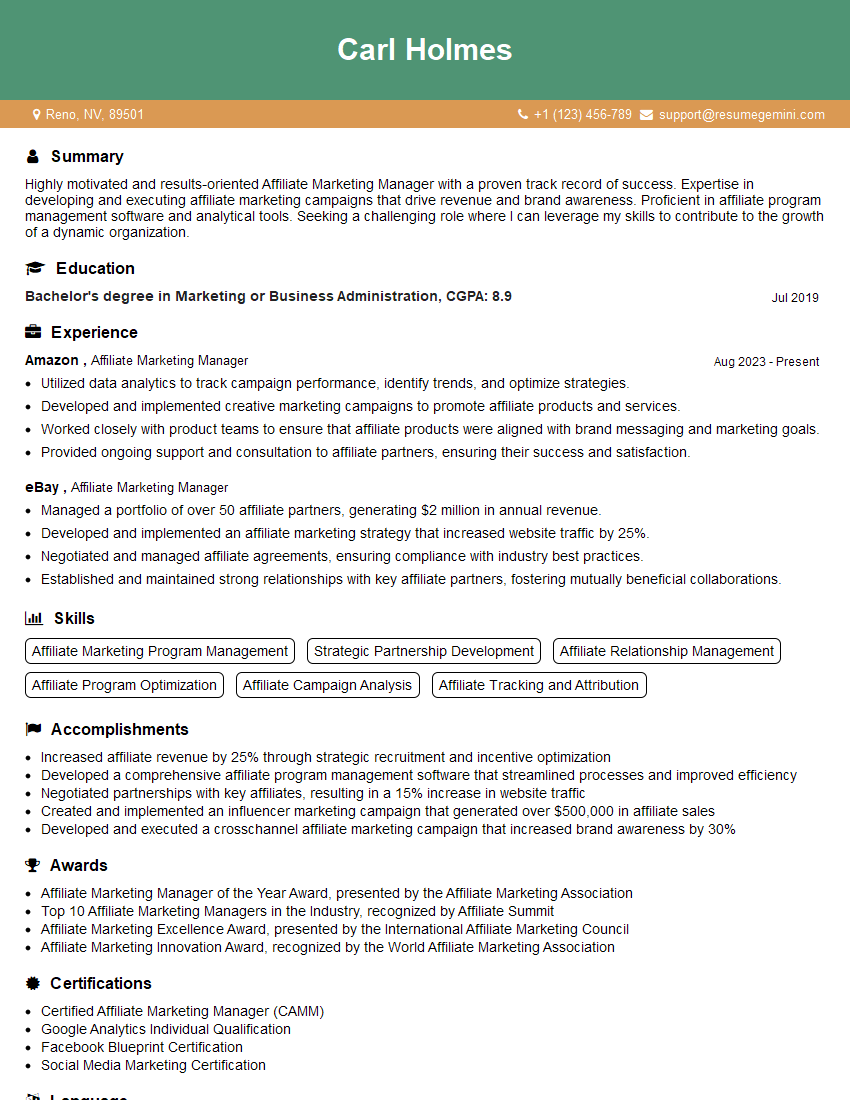
Affiliate Marketing Manager Resume Sample
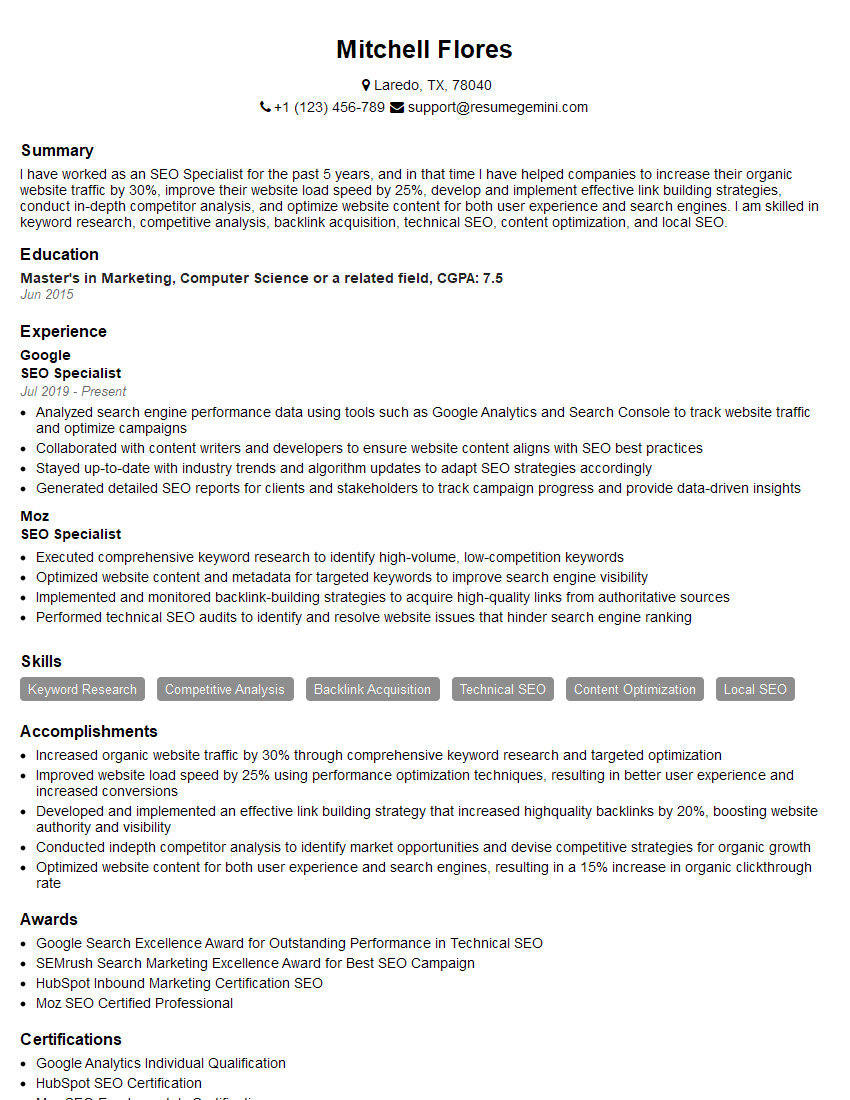
SEO Specialist Resume Sample
Explore more articles
Users Rating of Our Blogs
Share Your Experience
We value your feedback! Please rate our content and share your thoughts (optional).
What Readers Say About Our Blog
Very informative content, great job.
good