Preparation is the key to success in any interview. In this post, we’ll explore crucial Copper Cable Termination interview questions and equip you with strategies to craft impactful answers. Whether you’re a beginner or a pro, these tips will elevate your preparation.
Questions Asked in Copper Cable Termination Interview
Q 1. Explain the process of terminating a Cat5e cable.
Terminating a Cat5e cable involves connecting it to a network device using an RJ45 connector. This ensures a reliable and consistent network connection. It’s a precise process; even a slight mistake can lead to connection problems. Think of it like carefully assembling a tiny, intricate puzzle – each step must be done correctly.
- Cut the Cable: Cut the cable to the desired length, ensuring a clean cut to avoid frayed wires.
- Strip the Sheath: Carefully remove the outer sheath, exposing the four pairs of twisted wires. Be cautious not to nick the individual wires.
- Untwist and Arrange Wires: Untwist the pairs slightly, but keep them relatively close. Arrange the wires according to either the TIA/EIA 568A or 568B standard (explained in question 3). This is crucial for proper signal transmission.
- Crimp the Connector: Insert the wires into the RJ45 connector, ensuring they reach the end and are straight. Crimp the connector firmly using a crimping tool. A poorly crimped connector is a common source of connection failure.
- Test the Connection: After termination, always test the connection using a cable tester to ensure continuity and identify any shorts or opens.
Remember, consistency is key. Following the correct wiring scheme and using the right tools ensures a successful termination every time. Improper termination can lead to slow network speeds, intermittent connections, or complete failure.
Q 2. What are the common types of connectors used in copper cable termination?
Several connector types are used in copper cable termination, each designed for specific applications. The most common is the RJ45 connector, used extensively for Ethernet networks. It’s a standardized connector, making it widely compatible and easy to work with. Other types include:
- RJ11: Primarily used for telephone lines.
- BNC: Used in coaxial cable networks, offering better signal shielding.
- ST and SC: Fiber optic connectors, not copper-based.
The choice of connector depends on the cable type and its intended application. For instance, an RJ45 connector is essential for Cat5e and Cat6 cables used in Ethernet networks, while an RJ11 is used for traditional phone lines. Using the wrong connector will obviously not work and could damage equipment.
Q 3. Describe the difference between TIA/EIA 568A and 568B wiring standards.
TIA/EIA 568A and 568B are wiring standards that define the color arrangement of wires within an RJ45 connector. Both standards achieve the same functionality, but they differ in the order of the wire colors. The difference is subtle, yet crucial. Using one standard on both ends of a cable is vital. Mixing them results in a non-functional connection. Think of it as a lock and key; they must match exactly to work correctly.
Here’s a comparison:
- TIA/EIA 568A:
Orange/White, Orange, Green/White, Blue, Blue/White, Green, Brown/White, Brown - TIA/EIA 568B:
Green/White, Green, Orange/White, Blue, Blue/White, Orange, Brown/White, Brown
In practice, either standard works fine, as long as you maintain consistency between the two ends of the cable. The choice often comes down to personal preference or company standards.
Q 4. How do you test for continuity and shorts in a copper cable?
Testing for continuity and shorts in a copper cable involves using a cable tester. This device sends signals through the cable and checks for proper connection. A continuity test verifies that the signal completes the circuit without interruption, essential for a proper connection. A short test identifies unintended connections or shorts between different wire pairs. Shorts significantly impede signal transmission. Think of it like checking for breaks or leaks in a water pipe.
Cable testers provide visual or audible indicators, highlighting any issues. They often include lights for each wire pair, indicating continuity or shorts. A good tester is an indispensable tool for any network technician.
Q 5. What tools are essential for proper copper cable termination?
Proper copper cable termination requires a few essential tools. These ensure precision and safety. Here are the key items:
- Cable Cutter/Stripper: Used to precisely cut and strip the outer sheath of the cable. A good tool prevents damage to the inner wires.
- RJ45 Crimping Tool: Essential for securely crimping the RJ45 connector onto the wires, creating a reliable connection. This must be a good quality tool to ensure proper crimping and avoid damage.
- Cable Tester: Used to verify the cable’s continuity and check for shorts or opens after termination.
- Punch Down Tool (Optional): Used for terminating cables in patch panels.
- Wire Strippers: For more precise stripping of the individual wire pairs.
Investing in high-quality tools is crucial for consistent and reliable results. Cheap tools often lead to poor terminations and connection issues.
Q 6. Explain the importance of proper cable stripping and wire preparation.
Proper cable stripping and wire preparation are fundamental to successful cable termination. Neglecting this step often leads to connection problems. Think of it as preparing the foundation of a house; a shaky foundation compromises the entire structure.
Cable Stripping: Requires carefully removing the outer sheath without damaging the inner wires. Too much stripping can expose the wires excessively, making them vulnerable to damage and affecting the signal integrity. Too little stripping prevents proper insertion into the connector.
Wire Preparation: Involves straightening the wires and ensuring they are neatly arranged within the connector. This minimizes signal distortion and maximizes conductivity. Each wire must be the correct length and must sit correctly within the connector. Any unevenness or damage will significantly impact the cable’s performance.
Q 7. How do you identify different cable types by their markings?
Identifying different cable types is crucial for proper termination and application. Cables are typically marked with printed labels, usually including information like cable type (e.g., Cat5e, Cat6), manufacturer, and sometimes even certification information. Look for clear markings on the cable jacket itself and potentially on the connector. For example, you might see ‘CAT6’ printed along the length of a Category 6 cable. Understanding these markings allows you to choose the correct connectors and termination methods. Incorrect identification could lead to improper termination and potential connection failures. Some manufacturers use color-coding on the cable jacket to further distinguish cable types.
Q 8. What are the safety precautions to take when terminating copper cables?
Safety is paramount when working with copper cables. Always start by de-energizing the cable and any connected equipment. This prevents electrical shock. Next, consider the environment. If working at heights, use appropriate fall protection. Wear safety glasses to protect your eyes from flying debris during stripping or crimping. Insulated tools are crucial to prevent short circuits and shocks. Finally, be mindful of sharp cable ends and use appropriate handling techniques to avoid cuts.
- Always de-energize: Turn off power at the source before working on any cable.
- Use insulated tools: Line-rated tools are essential for higher voltage applications.
- Wear appropriate PPE: Safety glasses, gloves, and potentially hearing protection (for power tools) should be worn.
- Proper disposal: Dispose of cable scraps responsibly, following local regulations.
Q 9. Describe the process of crimping a connector onto a copper cable.
Crimping a connector onto a copper cable is a precise process. First, you’ll need the correct connector for your cable type and gauge. Then, carefully strip the cable’s outer jacket to the appropriate length as indicated on the connector’s packaging. Next, carefully separate and straighten the individual conductor wires, making sure there are no kinks or breaks. Insert the wires into the connector, ensuring they are fully seated. Finally, crimp the connector using a suitable crimping tool. A good crimp ensures the connector and wire form a solid, reliable electrical connection.
It’s crucial to use the right crimping tool for the connector type to avoid damaging the connector or the cable. A poorly crimped connector can lead to loose connections, intermittent signal loss or complete failure, requiring rework. Always visually inspect the crimp after completion, ensuring there are no deformed parts.
Q 10. What are the common causes of poor cable termination?
Poor cable terminations often stem from a few common culprits. Incorrect stripping length can lead to insufficient contact within the connector, resulting in high resistance. Improperly crimped connectors, whether too loose or too tight, create unreliable connections, often manifesting as signal degradation or complete failure. Using the wrong connector for the cable type or gauge is another frequent issue, leading to poor mechanical and electrical integrity. Finally, environmental factors such as moisture or corrosion can degrade the connection over time.
- Incorrect stripping length: Too short exposes less surface for contact, while too long may cause short circuits.
- Improper crimping: Poor crimp can lead to loose wires, high resistance, and signal loss.
- Wrong connector type: Compatibility is critical; using an inappropriate connector renders the entire termination flawed.
- Environmental damage: Exposure to moisture or corrosive elements can deteriorate the connector over time.
Q 11. How do you troubleshoot a cable termination issue?
Troubleshooting a cable termination issue starts with visual inspection. Check for obvious damage to the cable or connector, such as bent pins, broken wires, or corrosion. Then, use a continuity tester to check for connectivity between the cable’s conductors and the connector’s pins. If there’s discontinuity, the problem lies within the termination. If the continuity test is positive, consider using a time domain reflectometer (TDR) to locate impedance mismatches along the cable’s length, which could indicate a faulty crimp or other connection problem. Remember to always check your equipment and testing methodology to ensure their calibration and proper operation.
For instance, if a network connection fails, you might use a cable tester to identify if the failure is at the cable termination. Similarly, a technician diagnosing a faulty sensor connection might use a multimeter to test voltage or current at the termination points.
Q 12. Explain the concept of impedance matching in copper cable termination.
Impedance matching is critical in high-speed data transmission. Impedance refers to the resistance to the flow of electrical signals. Mismatched impedance at a termination point results in signal reflections. These reflections weaken the signal, cause data corruption, and lead to signal degradation. To prevent this, the characteristic impedance of the cable should match the impedance of the termination equipment. This ensures maximum signal transfer and prevents signal loss due to reflections. For example, a 50-ohm coaxial cable should be terminated with a 50-ohm load.
Think of it like a water hose. If the hose diameter suddenly changes, some water will be reflected back. Similarly, impedance mismatches reflect electrical signals back towards the source.
Q 13. What is the significance of twisted pair cabling?
Twisted pair cabling is a common type of copper cabling used in data transmission applications, particularly Ethernet. The wires are twisted together to reduce electromagnetic interference (EMI) and crosstalk. Crosstalk occurs when signals in one wire induce unwanted signals in adjacent wires. Twisting the pairs reduces the impact of these induced signals. The tighter the twist, generally, the better the EMI and crosstalk rejection.
For instance, in a high-density server rack, multiple cables carrying data can generate significant EMI. Twisted pair cabling helps to mitigate the interference and ensures reliable data transfer.
Q 14. How does cable shielding affect performance?
Cable shielding protects the internal conductors from external electromagnetic interference (EMI) and radio frequency interference (RFI). Shielding is typically a metallic layer, such as foil or braided wire, wrapped around the conductors. It acts as a barrier, preventing external electromagnetic fields from affecting the signal and reducing noise. Well-shielded cables are essential in environments with high levels of EMI, such as industrial settings or near high-powered equipment. However, improper grounding of the shield can actually worsen the noise. The shield needs to be properly grounded to provide effective protection.
Imagine shielding as a Faraday cage – it protects the cable from external electromagnetic fields.
Q 15. What are the effects of incorrect termination on network performance?
Incorrect copper cable termination significantly impacts network performance, leading to a range of issues. Imagine a water pipe with leaks – the water (data) doesn’t reach its destination efficiently, or at all. Similarly, poor termination introduces signal loss, noise, and interference.
- Reduced Bandwidth and Speed: A poorly terminated cable can’t carry the full bandwidth it’s designed for, resulting in slower speeds and data transfer rates. This is like a narrow pipe restricting water flow.
- Increased Error Rates: Signal degradation due to bad termination leads to errors in data transmission, causing data corruption or packet loss. This is similar to a leaky pipe causing water loss.
- Intermittent Connectivity: Faulty connections can lead to intermittent drops in connectivity, causing frustrating interruptions in network services. Think of a pipe that occasionally gets blocked, disrupting water flow.
- Signal Attenuation: The signal weakens as it travels along a poorly terminated cable, making it difficult to transmit signals over longer distances. This is like water pressure decreasing over a long distance due to leaks in the pipe.
- Electromagnetic Interference (EMI): Improper termination can increase susceptibility to EMI, further degrading signal quality and causing noise. This is like outside sources contaminating the water in the pipe.
In a professional setting, this translates to reduced productivity, frustrated users, and potential downtime, highlighting the critical importance of proper termination techniques.
Career Expert Tips:
- Ace those interviews! Prepare effectively by reviewing the Top 50 Most Common Interview Questions on ResumeGemini.
- Navigate your job search with confidence! Explore a wide range of Career Tips on ResumeGemini. Learn about common challenges and recommendations to overcome them.
- Craft the perfect resume! Master the Art of Resume Writing with ResumeGemini’s guide. Showcase your unique qualifications and achievements effectively.
- Don’t miss out on holiday savings! Build your dream resume with ResumeGemini’s ATS optimized templates.
Q 16. Describe different types of copper cabling (e.g., Cat5e, Cat6, Cat6a).
Copper cabling comes in various categories, each with different specifications for bandwidth and performance. Think of it as different sized pipes, each capable of handling varying amounts of water.
- Cat5e: An older standard, Cat5e supports Gigabit Ethernet but with limitations on distance and frequency. It’s adequate for most home networks and less demanding office environments.
- Cat6: Cat6 offers improved performance over Cat5e, supporting Gigabit Ethernet with better performance at higher frequencies and longer distances. It’s a good choice for most business environments.
- Cat6a: Cat6a is the highest-performing standard amongst these. It’s designed for 10 Gigabit Ethernet and offers superior performance at even higher frequencies and longer distances. Ideal for data centers and demanding high-bandwidth applications.
The key differences lie in their ability to handle higher frequencies and longer distances, with Cat6a significantly outperforming Cat5e and Cat6 in these aspects.
Q 17. What is the difference between shielded and unshielded twisted pair (STP and UTP)?
The core difference between Shielded Twisted Pair (STP) and Unshielded Twisted Pair (UTP) lies in their shielding. Imagine protecting electrical wires with a metallic sheath (shielding).
- UTP: UTP cables consist of twisted pairs of wires without any overall shielding. They’re cost-effective and easy to install but are more susceptible to electromagnetic interference (EMI).
- STP: STP cables add a metallic foil or braid shield over the twisted pairs, providing better protection against EMI. This makes them ideal for noisy environments, but they are more expensive and can be slightly more difficult to work with.
In environments with high levels of EMI, such as industrial settings or near powerful machinery, STP offers superior noise immunity. However, for typical office or home environments, UTP is usually sufficient.
Q 18. How do you identify and rectify a broken wire in a cable?
Identifying and rectifying a broken wire requires a systematic approach. First, we need to locate the break, then repair or replace the cable.
- Visual Inspection: Carefully examine the cable’s exterior for any visible damage, cuts, or kinks. A continuity tester can help in identifying breaks along the length.
- Continuity Testing: A continuity tester checks for unbroken electrical paths. Place the probes at each end of the cable; if there’s no continuity, a wire is broken. Isolate the wire using a cable tester.
- Cable Tester: A cable tester pinpoints the exact location of the break within the cable. It shows an open circuit on the broken pair or wires.
- Repair or Replacement: For minor damage, splicing the cable might be possible, but this reduces reliability. For major damage, cable replacement is generally the best solution to ensure consistent performance.
In a professional setting, the use of specialized cable testing equipment is crucial for efficient troubleshooting. A quick fix might be tempting, but replacement ensures long-term reliability and prevents future problems.
Q 19. Explain the importance of using the correct connector type for the cable type.
Using the correct connector type is crucial for reliable network performance. Using the wrong connector is like trying to fit a square peg in a round hole – it simply won’t work properly.
Each cable type (Cat5e, Cat6, Cat6a) has specific connector requirements. For example, Cat6 requires a specific RJ45 connector to support its higher frequencies. Using a Cat5e connector on a Cat6 cable will limit bandwidth and cause signal degradation. The connector’s design ensures proper contact with the cable’s internal wires, enabling reliable signal transmission. Improper connectors will lead to poor connections, reduced bandwidth, and increased error rates.
In professional scenarios, using the correct connector ensures compliance with industry standards and optimal network performance. It avoids costly downtime and ensures a reliable network infrastructure.
Q 20. What are the potential risks associated with improper grounding?
Improper grounding poses significant risks, potentially leading to serious consequences. Imagine a faulty electrical system – the risks are considerable.
- Electrical Shock: Improper grounding can create hazardous voltage differentials, leading to potential electrical shocks to personnel handling the cables or equipment.
- Equipment Damage: Grounding issues can cause voltage surges and spikes, potentially damaging network equipment, such as switches, routers, and computers.
- Data Corruption: Voltage fluctuations due to poor grounding can introduce noise into the data transmission, leading to data corruption or loss.
- Fire Hazards: In severe cases, electrical faults caused by improper grounding can potentially lead to fires, causing significant damage and risk to life.
Proper grounding ensures safety and protects the equipment from damage. In any professional setting, complying with safety standards and regulations is paramount, and proper grounding is a fundamental part of this.
Q 21. How do you test for signal attenuation?
Signal attenuation, the weakening of a signal over distance, is measured using specialized equipment. Think of it as measuring the loss of water pressure in a long pipe.
A cable tester or a Time Domain Reflectometer (TDR) are commonly used. These instruments measure the signal strength at various points along the cable. The difference between the transmitted and received signal strength indicates the level of attenuation. A TDR can pinpoint the location of signal loss, indicating potential problems like poor connections or cable damage. The results are often expressed in decibels (dB), with higher dB values indicating greater signal loss.
Professionals use these tools to ensure that signal attenuation remains within acceptable limits for a given cable type and distance, ensuring reliable network performance. Regular testing and proactive maintenance help identify and address issues before they become major problems.
Q 22. What are the common causes of signal interference in copper cables?
Signal interference in copper cables, often manifesting as signal loss, noise, or data corruption, stems from several sources. Think of it like unwanted whispers interfering with a phone conversation. These whispers can be electromagnetic interference (EMI), radio frequency interference (RFI), or crosstalk.
- Electromagnetic Interference (EMI): This is caused by nearby electrical equipment like motors, power lines, or even improperly shielded cables. The electrical fields generated by these devices can induce currents in your copper cable, corrupting the signal. Imagine a powerful radio station’s signal bleeding into your phone call.
- Radio Frequency Interference (RFI): Similar to EMI, but RFI originates from high-frequency electromagnetic waves such as those from radio transmitters, Wi-Fi networks, or cellular towers. These high-frequency signals can couple into the cable, causing noise and data errors.
- Crosstalk: This occurs when signals from one cable interfere with signals in adjacent cables. It’s like two people talking loudly next to each other, making it hard to understand either conversation. This is particularly problematic in densely packed cabling.
- Cable Degradation: Over time, copper cables can degrade due to oxidation, physical damage, or poor installation, leading to increased signal attenuation and interference.
Proper shielding, grounding, and cable routing are crucial to minimize these interference sources. For example, using shielded twisted-pair cables helps significantly reduce EMI and RFI. Careful cable management prevents crosstalk.
Q 23. Describe your experience with different cable termination techniques.
My experience encompasses a wide range of copper cable termination techniques, from the simple to the more complex. I’m proficient in various connector types, including RJ45 (for Ethernet), BNC (for coaxial cables used in video surveillance or older network applications), and various types of telephone connectors.
- Punch-down blocks: I’ve extensively used these for terminating structured cabling in telecommunication closets, connecting individual wires to the block according to a specific color code. This method requires precision and attention to detail to ensure reliable connections.
- Crimping: This is a common method for RJ45 terminations, where the wires are inserted into a connector and crimped using a specialized tool. Consistent crimping force is vital for reliable contact and avoiding signal degradation. I always double-check the crimp using a cable tester to ensure proper connection.
- Soldering: While less common for everyday network cabling, soldering is essential in certain applications, particularly when dealing with specialized connectors or high-frequency signals where a superior connection is crucial. It demands higher skill and attention to heat control.
I’ve worked with both stranded and solid-core copper cables, adapting my techniques according to the specific cable type and application requirements. Each method requires specific tools and a thorough understanding of the cabling standards (e.g., TIA/EIA-568).
Q 24. How do you maintain documentation of cable termination?
Maintaining accurate documentation is paramount for effective cable management and troubleshooting. My approach involves a multi-faceted documentation system. Think of it like a detailed map of your entire cabling infrastructure.
- Physical Labeling: Each cable is clearly labeled at both ends with its purpose and termination points. This makes tracing and identifying cables incredibly easy.
- Database Management: I utilize a database (often a spreadsheet or dedicated cabling management software) to record detailed information about each cable, including its type, length, termination points, and any relevant notes. This database is regularly updated.
- Schematics and Drawings: I create detailed diagrams illustrating the entire cabling infrastructure, showing the cable paths, connections, and termination points. This offers a visual representation for easy troubleshooting.
- As-built Drawings: Once a project is complete, I create as-built drawings, reflecting the final cabling layout – ensuring a perfect record for future maintenance and upgrades.
This comprehensive documentation ensures that anyone can easily understand and maintain the cabling system in the future, reducing downtime and improving efficiency. It’s the difference between a chaotic mess and a well-organized, easily manageable system.
Q 25. What are the key differences in terminating fiber optic vs. copper cables?
Terminating fiber optic and copper cables differ significantly, reflecting their fundamentally different signal transmission mechanisms. Copper cables transmit signals as electrical currents, while fiber optic cables transmit light pulses.
- Connection Method: Copper cables use connectors like RJ45 or BNC, which rely on mechanical contacts to ensure a good electrical connection. Fiber optic cables use connectors like SC, LC, or ST, requiring precise alignment of the optical fibers for efficient light transmission. A slight misalignment can cause significant signal loss.
- Signal Degradation: Copper signals degrade over distance due to resistance and interference. Fiber optic signals degrade far less over long distances, making them ideal for long-haul communication.
- Tools and Equipment: Terminating copper cables generally requires simpler tools like crimpers and punch-down tools. Fiber optic termination demands specialized tools like cleavers, fusion splicers, and polishing kits. These tools require meticulous care and expertise to ensure proper fiber alignment.
- Safety Considerations: While copper cable termination is relatively straightforward, fiber optic termination requires attention to eye safety, as the laser light used in some testing equipment can damage eyesight. Proper safety equipment is crucial.
In short, while both types of cables require careful termination, the methods, tools, and safety considerations vary greatly due to the contrasting nature of their signal transmission.
Q 26. How would you handle a situation where you encounter damaged cable during installation?
Encountering damaged cable during installation is a common challenge. My approach is methodical and safety-focused.
- Safety First: Always de-energize the cable before handling any damaged section. This is crucial to prevent electric shock.
- Assessment of Damage: Carefully examine the extent of the damage. Is it a minor nick or a severe break? Determine the length of the affected segment.
- Repair or Replacement: For minor damage, a repair might be possible using specialized cable connectors or splicing techniques (for copper). However, for severe damage, replacing the affected section is the safest and most reliable option. This often involves cutting out the damaged section and splicing in a new piece of cable, carefully matching the wires.
- Testing: After any repair or replacement, thoroughly test the cable using a cable tester to verify connectivity and signal quality. This helps avoid future problems.
- Documentation: Update the cable documentation to reflect the repair or replacement. Note the date, location, and nature of the damage, including any changes made to the cabling.
It is crucial to document the repair and its impact to maintain accurate records of the infrastructure. Depending on the environment, additional regulatory requirements may also need to be addressed.
Q 27. Explain your understanding of cable management best practices.
Cable management is not just about tidiness; it’s essential for ensuring signal integrity, safety, and easy maintenance. My approach focuses on several key aspects.
- Proper Cable Routing: Cables should be routed neatly and organized, avoiding sharp bends or kinks. Think of it like organizing your desk – a clutter-free workspace makes everything easier and more efficient. Use cable trays, conduits, and straps to manage cable pathways and prevent tangling.
- Labeling: All cables must be clearly labeled, identifying their purpose and termination points. This makes troubleshooting much easier and prevents confusion.
- Color-Coding: Using color codes can improve the organization and allow for easy identification of different cable types or functions.
- Sufficient Slack: Leave adequate slack in the cables to accommodate future expansion or maintenance. This helps prevent strain on connections.
- Environmental Considerations: Protect cables from extreme temperatures, moisture, and other environmental factors that could damage them. This could involve using weatherproof enclosures or shielding.
Effective cable management practices lead to improved network performance, reduced downtime, enhanced safety, and better aesthetics. It is a fundamental element of efficient network infrastructure management.
Q 28. Describe your experience working with various cable termination tools and equipment.
My experience encompasses a diverse range of cable termination tools and equipment, tailored to different connector types and cable sizes. The right tool for the job is paramount for a clean and reliable termination.
- Crimping Tools: I’m proficient with various crimping tools, from hand-held crimping tools for RJ45 connectors to more specialized hydraulic crimping tools for larger gauge cables. Each tool is calibrated for proper crimping force to ensure a reliable connection.
- Punch-Down Tools: These are essential for terminating cables in patch panels and punch-down blocks, requiring precision and accuracy for proper wire insertion.
- Cable Testers: I routinely use cable testers to verify the continuity and integrity of terminated cables, ensuring proper wiring and identifying any faults. These are indispensable for quality assurance.
- Wire Strippers and Cutters: These are used to prepare the cable ends for termination, accurately removing insulation without damaging the wires. The right tool prevents wire breakage and ensures smooth cable termination.
- Specialized Tools for Fiber Optics: While not directly related to copper termination, my experience also includes using cleavers, fusion splicers, and polishing kits for fiber optic terminations.
My familiarity with various tools and equipment allows me to adapt to different termination requirements and deliver consistently high-quality results, regardless of the application or cable type. It’s like having the right tools in your toolbox – you’re prepared for any task.
Key Topics to Learn for Copper Cable Termination Interview
- Cable Types and Properties: Understanding different copper cable types (e.g., coaxial, twisted pair, shielded), their characteristics (impedance, attenuation), and applications.
- Termination Techniques: Mastering various termination methods such as crimping, soldering, and using connectors (e.g., RJ45, BNC, F-type). Include practical knowledge of tools and safety procedures.
- Testing and Troubleshooting: Familiarize yourself with testing equipment (e.g., cable testers, multimeters) and techniques to identify and resolve common termination issues like shorts, opens, and impedance mismatches.
- Industry Standards and Codes: Understanding relevant industry standards and codes of practice for copper cable termination ensures safe and reliable installations. This includes knowledge of color coding and proper grounding techniques.
- Practical Applications: Be prepared to discuss real-world scenarios where proper copper cable termination is critical, such as in network infrastructure, telecommunications, and building automation systems.
- Problem-Solving: Develop your ability to troubleshoot complex termination problems, analyzing symptoms, identifying the root cause, and implementing effective solutions. This often involves understanding signal integrity principles.
- Safety Precautions: Demonstrate a thorough understanding of safety protocols related to working with electrical systems and copper cables, including proper grounding and personal protective equipment (PPE) usage.
Next Steps
Mastering copper cable termination is crucial for career advancement in numerous high-demand fields, opening doors to exciting opportunities in networking, telecommunications, and related sectors. A strong understanding of these techniques showcases valuable practical skills and problem-solving abilities highly sought after by employers.
To significantly increase your job prospects, it’s essential to create a professional and ATS-friendly resume that effectively highlights your skills and experience. ResumeGemini is a trusted resource that can help you build a powerful resume tailored to your specific career goals. Examples of resumes specifically designed for candidates with Copper Cable Termination expertise are available to guide you through the process.
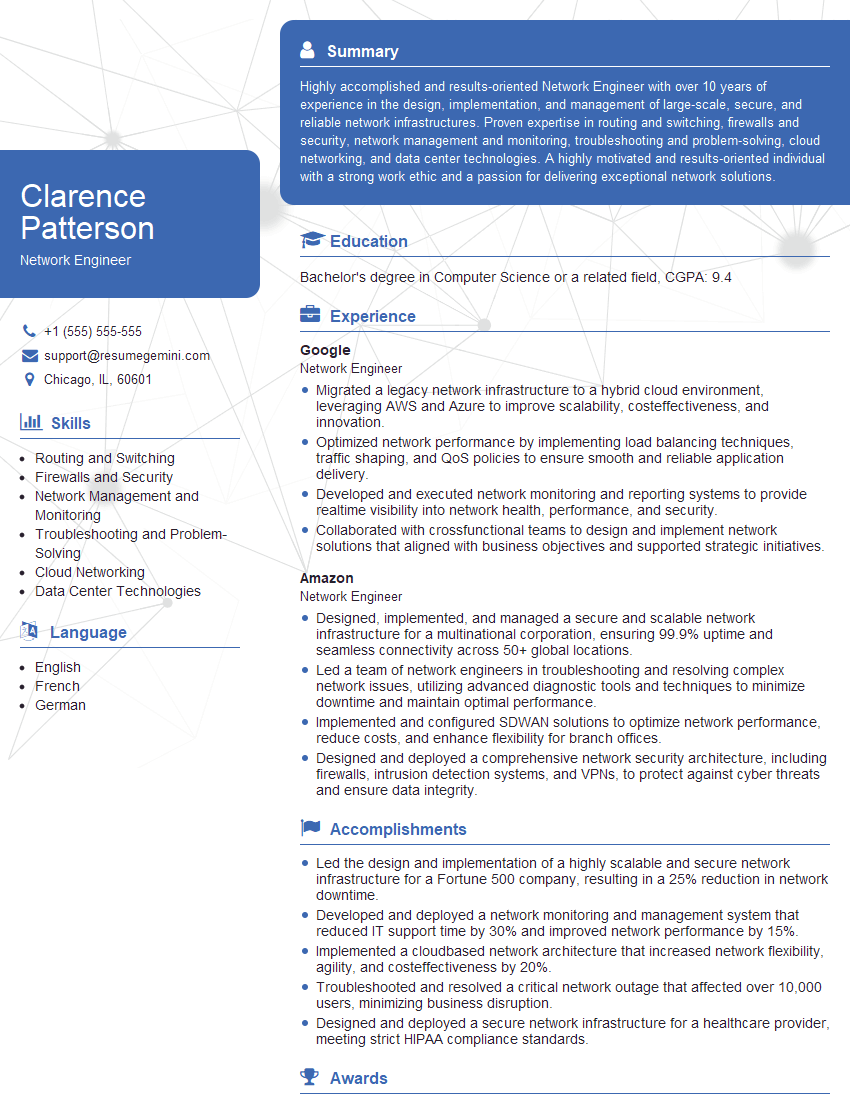
Network Engineer Resume Sample
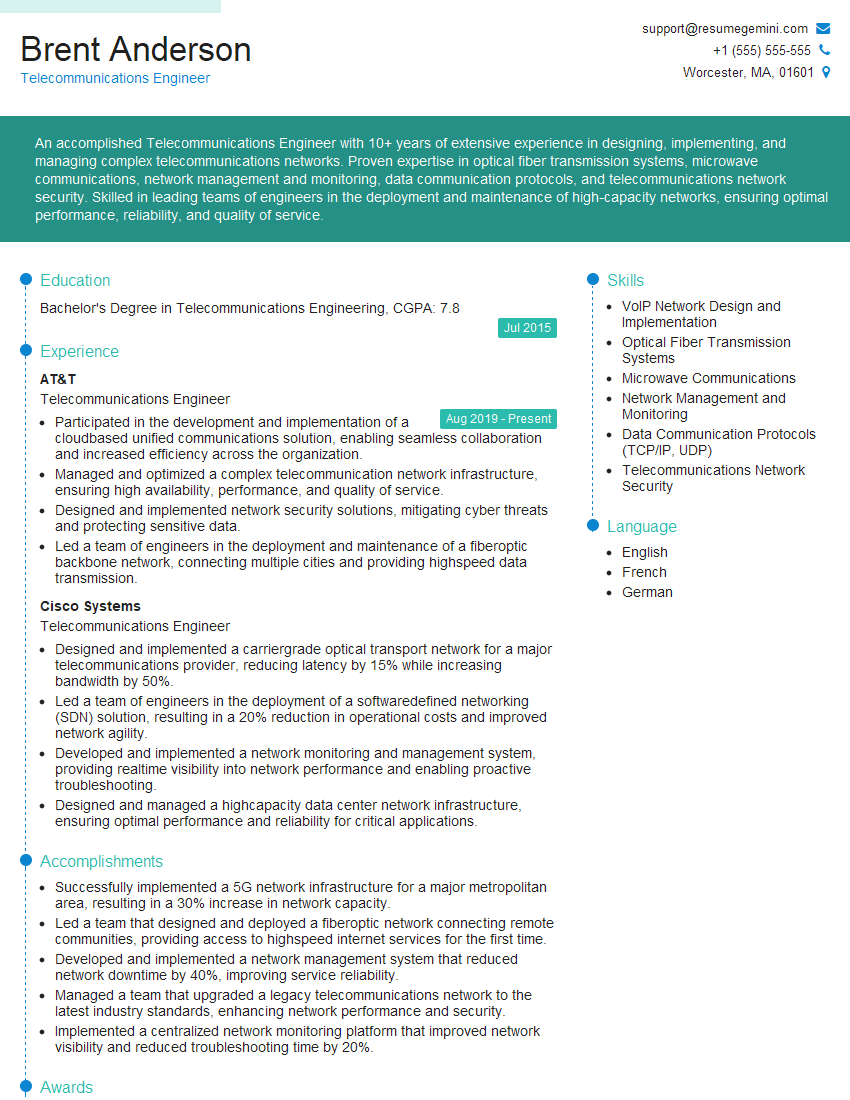
Telecommunications Engineer Resume Sample
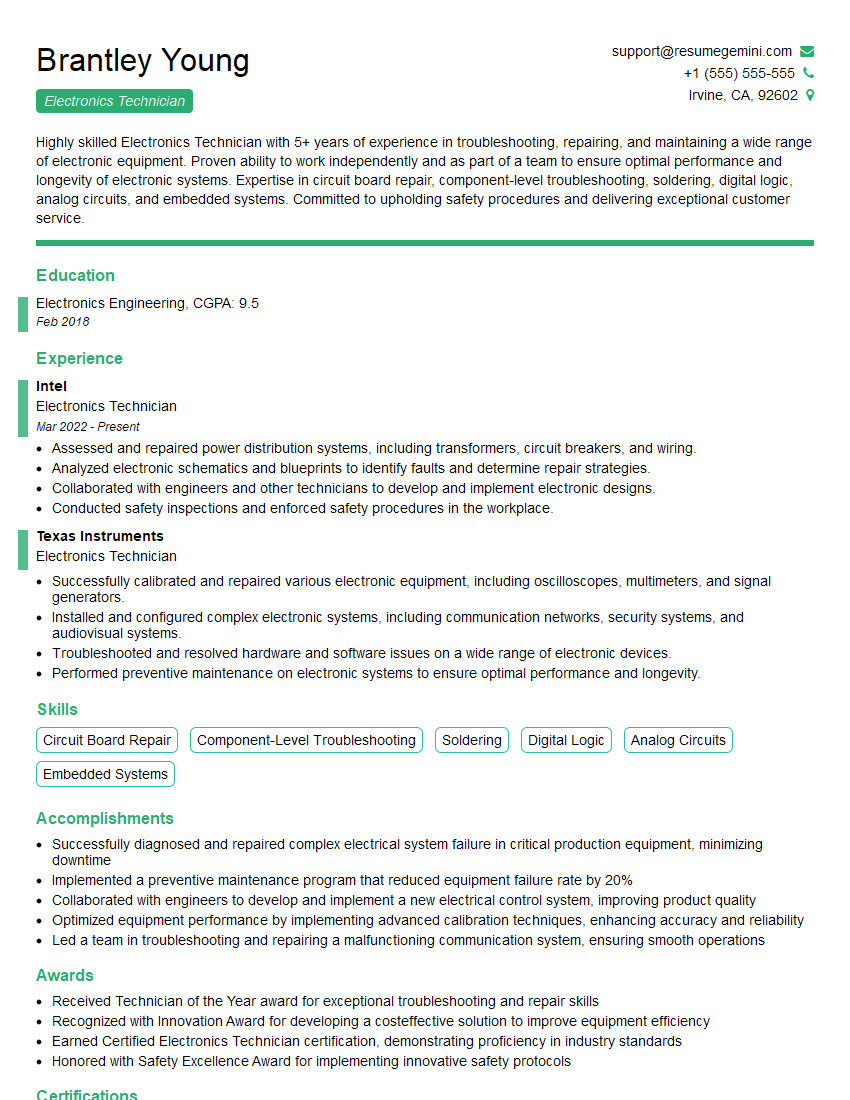
Electronics Technician Resume Sample
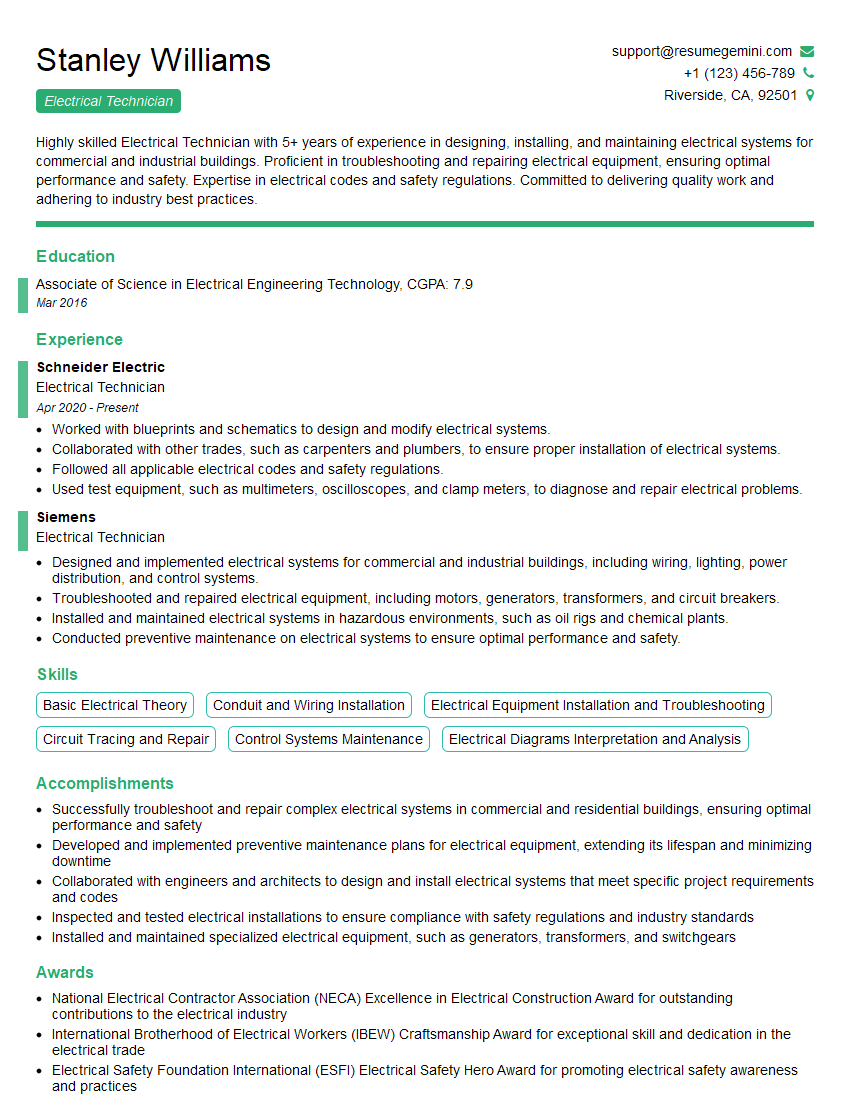
Electrical Technician Resume Sample
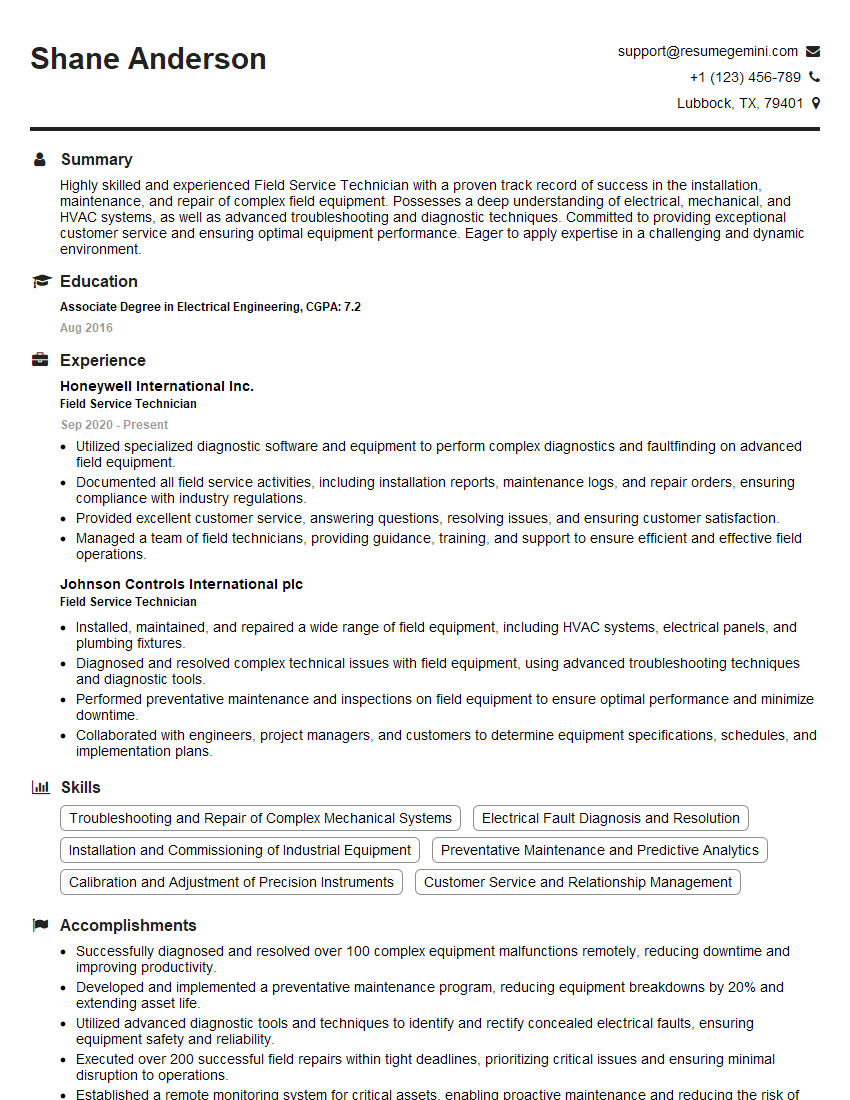
Field Service Technician Resume Sample
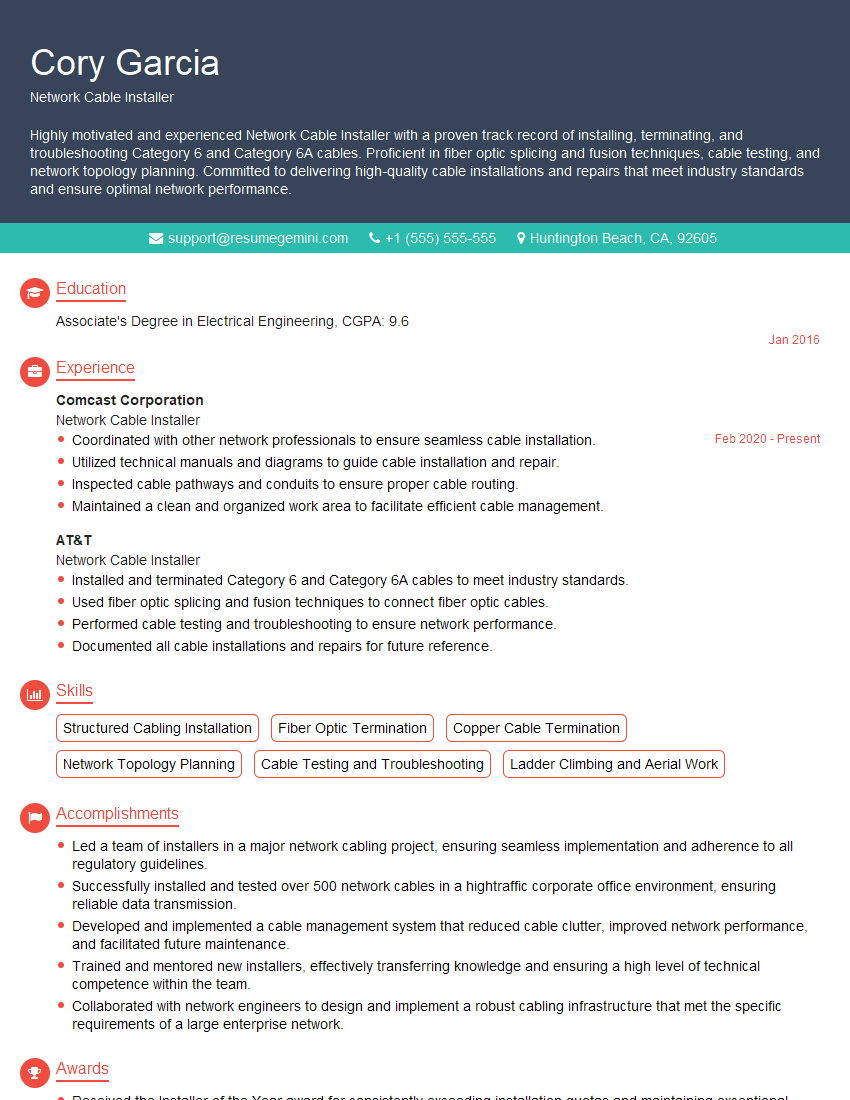
Network Cable Installer Resume Sample
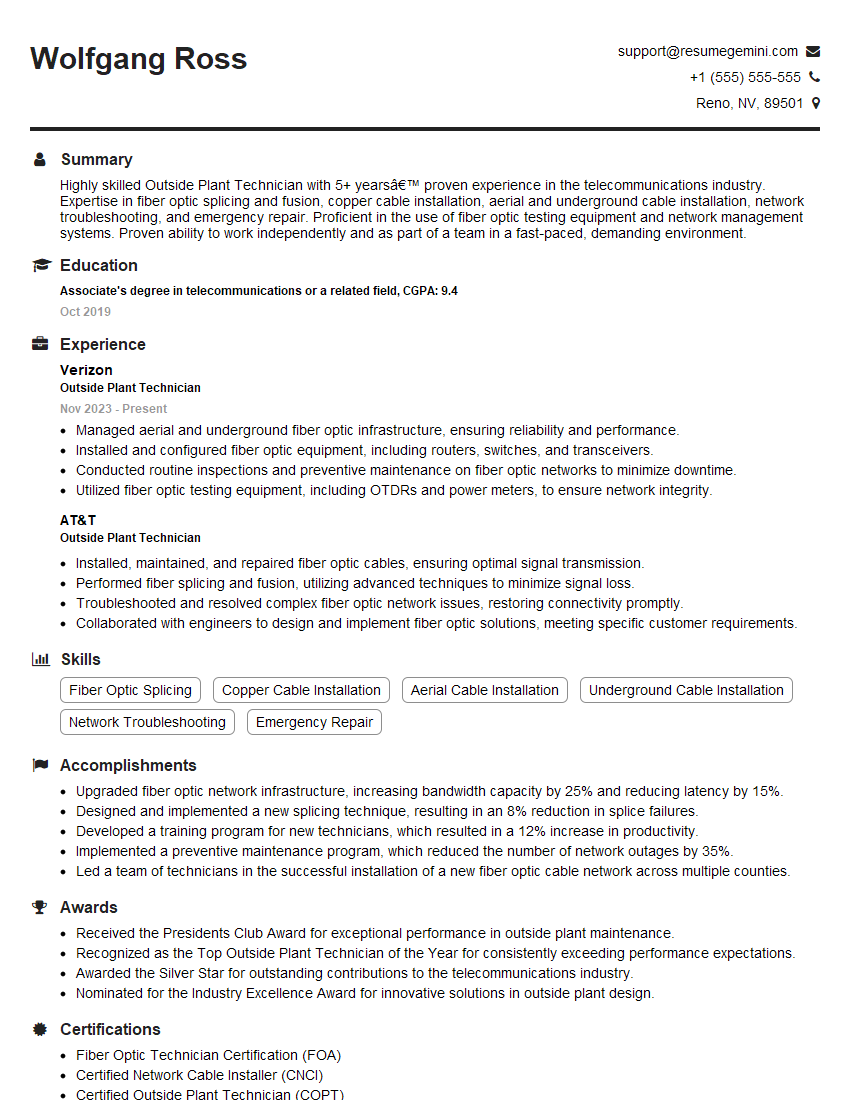
Outside Plant Technician Resume Sample
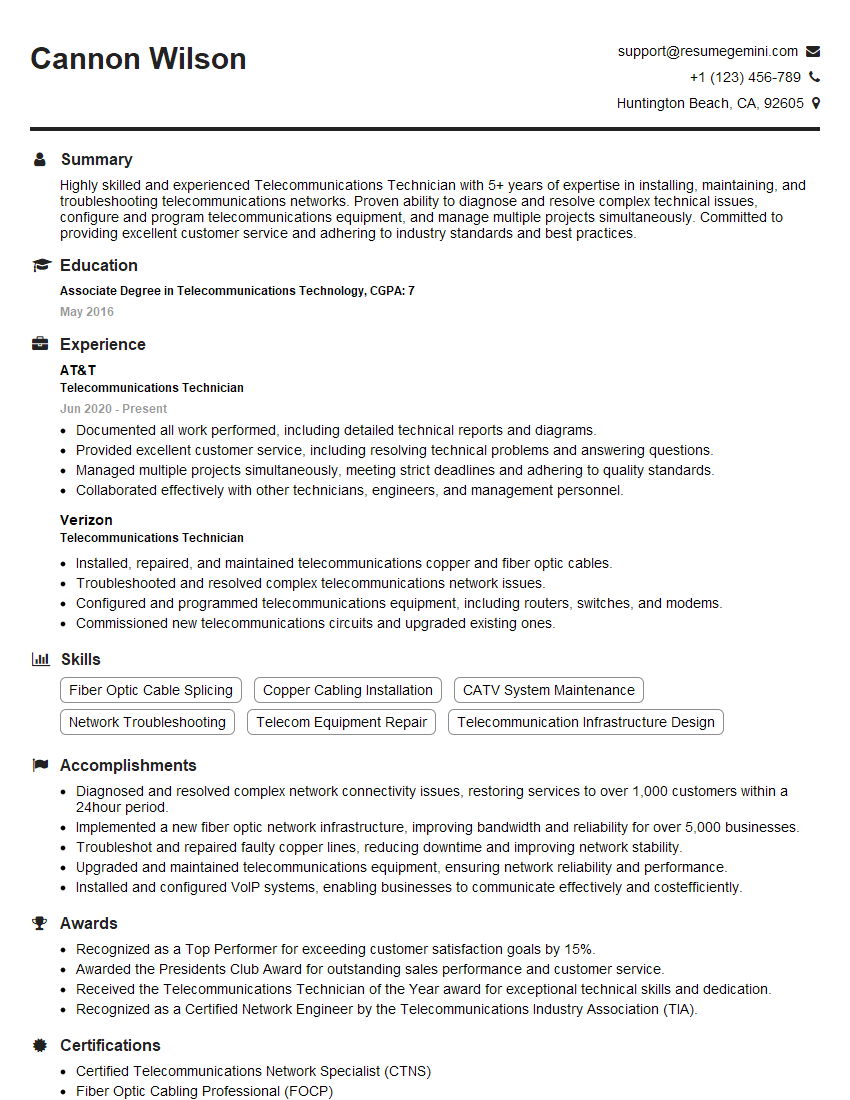
Telecommunications Technician Resume Sample
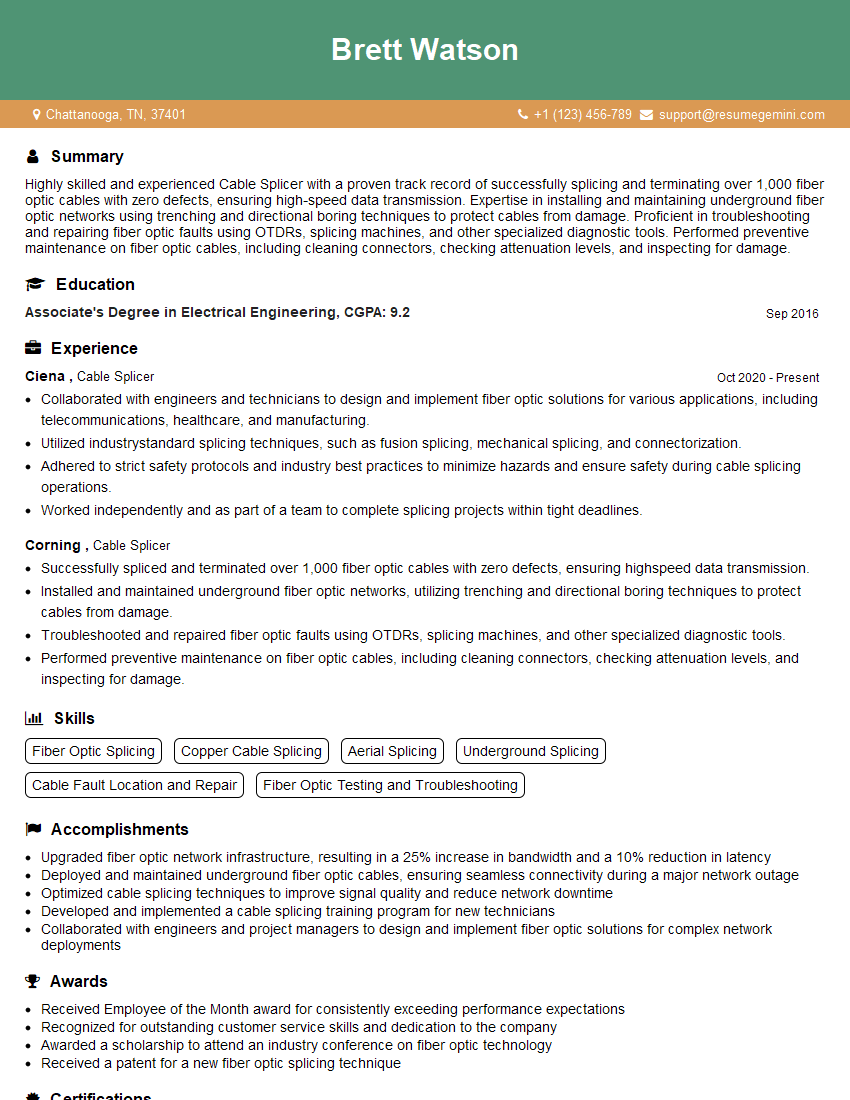
Cable Splicer Resume Sample
Explore more articles
Users Rating of Our Blogs
Share Your Experience
We value your feedback! Please rate our content and share your thoughts (optional).
What Readers Say About Our Blog
Very informative content, great job.
good