Feeling uncertain about what to expect in your upcoming interview? We’ve got you covered! This blog highlights the most important Correctional Procedures interview questions and provides actionable advice to help you stand out as the ideal candidate. Let’s pave the way for your success.
Questions Asked in Correctional Procedures Interview
Q 1. Describe your understanding of the standard operating procedures within a correctional facility.
Standard Operating Procedures (SOPs) in a correctional facility are a comprehensive set of guidelines designed to ensure the safe, efficient, and lawful operation of the facility. These procedures cover every aspect of correctional work, from inmate intake and classification to daily routines, security protocols, and emergency responses. Think of them as the facility’s rulebook, ensuring consistency and accountability across all staff.
- Inmate Management: SOPs dictate how inmates are managed, including their movement within the facility, access to programs and services, disciplinary processes, and interactions with staff.
- Security Protocols: Detailed procedures for searches, counts, lockdowns, and emergency situations like riots or escapes are crucial components of the SOPs. These procedures prioritize staff and inmate safety.
- Record Keeping: SOPs specify the methods for maintaining accurate and up-to-date records on all inmates, staff, and facility operations. This ensures transparency and accountability.
- Emergency Procedures: SOPs outline protocols for medical emergencies, fire safety, hostage situations, and other unforeseen events, ensuring a coordinated and effective response.
For example, a specific SOP might detail the step-by-step process for conducting a cell search, including the required personnel, search techniques, and documentation procedures. Another SOP might outline the protocol for handling contraband found during a search. The adherence to these SOPs is crucial for maintaining order, safety, and legal compliance within the facility.
Q 2. Explain the importance of maintaining accurate and up-to-date inmate records.
Maintaining accurate and up-to-date inmate records is paramount for several reasons. It’s not just about paperwork; it’s about ensuring the safety and security of the facility and the fair treatment of inmates.
- Legal Compliance: Accurate records are essential for legal proceedings, such as parole hearings, court appearances, and appeals. Inaccurate records can compromise the legal process and potentially lead to wrongful convictions or releases.
- Security and Safety: Up-to-date records on inmate medical conditions, disciplinary history, gang affiliations, and allergies are critical for staff safety and effective inmate management. This information is vital in preventing violence and managing potential risks.
- Program and Service Delivery: Accurate records allow for the efficient delivery of programs and services such as education, vocational training, and healthcare. This is necessary to support rehabilitation efforts.
- Accountability and Transparency: Well-maintained records provide accountability for all actions taken within the correctional setting. This promotes transparency and reduces the potential for misconduct or abuse.
Imagine a situation where an inmate has a serious medical condition, but it isn’t recorded. A medical emergency could arise, and without this crucial information, the response could be delayed or inadequate, potentially endangering the inmate’s life. Accurate records prevent such situations.
Q 3. How would you handle a situation involving a violent inmate?
Handling a violent inmate requires a calm, controlled, and decisive response prioritizing safety. The situation demands a multi-pronged approach combining immediate action with long-term strategies.
- Immediate Response: The first priority is to ensure the safety of staff and other inmates. This may involve using verbal de-escalation techniques to calm the inmate, if safe to do so. If de-escalation fails, immediate intervention by trained staff using appropriate force (following established use-of-force policies) is necessary to restrain the inmate and secure the area.
- Assessment and Investigation: Once the situation is under control, a thorough investigation must be conducted to determine the cause of the violence, any contributing factors, and the extent of any injuries. Witnesses should be interviewed, and the incident meticulously documented.
- Disciplinary Action: Depending on the severity of the incident, disciplinary action may be taken against the violent inmate, ranging from loss of privileges to extended solitary confinement. The disciplinary process must adhere to established procedures and inmate rights.
- Long-Term Management: Following the incident, the facility’s staff will review the situation to identify potential preventative measures, such as improved security protocols, enhanced staff training, and changes to the inmate’s housing assignment.
It’s crucial to remember that every situation is unique. The specific response will depend on the context, the inmate’s behavior, the available resources, and the facility’s SOPs. Proper training and adherence to established procedures are key to a successful resolution.
Q 4. What are the different methods used to search inmates and their belongings?
Inmate and belongings searches are a critical part of maintaining security within a correctional facility. Several methods are used, depending on the context and the level of suspicion.
- Pat-Downs: A pat-down search involves a manual examination of an inmate’s clothing and body for concealed weapons or contraband. This is a routine procedure for both inmates and visitors.
- Strip Searches: Strip searches are more intrusive and are conducted only under specific circumstances, such as suspicion of concealing contraband. These searches are always carried out by officers of the same gender as the inmate and are carefully documented.
- Body Cavity Searches: These are the most intrusive searches and are conducted only under warrant by medical professionals in very specific circumstances, following strict legal guidelines and with significant oversight.
- Cell Searches: Regular searches of inmate cells are conducted to detect and remove contraband. These searches may be random or targeted based on suspicion. Tools like metal detectors and drug-sniffing dogs can aid in these searches.
- Property Searches: Inmates’ personal belongings, such as letters, clothing, and other items, are regularly searched upon receipt and at random intervals to prevent the introduction of contraband.
Each type of search has strict protocols to ensure that it is conducted legally, respectfully, and in line with the facility’s SOPs and inmate rights. Detailed documentation of each search is essential for accountability and transparency.
Q 5. Describe your experience with conducting inmate counts and verifying their accuracy.
Inmate counts are a fundamental aspect of correctional security, ensuring that all inmates are accounted for at regular intervals. Accuracy is paramount; an inaccurate count could indicate an escape or other serious security breach.
My experience includes conducting both regular and emergency counts. Regular counts are conducted at scheduled times throughout the day, usually involving a visual check of each cell and a comparison to the official roster. Emergency counts are initiated during incidents or lockdowns to immediately verify the location of all inmates.
Verification involves several steps:
- Cross-referencing: The count conducted by correctional officers is compared to the master inmate roster. Any discrepancies must be immediately investigated and resolved.
- Documentation: Every count is meticulously documented, noting the time, date, location, the individuals involved, and any discrepancies found. This provides a detailed audit trail.
- Discrepancy Resolution: If a discrepancy is found, a thorough search is conducted to locate the missing inmate. This may involve searching cells, common areas, and even using surveillance footage.
Accuracy in inmate counts is not merely a procedural matter; it’s directly tied to the safety and security of the facility and the public. A failure in this process has significant implications.
Q 6. How do you ensure the safety and security of staff and inmates during transportation?
Ensuring the safety and security of staff and inmates during transportation requires meticulous planning and execution. It involves a layered approach encompassing various security measures.
- Vehicle Security: Transportation vehicles are typically equipped with security features such as reinforced cages, restraints, and communication systems to maintain control and deter escape attempts. The vehicle’s route is usually kept confidential to reduce the risk of ambush.
- Personnel: A sufficient number of trained correctional officers accompany inmates during transport, maintaining constant supervision and vigilance. Officers are equipped with appropriate weapons and communication devices.
- Inmate Restraints: Inmates are typically restrained using handcuffs and sometimes leg irons or belly chains, depending on their risk level. The type and number of restraints used are carefully considered based on the individual inmate’s risk profile.
- Route Planning: The route is carefully planned to minimize travel time and avoid high-risk areas. Communication with local law enforcement is common to coordinate support if needed.
- Emergency Procedures: SOPs covering emergency situations, such as accidents, attempted escapes, or medical emergencies during transit, are rigorously followed.
For example, transporting a high-risk inmate involves using a specialized transport van with reinforced cages and multiple armed officers. Regular communication with dispatch throughout the journey is vital to ensure the safety of everyone involved.
Q 7. Explain your understanding of inmate rights and due process.
Understanding inmate rights and due process is fundamental to working in corrections. It’s not just about following the law; it’s about upholding ethical standards and ensuring fairness.
Inmates retain many of their constitutional rights, including the right to due process, freedom from cruel and unusual punishment, and access to legal counsel. However, these rights are balanced against the need for maintaining security and order within the correctional setting.
- Due Process: Inmates are entitled to due process in disciplinary proceedings. This means that they have the right to be informed of charges, present evidence, and have a hearing before facing punishment.
- Access to Legal Counsel: Inmates have the right to consult with and receive legal counsel. Facilities must provide reasonable access to law libraries or legal assistance programs.
- Freedom from Cruel and Unusual Punishment: Conditions of confinement must meet minimum standards of decency and humanity. Overcrowding, inadequate medical care, and excessive use of force are examples of violations of this right.
- Religious Freedom: Inmates have the right to practice their religion, provided it does not interfere with the security and order of the facility.
Understanding these rights requires ongoing training and a commitment to ethical practice. Balancing security concerns with the rights of incarcerated individuals is a critical aspect of ethical corrections. The legal framework surrounding inmate rights is complex and constantly evolving, necessitating ongoing professional development.
Q 8. What is your experience with managing inmate behavior and disciplinary procedures?
Managing inmate behavior and upholding disciplinary procedures is paramount in maintaining order and safety within a correctional facility. My experience encompasses a comprehensive understanding of the facility’s rules and regulations, coupled with the ability to consistently and fairly enforce them. This includes conducting thorough investigations into alleged rule violations, documenting findings meticulously, and imposing appropriate sanctions according to established protocols. I’ve dealt with a wide range of infractions, from minor disciplinary issues like verbal altercations to more serious incidents involving assault or contraband. For instance, in one case, I successfully mediated a dispute between two inmates by identifying the root cause – a misunderstanding over personal property – and facilitating a resolution through a structured dialogue. In another instance, I led an investigation into a suspected drug smuggling operation, resulting in the confiscation of contraband and subsequent disciplinary actions against the implicated inmates. My approach always prioritizes fairness, consistency, and due process, ensuring that each case is handled justly and within legal frameworks.
Q 9. How do you identify and respond to signs of potential inmate unrest or violence?
Identifying potential inmate unrest or violence requires a keen awareness of the subtle and overt signs of escalating tension. This includes monitoring inmate interactions for aggressive behavior, verbal threats, or the formation of cliques or gangs. I also pay close attention to environmental factors – such as increased tension in common areas, unusual gatherings, or the spread of rumors – that might indicate brewing conflict. My response involves a multi-faceted approach. Firstly, I increase surveillance in potentially volatile areas. Secondly, I enhance communication with inmates, engaging in proactive dialogue to address concerns or grievances. Thirdly, I collaborate with other correctional officers and staff to share observations and develop a coordinated response plan. For example, during a period of heightened tension following a gang-related incident, we implemented a temporary lockdown, increased staff presence, and conducted regular cell checks to prevent any escalation of violence. Early intervention and a collaborative approach are key to preventing minor incidents from escalating into major security breaches.
Q 10. What is your approach to conflict resolution in a correctional setting?
My approach to conflict resolution in a correctional setting emphasizes de-escalation and restorative justice principles. I believe in addressing the underlying causes of conflict, rather than just suppressing the symptoms. This often involves active listening, empathy, and a genuine effort to understand each party’s perspective. I use structured mediation techniques where appropriate, guiding inmates towards finding mutually acceptable solutions. For example, I recently mediated a dispute between two inmates over a shared phone. By calmly facilitating a conversation, I helped them understand each other’s viewpoints and reach an agreement on a fair phone usage schedule. In cases where mediation isn’t successful, I follow established disciplinary procedures, but I always aim to find solutions that promote rehabilitation and reduce recidivism. It’s crucial to remember that conflict resolution isn’t just about enforcing rules; it’s about fostering a more positive and productive environment within the correctional facility.
Q 11. Describe your experience working with diverse populations within a correctional facility.
Working with diverse populations within a correctional facility demands sensitivity, cultural awareness, and a commitment to equity. I have extensive experience interacting with individuals from various ethnic backgrounds, socioeconomic statuses, and religious beliefs. My approach is built on the principle of treating every inmate with respect and dignity, recognizing that their backgrounds and experiences influence their behavior. I actively seek to understand cultural nuances and adapt my communication style to ensure effective interactions. For instance, I’ve found that building rapport with inmates from different cultural backgrounds often requires patience and a willingness to learn about their customs and beliefs. In addition to respecting individual differences, I ensure that all inmates have equal access to resources and programs, regardless of their background. This approach minimizes the potential for discrimination and fosters a more inclusive and harmonious environment within the facility.
Q 12. Explain the importance of maintaining confidentiality in correctional work.
Maintaining confidentiality in correctional work is crucial for several reasons. Firstly, it protects the privacy and rights of inmates, which is essential for their rehabilitation and reintegration into society. Sharing confidential information can damage their reputations and impede their efforts to rebuild their lives. Secondly, confidentiality is crucial for maintaining trust and cooperation between inmates and correctional staff. If inmates don’t trust that their information will remain private, they’re less likely to cooperate with staff, which can hinder efforts to maintain order and security within the facility. Thirdly, some information, such as investigations into inmate-on-inmate violence, could compromise the safety and security of the facility if disclosed prematurely. I always adhere to strict confidentiality protocols, only disclosing information on a need-to-know basis and in accordance with established legal and ethical guidelines. Protecting the privacy of individuals is an ethical obligation, a vital part of maintaining a secure facility, and a cornerstone of professional practice.
Q 13. How would you handle a situation where an inmate refuses to follow instructions?
Handling an inmate who refuses to follow instructions requires a calm and measured response. My first step is to understand the reason for their refusal. Is it a misunderstanding of the instructions? Are they experiencing emotional distress? Are they asserting their rights? Once I’ve determined the underlying cause, I’ll attempt to address it through clear and concise communication. I will reiterate the instructions, ensuring they’re understood. If necessary, I might offer a compromise or explore alternative solutions. However, if the refusal is defiant and disrupts order or poses a safety risk, I’ll follow established procedures, escalating the situation if necessary. This might involve summoning additional staff, using appropriate restraints, and initiating disciplinary action according to established protocols. The approach must always prioritize safety and de-escalation while upholding rules and regulations. Documentation is crucial at every stage to ensure accountability and transparency.
Q 14. Describe your experience with crisis intervention and de-escalation techniques.
My experience with crisis intervention and de-escalation techniques is extensive. I’ve received specialized training in verbal de-escalation, active listening, and crisis management strategies. I understand how to assess situations quickly, identify potential triggers, and implement appropriate interventions to reduce tension and prevent violence. My approach focuses on establishing rapport, maintaining a calm demeanor, and actively listening to the individual’s concerns. I use clear and concise communication, avoiding confrontational language or body language. I’ve successfully de-escalated numerous situations ranging from individual outbursts of anger to potential hostage scenarios. In one instance, I used active listening and empathy to calm an emotionally distressed inmate who was threatening self-harm. By building trust and demonstrating genuine concern, I was able to safely resolve the crisis without the need for physical intervention. Appropriate use of force is a last resort, preceded by a thorough attempt at de-escalation. Regular training and ongoing practice are crucial to mastering these techniques effectively.
Q 15. What is your understanding of the different levels of security within a correctional facility?
Correctional facilities utilize a tiered security system to manage inmates based on their risk level and the severity of their crimes. This system typically includes minimum, medium, and maximum security levels, each with distinct features and operational procedures.
- Minimum Security: These facilities house inmates considered low-risk, often those nearing the end of their sentences or with minor offenses. They feature less restrictive environments with fewer barriers and more opportunities for inmate movement and interaction. Think of it like a halfway house or a structured dormitory setting.
- Medium Security: These facilities accommodate inmates who pose a moderate risk. Security measures are more stringent than minimum security, including more perimeter fencing, internal barriers, and increased staff supervision. Inmates usually have more limited movement and access to amenities.
- Maximum Security: Reserved for inmates considered high-risk, often violent or repeat offenders. These facilities employ the highest levels of security, such as high walls or fences, armed guards, multiple layers of security checkpoints, and restricted movement. These are often known as ‘supermax’ prisons, with highly controlled environments designed to prevent escapes and maintain order.
- Supermax Prisons (Administrative Segregation): These represent the highest level of security, holding inmates who pose extreme threats to security or other inmates. These are exceptionally isolated and restrictive environments with solitary confinement and limited interaction.
The classification of an inmate into a specific security level is based on a thorough risk assessment considering factors like the nature of their crime, prior offenses, behavioral history, and gang affiliations. This classification is regularly reviewed and adjusted as needed throughout an inmate’s sentence.
Career Expert Tips:
- Ace those interviews! Prepare effectively by reviewing the Top 50 Most Common Interview Questions on ResumeGemini.
- Navigate your job search with confidence! Explore a wide range of Career Tips on ResumeGemini. Learn about common challenges and recommendations to overcome them.
- Craft the perfect resume! Master the Art of Resume Writing with ResumeGemini’s guide. Showcase your unique qualifications and achievements effectively.
- Don’t miss out on holiday savings! Build your dream resume with ResumeGemini’s ATS optimized templates.
Q 16. Explain your experience with conducting security checks and inspections.
My experience with security checks and inspections encompasses both routine and surprise procedures. Routine checks involve systematic searches of cells, common areas, and inmate belongings to detect contraband. This involves visually inspecting areas, physically searching inmates (with appropriate authorization), and checking for hidden items or inconsistencies. Surprise inspections are unannounced and aim to deter contraband and maintain a secure environment. They often focus on specific areas or high-risk individuals, employing more thorough search techniques.
I’ve used various tools and techniques, from handheld metal detectors and body scanners to drug detection dogs and specialized search equipment, depending on the context and suspected contraband. I’ve also developed an eye for detail, noticing discrepancies like unusual bulges in clothing or alterations to cell structures that might indicate hidden contraband. Detailed documentation of all checks and inspections is essential, including dates, times, locations, persons involved, and findings.
For instance, during a routine cell search, I discovered a hidden compartment in an inmate’s locker containing several prohibited items. This led to disciplinary action against the inmate and a subsequent review of security procedures to prevent similar occurrences. Accurate and detailed reporting is crucial to ensuring accountability and preventing future security breaches.
Q 17. How do you maintain professionalism and ethical conduct in a stressful environment?
Maintaining professionalism and ethical conduct within a correctional setting, especially under stress, is paramount. It’s achieved through a combination of self-awareness, training, and adherence to established protocols.
- Self-Regulation: Understanding my own triggers and stress responses is crucial. I utilize de-escalation techniques to manage challenging interactions, choosing measured responses rather than impulsive reactions. Regular breaks and self-care practices help maintain emotional balance.
- Professional Boundaries: Maintaining strict professional boundaries with inmates is essential. Impartiality, fairness, and consistent application of rules prevent bias and maintain respect, regardless of personal feelings.
- Ethical Decision-Making: I’m guided by the ethical code of conduct for correctional officers, prioritizing the safety and well-being of both inmates and staff while upholding the law. I report any unethical behavior I observe, ensuring accountability and integrity.
- Continuous Training: Regular training in conflict resolution, de-escalation, and crisis intervention enables me to handle high-pressure situations effectively. This training often includes scenario-based learning to develop appropriate responses to various challenges.
For example, during a tense situation where an inmate was becoming agitated, I used calm communication and de-escalation techniques to diffuse the situation, preventing a physical altercation. By remaining professional and empathetic, even under pressure, I was able to safely resolve the incident.
Q 18. What is your understanding of the rehabilitation programs offered in correctional facilities?
Rehabilitation programs within correctional facilities aim to reduce recidivism by addressing the underlying causes of criminal behavior and providing inmates with the tools and resources for successful reintegration into society. These programs vary widely, but generally fall into several categories:
- Educational Programs: These programs offer GED preparation, vocational training, and college courses to equip inmates with marketable skills and improve their prospects upon release.
- Vocational Training: These programs offer hands-on training in various trades, such as carpentry, welding, or culinary arts, providing valuable employment skills.
- Substance Abuse Treatment: Inmates with substance abuse issues are offered counseling, therapy, and support groups to help them overcome addiction.
- Mental Health Services: Counseling, therapy, and medication are provided for inmates with mental health disorders.
- Life Skills Programs: These programs cover essential life skills like budgeting, anger management, and conflict resolution, improving their ability to function independently upon release.
The effectiveness of rehabilitation programs is evaluated through recidivism rates, with success often dependent on factors like inmate participation, program quality, and post-release support.
Q 19. Explain your experience with observing and reporting any signs of contraband.
Observing and reporting signs of contraband is a crucial aspect of maintaining security. My experience includes actively looking for indicators during routine searches and inspections, but also being observant during daily interactions with inmates. This vigilance includes monitoring communication patterns, unusual behavior, and changes in inmate routine.
I’ve learned to recognize subtle clues that might indicate contraband. For example, unexplained wealth, secretive behavior, or changes in an inmate’s demeanor can be indicators. Suspected contraband is immediately reported through established channels, and a thorough investigation is conducted. This investigation may involve additional searches, interviews, and collaboration with other staff members.
Once, I noticed a significant change in one inmate’s behavior, followed by a clandestine meeting with another. This raised concerns, and a subsequent cell search revealed hidden contraband. Prompt reporting and thorough investigation are critical in maintaining facility security and preventing the spread of contraband.
Q 20. Describe your experience with responding to emergencies, such as medical incidents or fires.
Responding to emergencies is a critical part of my role, requiring quick thinking and decisive action. My training covers various emergency situations, including medical incidents, fires, riots, and escapes. I’m proficient in using emergency communication systems and first aid procedures.
During a medical emergency, I would immediately contact medical personnel, follow instructions for providing first aid as needed, and secure the area to ensure the safety of others. In the event of a fire, my response would involve activating the alarm system, evacuating inmates, and assisting firefighters. For riots or escapes, I would follow established protocols to contain the situation, protect others, and support law enforcement.
I participated in emergency drills regularly, which are vital for improving responsiveness and coordinating efforts with other staff and external agencies. Clear communication, quick decision-making, and a comprehensive understanding of established procedures are vital in responding effectively to a variety of emergencies.
Q 21. How do you maintain a secure and controlled environment while providing humane treatment?
Maintaining a secure and controlled environment while ensuring humane treatment requires a delicate balance. It’s not a question of either/or, but rather a commitment to both.
- Clear Rules and Procedures: Establishing and consistently applying clear and fair rules and procedures ensures a predictable environment, reducing anxiety and promoting order.
- Respectful Interactions: Treating inmates with respect, even while maintaining authority, fosters a less hostile environment. This includes active listening, fair treatment, and addressing grievances appropriately.
- Transparency and Accountability: Open and fair processes, as well as accountability for staff actions, increases trust and reduces the potential for conflicts.
- Access to Services: Ensuring access to essential services such as healthcare, education, and recreational opportunities contributes significantly to a more humane environment.
- Regular Monitoring and Feedback: Continuously monitoring conditions and gathering feedback from inmates and staff allow for early identification of potential problems and improvements to procedures.
Balancing security and humane treatment is a constant challenge. For example, while maintaining strict security protocols for preventing escapes, we still ensure inmates have access to outdoor recreation and sufficient opportunities for social interaction, within the confines of the facility’s regulations.
Q 22. What is your experience with working with other agencies, such as law enforcement or parole boards?
Throughout my career, I’ve collaborated extensively with various agencies, including law enforcement and parole boards. Effective inter-agency cooperation is crucial for successful corrections. For example, I’ve worked closely with local police departments on investigations related to inmate-involved incidents outside the facility, ensuring seamless information sharing and coordinated responses. My experience also includes regular meetings with parole boards to discuss inmate progress, risk assessments, and the transition planning process. This collaborative approach fosters accountability and enhances public safety.
In one specific instance, we collaborated with the local police department to apprehend an inmate who escaped during a work detail. Prompt communication and information sharing led to a swift recapture, minimizing risk to the public. Strong relationships built on trust and open communication are essential for efficient and effective inter-agency collaborations.
Q 23. Explain your understanding of the legal implications of correctional procedures.
A deep understanding of the legal implications of correctional procedures is paramount. Correctional officers must operate within the confines of the law, upholding inmates’ constitutional rights while maintaining security. This includes adherence to the Fourth Amendment (searches and seizures), the Eighth Amendment (cruel and unusual punishment), and the Fourteenth Amendment (due process). Improper procedures can lead to lawsuits and undermine the integrity of the correctional system.
For instance, using excessive force, conducting illegal searches, or denying appropriate medical care can have severe legal ramifications. Documentation is key; meticulously recorded incident reports and logs provide crucial evidence in legal proceedings. I’ve been involved in numerous legal cases where thorough documentation proved vital in demonstrating compliance with legal standards and procedures.
Q 24. Describe your experience with using technology in correctional management, such as inmate tracking systems.
Technology plays a significant role in modern correctional management. I’m experienced in utilizing various technologies, including inmate tracking systems, digital record management, and video surveillance. Inmate tracking systems, for instance, allow us to monitor inmate location within the facility, manage movements, and ensure accountability. This is crucial for safety and security. These systems generate valuable data that informs decision-making and helps in resource allocation.
We also utilize electronic health records (EHRs) to track inmate medical information and ensure timely and appropriate medical care. Such technology streamlines processes, improves efficiency, and enhances data analysis, leading to more informed strategies for managing the facility and improving inmate outcomes.
Q 25. How do you ensure the safety and security of staff and inmates during facility lockdowns?
During facility lockdowns, ensuring the safety and security of both staff and inmates is paramount. Our procedures are strictly followed, and involve a layered approach. First, a clear and concise announcement is made to all inmates, outlining the reasons for the lockdown and expected procedures. All staff are immediately briefed on the situation and assigned to their designated posts.
Controlled movement of staff is crucial, and we frequently utilize visual checks and communication systems to coordinate actions. Inmates are confined to their cells or designated areas, with regular checks to maintain order. We utilize a variety of technology to help maintain situational awareness during the lockdown, including CCTV cameras and communication systems. Following the lockdown, a thorough debriefing is conducted to identify any procedural gaps and improve our protocols for future events.
Q 26. Explain your experience with writing incident reports and other correctional documentation.
Accurate and thorough documentation is a cornerstone of correctional work. I’m highly proficient in writing incident reports, disciplinary action reports, and other correctional documentation. My reports are clear, concise, and factual, adhering to established formats and including all relevant details. These reports often become crucial evidence in legal proceedings or internal investigations.
For example, when writing an incident report, I follow a structured approach: Who, What, When, Where, Why, and How. Each incident report must be objective, avoiding subjective opinions or biases, and supported by factual evidence. In addition to incident reports, my experience includes maintaining detailed logs, tracking inmate movement, and documenting all relevant interactions with inmates.
Q 27. What is your understanding of the impact of mental health on inmate behavior?
Mental health plays a significant role in inmate behavior. A large percentage of the incarcerated population suffers from various mental health conditions, including depression, anxiety, PTSD, and substance abuse disorders. These conditions can significantly impact an inmate’s behavior, often leading to aggression, self-harm, and difficulties in complying with rules and regulations. Recognizing these conditions and implementing appropriate strategies are crucial to managing the facility and improving inmate outcomes.
Our facility utilizes mental health professionals to assess, diagnose, and treat inmates with mental health concerns. Collaborating closely with these professionals, we create tailored management strategies, including medication management, therapy, and crisis intervention techniques. This integrated approach improves safety and facilitates rehabilitation.
Q 28. How would you handle a situation involving a suspected escape attempt?
A suspected escape attempt requires an immediate and coordinated response. My first step would be to immediately initiate a lockdown, securing all areas of the facility. Simultaneously, I would alert other staff and appropriate authorities, including law enforcement. The exact response will be dictated by the situation, but generally, it involves a thorough search of the facility and surrounding areas, a review of security camera footage, and an investigation into the potential escape route.
Once the situation is under control, a detailed report would be compiled documenting every aspect of the event, including the time, location, individuals involved, methods used, and results. Following the incident, a review of security protocols would be conducted to identify any weaknesses that allowed the attempt and to implement corrective measures to prevent future incidents. Throughout the process, maintaining the safety and security of both staff and remaining inmates remains the top priority.
Key Topics to Learn for Correctional Procedures Interview
- Security Protocols and Procedures: Understanding and applying various security measures within correctional facilities, including inmate movement, searches, and emergency response protocols. Practical application involves analyzing security breaches and proposing improved strategies.
- Inmate Management and Behavior Modification: Knowledge of effective communication techniques, de-escalation strategies, and conflict resolution methods in managing inmate behavior. Practical application includes developing plans for managing disruptive inmates and creating a safe environment.
- Correctional Law and Ethics: Understanding legal frameworks governing correctional operations, inmate rights, and ethical considerations in decision-making. Practical application involves analyzing scenarios and determining appropriate actions within legal and ethical boundaries.
- Record Keeping and Reporting: Mastering accurate and timely documentation of inmate activities, incidents, and observations. Practical application includes maintaining comprehensive records and preparing clear, concise reports for supervisors.
- Emergency Procedures and Crisis Management: Knowledge of and preparedness for various emergencies within a correctional setting, including riots, medical emergencies, and escapes. Practical application includes participating in drills and developing emergency response plans.
- Use of Force and Self-Defense: Understanding and applying the appropriate use of force policies and procedures to ensure both staff and inmate safety. Practical application involves analyzing use-of-force scenarios and determining appropriate responses.
- Mental Health and Substance Abuse: Awareness of common mental health issues and substance abuse problems among inmates and appropriate intervention strategies. Practical application includes identifying signs of distress and referring inmates to appropriate resources.
Next Steps
Mastering Correctional Procedures is crucial for career advancement in this field. Demonstrating a strong understanding of these procedures significantly enhances your candidacy and opens doors to more challenging and rewarding roles. To maximize your job prospects, create an ATS-friendly resume that effectively showcases your skills and experience. ResumeGemini is a trusted resource to help you build a professional and impactful resume. Examples of resumes tailored to Correctional Procedures are available to help you get started.
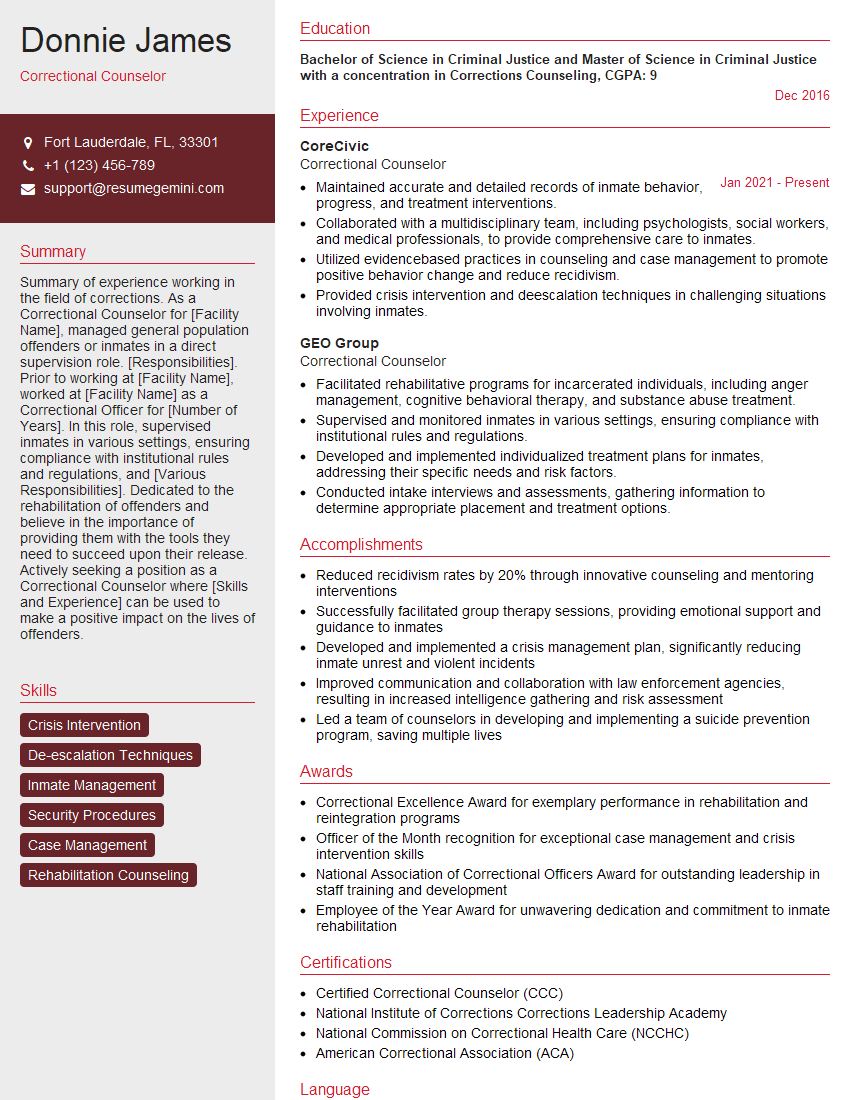
Correctional Counselor Resume Sample
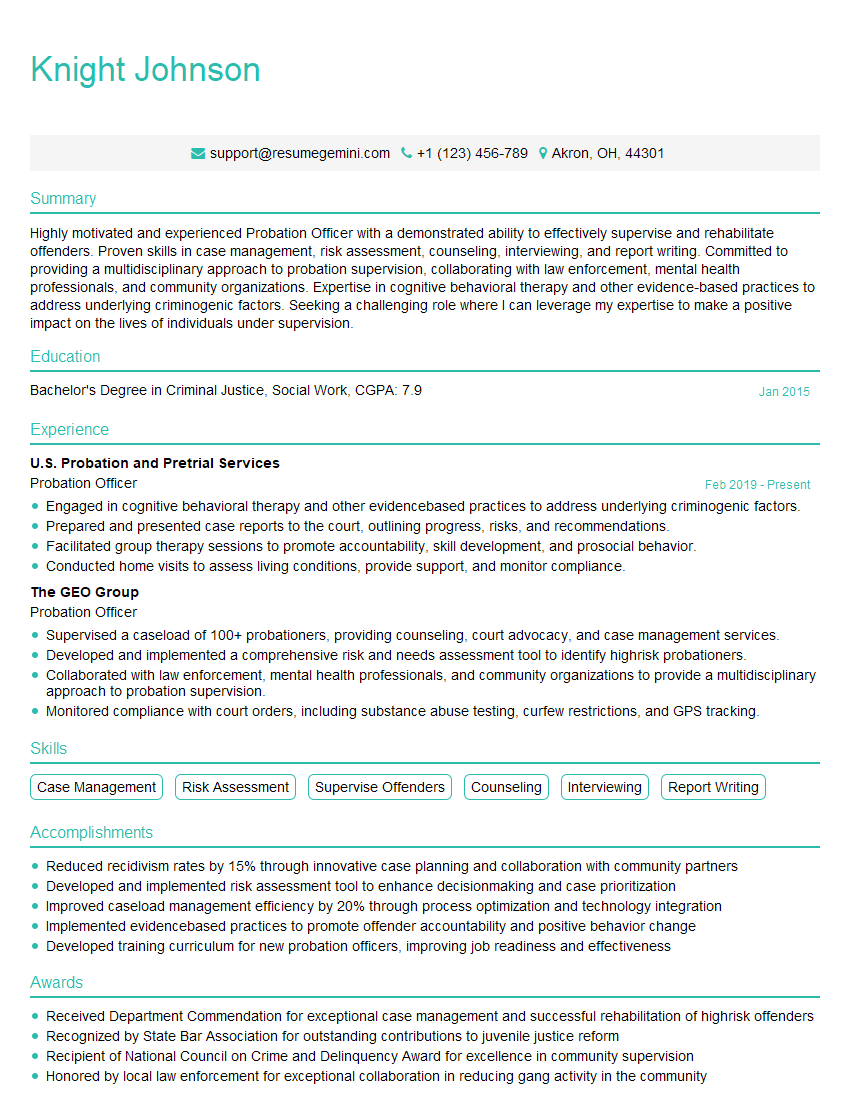
Probation Officer Resume Sample
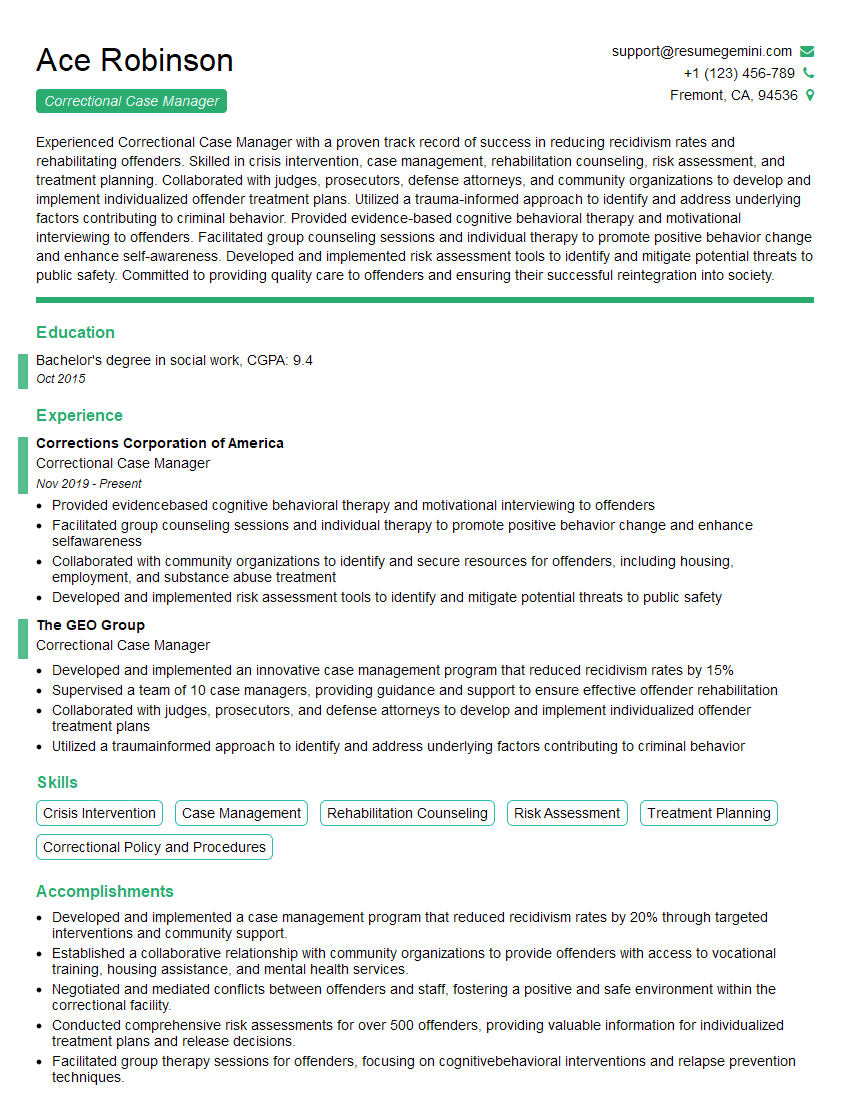
Correctional Case Manager Resume Sample
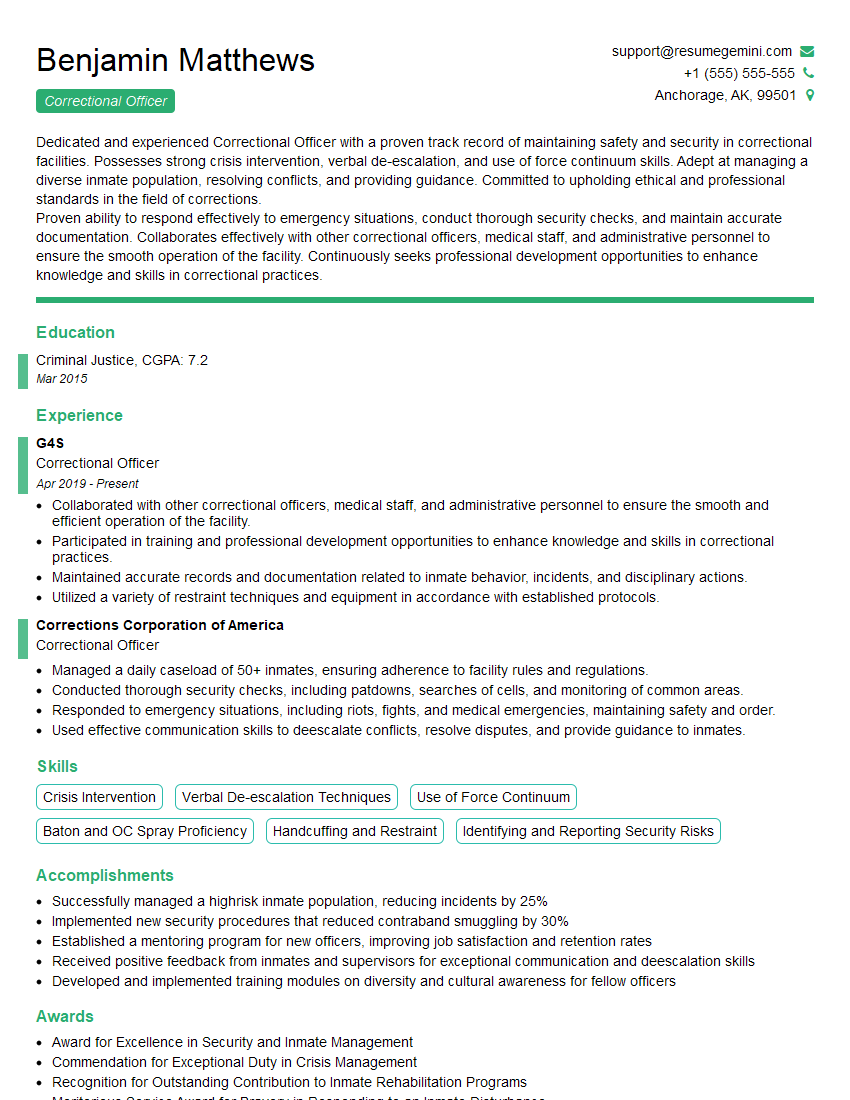
Correctional Officer Resume Sample
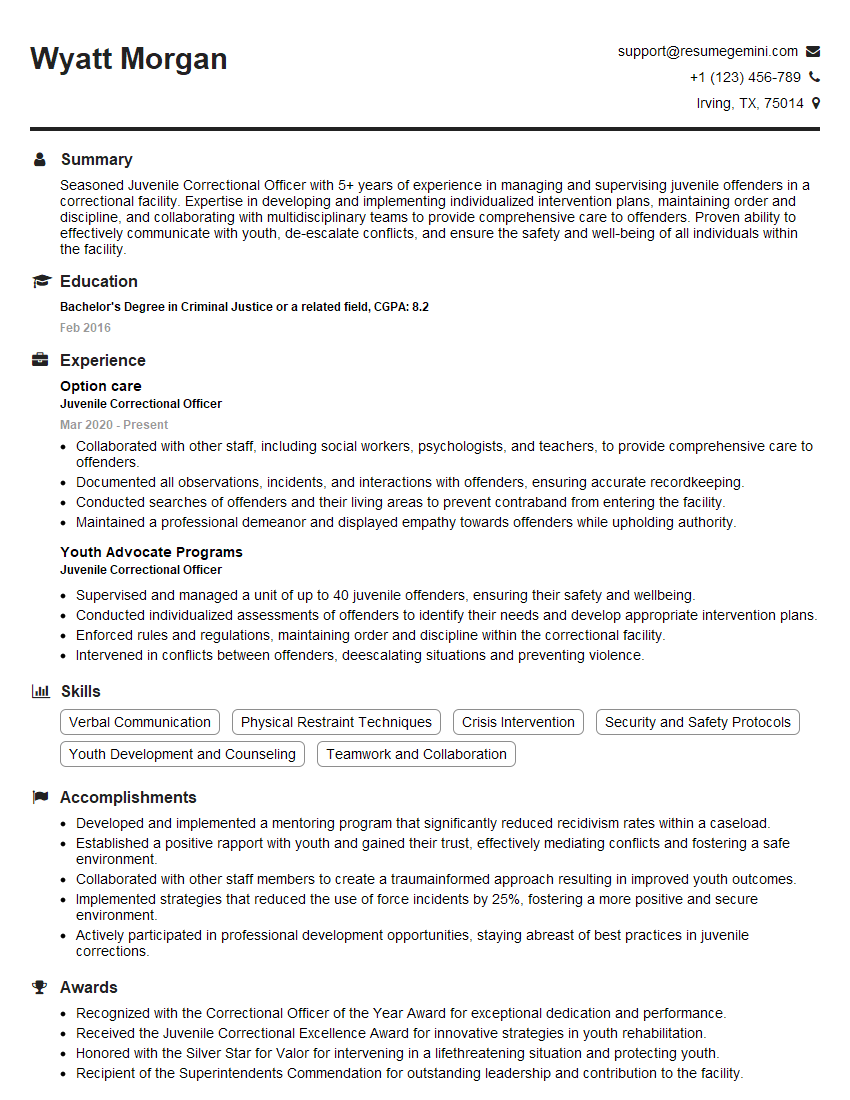
Juvenile Correctional Officer Resume Sample
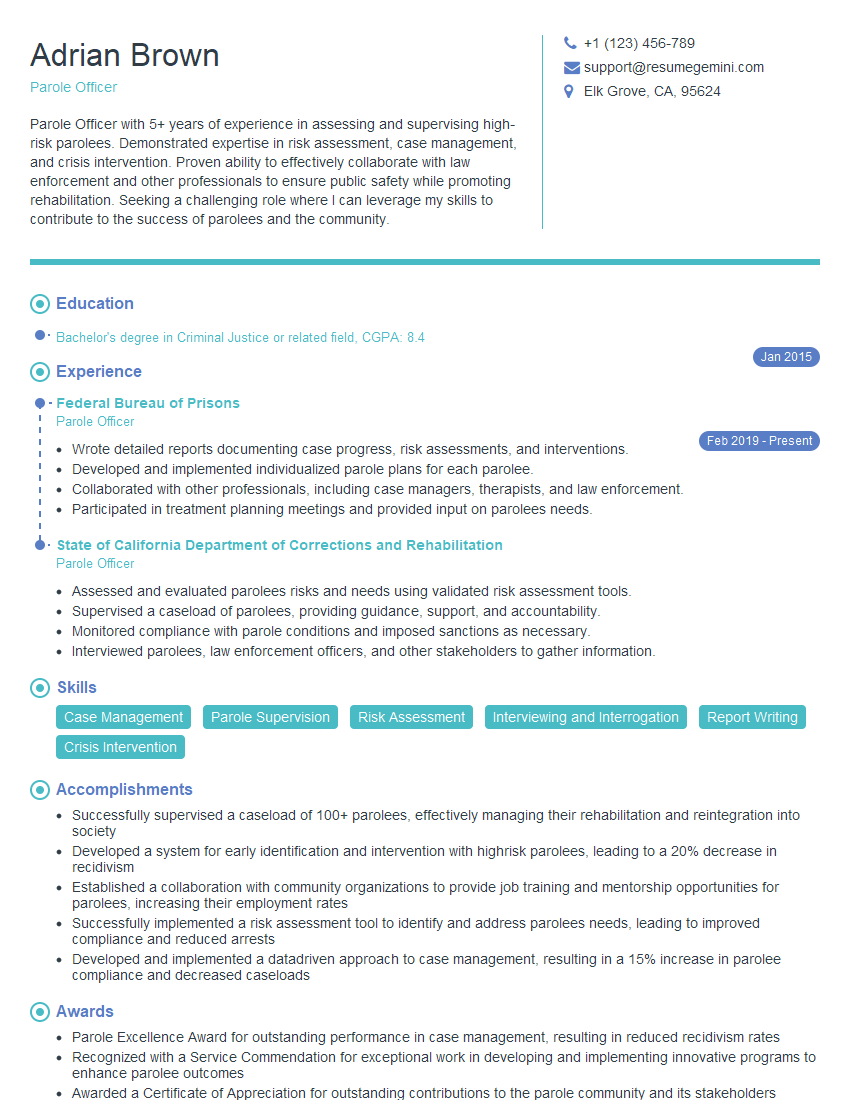
Parole Officer Resume Sample
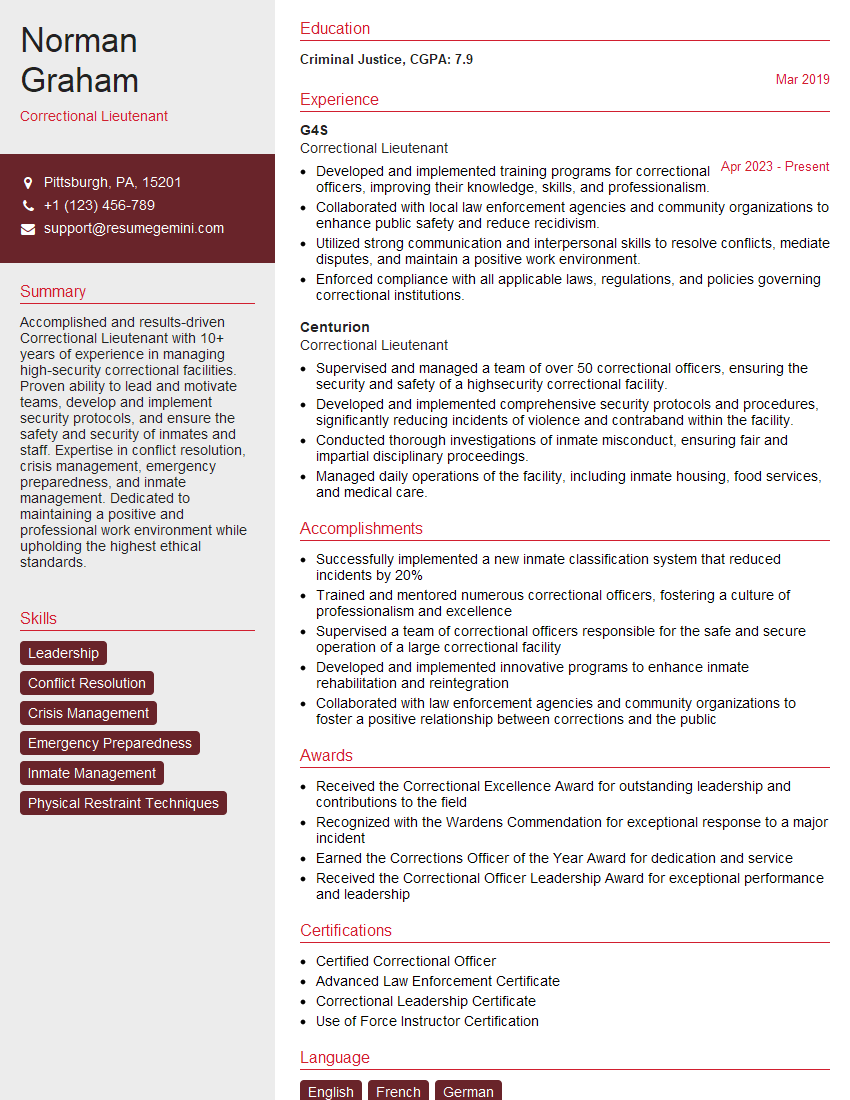
Correctional Lieutenant Resume Sample
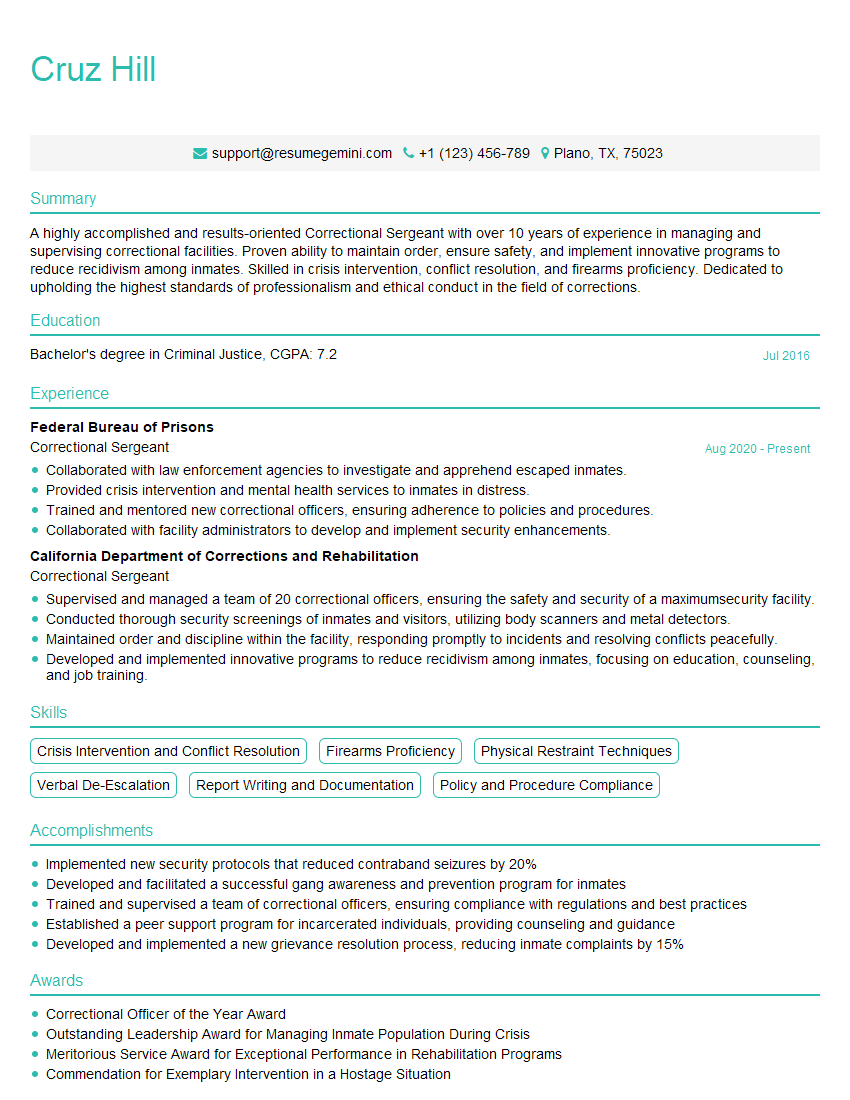
Correctional Sergeant Resume Sample
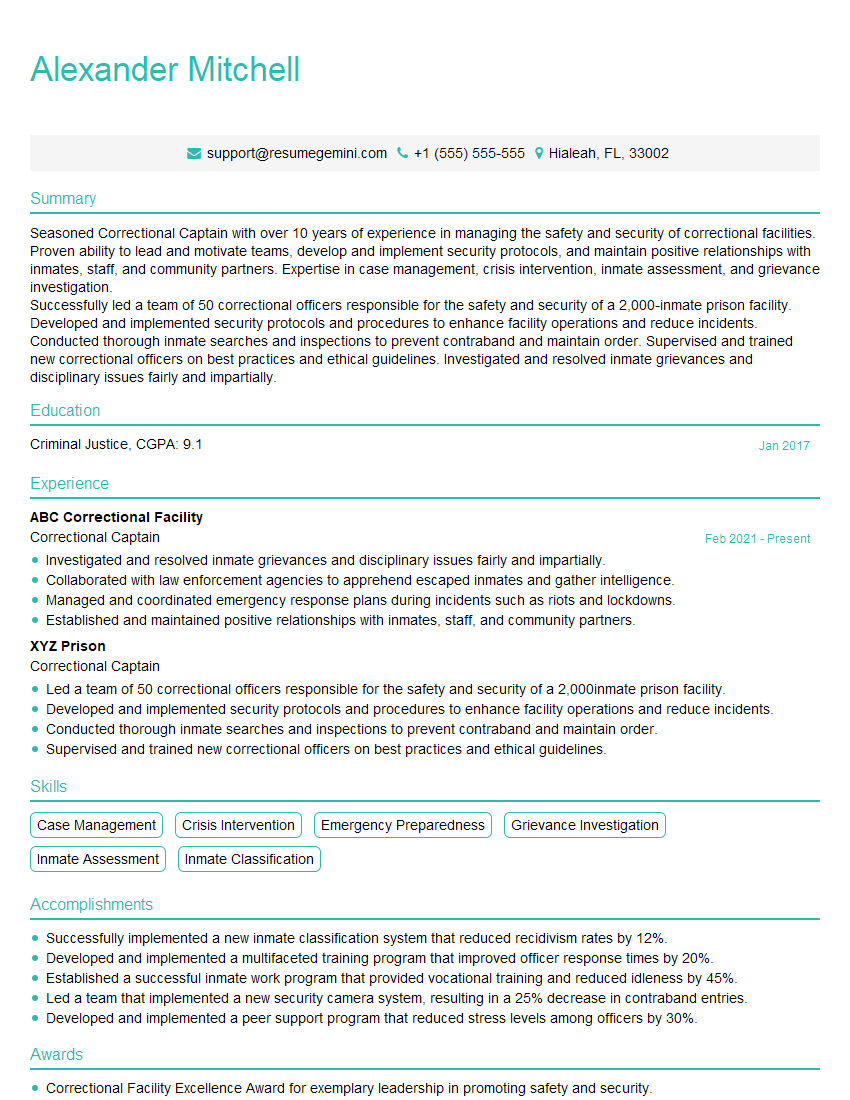
Correctional Captain Resume Sample
Explore more articles
Users Rating of Our Blogs
Share Your Experience
We value your feedback! Please rate our content and share your thoughts (optional).
What Readers Say About Our Blog
Very informative content, great job.
good