Cracking a skill-specific interview, like one for Corrugated Box Making, requires understanding the nuances of the role. In this blog, we present the questions you’re most likely to encounter, along with insights into how to answer them effectively. Let’s ensure you’re ready to make a strong impression.
Questions Asked in Corrugated Box Making Interview
Q 1. Explain the different types of corrugated board and their applications.
Corrugated board comes in various types, primarily differentiated by the flute profile – the wavy inner structure – and the number of layers. The flute provides strength and cushioning, while the linerboard provides stiffness and printability.
- Single Wall: One flute layer sandwiched between two linerboards. This is the most common type, offering a balance of strength and cost. It’s ideal for lighter products like cereal boxes or smaller retail packaging.
- Double Wall: Two flute layers and three linerboards. Significantly stronger than single wall, it’s perfect for heavier items or products needing extra protection during transit, like appliances or industrial parts.
- Triple Wall: Three flute layers and four linerboards. Provides the highest strength and protection, suitable for very heavy or fragile items requiring maximum protection against impacts and stacking stresses. Think of it as the heavyweight champion of corrugated boards – used for transporting very large and heavy machinery.
- Flute Types: Different flute types (A-flute, B-flute, C-flute, E-flute, F-flute) vary in height and density, impacting strength and cost. A-flute is the most common, offering a good balance of strength and weight. B-flute offers more compact packaging and increased print area. E-flute is the thinnest, ideal for lightweight items needing a smaller profile.
Choosing the right board type involves a careful assessment of product weight, fragility, stacking requirements, and shipping conditions.
Q 2. Describe the process of designing a corrugated box for optimal strength and cost-effectiveness.
Designing a strong yet cost-effective corrugated box is a balancing act involving material selection, structural design, and manufacturing considerations. The key is minimizing material use without sacrificing strength or durability.
- Computer-Aided Design (CAD): Software allows for precise design and simulation of box strength under different conditions, ensuring optimal design before production.
- Board Grade Selection: Choosing the appropriate flute type and linerboard grade (burst strength, edge crush test (ECT)) is paramount. Using higher-grade materials might seem expensive, but it can prevent damage and costly returns.
- Structural Design: Proper scoring and slotting are crucial. We carefully analyze stacking strength, impact resistance and how the box performs during handling. Box design also includes considering features like reinforced corners, double-walled panels in high-stress areas, and specialized closures (e.g., tuck-in flaps, lock-bottom construction).
- Minimizing Waste: Efficient design reduces material consumption during cutting and minimizes waste, translating to lower costs.
- Simulation and Testing: Before mass production, it’s essential to create and test prototypes to validate the design’s strength and durability under real-world conditions. This includes drop tests, stack tests, and compression tests.
For example, a fragile item might require a double-walled box with reinforced corners, whereas a sturdy item could utilize a single-walled box with a clever design to minimize material usage without compromising protection.
Q 3. What are the key considerations when choosing the right adhesive for corrugated box assembly?
Adhesive selection for corrugated box assembly is critical for ensuring the box’s structural integrity and overall quality. The choice depends on various factors.
- Adhesive Type: Hot melt adhesives are widely used for their speed and efficiency. Water-based adhesives are environmentally friendly, but their slower drying time impacts speed. Starch-based adhesives offer a balance between these two.
- Substrate Compatibility: The adhesive must adhere properly to both the corrugated board and any printed surfaces. Some adhesives might react negatively with certain inks or coatings.
- Open Time: This is crucial for high-speed production lines. A longer open time is needed if there is a high variability in the production speed. The adhesive needs to stay usable throughout the entire bonding process.
- Tack and Strength: The adhesive must possess sufficient tack to ensure immediate adhesion and high strength to maintain bond integrity during transit and handling. The adhesive must also be able to withstand various temperatures and humidity levels.
- Cost and Environmental Considerations: Balancing cost-effectiveness with environmental impact influences adhesive choice. Many companies are prioritizing eco-friendly options.
Incorrect adhesive selection can lead to box failure, leading to product damage and potentially impacting brand reputation. We conduct thorough testing to determine the optimal adhesive and application method for each specific box design.
Q 4. How do you ensure the quality control of corrugated boxes throughout the production process?
Quality control in corrugated box manufacturing is vital to maintaining product integrity and customer satisfaction. It’s a multi-stage process involving:
- Raw Material Inspection: Incoming corrugated board is inspected for quality, thickness variations, and defects. Any non-conforming materials are immediately rejected.
- Printing Quality Control: Regular checks ensure color consistency, image clarity, and accurate registration during the printing process.
- Die-Cutting Accuracy: Precision in die-cutting is crucial for proper box formation. Regular calibration and maintenance of die-cutting equipment are essential.
- Box Formation and Gluing: Ensuring the correct amount of glue is applied and that the boxes are formed correctly is a critical step. Regular checks for improperly glued boxes or mis-formed boxes should be done throughout the process.
- Dimensional Accuracy: Regular checks of box dimensions (length, width, height) ensure they meet specifications.
- Random Sampling and Testing: Random sampling throughout production allows for testing the strength, durability, and overall quality of the boxes. This typically involves burst tests, edge crush tests, and compression tests.
- Statistical Process Control (SPC): SPC is used to monitor key process parameters and identify any potential quality issues early on. This allows for continuous improvement and prevents significant defects.
Implementing robust quality control measures minimizes defects, reduces waste, and maintains high standards.
Q 5. What are common defects found in corrugated boxes and how are they resolved?
Several common defects can occur during corrugated box manufacturing. Identifying and resolving these defects promptly is crucial.
- Slurring: Uneven ink distribution leading to fuzzy or blurred print. Resolved by adjusting printing pressure or ink viscosity.
- Scoring Issues: Incomplete or improperly scored lines, leading to poor box formation. Resolved by adjusting the scoring blades or replacing worn tools.
- Glue Defects: Insufficient glue, excessive glue, or glue misapplication lead to weak seams or unsightly glue lines. This can be resolved by adjusting glue application, viscosity, and temperature.
- Board Defects: Uneven board thickness or damaged board from the supplier can affect the quality of the box. Requires strict raw material inspection and supplier feedback.
- Miscuts: Incorrectly sized or shaped boxes due to die-cutting errors. Requires careful machine calibration and operator training.
- Fluting Defects: Poor fluting (e.g., crushed flutes) results in weak or damaged boxes. Could indicate issues with the raw materials or the manufacturing equipment. Proper inspection and maintenance are crucial here.
Defect identification typically involves visual inspection, followed by root cause analysis to prevent recurrence. Corrective actions involve equipment adjustments, operator retraining, or supplier engagement.
Q 6. Describe your experience with different types of corrugated box printing techniques.
I have extensive experience with various corrugated box printing techniques, each offering unique advantages and limitations.
- Flexographic Printing: A cost-effective method suitable for high-volume printing. It offers good quality but may lack the fine detail achievable with other methods.
- Offset Printing: Produces high-quality images and detailed graphics but is less cost-effective for high-volume jobs.
- Digital Printing: Offers on-demand printing, ideal for short runs and customized designs, but can be more expensive than other methods.
- Screen Printing: Suitable for bold graphics and designs, particularly where thick ink layers are needed. Not ideal for complex designs.
The choice of printing technique depends on factors such as print quality requirements, print run size, budget, and desired design complexity. We often advise clients on the optimal method based on their specific needs.
Q 7. Explain your understanding of the relationship between box design and shipping damage.
Box design significantly impacts shipping damage. A poorly designed box is a leading cause of damage during transit.
- Sufficient Strength: The box must withstand the forces of compression, impact, and vibration during handling and transportation. This requires proper material selection and structural design, such as reinforced corners or double-wall construction where necessary.
- Proper Size and Fit: The product should fit snugly within the box to minimize movement and reduce impact damage. Excessive empty space can increase the risk of damage during transit.
- Appropriate Closures: Secure closures (e.g., taped seams, interlocking flaps) are essential to prevent the box from opening during transit. A poorly secured box is more likely to lead to damage or product loss.
- Environmental Considerations: The box must also be able to withstand various environmental conditions, such as temperature changes and humidity. This might include using materials and adhesives that resist environmental extremes.
- Stacking Strength: If boxes are stacked, the design must ensure sufficient compressive strength to prevent collapse under weight. This often involves reinforced bottom panels and robust construction.
A well-designed box minimizes damage, reduces returns, and protects the product. This is why careful consideration of all aspects of box design is crucial before launching a product.
Q 8. How do you maintain optimal machine efficiency in a corrugated box production line?
Maintaining optimal machine efficiency in a corrugated box production line is crucial for profitability and meeting production targets. It’s a multifaceted process involving preventative maintenance, operator training, and real-time monitoring.
- Preventative Maintenance (PM): A robust PM schedule is paramount. This involves regular inspections, lubrication, and part replacements according to the manufacturer’s recommendations. Think of it like servicing your car – regular checks prevent major breakdowns. For example, regularly checking the knives on the slitter-scorer prevents dulling and ensures clean cuts, reducing waste and downtime.
- Operator Training: Well-trained operators are essential. They should understand the machine’s functionalities, troubleshooting procedures, and safety protocols. Regular training sessions, including simulations and hands-on practice, can significantly improve efficiency and reduce errors. A simple example is teaching operators to efficiently change rolls of corrugated board, minimizing downtime.
- Real-time Monitoring: Modern machines often have sophisticated monitoring systems. These systems track key performance indicators (KPIs) like production speed, downtime, and waste. Analyzing this data allows for proactive identification of potential problems and adjustments to optimize the process. For instance, a sudden drop in production speed could indicate a problem with the glue application system, which can be addressed immediately.
- Process Optimization: This involves analyzing the entire production line to identify bottlenecks and areas for improvement. Techniques like Lean Manufacturing principles can be applied to streamline the workflow and eliminate waste. A real-world example could involve adjusting the speed of the different machines along the line to achieve a smoother and more efficient flow.
Q 9. Describe your experience troubleshooting equipment malfunctions on a corrugated box production line.
Troubleshooting equipment malfunctions requires a systematic approach. My experience involves a combination of practical knowledge, diagnostic tools, and a methodical process.
- Safety First: Always prioritize safety. Before attempting any repair, ensure the machine is properly shut down and locked out to prevent accidental activation.
- Identify the Problem: Start by observing the malfunction. What exactly is happening? Is there a specific error code? Are there unusual sounds or vibrations? Document your observations meticulously.
- Check the Obvious: Often, the issue is something simple, such as a power failure, a jammed sensor, or a depleted supply of glue or board. Checking these basic things first can save time.
- Use Diagnostic Tools: Many modern machines have built-in diagnostic systems providing error codes and detailed information on the malfunction. Understanding these codes and utilizing the machine’s manuals is crucial.
- Systematic Troubleshooting: If the problem is more complex, I follow a systematic approach, eliminating potential causes one by one. This may involve checking electrical connections, pneumatic systems, or mechanical components.
- Seek Expert Help: If I can’t identify the problem or resolve it after trying various troubleshooting steps, I consult with the machine manufacturer or a qualified technician.
For instance, I once encountered a situation where the boxes weren’t being formed correctly. After checking the obvious, I used the diagnostic system to pinpoint a malfunctioning sensor responsible for detecting the presence of the corrugated board. Replacing the sensor resolved the problem.
Q 10. How do you manage inventory and supply chain issues related to corrugated box production?
Managing inventory and supply chain issues in corrugated box production is critical for smooth operations. It involves forecasting demand, efficient procurement, and effective inventory control.
- Demand Forecasting: Accurate forecasting is vital for ordering the right amount of raw materials (corrugated board, glue, etc.) at the right time. This minimizes storage costs and prevents stockouts. We use statistical methods and historical data to predict demand, accounting for seasonal variations and market trends.
- Supplier Relationships: Building strong relationships with reliable suppliers is essential for ensuring a consistent supply of high-quality raw materials. This includes negotiating favorable pricing and delivery terms.
- Inventory Management: Employing an effective inventory management system, such as using a software system, helps track inventory levels, monitor stock movement, and identify potential shortages. We utilize the FIFO (First-In, First-Out) method to minimize the risk of material spoilage.
- Risk Management: Identifying and mitigating potential supply chain disruptions is crucial. This involves diversifying suppliers, maintaining safety stock, and having contingency plans in place in case of unforeseen events like natural disasters or transportation delays.
For example, during periods of high demand, we work closely with our suppliers to ensure timely deliveries and even explore options like temporary increases in production capacity.
Q 11. What safety procedures do you follow in a corrugated box manufacturing environment?
Safety is paramount in a corrugated box manufacturing environment. We adhere to strict safety procedures to protect our employees and prevent accidents.
- Personal Protective Equipment (PPE): All employees are required to wear appropriate PPE, including safety glasses, hearing protection, gloves, and safety shoes.
- Machine Guarding: All machinery is fitted with appropriate safety guards to prevent accidental contact with moving parts. Regular inspections ensure these guards are functioning correctly.
- Lockout/Tagout Procedures: Strict lockout/tagout procedures are followed when performing maintenance or repairs on machinery to prevent unexpected startup.
- Emergency Procedures: Clear emergency procedures are in place, including evacuation plans and the location of emergency equipment such as fire extinguishers and first-aid kits. Regular drills ensure employees are familiar with these procedures.
- Training and Education: Employees receive regular safety training and education on safe operating procedures, hazard identification, and emergency response.
- Cleanliness and Order: Maintaining a clean and organized workspace reduces the risk of slips, trips, and falls. We regularly inspect the facility for any potential hazards.
We conduct regular safety audits and risk assessments to identify and mitigate potential hazards and improve overall workplace safety.
Q 12. Explain your understanding of the importance of sustainability in corrugated box manufacturing.
Sustainability is increasingly important in corrugated box manufacturing. We focus on minimizing our environmental impact through various initiatives.
- Sustainable Sourcing: We source our corrugated board from suppliers committed to sustainable forestry practices, ensuring the use of recycled materials and responsible forest management.
- Waste Reduction: We actively strive to minimize waste throughout the production process. This includes optimizing cutting patterns, implementing efficient waste management systems, and recycling scrap material.
- Energy Efficiency: We continuously seek ways to improve energy efficiency in our operations. This could involve investing in energy-efficient machinery and implementing energy-saving practices.
- Water Conservation: We minimize water consumption in our manufacturing processes and implement water recycling programs where feasible.
- Emissions Reduction: We work to reduce greenhouse gas emissions from our operations by optimizing energy usage and exploring alternative fuel sources.
By embracing sustainable practices, we contribute to a greener future while enhancing our brand image and reducing long-term operating costs.
Q 13. How do you interpret and follow technical specifications for corrugated box production?
Interpreting and following technical specifications is crucial for producing corrugated boxes that meet customer requirements and industry standards. These specifications typically include dimensions, board type, fluting, print design, and required strength.
- Understanding the Specifications: This involves carefully reviewing the specifications document to fully understand the requirements, including tolerances and any special instructions.
- Setting Up the Machinery: Based on the specifications, we adjust the machinery accordingly. This includes setting the die-cutters to the precise dimensions, adjusting the glue application system, and configuring the printing presses for the correct design.
- Quality Control: Throughout the production process, we conduct regular quality checks to ensure the boxes conform to the specifications. This includes verifying dimensions, print quality, and overall box strength.
- Documentation: We maintain meticulous records of the production process, including the specifications used, production parameters, and quality control results. This documentation is essential for traceability and for addressing any potential issues.
For example, if the specifications require a specific burst strength, we use specialized testing equipment to verify the strength of the boxes during and after production.
Q 14. Describe your experience with different types of corrugated box machinery.
My experience encompasses a variety of corrugated box machinery, including single-facer, double-facer, slitter-scorer, printer-slotter, folder-gluer, and rotary die-cutter.
- Single-Facer: This machine combines the linerboard and fluting medium to create a single-faced corrugated sheet.
- Double-Facer: This machine joins two single-faced sheets to create double-walled corrugated board.
- Slitter-Scorer: This machine cuts and scores the corrugated board according to the desired box design.
- Printer-Slotter: This machine prints and slots the corrugated board simultaneously.
- Folder-Gluer: This machine folds and glues the scored and cut blanks to form the boxes.
- Rotary Die-Cutter: This high-speed machine is used for complex box designs, producing intricate shapes and cuts with high precision.
I’m familiar with both conventional and high-speed machinery, understanding their operational characteristics, maintenance requirements, and troubleshooting techniques. My experience allows me to effectively manage and maintain a range of equipment found in a typical corrugated box manufacturing plant.
Q 15. How do you handle customer complaints related to corrugated box quality or delivery?
Handling customer complaints regarding corrugated box quality or delivery requires a systematic and empathetic approach. First, I acknowledge the customer’s concern and thank them for bringing it to our attention. This sets a positive tone and shows I value their business. Next, I gather all relevant information: order details, specific issues (e.g., damaged boxes, incorrect dimensions, late delivery), and any supporting documentation (photos, videos). Then, I investigate the root cause. This might involve reviewing production records, checking transportation logs, or inspecting the returned boxes. Depending on the issue, this investigation could involve collaboration with different teams (production, quality control, logistics). Once the root cause is identified, I propose a solution, which might include a replacement order, a refund, or process adjustments to prevent future occurrences. I keep the customer informed throughout the entire process, offering regular updates and a clear timeline for resolution. Finally, I implement the solution and follow up with the customer to ensure their satisfaction. For example, if a batch of boxes was damaged during transit, I’d work with the logistics team to improve packaging and handling, and potentially switch carriers if necessary. I also document all complaints and their resolutions to identify trends and implement preventive measures.
Career Expert Tips:
- Ace those interviews! Prepare effectively by reviewing the Top 50 Most Common Interview Questions on ResumeGemini.
- Navigate your job search with confidence! Explore a wide range of Career Tips on ResumeGemini. Learn about common challenges and recommendations to overcome them.
- Craft the perfect resume! Master the Art of Resume Writing with ResumeGemini’s guide. Showcase your unique qualifications and achievements effectively.
- Don’t miss out on holiday savings! Build your dream resume with ResumeGemini’s ATS optimized templates.
Q 16. What metrics do you use to measure the efficiency and productivity of a corrugated box production line?
Measuring the efficiency and productivity of a corrugated box production line requires a multi-faceted approach. Key metrics include:
- Production Rate: Boxes produced per hour or per shift, compared against targets. This helps identify bottlenecks.
- Throughput Efficiency: The ratio of actual production to planned production. This accounts for downtime.
- Overall Equipment Effectiveness (OEE): This combines availability (uptime), performance (speed), and quality rate to give a comprehensive picture of line efficiency. A low OEE indicates areas for improvement.
- Waste Rate: The percentage of materials (board, glue, etc.) lost during production due to defects or inefficiencies. Reducing waste directly impacts profitability.
- Defect Rate: The percentage of defective boxes produced. High defect rates necessitate process adjustments and improved quality control.
- Labor Productivity: Output per labor hour. This helps assess the effectiveness of staffing levels and training.
Regularly monitoring these metrics allows for quick identification of performance issues and informed decision-making for improvements. For instance, a sudden drop in production rate might indicate a machine malfunction, while a high defect rate suggests a problem with the cutting process or material quality.
Q 17. How do you conduct root cause analysis for production line issues in corrugated box making?
Root cause analysis for production line issues is crucial for preventing recurrence. I typically employ the 5 Whys technique, a simple yet effective method to drill down to the underlying cause. Let’s say we’re experiencing a high rate of box miscuts.
- Why 1: High miscut rate.
- Why 2: The cutting die is worn.
- Why 3: The die wasn’t replaced according to the scheduled maintenance.
- Why 4: Maintenance schedules weren’t being followed.
- Why 5: Lack of clear communication and accountability in the maintenance department.
This analysis reveals the root cause is a lack of communication and accountability, not simply a worn die. Addressing this underlying issue through improved communication and training is far more effective than simply replacing the die. Other tools, such as Fishbone diagrams (Ishikawa diagrams) or fault tree analysis, can be used for more complex issues, systematically breaking down the problem into contributing factors. After identifying the root cause, appropriate corrective and preventive actions are developed and implemented, often involving changes to processes, equipment, or personnel training.
Q 18. Explain your experience with implementing process improvements in a corrugated box manufacturing setting.
In a previous role, we implemented a Lean manufacturing approach to streamline our corrugated box production. We started by mapping the entire production process, identifying bottlenecks and areas of waste. One significant finding was excessive material handling during the setup and changeover of the printing and cutting machines. We addressed this by implementing a standardized setup procedure, reducing setup time by 30%. This involved using a visual management system (with checklists and clear instructions) to ensure consistency and minimize errors. We also implemented 5S methodology (Sort, Set in Order, Shine, Standardize, Sustain) in the warehouse to optimize storage and material flow. The improvements resulted in a 15% increase in overall production efficiency and a significant reduction in material waste. This success was achieved through thorough data analysis, team collaboration, and commitment to continuous improvement. Regular review and adjustment of the new processes ensured ongoing efficacy.
Q 19. How do you manage a team effectively in a fast-paced corrugated box production environment?
Managing a team effectively in a fast-paced corrugated box production environment requires a combination of leadership styles and clear communication. I believe in fostering a culture of teamwork and collaboration, where everyone feels valued and empowered. This begins with clear expectations and well-defined roles and responsibilities. Regular team meetings are essential for communication of goals, updates on production targets, and addressing any challenges. I encourage open communication and actively solicit feedback from team members. In a high-pressure environment, providing regular training, recognizing achievements, and addressing concerns promptly are critical for maintaining morale and motivation. Fairness and consistency in applying rules and procedures are essential for building trust. Additionally, I use performance management techniques such as daily huddles and regular performance reviews to track progress, identify areas for improvement, and celebrate successes. Problem-solving is a collaborative effort, with team members contributing ideas and solutions. A strong emphasis on safety is paramount in this demanding environment.
Q 20. Describe your understanding of different types of box styles and closures.
Corrugated boxes come in a wide variety of styles and closures, each designed for specific applications. Here are a few common examples:
- Styles: Regular Slotted Container (RSC), Half Slotted Container (HSC), Full Overlap Slotted Container (FOL), Five-Panel Folder, and many more specialized designs for unique products.
- Closures: These include glued closures (top and bottom flaps), taped closures (various tapes for strength and automation), tuck-in closures (for easy opening and closing), and self-locking closures (requiring no additional fasteners).
The choice of style and closure depends on factors like product protection requirements, stacking strength, ease of opening, shipping efficiency, and cost considerations. For example, an RSC is the most common due to its strength and efficient construction, while a tuck-in closure is ideal for products needing easy access.
Q 21. How do you calculate the board feet required for a specific corrugated box design?
Calculating board feet required for a specific corrugated box design involves several steps. First, you need the box dimensions (length, width, height) and the board thickness. Then, you determine the board area for each panel. For a simple RSC:
- Panel 1 & 2 (Sides): 2 x (height x width)
- Panel 3 & 4 (Ends): 2 x (height x length)
- Panel 5 & 6 (Top & Bottom Flaps): 2 x (width + (2 x depth)) x depth
Add the areas of all six panels. This gives the total board area. To convert the area to board feet, divide by 144 (since there are 144 square inches in a square foot).
For example, a box with dimensions of 12 inches length, 10 inches width, and 8 inches height, using 0.25 inch thick board:
Total Area = 2*(8*10) + 2*(8*12) + 2*(10 + (2*8))*8 = 160 + 192 + 352 = 704 square inchesBoard Feet = 704 / 144 = 4.89 board feetThis calculation gives an approximate value, as it doesn’t account for losses due to cutting or scoring. Actual board requirements might be slightly higher to account for these factors. Specialized software is often used in real-world scenarios for more accurate calculations, particularly for complex box designs.
Q 22. What are the key differences between various types of corrugated board testing methods?
Corrugated board testing is crucial for ensuring quality and performance. Different tests assess various properties. Key differences lie in what aspect of the board they evaluate.
- Edge Crush Test (ECT): Measures the compressive strength of the board’s edge, indicating its ability to withstand stacking and handling. Think of it like testing how much weight a single piece of board can handle before collapsing. The higher the ECT, the stronger the board.
- Burst Test: This measures the board’s resistance to pressure applied uniformly across its surface, simulating the internal pressure a filled box might experience. It’s like inflating a balloon until it bursts – the higher the burst strength, the better the box can withstand internal pressure.
- Flat Crush Test (FCT): This assesses the strength of the board when compressed flat, usually used for assessing the strength of linerboard. Think of it as squeezing a piece of cardboard until it flattens.
- Ring Crush Test (RCT): Measures the strength of a corrugated tube, frequently used in evaluating the strength of the core of the board. This test is analogous to testing how much weight a cylindrical tube can support.
- Moisture Content Test: Determines the percentage of moisture within the board. This is important because moisture affects the board’s strength and stability.
Choosing the right test depends on the intended application of the corrugated board. For example, boxes for heavy goods will require a high ECT, while boxes for fragile items might prioritize a higher burst strength.
Q 23. Describe your experience with the use of Computer-Aided Design (CAD) in corrugated box design.
CAD has revolutionized corrugated box design. My experience spans over [Number] years, where I’ve used various CAD software, such as [Software Names – e.g., AutoCAD, SolidWorks, specialized corrugated software]. CAD allows for precise design, eliminating manual drafting and its inherent inaccuracies.
For example, we used CAD to design a custom-fit box for a client with irregularly shaped products. By digitally modeling the product, we were able to create a box that minimized wasted space and material while ensuring secure product containment. This resulted in significant cost savings for the client and optimized the packaging process.
Furthermore, CAD allows for rapid prototyping and iterative design refinement. We can easily make changes, test different configurations (e.g., different flute types, dimensions), and visualize the finished product in 3D before production, minimizing errors and reducing material waste. This iterative design process also allowed us to explore sustainable packaging options with reduced material usage while maintaining structural integrity.
Q 24. How do you stay updated with the latest industry trends and technologies in corrugated box manufacturing?
Staying current is essential in this dynamic industry. I utilize several methods:
- Industry Publications and Trade Shows: I regularly read publications like [List publications – e.g., Packaging World, Converting Quarterly] and attend industry events like [List trade shows – e.g., PACK EXPO, Drupa]. These offer insights into new technologies and market trends.
- Online Resources and Webinars: I follow industry blogs, participate in online forums, and attend webinars offered by equipment manufacturers and industry associations. This provides continuous access to the latest developments.
- Networking with Peers: I actively network with colleagues through industry associations and professional organizations. Sharing experiences and best practices helps stay informed.
- Professional Development Courses: I regularly attend training courses to update my knowledge and skills on new technologies and processes in corrugated box manufacturing. This includes training on newer materials and more efficient production techniques.
This multi-pronged approach ensures I’m always abreast of the latest advancements, allowing me to leverage them for improved efficiency, sustainability, and cost reduction in my work.
Q 25. Explain your understanding of the impact of different environmental factors on corrugated box performance.
Environmental factors significantly influence corrugated box performance. Humidity, temperature, and storage conditions can all impact the board’s strength, durability, and printability.
- Humidity: High humidity can weaken the board by causing it to absorb moisture, leading to reduced strength and potential for warping. Conversely, very low humidity can cause the board to become brittle and more prone to cracking.
- Temperature: Extreme temperatures can also negatively impact board properties. High temperatures can soften the adhesive, while low temperatures can make the board more brittle.
- Storage: Improper storage, such as stacking boxes too high or leaving them exposed to direct sunlight and rain, can result in damage and reduce the lifespan of the boxes. Maintaining optimal storage conditions is essential to preserve the structural integrity of the boxes. Proper ventilation is also key to prevent moisture build-up.
Understanding these environmental effects allows for informed decisions on board selection, box design, and storage recommendations to ensure optimal performance and extended shelf life for the products being packaged.
Q 26. How do you ensure compliance with all relevant industry regulations and safety standards?
Compliance is paramount. We adhere to all relevant regulations, including those related to food safety (e.g., FDA regulations), material safety data sheets (MSDS), and environmental protection (e.g., recycling guidelines).
Our compliance procedures involve:
- Regular Audits: We conduct regular internal audits to assess our compliance with all applicable standards.
- Supplier Audits: We audit our suppliers to ensure they meet our stringent quality and safety requirements regarding materials and processes.
- Employee Training: Employees receive regular training on safety protocols, handling procedures, and regulatory compliance.
- Documentation: We maintain meticulous records of all materials, processes, and testing results to ensure traceability and accountability.
- Continuous Improvement: We continuously review our processes and implement improvements to enhance our compliance posture and minimize risks.
Maintaining strict adherence to these standards protects our clients, our employees, and the environment, while also enhancing our reputation for quality and reliability.
Q 27. Describe your experience with implementing lean manufacturing principles in a corrugated box manufacturing setting.
Implementing lean manufacturing principles in a corrugated box plant focuses on eliminating waste and improving efficiency. My experience involved several key initiatives:
- Value Stream Mapping: We mapped the entire production process to identify areas of waste (e.g., excess inventory, unnecessary movement, waiting time). This provided a clear picture of where improvements were needed.
- 5S Methodology: Implementing 5S (Sort, Set in Order, Shine, Standardize, Sustain) created a more organized and efficient workspace, reducing waste and improving safety. This involved streamlining the layout of the production floor, clearly marking storage areas, and ensuring a clean and orderly environment.
- Kaizen Events: We organized regular Kaizen events (continuous improvement workshops) where teams worked together to identify and implement small, incremental improvements to processes. These often involved simple changes that led to significant efficiency gains over time.
- Total Productive Maintenance (TPM): We implemented TPM to minimize equipment downtime and maximize the lifespan of our machinery. This involved regular preventative maintenance and operator training, which improved equipment reliability and decreased production interruptions.
These lean principles resulted in reduced lead times, lower production costs, and improved product quality. The key was a commitment to continuous improvement and employee empowerment.
Q 28. How do you prioritize tasks and manage competing deadlines in a fast-paced corrugated box production environment?
Prioritizing tasks and managing deadlines in a fast-paced environment requires a structured approach. I use a combination of techniques:
- Project Prioritization Matrix: I use a matrix to rank tasks based on urgency and importance (e.g., Eisenhower Matrix). This ensures that critical tasks are addressed first.
- Work Breakdown Structure (WBS): For complex projects, I break down the project into smaller, more manageable tasks. This makes it easier to track progress and allocate resources effectively.
- Gantt Charts: I utilize Gantt charts to visualize project timelines, identify dependencies between tasks, and track progress. This helps in identifying potential delays early on and making necessary adjustments.
- Regular Meetings and Communication: I hold regular meetings with the team to discuss progress, address roadblocks, and make necessary adjustments to the schedule. Open communication is essential to keep everyone informed and on track.
- Agile Methodology: Adapting Agile principles enables flexibility and responsiveness to changing priorities. By breaking down the workload into sprints and regularly reviewing progress, I can adjust to changing requirements and deadlines without major disruptions.
The key is to be proactive, flexible, and communicate effectively with the team to ensure timely project completion even under pressure.
Key Topics to Learn for Your Corrugated Box Making Interview
- Raw Materials & Properties: Understanding the characteristics of paperboard, linerboard, and medium, including their respective strengths, weaknesses, and suitability for different box types. This includes knowledge of grammage, flute types, and burst strength.
- Die-Cutting & Design: Familiarize yourself with the process of creating cutting dies, understanding the relationship between design specifications and the final product. Practice interpreting technical drawings and understanding tolerances.
- Corrugator Machine Operation: Gain a working knowledge of the various stages of corrugator operation, from sheet feeding to final product output. This includes understanding potential points of failure and troubleshooting techniques.
- Printing & Finishing Techniques: Learn about different printing methods used on corrugated boxes (flexography, offset, etc.) and various finishing options like lamination, coating, and aqueous coating to enhance durability and aesthetics.
- Quality Control & Assurance: Understand the importance of quality control measures throughout the production process, including inspection techniques and adherence to industry standards. Be prepared to discuss common quality issues and solutions.
- Safety Procedures & Regulations: Demonstrate knowledge of relevant health and safety regulations within a corrugated box manufacturing environment, including machine operation safety and proper handling of materials.
- Production Planning & Efficiency: Gain an understanding of production scheduling, optimizing workflow, and minimizing waste. Be prepared to discuss strategies for improving efficiency and reducing production costs.
- Troubleshooting & Problem Solving: Develop your ability to identify and troubleshoot common problems encountered during the manufacturing process. Be ready to discuss your approach to problem-solving in a production setting.
Next Steps
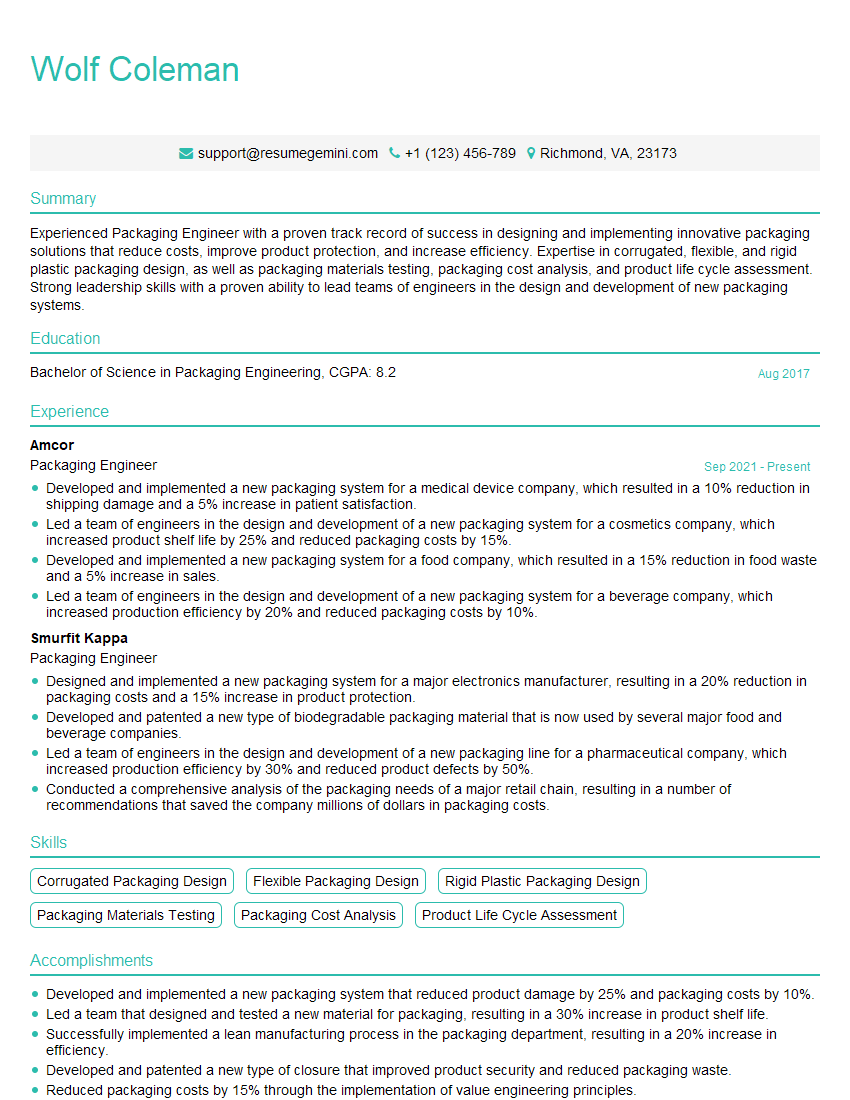
Mastering the intricacies of corrugated box making opens doors to a rewarding career with excellent growth potential. This industry demands skilled professionals who understand both the technical aspects and the business side of production. To significantly increase your chances of landing your dream job, crafting a compelling, ATS-friendly resume is crucial. ResumeGemini is a trusted resource that can help you build a professional and effective resume, significantly improving your chances of getting noticed by recruiters. We even provide examples of resumes tailored specifically to the Corrugated Box Making industry to give you a head start. Invest the time to build a strong resume – it’s your first impression and a key to unlocking your career aspirations.
Explore more articles
Users Rating of Our Blogs
Share Your Experience
We value your feedback! Please rate our content and share your thoughts (optional).
What Readers Say About Our Blog
Very informative content, great job.
good