Are you ready to stand out in your next interview? Understanding and preparing for Cosmetics Safety interview questions is a game-changer. In this blog, we’ve compiled key questions and expert advice to help you showcase your skills with confidence and precision. Let’s get started on your journey to acing the interview.
Questions Asked in Cosmetics Safety Interview
Q 1. Explain the difference between cosmetic safety and efficacy.
Cosmetic safety and efficacy are distinct but interconnected aspects of product development. Safety focuses on ensuring a product is non-harmful when used as directed, minimizing the risk of adverse reactions like irritation, allergies, or toxicity. Efficacy, on the other hand, refers to the product’s ability to deliver its promised results – for example, a moisturizer’s ability to hydrate skin or a sunscreen’s ability to protect against UV damage. Think of it this way: a product can be safe but ineffective (a lotion that doesn’t moisturize but doesn’t cause irritation) or effective but unsafe (a powerful acne treatment that causes severe skin reactions). Both aspects are crucial for a successful and responsible cosmetic product.
Q 2. Describe your experience with the EU Cosmetics Regulation (EC) No 1223/2009.
The EU Cosmetics Regulation (EC) No 1223/2009 is a cornerstone of my professional expertise. I’ve been involved in numerous projects requiring compliance with its stringent requirements, including product safety assessments, compiling Product Information Files (PIFs), and ensuring the proper labeling and notification procedures. I’m intimately familiar with its articles concerning the responsibilities of Responsible Persons, the requirements for substantiating claims, and the detailed regulations concerning restricted and prohibited substances. For example, I’ve assisted companies in navigating the complexities of the Annex II and III restrictions on specific ingredients and helped them develop compliant formulations. A recent project involved a comprehensive review of a client’s product portfolio to ensure compliance with the latest amendments to the regulation, particularly concerning nanomaterials.
Q 3. How familiar are you with the FDA’s regulations regarding cosmetics?
My familiarity with FDA regulations for cosmetics is extensive. While the FDA’s approach differs from the EU’s more prescriptive model, I understand the agency’s focus on pre-market notification for color additives, the regulations surrounding good manufacturing practices (GMP), and the requirements for truthful and non-misleading advertising claims. I’m proficient in interpreting FDA guidelines on specific ingredients, evaluating potential safety concerns based on their guidelines, and ensuring compliance with labeling regulations. For instance, I’ve advised several clients on the appropriate testing and documentation required to support their claims, such as SPF claims for sunscreens. I am also aware of the ongoing evolution of FDA’s regulations and the agency’s commitment to enhancing consumer safety.
Q 4. Explain the process of conducting a safety assessment for a new cosmetic product.
A safety assessment for a new cosmetic product is a rigorous process. It typically involves these steps:
- Ingredient Safety Evaluation: Each ingredient is assessed individually for its potential hazards based on toxicological data, including acute toxicity, sensitization, irritation, and genotoxicity studies. This often relies on existing data from the scientific literature and safety reports.
- Formulation Safety Assessment: Once individual ingredients are evaluated, the complete formulation undergoes assessment to evaluate potential interactions between ingredients and the overall safety profile of the mixture. This includes considering the concentration of each ingredient and its potential for cumulative effects.
- Exposure Assessment: This step determines the amount of the cosmetic product a consumer is likely to be exposed to during normal use. Factors like application frequency, amount used, and the route of exposure (e.g., topical) are considered.
- Risk Characterization: This integrates the hazard and exposure assessments to determine the overall risk associated with the product. This step involves a careful evaluation of the potential for harm and the likelihood of that harm occurring.
- Documentation: The entire process is meticulously documented in a safety report, which forms the basis for the product’s safety assessment and regulatory compliance.
The specific requirements for a safety assessment can vary depending on the jurisdiction (e.g., EU, US) and the product’s characteristics.
Q 5. How do you determine the appropriate concentration of a cosmetic ingredient?
Determining the appropriate concentration of a cosmetic ingredient is critical for both safety and efficacy. It’s a multi-faceted decision. First, the ingredient’s safety data is consulted – this includes information on the Maximum Permitted Concentration (MPC) where applicable, as well as toxicity studies. Next, the desired efficacy is considered. The concentration should be high enough to achieve the intended effect (e.g., sufficient moisturizing or UV protection) but not so high as to pose unnecessary safety risks. Finally, practical considerations like the product’s texture, stability, and cost play a role. For example, a high concentration of a potent active ingredient might be necessary for efficacy but could lead to irritation or instability if not carefully formulated. A thorough understanding of both safety data and the desired functionality guides optimal concentration selection.
Q 6. What are the key safety concerns related to preservatives in cosmetics?
Preservatives are essential in cosmetics to prevent microbial contamination and maintain product stability and safety. However, some key safety concerns are associated with them:
- Allergic Reactions: Certain preservatives, such as parabens and formaldehyde releasers, can cause allergic contact dermatitis in susceptible individuals. This is a significant concern, leading to regulatory restrictions in some regions.
- Toxicity: Some preservatives may have inherent toxicity, even at low concentrations, posing potential systemic risks with prolonged exposure. This requires careful consideration of the safety profile and potential for cumulative effects.
- Irritancy: Certain preservatives can be irritating to the skin or mucous membranes, especially for individuals with sensitive skin.
- Environmental Impact: Some preservatives may pose environmental risks, particularly those that are persistent and bioaccumulative.
Choosing safe and effective preservatives, employing appropriate concentrations, and considering alternative preservation technologies (like natural preservatives or antimicrobial packaging) are all crucial considerations to minimize safety risks.
Q 7. What are your experience with Good Manufacturing Practices (GMP) for cosmetics?
My experience with Good Manufacturing Practices (GMP) for cosmetics is extensive. I’ve worked with numerous manufacturers to ensure compliance with various GMP guidelines, including those from the EU and the US. This includes reviewing manufacturing processes, quality control procedures, and documentation systems. I’ve helped companies implement and maintain GMP-compliant systems, ensuring the production of safe, high-quality products. Specific examples of my involvement include auditing manufacturing facilities, reviewing standard operating procedures (SOPs), and developing training programs for manufacturing personnel on GMP principles. The goal is always to maintain consistency and traceability throughout the production process to ensure that each batch of product meets the highest safety and quality standards. I’m also familiar with ISO 22716, the international standard for cosmetics GMP.
Q 8. Describe your experience with ingredient labeling regulations.
My experience with ingredient labeling regulations spans over a decade, encompassing various international and regional guidelines. I’m intimately familiar with regulations like the EU’s Cosmetic Regulation (EC) No 1223/2009, the FDA’s requirements in the United States, and similar frameworks in Canada, Japan, and Australia. This includes a deep understanding of ingredient naming conventions (INCI), allergen labeling requirements, and the proper declaration of restricted or prohibited substances. For example, I’ve directly assisted companies in navigating the complexities of updating their labels to comply with the new EU restrictions on microplastics. My expertise extends to understanding the nuances of different labeling requirements, considering factors such as language, packaging size, and target market. I’ve also worked extensively with regulatory bodies to ensure compliance and address any discrepancies or potential non-compliances. I’m adept at interpreting and applying these regulations to real-world scenarios, mitigating risk and ensuring product safety and consumer protection.
Q 9. How do you assess the potential for skin sensitization from a cosmetic ingredient?
Assessing the potential for skin sensitization from a cosmetic ingredient involves a multi-faceted approach. We start with a thorough literature review, examining existing data from studies like the Local Lymph Node Assay (LLNA) or the Guinea Pig Maximization Test (though this is less frequently used now due to ethical concerns). We also consider the ingredient’s chemical structure and its potential to act as a hapten – a small molecule that binds to proteins in the skin, triggering an immune response. For novel ingredients, in vitro and in vivo tests may be necessary. In vitro tests, like the human cell line activation test (h-CLAT), offer a quicker and more ethical alternative, providing early indicators of potential sensitization. However, in vivo tests, like the LLNA, remain a crucial step in confirming findings. We also consider factors like concentration, formulation, and route of exposure. For instance, an ingredient that’s safe at low concentrations might trigger sensitization at higher levels. Finally, we always consider the cumulative exposure of multiple sensitizing ingredients in a formulation. It’s a complex assessment, and a cautious approach is essential. For example, in one case, we identified a novel preservative that showed a high sensitization potential in early testing. This finding prevented the product from being launched, avoiding potentially significant health consequences.
Q 10. How do you evaluate the potential for irritation from a cosmetic product?
Evaluating the potential for irritation from a cosmetic product is often done through a combination of in vitro and in vivo tests. In vitro methods, such as the MTT assay, assess cell viability to determine cytotoxicity. However, these methods don’t fully capture the complexities of human skin. Therefore, in vivo tests, such as the Human Repeat Insult Patch Test (HRIPT), are crucial. This test assesses the cumulative irritant potential of a product over multiple applications. Furthermore, we meticulously analyze the ingredient profile, looking for known irritants like strong acids or alkalis. The formulation itself plays a vital role; for example, a poorly emulsified product can cause irritation due to the presence of free surfactants. Consumer feedback from surveys and post-market surveillance are also essential parts of this assessment. Any product suspected of causing irritation will undergo further investigation and potentially reformulation. In one instance, a seemingly innocuous natural extract caused significant irritation in a small subset of individuals, leading us to reformulate the product with a milder alternative. A thorough evaluation requires a holistic approach, combining scientific testing with a keen awareness of consumer experience and feedback.
Q 11. Explain the process of conducting a stability study for a cosmetic product.
Conducting a stability study for a cosmetic product involves systematically assessing its physical, chemical, and microbiological stability over time under various conditions. This ensures the product maintains its quality, safety, and efficacy throughout its shelf life. The study typically involves storing samples under different conditions, such as high and low temperatures, light exposure, and different humidity levels. We then analyze samples at regular intervals (e.g., 0, 3, 6, 9, and 12 months) to evaluate parameters like pH, viscosity, color, odor, microbial content, and the stability of active ingredients. For example, we might use High-Performance Liquid Chromatography (HPLC) to assess the degradation of active components. The results determine the product’s shelf life and optimal storage conditions. Comprehensive stability testing is crucial. In one case, a stability study revealed that an innovative serum formulation degraded faster than expected at elevated temperatures, leading to a modification in the packaging and storage recommendations to maintain its integrity and efficacy.
Q 12. How do you handle unexpected adverse events related to a cosmetic product?
Handling unexpected adverse events related to a cosmetic product requires a swift, transparent, and thorough response. First, we establish a clear chain of communication to collect as much information as possible from the affected consumer(s). This includes detailed descriptions of the reaction, the product used, the frequency of use, and any other relevant information. We then perform a thorough investigation to pinpoint the potential cause, whether it’s an ingredient, the formulation, or a manufacturing issue. This may involve laboratory analysis of the product, a review of the manufacturing process, and potentially a wider consumer survey. Depending on the severity of the event, we may need to implement corrective actions, which could range from reformulating the product to issuing a recall. Detailed record-keeping is crucial throughout the process, ensuring transparency and compliance with regulatory requirements. We also report the event to the relevant regulatory authorities as required by law. Transparency and prompt action are paramount; delayed responses can exacerbate the situation and damage consumer trust.
Q 13. Describe your experience with managing cosmetic product recalls.
My experience in managing cosmetic product recalls involves a structured approach emphasizing consumer safety and regulatory compliance. The process begins with a thorough risk assessment, determining the scope and severity of the problem, which may range from localized issues to a widespread recall. We then initiate communication with regulatory bodies, outlining the situation and the proposed corrective actions. This is followed by a carefully planned recall strategy, determining the methods of retrieval (e.g., voluntary return, retail store removal), and communication with consumers and retailers. We ensure clear and concise communication regarding the recall, including the reason, the affected products, and the steps consumers should take. Post-recall activities include assessing the effectiveness of the recall, analyzing the root cause of the issue, and implementing preventative measures to avoid similar events in the future. In a recent case, a recall necessitated significant logistical coordination with distribution centers and retailers worldwide, demonstrating the need for a clear strategy and strong communication protocols.
Q 14. How do you prioritize risks associated with cosmetic ingredients?
Prioritizing risks associated with cosmetic ingredients involves a systematic approach that considers several factors. We use a risk assessment matrix that combines the likelihood of an adverse event with the severity of potential consequences. For instance, a highly potent allergen with a high probability of exposure would receive a higher priority compared to a mild irritant with a low probability of exposure. We consider various factors, including toxicity data (both acute and chronic), sensitization potential, environmental impact, and the concentration of the ingredient in the product. Regulatory requirements and guidelines also play a critical role in our prioritization. This comprehensive approach ensures that we focus our resources on the most critical risks, protecting consumer health and maintaining product safety. For example, we might prioritize investigating a novel ingredient with limited toxicological data even if the initial risk assessment shows a lower likelihood of adverse events. Proactive risk management is key to ensuring the safety and quality of cosmetic products.
Q 15. What is your approach to evaluating the safety of nano-materials in cosmetics?
Evaluating the safety of nanomaterials in cosmetics requires a multi-faceted approach that goes beyond traditional safety assessments. It’s crucial to consider the unique properties of nanomaterials, such as their small size and increased surface area, which can influence their toxicity and absorption.
My approach involves a thorough investigation encompassing several key steps:
- Characterization: Precisely defining the nanomaterial’s physical and chemical properties (size, shape, surface charge, composition) is paramount. This helps predict potential interactions with biological systems.
- In vitro studies: These laboratory tests use cell cultures to assess the nanomaterial’s potential to cause irritation, sensitization, or genotoxicity. For example, we might test for cytotoxicity using various cell lines representative of skin.
- In vivo studies: Animal studies (where ethically permissible and required by regulations) are sometimes necessary to evaluate the nanomaterial’s systemic toxicity and potential for skin penetration and accumulation in organs. However, we strive to minimize animal use whenever possible, utilizing advanced in vitro methods whenever appropriate.
- Exposure assessment: We carefully consider the potential routes of exposure (dermal, inhalation, ingestion) and estimate the amount of nanomaterial a consumer might be exposed to during the use of the cosmetic product.
- Risk assessment: This integrates the hazard (toxicity) data with the exposure assessment to determine the overall risk. A low hazard combined with low exposure would indicate a low overall risk, while a high hazard and high exposure would indicate a high risk, potentially requiring further investigation or formulation changes.
For example, if a new sunscreen contains nano-titanium dioxide, I would rigorously test its potential for skin penetration and sun-blocking efficacy, comparing it against micro-sized titanium dioxide or other alternatives, ensuring that the nanoparticle size is not associated with increased toxicity and that the sun protection factor remains adequate.
Career Expert Tips:
- Ace those interviews! Prepare effectively by reviewing the Top 50 Most Common Interview Questions on ResumeGemini.
- Navigate your job search with confidence! Explore a wide range of Career Tips on ResumeGemini. Learn about common challenges and recommendations to overcome them.
- Craft the perfect resume! Master the Art of Resume Writing with ResumeGemini’s guide. Showcase your unique qualifications and achievements effectively.
- Don’t miss out on holiday savings! Build your dream resume with ResumeGemini’s ATS optimized templates.
Q 16. How do you stay up-to-date on changes in cosmetics regulations?
Staying current with cosmetics regulations is essential for maintaining compliance and ensuring product safety. My strategy is multi-pronged:
- Subscription to regulatory databases and newsletters: I subscribe to official government websites (e.g., the FDA in the US, the European Commission’s website, etc.) and industry-specific publications that provide updates on regulatory changes and guidance documents.
- Active participation in professional organizations: Membership in organizations like the Society of Cosmetic Chemists (SCC) provides access to conferences, webinars, and publications, keeping me abreast of the latest developments and discussions in the field.
- Networking with regulatory experts: I maintain a network of contacts within regulatory agencies and the cosmetic industry to stay informed about upcoming changes and interpret their implications. Regular communication with regulatory scientists helps clarify any uncertainties.
- Review of scientific literature: Staying updated with relevant scientific publications, particularly those published in peer-reviewed journals, helps me understand the latest research on ingredient safety and emerging toxicological concerns.
For example, recent changes to restrictions on certain preservatives or the introduction of new regulations regarding microplastics necessitate continuous monitoring and adaptation of our safety assessment protocols.
Q 17. Describe your experience with performing safety assessments for leave-on and rinse-off cosmetics.
My experience encompasses both leave-on and rinse-off cosmetics, each requiring a distinct safety assessment approach. The key difference lies in the duration of exposure:
- Leave-on cosmetics (e.g., moisturizers, creams, makeup) require a more comprehensive safety assessment focusing on potential long-term effects due to prolonged skin contact. We meticulously assess for sensitization potential (allergic reactions), cumulative toxicity, and the potential for absorption into the bloodstream. In vivo studies may involve longer exposure times and repeated applications.
- Rinse-off cosmetics (e.g., shampoos, shower gels) necessitate evaluating acute toxicity and irritation potential. Since exposure is shorter, the focus shifts to immediate effects. We primarily utilize in vitro methods, such as skin irritation tests, to assess the immediate effects of the product.
For example, while assessing the safety of a new leave-on anti-aging serum, I would focus on potential long-term effects on skin aging, hormone disruption, and cumulative toxicity through repeated use, whereas for a new shampoo, the primary concerns would be acute skin irritation and potential eye irritation from accidental contact.
Q 18. How do you evaluate the safety of color additives in cosmetics?
Evaluating the safety of color additives in cosmetics involves a rigorous process focused on both their chemical properties and their potential for toxicity. The assessment considers:
- Identity and purity: Accurate identification and determination of the purity of the color additive are crucial. Impurities can be significantly more toxic than the main compound.
- Toxicity testing: Extensive toxicity studies are conducted to evaluate potential mutagenic, carcinogenic, and reproductive effects. These usually involve both in vitro and in vivo assays.
- Absorption, distribution, metabolism, and excretion (ADME): Understanding how the color additive behaves within the body is crucial. We need to know if it’s absorbed through the skin, how it is distributed, and how it’s metabolized and eliminated.
- Regulatory compliance: Stringent regulatory guidelines (like those from the FDA or the European Commission) dictate allowable concentrations and required testing for each color additive. Adherence to these regulations is mandatory.
For instance, if evaluating a new red pigment, we would check its purity, perform thorough toxicity testing, look for potential sensitization potential, and ensure that its concentration in the final product remains within permissible limits as per current regulations.
Q 19. How familiar are you with the Globally Harmonized System of Classification and Labelling of Chemicals (GHS)?
I am very familiar with the Globally Harmonized System of Classification and Labelling of Chemicals (GHS). It’s a crucial international standard for classifying chemicals based on their health, environmental, and physical hazards. This system provides a consistent approach to hazard communication, ensuring that everyone involved in handling chemicals understands the potential risks involved.
My understanding of GHS encompasses:
- Hazard Classification: Assigning chemicals to hazard classes (e.g., acute toxicity, skin corrosion, flammability) based on established criteria.
- Signal Words and Hazard Statements: Using standardized signal words (e.g., ‘Danger’, ‘Warning’) and hazard statements to clearly communicate the nature and severity of the hazards associated with a chemical.
- Precautionary Statements: Providing instructions on how to safely handle, store, and dispose of the chemical to minimize risks.
- Safety Data Sheets (SDS): Creating comprehensive SDSs that contain all the necessary safety information about a chemical.
Applying GHS principles in cosmetics safety ensures that all ingredients are correctly classified and labelled, conveying essential safety information to manufacturers, distributors, and consumers, facilitating safer handling and use.
Q 20. What are your experiences in working with Cosmetic Ingredient Review (CIR) data?
The Cosmetic Ingredient Review (CIR) is an independent expert panel that assesses the safety of cosmetic ingredients. Their data is invaluable in my work. My experience with CIR data involves using their published safety assessments to inform my own evaluations.
I use CIR data in several ways:
- Ingredient Safety Evaluations: I regularly consult CIR reports to determine the safety of specific ingredients, considering their proposed uses and concentrations in cosmetic products. These reports offer detailed summaries of available toxicological data.
- Supporting Safety Assessments: CIR data serves as a critical component of my own safety assessments, strengthening my conclusions and enhancing the overall scientific rigor.
- Addressing Regulatory Requirements: CIR evaluations often satisfy regulatory requirements for demonstrating the safety of certain cosmetic ingredients, streamlining the compliance process.
- Staying Informed on Scientific Advances: The CIR process incorporates the latest scientific understanding and research on ingredient safety.
For example, when evaluating the safety of a new formulation containing a widely used preservative, I would first consult the relevant CIR report to understand its established safety profile, identifying any potential concerns or limitations, and comparing its reported safety data to my own findings.
Q 21. Explain your understanding of the difference between in vitro and in vivo testing in cosmetics safety.
In vitro and in vivo testing are both crucial in cosmetics safety, but they differ significantly in their approach and application.
- In vitro testing uses isolated components of a living organism (e.g., cells, tissues, enzymes) in a laboratory setting. It offers several advantages, including cost-effectiveness, speed, and ethical considerations (no animal use). In vitro tests help assess the inherent toxicity of a substance without considering systemic effects.
- In vivo testing uses whole, living organisms (e.g., animals) to assess the effects of a substance in a more complex biological system. This approach offers a more holistic view of a substance’s effects, including its absorption, distribution, metabolism, and excretion (ADME). In vivo tests are essential when assessing systemic toxicity. However, they are ethically challenging, expensive, and require longer timelines.
The choice between in vitro and in vivo testing depends on the specific safety question being asked. For example, primary irritation testing may be conducted using in vitro reconstructed human epidermis (RHE) models. However, assessing the potential for systemic absorption and long-term toxicity usually requires in vivo studies (where ethically and regulatory permissible and appropriate).
Ideally, a combination of in vitro and in vivo approaches, judiciously chosen based on the nature of the ingredient and the potential hazard, provides the most robust and comprehensive safety evaluation.
Q 22. How would you assess the safety of a new cosmetic ingredient with limited toxicological data?
Assessing the safety of a new cosmetic ingredient with limited toxicological data requires a multi-faceted approach that prioritizes caution and utilizes available information effectively. It’s akin to building a house with incomplete blueprints – you can still construct a safe structure, but it necessitates careful planning and extra scrutiny.
Read-across analysis: We compare the new ingredient’s structure and properties to similar ingredients with established safety profiles. If the similarities are significant, we can extrapolate safety data. For instance, if a new ester has a very similar structure to another ester already deemed safe, we can leverage that data, but always with careful consideration of potential differences.
In vitro testing: We conduct laboratory tests using cell cultures to evaluate potential irritation, sensitization, or genotoxicity. These tests provide preliminary safety data and can help identify potential concerns before proceeding to more extensive studies. An example would be testing for cytotoxicity (cell death) to assess the ingredient’s potential to damage skin cells.
Structure-activity relationship (SAR) analysis: This involves investigating the relationship between a chemical’s structure and its biological activity. If a specific structural element is known to cause toxicity in similar molecules, we can predict potential hazards of the new ingredient.
Margin of safety calculations: Even with limited data, we can estimate a margin of safety. This involves comparing the expected exposure level with the lowest observed adverse effect level (LOAEL) from available data, often from animal studies, if present. A wide margin of safety provides a higher level of confidence in the ingredient’s safety.
Further testing prioritization: Based on the initial assessment, we prioritize further in vivo (animal) studies or human clinical trials to address specific knowledge gaps identified earlier.
The process emphasizes a stepwise approach, starting with less complex and less costly methods, and escalating to more involved procedures only when necessary. The goal is to obtain sufficient evidence to demonstrate safety within the limitations of available data.
Q 23. How do you interpret and apply safety data from animal studies (if applicable)?
Interpreting and applying safety data from animal studies requires a nuanced understanding of their limitations and ethical considerations. While animal studies can provide valuable information, we must remember that they aren’t perfect predictors of human responses. We need to approach this with caution and critical thinking, ensuring ethical practices are always followed.
Species differences: We recognize that metabolic pathways and physiological responses vary across species. Extracting data directly from animal studies to predict human effects requires careful consideration of these differences. We look for data that shows a strong relationship with human responses, or we use appropriate factors to convert animal data to a relevant human equivalent dose.
Dose-response assessment: We carefully analyze the dose-response relationship observed in the animal study. We look at the lowest observed adverse effect level (LOAEL) and the no observed adverse effect level (NOAEL) to understand the threshold at which adverse effects occur. This is crucial for setting safe exposure limits for humans.
Study quality: Rigorous evaluation of the study design, methodology, and reporting is crucial. We adhere to guidelines from organizations like the OECD (Organisation for Economic Co-operation and Development) to ensure the quality and relevance of the data. Factors such as the number of animals, the duration of the study, and the statistical analysis employed are all critical in our assessment.
Weight of evidence approach: We integrate findings from animal studies with data from in vitro tests, human clinical trials, and other relevant information. This holistic approach provides a more robust assessment of safety, considering all available scientific evidence.
Refinement, Reduction and Replacement (3Rs): As a core principle, we prioritize the 3Rs: Refinement of study designs to minimize animal suffering, Reduction of the number of animals used, and Replacement of animal tests with alternative methods whenever possible.
In essence, animal data serves as one piece of the puzzle, carefully integrated with other data to inform a comprehensive safety assessment. We always strive to minimize the use of animals while maximizing the scientific rigor and reliability of our assessments.
Q 24. What are some common challenges in cosmetic safety assessment?
Cosmetic safety assessment faces several unique challenges that necessitate a multidisciplinary approach and ongoing vigilance. It’s a complex field with evolving scientific understanding and regulatory landscapes.
Complexity of formulations: Cosmetic products rarely contain a single ingredient. The interactions between numerous components can lead to unexpected effects, making safety assessment a challenge. We use tools like Quantitative Structure-Activity Relationship (QSAR) modelling to help assess the potential interactions and toxicity of multiple ingredients in the complex mixture.
Variability in consumer use: The way consumers use a product (application frequency, duration, area of application) can significantly affect its safety. Assessing risk accurately requires considering this variability and potential misuse. For example, a product safe for facial use may not be safe for the delicate eye area.
Limited toxicological data for many ingredients: Many cosmetic ingredients, particularly those newly developed, lack extensive toxicological data. Therefore, we often rely on read-across approaches and predictive models to assess their safety, which introduces inherent uncertainties.
Keeping up with evolving scientific knowledge: The field is constantly evolving, with new research emerging continuously. Staying current with the latest scientific literature and regulatory updates is crucial for conducting accurate and up-to-date safety assessments.
Regulatory differences across countries: Cosmetic regulations vary significantly between countries. Navigating these differences and ensuring compliance in multiple markets can be challenging and require extensive legal and scientific expertise. We need to be aware of the various regulations and standards.
Addressing these challenges requires a robust framework, collaboration with other experts, and continuous improvement of our assessment methods.
Q 25. Describe your experience in communicating technical safety information to non-technical audiences.
Communicating complex technical safety information to non-technical audiences demands clear, concise language and relatable analogies. It’s about translating scientific jargon into everyday language that everyone can understand – making the invisible, visible. Think of it as being a translator between the scientific world and the public.
Plain language summaries: We prepare concise summaries that avoid scientific jargon and technical terms, using simple, direct language. For instance, instead of saying ‘the ingredient exhibited low acute dermal toxicity’, we might say ‘the ingredient is unlikely to cause skin irritation from a single application’.
Visual aids: Graphs, charts, and infographics can significantly improve understanding. A simple bar chart comparing the toxicity of different ingredients is far more accessible than a dense scientific report.
Analogies and metaphors: Relating complex concepts to everyday experiences helps bridge the knowledge gap. For example, comparing the margin of safety to a car’s safety features clarifies the concept of risk reduction.
Interactive presentations: Engaging presentations, including Q&A sessions, foster better comprehension and address specific concerns. This encourages active participation and facilitates a deeper understanding.
Tailoring the message: The communication style needs to adapt to the specific audience. A presentation for consumers will differ significantly from one for regulatory officials. The same information needs to be adapted to meet the needs of the specific audience.
Effective communication is critical for building trust and ensuring the public has confidence in the safety of cosmetic products.
Q 26. How do you manage conflicting safety data or interpretations from different sources?
Managing conflicting safety data or interpretations demands a systematic approach grounded in scientific rigor and transparency. It’s a bit like being a detective, evaluating the evidence from different sources to arrive at a sound conclusion.
Critical evaluation of data sources: We assess the quality and reliability of each data source. Factors like the study design, methodology, sample size, and potential biases are carefully considered. A poorly designed study is given less weight than a well-conducted one.
Identify potential biases: We consider whether there are any potential conflicts of interest or other biases that might influence the data. For example, funding sources can sometimes influence study outcomes.
Weight of evidence approach: We don’t simply average conflicting data. Instead, we weigh the evidence from different sources based on their quality and relevance. A large, well-designed study might outweigh several smaller, less rigorous studies.
Consult with experts: If the conflict remains unresolved, we consult with other experts in the field to obtain additional perspectives and insights. This discussion and collaborative review often helps reach a consensus.
Transparency and documentation: We carefully document our decision-making process, including a detailed explanation of how we resolved the conflict and the rationale behind our conclusions. Transparency ensures accountability and allows for scrutiny of our assessment.
The ultimate goal is to reach a scientifically sound conclusion that balances all available evidence and minimizes uncertainty. This thorough approach safeguards the safety and well-being of consumers.
Q 27. How do you ensure the accuracy and reliability of your safety assessments?
Ensuring the accuracy and reliability of safety assessments involves a combination of meticulous procedures, stringent quality control, and a commitment to scientific integrity. It’s like building a skyscraper – each element needs to be precisely engineered and thoroughly inspected.
Standard operating procedures (SOPs): We follow detailed SOPs to ensure consistency and standardization across all aspects of our work, from data acquisition to report writing. This minimizes human error and ensures uniformity in our assessments.
Peer review: Our assessments undergo rigorous internal and external peer review to ensure the quality of our work and the validity of our conclusions. Independent experts verify our findings and identify any potential weaknesses.
Data validation: We employ rigorous data validation procedures to ensure the accuracy and reliability of the data we use. This includes checking for errors, inconsistencies, and potential biases.
Use of validated methods: We utilize validated and internationally recognized test methods and models to ensure the scientific validity of our assessments. This adherence to established standards minimizes variability and maximizes reliability.
Continuous improvement: We continually review our procedures and methods, incorporating new scientific knowledge and regulatory updates to improve the accuracy and reliability of our assessments. Staying updated is crucial in the ever-evolving field of cosmetic safety.
A commitment to accuracy and reliability is paramount in ensuring the safety and well-being of consumers. Our approach incorporates a robust quality control system that operates at every stage of our assessment process.
Q 28. Describe your experience with building and maintaining relationships with regulatory agencies.
Building and maintaining strong relationships with regulatory agencies is crucial for effective cosmetic safety management. It’s a collaborative process built on mutual respect, transparency, and open communication – a partnership, not an adversarial relationship.
Proactive engagement: We engage with agencies proactively, keeping them informed about our work and seeking their guidance on complex issues. This fosters trust and mutual understanding.
Clear and concise communication: We communicate clearly and concisely with regulatory agencies, providing them with all the necessary information in a timely and accessible manner. Clarity prevents misunderstandings and delays.
Compliance with regulations: We meticulously comply with all relevant regulations and guidelines, ensuring our work aligns with their requirements. This demonstrates our commitment to responsible cosmetic safety practices.
Networking and collaboration: We actively participate in industry events and conferences to network with regulatory officials and learn about their perspectives and priorities. This allows for shared learning and proactive engagement.
Responding to queries promptly and professionally: We respond to all queries and requests from regulatory agencies promptly and professionally, providing them with the information they need to make informed decisions. Prompt responses demonstrate our commitment to collaboration.
Maintaining open communication and collaboration with regulatory agencies is critical for ensuring public safety and the smooth functioning of the cosmetics industry. These relationships help us ensure that our assessments comply with regulations, while promoting safety and consumer protection.
Key Topics to Learn for Cosmetics Safety Interview
- Cosmetics Regulations & Compliance: Understanding global and regional regulations (e.g., FDA, EU, etc.), compliance procedures, and the implications of non-compliance.
- Ingredient Safety Assessment: Evaluating the safety of individual cosmetic ingredients using toxicological data, risk assessment methodologies, and relevant databases.
- Product Safety Assessment: Conducting a comprehensive safety assessment of finished cosmetic products, considering the combined effects of all ingredients and intended use.
- Good Manufacturing Practices (GMP): Familiarity with GMP principles and their application in ensuring the safety and quality of cosmetic products throughout the manufacturing process.
- Labeling and Claims: Understanding the legal requirements for accurate and truthful labeling and substantiation of product claims.
- Microbial Contamination and Preservation: Knowledge of microbial contamination risks in cosmetics and effective preservation strategies to maintain product safety.
- Adverse Event Reporting and Investigation: Understanding the process of reporting and investigating adverse events related to cosmetic products.
- Stability Testing and Shelf Life: Performing stability testing to determine the shelf life and maintain the safety and efficacy of cosmetic products.
- Hazard Identification and Risk Management: Applying risk assessment principles to identify potential hazards and implement appropriate risk control measures.
- Data Interpretation and Problem-Solving: Analyzing data from various sources (e.g., toxicology reports, stability studies) to identify potential safety concerns and develop solutions.
Next Steps
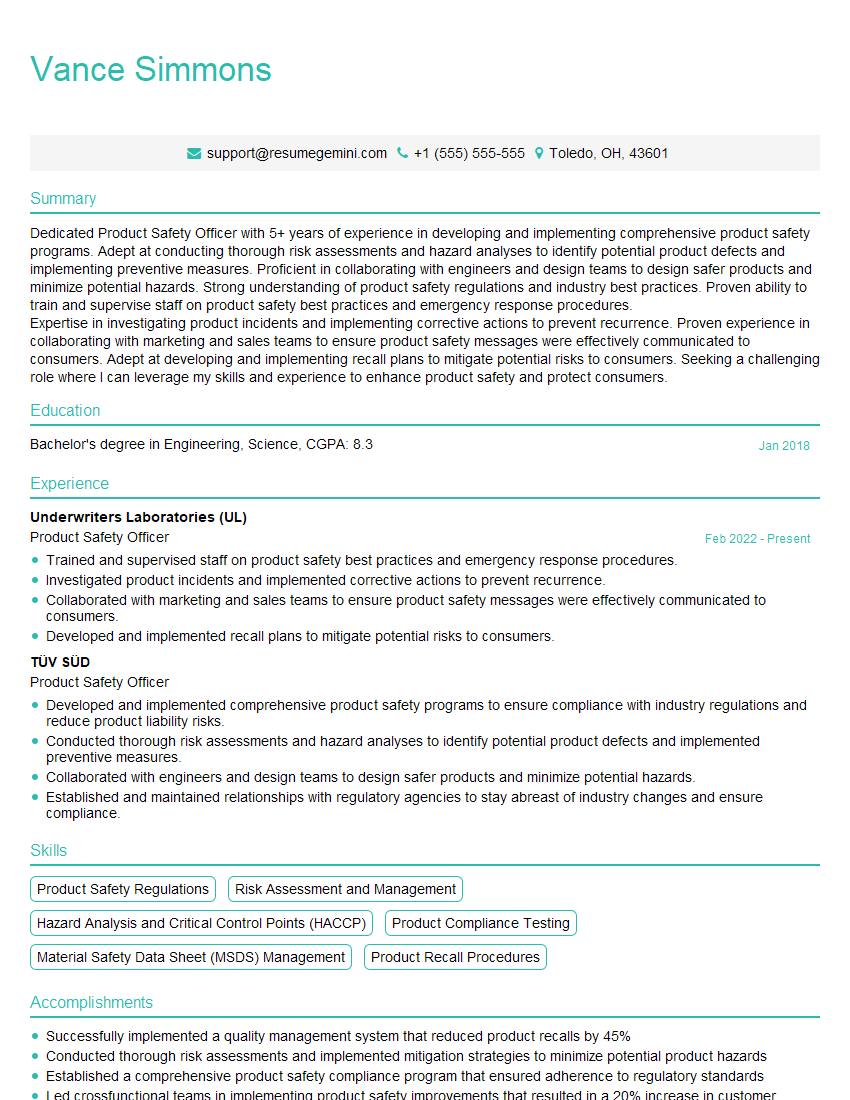
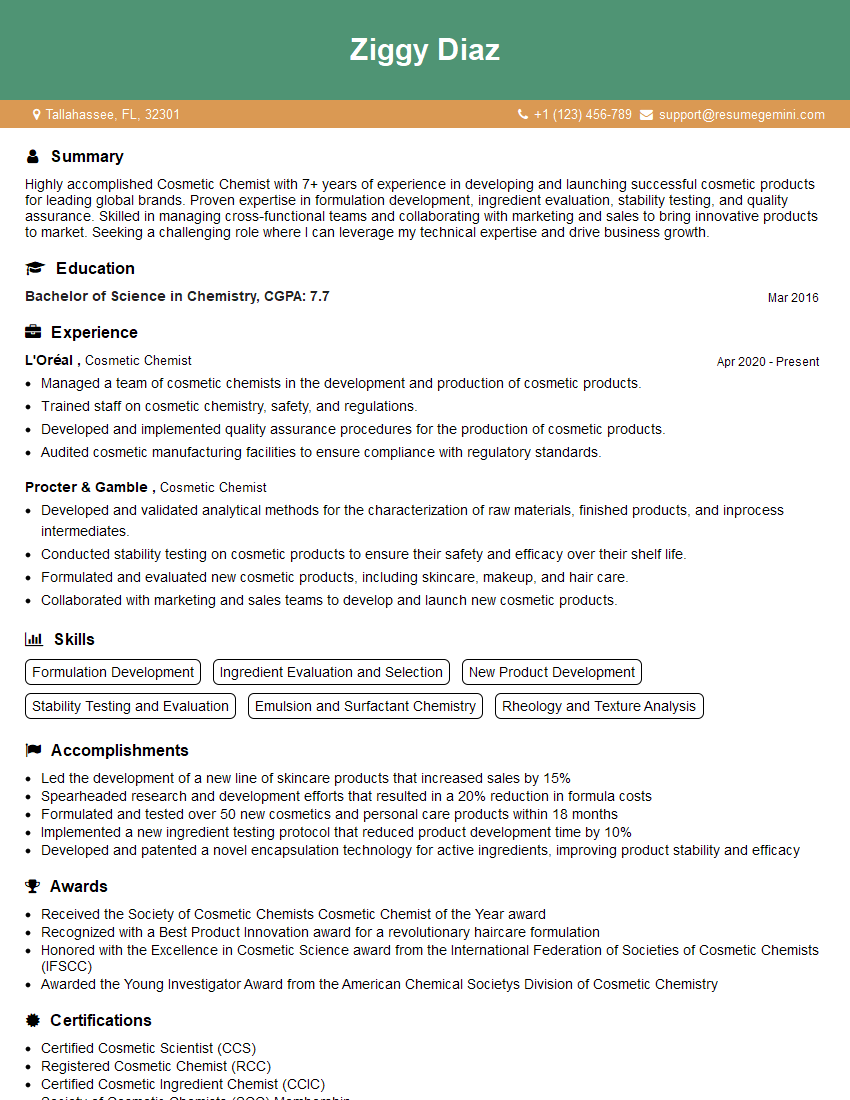
Mastering Cosmetics Safety is crucial for career advancement in this growing field. A strong understanding of these principles demonstrates your commitment to consumer safety and opens doors to exciting opportunities. To maximize your job prospects, creating an ATS-friendly resume is essential. ResumeGemini is a trusted resource that can help you build a professional and impactful resume tailored to the Cosmetics Safety industry. Examples of resumes specifically designed for Cosmetics Safety professionals are available within ResumeGemini to help you create a winning application.
Explore more articles
Users Rating of Our Blogs
Share Your Experience
We value your feedback! Please rate our content and share your thoughts (optional).
What Readers Say About Our Blog
Very informative content, great job.
good