Feeling uncertain about what to expect in your upcoming interview? We’ve got you covered! This blog highlights the most important Costing and Estimating interview questions and provides actionable advice to help you stand out as the ideal candidate. Let’s pave the way for your success.
Questions Asked in Costing and Estimating Interview
Q 1. Explain the difference between direct and indirect costs.
Direct costs are those directly attributable to producing a specific product or service. Think of them as the costs that are easily traceable to a particular project or activity. Indirect costs, on the other hand, are those that support the production process but aren’t directly tied to a specific product or service. They’re shared across multiple projects or activities.
- Direct Costs: Examples include raw materials, direct labor (wages of workers directly involved in production), and manufacturing supplies. If you’re building a house, the cost of lumber, the electrician’s wages for wiring, and the plumber’s wages for installing pipes are all direct costs.
- Indirect Costs: These include things like rent for the factory, administrative salaries, utilities, and insurance. For the house construction, the costs of the project manager’s salary, office rent, and general insurance are indirect costs. They are still necessary for the project but can’t be directly attributed to a specific aspect of the house’s construction.
The distinction is crucial for accurate costing. Knowing which costs are direct allows for better tracking of profitability for individual projects and more precise pricing.
Q 2. Describe different cost estimating methods (e.g., parametric, bottom-up, top-down).
Several cost estimating methods exist, each with its strengths and weaknesses. The choice depends on the project’s complexity, available data, and time constraints.
- Bottom-up Estimating: This is a detailed approach where you estimate the cost of individual work items and sum them to get the total project cost. It’s very accurate but time-consuming. Think of meticulously estimating the cost of each component in a car before calculating the total manufacturing cost.
- Top-down Estimating: This is a high-level approach using historical data or analogies to quickly estimate the total project cost. It’s fast but less precise. Imagine estimating the cost of a new software project by comparing it to similar projects in the past.
- Parametric Estimating: This method uses statistical relationships between historical data and project parameters (like size, weight, or complexity) to estimate costs. It combines the speed of top-down with improved accuracy. For example, using a formula based on square footage to estimate the cost of building a house, considering factors like location and materials.
- Analogous Estimating: This technique relies on the costs of similar past projects to estimate the cost of the current project. It’s quick but relies heavily on the similarity between projects.
Often, a combination of methods is used to leverage the strengths of each and mitigate their weaknesses. For example, you might use a top-down estimate as a first pass, followed by a more detailed bottom-up estimate for critical project components.
Q 3. What is Earned Value Management (EVM)? Explain its key metrics.
Earned Value Management (EVM) is a project management technique that integrates scope, schedule, and cost to provide a comprehensive view of project performance. It helps to identify and address potential problems early, preventing cost overruns and schedule delays.
Key EVM Metrics:
- Planned Value (PV): The authorized budget assigned to scheduled work to be accomplished for an activity or work breakdown structure component.
- Earned Value (EV): The value of work performed to date, expressed in terms of the budget authorized for that work.
- Actual Cost (AC): The actual cost incurred in accomplishing the work performed.
- Schedule Variance (SV): The difference between earned value and planned value (EV – PV). A positive SV indicates ahead of schedule, while a negative SV indicates behind schedule.
- Cost Variance (CV): The difference between earned value and actual cost (EV – AC). A positive CV indicates under budget, while a negative CV indicates over budget.
- Schedule Performance Index (SPI): The ratio of earned value to planned value (EV / PV). An SPI greater than 1 indicates ahead of schedule, while less than 1 indicates behind schedule.
- Cost Performance Index (CPI): The ratio of earned value to actual cost (EV / AC). A CPI greater than 1 indicates under budget, while less than 1 indicates over budget.
By tracking these metrics, project managers can proactively manage risks and make informed decisions to ensure project success.
Q 4. How do you handle cost overruns during a project?
Cost overruns are a serious concern. Handling them requires a systematic approach:
- Identify the cause: Thoroughly investigate why the overrun occurred. Was it due to inaccurate estimations, unexpected changes in scope, delays, or external factors?
- Quantify the overrun: Determine the exact amount of the overrun and its impact on the project’s overall budget and schedule.
- Develop corrective actions: Based on the identified cause, implement actions to address the problem. This might involve negotiating with suppliers, optimizing resources, streamlining processes, or reducing scope.
- Implement change control: Formally document the overrun, the corrective actions, and their impact on the project’s budget and schedule. This ensures transparency and accountability.
- Monitor progress: Track the effectiveness of corrective actions and make necessary adjustments.
- Communicate with stakeholders: Keep all stakeholders (clients, management, team) informed about the overrun, the corrective actions, and the updated project plan. Transparency is key to maintaining trust.
Preventing cost overruns in the first place, through careful planning, accurate estimation, and effective risk management, is always preferable. However, having a well-defined process for handling them when they inevitably arise is crucial.
Q 5. What software are you proficient in for cost estimating and control?
I am proficient in several software packages for cost estimating and control, including:
- Microsoft Project: Excellent for scheduling and basic cost tracking.
- Primavera P6: A powerful tool for complex project scheduling, resource management, and cost control, especially for large projects.
- MS Excel: While not dedicated project management software, Excel is invaluable for creating custom cost models, tracking budgets, and performing various cost analyses.
- Costpoint: A comprehensive Enterprise Resource Planning (ERP) system used for cost accounting and management.
My experience encompasses using these tools across various projects, enabling me to adapt my approach based on project size, complexity, and client requirements.
Q 6. How do you develop a project budget?
Developing a project budget involves a structured approach:
- Define the scope: Clearly articulate all the project deliverables and activities.
- Estimate costs: Use appropriate estimating methods (bottom-up, top-down, parametric) to estimate the cost of each activity. Consider direct and indirect costs.
- Allocate resources: Identify the resources (labor, materials, equipment) required for each activity and estimate their cost.
- Develop a work breakdown structure (WBS): Break down the project into smaller, manageable tasks. This allows for more granular cost estimation and tracking.
- Include contingency reserves: Allocate funds to cover unforeseen events or risks. This is crucial for managing unexpected issues and prevents significant cost overruns.
- Include management reserves: Allocate funds for high-level management decisions, such as changes in project scope. This is separate from contingency reserves used for known risks.
- Aggregate costs: Sum the cost estimates for all activities, adding contingency and management reserves, to arrive at the total project budget.
- Review and approve: Have the budget reviewed and approved by relevant stakeholders before initiating the project.
The budget should be regularly reviewed and updated throughout the project lifecycle to reflect any changes or unforeseen circumstances.
Q 7. Explain the concept of contingency reserves and management reserves.
Contingency reserves and management reserves are both crucial for managing project risks and uncertainties, but they serve different purposes:
- Contingency Reserves: These are funds set aside to cover identified risks. They are allocated based on a risk assessment process, which identifies potential problems and estimates their cost impact. For example, you might allocate contingency for potential delays in material delivery or unexpected design changes.
- Management Reserves: These funds are set aside to cover unforeseen circumstances or changes in project scope that were not identified during the initial planning phase. They provide flexibility for high-level management decisions and address major uncertainties not covered by contingency reserves. For example, a management reserve might be used to address a completely new regulatory requirement.
The key difference lies in the predictability of the risks. Contingency reserves are for known risks, while management reserves are for unknown or unquantifiable risks. Both are essential for robust project budgeting and risk management.
Q 8. How do you account for risk and uncertainty in cost estimation?
Accounting for risk and uncertainty in cost estimation is crucial for realistic project planning and budgeting. Ignoring these factors can lead to significant cost overruns and project failure. We employ several strategies to address this:
Contingency Reserves: We establish a contingency reserve, a percentage of the total estimated cost, specifically allocated to cover unforeseen events, design changes, or material price fluctuations. The percentage depends on the project’s complexity and inherent risks. For instance, a highly innovative project might warrant a 15-20% contingency, while a more routine project might only need 5-10%.
Risk Assessment and Analysis: We conduct thorough risk assessments, identifying potential risks (e.g., regulatory changes, supplier delays, technological challenges) and assessing their likelihood and impact. This helps prioritize risks and determine appropriate mitigation strategies. We might use a Risk Register to document these, assigning severity ratings and assigning owners for mitigation activities.
Sensitivity Analysis: We perform sensitivity analysis to understand how changes in key cost drivers (e.g., labor rates, material prices) affect the overall project cost. This helps understand which cost elements are most vulnerable to uncertainty and requires close monitoring.
Probabilistic Modeling: For complex projects, we use probabilistic modeling techniques (like Monte Carlo simulations) to generate a range of possible cost outcomes, rather than a single point estimate. This provides a more realistic representation of cost uncertainty, allowing for informed decision-making.
By combining these methods, we create a more robust and reliable cost estimate that accounts for the inherent uncertainties of any project.
Q 9. Describe your experience with change order management.
Change order management is a critical aspect of project cost control. My experience involves a systematic approach ensuring transparency and minimizing disputes. It begins with a clear change order request process, outlining required documentation (justification, impact assessment, cost estimate). I’ve worked on projects where this process involved detailed forms, approvals from various stakeholders (project manager, client, engineering), and clear communication regarding the revised schedule.
I meticulously track all change orders, documenting their impact on the budget, schedule, and scope. This involves analyzing the proposed changes, updating the cost baseline, and negotiating fair pricing with the client. I’ve found that clear communication and proactive collaboration throughout the change order process are vital to maintaining client relationships and project success. For example, on a recent construction project, a change order involving revised landscaping design required careful cost analysis to accommodate new materials and labor costs. This involved detailed costing spreadsheets and discussions with both the client and the landscaping subcontractor to ensure we reached a mutually agreeable price and schedule adjustment.
Q 10. How do you prioritize tasks when dealing with multiple cost estimation projects?
Prioritizing multiple cost estimation projects requires a strategic approach. I utilize a combination of methods to manage my workload effectively:
Urgency and Importance Matrix: I categorize projects based on their urgency (deadline) and importance (strategic value to the organization). This helps identify high-priority projects requiring immediate attention.
Resource Allocation: I assess the available resources (time, personnel, expertise) and allocate them strategically across projects based on their priority and complexity. This involves careful planning and potentially delegating tasks to team members.
Project Sequencing: I sequence projects to maximize efficiency. For instance, I might prioritize smaller, quicker projects to generate early wins and free up resources for larger, more complex projects.
Communication and Collaboration: Open communication with stakeholders is essential for managing expectations and ensuring that priorities are aligned. This includes regular updates on project progress and any potential conflicts or delays.
By implementing these strategies, I ensure that resources are used effectively and projects are completed on time and within budget.
Q 11. Explain the importance of accurate cost data collection.
Accurate cost data collection is the foundation of reliable cost estimation. Inaccurate data leads to flawed estimates, impacting project profitability and potentially causing significant financial problems.
Effective data collection involves establishing standardized procedures for recording costs, using appropriate tools (e.g., specialized cost accounting software), and ensuring that data is captured consistently throughout the project lifecycle. This includes gathering data on labor costs (including overtime and fringe benefits), material costs (considering discounts and taxes), equipment costs (rental, maintenance, fuel), and other direct and indirect costs. Regular audits of cost data are essential to ensure accuracy and identify any inconsistencies. For example, if we are using historical data for material costs, we should adjust for inflation and potential market fluctuations. I’ve found that a well-defined coding system, linking each cost item to specific project activities, makes data analysis much easier and more reliable.
Q 12. How do you ensure the accuracy of your cost estimates?
Ensuring accuracy in cost estimates involves a multi-faceted approach:
Detailed Scope Definition: A clearly defined project scope is crucial. Ambiguity leads to cost overruns. I use techniques like Work Breakdown Structures (WBS) to break down the project into smaller, manageable tasks, allowing for more precise cost estimation at each level.
Accurate Quantity Takeoffs: For construction or engineering projects, precise quantity takeoffs of materials and labor are essential. I ensure that the quantities are based on detailed drawings and specifications.
Realistic Cost Data: Using up-to-date and reliable cost data is paramount. This involves market research, supplier quotes, and historical data analysis. We regularly update our cost databases and check our assumptions to ensure we’re using the most current information.
Peer Review and Quality Control: I always incorporate a peer review process to ensure accuracy and identify potential errors or omissions in the estimates. This helps avoid biased or incomplete estimations.
By following these practices, we significantly increase the likelihood of generating accurate and reliable cost estimates.
Q 13. How do you handle conflicting priorities between cost, schedule, and scope?
Balancing cost, schedule, and scope is a constant challenge in project management. Conflicting priorities often require difficult trade-off decisions. My approach involves:
Prioritization Matrix: Using a matrix to weigh the relative importance of each constraint based on project goals and stakeholder expectations. This helps in making informed decisions about which aspects to prioritize.
Negotiation and Communication: Open communication with stakeholders to understand their priorities and explore potential compromises. This often involves explaining the trade-offs associated with different choices.
Scenario Planning: Exploring different scenarios, each with varying trade-offs between cost, schedule, and scope. This helps to assess the potential impact of different decisions.
Contingency Planning: Having a contingency plan in place to address potential disruptions and their impact on the three constraints. This enables quick adaptation if unforeseen challenges arise.
For instance, if schedule compression is required (reducing project duration), this might necessitate increased labor costs (higher overtime). The decision needs to be based on a careful assessment of the financial impact and stakeholder tolerance for risk.
Q 14. Describe your experience with value engineering.
Value engineering is a systematic method for enhancing the value of a project while potentially reducing its cost. My experience involves actively participating in value engineering workshops and applying the principles in various projects.
This typically involves a team-based approach, brainstorming alternative solutions to achieve the same functionality at a lower cost or with enhanced performance. We analyze the project’s functional requirements and identify areas where cost reductions can be achieved without compromising quality or performance. For example, on a building project, we might explore the use of alternative materials that offer similar properties at a lower cost.
Successful value engineering requires a collaborative spirit and open communication. It’s about exploring creative options and thinking outside the box. I’ve found that documenting the value engineering efforts, including the evaluated alternatives, chosen solutions, and their cost implications, is critical for transparency and demonstrating value to the client.
Q 15. Explain the concept of life cycle costing.
Life cycle costing (LCC) is a powerful methodology for evaluating the total cost of ownership of an asset or project over its entire lifespan, from initial conception to final disposal. It goes beyond simply considering upfront costs and incorporates all expenses incurred throughout the asset’s operational life.
Think of buying a car. The initial purchase price is just the beginning. LCC would also include fuel, maintenance, repairs, insurance, and eventually, the cost of selling or scrapping the vehicle. By considering all these costs, you get a more realistic picture of the true expense of owning the car.
In a project context, LCC might encompass design costs, construction costs, operational costs (energy, maintenance), and decommissioning or demolition costs. A thorough LCC analysis allows for informed decision-making by identifying areas for cost optimization and selecting the most economically viable options. It’s particularly important for long-term infrastructure projects, capital equipment purchases, and environmentally sensitive projects where long-term impacts need to be assessed.
- Stages: LCC typically includes a detailed breakdown of costs across several project stages – planning, design, construction, operation, maintenance, and disposal.
- Data Collection: Accurate data is crucial. This involves detailed estimates, historical data from similar projects, and potentially market research for future cost predictions.
- Software Tools: Specialized software can aid in LCC calculations, facilitating sensitivity analysis and scenario planning.
Career Expert Tips:
- Ace those interviews! Prepare effectively by reviewing the Top 50 Most Common Interview Questions on ResumeGemini.
- Navigate your job search with confidence! Explore a wide range of Career Tips on ResumeGemini. Learn about common challenges and recommendations to overcome them.
- Craft the perfect resume! Master the Art of Resume Writing with ResumeGemini’s guide. Showcase your unique qualifications and achievements effectively.
- Don’t miss out on holiday savings! Build your dream resume with ResumeGemini’s ATS optimized templates.
Q 16. How do you communicate cost information effectively to stakeholders?
Effective communication of cost information requires tailoring the message to the audience and using clear, concise language. I avoid technical jargon and employ visual aids such as charts, graphs, and dashboards. For example, a high-level summary with key financial figures might suffice for executives, while a detailed breakdown is needed for project managers.
I prioritize transparency and proactively address potential concerns. For instance, if cost overruns are anticipated, I explain the reasons clearly and propose mitigation strategies. Regular progress reports, coupled with open communication channels, keep stakeholders informed and engaged. I also utilize different communication mediums like presentations, reports, and one-on-one meetings, choosing the most suitable method based on the situation and audience.
In addition to numerical data, I always highlight the value proposition and return on investment (ROI). Framing cost information within the context of overall project goals and strategic objectives helps stakeholders appreciate the bigger picture and justify necessary investments.
Q 17. How do you handle disagreements with project managers regarding cost estimations?
Disagreements regarding cost estimations are inevitable, and I approach them professionally and constructively. I begin by reviewing the estimation process, identifying any differences in assumptions, data used, or methodologies employed. This often requires a collaborative review of the project scope and requirements to ensure we are on the same page.
I leverage data-driven evidence to support my estimations, including relevant market data, historical project costs, and industry benchmarks. I’m also open to challenging my own assumptions and incorporate feedback from the project manager. If disagreements persist, I might suggest involving a third party, such as a senior manager or a cost consultant, to facilitate mediation and reach a consensus.
The goal isn’t to win an argument, but to find a mutually agreeable solution that ensures the project remains on track and within budget. Clear documentation of the estimation process and the resolution of any disagreements is essential.
Q 18. What are the key performance indicators (KPIs) you use to track cost performance?
Key Performance Indicators (KPIs) for tracking cost performance are crucial for monitoring project health and taking corrective action when necessary. I commonly use the following:
- Cost Variance: This compares the actual cost incurred to the budgeted cost. A positive variance indicates cost overruns, while a negative variance shows cost savings.
Cost Variance = Actual Cost - Budgeted Cost - Schedule Variance: While not strictly a cost KPI, schedule slippage often impacts cost. Delays frequently lead to increased expenses due to extended labor, equipment rentals, or penalty clauses.
- Cost Performance Index (CPI): This measures the efficiency of cost spending.
CPI = Earned Value / Actual Cost. A CPI less than 1 indicates cost overruns, while a CPI greater than 1 signifies cost savings. - Estimate at Completion (EAC): This predicts the total cost of the project at completion, based on current performance. Regularly updating the EAC provides a realistic view of the final cost.
- Contingency Budget Consumption: Tracking how much of the contingency budget allocated for unforeseen issues has been used. This helps determine if additional reserves are needed.
Regularly monitoring these KPIs allows for proactive adjustments to the project plan and budget, preventing escalating cost issues.
Q 19. Describe your experience with different types of contracts (e.g., fixed-price, cost-plus).
I have extensive experience with various contract types, each carrying its own risks and rewards for both the client and contractor:
- Fixed-Price Contracts: These define a fixed price for the scope of work. Risk is primarily on the contractor, who needs to accurately estimate costs upfront. Benefits include cost certainty for the client. I use rigorous estimating techniques and contingency planning to minimize risk in fixed-price contracts.
- Cost-Plus Contracts: These reimburse the contractor for actual costs incurred, plus a predetermined fee or percentage. Risk is primarily on the client, who is exposed to potential cost overruns. Cost-plus contracts are beneficial for projects with high uncertainty or evolving requirements, requiring frequent modifications. Strong change management and cost tracking mechanisms are crucial here.
- Time and Materials Contracts: These involve charging for labor and materials used. They offer flexibility but can lead to unpredictable costs if not carefully managed. Clear guidelines for reporting and approvals are necessary to prevent cost escalation.
My experience spans selecting the appropriate contract type based on project characteristics and stakeholder risk tolerance. I ensure contractual terms clearly define scope, payment milestones, and change order processes to mitigate potential disputes.
Q 20. How do you identify and mitigate potential cost risks?
Identifying and mitigating cost risks is a critical aspect of successful project management. I use a proactive approach that begins during the planning phase. This includes:
- Risk Identification: Brainstorming sessions, expert interviews, and reviewing historical project data helps identify potential cost risks such as material price fluctuations, labor shortages, regulatory changes, or unforeseen site conditions.
- Risk Assessment: Each identified risk is assessed for its likelihood and potential impact. This helps prioritize risks requiring mitigation efforts.
- Risk Response Planning: Strategies to mitigate identified risks are developed. These may include contingency planning, insurance, alternative sourcing of materials, or implementing robust quality control measures to minimize rework.
- Risk Monitoring and Control: Throughout the project, cost risks are continuously monitored and tracked. Regular reviews assess the effectiveness of mitigation strategies and make necessary adjustments.
For example, if material price fluctuations are identified as a risk, we can explore hedging strategies, securing long-term contracts with suppliers, or incorporating price escalation clauses into contracts.
Q 21. What is your experience with forecasting future costs?
Forecasting future costs involves leveraging various techniques and data sources to predict future expenses. The accuracy of forecasts depends on the reliability of the data and the chosen forecasting method. I typically employ a combination of approaches:
- Trend Analysis: Analyzing historical cost data to identify trends and patterns can inform projections. This is especially useful for recurring costs like maintenance or utilities.
- Regression Analysis: Statistical methods to identify the relationship between cost and other variables (e.g., project size, labor rates) can improve prediction accuracy.
- Expert Judgment: Input from experienced professionals in relevant fields provides valuable insights and helps refine quantitative forecasts.
- Market Research: Understanding market conditions, material prices, and labor rates is vital for accurate cost forecasting.
- Scenario Planning: Developing different cost scenarios based on various assumptions (e.g., optimistic, pessimistic, most likely) provides a range of possible outcomes.
The choice of forecasting technique depends on the project’s specifics and data availability. I always communicate the uncertainty inherent in forecasting and present a range of possible outcomes rather than a single point estimate.
Q 22. Explain the process of preparing a cost report.
Preparing a cost report involves a systematic process of gathering, analyzing, and presenting cost data. It’s essentially a snapshot of a project’s financial performance at a specific point in time. The process typically includes these steps:
- Data Collection: This involves gathering all relevant cost information, such as material costs, labor costs, equipment costs, overhead, and any subcontractor expenses. This data is often sourced from various departments and systems within an organization. For example, we might pull labor costs from payroll systems and material costs from purchasing records.
- Cost Classification: Once collected, the data needs to be categorized. This could be by project phase (design, construction, commissioning), cost category (direct vs. indirect), or even by individual work packages. Consistent classification is crucial for accurate analysis.
- Cost Calculation: This stage involves calculating the total costs incurred. This may include adding up direct costs, applying overhead rates, and accounting for any cost variances (the difference between budgeted and actual costs).
- Variance Analysis: This is a critical step where you compare the actual costs to the planned or budgeted costs. Identifying significant variances helps pinpoint areas for improvement and cost control in future projects. For instance, a large variance in labor costs might indicate the need for better labor forecasting or project scheduling.
- Report Generation: Finally, the data is compiled into a clear and concise report. This usually includes tables and charts to visualize the cost data and highlight key trends and findings. A well-structured report includes an executive summary, detailed cost breakdowns, and a variance analysis section.
The level of detail in a cost report depends on the project’s size and complexity and the needs of the stakeholders. A simple project might only require a basic summary, while a complex project might need a comprehensive report with detailed cost breakdowns for each work package.
Q 23. How do you incorporate historical data into your cost estimations?
Historical data is invaluable for accurate cost estimations. It provides a baseline for understanding past project performance and helps predict future costs. My approach involves several steps:
- Data Cleansing and Validation: First, I ensure the historical data is accurate, complete, and reliable. This might involve identifying and correcting errors, addressing missing data points, and considering factors like inflation or changes in material prices over time.
- Data Analysis: Once cleaned, I analyze the data to identify trends and patterns. This could include calculating average costs per unit, identifying cost drivers, and understanding the relationship between different cost elements. For example, I might analyze the relationship between project size and labor costs to develop a predictive model.
- Parameterization: I use the analyzed data to parameterize my cost models. This means identifying key parameters (like square footage, labor hours, material quantities) that significantly impact costs and developing mathematical relationships between these parameters and the total project cost. This allows for a flexible and adaptable cost estimate.
- Regression Analysis: In many cases, I use statistical techniques like regression analysis to develop predictive models based on historical data. This helps to quantify the relationships between cost drivers and project cost.
- Adjustment for Inflation and Other Factors: Finally, I adjust the historical data to account for inflation, changes in technology, market conditions, and any other factors that could impact current costs. This ensures the historical data is relevant to the current project.
For example, if I’m estimating the cost of a new building, I might analyze historical data on similar projects, adjusting for inflation and any changes in material prices or labor rates since those projects were completed.
Q 24. What are your strengths and weaknesses in cost estimating?
My strengths in cost estimating lie in my analytical skills, my proficiency in using various cost estimation techniques (parametric, bottom-up, analogous), and my ability to effectively communicate complex cost data to both technical and non-technical audiences. I’m comfortable working with large datasets and applying statistical techniques to develop accurate and reliable cost models. I also pride myself on my attention to detail and my commitment to producing high-quality, well-documented estimates.
One area where I am continuously working on improving is my experience with specific software packages. While I’m proficient in industry-standard software, keeping up with all emerging technologies is an ongoing process. I am also eager to expand my expertise in certain niche areas such as life-cycle costing.
Q 25. Describe a challenging cost estimating project and how you overcame it.
One challenging project involved estimating the costs for a large-scale infrastructure project with highly variable soil conditions. The initial geological surveys provided limited data, making it difficult to accurately predict the excavation and foundation costs. To overcome this challenge, I employed a phased approach.
- Phased Estimation: Instead of relying on a single, upfront estimate, we developed a series of estimates based on progressively more detailed information. As more geological data became available, we refined our cost estimates accordingly.
- Contingency Planning: We included a significant contingency in the initial estimate to account for the uncertainty associated with the soil conditions. This contingency was adjusted as more data became available, allowing us to progressively reduce uncertainty.
- Risk Assessment: We conducted a thorough risk assessment to identify potential cost overruns and develop mitigation strategies. This involved considering various scenarios (e.g., encountering unexpected rock formations or unstable soil conditions).
- Collaboration with Experts: We closely collaborated with geotechnical engineers and other experts to gather more detailed information and incorporate their expertise into the cost model. Regular meetings and information updates facilitated this collaboration.
Through this multi-faceted approach, we were able to manage the uncertainties related to the soil conditions and produce a reliable cost estimate that ultimately allowed the project to proceed successfully. This experience taught me the importance of adaptability, iterative estimation, and proactive risk management in complex projects.
Q 26. How do you stay updated on the latest trends and best practices in cost estimating?
Staying updated in cost estimating is crucial. I regularly engage in several activities:
- Professional Organizations: I actively participate in professional organizations such as the Association for the Advancement of Cost Engineering (AACE International), attending conferences, workshops, and webinars. These events offer valuable insights into the latest trends and best practices.
- Industry Publications: I subscribe to industry journals and publications dedicated to cost engineering and project management, keeping me abreast of emerging technologies and methodologies.
- Online Courses and Webinars: I regularly take online courses and attend webinars to improve my knowledge of specific software or techniques.
- Networking: I actively network with other professionals in the field, participating in industry events and sharing knowledge and experiences.
This continuous learning ensures that I remain at the forefront of the field and apply the most up-to-date techniques to my work.
Q 27. How do you manage your time effectively when dealing with multiple deadlines?
Effective time management is essential when juggling multiple deadlines. My approach centers on:
- Prioritization: I prioritize tasks based on their urgency and importance, focusing on the most critical tasks first. This is often achieved using methods like Eisenhower Matrix.
- Task Breakdown: I break down large tasks into smaller, more manageable sub-tasks. This makes the overall project less overwhelming and allows for better progress tracking.
- Time Blocking: I allocate specific time blocks for each task in my schedule, minimizing distractions and improving focus.
- Regular Review and Adjustment: I regularly review my progress and adjust my schedule as needed, ensuring I remain on track. This flexibility allows me to adapt to unforeseen challenges or changes in priorities.
- Delegation: Where possible, I delegate tasks to others to maximize efficiency.
This structured approach helps me manage multiple deadlines effectively and consistently deliver high-quality results on time.
Q 28. What are your salary expectations for this role?
My salary expectations are commensurate with my experience and qualifications, and aligned with the industry standards for this role. I’m open to discussing a specific range after learning more about the details of the position and the company’s compensation structure. I’m confident that my skills and contributions will add significant value to your organization.
Key Topics to Learn for Your Costing and Estimating Interview
- Direct and Indirect Costs: Understanding the difference between direct and indirect costs, and how to accurately allocate them in various costing models. Practical application includes developing accurate project budgets and analyzing cost variances.
- Cost Estimation Techniques: Mastering various estimation techniques such as parametric estimating, bottom-up estimating, and analogous estimating. Practical application involves selecting the appropriate technique based on project specifics and available data, and justifying your choice.
- Activity-Based Costing (ABC): Learn the principles of ABC and its application in allocating overhead costs more accurately. Practical application includes improving cost control and identifying areas for potential cost savings.
- Variance Analysis: Understanding how to analyze cost variances, identify their causes, and develop corrective actions. Practical application involves interpreting cost reports, investigating deviations from the budget, and proposing solutions.
- Budgeting and Forecasting: Develop skills in creating realistic budgets and forecasting future costs based on historical data and market trends. Practical application includes contributing to long-term financial planning and resource allocation.
- Software Proficiency: Demonstrate familiarity with relevant costing and estimating software (mention specific software if applicable to the target audience). Practical application includes showcasing your ability to utilize software for data analysis and report generation.
- Risk Management in Costing: Identifying and mitigating potential cost risks throughout the project lifecycle. Practical application includes developing contingency plans and incorporating risk assessments into cost estimates.
Next Steps
Mastering Costing and Estimating is crucial for career advancement in many fields, opening doors to leadership roles and higher earning potential. A strong understanding of these principles demonstrates valuable analytical and problem-solving skills highly sought after by employers. To maximize your job prospects, create an ATS-friendly resume that highlights your skills and experience effectively. ResumeGemini is a trusted resource to help you build a professional resume that stands out. They offer examples of resumes tailored to Costing and Estimating to guide you through the process. Take the next step toward your dream career – invest time in crafting a compelling resume that showcases your expertise.
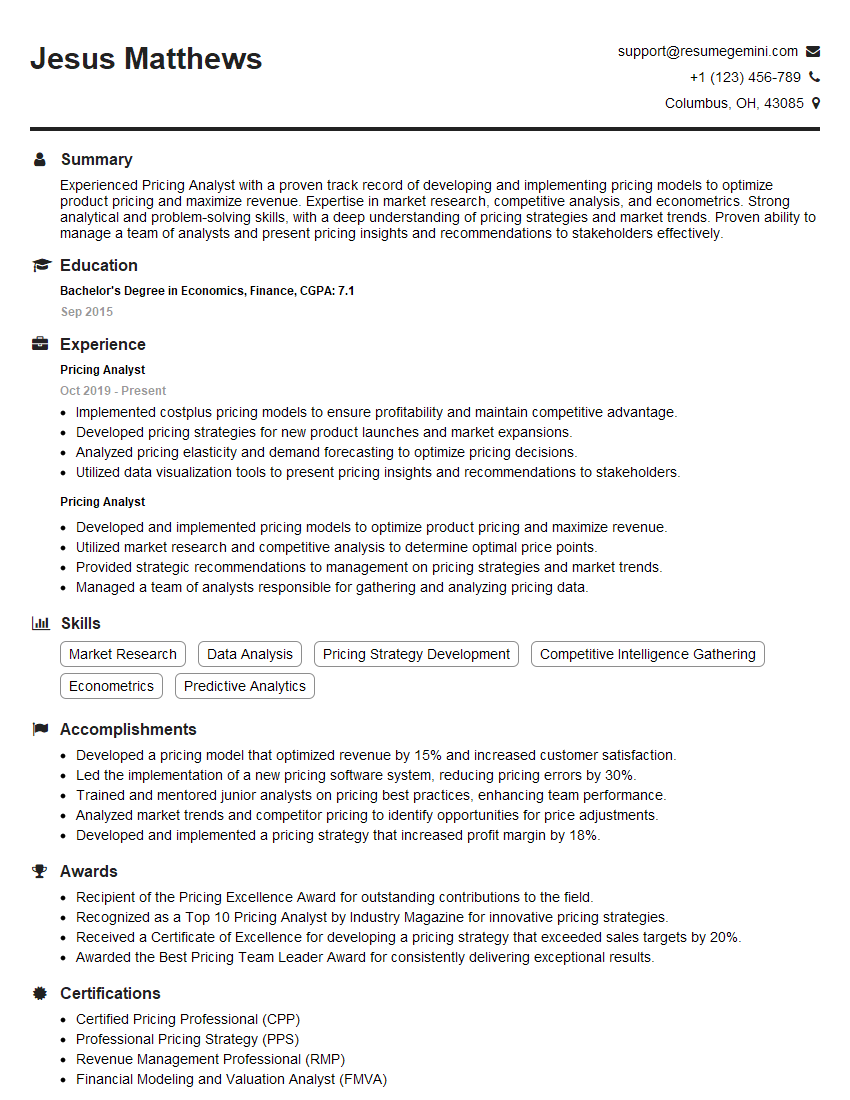
Pricing Analyst Resume Sample
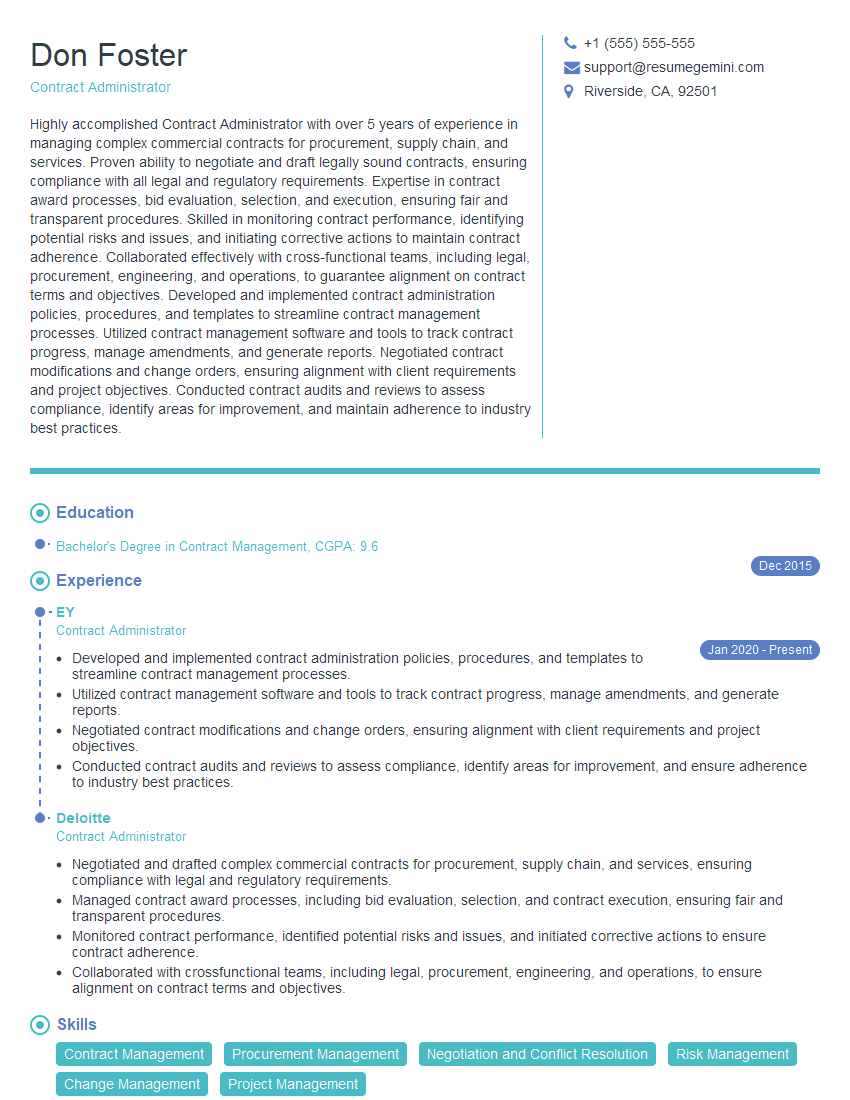
Contract Administrator Resume Sample
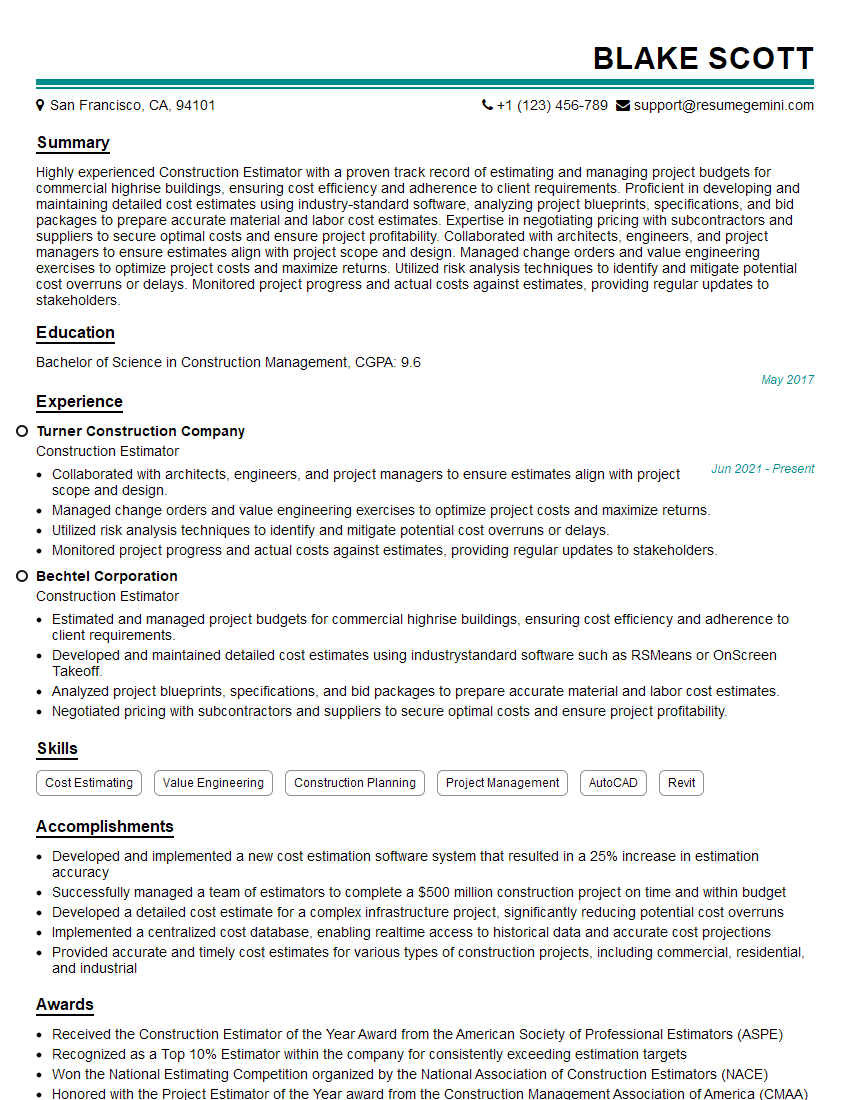
Construction Estimator Resume Sample
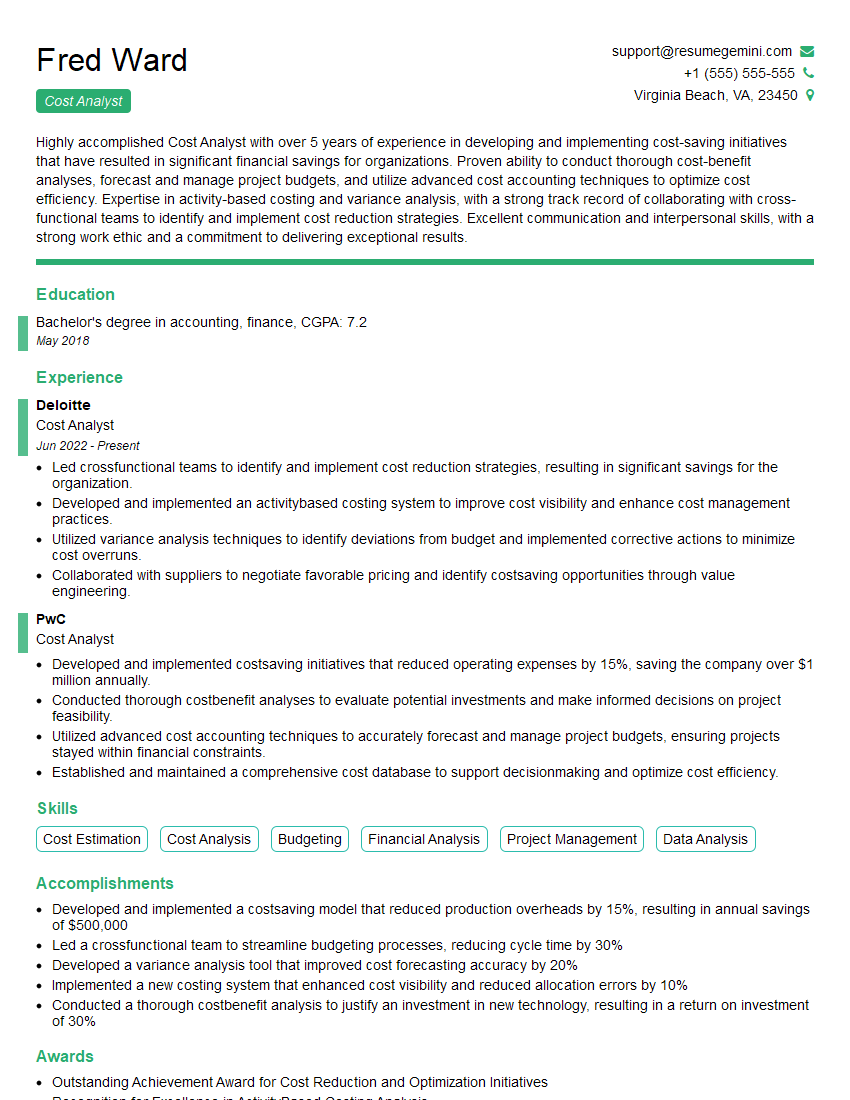
Cost Analyst Resume Sample
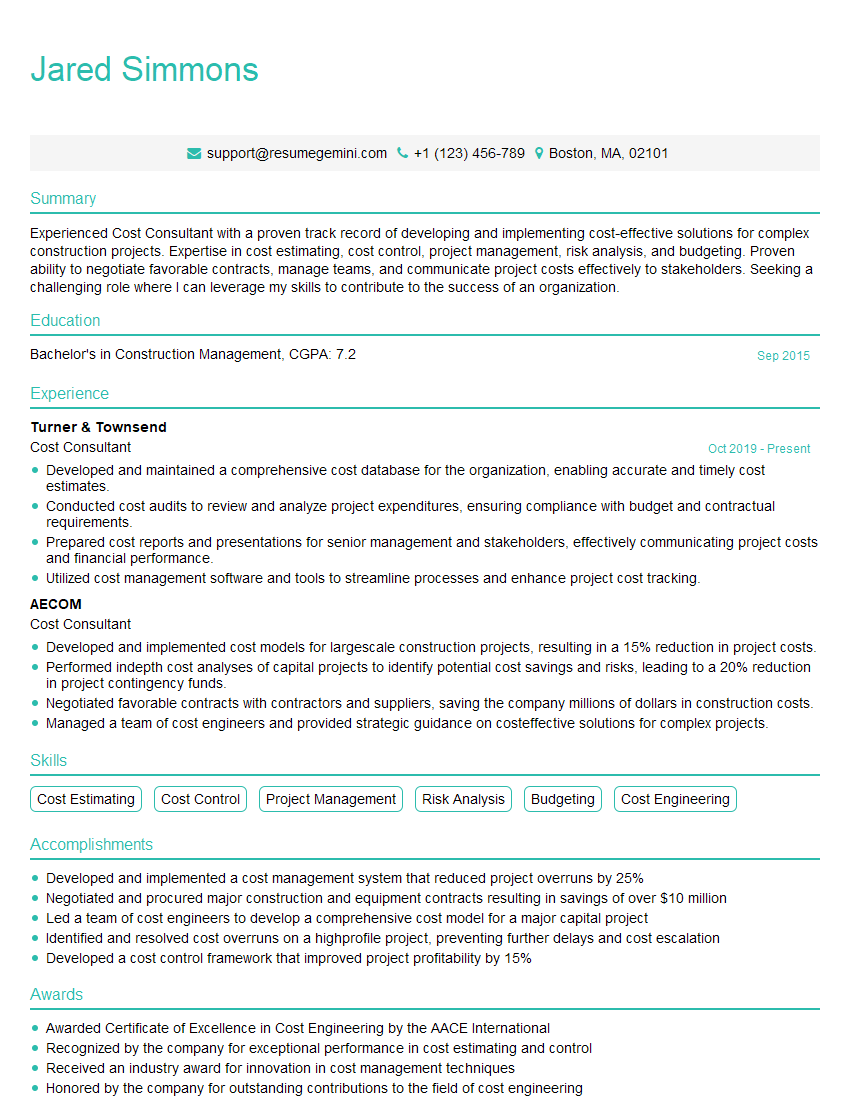
Cost Consultant Resume Sample
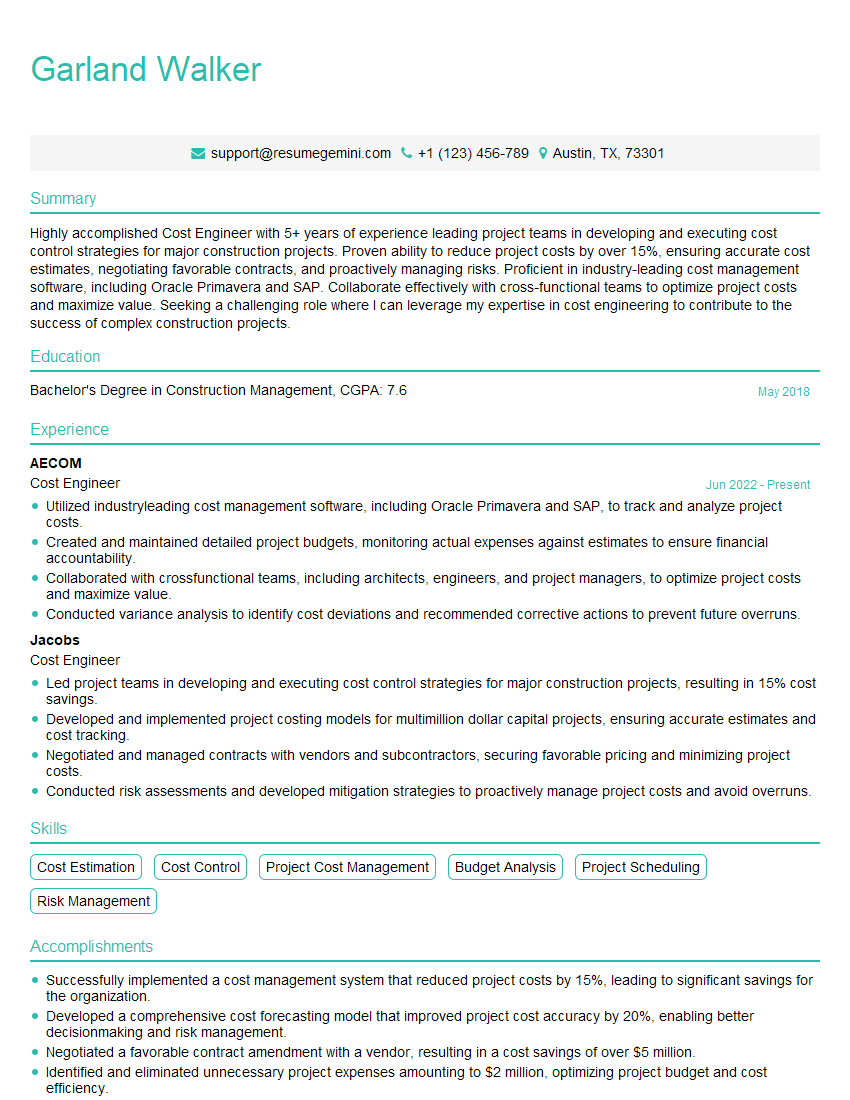
Cost Engineer Resume Sample
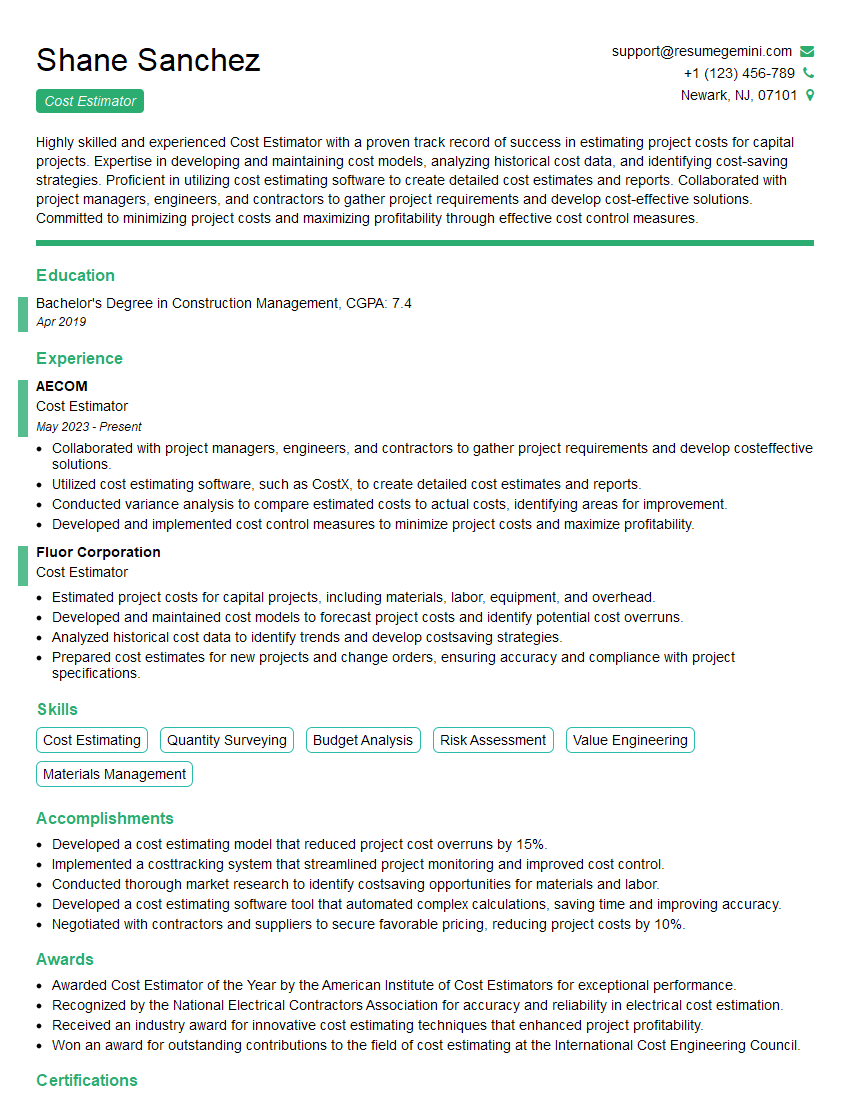
Cost Estimator Resume Sample
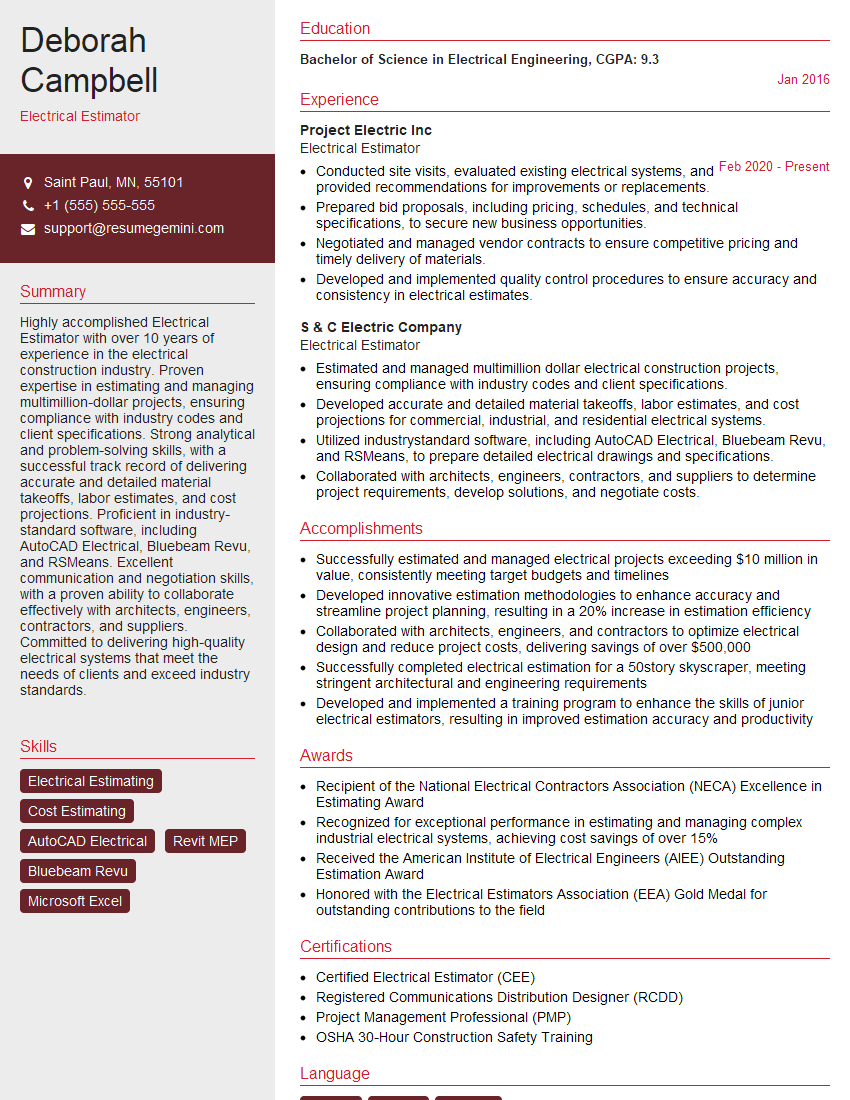
Electrical Estimator Resume Sample
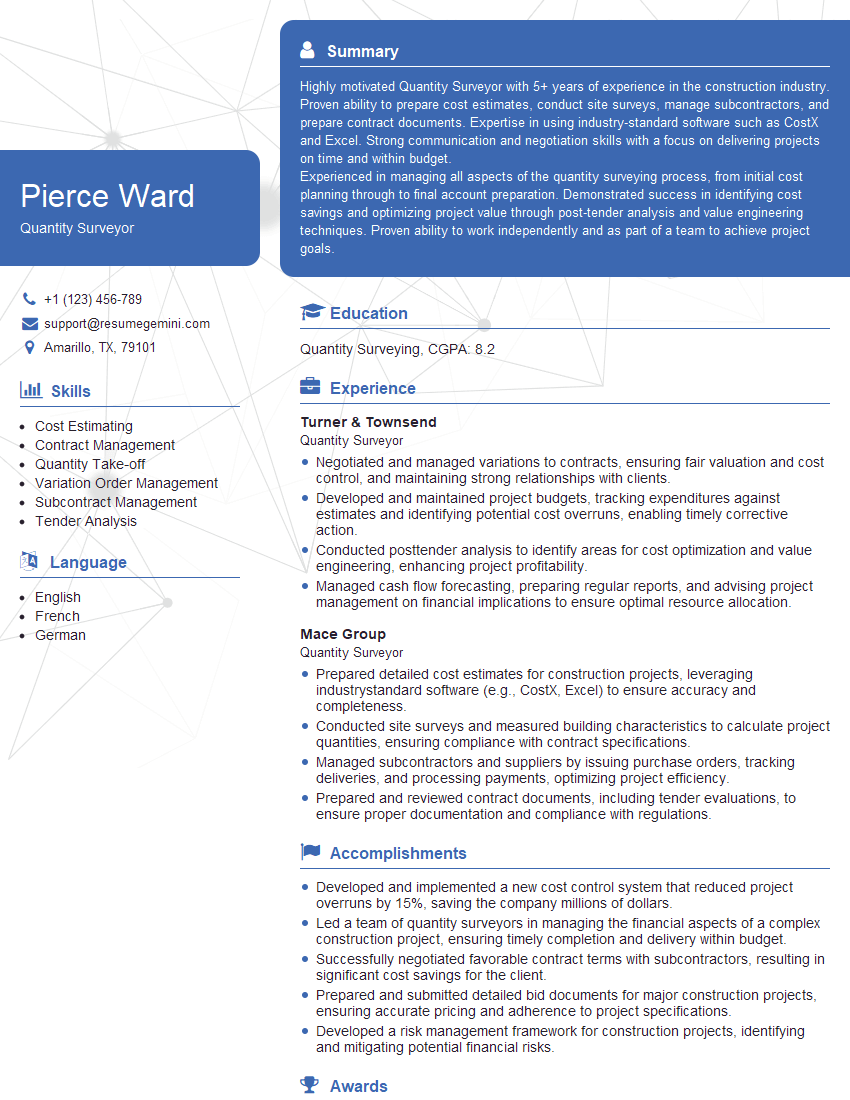
Quantity Surveyor Resume Sample
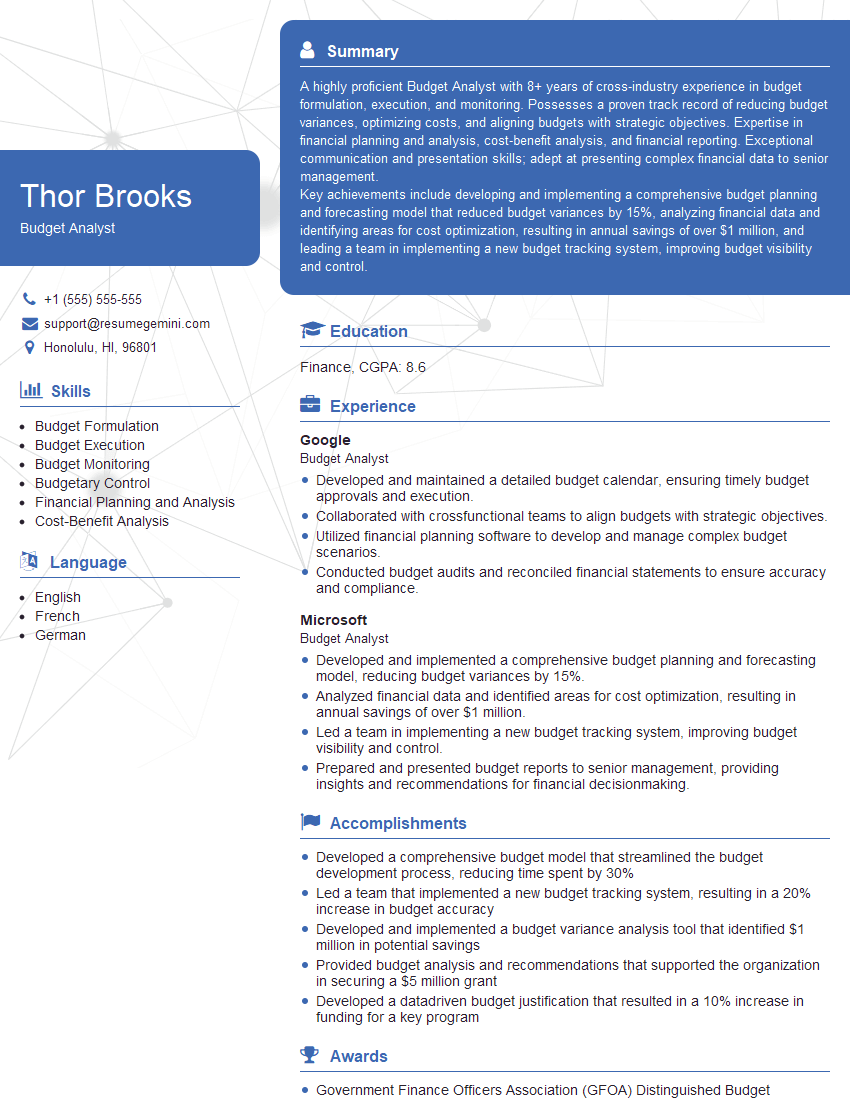
Budget Analyst Resume Sample

Value Engineer Resume Sample
Explore more articles
Users Rating of Our Blogs
Share Your Experience
We value your feedback! Please rate our content and share your thoughts (optional).
What Readers Say About Our Blog
Very informative content, great job.
good