Every successful interview starts with knowing what to expect. In this blog, we’ll take you through the top Counterintelligence and Human Intelligence interview questions, breaking them down with expert tips to help you deliver impactful answers. Step into your next interview fully prepared and ready to succeed.
Questions Asked in Counterintelligence and Human Intelligence Interview
Q 1. Explain the difference between HUMINT and SIGINT.
HUMINT (Human Intelligence) and SIGINT (Signals Intelligence) are two distinct branches of intelligence gathering, differing fundamentally in their methods and sources. HUMINT relies on direct human interaction to collect information, using human sources to obtain data. Think of it like a detective interviewing witnesses or informants. SIGINT, on the other hand, focuses on intercepting and analyzing electronic signals – communications, radar, etc. This is more akin to listening in on a conversation without the individuals knowing.
The key difference is the source of the information. HUMINT is people-centric, relying on relationships and trust, while SIGINT is technology-centric, focused on technical interception and analysis. Imagine a scenario where a government wants to know about an upcoming terrorist attack. HUMINT might involve recruiting an informant within the terrorist group. SIGINT might involve intercepting their encrypted communications to gather information. Both are valuable, but they approach intelligence gathering from entirely different angles.
Q 2. Describe the process of developing a HUMINT source.
Developing a HUMINT source is a delicate and lengthy process, akin to cultivating a relationship built on trust. It starts with identification: pinpointing individuals who possess access to valuable information. This might involve open-source intelligence (OSINT) research, networking, or even chance encounters.
Next comes assessment: carefully evaluating the potential source’s trustworthiness, reliability, and motivations. Are they genuinely willing to cooperate? What are their biases? What are their expectations in return for information? This often involves background checks and psychological profiling.
The recruitment phase involves building rapport and establishing a relationship based on mutual trust. This process can be lengthy and demanding, requiring patience, empathy, and discretion. It often involves gradually sharing information to demonstrate trustworthiness before obtaining critical intel.
Once recruited, the source needs handling: managing the relationship, providing appropriate support and ensuring their safety and security. Regular communication, debriefings, and payment (if agreed upon) are all key components. This process requires carefully crafted operational security to avoid exposing the source or the handler.
Finally, the source requires ongoing evaluation and potential debriefing. As circumstances change, it’s crucial to keep assessing the source’s reliability and the value of their information.
Q 3. How do you assess the credibility and reliability of HUMINT information?
Assessing the credibility and reliability of HUMINT information is paramount. It’s a multi-faceted process that involves several checks. Firstly, we assess the source’s motivation. Is the information provided for personal gain, ideological reasons, or genuine concern? A source motivated by money might be unreliable.
Secondly, we examine the source’s access to the information. Does their position allow them to have access to the information they’re providing? A janitor wouldn’t likely have access to high-level strategic plans.
Thirdly, we corroborate the information. We compare it against other intelligence sources or evidence to verify its accuracy. Independent verification is key to reducing errors.
Fourthly, analysis of the information’s quality is critical. Is the information detailed, specific, and consistent over time? Vague or contradictory statements lower credibility.
Finally, we constantly evaluate the source’s performance. Past reliability is a strong predictor of future reliability. A source with a consistent record of providing accurate information will be considered more trustworthy than one with a history of misinformation.
Q 4. What are the ethical considerations involved in HUMINT operations?
Ethical considerations are central to HUMINT operations. The potential for abuse is significant, and stringent ethical guidelines are necessary. Key concerns include:
- Protecting human rights: Sources must be treated with respect, dignity, and their safety must be ensured. Coercion, deception, or physical harm are strictly prohibited.
- Maintaining legality: All operations must comply with domestic and international laws. Illegal activities, such as kidnapping or torture, are completely unacceptable.
- Transparency and accountability: The actions of HUMINT officers should be transparent and subject to appropriate oversight and accountability mechanisms.
- Privacy concerns: The collection and use of personal data must respect privacy rights. Appropriate legal authorization and oversight are essential.
- Potential for manipulation: The use of deception or manipulation during recruitment or handling should be minimized and subjected to strict scrutiny. It should only be used where absolutely necessary and authorized.
Adherence to a strict ethical framework is not just a matter of morality; it is essential for the long-term effectiveness and credibility of HUMINT operations. Without trust, reliable information is near impossible to obtain.
Q 5. Outline the stages of a counterintelligence investigation.
A counterintelligence investigation typically proceeds through several distinct stages:
- Initial assessment: Identifying and analyzing the potential threat. This may involve reviewing intelligence reports, conducting vulnerability assessments, or responding to a specific incident.
- Information gathering: Collecting information related to the potential threat. This may involve open source research, interviews, surveillance, or the use of specialized forensic techniques.
- Analysis and interpretation: Evaluating the collected information to determine the nature, scope, and intent of the threat. This may involve specialized analytical techniques.
- Development of investigative strategy: Planning and executing investigative actions to confirm or refute suspicions. This could include covert surveillance or interviewing suspects.
- Neutralization or mitigation: Taking appropriate actions to neutralize the threat or mitigate its impact. This could involve arrests, disruption of operations, or the implementation of security enhancements.
- Reporting and dissemination: Documenting the findings of the investigation and disseminating the information to relevant stakeholders. This is crucial for maintaining a comprehensive picture of the threat landscape.
Each stage requires meticulous planning and execution to ensure effectiveness and maintain operational security. A poorly conducted investigation can not only be ineffective but also expose the organization to further risks.
Q 6. Describe different types of counterintelligence threats.
Counterintelligence threats encompass a wide range of activities aimed at compromising an organization’s security or stealing its secrets. These threats can be categorized in several ways:
- Espionage: The clandestine gathering of sensitive information by foreign intelligence services or other hostile actors.
- Sabotage: Deliberate acts of damage or disruption, aimed at hindering an organization’s operations or causing physical harm.
- Subversion: Activities aimed at undermining an organization from within, often involving the infiltration and corruption of personnel.
- Foreign intelligence operations: Active measures by foreign intelligence agencies to influence policy or gather information.
- Cyberattacks: Exploiting vulnerabilities in an organization’s information systems to steal data or disrupt operations.
- Insider threats: Malicious actions by individuals with legitimate access to an organization’s systems or information.
- Foreign influence operations: Attempts to manipulate public opinion or influence policy through covert means, such as propaganda or disinformation campaigns.
These threats can manifest individually or in combination. Understanding the diverse nature of these threats is crucial for developing effective countermeasures.
Q 7. How do you identify and mitigate counterintelligence risks?
Identifying and mitigating counterintelligence risks involves a multi-layered approach:
- Security awareness training: Educating personnel about counterintelligence threats and best practices. This is crucial for identifying potential risks and preventing insider threats.
- Background checks and vetting: Rigorous screening of employees and contractors to identify potential security risks before granting access to sensitive information.
- Physical security measures: Implementing measures to protect physical facilities and assets from unauthorized access, such as access control systems, surveillance cameras, and perimeter security.
- Cybersecurity measures: Implementing robust cybersecurity measures to protect information systems from cyberattacks. This includes intrusion detection systems, firewalls, and regular security audits.
- Information security management: Implementing policies and procedures to protect sensitive information, including classification systems, access control, and data encryption.
- Threat intelligence gathering: Actively monitoring for potential threats and vulnerabilities. This involves actively using open-source, human and signal intelligence to identify and respond to threats.
- Incident response planning: Developing plans and procedures to respond effectively to security breaches and other incidents.
A proactive and layered approach is crucial. Continuous monitoring, adaptation, and improvement are essential for staying ahead of evolving threats.
Q 8. Explain the concept of tradecraft in HUMINT.
In HUMINT (Human Intelligence), tradecraft refers to the specialized skills and techniques used to collect, analyze, and manage human intelligence. It’s the ‘how-to’ manual for spies, encompassing everything from identifying and recruiting sources to conducting clandestine meetings and handling sensitive information. Think of it as a toolbox filled with specialized tools, each designed for a specific task in the intricate process of gathering intelligence.
- Source Recruitment: Techniques to identify, approach, and recruit individuals willing to provide intelligence.
- Surveillance & Observation: Methods for discreetly monitoring individuals or locations.
- Elicitation: The art of extracting information from individuals without arousing suspicion.
- Covert Communication: Secure methods for exchanging information with sources, avoiding detection.
- Debriefing: Structured interviews to obtain maximum information from sources.
- Security Procedures: Protocols to safeguard intelligence and protect sources from compromise.
For example, a HUMINT officer might employ sophisticated elicitation techniques to subtly coax information from a target during a seemingly casual conversation, or use steganography to hide information within seemingly innocuous materials.
Q 9. What are the key components of a successful debriefing?
A successful debriefing hinges on rapport-building, careful planning, and effective questioning. It’s about creating a safe space for the source to share information freely and honestly while ensuring the information gathered is accurate and reliable. Imagine it as a delicate dance, requiring a balance of empathy and firm control.
- Preparation: Thorough background research on the source and the subject matter is crucial. This includes knowing the source’s motivations, potential biases, and the context of the information they possess.
- Rapport Building: Establishing trust is paramount. This involves active listening, showing genuine interest, and demonstrating empathy for the source’s situation.
- Structured Questioning: Using a combination of open-ended and specific questions to guide the conversation and elicit detailed responses. Avoid leading questions which might influence the source’s answers.
- Documentation: Meticulously recording all information obtained, including dates, times, locations, and the source’s comments. This needs to be done securely and confidentially.
- Follow-up: Scheduling future meetings to gather additional information and verify initial findings.
For example, if debriefing a source on a foreign government’s military capabilities, you might start with open-ended questions about their general impression before drilling down to specific details on weapons systems and deployment strategies.
Q 10. How do you handle a compromised HUMINT source?
Handling a compromised HUMINT source is a critical situation demanding swift and decisive action to minimize damage. The priority is damage control and protecting remaining assets. It’s a crisis that requires clear protocols and immediate action.
- Assessment: Immediately determine the extent of the compromise – how much information was revealed, who is involved, and the potential impact.
- Source Protection: Take steps to ensure the source’s safety, possibly relocating them or providing additional security.
- Damage Control: Assess the damage caused by the compromise and take steps to mitigate it. This might involve revising operational procedures, contacting other sources, and reviewing the information previously gathered.
- Investigation: Launch a thorough investigation to determine how the compromise occurred. This may involve internal reviews or cooperation with other agencies.
- Reassessment of Operations: Review and adapt all operational procedures to prevent future compromises. This includes reviewing the security protocols used with other sources.
The response will depend on the nature of the compromise. If the source was physically captured, the priority shifts to immediate extraction, if possible. If they were turned by an adversary, efforts must focus on controlling the narrative and minimizing the impact on ongoing operations.
Q 11. Describe different methods of source recruitment.
Source recruitment is a delicate and nuanced process, demanding patience, persuasion, and a deep understanding of human psychology. Different methods are used, each tailored to the individual’s motivations and circumstances.
- Walk-in: Individuals who proactively approach intelligence agencies to offer information. These are rare but highly valuable.
- Recruitment through contacts: Using existing relationships or networks to identify and approach potential sources.
- Targeted Recruitment: Identifying individuals with access to valuable information and employing tailored approaches to recruit them. This may involve building rapport over time or offering incentives.
- Compromised individuals: Recruiting individuals who have already been compromised (e.g., through blackmail or coercion) and turning their position to your advantage.
- Open source recruitment: Identifying and contacting individuals through publicly available information or social media.
For instance, in the case of targeted recruitment, an officer might cultivate a relationship with a government official over several years before making an approach, emphasizing mutual benefit and shared interests.
Q 12. How do you maintain source operational security?
Maintaining source operational security (OPSEC) is paramount for the longevity and effectiveness of HUMINT operations. It’s about minimizing risks and safeguarding sources from detection and compromise. Consider it a layered defence strategy.
- Compartmentalization: Limiting the number of people who know about a source and restricting access to sensitive information.
- Secure Communications: Utilizing encrypted channels or other secure methods for communication.
- Dead Drops: Using covert locations for exchanging information to reduce the risk of surveillance.
- Minimizing exposure: Limiting the frequency and duration of meetings, and avoiding predictable patterns of behavior.
- Background checks: Thoroughly vetting all individuals involved in handling source information to ensure loyalty and trustworthiness.
- Counter-surveillance techniques: Training sources to identify and avoid surveillance.
For example, a dead drop might involve leaving a message inside a specific book at a public library, or using steganography to conceal information within digital images shared online.
Q 13. What are the legal and regulatory frameworks governing HUMINT operations?
HUMINT operations are governed by a complex web of legal and regulatory frameworks, designed to protect individual rights and ensure accountability. These vary widely across jurisdictions but share common themes of privacy, legality, and ethical conduct.
- Domestic Laws: Each country has laws governing intelligence gathering, often outlining specific powers and limitations for intelligence agencies. These usually incorporate privacy laws to protect citizens’ rights.
- International Law: International treaties and conventions, such as the Geneva Conventions, set standards for the treatment of individuals during conflict and limit the use of certain intelligence gathering techniques.
- Agency Regulations: Intelligence agencies have their own internal regulations and procedures to ensure compliance with national and international law.
- Ethical Guidelines: Professional codes of conduct guide HUMINT officers on ethical behavior, ensuring the humane treatment of sources and the adherence to principles of transparency and accountability.
These frameworks aim to strike a balance between national security needs and the fundamental rights of individuals. Compliance is crucial to maintain public trust and ensure the legitimacy of HUMINT operations.
Q 14. Explain the role of deception in counterintelligence.
Deception plays a crucial, albeit controversial, role in counterintelligence. It involves actively misleading adversaries to protect assets, gain intelligence, or disrupt their operations. Think of it as a strategic game of chess.
- Disinformation: Deliberately spreading false or misleading information to confuse or deceive adversaries.
- Misdirection: Leading adversaries away from sensitive information or operations through deceptive actions or statements.
- Double Agents: Turning an adversary’s agent to work for your agency, providing valuable insights and misinformation.
- Decoy Operations: Setting up false targets or operations to draw attention away from genuine activities.
- Psychological Operations (PSYOPs): Influencing the perceptions and behaviors of adversaries through targeted messaging and propaganda.
For example, during a counterintelligence operation, an agency might plant disinformation about a fabricated weapons program to mislead an adversary about their true capabilities. Or, a double agent might be used to feed false intelligence back to their original agency while simultaneously providing valuable information to the recruiting agency.
Q 15. How do you conduct a background check and security vetting?
A thorough background check and security vetting process is crucial for identifying potential risks and vulnerabilities. It’s a multi-layered approach that goes beyond simply reviewing a resume. We start with publicly available information – social media presence, news articles, court records – to establish a baseline. Then, we move to more in-depth investigations. This includes verifying educational credentials, employment history, and references. We also use specialized databases to check for any criminal records, financial irregularities, or associations with individuals or organizations of concern.
Crucially, we conduct interviews with the subject and their associates, using various questioning techniques to assess honesty, integrity, and potential vulnerabilities to coercion or manipulation. This often involves assessing their judgement in hypothetical scenarios and probing their past behaviour for patterns. Depending on the security clearance level sought, polygraph testing may also be incorporated. Finally, we meticulously review all collected data, comparing and cross-referencing information to build a comprehensive profile and assess risk accurately.
For example, in one case, a seemingly flawless candidate’s social media activity revealed involvement in online forums promoting extremist ideologies. This information, uncovered through open-source intelligence, was critical in preventing a potentially disastrous security breach.
Career Expert Tips:
- Ace those interviews! Prepare effectively by reviewing the Top 50 Most Common Interview Questions on ResumeGemini.
- Navigate your job search with confidence! Explore a wide range of Career Tips on ResumeGemini. Learn about common challenges and recommendations to overcome them.
- Craft the perfect resume! Master the Art of Resume Writing with ResumeGemini’s guide. Showcase your unique qualifications and achievements effectively.
- Don’t miss out on holiday savings! Build your dream resume with ResumeGemini’s ATS optimized templates.
Q 16. What are the challenges of working in a clandestine environment?
Working in a clandestine environment presents unique and significant challenges. The most obvious is the constant need for operational security (OPSEC). Every interaction, every communication, every movement needs careful planning and execution to avoid detection. Building and maintaining trust with sources is paramount but incredibly difficult; you’re often dealing with individuals who may have ulterior motives or be under significant pressure.
Another challenge is the intense pressure and potential for high-stakes consequences. One wrong move can jeopardize an operation, expose sources, or even put lives at risk. The psychological toll of operating under constant threat and secrecy is substantial, requiring resilience and strong mental fortitude. Furthermore, resource constraints and the need for improvisation are common. Often, you are working with limited resources, relying on ingenuity and adaptability to overcome obstacles.
Imagine trying to meet a source in a hostile territory, needing to navigate surveillance and security protocols while ensuring secure communication. Every detail needs to be meticulously planned and executed flawlessly. This requires exceptional planning skills, adaptability, and nerves of steel.
Q 17. How do you manage information in a secure and classified manner?
Managing classified information requires strict adherence to established security protocols. The first principle is ‘need-to-know’. Information is compartmentalized, and access is granted only to those individuals with a legitimate need for it to perform their duties. This is implemented through strict access control systems, both physical and digital. Physical access might involve secure facilities, restricted areas, and controlled document handling.
Digital security involves secure networks, encryption, and data loss prevention tools. We use secure communication channels, encrypted emails, and secure messaging applications to prevent interception. Data is regularly backed up and stored in secure locations. All handling of classified information is logged and audited to ensure accountability. Furthermore, rigorous training on security procedures is mandatory for all personnel handling classified materials, emphasizing the consequences of any breach.
Failure to adhere to these protocols can have severe legal and national security ramifications. A single breach could compromise sensitive operations, expose sources, and severely damage national interests.
Q 18. Describe your experience with polygraph testing and analysis.
Polygraph testing, often referred to as a lie detector test, is a tool used in intelligence work to assess the credibility and veracity of individuals. My experience involves observing and analyzing polygraph examinations, understanding the physiological responses measured (heart rate, respiration, perspiration), and interpreting the results in the context of the overall investigative picture. It’s crucial to understand that polygraph results are not conclusive evidence, but rather one piece of the puzzle.
The effectiveness of polygraph testing depends heavily on the skill of the examiner, the preparation, and the overall context. It’s essential to consider potential factors that might influence physiological responses, such as stress, anxiety, or medical conditions. We often use other investigative methods to corroborate polygraph findings. In my experience, the results are most effective when integrated with other investigative techniques, such as interviews, surveillance, and background checks.
I’ve personally witnessed situations where the polygraph results initially suggested deception, but further investigation revealed that the subject’s nervousness stemmed from a fear of the process itself rather than actual deception. Careful analysis is paramount.
Q 19. What are some common counterintelligence techniques used by adversaries?
Adversaries employ a wide range of counterintelligence techniques to penetrate our security systems and obtain sensitive information. Common methods include:
- Social engineering: This involves manipulating individuals to divulge confidential information or grant access through deceptive tactics like phishing emails or pretexting.
- Technical espionage: This includes using sophisticated malware, hacking, and electronic surveillance to steal data.
- Human recruitment: Identifying and compromising individuals within our ranks to gain access to information or influence operations. This often involves identifying vulnerabilities like financial distress, ideological sympathy, or personal relationships that can be exploited.
- Foreign agents: Utilizing individuals operating within our country to gather intelligence.
- Open-source intelligence (OSINT) gathering: Aggressively exploiting publicly available information to build a picture of our operations, personnel, and capabilities.
Counteracting these threats requires proactive measures, such as robust cybersecurity, rigorous background checks, and comprehensive security awareness training for all personnel.
Q 20. How do you assess the potential value of information obtained from HUMINT sources?
Assessing the value of HUMINT requires a critical and methodical approach. Several factors are considered. Firstly, the credibility of the source is paramount. Is the source reliable? Do they have a history of providing accurate information? What are their motivations? Bias or self-interest can significantly impact the value of their information.
Secondly, the relevance of the information needs assessment. Is the information timely, accurate, and directly relevant to the intelligence requirements? The information’s completeness is also important; does it provide a full picture or is it fragmented and requiring further investigation? Finally, we assess the information’s verifiability. Can the information be independently corroborated through other sources or means? This reduces uncertainty and improves the confidence placed in the intel.
For instance, information from a known hostile source may still be valuable if it can be corroborated with other independent sources. Conversely, information from a seemingly trustworthy source could be dismissed if it lacks supporting evidence or internal consistency.
Q 21. What are the limitations of HUMINT compared to other intelligence sources?
While HUMINT offers unique insights and context unavailable through other sources, it has limitations. Firstly, it can be time-consuming and resource-intensive. Developing and maintaining trusted relationships with human sources takes significant time and effort. Secondly, HUMINT is inherently subjective and prone to bias, as it relies on human perception and interpretation.
Compared to SIGINT (Signals Intelligence) which can provide massive amounts of data, or IMINT (Imagery Intelligence) that provides visual proof, HUMINT provides less concrete evidence and can be more challenging to verify. Furthermore, HUMINT sources are susceptible to compromise and manipulation by adversaries. The potential for misinformation or disinformation is always present, requiring rigorous verification and validation. The quality of HUMINT relies heavily on the skill and experience of the intelligence officers involved in acquiring and assessing the information.
Q 22. Describe your experience with covert surveillance and data collection techniques.
Covert surveillance and data collection are crucial aspects of human intelligence (HUMINT) operations. My experience encompasses a wide range of techniques, always prioritizing legality and ethical considerations. This includes utilizing open-source intelligence (OSINT) – publicly available information from websites, social media, and news reports – to build a foundational understanding of a target. Beyond OSINT, I’ve been involved in physical surveillance, employing techniques like discreet observation, photography, and video recording, always ensuring operational security. Further, I have experience with electronic surveillance, utilizing legally obtained data from phone records, financial transactions, and digital communications, while strictly adhering to all applicable laws and regulations. Data collection also involves cultivating human sources – building rapport and trust with individuals who possess valuable information. This requires careful planning, relationship building, and handling sensitive information with utmost discretion. For example, in one operation, combining OSINT analysis of a target’s social media activity with physical surveillance allowed us to identify a previously unknown associate, significantly expanding our understanding of the target’s network.
Each technique requires meticulous planning and execution. We use specialized equipment, advanced communication protocols, and robust security measures to protect the operation and the identities of involved personnel. The success of these operations relies heavily on adaptability – adjusting techniques based on the specific target, environment, and available resources. Ethical considerations are paramount, ensuring all actions comply with the law and organizational guidelines.
Q 23. How do you analyze and interpret intelligence information to inform strategic decision-making?
Analyzing and interpreting intelligence information is a multi-step process. It begins with data collation – gathering information from various sources. Then, we move to validation; verifying the accuracy and reliability of the information. This often involves cross-referencing with multiple sources and applying critical thinking skills to identify inconsistencies or biases. Once validated, the information is then analyzed, identifying patterns, trends, and connections. Techniques like link analysis and network mapping are often employed to visually represent relationships and potential threats. The interpretation stage involves drawing conclusions and making assessments about the significance of the information, considering the broader context and potential implications. Finally, we develop actionable intelligence—information that directly informs strategic decision-making. This might involve prioritizing targets, recommending specific courses of action, or assessing potential risks and opportunities. For instance, in one case, analyzing intercepted communications revealed a pattern of suspicious financial transactions which, when combined with other intelligence, led to the disruption of a significant money laundering operation.
Q 24. How do you synthesize information from multiple sources to develop a complete intelligence picture?
Synthesizing information from multiple sources requires a systematic approach. I typically begin by creating a central repository – a database or a shared document – where all collected information is organized and tagged. This allows for efficient searching and cross-referencing. I then employ various analytical techniques to identify common themes, discrepancies, and corroborating evidence. This might involve using visual aids like timelines or network maps to identify patterns and connections across different data sets. The process also includes critically assessing the reliability of each source, considering factors such as the source’s motivation, potential biases, and historical accuracy. Weighting evidence based on its reliability is crucial. For example, a confirmed report from a reliable human source will carry more weight than an unverified online posting. By integrating this information, we build a comprehensive picture, clarifying ambiguities and identifying gaps in our understanding, allowing for a more accurate assessment of the situation and informing better decision-making.
Q 25. Describe your experience with report writing and intelligence briefings.
Report writing and intelligence briefings are critical for disseminating information effectively. My experience includes crafting clear, concise, and actionable intelligence reports that meet specific audience needs. This involves using structured formats, employing strong analytical skills to present findings in a persuasive and easily understandable manner. Reports must be accurate, objective, and avoid speculation. I use visual aids like charts and graphs to enhance understanding and presentation. Intelligence briefings require a different approach—adapting the information to the audience’s level of understanding and the time constraints. This involves focusing on key findings, highlighting significant threats or opportunities, and anticipating audience questions. Effective communication is crucial. For instance, in one case, a concise briefing to senior leadership based on a complex investigation resulted in a swift and decisive response to a major threat.
Q 26. Explain your understanding of compartmentalization and need-to-know principles.
Compartmentalization and need-to-know are fundamental principles in intelligence work to protect sensitive information and operational security. Compartmentalization involves dividing sensitive information into smaller, isolated units, limiting access based on an individual’s role and clearance level. Need-to-know ensures that information is only disclosed to individuals who require it to perform their duties, strictly limiting the number of people aware of sensitive operations or data. This minimizes the risk of compromise. For instance, a team working on a particular operation may only know specific details relevant to their task, preventing unnecessary exposure of sensitive data to other team members. This compartmentalization protects against leaks and reduces the potential damage should a breach occur. Strict adherence to these principles is crucial for maintaining the integrity and effectiveness of intelligence operations.
Q 27. What is your experience with threat modeling and risk assessment related to intelligence operations?
Threat modeling and risk assessment are integral parts of planning and executing intelligence operations. Threat modeling involves identifying potential threats to an operation, including adversaries, technical vulnerabilities, and human factors. This involves analyzing potential attack vectors and assessing the likelihood and impact of each threat. Risk assessment involves evaluating the potential consequences of each threat and determining the level of risk. This includes considering both the likelihood of a threat occurring and the potential impact on the operation, personnel, or national security. This assessment then guides the development of mitigation strategies—actions taken to reduce the likelihood or impact of identified threats. For example, in planning a surveillance operation, we’d assess risks such as detection by the target, compromising the identity of agents, or technological failures, and develop countermeasures to mitigate these risks.
Q 28. How do you maintain situational awareness and adapt your approach to evolving threats?
Maintaining situational awareness and adapting to evolving threats requires constant monitoring of the intelligence landscape. This involves actively tracking events, developments, and changes in the operational environment. I use various tools and techniques to do this—from real-time monitoring of news and social media to utilizing analytic platforms that aggregate and analyze large datasets. Adaptability is key. As new threats emerge, or as the operational environment changes, we must adjust our approach. This might involve modifying surveillance techniques, changing communication protocols, or employing new analytical tools. For example, the rise of encrypted communication requires adjustments to our data collection methods. Similarly, changes in the target’s behavior necessitate a dynamic response, adjusting our strategies to continue gathering relevant information. Regular review of operational plans and a flexible mindset are critical for success in this constantly shifting environment.
Key Topics to Learn for Counterintelligence and Human Intelligence Interview
- Counterintelligence Fundamentals: Understanding threats, vulnerabilities, and the methods used to protect sensitive information. This includes theoretical frameworks and practical application in real-world scenarios.
- Human Intelligence (HUMINT) Collection Methods: Exploring various techniques for gathering information from human sources, ethical considerations, and the legal framework surrounding such operations. Practical applications include analyzing source reliability and managing risk.
- Threat Assessment and Risk Management: Developing skills in identifying potential threats, assessing their impact, and implementing mitigation strategies. This includes understanding different types of threats and developing effective risk management plans.
- Intelligence Analysis and Reporting: Mastering the art of analyzing raw intelligence data, drawing conclusions, and preparing concise and impactful reports. Practical application involves synthesizing information from diverse sources and presenting findings clearly.
- Operational Security (OPSEC): Understanding and implementing measures to protect intelligence operations and personnel from compromise. This includes practical application in planning secure communications and minimizing exposure.
- Ethical Considerations in Intelligence Work: Grasping the ethical dilemmas faced in intelligence gathering and analysis and understanding the importance of adherence to legal and moral principles. Practical application includes recognizing and addressing ethical challenges in specific scenarios.
- Technological Aspects of CI/HUMINT: Exploring the role of technology in modern intelligence gathering and analysis. This may include using open-source intelligence (OSINT) tools and understanding the challenges posed by cyber threats.
Next Steps
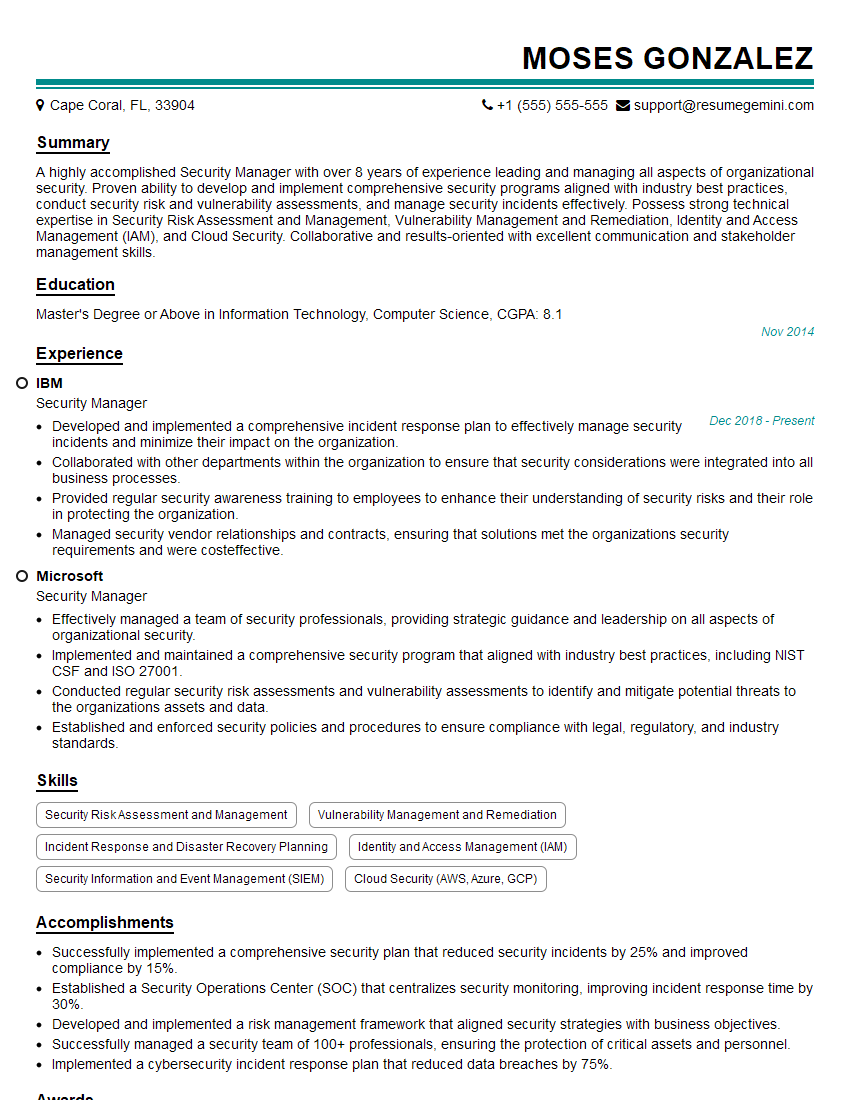
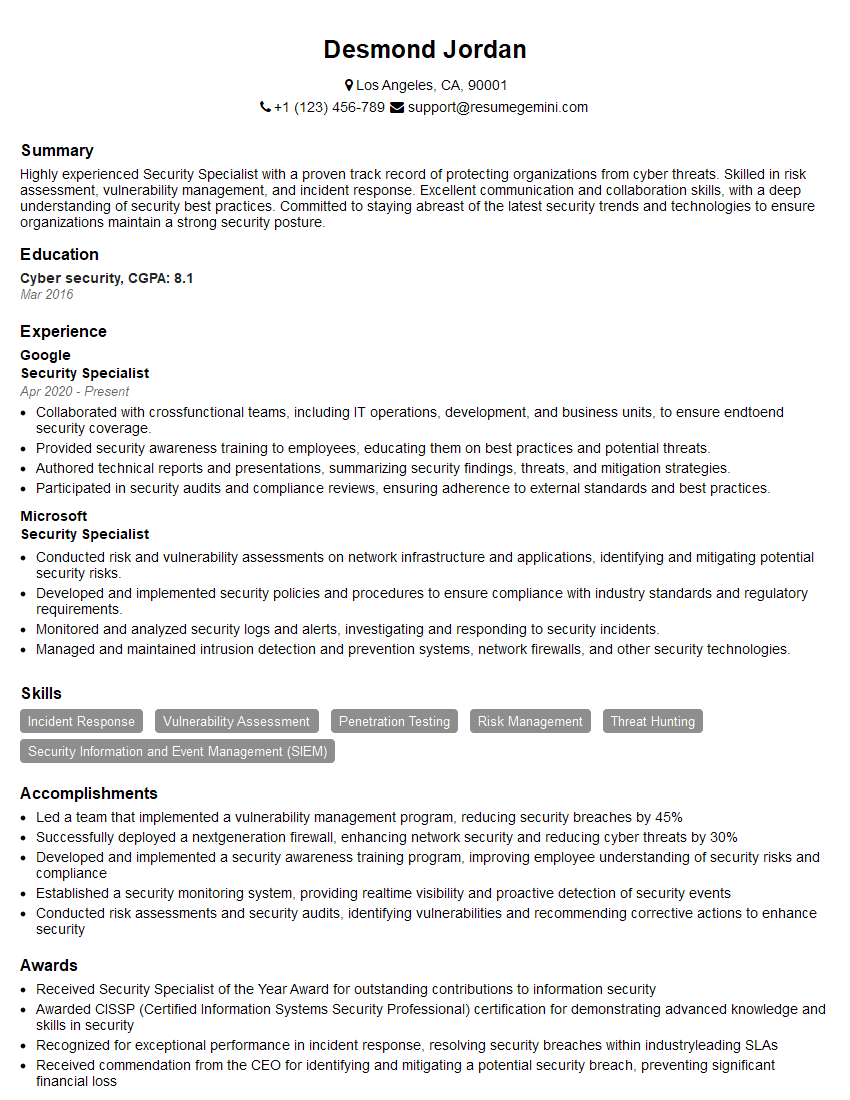
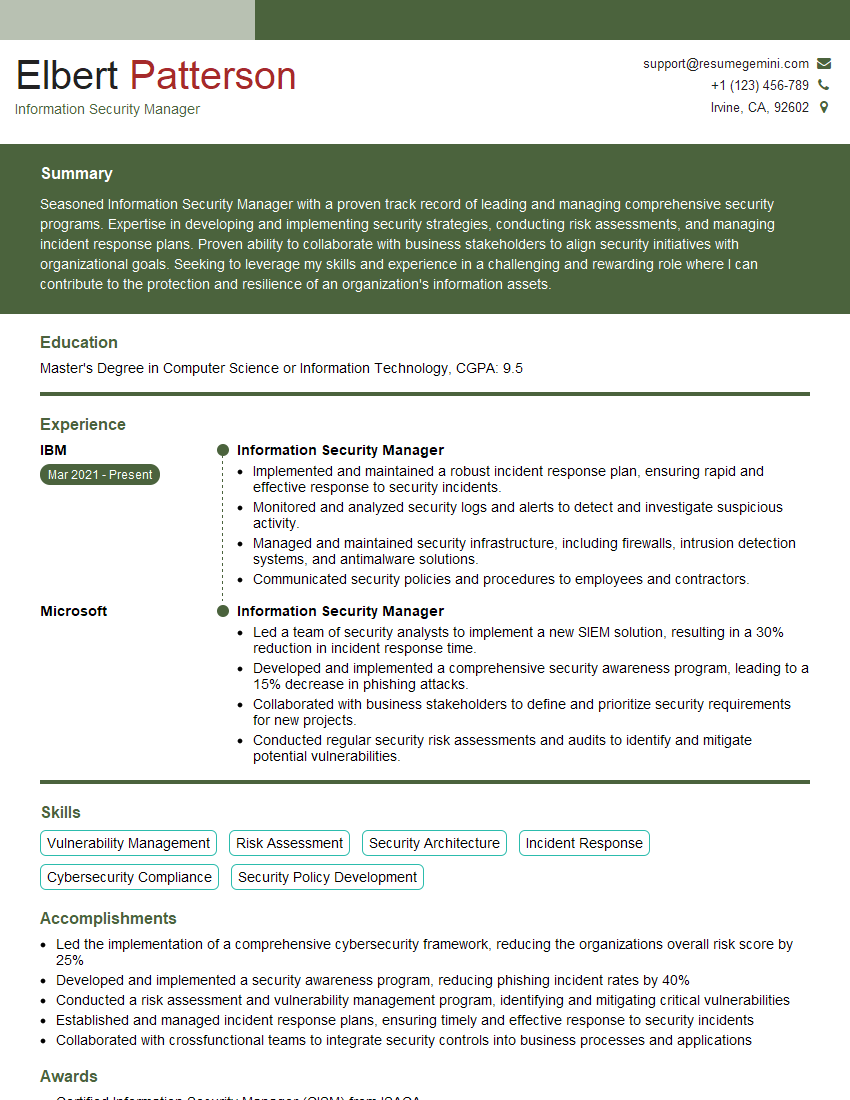
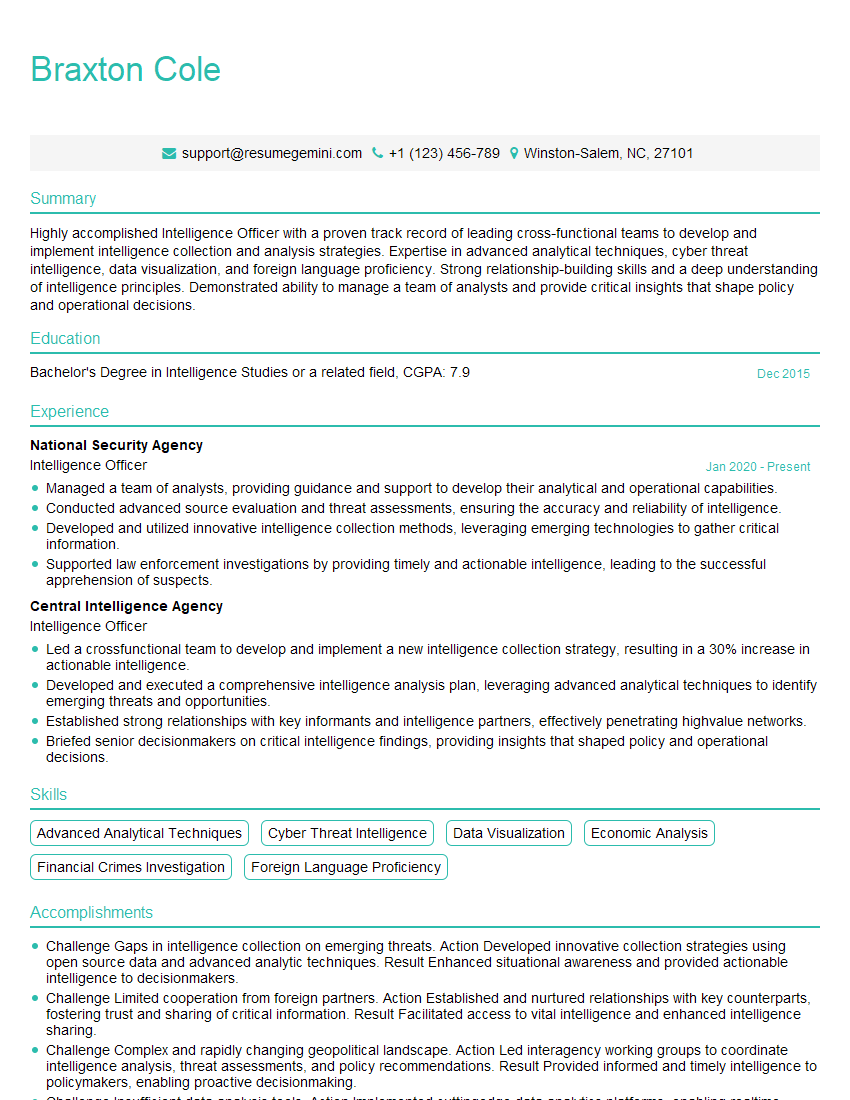
Mastering Counterintelligence and Human Intelligence opens doors to exciting and impactful careers in national security and law enforcement. A strong foundation in these areas is crucial for career advancement and demonstrating your expertise to potential employers. To significantly enhance your job prospects, crafting an ATS-friendly resume is essential. ResumeGemini is a trusted resource to help you build a professional and impactful resume that highlights your unique skills and experience. ResumeGemini provides examples of resumes tailored to Counterintelligence and Human Intelligence roles, giving you a head start in showcasing your qualifications effectively. Take advantage of these resources to present yourself as the ideal candidate.

Explore more articles
Users Rating of Our Blogs
Share Your Experience
We value your feedback! Please rate our content and share your thoughts (optional).
What Readers Say About Our Blog
Very informative content, great job.
good