The thought of an interview can be nerve-wracking, but the right preparation can make all the difference. Explore this comprehensive guide to Counterintelligence threat analysis interview questions and gain the confidence you need to showcase your abilities and secure the role.
Questions Asked in Counterintelligence threat analysis Interview
Q 1. Explain the difference between counterintelligence and intelligence.
Intelligence gathering focuses on acquiring information about adversaries, while counterintelligence focuses on protecting one’s own information and capabilities from adversaries. Think of it like this: intelligence is the offense, trying to learn secrets; counterintelligence is the defense, protecting your secrets from being stolen.
For example, an intelligence operation might involve infiltrating a terrorist group to learn about their plans. A counterintelligence operation, on the other hand, might involve detecting and neutralizing a spy who’s trying to steal classified information from your organization.
The core difference lies in their objectives. Intelligence aims to gain an advantage through information, whereas counterintelligence aims to prevent an adversary from gaining an advantage by protecting sensitive information and thwarting espionage activities.
Q 2. Describe the five phases of the intelligence cycle.
The intelligence cycle is a continuous loop encompassing five key phases:
- Planning and Direction: This involves identifying intelligence requirements, determining priorities, and allocating resources. For example, deciding to investigate a specific threat actor.
- Collection: This is the gathering of raw intelligence data from various sources, such as human intelligence (HUMINT), signals intelligence (SIGINT), and open-source intelligence (OSINT). This might involve surveillance, intercepting communications, or analyzing publicly available information.
- Processing and Exploitation: Raw data is converted into usable intelligence. This involves translating languages, analyzing signals, and interpreting imagery. For example, deciphering a coded message or identifying a person in a photograph.
- Analysis and Production: The processed information is analyzed to create intelligence assessments and reports. This involves identifying patterns, drawing conclusions, and assessing the credibility of information. For example, writing a report assessing the likelihood of a terrorist attack.
- Dissemination and Feedback: The finished intelligence product is shared with relevant decision-makers. Feedback from consumers helps refine future intelligence requirements. For example, sharing the report with relevant officials and getting feedback on its usefulness and accuracy.
Q 3. What are the key indicators of a counterintelligence threat?
Key indicators of a counterintelligence threat are diverse and often subtle. They can include:
- Suspicious Activities: Unusual behavior, unauthorized access attempts, or unexplained communications patterns. For example, an employee frequently meeting with known foreign agents.
- Compromised Systems: Evidence of unauthorized access to computer systems or networks, unusual network traffic, or malware infections. This could be a sign of data breaches or network infiltration.
- Leaks of Classified Information: Unexplained disclosures of sensitive information or unusual interest from unauthorized individuals. An example would be sensitive military plans appearing in the media.
- Foreign Intelligence Service (FIS) Activity: Presence of known or suspected foreign intelligence officers, covert surveillance activities, or attempts to recruit insiders. This could manifest as suspicious individuals monitoring a facility.
- Financial Irregularities: Unexplained wealth, unusual financial transactions, or sudden changes in lifestyle among employees with access to sensitive information. For instance, an employee suddenly purchasing expensive assets beyond their apparent means.
It’s important to remember that these indicators often appear in combination and may not be immediately obvious. Thorough investigation and analysis are crucial.
Q 4. How do you identify and assess potential vulnerabilities to counterintelligence threats?
Identifying and assessing vulnerabilities involves a systematic approach. This typically includes:
- Vulnerability Assessments: Conducting regular security audits of physical and IT infrastructure to identify weaknesses. This might involve penetration testing, vulnerability scans, and security awareness training.
- Insider Threat Analysis: Identifying employees who might pose a risk due to their access to sensitive information, financial distress, or ideological motivations. This can involve background checks, behavioral analysis, and polygraph testing (where legally permissible).
- Supply Chain Risk Management: Assessing potential risks associated with third-party vendors and contractors who have access to sensitive information or systems. This might involve due diligence, background checks on vendors, and contract clauses specifying security requirements.
- Physical Security Reviews: Inspecting facilities to identify weaknesses in physical security, such as inadequate access control, weak perimeter security, or lack of surveillance.
- Risk Mitigation Planning: Developing plans to address identified vulnerabilities, such as implementing stronger access controls, upgrading security systems, and providing security awareness training.
By proactively identifying and mitigating these vulnerabilities, organizations can significantly reduce their exposure to counterintelligence threats.
Q 5. What are the different types of counterintelligence operations?
Counterintelligence operations are diverse, but some common types include:
- Defensive CI: Protecting classified information and infrastructure, identifying and neutralizing spies, and detecting and countering foreign intelligence activities. This involves security measures, background checks, and threat assessments.
- Offensive CI: Disrupting the activities of foreign intelligence services and their agents. This could include using deception, disinformation, and other techniques to mislead or frustrate the enemy.
- Technical CI: Using technological means to detect and counter espionage, such as monitoring communications, detecting surveillance devices, and analyzing computer networks. This involves network monitoring, penetration testing, and the use of counter-surveillance equipment.
- Human CI: Utilizing human sources to gather information about foreign intelligence activities. This often involves recruiting informants, double agents, and other human assets.
- Personnel CI: Assessing the trustworthiness and loyalty of personnel, particularly those with access to sensitive information. This might involve background checks, security clearances, and polygraph testing.
These operations often overlap, and a comprehensive counterintelligence program typically employs a combination of these methods.
Q 6. Describe the process of developing a counterintelligence plan.
Developing a counterintelligence plan is a multi-step process:
- Threat Assessment: Identifying potential threats, assessing their capabilities, and evaluating the likelihood of attack. This involves analyzing intelligence reports, identifying vulnerabilities, and considering the adversary’s motivations.
- Vulnerability Assessment: Identifying weaknesses in security systems, processes, and personnel. This involves conducting security audits, penetration testing, and analyzing insider threats.
- Risk Assessment: Combining threat and vulnerability assessments to determine the likelihood and impact of potential attacks. This prioritizes threats based on their potential damage.
- Strategy Development: Determining appropriate counterintelligence measures to mitigate risks. This involves selecting appropriate defensive and offensive techniques, and allocating resources.
- Plan Implementation: Putting the counterintelligence plan into action, including implementing security controls, training personnel, and establishing communication protocols.
- Monitoring and Evaluation: Regularly monitoring the effectiveness of counterintelligence measures and making adjustments as needed. This involves tracking indicators, assessing performance, and adapting to changing threats.
A successful counterintelligence plan is flexible, adaptable, and responsive to evolving threats.
Q 7. Explain the concept of tradecraft in counterintelligence.
In counterintelligence, tradecraft refers to the specialized skills, techniques, and procedures used to conduct operations. It encompasses a wide range of activities, including:
- Surveillance Detection and Countermeasures: Techniques for detecting surveillance and avoiding or neutralizing it.
- Secure Communications: Methods for communicating securely and protecting information from interception.
- Source Operations: Techniques for recruiting, managing, and handling human intelligence sources.
- Information Security: Safeguarding classified information and systems from unauthorized access or disclosure.
- Deception and Disinformation: Techniques used to mislead adversaries.
- Cryptography: Utilizing encryption and other methods to protect sensitive data.
Effective tradecraft requires meticulous planning, attention to detail, and a high level of expertise. It is continuously evolving to counter new threats and technologies. A good analogy is the art of a magician – the audience doesn’t see the mechanics, but the magic still works. Similarly, effective tradecraft often operates unseen, silently protecting vital information and interests.
Q 8. What are some common counterintelligence techniques used by adversaries?
Adversaries employ a diverse range of counterintelligence techniques to gather information, influence operations, or compromise security. These techniques often overlap and are adapted to the specific target and context.
- Open Source Intelligence (OSINT) Collection: This involves gathering information from publicly available sources like social media, news articles, and academic publications. For example, an adversary might meticulously track the movements of a diplomat through their publicly available social media posts.
- Human Intelligence (HUMINT): This relies on recruiting and managing human sources, often involving deception, bribery, or coercion. A classic example is the recruitment of an insider to leak sensitive documents.
- Signals Intelligence (SIGINT): This involves intercepting and analyzing communications, including electronic signals, to extract valuable information. Think of intercepting encrypted communications between government officials.
- Measurement and Signature Intelligence (MASINT): This involves analyzing technical data from various sources, such as radar emissions or satellite imagery, to infer information about an adversary’s capabilities. Analyzing unusual satellite imagery might reveal the construction of a new missile facility.
- Deception Operations: These aim to mislead the target through fabricated information or actions. This could involve planting false information in a news outlet to divert attention from a real operation.
- Cyber Espionage: This involves using digital means to penetrate computer systems and steal data. This can range from simple phishing attacks to sophisticated malware deployments.
Understanding these techniques is crucial for developing effective counterintelligence strategies.
Q 9. How do you evaluate the credibility and reliability of intelligence sources?
Evaluating the credibility and reliability of intelligence sources is paramount. It’s a multi-faceted process involving careful consideration of several factors. Think of it like a detective investigating a case – you need corroboration and evidence.
- Source Motivation: Why is this source providing information? Are they seeking personal gain, ideological alignment, or something else? A source motivated by revenge might be unreliable.
- Source Track Record: What is the history of this source? Have they provided accurate information in the past? A source with a proven history of accuracy is more reliable.
- Information Corroboration: Does the information align with information from other independent sources? This is crucial for validating information.
- Method of Information Acquisition: How did the source obtain the information? Did they witness it firsthand, or is it hearsay? Direct observation is typically more reliable than secondhand accounts.
- Source Handling: How well has the source been vetted and managed? This includes assessing potential vulnerabilities and threats.
Employing a rigorous assessment process, combined with careful handling and verification of information, is essential for ensuring that intelligence assessments are accurate and reliable.
Q 10. Explain the importance of source protection in counterintelligence.
Source protection is absolutely critical in counterintelligence. Compromising a source can not only jeopardize future intelligence gathering but also endanger the source’s life and expose sensitive operational details.
- Operational Security (OPSEC): Maintaining OPSEC ensures that actions taken to recruit and manage sources do not reveal their identities or compromise their safety. This includes secure communication channels and rigorous compartmentalization of information.
- Covert Communication Methods: Utilizing secure communication methods, like encrypted channels or dead drops, prevents interception of sensitive information exchanged with sources.
- Protection of Source Identities: Developing and implementing comprehensive protocols for protecting the identities and backgrounds of sources from exposure is paramount. This can involve using code names, aliases, and other methods to conceal identities.
- Ongoing Risk Assessment: Continuously assessing and mitigating the risks to sources is crucial. This means anticipating potential threats and developing contingency plans.
Neglecting source protection can have devastating consequences, undermining intelligence operations and putting lives at risk. A dedicated effort to protect sources ensures the long-term success of intelligence efforts.
Q 11. How do you handle classified information in a secure manner?
Handling classified information requires strict adherence to established security protocols. A single lapse in security can have significant consequences.
- Need-to-Know Basis: Access to classified information should be strictly limited to individuals with a legitimate need to know, based on their roles and responsibilities.
- Secure Storage: Classified documents and data must be stored in approved secure facilities and containers. This might involve safes, vaults, or secure computer systems.
- Data Encryption: Electronic data must be encrypted both in transit and at rest, using appropriate encryption algorithms and key management practices.
- Secure Communication Channels: All communication involving classified information must be conducted through secure channels, avoiding unencrypted email or telephone conversations.
- Regular Security Audits: Regular audits should be conducted to ensure compliance with security regulations and identify potential vulnerabilities.
The principles of security are paramount in protecting sensitive information; any deviation can result in severe penalties and national security breaches.
Q 12. What are some common methods used for detecting leaks of classified information?
Detecting leaks of classified information requires a multi-layered approach that combines technical and human intelligence methods.
- Network Monitoring: This involves monitoring network traffic for unauthorized access attempts, data exfiltration, and unusual activity patterns. This can include analyzing logs and detecting unusual network flows.
- Data Loss Prevention (DLP) Tools: These tools monitor sensitive data in transit and at rest, alerting on suspicious activity such as attempts to copy or move classified data to unauthorized locations.
- Insider Threat Monitoring: This involves monitoring employee behavior, including access patterns, communications, and social media activity, to identify potential insider threats.
- Polygraph Testing: In some cases, polygraph testing can be used to identify individuals who may have leaked classified information. However, it’s not a foolproof method.
- Analysis of Media and Publicly Available Information: Monitoring news reports, social media, and other public sources for indications of potential leaks is also crucial.
Detecting leaks requires a proactive, multi-pronged strategy that combines technological safeguards with human analysis and careful investigation. This allows for quick response and mitigation of damage.
Q 13. Describe how you would investigate a suspected insider threat.
Investigating a suspected insider threat requires a methodical and thorough approach, balancing the need for a speedy resolution with the necessity of adhering to legal and ethical standards. This process resembles a complex puzzle, requiring the piecing together of numerous clues.
- Initial Assessment: Gathering all available information about the suspected threat, including the nature of the potential compromise, the individual’s access and privileges, and any unusual activity.
- Data Collection: This phase involves collecting digital forensic evidence, reviewing logs, monitoring network activity, interviewing colleagues and supervisors, and potentially conducting searches of the individual’s workspace (following legal protocol).
- Interviewing: Conducting structured interviews with relevant individuals, including the suspected insider and their colleagues, is vital. Interviewing requires specific training and attention to legal guidelines.
- Evidence Analysis: Carefully analyzing all collected evidence to determine whether a violation occurred and the extent of the damage. This could include analyzing computer logs, network traffic, and physical documents.
- Reporting: Preparing a detailed report of the investigation findings, including all evidence, interview summaries, and conclusions, for appropriate authorities.
Throughout the investigation, strict adherence to legal and ethical protocols is paramount. Improper procedures can compromise the integrity of the investigation and lead to legal challenges.
Q 14. What are the ethical considerations involved in counterintelligence work?
Counterintelligence work involves significant ethical considerations, demanding a delicate balance between national security and individual rights. It’s crucial to act within the bounds of the law and uphold ethical standards.
- Respect for Human Rights: All counterintelligence activities must respect fundamental human rights, including the rights to privacy, due process, and freedom from torture.
- Legal Compliance: All actions must comply with applicable laws and regulations, both domestically and internationally. This includes adhering to warrants and judicial processes.
- Transparency and Accountability: Counterintelligence activities should be subject to appropriate oversight and accountability mechanisms to prevent abuse of power.
- Proportionality: The methods used in counterintelligence operations should be proportionate to the threat. Excessive force or intrusive methods should be avoided.
- Data Protection: Collected data should be handled responsibly, ensuring its confidentiality, integrity, and availability only for legitimate purposes.
A strong ethical framework is essential for ensuring that counterintelligence operations are conducted ethically and legally. Without this, the very integrity of the work is undermined. This requires continuous review and reflection on the impact of operations.
Q 15. How do you balance security concerns with operational needs?
Balancing security concerns and operational needs is a constant tightrope walk in counterintelligence. It’s about finding the optimal point where security measures don’t cripple operations, and operational efficiency doesn’t compromise security. This requires a risk-based approach.
For instance, imagine a scenario where our organization needs to send a team to a high-risk region for a crucial negotiation. A purely security-focused approach might advocate cancelling the trip entirely. However, a balanced approach would involve a thorough risk assessment, implementing robust security protocols (e.g., advanced surveillance, secure communication systems, pre-trip briefings on potential threats), and training the team on threat avoidance and mitigation. This allows us to accomplish the operational goal while mitigating potential risks.
This balancing act often involves:
- Risk Assessment: Identifying potential threats and vulnerabilities specific to the operation.
- Mitigation Strategies: Developing and implementing controls to reduce risks, such as physical security measures, technological safeguards, and personnel training.
- Cost-Benefit Analysis: Weighing the costs of implementing security measures against the potential benefits of mitigating risks and the operational goals.
- Continuous Monitoring and Adjustment: Regularly reviewing and adjusting security measures based on evolving threats and operational changes.
Career Expert Tips:
- Ace those interviews! Prepare effectively by reviewing the Top 50 Most Common Interview Questions on ResumeGemini.
- Navigate your job search with confidence! Explore a wide range of Career Tips on ResumeGemini. Learn about common challenges and recommendations to overcome them.
- Craft the perfect resume! Master the Art of Resume Writing with ResumeGemini’s guide. Showcase your unique qualifications and achievements effectively.
- Don’t miss out on holiday savings! Build your dream resume with ResumeGemini’s ATS optimized templates.
Q 16. How do you prioritize counterintelligence threats?
Prioritizing counterintelligence threats involves a multi-faceted approach that considers several factors. We use a framework that combines threat likelihood, impact, and urgency. Think of it like a triage system in a hospital – some threats need immediate attention, while others can be addressed later.
We assess threats based on:
- Likelihood: How probable is it that this threat will materialize? This involves evaluating the actor’s capabilities, intentions, and historical actions.
- Impact: What are the potential consequences if the threat is successful? Consider damage to reputation, financial losses, loss of sensitive information, or even physical harm.
- Urgency: How quickly does this threat need to be addressed? Some threats require immediate action to prevent imminent harm, while others allow for a more measured response.
For example, a credible threat of espionage from a known adversary targeting our most sensitive technology would be prioritized higher than a low-probability threat of a disgruntled employee leaking less critical information. A matrix is frequently used to visually represent and compare these factors, allowing for a clear prioritization of resources and effort.
Q 17. Explain your understanding of different threat models (e.g., STRIDE, PASTA).
Threat modeling is crucial for identifying vulnerabilities and designing effective security countermeasures. STRIDE and PASTA are two popular methods.
STRIDE stands for Spoofing, Tampering, Repudiation, Information disclosure, Denial of service, and Elevation of privilege. It’s a systematic way to identify potential threats by examining different attack vectors. Imagine a web application – we would consider each STRIDE element to find weaknesses. Could an attacker spoof a user’s identity? Could they tamper with data in transit? Could they deny service to legitimate users?
PASTA (Process for Attack Simulation and Threat Analysis) is a more holistic approach that focuses on the entire process, considering various elements like data flows, actors, and technology. It’s less about individual attack vectors and more about the overall security posture. PASTA incorporates user stories and workflow diagrams to provide a comprehensive analysis. Both models, when applied systematically, can lead to a more robust security architecture.
Q 18. How do you use open-source intelligence (OSINT) in counterintelligence analysis?
Open-source intelligence (OSINT) is an invaluable tool in counterintelligence. It allows us to gather information from publicly available sources to build a comprehensive understanding of potential threats, targets, and adversaries. This can range from social media, news articles, corporate websites, and academic publications to government records and open-source databases.
In practice, OSINT supports several counterintelligence functions:
- Identifying potential threats: Monitoring online forums and social media for discussions that reveal potential insider threats or adversary activities.
- Profiling adversaries: Gathering biographical information, affiliations, and past behaviors of suspected adversaries from public sources to better understand their capabilities and intentions.
- Verifying information: Using OSINT to corroborate information obtained from other intelligence sources.
- Tracking adversary activities: Monitoring public statements and actions of adversaries to anticipate their next moves.
For example, we might use OSINT to monitor the online presence of a foreign government official suspected of engaging in espionage. By analyzing their social media posts, travel patterns, and associations, we can gain valuable insight into their activities and potential vulnerabilities.
Q 19. Describe your experience with intelligence databases and analysis tools.
My experience with intelligence databases and analysis tools is extensive. I am proficient in using various commercial and government-developed databases, including those specializing in threat intelligence, financial transactions, and communications data. I’ve worked with tools for data mining, network analysis, and geospatial intelligence. The specific tools vary based on the security clearance and the nature of the investigation, but proficiency in using such databases and tools is essential for effective counterintelligence analysis.
My experience includes:
- Data Extraction and Analysis: Using specialized queries and scripts to extract relevant information from large datasets.
- Network Analysis: Identifying connections and relationships between individuals, organizations, and events using network visualization tools.
- Geospatial Analysis: Mapping locations and movements of individuals or entities to identify patterns and connections.
- Data Fusion: Integrating data from various sources to create a holistic understanding of a situation.
Data security and handling are of paramount importance, and I have undergone extensive training in maintaining data integrity and following strict protocols for handling classified information.
Q 20. How do you communicate complex intelligence findings to non-technical audiences?
Communicating complex intelligence findings to non-technical audiences requires a clear, concise, and engaging approach. The key is to translate technical jargon into plain language without sacrificing accuracy or detail.
My approach involves:
- Identifying the key takeaways: Summarizing the most critical findings in a way that is easily understood.
- Using visual aids: Employing charts, graphs, and maps to present data in a clear and visually appealing manner.
- Analogies and metaphors: Relating complex concepts to everyday situations or experiences that the audience can relate to.
- Storytelling: Presenting the findings as a narrative to make them more engaging and memorable.
- Tailoring the message: Adjusting the level of detail and technicality to match the audience’s background and knowledge.
For example, instead of saying “the adversary employed a spear-phishing campaign leveraging zero-day exploits,” I might say, “The attacker tricked employees into clicking a malicious link disguised as a legitimate email, which gave them access to our systems.”
Q 21. How do you identify and mitigate the risks associated with foreign travel?
Foreign travel presents unique counterintelligence risks, ranging from surveillance to physical harm. Mitigating these risks requires a proactive and layered approach.
Before travel, we conduct:
- Threat Assessment: Identifying potential threats specific to the destination and the purpose of travel.
- Travel Security Briefing: Educating travelers on security awareness, situational awareness, and personal security measures.
- Communication Protocols: Establishing secure communication channels and procedures for reporting incidents or emergencies.
- Information Security: Educating travelers on protecting sensitive information and devices from theft or compromise.
During travel, it’s crucial to maintain situational awareness, avoid compromising situations, use secure communications methods, and follow established security protocols. After travel, a post-trip debrief is conducted to assess what went well, what could be improved and any lessons learned.
For example, before travelling to a country known for cyber espionage, we might advise the travelers to use temporary burner phones, avoid using unsecured Wi-Fi networks and leave sensitive documents and devices behind. These precautions significantly reduce their vulnerability.
Q 22. What are some common methods used to detect and prevent espionage?
Detecting and preventing espionage requires a multi-layered approach combining technical, human, and procedural safeguards. Think of it like a castle defense: multiple barriers to breach.
Technical Surveillance Countermeasures (TSCM): This involves actively searching for and neutralizing electronic eavesdropping devices like bugs and hidden cameras. Regular sweeps of sensitive areas are crucial, employing specialized equipment to detect hidden microphones, recorders, and transmitters. For example, a recent case involved discovering a sophisticated miniature camera disguised as a smoke detector in a high-security meeting room.
Security Awareness Training: Educating personnel about common espionage tactics—like phishing emails, social engineering, or even seemingly innocuous conversations—is vital. Training programs simulate real-world scenarios to help employees identify and report suspicious activities. This includes understanding the importance of data security, handling classified information, and recognizing potential threats.
Background Checks and Vetting: Rigorous background checks and security clearances are essential to ensure individuals with access to sensitive information don’t pose a risk. This involves verifying employment history, financial records, and conducting interviews to assess trustworthiness and potential vulnerabilities to manipulation.
Physical Security Measures: Implementing robust physical security is paramount. This includes access control systems (card readers, security guards), perimeter security (fences, CCTV), and securing sensitive documents and equipment in locked facilities. A strong physical barrier makes it significantly harder for an adversary to physically infiltrate a facility.
Data Loss Prevention (DLP): Implementing DLP tools monitors and prevents sensitive data from leaving the organization’s network unauthorized. These tools can scan emails, files, and network traffic for classified data and flag or block any attempts to transmit it outside designated channels.
Q 23. Explain the concept of ‘need-to-know’ and its importance in handling classified information.
The ‘need-to-know’ principle is a cornerstone of information security, particularly when handling classified information. It dictates that access to sensitive information should be limited to only those individuals who absolutely require it to perform their duties. Think of it as a strict ‘access control list’ for information.
Its importance lies in minimizing the risk of unauthorized disclosure. The more people who know a secret, the greater the chance of it being compromised. By strictly adhering to ‘need-to-know,’ organizations reduce their vulnerability to espionage, leaks, and insider threats. For example, only engineers directly involved in a specific weapons project would have access to the related blueprints, rather than the entire engineering department. This minimizes the potential damage from a leak.
Q 24. How do you manage conflicting priorities and competing demands in a high-pressure environment?
Managing conflicting priorities in high-pressure counterintelligence environments requires a structured and adaptable approach. I use a prioritization matrix that factors in urgency, risk, and impact. This involves:
Risk Assessment: Evaluating the potential consequences of each task allows me to focus on the most critical threats first.
Time Management: Employing time management techniques like time blocking and the Pomodoro Technique helps me allocate my time effectively and prevent burnout.
Delegation: When possible, I delegate tasks to capable team members to maximize efficiency and leverage expertise.
Communication: Keeping stakeholders informed about progress and potential roadblocks ensures transparency and allows for collaborative problem-solving. Clear and consistent communication minimizes misunderstandings and conflicts.
Flexibility: Maintaining adaptability is key in this environment. Unexpected crises may require a shift in priorities, necessitating the ability to swiftly adjust plans.
Q 25. Describe your experience with crisis management related to security breaches.
During my career, I’ve been involved in several security breach crises. One involved a suspected data breach through a compromised laptop. My response followed a structured plan:
Containment: Immediately isolating the compromised system and preventing further data exfiltration was paramount. This involved disconnecting the laptop from the network and initiating a forensic analysis.
Investigation: A thorough investigation was launched to identify the breach vector, the extent of the compromise, and potential actors involved.
Remediation: Implementing measures to fix the vulnerability, including patching software and reviewing security protocols, was crucial. Enhanced security awareness training was also rolled out for all staff.
Notification: Relevant authorities and affected parties were notified in accordance with established procedures and legal requirements.
Lessons Learned: A comprehensive after-action review identified weaknesses in our security posture and led to the implementation of improved protocols and safeguards.
Q 26. How do you assess the impact of technological advancements on counterintelligence efforts?
Technological advancements present both opportunities and challenges for counterintelligence. The rise of cyber warfare, artificial intelligence, and sophisticated surveillance technologies necessitates constant adaptation.
Opportunities: AI-powered analytics can sift through massive datasets to identify suspicious patterns and anomalies. New encryption methods enhance the security of sensitive information. Advanced forensic tools aid in the investigation of cyberattacks.
Challenges: Adversaries are also leveraging AI and advanced technologies for espionage and cyberattacks. Deepfakes and other misinformation campaigns pose a growing threat, blurring the line between reality and deception. The increasing interconnectedness of systems also expands the attack surface.
Adaptation: To remain effective, counterintelligence must constantly evolve to anticipate and counter new threats. This includes investing in cutting-edge technology, developing skilled personnel, and fostering international cooperation.
Q 27. Explain your understanding of relevant counterintelligence laws and regulations.
My understanding of counterintelligence laws and regulations is extensive. I am familiar with statutes like the [mention relevant national security laws applicable to the context, e.g., Espionage Act, etc. Avoid mentioning specific, real-world country-specific legislation due to the sensitivity of such information.] These laws outline restrictions on the unauthorized disclosure of classified information, penalties for espionage, and procedures for handling sensitive data. I am also aware of international treaties and agreements relevant to counterintelligence cooperation. Adherence to these legal frameworks is paramount in ensuring lawful and ethical operations. Compliance is not just a legal obligation, but a vital aspect of maintaining public trust and upholding the integrity of national security.
Q 28. Describe your experience in using various intelligence gathering methods.
My experience with intelligence gathering methods is broad, encompassing both open-source intelligence (OSINT) and more covert techniques. OSINT includes utilizing publicly available information from various sources—news articles, social media, academic papers—to build a comprehensive picture. For example, analyzing social media posts can reveal travel patterns, associations, or other relevant information. More sensitive information gathering methods may include: (Note: Specific details are omitted due to security concerns and classification restrictions.) My experience also includes working with human intelligence (HUMINT) sources and signals intelligence (SIGINT) data, always strictly adhering to legal and ethical guidelines and ensuring appropriate oversight and authorization.
Key Topics to Learn for Counterintelligence Threat Analysis Interview
- Threat Identification and Assessment: Understanding various threat actors (state-sponsored, non-state, individuals), their motivations, capabilities, and potential targets. Learn to differentiate between various threat levels and assess their potential impact.
- Intelligence Collection and Analysis: Familiarize yourself with different intelligence gathering methods (OSINT, HUMINT, SIGINT, etc.) and how to analyze collected data to identify patterns, anomalies, and potential threats. Practice evaluating the reliability and credibility of different intelligence sources.
- Vulnerability Analysis and Risk Mitigation: Learn how to identify vulnerabilities within an organization or system that could be exploited by threat actors. Develop strategies for mitigating these risks and protecting sensitive information.
- Countermeasures and Defensive Strategies: Explore various counterintelligence techniques used to detect, deter, and neutralize threats. This includes understanding deception, counter-surveillance, and information security best practices.
- Legal and Ethical Considerations: Become familiar with relevant laws, regulations, and ethical guidelines related to counterintelligence activities. Understanding the legal boundaries of intelligence gathering and analysis is crucial.
- Case Studies and Practical Applications: Review real-world examples of counterintelligence operations and analyze the successes and failures. This will help you develop critical thinking and problem-solving skills.
- Technological Aspects: Explore the role of technology in threat analysis, including data analytics, cybersecurity, and digital forensics. Understanding how technology is used by both threat actors and counterintelligence professionals is essential.
Next Steps
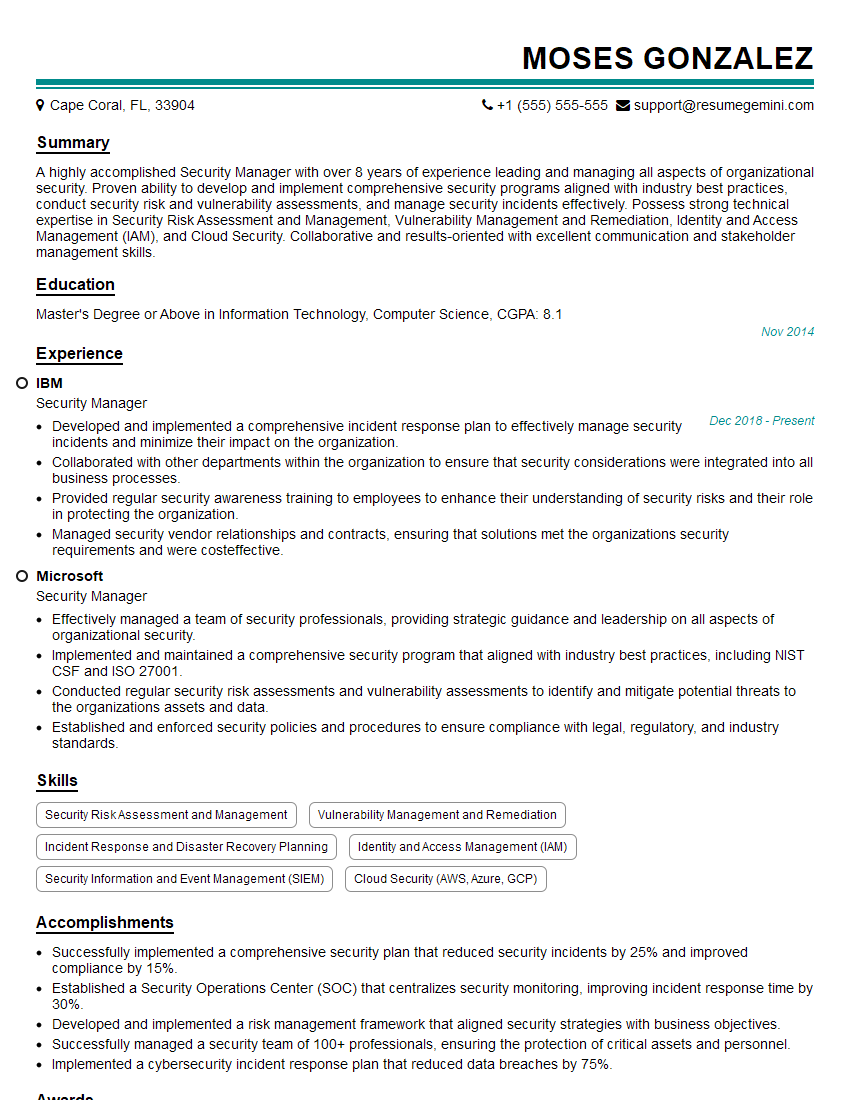
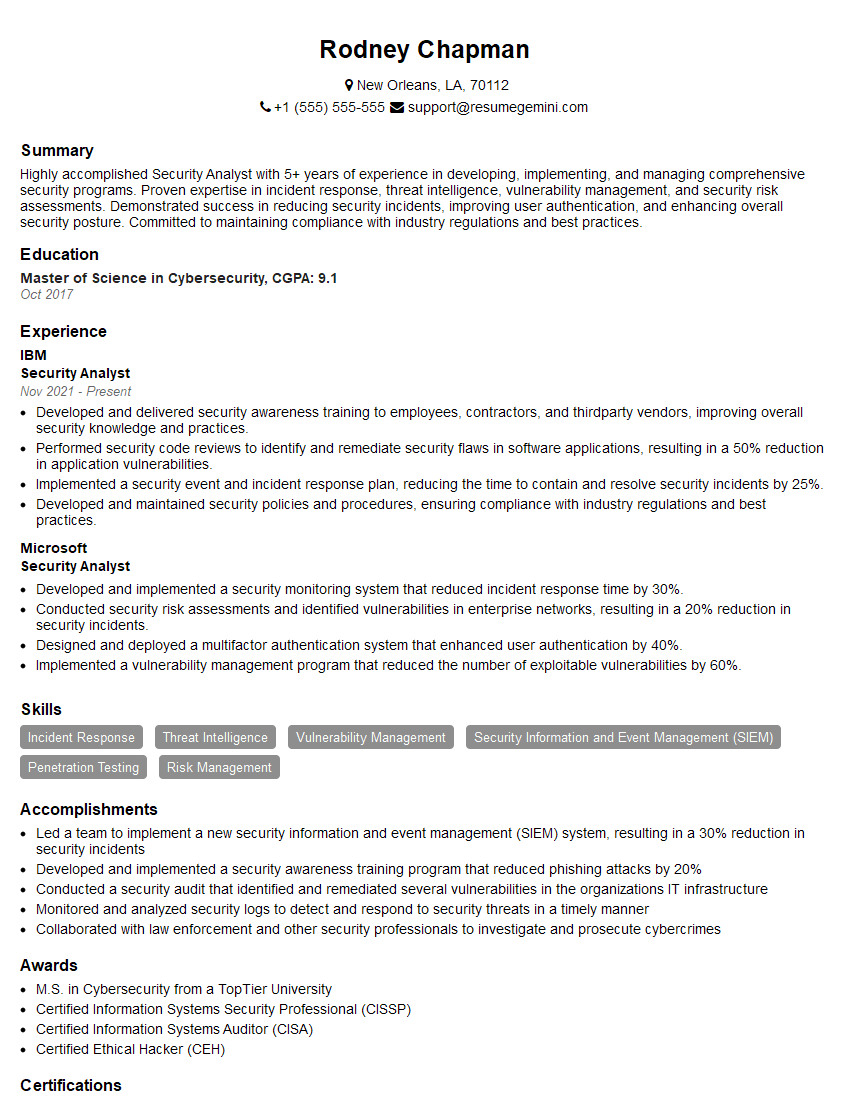
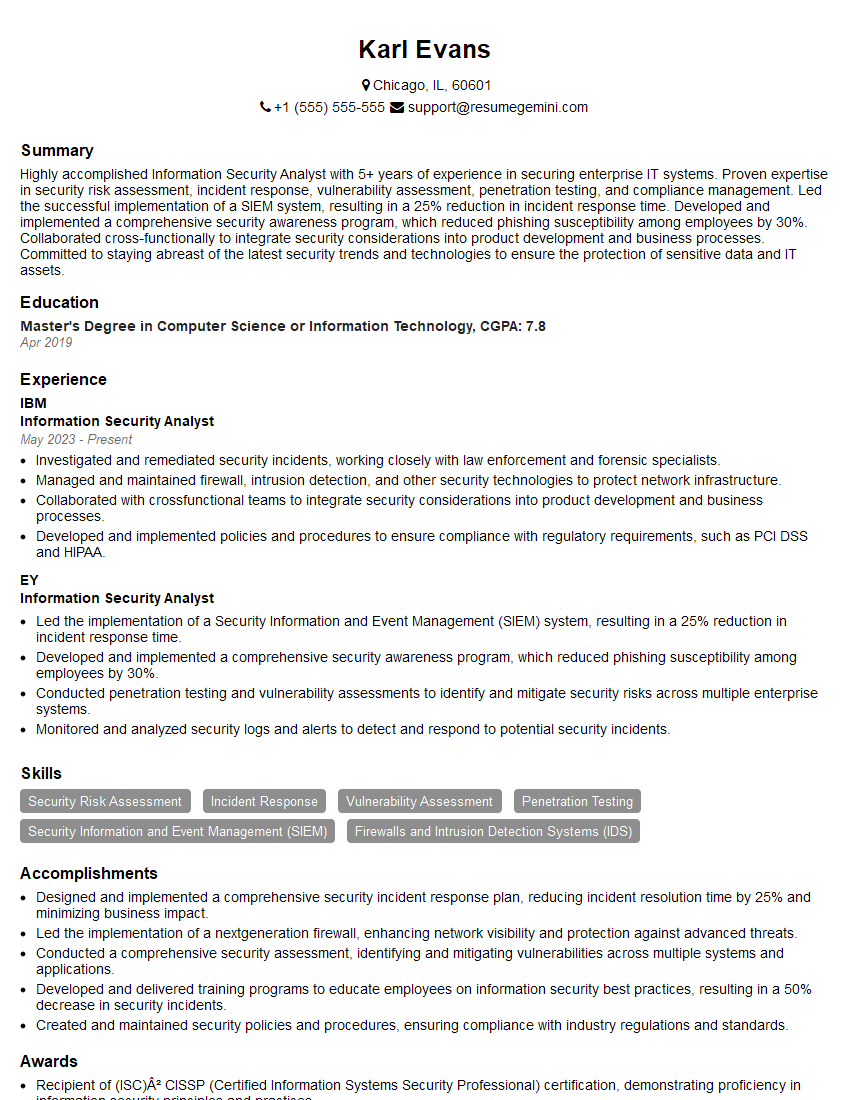
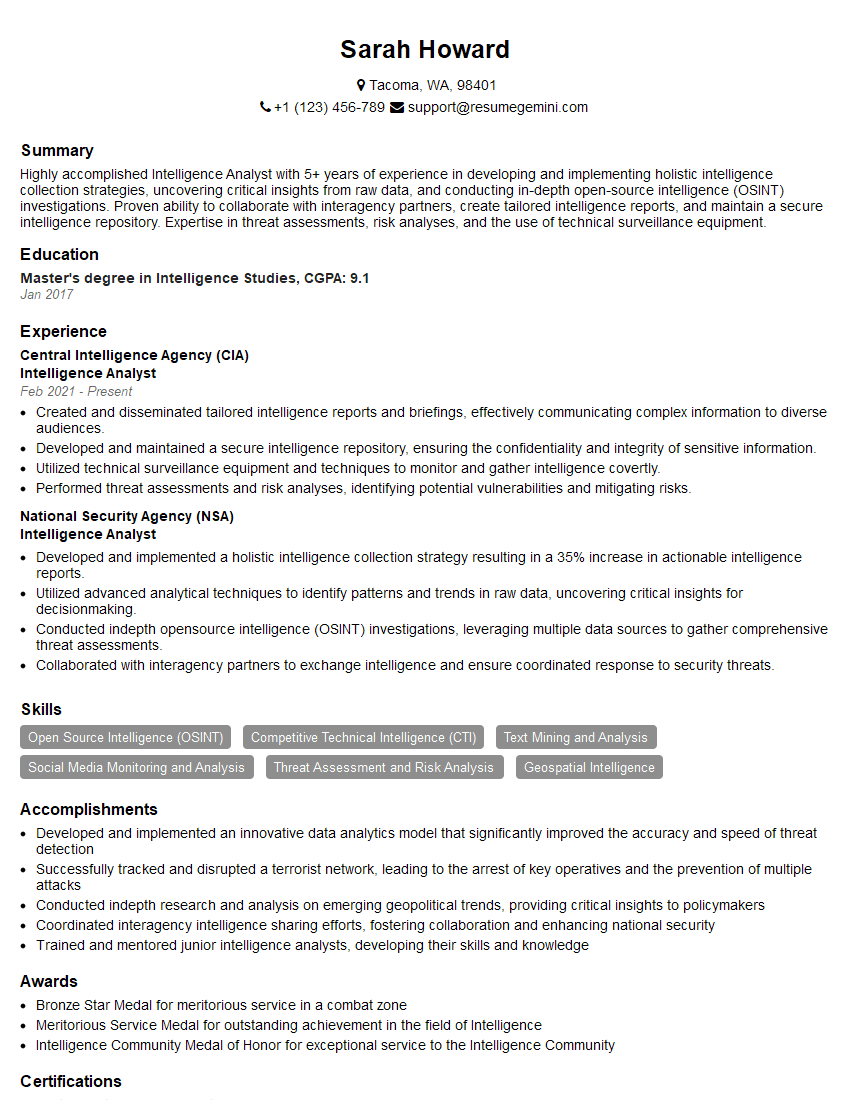
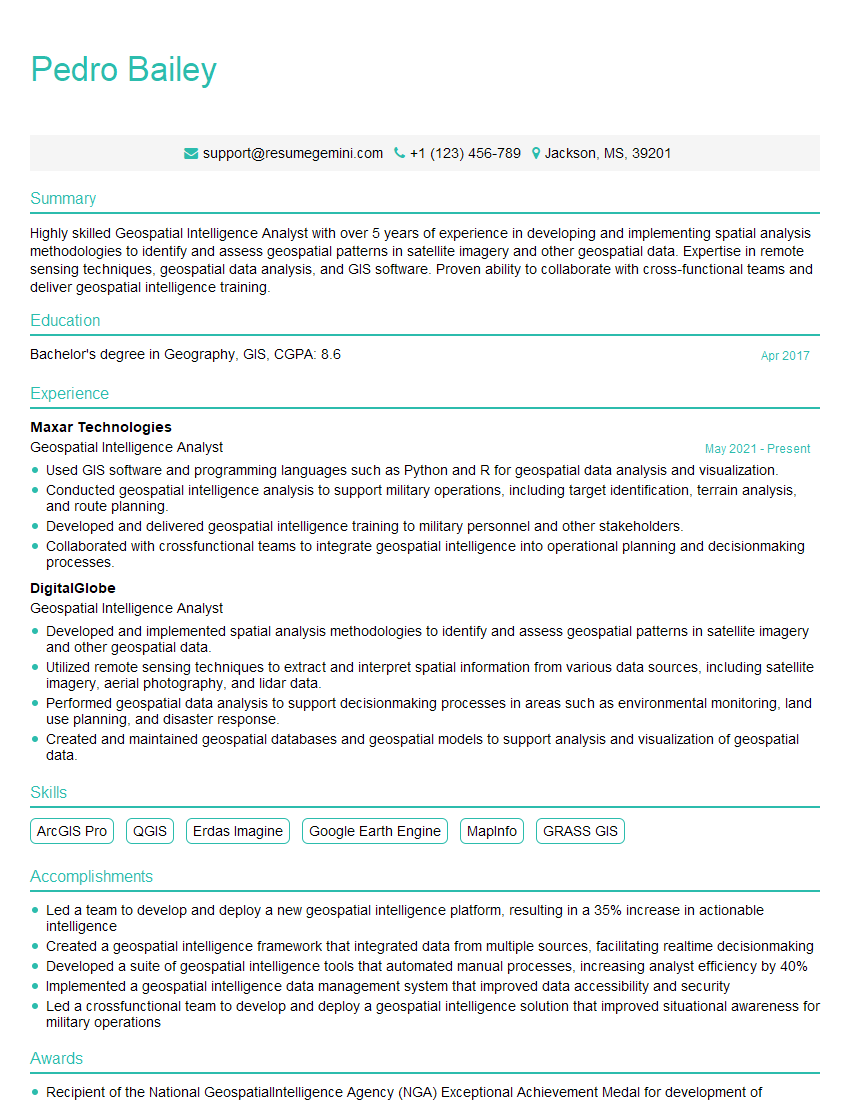
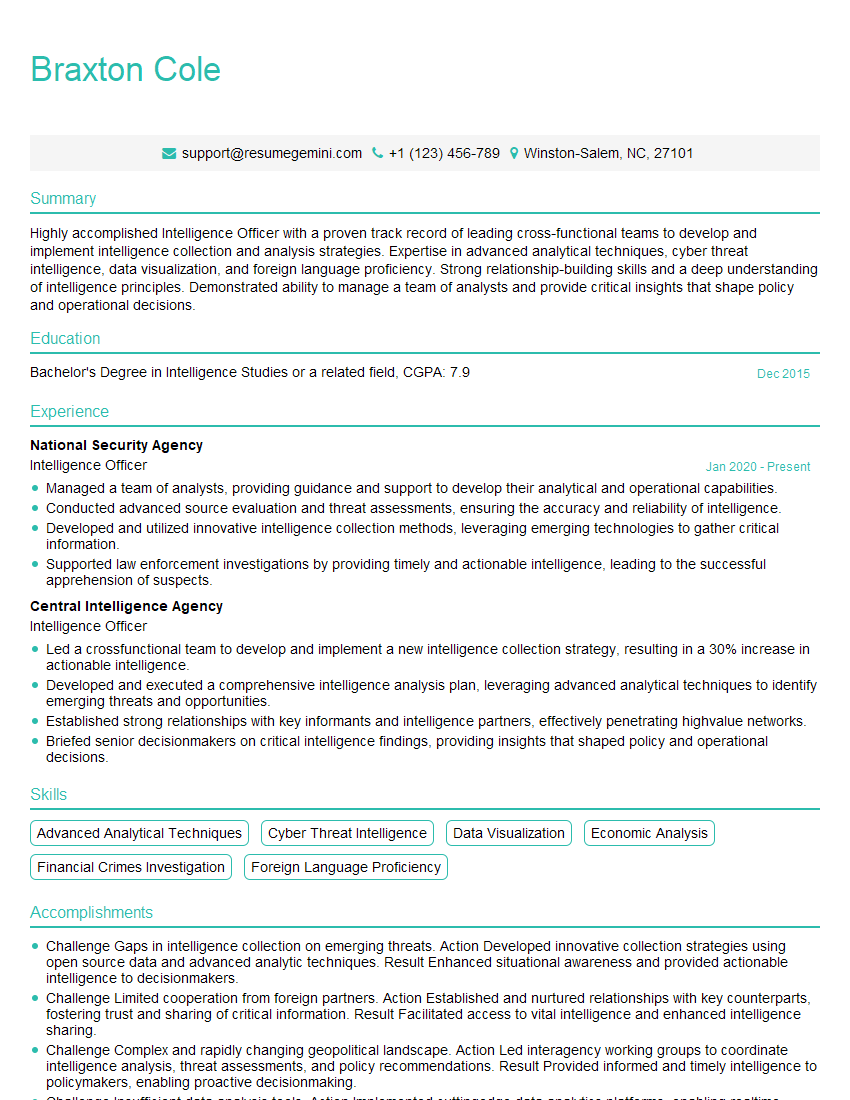
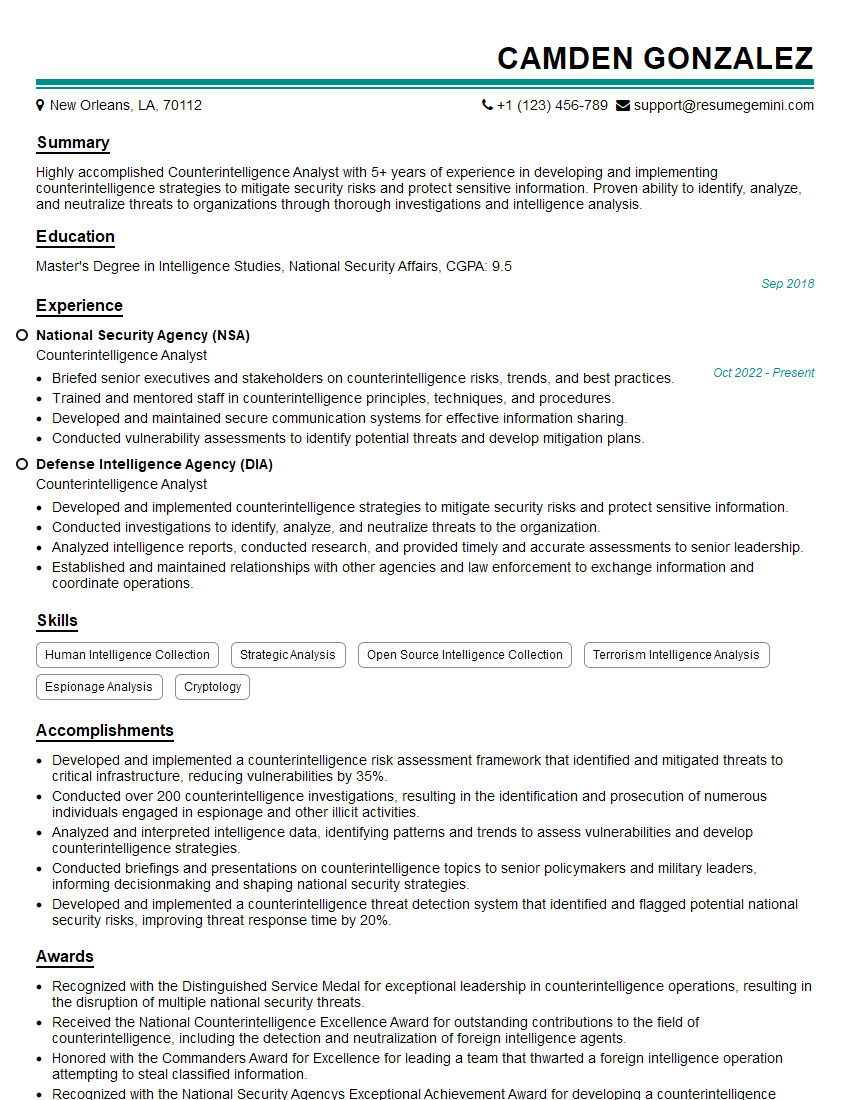
Mastering counterintelligence threat analysis opens doors to exciting and impactful careers in national security, law enforcement, and the private sector. To maximize your job prospects, it’s crucial to present your skills and experience effectively. Creating a well-structured, ATS-friendly resume is your first step towards landing your dream job. ResumeGemini is a trusted resource that can help you build a professional and impactful resume tailored to the specific requirements of counterintelligence roles. We provide examples of resumes specifically designed for counterintelligence threat analysis professionals to help you get started. Take the time to craft a compelling resume; it’s your key to unlocking your career potential.
Explore more articles
Users Rating of Our Blogs
Share Your Experience
We value your feedback! Please rate our content and share your thoughts (optional).
What Readers Say About Our Blog
Very informative content, great job.
good