Every successful interview starts with knowing what to expect. In this blog, we’ll take you through the top Court Coverage interview questions, breaking them down with expert tips to help you deliver impactful answers. Step into your next interview fully prepared and ready to succeed.
Questions Asked in Court Coverage Interview
Q 1. Describe your experience covering court proceedings, including different types of cases.
My experience in court coverage spans over a decade, encompassing a wide range of cases. I’ve covered everything from high-profile criminal trials involving complex legal arguments and extensive witness testimonies, to civil cases concerning contract disputes, personal injury claims, and family law matters like divorces and custody battles. I’ve also reported on appellate court proceedings, observing legal strategies and judicial reasoning at a higher level. The diversity of these cases has honed my ability to quickly grasp the key issues at stake, identify relevant legal principles, and translate complex legal proceedings into accessible narratives for a wider audience.
- Criminal Cases: I’ve covered cases involving murder, theft, fraud, and drug trafficking, requiring a deep understanding of criminal procedure and evidence laws.
- Civil Cases: My experience includes covering contract disputes, personal injury lawsuits, and property litigation, demanding a grasp of civil procedure and relevant substantive law.
- Family Law Cases: These cases often involve emotionally charged situations requiring sensitivity and a focus on factual accuracy while respecting the privacy of those involved.
Q 2. How do you ensure accuracy and impartiality in your court coverage?
Accuracy and impartiality are paramount in court reporting. My commitment to these principles begins with meticulous note-taking during proceedings, ensuring a detailed record of testimony, evidence presented, and judicial rulings. I rigorously verify all information obtained through multiple independent sources, including official court records, legal documents, and interviews with involved parties (where appropriate and permissible). I strive to present all sides of a case fairly, acknowledging different perspectives and avoiding biased language. Furthermore, I adhere strictly to journalistic ethics, avoiding any potential conflicts of interest and disclosing any potential biases. My goal is to provide readers with a comprehensive and unbiased account of events.
Q 3. Explain your process for fact-checking information obtained in court.
My fact-checking process is multi-layered. First, I cross-reference information from my notes with official court transcripts and documents. Second, I compare my observations with reports from other journalists covering the same case, looking for inconsistencies or corroboration. Third, I consult relevant legal databases and statutes to ensure the accuracy of legal terminology and procedures. If discrepancies arise, I investigate further, seeking clarification from court officials or legal experts. Finally, before publication, I have a senior editor review my work for accuracy and clarity. This systematic approach minimizes errors and ensures the reliability of my reporting.
Q 4. How do you handle sensitive or confidential information obtained during court coverage?
Handling sensitive or confidential information is governed by strict ethical guidelines and, in some jurisdictions, legal requirements like protective orders. I strictly adhere to court rules regarding the publication of sensitive information, such as the names of minors or victims of sexual assault. I never publish information that could compromise ongoing investigations or endanger individuals. I also protect the confidentiality of sources whenever possible, adhering to journalistic principles of source protection. If I obtain information inadvertently breaching confidentiality, I immediately assess the situation and take appropriate steps, which may include not using the information or consulting with legal counsel.
Q 5. Describe a challenging situation you encountered while covering court proceedings and how you overcame it.
One particularly challenging situation involved a high-profile criminal trial where access to information was highly restricted. The court imposed strict limitations on what could be reported, and access to key documents was delayed. To overcome this, I developed a strategy of building relationships with court officials, legal professionals, and other reporters covering the case. This allowed me to gain access to additional information and insights while ensuring I remained within the legal and ethical boundaries set by the court. I also meticulously reviewed public records and made use of open-source intelligence to fill gaps in information, effectively piecing together a comprehensive story despite the challenges.
Q 6. What legal terminology are you most familiar with, and how do you ensure its accurate use?
I am proficient in a wide range of legal terminology, including concepts like voir dire (jury selection), habeas corpus (a writ requiring a person under arrest to be brought before a judge), prima facie (at first sight), subpoena (a writ ordering someone to attend court), and various evidentiary rules. I ensure accurate usage by consulting legal dictionaries and encyclopedias, and when necessary, I seek clarification from legal professionals. If I am unsure about a specific term, I always verify its meaning before using it in my reporting, avoiding misrepresentation or confusion. Clear and accurate use of legal terminology is crucial for conveying the complexity of court proceedings to a broader audience.
Q 7. How do you manage the fast-paced and demanding environment of court proceedings?
The fast-paced and demanding nature of court proceedings requires excellent organizational skills and time management. I prepare thoroughly before each hearing, reviewing case files and any relevant background information. During proceedings, I prioritize note-taking and observation, maintaining focus amidst distractions. Following the hearing, I prioritize writing, fact-checking, and editing to meet deadlines. I utilize technology effectively, such as digital note-taking and transcription software to improve efficiency. My experience has taught me to adapt to unforeseen circumstances and prioritize information effectively under pressure. Working efficiently is key to producing accurate and timely reporting.
Q 8. Explain your understanding of legal ethics and journalistic ethics related to court coverage.
Legal and journalistic ethics in court coverage are intertwined, aiming for accuracy, fairness, and respect for the judicial process. Journalistic ethics emphasize truth-seeking, minimizing harm, and accountability, while legal ethics focus on upholding the law, protecting client confidentiality, and ensuring a fair trial. The overlap is crucial; journalists must avoid actions that could prejudice a trial, such as publishing information that could sway a jury before a verdict. For example, pre-trial confessions or inflammatory statements should be handled cautiously, possibly avoiding publication until after a verdict is reached, or including strong caveats.
Specific ethical considerations include:
- Protecting the presumption of innocence: Accused individuals are presumed innocent until proven guilty. Reporting should reflect this, avoiding language that portrays them as guilty before conviction.
- Avoiding trial by media: Overly sensationalized coverage can influence public opinion and potentially impact jury selection or the judge’s impartiality.
- Respecting court orders: Journalists must adhere to gag orders or other court-imposed restrictions on reporting.
- Protecting sources and confidentiality: While sources may provide valuable information, journalists must weigh their ethical responsibility to protect those sources against the need for transparency and public interest.
In practice, navigating these ethical considerations requires a thoughtful approach that balances the public’s right to know with the need to maintain a fair and impartial legal system. A strong understanding of both journalistic and legal ethics is fundamental for responsible court reporting.
Q 9. How do you maintain objectivity while covering emotionally charged court cases?
Maintaining objectivity in emotionally charged cases requires a conscious effort to separate personal feelings from factual reporting. It’s a constant challenge, but crucial for credibility. I employ several strategies:
- Focus on facts: I meticulously document events and testimonies, concentrating on verifiable information rather than emotional responses.
- Multiple perspectives: I seek out diverse viewpoints, including those of the prosecution, defense, victims, witnesses, and experts. Presenting a balanced portrayal helps avoid bias.
- Neutral language: I avoid emotionally charged words or phrases. Describing events objectively, without judgment, is key. For example, instead of ‘the brutal murder,’ I might write, ‘the death of the victim’ until the evidence is presented in court.
- Self-reflection: I regularly reflect on my own biases and assumptions to recognize potential points of subjectivity in my reporting.
- Fact-checking: Rigorous fact-checking is essential to ensure accuracy and reduce the influence of personal emotions.
For example, in a highly publicized domestic violence case, I might focus on the legal proceedings, the evidence presented, and the arguments made by both sides, rather than speculating on the motivations or emotions of the individuals involved. This helps readers make informed judgments, not rely on pre-conceived notions.
Q 10. Describe your experience using court records and documents in your reporting.
Court records and documents are indispensable for accurate and comprehensive reporting. My experience involves accessing and interpreting a wide range of materials, including:
- Case files: These contain pleadings, motions, evidence, and other documents filed throughout the legal process.
- Transcripts: Detailed records of court proceedings, providing verbatim accounts of testimony and arguments.
- Police reports: Initial investigations and accounts of events, offering valuable context.
- Affidavits and declarations: Sworn statements from witnesses and parties involved.
- Sentencing documents: Summaries of rulings, verdicts, and penalties imposed.
Accessing these records often requires navigating bureaucratic processes, understanding different filing systems, and utilizing online court databases. I have experience using public access terminals, requesting documents via mail or email, and navigating online portals. Interpreting legal jargon and understanding the implications of different documents requires both careful reading and a strong understanding of legal procedures. For instance, deciphering complex financial statements within a fraud case demands close attention to detail and the ability to summarize the core issues for readers.
Q 11. How do you summarize complex legal information for a general audience?
Summarizing complex legal information for a general audience requires simplifying jargon, breaking down lengthy processes into manageable chunks, and using relatable analogies. My approach involves:
- Defining legal terms: Explaining complex terms in plain language, with analogies where appropriate.
- Breaking down arguments: Presenting complex legal arguments in a step-by-step manner, focusing on the key points and their implications.
- Using visuals: Employing charts, timelines, or other visuals to simplify complex information.
- Focusing on the human element: Relating the legal proceedings to the impact on real people, illustrating the consequences of decisions.
- Avoiding unnecessary detail: Omitting tangential information and focusing on the most important aspects of the case.
For example, instead of describing the intricacies of a particular legal doctrine, I might explain its impact on a case using a simple analogy, such as comparing the legal principle to a rule of a game. This allows a non-legal audience to quickly grasp its essence.
Q 12. How do you identify and prioritize key information from court proceedings?
Identifying and prioritizing key information during court proceedings involves a combination of active listening, note-taking, and strategic observation. My strategy includes:
- Pre-trial preparation: Researching the case beforehand to understand the key issues and anticipate important testimony.
- Active listening: Paying close attention to witness testimony, arguments of counsel, and the judge’s rulings.
- Note-taking: Detailed note-taking during proceedings, highlighting key points and evidence.
- Observation: Observing the demeanor and body language of witnesses and participants, which can sometimes reveal unstated information.
- Identifying contradictions: Recognizing inconsistencies in testimony or evidence, as these can be crucial for understanding the case.
After the proceedings, I organize and analyze my notes, prioritizing information based on its relevance to the central issue, its newsworthiness, and its potential impact on the public. Key details, such as surprising witness accounts or significant legal decisions, are naturally prioritized.
Q 13. Explain your familiarity with different court procedures and rules.
My familiarity with court procedures and rules is extensive, encompassing various court types, from local magistrate courts to state and federal appellate courts. I understand the differences between criminal and civil proceedings, including:
- Stages of a trial: The steps involved in pre-trial motions, jury selection, presentation of evidence, closing arguments, jury deliberation, and sentencing.
- Rules of evidence: The admissibility of various types of evidence and the processes for challenging its relevance or authenticity.
- Courtroom decorum: The proper behavior and protocol expected within a courtroom setting.
- Legal terminology: A deep understanding of legal jargon, allowing for accurate interpretation and reporting.
- Differences in court systems: Understanding how procedures vary across different jurisdictions.
This knowledge is essential for accurate and responsible reporting. For example, understanding the rules of evidence helps me determine which information can and cannot be reported, while knowledge of courtroom decorum enables me to navigate the proceedings respectfully and effectively.
Q 14. How do you build and maintain relationships with court personnel?
Building and maintaining positive relationships with court personnel—judges, clerks, bailiffs, and court reporters—is crucial for effective court coverage. My approach is based on:
- Respect and professionalism: Treating all personnel with courtesy and respect, regardless of their role.
- Clear communication: Clearly stating my purpose and intentions, explaining my need for access to information and records.
- Adherence to rules and procedures: Following court rules and regulations diligently, demonstrating professionalism and reliability.
- Developing rapport: Building relationships through consistent, respectful interactions and establishing trust.
- Maintaining confidentiality: Respecting the confidentiality of information learned through informal conversations.
These relationships are valuable for several reasons: they can provide access to important information, facilitate smooth access to court records, and help avoid misunderstandings or conflicts. For example, developing a good working relationship with a court clerk can significantly expedite the process of obtaining necessary documents, saving valuable time and effort.
Q 15. Describe your experience using technology to enhance your court coverage (e.g., audio recording, live streaming).
Technology has revolutionized court coverage, allowing for more comprehensive and accessible reporting. My experience encompasses the use of digital audio recorders for capturing verbatim transcripts, ensuring accuracy and providing a reliable record. I’m also proficient in live-streaming technologies, using platforms like YouTube Live or specialized court broadcasting systems to deliver real-time updates to a wider audience. This involves setting up cameras, microphones, and ensuring a stable internet connection for uninterrupted streaming. For instance, during a high-profile trial, live-streaming allowed immediate dissemination of information, mitigating misinformation and providing transparency to the public.
Furthermore, I utilize transcription software to expedite the process of creating transcripts from audio recordings, significantly reducing turnaround time. This software often includes features like speaker identification and timestamping, which enhances the organization and usability of the final transcript. Finally, I’m familiar with cloud-based storage solutions for securely archiving audio and video recordings, ensuring long-term accessibility and data integrity.
Career Expert Tips:
- Ace those interviews! Prepare effectively by reviewing the Top 50 Most Common Interview Questions on ResumeGemini.
- Navigate your job search with confidence! Explore a wide range of Career Tips on ResumeGemini. Learn about common challenges and recommendations to overcome them.
- Craft the perfect resume! Master the Art of Resume Writing with ResumeGemini’s guide. Showcase your unique qualifications and achievements effectively.
- Don’t miss out on holiday savings! Build your dream resume with ResumeGemini’s ATS optimized templates.
Q 16. How do you meet deadlines while working under pressure in a court setting?
Meeting deadlines in a high-pressure court setting requires meticulous planning and efficient workflow management. I prioritize tasks based on urgency and importance, using tools like to-do lists and calendars to stay organized. For example, I might prioritize transcribing crucial testimony over less time-sensitive background information. I also anticipate potential delays, such as unexpected adjournments or witness unavailability, and build in buffer time into my schedule. Moreover, I leverage technology to my advantage, using speech-to-text software to speed up transcription and employing collaborative tools for quick information sharing with colleagues if needed. Effectively communicating with court personnel and legal teams is crucial to understanding potential delays and proactively managing expectations.
Q 17. How do you handle conflicts between different sources of information in a court case?
Handling conflicting information requires a methodical approach. I begin by carefully verifying the source and credibility of each piece of information. This involves checking multiple independent sources whenever possible, cross-referencing statements and examining supporting evidence. For instance, if one witness account contradicts another, I would investigate further, looking for corroborating evidence like police reports, medical records or physical evidence. If inconsistencies remain after thorough verification, I present the conflicting information transparently in my report, clearly noting the discrepancies and leaving it to the reader to draw their conclusions, rather than imposing my own interpretation. It’s important to maintain objectivity and avoid bias when reporting on conflicting information.
Q 18. Explain your experience with writing clear, concise, and accurate court reports.
Writing clear, concise, and accurate court reports is paramount to my work. I focus on presenting information in a structured, logical manner, using plain language that is easily understood by a broad audience. My reports typically follow a consistent format, including a clear summary of the proceedings, key testimony points, and significant rulings. I avoid legal jargon whenever possible, providing definitions if necessary. Accuracy is ensured through meticulous note-taking and careful review of audio recordings and other evidence. For example, instead of writing “The defendant proffered an objection,” I might write “The defendant challenged the evidence presented.” This increases readability for a non-legal audience without sacrificing accuracy.
I always strive to maintain neutrality, reporting facts without expressing personal opinions or biases. Regular fact-checking and proofreading are essential steps in ensuring accuracy and maintaining a professional standard. Constructive feedback from editors and colleagues helps in refining my writing style and improving report clarity.
Q 19. How do you ensure the security and integrity of sensitive information you obtain in court?
Security and integrity of sensitive information are my top priorities. I strictly adhere to court rules and regulations regarding confidentiality, handling all sensitive documents and recordings with the utmost care. This includes using secure storage methods like encrypted hard drives and password-protected files, and restricting access to sensitive information to authorized personnel only. For example, I’d never leave audio recordings unattended or share information with unauthorized individuals. I follow data privacy protocols diligently, understanding that breaches can have serious legal and ethical implications.
In cases involving sensitive personal information, I redact or anonymize data whenever possible, protecting individuals’ identities and privacy while ensuring the report remains informative. I am also trained in data destruction protocols, ensuring the secure disposal of any sensitive materials after they are no longer needed.
Q 20. How do you deal with difficult or uncooperative individuals in the court environment?
Dealing with difficult or uncooperative individuals requires patience, diplomacy, and professionalism. I approach interactions with empathy and understanding, aiming to establish rapport and facilitate effective communication. If someone is being uncooperative, I try to understand their concerns and address them professionally. If necessary, I involve court officials or security personnel to intervene if the situation escalates or if my safety is compromised. My goal is always to gather the necessary information in a professional manner, while also maintaining respect for all involved. In such situations, I always prioritize my safety and security.
Q 21. Describe your experience with different types of court reporting (e.g., print, broadcast, online).
My experience encompasses various forms of court reporting. I am proficient in producing traditional print reports, delivering accurate and detailed written accounts of court proceedings. I am also skilled in broadcast reporting, which involves delivering concise and engaging reports for television or radio, tailoring my language and presentation to the specific medium. This often involves working collaboratively with a broadcast team, understanding the needs of their audience and production requirements.
Furthermore, I’m experienced in online court reporting, including maintaining websites and social media accounts dedicated to covering court cases. This involves creating easily digestible content for online audiences, utilizing multimedia components like photos and videos to enhance reader engagement. The flexibility to work across different mediums expands my reach and ability to serve a diverse audience.
Q 22. What software or tools are you proficient in using for court reporting?
My proficiency in court reporting software is extensive. I’m highly skilled in using industry-standard transcription software such as CaseView, Lexitron, and Eclipse, all of which allow for real-time transcription, audio/video synchronization, and efficient file management. Beyond the core transcription tools, I am also proficient in using various word processing and document management systems (like Microsoft Word and Adobe Acrobat) to format and deliver transcripts in various required styles. For example, I can quickly adapt a transcript for a legal brief, a news article, or a podcast, adjusting formatting and language to suit each medium. Furthermore, I’m comfortable using cloud-based collaboration tools for secure sharing and version control of transcripts with legal teams and clients.
Q 23. How do you adapt your reporting style to different audiences and publications?
Adapting my reporting style depends heavily on the target audience and publication. For a legal publication like a law journal, the style will be formal, precise, and adhere strictly to legal terminology. I’ll focus on accuracy, objectivity, and the legal nuances of the case. For example, I’ll meticulously transcribe legal arguments and cite relevant case law. However, if I’m writing for a general news publication, I’ll need to make the information more accessible to a wider audience. This may involve simplifying legal jargon, focusing on the narrative aspects of the case, and prioritizing clarity and readability. My approach is to always maintain accuracy but tailor the presentation and language to resonate with the intended readership. Think of it like translating legal language into plain English while retaining the integrity of the information.
Q 24. How do you maintain confidentiality while sharing information with colleagues or editors?
Confidentiality is paramount in court reporting. I understand the sensitive nature of the information I handle and always adhere to strict ethical guidelines and legal regulations regarding privacy. I never disclose confidential information to anyone outside the authorized parties involved in a case. When sharing information with colleagues or editors, I use secure communication channels and ensure that any shared documents are password-protected and accessed only by authorized personnel. I also sign non-disclosure agreements (NDAs) when required and follow established protocols within my organization for handling sensitive information. Think of it as a doctor-patient relationship – the information shared is entrusted to me and will be protected accordingly.
Q 25. Describe your understanding of legal precedents and their relevance to court proceedings.
Legal precedents, also known as *stare decisis*, are prior court decisions that serve as guiding principles for future cases involving similar legal issues. Understanding legal precedents is crucial for accurate court reporting because it provides context for the current proceedings. When a judge makes a ruling, they often refer to previous cases with similar facts or legal arguments, showing how their decision aligns with or departs from existing law. My knowledge of precedents enables me to understand the arguments made by both sides, anticipate the judge’s potential rulings, and accurately represent the legal significance of the case in my report. For instance, if a case involves a novel interpretation of a statute, my report would highlight the relevant precedents and explain how the current ruling might affect future similar cases. This provides valuable context and analysis for readers.
Q 26. How do you manage multiple court cases simultaneously?
Managing multiple court cases simultaneously requires a highly organized approach. I use a combination of digital tools and organizational techniques, including detailed calendar systems, dedicated folders for each case, and color-coded notes. I prioritize tasks based on deadlines and importance, ensuring that each case receives the necessary attention. Time management software helps in scheduling transcription and reporting tasks, ensuring efficient allocation of time. This involves breaking down large projects into smaller, manageable parts and consistently reviewing my workflow to identify and address any potential bottlenecks. I also maintain meticulous records to prevent any confusion or errors across various cases. Think of it like a conductor managing an orchestra – many different parts must come together harmoniously and on time.
Q 27. How familiar are you with the rules of evidence and their impact on your reporting?
Familiarity with the rules of evidence is fundamental for effective court reporting. These rules dictate what kind of evidence can be admitted in court and how it should be presented. My understanding of these rules allows me to accurately identify and record admissible evidence, distinguish it from inadmissible evidence, and understand the implications of objections raised by counsel. For instance, hearsay evidence, generally inadmissible, needs to be reported accurately but flagged in the transcript to reflect its legal standing. Ignoring these rules could lead to inaccurate and incomplete reporting. My knowledge helps me provide a comprehensive and legally sound record of the proceedings. Ignoring these rules would be like a photographer ignoring basic composition rules – the final product might be technically accurate but lacks crucial context and meaning.
Q 28. What strategies do you use to stay informed about changes in laws and legal procedures?
Staying informed about changes in laws and legal procedures is an ongoing process. I regularly subscribe to legal publications and online resources, attend continuing education seminars and webinars, and actively monitor changes in legislation through official government websites. I network with legal professionals and participate in professional organizations to share information and stay abreast of current developments. I also actively seek feedback on my work to identify any areas where my understanding of legal processes needs improvement. This ensures my reporting remains current, accurate, and reflects the latest legal standards. This is an ongoing commitment to professional development, akin to a doctor staying up-to-date on the latest medical advancements.
Key Topics to Learn for Court Coverage Interview
- Legal Terminology & Procedures: Understanding key legal terms, court procedures, and the different types of courts (e.g., civil, criminal, appellate).
- Case Research & Fact-Finding: Developing skills in efficiently researching case details, identifying key players, and synthesizing complex information from various sources (court records, news articles, etc.).
- Legal Reporting & Writing: Mastering concise and accurate reporting, including summarizing legal proceedings, crafting compelling narratives, and adhering to journalistic ethics.
- Courtroom Observation & Note-Taking: Developing effective strategies for observing court proceedings, taking detailed and organized notes, and distinguishing crucial information from less significant details.
- Ethical Considerations in Legal Journalism: Understanding the ethical implications of reporting on legal matters, including maintaining impartiality, respecting confidentiality, and avoiding bias.
- Technology & Tools for Court Coverage: Familiarity with relevant software and technologies used in legal research and reporting (e.g., legal databases, transcription software).
- Time Management & Deadlines: Demonstrating the ability to manage time effectively, prioritize tasks, and meet strict deadlines under pressure, common in fast-paced news environments.
- Problem-Solving & Critical Thinking: Applying analytical skills to complex legal situations, identifying key issues, and formulating insightful conclusions.
Next Steps
Mastering Court Coverage opens doors to exciting career opportunities in legal journalism, offering a unique blend of investigative reporting and legal expertise. To stand out, create an ATS-friendly resume that showcases your skills and experience effectively. ResumeGemini is a trusted resource that can help you build a professional and impactful resume tailored to the demands of this competitive field. Examples of resumes tailored to Court Coverage are available, helping you present your qualifications in the best possible light.
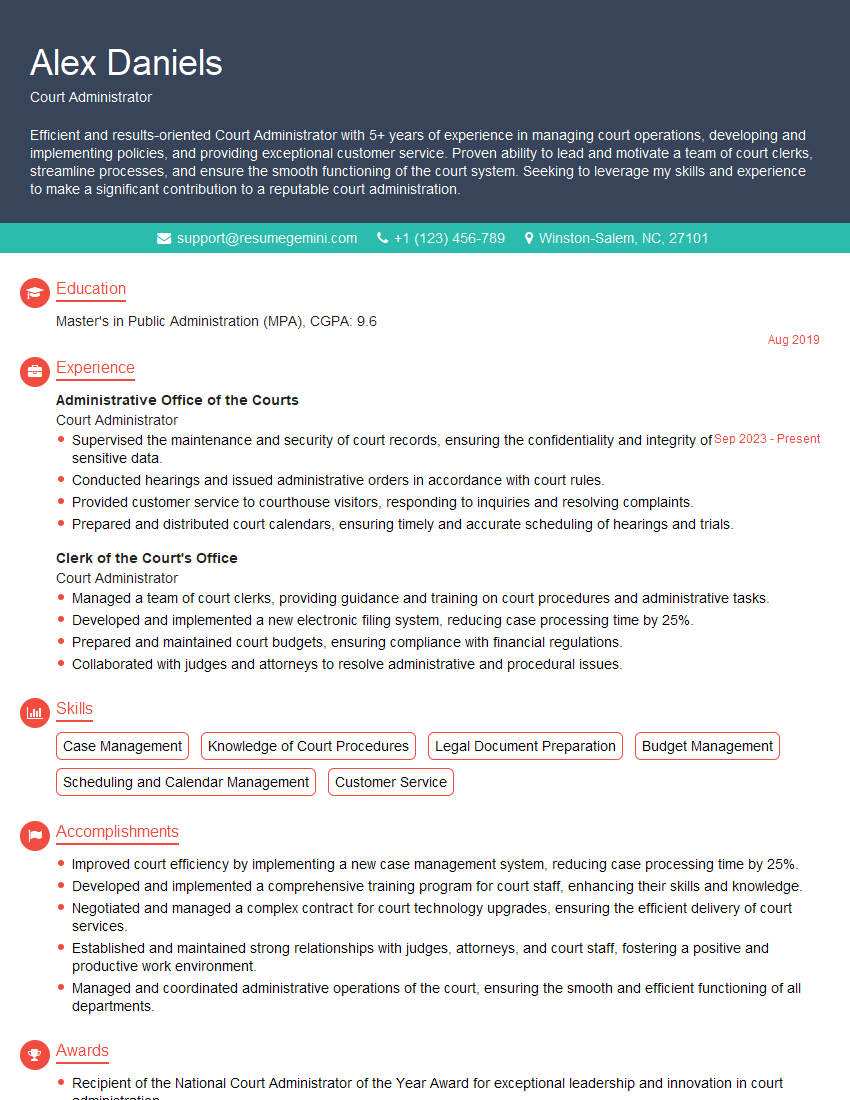
Court Administrator Resume Sample
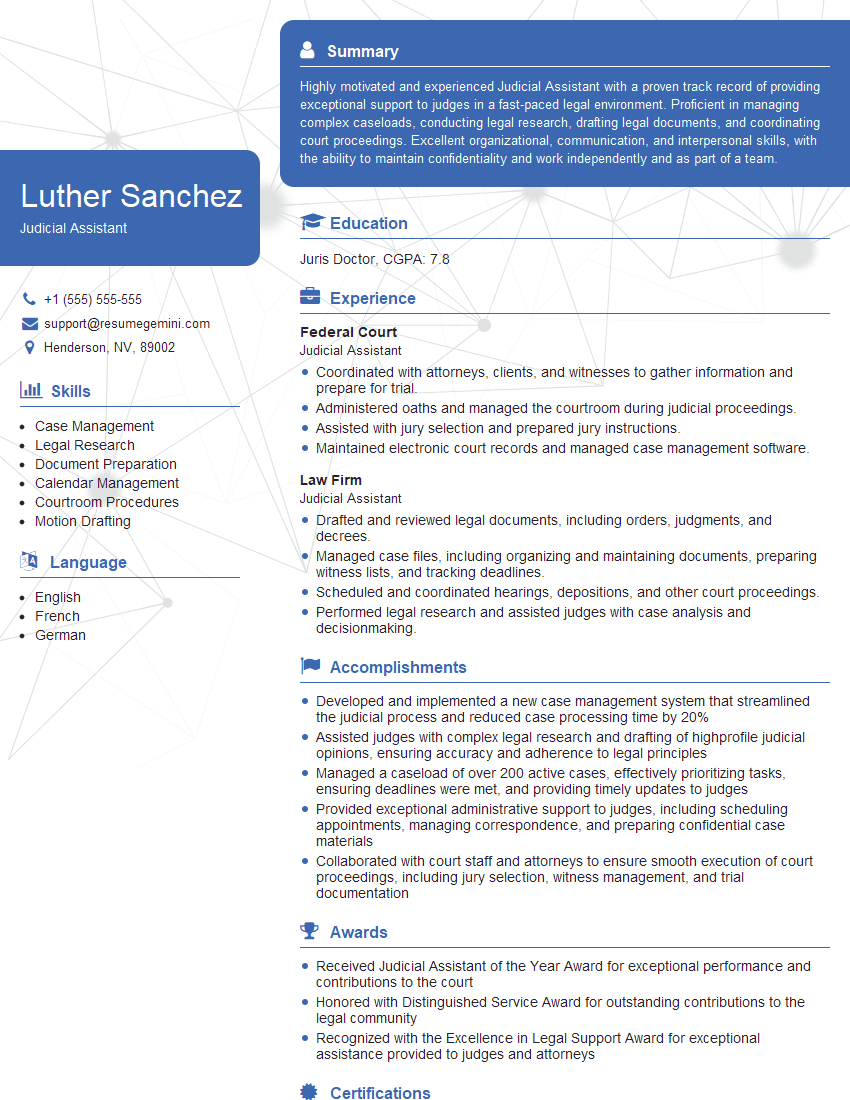
Judicial Assistant Resume Sample
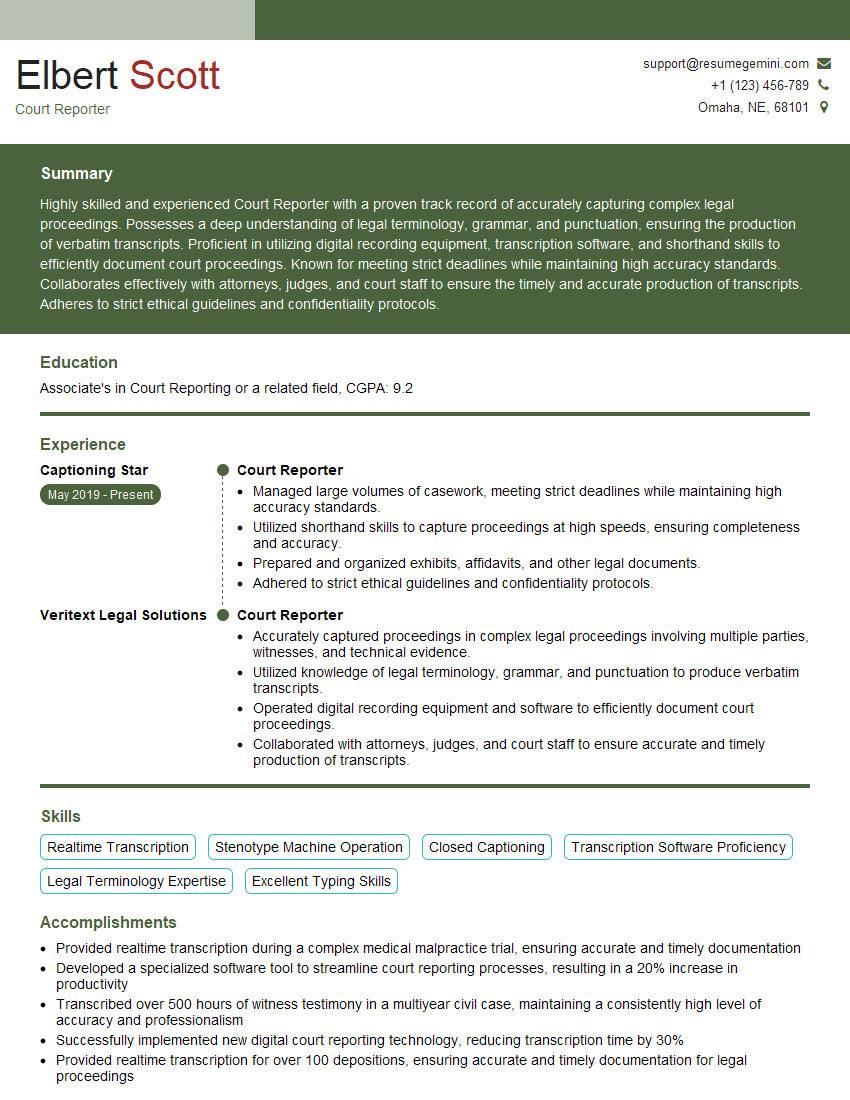
Court Reporter Resume Sample
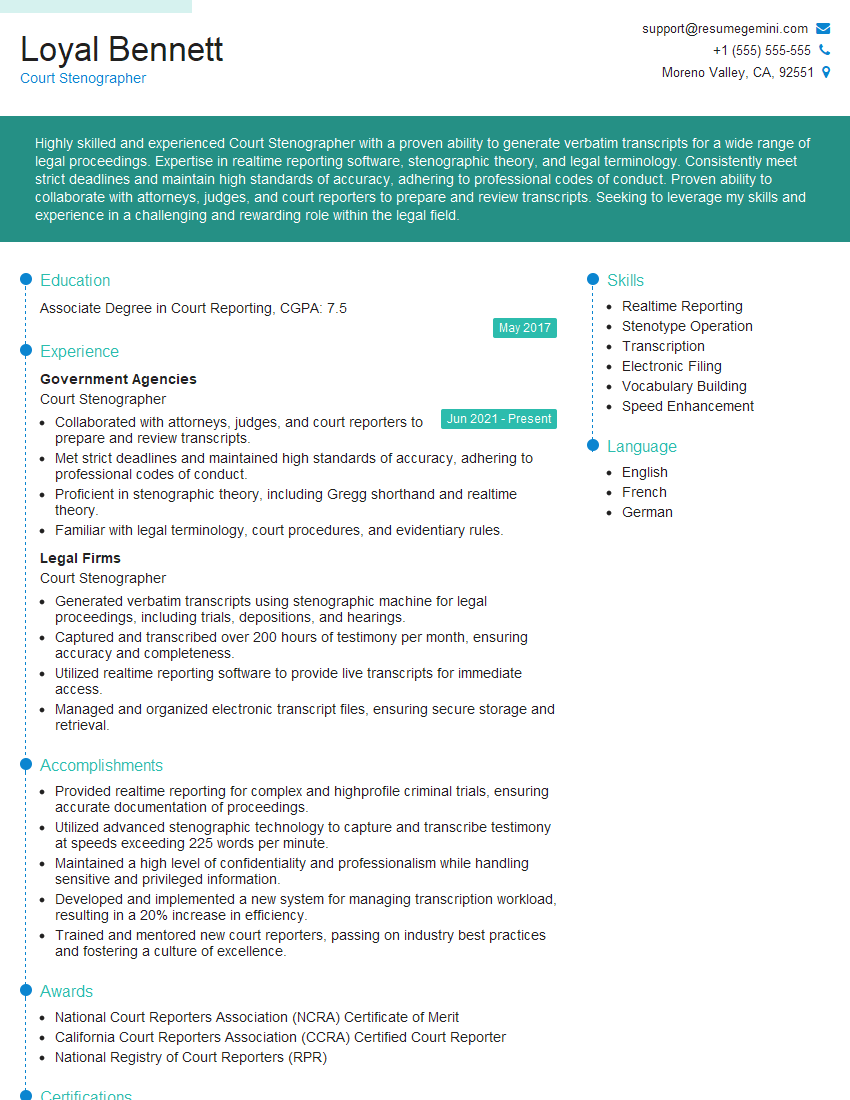
Court Stenographer Resume Sample
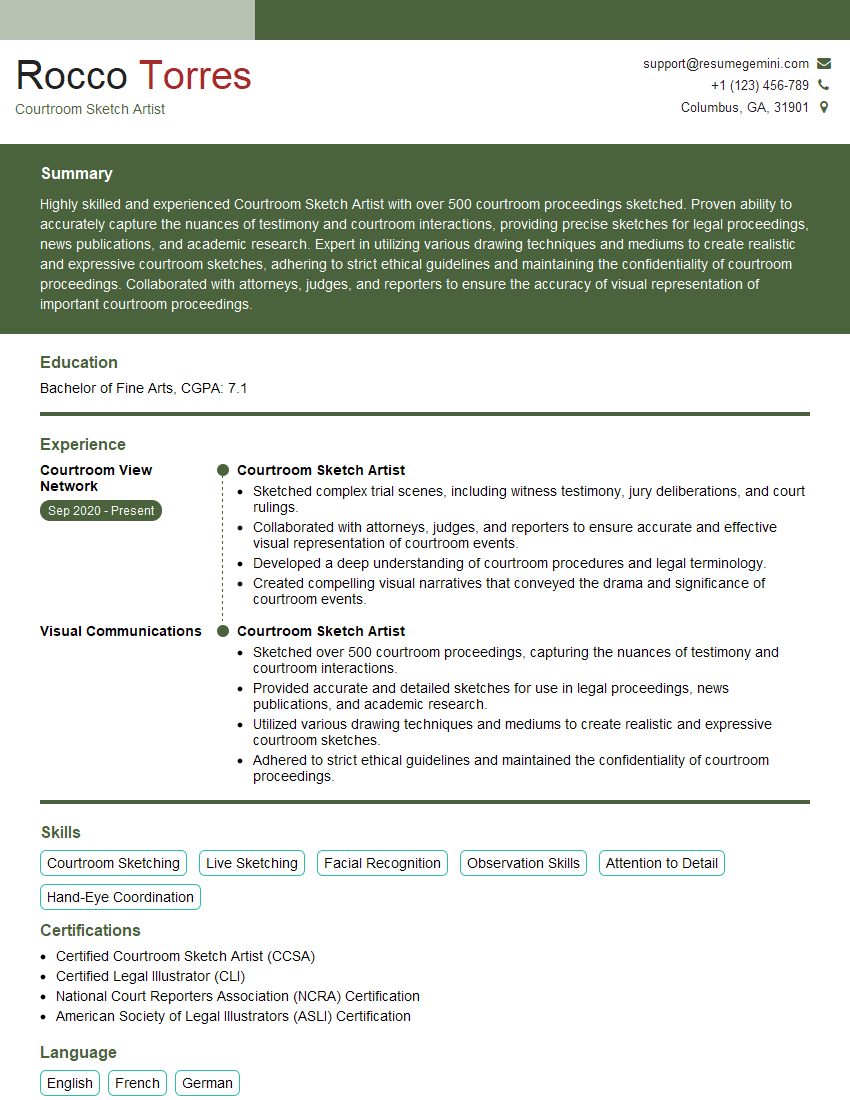
Courtroom Sketch Artist Resume Sample
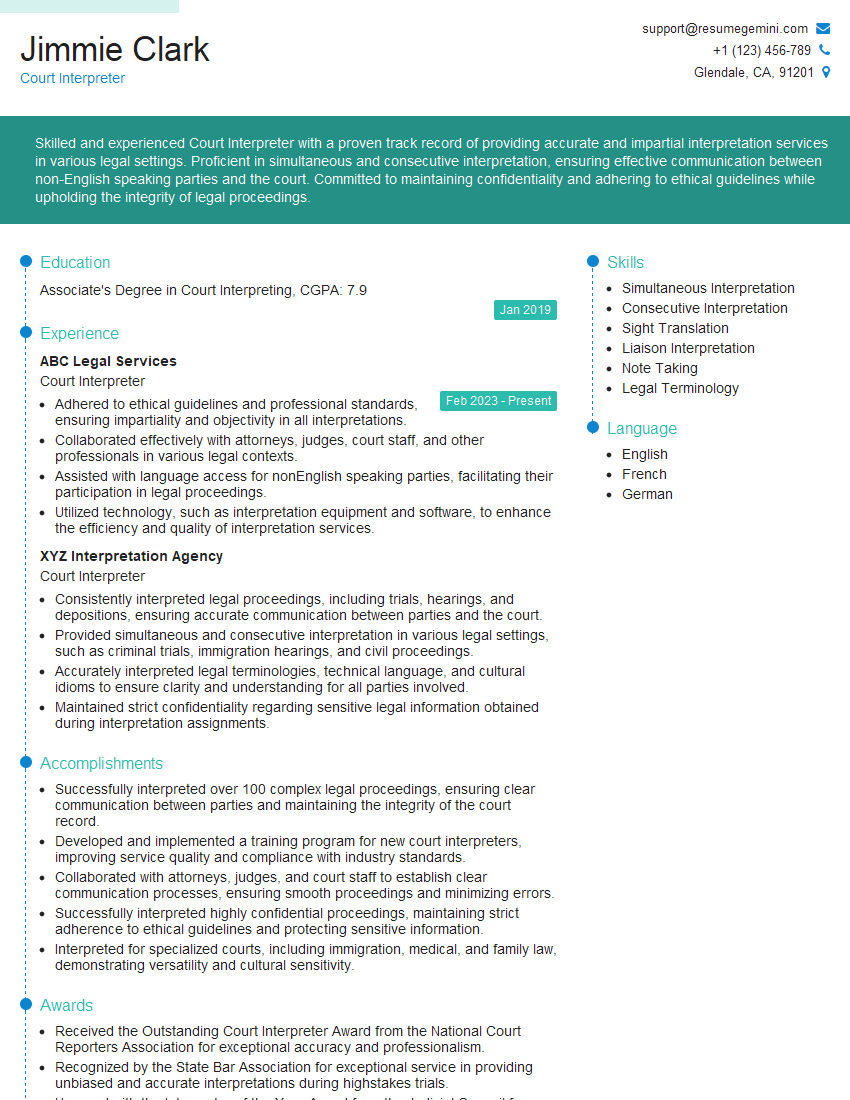
Court Interpreter Resume Sample
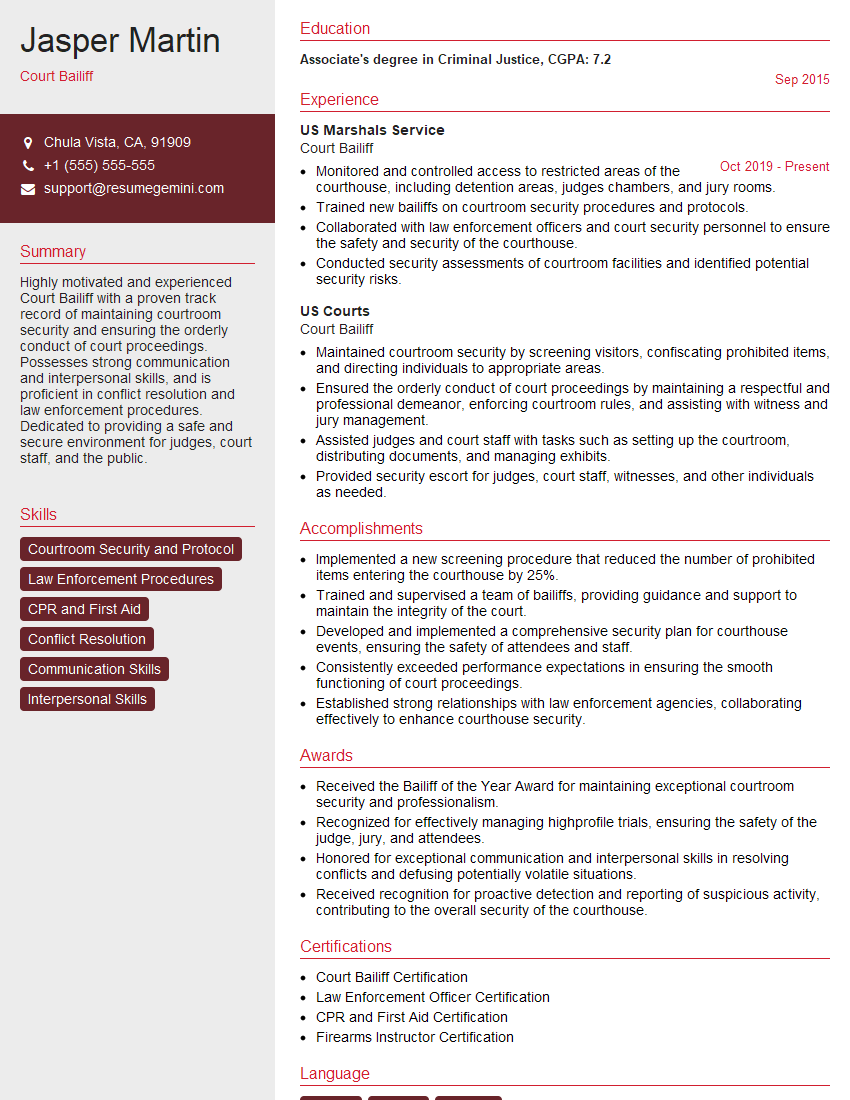
Court Bailiff Resume Sample
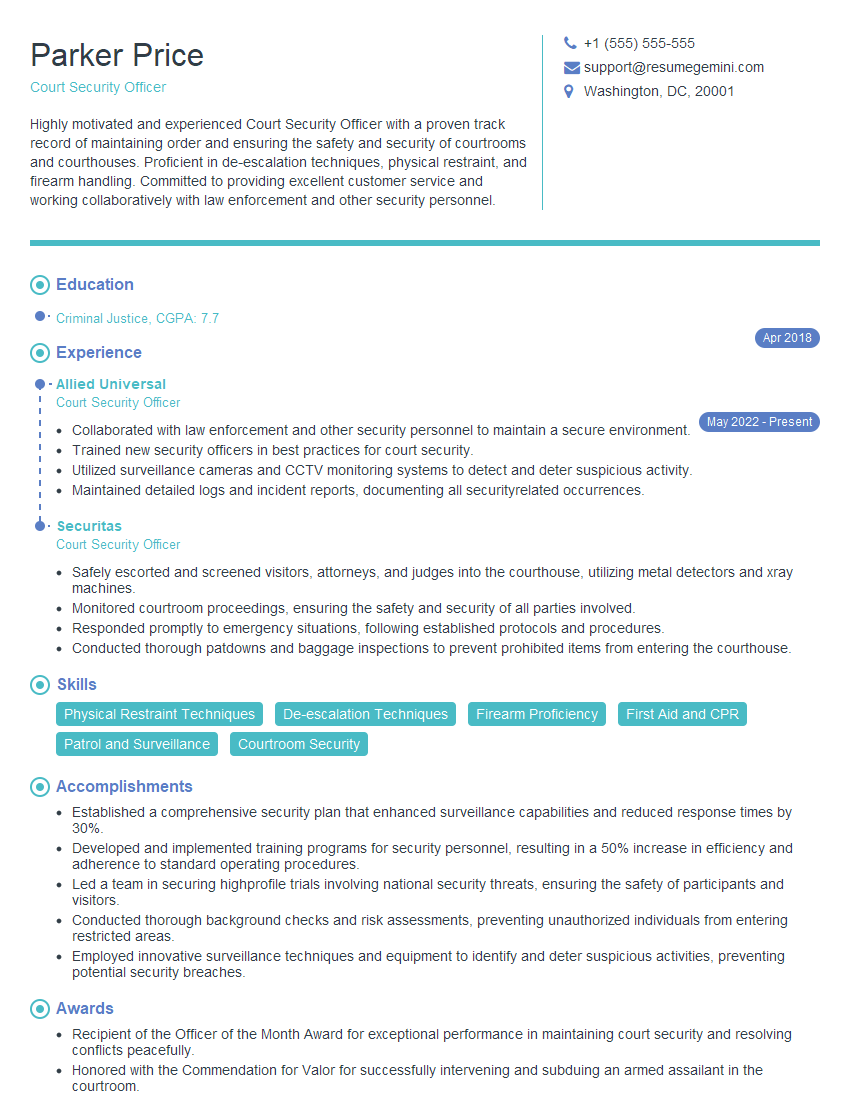
Court Security Officer Resume Sample
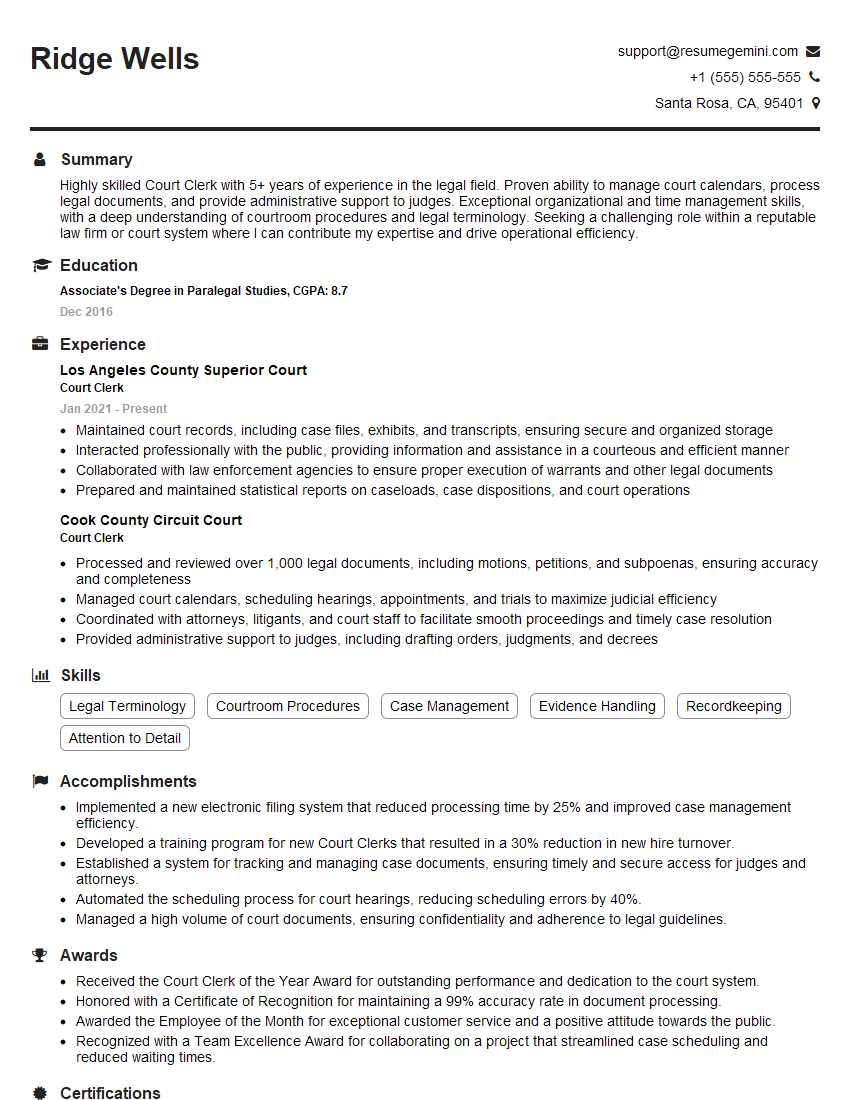
Court Clerk Resume Sample
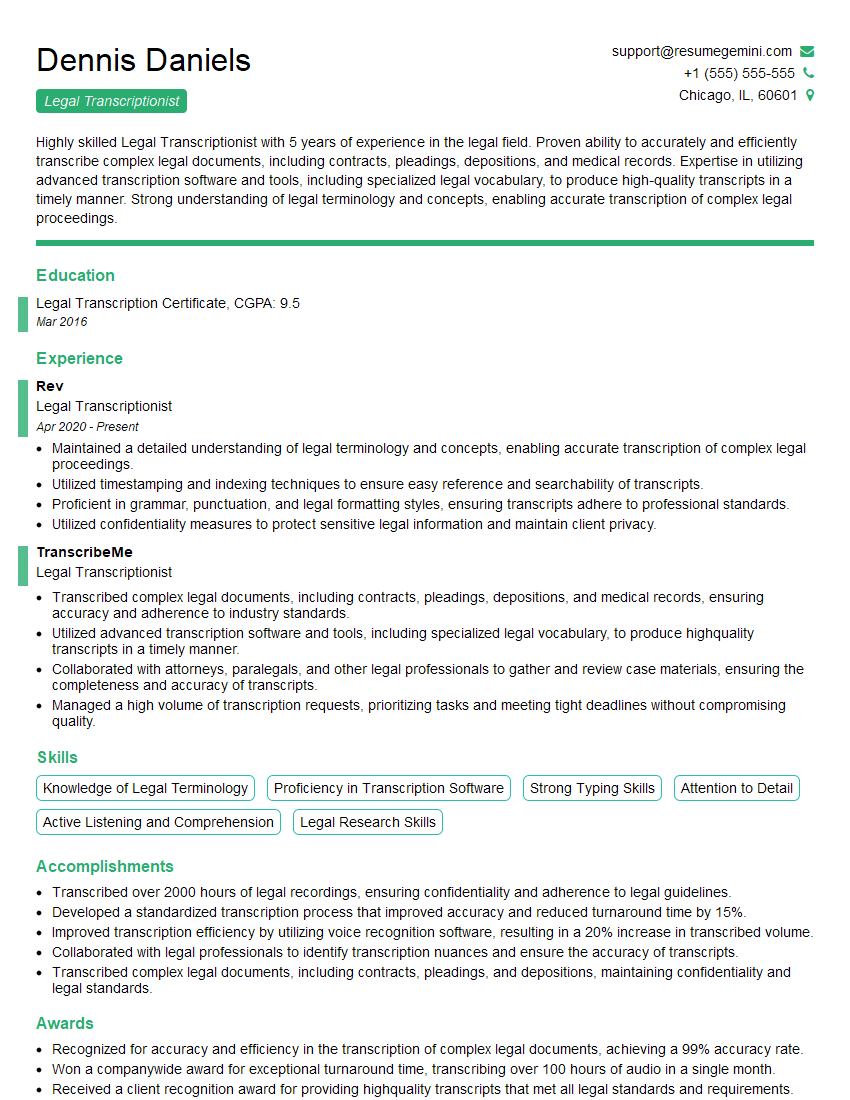
Legal Transcriptionist Resume Sample
Explore more articles
Users Rating of Our Blogs
Share Your Experience
We value your feedback! Please rate our content and share your thoughts (optional).
What Readers Say About Our Blog
Very informative content, great job.
good